
In short
EUVC Podcast Episode Summary
Episode Title
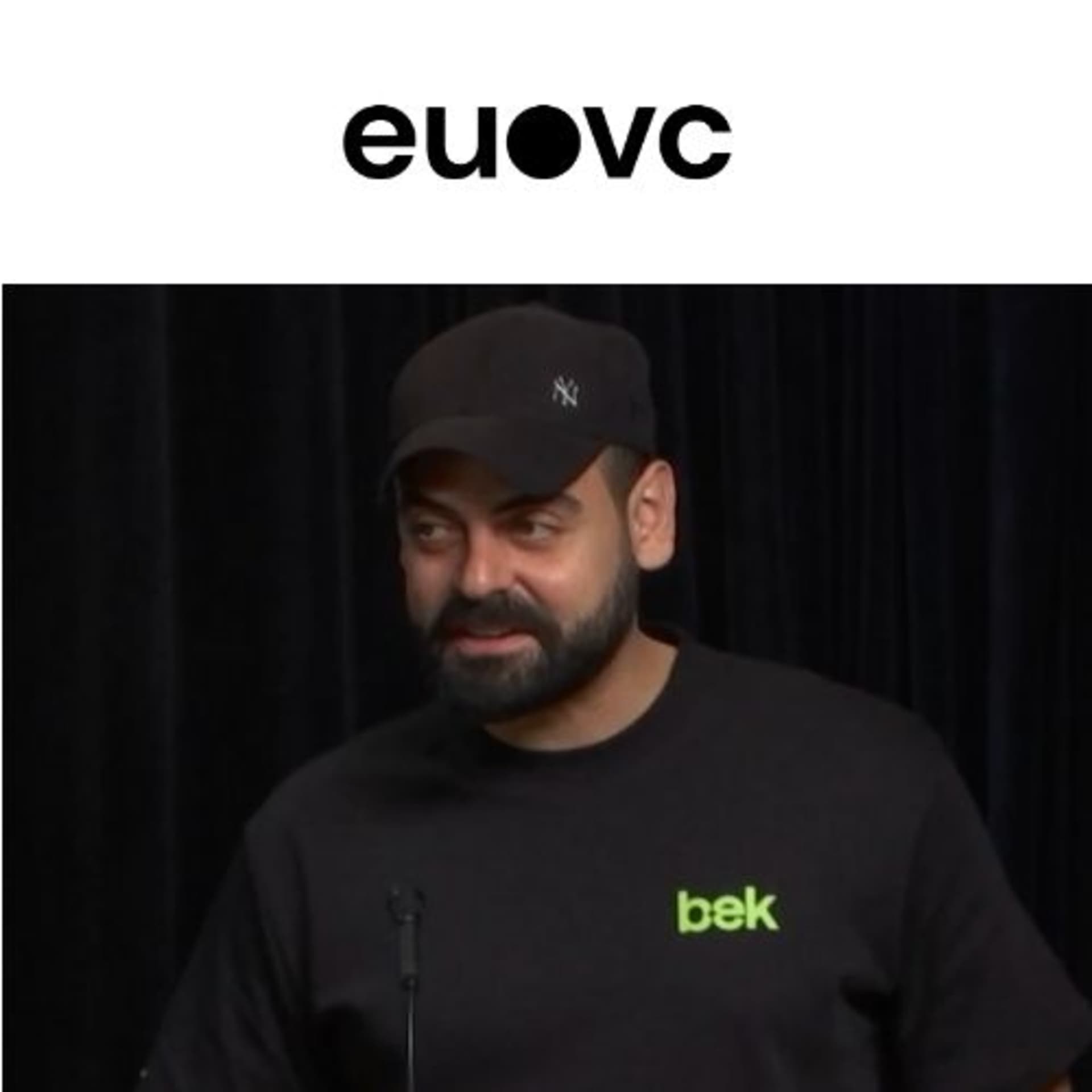
E557 | EUVC Summit 2025 | Mehmet Atici, Bek Ventures: Europe is Not Monolithic
Episode Overview In this episode, co-hosts Andreas Munk Holm and David Cruz e Silva welcome Mehmet Atici from Bek Ventures to discuss Europe's tech landscape at the EUVC Summit 2025. Atici challenges the prevailing narrative that Europe is underperforming in technology, advocating for a more nuanced understanding of the region's diverse ecosystems and opportunities.
Key Themes & Discussions
- The Misconception of Europe's Tech Dominance
- Atici argues against the common perception that Europe is lagging behind the U.S. and China in tech innovation.
- Quote: “Yes, there’s catching up to do. But you can’t argue there’s no dynamism in Europe—it’s just not evenly distributed.”
- Diverse Growth Across Europe
- Larger economies (France, Germany, UK) often dominate discussions about European tech, but they do not represent the entire picture.
- Key Points:
- Poland and Bulgaria are showing strong productivity growth.
- Cities like Tallinn, Lisbon, and Barcelona are emerging as tech hubs, partly due to initiatives like digital nomad visas.
- Eastern European founders are increasingly successful on a global scale, contributing to companies like Databricks and Snowflake.
- Strategic Positioning vs. Operational Issues
- Atici highlights that Europe’s issues are not merely operational (like regulations around stock options) but rather stem from strategic positioning.
- Comparison:
- The U.S. market remains more attractive due to factors like cultural cohesion and deeper capital markets.
- Europe’s software market holds only 23% of the global share compared to 43% in North America.
- Fragmentation as an Advantage
- Instead of viewing fragmentation as a weakness, Atici suggests it could be seen as an untapped advantage.
- Quote: “The most thriving tech ecosystems are the most politically cohesive—because they serve founders, not flags.”
- Supporting Founders’ Global Ambition
- European entrepreneurs often think on a global scale from the outset, with a hunger for international success.
- Atici calls for investors to focus on recognizing and supporting founder excellence, regardless of the ecosystem's maturity.
- Recommendations for Investors
- Investors should:
- Identify founder excellence patterns beyond traditional metrics.
- Focus on backing scalable businesses rather than merely evaluating local ecosystem health.
- Acknowledge the hard work required to build global success, moving beyond a toxic hustle culture.
Conclusion Atici concludes that Europe can thrive by leveraging its diversity and backing ambitious founders, rather than conforming to a singular identity. The original EU model of "United in Diversity" serves as a guiding principle for fostering innovation and connecting ecosystems across Europe.
Key Takeaways
- Europe is not monolithic; its tech landscape is a mosaic of vibrant ecosystems.
- There is significant dynamism in less-discussed regions, presenting viable investment opportunities.
- Addressing strategic positioning is crucial for European tech firms aiming for global success.
- Embracing and supporting diverse ambitions can lead to greater outcomes for the European tech scene.
---
Appreciation of Partners The episode also acknowledged the contributions of various partners that made the EUVC Summit possible, emphasizing the importance of collaboration in the European venture capital landscape.
Closing Thoughts As Europe continues to navigate its unique challenges and opportunities, the episode encourages a shift in perspective from viewing it as a collective entity to recognizing the individual strengths and potentials within its varied ecosystems.
Written by AI. May contain mistakes. Listen to the episode to check what was said.
Transcript
Automatic transcript. May contain errors.0:00Today's Europe is not one market. It's a patchwork of ecosystems, fragmented, diverse, and misunderstood. But that complexity? It's not a bug, it's a feature. Mehmet Atasi of Beck Ventures sees opportunity in nuance. While others chase uniformity, he hunts dynamism in the corners of Europe where ambition outpaces policy. From Bucharest to Berlin, talent isn't evenly spread, but brilliance is everywhere. Beck's Playbook. Back founder excellence, not just ecosystem maturity. Forget trying to fix Europe with top-down reforms. The real wins come from serving founder ambition, nudging them global from day one and building scale, not headcount.
0:53Europe's not monolithic. And that's exactly why it wins. If you know where to look. There is no one Europe. There never was. Today I'm going to talk about how we can use that to our advantage as tech investors. So as geopolitical tensions and AI competition have risen, so do have calls for European tech to build a counterweight to the US and China. Today, Today, I would like to argue that we are actually making a mistake by obsessing over some lost European dominance and by talking about just one European tech. Europe and European tech is not monolithic. My argument here is not a pessimistic one.
1:41Actually, I'm saying in order to solve Europe's problems, we need to embrace the region's nuances. Today, I also want to propose some concrete actions to help our founders build even better and bigger companies that's going to scale globally and help us produce even better returns for our investors.
2:07So, this monolithic Europe narrative has been led mainly by large economies like France, the UK, and Germany. Leaders in these countries cite a widening productivity gap between the US and Europe as evidence that we need to collaborate more within Europe to be competitive. But when you actually look at the data closer, there is a more nuanced picture comes up. Poland and Bulgaria have continued to increase their productivity, whereas larger economies like France, Germany and the UK have actually struggled. Yes, there is catching up to do in some regions, but you cannot argue there is no dynamism in Europe.
2:50It's just not evenly distributed. So let's take a deeper look at this dynamism. Dublin, Zurich, and Athens are leading in technical AI talent, Helsinki and Vilnius in gaming, and Dublin and Berlin for data science, and many more have their own strengths. Countries like Ukraine, Romania, and Poland are home to world's largest software development companies. Ecosystems in cities like Tallinn, Barcelona, and Lisbon are blooming thanks to their digital nomad visas. Eastern European founders have contributed to incredible successes in the U.S. I'm talking about examples like Databricks and Snowflake.
3:34U.S. companies have opened R &D centers throughout Eastern Europe. So the uneven distribution of this dynamism should actually make us more excited. This means there is room for growth and incredible investment opportunities to be found. We live in this dynamism. We see this dynamism in the founders that we back every day. It's as much a mindset as it is about geography. These founders are technically competent, they're hardworking, and they're ambitious. Building a business is not a lifestyle for them. From day one, they want to think globally. Many of these founders have significant international experience.
4:17Unlike is the case in some larger tech markets, they don't come from an insular pool of people from same schools or same backgrounds. Take Daniel Dinesh from UiPath. He worked first at Microsoft in the U.S. for many years before coming back to Romania to start his business. Back then, in 2014, when we met him, he was not polished. His English was sporty. He didn't go to any fancy school. But when you talk to him about his product, he could answer every question with the deepest and smartest insights. He had this dynamism. If you talk to him, he didn't think about whether he's European or not. He was only obsessed about one fact and one fact only, whether he can build a large global success story.
5:08And let's face it, for founders like Daniel, what does US versus China versus the EU even mean? Does it really matter for him that like a great Europe is a great power or not? So if you are an ambitious software founder in Stockholm, Madrid or Bucharest, you want to sell to the biggest and most accessible market. And we have to face it again. Europe is not the most accessible market. Europe is divided by language and culture. And it is very fragmented. Even when put all together, Europe's software market is dwarfed by the North Americas. It's 23 % versus 43 % in global share. Yes, you can argue that like US is a collection of states with different regulations, with different laws.
6:00But the US has many things that we actually do not. A large, homogeneous market, united by language and culture, and deeper capital markets. That's why the most ambitious founders go after the US from day one. So we can ask, despite all this incredible talent and potential, why are we not seeing more outlier companies like Payhawk, Revolut or Klarna from Europe? Many investors like us convinced that regulation and a lack of capital are the main issues. But while the effort is laudable, these proposals ignore what's really wrong. It's like proposing medicine without actually a proper diagnosis.
6:47Yes, regulatory reform on stock options or company formation, of course, cannot hurt. But those are the things that make it easier for the founders to scale operationally, not necessarily giving them the strategic advantage over their U.S. peers. And let's be honest again, even if we fix all the stock option laws and everything, the U.S. is still going to be the most attractive market. We also need to stop believing that lack of capital is actually holding us back. We bemoan not having as much capital as the U.S. while being envious of China creating extremely capital-efficient businesses.
7:30So, given this picture, what are the solutions available to us? First, we as investors need to be able to identify and recognize patterns of founder excellence, regardless of ecosystem maturity. We need to be able to identify the down years of tomorrow and give them the support and the capital that they need. We also need to stop focusing on ecosystem health metrics or using the number of companies that's being founded in a city or a country and using it as a barometer. We need to make efforts to create bigger, larger companies. We need to be honest. Again, one massive individual outcome can have a bigger impact on an ecosystem than thousands of failed startup attempts.
8:17And finally, building a global business requires efforts. We can't be afraid to talk about the hard work that is required to create like a global winner. I'm not saying we should embrace some toxic hustle culture, but we should be honest about the effort that it takes to get there. Grit and hard work are non-negotiables. In order to support these outcomes, we cannot deny the reality for founders. The US is still the largest market. And today, a European identity is actually not necessarily giving the founders an edge in cracking that market. In some cases, it's actually holding them back. Of course, given the US tensions, there could be a future where the US becomes more difficult to access for these founders.
9:08In that case, a European identity can be an edge, especially if the EU wants to encourage homegrown tech. As investors who understand these nuances, we can capitalize on these scenarios by focusing and helping founders build global businesses earlier while leveraging their European identity when it actually helps them. I will conclude by saying the most thriving tech ecosystems aren't the most politically cohesive. They're the ones that best serve founders' ambitions. Our opportunity is to recognize excellence wherever it emerges in Europe and connect these pockets of dynamism and help our founders build massive outcomes that truly transcend both borders all together.
10:02Let's not forget the original EE model, United in Diversity. Before you go, I just want to give a massive shout out to the partners who made the EEVC Summit and awards possible. So please do not tune out. We're partnered with these firms because they're great people with offerings that we know from our friends in the ecosystem are truly world class. First up, I want to give a big thanks to HSBC Innovation Banking. They helped us incept the awards in the very beginning. And truly, they are the leading bank for anyone in European venture. There's a reason why everyone knows them. Google Cloud, they were our venue hosted the summit.
10:39What a team, what a big effort they put on to help us. We're hugely grateful. Make sure to reach out to Arabella or Oksana at the Google Cloud team to hear how they can help you as well as your portfolio. Massive credits goes to them. Ace Alternatives. We have so many friends in the Berlin ecosystem partnered with these guys. Just the best fund ops team around. And as with any good restaurant, where the locals are is also where you get the best service. And now they're expanding across Europe. So they're definitely someone to talk to. Hainspoon, they're longtime partners of ours in both our own legal work.
11:14They're great supporters of us here at EUEC. And I definitely think that they are one of the go-to legal teams to have in your corner. CW Communications, our dear friends who helped us secure CNBC, Bloomberg, Financial Times, and many more for this summer. It's a joy working with Dan and Kathy and the team. Fundcraft, Digital Native, Full Suite, Lux Headquarter, and a great partner as you grow your firm out of Luxembourg. Definitely a fund admin to consider in your stack. I can only say that the team are incredible to work with. I'm very thankful that I've gotten to know them. I that you want to be thinking about.
11:53Portfolio IQ by Synaptic. You may know them for the Discover tool, which is branded under Synaptic, but Portfolio IQ is absolutely a product you should know because there's no one that understands intelligence better than this team. And finally, Goodwin. They are a truly world-class legal partner you can trust. They're hands-on, business-oriented, and expert in everything and anything transatlantic. So those were our partners for the summit and awards. I know this might have been a bit long and boring, but really if you have these guys on your side I don't think your firm could be in any better hands and also They're helping us do what we're doing every day for you
From the publisher
At the EUVC Summit 2025, Mehmet Atici from Bek Ventures aimed a popular narrative—that Europe is underperforming as a tech region. Not because it’s untrue, but because it’s incomplete.
“Yes, there’s catching up to do. But you can’t argue there’s no dynamism in Europe—it’s just not evenly distributed.”
And once you look closer, the picture changes fast.
Much of the “Europe must act” discourse comes from the continent’s largest economies—France, Germany, and the UK. But productivity data tells a different story:
Poland and Bulgaria are growing steadily.
Ecosystems in Tallinn, Lisbon, and Barcelona are booming—fueled in part by digital nomad visas.
Eastern European founders are making waves well beyond their borders—with names behind global giants like Databricks and Snowflake.
“Building a business isn’t a lifestyle choice for them. It’s a global ambition from day one.”
These founders bring international exposure, capital efficiency, and hunger—without the insular networks that often define more mature markets.
Sure, improving regulation—around stock options, company formation, or funding incentives—helps. But as Mehmet put it:
“That’s medicine without a proper diagnosis.”
The bigger issue isn’t operational—it’s strategic positioning.
The U.S. remains the most attractive market: a single language, deeper capital markets, and cultural cohesion.
Europe’s software market is just 23% of global share, compared to 43% in North America.
So even if we fix the mechanics, the gravitational pull of the U.S. won’t go away. And in some cases, a European identity may actually slow access to that market—not speed it up.
What if fragmentation wasn’t our weakness—but our untapped advantage?
“The most thriving tech ecosystems are the most politically cohesive—because they serve founders, not flags.”
Europe doesn’t need to copy the U.S. to succeed. It needs to recognize excellence wherever it emerges, connect the dots, and support founders wherever they’re starting from.
In Mehmet’s words:
“Our opportunity is to transcend borders—not erase them.”
“Let’s not forget: the original EU model was ‘United in Diversity.’”
It wasn’t a flaw. It was a feature.
Europe’s next wave of global founders may not come from the centers you expect—but they’re already building. Our job is to back them, bridge them, and help them win on a global stage.
Let’s get to it.
Not Just Paris, London, BerlinEurope’s Problem Isn’t Just PolicyFrom Fragmentation to SuperpowerThe Original European Model Still Applies


