
In short
EUVC Podcast Notes: Episode E620 - Turning Crisis into Collaboration with Danijel Visevic
Episode Overview
- Title: E620 | EUVC Live powered by Woven Capital at The Drop
- Host: Andreas Munk Holm and David Cruz e Silva
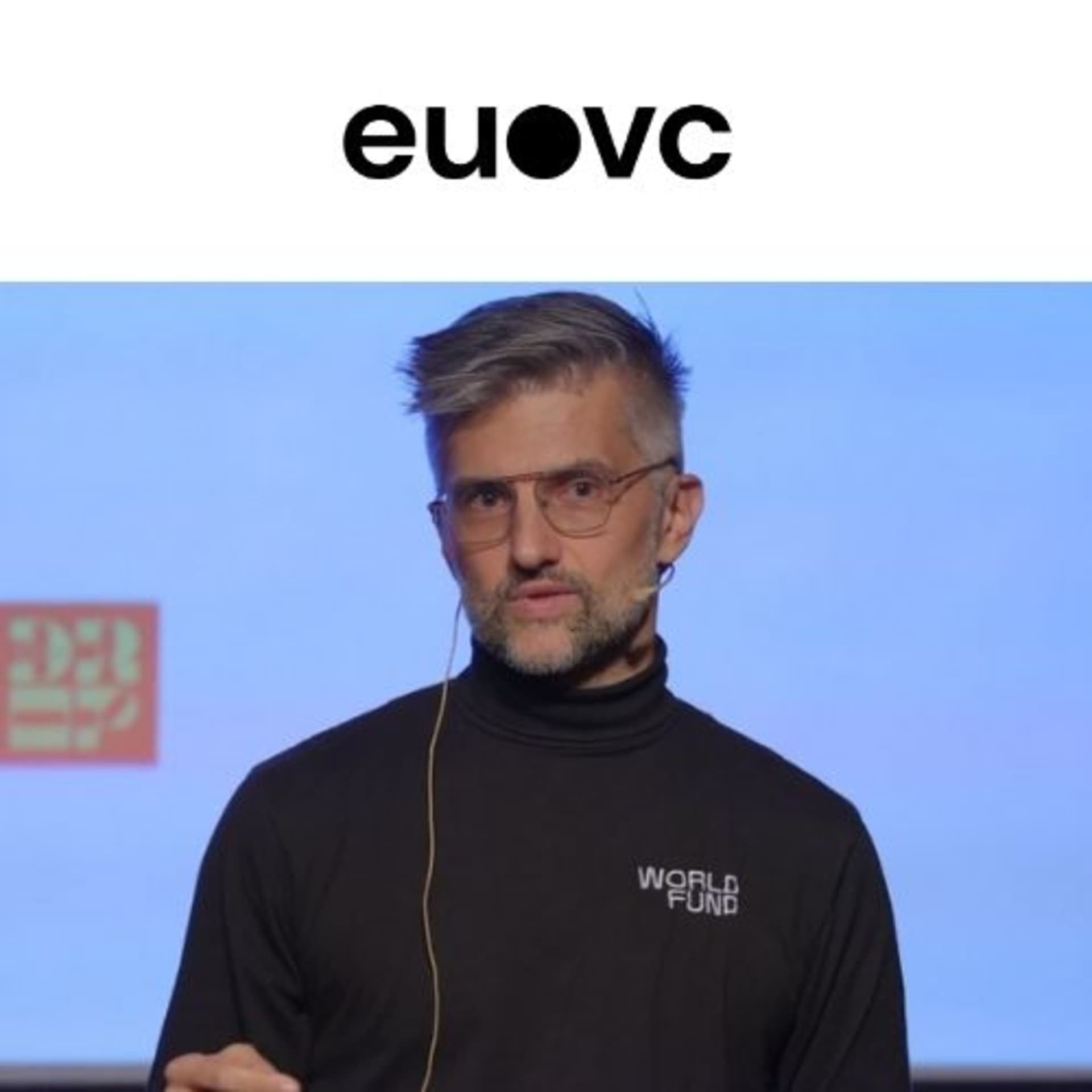
- Guest: Danijel Visevic, Founding Partner at World Fund
- Theme: Discussion on Europe's ability to transform crises into collaborative opportunities and the importance of unity in facing current challenges.
Key Themes and Concepts
Historical Context
- Coal and Steel Treaty of 1951
- Established collaboration among European nations post-World War II.
- Marked a shift from conflict to cooperation, serving as a foundation for modern Europe.
The Age of Polycrisis
- Definition: A term to describe the current multifaceted crises Europe faces, including:
- War (notably the war in Ukraine)
- Climate change
- Supply chain issues
- Technology disruption
- Opportunity for Collaboration: Danijel emphasizes reframing this age as an opportunity for those willing to collaborate.
European Sovereignty Redefined
- Modern Sovereignty: Not merely military power but focused on:
- Semiconductors
- Raw material independence
- Data and AI capabilities
- Import Statistics:
- 98% of rare earth materials and 97% of lithium are imported.
- 80% of solar panels are manufactured in Asia.
Examples of Resilience through Collaboration
- Historical Lessons:
- Expansion of prosperity post-1989 and during the COVID-19 pandemic through initiatives like the NextGenerationEU fund.
- Reduction of Russian gas dependency from 40% to 11% within two years.
The Venture Capital Landscape in Europe
- Investment Disparities:
- Europe raises seven times less VC funding compared to the US.
- Only 11% of climate startups in Europe reach Series B funding.
- Emerging Hope:
- Initiatives like the €300 million climate fund and the €1 billion deep tech and climate vehicles indicate growing investment potential.
Pioneering Companies Highlighted
- Cylib:
- Focuses on recycling battery waste to recover critical materials.
- IQM:
- Leading in the production of quantum computers.
- Planet A Foods:
- Innovating alternative cacao production using climate-resilient crops.
Call to Action
- Need for Ambitious Scale-Up Capital:
- Establishing funds such as the European Scale-Up Fund aiming for €10 billion.
- Public-Private Partnerships:
- Essential for amplifying investment opportunities.
- Shared Mission:
- A collective goal to invest in technologies reflecting European values and fostering resilience.
Conclusion
- Reinvention Narrative: Danijel concludes with the belief that Europe has a history of turning crises into opportunities through collaboration and innovation.
- Future Outlook: The next chapter of Europe's story depends on collective investment, cooperation, and belief in shared progress.
---
Listen to the Episode For a deep dive into the discussions, listen to the full episode on [EUVC's website](https://eu.vc).
Written by AI. May contain mistakes. Listen to the episode to check what was said.
Transcript
Automatic transcript. May contain errors.0:00I think it is the people that are actually quite critical. At least right now. At least right now, all of you guys are doing pretty interesting stuff. And like the people need to be talking to each other and supporting each other. Europe chose collaboration over conflict. And this is something very innovative. It was an act of radical innovation, not just technological, but political, economic and cultural, to choose collaboration over conflict.
0:34Mic check. Oh, welcome to EUVC Live at the Drop. Powered by Woven Capital.
0:49I only sent you the title and I thought, okay, it's a great title. So, um, and then I really, uh, I mean, it's a high aspiration to show how Europe turns crisis into innovation when we must do it again. Okay, I start with going back to the year 1951. And for Europe, this was a fantastic year, a magic year. You know what happened in 1951? We signed the Paris Treaty. It was signed by countries like, for example, France and Germany, countries that have been in war several times, and this treaty was the coal and steel community because coal and steel were the backbone of war. And by integrating these industries, Europe chose collaboration over conflict.
1:48And this is something very innovative. It was an act of radical innovation, not just technological, but political, economic and cultural to choose collaboration over conflict. And I have a personal story because my wife, she has a French mother and a German father. And this couple was difficult to imagine right after World War II. And Sylvie, my wife, married me. I'm a Croatian, Bosnian, German something. And today, our children are just Europeans. And this is something beautiful. We always need to imagine where have we been 10, 20, 30 years ago, a time when we didn't have the Euro, a time when we've been even in war, to understand that we are progressing in Europe, thanks to collaboration.
2:45So back to the year 51, we chose cooperation over conflict. And since then, that has become the European way. We don't break under pressure, we build together. And we must do that again. We are now in something that many call the age of poly crisis. We are at war in Europe. We have a climate crisis, tech disruption, supply chain fragility and a fragmentation of the global order. Unfortunately, very, very much provoked by our largest ally. That's one way to look at it, but we can also look at it this way. It is not an age of poly crisis. It's the age of opportunity for those who know how to collaborate.
3:39So this is European strength, collaboration. Europe has always found its strength in crisis, and today's challenges, they're not just a test, they're calls to action. calls to rethink our economies, to reinvent what European collaboration and sovereignty really mean in the 21st century, European sovereignty. So today it's not just about flags, about armies, about borders, it's about semiconductors. It's about raw materials, clean energy, data, AI, food security. Let's face the reality. Europe produces less than 10 % of the semiconductors it consumes. We import 98 % of our raw materials, raw earths, and 97 % of our lithium.
4:3180 % of solar panels and two-thirds of batteries are made in Asia. And to make this even clearer, the tools of the green and digital and industrial future are being built elsewhere, not here. Not yet. So if we don't reverse that, Europe risks becoming a spectator in a game. It helps to invent. But we've been here before and we know how to respond. In a few minutes, I'll give you some more examples where we have shown that we, in such situations, through collaboration, win.
5:12When the Berlin Wall fell, we didn't collapse under the weight of integration. We expanded prosperity to over 100 million people in Central and Eastern Europe. So my parents are migrants from former Yugoslavia, and this country was also in war. And today Croatia, at least, is really a country that has changed to the positive. It has the Euro. It's in the middle of Europe. And it's, for me, also very feelable with my family that is there. They have turned from a country that was authoritarian, a dictatorship, and they enjoy democracy. They are grateful every day. Something that, at least in Western Germany and in most parts of Europe, we think is something natural.
6:02But they fought for, we fought for this. this and we enjoy it. Another example is COVID. During COVID, we in Europe launched the 800 billion next generation EU fund. So we didn't just invent the leading vaccine. Remember, it came from Mainz in Germany. In the States, they called it Pfizer vaccine. It was BioNTech, period, invented in Europe. So we not only survived, but with this next generation EU fund of 800 billion, we committed to the green and digital transition like never before. And in the wake of Russia's war in Ukraine, we cut our Russian gas dependency from 40 % to 11 % within only two years.
6:51And yesterday, maybe you heard in the news, in the next two years, we want to cut this to 0%. So this is industrial transformation in real time. So when the stakes are high, Europe doesn't just respond, we reinvent ourselves. And today we must act again. And this time is our challenge to build resilience through investment. But how can we do that given the data? Over the last decade, Europe raised seven times less venture capital than the United States. One of the consequences is that only 11 % of Series B investments or only 11 % of European climate tech startups reach Series B funding. In the States, it's 20%.
7:41We have too few, too little, too small funds yet. But the hopeful part is, and data shows this is changing. So we raised the 300 million fund. At this table, we have the Deep Tech and Climate Fund, with a billion, something we also couldn't imagine a few years ago. So Europe is acting. The question is if we're acting fast enough, but we are acting. I'll mention not only funds, but also those extraordinary companies we have and they are ready to lead. I'll make three examples. One is Cylib. They're turning battery waste into the raw materials we need by recovering 90 % of the battery, lithium, graphite, mangan, and it's a purity of nearly 100%.
8:29Cheaper than other companies do. IQM, a company from Finland, is selling more quantum computers than any other quantum computer company in the world. So with quantum computing, we can crack problems in material science, very relevant for climate and energy storage, and this wouldn't have been possible. with linear computing. And the third example is Planet A Foods, a company from Germany. They're replacing cacao with climate-resilient European crops and a fermentation tag. So they're producing cacao without cacao. You don't need to deforest rainforests. You just produce it in Europe, cheaper, tastier, and more convenient because it's in Europe, no supply chain issues.
9:20And you can already buy that in Germany, in the UK, expanding to the US, chocolate, basically. This is only three examples. And these companies are growing to become pillars of the European sovereignty. And they're not alone. I'm sure that when I speak about this European sovereignty and give you these examples, you immediately have some more companies in your mind. Maybe you're founders of such companies and I'm sure you have invested in such companies. So we have hundreds of those companies in Europe. What we need is both policy and it's on its way. So also thanks to your efforts, EUVC, EU Inc.
10:07is on its way and will become reality. Maybe next year, I fear, maybe a bit later, but we're working on it. What we also need is ambitious scale-up capital. I mentioned the Deep Tech and Climate Fund, our fund, and think about the European Scale-Up Fund, which is driven by Lars Fröhlund, a Dane. And the goal is to raise 10 billion, very much supported by the European Commission, 10 billion for Series B, Series C companies. So the last maybe that we also need is public-private partnerships that amplify those opportunities. And above all, we all need a shared mission. It's to invest in those critical technologies that serve European values, resilience, and recreate our leadership.
10:55So it's not a time of hesitation, not a time for hesitation, it's a time for movement, mission, and moonshots. So let's create hundreds of those companies like Cylip, IQM, and Planet AFoods. Let's make Europe not only the continent of innovation, but the continent of industrial scale. So I began talking about 1951 when Europe, devastated by war, chose to build peace by binding coal and steel. So we decided on collaboration and that was an act of radical innovation that reshaped the future and also made my own European family possible. So we've done it again and again. We responded to the oil crisis with wind and sun, to a divided continent with unity, to a pandemic with the largest green stimulus in our history and to energy blackmail by fucking Putin with renewables and resilience.
11:58So the story of Europe is not one of stagnation, it's one of reinvention. We know how to turn crisis into collaboration and competitiveness, but the next chapter is not written yet. So it depends on us whether we choose to lead again, to invest, to collaborate and to believe. I believe and I see that Europe doesn't break under pressure because we built, we built together and the time has come to do this again.
From the publisher
Welcome back to EUVC Live in Malmö, where we bring you unfiltered conversations with the voices shaping Europe’s venture ecosystem.
In this session, Danijel Visevic, Founding Partner at World Fund, takes the stage with a powerful message: Europe’s strength has always been its ability to turn crisis into collaboration — and it must do so again.
Dantraces Europe’s journey from the coal and steel community of 1951 to today’s climate and geopolitical challenges. From the fall of the Berlin Wall to COVID and the war in Ukraine, he reminds us that Europe’s greatest leaps have always come from unity, resilience, and investment in shared progress.
Now, as Europe faces an era of “polycrisis” — encompassing war, climate change, supply chain fragility, and tech disruption — Danijel calls for a new act of radical innovation: rebuilding Europe’s industrial leadership through collaboration, deep technology, and climate investment.
🎧 Here’s what’s covered:
00:30 The Coal and Steel Treaty of 1951 — when Europe chose collaboration over conflict.
02:00 From war to unity — Danijel’s personal story of a continent rebuilt through cooperation.
03:00 The “Age of Polycrisis” — or, as Danijel reframes it, the age of opportunity for those who collaborate.
04:00 Europe’s new sovereignty — not armies and flags, but semiconductors, raw materials, data, and AI.
04:30 The hard numbers: 98% of rare earths and 97% of lithium imported; 80% of solar panels made in Asia.
05:30 Europe at risk of becoming a spectator in a game it helped invent — and why collaboration is the antidote.
06:00 Lessons from history — how Europe expanded prosperity after 1989 and launched the NextGenEU fund during COVID.
07:30 Real transformation: cutting Russian gas dependency from 40% to 11% in two years — with renewables as resilience.
08:30 The venture challenge — Europe raises 7x less VC than the US, and only 11% of climate startups reach Series B.
09:00 Hope in motion — from €300M climate funds to €1B+ deep tech and climate vehicles driving the next wave.
09:30 European champions
10:30 The next phase — Europe needs ambitious scale-up capital, public–private partnerships, and a shared mission.
11:00 The call to action — Europe’s story isn’t stagnation; it’s reinvention through unity and belief.


