
 EUVC
19 Oct 2026 · 1h 3m

 Add vo to ChatGPT or Claude to ask about everything you hear
vo listened to this episode to put together the overview and transcript, so there may be the odd mistake.
Edouard Gouin (Convelio) recounts Convelio’s hardest 2023 stretch—art market down ~25%, layoffs after a post–Series B growth slowdown, and a strategic shift from “asset-light” to “asset-heavy” operations to reach profitability. He also explains how AI is used to triage and automate email-based workflows (about 1.5M emails/year) and why founders should look inward (cost base, pricing, service quality, tech, stickiness) when markets contract.
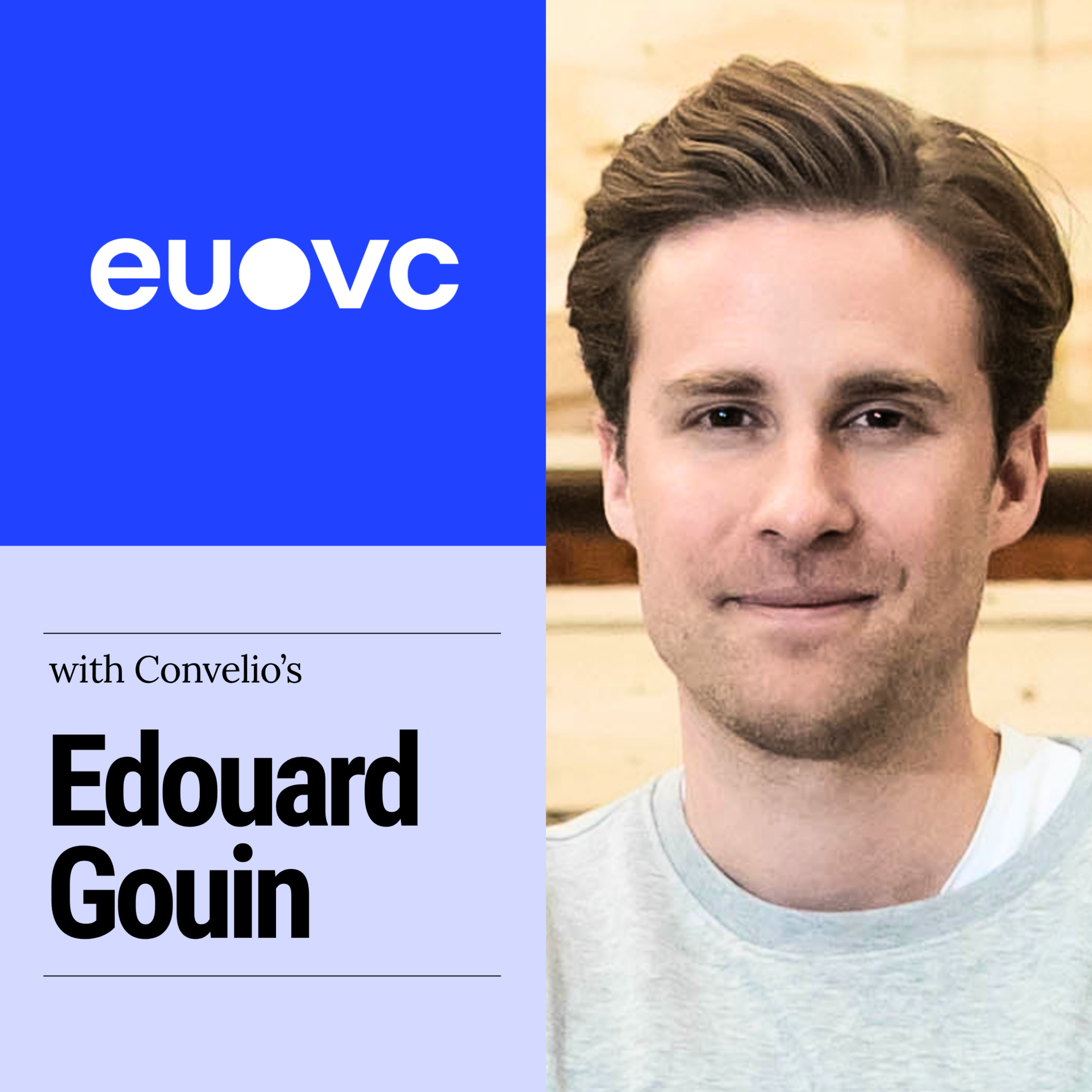
Edouard Gouin, co-founder of Convelio; previously at Rocket Internet in Berlin, met co-founder Clément there. Convelio now has ~135 people across Paris, London, New York, ~2,000 shipments/month, and grew transported merchandise from ~250–300M (2022) to ~1.6B (last year), with close to mid-8-digit revenue.
Revenue timing is unpredictable; internal levers matter most. Layoffs were necessary ~3–4 months after Series B when growth failed to accelerate. Investors and board alignment required reframing from top-line growth to bottom-line profitability.
Starting with Paris flea-market dealers (Saint-Ouen) using fast, transparent competitive shipping; internalizing hub operations in London/Paris/NY; building storage SaaS inventory management to create a shipping-storage-SaaS flywheel.
0:00You have obviously a lot of people that trusted you in joining the company. And so, you know, you kind of trying to postpone the decision because it's like such an emotional, like that puts you in such a level of emotional distress, you know, to have to let people go. Then it's quite tough for you to take the decision. But what's driving the decision is, you know, it's much better for us as a company to accept that this is something really difficult and it's going to be difficult for a little while rather than kind of like thinking of the consequences of actually not taking that decision. I mean, we were beating the market, but market forces were kind of dragging us down by quite a big margin, you know, like it was not allowing us to have the level of growth that we wanted.
0:34I mean, you know, when you started doing is like, okay, do we want to try to predict that revenue is going to come back in maybe three months, in six months, in a year, in 18 months? I mean, like the reality is we have no freaking idea. Like this is impossible to predict. I think the bottom line of AI in the market is like, it's the biggest opportunity we can imagine on for any business that's heavily operational. You know, we have the operational we receive, I think, somewhere along the lines of 1.5 million emails per year that is kind of needs to be managed, you know. And obviously, AI plays like a huge role now in kind of like triaging kind of the emails that we're receiving, tagging them, making sure that they go to the right people.
1:09And now also to start answering these emails automatically to a certain extent.
1:14Andreas Munk Holm: Welcome back to the podcast, everyone. 1. Eduard Goings spent much of 2023 going through what he calls the most difficult stretch of his 9 years building Convalio. The art market dropped by roughly 25%. The company had to lay off a meaningful part of the team. Its business model had to evolve from acid light to significantly more acid heavy, while bringing investors along through that transformation. It was an incredibly difficult period, but also one that forced Eduard and the company to make some of their most consequential decisions. Decisions that would ultimately reshape Convalio and put the business on a path to profitability.
1:53Andreas Munk Holm: And in the middle of all of this, Edward sat down and wrote a 65-page leadership manual for his team, trying to codify what he learned about building, managing, and leading through a crisis. Today, we're talking through those difficult moments. What went wrong, the decisions Edward had to make, what they cost him personally and professionally, and how that period ultimately helped turn Cunmelio into a stronger and profitable company.
2:22This show is not investment advice, and the hosts of this episode may be invested in the funds and companies featured.
2:28Andreas Munk Holm: You sat in the book that you honestly had little clue as to what you were doing in the beginning. You identified a problem and just kept putting one foot in front of the other. I'd love to ask you, what's the story of Conveilio? How did Conveilio happen, come around to be? And then let's go from there into the learnings that are laid out in the book. The story of Conveilio is very closely linked to what I did before Conveilio. I used to be at Rocket Internet in Berlin, and that's where I met my co-founder, Clément. We became very, very close friends over the years. And, you know, we got along so well that at some point we have to do something together.
3:09And so we kind of braced some ideas. And the short story is that we left Rocket, created a first company, whatever, in the food space that didn't work out. And then for some reason, I started to look at the furniture market. I was like, yeah, it would be cool to build a marketplace more on the high-end side of the market. And so on. So I said to look at the markets, I had to build something. And Claymore at that point was still in Berlin. And the idea was that he would kind of join me later on. And so he went to work for a company that was selling antiques online. And, you know, the two of us were in that space we had no real clue about.
3:47And, you know, we're trying to, like, move these really large, chunky furnitures across the world. And it was like super, super clunky process, very difficult, very expensive, very opaque. And at that point, you know, we're like, wow, you know, we've done a lot of upside rocket. We have a brain that's still pretty good at functioning. And we're like, okay, how can we improve that entire process? And so we're like, okay, maybe there is some sort of a flex port play that can be very verticalized onto initially kind of more the furniture and antique space. And that's how we identify the kind of early opportunity.
4:25And we're like, you know what? Let's just try it out. Let's see what comes out of it. Let's build like the most basic MVP we can think of. And yeah, that's what we did in September of 2017, kind of launched it and yeah, took off very quickly. So in the end, yeah, Claymore left his job. I completely pivoted, I mean, the initial ideas I thought I was going to work on. And, you know, here we are nine years later, so.
4:52Andreas Munk Holm: And tell me, because you started with antique fares and 500 euro shipments, so not the blue chip auction houses. In other words, you started at the bottom of the market as your strategy. Can you talk a bit about that decision, why you thought that was the approach and not to go for the bigger clients? The first thing is that's where we saw the opportunity in the beginning. When we work with antique dealers, when we work with furniture designers, they have to move these very large, chunky pieces across the world. You know, we've done that in positions that we had previously. And we're like, you know, this is super expensive.
5:29It takes a crazy amount of time to get a shipping coach. It was like at least 48 hours back then. Could go up to a week for the most complex project. And we're like, okay, let's try to build something that's better, you know, like that's faster, more competitive. And let's bring it to some of the people that we kind of thought would be interested in. And so the first target for us initially was like the guys that were most price competitive and that essentially wouldn't care that we didn't know anything about the market, right? Because we knew no one. We knew no one really in the antique space.
6:03We knew very little people in the furniture space. And what we realized was that like one of the places in Europe, at least, where there is the highest concentration of this kind of dealers is Paris. like there's the flea markets north of paris um called saint one and these guys are like super transactional like they have like a lot of people coming in and and you know they would like do anything to make a sale happen which which makes sense and and that includes having very competitive shipping prices that you can get really quickly and you know very transparently they were the only ones that would listen to us and so we started on the segment you know on the segment that was pretty easy for us to get into.
6:44They didn't care about credentials, you know, and then from kind of that small group of people that trusted us in the first place, then we started to kind of go up market and so on and so on. But initially, there was both kind of discovery of the market and very much constraints, right? Because the up market is quite a network-based market in general, and the antique one much less.
7:08Andreas Munk Holm: I'm on a mission to try and create as many champions as we can in Europe. Too many people don't know who the great ones are. Could you just let everyone know where you're at today so they understand that as a background? We're about 135 people spread between three offices, Paris, London, and New York. We roughly do about a good 2 ,000 shipments a month at the moment. and that grew in terms of like merchandise transported last year. And in comparison to 2022, I think we went from somewhere along the lines of 250, 300 million transported in 2022 to 1.6 billion transported last year. So yeah, these are kind of like some pretty high level numbers.
7:53But I think what I can tell you from a revenue perspective, we do close to mid-8 digit revenue with pretty same margin for logistics.
8:06Andreas Munk Holm: And from a fundraising perspective, just because many tuning in will know exactly what that means. Yeah, sure thing. So we raised essentially no for 50 million euros in funding. like the latest round our investors doesn't allow us to communicate a big French entrepreneur family and so that was their decision but it's not for 50 million that we essentially raised over four rounds Now I want to ask you about the first dawn of a valley in your journey which is the copycat era because three to three and a half years in you started having copycats appear and at the same time you also had the 2022 market collapse where Ukraine and freight rates, interest rates, the real estate correlation, all let the art market to drop 25%.
8:56Andreas Munk Holm: You've said to me that in that market that was reducing so much, you can pretty much do whatever you want. Your numbers are going to be shit no matter what. Tell me a bit about that era so that everyone understands where you were. And then when you talk about how you navigated it. So, yeah, I think, I mean, we started in 2017. we essentially had close to no competition on the segment we were addressing until early 2020. So we arrived on the market with a value prop that was very different from what was offered at the time. You know, it's like if you look at like the top end of the market, the cash were really expensive, very high search, very manual.
9:33There was one guy, I mean, one company in the US that had some sort of like a marketplace approach. So a kind of a booking.com approach to find out shipping, which we believe would not be working for a variety of reasons. And so in the end, you know, we took the road of building a tech-enable freight forwarder with like a very vertical approach onto, you know, antiques and furniture design and the art markets. And, you know, within that kind of segment of like being able to offer really competitive rates that are instant with like the first algorithm of the market, the first end-to-end tracking, you know, for essentially kind of the first three years.
10:10we've had very little competition, right? Now, what happened afterwards was that, obviously, people said to notice that on the market that's finite, that we decided to steal quite a lot of market share. And so the guys in the US essentially pivoted business model. We had some of our largest competitors in France, let's say, to want to do the same thing. So some of them could not attack us, let's say, in a direct manner, on like some of the core markets where we were. So they decided to do the same thing in other markets. We had one in France that, one company that tried to acquire us that we refused and then ended up building the same thing.
10:51So yeah, I think overall it's like kind of the story of any market, you know, after a little while, if you do things in the right way, like you're essentially given like two to three years and then at some point someone will try to replicate exactly what you're doing. But obviously you pay for a lot of the evangelization and like teaching the market how to use these tools, you know what I mean? And back in 2017, 2018, 2019, essentially up to COVID, we were on the market that was using pen and paper on mostly everything. It was like pretty crazy how backward the industry was. And I think to a certain extent it still is today.
11:26I think some people are kind of refusing to see that this is changing. But I think what is changing nowadays in comparison to Kropog is back is those that are not changing are essentially putting their company at risk. So I think there's much more of like an awakening in the market that they need to change. But yeah, I think bottom line is, you know, we, we started to do that for, for a few years. Then we started to see kind of competition wrapping up. And, and obviously when that happens, you know, you get like all the, the, the bad mouthing of like some of the historical players, you know, saying, ah, these guys, what they're doing, like, it's, it's crazy.
11:59Like it will never work on the raising funds. Like how can you make the economics work? And, you know, we've got a lot of bad mouthing for, for quite a long time. I mean, still today to that, to be honest, I think essentially what's kind of proving the strategies, you know, revenue growth and, and, and gross margin growth and, you know, number of clients that we're managing to approach your clients. But yeah, still getting quite a lot of, a lot of complaints, let's say. Now, I think in, in parallel to, to that, what happened was that we had like pretty, I mean, we had an insane growth the first five, five and a half years.
12:30And, you know, as you mentioned, end of 2022, beginning of 23, the market kind of really started to, to like go crazy. I mean, like it went crazy high to a certain extent. And, you know, it was post, like during COVID, post-COVID, people were sitting at home buying quite a lot of things, you know, and we obviously benefited a lot from, from that level of growth, which was, which was really good. And then, you know, the, the, the war in Ukraine started, interest rates increased by, by quite a huge amount, which impacted the half markets in a significant way, you know, and, and what happened was like, you know, we went from like crazy growth to pretty limited growth.
13:07And when I, you know, at that point, I mean, you know, the first thing you ask yourself is like, what the hell is going on? You know, like this is, this has been crazy. You know, like we pushing as hard. We have like a great team. You know, we have enough people. We just, at that point, you know, we had just raised Series B. Like, you know, if anything, you should just accelerate, you know, and like we can have the bottom line in your eyes. you can have the smartest strategy, the best team, the most means, the best tech, which was the case, you know, if the market's going down and people are retreating and, you know, they're not selling and you're in a transactional market, I think your bottom line, like, suffers like crazy.
13:47Especially, you know, post-Series B, we recruited quite a lot of people to kind of fuel that growth that we had. And yeah, so that put us in quite a tough spot for a while until we kind of reacted and we're able to kind of, I mean, you know, the market essentially changed dynamic. You know, it's a little bit, I used to tell investors, you know, it's a bit like, you know, when you have no wind and you're sailing, you know, at some point you need to change the orientation of the sales if you want to keep going, you know. And so that's what we did. Like at some point we changed approach.
14:17Andreas Munk Holm: One of your key points in the book is that you say that founders should always look inward before they look outward. In other words, so what happens out there is, of course, important, but it doesn't help much to be describing a market that is going down. You've got to look inward and say what's going on inside and what are we doing wrong? Why are we not capable of managing through this? Can you talk a bit about what you looked at at that time and said, okay, there's nothing we can do about that stuff that's happening in the market. This is what we've got to do inside. I mean, when it became clear that market forces were, I mean, we were beating the market, But market forces were kind of dragging us down by quite a, like quite a big margin, you know, like it was, was not allowing us to have the level of growth that we wanted.
15:05Well, I mean, you know, when you started doing is like, okay, do we want to try to predict that revenue is going to come back in maybe three months, in six months, in a year, in 18 months? I mean, like the reality is we have no, no freaking idea. Like this is impossible to predict. And so what we had to do was, okay, what are, what are kind of the things internally that we do control? You know, it's the cost base. Is the service quality we're able to offer? Is the quality of the tech? Is the stickiness we can create with features? Because what we're offering makes more sense to clients and delivers more value.
15:37You know, so we kind of like start to really look at like, okay, from like a overarching kind of strategy, like do we want to keep pushing on top line growth or do we want to start looking at bottom line growth and make sure that, you know, we put the company on rails that are like kind of driving us towards profitability rather than, you know, doing what everyone has been doing in the 2019 to 2022, 2023 era, which was, you know, like trying to push for revenue as much as possible. And ultimately what we did was, okay, let's look at like every department, you know, are we bloated in any way? And if we are, you know, what are some of the actions that we're going to take?
16:13Let's look at pricing, you know, are we pricing our self-right? You know, are we too expensive? Are we too cheap? You know, we want to play on volumes. We want to play on margin. Then you have the kind of the third bucket really looking more at margin, but like from a different angle with like supplies, you know, like, do we, do we pay the best costs that's usually, that's really possible on our market? You know, we have still had at that time, huge volume and, you know, we realized obviously we can do savings there. And also we like, it was very much kind of a surgical approach to looking at every parts internally that we could improve so that we could bring the company not necessarily on online i mean that we could compensate kind of the loss of the of the top line growth that we had with bottom line growth and yeah this has worked really well it was also very very painful to do internally because it's such a huge mindset mindset change for for us as a company i think also for the market at the time it was something quite different and obviously when you speak to investors i mean now this has changed, but back then it was very much about, you know, how much growth on the top line can you generate, much more than, you know, how quickly you can get profitability.
17:18I mean, this has then, of course, changed over the years with kind of the market, like funding market drying up, but yeah, this was pretty intense time.
17:29Andreas Munk Holm: I thought one of the things that were a big part of what you had to do was, of course, a big round of layoffs how long time went before you knew that you had to do this and that you acted and also can you talk a bit about how you came to that decision who you involved what what advice that was actually helpful what wasn't that type of thing too long that's my that would be my first answer and yeah i think it was probably about three months you know three four months where Again, post-series B, recruited big team, you know, you obviously expect to see the growth accelerate. The growth not only does not accelerate, the growth reduces as the market contracts, right?
18:13So, you know, you end up with a bloated team. And what is really difficult at that point is, you know, you have obviously a lot of people that trusted you in joining the company. And so, you know, you're kind of trying to postpone the decision because it's like such an emotional, like that puts you in such a level of emotional distress, you know, to have to let people go, then it's quite tough for you to take the decision. But ultimately, like what's driving the decision is, you know, it's much better for us as a company to accept that this is something really difficult and it's going to be difficult for a little while rather than kind of like thinking of the consequences of actually not taking that decision, right?
18:50So the emotional distress that we had kind of thinking we would have to let some people go was, at least for me, much less than thinking, okay, well, if we do nothing in a year from now, the situation is going to be probably quite dramatic. And so, you know, ultimately, this is what we did. Obviously, really tough. I mean, you have to look people in the eye and some of the managers had to look people in the eye and say, you know, we're sorry. You joined us on the promise. You know, we haven't fulfilled that promise for you. And that's quite tough. What we tried to do as a company was try to move away from that as quickly as possible, right?
19:23I think, you know, in the US and the UK, the process is quite straightforward, can go really fast. And people kind of maybe are more accustomed to these kind of things. In France, that's much less the case. Process is extremely long, extremely painful. I mean, to the point it makes absolutely no sense. And so what that creates is kind of like a little bit of a drag and like people don't really know, like, you know, where they are in the entire process. And so once all of that was done, kind of the idea was, OK, now we have to kind of rethink, like we kind of resized, just like resized for the size of, of the opportunity right now and the market dynamic.
19:56You know, how do we rethink processes? How do we automate so that it puts the company on the profitability trajectory? And we work really, really hard and the team has worked extremely hard at that. And kind of, you know, like looking at the different elements that I mentioned, you know, like cost and, and, you know, is pricing right? Is the tank that we're building really focused on like the core problems of the clients, like how do we create stickiness with clients, et cetera, et cetera. I think this is one of the reasons why we are successful today is because we had to go through that stage where it's like, okay, that was crazy.
20:28Very, very difficult, complete change of paradigm in kind of the way the market was moving. And ultimately, that kind of really forced us to becoming like a lot smarter about the way we operate. And that only kind of got stronger as, you know, AI kind of came into the picture really like the past few, four years. So, yeah, I think, I mean, overseas was quite tough. So I didn't answer on the question about kind of who you can talk to. Honestly, there are not many people you can talk to at that point in time. You can talk to other founders. I had a lot of friends. A lot of my friends are founders.
21:02They were kind of going through somewhat something similar, but I think we moved still relatively quickly, I think, or at least we felt the pain a lot quicker than some of the other industries. It was not instant, but almost. you know so we're like okay we need to take a decision so at the end of the day i had a friend that was kind of going through the exact same thing at the same period so we talked quite a bit about you know how they're managing that i think beside that talking with about it with people internally is quite tough like even with your managers because you know they're obviously being impacted they know what they will have to do so it's like quite a lonely decision and at the time you know we had like we took the decision relatively like quite in isolation with my co-founder at the time, we kind of brought it to the board and, you know, we had that new investor that just came in, you know, and yeah, that was not the thesis they invested in, you know, like the investors to do layoffs.
21:52So, yeah.
21:53Andreas Munk Holm: How did you ensure that you had your investors along for this decision and that both that they agreed with it, but also that you used them as a sounding board to make the decision? I think there was a lot of conflicting thoughts, you know, for the board members. For us, it was quite clear, you know, like at some point, if we are not able to deliver the growth that we should, like we planned, then the level of burn can become unsustainable to the point it can put the company in danger. And so we had to do something. Like we knew that's something we had to do and, you know, we pushed it to the board.
22:29And initially there was some resistance and we're like, you know, let's keep doing what we're doing. you know, like things are going to pick up and which were kind of the first e-course that we got initially. And then progressively, you know, as we discussed with our guys, like, you know, we don't think this is coming back. I mean, not anytime soon. Since then, the market has recovered partly. But yeah, I mean, we're like, you know, guys, what do you want us to do? You want to keep, you know, burning more money? Like, I don't think it makes sense. Well, we're not delivering on the top line growth.
22:56Let's look at rather let's change the mindset. Let's look at bottom line growth. So I tried to reduce the burn ideally down to zero and then go into kind of like the profitability side of the market. And, you know, ultimately, that's something we ended up aligning on. It took a little while. It took a little while because it was a lot of changes for the board and, you know, for the defense. And I mean, they've been a very good sounding board on kind of like a lot of topics. And at that specific moment in time, you know, that was really not the physicist invested in. that was also at a time where we kind of completely rethinking the business model.
23:32You know, we were moving from like asset light into assets, which we can talk about later. And so it was like kind of a lot of things changing at the same time, you know, it's like, and like, that's such a complete change from the way the company used to operate. We like a very different kind of growth profile. We're kind of having a market that kind of struggles when we think we need to reinvent ourselves to be able to deliver more value to clients and to be able to target to different set of clients that maybe may less, maybe less kind of impacted by macroeconomic shifts and these kind of things, right?
24:00So it was quite a big reshift in the entire strategy. And yeah, I think that took some conversation. But ultimately, we got there.
24:09Andreas Munk Holm: One of the critiques and persistent critiques of the venture model is, of course, that VCs have a portfolio of bets. And for that reason, their entire business model is built around having moonshots. And then it's OK that some die. And being the founder that is considered just one egg in the basket can sometimes be quite frustrating. Did you feel that there was this underlying conflict between what you as a founder want to do, meaning protect your only baby, versus an investor that says, no, I'd rather that you keep pushing forward and that we then run the risk that the company will fail. but at least we keep our eye on the price, which is the big one.
24:59There is some of that with some investors in any company. I think it's always what I think is interesting about having a board is you have different voices that you can listen to, which I think is really quite positive, at least for us. You know, you have the kind of really bullish guys and then like the guys that are a lot more conservative and you always have someone kind of in between and then, you know, they kind of like try to, you know, weight which voice is the best.
25:27Andreas Munk Holm: Which if we were to abstract something here or pull out a learning, it's super important that you as a founder are building a board that is balanced in that you have non-executive directors that are not investors, but that are independent because those people will not have the same incentives as the investor representatives. 100%. And then often they can bring something that investors don't have, which is industry expertise, which I think is really difficult. I mean, unless your investor is very verticalized kind of VC, you know, like really investing in like very few areas. Then often that's something that's missing.
26:05And this is something that has that, you know, we've been missing for quite a long time until we brought someone on board. But yeah, and I think, you know, coming back to kind of the VC model, I think it depends a little bit which kind of investors you have on the cap table. Like we don't have like some of like the massive funds, you know, like the Sequoia Index XL, where, you know, like they have a few outliers that are kind of delivering such extraordinary results that they can kind of maybe, and I don't know how that works, you know, but maybe kind of disregard some of the companies that are not performing as they would expect.
26:35I think for us, it's different. Like they are kind of still smaller funds, but for one. And the one that's a large one invested really early on in the company. So, you know, they had really strong incentive for the company to work. also we have a great relationship with them so yeah i think overall from that perspective you know we had some comments around you know let's keep pushing let's let's start to see you know what's going to come next and ultimately we say you know at some point the music has to stop and you know we we push that quite strongly and then and then we had additional conversation over the years you know how do we manage to burn and and then it kind of flipped you know sometimes it was later on it was sometimes investors um they were saying okay maybe you guys like need to be careful here and there.
27:14And so it was always kind of a balance. I think it's more kind of the trigger point for me. It's like when kind of you feel as a, what I think is really important for investors to often understand is like as a founder, the level of information you have about your market is often like incredibly granular and you can kind of feel things that as it kind of happening. While kind of as an investor, you come with kind of like a, let's say, much more kind of high level And, you know, you, at some point you need to reconcile these two. And, you know, I think in most cases they kind of come together. It's just, yeah, they can have a little bit, they can be sometimes a little bit of friction as you know, like these two vision kind of merge.
27:53And yeah, you know, that, that was kind of maybe the tough part in that, in that conversation. But ultimately, you know, it worked and, and, you know, we managed to align, which I think is what really matters. And, you know, the, the past couple of months, I've been, I've been really good. I think we can be really happy with what the company has done. and that's what matters.
28:12Andreas Munk Holm: Let me ask you also, Edouard, how did you manage to build up trust again in the organization? I don't think it's as interesting with the board because it's quite delayed there, so to say, and for that reason, you don't feel it every single day that there's stress in the organization, as you do in a team where a significant part has been laid off. How did you build trust again with the organization? I mean, I think it's honestly, it's a set of action. It's like a lot of conversation. It's a lot of speaking with the team, you know, and, and, you know, explaining why we did what we did. I think what's quite tough, I think for, for context is, you know, you have like some of the large organizations and you go through kind of like these rounds of layoffs every now and again and, and so on and so on.
28:57But, you know, we've never like, except for like performance related things like that has, that never happened to us before. And, you know, we're on the trajectory where I was like, honestly, so crazy that, you know, even myself, if you would have told me six months ago, before like this would have happened i would have not believed you you know because the trajectory was like so diverse from like so different from what we had you know so you come from like that crazy amount of success to okay well we're still successful obviously you know like we still do eight digit million revenue and i mean 80g revenue we we still have a great margin we have a great great union economics etc etc it's just you know like the growth is not what it used to be and like the team is blooded and so how do you do that right and so there's like a lot of explanation as to, you know, what we're doing, what we're doing, you know, what they should expect for the months that are ahead of us.
29:42It was like, it's essentially a lot of, I wouldn't say education, like a lot of explaining, a lot of talking, a lot of empathy as well. And, you know, and you do that for like some weeks. And at some point, you know, you also need to say, well, you know, we've done it. This was the right decision. Let's keep moving forward. And at some point also, as I think, as a leader, when that happens within an organization, you need to also at some point say, you know, let's stop talking about this. You know, now this is the past. It was really tough. It was really tough for the people that, you know, got let go.
30:12Like it was less tough for the people that managed to say, you know, at some point as an organization, you need to kind of like change your mindset and be like, okay, now what we're doing is really good. Like we see that very strong, strong unit economics. Let's kind of keep moving forward. Let's see how we can continue to improve the business. And ultimately everything kind of changes. And we've seen that there can be a lot of positivity that comes out of this kind of moment. You know, obviously you build resilience as a team. You know, you go through something really tough together. But I think also in the way you reorganize afterwards, it actually becomes pretty powerful that, you know, some people are able to take on a larger scope.
30:50They're able to kind of rethink the organization of the team. So they're able to kind of reduce a lot of the inefficiencies that we had previously. And so, yeah, I think ultimately, like we went through that, that, that period was really tough. You know, it also build the company as it is now, kind of change processes in a way that's working a lot better than it was in 22. You know, so I think for that, it was really positive.
31:10Andreas Munk Holm: Yeah. Let me ask you about a different pivot, so to say, which is the, the, the movement from asset light to asset heavy. Basically what you of course realized was that you had to, or at least that you had a big opportunity in internalizing part of the asset so that you could absorb margin and move up market. And in other words, storage became a real business for you, and London and Paris, of course, for you, were operational. They broke even inside year one, which was a massive proof point that this would actually work. So you ended up having a three-layer model of shipping as the foundation, and then storage has a higher margin recurring business.
31:48Andreas Munk Holm: And then you've got a SaaS model that's allowing you to build long-term differentiation. That is, on paper, maybe a good idea, but many VCs do not like this model because many VCs don't like anything that's acid heavy. That said, we're in a market now where venture is becoming more and more used to having to deal with more acid heavy models. So I'd love to ask you about some of your learnings from dealing with investors that don't like asset-heavy industries, but suddenly find themselves with an investment that turns out to need to go asset-heavy. I think that was very much a process for us. You know, when we did that kind of, let's say, soul-searching kind of approach in thinking, you know, how should we rethink the model to bring the company to profitability?
32:40Ultimately, you know, you have a handful of levers. You know, one is pricing, the other one is cost. If you look at like the cost, you know, we had an asset line model. So what that meant was, you know, we completely disassembled the value chain in the fine art shipping space. Identified that it was kind of like some suppliers to do the step one, the step two, the step three, four, five, six, seven. We kind of completely deassembled that and we're kind of like assigning tasks to suppliers based on the model that we have made. That's a great model that allows us to kind of scale really fast, which we did.
33:13that allows us to target many markets at once, allowed us to continue to operate during COVID and so on and so on. But a big weakness of the model is two things. One is that you essentially give away some of your margin because you don't internalize some of the operations. And the second element is more on service quality, especially for kind of the rather kind of mid-range top end of the market. I mean, service quality was less an issue at the time because, you know, kind of the market we're focusing on was rather the low to mid-end, you know, sometimes you obviously had the service quality issues, like, I mean, it's logistics, so it happens all the time.
33:49It was kind of less of a topic. At that specific moment in time though, when we decided to do was to say, okay, if we want to go up market at some point, we'll need to be able to do, we'll need to do things ourselves. But beside that, if you look at the margin, you know, we had these free hubs, you know, Paris, London, New York, which are three of the largest cities in terms of like the out trade in the cities, we are using a lot of suppliers that are essentially, you know, I mean, that we pay out, you know, and, you know, they also need to leave, they need to take their margin, but that means not the margin we internalize, you know.
34:24Within kind of like that approach, what we realized was, you know, if we, I mean, likely that was a hypothesis, if we do internalize some of these operations, we'd likely be able to kind of significantly increase the gross margin and therefore the bottom line. and what's interesting is you know nothing prevents us from keeping running an asset line model in the rest of the world but in the key hubs to make sure that we have like this kind of you know people on the ground and able to manage that volume at a level of margin which is which is a lot happier and so yeah ultimately ultimately that's that's what we did you know in the uk we like we had that like we had a very large partnership that was that just got signed and we're like we're looking for a company to buy we found a small company close to we throw and it was a very small team, highly verticalized, huge amount of knowledge.
35:10And, you know, we internalized the guys. We're like, okay, we're going to send you all of the volumes that we have. You know, they couldn't handle all of the volumes, but like they took quite a bit of the volume and then progressively recruit the team, move them to a warehouse, et cetera, et cetera. I started from that basis. We were like, well, actually, what do we learn from that? One, margin is much better, like significantly better. And the second element is, you know, the tech that we have is actually something that you can take and you can bring into a company. like even though it's painful, like it's really painful for the people that have been operating for the same 25 years.
35:38You can take the tech, you can replicate it. And then, you know, that kind of model where you have software and actually physical operations is super strong, right? Because what you start to offer to your clients is, you know, you can use like essentially the best tech in the market. And on top of that, you get access to not only a quality, which we used to have, which was kind of like low to mid-tier. now you have a quality that can cover this kind of low to top end, like including, I don't know, multi-million dollars artworks, even more than that, you know, it can have. And we moved some crazy art pieces of the course of the past couple of years.
36:13And so that's kind of when we're like, okay, well, that kind of model is working. You know, physical assets, tech on top, and that's how it works. And then progressively, a conversation we're having with the board was, you know, how can we, in a transactional market, generate a lot more recurring revenue? historically on the market, there was a lot of people that were doing storage. Storage is actually a pretty amazing business, like from like margin perspective, but also because of the stickiness it brings, you know, like the more storage you do, the more shipping you generate, the more shipping you do, the more storage you generate.
36:42And, you know, on storage, there was this exact same problem as what we had on the shipping side. It's like there were historical problems, you know, inventory, visibility, super poor. It's impossible to know what you get bill for. It's like this very kind of basic concepts and needs, you know, that essentially don't exist in the rest of the entire kind of logistic industry in the art market that were like super, super strong. We're like, okay, let's build a software for storage, like an inventory management software that solves some of the problems, right? And then we ended up with that, where we are now, right?
37:12Which is, you know, you log in, you can generate a shipping port super quickly, you get access to your tracking links. You can do that for like essentially 95 % of anything you can find on the art market, design space, and so on and so on. You can manage all of your shipping. You can manage your inventory. You can see what's in storage with us. You can import inventory from that you currently store with some of our competitors. And that's becoming kind of that ecosystem where you have these free services that feed each other, right? So again, you know, we do a lot of shipping. We'll do a lot of storage.
37:44Storage brings SaaS revenue. SaaS revenue brings shipping and so on and so on. And that kind of starts to create some sort of a flywheel that's diversified and actually pretty strong. And so progressively the conversation, to go back to your first point, the conversation with the board was, you know, it's not so much about we're going to build storage or we're going to have a handful of trucks in like a couple of cities and technician teams. And it's more about, okay, what's the coherence that we want to bring to clients, you know? And what is the problem we're aiming to solve? There were and still are many problems in the art markets on the logistics side, in a sense that you have like a lot of disconnected tools, like data is not integrated.
38:25And ideally you'd like one platform to manage all of that, that also offers kind of the operational backbone that's needed for you to run a gallery in Auction House. And, you know, ultimately that's what we did, you know, with that platform, you know, you don't need to get essentially access to whatever you need on the logistics side. And then progressively that's kind of improving and we adding additional features so that it really becomes kind of a, to me, almost kind of an infrastructure play. You know, that's really kind of what we're trying to build here is, you know, how can we build the operational backbone of the art market?
38:53Well, you know, if you want to do operations well in the market, like you have to work with Conveyor, you know, and that's kind of like what we're trying to work towards. And, you know, maybe that's a utopia. I think that's not, you know, I think we're proving that it can work and we're proving also that it's very difficult to do and it's very hard to replicate. So I think it's, you know, it's both great for clients. It's great for us because that's a competitive edge we've built. But yeah, I think it obviously took a lot of conversation to get to that stage.
39:22Andreas Munk Holm: Now we've described a bit the journey you've been on, all the changes you've made, the hardships going through it, the layoffs, all of this. During that, you decided that you wanted to sit down and write a 65-page book for your leadership team. Why did you do that? What did that bring you as a founder? So I think by default, I take a lot of notes. I think writing for some reason really calms me down. When I have to think through a problem, I tend to kind of like first try to write down whether it can be an email, it can be a text. And like that helps me kind of think through. So like the past, before I wrote that little book, I had like hundreds of notes that I accumulated over the years.
40:01And sometimes I would share some of these notes or like some of these thinking with some of my colleagues. And at some point, a colleague told me, you know, you should like put them together and, you know, share it with the company and so on and so on, you know. And I was like, yeah, whatever, it's going to be like 20 pages. And, you know, and quite quickly I started to ask for feedback, you know, from like the different members of the leadership team. And they were like, yeah, you know, you could speak about this and speak about that. Do you remember when we did this? And I was like, anyway, so my little project kind of like took like a completely kind of different turn and decided to grow quite a bit.
40:33But essentially the reason, like at the core of it, the reason was that the company had grown really quickly. You know, we had people that started with us, you know, they were maybe like 23, 25. And then you end up in your early 30s and you're managing quite a large team. And you had to figure out a lot of things throughout the history. And, you know, some of the things make sense, some of the things don't make sense. And then, you know, as you grow, you also bring managers from the outside. and you're like, okay, well, how do we make sure that we align as to, you know, how we manage teams at Conveilleur, you know, what is expected and what's the thinking, what's the history of the company.
41:09And we went through quite a lot of, I mean, in 22, 23, we went through quite a lot of hardships, you know, so how does that build the company and what do we get out of that? And how do we translate what I call kind of like the value, you know, it's like the tough moments, you know, how do we translate that? How do you think about that? And how does that build me up as a manager? And, you know, let's kind of try to consolidate that knowledge and give it over to the team, right? So what I did with the help of my team and a great coach that we had was like to kind of, you know, pull all of these kind of things together, create that little book of like 70 pages or so.
41:48And then we had sessions, like focus sessions every two weeks, Friday afternoon with like different kind of managers. and I was running the conversation. I was like, okay, let's talk about how do we think about peaks and valleys? How do we think about giving feedback? And so on and so on. And we had like a set of sessions that we ran for, I think it was a good three months in total. And the idea was, okay, let's realign everyone on, you know, like a common base as to what we expect from managers. And then progressively, we shared that also with quite a lot of people from the team. The fact that, you know, we had gone through like something that was pretty difficult at this note.
42:22people were asking for like some kind of like a bedrock as to how we're thinking about management internally and yeah i think you're timothy that led to that i haven't i haven't done another thing i i another book i always keep thinking you know i should read the second part of that maybe one day when i have time and my kids will be 18 and knowing that my my daughter is three it's going to be many many years but uh yeah i don't know i think it was like both internal need and like of the company and my own kind of yeah i know i think for me was also quite a catharsis you know to like be able to kind of write down things and be able to share that with the team?
42:54Andreas Munk Holm: There were three parts of it that really struck me, and I want to talk about them. The first one is hire for strength, not lack of weakness. That's an interesting one to me and I think to many in venture because that's exactly how most VCs invest. But it's oftentimes not what we say when we hire. Oftentimes, you want to make sure that you don't have soft spots in employees. Can you talk a bit about why this is your core learning? Yeah. I mean, I think when you start a company really early on, what at least young founders tend to do is to hire people that are very similar to them, which we did.
43:35It's very general. It's profiled and ultimately end up specializing and growing in the organization and kind of becoming managers. And I think that's completely fine. And I worked really, really well for the first three to five years of the company. as the company evolves, you know, you obviously have a bit of team association, you have some people that are leaving and so on and so on. And you can have someone that comes in and goes through the same journey as the early employees, you know, that, you know, learn like a huge amount, work like crazy hours, like super mission driven, you know, like, they would give everything for the company, which is great, but like it takes time to kind of build up these profiles.
44:10What you need after a while is more people that are coming in that are kind of more professional in kind of the approach that exactly know what they're doing, so they kind of, they do less figuring out, like they arrive and they kind of like try to build up a diagnosis and then like they go at it. And, you know, as the company grows, like what we realize is pretty, is a lot more powerful is to have people with what we call a spike or a T or I don't know what you can call that, you know, it's like, you can be kind of average on like a number of, well, areas, but you can be extremely good on like one.
44:40And this is that one area that we want you to work on and like deliver as much value as possible. And so this is very much kind of the approach we took. I think in our space, which is highly, highly specialized, it's really important to have these kinds of people, right? Because, you know, we move items that are really expensive. We manage data, which is very sensitive. You know, we need to have people that have a really keen understanding of these different kinds of elements if we want to be able to grow. It's the same thing on the tech side. So yeah, I think for us, it's more like, you know, essentially the professionalization of the company and kind of understanding, you know, that the early employees are like great.
45:16And ideally, if you manage to keep these early employees as long as possible within the company, this is a huge asset. But, you know, as some of them are living to build their own companies, to join other companies or whatever, the people that you're bringing in should have kind of a mindset as similar as possible, but maybe with a different skill set. And like, you know, at least part of that skill set, which is like super, super deep into one area.
45:38Andreas Munk Holm: There's another statement in the book. you're saying that regarding mistakes versus sloppiness, you're saying that you should accept the former with grace, but you need to eliminate the latter with zero tolerance. Can you talk a bit about the importance of adhering to this and what it looks like in your company? So, yeah, there is a very, very big difference between mistake and sloppiness. And sometimes, you know, especially for young managers, that's a conversation we had a few times. You know, someone that comes into a company and is making mistakes because they're learning the job. And, you know, hopefully you try to help them to avoid these mistakes, but like they're kind of like really engaged and, you know, willing to kind of learn and, you know, reduce the amount of mistakes that they're doing.
46:21Because in our job, you know, mistake can be expensive or very expensive, you know. So like this is kind of one thing which is okay if it's completely fine and most of the time it's normal. They just need to be like surrounded by good people and having a good manager that's making sure that, you know, they can guide them through. Sloppiness is like a whole thing or like completely different thing. You know, it's like someone that essentially knows the job, they're just not doing a good job because they essentially refuse to do a good job. Like, and that's just, that's pure laziness. And, and that's extremely, I think to me, this is extremely dangerous in the sense that, you know, it's, it's the bad apple.
46:56Like, and we've seen it, you know, that happened in teams, you know, you have that one bad apple really sloppy, doesn't do a great job. And, you know, two things happen. Like one, like that contaminates the race of the team, you know, kind of the level of quality is going down. The second thing is that, you know, like then the people around the team have to kind of fix the problem that that person is creating. And so no tolerance for sloppiness. And I think this is something that you can see throughout the organization. Like people work really hard and obviously sometimes they do mistakes, but like there's no sloppiness at Convideo.
47:27Like that doesn't happen. And yeah, something I think, yeah, crowd proud of, but I think, yeah, to a lot of companies that would make sense.
47:34Andreas Munk Holm: You have a connected line, which is that sugar-coated feedback is poison. And you say that at its best, it's self-inflicted pain. At its worst, it's egoism. But it's always the wrong choice. Being in an industry that is not necessarily super tech-enabled and super tech-adjusted in their mindset, I imagine that a lot of the people that you might look to employ come from more traditional businesses. and the management culture of a venture-backed company is oftentimes a bit different than a traditional good old French art dealer, I imagine. Can you talk a bit about how you adjust the organization to getting non-sugar-coated feedback?
48:20Andreas Munk Holm: Because most have not experienced that in the past in jobs outside of tech. This is my learning at least. Yeah, 100%. I mean, this is 100 % true. like we I mean I have the case of a colleague that joined us for another financial shipping company he told us that in the past I think three or four years he hadn't had one feedback session and I was like this is crazy to me like this makes absolutely no sense how do you drive performance how do you help them improve and you know like this is a bit crazy but yeah I think let's say on your last point regarding culture I mean for some people it's tough you know know, they come in, but what we really trying to repeat is, you know, and like the classic thing, you know, like feedback is a gift and, you know, it's really important.
49:07But the bottom line is we want you to improve, you know, you, you join the company. If you improve, we win. The company wins, you know, and our job is to make sure that we give you that opportunity to improve. And in order for you to be able to improve, you need to know what area you need to improve, right? And we need to be very clear and crisp as to, you know, what are the areas we expect you to improve. and so it can be on behavior it can be on on task it can be on methodology it can be you know whatever like the way you run your team it can be literally anything and for some people especially that come from let's say older companies and and so on it takes some adjusting um not gonna lie like sometimes that creates a bit of frustration and like wow but why are you telling me this and like no it's it's not about it's not about the the fact that we're telling you what you're doing So that you can actually perform and this will help the company and this will help your carrier, you know?
50:01And, and I think the problem that I really have with sugar coated poison, sugar coated feedback, sorry, in the sense that it's poison. Sugar coated poison is open ice. Yeah, exactly. Is that you, you rob an individual chance to improve, right? Because you, you don't want to kind of like hurt your feeling and it puts you in a kind of a difficult position to tell someone, you know, they're not doing a great job and it's tough conversation. and no one likes that. I don't like it. But if you don't do it, you're essentially kind of stealing something from your teammates and you owe it to them because they trusted you in joining your team to give them a feedback that has transparentness possible.
50:40And sugar-coded doesn't mean mean feedback. It just means honest feedback, you know? And like you should come in, you have to be like, you need to have empathy and you know, which also I explained in the book is that you need to have empathy. You need to be nice when you deliver the feedback. You don't need to be an asshole. Like, it's really not about this. It's more about, you just need to be honest and like not kind of diminish the things that need to improve. You also should not diminish the things that are doing great because they should know that. But yeah, I think that's something that's important.
51:07And I think if you don't do it, ultimately, or if you do sugarcoat, ultimately it will bring you to a position where at some point, if your teammate is not performing, you have to give them really, really strong feedback. Like, because you did not do it before, it will come across as a surprise. It will create frustration. And then ultimately, that will create attrition for the team, right? And so it's much better to kind of give feedback progressively. Sometimes, even if it's not asked for, you know, it's like, okay, well, I'm going to give you feedback. I'm seeing this kind of thing, you know, personally, it's frustrating me, you know, like, this is how we should operate.
51:43Yeah, and I think you have ways in the company to make sure that this happens, right? So we have what we call talent reviews. So we kind of review, you know, everyone within the company and kind of understanding, you know, how well do they perform? Like we all align as to kind of like the level of performance where we expect them to move towards. And then we also double check that kind of the feedback that's provided and the salary increases are a match with what we discussed. Because before, and that happened very often, you know, we do kind of the stand-in reviews and be like, well, that guy is not performing exactly as we want to.
52:14But he's getting quite a bit increased, which doesn't make sense. but that guy that's a star who is getting an average increase or is the guy or the girl that we should thank and give a much higher salary raise to because they perform better. I mean, this kind of whole dynamic is quite important. So I think it's all about how do we structure talent reviews, feedback, salary increases, they all come together. And I think bottom line is that reduces, I think, the amount of people that burn out, which is my kind of last point. It's like, if you're honest and you do it progressively and like you're really clear about the fact that you want to help the team.
52:50Ultimately, they will improve. Or if they're not improving, they know they're not improving, you know. Either they will decide to leave or take a different position. But it kind of puts people at the place where they should be in that specific moment in time, which I think is healthy for everyone.
53:05Andreas Munk Holm: Yeah, I think that one is incredibly important. And systematizing the alignment between feedback and salary and compensation, I think is incredibly important. And one thing is, of course, your three learnings from managing through the past and your whole journey up until today. But now we're at the midst of a big AI changing everything. So how are you managing through that? How are you thinking about this? What's coming at you? Well, I think it's less so about kind of what's coming at us and more about kind of how we can use AI to kind of, you know, alleviate some of the manual workflow and improve the client experience.
53:44But I think the bottom line of AI in the market is like it's the biggest opportunity we can imagine on for any business that's heavily operational. You know, we have the operational, we receive, I think, somewhere along the lines of 1.5 million emails per year that is kind of needs to be managed, you know. And obviously, AI plays like a huge role now in kind of like triaging kind of the emails that we're receiving, tagging them and making sure that they go to the right people. and now also to start answering these emails automatically to a certain extent, you know, and I think kind of one of the biggest, most useful feature that we built the Pascope of Yes, you know, while we have a platform for people to get quotes from and so on and so on, we still get a lot of quotes that come through email.
54:27And, you know, what we did was build that agent that kind of reads through the emails they're receiving, kind of extract the information that critical sends it to our algorithm, algorithm comes back with a price, and now AI is able to kind of write the email, answer back. That's kind of one example, but that sore example for us since October generated somewhere along the lines of 16 ,000 shipping codes, which I think for us is massive. It's like a huge time gain for the team. And that's a huge time gain on kind of the one area that takes about 25 % of the bandwidth of our operations teams, right?
55:00So it's like absolutely crazy. And it really kind of changes the role of the operations team in a sense that they have like much less manual tasks that they need to do, but a lot more kind of value add and kind of making sure that they spend time with a client and help them on kind of really high touch things rather than kind of doing like a lot of, you know, for lack of better word, a lot of shitty tasks, you know, that's really not bringing a lot of value. That also in the past was really hard to automate, you know, because you would take your tech team and they would have to build a feature and they have to run the code and it's so difficult and blah, blah.
55:32Yeah, now, I mean, I think one of our devs was telling me recently that he hasn't wrote a single line of code in the past eight weeks, like not one. So we're able to kind of automate the things a lot faster. With agents, we're able to create new use cases. And so that's kind of internal. That's kind of one example. But essentially, we've taken that approach throughout literally every, I mean, most of the departments of the company, right? And that's something that we're trying to push. And so we built like two teams are looking at it, like one which is like really data heavy, the other one, which is kind of more what we call business AI.
56:07And like the kind of going after as many use cases as possible and trying to automate as much as possible so that ultimately, you know, in the growth trajectory that we're having, that we're able to grow without having to recruit as much. I think that's very much kind of the goal for us. And it's not, the idea really is, you know, not to let any one of the team go, absolutely not. And I told that to the team, so it's good we talk about this now. But really about kind of, you know, with the growth that we have now, of being able to really grow and add revenue without having too many headcounts.
56:37So that's kind of internal. Now on the external side, you know, I think some of the use cases that we can offer now to clients are insane. You know, we're starting to integrate AI in literally all of our products, you know, in the way that it makes the experience simpler for the clients to generate quotes, to upload inventory onto the inventory management software that we built. and you know progressively it's it's also completely changing I mean at scale I think it will completely change the experience that you know our clients are having with us and the way they interact with the company which is still going to take some time like it's it's a way on the market that you know has quite a lot of distrust in AI because of you know what artists may think about AI and so on and so on but I think progressively ultimately it will change and won't get accepted so yeah I think huge opportunity AI is an absolutely that crazy opportunity for us.
57:29Andreas Munk Holm: You spoke about T-shaped employees and the need for employees excelling in one space. One of the things I've kind of been thinking a lot about is can non-AI fast adopting or at least non or even non-AI adopting employees sustain in this world? Can you ask the founder of Conveilio together with your leadership team and the more forward-looking employees that are now almost developers, can you make AI so accessible for the rest of the organization that they don't need to be AI fast adopters to actually use AI? Or do you need to do a full AI pilling of the organization? Very good question and something we talk about a lot.
58:24So I think obviously, you know, we also have like technicians in the warehouses and so on, which are doing manual work, like AI is less disruptive to them, obviously. For the rest of, let's say, more white-collar jobs, ultimately, it can be used by anyone if the right framework is in place. And I think that's the role of a company also, to a certain extent, at least to kind of try to train the team so they start to use these tools as much as possible, which then enhances their performance. So the way we think about this internally is, you know, what I call AI, the AI business team, you know, we have a couple of people that are really good with AI.
58:57And they kind of like doing that job and like they essentially rolling out a lot of features and progressively they start to take more and more people from within the organization together with them and they start to develop like a handful of features. And, and the idea is that progressively this kind of spreads, you know, as like what I call concentric circles, you know, so you start with like a really small team that's just trying to figure it out, you know, what's the framework you put in place? What's the cybersecurity framework you put in place? how do you make sure that it doesn't break systems and you have all these kind of things you need to think of.
59:25And once this is ready and like the team starts to deliver, then you can train more and more people. And, you know, we start to see people that are also taking quite some initiatives and they're like, okay, well, I know the framework. Like, this is what I'd like to offer. You know, I'm thinking about doing this and that and that. You know, does that make sense? Can I go ahead? And, you know, like they go ahead and the more it goes, the more autonomy we see and the more initiatives people are taking. So, yeah, I think it's only going one direction for me. Yeah.
59:50Andreas Munk Holm: What would you say is the most powerful thing for you personally as the founder that you've done with AI enablement of yourself? I think it's a lot about like personal organization. You know, I don't really have a PA. I have a lot of things going on. I mean, you know, having a second kid and like in 10 days and like in the end, there is a lot of planning around, you know, calendar planning, what I should be focusing on, huge amount of emails and kind of what I did was essentially connecting all of my tools, all of my calendars, all of my priorities, what are my expectations onto cloud. And at least, you know, every morning when I wake up, I have like a list of priority of things that, you know, I should kind of really think about and look at and so on and so on.
1:00:37And that's kind of acting as some sort of a mini chief of staff kind of role and like a super powered kind of assistant that is kind of allowing me to organize my day. and you know I'm able to say you know well that thing I was not able to do is you know like push it to the next days and like remind me of the things I need to do and that's pretty powerful for me you know because we like you have so many competing priorities at any given time you know so like it kind of like sometimes you need to reshuffle these priorities and I can just have a conversation on my phone that updates it and then I know kind of what I have to do next and so yeah I think for me personally of what I've done kind of myself and kind of using AI that's probably the I think that's helped me the most.
1:01:16Then I don't know. You can do other things for like taxes as well. It's like, you know, it's really annoying to do and you can automate that huge amount of. But yeah, I think these are more edge cases, let's say.
1:01:27Andreas Munk Holm: Let me ask you one final question because we're up on time. I could speak with you forever. But my final question to you is, you have a really good line, which is hard decisions, easy life. I want to ask you, what's the hardest decision that's ahead of you right now? I don't think it's kind of one big dramatic decision that we need to take, right? I think, if anything, it's probably the fact that I need to continue to improve on acting fast when I think that something important is not happening, right? And I think that's more something that's continuous rather than one big decision. I don't see one really large, important decision coming in over the course of the next couple of years.
1:02:04I think what we've been doing the past couple of years now, we know it's working. And we're on the trajectory. I mean, I think this quarter will be, the first quarter will be fully profitable for the first time in our history, which is great. So it's more like kind of, you know, how do we make sure that when something's not working out, you know, like we pull the plug quickly enough and when something is working really well, you know, like we put in more fuel and we cannot accelerate. I think it's more these kinds of things. On the model, I think we've really turned the corner, we've really turned the corner like this past year and a half, two years, like in a way that we would not imagine before.
1:02:39And I think right now is really about executing well, right? It's like the set of all these small decisions, like little tough decisions, little good decisions, you know, that we have to take in day in, day out and make sure that it works. And it's really about executing really well on kind of the plan that we've laid out the past couple of months, you know, and yeah, actually past two years.
1:03:00Andreas Munk Holm: Incredible. Eduard, thank you so much for taking the time to talk to me and the audience today. I think there were quite some learnings for founders building their businesses out there. Thank you so much, my friend. Thank you very much, Lance. It's been a pleasure.
Convelio’s most difficult period forced some of its most consequential decisions. After the art market contracted sharply, the company reduced its team, changed its business model and shifted its focus from top-line growth towards profitability.
Host Andreas Munk Holm speaks with Edouard Gouin, CEO and Co-Founder of Convelio, about navigating that period and the decisions that ultimately helped the company reach its first fully profitable quarter.
Edouard discusses the cost of delaying layoffs, bringing investors behind a new strategy, rebuilding trust and moving from a largely asset-light model towards physical operations, storage and software.
He also shares the thinking behind the 65-page leadership manual he wrote during this period, the principles it codified around hiring, management and honest feedback and how Convelio is using AI to automate operational work.
Highlights
Timestamps
Scan the code with your iPhone camera
Listen in the app.