
In short
EUVC Podcast Episode Summary: E295 - Investing and Scaling in Romania and Beyond
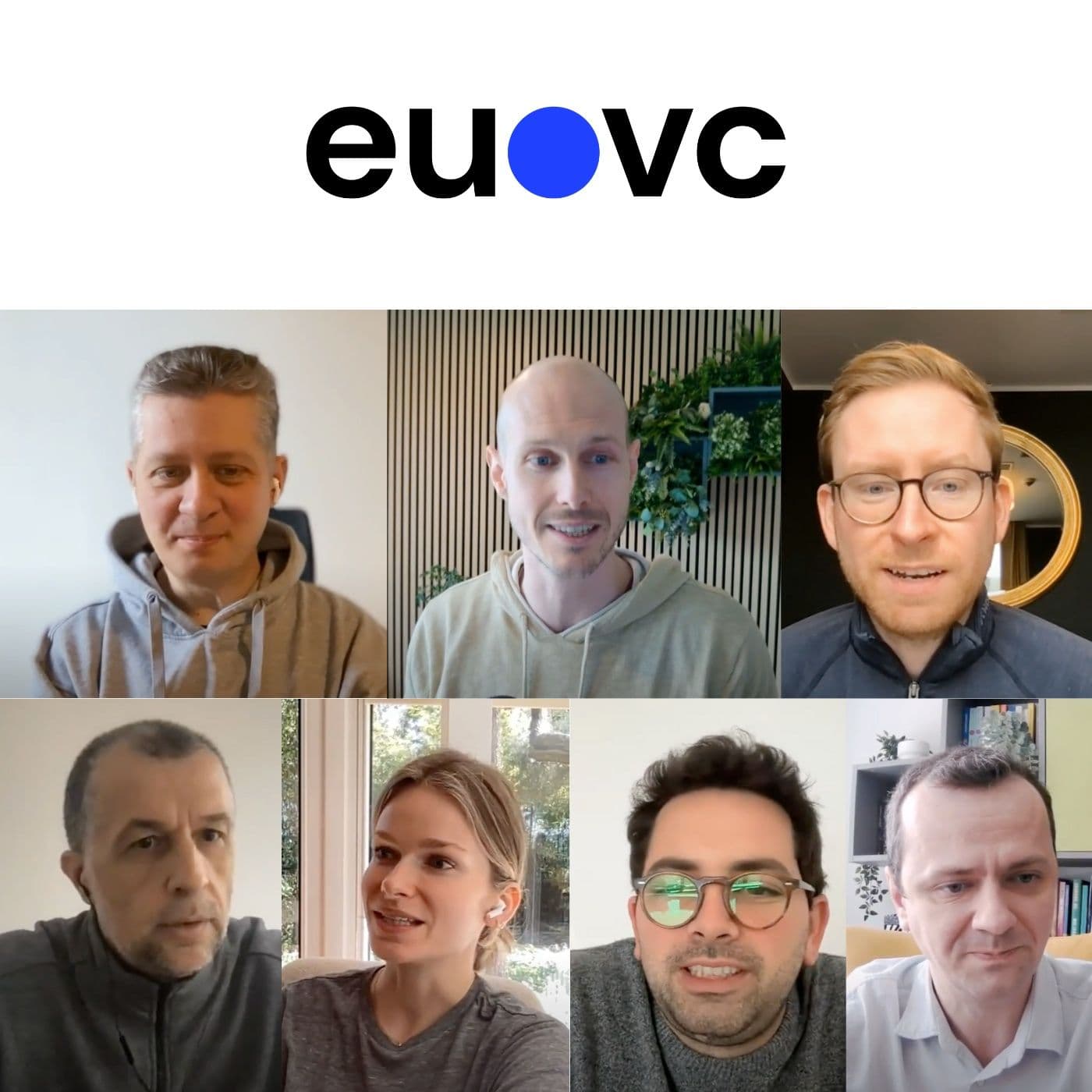
Episode Overview In this episode of the EUVC podcast, co-hosted by Andreas Munk Holm and David Cruz e Silva, the focus is on a webinar titled "Investing and Scaling in Romania and Beyond," which highlights the vibrant entrepreneurial ecosystem of Central and Eastern Europe (CEE), particularly Romania. The discussion encompasses the local technical skills, historical engineering heritage, and startup growth dynamics with a global mindset.
Key Themes
- Entrepreneurial Ecosystem in CEE: An exploration of Romania's growing startup landscape, success stories, and the impact of the 'UiPath effect.'
- Investment Landscape: Insights into the challenges and opportunities for investors and founders in Romania and the broader CEE region.
- Diversity in Startups: Addressing gender and diversity issues within the entrepreneurial framework.
- Global Mindset: Emphasizing the necessity for startups to adopt a global approach from inception.
Main Discussions
The Venture Ecosystem in CEE
- Romania is emerging as a prominent case study in the CEE region.
- The panel discusses how a rich engineering tradition and strong technical universities have contributed to a flourishing startup ecosystem.
Romania's Flourishing Ecosystem
- Notable success stories in Romania, particularly in the enterprise space and gaming.
- The emergence of funding sources, including pre-seed funds which have gained traction since 2017.
The UiPath Effect
- The success of UiPath is seen as a pivotal moment for Romania, inspiring new entrepreneurs and increasing venture capital interest.
- The role of UiPath in demonstrating that significant tech companies can emerge from Romania.
Investment Strategies and Trends
- Discussion on investor perceptions of Romanian startups, focusing on their appeal due to the technical talent and global market focus.
- Challenges faced by Romanian startups in attracting follow-on investments and navigating the complexities of scaling.
Challenges and Opportunities for Romanian Startups
- Issues related to market entry, especially concerning go-to-market strategies.
- The need for diversified and experienced teams within startups to successfully navigate global markets.
Addressing Diversity and Gender Gaps
- While Romania has shown improvements in gender representation within tech, there are still challenges, particularly in leadership roles.
- The discussion emphasizes the importance of diversifying the talent pool beyond technical skills to include diverse backgrounds and perspectives.
Key Takeaways
- Romania's entrepreneurial environment is characterized by a robust technical talent pool and a growing number of startups with a global orientation.
- The success of companies like UiPath has significantly influenced the investment landscape, encouraging greater interest and capital flow into the region.
- There is a recognition of the need for more capital, especially at the pre-seed stage, to support the burgeoning number of startups.
- Diversity initiatives are crucial for fostering a more inclusive tech ecosystem, and active measures need to be taken to address these gaps.
Conclusion The episode serves as a valuable resource for investors, founders, and anyone interested in understanding the evolving landscape of venture capital and startups in Romania and the wider CEE region. The discussion is part of the CO-INVESTIN project, which aims to enhance European investment ecosystems and promote transparency and inclusion within the venture capital space.
Written by AI. May contain mistakes. Listen to the episode to check what was said.
Transcript
Automatic transcript. May contain errors.0:00Welcome everyone to today's roundtable on investing and scaling in Romania and beyond. So we have a great panel gathered with us today. We've got Bogdan Jordek from Underline Ventures, Carolina Moroskova, sorry if I'm pronouncing that wrong, Carolina from Crado Ventures, Dan Mijesko from Gapminder, Marius Estrad from Tech Angels Romania, also a former UiPath, Enes Huli from 500 Emerging Europe, and Jacob Stein from Crianum. Guys, I will ask you to introduce yourself in just a second, but let me just set the context. So as you all know, The CEE is just booming with talent and really have entered the venture ecosystem in a way that makes everyone in the West look at the space and say, we need to be involved and we need to better understand what's going on.
0:50So that is what we're trying to do here today. We have Romania in front and as the focus case study of today, especially, of course, because Romania has really been one of the front runners that many have been looking to to both understand as a case study as we do today, but also to to to really just get in and be part of the action. And of course, that's very much led by How to Web Bogdan, which is an incredibly important conference that's bringing us all together. Today's roundtable is part of the Co-Investing Project. It's an EU-funded project to connect our beautiful European investment ecosystems while also strengthening the transparency and inclusion across the ecosystem.
1:35So, of course, today we're also going to be talking a bit about the diversity challenges that we have in tech in general, in the CEE, and in deep tech. We're also going to dive specifically into the strengths, the opportunities, and the challenges of the Romanian ecosystem. We're going to look at how startups are built and scaled. And we're going to look at the current state of funding and especially focus on the barriers for both international investing and scaling. And that means, of course, that we're going to be looking just as much at the investor perspective as the founder perspective, meaning how do you actually grow and scale in these ecosystems.
2:17So I just teased a bit who we have with us. I think this is really the group that you can only dream about having in front of you when you're going to talk about the CE and Romania. So let me just ask you each to give us a first introduction to yourself. Bogdan, maybe you will get us started here. Hello, everybody. Thank you for the invitation. G.P. at Underline Ventures and also founder of the Halt Web Conference. Should I continue and mention more about the fund, Pre-Seed Seed Fund, 20 million dollar management? That's about it. Beautiful. Carolina, maybe you'll take it from here. Hi, my name is Carolina.
3:07I'm a partner at Credo Ventures. We're a product-based Pre-Seed Seed Fund. no sector focus besides focusing on the CEGO Dan Hi, sure, of course I'm Dan, I'm a founding partner of GetMinder Ventures which is the fund manager for two funds now it's fund one, 50 million and then fund two, we just did the first closing the fund two will be at 80 million and we're doing seed and late seed we found out we did also pre-seed beautiful then marius maybe you'll come in here hi everyone marius is trate chairman of the board at tech angels romania the largest business angel network in romania uh been around the network has been around for 11 years now i've been leading the group for the past year a total amount invested by our members over the past 11 years is 43 million euro across 250 startups in romania but also in startups founded by Romanians abroad and some international startups.
4:16Thank you, Marius. Jacob? Yes, Jacob, investor with Creandum. We are a multi-stage fund, so our fund is 500 million. We do CDNA, Pan-European generalistic, but over the last years developed more of a focus in CE. So, yeah, love to work with all of the guys here on the call and listen to your question. Thanks for the invitation, Andreas. Of course, take it. Enes, you're the final guy. Hey everyone, this is Enes from 500 Emerging Europe. We're a pre-seed seed fund focused on the Baltics, Eastern Europe and Turkey and we've done about 30 investments in the region around the past two years. So now I want to ask you about the current state of the Romanian ecosystem and specifically start out by asking what is it about Romania?
5:06What do you think that it is about Romania that has really allowed the Romanian ecosystem to flourish as much as it has and create such successes as we've seen? And I'll ask who I always refer to as Mr. Romania, and that's you, Bogdan.
5:26Thanks. So I want to, I would split this answer in two parts. The first one would be that CE overall and Romania in particular has a long transition in engineering. And this has been probably the only positive inheritance from the communist times. We have had strong universities, strong focus on mathematics. and you i mean this is something that has always been a strong point technology industry has always been a strong point in in romania and then starting with 2017 i think 2017 2018 this is by the way also to get minder one and the hope the first uh pre-seed seed funds that we have seen in Romania and then with the rise of UiPath, Romania has become an industry, an ecosystem which has significant success models and capital and these have also accumulated knowledge that now are creating a second wave of successful startups.
6:52And we have done in particular pretty well in the enterprise space with a few notable successes in gaming and other PLG type of startups. So I'll pass this now to Dan. I don't know if I'm allowed to do that, by the way, Andreas, or you're in total control of this. I would shut up. No, no, everyone, please do jump in, jump on each other, say you don't agree, say you do agree. Please don't make me the big moderator. Please just go at each other as you please. And I've seen you at dinner, so I know that you know how to not agree with each other. So, Dan, please take it from here. Yeah, I would absolutely agree with what Bogdan said.
7:37I think that another factor is the mindset of these startups or the entrepreneurial teams to actually try to build from the scratch a business that is scaling up internationally at operational level, getting customers and then later getting investors from the Western world, mostly from the Western world. So this is something that added up a lot of success to the ecosystem because people took... they had the right mindset, they had the right vision, they knew what they wanted to do from the beginning, they didn't waste too much time on trying things, they wanted to do Western markets and that was it.
8:18Second thing that basically Bogdan I think he mentioned, it's a lot of knowledge and focus towards enterprise and that becomes it comes with the profile of the early stage teams which are rather technical and it's very often that engineers are feeling comfortable to sell to other technical people let's say and that that has has an impact on the profiling the main profiles of the startups that have actually made it towards series B or series A even now there is a challenge and I think we can talk about it over dinner when we see each other, or even sooner. It's called Gen AI. Gen AI is the best thing you've ever seen, or the worst thing you've ever seen.
9:14Basically, it's forcing the new wave of startups to compress time when they go to market. And it's forcing them to be successful faster. So, what it means for the startups in Romania? Well, obviously they need to have more diverse type of teams. They need to have earlier in their life somebody with a go-to-market component into their team. Right? So this is the change I think becomes a challenge for the Romanian startups to get from a very early stage a go-to-market component in the founder's team. I don't know, maybe Marius can add this because he has a lot of comments on this because Tech Angels is seeing a lot of startups on the early stage, on the preceded rounds I'll gladly build on that and add one nuance to what has been said, so beyond just the technical tradition in the country, I think to give you some numbers there's an important density of technical talent per capita in Romania that is not necessarily seen in the other countries in the region.
10:25So just to give you precise numbers, we're talking about 230 ,000 people in Romania working actively in IT and telecom, arguably the two industries that can supply the workforce for what we're doing, out of an active population of a little under 5 million. So we're roughly around the 5 % mark, people working in ITNC in Romania, which is, if you'll check the numbers across other countries, it's a pretty impressive number. That translates also into the size of the overall IT &C industry in the Romanian economy. Thanks to the, let's say, the tailwinds that we've had over the past few years, since 2017, especially, we do indeed see more diverse teams.
11:08And actually, I would venture to say, over the past year at Tech Angels is the first time in our history where we've seen teams made up of exclusively or founder teams made up of exclusively non-technical people so business people who have a dream who have a vision about building something who have not yet built a technical team but who you know venture out to pitch in front of us angels because we we invest at inception with with their idea and the blueprint essentially or just a you know a wireframe or what what they'd like to build that's new back in 2016 2017 we wouldn't we wouldn't have seen any of this not not at all so that's that's completely new indeed and just for the attractiveness of romania andreas if you allow me i'd like to add one thing that's ignored because because it's taken for granted for romania it's um you know geopolitically let's say it's been a stable country.
12:11It has not had the worlds and the tumult, I guess, of other countries in the region or in Europe in general. And I believe that's a little bit at times underappreciated. But part of the reason why we see the numbers that we see in terms of foreign investment in Romanian startups is also due to this. And part of the reason why a lot of founders have chosen to stay in the country and create companies starting out of here, even though they eventually moved to, you know, some of them to the US, some of them to London or other parts of Western Europe.
12:51Jacob, I'd love to, or Carolina or Enes, now we heard from the three guys on the panel that are based every day in Romania. I'd love to ask you to provide the international investor perspective. Yeah, I think from an outside-in perspective, the beauty for us in Romania is that there is a liquid and very strong pre-seed market that we have that gives founders the right mindset and the right perspective. And that perspective for us is going for global solutions and for global leadership, not building regional copycats or regional models. And I think it comes back to the point that I think Bogdan and Dan made before.
13:32given there is so much enterprise and tech talent and they love to sell to other enterprises, we don't have to ask, such as in Germany or in the UK, do you plan on selling this at some point to the US? But the founders tell us the majority of our customers comes already from the US. And I think this global mindset on go-to-market paired with deep enterprise and tech talent rooted in the geo and a strong investor ecosystem, I think that's the mix that for us makes Romania so interesting to spend time with.
14:13Enes or Carolina? Carolina, please go. All right. Should I? Okay, okay. So, you know, I think that a lot of the points were already said, right, by Bogdan or Dan or Marius and everyone else. But sort of from the like sort of looking at CEE in more of a, you know, like united element or just broadly, I'd say that Romania definitely there because like CEE is obviously a sort of like a cluster of smaller ecosystems. And Romania is definitely one that's quite ahead, you know, together without any of Poland, Czech Republic. and you know it's it's true across the whole region that we have strong talent but I'd say it doesn't only take strong technical talent but it also takes the vision right and the vision doesn't sort of come out of of like vacuum you know it's it's it's sort of getting inspired by people who have been who have been there who have done that and I think that you know Romania particularly has been obviously has been very lucky and i mean it's not just luck but you know there's been several great success stories that have really kind of given that have inspired uh people right in the ecosystem and i think that's super important um and and of course i think also romania is one of the few countries that also attracts big tech um and i think that's that that also is an element that um is super um important for our local ecosystems that has been true also for Poland.
15:49It's somewhat true for Czech Republic, right? It's sort of the countries where big tech, like, I mean, in Czech Republic, like Cisco, Microsoft, I believe there's big offices for Google. Now I think Stripe opened a big office in Romania. So, and obviously those, you know, I mean, you learn, right? They typically bring some of the international talent and then like hire locally, strong technical talent, and you learn, and we see a lot of great talent coming out of these sort of local big tech offices starting something new with sort of having been inspired, right? So those are some of the, I guess, other points.
16:30Enes? Yeah, I agree with what everyone is saying in terms of like in emerging Europe, you have companies or startups that are mostly focused either globally or fully on the US, which makes the upside potential much higher. I mean, if you speak with series A or B companies in Germany or in France, 80 % of their revenues would be from local markets. And that has its own glass ceiling where the power load doesn't work to your advantage, which is not the case in Eastern Europe. About Romania, we really believe in this multiplier effect of great entrepreneurs building great companies, which in return pushes even more people to become entrepreneurs who worked at these companies.
17:05And then obviously there is UiPath, which is a$30 billion at its max company. So whether that would correlate to 30 unicorns or 15 unicorns, but it's not just one unicorn. So our hope, at least with Romania, is that that multiplier effect is going to be even stronger just because of how big that success is and has been. Marius, we have all... Yeah, please go, Dan. And then Marius, prepare to talk a bit about your UiPath journey in just a second. Oh, yeah. Sorry. Sorry for interrupting. But I just wanted to make a comment to what Carolina has said, just said. It's like, I would take luck any day.
17:47Indeed, we are lucky. Yeah. And I would take luck any day in this environment. 2023 has been an interesting year. Yeah. Yeah. I think there's a lot of truth to that, especially in venture. Luck plays a big role in life, but it definitely plays a big role in venture as well. But you have to create it. Yes, you can create it. Yeah, that is true. Marius, I want to go to you and ask you a bit about your journey with UiPath and reflect on that versus today. If you could kind of think about the ecosystem and context in which you build and grow UiPath back in the days versus what the ecosystem is like today.
18:36we weren't thinking about it necessarily in these terms when we were building uipath back in you know i was there as chief people officer from 2017 and 2020 we didn't pay a lot of attention to what was going on locally around us because we were building a global company so that was not That was not our focus. I think my first major surprise out of the UI story came circa 2018, 2019, when we started socially meeting with people who were telling us we feel inspired by the story and by what you people are building there. Good luck. Keep going in the right direction. Do all the best that you can do and make us all proud.
19:22And that was, you know, somewhat surprising because that's not exactly the way we were thinking as we were building UiPath. Of course, there was a sense of trying to prove something, but it was, I think, more personal and less national. And then UiPath sort of became associated with Romania somehow. and places in the US where we went or in the UK, I got stopped in the airport when people saw my UiPath backpack and got complimented on the talent of the technical teams of UiPath who were helping customers of this banker or insurance person or whatever. So it kind of built out from there. Once I left UiPath in 2020, I started discovering more in-depth what we need to do together.
20:16There was not a UiPath mafia per se in 2020 when I left because I was among the first ones in the top management, Romanian top management, I mean, to leave the company. You know, things have changed a little bit. Of course, UiPath right now is a public company. It's still an engine for formidable growth in Romania, both from a professional perspective and from a financial perspective, I believe, to a lot of people. but yeah there is now this notion of uipath alumni if you wish of people who have been with the company already on different during different stages of its journey and who are now trying to to to contribute to to give back in one one form or another i think it i believe it will take time i've left more than four years ago so i've been doing what i'm doing for for four years and I see I still have tremendous amounts to learn.
21:13I tell this to my colleagues who leave UiPath and to my former colleagues who leave UiPath and want to start investing and helping startups, you know, take your time. Don't jump into this like you would into a career at UiPath because it's not at all the same thing. And it really isn't. You have to give yourself a little bit of time to learn and for your psychology to adjust. As an executive in a company or an operator in a company, you're expected to deliver from day one. And your mindset is all about execution. As an investor, it's all about patience. So it's a very different game that you have to learn if you want to start doing that.
21:48I encourage everyone to start talking to the people who have been active in Romania, like Bogdan, like Dan, like Carolina, and Timit Credo, and who travel here and who have this nice helicopter view of what's going on and some in-depth view on certain companies. You know, spend time, connect, learn, and things will pick up. But give it time. I think there was somewhere around 2021, because of the energy of the moment and what was going on, there was this sort of unrealistic expectation that things are going to immediately change because UiPath went public. Personally, I think that's unrealistic.
22:29Things are not going to immediately change. You know, in full investment cycle, everyone knows this is like seven to ten years, right? it's been a third of a small cycle since uipath went public so it's a bit still a bit early to to to to evaluate i believe but we're going we're going to see positive returns on the long term um if people who leave uipath give themselves the time and the weapons let's say to to dabble into investment also and supporting the local ecosystem. I'm curious. I just want to... I talked a lot about this, but I'm curious how one of the investors in UiPath sees this because, you know, Carolina, not to put you on the spot here, but Credo was very bullish about and is very bullish, not the only ones, but very bullish about the perspectives of what can come out of the sort of UiPath alumni group.
23:28yeah of course i mean it's uh you know and i think we we we believe that because we've already backed uh a few uh groups since then that have uh come out of uipath but it's you know i mean it's always going to be a risky business it's not a guaranteed success right uh just because you've been there done that but i think it's it doesn't really matter right i mean it really just what what matters is that there's more uh and there's more companies with the know-how that there's more people who understand what it takes to build a company, that there's more people who have seen what it means to be successful on a global scale and take that with them, right?
24:07If then their own venture is going to be successful or not is a different story, but they're there. So I think that's obviously what we're super, super excited about. We're hoping to see and replicate that in in other ecosystems as well within the CE, but you know, it's, it's, that's obviously an incredible one for Romania. And there's several up and coming ones, right?
24:35And that's sort of the, that's sort of the flywheel that we see in every maturing ecosystem. And as you said, Marius, right, like it doesn't happen overnight, right? And I, we're often asked these questions, like how do we you know accelerate uh the ecosystem and i don't really have a good answer to that right like more success stories like this um but there's not like a given recipe there's not like some magic um you know wound that you whatever magic stick that you can fling and make it happen um but it's happening like we're sure about that
25:14Bogdan, you were about to say something. Yeah, I want to add, you know, when we discussed the UI path effect, we always mentioned this thing with, like, basically, we hope to see again in Romania what, you know, the Skype effect from Estonia from 10, 15 years ago, right? Skype alumni have created a bunch of funds, and startups and have put Estonia super high on the European and world map when it comes to creation of startups. But there is one more element.
25:56There is one more element to this, which is the fact that UiPath has basically de-risked Bucharest and Romania overall from a venture fund perspective. Before UiPath, it was sort of unclear if you could start from Bucharest and you would build this monstrous enterprise-led, enterprise-focused, sales-led organization. And I would say, I would rather say that our expectations would be that product-led companies would come out of Romania because it's just difficult, you know, starting from here to hire all these sales reps across the world. But UiPath has de-risked that and right now we see way more interest from reputable venture funds in Romanian startups.
26:59and that's also a side effect of UiPath. So it's not only knowledge, it's also capital availability, especially for the later stages, of course, but this is super important than five years ago. Can I ask you, all of you, do you see that specifically, speaking of that de-risking part? Because I think it's a very good point. Do you see that specifically applying to Romania or do you see it also leading to the other or spilling over to the other countries? Because I can definitely get what you mean, Bogdan, that it kind of became – it became okay or not dangerous to invest in a Romanian startup because everyone would say, well, what's your Romanian bet almost, right?
27:50Where are you going to find the next UI path? And that was okay to say Romania, but it was not necessarily okay to say Bulgaria or Slovenia or anything else. I'd love to ask you if you're seeing that effect apply to the whole region or if it really was just the country.
28:18I mean, Enes can have a take on this, right? To bring in Turkey into focus. definitely there is a growing tide all over the region probably some countries are a bit further than others
28:37yeah I think the fact that I mean targeting US and global success stories I don't think that's the status quo across the region I think there are some countries where we also see more regional and local success stories as well Poland is one of them Turkey is also kind of similar to that obviously the second generation of entrepreneurs are now thinking more global from day zero and we have gaming companies who are obviously global from day zero but if you look at these from a generational perspective I think countries like Romania are having their second round of successes both of which were global successes so that has a stronger flywheel than having first local and regional successes and then companies who are going for the global market which is the case with Turkey so I don't think the flywheel is as strong here compared to Romania
29:26I'd love to ask you, Jacob, because Creandum, you said in the beginning, you're investing across all of Europe. You're starting to look more at CE and Romania specifically. I'd love to ask you, what are the extra rounds of diligence or extra considerations that you might have when you look at a Romanian team versus a London -based team? Yeah, so that's a fantastic question. And I hope my hotel Wi-Fi is not letting me down here. But I think the difference is in London, we would probably feel still a little bit more comfortable putting first institutional money into a team because we have less of a local bias because we have a large office there.
30:17Whereas in Romania, I think there would be more confidence for us to lead around if there is already some trusted partner locally on the ground who invested into the company. So I would say that difference still exists, but I would say comparing Romania to neighboring countries or the ecosystem in general, our trust in entrepreneurs going all in in their venture and our trust in forming boards that also incentivize the founders not to sell early, but to go for down the UI path route when it comes to exits is much higher in that country versus others. So that's, I think, the nuanced view we have on investing in Romania.
31:01Is there anything, Jacob, in terms of – because this is what you often hear, right? You hear investors from the non-CEE countries being anxious of the local frameworks. Some would say, I want the company domiciled in Delaware, or they want it domiciled outside of the country. Do you have any type of hesitations there? And I'll also ask you when it's to come in, because you're seeing tons of U.S. investors considering your companies. yeah so so if i if i start of course there's a tendency of at some point slip the company over into a into a delaware corp but i think for us as initial investor this is not the requirement to to come in so i think random has done 13 investments in cei and the majority of the cases it was in a locally embodied entity so that has never been a roadblocker for us and it would not be for Romania.
Read the full transcript
32:09Of course, there are some reasons to flip at some point, but it's not a necessity for us to invest. Yeah, it's not a necessity for us either, but if you look into the successful companies, most of them are domiciled in the US, either from the get-go or after they raised their A's. I think even in more mature ecosystems where there has been multiple unicorns every year, like France, for example, where you had Algolia, Wildeco, and then Tata Eco, et cetera, I think even France is discussing that, whether the companies are supposed to be domiciled in the US or not, and they're going through that transition.
32:42I think an ecosystem should mature further to start discussing that and then making peace with more of a local domiciliation. But I don't think any of the CE ecosystems are there yet. I think it's much more healthier to do it in the US, just from a downstream capital perspective, even until the IPO and after that. i'm curious actually i have a question for for jacob uh you know comparing sort of uh ce versus uk do you guys um when you're looking at a company uh in the ce like do you put a price discount uh in terms of pricing like or do you see the prices similar sorry just curious on on the on on the pricing difference um so so i would say we see a price difference in general but we don't see a price difference in the round we do because the rounds we do following the the power law are so competitive that uh that uh the prices just just get to a similar level i would say compared to to a to a germany and or or to i don't know maybe maybe a france so i i think when when founders come in, their initial valuation they're asking for is on average a bit lower.
33:57But over the course of the fundraise, it's never the valuation the entrepreneur wants, but it's the valuation that allows you to win the deal that is the one you're paying. And there I see much less of a difference compared to a London-based startup.
34:14Enes, Bogdan, I'd love to hear the rest of your take on this, because I think that there's difference here between both the stage that you come in and then also the types of investments that you do?
34:30When it comes to pricing, I think pre-seed deals, at least some of them are underpriced. And definitely we see that we have an incredibly small number of overpriced deals in 2020, 2021, 2022. So, I mean, the backslash of that period has been significantly lower in Romania, probably the same in the broader CE region. am I right in saying bad deals are cheaper good deals are more or less the same yeah and at A, B stage they sort of equalize so maybe there is a bit of arbitrage if you do precede seed but not that much yeah but I have a question to the folks on the call doing pre-seed. It's my feeling that we're seeing less funding rounds where the pre-seed investor already got an overarching share of the company and where you have to restructure cap tables and where things are messy from the get-go.
35:49Would you say that is correct and would you say it is because of the maturity of the ecosystem or is it just my feel? oh well i would probably agree with that yeah i mean we're we're still seeing i mean there's uh there's different strategies locally right i mean i think also goes to there's not like one type of startup what we for example see is like in czech republic specifically there's like a couple companies that have pretty messy cap tables with like one investor still owning you know 30 40 like quite a quite a meaningful amount of the cap table but very often i'm you know of course it is not you know it's super tough to obviously scale with that uh and and to get more funding with if you have a cap table like that but often it's also companies that perhaps weren't meant to raise that much capital right it's a lot of like local plays like we talk about like the local winner in you know e-commerce platform in the czech republic of course the the investor from the local investor's perspective, they will want to, because they understand that the upside is capped, right, just given the market size, they will want to get a meaningful share.
37:02So, but yeah, definitely for companies that are, that from the, get, from the sort of day zero or day one, you know, they want to sort of, they go into it with the vision we're building, a global venture were going sort of for the home run the investors that beg them understand what the game is so definitely I would say smaller and smaller number of companies with messy cap tables that want to sort of go into the global game I would agree absolutely with that And I think at least for Romania, although we are looking also right now towards countries surrounding Romania, but in Romania, historically, at the beginning, we encountered lots of such situations.
37:56And then it was the mission of educating the market of many actors, including ourselves, including Bogdan, including Tech Angels, including, I don't know, Accelerator, and many, many other actors, many other investors. And we see it smaller and smaller. What happened though in 2023, there were some bridge rounds here and there that might have that effect. And the effect of those we're gonna see 2024, 2025, right? So I guess we are not out of the woods with such situations. And the question is who has participated into those and usually are actually very good investors. and it would be a challenge to see how to deal with that and if we go back to the old paradigm of you know this is the ratio this kind of round and this is the ratio this kind of round because until now we worked with this in mind with this setup for preceded should the cap table should look a healthy cap table should look like that right and then on the seed round it looked like that and And then on series A it should look like that.
39:09So whenever we entered, not only as game-minded, but any responsible investor, whenever we entered, we're looking for that and prepping the company already for the following round, right? But now there are situations when very good companies were in the needed bridge rounds. And these will have effects on the cap table in 2025, probably. So it would be interesting how we will all deal with this, right? Yeah, absolutely. I'd love to go because we have two significant parts that I want us to make it to cover. One is the journey of startups and going from small to big and the challenges that are specific to building in Romania and in the CEE.
40:06I'd love to really kick the question up to any one of you and say what are you seeing that one might call native or specific to building in the CEE as a challenge?
40:26I think that global from day one comes with its own long-term benefits and short-term compromises in a sense where you're trying to not go for lower-hanging fruits in terms of first customers or design partners. You're trying to look for more mature tech markets where you would get those design partners so that these customers wouldn't push you towards mediocrity but rather uplift you. But that's not the lower-hanging fruit, of course, and then you have to go for that as a founder. and that also ties to the ties to turning into a multiple office structure early on in your journey compared to the more mature markets.
40:56You would see German SaaS companies become multi-office once their series B whereas our founders try to do it while they pre-seed while they're a five people team. They have to move to London, New York SF wherever and then that has its own short term challenges and compromises from a cultural and product building standpoint but obviously if they can go past that phase it has its own benefits in the long run as well.
41:22Any other? I mean, I would add, I would expand a bit on a topic that Dan mentioned initially. We have a strong engineering culture, and I think many, many of the startups that, especially the successful startups of the last 10, 20 years, they have either an engineering or a math background. and this is also sort of raises questions on the long term i mean at least in my head uh you know uh because this most of these founders that we are investing in they haven't got the experience of managing a large company a large group and maybe they even haven't been part of a company that has had this type of you know challenges or like structure and in these cases the founders themselves they need to they need to walk a growth a growth path along with the company and because the founder that we invested precede who can manage a you 10 people team will be different than the founder that you uh invest when they are at series b or c and they have to manage hundreds of people and they need to go through their own journey of of growing and and building themselves into this future ceo uh that they need to become in order to make that company successful so this is this is a very i i think this is more of a particular thing to to see even to to western europe where many of the founders that we invest in they already been part of some big product organization and maybe the transition is is simple for them
43:20i would like to build on that if you'll allow me on what bogdan just said um the transition would be simpler but we're still lacking capital so for me the main challenge is having being an investor at inception rounds as a pre-seed investor. You know, as a business angel, you realize at some point what the size of your portfolio needs to be. And you realize that in order to achieve that size and to pre-seed or invest at inception round in that many companies, you need to know a certain number of founders, X, right? That you need to map mentally and understand and see if you can make them evolve.
43:54And oftentimes the challenge is, and I believe not just in Romania, but across the region, is just the availability of funds. pure and simple. Of course, the local players are going to do the best that they can, all of them, and they are paying as much attention as we are as business angels to these inception rounds, of course, but it's still not enough. I mean, more capital would seed more companies, which statistically would yield on the long term better results. We're We're simply not there yet. So we don't, you know, to Bogdan's point, we don't know for sure right now that founders who can build a pre-seed seed company can take it to series B and C and D.
44:40On the other hand, we haven't seeded enough to know, to validate that assumption. Out of the four or five that I really had on my mental map for starting to invest, One of them has already achieved Series A and is building towards the next stage of the company. And I think others would try their hand at it, given the opportunity. But will they be given the opportunity? I'm just one person. Bogdan is also a solo GP. Don has his team and maybe they can bundle their work together. So do Carolina and Ennis. But I'm wondering out loud here. I personally believe that more capital would also do the job.
45:29I think the timing of funds in their life and 2023 was not optimal and it was felt in the market. So the number of new rounds, if I read correctly one of the studies that appeared and it was actually done by the colleagues of Bogdan, by Alex and the HowToWeb team, was this, that the number of new rounds dropped by 40 % in 2023. And if you look at it, it's correlated with the fact that we are just a few funds local in Romania. And the first rounds usually happen with the local funds involvement. So if one of us is in year six, like it actually happened in 2023, it was the case of Germinder. If only one of us out of five funds in the market was not able to invest in one year, it had a huge impact on this in the entire ecosystem.
46:29Now, on the other hand, I don't want to do marketing or anything, but on the other hand, 2024 looks a bit better. We already did the first closing of the second fund. Probably early game will do some time their first closing in I don't know how many months from now. so in theory should be money in the market again in 2024 to do certain rounds so that will address the topic that marius mentioned still the quality of the teams is not something that we can address at this size of the ecosystem unless we are actively taking this into the discussion if the teams in which we are investing and then we see we figured out it is to say that the very early stage startups the teams are like two and a half men people that are mostly technical by the way we then it drives also the gender discussion if you want to drive that discussion because most of the technical people are males and there you go so you basically need to to have these discussions earlier with the teams and make them aware that they need to go to market type of person.
47:47Otherwise you won't make it and the maturity of these guys it's probably a process just like Bogdan and Marius mentioned it's a process some of them will be able to take it and make it happen some of them know the way they go internationally it's also influencing this so it's one thing to go operationally and find customers especially in enterprise if their customers are in enterprise if they're in the if they are opening an office in london it's a very different story than opening a office in new york the time difference can be a killer for forming a senior leadership team it's just simply like that you need to be closer on your time zone to the team that is actually technical, the founding, product strategy, product marketing.
48:43You need to be closer to that at the first step and then you can go more comfortably towards the US. Now if your customers are SMEs or even SOHO in a B2B setup, well, that's a different story and you can go easily to the US. That's what we observed from our portfolio. So getting a team more mature, it's also about how you advise them to do the international expansion, right?
49:19So I actually, I mean, like just sort of to expand on this topic and to maybe be a little controversial but i don't really agree with uh with the statements that there's not enough capital i think there's enough capital um at the seed stages there's quite a lot of local capital for the volume of companies that we're seeing and i would say that the best teams uh and the best ideas mostly you know in in 99 of the cases find uh early stage capital um and in the later stages is definitely it gets more competitive and i mean i think it's really about the quality right like not every startup you know and you know and it might sound ruthless but it is uh it's the industry right like not every uh seed stage company deserves to raise series a or is meant to raise series a right like and that's that's in that's in every country and as as jacob said to his point of my question it's you know he doesn't distinguish uh between the company their benchmark exactly the same right is it it whether the company's from london or whether the company's from prague and the road there to you know dan's and bogdan's point like it's it's definitely a little bit harder right because the the founding teams will go through more obstacles like potentially even like personal challenges having to move somewhere you know you can't sell your you know potentially you don't have the network in the in in the us you know to sell to your first customer so easily you don't have the friends from the university to tell your your first license to but you know it's harder but like you still kind of it's it's it's the name of the game right like and i i i have to say that in our portfolio the best companies don't struggle to raise um and they're getting preempted they're getting preempted by great funds and and so i i think it's really about just um yeah it's it's it's about sort of facing the fact that we're we're measured at the same level as everywhere else were put against the same benchmarks and and you know the argument of sort of blaming it on not enough capital is I don't like it so much oh please allow me to counter then Carolina so nobody I was not challenging this for the growth stage and I was not in any way putting blame on anybody I'm just saying something that's absolutely real I started if you remember by saying there are 230 ,000 people working in ITNC in Romania.
51:47A big question for somebody like myself who's acting as a business angel is how do we incentivize as many people as possible to start something, to try out something, to come to us business angels with their vision, their idea, their plan, so that potentially we can turn it into something great. What I can tell you is that at business angel level, so really inception and precede level, sometimes we have a difficult time convincing senior folks would have a chance of building a good team to start something out because when they ask around what the capital available is for an enterprise like that, they feel too constrained.
52:26They feel like they couldn't operate under those conditions. And the capital is what it is. As you said, it's supposed to be financed locally at the pre-seed stage, at the inception stage. There's no expectation for or little expectation for that to be funded internationally. It's not that. It's just very little here locally. Even with the contribution of the funds going into Fund 2 right now, the ones who are still active, it's still very little. This is a large country. It's 16.5 million people in total. There's a pool of people to choose from. Realistically, there is a pool of people to choose from.
53:01There are people who are experienced in enterprise because they've worked for banks and for insurance companies in their IT departments. We can look into those places and pull great founders out of there. We don't have sufficient... But is it our job to convince... Sorry about that, Andreas. But is it our job to convince people into starting something? I think that has to come from the team, right? And if that's the concern, I mean, we have a fund. You guys have a fund. The Tech Angels have capital. So, you know, I mean, that that concern might be in some cases valid, but I don't know, I just can't really reconcile that.
53:46Like, I just don't think that, you know, if it's not an easy sort of road to go on. Right. As an entrepreneur. I mean, it is a lifestyle choice. I mean, it's not an easy one. And I think it's a massive it's a massive decision. and I wouldn't want to talk someone into it unless they're really, really convinced they want to do it. And then if they want to do it, then there's a real discussion to have about raising capital, right? And the capital is there, in my opinion. But of course, is it as abundant as in other markets? Potentially not. I mean, I don't have the statistics, but in my opinion, it's good enough to support the quality of talent that we have.
54:29but it's about the decision to make to want to embark on this journey I want to second Carolina and just say look away you don't need to raise more funds for Romania we're okay we can invest our funds the competition landscape it's totally fine it's not a problem we're fine actually we have a bit more capital than needed So, you know, just don't put a lot of effort into sourcing from Romania. We'll let you know. No, I think the discussion is one of principle and philosophy, the one that we saw between Carolina and Marius. So I'd love to, before we close this, make it to just touch on diversity, because I think that this is one of the things that I, at least in Denmark and in the ecosystems that I go, sometimes hear that we all agree that we have a big problem in tech with the lack of diversity.
55:40And then many would say when we then talk about the Eastern European countries that the issue is probably a little bit bigger in these countries. I'd love to ask the panel here, and I'm saying this in a way that I will get the reaction that Bakhtan just showed with his face, but while on mute. So, Bakhtan, now please come back on that statement. I mean, I can give you some very hard numbers and it will be done. So first of all, when I was like 20 something years ago, when I was a student at the computer science department here, we had around, I think, 11 ladies in 150 students at computer science.
56:26You can't really ask for 50-50 splits in any engineering position in senior roles because there are just not enough people who have gone through these studies a while back. But nowadays, if you go to the computer science university, you'll see that the split is more like 40-60 or 45-55. And overall, Romania and Bulgaria are the leaders in Europe regarding the number of female engineers. If I'm not, I'm somewhere around 23-24%. And also in Romania in particular, men are heavily discriminated in all marketing, HR and non-engineering jobs in many of these companies. You know, this is a joke, like, don't look bad at me.
57:30We have a significant number of female operators into the sales, marketing, or non-engineering position. So I would not say we have a bad split. I would actually violently oppose that if needed. I will add some data to what Bogdan just mentioned. Gender pay gap in Romania is the smallest in the European Union, was in 2022, and apparently in 2023, if the preliminary data is correct, will be reversed, meaning that on average women earn more than men in Romania. It was 3.6 % in 2022 compared to an European average of 12.5, if I am reading the EU monitor correctly. now in terms of representation just in the in the in the tech world obviously there's more to be done to to stimulate people i would say also romania people from disadvantaged backgrounds people people from rural areas who have a tough time getting to high school and then having their studies financed i would look at that overall for me it's not a question of women and and men you know studies are still not paid in romania for for the most part if you manage to pass the graduation exam, but it's hard to pass that graduation exam if you're not well prepared.
58:50So I think that's an area of focus. And believe me, just having more representatives of the ethnic minorities, maybe some of the refugees, you know, into Romania, start engineering or non-engineering, starting to contribute some endeavors would mean as much in terms of diversity. I hope the ladies will forgive me, but that's simply the truth. It's not a question of just women and men. I think we need more diverse thinking in Romania overall, not in terms of background from all points of view, not just gender. And for the gender pay gap, there was a moment, I believe Dan and Bogdan remembered this fondly and dearly also, there was a moment when out of the top 10 companies, I think eight were led by women in Romania.
59:38I'm talking about the major companies in Romania, in energy, in telecommunications, in banking and so on and so forth. And I tried to do a quick search right now, but I couldn't find the exact stat. It's still a significant number. I can tell you that. Yeah, look, Anders, if I can have two points here. One, it's from our portfolio. It's just statistics and it's not just for you to understand our background when we're going to say the second point. The first, so this is in our portfolio of two sub funds, Accelerator and SID, and 23%, 24 % of the startups in our portfolio have diversity at founders level, which is kind of double from the average in EU, which is 12.
1:00:29And higher than US, which is, I think it's 17 or 18%. So, but we made investments only at, you know, based on meritocracy on performance, right? So this is to tell you a bit what it is actually in our portfolio. Maybe in other portfolios in Romania it's different. I don't know. I know what it is in our. Now, what we also wanted to look at at a certain moment is at what stage this is changing. because maybe that's another thing on how we measure these ratios inside an industry. When the cumulative effect of the last 30 years in technical schools, IT schools, software schools, over 30 years is that you have a dominant pipeline of talent which is at its mail, you should expect that the preceded stage the founders team will be dominantly male in time this will grow as they add a go-to-market components and I was not aware about the statistics that Bogdan shared about the marketing jobs and other type of I don't know sales jobs but the ratios are changing and we see that as well in our portfolio and maybe we should measure that as well.
1:01:56So when it is a series A, we should look at founders plus all the people that are on ESOP or all the founders and the people that are in the leadership team at minus one, right? And then, at least in our portfolio, the ratio looks like 42-44 % in terms of diversity, okay? It's obviously changing with the talent that is added to the company. So I'm trying to say maybe the measurements we are using are not perfect just because we are looking only at a very early stage moment when it's obvious there are technical background founders. It's obvious. So we should measure it at every stage. and then we can say, hey, this is evolving in a good trend or no.
1:02:55But, yeah. To be honest, I think it's a discussion that's really tough to sort of address from where we sit, right? Because it's not like we, I think as investors, we can probably do like our best job at sort of giving everyone an equal opportunity to get funded. And obviously the teams then go on and have to find their talent for the company. But I think it's sort of in CEE. And again, I don't have the numbers if we fare better or worse. But sort of culturally, I think it is a systematic problem, right? Which we're hardly going to be able to change overnight.
1:03:49But it is sort of about like, you know, it is a huge sort of lifestyle decision, right, to sort of go start a startup. And for that, we would need to have a system that allows women to, you know, get better child care, allows women to get, you know, incorporated easier sort of back into the workforce and things like that. And that's more sort of systematic problem, at least like in the Czech Republic like that. That is a that is a big problem. And I think it starts there, in my opinion. Yeah. On that note, let me close off today's panel, first of all, by thanking all of you for joining us here.
1:04:32Also, of course, to our audience listening in, thank you for doing so. So let me wrap up by just saying we totally smashed slash shattered the stigma that the diversity issue is bigger in Romania and the SEA countries than the rest of Europe. So thank you for doing so. Also, I had a couple of post-it notes here on my table, one that said strengths, which ended up leading to me having three full post-it notes written down with strengths from the panel here. And I ended up with only just two that signaled the weaknesses or challenges of the ecosystem. So we can definitely conclude that we are talking about a very strong ecosystem that's powering through.
1:05:18We're looking at things like a very global and Western scaling focus. So startups being born with a global mindset. We have very strong tech talent, which especially in the B2B space is unrivaled by almost anyone. Then we have a tech density that is incredible, especially in the IT and ICT sectors. And we've got new teams that consist purely of business teams, which is something you never saw in Romania before, which I think is an interesting and anecdotal, though anecdotal, very interesting observation. And then we have a very liquid and active pre-seed market. We don't have startups focusing on the copycat models that we have otherwise seen in many places.
1:06:08They go global from day one. We have big tech and UI path effects. So that means, of course, we have great talent from very large, very liquid companies that both spawn off great business angels, but also operators and founders. On the weakness slash challenges side, I wrote that we do have issues around go-to-market talent. We do also have some pan-European investors seeing that there might be a bit of an issue in terms of getting follow-on capital to the space. But that, as I just said, and as we also touched on, that is definitely something that we've seen be remedied over the last couple of years.
1:06:56And then, as Ennis said, we do also have a requirement oftentimes in the later stages to flip the companies out of the region, which, of course, is unfortunate for many local economic slash financial development goals. but we have that in all of Europe so that's something that for all of us is something we need to work on we had some advice for founders and investors that I will not get into but I just wanted to say to everyone here thank you so much for enlightening us and I hope to meet you all at How to Web in some 6-9 months
1:07:45a union of values. United and determined we can serve as a model for other regions of the world. The nature of a problem requires a European response. Europe is a story of new beginnings. New beginnings. Let's start acting.
From the publisher
Our guests discuss the 'UiPath effect', highlighting how success stories like of this one company have inspired new entrepreneurs and attracted increased attention and resources from the venture capital world.
In essence, the webinar provides a comprehensive, nuanced, and up-to-date exploration of the Eastern European startup and venture capital landscape, making it a must-watch for investors, founders, and anyone interested in the local tech scene of Romania and its surrounding regions.
Listen to it here or watch it on eu.vc for a discussion on:
- How to crack the code: Understand the challenges and opportunities shaping the Romanian ecosystem.
- Empowering the future: Delve into the status and growth prospects for women-led startups in the region.
- Scaling beyond borders: Learn how to overcome challenges and adapt global best practices to the Romanian context from the people who have done it.
- Pioneering Deep Tech: Explore the intricacies of launching, backing, and scaling a deep tech company in Romania and the region.
- Success stories: Get inspired by real-life case studies of thriving Romanian scale-ups.
Chapters:
00:26 The Venture Ecosystem in CEE
04:56 Romania's Flourishing Ecosystem: Insights and Success Stories
07:34 The Technical Talent and Entrepreneurial Mindset in Romania
09:37 Challenges and Opportunities for Romanian Startups
12:51 Investor Perspectives: The Appeal of Romanian Startups
17:27 The UiPath Effect: A Catalyst for Romanian Innovation
23:05 The Global Impact of Romanian Startups and the UiPath Legacy
29:40 Investment Strategies and Considerations in CEE
34:06 Investment Trends and Pricing in the Startup Ecosystem
37:42 Local vs. Global: Startup Challenges in the CEE Region
40:07 Unique Challenges of Building Startups in CEE
41:23 The Role of Engineering Culture in Startup Success
43:24 The Critical Need for More Capital in the Ecosystem
55:16 Addressing Diversity and Gender Gaps in Tech


