
 EUVC
11 Nov 2026 · 48m

 Add vo to ChatGPT or Claude to ask about everything you hear
vo listened to this episode to put together the overview and transcript, so there may be the odd mistake.
How Europe can finance “first-of-a-kind” industrial biotech factories, using BioWeg’s bacterial cellulose plants to replace microplastics and discussing financing structures (equity, grants, venture debt/project finance) and what industrial biotech pitches must get right.
0:00Jeppe Høier: And no investors usually want to invest into CapEx alone because it's one of the highest risk class, investing into new technology CapEx. So that's why it's more tough than getting the money for prototype. And it's more money.
0:16Prateek Mahalwar: I think what most companies miss is a clear view on cost and functionality. And that needs to come together. So you need to think about replacing a fossil fuel based product that has been in there for ages. It has a certain functionality.
0:35Jeppe Høier: And so usually technology teams think that, hey, we are still developing technology. We don't need the sales guy. I think you need to start having sales discussion very much in advance. So a business development and a sales is a very important, unique value proposition, which is undervaluing the early stage.
0:55Prateek Mahalwar: I think first of a kind for the typical project finance teams, that's just a no-go, right? They are easy to invent in solar panels and windmill farms and that type of infrastructure. So could then first of a kind no-go, even a second of its kind? I don't think so.
1:18Prateek Mahalwar: This show is not investment advice and the hosts of this episode may be invested in the funds and companies featured.
1:23Katrien Swerts: Welcome to the EUVC corporate podcast. Europe is good at investing in things and much worse at building the first factory for them. BioWeg makes bacterial cellulose, a biodegradable replacement for the microplastic the EU is phasing out. This month you announced Europe's largest plant of its kind, 10 ,000 tons a year in Elsdorf, constructing this quarter first volumes in 2028. 35 million euros in total from venture money, a bank's venture arm, and a 10 million euro grant from North Rhein-Westfalia and the EU. Partik wrote in the announcement that financing a first-of-a-kind plant is the hardest step in industrial biotechnology.
2:07Katrien Swerts: Why is that harder than science?
2:09Jeppe Høier: Usually getting a large sum of money in order to do something which is not done before, which is very risky, is a very tough position, right? So you need to convince banks, investors, the investment and the money largely runs on risk. And in order to de-risk those steps, there is a long list. And that's why it's more and more tough. And no investors usually want to invest into CapEx alone because it's one of the highest risk class, investing into new technology CapEx. So that's why it's more tough than getting the money for WPM prototype. And it's more money.
2:52Katrien Swerts: Yeah, it is. And that is exactly why I wanted Katrin here as well. Because part of the answer is who is willing to write the check. Katrin, before we get to the plan, tell us who Rabo Ventures is and why a bank writes venture checks at all.
3:07Prateek Mahalwar: Yeah, Rabo Ventures is the venture investment arm of Rabo Bank. and I think most people know as one of the biggest, if not the biggest, investor in the food and egg space, but also in energy transition and most recently also in deep tech. We invest out of the band sheet of the bank and that contributes to a little bit more specific profile, I should say. As a consequence, we can be a little bit more flexible with timelines, for example, if it takes a little bit longer to build the factory, we are not stuck to this 10 plus 2 framework that most VCs are. Typically, Rabo Ventures invest in later stage companies, late Series A, Series B, active in ag and food tech, bioeconomy, and energy transition with focus on Europe and with a clear impact angle, which is in the case of Bioweg also very, very clear.
4:10Katrien Swerts: Could you share a little bit about where Carpool Ventures start and where they stop investing? Yeah, so typically we start relatively late stage, I have to admit,
4:21Prateek Mahalwar: because it's a bank. We are not the most risk-seeking people in the world. People in the bank are typically very risk-averse. So series B, late series A, series B is where we start. Having said that, we also recently launched a more early stage initiative called Rabo Impact Foundation. And there we can support seed series A companies, but for now only in the Netherlands. So I think we provide a nice continuum of financing solutions. Once we end as venture capital, we have a BE team that can take over. or we have the project finance team that can chip in some money.
5:06Katrien Swerts: Katrin, in the start, you also mentioned a little bit that you might have a longer horizon on the engagements that you do. But could you share a little bit more about investing Rabobank's money and what does that do to a fund that you did not or was not able to do when you worked for Kulma?
5:27Prateek Mahalwar: Yeah, I think if you work for a private fund, you have always this very tight timeline in the back of your head, right? So you can invest for three, four years, and then you have another five, six years to return the money to your LPs. And that makes it sometimes very hard to combine that with early stage technology-heavy investments, because it typically takes more time and it's risky. what we do at Rabo we are still financial investors we do want to see financial returns it's not philanthropy but we can be a little bit more relaxed on the timelines so instead of saying to Pratik well you have to return my money in the next 3-4 years we can say well let's talk about returning money in the next 7 years we do want to see that returns because we have the ambition to build a revolving fund and we use returns to then continue to invest in other innovative companies.
6:28Prateek Mahalwar: But yeah, we can be a little bit more flexible with regards to timelines. And I think that helps if you want to invest in agriculture, food, bioeconomy at large.
6:39Katrien Swerts: Yeah. Katrin, you have said that this was the right moment to invest into BioEq. What would you have needed to have done that investment a year earlier?
6:51Prateek Mahalwar: I think in all honesty, earlier we wouldn't have jumped because you need this perfect combination of financing solutions coming together. So an investor syndicate, non-dilutive money, and for us the grant that came in via Europe and the state was really important. And so I think in all honesty, a year ago, the company was just not there yet. It takes time to align all these financing options. Also, I think in terms of product market, technology development, scaling the pilot, yeah, we just would have needed a little bit more reassurance. And that I think we had now, but wouldn't have been there a year ago.
7:42Katrien Swerts: If we take that and then try to generalize it a little bit. So what does industrial biotech most often get wrong when they pitch to you?
7:54Prateek Mahalwar: I think it starts with the initial idea, right? So most companies are developing products, which they think the industry needs. But what we want is really something that is not technology push, but a more technology pull. And I think in the case of BioWeg, you can clearly see that companies are looking for new solutions to replace the microplastics that they have in their products right now. On top of that, I think what most companies miss is a clear view on cost and functionality. And that needs to come together. So you need to think about replacing a fossil fuel based product that has been in there for ages.
8:39Prateek Mahalwar: It has a certain functionality. And so you need to match that functionality or maybe even outperform to convince potential clients to reformulate their products and to use yours. On top of that is then cost because it costs to reformulate. So your product needs to be cheaper to give them a kind of an incentive to even try to reformulate. So a combination of cost, functionality is key and then a realistic view on what it takes to scale. If you need excessive capex costs and excessive production facility to scale or the margins don't work, it will never work. So I think it starts with what do you develop?
9:22Prateek Mahalwar: Is it functional? Is it cost effective? Can you scale this potentially with low capex? If so, then we are ready to talk.
9:32Katrien Swerts: Katrin, can you share a little bit from your investment thesis and how much of it rests on the EU microplastic restriction?
9:42Prateek Mahalwar: I think that was part of it, but what really made me enthusiastic about the Bioware case was actually what I just told you, the functionality and the cost. So the product is actually outperforming the conventional fossil fuel based alternatives and at a lower price. So to me, that's like a no brainer. Why wouldn't you change? On top of that, you have indeed the legislation. So people are looking for alternatives and that's a nice pull. But again, if it's too expensive or it's not functional, and we've seen that in the past, then people don't move. So yeah, I think that combination is what really led to a positive decision also in our investment committee.
10:31Katrien Swerts: Super nice. Thank you so much, Katrina. It's nice to get the investor background. Patik, over to you. Let's rewind a bit. You know, 10 ,000 tons is the headline, but every plant starts with a few grams in a lat. Take us to, you know, from where there to Quackenbrück.
10:49Jeppe Høier: Yeah, so I used to work for, I mean, I did my PhD at Max Planck and with the lady who won the Nobel Prize in Medicine, Christiane Ellison-Bolhardt, the hardcore science background. And I always wanted to do something applied, how I can take a deep technology into a real world and make application out of it. But the missing piece was finance. So I joined strategy consulting with EY Parthenon. So that gave me a very strong skill called finance. So deep tech and finance, I combined to found this company. And I started this company because we saw this legislation coming in 2019, 2018. There was a draft.
11:29Jeppe Høier: and one of the private equity firms came to us and asked us, hey, can you look for companies which are replacing microplastics? It's a large market which is going to change. And then we found nothing, more or less next to nothing. And I said, this is a real moment, an opportunity to take a deep tech science into a solution which a large market will want. So I left my job with a very short notice resignation And we start, me and my co-founder, my co-founder was working at Daimler in the similar kind of mine settings. And he also left his job and we started this at our home. We bought a fermenter, a beer fermenter.
12:12Jeppe Høier: We started making some very early stage samples using some natural strains and so on, different types of feedstock and asking our friends to analyze some samples for us who are working in the research labs. We went to a DSM YesTelft in Netherlands as an incubator program in 2019. So that was our first reality facing the world, validating problem, validating solution, validating pricing, validating the business model. And there we won that program because we were on point. They want that solution in a long term on a right pricing. And that's where the journey started and then we hit COVID and we got some money from our seed investors and set up a lab and then we reached Quacketbrook.
13:06Katrien Swerts: Patrik, you know, I'm also a finance guy. So can you explain in plain term, what does BioWeg make and what does it replace?
13:17Jeppe Høier: So BioWeg make a bio ingredient. there is a replacement of solid microplastic and liquid microplastic. So solid microplastic is like PMMA, nylon 6, nylon 12. They are part of your all kinds of skincare which goes inside the pores. It's not the scrubbing one. I'm talking about the ones which are very tiny particles, goes inside the pores and has different kinds of functionality of absorbing sebum, reflection, taking the color, dispersion, and so on and so on. And that has very unique features to be stabilized in the formula, have a sensory features on your hand. And so that is one part. And the liquid microplastic is gel of your shampoo, gel of your home care detergent, which is a very large amount.
14:05Jeppe Høier: And we also replace this liquid microplastic. Nice.
14:11Katrien Swerts: Thank you so much. But, Patik, you know, a hundred times bigger is a big jump. So what do you expect to be the hardest about scaling and how are you preparing for it?
14:22Jeppe Høier: So I think we are having the right team members is the key part here, right? We have already shown that we can scale and it's a kind of a batch process. It can be easily scaled on a lower capex as compared to the many other comparable biotech processes because our bacteria is doing this fermentation at a pH where the contamination risk are quite lower. So you don't need super expensive reactors for it. And we combine some special type of fermentation where your overall capex cost is cheaper as compared to the standard. Scaling this from, as you mentioned, from 100 times more is largely based on our process, which is modular.
15:13Jeppe Høier: So this modular process makes it possible that you can even scale it more, depending upon the need. We are developing this plant in Elstorff, but we can easily scale this and add more capacity to it in future.
15:27Katrien Swerts: Thank you. practice agriculture or cosmetics, which one pays the bills today and which one will fill the plant?
15:37Jeppe Høier: Amazing. I think I love this question. Cosmetics is paying the bill today. If you say, hey, let's imagine 2031, 32, 70 to 80 % of my revenue is going to come from agriculture. And let me give you a step back. The problem in agriculture microplastic is crazy. Many people don't know about. Even I was shocked. And 56 % of intentionally added microplastic is coming from agriculture. This is mentioned in the report from EOA, which is on the microplastic range. So where is this? Because we don't see it. It's on coats of fertilizer, coats of seeds, all the fungicide, herbicide, insecticide you are using, it has between 5 % to 10 % of the overall formula as a microplastic in it.
16:26Jeppe Høier: If you and me or anyone in the world have a lens with which you can see microplastic on the soil, you will see it everywhere. Everywhere in the globe, not only in Europe.
16:36Katrien Swerts: And how do you see the rollout, right? You are starting in Germany, but where are you taking this?
16:42Jeppe Høier: Yeah, so I think currently there is a ban in Europe. You will see there are already players, larger players who are already acting on it. We have been working with agriculture market is quite consolidated. 70 % of the market is with five, seven, eight larger companies which are tackling on. Of course, there are different companies on fertilizer, seed and plant protection. So we are in touch with a couple of major companies. We have already proven the efficacy of our solution and the cost economics. And now we are entering in the journey with them. For example, in fertilizer, it's easy to do documentation, but with plant protection and seed, you need to have registration.
17:26Jeppe Høier: So we are on a journey with a couple of players there. And these global players are not only distributing in Germany. They distribute all over Europe, even all over the world. In some cases, we are surprised that we have developed a solution which is cheaper than synthetic. and they are saving cost in general. So we are discussing, hey, can we do it globally? Can we change the product globally on the basis of that you are saving cost? And those kinds of discussions are currently going on, but definitely in Europe, there's a clear timeline and mandate.
18:04Katrien Swerts: And part of that, quote, lower doses, so lower costs than synthetic alternatives, is that actually a bigger selling point than the biodegradable one?
18:15Jeppe Høier: Currently, being honest to you, that adds an upside, right? So if you want to generate something in tough times, if the economy is going through a tough time and if they have to pick up some projects, they will pick up projects where they save cost. Of course, they will pick up projects for compliance, but that's not going to be the first priority. So having a cost reduction plus compliance becomes a very sweet spot.
18:43Katrien Swerts: Katrin, a quick question to you here. When you diligence this area, what convinced you that the pilot numbers would hold on scale?
18:54Prateek Mahalwar: Like Pratik said, it's not real scaling, it's multiplication of scale. And because of this modular system, you don't need to move into big bioreactors and the process can basically stay the same. You just replicate it next to one another. And I think that was for us a big plus when we diligenced the system.
19:17Katrien Swerts: And is that actually something you would recommend other founders to do when they look at these challenges and how to solve them?
19:26Prateek Mahalwar: Yeah, what we did is we visited the pilot plant. And this is also something I want to mention because it's quite exceptional. Pratik was able to build a functioning pilot plant with fairly limited equity investments. So it also confirmed to us that the team was mindful of money and capable of building stuff in a very efficient way. So yeah, we went there with an expert in fermentation who delicious did pour us. I think that is what you need to do. you need to not only look at the process itself, try to avoid all sorts of process steps that are not regular process steps or stuff that needs special equipment because that usually costs money, but combine the visit to the factory with the cost calculations and your techno-economic assessment.
20:24Prateek Mahalwar: And I think that there is where a lot of people fail for example with the production strain if you think that that strain will be more economic or more efficient when scaling well no probably not it's more often the opposite so it needs to work at pilot scale you need to be able to produce already with positive margins a functional cost effective product at pilot scale and if that's not the case I don't believe in the scaling I'm afraid.
20:54Katrien Swerts: Pratsik, in this dialogue, you're building the Quakenburg, right? And then you have the pilot at the... Well, you're building Elsdorf, right? And Quakenburg is kind of your pilot area. What will happen to the pilot area when you have scaled up? What are your dreams to do with technology in the pilot? Or is it as we've just spoken about, you know, it is modules that are being added to one another, so it's going to become obsolete? Yeah.
21:24Jeppe Høier: So I think we are going to keep Quackenbrook as a pilot stage area and we are currently upgrading it to make sure that we follow all kinds of compliance systems and so on, certifications, as you know. And upgrading it means usually our technology, as there are not so many players in Europe who are doing this or even in the world, right? and our technology is kind of unique. So every customer with whom we are providing larger volumes, they always ask us, what is the business continuity plan for us? If something happens with one plant, how we are going to deliver them material? So we will continue at least two sites from a business continuity plan point of view for now.
22:09Jeppe Høier: And in future, if we have further more sites, we are probably going to take Quackenbrook and make it a very specific facility. For example, we also do face masks. So it is just dedicated to face masks or one of the particular use cases.
22:26Katrien Swerts: So Pratik, now the part that every founder listening wants to copy. 10.3 million euros of non-dilutive money from the North Rhine-Westphalia and the EU. Pratik, I want to pick your brain a little bit on the process here. How did you find the Productive's NRV program?
22:45Jeppe Høier: So I'm a grant hunter. You can call it in this way. I believe usually money makes money. You need to bring some money. And if there are other programs where you can leverage it, it's always great. So we always look for what are the right sites, how we can build this. I'm originally from India. I thought two years ago, why we are not building this in India? It's going to be cheaper. Why we are not building this in China? It's going to be faster. And we went to China. We went to India. We visited so many sites. And IP, restraining your IP, your strain, is a very difficult point as a smaller company.
23:31Jeppe Høier: And so we wanted to start the technology here. But then the question is, how? How I leverage investors' money? Because we should not use the whole CapEx money from investors. And there we came across this grant, I think, online on LinkedIn and also through somebody from NRA Bank. They told us about this. and there was only one month left to apply. So we very quickly with the help of, and it's specifically for that Rhinish's Riviera area, right? So it's very specific to the location. And in order to make a concept, in order to make how we can do this in Europe, I was always looking into what are the four major cost factors in our production, how we make it cheaper and easy.
24:25Jeppe Høier: So feedstock is one of the largest cost factor in biotechnology. And we were like, how can we make it cheaper using waste streams? But can we biolocate next to the waste stream to save the cost of transportation, to get it really a pipe rather than a truck? right and that's why where we found uh uh in alstorff uh a sugar campus uh where we find right set of people uh right connections through clip as well as through circular rally and and and campstar so these are some of the associations uh working in the in the in the
25:06Katrien Swerts: i want to take take you back to the the grand right and and you told me here that you only had a month to do this. So was that all people on deck, the whole company just doing this to get the grant or how did that month go?
25:22Jeppe Høier: I was the only one writing thing, me and my co-founder. So I wrote the grant in English and my co-founder, we added the program. We also got a support from one of a biotechnologist who has built plant to understand the work packages that how usually when you are building plant, the work packages should look like. And then we worked with one, someone we know very close to us to translate this in German. So that it really makes sense. Of course, D-PAL do the job, but then you need to really check each and every that it means right. So we have generated a lot of documents. We actually have been doing a lot of work in the background, like our design plans were already there, our feedstock calculations as we were raising money.
26:11Jeppe Høier: So there was a lot of big preparation already done. And that really helped to provide a lot of evidence that we are ready to scale. I think the grant authorities want to see, is this a credible project? Point number one, because we have customers that provided credibility. So we provided letter from customers that, hey, they want it and when and what time scale and what amount. They wanted to also wanted to know, is it really scalable? So we already have demonstrated some scale reports and so on, full processes. And then is it the right team? So we have a why, why we are doing in that area, and so on and so on.
26:49Jeppe Høier: So everything was kind of collected together. And we were able to submit before the deadline.
26:57Katrien Swerts: So Pansi, after not having slept for a month where you did the application, Can you take us from when you turned the application in till you got some money in the bank?
27:08Jeppe Høier: Yeah. So usually how does this work, right? So this, most of the grants in Germany, you get it and you have to get a bescheid, like an official order that this much is amount of money and this much is the percentage of money you're going to get. And you have to fulfill a lot of compliances before that. So especially in this grant, Of course, the grant was already announced that we are part of it in February 2025. But there was a lot of compliance, documentation, and different things which we need to submit. And it took us roughly more than a year to do a lot of documentation, get some legal guidelines from the lawyers according to German law to understand where our technology fit into which scope of the law.
27:59Jeppe Høier: because everyone has a different technology. Is it CO2-based? Is it waste resource efficiency-based because there are different, different laws? We did our technology assessment on the legal mapping and worked back and forth, provided some more documentation, Q &A. And we got the final Beshide in June, 2026 this year. And now we have access to the portal. So you have to spend the money and then you get a reimbursement, right? So you spend it and you get it back.
28:30Katrien Swerts: A lot of part of the grant is tied to Elsdorf being in the coal region in transition, right? Yeah. So how big a factor was that in where you decided to build? So usually whenever I go for partnership, one of my main criteria is to look for people.
28:50Jeppe Høier: Partnerships are built with people, not with technologies or companies. I found a person in Elstorff who has done first of its kind before, a few years before, like two, three years before in that location in Elstorff. And when I talked to him, his mindset, his way of doing this really matches how we are doing. And they are located in the same food campus. And I felt like this should be our home because NRW grant is not only to Elstorff. You can go and build a brownfield. There are also a lot of chemical parks nearby. So there were other possibilities. But my hook to build there was right people around you, the mindset and how you're going to execute.
29:40Jeppe Høier: And then we also met the mayor of the city, the city council. And we found that there is a lot of support which we can get for this project. And that convinced me that this is the right area to build.
29:54Katrien Swerts: That's really nice to hear. Pratik, the grant, not only the required to prove certain things, what is that and how does the money, you know, arrive to you as you go through that step to prove that? Do you have to cover the cash flow yourself or how does it work?
30:13Jeppe Høier: Yeah, you have to. So it usually works in this way. You spend and quarterly you submit your bills. And then you get the money back. So they will review your bills and procurement process. It's a grant money. And then they will give you the money back. So basically, the cash flow, the quarterly cash flow, you definitely have to manage. And that is something which we are doing. There is a very clear portal from NRW. You can load your spendings. They have also given us a very clear structure that how to do procurement, what is allowed, what is not allowed. and different kinds of requirements. So we are following.
30:53Jeppe Høier: I think you have to be, anybody who is in this grant world, they have to be very diligent on their procurement policies and finances. So we have prepared a clear cash flow plan that how we will be and what are the different risks and how we are going to handle those risks as well.
31:10Katrien Swerts: And that is also why you put Katrin into the cap table, I guess, to get some more equity that can be part of this financing. or do you do it with a bank on the side?
31:19Jeppe Høier: So I think the Rabobank in general, we really like because as Catherine said, that they invest in agriculture. It's not only money, but Rabobank is also opening a lot of other agriculture-based connections to us. As I mentioned you, that's my bigger portfolio, which is not seen today, but it's going to be in future because it takes time. But that's one of our major hook into Rabobentures that really we would like to have Rabo Ventures on the cap table. And of course, Rabo Ventures usually look for a long term. And if we are super successful and we need to really scale this all around the world, I think there will be a possibility of having more money from the bank in different formats.
32:07Katrien Swerts: Let's wrap up this grant dialogue. What would be really helpful for the European founder here and all other founders that are working with Europe, right? In the learnings from previous grant, but also in this process, what would you do different next time?
32:25Jeppe Høier: Oh, that's tough. I think next time I would do it a little bit faster, right? So I have learned a lot of every process you do, there are mistakes you do. You can be faster always. Once you ride first time the bicycle, the next time you're going to ride faster. So it's all about that. But I think I would do it in the same way, right? So we have leverage. It's important to leverage a lot of non-dilutive capital. It could be in form of grants. It could be in form of any other things. So I think every founder should think about how I can leverage a non-dilutive capital. If you have first of its kind, if you have any business model, which is CapEx heavy.
33:08Jeppe Høier: And in this area, the money is still there, right? So in Rhinosh's Riviera, they have 13 billion dollars or euros and only roughly less than near about 12 or 11 billion is spent. But still a double digit billion is still left. So if you if you are a founder who is listening to this and who is looking for a CapEx heavy investment, you can leverage by building in Rhinosh's Riviera or in NRA. they can give you up to, or you need to apply, but you can get up to 25 million maximum.
33:46Katrien Swerts: Pratik, can I ask you also here, is there, when you look at when you started applying for the grant, is there a recommendation to founding teams about how big they should be before they start applying? Because I guess you took out a full month of work to just do this, but is there a size, in your opinion, where it makes sense? Now we have built, you know, our technology. We have come so far and now we are ready for a grant. Is there some recommendation from you to other founding teams?
34:16Jeppe Høier: I think I would suggest don't undervalue the sales guy in your team, right? So we have hired our head of sales quite late now, last year. If I would have done this even before, that would be even better. So usually technology teams think that, hey, we are still developing technology. we don't need the sales guy. I think you need to start having sales discussion very much in advance. So a business development and a sales is a very important, unique value proposition, which is undervaluing the early stage. So I would recommend to other founders that take your bad prototype and go out and sell and have discussions and tell from expectation management, hey, this is our prototype.
35:02Jeppe Høier: We are early stage. But if this gets right, you are the first one to get it. You will be the first one if providing feedback and you will be the first one to get the prototype from us.
35:15Katrien Swerts: I think I want to take this one with you, Katrin, because a thought came into mind. I've always found the Americans more salesy than the Europeans. Do you recommend the Europeans to be more salesy in their approach to getting venture capital from you guys?
35:33Prateek Mahalwar: Interesting question. yes and no what I don't like personally is the American style of overselling we're quite used to that we know that so we just got the whole business plan in half and then work with that however I do like what Pratib just said and that's the commercial thinking and that needs to be in the team from the start you can't start early enough with your commercial thinking whether that has to be a sales guy or somebody with a very severe financial background that understands where you want to go and which products you want to play and what the sales dynamics and the cost dynamics and the margins are, I think that's essential.
36:20Prateek Mahalwar: And I think what makes BioWax so successful today is that they started actually with that commercial thinking in the beginning, even before there was any technology. and that is what I would advise people to do and to not wait with your analysis of cost or hope that miraculously it will come together when you scale because it will not do that from the beginning and ask help, ask people that know how it's done if you don't have the expertise in your team but talk to people as for example particularly with ESN or other big producing companies They're for sure somebody that can help you with the TA.
37:02Katrien Swerts: I want to take us into the very impressive money stack, the 35 million euros. That is super impressive pratique. 16 million in the Series A led by Axelio a year ago, extended to 18 with Rappo and Katrin, 10.3 from NRB, two more from other sources, and then 60 % of that into one side. Pratik, walk me through the stack and in the order it came through. How did you manage this?
37:36Jeppe Høier: Yeah, so I think first was the seed investor capital. And we had less than a million in the very early stage. There are two, how to say, high network, HNI individuals. individuals. And when I left the company, because of that personal individual trust, they invested the initial check. And we always, me and my co-founder was then always that how we can multiply this, right? So we got the EIC funding, and then we've got other grants, national grants in Germany on different, different topics. So there are different streams like personal care, agriculture, and so on and so on. And that will overall add up to 5 million.
38:21Jeppe Høier: We were actually cash positive before we have the investment because we were a very small team and we were producing and we were doing some paid pilots with different companies. And then once you get the cash, I think it's all about how you go to the next level, reoccurring volumes, reoccurring contracts, not just one time, some kind of a smaller volumes to be shown for one type contracts. So that's a journey from there to here is a bigger leap. Because larger companies buying from you, you need to show that you can produce. So it's a chicken and egg thing. Large contracts always comes with a large production in front of you.
39:04Jeppe Høier: And that's where we know that we need to have roughly between 25 to 30 million in order to make this plan. It's very tough in the market in last two years to raise a larger checks. And then we thought that how we can divide this into a dilutive and non-dilutive money. And that's how we came to a structure of a good amount of money, which is dilutive, and a good amount of money, which is non-dilutive, in order to reach such kind of commercial traction and commercial contracts.
39:35Katrien Swerts: Katrin, where in this sequence did Rabo Ventures come in?
39:39Prateek Mahalwar: Yeah, so BioWeg already had its first close of the Series A with Axelio Capital and then all the other parties involved. And that was when I reached out to Pratik by accident. I think we already met way back when he was pitching him and the initial idea and raising the C-drum, but that it was way too early for us. Just by chance, when he connected, it turned out that there was a sterile 2 million gap to be filled, which fitted our investment ticket. and yeah we could actually build on all the work that already had been done by by axilio a party we trust and i i know the uh the partner that was involved in the deal uh pretty well so yeah it was actually a very smooth process uh from there where we uh of course did our own diligence but um it's that actually on the shoulders of what already of the others and what already had been done.
40:40Prateek Mahalwar: I think RAL is very comfortable also because I explained in the beginning and we are very risk averse. So it's very comforting to the investment community to see that there is already a syndicate there, that people already believe in the company. Then, of course, these grants coming in, which was for us a closing condition. So all the pieces of the puzzle nicely came together at this point in time.
41:06Katrien Swerts: Katrin, a 2 million euro ticket in a 35 million stack. What does a bank's venture arm get from a small check that a VC does not, right? Because I guess it does not tie to a 15 or 20 percent ownership.
41:21Prateek Mahalwar: No, no, no, it's not. But I think there we also look a bit more creative to the potential collaboration. As Pratik said, this is something long term. We want to help the company scale its agricultural activities. That's also where we see a lot of benefits for the clients of the bank because that's also something we want to do is bring portfolio companies to banking clients. And then there are other types of funding that the bank can provide. And so we see BarriWagg also has a potential client of, for example, the venture debt team or the project finance team, or I know there's already a collaboration with DLL, which is an amazing part of the bank.
42:07Prateek Mahalwar: So we see the bigger picture here. And then of quality, the potential impact, which is also, we don't monetize that, but we also attribute some plan to that.
42:21Katrien Swerts: But it's fantastic to hear how you think that structure and how it all matches nicely together. Pratsik, 60 % of everything you have raised going into one site. How does that risk feel for you?
42:35Jeppe Høier: Large, yeah. So I think every day, one of the things which is on top of my head and I'm working on it with the team every day is how we bring this plant alive within the time and within the budget. I think that is the biggest thing for me. and also make sure that we will be able to tackle all the volumes and commitments to the client. So I'm continuously working on this and we have hired right people. For example, we have hired a person who has previously worked as an EPC for a very large European company. So he has done this multiple times and now is a part of our team and he's repeating this.
43:17Jeppe Høier: It's first of its kind. It's a lot of risk. but we are mitigating it every step and very fast iterations and also bringing some advisors, different types of personalities from different value chain of making this. So I think it's all about getting the right people and getting the right guidance and being open to be guided.
43:40Katrien Swerts: Yeah, that's a good point. You know, you have to be coachable as a founder and learn new stuff but at the same time stubborn enough to follow your own path here. I've been inside this problem with first of a plant before. My own view is that Europe does not lack the money for plant one. It lacks the bridge to plant two. And when you're too big for venture and too unproven for infrastructure money. Katrin, can a bank that is backing with a venture arm here be the bridge or will the credit side of a bank never lend against a first of a kind asset?
44:15Prateek Mahalwar: No, I think first of a kind for the typical project finance teams, that's just not... That's a no-go, right? They are easy to invent in solar panels and windmill farms and that type of infrastructure. So, could then first of a kind no-go, even a second of its kind? Nah, I don't think so. So, you need a venture debt that is willing to take a little bit more risk. And luckily we have within the bank also a venture debt bar, a Coneco, which could chip in money. On top of that, I think, and I fully agree with your statement, that there is more than enough money around. You just need to be a little bit more flexible in how we want to use that money.
45:02Prateek Mahalwar: And together with other parties, for example in the Netherlands, in Zestanel, we've been thinking about how can we solve the problem. because we do need to invest in production facilities in Europe unless we want to lose everything to China. For example, a nice example of how it could work is that in the beginning you're shipping a little bit more equity and then later on the balance shifts to more debt and you already have the commitment from your debt provider that they're willing to ship your money, but they will only do that when certain milestones are met, for example. So we as equity providers know that there is money available provided certain milestones are met, for example in the case of critique, first production line is running well and the offtakes are there, we want to build the second, the third, the fourth.
45:51Prateek Mahalwar: Well in that case venture says, venture debt says okay fine, we progressively chip in more money and so when in the beginning have a very high equity stake that dilutes and is replaced by that moving forward and I I think, if I say within RABO, I think that there is a willingness to think about it. Is it perfect yet? No. But we are learning as we go, and we hope that examples as BioWeg turn into a big success so that we can also prove that this model works for a bank.
46:28Katrien Swerts: Patzik, when your plan to get financed in the success you're in now, how do you see the financing stack change for you?
46:36Jeppe Høier: Yeah, so I think I have, I think as Catherine said, I have been really, I was in New York Climate Week last week and before that I was at Drop. And I think I've been involved in a lot of discussions about venture debt financing, right? So how to finance folk, not only folk one, but folk two, three, four. And as you mentioned, the problem, I think that there are, but there are also solutions out there. I think it's, and you also become investable because you have already proven to some clients the risk, there are different risk elements, technology risk, product risk, product market risk, quality risk.
47:16Jeppe Høier: So a lot of risk with the folk first are gone because the plant is running and you can just copy paste a lot of things and clients are already there. So there is some credibility in the market and so on. And your cost economics are clear. So a lot of risks are gone in the first fork one. Not everybody do fork two based on fork one, but there are players. There is money in the market where people are ready to take more risk.
47:44Katrien Swerts: Pratik, thank you so much for sharing your journey. I hope a successful future for BioWeg. Katrin, it has been a pleasure to learn about Raupo Ventures and how you invest. And I hope this will be shared with many founders and investors out there as a very, very good example of how we can take Europe into the future. Thank you both for joining me on the EUVC Corporate Podcast. You're welcome.
48:07Prateek Mahalwar: Bye.
Getting a deeptech company from prototype to first commercial factory requires a very different funding model from traditional venture.
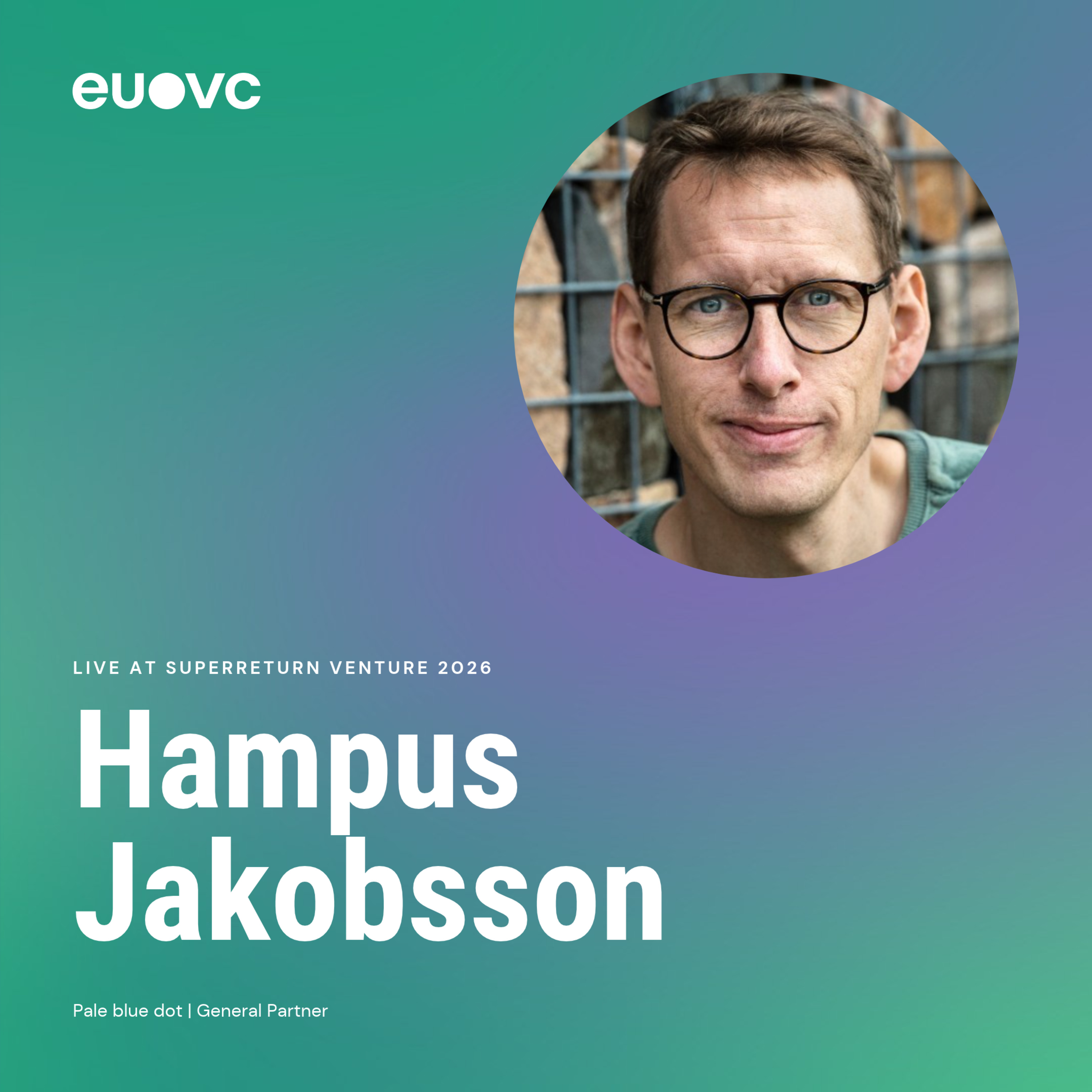
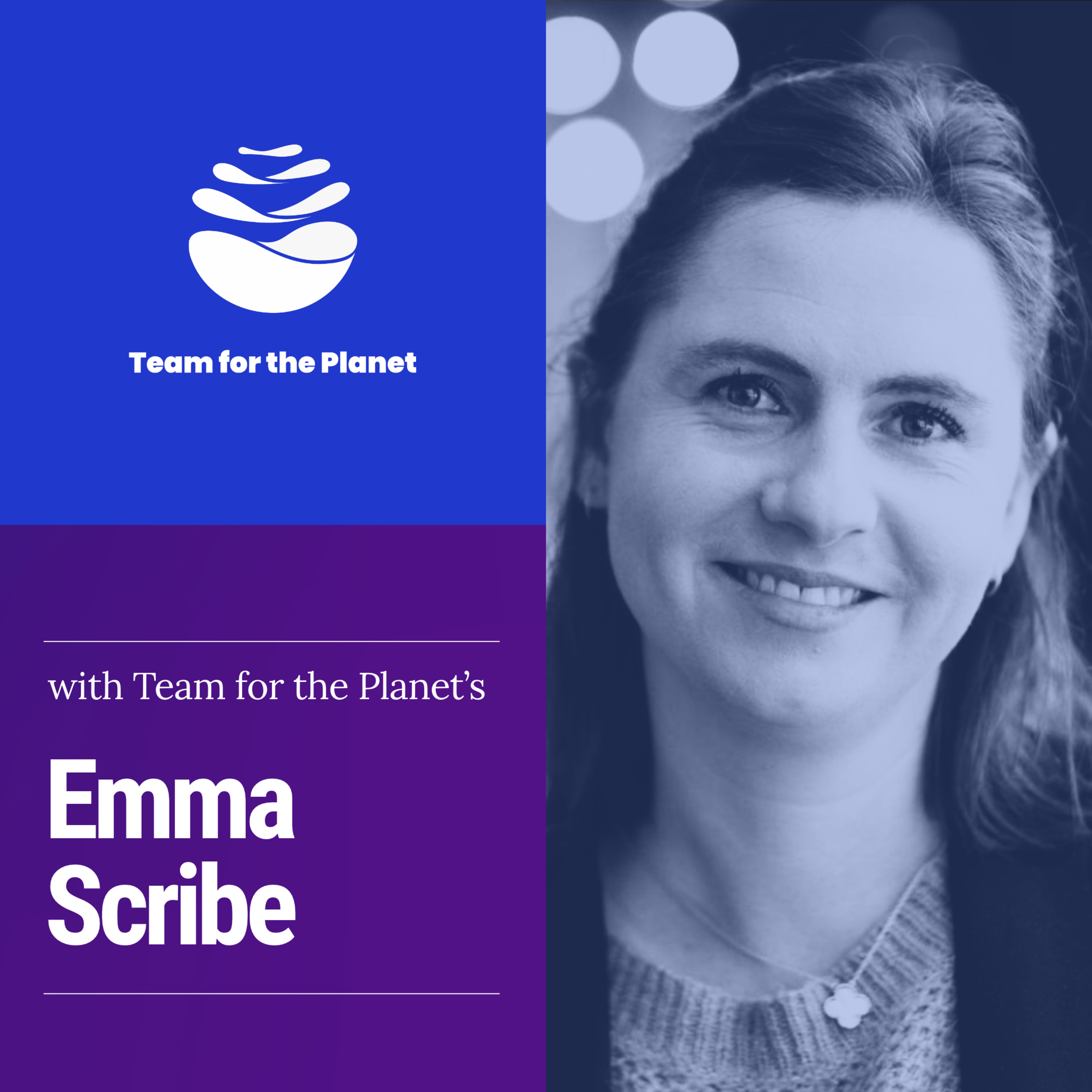
In this EUVC conversation hosted by Jeppe Høier, Prateek Mahalwar, Founder and CEO of BIOWEG, and Katrien Swerts, Executive Director at Rabo Investments, discuss how founders and investors can finance first-of-a-kind industrial projects, where the biggest risks sit and how different forms of capital can work together.
Prateek explains how BIOWEG combined venture funding with non-dilutive capital, why founders should build commercial traction before scaling and why early sales conversations matter even when the technology is still developing.
Katrien shares the investor perspective: why cost, functionality and realistic scale-up economics come first, why project finance usually cannot fund first-of-a-kind assets and how equity and venture debt can gradually shift the financing mix as risk comes out of the business.
Highlights
Timestamps
Scan the code with your iPhone camera
Listen in the app.