
 EUVC
3 Nov 2026 · 10m

 Add vo to ChatGPT or Claude to ask about everything you hear
vo listened to this episode to put together the overview and transcript, so there may be the odd mistake.
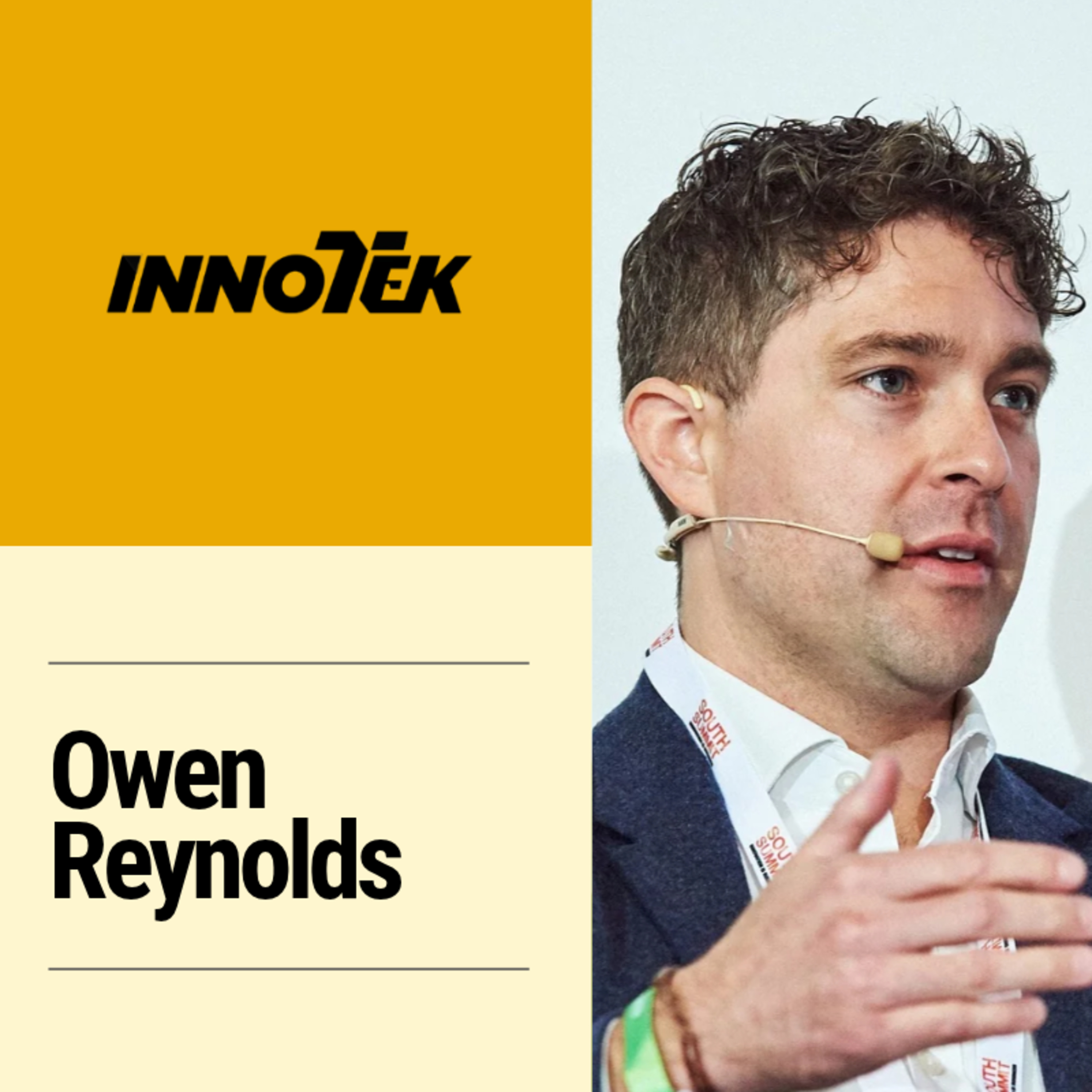
Owen Reynolds (Innotek) argues that “operating edge” for family offices and specialist investors comes from staying deep in the real business, moving fast on diligence, and focusing on unit economics/build/competitive advantage rather than market slides. He warns family offices not to expect too much from GPs, but to ask how they can leverage expertise. He also critiques European LP norms that slow innovation (e.g., $2 and $20 fee/size structures, limits on preemptive rounds).
Owen Reynolds, connected to family-owned Teclas (robotics/IT support) and serving as an operator-investor transitioning from VC to LP-style involvement.
20 robotic engineers + 100 IT staff enable rapid, deep robotics DD; he can skip early deck slides and go straight to unit economics; edge narrows as more investors become deep-tech/hardware specialists.
0:00I've noticed a lot of times specialist VCs tend to taper off in terms of that specialization because you come from an industry, you're deep in it, and then you become an investor and you increasingly become a professional investor. You look like every other professional investor. But if you own and operate a company that's deep in the weeds, you hear the whispers, you know what your customers are looking for, you know what they're telling you is around the corner. A lot of people put a lot of window dressing up. So a warning to all if you're going after family offices to not expect necessarily too much, but to ask and definitely request when you think you can leverage their expertise.
0:37Oftentimes I realize our edge is I can usually skip past the first five slides of a potential company's deck that I should be investing in or I should be taking a deeper look at. And we don't need to be told the market. We don't need to be told what the problem is. We build the competitive advantage. The longer I've been on the LP side of the table, which is still kind of new to me, the more I realize that LPs are often the ones that are the laggards in terms of structural innovation that can help companies move faster. We are live. We are live. In five. We are live. Four.
1:10Owen Reynolds: We are live. Three. We are live. Two. We are live. One.
1:24Owen Reynolds: What's the edge? Like, why, why, is there an edge? Is there an advantage in having, you know, an entity that's running a company? Like, why, what is the advantage there? I feel like there is a real advantage, but there's also a much larger perceived advantage. And I think it's really on the onus of the, of companies and VCs to really needle in and try to figure out, is this an advantage for me or just the guy and gal next door? and it can be very, very different depending on exactly what you're operating at. And what we try to do is be really honest and say, I can't guarantee you anything, but here's what we do, here's what we're good at, and if it happens to click down the road, call us.
2:06We are happy to help, but I think it becomes really difficult to, and a lot of people put a lot of window dressing up, so a warning to all if you're going after family offices to not expect necessarily too much, but to ask and definitely request when you think you can leverage their expertise.
2:25Owen Reynolds: So trying to give a bit of structure here. So how would you classify the possible sources of operating edge? The possible sources of operating edge. So there's a couple things we've done in particular. With funds, we have 20 robotic engineers and 100 IT people in the corporate that the family I work with owns, a company called Teclas. and for DD on robotics, we turn around really quick, really deep DD on usually really specific topics. If we can't, we just say, oh, that's something we don't know, sorry. But if it is something that we've looked at, that we have a thesis on, or that they're using in-house, where I've been looking to buy, then it's something that we can actually support.
3:04So that is like real edge that we can pass on to our VCs, but it's not even for every case, it's not even for every type of robotics, it's specific things. and then on the operating edge for companies, in all honesty, I think most of it has come down to understanding financials, understanding supply chains, and empathy. Like we know what hardware companies look like, sound like, feel like, what success means. So we can often compare notes to the rest of the board, the rest of the investors, and say, okay guys, this is normal, that's not, this is what we've seen, you know, in other hardware companies, and we just happen to do more of them.
3:43But I think you're starting to get that across a lot of investors. So hopefully for the rest of the room, and less hopefully for me, as more people get good at deep tech investing and hardware investing in particular, our edge on that side will probably be narrowed.
3:58Owen Reynolds: And do you have examples where that edge has affected or changed even investment decisions from your side? From our side, for sure. So when we can understand something easily in a process that for us might be a couple days. It might take other investors a long time to do research. And oftentimes, I realize our edge is I can usually skip past the first five slides of a potential company's deck that I should be investing in or I should be taking a deeper look at. And we don't need to be told the market. We don't need to be told what the problem is. We just need to go straight to the unit economics, the build, the competitive advantage.
4:37Owen Reynolds: So what's the difference from that to a thesis or a sector-focused investor? Name which one you prefer, right? I'd say you're allowing an option value for real added value in case there is that one niche use case. And a potential customer, again, if it's like that particular niche use case. So it's really the option value for operators and for VCs. So is that edge quite opportunistic or is it something that you can set up as a repeatable kind of value creator for you as an investor towards the portfolio? It is replicable to some degree. Yeah. And I shouldn't speak for like every family office is obviously very, very different.
5:21And we are just one. But for us, what we try to replicate is is this kind of framework. you know what we can do, you know what we can't do, and we try to make the expectations really clear. And then the second someone asks, I've learned this as my kids have grown older too, and not that companies and VCs are kids, but when someone asks for something, it's usually really important. You've got to turn it around really quickly, and otherwise they're not going to ask you again.
5:50Owen Reynolds: You've allowed us to infer that you do direct and fund investing. Can you comment a bit on that? How you think about the type of investments you make within venture? So first off, and I think you and I have talked about this before, I feel like cheating. So I've been a founder. I've also been an economist really randomly. But I've been a VC, and that's where I spent a big chunk of my time. And I'm going from directly sourcing deals without having the capacity to write checks as an LP. Now to being able to do both, I've realized that we get a whole other level of information. And I would caution, though, GPs in general to maybe not use deals so much as a hook to get LPs.
6:28because sometimes it doesn't work. And we try to be very honest about it and tell our VCs, we'd rather do deals with our VCs because I feel like it's kind of abusing that relationship. But also we'll tell people exactly where we are in a process. If we are likely or unlikely to invest, if you still want to share with us and you think we're valuable on the cap table, awesome. But I'll be really honest, and I think you should also ask, I would encourage everyone to ask incoming or potential LPs the same thing and for the same level of transparency.
6:58Owen Reynolds: Can you extrapolate that on a more general level for other families, other family-owned businesses, other family offices, how to think about it? I think there are a lot of advantages that families and family-owned businesses really can bring to the table. A lot of it is, as I mentioned, like skipping over the beginning part of a thesis, having like a really strong understanding of a market. That alone, like being a specialized VC allows you to get one leg up. But the other is having the continuous in-market knowledge. Whereas a specialist VC, I've noticed a lot of times specialist VCs tend to taper off in terms of that specialization.
7:38Because you come from an industry, you're deep in it, and then you become an investor. And you increasingly become a professional investor. You look like every other professional investor. But if you own and operate a company that's deep in the weeds, you hear the whispers. You know what your customers are looking for. where you know what they're telling you is around the corner. And that can help, even if it's parallel industries, it helps you understand, and it's helped me understand, what we're looking for in companies.
8:04Owen Reynolds: So the beautiful thing about moderating a panel with a friend is that I can be super direct, and I know you won't take it personally. So closing question, we're here talking about Europe, and in my opening statement, I talked about alignment and ambition, long-term ambition for Europe. So from your perspective, what needs to change for family office capital in Europe for it to work better? The longer I've been on the LP side of the table, which is still kind of new to me, the more I realize that LPs are often the ones that are the laggards in terms of structural innovation that can help companies move faster.
8:41And what I mean is there's a host of terms and a host of things that have become normal in the industry that I think are holding companies and funds from deploying in companies at the right speed. And I mean specifically things like sticking to$2 and$20 when you have a sub -$20 million fund, not allowing funds to do a lot of preemptive rounds or any preemptive rounds at all. That is like one of the last embedded ways to use the intelligence that you have from a company over the last year and make money on it. So I think a lot of those things need to be worked on. Family offices in particular are often not, they're kind of the tail wagging the dog on this.
9:26They're not usually the biggest tickets, especially not in Europe, and rightfully so. They're dabbling in it because for a lot of families this looks like not a great asset class when you can't move and compete against the world's VC funds. So what can family offices do, I think, is push back against that, fight for what they actually think will incentivize VCs to be the best stewards of capital and the best investors in their companies and invest in companies alongside them that they can actually add support to.
Owning and operating a business can give family investors access to insights that are difficult to reproduce from the outside. The question is how to turn that knowledge into a genuine advantage for funds and founders.
In this conversation from EUVC Summit 2026, Owen Reynolds, Investment Director VC at Innotek, shares how an active family business can bring deeper market knowledge, faster diligence and practical operating context into venture investing.
Innotek is a single family office investing across venture capital, private equity and direct investments, with roots in industrial, manufacturing and technology.
Owen explains how its in-house automation, robotics and engineering expertise can support investment decisions and portfolio companies in ways that go beyond capital.
He also discusses why operating companies can sometimes “skip the first five slides” of a pitch deck, how continuous exposure to customers and supply chains creates an information advantage and why specialist investors risk losing some of that edge as they become professional investors.
The conversation also covers how family offices can support VCs and portfolio companies more effectively, why that support needs to be specific rather than assumed and where LP expectations and established fund structures may be holding venture back.
Highlights
How operating businesses create an investment edge
Why active operators can accelerate due diligence
How in-house technical expertise can support venture investing
Why specialist VCs can gradually lose their specialisation
How family offices can work more effectively with VCs
Why operating support needs to be specific and credible
Where LP structures may be restricting venture funds
How family offices can become stronger long-term partners
Scan the code with your iPhone camera
Listen in the app.