
In short
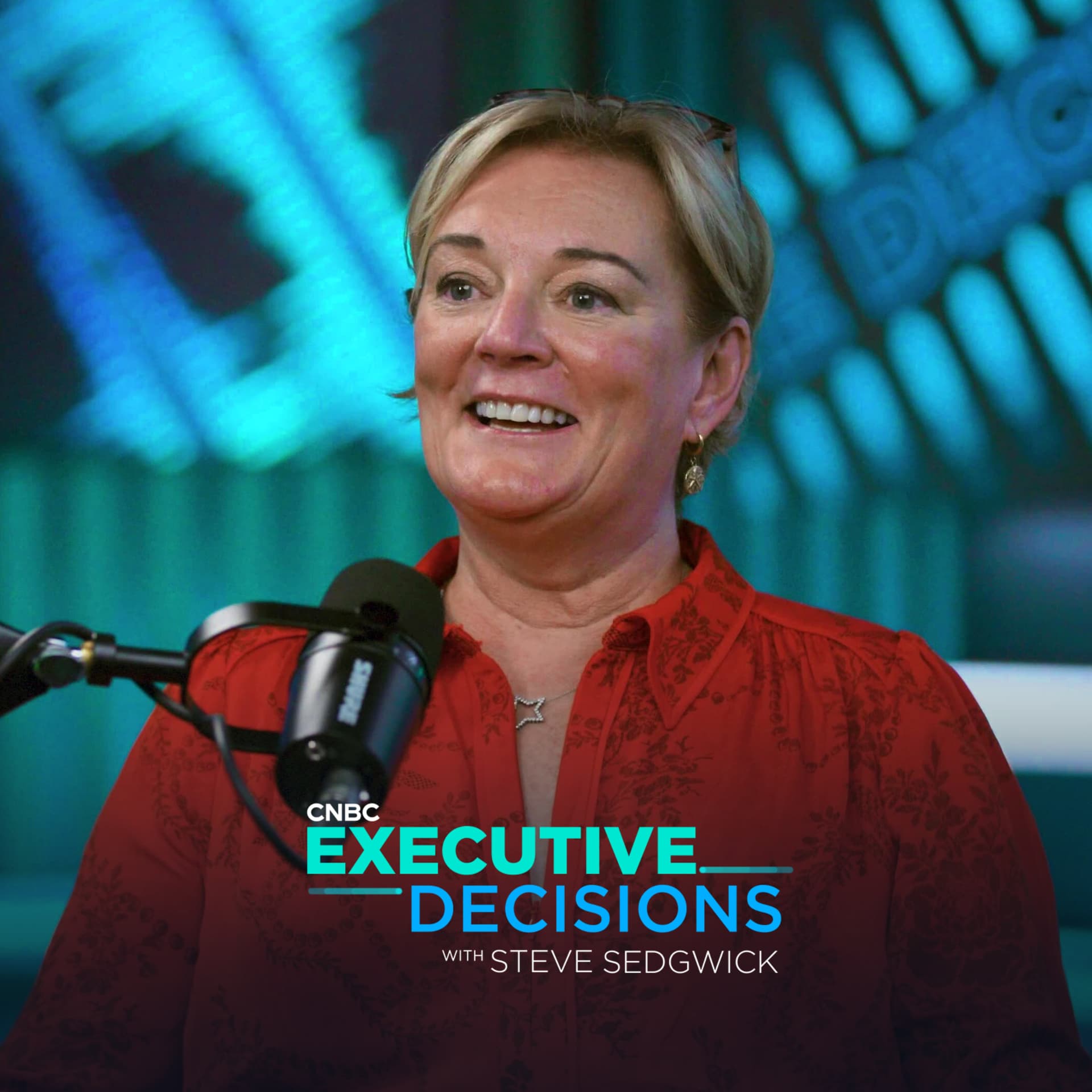
Executive Decisions with Jo Malone, CBE, on turning life challenges into opportunities—childhood survival, leadership under pressure, building fragrance brands, selling to Estée Lauder, coping with cancer, and anxiety.
Guest background
Jo Malone is a prominent British entrepreneur. She grew up on a Kent council estate (Bexley Heath) with severe financial insecurity, serious illness in the family, and dyslexia. She began working young (flower shop, skincare/facials) and later built Jo Malone London, sold to Estée Lauder, and later launched Joe Loves and Joe Vodka (with a recent Master Distiller award).
Key claims
Leadership means accepting unpopular decisions; resilience comes from character and “living in the moment”; apologies and humility matter; freedom and security are essential for SMEs; entrepreneurial education should start in schools at age five.
Notable examples
Ice on bedroom windows at home; selling a £4.50 cleansing cream to a beauty-industry employer; being humiliated at school for cheating; a 2003 cancer diagnosis treated at Sloan Kettering (Dr Larry Norton); a five-year non-compete after selling her name; anxiety linked to loss of control; building Joe Loves after cancer and non-compete.
Written by AI. May contain mistakes. Listen to the episode to check what was said.
Chapters
Tap a time to open that second in VOJo Malone's Leadership Philosophy
0:43 to 1:58
Jo discusses the challenges leaders face and the importance of making tough decisions.
“In this episode, I speak to Miss Jo Malone, CBE.”
Early Life Challenges
1:58 to 2:25
Jo shares her tough childhood experiences that shaped her entrepreneurial spirit.
“These are Miss Jo Malone, CBE's Executive Decisions.”
Family Dynamics and Responsibilities
2:25 to 4:14
Jo reflects on her role in her family and the responsibilities she took on at a young age.
“So it was like we grew up in a studio with the smell of paint, sitting watching TV on a Friday night, washing his palettes and his paintbrushes.”
Creative Influences in Childhood
4:14 to 4:28
Jo describes the artistic environment she grew up in and its impact on her life.
Navigating Early Adulthood
4:28 to 6:15
Jo recounts her early jobs and experiences that led her to entrepreneurship.
“I'll copy them and then I'll take that£4.50 cleansing cream up to London on the train and I can sell it to her clients.”
The Drive to Change Her Destiny
6:15 to 8:12
Jo discusses her determination to change her life circumstances and overcome challenges.
“i know but i i think we lived in an environment where a lot of people lived it wasn't just us you know it was it was a lot of people lived like that but i yeah we would put the paintings out but Crayford or Dartford.”
Education and Humiliation
8:12 to 10:54
Jo shares a humiliating experience from school and its lasting impact on her.
“And at school, I was being told I was lazy and stupid.”
The Power of Words and Apologies
10:54 to 12:44
Jo reflects on the importance of words and the impact they can have on others.
“So I try, I'm kind of a bit of a free thinker and it comes into my head and straight out my mouth.”
The Decision to Become an Entrepreneur
12:44 to 14:01
Jo discusses how her entrepreneurial journey began and her first business experiences.
“And I knew I didn't earn, I earned 29 pounds a week for that.”
Starting the Journey: From Facials to Business
14:01 to 14:33
Jo Malone discusses her initial foray into business and the moment she realized her potential as an entrepreneur.
“doing all sorts of different things, was never embarrassed about washing up or doing any of those things to survive.”
Show all 26 chapters
Creating Jo Malone: The First Products
14:33 to 15:18
Jo shares the story of how she began creating her signature scented body lotions and the early days of her brand.
“And in fact, the apartment we rented, it was a little skincare clinic.”
Partnerships in Business and Life
15:18 to 16:06
Jo reflects on the importance of having a supportive partner in both her personal and professional life.
“And that was the start of something where I saw what I was creating.”
Navigating Relationships and Conflicts
16:06 to 18:06
Jo discusses the dynamics of relationships, business conflicts, and the value of differing opinions.
“Not too aggressive, of course, but, you know, you have to show them real life.”
Leadership and Decision-Making
18:06 to 21:31
Jo elaborates on the challenges of leadership, making tough decisions, and the evolution of her business style.
“He comes up with perhaps a business side of things as well.”
The Journey to Success: Selling Jo Malone
21:31 to 22:34
Jo recounts the pivotal moment of selling her business to Estée Lauder and the transformation that followed.
“People don't see the 10 years before we open the shop.”
Reflections on Selling a Business
22:34 to 24:06
Jo reflects on the implications of selling her name and the struggles associated with her legacy.
“But of course, I was then a very wealthy lady.”
Facing Life's Challenges: A Health Crisis
24:06 to 26:26
Jo opens up about her battle with a life-threatening cancer diagnosis and the strength she found during that time.
“It was, it was those first five years were very happy.”
Jo's Battle with Cancer
28:00 to 29:50
Jo shares her personal journey through cancer treatment and recovery.
“And this strength and this energy came into me.”
Finding Strength and Purpose
29:50 to 32:01
Jo discusses the sources of her strength during recovery and her desire to reclaim her life.
“Joe, I've heard your story before, but hearing it firsthand is so powerful.”
The Journey of Joe Loves
32:01 to 35:15
Jo reflects on her entrepreneurial journey, the challenges of starting over, and lessons learned.
“Because it's the thing, it's my best friend.”
Building Brands and Future Aspirations
35:15 to 37:52
Jo discusses her motivations for entrepreneurship and future business aspirations.
“And I thought it must get better at some point.”
Moving to Dubai and Embracing Change
37:52 to 41:50
Jo talks about her decision to move to Dubai and how it changed her perspective on anxiety.
“I know that you love the entrepreneurism.”
Understanding Anxiety in Success
41:50 to 42:04
Jo addresses the impact of anxiety on successful individuals and shares her personal experiences.
“And we've been in Dubai now for four years.”
Understanding Anxiety and Control
42:04 to 43:38
Learn how Jo Malone navigates anxiety and the importance of self-awareness.
“I wasn't going to go down there, but I've seen the damage that it can create as well.”
Entrepreneurship and the Need for Security
43:38 to 46:00
Explore the importance of freedom and security for entrepreneurs and the youth.
“I always take mints wherever I go because a really strong mint can actually normally edge my brain back in.”
Reflections on an Inspirational Interview
46:00 to 47:22
Steve Sedgwick reflects on Jo Malone's inspiring journey and resilience.
“And we need to stop being so frightened of having our own opinions and being able to share those opinions because actually good debate is so important in this country at the moment.”
Transcript
Automatic transcript. May contain errors.0:00A CNBC original podcast. We all have to make big decisions in our lives, decisions that define and influence our professional and personal journeys. If you reflect on them, some are good and some I'm sure you definitely regret. In my nearly three decades as a financial journalist, I've interviewed literally thousands of CEOs, politicians and market voices, and they all had to make decisions and choices to get where they are today. In this podcast, I hear about those decisions, as well as the moments of doubt, risk and conviction that impacted our guests' journeys and the people they lead. This is Executive Decisions with me, Steve Sedgwick.
0:43In this episode, I speak to Miss Jo Malone, CBE. Being a leader today, you have to accept that some of those decisions are going to be unpopular and people won't agree with them. But when it's your company and it's your money, you have the right to take that ship wherever you think is right. Jo is one of Britain's most prominent entrepreneurs, building her business into a household name that was sold to one of the biggest beauty market players. But that drive to succeed was forged during a difficult childhood. I think that entrepreneurial spirit of survival, it was first of all. And I kept saying to myself, when I grow up, I'm not going to live like this.
1:23I'm not going to have a family like this. And I can remember one day being in my bedroom and we didn't have any central heating. It was really cold and there was ice on the window. And I remember scraping the ice with my finger and looking out and thinking, I've got to change my destiny. From her battle with serious illness to the challenges of living with the legacy of her name, Jo's resilience is what sets her apart and makes her such a remarkable woman. Good things happen to bad people and bad things happen to good people. It's how you get through it. It's how you navigate that. That is the strength of character.
1:55And it's something I still pursue today. These are Miss Jo Malone, CBE's Executive Decisions.
2:04In this season, we've spoken to amazing people. And they've all had incredible childhoods, incredible childhood stories. Was your childhood tough? Was it loving? Was it the catalyst for who you've become? It was tough. but I grew up so I grew up in a little two up two down on a council estate in Bexley Heath in Kent my and had two very creative parents so my father was well my mother was in the beauty industry which is obviously how I where I eventually ended up and my father was a brilliant brilliant man but not very domesticated he was an incredible artist so in our little sitting room at home there was a drawing board and all the paints in there.
2:50So it was like we grew up in a studio with the smell of paint, sitting watching TV on a Friday night, washing his palettes and his paintbrushes. He was also a member of the Magic Circle. So he was a magician and I was always by his side. And he was a huge poker player and a gambler. So there were all these very sort of artistic, creative parents. And from the age of 11, I was really the one who was the adult that would say, have we got enough money for the electric and gas meter because I knew that if he gambled all the money there'd be nothing to eat and when I talk about that and I go around the world sharing that story when I say I grew up on an estate most people think oh it must have been Downton Abbey and it wasn't it was a council estate and it was but it was happy it was a really happy there was a community I raised my sister all by myself really it was all hands on deck you as a child as an 11-year-old had to make a decision to either pretty much sink or swim to maintain the family unit to keep the family solvent that's extraordinary what what an amazing early thing to have to cope with for a child well if you could talk to a lot of children today who are carers they did exactly the same and are doing exactly the same as i did at that time i don't know where social services were i think i skirted around them but i remember not going to school for nearly a year because my mum had had a breakdown and I didn't want her to go into her home I must have been about 12 at that time um and I'm severely dyslexic so I can't necessarily read um in the same way that other people but I had watched my mum and the woman she worked for called the Countess Lubati by whose name real name was Doris Hilda Baker by the way I like that um anyway she was an incredible woman I'd watched her make face creams and I thought, okay, well, I watched what she did there.
4:43I can smell what she did. I'll copy them and then I'll take that£4.50 cleansing cream up to London on the train and I can sell it to her clients. And that is how I kept our family together. And my father would come in and out of life whenever he felt he needed to come home. So it was up to me. But I look back on that and I think I wouldn't change anything. It's so weird because this resilient Joe, this really tough little girl who was actually very shy and very gentle. I think I was made during those moments. And no matter what came at me, I always found a way out. I found a gateway or I found a tunnel or a ladder.
5:27And I think, OK, how do I make the next 20 pounds? and at that time we had family allowance which I think was four pounds a week for my sister and I and I would rely on that that money. So this is late 70s early 80s yeah yeah but you also made the decision to almost parent your parents like I had this amazing story about your father brilliant artist that he was would if he sold the art on a Saturday on the weekend and had the money in pocket it might well get wasted so you would wait for him to pop off yep make sure you sold the first piece of art and put it in my pocket so the family had money for the week as well that is phenomenal responsibility it's a phenomenal decision that you took at an early age i know but i i think we lived in an environment where a lot of people lived it wasn't just us you know it was it was a lot of people lived like that but i yeah we would put the paintings out but Crayford or Dartford.
6:27And I would send him off to go and get breakfast. And I knew I had 40 minutes before he came back to sell the first painting. And as we would leave, my mum would say, there is no money for food. You have to sell something. And if my father didn't like the look of the person, he would double the price or, you know, he was quite volatile, but very, very creative. So I would sell it, pocket it. And then he would, of course, he'd know exactly what had happened and then of course on the Sunday I would go to the poker game with him and he this is so awful he taught me to read marked cards so I would sit in the corner of the room while he was playing poker blackjack or whatever and I would twiddle my my plait like that to let him know who had what in their hand and um it was it was a different childhood definitely clearly already i can see that the love you have for your parents is it's a very loving environment but your mother struggled with her mental health as well your father struggled as well you as a very young child showed extraordinary resilience but not only did you show resilience in a loving but some might say dysfunctional setup but you also looked like you thrived and enjoyed the first seeds of becoming entrepreneurial?
7:47No one's ever asked me that question, ever. And I think you're right. I think that entrepreneurial spirit of survival, it was first of all. And I kept saying to myself, when I grow up, I'm not going to live like this. I'm not going to have a family like this. And I can remember one day being in my bedroom and we didn't have any central heating. It was really cold. And there was ice on the window. And I remember scraping the ice with my finger and looking out and thinking, I've got to change my destiny. And at school, I was being told I was lazy and stupid. And I knew I was neither one of those things.
8:19I just couldn't learn in the same way that everybody else did. And of course, the dyslexia was, and still is for me, is quite severe. But I knew how to make money. And I would sometimes look at situations and think, I can get to the destination faster than any of you and I know and I would wiggle my way I was I was such a resilient human being I was quite lonely as well I was it was quite a lonely road to be because all my other friends at school they were going off playing rounders when I wasn't I was back home getting the washing ready cooking dinner going to pick my sister up from school I hated school holidays hated them because I was there the whole time holding it all together.
9:03And so it was, but lots of people have tough childhoods. Lots of people have situations where they have to survive. And I think I came through it. I think in my younger years, sort of with my first job at 15, 16, I felt quite bitter. But that soon left me. I realized that I didn't want to be that person. I'll just go over the quote as you were made to stand on a chair at school. you're lazy and stupid and you will never make anything of yourself. Just tell me how you use that. And I think you use the word humiliation to really drive yourself. You're clearly stunningly driven. I cheated an exam.
9:44That's what had happened. So I'd looked at the girl's multiple choice next to me. I just couldn't bear being the last again. You know, when all the kids, well, you know, Tommy, well done. You're first. You've got 96%. I was always last. And I just didn't want to be lost. And I must have been about eight or nine. And I got caught. And she said, Jo Malone, you are lazy and stupid. And you will never make anything of your life. And what she meant was cheating. But it was the total humiliation. She made me stand on my chair. And I can remember my sock falling down my leg. And I can remember the boy behind looking up my skirt.
10:21Nothing changes. Nothing changes. And I just felt so humiliated as a person. And I thought, I'm not lazy and I'm not stupid, but that stayed with me. But that teacher called me years later. And I really admired this. And she called me years and years later when I'd had a page in the telegraph of something I'd done. And I was sitting in the office, the phone rings, and I recognized her voice immediately. And she said, can I speak to Jo? And I said, Jo's speaking. And I knew who it was. And she said, I know this is late, but this has really bothered me for so many years. I'm sorry what I did. and I thought that stayed with her as it stayed with me and sometimes in life you know we say things that are cruel and we don't need to say them say sorry immediately I know exactly what you mean I I had a headmaster and he always wrote nice things about me in my reports I was a bit of a swat at school I had a really very functional school life but one comment once he's like oh he's a bit of a bully in the playground and I was devastated and it stayed with me i'm now 55 it stays with you those words doesn't it has that affected how you've spoken to people on your journey how you do you regret talking to people in certain ways sometimes the things i regret in my life not the things that have happened to me probably the things i've said to people yeah and actually i'm never frightened of saying sorry ever and i was wrong because we're human beings and if we can't you know thank you and sorry are two probably two of the greatest words in our language in any language and we often don't use them enough and especially as a as a business leader the ceos we've interviewed as well if they say it's so much more powerful a decision made to show humility and empathy to your employees it carries so much more power and also we make we learn from mistakes as well but i think i had huge respect for her for doing that and i never spoke to her or saw her again but it stays with you you know especially with young people You know, the things you say to them can really affect them for years and years in life.
12:25So I try, I'm kind of a bit of a free thinker and it comes into my head and straight out my mouth. So sometimes I do say things that offend people or people don't like. And if I've hurt somebody, I'll say, sorry, if I believe in what I've said and it's just uncomfortable for someone, that's a different matter. when did being entrepreneurial deciding to be an entrepreneur become a conscious decision rather than something you just had to do because of your family situation you left school at 13 I was about 14 yeah I never did any exams and I never I didn't go to school for the last year so when did you decide this is the path for me I think I was survival in the beginning my first job was in a flower shop.
13:09And I knew I didn't earn, I earned 29 pounds a week for that. And I knew it wasn't enough to pay my rent and live. So I would wash up in restaurants, I went to hotels, I can make a really great square corner bed. And I also did window boxes for people. And in so the flower shop I worked with, it was within Belgravia. So I would do their flower boxes and their flowers and I earned money. And I just thought, do you know what? I can survive. I looked after people's dogs. I walked dogs. I did anything. And my father wouldn't let me claim, when I was out of work, he wouldn't let me claim unemployment benefit at all.
13:49Even though he did, I don't, I can't ask him now. But so I never relied on anything but myself. And if I saw an opportunity, I would take it. And I really enjoyed that. I really enjoyed doing all sorts of different things, was never embarrassed about washing up or doing any of those things to survive. And I think it was when I started that first business of skincare, that's when I knew that I was in charge of my own life and I had to make that happen. And that's when the entrepreneur really, although I didn't know what the word entrepreneur meant, that's when the entrepreneur really took hold.
14:32Tell me about the company that is Jo Malone that you created and how you went about creating that company. I started off as a facialist. And in fact, the apartment we rented, it was a little skincare clinic. And I would, when I was doing people's facials, I would make these scented body lotions and I would massage their arms. and one lady one day wanted to buy 100 bottles. And that was like winning the lottery for me. And I had a little kitchen, probably no bigger than where we're sitting, with four plastic jugs, two saucepans. And I made every one by hand, got my typewriter, typed the labels.
15:16I think I got all the spelling wrong because of my dyslexia, but nobody really cared. Wrapped them all up. And that was the start of something where I saw what I was creating. and a lot of it was by memory. I had no formulations, were all in my head. I saw something that was like, this could really change my life. And by that point, I was married at 21 years old. So I was married to my husband and he was in the building industry. So he would help me with the books and he would help me keep everything kind of straight. And I think because of my upbringing, I like everything like really straight down the line.
15:55I like to know exactly what I've got in the bank. was never overdrawn never which is extraordinary for a young company yeah i'm gonna ask you what your best decision ever was but i i for me it seems really obvious it was being with and finding your life partner gary i mean i know that's not a business decision but anyone who's successful out there i think has whether it's family whether it's a partner has someone they can rely on and just be with and be there for them and be honest with them what was being with gary the best thing you've ever done it was the best decision i've ever made and we've been married 40 years we're still business partners we have uh three businesses together i wouldn't want to be in business with anyone but gary and uh we challenge each other we respect each other i don't think we've ever we've had lots of rows but we've never fallen out over business but isn't that ever part of any whether it's a business relationship or a personal relationship rouse are good i mean i I want my children to see me rowing my wife because it's real.
16:55Yeah. Not too aggressive, of course, but, you know, you have to show them real life. And you have to, and it's all right to have differing opinions. I mean, this world today, everyone has to have the same opinion. Please, no. Please, can we have different opinions? We can disagree and still get up the next day and be best friends. It doesn't need to be, you know, kind of destructive. But I think when I look back and I look at the place we are at this moment in our lives, And we say we're living our gap year at 60. We are the happiest. And someone once said to me, never tell people how happy you are.
17:30And I said, why? Everyone tells you how miserable you are. I'm happy. Jo, I'm the same. I loathe to do this on camera, but I absolutely love working with this lot. And I love this company. I've been here a quarter of a century. I couldn't do it unless I enjoyed it. Yeah. How lovely is that? I think living in the moment and realising that we are human. and I look back at the things that I've done and there's tough things. Everybody has tough things in their life, you know, and good things happen to bad people and bad things happen to good people. It's how you get through it. It's how you navigate that.
18:03That is the strength of character and it's something I still pursue today. You're an incredible person and an incredible businesswoman, but without the two of you working in synergy, the jigsaw pieces working together, you wouldn't be anywhere near as successful, I think, because you've put it beautifully before, right brain, left brain. And let me get this right. Right brain, you're the creative one. Gary, left part of the brain as well. He comes up with perhaps a business side of things as well. Together, it's a really powerful force, isn't it? It is. And I wouldn't be sitting here right now if it hadn't been for Gary.
18:36And it's, I mean, he, Gary loves graphs. Gary loves strategies. Gary loves a contract. I can't bear any of those things. He spends his life asking me where was the invoice for something, and I go, I don't know, somewhere. And I'm very creative, but I can do things that, with the two of us together and locked in, I mean, the reason we made such a good decision when we first sold our first business was because of the contract he had signed. Amazing. But that came from his building background, that discipline. So nothing is wasted, Steve, nothing in our life. and everything can be used for positivity and to come back even if it is I mean I love that quote by Mandela I either win or I learn yeah and that's how I choose to live my life I ask this and it's a really obvious question to CEOs and founders and entrepreneurs but do you like making the big decisions do you like making the big calls or do you feel more confident when you make them with someone else as well because a lot of the people who get to the top of the tree they like being the final arbiter as well.
19:41I wondered how you feel about the big decisions in your life. I think because Gary and I are business partners, we always come to the right decision. But yeah, I am a control freak. And yes, I do like making the decisions. And I'm not frightened of making tough decisions. And I think leadership can be very lonely. And especially when you're right at the top and you have to make those, you can see the bigger goal and the vision. And you can see where you need to get to. The rest of the ship is just trying to sail the ship. And you make unpopular decisions. And actually, being a leader today, you have to accept that some of those decisions are going to be unpopular, and people won't agree with them.
20:21But when it's your company, and it's your money, you have the right to take that ship wherever you think is right. And I've learned a lot in the last five years definitely and in fact now I've I like small teams I don't I'm not the CEO it's Gary who literally runs the company and my teams have become much smaller and like Katrina we travel the world together I mean Katrina Gary and I living in Dubai we we run 13 live projects of which two of them are unicorn brands and we run it just the three of us and we don't do operations or any of that. I have to say it's a joy. It's an absolute joy. We run it all ourselves.
21:06We don't drop plates, nothing, and no one gets upset or if someone does get upset, you deal with it and you move on. So I think as I've got older, I've simplified my life, certainly at this moment. But, yeah, it can be very, very lonely at the top. And because you're at the top of the tree, it doesn't mean you have all the answers. and sometimes you're you're trying to get to the answer or the solution and you're trying different things that is really healthy yeah and making mistakes is healthy you came up with a phenomenally successful concept a big successful concept which then a very very big brand Estee Lauder bought off you as well in a very short period of time you didn't really have much failure did you In five years.
21:50People don't see the 10 years before we open the shop. So we opened in October. I can't remember the exact year. I'm terrible with dates. But literally five years to the month, we then sold it to the Estee Lauder Corporation. And at that time, I mean, we were still sleeping on a piece of blue foam. And we bought a bed. And I mean, it was so weird sleeping on a bed for the first night. And our whole life was just so transformed. and I knew that I would never go hungry again. I would never have to worry about electric bill. But I've never been in love with money. I love making money because you can do great things with it for yourself and other people, but I've never been in love with money.
22:30It wasn't my kind of ruling emotion. But of course, I was then a very wealthy lady. I would never have to worry and I could retire. Retirement was not and will never be on my agenda, that's for sure. Well, let me get my math right. You were in your late 30s, give or take, when you sold the company. You were an incredibly young, successful woman at that point. Retiring surely wasn't on the agenda. No, but, you know, I thought I was going to stay there forever. So the deal that we signed was signed in all good faith on both parts. Yes, of course. That we were going to stay there. But life throws you curveballs.
23:09Yeah. and life changes and you change and you want to do things differently and I would say to people anyone that is looking at acquisition especially if your name is attached to your business think through all the implications first think about those because you will sacrifice things and you will have to give and yield and you will gain something else but never do it solely just for money. I know the Estee Lauder Corporation has been fantastic and it was a great deal for them, it was a great deal for you and Gary as well. But I haven't heard the answer to this question, maybe I've missed it. Was it the right thing for you as a person looking back, and again, Estee Lauder, perfectly fair business partner as well and have been great.
23:52Was it the right thing for you looking back, the right decision, the biggest, maybe the biggest decision in your life apart from being with Gary. Was it the right thing for you? I would say yes, absolutely. I don't, I don't look back and think to myself, oh, if I'd waited another five years, I could have made, you know, double the amount. It was, it was those first five years were very happy. I think the one thing I regret, and they may not have bought the company is the use of my name. That, that has been, that's a struggle even today, you know, for me to actually. You struggled with it more recently.
24:27Yes. Yeah. I don't know why. And I struggle with that. I struggle with that every single day because I don't want to cause any harm to the business side, but why would I want to do that? And I'm proud. And Leonard Lauder and Evelyn Lauder saved my life. I don't want to cause any problems, but I feel the law needs to change actually in this because people are selling their businesses with their names. And if you're saying you can't use your name for the rest of your life, that's a lifelong non-compete. Now, that isn't legal. I'm not a lawyer, but I've been told that you can't have a lifelong non-compete.
25:09And I'm not a lawyer either, but I know that we almost didn't get this amazing interview of you because we wanted to get right the fact that Jo Malone is an Estee Lauder brand. Jo Malone London. Jo Malone London. And you are Jo Malone CBA. And I'm the person. Yeah. Yes. And I want you to do the right thing. And I always will do the right thing. That is who I am. But at the same time, I'm not going to stand in a corner and waste my life. I'm going to continue to build. And I don't want to fight and I don't want to have an argument with anyone. It's just I just want the right to be the person and to continue to give to this world what I know I can do and I can build.
25:47I can create jobs. I can help organizations and do all those things. That is my wish. That's what I want to do. and I think the law in time and it probably won't be for me but for others that come after me I think the law is going to have to look at the way businesses are sold and how that non-compete comes in. So selling the business wasn't the hardest decision but living with the legacy of your name that is the hardest thing. And most people I think would just go away sit on a beach but I'm afraid not this woman. There is one other pivotal part of your life that I just wanted to touch upon if I may as well and that was your cancer.
26:34Yes. And you had a devastating, life-threatening form of cancer early this century, I think it was 2003. It was 38. It was 38 and I know you had enormous support from key members of the Estée Lorde family as well. Leonard and Evelyn Lauder, yeah. Tell me how pivotal that has been and the terrible events you went through. I remember that night so clearly. I'd found a lump in my chest just there. And I went to the doctors, as you are told to do. And I was sent immediately to the hospital. And I had a scan that evening. And the doctor called me up. and he said, we can see by the formation of the tumour that this is cancer.
27:21They knew immediately because it had legs and all kinds, I mean, whatever it is they saw. I remember poor Gary just, we couldn't believe it. I really couldn't believe that at 38 years old. And I kept thinking, it's a mistake. And I was told that evening that I had to get my life in order. And probably it was about nine months. And I just, I had little Josh who was only two. and I just thought, I can't believe this is happening to me. And so I get home, you're so numb. And then this kind of like head got on me, and it's like, Jo, you've never listened to anyone in your life tell you who you should be.
27:57Are you really going to let someone tell you when you're going to die? And this strength and this energy came into me. You took back that decision. You took back control. It's like, no, I'm not having someone tell me when I'm dying. So from diagnosis to when, how long did it take? 24 hours, that was. 24 hours, and I sat. I'd had a good old cry. and but I just found this unbelievable energy and strength and I went to New York I went to the Sloan Kettering and I was treated by an incredible man called Dr Larry Norton who is one of my dearest dearest friends today and I spent the next year so I had surgery after surgery had one of the toughest forms of chemo they threw everything at me and then I got to the end and then they found it in the other breast so I had to go through it all again and then after about 18 months I was by the end of it I was taking chemo every five days and I was in intensive care like every every sort of four or five days when my body had literally come to the end and Larry walked in one day and he said it's over we've tested the cancer has gone today What I had told no one is it had taken my sense of smell.
29:13I hadn't told Gary, I hadn't told Larry. And that was one of the big reasons I left Jo Malone London because I felt I couldn't be in a business and be truthful to people. But a month after I left the company, after I'd signed my five-year non-compete, so I signed a five-year non-compete, it came back one morning like so powerfully. And then I was left. That was worse than fighting cancer because at least with cancer, So I knew where I was heading with no job. My sense of smell had come back and I couldn't do anything for five years. And that was one of the most mentally challenging times of my life.
29:55Joe, I've heard your story before, but hearing it firsthand is so powerful. Your mental attitude, your strength as well, had to be a part of that recovery and your willingness to carry on over that 18 months as well. Where did that strength come from? It came from Gary, from your childhood, from your just sheer stubbornness that you had so much more to offer the world. I love life, I think. I love every day. I love life. I couldn't bear my son not having a mom and poor Gary having to bring Josh up. But I think it was this fight. It was the little girl of 11 years old again. And it was that determination that I would reclaim my life and I would build and I would be relevant again.
30:40And you know something? Yes, I face my own mortality. Yes. But you don't spend a year never laughing, never finding humor. And some of it was black humor. It was of your childhood, actually. It just got me through. And I was married to a man who never made me feel anything more than the love of his life. I think that was a huge part. We lived in New York. It was very easy to live in New York. city but there was never a doubt in my mind i wouldn't survive i wouldn't let myself think that you've got this non-compete still yes but you are champing at the bit you've got this superpower which i'm going to get it wrong synthasia synesthesia which is your incredible bloodhound ability to smell things that most humans can't you can smell i can smell color yeah well i i'm hopeless on color and smell but um pop and garlic i'm very good on garlic but anyway that's another skill um and and you're chomping at the bit to start something up again you've got a no compete as well how no it was after the non-compete so i'd done i'd done my five years non-compete so you're ready to get back out there joe loves is waiting in the wings for you with the decision having gone through this terrible set of events which could have you know ended so tragically as well was the decision made for you was it easy i want to go back out there and i really want to go for it again there's no question there was not one question in my mind i wasn't going to try I think because I got my life back I had to make it count I didn't want to have I didn't want to leave it so that in years to come I went oh I wish I wish I had um and always the question always in my mind is what if I could what if I could build again what if I could you've had a tough childhood you've had a tough school education you've had a loving background you've been through a horrible cancer treatment and survived as well you've had the most successful business why did you take the decision to go back out there again?
Read the full transcript
32:29Because it's the thing, it's my best friend. I love building. I love creating. I love, I'm probably one of the best in the world at creating fragrances. And to not do the one thing that I loved after fighting for my life. It's what we, and it wasn't to prove anything to anyone really, but myself. But I never, ever started again thinking it's a little hobby I'll make 12 bottles it was I'm building a global brand that's what I'm going to do but the worst thing you ever made when you ignored what Gary was saying to you yeah it was that was the start of Joe Loves in the beginning I was so desperate to get back into the industry I was so I'm so missed my best friend which was creating fragrance um I didn't listen to anything he said and yes let's push the button for a million bottles why did I do that and I just and they've got the packaging wrong and the distribution wrong and he just sat and I was so determined to do it he let it run and actually I paid the price for that for two years so that's fascinating you'd made a bad decision your business partner your life partner the love of your life knew that you're making a bad decision why do you reckon he let it run maybe he thought he was wrong and I was right um did he think maybe you'd learn more from making or maybe he maybe I don't think he would have put me through that actually okay I don't think he would have done that but I again you know the first business we were young kids with a whole heap of naivety but I think my impetuous nature I'm always in a hurry to get to the destination as I've got older I kind of enjoy the journey a lot more now but I think I was really I was trying to prove something to myself did I really still have it and I got it wrong I got it wrong and it took a long time to turn Jo Love so I mean now she's this beautiful platform and she's growing across the world so and and then after that feeling of disappointments and and not making it work I wanted to quit and I every day it was like you don't strike me as a I really wanted to quit every day and he would say one more week one more week and if it doesn't work out and of course one more week became one more month became one more year and then I woke up one morning and I thought I don't want to quit it was the it I didn't want to quit but I didn't want to carry on waiting through treacle but you made a decision to just keep going even though Gary was telling you to carry on you made a decision to carry on as well that's the difference between a successful entrepreneur and one who just falls by the wayside, isn't it?
35:10I think if I had walked away from that business, I would have regretted it. And I don't want regrets in my life. I really don't. And I thought it must get better at some point. It can't keep going downhill. And of course, the next six months it went downhill. And it was structuring a team. I think I chose the wrong people in the team. I think, but I take full responsibility for it was no one else's fault but mine. and I learned from it I've learned a lot from that and actually the businesses I now build a lot of that is based upon the things I learned from Joe building Joe loves I know this isn't the Gary show this is the Joe show but did he know all along did he did he say I knew you were going to get back out he felt the same I thought he felt the same and I think we felt we had unfinished business yes and um when I look back now if we hadn't hadn't made that decision there wasn't anything I was really in love with you know I'd I'd done a tv show I did a tv show called high street dreams um I helped charities and I loved doing it but it wasn't the thing that at the end of the day I love going home pour myself a glass of wine look at the sky I often and sit on the beach actually and have a sundown and i go what a day yeah what a great that is what life is about you've had the success of of joe malone you've sold it to estee lauder joe loved by joe and joe vodka they were harder tails to get to where you are now um joe vodka is only she's only 16 weeks old and just won her first master distiller award i was congratulations so joe Vodka hasn't been as hard, actually, at all.
36:55Joe Loves was because we were finding our way back. I think it was when we got Elizabeth Street. So the first shop, that's when Joe Loves really came. And I found my, I thought I was running again rather than. You were back. Yeah, I was back. Joe Vodka was formed about 18 months ago, but I have other partners with Joe Vodka. But creating vodka is the same as creating fragrance. One's for your nose and one's for your mouth. And the first time we tasted Joe's vodka, because it's an effusion, I got my papers out and I stuck it in the bottle and I smelt. And the wonderful Joanne Moore said, what are you doing?
37:31And I said, I'm smelling. She said, no, no, no, no, we taste. And I went, no, no, no, no, we smell. And we smelt the vodka. That has opened up for me. I feel so positive about building. And it's not the last company I'm going to build before. Or I think I've got another two or three of me in and then I'm going to close the door and say enough. Why do you do this? Why do you keep coming? I know that you love the entrepreneurism. And I know you love building brands and being there as well. But, you know, we're at a stage of our lives now where you don't have to prove so much. You don't have to prove to anyone, Jo.
38:04But is it literally, as you just say, is it about you and proving to yourself and you just have this desire to keep proving to yourself that you're really good at this? Maybe. When I went to live in Dubai, one of my missions was, you know me for the sense of smell, but can I prove to you that I can have other businesses and other senses? And I'm, so vodka is obviously taste and we're working on the other two and one is still in the pipeline. So that was my mission to myself, to push myself. And I'm not ready to quit or retire or do anything. but I have reached that point in my life now where when is enough enough and I'm never going to have to worry about a bill and I don't I don't say that glibly in in any way because there's a lot of people in this country really really suffering.
38:57You don't have the right to say that Jo. But I'm I can remember what it was not to be able to do that so I feel I still have a responsibility, even though I don't live here anymore, I feel that some of this money that we are going to be earning in the next few years needs to go back to the roots where it came from. So one of my charities that I love more than anything is Magic Breakfast, making sure no child goes to Hungary, because I can remember going to school hungry. And there's certain things that I want to see a change. And I want to be part of that. So by building these businesses, is yes I'm going to carry on living a life that I enjoy and I've worked for it and no one is going to have to put their hand in their pocket for me ever you're a Londoner I'm a Londoner I feel in some ways very connected to you and we but you come from southeast London I'm originally from east London we've both had our experiences in west London as well but I'm still based in the UK why are you in the why did you make the decision you and Gary to go to the UAE I got to a point in a in my life where I felt I was meant to do something really big in this world.
40:05And I still haven't achieved it. I think actually what I've just told you is probably part of that. And a son had gone off to uni, he came back, he wanted to live in the UK. And I just felt if I sat here waiting for the opportunity, I might miss it. And I didn't want to miss it. So we went out and at the time, I was suffering so hugely from anxiety and I don't know why but I was and not depression but severe anxiety so debilitating so we'd gone off on holiday and I was sitting and I and it's what if I could what if I could come and live here for six months and see if the opportunity is here in Dubai and it was a fleeting thaw and I looked at Gary and I said what happens if we just packed our bags and came and live here for six months and see and he went love to wow that absolutely there was not even a second thought and as I looked up I could see people jumping out of a plane and parachuting down over the palm and I you know a month earlier I hadn't been able to leave the house and I said what happens if we see it signed the deal and jumped out of that plane tomorrow and that's exactly what we did and we went up on this little plane I can't I mean I was petrified but I was strapped to an Egyptian rugby player called Tarek and he was huge and we were sitting on my my legs were dangling out of the plane and I went I've changed my mind anyway too late honey boom and he pushed me and off we went I swear that anxiety stayed in that plane and although I get anxious now every now and again I have not got anxiety like that anymore I faced something that was my biggest fear of jumping.
41:54And we've been in Dubai now for four years. It has been the happiest, full of opportunity, full of creative people. I've met people from every single walk of life. And I consider it home. I want to ask you about anxiety. I wasn't going to go down there, but I've seen the damage that it can create as well. and you're such a successful entrepreneur. There's just a lesson out there for everyone listening to. It's okay not to be okay at times, isn't it? Even the most successful people like yourself do struggle sometimes. Most creative people, the flip side is anxiety. And it's, you know, we expect a lot from ourselves.
42:37But anxiety, when you have a panic attack, you think you're having a heart attack. So it starts to, you catastrophize everything. and you're frightened and of course the fear feeds the anxiety feeds the adrenaline you get pins and needles you your vision goes funny I mean I've been through it all I went to an incredible doctor a cognitive therapist called Anna Albright and she helped me to understand who I really was from that little girl that little girl and why the reason I felt anxiety was because when I'm, my flip switch is control. When I lose control and I can't figure it out, I become the little seven-year-old girl.
43:20Once I understood that, I stopped being frightened and the anxiety didn't have the hold over me. I can never get rid of it completely, but you can learn to live with it and you don't, I mean, I've been in places where I can feel a panic attack happening. No one else would know. I suck a mint. I always take mints wherever I go because a really strong mint can actually normally edge my brain back in. But there's all kinds of things that you can do. But honestly, successful people are not perfect people. We have all these things that we carry with us. But what we've learned is how to pick them up and accept them as part of who we are.
44:02I do want to finish off with one or two very quick questions about the decisions this country needs to make we are making this in the autumn me yes i am because you're one of the people that we look to to to say for common sense it's a tough time i don't we are in the late stage of 2025 huge decisions need to be made by the government as well but to encourage entrepreneurism what is your advice for for the great and the good in this country about getting us back on track and getting back that spirit and creating the right environment for decision makers like you? I wish I had the answers to those questions.
44:39I really, I feel incredibly disillusioned by what's happening at the moment. And SMEs and businesses, large and small, we need two things. We need freedom and security. We need the freedom to be the creative people and invest in our own ideas and our companies and to be in control of them. And we need the security to know what we build will be there for the next generation in order for us to raise our children and raise the next generation in an environment that they deserve. I think, and I banged on about this for a long time, and if the education minister is listening, one more time, teaching entrepreneurialism in schools is vital, not at the age of 15 or 16.
45:30We need to start that entrepreneurial toolbox at five. By the time those children leave school, they will be equipped. We have children coming out of school and some children will go to university. I wasn't one. My son did go to university. But all those other, they deserve the rights of their dreams and their aspirations. And there'll be a lot of entrepreneurs within that with their ideas. So I think we need the freedom and we need security. And we need to stop being so frightened of having our own opinions and being able to share those opinions because actually good debate is so important in this country at the moment.
46:14And everyone's terrified to say the wrong thing. We're never going to get to solutions and hard decisions and making those hard decisions unless we start to embrace that debate again. Miss Jo Malone, CBE, it's been an honour, a privilege, an education. It's been so fun as well getting to know you and your story. Thank you so much for your time. Thank you so much. For me, interviewing Jo was just quite incredible. She is one of the most inspirational people I could ever hope to interview. She's had stunning success as an entrepreneur really early on. actually, in her career. But she's also had some incredibly tough episodes straight from what was a very trying and difficult childhood as well.
46:57But what resilience, what bounce back ability. She loves coming back and proving to herself and to others that she can still do it. She likes making companies, not because she wants to make more money. That may be part of it as well. But it's because she loves the thought of what it can do for society and what she can give back. Joe is an incredible human being. Thank you very much indeed for joining me on Executive Decisions. I'd love to hear your feedback. Drop your thoughts in the comments or a review. And please hit that follow or subscribe button. You won't want to miss the next episode of the podcast where I speak to the CEO of Siemens Energy, Christian Brook.
47:37It was an existential crisis. Absolutely an existential crisis. And I have to say, I mean, for months, I could not sleep anymore. I'm looking forward to it. We'll see you then. You
From the publisher
In the debut episode of Executive Decisions, CNBC's Steve Sedgwick sits down with Ms. Jo Malone CBE, the visionary perfumer behind one of Britain’s most beloved lifestyle brands.
Jo shares the pivotal decisions that shaped her life—from a challenging childhood on a London council estate, where she helped raise her sister and managed the family’s finances, to launching her first business and selling it to Estée Lauder.
She opens up about being labeled “lazy and stupid” at school, surviving breast cancer and navigating the emotional complexities of building a second brand under a non-compete clause.
Now leading ventures like Jo Loves and Jo Vodka, Jo reflects on the power of resilience, the importance of purpose-driven decisions and the unwavering support of her husband and business partner, Gary.
This is a story of grit, grace and the belief that your best chapters are always ahead.
See Privacy Policy at https://art19.com/privacy and California Privacy Notice at https://art19.com/privacy#do-not-sell-my-info.


