 Ask ChatGPT


Fashion Neurosis interview with painter Celia Paul, exploring how clothing, hair, and personal relationships shaped her identity and art; her boarding-school years and eating/health crisis; her creative philosophy (compassion, empathy, psychological drama); and her experiences as a mother and as a woman in a misogynistic art world.
Celia Paul is a major British painter known for intense portraits of people close to her and psychologically charged compositions. She studied at the Slade at 16 (1976). She has long ties to Lucian Freud (her partner’s father), and her work includes paintings based on Bruce Bernard photographs. She later married philosopher Stephen Kupfer (2011; he died 2021). She has a son, Frank.
Clothing can “determine” identity and confidence (e.g., shoulder pads, long hair). Compassion is a core strength in her painting, contrasting with Gwen John’s aesthetic priorities. Being supported by a gallery (Victoria Miro, since 2014) helped her feel “free” after decades of being overlooked. Motherhood intensified her imagination and empathy, though it was emotionally and practically difficult.
yak-silk dress by Tibetan company Nola; Claire Jury shoes; Lucian Freud’s “scales” and shopping trips; boarding-school rivalry leading to extreme thinness then forced weight gain; paintings like La Chevalure (hair/head of hair) and Colony of Ghosts; visits to Francis Bacon’s studio; her Victoria Miro show opening in Venice.
Written by AI. May contain mistakes.
Celia discusses her clothing choices and their significance.
“Can you tell me what you're wearing today and why you chose these particular clothes?”
Exploration of Celia’s connections between fashion and art.
“and they took photos of me, and they gave me a dress to wear, or lent me a dress to wear for the occasion, because they thought this Nawler was the fashion company that most, you know, was in tune with Gwen John.”
Celia reflects on her relationship with Lucian Freud and their artistic circles.
“but this kind of hints at my shape, which I like.”
Celia and the host reminisce about their shared experiences and outings.
“I thought it was interesting that that beautiful, is it Melanie and me, Michael Andrews, was sort of in dialogue with that great Francis Bacon of George Dyer with the dark doorway behind him on the steps.”
Discussion of an outing for lingerie shopping and its significance.
“anything like that when I was growing up, and it was so exciting to have any measurement of myself or any sort of, even though they look like something in a butcher's.”
Learn about the transformative experience of shopping for lingerie and clothes that shaped the guests' identities.
“But I remember one of our earliest outings together, we went underwear shopping.”
Explore the complexities of transitioning from girlhood to womanhood without maternal guidance and the impact of societal expectations.
“you know these necessities that one needs as a young woman or any point but because you were one of five daughters, but somehow I was wondering how was your transition from girl to woman?”
Delve into the intricate relationships within families, exploring themes of jealousy and love among siblings.
“And my mother didn't give me any sort of instruction or tell me anything either.”
A discussion about the complexities of jealousy and love through personal anecdotes.
“Do you think, I mean, I think my sister Kate, who's my younger sister, who I was most jealous of and who I made myself ill when she was born because of jealousy that I felt displaced.”
Exploration of personal fashion experiences and identity through clothing.
“When it's the end of the day and you're settled into the couch looking for your evening watch, you're not looking for homework the movie.”
Discover how a childhood garment influenced self-identity and empowerment.
“And then I became obsessed when I came back to England.”
Explore the significance of a grey coat and its empowering features.
“There was a beautiful grey coat with, I don't know what the material was.”
Learn about the process of creating stunning dresses in China.
“And got these replicas in silk, red, white, and blue.”
Understand the merging of photography and painting in artistic expression.
“And then I remember he got your hair and draped it over his head.”
Examine the complexities of portraying Lucian through painting.
“It felt like that, and it was really, it was so lovely.”
Discover the philosophy behind artistic freedom and expression.
“And Lucien is looking directly at the camera.”
Hear about personal experiences with the renowned artist Francis Bacon.
“I just loved that painting and those paintings that you did.”
Explore Celia Paul's memories and feelings about Lucian Freud during their interactions.
“Because the times when I met him with Lucian, I was so shy.”
Celia discusses her challenges as a mother and painter, particularly after her son was born.
“And I remember when your son Frank, who is my youngest brother, was born, and you've talked about the anguish of leaving him, and so you could continue to paint.”
Celia discusses the challenges she faced in her painting career during the late 1990s.
“when he was a little child and when his needs were much more simple.”
Celia reflects on her artistic parallels with Gwen John and the impact on her work.
“a painter who, like you, was deeply involved with another artist and she was involved with Rodin.”
Celia shares her insights on motherhood and the emotional depth it brings.
“I mean, I think for me, she's possibly the greatest female artist.”
Celia discusses her unconventional marriage to philosopher Stephen Kupfer.
“It is that word privilege as well, isn't it?”
Celia reminisces about her family's shared humor and creativity.
“because I feel like saying well I have a husband but he's dead and it seems I don't know, that proprietorial thing about marriage, I'm not sure about at all.”
Celia and her host explore how clothing choices affect attraction and perception.
“I mean, really makes you cry with laughter because it's with him, he's got this sense of timing so that he, I don't know, he's just very, very witty, isn't he?”
Explore how clothing choices can reflect self-consciousness and personal signals.
“dark colours if they suddenly turned up wearing bright pink or something I might but what about you?”
Celia Paul discusses the importance of gallery support and its effect on her art.
“And you've been painting your whole life and your work is now sought after by top collectors and you have a show opening at Victoria Miro in Venice.”
Celia talks about the significance of having allies in the art world and their influence.
“And it is the most extraordinary piece of writing in which he, again, like what I was talking about, just breaks down all these barriers.”

Get the gist, explore an idea or ask about something said.
 Claude
On Fashion Neurosis with Bella Freud, what are the key points of this episode?
Searching your listeningAutomatic transcript. May contain errors.
0:00I'm Josh Muccio, host of The Pitch, where startup founders raise millions and listeners can invest. For our sweet season 16, we're giving you more of what you love and less of what you don't. Software is out. Actual cool stuff is in. We've got consumer brands, deep tech that changes the weather. Our big vision is to make it rain and snow on demand. We've got hardware that helps blind people see and dairy. I never imagined my life journey would be milk. Season 16 of The Pitch is out now. Listen wherever you get your podcasts. This season is presented by Engine. Support for the show comes from Google Gemini.
0:40You know that moment when curiosity strikes? You're exploring a new city with a family and a sculpture catches your daughter's eye. What is that? Who made it? With Gemini, you can snap a picture and get a fully interactive breakdown of its history, architecture, and even hidden secrets. Gemini is built for moments like that. Whether you're learning something new, solving a problem, or looking for your next favorite thing, Google Gemini is here to help. Download Gemini, Google's AI app, or visit gemini.google.com to learn more.
1:23Hi, come in.
1:31Welcome to Fashion Neurosis, Celia Paul. Thank you, it's lovely to be here. Can you tell me what you're wearing today and why you chose these particular clothes? Well, I'm wearing this dress. It's made out of yak saw, actually. And it's made by this Tibetan company called Nola. and it's extremely comfortable and I chose it partly for you because we did that conversation at Gagosian a few years ago at the time of that great exhibition with Lucian's work and Francis Bacon and Michael Andrews and we did a conversation about, well, sitting and looking and painting. So I thought it would be quite good to pick up that thread again.
2:39But I first actually, because I'm not, you know, I don't buy many clothes or anything, But I was first introduced to Norla because I did a photo shoot thing for a magazine at around the time that my book, Letters to Gwen John, came out. And it was, I had to stand in front of the convalescent, that beautiful painting in the Fitzwilliam by Gwen John. and they took photos of me, and they gave me a dress to wear, or lent me a dress to wear for the occasion, because they thought this Nawler was the fashion company that most, you know, was in tune with Gwen John. God, that's so thoughtful and sort of perceptive, isn't it?
3:49Because it's so modern as well as being something 19th century. I know. It has got a timeless quality to it. And it's very simple, but somehow it's not completely shapeless. It's got a kind of seam around the waist. Because I'm very curvy, so usually I can't wear dresses that are straight up and down without looking really frumpy. but this kind of hints at my shape, which I like. And then for my shoes, I'm wearing these shoes, which I really love, by Claire Jury, you know, that French shoemaker. and my literary agent Sarah Chalfont introduced me to Claire Chury. I think she thought it was time I started to think more about my appearance as I became more prominent in the art world.
5:17yeah shoes are a good place to start because they're far enough away from your eyes and mind to be able to experiment with and not feel overwhelmed with self-consciousness and yes i i know and somehow um these shoes they've got a heel to them, which I don't usually wear, but it makes me feel very, well, when I'm walking, I love the feeling of it. I feel, I don't know, more elegant than usual. it's good having some elevation i think because i i always like the way my spine changes when i wear a heel but especially something like that which has a platform as well it's just a sort of built up yes i feel like it makes me more courageous because my spine is in this particular kind of mode of kind of both relaxed and ready for the battle.
6:40Yeah, no, I think that's exactly right. I hadn't thought of it in that way, but it is empowering.
6:54I wear these shoes. Actually, I've walked around too much in them, so they're starting to crack on the soles. But I've worn them to, well, I wore them for that Karkosian talk we did, which was four years ago, wasn't it? Oh, gosh. I think it seems like a hundred years and two seconds, like everything. but it was so great that that show was so fantastic and yeah to see especially to see michael andrews in that gallery in that which is my favorite of all the gagosian galleries yes it's so good for seeing things really yeah because there's a kind of simplicity to the space And it was so interesting that there is this deep spirit between those painters, which is difficult to put into words, isn't it?
8:06but they seem to talk with each other. I thought it was interesting that that beautiful, is it Melanie and me, Michael Andrews, was sort of in dialogue with that great Francis Bacon of George Dyer with the dark doorway behind him on the steps. Do you remember? Yeah, yeah. And there seemed to be a kind of connection with these dark surfaces and just one or two figures. I know, because they were so different, all of them, and yet I love the way their friendship is like the three musketeers, even though they weren't really that, but there's some sort of very strong bond. Yes. Yeah. That makes you interested.
9:12As soon as you see one of them, you feel interested in what the others are doing. Yeah. And there's something so uncluttered about the compositions of all the painters. which there's a drama to each one, do you feel? So very often it seems they seem to focus on a kind of isolated figure or even two figures. There's a sense of that psychological drama. Yeah, that's so well put. That's exactly it. That's the feeling you get. And you're an artist and a painter of intense pictures of people close to you and landscape with that same feeling. And you're recognized as a major figure in British painting.
10:22We've known each other since our early 20s because of your relationship with my father, Lucian. Do you remember when we first met? I do. Actually, I think we were younger than in our 20s. And yeah, no, I remember, because I think I'd met Rose before I'd met you. But I was, I felt I, I don't know, I felt an immediate connection to you. And I remember you had your hair cut in this, you had this beautiful kind of tilt to the, it was kind of shoulder length. And it was a sort of freedom to you. And you were wearing this beautiful white shirt, silk shirt. And I remember the bathroom door was open in the Holland Park flat, Lucian's Holland Park flat.
11:34And you kind of just jumped onto the scales because he had these weighing scales. I love those scales. You said, I love Dad's scales because they were quite eccentric, weren't they? They were like, I don't know, they looked kind of prehistoric. I mean, Victorian would be too modern for them. But I was also quite interested in the way that you were kind of free about, because I'm always so cagey about weighing myself in public and everything, and there was a sort of freedom to you.
12:19and I just thought you were captivating actually. Well, I remember from the moment we've met, we've always just instantly got on and however long we don't see each other, that is always there, which is like it just feels like the lives of saints I mean not that we're saints but that sort of strange communication between spirit the spirit spirit in in people and our spirits and that's so funny that you mentioned the scale I've forgotten all about the scales but we never had anything like that when I was growing up, and it was so exciting to have any measurement of myself or any sort of, even though they look like something in a butcher's.
13:20They were like that. But I was sort of struck by how you, it was the, you weren't that interested in how much you weighed or anything. It was just the kind of hopping onto the scales like a bird just for the fun of it. It could have been a kind of fairground thing or something. Yeah. It was always such fun being around Lucian and I found it relaxing even though, you know, you had to be on form. But I remember one of our earliest outings together, we went underwear shopping. And you were quite otherworldly in some ways. And I felt very useful knowing where to go for good lingerie. Yes. I think we got some good things.
14:19We did. You took me to this shop in Knightsbridge and I got myself measured. because I hadn't really even worn a bra or anything, even though I should have done with my figure. But it was somehow, yeah, you got it sorted in the most natural way and got my exact measurements and everything, which I still refer back to if I need to buy myself a bra.
14:59And then we used to, you took me shopping in Northworld Road, didn't you? Yes, where I lived in Clapton. Yes. Back in the 80s. And we got these beautiful secondhand clothes, dresses that Rose's mum, Susie Boyd, had got. Do you remember them? Yeah, I got there with the most amazing clothes she had. Yes. And I remember wearing this beautiful blue and white, I think it was sort of flowery, but in the most discreet way, dress, and it had padded shoulders.
15:53and the shoes are the ones that I'm wearing in the photographs that Bruce Bernard took of us that day. And I always called them Winkle Pickers, but I don't suppose they were. And I remember after our first shopping spree there, I think you and I went back to Holland Park and me walking through the door and Lucien doing a sort of wolf whistle.
16:33It was so good. Because it was such a transformation. And you actually helped me to get a handbag because I always carried all my money in a plastic supermarket bag everywhere. And I think Lucian worried about that being, I don't know, so easily, I could be so easily robbed, but also just, I don't know. I think he could see that I could be transformed into something else. god it's so i'd forgotten about the the bag as well but um it's so interesting you talking about you know these necessities that one needs as a young woman or any point but because you were one of five daughters, but somehow I was wondering how was your transition from girl to woman?
17:51Did your mother, did she help you to do that? No, very definitely not. And, well, I went to boarding school when I was 11, an all-girls boarding school. And at that point, my father became head of this evangelical Christian community on the Exmoor Coast. and so where we had our meals with the community members and then being at an all-girls boarding school, there was no privacy at all and I felt, I don't know, just out of control with my life And I didn't, I didn't, I really, really didn't want to be how I was expected to be. I wasn't interested in boys or anything that, you know, from when one's supposed to be a teenager.
19:18And I decided to focus on painting. So really from the age of 14, I became just committed to painting and as a way of kind of controlling my life. And with this, it went with a kind of asceticism, and I became very thin. And my mother didn't seem to notice this at all. I mean, I went back to Lee Abbey, the community, most weekends. but somehow she was too involved with community life and everything to notice and I think because of getting thin I didn't have periods at that age So it was an odd intensity to that time because where we lived was probably the most beautiful place you've ever seen.
20:48It was ancient woodland looking over the sea with a sort of private bay and just nature everywhere. So somehow that feeling of the beauty of nature was what meant most to me and what I wanted to paint and record. And I had a very, very close friend at boarding school called Linda Brandon who actually went on to become head of talks at the ICA. Really? and she and I were so close but we had a terrific rivalry because she suddenly took up painting as well and we used to sort of lock each other out of the art room so that we couldn't, we tried to stop each other painting and we had this quite charismatic art teacher called Miss Bailey and we each wanted to be her favorite and it was incredibly toxic atmosphere.
22:08And then so Linda decided to stop eating as well and we both drifted about like these two skeletons with long flowing hair. But then suddenly something seemed to switch because suddenly one of the teachers noticed, well, I think it was the art teacher, noticed how thin we both were. And so she decided to get in touch with the sick bay, the nurses at the boarding school, to make sure that we epped properly and to weigh us. Gosh. I think, I don't know whether it was every day or once a week.
22:57And we went from one extreme to the other, and we just absolutely pigged ourselves. And we used to go up to sickbay, because they would make us drink milk and have biscuits in sickbay to try and put on weight. And we used to spread butter inches thick onto the biscuits and eat them and drink gallons of milk and constantly going to the tuck shop to have all these chocolates and stuff. And so we suddenly ballooned out and grew breasts and our periods came and just suddenly, I don't know, just everything changed. but the commitment to painting went on. Yeah. And it was when I was 16 actually that my art teacher wrote to Lawrence Gowing who was the head of the Slade and so I started at the Slade when I was 16.
24:12So interesting that it was just one person who noticed how you were faring and that you clearly weren't faring well, you know, becoming so thin. And my mother didn't give me any sort of instruction or tell me anything either. And I liked that I was able to take care of your needs, but I wasn't very good at taking care of mine. but somehow I knew what you needed and I'd read about this underwear place and they measured you and they took care of you. And it was somehow really nice. I'm glad that I was able to act like a mother even though I couldn't figure out how to do that and did a lot of the things that, you know, I was very self, you know, all these endurance tests, that's what made me feel kind of relaxed.
25:20Yes. No, you were incredibly comforting to me and responsible always, with really with my best interests always at heart in a way that really was crucial to me actually. I'm so glad it's, I'm so glad I was able to be reliable, you know. Yes, you were. Even though I was very unreliable the rest of my life, it seemed I somehow knew what to do as a friend. Yes, you did. I felt somehow, I mean, I always sensed that you didn't want me to look after you. Yeah. You were very determinedly independent. Do you feel that's right? Yeah, that's a really good point, actually. Although I did sense a vulnerability.
26:34I mean, it was a, you know, those were dark times, weren't they? Yeah, but somehow being able to be useful to you gave me confidence in myself. So you did look out for me without taking me to buy anything. But you described in your childhood that you were so jealous of being displaced in your mother's affection. when your younger sister, Kate, was born, that you managed to bring on symptoms of a serious illness. And was anyone else in your family possessed with such intense drive as you? No, I don't think so. And I think still my sisters have a bit of fear about me. I think to do with, yeah, to do with my drive, to do with commitment.
27:44And, but I also think, I think there's quite a connection which I still can't really work out between jealousy and love. Do you think, I mean, I think my sister Kate, who's my younger sister, who I was most jealous of and who I made myself ill when she was born because of jealousy that I felt displaced. I also somehow she's now the closest to me of all my sisters and I wonder did you feel that with Esther did you feel any do you remember feeling any kind of jealousy because you and Esther are so close aren't you Yeah, I was thinking about that and, you know, rereading your book and you talking about this connection between jealousy and love.
29:07And I think I was so afraid of feeling jealous that I suppressed, whenever I felt jealous, I've suppressed it and felt very depressed by it. It has felt so precarious that, but I think when Esther was born, my mother and my father were, he was kind of pulling away from her. and my mum, I sort of invented this story which feels right, that she would have turned to this baby who needed her so much for love. But I didn't really, I was kind of out, I just, I was sort of out of the picture in a way because, and I, yeah, so I. Did it feel like more like loneliness? Yeah, I think it felt like I can't afford to need anyone because you just don't know if that's to need someone and them not to be available is completely a disaster.
30:31Yes. So I ironclad that and, you know, it's been a bit of a ball and chain my whole life to break out of because if you don't take the risk of showing love or jealousy or anything, how can you get anything back? Yes. you know that is the difficulty isn't it because you do you could risk losing so much but it's important especially being creative yeah to be open isn't it it is it is and that to be hurt isn't the worst thing in the world even though it might feel like it and Yes. And it's quite freeing to not be terrorized by that kind of a threat. Yes. Which I find now, but it's taken an awfully long time.
31:39Everyone, it's time to wake up. Five more minutes. We've been sleeping long enough and hitting snooze on the fact that we're still stuck with the old way to phone plan. Is that a... Yes, it's old and cuckoo, just like that phone plan you have. Okay. I know. It makes no sense. So rise and shine. It's time for a whole new way to phone plan. T-Mix from T-Mobile. Where you pick what's in your plan. Like streaming, travel, or gaming. And then change those picks too. Because there's been a change in plans. Okay, we're awake. And T-Mix sounds great. Good. Because I'm all out of alarm sounds. There's been a change in plans.
32:21Introducing T-Mix from T-Mobile. Pick what you want. Change what you want. included in your plan on America's best network. Number of picks varies by plan and lines on account. Account or pick changes may impact existing device and other promotions. Best mobile network in the U.S. based on analysis by Uklav Speed Test Intelligence data 1H2026. Visit T-Mobile.com slash picks. I'm Josh Muccio, host of The Pitch, where startup founders raise millions and listeners can invest. For our sweet season 16, we're giving you more of what you love and less of what you don't. I definitely start to blank out when we're talking about like middleware AI wrappers.
32:56Software is out. Actual cool stuff is in. We've got consumer brands. We're building eight sleep for daytime. Hardware that helps blind people see. They kept asking for middle finger. Next thing we knew, we had like 10 students running around flipping each other off. We've got deep tech to change the weather. Our big vision is to make it rain and snow on demand. What if you wanted to not make it rain somewhere else? Like one day we're just like, screw Arizona. And dairy? I never imagined my life journey would be milk. Season 16 of The Pitch is out now. Listen wherever you get your podcasts. This season is presented by Engine.
33:37When it's the end of the day and you're settled into the couch looking for your evening watch, you're not looking for homework the movie. You're looking for comfort, excitement, or something in between. Whether you're craving something familiar or in the mood to discover something new, Amazon Prime has what you need, from screen to doorstep. Because it's not just about genres or endless content. It's about finding the thing that matches how you're feeling, whatever the mood. From streaming to fast shipping, it's on Prime.
34:11And since I first met you, you've always looked the same. You always have this long blonde hair that's often tucked down the back of your neck and, you know, with many things you're wearing. Actually, I'm getting a glimpse of it today. But I wondered why you like it sort of kept there and whether you ever allow it to be free. I do sometimes. Sometimes I've never been to the hairdresser. Really? Never been to a hairdresser. Oh, that's so good. And so somehow by tucking it down the back of my neck, it's a bit like I'm doing a bit of DIY hairdresser. My sister Lucy sometimes trims it for me.
35:19but I don't know why I've never been to the hairdresser. People who do regularly say it's quite relaxing, actually. to. But I think I'm kind of attached to my long hair because it feels like this is what I've always had. And I'd be sorry if a hairdresser didn't understand that and did something unusual with it and which would make me feel self-conscious yeah um we've got such good hair you don't really i mean most people end up at the hairdresser out of necessity or curiosity and then have a shocking experience of too much hair being cut off which i think so i think you've done well I don't know it does seem to go through through phases at the moment surprisingly it does feel quite thick but sometimes I've I felt very a rat's tail but I don't know what it depends on I think it's probably like everything when one's feeling more confident in oneself one's hair kind of springs into life a bit i don't know because also you're so specific about clothes and was there a piece of clothing that you longed for as a child ever well as a child i was always so romantic.
37:22I only ever wanted to read romantic books. My favorite when I was a really little girl. I don't know if you know those stories, The Princess and Curdie. Do you know them? No, I don't. And The Princess and the Goblin by George MacDonald. No, I've never come across those. And they had wonderful illustrations in colour. There was this old grandmother who lived in the top of the castle in a room up a spiral stone staircase. And she lived all on her own. and she had this long, long white hair that reached her ankles. And she used to, instead of burning logs for the fire, she would burn roses. So there was always this extraordinary scent of roses in her chamber in the turret.
38:32And the princess was called Irene, and she used to go up and see her grandmother quite regularly.
38:47And Irene used to wear these dresses, not actually, not unlike what I'm wearing now, surprisingly. They were white dresses with something tied around the waist, just quite simple. But the thing is, because I was born in India, and I used to love the clothes my mother wore. my parents were missionaries there, and she used to wear these 60s kind of flowered dresses, very full skirted. And I thought she looked beautiful in them. But I also loved what the Indian women wore, the saris and everything. And there was an old missionary lady on the theological campus who used to make us, us five girls, these dresses, which were so beautiful.
40:10They were short-sleeved, very plain, white, could have been made out of a sheet even, but kind of knee length. But she would embroider different things on the front of them. And I think I had a bird on mine, a blue bird. God. because I always loved birds. Sounds awfully nice. I can really picture you in that. When did you first start to feel interested in clothes yourself? Well, I think living in Morocco when I was a child, I got, my mother took me to, who took me and my sister to the souk and bought us each a couple of outfits. And as soon as I got these clothes, I got a lilac nylon caftan, and I felt like I could just become a Moroccan girl.
41:28And I learned Arabic really quickly in the local... Yeah, you're an incredible linguist, aren't you? Well, I was. I can't learn anything new now. But then I quickly learned French and Arabic, and then my friends were the beggar girls in the square. And so I think there was something about being... I realized that I could adjust my identity to how I needed it to be, And then I became obsessed when I came back to England. I met this girl on a summer camp and she had a pink gingham shirt, which I became obsessed with. How old were you then? I was eight. I think I was, yeah, I was nine. And because it was sort of boyish and girlish, the pink was girl.
42:28so I didn't have to kind of want to be like a girl even though I did secretly so it was a boy's thing in pink and it just fulfilled everything and it just had so much power so I'm always interested in those moments where somehow a garment will be like your determining force Yes, yes, I know what you mean.
43:02I think for me it was really through you and those first clothes. Do you remember you helped me buy that? There was a beautiful grey coat with, I don't know what the material was. It had a kind of slight shine to it. Do you remember? No, gosh. And with buttons at the waist. And also it had padded shoulders. and I think because I've got small shoulders and so I think you sensed how empowering it would be for me to have shoulder pads a bit and I think that helped me a lot. And do you remember, it was actually based on one of those dresses from Susie Boyd's shop with shoulder pads. Do you remember that Lucian sent this dress off to China?
44:15Was it to China? To China, was it? And got these replicas in silk, red, white, and blue. And they were the most beautiful dresses I've... Do you remember them? Yeah. They were just so beautiful. Gosh, I hadn't thought about those. And they came back with, they didn't have the kind of hefty shoulder pads that the original dress had. They were these kind of just a slip in, almost like a sort of pad, just a little pad in each shoulder. But they were the most exquisite garments. So it was some v-neck and kind of just below the knee and this exquisite Chinese silk. And I didn't know which one was my favorite.
45:15The white was sort of ivory colored, so not pure white. and the blue was dark blue, kind of quite not flashy at all, just very muted dark blue. And the red was an extraordinary colour, like elizarin crimson kind of. Oh, wow. It was so beautiful. Do you remember the dresses? Yes, I do. Because I remember that he used to, that people did send things to China to get copied. And I always remember, I don't know if it was him or not, but someone sending a shirt and pinning a note on the pocket saying, no pocket, please, which was then carefully embroidered on it when it came back. But they, yeah, they were so beautiful.
46:15It was like something from, you know, sort of 1900, these packages in this light paper and then these light but amazing clothes, dresses would come out. God, it's so good. I loved the paintings. That show at Cogosian, upstairs, there were all the photographs that Bruce Bernard took of when Lucien allowed us to do those photographs with Bruce. Because it was just before I went to live in Rome, I think I was 21 or 22, and he hated having his photograph taken but somehow he agreed to that and then Bruce came over and Lucian was in a really good mood in the studio and lying on that sort of thing on the floor that he used to sometimes raise up the easel and then he was pretending to be a Henry Moore.
47:27And then I remember he got your hair and draped it over his head. I know. They're amazing, those photographs. That's such a good idea. How did you think of making those paintings from the photographs? Because they're so moving and they're full of, you know, the edginess of the photographs. but then they're your painting. I know. In fact, I just earlier this year did a big painting which I called La Chevalure, which means head of hair, which was the title of this Baudelaire poem that Lucien recited to me when we first started going out. and I used the Bruce Bernard photograph as a template and something so endearing about the way Lucian put his hand up to his face.
48:31But I think what I love of the three of us together is how equal we all are in those Bruce Bernard photographs. There doesn't seem to be a hierarchy. Like, you know, when someone's standing to paint the sitter, however much you think about it, there is a kind of power dynamic. Completely. And whereas Lucien is on a level with you and me, and so there's a sort of equality between us. And we're each being ourselves in the most open and maybe vulnerable way, but in a way that's just a sort of accepting way, which I think is so beautiful and kind of telling about the empathy between the three of us on those occasions.
49:40Yeah, because what I really loved, I feel like now he's been dead since 2011, and we all bring him into our work in these different ways. Yes. It felt like that, and it was really, it was so lovely. yeah I mean it was a challenge because I felt I mean he did sit for me when we were going out he actually quite liked sitting for me um I mean he used to come to my studio in great Russell street and lie down on the mattress I had in my studio really and he got this really lovely boiler suit from Leyland's in Shaftesbury Avenue it was grey kind of slate grey with velcro to tie it to fasten it and you can imagine how good he looked in it like a greyhound really and he would lie down on the mattress and curl up into a sort of almost fetal position.
51:02And I made some drawings and I made a start of a painting, but it didn't really work and I eventually painted over it. But apart from that, I'd never painted him so that using these photographs that Bruce Bernard took now it's quite a challenge because it felt I didn't know whether he would would have wanted me to paint him in that way I think he went to sleep for me as a slightly as a way to make it clear that I didn't have complete control because if he'd been kind of sitting up and looking at me I think he might have felt more threatened by me I'm not sure and so me doing these paintings especially the one of the three of us where you've got that very typically beautiful gesture you have of putting your hair I think either behind your ear or somehow putting your hand up to your face and And I'm kind of looking sideways and down.
52:26And Lucien is looking directly at the camera. And so to paint him in that way with his extremely hawk-like expression was a challenge. and I sort of felt, am I crossing some boundary here that I shouldn't? But somehow the thing about painting and all art really is that if a work of art works, if it's successful, then that's all that counts actually. There's no such thing as breaking through any barriers of what is or isn't acceptable. If a painting is a good, successful painting with its own life, then you just throw all caution to the winds and you just think actually I can't care about these kind of conventions.
53:52Yeah, I agree. And I can almost hear him saying this works. Yeah. And it did work and it means that it's its own thing somehow. Yeah. I just loved that painting and those paintings that you did. And you did another painting called Colony of Ghosts from the series of photographs by John Deacon of Lucy and Mike Andrews and Frank Arbok and Francis Bacon at lunch in Wheeler's. And I didn't know you were friendly with Francis Bacon. Well, I wasn't really friendly. I met him a couple of times. It was always, oh no, we did meet in Wheeler's. But there was a couple of times we met in, do you remember Brasserie San Quentin?
54:48Yes, yeah. Which was not too far from Francis's studio. and I did go back there with Lucian. To Francis' studio? Yes. It was amazing. I think I went once. It was so extraordinary. I've never seen anything like it. No, because it was really quite small and because now it's quite fashionable to have these enormous studios, but no one then did of those important painters. Yeah. I mean, it was a room in his muse house, and I'd never understood, I couldn't understand how the paint didn't kind of explode out because everything was quite immaculate in the sitting room, wasn't it? and um in his in francis's yeah i i just remember being in one room where it was like complete chaos and somehow i'm wondering how he could he could do anything in there really i don't remember the rest you probably must you must have because i i don't think i just had a glimpse into the studio So maybe you were allowed in.
56:19I don't know. But did you talk to him about anything? Because the times when I met him with Lucian, I was so shy. I could hardly speak. And I'd also heard Lucian had talked about the things he said, which were so kind of unutterably brilliant and damning and devastating. and then Lucian had that language as well. Yes. And I just became silent. But did you manage to ask anything or answer anything? Well, there was this, I mean, I was completely silent like you. But then there was a time when Lucian said to me that he felt it was awkward that I was being so silent when I was with him. And so the next time we, I don't know whether we'd planned to meet at dinner or not, but we were at the same table as Francis.
57:27We were all discussing, and Francis and John Edwards, we were all discussing the Michael Andrews exhibition, which was at the Haywood. Yeah, I remember that. And I remember that, I remember saying something, I now can't actually remember what I said about the Michael Andrews painting. And Francis just looking at me and ignoring what I'd said and then just turning back to Lucian and continuing the conversation. before I'd blurted in.
58:15And I just felt, I don't know, I felt so shy that I don't think my voice was working properly. And I think I kind of squeaked out my opinion. And I just felt really mortified. But I do know that when I, you know, because Lucian and Francis weren't really getting on that well at that time. So I'm not sure whether Francis was deliberately bitchy to make Lucian ill at ease. Yeah, that's very possible, isn't it? So I remember you talking about that moment, And I was wondering if, you know, about how they sort of could only relate to you as a female or it felt like that. Yes. And I was wondering if it was because their mothers were always sort of specter, someone to escape from or be ignored by.
59:26And so they can't tell anything to a woman except the story of desire. Yes. I think that's beautifully put. Yeah. And I did find those formal dinners really excruciating because one just had to behave like the silent woman, the audience or the, you know, just to kind of admire.
1:00:06And yet I knew that certainly both Frank Auerbach and Lucien really respected me as a painter. Yeah. And so it was more to do with showing off with each other than it was to do with me in any way at all.
1:00:35And I think you can tell from those John Deakin photographs how competitive they are with each other. And somehow women were never part, never were in the ring as part of this competition. They were outside the competition. I know. I really thought about that and looking at that picture, which I'm so familiar with and thinking it's just there is no room for anyone else. No. It's them and exactly what you described. And somehow or other now it's good to know because it doesn't mean anything about it. It was just they were each other's mothers in some sort of weird way because there was, you know, kind of caring.
1:01:32They would have all been born, you know, just before the war or whatever and gone through that sort of horrific time. And it must have played a big part anyway. I mean, now it's so fun for that not to kind of come up, you know, So men and women artists just completely normal. But it really wasn't then. No. No, I think it feels strange because, I mean, I'm 66 and I'm very good friends with Cecily Brown. She's a very close, good friend. and her experience in the art world is so completely different to mine. And I think those 10 years, something really changed. It was during those, you know, the 90s when the YBAs started to come into, you know, become well-known and everything.
1:02:49And there was more of an equality, wasn't there? Suddenly there was a kind of freshness entered in, which was sort of unimaginable. And I think the world I entered into when I first came to the Slade when I was 16 in 1976, I mean, I don't think people would believe the misogyny, really. and even very gentlemanly tutors like Patrick George
1:03:34would speak about women to do with their appearance, which really wouldn't be acceptable now. No, it's completely inconceivable now, really.
1:04:17and start managing your business with one unified system. Try for free today at odoo.com slash vox. That's odoo.com slash vox.
1:04:29Life can be messy and complicated, especially during the holidays. One thing that isn't, switching to the Simplicity Plan from Verizon. It's one plan, one price. Just$30 a line per month for you or the whole family. Make the simple choice this season. Switch to Verizon and shop their best holiday deals today.
1:05:14on YouTube, Spotify, or wherever you get your podcasts. Welcome to the Tiger Fam. And I remember when your son Frank, who is my youngest brother, was born, and you've talked about the anguish of leaving him, and so you could continue to paint. And I remember how torturous it was for you at the time. And you said in your book, I'd like to give up everything for him and how did you use that feeling to continue being a painter um well it was it was extremely difficult and um i think i'd so planned to go on painting before giving birth that I'd done a painting of my mother lying down with a space in her arms where the child was going to be.
1:06:22And I'd started a big family group painting of my mother sitting with my four sisters. It was a very big painting and I'd very deliberately left it half finished at a point where I had to get back soon after the birth or else it would just lose its intensity. So in a very rigorous way, I'd planned for there to be no escape route for me. But I really hadn't planned for how much I loved Frank from the second I saw him. and the love was the really awkward thing about the whole process, which I just hadn't bargained for. And I've no idea how women painters carry on painting with their, you know, I've heard that some women painters have their babies strapped to them while they're actually painting.
1:07:56And because of the intensity of the focus that I have to have when I'm painting, I simply couldn't do that. And my mother, because she'd lost her husband, my father, who died not long before I got pregnant with Frank, I think she gave herself wholeheartedly to the experience of being Frank's main carer during his babyhood. And Frank just still adores my mother. I mean, my mother died in 2015, but And she, for him, was so central to his whole, I don't know, just moral being. She was this quality of goodness my mother had and kindness and welcomingness. And, you know, my mother adored Lucian. And so there was no shame about it.
1:09:34Yeah. But I think my difficulties came later, actually, when Frank was a teenager, then things became much, much more difficult because I don't think my mother felt it was in her power to be there for Frank in the way that she had when he was a little child and when his needs were much more simple. And it's there that I think he turned to me. And that made it very difficult because it was also at the time when everyone was saying painting is dead because of conceptual art. Oh, yeah. And I couldn't make money from my paintings. And it was a time of real, I was really demoralized for those late 1990s years.
1:10:52Because you wrote a book called Letters to Gwen John and imagined conversation with her, a painter who, like you, was deeply involved with another artist and she was involved with Rodin. And did it make you aware of what you wouldn't sacrifice from reading about her relationship with her work and with Rodin? Well, I think even though Gwen, John and I have so many parallels in our lives. We were both Slade students, as you say, going out with much older, famous men, artists. I think there's a... What I feel is possibly one of my main strengths as a painter, as an artist is compassion.
1:12:01And I think the portraits I did of my mother as she grew older, I always hold Rembrandt up as an example of how much compassion can be put into a portrayal of an older woman, older man.
1:12:29And somehow the idea of old age, I always feel compassionate about elderly people. I don't know why. But somehow those portraits of my mother to do with aging and the passing of time sets me apart very much from Gwen John, who really, I mean, once or twice made studies of an elderly woman, but they don't have much feeling. Whereas the paintings she did of young women and of her self-portraits as a young woman, she never painted herself old. Right. I think she put the aesthetic value above compassion. And that's where I think she and I are divided, because her works are so beautiful. I mean, I think for me, she's possibly the greatest female artist.
1:13:54And yet, somehow I feel that that beauty might in a way be the thing that I'm resisting. and that's one of the reasons why I think my being a mother gave me an insight into another human being's innermost inner life in a way that no love affair or no friendship and know actually not even the experience of being a daughter can give you. I think to have a child that you love just shows you the world in a very rich light. I mean, and I think the painfulness of not only just the giving birth, but the actual painfulness of being a parent and suffering with your child when they suffer, there's nothing the equivalent of that in any other form of relationship.
1:15:21Yeah. Do you feel that with Jimmy? Yeah, I completely do. I feel like it makes me more imaginative because I want to have all the answers and I don't even know what the answers are or whether being helpful is useful or not useful. but I feel it makes me go beyond myself in a way that is nothing to do with endurance tests or being stronger or self-deprivation in the service of something. It's about complete, some sort of selflessness that is just such a privilege to be able to be active in. Yes, I think so. It is that word privilege as well, isn't it? Yeah. It's all such a mystery, but to have the care of this life is such a privilege, isn't it?
1:16:32It's amazing. It really is. and you married Stephen Kupfer who was a philosophy professor in 2011 and he died in 2021 from cancer and you never lived together. No. Was that your idea? Yes, it was. I mean, luckily he was a very private person anyway and quite independent-spirited. He'd always lived with his partners before me, so I think he presumed that was what was going to happen. But when I laid down my rules, he was quite accepting of it. And I think it suited him, actually.
1:17:37And we did leave each other very free, even though I think we trusted each other as well. Yeah. I love hearing you talk about your husband. It's just the most... I never thought... We always get a bit of a shock. It's so great. I think it took me nearly 10 years to be able to use the word husband. and now that he's dead I sometimes find it a bit offensive when people say oh my husband because I feel like saying well I have a husband but he's dead and it seems I don't know, that proprietorial thing about marriage, I'm not sure about at all. But we mainly got married because he was a philosophy lecturer.
1:18:47He thought if we were married, I could have his teacher's pension. So it was a practical thing rather than a romantic thing. But the actual occasion at St Pancras Registry Office with just my sister Kate and her husband as witnesses was actually more moving than I'd expected. Yeah. I think it's something about having, doing one conventional thing in life when, especially the way you live your life is about, you know, it's about your painting. and you've had to accommodate, you know, things like, Frank, growing up with your mother and, you know, to make adjustments that are really taxing emotionally.
1:19:47So there's something about you then getting married that just seemed comforting. It's something really sweet. And who cares about, you know, is, you know, all these kind of ideas about marriage. You can have, but sometimes it's a good idea, and somehow it seemed like that. It's to do with kind of gestures of affection, and they really count for some. Yes. No, I think so. In fact, I left out the other witness, who, of course, was Frank, my son. But it just happened to be convenient for him because he was traveling a lot to Russia at the time and he never flies anywhere. So he was going to get the next train from St.
1:20:43Pancras. So it just happened to be good timing from his train point of view to be witness to the wedding. But he and Steve did get on very well, actually. Because you're a serious artist and a serious person, but you're also incredibly funny. And I feel it's always where we pick up our friendship, however long it is since we've seen each other. And Frank is also very funny. And I remember him having a poem when he was, I think maybe he was about 10 or something. And after each letter, it went, and it was something like, but it made sense. Do you remember that? Yes, I do. Yes, he loved nonsense poems.
1:21:35He loved, you know, all the Edward Lear and Lewis Carroll. And he's very much in that tradition. Yeah. He's actually just written this incredible children's book, which is very, very, very funny indeed. I mean, really makes you cry with laughter because it's with him, he's got this sense of timing so that he, I don't know, he's just very, very witty, isn't he? He is. Well, so are you and so is Lucy. He has that sort of outlandish humor that's also just unexpected. And it's so amusing. I like the way he has both of your strains of humor, which are quite similar. Yes. I'm delighted about that. And actually, even as a baby, I could see quite a small baby that he would light up, his eyes would light up if there was something funny.
1:23:01Yeah. Something so basic. If you fancy someone and don't like something they're wearing, does it kill your attraction? no I mean I'm trying to imagine something so outlandish if they turned up wearing clowns shoes or something that would be quite disturbing but I actually
1:23:35I don't think it would matter to me actually
1:23:42I mean it would I might be puzzled if suddenly somebody who I knew I mean who I might be in love with turned up in something very strangely different like if they usually wore dark colours if they suddenly turned up wearing bright pink or something I might but what about you? Would you be turned off by somebody wearing something? It's odd because I've asked everyone this question and I think I don't mind, there aren't many things that put me off but some things, I think it's to do with self-consciousness when someone is wearing something self-conscious You know, and then I think, oh, I'd worry if someone had no socks.
1:24:43But then if they dressed a bit like a tramp, which I find quite attractive and don't have any socks, then it would be fine. Yeah. So I think there are some things that are really worrying. and but uh yes i think if there's a kind of unnatural showing off about something somebody
1:25:13suddenly arrived with a huge hat i'm just trying to imagine all these people he's so unlikely but i did once open the door to someone i was seeing who had a straw boater on the back of their head and it was really terrible and I knew it was a desire that was a bad sign but I carried on I think sometimes the anxiety of seeing something that you know is a signal from outer space to say this is not where you should what what you should be pursuing then gets all confusing about what do you think about anything anyway? And then suddenly you've gone further, what I call under the bus, where you throw all caution to the wind and fling yourself under the bus of supposed love.
1:26:14But it's not really. It's just like not wanting to think about how awful it is. Yes, no, I agree. And I think, yeah, clothes can act as a signal, can't they, in that way. But I don't think it's happened to me. And you've been painting your whole life and your work is now sought after by top collectors and you have a show opening at Victoria Miro in Venice. How important is it to be represented and supported by a gallery? Well, for very many years I wasn't supported at all. I was really overlooked for about 25 years. actually. And I didn't realize how damaging that was to me. I had, you know, because I'm very tough and I just thought just stoically carry on.
1:27:23But then when I moved to Victoria Miro in 2014, you know, it's like when people are cheering in the crowd for footballers and they can, And, you know, it makes them more likely to score a goal. And I suddenly felt that I was growing wings instead of wearing lead boots. And I just felt free. And that feeling has gone on and grown. and it's just, it's very rewarding that people are beginning really to respond to my paintings and not only that, but to actually see what I'm doing as well. Because, you know, working from people who are very close to me and my family and the places that mean most to me.
1:28:32And it's very private and could be very shut off and not communicable. But I think people get my work. And it makes me... It is very rewarding, yes. because Hilton has been a big champion of your work and he's such a he's such a fantastic ally it's like having the best big brother you could wish for even though he's younger than us but he's wonderful and yeah I mean I first met Hilton when I when I first went to Victoria Miro because he wrote the catalogue essay for my first exhibition at Victoria Miro. And it is the most extraordinary piece of writing in which he, again, like what I was talking about, just breaks down all these barriers.
1:29:42And it talks about his love affair with an older man when he was a young man and how this man loved Proust more than any other and somehow weaves in and out of his own experience to encompass my art. Yeah. Yeah. He writes in such a warm way that makes you feel connected to paintings and curious. And instead of that awful dry academic analysis, which I find so makes me, I just can't understand. I don't want to know. I just want to feel. Yes. And he writes in that way. Yeah, he does. Possible. Yeah, I mean, so often catalogued essays, just nobody bothers to read them because they're too dry. I'm just so admiring of everything you do and how you do it.
1:30:45And your work is just magnificent and you're such a dear person. You're so dear, darling Bella. No, I, and yes, I can't stress how important you are to me and have been throughout all the years. And how somehow the love has stayed throughout, hasn't it? Yeah, it's absolutely alive and well as if Joan of Arc just lit the fire. so brilliant thank you so much Celia Paul for being on Fasten Neurosis it means so much to me thank you
1:31:54I'm Josh Muccio, host of The Pitch, where startup founders raise millions and listeners can invest. For our sweet season 16, we're giving you more of what you love and less of what you don't. I definitely start to blank out when we're talking about middleware AI wrappers. Software is out. Actual cool stuff is in. We've got consumer brands. We're building 8Sleep for daytime. time. Hardware that helps blind people see. They kept asking for middle finger. Next thing we knew, we had like 10 students running around flipping each other off. We've got deep tech to change the weather. Our big vision is to make it rain and snow on demand.
1:32:31What if you wanted to not make it rain somewhere else? Like one day we're just like, screw Arizona. And dairy? I never imagined my life journey would be milk. Season 16 of The Pitch is out now. Listen wherever you get your podcasts. This season is presented by Enjin.
Celia Paul is a British painter.
Born in India, Celia returned to England in the 1960s, moving to London to study at the Slade School of Art, aged 16, where she met Lucian Freud. They began a relationship that lasted ten years and led to the birth of their son, Frank. Paul frequently sat for Freud, and appears in many of his notable works including Girl in a Striped Nightdress and Large Interior, W11 (after Watteau).
Paul's work mines the complexities of interior and exterior life, looping back and forth through time to the people and places closest to her. From 1977 to 2007 she worked on a series of paintings of her mother, and she has since concentrated on painting her four sisters, particularly her sister Kate. Paul has also produced a large number of evocative self-portraits over the course of her career. Celia is a gifted landscape painter, frequently depicting seascapes and the views from her studio.
Celia published her memoir, Self-Portrait, in 2019, followed by Letters to Gwen John in 2022. A monograph on her work, Celia Paul: Works 1975 - 2025, was published by MACK in 2025.
Her major solo exhibitions include Celia Paul, curated by Hilton Als, at the Yale Center for British Art and The Huntington in 2018/19, Celia Paul - Colony of Ghosts, at Victoria Miro in 2025, and Celia Paul: Innervisions at Gladstone Gallery, New York, in 2026. Her work is held in public collections including the National Portrait Gallery, the British Museum, the V&A and the Metropolitan Museum, New York.
Her latest solo show, Celia Paul: Objects of Desire, opened in November Victoria Miro Venice, and is on until December. An accompanying memoir, Objects of Desire, is published by Jonathan Cape on November 12th.
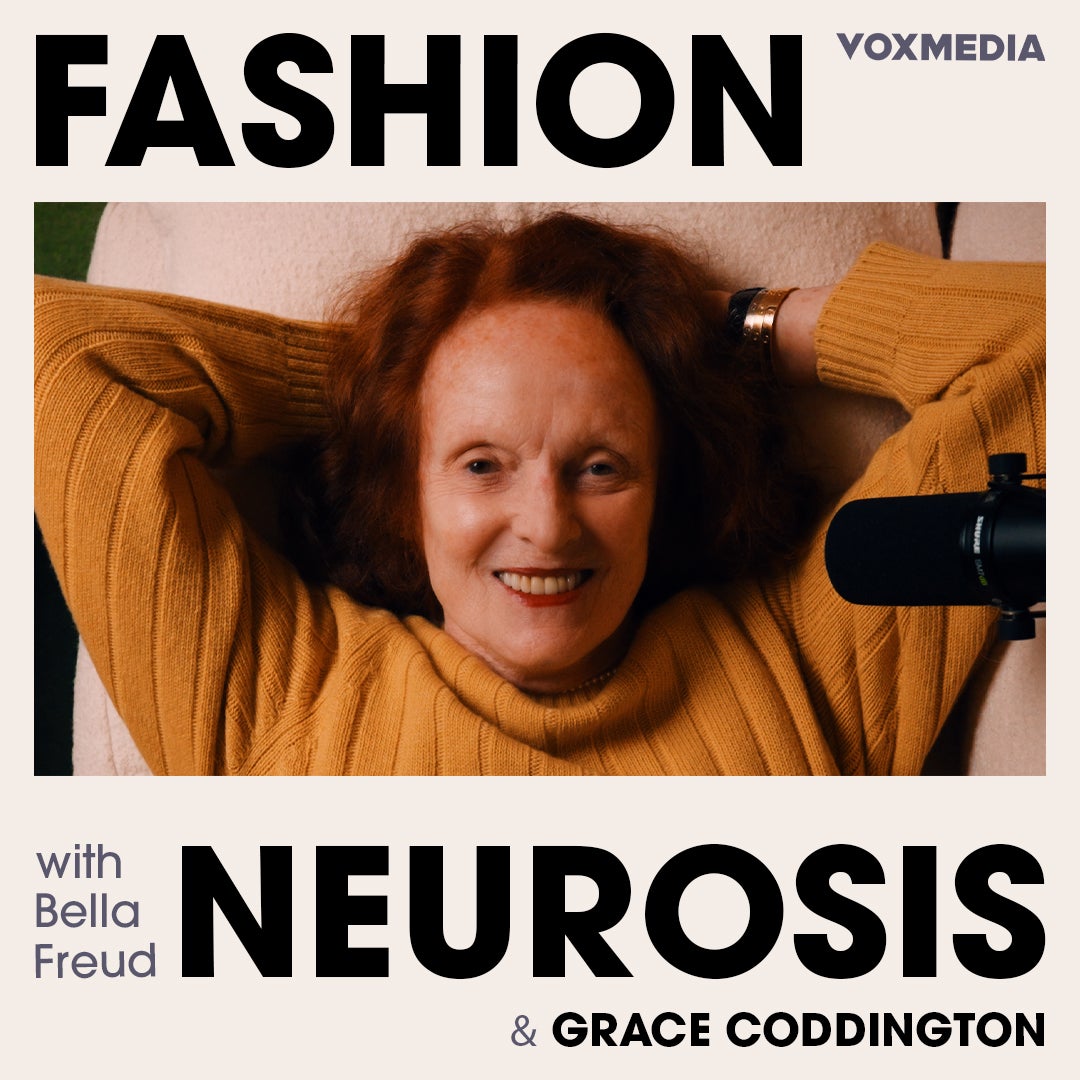
On this week’s episode of Fashion Neurosis, Bella Freud and Celia Paul discuss Lucian Freud’s bathroom scales, Francis Bacon, and self discipline.
Learn more about your ad choices. Visit podcastchoices.com/adchoices