 Ask Claude
 Ask ChatGPT
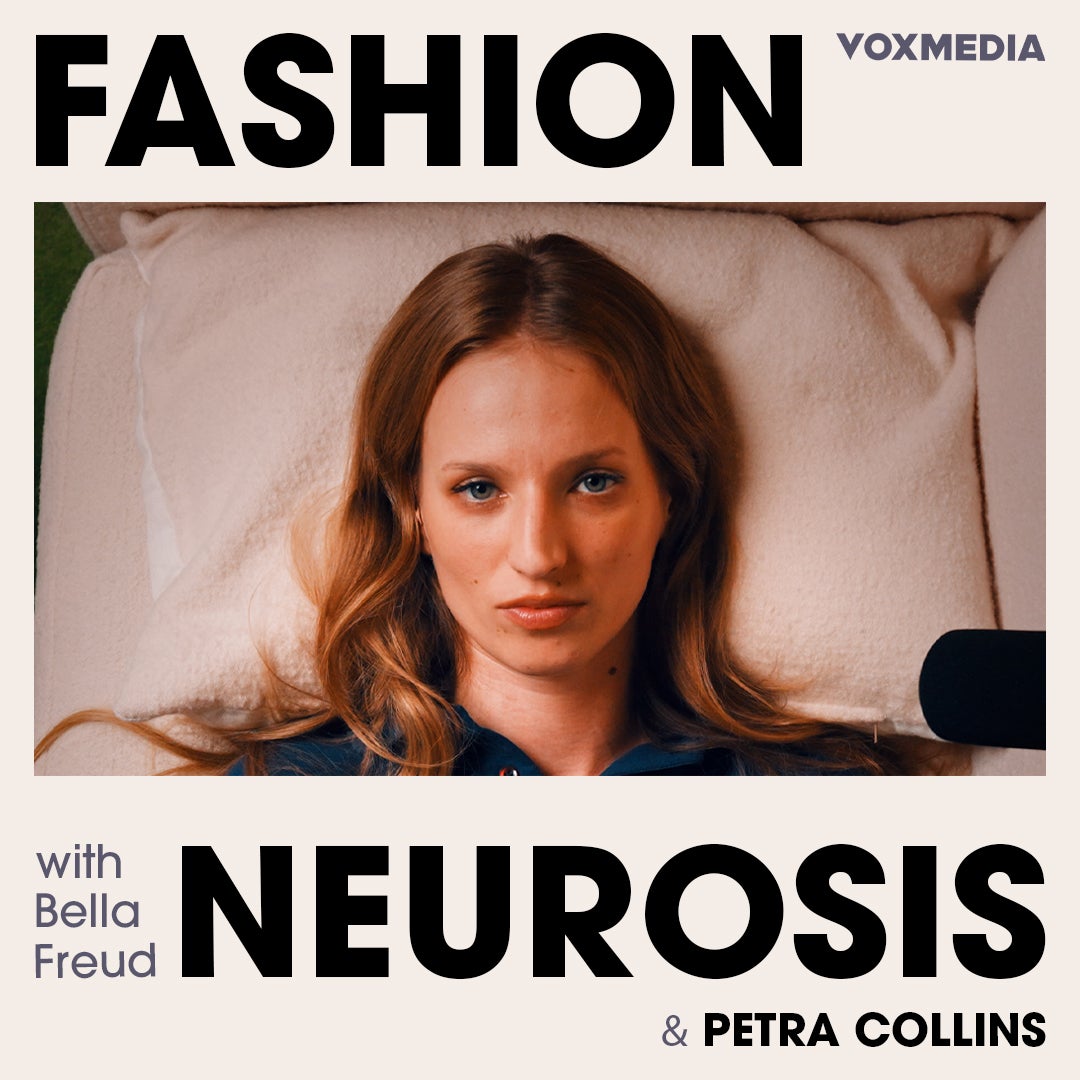
 Fashion Neurosis with Bella Freud
28 Oct 2026 · 1h 28m
vo listened to this episode to put together the overview and transcript, so there may be the odd mistake.
Fashion Neurosis interview with contemporary artist Nathaniel Mary Quinn, covering his style, “inverted cubism,” and how childhood survival, family history, and marriage shape his art; includes discussion of his London visit and creating the Rolling Stones album cover “Foreign Tongues.”
Nathaniel Mary Quinn, highly acclaimed contemporary artist known for collage/composite portraiture; works held by institutions including the Whitney and Art Institute of Chicago; solo shows at Gagosian Pace Gallery and National Public Housing Museum (Chicago). His wife, Donna Augustine Quinn, is an actress in London’s National Theatre production The Story.
Quinn says his paintings come from “visions” and he translates them using influences from cubism, surrealism, abstract expressionism, and collage. He defines “inverted cubism” as focusing on internal essence rather than surface multiplicity. He credits art with survival in Chicago housing projects—drawing gang members’ comic strips earned protection. He says his mother’s strokes and resilience shaped his lifelong focus on her body and inner life; he took “Mary” as his middle name after her death. He describes school as refuge via scholarship and GPA, and therapy (encouraged by Donna) as transformative.
drawing for gangbangers; sleeping in a Greystone foyer after his family vanished; using phone books and candles for art competitions; wearing a boarding-school uniform to earn a “gold A” GPA pin; designing a Rolling Stones “Trinity” album cover; Donna’s National Theatre role.
0:00When it's the end of the day and you're settled into the couch looking for your evening watch, you're not looking for homework the movie. You're looking for comfort, excitement, or something in between. Whether you're craving something familiar or in the mood to discover something new, Amazon Prime has what you need, from screen to doorstep. Because it's not just about genres or endless content. It's about finding the thing that matches how you're feeling, whatever the mood. From streaming to fast shipping, it's on Prime. Support for the show comes from Google Gemini. You know that moment when curiosity strikes?
0:40You're exploring a new city with a family and a sculpture catches your daughter's eye. What is that? Who made it? With Gemini, you can snap a picture and get a fully interactive breakdown of its history, architecture, and even hidden secrets. Gemini is built for moments like that. Whether you're learning something new, solving a problem, or looking for your next favorite thing, Google Gemini is here to help. Download Gemini, Google's AI app, or visit gemini.google.com to learn more.
1:20Hi, come in.
1:27Welcome to Fashion Neurosis, Nathaniel Mary Quinn. Can you tell me what you're wearing today and why you chose these particular clothes? Today I am wearing a sweater, jeans, sneakers. It's a little chilly in London, so I thought it would be a good idea to wear a sweater. Although it did warm up a bit as the day went on. But I'm still happy that I made the decision to wear my sweater. And it's the only sweater I brought with me to London from New York. But it's not just a sweater. It has the magical four stitches in the back of the neck, doesn't it? Yeah. It's a Margiela sweater. Yeah. But I love it.
2:18It's very comfortable. It's easy to wear. you know i like the way it fits me it fits me better after it's it's like dry clean um because it goes back to its original form like its original shape but in any event it's it's it's um it's it's easy for me to deal with i like the way it looks like a rag and then you you get the sign when you turn around it's like it's the most refined rag you can ever own yeah it does look it yeah it has like the hanging threads at the base of it I mean Margiela the piece to me is like a work of art Margiela struck is that kind of a fashion brand to me like the pieces that they make are like unique works of arts unique pieces I love I love their work I just love it and you're a highly acclaimed contemporary artist known for your distinctive style of collage like composite portraits and your work is held in institutional collections, including the Whitney and the Art Institute of Chicago.
3:48And you've had solo shows at Gagosian Pace Gallery, and most recently at the National Public Housing Museum in Chicago. And you've said your paintings come to you in visions. And how do you translate these visions into works of art? of my i guess i would say so much of my practice is influenced by
4:16modern art philosophy um cubism surrealism abstract expressionism collage techniques and I use those various modes of artistic expressions to translate the vision or the mental picture into reality that that's how I'm able to transport the visions from my mind onto the canvas or the paper but through the those modern practices of art making because i read an article in 2018 um that you wrote for vogue and it was really like an explosion in my system and I've never forgotten your story and that's how I discovered your work and so it's really meaningful to me that you're here today when I thought about you a lot and I love those experiences where I came across you and was so moved by your brilliant writing so it's so meaningful to me that you're here today and how come you are here in London um well the primary reason why I am here is because of my wife Donna Augustine Quinn she is an actress and she is in a play at the National Theatre character called the story this is a breakout moment for her in her acting career i am profoundly happy for her very much so very very very proud of her she has worked so hard to have a particular breakthrough and now she's living it living it and she's from london yeah so she's british and she has returned to her native land on a spectacular occasion as being an actress in this award-winning stage production at the National Theater which I have come to understand is one of the most celebrated stages in in the world surely throughout all of Europe and that's that's that's the primary reason why i'm here oh it's a pinnacle of excellence there you know that you're gonna learn something if you go to the national theater something's gonna happen to you when you see something there yeah it's exciting and uh you began drawing from a very early age and you would draw on the walls of your apartment when when you were around five because you had no paper and you said your mother screamed at you until your brother Charles said actually these are quite good and I wondered if you'd ever drawn your mother.
7:46um yes i have made works
7:55as reflections of my mother not not traditional portraits um i don't do traditional portraits I've always been interested in the internalized world of a human being the essence of a human being and the multiplicity of that which is not seen I call it inverted cubism that's great and um which is what i am currently investigating in my studio practice now here in london you know my courageous campaign to continue the burning torch of cubism traditionally speaking, cubism seems to have focus on the multiplicity of the surface. Inverted cubism focuses on the multiplicity of the internal. The inner essence of a human being.
9:14But it is what I have always done in my practice. I just never had the language to define it until now. Hence, I have made works of my mom, reflections of her. I guess someday I would like to be proficient enough as an artist or a creator to make a work of my mother that would be potent enough for her to walk off the surface of the canvas and back into my physical life yeah Yeah. It feels almost possible to imagine such a thing looking at your work because it is, there is something kaleidoscopic about it that takes you deeper and deeper. Well, that's just my experience of it, which I really love.
10:18And did you, when did you first see a cubist work? Oh boy in college. Yeah, see the thing well Romero building a collage artist American black American artists his works were the first works that Captivated me and You know, he was a collage artist in a very traditional sense and and there was heavy, heavy Cubist influence in his work. Although at the time, I did not know what I was looking at. I only knew my visceral response to it. And I suspect that there was something about that work, about that particular mode of expression that reminded me of my mother's body. You see, my mother had two strokes.
11:24Yeah. And it rendered her crippled or physically disabled. She was still able to walk, but her body was different. And the way her body moved, it looked like a walking collage piece to me. yet it was a beautiful form. I mean, she was my mother. I guess ever since I've been making works of her body, everything in her work is, everything in my works is, it's like it mimics my mom's body and the way she moved, the way her arm was positioned and her left leg and her right arm and the way it moved, the way she stood up and sat down. Yeah, and then I come across Romare Building's work and I see the way he constructed the figures in his collage pieces.
12:30And of course his works were about black American culture and black families and black mothers. and I saw my, I guess I saw my mother. Wow. I didn't know at the time, but now that I think about it, I'm pretty sure that such was the direct link. Yeah. That's such a moving connection. It's really striking. Because you're one of five brothers. You're the youngest of five brothers, and you grew up on the south side Chicago housing projects. and the area had a lot of organized crime and gangs. And you said my drawings were a way for me to garner respect and protection from local gang members. And gang members would offer me protection in exchange for putting one of them in my comic strips.
13:24It's almost like Greek mythology, that. Yeah, that's right. You said you were challenged to art duels by other kids. And what was an art duel? Well, as you noted, I would make these drawings for these gangbangers. And these were hard and tough guys, okay? I mean, these were very dangerous figures, very dangerous. You know, since being in London, I've been walking around, and here you all have council estates, which are like the projects here in London. And I walk through them and I look up at the buildings and I think, wow, this is something. I mean, when I was growing up in Chicago, you couldn't just casually walk through the project without something happening to you.
14:22That was not a possibility. The idea that you could do that is just pure fantasy. So I say that just to give you an idea of the context, okay? And then there were these gang bangers and gang leaders, and they were really rough and tough guys. And they were very violent at times. And they were engaged in all kinds of street stuff. And I was always drawing. I guess somehow I gained this reputation of having this talent. And I would draw these guys because they would come around me. and I would just show them my drawings and they took a liking to them. So cool. I mean, the currency of like survival there is, I mean, that's just amazing and that they recognized and were impressed by this kid with this amazing gift.
15:27It's good. It's like you were saying earlier, Art is kind of the compass for everything, everything good that happens or powerful. Yeah, it was art already becoming utility for me. Yeah. It was functioning for me. You know, my work gave me a level of protection. Mm-hmm. Because you talked about your mother having two strokes and being disabled, partially disabled, but she sounded like she had great morale. And you described her as wisecracking and she loved gospel and church and she'd cook Thanksgiving meals for some of the gang members. And what was your father like? my father was a hard-working man um i am not sure as to where he was from although i remember stories about him possibly being from new jersey he could not read or write but my father was a really good cook and he was a he disciplined me and he spoke with me a lot about the value of hard work.
16:57I mean, he looked like a giant to me, but he was a cook. He was, in many respects, a simple man. He liked to wear his cowboy hats and cowboy boots.
17:13and he went to work. I mean, everything I know about work ethic I got from him. You know, that was the home I grew up in. Work ethic was taught to me by my father and he could not read or write. Wow. But he loved drawing, is that right? Because he really encouraged you. Yes. Yes. he drew cowboys. I mean, he was a fan of cowboy culture. And when he discovered that I had this talent for drawing, he took me under his wing in that respect. And on the weekends, we would sit at the small, riggedy kitchen table together, and we would draw on grocery brown shopping bags. We would draw like Cowboys or Bruce Lee, because at that time Bruce Lee was very popular and martial arts and Kung Fu shows were a big deal.
18:33And And I would draw from my Marvel comic books, you know, like the uncanny X-Men. That's what they used to be called, the uncanny X-Men, the Fantastic Four, you know, the Avengers, Spider-Man, and I would, you know, Wolverine. And I would draw these characters from the comic books and my father would be there. He was my teacher, and he ripped the erasers off of my pencils because he says you will never erase. Every mark you make, you will make with attention. And if you make a mistake, then so what? You're going to do something with that mistake. And did any of your brothers have artistic talent or ability or express themselves artistically?
19:23Yeah, I had a brother named Richard. He knew how to draw as well. but Richard wasn't. Okay, so oftentimes my parents were not able to pay the light bill so the lights would be off. It was no surprise that we had candles strewn throughout the house. So when the lights went off, we would light the candles and the fire from the candles became our light. And to entertain ourselves, the family would gather around the kitchen table and my brother, Richard, and I would sit at that table each one of us had a chicago phone book phone book there are no phone books today back then there was this thing called the phone yeah and in it the numbers and address and listings of businesses would be in this phone book this big heavy parchment and you open it up and you find the listings or whatever.
20:22But we used the phone book to make our drawings and to carry out our drawing competitions. And my brothers would be the judge and jury of these competitions. And my brother Charles would oftentimes say, man, Richard, little Nate can draw better than you. I remember him saying this. And I remember my brother Richard being unhappy about this revelation. He was happy for me, but it was, you know, sibling competition, as they would say. But it would appear that at that time, I was clearly more talented than him while being much younger than him. Because when you were 14, an assistant principal at your school helped you get a scholarship to a private boarding school a few hours away.
21:18rural indiana and how did you deal with being singled out for being a gifted pupil and none of this privilege being available to your brothers well i was very young at the time so i did not give much thought to the maybe the psychological underpinnings of those decisions. But I did appreciate the opportunity of being able to escape the poverty of my environment. I mean, I never thought that I would ever escape that community. It was truly a dread living there. And the prospects of going to this other world, to this private boarding high school. I mean, I'd never even heard of a private boarding high school until Ms.
22:27Hunter told me about it. But when I saw the brochure and I saw the pictures of the students walking on this paved sidewalk with this groom grass and these nice buildings and wearing their very very beautiful uniforms and the kids look happy and they looked at peace and I saw none of the usual markers of the kind of community in which I was living at the time I it was so attractive I thought but this is a dream come true I can't believe it this is my escape from the projects this is it i mean that's that's exactly what i was thinking yeah i didn't give much thought to how it may have impacted my brothers they didn't express jealousy or ridicule were they happy because they had quite a street life didn't they and like well my brothers they were not they were not street guys they were not like in a gang or selling drugs or anything like that.
23:35But they had their vices. One of my brothers was an alcoholic. Another brother was a drug addict. Another brother, he did bits and bobs to earn money. So they had their vices, their shortcomings. you know none of them finished like school which means they would drop out so whatever they all lived at home with my mom and dad we all did um but i i don't i don't recall jealousy but i was 15 years old and the next brother was already around 22 so there was a big age gap yeah If there was jealousy, I certainly did not detect it. But I don't remember it. I'm sure there wasn't. Otherwise, you would have remembered.
24:38I mean, that's my take. Yeah, I think you're right about that. I think I would remember that. Yeah. At T-Mobile, the new iPhone 18 Pro is here with a big leap in battery life. And you can get it for nothing up front. With so many reasons to choose T-Mobile, you'll want to talk about it. I heard at T-Mobile, you can get iPhone 18 Pro for nothing up front and get$1 ,000 off. Pass it on. Pay nothing today. No taxes, no fees, nothing down. Pass it on. Hey, Mickey, pass it on. iPhone 18 Pro has the most advanced iPhone camera ever. Pass it on. At T-Mobile, you can get iPhone 18 Pro for nothing up front.
25:18Pass it on. At T-Mobile, get$1 ,000 off the amazing iPhone 18 Pro with no trade in needed. The 36 monthly bill credits when you switch to T-Mobile on a qualifying plan. If you cancel entire account before receiving all bill credits, credit stop and balance on required finance agreement is due. Example,$1 ,199.99, iPhone 18 Pro, 256 gigabytes. Bill credits in if you pay off device early. Qualifying credit, new line, cord-in, and service. $85 more per month with AutoPay Plus taxes and fees required. $35 device connection charged due at sale. Visit T-Mobile.com. Hi, everyone. I'm Kara Swisher. And I'm Sky Galloway.
25:47Twice a week, we get together on Pivot to sort through the biggest stories in tech, business, and politics. And we're taking the show back on the road for a live tour in November. So we'll bring hot takes, I'll bring the insight, and the dick jokes, and Kara will try. Keyword is try to keep me in check. You'll get to see her hit me in person live. I'll do it. If someone has to do it. We'll cover AI, whatever chaos Washington has cooked up that week, and every billionaire misbehaving. That's all of them. And you'll also get to participate in audience Q &A, so bring your best questions. Scott will probably answer ones you didn't ask.
26:22We also have secret special guests, which you'll enjoy for every city. Get tickets at PivotTour.com. That's PivotTour.com. We are selling out, so don't wait. And we look forward to seeing you. Are you tired of hearing about business, tech, and finance from the bros? We are the Tiger Sisters, a top business podcast with the Vox Media Podcast Network. Tiger Sisters releases every Monday and we decode money, power, and love. And who doesn't love all those things? We are the Internet's Wall Street and Silicon Valley Big Sisters. Tune in every Monday for late night sister talk meets boardroom strategy.
27:00Check out Tiger Sisters on YouTube, Spotify, or wherever you get your podcasts. Welcome to the Tiger Fam. Because you were so close to your mother, Mary, but she devastatingly died soon after you started school. at the boarding school, and you decided to take her name as your middle name. And it's such an imaginative way to keep her with you. And how did you come up with that idea? Well, I was in boarding school, and it was my senior year. and at this school, the graduating class all receive a senior class ring. This ring. I'm wearing it right now. Really? This is the very ring. It is the only piece of jewelry that I own too because it is meaningful to me.
28:01Yeah. Outside of that, I'm not into jewelry. just this that's that's the only piece of jewelry i need is this ring but um and they will they can ascribe your name on the ring and your initials and at that moment donald me mary nathaniel mary quinn that is what i will put on my high school paperwork a high school diploma into my um ring because my mother never graduated from a former school. So for me, I thought, well, if I say Nathaniel Mary Quinn, it would be like she too is graduating from high school and she's going to also have a high school class ring. And it's going to be on all of my, and it's been that way ever since.
29:00And every award I've ever received from college, going to NYU, anything, is Nathaniel Mary Quinn. So now she has also gone to school and gotten education. It's such an inspired idea. It's so beautiful. And the name Mary, somehow it's such a universal mother figure name that it almost could work for a man independently. Like I remember first seeing your name and thinking, Mary, you know, what's going on? Yeah, sure. But it's really intriguing and it really suits you and your work. It's great. I think it's wonderful. Yeah, I mean, I was really happy about it. I had no doubts about it. I understand what you mean because Mary is normally a woman's name, as far as I know, but it's my mother's name.
30:17and I mean one of the joys in life is like I recently had my museum show at the National Public Housing Museum in Chicago and you walk into that museum and on the wall it says Nathaniel Mary Quinn. See when you say my name you had to say my mother's name as well and my mother was a poor woman and she had nothing and nobody cared about her because she lived on the outskirts of society. She lived on the periphery. She wasn't meaningful to people because she was poor and she had no education and nobody cared about her except for me and my brothers. But now everybody around the world, they must say her name to address me.
31:06That same woman that nobody cared about now they speak her name all the time and they buy books with her name on it nathaniel mary quinn my mother is here now wow that's what a tribute i mean i have a son and so to hear a man talk about his mother the way you do is really profoundly moving it's amazing because the most shocking thing in the piece you wrote was when you came home from school for Thanksgiving and you found that your apartment was completely abandoned and empty and nobody was there and you were 15 and you never saw your father or your brothers again. How did you survive? Well, your question requires a two-tier response.
32:12So on the first tier is the surface, which is the outright act of survival. That night, upon realizing that the apartment had been abandoned by my family, never to be seen again, I needed somewhere to stay for the night. so I slept in a foyer of what is known in Chicago as a gray stone because in a gray stone much like a brown stone in Brooklyn or New York in Chicago the gray stones front doors are open and you go into the foyer and then normally you would press the apartment number for someone to let you in I just needed refuge, somewhere to sleep, and I slept in the Greystone foyer. The next day, I contacted, at the time, my best friend Roosevelt, and he too lived in this community of the Robert Taylor homes.
33:14I told him the news. He told his mother, Ms. Boykins, and they took me in, and Ms. Boykins proceeded to locate a family member who can give me a roof, give me a place to stay. So that's what I did physically to survive. Now, psychologically, it is an entirely different story. An event like that rewrites your DNA. It changes you. it is a tectonic shift to your reality it's shocking even as i think about it now it is still quite shocking it's very difficult to articulate it but it's like you die and then you're resurrected into a different reality. Like the life I knew was gone. That was over. And you have to make a decision.
34:30And my decision was very clear because by that time, remember, I had already started attending the private board in high school. So the decision was simple. Either I stay in a school and I carry down a path that is unknown, but safe. Or I stay in that community that I knew quite well, but that would probably lead to my demise. So I took the first path, the school. Because the school gave me refuge. They gave me... You know, you lived on campus, so I had a roof over my head. And I had... They fed you, so I had food to eat. And you had to wear a school uniform, so I had clothes on my back. But I had nowhere to go outside of that school, because see, my family was gone.
35:36My family was gone. and that was it and it took a long time for me to it took years it took many many years for me to get underneath that I was ruled by an atmosphere of separation and abandonment
36:04and that really that changes you man That really, it's a shock to your system. It's a real shock to your system.
36:23And I never saw them again.
36:30So I had to survive. And at that school, the greatest apparatus for survival is something called your GPA, your grade point average, academic excellence. And I had a full scholarship to this institution. I did not have to pay any tuition to go to this great school. But to keep that tuition, I had to maintain a strong GPA. So studying was paramount. Academic excellence was non-negotiable. So that's what I did. I committed myself to the pursuit of academic achievement. And I created for myself a weekly study schedule to guarantee academic success. Because without the academic success, I lose the scholarship.
37:34And without the scholarship, I would be rejected from the school. And without the school, there's no more dorm. And without the dorm, I'm on the street, which would render me homeless. Because I had no family to fall back on. See, going to school was twofold. Academic achievement and refuge. someone to live, survival. It was always tied into one thing. Survival in school made into one flesh for me. One sword cutting through a forest so I can survive. And then I had to adapt to this new human being that I was becoming. Yeah. And I was very, very, very optimistic. My mother was a praying woman and she went to church every Sunday.
38:34And every Sunday morning she would wake up and get out of bed and she would pace up and down that small project apartment. And she would lay her hand over my head and she would pray over me and ask God to watch over my body. Lord, please protect my child. Lord, please, Jesus. That's what she would pray. I would feign to be asleep. But I was oftentimes awake. I remember this woman praying over me. Now I'm in this high school praying for myself. Learned that from my mother. But it gave me hope and optimism and faith. I just always had an unwavering belief in the best outcome. All I had to do was just work and believe and have faith and work.
39:31That's it. I just believed it. Just believed it. It's absolutely amazing how to hear you because it would be so easy to opt for the other path that you didn't take because it was safe in a way just to go back and not aspire. But your mother seems to have infused you with this courage and to be able to be optimistic under those circumstances is so remarkable. And you said grief was the constant noise to whatever success I achieved. And I wondered, did your reputation as an artist at the private school bring you respect in the way that, you know, the gang members from the streets had admired you for your talent?
40:30well i think what i would add one other like um addition there were these there were these two teachers at my um grammar school in chicago who also played a pivotal role for me miss pilcher and miss jackson um and those teachers I mean yeah they practically saved my life you know and they helped to embolden my optimism and positive outlook now in that high school the respect that I was able to garner from my art was was different from the respect from the from the gang members because in the community, that level of respect was characterized by like this kind of physical protection that I was able to enjoy.
41:41But in the academic scene, the respect was now being characterized by the prospects of more opportunities that can open more doors for me. And opportunities are,
42:02in a way, manifestations of security. Yeah.
42:09Yeah, that's how I would define that. And they were both pivotal, you know. Yeah. it's a real thing to be seen by an adult at school and that thing of someone noticing you for your for the good that's in you and I remember that there was a teacher at my school and I'll never forget her you know she just sort of noted me and didn't challenge me for my failures and I'll never, I'll always be grateful for that, that confidence in me that she didn't say much, she just was great. Reading about your life and your love for your mother and how you uphold her memory in your own name, I was wondering how any woman could ever compete with her for this, but you describe your 15-year marriage to Donna Augustine.
43:16Is that the right pronouncing? Yeah, Donna Augustine. Yeah, that's right. Yeah, yeah. Your 15-year marriage to Donna Augustine Quinn as an everyday date, in spite of your extreme childhood experiences of abandonment and your trust seems to have stayed intact. And was that an intentional thing that you nurtured in yourself or something that transpired between you and Donna? Well, I'll tell you what. Listen, I'm 49 years old, so I'm an old school man, okay? We are in the year 2026, and relationships have taken many different forms now, and that's fine. It's the generation of our time. I grew up in a home with married parents.
44:12My father and mother were married. And at the time of her passing, I remember my father saying to church how they had been married for 26 years. They were married until death did them part. And my mother could not work, okay, because she had the strokes. So she was not capable of working because physically she could not work. So my father worked. and he worked without complaint. And I watched this man provide for my mother by working every day. And he worked as a cook in a kitchen. And we were poor, but it's the values of it that stayed with me. You know, this man who loved my mother. And I felt and saw that love in our home.
45:05and I saw the value that my father exhibited towards my mother and he went to work and when he got paid he brought the check home and he gave it to my mother and he he cooked for her and he laughed with her and they were listening music together and he would keep enough money for himself so that he can have transportation and he can um you know maybe go play pool at the pool hard because he would gamble playing pool from time to time. And that was it. But he took care of my mother. And that's how I was raised. So I guess at some point I thought about the prospects of being married. And so when I met Donna, I knew right away that I liked her and I thought she was very beautiful.
45:55She's a beautiful woman and she has big, beautiful, delightful brown eyes. And And she's a strong woman. And she's very intelligent. She's one of the most intelligent human beings I've ever met in my life. And I knew after about six months of dating her that, you know, this is the woman I want in my life. I need a woman like her. She's smart. And she's strong. And she's intelligent. She's tough. and she knows how to go through the fire and the hardships of life you know she's not fragile and she's also very beautiful and sexy and I like her and I love her and I get along I get I get along with her and we have a good time together you know and we can sit in silence together and know there's not a problem and we can learn to communicate more effectively with each other.
46:55And after about six or seven months of dating, I got down on bend the knee in the kitchen of my duplex apartment in Bedford-Stuyvesant, Brooklyn. And I was a teacher at the time. I didn't have any money, you know, and I proposed. I couldn't even afford a ring. And I proposed to her and I said, will you marry me? And I said, now listen, I don't have a lot of money. Okay. But if you're with me, I will always promise you these two things. With me, you will always have a roof over your head and food on the table. Because that's what my father did for my mother. He always provided a roof and he always put food on the table.
47:42And I've been doing that ever since. And we recently celebrated our 16th anniversary here in London. And that's what I did. And when we got married, I was still dealing with the despair of my family abandonment. Okay. I shared this with my wife.
48:09And it was not an easy journey. It was not an easy path. You know, because marriage is not for punks. okay you can't be a punk and be married you gotta be tough but anything worth having in life requires work and i love this woman with all of my heart she's the reason why i went into therapy she is it's because of her and therapy transformed my life it truly did therapy is fantastic It's the best thing any human being can do to to undergo an excavation of your inner self To get to the bottom of it all and all of that happened as a result of Donna's encouragement and influence and we've been together ever since and She's she she's my studio manager.
49:14You know, she manages my career. I listen to her. I I listen to her wisdom and her knowledge about things, and I pay attention to her. And we work together as a couple. She's really good with numbers. Oh, that's great. And with money. So she manages that. I'm not good with money. All right? You know, but she's my very best friend. But a lot of that, you know, I learned a lot of that from my, watching the way my father, you know, treated my mother. How does she dress, Donna?
50:09Donna, you know, she dresses down, you know, because we both work from home and she's managing my studio and she's doing her acting stuff. So she normally wears like jogging pants and like a black shirt top. And she wears a hat, like a, I don't know what you call those hats, like a fedora. Oh, wow. And she wears her trainer. She calls them, no, she's British. Yes. She says trainers. And we go to the coffee shop every morning in Bedford-Stuyvesant. And we get coffee. We sit together and have our coffee. And then we walk through the community, the neighborhood. And we talk. My wife loves being with me, okay?
51:01She loves spending time with me. She has a great time with me. Because every day of marriage is a date and you don't need to spend money on a date every day. It's about spending time together. That's what it's about. And there is nothing more valuable than time and time well spent with the person you love. And every morning she wakes up. I'll tell you this. This happened prior to us coming to London. She and I were coming from walking from a restaurant. We went out to eat. We were having dinner together. And we were coming back home. And now this is after 15 years of marriage. She says, she jumped up and down like a child with happiness and joy.
52:01And she says, I'm so happy to be married to you. And in 49 years of living, it is without question one of the greatest moments of my life. Her jumping up and down, expressing that happiness about being with me. Little old me. That's so lovely. My God. Boy, that is my Oscar. Okay? That's my Tony. That's my Emmy. Because when I'm sick, she's by my side. When I'm afraid, I can go to her. When I'm worried about things, when I'm insecure about my art practice, I talk to this woman and she gives me advice and feedback and I do the exact same thing for her. She's in this play right now, the story at the National Theater.
53:08And every night she comes back from the theater and we have a debriefing and she talks to me about her experience on the stage. And I listen to her. You know, oftentimes, for the most part, when women are expressing things, they don't want your solution. They just want to be heard. They just want to talk. They just want to express some stuff. They want to get off their chest. And they just want you to listen. You're not asking for your solution. Most men, we have a tendency to want to solve things. Like, no, just listen to her. That's all she wants to do. Her being able to express her time is the solution.
53:50That is the answer. And she talks about her time. and on the stage. But lately she's been dealing with insomnia. She's been having a hard time sleeping through the night. And I just stay up there. I stay up with her. And she wakes me up two in the morning. Can you come with me in the living room? I said, yes, ma 'am. I'll come with you. And I just go with her. And I sit with her. Because I don't want her to be afraid. And I don't want her to be overly anxious because she's doing this big time play, you know? So that's very important. And she has supported me through hell and back, okay? And look, marriage is a tough journey.
54:34We have the kind of marriage, we could have had our own reality TV show. We would have been the hottest show on Bravo TV, okay? We would have had all the ratings because we have been through it all. But that's the love. She is the absolute love of my life. I primarily work for her. I work for her. I do everything for Donna. Everything I do is, and I have to share this with you. When we met, I was a teacher for at-risk youth and an adjunct professor. And Donna was doing pharmaceutical sales. Okay. And we both lived in Brooklyn. And so we both had our respective jobs. And, you know, we would get up in the morning and go to work.
55:35And one day, I'll never forget this, we get up in the morning, we kiss each other, farewell for the day, and she leaves the house and it was winter and there was snow on the ground. And I watched her through the window descending steps onto the sidewalk in the snow. I remember watching her walk through that snow. And I said to myself, man, I really don't like my wife having to trek through snow like that. That really bothers me. I wish he didn't have to walk through the snow like that for a job I really wish I could change this for her And at that moment I got really serious about Doing something to change the circumstances I wanted to provide a better life for my wife That was very important to me Because that was always important for my father See my mother couldn't work So my father did what had to be done And he was able to do that as a man who could not read or write.
56:46So I figured I can do it. I have an education. I went to school. I am literate. And I just became super focused and prayerful. And I'm just so grateful for how things turned out. Because now my wife doesn't have to walk through the snow for anybody. When she walks through the snow now, it's because she wants to. Because she's going to the gym or she's going to get a cup of coffee or doing whatever she wants to do. But not because she has to. And if she doesn't want to walk through the snow, she doesn't have to. And it's totally fine. Because that's what my dad did for my mother. Wow. Wow. Because the people in your paintings are often wearing amazing clothes, like your portrait of your brother Charles in the big hat and the fur coat.
57:46Did he dress like that?
57:52Not exactly. I oftentimes use fashion in my work as a tool, as an entry point into the internalized worlds of the subjects. oftentimes it's not the case that the the fashion in the work is a reflection of maybe how the person may have been in real life you know for example um in my earlier works on paper some of the figures would have like would wear a fur hat. Yeah. And now that was only indicative of the extreme cold weather in Chicago. But it's not that many people living many working class people had any ounce of money to afford a fur hat. but I oftentimes would use fur as a commentary on the cold weather conditions of the state of Chicago because it gets very cold in Chicago.
59:22So that is an example of how I would use how fashion would operate in my works. Hi, Chicago. It's Phoebe Judge, host of the podcast Criminal. In just a few weeks, I'm headed your way with our brand new live show. And this time, it's about my life and the people I love. And secrets. A letter was left carelessly around, so I was sort of caught red-handed. I hope you'll come see it. Get tickets at thisiscriminal.com slash live. Hi, it's Phoebe Judge, host of Criminal. I'm going on tour. If you like hearing me tell stories about people, well, I've decided to tell stories about my life and the people I love.
1:00:13A letter was left carelessly around, so I was sort of caught red-handed. It's a show about secrets and forgiveness. I hope you'll come see it. Find all our tour dates and get tickets at thisiscriminal.com slash live. How will Israel's upcoming elections shape its relationship with the United States? The most probable scenario is not going to be a clear winner, and therefore there will be another election, and Trump's Middle East agenda is going to be pretty much hijacked by the political crisis in Israel. I'm John Feiner, and I'm Jake Sullivan. We're the hosts of The Long Game, a weekly national security podcast.
1:00:57This week, we speak with Barak Ravid, global affairs correspondent for Axios. He explains the stakes of the elections for Israel and the world. The episode is out now. Search for and follow The Long Game wherever you get your podcasts. Because was there ever a piece of clothing that you were obsessed with as a child? Obsessed.
1:01:22Um... Ooh, clothing has a... Oh, man. I, I, I, um,
1:01:37hand-me-downs was very popular when I was a child. And the desire for new clothes was an obsession as a child because we were poor.
1:01:55and man going back to school some kids would come there was such excitement about having new school clothes boy that that's that's a memory so potent I can almost taste it new school clothes And I was a child who loved school I mean, I really loved going to school And I remember my mother bought me brand new sneakers Or trainers, as you always say here And there was such excitement in having new shoes shoes or a new sweater because they were new. It's not that any particular item was my favorite, but because they were new clothes. I mean, I had an obsession about that. And a nice new coat and the smell and the feel of the coat.
1:03:11Yeah, I remember that as a child. but it was only an obsession because it was a it was such a rarity yeah and i knew that as a child i i i knew as a child that my mother could not afford these things well she did the best she could to get them it was not often the case that she was able to pull it off. But sometimes she was able to do something. And it was very, very, very small. Okay. Very, very rare. You know, maybe, maybe, maybe, maybe from my memory, five times.
1:04:08and Christmas you know I okay my brothers were collectors of Marvel comic books and I love comic books and sometimes they would take me to a comic book store and buy a comic book you know at that time you could buy a comic book for like 75 cents and I would have these comic books in my milk crates, you know, and I remember one Christmas I ripped out comic book characters and I wrapped them in newspaper like presents and I put them on the windowsill and I went to sleep and I woke up on Christmas Eve and I opened them. Like they were Christmas gifts to myself. And I would play with them. That's my most memorable Christmas of my childhood, doing that.
1:05:17And that was how I celebrated that Christmas.
1:05:23Because I was wondering about when you were wearing the uniform at your boarding school, Did you feel like you almost adopted a different persona when you wore it? And was it like a method of inhabiting this different life? Did the uniform play a part in kind of making that easier for you, that you had things, I mean, everything was dependent on your work. But how did the uniform play a part in that? The Carver uniform was, I thought, was really amazing. It was sharp and very well made. and I felt astute in that uniform. I felt important. It gave me a sense of meaning. I felt like an erudite young man and respectable and clean cut.
1:06:36and you wore the military hat and you had the blazer. And, of course, it came equipped with different pins. You would put onto the lapel of the blazer and you wore your trousers with the blue streak down the side and your shiny black dress shoes, which had to be shined every day. and um and see the thing was as you when you climb the ladder in that school you can increase in your ranking so you can get other medals that you would you could then pin onto your jacket or like the um i i forget the name of them but like there were like ropes around your oh yeah the um like epaulettes yes around your shoulder you know so that was part of the uniform and then if you um if you had a certain gpa they would stitch the the letter a on your jacket so if you had if you if you if you earned a gpa of anywhere between a 3.2 to a 3.5 they would stitch the letter A in silver stitching.
1:08:09But if it was like a 3.52 and above, they would stitch the letter A with gold stitching. Oh my God. And the blazer was like a navy blue. So I like the color of gold against the blue. Mm-hmm. So I worked really hard because I really wanted the GPA required to get the gold A. Yeah. Because aesthetically, it looked nicer on my blazer. That's great. So I said, I need to get all the gold A's on here. So, because I was like, because the way they stitched the A on the lapel was really, was kind of nice, you know, was really interesting. And I say, yeah, that gold would look nice against that blue. Because the first semester, I got the silver A.
1:09:05And I said, I don't like that silver don't look right against the blue. So I saw other students that had the gold A. I said, man, that looks nice, man. Look at that gold against that blue. That's smooth right there. I said, that's the one I need to get this 3.55 above GPA. So I start going to study halls and getting private tutors. Because these students were ahead of me okay they were very smart and as freshmen they were already doing like algebra and some of them were doing trigonometry already so they were ahead of me academically and i knew this so i would take advantage of the um the academic help programs or like study sessions that were available on campus and i would study and commit myself and in the second semester I got a 3.65 GPA and I got the gold A and it's been that way ever since.
1:10:09That's really what I cared about. I won other, I did earn other forms of recognition that came equipped with other pins that I would attach to my blazer and that sort of thing. So that uniform, it made me feel, I really enjoyed wearing it. I thought it was terrific. Yeah. And if you fancy someone and don't like something they're wearing, does it kill your attraction? Well, it depends on what they're wearing. I was going to say no, but wait, wait, wait, wait. It depends on, well, okay, I'll say this. I don't have any tattoos on my body because I have not been able to come up with anything that I would want tattooed on my skin permanently.
1:11:13So I imagine that if I came across somebody whose body was covered in tattoos, which I do see as a form of clothing, that would perhaps be a turn off in many respects. that doesn't mean the person is a bad person I don't believe in that but I think you know but if they were wearing every day if they were like some kind of remnant of the costume of the it character
1:12:07of Penny what's that character called penny penny something uh don't know about what we i don't know if we have that character yeah it's it's like a scary character you know i i think that would be somewhat of a turnoff but um you know yeah but you know this this this that's not my i've come across many people who were dressed in all sorts of ways and um you know i've gotten to know them and they turn out to be quite fine you know hey listen on the other hand i've met people who dress really well and i've gotten to know them and they turn out to be very unpleasant people you know but uh yeah i I mean, for 16 years, so much of my attention has been on my wife within that particular context.
1:13:06But yeah, yeah, I, you know, I remember at Culver, we would go, I sang in the choir. I cannot sing, but it was an extracurricular activity. Yeah. And I enjoyed it. And it was artsy. And there were a lot of artsy people in the choir. And we were saying for the Protestant and the Catholic services. And I still remember that Catholic song we were saying. And it went something like,
1:13:48Something like this. I love that. And we were saying at other schools, okay, and these were the regular public schools. And the students from those schools would say, oh, you're a bunch of rich kids. You're very snobby. And I said, not me. No, you got the wrong idea. So they were making a prejudgment about me because of what I was wearing and the way that I was dressed, that I was a kid from an affluent family who was coming from a lot of money. And, of course, that was not at all the truth of my background, but because of my attire, they formed that conclusion that I was from such a background.
1:14:45because you recently created the cover for the rolling stones new album foreign tongues and you call it i think the stones trinity and you said i was thinking in terms of meshing the members into one flesh and i've been an obsessive stones fan since i was 13 and And I even made a coat once for Keith Richards when I was at fashion school in Rome. Wow. You said about doing this work, you said it was like God had charged me with the task of capturing the culmination of historic era of music and mythology. and how easy or difficult was it for you to make the painting that you wanted to and also that they wanted?
1:15:39So much of that experience was surreal. My brothers were fans of the Rolling Stones, okay? I remember them playing the Rolling Stones music when I was a child because they played the Stones and they were big fans of Prince and these other bands and they were into these artists. And so here I am charged with this task of doing the album cover for the Rolling Stones. and I don't know what the future may what the future holds but this this could be their final album you know and it was it was challenging because on one hand I had to face the fact that I was making the album cover for a historic, iconic band.
1:16:53You know, arguably the best rock and roll band of human history. Okay, full stop. You have that. I was also making an album cover by three men who were human beings.
1:17:16and whose humanity I wanted to respect and give reverence to. So I had that to contend with. And then thirdly, I had to remain honest and true to my art practice. I had to remain authentic to that. I couldn't abandon my practice and my values as an artist to do a Rolling Stones album cover. And I'm sure that Mick Jagger did not want, I think that's the very reason why they approached me in the first place. Because of what I was doing. And I spoke with Mick Jagger on the phone and we spoke about the album cover. And Andrew Watt, he's the producer for this Rolling Stones album, Foreign Tongues. I couldn't believe I was on the phone with Mick Jagger.
1:18:16That was crazy. I was in the kitchen of my house and I'm on the phone call. This guy's talking to me. And he's, you know, yeah, what's going on, man? Yeah, yeah, yeah, it's cool. I said, now this is Mick Jagger talking to me. And I was saying, so I had to pull it together, man. This is business. So I said, Mick, here's the idea that I had. I was thinking I can do an amalgamation of all three of the bad members' faces into one central figure. And he says, that's exactly what I was thinking. Yeah, that's great. is they played some of the songs from the album over the phone. Before the album came out, I heard the songs, some of them.
1:19:09And this guy still has his voice. He is still such a dynamic singer. He's so vibrant and full of life. He looks good. He's in great shape. he you know he he he is like a he's a he's a ball he's like a a bolt of lightning yeah on legs it's crazy and and that was it and I and then like a week later I spent a night with um Keith Richards in a studio session in lower Manhattan at a place called Soho Studio Sessions and and Keith is jamming on stage with this band. He was, they were rehearsing the play for a birthday party for Bruce Willis the following night. Because Keith Richards and Bruce are good friends, apparently.
1:20:11This is what Keith told me. Yeah. Because after each session, he would sit with me and he would talk with me and share these war stories. This guy's done everything. He really has. He's done things I've never done. He's been arrested. He's been locked up. I'm a black man. I've never been locked up. This guy, I said, man, you have been in places I've never been. okay and um and he well he's great and um um you know and and they and they wanted to meet me okay before i started this album they they were really big on meeting the artist who was going to do this album cover for them and i respected that and i was happy to meet them because um and speaking with them.
1:21:06I was able to make eye contact with them. I'm looking at them. Yes, you are Mick Jagger. You are a pillar of global culture. You will be remembered for eternity. You are on par with Muhammad Ali. You're big, big, for real. You are that guy. It's like Michael Jackson, Prince, Elton, Mick like you're
1:21:38but I also see your frugility and your humanity you still bleed like me and you're getting old like me and you lived a long life and I hope and pray that I too live a long and fruitful life like you and you have been through a lot and i'm looking at his face and the terrain of his face and i thought to myself that's what it looks like to have an enduring music career of that caliber it looks like that That's the truth. That's honest. That's what that looks like. It's not the mythical, memorable young Mick Jagger when he was in his 20s. No, no, no. This is now. This is what it is. And Keith Richards is the same way.
1:22:42All the activity in his face. I wanted to bring that to the forefront in doing this album cover. I wanted to tell the truth. And I knew that it will bump up against the cultural collective mythology around the Stones. I knew that would happen, but it made for a challenging album cover. And it made for an album cover that people talked about. Yeah, it's amazing. Because, you know, album cover art is not a thing anymore today. It used to be. Yeah. It's not today. Not until I did the album cover for the Stones. Now people were talking about it. I saw the online chatter. I looked in the comments sections.
1:23:34There were all these back and forth debates. It's the worst album cover ever done. And then some people say, it's the best album cover ever done. But that's what you want. You want it to be. it was good that it was polarizing because it sparked a dialogue and a conversation you know and you know and i did not manufacture that but you know all i was concerned about was trying to make the best album cover that i could possibly make i mean i made two album covers for them but they went with the first one which is what you see now was the other one the tongue No, I redid the tongue. I love that. It was fantastic.
1:24:20You know, that's the reinvent of the tongue by me. But the other work, because see, me, okay, when I made the first work, I sent him an image, and we had another phone call, and Mick says, hey, mate, I just want to tell you, man, I showed some of the younger friends the image, and they thought it was a little scary. They thought it was a little scary. Such a good voice. I said, really? He said, yeah, they just thought it was a little scary. And I said, okay. I was prepared for this. I thought, you know, just in case they pass on the first one, I want to be prepared to make a second work. So then Mick and I had lunch
1:25:10in Midtown somewhere. We had lunch at the Lord have mercy I forget now anyway he was staying at this hotel and I met him there you know there was this woman that met me and I said I'm here to have lunch with Mick Jagger she said oh come right this way tall model-esque woman and she guided me to the elevator he went up two flights I get off there was a guy with an earpiece in his ear he says I said yes sir he goes for Mick Jagger. He said, right this way. And I followed him, you know, turned the corner and there was Mick sitting in the booth by himself. I said, hey, how you doing, buddy? He says, hey, Quinn.
1:25:57He stood up, we hugged, we sat down. Donna later joined me. We had lunch for about an hour, 30 minutes or so. And, you know, we talked about the second piece for the cover. and he's like, I like fast cars. He do something with a fast car in it. I like fast cars. I said, yeah, I got it, Mick. I got it. So I made another work with each band member coming out of like a vintage James Bond car. And, you know, I have Keith Richards holding a guitar and Ronnie Wood holding a guitar and Mick Jagger with a microphone. Mick is a central figure. And, you know, this kind of thing. And Mick loved this piece, okay?
1:26:47He loved this one. And he called again, you know? And Andrew Watt is there. And he says, I love this work. I just love it. Just love it. It's amazing. Yes, it's amazing. He said, I just have one question. I said, what's going on, Mick? What's happening? He says, I was wondering if maybe you could, add a little color to the lips you know because I like the color and I say Mick listen let's be serious here you and I both know you only care about your lips okay your lips are the lips you really care about okay Mick and he starts laughing and stuff and you know but I say you know what Mick I'm all rolling stones out I cannot make another mark for you I give you my best." And he was completely respectful of it, understandable.
1:27:44They have tremendous... I mean, he's an artist, right? He's a true artist. Francis Bacon did a painting of Mick Jagger. So, Andy Warhol, he has a respect for the artistic process. And then that was this back and forth and deliberation with the record label and Mick and Keith Richards and back and forth, blah, blah. And they ended up with unanimous vote going with the first work that I've made that is now the album cover. Well, it's an amazing album cover and I love it. And it's like full circle for me for being loving them so much. and then getting to meet you who's made their record cover. And thank you so much, Quinn, for being on Fashion Neurosis.
1:28:43It's wonderful to get to talk to you and meet you after thinking about your life and hearing about your optimism and your courage and your love for your wife is just really had an amazing effect on me. So thank you so much. And thank you for having me, Bella Froy. It has been a joy being here. Fashion neurosis.
1:29:31Thank you.
Nathaniel Mary Quinn is an American artist.
Born and raised in Chicago, Quinn began drawing at an early age, and went on to receive an MFA from New York University in 2002 and was awarded an honorary doctorate from Wabash College, Crawfordsville, Indiana in 2023.
Quinn’s practice operates within a world of visual metaphor, in which identifiable forms and features are mobilized to reveal aspects of character. Memories and found images unite to form composite portraits that are at once neo-Dada and adamantly realist, evoking the intimacy and intensity of a face-to-face encounter.
His first solo show was at London’s Pace Gallery in 2014, and his most recent exhibition was at the Chicago National Public Housing Museum, with a show called A Love Letter to my Mother. Quinn’s work is now held in major institutional collections, including the Brooklyn Museum, Brooklyn, New York; Whitney Museum of American Art, New York; San Francisco Museum of Modern Art; Art Institute of Chicago; Hammer Museum, Los Angeles; Museo Jumex, Mexico City; and Centre Pompidou, Paris, amongst others.
In 2026, Quinn created the art for the cover of the Rolling Stones album Foreign Tongues.
In this episode of Fashion Neurosis, Bella Freud and Nathaniel Mary Quinn discuss his drawings of gang members in the Chicago Projects, how Cubism informed his portraits, and making the Rolling Stones album cover.
Part of the Vox Media Podcast Network.
Learn more about your ad choices. Visit podcastchoices.com/adchoices
Scan the code with your iPhone camera
Listen in the app.