 Ask ChatGPT

Fashion Neurosis episode with photographer/director Petra Collins about how clothing, mood, light, and childhood experiences shape her cinematic images; she also discusses sexualization of children, trauma, and using creativity/fashion as empowerment and escape.
Petra Collins is a 33-year-old photographer and director known for fashion and art imagery. She grew up in a restricted Hungarian-Canadian household, trained in dance (dislocated knee at 12; later surgery), and has eyesight issues that led her to “work with light.” She frequently collaborates with her younger sister Anna, who contributes ideas from dreams/night terrors and sometimes shoots behind the lens.
Her images are guided by “mental survival” and gut mood; she separates her on-set self from an anxious self off-set. She argues that media sexualizes children and that war/domestic abuse share a dehumanizing dynamic; abuse is often recognized only after it becomes extreme. She says “you don’t need to suffer for the art,” and that fashion/creativity helped her leave an abusive teen relationship.
childhood Hungarian folk cartoons (including disturbing episodes), horror films like Carrie and The Exorcist, her road trip with Ryan McGinley that enabled her to leave, and casting/acting insights from photos (inspired by David Lynch).
Written by AI. May contain mistakes.
Petra discusses her clothing choices and their significance.
Exploration of Petra's engagement ring and its symbolic meaning.
“I love the way the silver drawing is on the sole like that.”
Petra reflects on her extremes in art and life, and the need for integration.
“And you said, if I don't do this, I'll die.”
Discussion on the relationship between suffering and creativity.
“And he said, I thought, what if I try to separate this self from the self-absorbed?”
Petra discusses how mood influences her photography and the importance of clothing.
“You know, and I just totally went somewhere else.”
Explore how clothing affects personal identity and storytelling in film and photography.
“Like a kind of terrible earthquake has taken place and your whole kind of sense of certainty is, you know, completely dismembers.”
Reflect on nostalgic memories tied to clothing and childhood experiences in thrift stores.
“I also, I mean, again, growing up with not much, there's great thrift stores in Canada.”
Discuss the impact of strict parental rules on media consumption and feelings of isolation.
Analyze how dark themes in childhood cartoons shaped perceptions and sexuality.
“God, it's the most amazing drawings where he cuts off his fingers and these drops of blood.”
Discuss the awareness of sexualization at a young age and its psychological impacts.
“And it's done, I mean, I think a lot of the time it's really done out of fear, but then you're putting this, I don't know, I always see this with images with children.”
Explore how horror films provide comfort and resonate with experiences of growing up aware of danger.
“I know because looking at your pictures and a lot of the early pictures, it's like where knowing that it's so fun as a young girl to kind of experiment with how you feel and look.”
Discuss the normalization of violence in culture and its implications for women's safety.
“can really just happen to women at any level and any stature and at any time in their lives.”
Explore how the nuances of abuse are often overlooked and how fashion can empower individuals.
“But we really, I think because also I feel like because of the graphicness of war, we sort of, we don't recognize the signs of abuse early on.”
Discusses the transformative power of fashion and personal experiences with body image.
“And I was thinking, is it far-fetched to suggest that fashion gave you a way out of being a victim of that situation?”
Exploring the relationship between dance, injury, and the creative process.
“The Alexander brothers moved in a world of multimillion-dollar homes, exclusive parties, and powerful people.”
Bella discusses her unique bond with Petra Collins during shoots.
Bella reflects on the supportive relationship she has with her sister Esther.
“And because of that, it's like it's in there somewhere.”
Bella shares memories of childhood anxiety and her sister's comforting role.
“I'd be crying and hyperventilating and scared of dying basically.”
Bella discusses how 'The Bell Jar' resonated with her during adolescence.
“So you contributed to the Rookie magazine, and Tavi Gevinson made it.”
Bella shares her thoughts on youth activism seen in Hungary during her visit.
“No, it's an amazing book, and everything about her is amazing.”
Discussion on the concept of withholding in films and its impact on storytelling.
“But they end up kind of wanting to keep the old ways.”
Discussion on how abstract concepts in film create depth and intrigue.
“Everything is so polished and generated.”
Petra Collins shares her nuanced feelings about self-portraits and identity.
“But sometimes it just gets so, it makes me really sad about the way that we, I guess, are creating images and are viewing women.”
Petra discusses her approach to fashion and how it influences her identity.
“It's like when I saw the picture of you at the Saint Laurent show, the Anthony Vaccarelli show just passed, and it was like there you were in this photograph, but it was as if you were the photographer.”
Exploration of how clothing choices affect self-perception and movement.
“And if you fancy someone and don't like what they're wearing, does it kill your attraction?”
Petra reveals her thoughts on how photographs can predict acting talent.
“I really, it's so interesting when it's about sensory.”
Discussion on Petra's upcoming film plans and her approach to filmmaking.
“and they're incredibly evocative and almost like diaries.”
Explore the intricate and unpredictable journey of making a film.
“is something you really have to be with film because it takes so many people to make a movie.”
Reflect on the comfort and connection found in shared experiences.
“It's been wonderful to be here with you.”

Get the gist, explore an idea or ask about something said.
 Claude
On Fashion Neurosis with Bella Freud, what are the key points of this episode?
Searching your listeningAutomatic transcript. May contain errors.
0:00Support for the show comes from TikTok. There is a scientifically documented correlation between listening to podcasts and curiosity. So since you're here, you probably enjoy discovering new things. One great place to indulge your curiosity is TikTok. Whether it's how to forecast volcanic eruptions, strange phenomena that the James Webb Space Telescope picked up near the beginning of time, or a literal deep dive on the ocean's deepest reefs. TikTok has a wealth of fascinating videos just waiting to be discovered. Your next discovery is waiting on TikTok. Learn more at TikTok.com slash discover more.
0:43Calling all F1 fans. Before the checker flag is waved, T-Mobile is inviting everyone to tune into the F1 live stream on the Formula One YouTube channel throughout race week to see performers from the T-Mobile stage. And be sure to catch T-Mobile's Club Magenta segment where you'll get a look at some of the perks members get at the race. it's the best seat in the house, even if you're watching from the couch. So tune in, check out Club Magenta, and see how every turn is better with T-Mobile. Experience a new way to wireless.
1:19Bella Freud: Hi, come in.
1:26Bella Freud: Welcome to Fashion Neurosis, Petra Collins. I'm really excited to be here Me too It's been a long time coming I know Can you tell me what you're wearing today and why you chose these particular clothes Yeah, it's funny I thought a lot about this I think a lot about clothes and I kind of ended up wanting to be comfortable This is a shirt This is a vintage shirt that I bought quite recently but I love it it says immaculate on it I think it's so nice I know I think it's I got it in LA so I think it's from this girls all girls school called immaculate heart and then I'm wearing Levi's jeans that are I've just been wearing them for like 20 years now I'm a big Levi's person and I have these Prada shoes on that I just bought with the little lace at the bottom.
2:28That's so lovely. I love the little lace.
2:31Bella Freud: I love the way the silver drawing is on the sole like that. There's an extra thing. What about your ring? Oh, yeah, it's my engagement ring. Oh, my God. That's so exciting. it's really i i mean i love it because i i dress i mean i feel like in my day-to-day life i sort of dress like a little boy so it's fun having this like yeah beautiful cocktail ring i think it's originally a 60s cocktail ring and i think yeah it just elevates my outfit because otherwise I'm like in a giant T-shirt and big shorts. I know. I wear my, what was my engagement ring on my middle finger now. And it really, especially in Paris, I remember going into Chavez and then looking like, oh, let's walk through the door.
3:31And then she suddenly spotted my ring and was much more polite. It's such a funny thing because it took me a while to get used to because it's so traditional. And I don't know, I don't, the way that I move my body and I operate is very, I feel like non-traditional. So it's funny to have this thing that is so tied to a specific way of being.
3:56Bella Freud: It's nice that, isn't it? It's a kind of nice balance that feels part of being like non-traditional. Yeah. It's, yeah, it's good. And you're a photographer and a director who's had a profound effect on the visual landscape of fashion and art in the last decade. And you're only 33. And you said, if I don't do this, I'll die. It's not like I'm a well-rounded person. What is well-rounded for you? I mean, I think I live in quite extremes. so I was serious when I said if I don't make art I would die I think I mean for me well-rounded is someone who I guess can operate without that without that trauma of life and death I mean I think as I've gotten older it's obviously changed I've been working on making it integrating it more into my life because I have this I don't know I always have this thing that I've said this to a couple therapists but I've always wanted to there's two of me I think there's one of me on set and the one that's making the art and she feels she I'm I feel completely unstoppable and not scared and anything can go wrong and it's okay and then I had and then the second I step off set it's like a quiet anxious person so it's been this great divide I feel like of myself that I'd love to like integrate as a whole.
5:49Bella Freud: it's such a so interesting you say that because i was trying to make myself go to sleep listening to eckhart toll the other day and that droney voice is very good so horrific but he said this thing about being extremely depressed and you know in a kind of terrible state and then he he said something like, I decided to separate myself from something to do with being self-absorbed or self-something. And he said, I thought, what if I try to separate this self from the self-absorbed? I mean, I'm sure it was something better than that, but it was quite an interesting idea and what you're describing, that thing of being so capable.
6:40And the only way to be like
6:43Bella Freud: that is be separate from that kind of threatener part of oneself. I think that's true because I don't think you could... I feel like if I was that person all the time i don't think i could get i think you need to sort of i feel like i need to trying to figure out how to put it but i think i think you need that realness and this struggle i try not to i also one of the things that i feel like i learned quite recently maybe i mean five six years ago was about not needing to suffer for the art which I never I don't know David Lynch said it in he said it in an interview or in his master class or something and I just it really changed the way that I thought about it I feel like my art has always come from suffering and when I heard that I was actually in like a really bad really bad place and really bad relationship and I sort of was just like, I should just free myself from this.
7:56I don't have to live that way. You know, and I just totally went somewhere else.
8:04Bella Freud: No, because when I read that, when you said, if I don't do this, I'll die, I thought, oh yeah, yeah, I know what you're talking about entirely. Because that sort of downer feeling feels like it's going to take you out and then making something is the savior it's the oxygen and it feels that extreme and it's hard to give up I've found I mean I'm getting there that that extreme sort of feeling of suffering isn't action and actually it's just because my therapist said recently well maybe you could believe that you are good at this and you don't have to you know test yourself yeah quite as much and I thought yeah but what if I what if I yeah don't do it properly what if I'm wrong it's such a yeah yeah it's so well because you definitely do believe in yourself but then there's also you I'm always like yeah I definitely believe myself I think I'm a great artist and I think I'm so good at what I do but then I also have the voice that's like but you could be wrong so so it's funny I don't know it's good to have that but I think there's always there's a little bit of that doubt that I think isn't important I don't know I think a little bit's great and too much is too much is too haunting yeah um but the mood is so pervasive in your images and I looking at your work and I feel it first more than I see it and how do you feel your way to to framing them well I think you that is very accurate to how you're describing it I do just feel my way into creating the images I think I mean this is something that I learned very early on when I was taking photos I didn't I didn't realize that when I picked up my first camera and when I was taking I had my sister and her friends together and I was taking the images I didn't I had no sense of the importance of the person in the mood and the the like being behind the camera and I remember when I got the photos back I realized that my mood and what I was going through was so it was it was the idea at the forefront of the image it was the most important thing so I think I guess since then I've always just I mean it's something that I do instinctively I don't have a process I just again because it it was something that I've always done for survival, mental survival, is it just comes from my gut and it comes from my mood and it's so deep in that way.
11:14So I kind of just, I mean, I'm moving a lot when I'm saying this. I started off as a, I always wanted to be a ballerina and I started off dancing. and so I kind of approach images in that way it's a very it's very much the movement behind the camera and in front the way I mean I'm I only can speak about this in abstract terms because it's in my brain in that way so I hope this it makes sense yeah yeah it does make sense because um because I was a I was thinking about that you know when I
11:52Bella Freud: I was looking at your work and reading about how you do approach things. And I relate to that quite a lot about feeling out where does that feel like it could go or feel right. And you've talked about clothes being such an important part of your pictures. And I wondered what the first piece of clothing you longed for as a child. There was so much. I have such a funny, not funny, but interesting relationship to clothes because, so my mother, she grew up in Hungary under the Soviet regime. And she, there was obviously so many restrictions and they were quite poor and they weren't allowed a lot of things.
12:40And so I think when she came to Canada and when I was a child, she really got to live out that fantasy of clothing. and I mean I have these incredible images that she took actually of my sister and I just dressed in the best outfits so I think I always I think I got that from her um just loving clothing and fashion again I because I was so obsessed with dance it was about costume but then I also it's funny because my mom at the same time I think when you come from so much trauma she had that she had that love for clothing but she also when we were going to school she would say to be very careful with what I wore because people would judge me so I had these two things in my head of like the freedom of clothing and then also this big fear of judgment like she really put the fear of god in me about being judged with the way i look so um i think it created this like now perfect storm of how i feel about clothes is it i feel quite passionately about them yeah
13:58Bella Freud: no i um they feel like so vital and then so casual and then if it's goes wrong it's oh like Like a kind of terrible earthquake has taken place and your whole kind of sense of certainty is, you know, completely dismembers. Absolutely. Yeah. I mean, it can completely ruin an image is the thing. And it can, I mean, it can also with film too, it can destroy a film if the character, if what the character is wearing doesn't speak to them. And it just, I don't know, I had a lot of fun when I started taking photos because I was kind of dressing the girls myself. And I would really be thinking about, I think it was more about the color palette.
14:50I'm very sensitive to color and light and what would look, what would make sense in that storyline with that. So, yeah, so it was really hands-on with the clothing very early on. Yeah. I also, I mean, again, growing up with not much, there's great thrift stores in Canada. And one of my friend's moms used to work at, there's a store that, it's called Value Village, which is, yeah, it's so great. I guess it's like Canada's Goodwill, but her mom used to work there and we would go in. And I feel like we would go in almost every day and just look through the racks and make these, like, costumes. And, yeah, I have such great memories with clothes.
15:39Bella Freud: Such a nice thing to have with your mother because I don't know why, but my mother, she just put that to one side. She was really, really beautiful. But she wouldn't allow that to happen between us. Oh, that wasn't with me and my mom. Oh, really? It didn't happen between us. Oh, right. Yeah, because it's really confusing. And I felt very confused about whether I was allowed to like my reflection or be censored or, you know, be ashamed. Yeah. Because you also said, you said, I had such a strange childhood. We had strict rules. And there was a lot of media that I wasn't allowed to consume. and what do you think these rules were supposed to do for you i mean i think i think they were maybe supposed to protect me but i i again when i mean it's funny i'm in such a different stage of the journey of grief of like grieving not having a normal childhood but I think now I'm I think back on my parents and I just they're obviously trying to do the best they could with what they had learned or had themselves but I mean it was something that was completely it's quite detrimental for me as a child but yeah we weren't allowed to I don't know I really the way that we grew up was very I've always been fascinated by cults because I felt like we grew up in my sister and I grew up in a household that was very restricted and felt so cut off from the outside world um so I ended up just we weren't allowed to watch Disney that was something that um I don't know it's always it's also funny too because when you grow up with um parents who are also struggling mentally is there's two when I describe it I there's two different sides of it like I was explaining with the clothes where it was she had so much fun with her clothing and we had great clothes and then then there was this complete other side of so much shame around it and guilt and anger so I had the same thing with the media that we were and weren't allowed to consume but I grew up on um Hungarian folk tales there was incredible i mean this is what was the good part of it um it's called which means i said that kind of not well but um which is hungarian folk tales and they were done i think in the 70s so it was still during the soviet union and so there were all these delicious beautiful cartoons that were obviously made under strict law but ended up being so psychedelic and I feel like I was quite sick when I was a kid and I just remember having fevers watching this and it would be there was this episode where this girl is selling her body for goats and she lifts up her skirt and has like two stars on her boobs and then a star below and it just god it was I mean I loved it I didn't know anything other than and then there was also an episode where this girl which I I was quite erotic I was I think like that was maybe the beginning of any type of sexual I mean I guess that my sexuality was built on that but there was this one of this girl who gets i guess raped by the devil sounds quite dark but it's she gets um she has like this hysteria where she's like moving around and um yeah it's i loved those cartoons there was another one too that um is about this boy who goes to different planets every episode and they were just there was one that really scared me i remember watching it again with a high fever and he goes to this planet where everyone is completely flat so you can see the insides of their bodies but he's standing on top of them i'm never i'll never get that out of my an actual cartoon not a dream yeah it's a kind of weird dream it was a i've gone back to it fully a cartoon that one's called um mezka geyser that's his name god yeah i suppose they've been it's so sanitized now nor normal whereas cartoons always alluded to these terrible things even you know cinderella and snow white and then you know when i was a child there was something called Stroll Peter.
20:49Bella Freud: God, it's the most amazing drawings where he cuts off his fingers and these drops of blood. And they're really terrifying. You've also spoken in a meaningful way about being sexualized at a very young age. And you said there was paedophilia in every image in pop culture and there's an innocence and a resignation in some of the images that you make where it's as though a young person is a mate made aware of their sexuality too soon and it's just like a devastating knowledge and is that something that you recognize immediately in other people yeah I think I do because I was so I mean it's terrible and I think it's we're sort of back there now but i was so aware of my body and so aware i mean this is something obviously i've been thinking about recently and all the time because of the thing the cornell oh sorry it was the um horrible thing that happened at cornell but this idea that since i was probably eight I felt that I was just a moving target, that I was there for the taking, and that it was also that it was something that could have been my fault.
22:23And I think half of that maybe was the way that I grew up, but I think most of it was what I was seeing in the media that I was consuming. And I think also, again, the way, I think it's a little bit different in Europe, but I think in Canada and America, the way we sexualize children is so wild. And it's done, I mean, I think a lot of the time it's really done out of fear, but then you're putting this, I don't know, I always see this with images with children. in America, I think people immediately are like, the child shouldn't, I mean, this is such a touchy subject, but the child should have a shirt on or whatever.
23:12And then my mind immediately goes to like, but if the child, if this child, this pure being is naked, I don't know why would someone's mind go right there? Yeah, yeah. I don't know. growing up in that was quite I mean it's affected my entire life and I can really I can really see it in my early work where I I just the relationship between I feel like being a being a young girl and sexualized and taking images of other girls was I don't know I can see a lot of my there's a lot of violence and pain in those photos that I have later uncovered because when I was taking those photos I wasn't living the life of which I think a lot of young girls don't I wasn't living the life of a teenager and I was engaged in something that was not appropriate and that was with someone who the ages were not appropriate basically um and so it's funny that i was creating these teenage images but when i was really like
24:39Bella Freud: suffering and struggling and not being able to be a kid yeah yeah i i because um i was wondering like because you said you like the genre of horror and I was wondering whether it was partly because the feeling of suspense is familiar having grown up being so hyper aware of predators definitely I mean I think I also found a lot of comfort in horror when I was young um I think some of the movies that spoke to me the most were like the exorcist or Carrie That to me is a normal experience of a teenage girl, like both Carrie and both the exorcist. I know because looking at your pictures and a lot of the early pictures, it's like where knowing that it's so fun as a young girl to kind of experiment with how you feel and look.
25:50you know kind of in this kind of like am I pretty you know and yet suddenly that's a license for people to view young people as prey yes and that there's something that you portray
26:14Bella Freud: and it's that kind of terrible knowledge of like, oh God, you know, the sort of inevitability and then you talking about things, you know, kind of getting worse again now and how it's like the protection mechanisms are just being slightly pulled back all the time And there's something I was thinking a lot about it before you coming today and thinking, I wonder if the level of violence and war is kind of enhancing that because there's something so pornographic about war, the necessity to dehumanize people so that you can kill them. I mean, absolutely. I completely agree with you. I think, I don't know.
27:13I mean, I think a lot about, I mean, it's funny that nothing has really changed. I also like another thing that I think about so much is, and I think it's important to, if I talk about it or if women in these powerful positions talk about it, is these things really can really just happen to women at any level and any stature and at any time in their lives. And I think we lack the language to, almost the warnings to, I think right now I'm specifically talking about domestic abuse. But we really, I think because also I feel like because of the graphicness of war, we sort of, we don't recognize the signs of abuse early on.
28:15We can only recognize the extreme. It makes me choke up, but I think it's always too late by the time someone realizes or knows that they're not safe anymore. It's always like a woman has been killed by her spouse or someone has already been raped. We like don't, we don't discuss the tiny nuances of those. I mean, the space around it that kind of makes those things happen. And I've just, I mean, it's something that I've been wanting to figure out how to do or make like some type of guideline. I don't know. It's something that I've obviously experienced in my life and something that I would really love to figure out how to speak about, to help others.
29:23I feel like I always stop. The way I speak is always like in this abstract way, but I don't know.
29:33Bella Freud: People, it's, I mean, there was, I think there's a way of connecting to things that is less overwhelming and daunting for both young people and someone who's trying to explain that what's, you know, about predators and abuse and stuff. and fashion and art is a good language. It's a good kind of way of going into that. So it's not, you don't have to sort of hear it and then shut it off. And also to make it easier for people to, you know, talk about that stuff in schools. And because I wanted to ask you also, because you've spoken about this being in an abusive relationship as a teenager. And I was thinking, is it far-fetched to suggest that fashion gave you a way out of being a victim of that situation?
30:43Bella Freud: Because it's such a driver, fashion. It is. And did creativity give you a glimpse of how to free yourself? Absolutely. Absolutely. I think one of the most interesting things that I think about a lot, which is maybe the opposite of clothing, but I remember being too scared to leave. And Ryan McGinley brought me on his road trip. Yeah. And I mean, we just spent two, three weeks driving across the country and I did every single thing with my body that I was afraid of. I mean, it's hard as a woman to not be self-conscious and to constantly think of your body less as a tool and more as an object. And with Ryan, I was able to really feel my body as a tool.
31:36And I'm really like, love my love what it could do for me and how it could keep me safe and from that truly from that experience I I then thought okay well I can just leave and move to New York and I'll be okay because my body can carry me through jumping off the top of the roof top of a roof of a barn or going down these river rapids it was it was quite really changed my life but yeah on the other side of that I've always used clothes as armor or two I don't know if I ever I dress I dress to feel I dress to feel a bunch of different things but I think you can really power dress and that doesn't necessarily mean a suit classically it can kind of be anything but I really dress so I can feel the most empowered yeah today it's like it's this polo and the jeans and sometimes it's I mean I was wearing such a gorgeous outfit at the Saint Laurent show which was this latex I mean sometimes it's like a latex lace skirt and a bodysuit and you just feel powerful in it so in that sense definitely I mean, it's something that has always leaned towards strength and empowerment for me.
33:04Bella Freud: Everyone, it's time to wake up. Five more minutes. We've been sleeping long enough, hitting snooze on the fact that we're still stuck with the old way to phone plan. Is that a... Yes, it's old and cuckoo, just like that phone plan you have. Okay. I know, it makes no sense. so rise and shine it's time for a whole new way to phone plan T-Mix from T-Mobile where you pick what's in your plan like streaming, travel or gaming and then change those picks too because there's been a change in plans okay, we're awake and T-Mix sounds great good, because I'm all out of alarm sounds there's been a change in plans introducing T-Mix from T-Mobile pick what you want, change what you want included in your plan on America's best network.
33:54Bella Freud: Number of picks varies by plan and lines on account. Account or pick changes may impact existing device and other promotions. Best mobile network in the U.S. based on analysis by Uklove Speedtest Intelligence Data 1H2026. Visit T-Mobile.com slash picks. Support for the show comes from TikTok. There is a scientifically documented correlation between listening to podcasts and curiosity. So since you're here, you probably enjoy discovering new things. One great place to indulge your curiosity is TikTok. Whether it's how to forecast volcanic eruptions, strange phenomena that the James Webb Space Telescope picked up near the beginning of time, or a literal deep dive on the ocean's deepest reefs, TikTok has a wealth of fascinating videos just waiting to be discovered.
34:38Your next discovery is waiting on TikTok. Learn more at TikTok.com slash discover more.
34:48I'm Bridget Reed. And I'm James Walsh. The Alexander brothers moved in a world of multimillion-dollar homes, exclusive parties, and powerful people. Behind that glamorous lifestyle were years of rumors and allegations that they were committing sexual assault. In our reporting for New York Magazine, we investigated what people knew and heard from women who came forward to tell their stories. Now, that reporting is the basis for a new three-part docuseries, The Wolves of Real Estate, The Alexander Brothers. You'll see exactly how privilege protected them and how they were finally stopped. Stream all three episodes now, only on Peacock.
35:31Bella Freud: Because you trained, did you train to be a dancer? You started. I started, I did. So I think I started around like age four or five. And I mean, I don't, I actually now thinking about it, maybe wasn't going to be a prima ballerina, but I was dancing every day and I was on point. And then when I was 12 is when I first dislocated my knee. And then from there, I went to an art school and I wanted to be in the dance company. And then I actually, when I was auditioning for a dance company, I was doing a, it's funny now, I'm like forgetting the language, but I was doing, maybe that's pas de deux when you're switching.
36:21But my knee just like popped out on stage doing that. And I just ran off. And I think I kind of knew I was like, I went to the doctor and then I ended up having to get surgery. But then the doctor told, this is what I think, this is just what I know from the experience. But I think the doctor was like, her body's not meant to be dancing. and that just I mean that was that was one of the hardest things that I think I've ever been told that has like shaped the relationship that I have with my body because I'm constantly my whole practice is me fighting I mean I love it thank you but I've been I fight against my body basically to create the work that I want to create um and I mean because I also which is something I don't really talk about but I have quite a bad eyesight that seems quite reasonable but I think it I love the way I said that I kept it sort of secret for years but whatever so I think it's funny because some of the images I see like comments of people being like she needs to wipe her lens she needs to whatever but I'm like you guys really don't know that I'm pretty close to legally blind you short-sighted I can I'm wearing contacts right now I I think it's both I can't see far no I'm sorry I can't see you close but but the love the contacts that I have I really should be wearing bifocals.
38:10So I really just can't see, but I have, I think this is why I learned how to work with light because I'm very sensitive to light and color. And that's, I learned how to, and I think it's because of not being able to see quite well. I learned how to meter myself so I can, a lot of my cameras don't have a working meter and I can usually do it by by eye i'm like this can this could be at a 30 or this could i don't know i'm very i i paint through light i guess and i think that's because of my eyes so that's sounds amazing though when
38:53Bella Freud: you say you paint through light so i remember in that documentary about or there was something somewhere about David Lynch saying, I paint the light. And he got the light and shook it up and down. And it was this kind of mysterious glow and that you have these mysterious glows in your imagery. And it's as though they come from within you and you project them out like that. And they're so, they're like a language. They're so beautiful. I love them. I love light. it's a it's a great thing to think of as an ally because normally one thinks of more solid things or more you know something like clothes can be like an armor but light is just it's also how to be allow people in when you're feeling cagey um because you you have a very close relationship with your younger sister Anna yes and you work with her too sometimes and did she give you the anchoring in your kind of unstable childhood yes I mean she I'm so glad you brought her up because I was going to bring her up anyway but she is my first collaborator and my first subject and she's the real I mean I couldn't I could not create what I create without her she's a an integral part to my work and I think I'm always I was just thinking about it the other day because I was like I hope that's never looked over because we are so I'm her and she's me it's this i mean i'm i've i'm always obsessed with that those themes of like in persona when one person bleeds into the other but she she is quite she's a dancer so she was able to really yes she was able to to take that and continue with it and she's someone who is she's so beautiful and so strong and she that she thinks in that way so when we work together we're able to blend my flowiness and abstractness maybe with her strength and like she's I would say if visually I think she's rooted on the ground she's like a tree and I'd probably be like a cloud or some air moving around so we really work in this great way together but she i mean she also she's never had this is a big part of inspiration for me but she's to her detriment but she's had night terrors all her life and a lot of the ideas in the in my photos come from her dreams really yeah and so lucky because she'll have these I mean she's someone who's quite I would say she's quite clairvoyant she's really special she was always like that as a little kid but she'll have these like visions and a dream and we'll say Petra like the camera should be here and we should be like she had this really great one that I haven't done yet but maybe I won't say the full thing which would be like okay the camera's here and the subject's there oh my god it's really it's like psychic it is it's almost i feel like it's almost like how twins have that language so we have that when we're on set is i don't have to say a word to her and she doesn't have to say i mean i usually would she's always it's other i guess it's this joke that we always have where she um she'll show up to a shoot and I've told her nothing like nothing because I I don't really communicate through words and so someone like my set designer lighting or someone will ask I don't know what like what are we doing today whatever and she'll say I don't know what we're like I don't even know what we're doing and bless her because she like some of the all of the self-portraits that I've taken have been her behind the lens so she's really and I mean for my ID cover she didn't realize that she was basically shooting it until she got to set and she was like Petra this is like crazy this is how much I trust her obviously the images are incredible um but she was like if anyone else was told last minute that they would have to get to set and take your photos they had to take a like a picture photo and be in charge it's so stressful and i just like didn't i was like yeah but you can do it and she did it so god it's such a great um it's wonderful to have that relationship and especially there's something about having a younger sister who's who grounds you and makes you safe and my sister Esther I'm really really close with and I feel like she saved me as a child because you know I sort of masqueraded as fearless but I wasn't of course yeah and then even though she was maybe less of a kind of soldier she was so loyal to me and that meant so everything and And it's made me, my sort of ability to trust came with my relationship with her.
44:44And because of that, it's like it's in there somewhere.
44:48Bella Freud: You know, I never kind of abandoned that that was possible. And I still feel, you know, she's my greatest ally and I am her greatest ally. and it's something special, isn't it? I mean, it's the most. I have, it's so funny, similar, almost same experience. It's like, and it breaks my heart too because they're usually the ones that no one's worried about. I was always, again, the one, the hyper one and the crazy one or the flailing one and that she was the solid one and the quieter one. And as I've gotten older, it just sort of breaks my heart for her because she really was, I mean, she was always there for me and always, again, made me feel she's my first love.
45:50The one love that I have that's truly unconditional. and I think if I didn't have her I wouldn't know what that was I really wouldn't know what that was I mean she I remember I would I had I mean I think it was obviously because of what was going on in our household but I would have these I would have these I just remember her a lot of times I would feel like I was not able to breathe and I would get down on the floor. I'd be crying and hyperventilating and scared of dying basically. And we were really young. I was maybe seven and she was four or five. And I remember her telling me it was going to be okay.
46:47And I remember just, I mean, this little fairy, this little angel helping me through that. So I think because of that, I now am like, how can I show her as much? I mean, we obviously go back and forth, but I just want, yeah, so special.
47:10Bella Freud: I know, it is. I felt like as the elder sister, I was also unbelievably selfish. and now I think of like, oh, how can I be not selfish? How can I be helpful? And she was so tolerant of my selfishness and my, you know, terrible, you know, just so presumptuous. And I'm glad even though it's taken, you know, 50 years to kind of remember that I can do, I can, you know, think of her and do something for her that maybe I just would have been too self-absorbed to do. And so it's always evolving. It's so much fun. And we were talking before about your online magazine that you made called The Rookie Mag with Tavi Gevinson.
48:13Bella Freud: Oh, also I didn't make the magazine. It was Tavi who made it. But I was a first contributor. Oh, right. So you contributed to the Rookie magazine, and Tavi Gevinson made it. But there's something about this. When I was looking at the pictures, there's something about this romance, like something from Madame Bovary. And it seems an unlikely place to find it, but there's all this pathos in there. And what was the first novel that woke you up? You know what? I think it was The Bell Jar, which is such a funny one. But I remember my mom giving that to me. It was just so funny. My mom was also the one to have me watch The Exorcist the night before I had an exam in middle school.
49:11So she gave me The Bell Jar when I was 13. and I remember just feeling seen by it. I remember there's this one part in it where she talks about how she saw a photo of a cadaver, and it was imprinted into her mind, and she couldn't look anywhere without seeing that. I mean, this is completely from memory. I haven't read it since, but I'm pretty sure this is in there. But she had it imprinted in her mind. It just couldn't get it out, and I remember, I remember reading that as a young girl and being like okay that's exactly what I've experienced and it was I don't know that really that book was very comforting to me um yeah because I don't think I that was such a funny time the early 2000s I don't think I had seen or read anything that had a woman that was anything but sexualized or perfect.
50:19So, yeah, I loved that book.
50:22Bella Freud: Gosh, yeah. No, it's an amazing book, and everything about her is amazing. And she could almost be in one of your photographs. Now we're talking about her. She was so beautiful as well. and Sam Levinson who directed them. Sorry. We don't have to talk about it. I think maybe I can. Should we pass that? Yeah, yeah, I feel like. You know what? Yeah. I mean. I'll tell you later. Yeah. I feel like even since we were first going to speak six months ago, that's further. It just feels like so irrelevant. Because you're half Hungarian and you speak Hungarian and you spend time there. And you describe being surprised by the youth there caring to do things.
51:18Why was it a surprise to you and what things are they doing? I mean, I think it's such a difficult country to live in. And it was under, I mean, a horrible regime. And I just, sometimes with that, you just, you feel like the youth are going to be very affected. And when I went to visit my family, my cousins were at a protest for school teachers because they get paid. They, I mean, it's disgusting what they make. It's like below someone who works in a fast food restaurant. But I remember seeing photos of this protest and was so, I was just, I was so excited and moved and excited for the country because most of the population is older.
52:17And I don't know, it's funny because I feel like it's contrary to the change that they wanted during the Soviet Union. But they end up kind of wanting to keep the old ways. and I always worry that they outnumber the young people. But it was just really cool to see my younger cousins doing that and getting an idea of what the youth is like there. Because I just have my family there. I didn't grow up there, so I don't have friends. And so I rarely know what's going on with the youth. Yeah. And that was really cool to see. I mean, thank God, really. It's so impressive, isn't it?
53:08Bella Freud: Because also, when you were choosing your four favorite films, you used the word withholding to describe their sexiness. I wondered why is withholding sexy? I mean I think again we're so we've lost the idea of any idea of sense like any sensuality and I think nothing is sexy anymore because everything is so it's so overt and it's also so perfect and out there and the thing that I love about the idea of withholding information or, I mean, not knowing the whole thing or not seeing the whole thing is, I mean, it's very, it's tantalizing and exciting. And I think it, also it's something that I think your brain needs to, I don't know, I think it's something that probably gives you um what's it called the positive uh and is it yeah yeah I think it must give you endorphins to not know and to have to figure something out rather than something being there for you so I love films that do that I also just I mean I think we're moving we're moving into a society of perfecting everything and also seeing too many images of ourselves and it's that's to me is something that is not positive or not sexy and it's something that you can really um lose yourself in because I think when you see too many images you forget you forget you as a person without the camera so again going back to those films i think because they're not showing everything they're so interesting and you can actually um you can learn a lot more from them because your brain is having to work and to guess which I mean with Exotica that the that story is so it's so heavy and I'm trying to remember the end the end is something that is so brilliant that just he completely gives the viewer full autonomy to to figure out what the the I remember I just read this article where he was saying that the studio wanted is this gasp no no this is um adam go in and yes yes where he the studio wanted the end to be in the beginning and it would have ruined the entire movie because the whole movie you're guessing you're sort of guessing if this man is a pedophile you're wondering what the relationship is between the young girl and her tutor like it just if it was revealed too early there's nothing to it sort of like kills the entire plot of the movie and kills the importance of also I feel like the abstractness of these concepts which we were talking about earlier um so I think that's why I mean, same with Safe was one of my, I think Safe was one of my favorites, which is also that where you're, you can, the film could be about so many different things, but we're really missing that right now.
56:57Everything is so polished and generated. Yeah, yeah, generated. It's also something that I don't think our brains can completely comprehend. I think that perfectness isn't something that you see in, or that perfection isn't something that you see in nature, so I don't know how.
57:21Bella Freud: Yeah, that's such a good point, actually. Yeah. I don't know how we assume that our brains can handle that. Yeah. That's a good point. It gives hope. Yeah. I mean, here's to hoping most people like human. I mean, I think we're all going to want to want things that are more human. But sometimes it just gets so, it makes me really sad about the way that we, I guess, are creating images and are viewing women. And as I'm just like, if we, if you wanted, if we wanted that, we might as well just generate it. It's so bizarre. Yeah. Because you, you said you don't enjoy having your photograph taken, but you're such a, you're a sort of the cover girl and a model.
58:20Bella Freud: And is it, for you, is it sort of like part of the artistic experience like Andy Warhol used himself as a subject quite a lot in his work? You know what? I think I don't, visually for me, I don't do a lot of self-portraits. I think definitely mentally in the subject. But I have such an interesting relationship, I think, with having my photo taken again because I know too much about light. And I also don't want to, I don't want too many images of myself because I don't want to lose. I mean, I feel like it's funny because I'm a photographer, but I do think that like ancient thought of the photograph taking the soul.
59:06But I do, I do think sometimes it's too much. It's not, it's also not, if I'm, I would say you shouldn't seek, you shouldn't seek an idea of yourself from an image because that is like not any representation of you. So I really, I mean, I also like, I mean, there are two things can be true at once. I am someone who struggles with myself and seeing myself, but I think I've gone through periods where I don't like to look in the mirror or I don't look in the mirror for a really long time. And sometimes I think that maybe that's a really good thing. then other times I don't I don't necessarily want to be running from the reflection but I think it's too much the amount of content or images we're capturing of ourselves so I think I try to stay and it's funny I'm saying this because there are a lot of images of me out there and I am putting my face to this right now
1:00:15Bella Freud: So I don't know. It's like when I saw the picture of you at the Saint Laurent show, the Anthony Vaccarelli show just passed, and it was like there you were in this photograph, but it was as if you were the photographer. You had placed your image to be photographed. That happened to be actually you. and it was really great but it felt very much like a piece of work and that I was really impressed you know so you didn't have to be like self-conscious you could you could put it out there and and it was it was great and how do you how do you decide what to reveal or hide when you dress that's such a good question um ah it depends on I'm not I you know what that's something that I don't think about as much because I mean I own so many sheer garments that's one thing is I own a lot which was funny even dressing for this I was trying to figure out what I could wear that wasn't sheer but I'm someone who when I'm dressing it's not there's no I'm not wearing something sheer like to be sexy I think um it's more of the feeling of the fabric on my body that's actually how I decide how I'm dressing um so but i do love again i love extremes i love being very covered up and then i also love being fully sort of free with the outfit and free with the sheerness um but a lot of it comes to really comes down to how the garment physically feels on my body i'm very very sensitive to that and whatever feels and it's not even what feels the most comfortable because there's so many things like when I was a teenager I pretty much I hadn't bought or worn a pair of sneakers until I was in my mid-20s when I realized that maybe I could wear something more comfortable to set but I was always wearing like Doc Martens that were too big or some type of boot that was really uncomfortable but it was these gar like these garments change the way that i hold myself the way that i walk i was speaking to a friend who was talking about um how he which was so funny because he doesn't seem like someone who would never wear boots but he was like i never i hate boots and i never wear them because it changes my walk and i and i love my walk and it needs to stay this way and I mean I really resonated with that because there I pick the I pick shoes or clothing that makes me move or feel a specific way so that's kind of how I feel into the look and there's obviously like the color and the shape and everything but before I leave like before I decide on it it's really how it feels on my body um like I mean the shirt was the most for me was the best thing to lie down in and to also make me has this sort of for me feels a little like boyish and tough and yeah but then I have these spiky heels so it kind of it makes me walk in a certain way um I feel like that's a very dancer thing because you have your point shoes You have to find the shoes that are just right fitting so you can be on point, which is uncomfortable, but in a way that will enhance the movement.
1:04:19Yeah.
1:04:20Bella Freud: It's so fascinating watching that. And if you fancy someone and don't like what they're wearing, does it kill your attraction? I think that's a big, you know what? I don't think I've ever actually, like I don't think I've ever liked so much bad style. There's definitely been a couple of people, but it does because it's, I mean, it's, you're like, okay, you're, this is how you are thinking of, it's so important to when you're waking up. And I'm not saying like you need to be wearing something, like something designer or like a suit or something fancy. But it really is like this is what you thought of to wear today to present yourself to the world.
1:05:09But it's really funny because my fiance is someone that before we met, I never owned a pair of sweatpants. He's a jeans, like a denim. Well, he doesn't just wear denim. But he, when we were dating, he's someone who will go to bed in jeans and until the time is right, will then take his jeans off. Like he had never owned anything like sweatpants or pajamas or anything comfortable. So he's either naked or in jeans. Naked or in jeans. And it was something that was so funny and so, I mean, we spoke, I was just like, why? And he was saying that, like, he also has that same feeling with fabric. and he was he's gonna kill me he was like the feeling of the it's great it's such a good story but the feeling of the sweatpants and the feeling of the silk is too feels too sensual on my skin and I have to be like in the jeans and I loved that that's great to tame everything down and
1:06:16Bella Freud: Contain it. It's great that it's so specific. I really, it's so interesting when it's about sensory. And, oh, that's really good.
1:06:33Bella Freud: And you've made some amazing videos for some of the greatest female performers out there like Rosalia and Olivia Rodrigo and Selena Gomez. And you said, I love this. You said you can tell from a photo whether someone's going to be a good actor or not. What are the clues? You know what? I heard, it's so funny because I cast a lot of people just from photos. I don't know. David Lynch also, which is crazy to me because he would just cast all of his movies just from a photo. No. So, yeah. And when I heard that, I was like, me too, but not a full movie. But I don't know. I think you can, a photograph is very revealing and you can, I mean, it's also something that you can really trick the viewer into thinking in one type of way.
1:07:33But I think I have, because I take photos, I have a sense of what is going on. Like I can picture it in 3D sort of. I can picture what's happening when the photo is being shot. So I feel like in that sense, I'm like, okay, I know what this person is like. It's very, it's a little psychedelic I feel like. But I think because I know so much about being behind the camera that I can maybe tell what the person is like in front of it.
1:08:12Bella Freud: God, it's a great thing to know that you have that psychic kind of casting ability. It's brilliant. Because you've made, is it seven books and fanzines of your work and they're incredibly evocative and almost like diaries. And your most recent book is called Star. It's so lovely. And your work is very cinematic. And you're clearly a great director as well. And do you have any movie plans? Yes, I do. It's coming. That's all I can say because I'm also superstitious with the film gods. Film is something that has also changed the way that I've had to really change my perception of time. I saw this interview with Meryl Streep that she was saying that she is so zen because she never knows what is next or when she'll be working.
1:09:25She has no idea of her schedule or time. And I mean, it's almost like a hire. If you can really tap into that and be okay with not knowing anything, which is what life is. You can't predict anything. You don't know what's going to happen next, which I'm definitely not good at. I have so much anxiety, but I'm trying to fall more into that way of being of not, the way of being of being in the moment, which is something you really have to be with film because it takes so many people to make a movie. And you just never know. The timelines are so crazy. You just never know. I've listened to this, which has been my medicine, sort of.
1:10:16I listened to this podcast called What Went Wrong. And it's great because it's about the making of almost every single movie. I actually listened to Carrie last night. But it's soothing to know that the process of making it in every single movie, it's never what anyone would have ever thought. there's so it takes years and it's such a journey and it's I mean it's something that I feel like a lot of my actor friends have been like it is something that is divine the way the cast comes together and the way that everything comes together it's you have to trust in something greater than yourself so that's all I was going to say but I'm so excited and it is what I have wanted to do my whole life and it's why I started taking photos so yeah so looking forward to seeing your movie and I'm excited to hear about that it's gonna happen and I think it's one of the
1:11:26Bella Freud: most courageous things to do make a movie because it's so difficult and yet it's and also there are so many movies and they're so important and when someone is making a new film it's it's just i'm speechless it is just so vital i know and then you can't believe these great things that continue to be made and um and i think yours is going to be one of them i'm so happy to have been able to talk to you and thank you so much for coming on Fashion Neuros. It's Petra Collins. It's been wonderful to be here with you. Thank you. Thank you. It was so really relaxing and so, I don't know, really felt like therapy because I just, I lied down and I had no nerves and was immediately comfortable so thank you thank you because when when I was getting to know about your life and I was really resonating with things and thinking how is it possible that some of your experience feels feel so similar to you know my experiences in the 70s and yours are in the 2000s and it's like anyway it was great to be able to relate to you so closely Thank you.
1:12:56Bella Freud: Thank you.
1:13:16Support for the show comes from TikTok. There is a scientifically documented correlation between listening to podcasts and curiosity. So since you're here, you probably enjoy discovering new things. One great place to indulge your curiosity is TikTok. Whether it's how to forecast volcanic eruptions, strange phenomena that the James Webb Space Telescope picked up near the beginning of time, or a literal deep dive on the ocean's deepest reefs, TikTok has a wealth of fascinating videos just waiting to be discovered. Your next discovery is waiting on TikTok. Learn more at tiktok.com slash discovermore.
Petra Collins is a Canadian-Hungarian artist, filmmaker, and photographer.
Shooting since the age of 15, her work is fueled by self-discovery and a contemporary femininity exploring the complex intersection of life as a young woman online and off. Her imagery has set the stylistic tone for much of the 2010s and 2020s.
Petra Collins’ work weaves through the worlds of art, fashion, film, and music. Her editorial photography has appeared across the world’s most prestigious publications, including Vogue, Interview Magazine, i-D, 032c, W Magazine and Perfect Magazine.
Her subjects span culture-defining figures in music, film, and fashion, including Rosalía, Nicole Kidman, Zendaya, Frank Ocean, Olivia Rodrigo, Mia Goth, and Selena Gomez. She has also collaborated with major luxury brands, including Gucci, Simone Rocha, Miu Miu, Marc Jacobs, and Skims.
Petra’s work has been exhibited in solo and group exhibitions at MoMA, Capricious 88, and Art Basel Hong Kong. In 2025, she had her first museum retrospective, Petra Collins: fangirl, at Daelim Museum in Seoul.
Collins has published six books of her work, the most recent being STAR, published by Rizzoli in 2026.
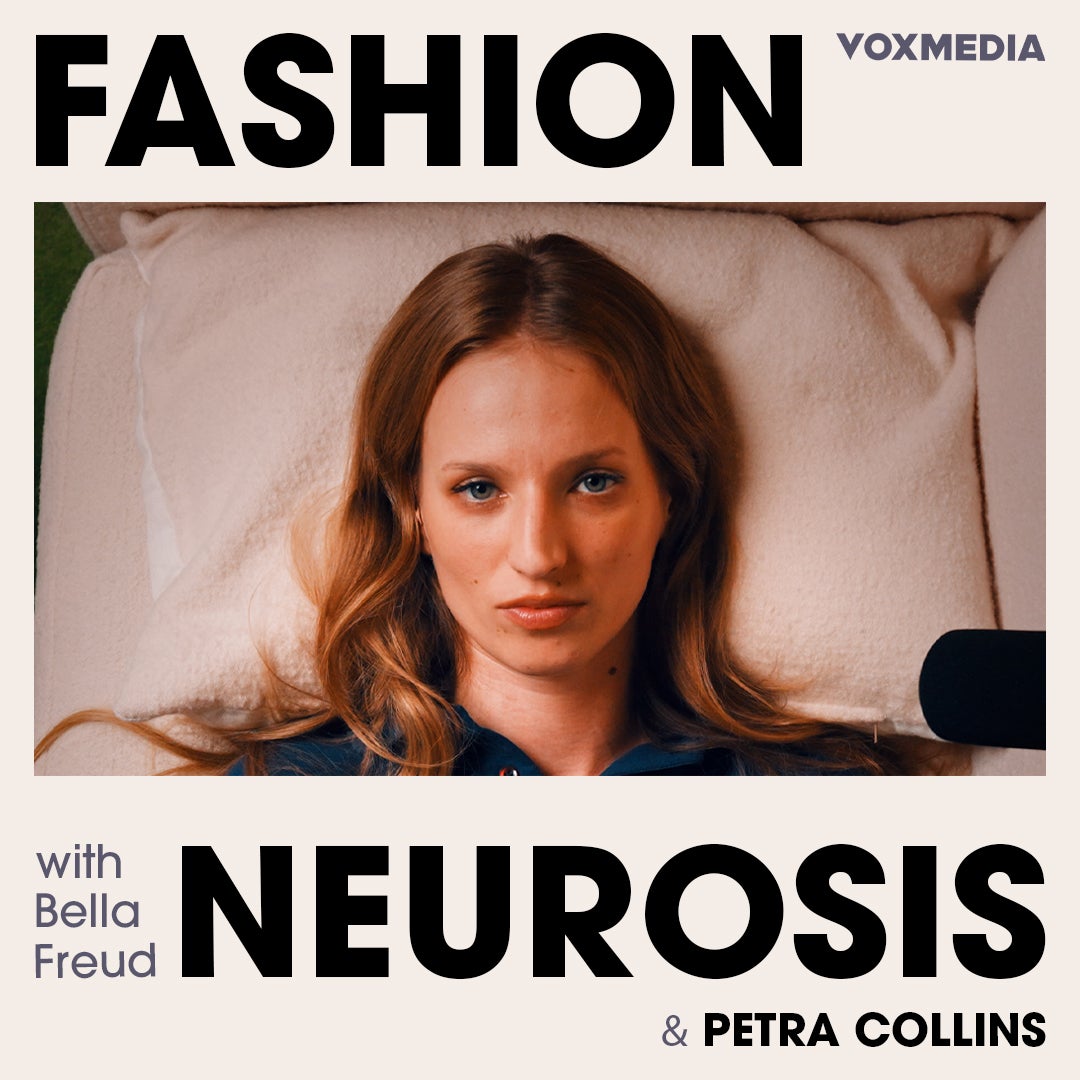
In this episode of Fashion Neurosis, Bella Freud and Petra Collins discuss the bond of love between sisters, how Pop Culture is sexualised, and making videos for Rosalía and Olivia Rodrigo.
Part of the Vox Media Podcast Network.
Learn more about your ad choices. Visit podcastchoices.com/adchoices