Ask ChatGPT
 Feel Better, Live More with Dr Rangan Chatterjee
6 Nov 2026 · 22m · 9 chapters
The episode argues that many people breathe “dysfunctionally” (over-breathing, mouth breathing, chest breathing), which keeps the sympathetic stress system active and can worsen stress, low energy, and poor sleep. It claims that changing breathing can quickly shift heart rate, oxygenation, and nervous-system activity, and that retraining breathing is a practical first step toward better emotion regulation and decisions.
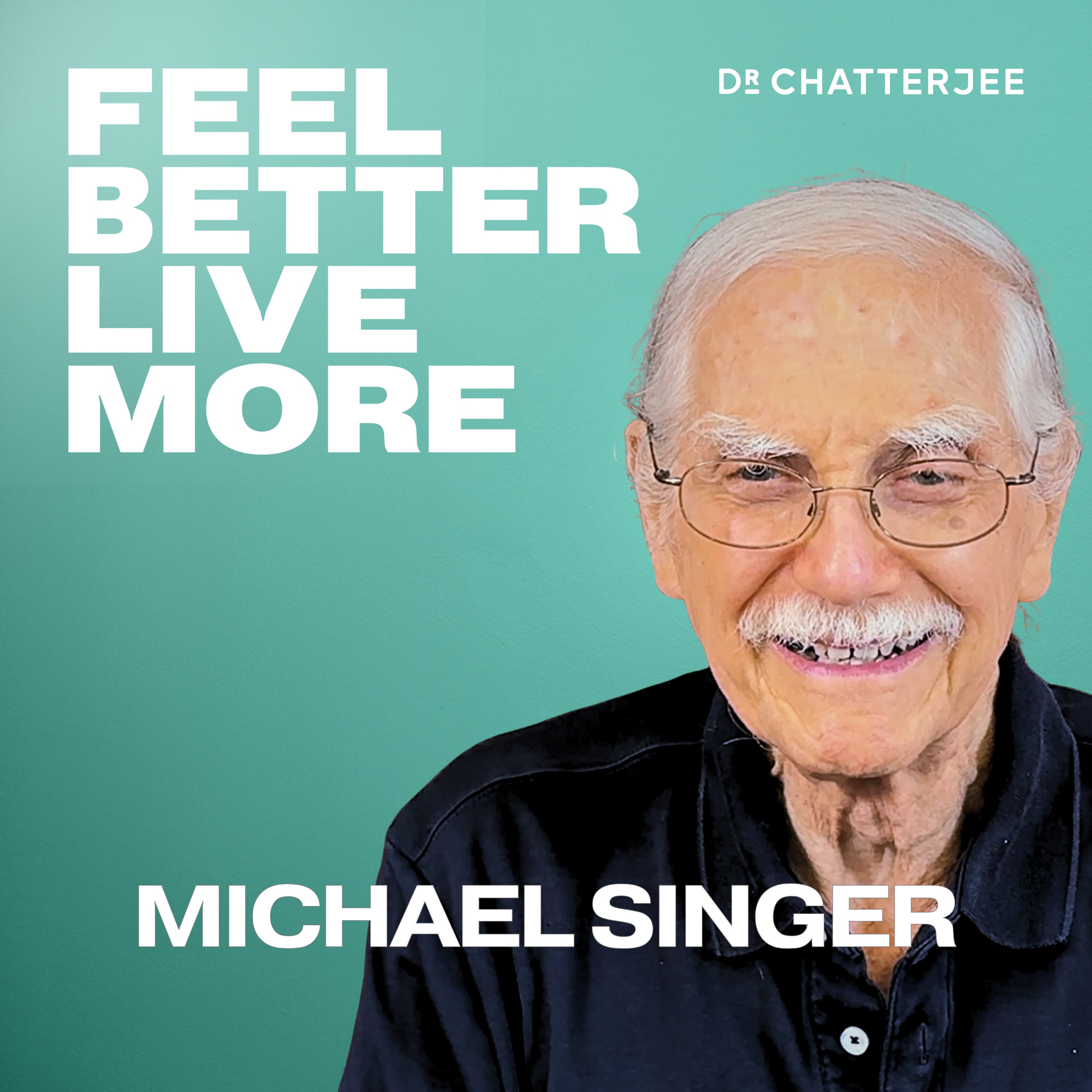
James Nestor, science journalist and author (discusses his skepticism, lab-based research, and his book’s claims).
Typical rates shift from ~6 breaths/min to 18–20; mouth breathing is common at night; nasal breathing filters air and supports nitric oxide and calmer nervous-system signaling.
Using real-time monitors (blood pressure cuff/HRV) to show immediate effects; nasal valve collapse test (fingers on nostrils); snoring apps (SnoreClock/SnoreLab); “feather under the nose” army test story; nasal strips marketed for ~30% more airflow.
Written by AI. May contain mistakes.
Discover how breathing affects stress, energy, and sleep quality.
“Today's Bite Size is from episode 644 of the podcast with science journalist and author James Nestor.”
Understanding the negative impact of over-breathing on health.
“And I do understand where skepticism comes from because we can all breathe, right?”
Explore how breathing patterns influence our stress response.
“The foundations of healthy breathing are by far the most important thing that you can do.”
Learn the foundational steps to improve breathing habits.
“and it almost becomes a vicious cycle where your brain then feels under threat.”
Understand the advantages of nasal over mouth breathing for health.
“And the effects are so far reaching, right?”
Learn how to identify if you're a mouth breather and its implications.
“It helps filter allergens, viruses, bacteria, nitric oxide, calms the nervous system, allows more oxygen to pump to the brain.”
Learn about the connection between mouth breathing and sleep quality through apps and personal experiences.
“Again, as you say, it's another clue that you might be a mouth breather.”
Explore common issues related to nasal breathing and solutions for better airflow.
“So you have to figure that out And so many people that suffer from snoring are mouth breathers.”
Discover techniques for improving breathing patterns and developing healthier habits.
“So introduce yourself slowly to these things.”

Get the gist, explore an idea or ask about something said.
 Claude
On Feel Better, Live More with Dr Rangan Chatterjee, what are the key points of this episode?
Searching your listeningAutomatic transcript. May contain errors.
0:00Today's Bite Size episode is sponsored by the daily health drink AG1. The clocks are about to change, the mornings are darker, everyone around you seems to be coming down with something and that's why at this time of year I remind myself to lean into the fundamentals and for me one of those fundamentals is AG1. AG1 is a daily health drink that has been in my own life for over eight years and one of the many things I like about it is the fact that many of the nutrients it contains, for example vitamin C, vitamin A, zinc and selenium, support a healthy immune system. Right now AG1 is offering listeners of my show a free AG1 flavor sampler and AGZ sampler to try all the flavors, plus free vitamin D3 and K2 and AG1 welcome kit with your first AG1 subscription order.
0:57That's$87 in free gifts for first-time subscribers. All you have to do is head to drinkag1.com forward slash live more to claim this offer before it ends. Welcome to Feel Better, Live More Bite Size, your weekly dose of inspiration, insights, and practical ideas to help you live well and thrive. Each episode brings you some of my favorite moments, useful tools, and inspiring ideas from the many incredible conversations I've had on my podcast. Today's Bite Size is from episode 644 of the podcast with science journalist and author James Nestor. Breathing is something we all do automatically, so it's easy to assume we're doing it well.
1:49In this Bite Size, James explains why the way we breathe may be affecting our stress levels, energy and sleep, and offers some simple changes that could make a real difference. So why should I care how slow my breathing is, how deep my breathing is, why will that help me improve the quality of my life? By nature, I am a skeptic. That's what I'm paid to do as a journalist. So I went into this subject not believing anything that I ended up researching and writing about. But what's so easy about breathing is you can feel the effects almost instantly. After a few seconds, you can feel the effects.
2:34And if you think what you're feeling is a placebo effect, all you have to do is hook yourself up to a blood pressure cuff or a heart rate variability real-time monitor. And you can see in real time how changing your breathing changes your nervous system, changes your oxygenation, changes your heart rate, and so much more. And that's what convinced me was being in a lab and changing my breathing in five different ways and seeing the transformative effect it had on my body and my brain. Yeah. And I do understand where skepticism comes from because we can all breathe, right? If someone's listening to this podcast right now, they're breathing, right?
3:19So that's not really up for debate, is it? It's basically, how are you breathing? Yeah. Well, I think I've heard that. a few times of like, we can all breathe. What's the issue? We can all eat. We can all sleep. That doesn't mean you're sleeping well. That doesn't mean you're eating well. So you can eat junk food, ultra processed foods, and that can keep you alive. That allows you enough energy to get by to the next day. You can sleep hypothetically three to four hours a night and you will be alive, but that doesn't mean you're doing well. And that doesn't mean you're being healthy. And we found The exact same thing happens with breathing.
3:59People are locked into these dysfunctional habits that they think are normal. The foundations of healthy breathing are by far the most important thing that you can do. You do not need to go to a retreat, you know, even though those are nice in the tropics to learn how to breathe. You need to take control, do a few simple steps, establish foundational healthy breathing. And the message I'm trying to communicate is I want to be here to give people information to help themselves. You're making the case in your book that many of us these days are breathing dysfunctionally. We're over-breathing. So instead of, let's say, six breaths a minute, many of us are breathing 18 to 20 breaths a minute.
4:47And you talk in the book about the physiological changes that ensue when that happens. Now, if we're over-breathing, and if we're breathing more through our mouth than our nose, things that we're going to cover in detail shortly, you can argue that much of the population is in a state of sympathetic overdrive. The stress system, as you well know, you can look at in two parts. The sympathetic nervous system, when we're stressed, fight or flight, versus the parasympathetic. So breathing is intimately linked with your stress response. With patients, I would always say breathing is information. When you're stressed, you change the way you breathe, and that sends signals up to your brain, and it almost becomes a vicious cycle where your brain then feels under threat.
5:39But the opposite is true when you're calm and your breath is slower and it's deeper and let's say it's quieter. We can talk about these things shortly. You're then sending calm signals up to your brain. So the other thing I was thinking about this morning, James, is this idea that if so many of us in society have dysfunctional breathing, as you said at the start, you know, we're able to live. Okay, so we're surviving. We may not be thriving, but we're absolutely surviving. we're basically going about our daily lives at like 30 or 40 percent. So what happens is we have evolved to register threats in a certain way.
6:22Your heart rate goes up, your respiration goes up. And this is extremely useful. If you're out in the wild and you see a intruder coming into your camp, or you see a lion or you see a bear or whatever, this ramps you up to fight or to run away, right? And so we've developed this for a reason. Now everything stresses us out. An email from your boss is going to stress you out. Traffic is going to stress you out. So what's happening is we stay in this stress response that breathing quickens and we tend to keep that breathing throughout the day. So as you mentioned, not only is the brain controlling our breathing, but our breathing is controlling the brain.
7:07It goes the other way. So if you are over-breathing and you are breathing into your chest and your mouth is a little open, and you go to any airport, sit on any subway and you see this all the time, you are sending your brain constant signals that you are stressed out. And you can't break that cycle unless you first take control of your breathing. I don't know of any meditation, any technique that can lower the nervous system overload, right? That can switch you to parasympathetic that does not involve breathing. Slowing down your breathing, taking deeper breaths, breathing in and out of your nose.
7:48All of these are foundational to all of those practices. And the effects are so far reaching, right? So if you are breathing in a dysfunctional way, for the majority of your day, that could be at least one of the reasons why you're reactive with your partner that evening, why you snap at your children, why you feel a need for sugar or alcohol at the end of the day, because a lot of the time, those things, they're downstream, right? If your stress, if your nervous system is amped up, those things are manifestations of that. so why I believe that we all need our own personal breathwork practice that we can have in our back pocket that we can take around with us should we start feeling anxious or nervous or stressed is a because it's free b because it's effective and c because the effects are so wide ranging and once you check that box then you can work on all the other stuff exactly right and and so it's not going to fix everything.
8:54I would never, ever say that. But it is your first step towards getting control of your emotions, of making a better decision, right? This is the first step. And it takes a few seconds to do.
9:14That's how long it takes to start to turn down the volume in your brain and your body. And then if you do a few dozen of those breaths, if you're extremely stressed out, you will start to turn it down a little more. And for people who don't believe this, that think this is some hippie yoga thing, again, hook yourself up to instruments that are feeding you a constant stream of data. Look what happens to your brain. Look what happens to your blood pressure, your heart rate, and more when you take just a few calm and slow breaths. Retraining yourself to have new breathing habits, it takes a little time, takes a little effort, and it will change your life.
10:01Well, let's sort of pick up there. Let's sort of go through. And these are things you will have discussed with me in the past, but I don't think you've been on the show for several years now, James. And I don't think these things can be emphasized enough, right? So what is going on society? What are the common things that people are perhaps not doing as well as they could do? And then what are some of these simple, easy solutions that people can think about introducing? The number one most important thing that people need to do is to become an obligate nasal breather. So around 50 % of kids are mouth breathers.
10:35For adults, that goes down a little bit. At night, around 60 % of adults breathe through their mouths. So you have to turn that around and become a nasal breather in which in the daytime, most of your breaths are in and out through the nose. I'm breathing through my mouth a bit here. We're having a conversation. Who cares, right? When I'm not talking, when I'm walking around, when I'm working, I'm always breathing out and in and out through my nose. And at night, all of your breaths should be through your nose. And there's so much science supporting this, all of the benefits from regulating your emotions, from helping you make better decisions to regulating your nervous system function.
11:16More and more, nobody is debating those things. I had read so many studies, talked to so many experts about the difference of mouth breathing and nasal breathing, all the benefits of nasal breathing. It helps filter allergens, viruses, bacteria, nitric oxide, calms the nervous system, allows more oxygen to pump to the brain. We know all of this. I felt every day what this was doing for my conscious waking hours, my energy levels, my ability to think more clearly, and especially at night, the depth of my sleep, which to me makes perfect sense. Because if you are not sleeping properly, if you're not entering those stages of deep restorative sleep every single night, it's going to catch up with you.
12:02Once you get that back, like, what do I do with all this energy? Yeah. Okay, so this is the number one problem out there. Of course, it doesn't mean everyone listening suffers from this because, as you said, you know, 50 % or whatever, right? And so clearly there'll be people listening who are obligate nose breathers. But there's a lot of people who are listening who will be obligate mouth breathers. How can they tell or assess if they are an obligate mouth breather? So we have, unfortunately, there's not one easy step to do because so many people suffer from so many different problems, right?
12:38But there are a few tricks that you can try out. The first one, take two fingers from both your hands. If you're listening to this, take your hands, take your index finger and your middle finger and place them on the sides of your nostrils and spread open your nostrils. If that is significantly easier to breathe, then there's a good chance you are in the 20 % of the population that suffers from something called nasal valve collapse, where either your nostrils, the tissue around it is too thin. So when you inhale, it flutters or your nostrils themselves are too small. So if you are one of those people, a good training device or one of those nasal strips, you see sports players using these things.
13:21they use them because these strips go over the bridge of the nose and they pull the nostrils up to the way they were supposed to have been, right? And they allow for around 30 % more airflow in and out of the nostrils, which is why these are marketed to people who snore. Because so many people who snore either have trouble breathing in and out of their nose or they're breathing through their mouth. If you are someone who snores, can you assume that you're a mouth breather at night? It is usually, not always, some people can snore, make that sound through their nose if their sinuses are really messed up.
13:58But most people who are snoring are breathing in and out through the mouth, yes. Yeah. Again, as you say, it's another clue that you might be a mouth breather. Okay. Nobody wants to believe their spouse about whether or not you're snoring. So the one thing that you can do is download an app. There's several of them. I'm not affiliated or associated with any of these things. They're free and they're easy. Snore clock or snore lab works pretty well. And what you do is you take your phone, put it on the side of your bed, and it records you throughout the night. And then it provides you with a graph of the severity of your snoring and the sound of you breathing throughout the night.
14:36And it gives you a score. So because your sleep changes, right, every night, record it for a week and get a baseline. and if you are breathing in a dysfunctional way at night, there's a good chance you're breathing dysfunctionally in the day. So if you don't believe the app, you can go back at any time and listen to yourself breathing throughout the night. If you are snoring or if you're struggling to breathe, that is a serious red flag that there is something wrong. This is your body at its time when it's supposed to be resting and restoring and preparing for the new day. It is stressed out. So you have to figure that out And so many people that suffer from snoring are mouth breathers.
15:16And when they learn how to become obligate nasal breathers, their snoring either significantly reduces or in some cases resolves entirely. I've heard this thousands and thousands of times. People send me their sleep data for some reason. I never asked for it. And they show the difference between mouth breathing and nasal breathing. I experienced this myself. one of the big things we're talking about here is trying to get people to breathe through their nose more than their mouth okay some people will no doubt say yeah james i get that but i've got a blocked nose right or i can't do it can you just tackle this because i think this is a common thing that comes up and i think some of those things are quite amenable to change some maybe not so much.
16:06But, you know, what's your best advice for people on that? Again, I would love to offer you a very simple answer to this question, but there are no simple answers. Some people have structural issues in their sinuses, right? So some people have structural issues and an ENT can really help you, right? For most people though, and I've heard this from ENTs, I've heard this from rhinologists and respiratory therapists, for most people, it is the tissues and it is inflammation. And a lot of this congestion is tied from the fact that these people are habitual mouth breathers. So their nose literally starts closing up.
16:46This is a use it or lose it organ. The more you use it, the more it is going to naturally open up. I was one of those people. For most of us that are just dealing with bad habits and chronic congestion, there are a lot of things you can do to improve that congestion so that nasal breathing becomes easier. So is it structural? Is it just chronic inflammation? Is it just a bad habit? If it is chronic inflammation, what's causing that? The most work you're going to have to do is figure out what is your core issue stopping you from nasal breathing, right? That's where the most work and most research.
17:23After that, applying these different hacks, this is the easy and the fun part, right? So you can start with these very, very simple things. Experiment with nasal breathing if that is comfortable for you, but start very slow while answering emails or doing dishes or watching TV and ask yourself as you're breathing, are you comfortable? Are you relaxed? Are you congested? If you are congested and if you're stressed out, use common sense. You're not ready for this yet. So introduce yourself slowly to these things. Everybody is different. Their tolerance levels are different. The amount of dysfunctional breathing, which is why if you go slowly and carefully and go slow, your body will tell you when you're pushing too hard.
18:12I'm not here to tell anyone to do anything. As we said at the beginning of the podcast, I'm giving you information. You can take this information and you can be responsible for your own health and do what you want with it. And part of what you can do, we've talked about the nasal breathing versus mouth breathing, right? If that's not available to you or you've already established that, the next thing you can do is to learn to take softer, deeper breaths, fewer breaths that are more enriching. And this is how this looks. This does not make for good podcasts because it's going to be silent, but you're just taking an inhale through your nose very softly.
18:53You're feeling a soft expansion in the abdominal area. And as you exhale, you feel a slight contraction. I shouldn't be able to see your shoulders going up and down. You are not forcing this. If I were watching you breathe from across the sofa, right, with a coffee table in front, I would not be able to see you breathe. It is so soft and so subtle. For people who want to start introducing that practice and they go, okay, I want to look at nasal breathing. I want to do that slow, silent breath, which, you know, the timing, if people want to know, it's all in the book about, you know, five and a half or six seconds in, five and a half or six seconds out.
19:38did you not write in the book at some point about many years ago in Japan a test to join the army I think was you have to breathe with a feather under your nose and the you know if if people could see the feather move you don't get in yep right good good memory yeah yeah yeah I mean you wrote this book many years ago now but you do Do you remember that story? I certainly do remember that. And it sticks with me because it's such a visual image, right? Because that is showing how in control of you, how in control of your body are you, right? Are you able to control your nervous system? Because if you can't control your nervous system and your breathing in a environment in which you were safe in front of, you know, other officers, who could think that you could control yourself when you really need to have your act together in battle.
20:35And I think the difference with breathing is it's available to us all the time. So, you know, unlike exercise, people say, oh, you should meditate for 30 minutes twice a day. That will work. A lot of people can't fit that into their schedules. But this is something that you can be doing as you go about into your world, right? As you sit in your office, as you sit in a car. You can be improving your breathing. And the point of all of this is to develop better habits so that you don't need to think about it months later. And that's really where I like to get people because they say, oh man, I've got to pay attention to my mouth.
21:14I've got to pay attention to breathing really low and slow. I have to pay attention to my diaphragm. I said, you do for now, but soon you won't even have to think about it this is your new default and it can change your life I really hope you enjoyed this week's Bite Size do spread the love by sharing this episode with your friends and family and if you want more why don't you go back and listen to the original full conversation with my guest I hope you have a wonderful weekend make sure you have pressed subscribe and I'll be back next week with my new conversation on Wednesday and the latest episode of Bite Size next Friday.
21:58I am really excited to share that I am bringing my Thrive Tour, Transform Your Health and Happiness to Canada and Europe this September and November. It's a live, interactive, uplifting show that over 20 ,000 people came to last year across the UK and Australia. I'll be sharing powerful stories, life-changing insights, and simple tools that will inspire you to feel better, think clearer, and live with more intention and joy. To get your tickets right now and see all of the dates and venues, go to drchatterjee.com forward slash live. I really hope that you can join me.
Breathing is something we all do automatically, so it's easy to assume we're doing it well. But what if one of the simplest ways to improve your sleep, energy levels and stress wasn't a gadget, a retreat, or a prescription.
Today’s Bitesize is from episode 644 of the podcast with science journalist and author James Nestor.
In this clip, James explains why the way we breathe may be affecting our stress levels, energy and sleep, and some simple changes that could make a real difference.
Perhaps the most exciting thing about this conversation is how simple and accessible everything we discuss is. The foundations of healthy breathing don’t cost a thing. You just need to unlearn some key habits and start making small changes – for big results.
Thanks to our sponsor https://drinkag1.com/livemore
Show notes and the full podcast are available at drchatterjee.com/644
Support the podcast and enjoy Ad-Free episodes. Try FREE for 7 days on Apple Podcasts https://apple.co/feelbetterlivemore
For other podcast platforms go to https://fblm.supercast.com.
DISCLAIMER: The content in the podcast and on this webpage is not intended to constitute or be a substitute for professional medical advice, diagnosis, or treatment. Always seek the advice of your doctor or other qualified health care provider with any questions you may have regarding a medical condition. Never disregard professional medical advice or delay in seeking it because of something you have heard on the podcast or on my website.
Learn more about your ad choices. Visit podcastchoices.com/adchoices