Ask ChatGPT
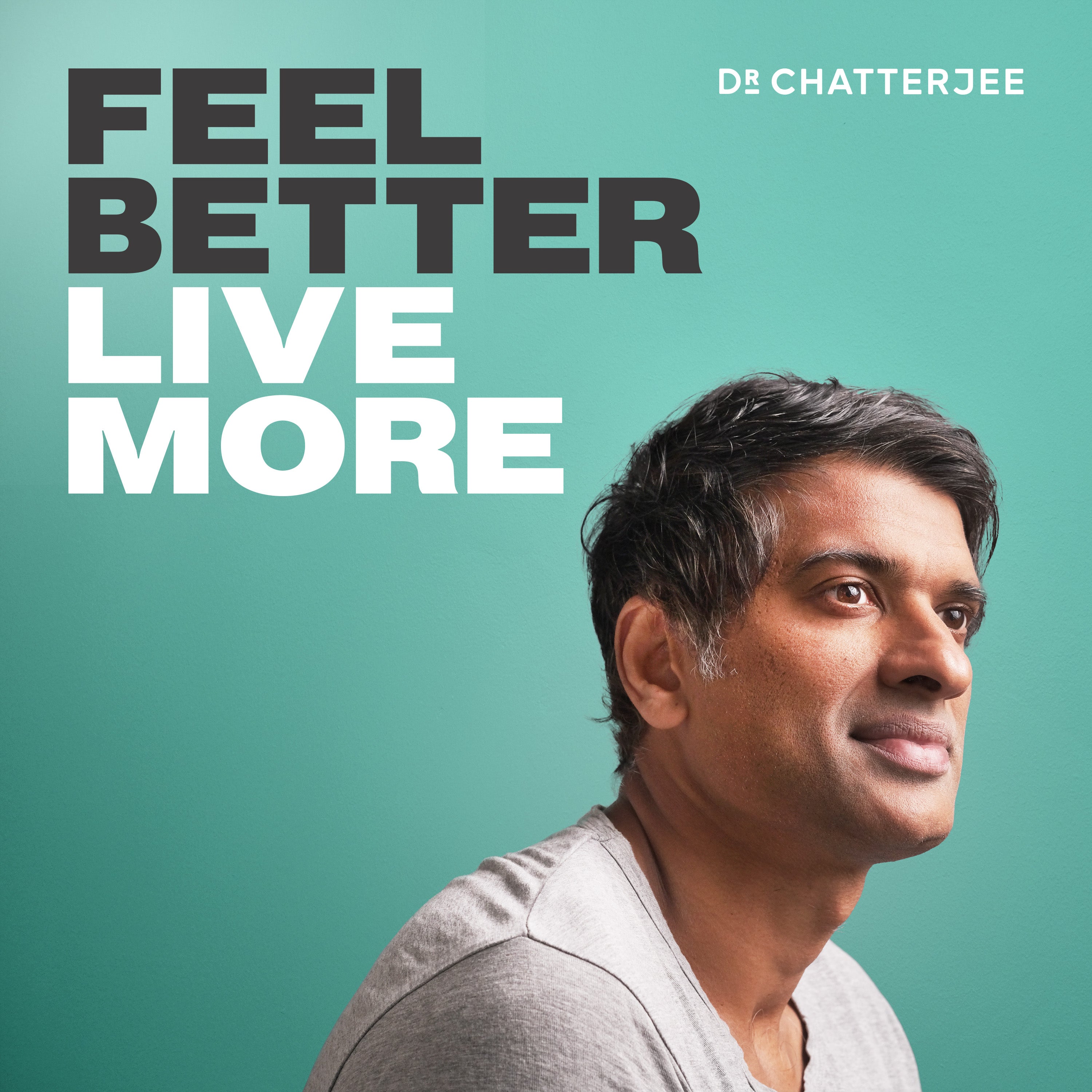
 Feel Better, Live More with Dr Rangan Chatterjee
13 Nov 2026 · 25m · 8 chapters
Mo Gawdat discusses happiness as a skill/choice despite suffering, arguing that unhappiness comes mainly from expectations and mental reframing rather than events. He says most situations are neutral; perspective determines impact. He also addresses grief, claiming even after tragedy you can choose to be “a little happier every day,” and that painful memories persist because the mind replays them.
Mo Gawdat, former tech professional with a 30-year tech career, now researches happiness; author of Solve for Happy and Soul for Happy. He shares personal experience as a grieving father after his son Ali died at 21 following medical errors.
happiness = difference between events and expectations; external circumstances don’t guarantee happiness; gratitude, love, and compassion are core ingredients; “Ali lived” reframes loss; erasing a painful memory would erase lessons.
rain as neutral (ex’s wedding); “service level agreement” mindset; looking down at others’ hardship (“looking down”); eraser test thought experiment; traffic/flu/annoying manager as meaning shifts; holding grudges harms only the grudge-holder.
Written by AI. May contain mistakes.
Mo Gawdat discusses his belief that happiness is a choice everyone can make.
“596 of the podcast with best-selling author Mo Gaudant.”
Exploration of how external factors influence happiness and personal agency.
“I think you've touched on it already, this idea that let's say someone is living in incredible struggle, and there are lots of things going on in their life outside of their control.”
Discussion of how upbringing and culture shape views on happiness.
“It's basically giving up on your autonomy, on your agency, in your own happiness by saying, you see, you know, life is giving me lemons again.”
Mo shares insights on finding happiness despite life's challenges.
“I mean, growing up in Egypt, happiest person ever.”
Exploration of how grief affects choices around happiness and personal agency.
“But you see, the other interesting thing is when you deeply, deeply look at life, you need your basic needs and love.”
Learn how to reframe painful memories to find empowerment in loss.
“The moment after they told us that he left was the lowest moment of my life.”
Discover how suffering can lead to personal growth and enlightenment.
“Okay, if only we start to see being stuck in traffic that I'm going somewhere and someone's waiting for me.”
Explore the essential ingredients for achieving happiness and contentment.
“Suffering becomes part of the video game.”

Get the gist, explore an idea or ask about something said.
 Claude
On Feel Better, Live More with Dr Rangan Chatterjee, what are the key points of this episode?
Searching your listeningAutomatic transcript. May contain errors.
0:00Today's Bite Size episode is sponsored by The Way, the only meditation app with a single long-term pathway. Now if you've tried other meditation apps before, I am certain that The Way will be the one that will finally help you develop a consistent practice. You see, one of the best things about it is that you are not going to get overwhelmed with different options. You simply open the app and do the next meditation, building up your practice step by step. After a few sessions, you will feel as if you've got your own personal meditation teacher, who of course is the wonderful Henry Shookman, who has appeared as a guest on this podcast on two separate occasions.
0:47Now I personally have been using this app for over six months now and I absolutely love it. In fact, I love it so much that I have invested in the company to join them in their mission to get more people meditating. For listeners of my podcast, The Way is offering 30 free days to establish your own meditation practice. All you have to do is go to thewayapp.com forward slash live more to get started. Welcome to Feel Better, Live More Bite Size. your weekly dose of inspiration, insights, and practical ideas to help you live well and thrive. Each episode brings you some of my favorite moments, useful tools, and inspiring ideas from the many incredible conversations I've had on my podcast.
1:39Today's Bite Size is from episode 596 of the podcast with best-selling author Mo Gaudant. After a 30-year career in tech, Mo has made happiness his primary topic of research Diving deeply into literature And conversing on the topic with some of the wisest people in the world In this clip, Mo shares some of his thoughts on happiness And how it may be possible to find peace even in difficult times So you passionately believe that happiness is a choice 100 % not everyone shares that perspective yeah absolute happiness is not anyone's choice
2:25Mo Gawdat: suffering is part of life by definition but choosing to be happier is 100 within your grasp everyone absolutely has the ability to to to learn a skill or to reframe a thought or to surround themselves by what they need to find a little bit of a happier life that's absolutely no doubt and so if if you can change yourself from say minus one to minus point five or from minus one to plus point five then that by definition means you have a choice and so that choice is not absolute but it's definitely there when it comes to your relative state of happiness The idea of absolute happiness versus becoming happier, I find really interesting.
3:13So let's go to an extreme scenario. I think you've touched on it already, this idea that let's say someone is living in incredible struggle, and there are lots of things going on in their life outside of their control. the natural belief that many people take from that is if those external circumstances changed i would be happier correct how does that sit alongside your perspective that happiness is a
3:44Mo Gawdat: choice so that's not always that that belief is not true because you know many people who don't have those circumstances are still unhappy and many people who have those circumstances are happy So you see, the idea is there is no inherent value of happiness in anything. You know, the joke I always make is that, you know, rain doesn't make you happy or unhappy. Honestly, rain depends on what you want from life. If it's, you know, if it's your ex's wedding, you'd like rain. Rain is a good idea, right? And so basically the externalization of my happiness is because of what the world is giving me in an interesting way is a six-year-old behavior.
4:30Mo Gawdat: It's basically giving up on your autonomy, on your agency, in your own happiness by saying, you see, you know, life is giving me lemons again. And the idea here is that, as I said, you know, again, to have the proper empathy, there are people in the world where it actually is very difficult to be happy. It's, you know, they've lost, you know, they've lost their family or they're in a war zone or they're, you know, going through a very difficult breakup or, you know, there could be reasons, you know, they have chronic pain or some kind of a chronic illness. or, you know, you and I have experienced working with people in those states in our work.
5:13Mo Gawdat: And yeah, it becomes difficult to find happiness. It even becomes difficult to find happier, you know, states at that time. But truth is, most of the time for those who choose to blame life for their unhappiness, whatever life would give them, they'll find something to blame. You see, the idea is, as I always try to teach, is happiness is a difference, the difference between the events of your life and your expectations of how life should be. And so, interestingly, you go to some of the places where the best quality of life exists, you know, where the subjective well-being is very high and you'll still see very high suicide rates.
5:56Mo Gawdat: Reason being, you know, when your government gives you health care and gives you unemployment, you know, payments, and they'll take care of your every need, somehow, somehow in our always ambitious minds, let's call them, you know, your mind will go like, okay, so if the government can do all of this, why is my girlfriend still annoying? You know, like where's my service level agreement? I signed the service level agreement that the world is always going to give me everything I need to find happiness. And if the world fails, then I'll be unhappy. And the question is, where's that agreement? Show it to me.
6:36I mean, I completely agree with your perspective that happiness is a choice. It's a skill that we can cultivate once we know how to do it. And I wonder how much your upbringing in Egypt influences your perspective here. And the reason I ask that is because I was born and brought up in the UK, but my parents were immigrants from India. You can see the difference. You can see the difference. And every other summer, we would go for the entire school British summer holidays to Kolkata in India. And I often reflect back to those days now and go, wow, I would repeatedly meet and see people in what we would regard here in the West as poverty.
7:24Yeah. But their whole sense of being was light. There was a contentment. There was a happiness. Yes. As you said before, and as I said before, there are so many millionaires, multi-millionaires. Miserable. Billionaires who are deeply unhappy. Miserable.
7:41Mo Gawdat: More often than not, actually. Exactly. Because often the drive to go out there and achieve and show the world that you were something, that came from a place of lack. Yeah. That was the story of my life. I mean, growing up in Egypt, happiest person ever. I remember vividly, you know, I would, nothing would dent my happiness. It's, you know, in those societies, you get two very beneficial happiness advantages. One is that you see misery all around you. You see suffering all around you. You see lack and need all around you. So it reminds you of how blessed you are, right? The reality is if your expectations are, I may not be able to eat today, you know, if someone gives you a bowl of rice, you're very, very happy.
8:25Mo Gawdat: And that I think is the reality of a place like India. You know, people value what they get. They don't feel disgruntled about what they didn't get because they can easily see. In my first book, Soul for Happy, I basically called this looking down. And the idea is that, of course, if you look up at all of the Ferraris in Mayfair, you'd say that you'd think that life is unfair to you. But if you look down to people in war zones or people who are starving, suddenly you realize, holy, I mean, like I didn't contribute to that. I could have been born there myself. Yeah. Right. And somehow that reminder really creates a sense of realism in you.
9:08Mo Gawdat: Okay. Then I, you know, I became very successful. And I remember in my late 20s, when I was so focused on collecting so much wealth that I didn't need and, you know, feeling frustrated when things didn't go my way and, you know, feeling anxious when my daughter interrupted my time, when I was focused on a silly email or a stock chart, you know, these were created by me, not by life. And the misery was my work. It was, you know, life was giving me more and more and more and more. And I was constantly disgruntled with why is it not perfect? Again, the service level agreement. But you see, the other interesting thing is when you deeply, deeply look at life, you need your basic needs and love.
9:58okay and and if you get your basic needs and love it's not difficult to work on your mind
10:06Mo Gawdat: to get into a state of happiness okay if you know of course there are many people that have their basic needs and love but but don't work on their mind and so they never find happiness but i'd ask everyone who who has those two in their life to to really think deeply about how blessed they are you know whether whether it's it's feeling loved which in my view is a is a is a state of ego if you think about it uh but it but most importantly is being able to love is being able to look at someone and and go like i i i am i my divinity that part of me is capable of feeling the connection to that other being and i think that in itself is sufficient if you ask me anthony de mello writes in awareness that if you're not feeling happy right now, you're doing something to make yourself unhappy.
11:07Exactly. And I remember the first time I read that, I underlined it and I keep going back to it. And I use it a lot because, you know, we're all human and we can all fall into certain emotional traps from time to time. And if I'm ever feeling, which is very rare now, this state of discontentment, I asked myself, Rangan, what are you doing that's making you feel this way? What perspective are you taking on life here? What emotions are you ignoring? And what I like about this approach, which I totally agree with, is that it's very empowering. Because then, if happiness is a choice, that instead of us being a victim to the world and events outside of our control, we're suddenly the architects of our lives.
11:51We're suddenly like, oh, actually, there is something I can do here. Now, why you saying this has particular value for people who have never come across you before. Your son Ali died after a significant series of medical errors during a routine operation. How old was he?
12:08Mo Gawdat: 21. He was 21 years old. So I think when someone like you having been through that says happiness is a choice i think it lands differently yeah and and i don't know how to say this but a lot of people think that when you're a grieving father you have no choice because it seems that the only plausible choice is to just you know put your head down and and wait to die honestly i mean In an interesting way, grief is quite a tricky one because you feel deceived by life. You feel that life targeted you personally. You feel that, you know, life is never going to be the same. You lose the point, you know, of like, so what now?
12:57Mo Gawdat: Many feel that it's a bit of, believe it or not, of betraying the one they love if they can actually find happiness after them. And there are so many complexities that happen to us in grief. Interestingly, though, we don't have one choice. You know, I could have, you know, hit my head against the wall in misery until the day I am on my deathbed. Or I could choose to be a little happier every day. Either way, Ali wouldn't come back. You see, this is what most people don't recognize is that all of the misery in the world has no impact, zero impact whatsoever on the external world. And it's really, it really is quite interesting because when you were talking, you know, about unhappiness being our own doing, if you want, I tend to say that the majority of unhappiness happens in your brain.
13:53okay that that all of the other joyful emotions can happen all over you they can happen in your
14:00Mo Gawdat: body they can happen in your heart they can happen in your spirit they can happen in your brain but for you to feel unhappy think about it Ali left us now more than 10 years ago the pain of the moment when he was on his operating table leaving us is probably the biggest pain I ever felt. The moment after they told us that he left was the lowest moment of my life. But think about this, Rangan. Those moments happened in the past. Okay, when I walked into, in here and hugged you, an old friend, and we haven't met for a while, and we caught up, I didn't think of those moments. And so interestingly, they didn't exist.
14:48Mo Gawdat: so you see the problem the problem with with us humans is that we grant unhappiness the right to exist within our minds we fuel those thoughts and then we let them torture us and they wouldn't bring ali back do you understand that okay so so where where's the wisdom in this where's the wisdom in me finding the most painful moment in my life then bring it up bringing it up in my head again and saying, okay, let me play that scene again and torture myself. How smart is that? The opposite is interestingly true because, you know, people will say Ali died. That's a true statement. Okay. But I also say Ali lived.
15:39Mo Gawdat: Equally true. As a matter of fact, more true because Ali lived 21 years and left for 10. Okay. When you really, really think about it, Ali lived is the same fabric of the thought. To die, you have to live and to live, you have to die. But it's interesting because Ali lived is such an empowering thought. First of all, Ali was not planned. We didn't plan to have Ali. And then we get this gift, an unbelievable blessing that comes into your life, teaches you, shows you love. We laughed so much together. We played so much together. You know, we learned so much together. He, you know, he's the big, one of the biggest gifts, Aliyah and Aya by definition are my biggest gifts in life, my, my daughter Aya.
16:24Mo Gawdat: And, and then, and then, you know, the human mind would take all of that and say, no, I'm upset. You know, why did he leave? And I'm like, he left because he came. Now think of the, you know, of the scenario where God or the universe or whatever you want to believe in decided to not bring him to your life in the first place you look at it now and you go like hmm you know uh you know if if it if it happened during life and you didn't notice it you wouldn't you would have never missed him it would have felt that life has never taken anything away from you okay but the truth is also life would have never given you the blessing in the same time now but you look at it now and you go like oh my god you know i would absolutely take the pain a thousand times more to take the blessing of having him in my life for 21 years right and and if only we start to see those things okay if only we start to see that you know i'll use simple examples so it's not too dramatic if only we start to see our annoying manager as an indication that I have a job.
17:38Mo Gawdat: Okay, if only we start to see being stuck in traffic that I'm going somewhere and someone's waiting for me. If only we see the flu that you suffer as an indication that you've been healthy until you got the flu. And all of these, you know where they exist. They exist here. The outside event is exactly the same. Yeah, it's such an empowering message because we actually have a huge amount of control over where we put our thoughts, how we frame every single situation. And it's, I would say, one of the most important and one of the most beneficial skills in life is to understand at a deep level that all, you could definitely say most situations are at their core neutral.
18:28it's the perspective we take on that situation that really determines its impact on us. I'd go even further, Rangan.
18:37Mo Gawdat: I mean, I did an experiment, a thought experiment I used to call the eraser test, where I told people, take the most painful memory in your life. Okay. And I used to teach Solve for Happy to people in person. So I had probably up to maybe 20 ,000 students or so in, you know, over multiple years. And I would tell them, take that situation, the most painful in your life, you know, bring it up into your mind. Now you feel it again as if you're in it, even though it passed, right? Feel the pain, torture yourself, make yourself feel miserable. And of course, the minute I said that, everyone was like, yeah, celebration, let me torture myself.
19:17Mo Gawdat: And someone would think about that bully in school. The other would think about that boyfriend that cheated or whatever. Okay. And some would think about very painful situations. Then I tell them that we've invented a technology that has the ability not to erase it from your memory, but to erase that event from space time. So completely remove it. Okay. And I would ask people how many of you would choose to erase it? Everyone would raise their hand. Okay. And then I would say, but the only problem is that if we erase it, we will erase everything that happens as a result, that friends that you met, that lesson that you learned, that whatever, anything that happened as a result of that event will be erased in the process.
19:59Okay.
20:00Mo Gawdat: Who would still want to go through the experiment? 98 % would put their hands down. Okay. And the reason is very interestingly, any suffering that you went through in life is what made you the person that you are. Okay. And unless you really, really dislike the person that you are, okay, then you're grateful for all the pain that you went through. And it's quite interesting because you always look back at those events and you go like, it was very painful then, but it's actually wonderful now. Right. And then if you see this and you see it with clarity, you know what, you should ask yourself, you should ask yourself, so why am I so upset about this event now?
20:42Mo Gawdat: You know, that one that's hurting me now is going to be wonderful then. Yeah. Right. I just have to accept that the only way that we progress to enlightenment in life is to suffer. I have to accept that. And if I can accept that, okay, then suffering doesn't become suffering anymore. Suffering becomes part of the video game. Yeah. Life school, you know, in a work school, whatever you want to call it. We did cover this concept of happiness being a choice in detail on our first conversation. but let me just tie a loop in something you said right at the start when you were explaining this idea that happiness is a choice you brought up the rain and you're saying rain apologize for Britain but yes it's a relevant example here if it's your ex-girlfriend's wedding you're happy yeah and I I think you were saying that to sort of illustrate the point that the rain is neutral it depends what it signifies and what perspective you're taking on it but if we go back to that for a minute.
21:45If you're happy that it's raining on your ex-girlfriend's wedding day, you need to do some work. You need to do some work. You're being tied in your mind to the past.
21:54Mo Gawdat: You have no idea how many times I said that example. You're the first one that picks that up. Absolutely. You know what? You're holding on to something. You've been tied. You haven't moved on. You haven't let go. And you know who's suffering. You, not her. She doesn't even know that you're suffering. You know, you're even checking the weather forecast on her wedding day. That's a problem. Exactly. It's, it's quite interesting that, you know, holding on to a grudge only hurts you. Yeah. Never hurts the other person. I don't remember, was it Nelson Mandela or, I don't remember, or Gandhi, one of the two who basically said, it's like drinking poison and hoping the other person would die.
22:31Yeah.
22:31Mo Gawdat: This is not very, it's not very clever when you really think about it. Just forgive, accept that life comes with stories and benefits and just enjoy that you've moved to another experience. You've got such a wealth of experience and knowledge about the human experience and what are the ingredients to live a happy and contented life.
22:57For someone who has been listening to us talk and has realized that they're not as happy as they could be,
23:05Mo Gawdat: what would you say to them? love compassion and gratitude love compassion and gratitude these are the three ingredients okay anyone who manages to find those in their life will be fine so so love is clear love is the only universal language that we speak to that we used to speak to each other outside our physical for. Okay. Compassion is the only, so that's the feminine side, believe it or not, the being side of us. The pure feminine is that ability to feel for someone. Okay. To be in a, in a state of connecting to someone. Compassion is the action side of it. It's the masculine side of who we are.
23:48Mo Gawdat: Okay. So if we look at the rest of us, of humanity, the only way to deal with humanity, if you ask me, is love on the feminine and compassion on the masculine to make a change to alleviate the pain and the suffering of others. That's compassion. Okay. And gratitude is your way of looking at yourself. It's your way of actually seeing your gifts, of actually seeing your blessings so that your happiness equation is fixed, not just because events are meeting expectations, but that events are beating expectations so much that you're grateful for them. Okay. And you settle in a state of, it's all okay.
24:28Yeah. It's never going to be perfect.
24:30Mo Gawdat: It's never going to be perfect, but it's so cool to be part of this game. I really hope you enjoyed this week's Bite Size. Do spread the love by sharing this episode with your friends and family. And if you want more, why don't you go back and listen to the original full conversation with my guest. I hope you have a wonderful weekend. Make sure you have pressed subscribe. And I'll be back next week with my new conversation on Wednesday and the latest episode of Bite Size next Friday.
We all want to be happy. Yet the harder we chase it, the more elusive happiness it can seem. This week’s guest believes the answer does not lie in changing our circumstances, but in changing how we see them.
Today’s Bitesize is from episode 596 of the podcast with best-selling author Mo Gawdat.
After a 30-year career in tech, Mo has made happiness his primary topic of research, diving deeply into literature and conversing on the topic with some of the wisest people in the world.
In this clip, Mo shares some of his thoughts on happiness and how it might be possible to find peace even in difficult times.
Mo helps us all to see that happiness isn’t fragile or fleeting; it’s a state of being we can nurture, even when life feels hard.
Thanks to our sponsor https://thewayapp.com/livemore
Show notes and the full podcast are available at drchatterjee.com/596
Support the podcast and enjoy Ad-Free episodes. Try FREE for 7 days on Apple Podcasts https://apple.co/feelbetterlivemore
For other podcast platforms go to https://fblm.supercast.com.
DISCLAIMER: The content in the podcast and on this webpage is not intended to constitute or be a substitute for professional medical advice, diagnosis, or treatment. Always seek the advice of your doctor or other qualified health care provider with any questions you may have regarding a medical condition. Never disregard professional medical advice or delay in seeking it because of something you have heard on the podcast or on my website.
Learn more about your ad choices. Visit podcastchoices.com/adchoices