Ask ChatGPT
 Feel Better, Live More with Dr Rangan Chatterjee
19 Jun 2025 · 24m · 10 chapters

The episode explains how to make new habits stick by turning them into “rituals” (adding meaning, emotion, and a specific way of doing things), contrasting rituals vs routines/habits. It also argues that “success” can include savoring imperfect breaks, and that well-being should prioritize “unmeasurables” (relationships, presence) over only countable metrics.
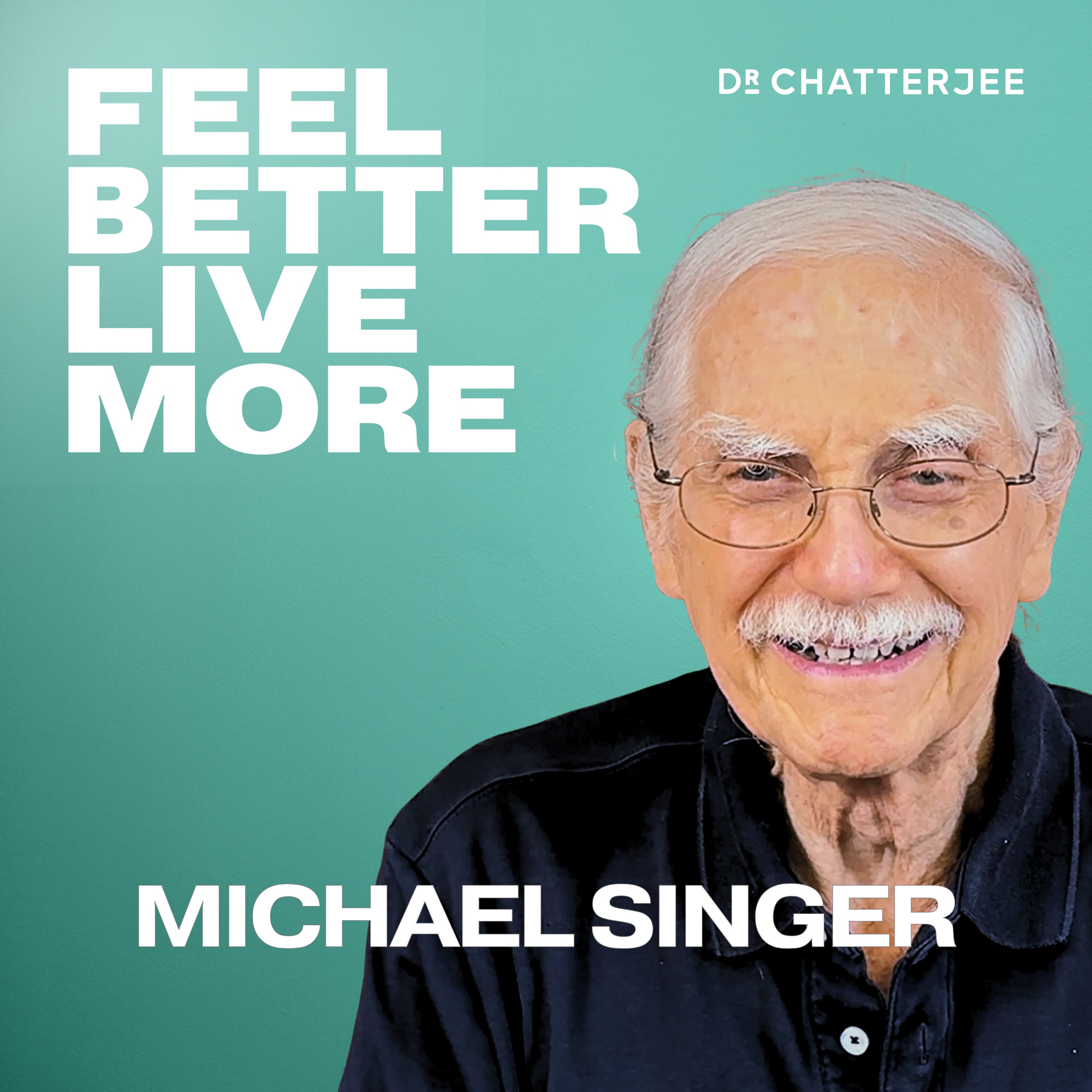
Professor Michael Norton, Harvard professor and behavior scientist; researches behavior change and motivation.
Rituals create a sense of control and readiness; disruption feels worse for rituals than for habits. Research example: Katie Milkman’s “temptation bundling” pairs gym exercise with a guilty-pleasure show only accessible at the gym, increasing adherence. Examples: elite runners’ elaborate pre-run shoe/sock rituals; journaling via a consistent pen/mug/candle; coffee becomes ritual through a meaningful mug.
Written by AI. May contain mistakes.
Explore the importance of transforming habits into rituals for longevity.
“Now, this is the time of year when our immune systems are under the most pressure.”
Explore the importance of transforming habits into rituals for longevity.
“We can all make short-term changes, but so many of us struggle to make our new desired behaviors last.”
Discussion on how rituals help people manage stress and prepare for the day.
“can be really helpful in making them stick for the long term.”
Understanding how habits become rituals through meaning and intention.
“Having a morning routine where let's say you, I don't know, you work out for five minutes or you write in your journal.”
Insights on Katie Milkman's research on pairing habits with enjoyable activities.
“the order in which we do these kinds of tasks already starts to get us down that path.”
Advice on integrating rituals into journaling to improve consistency.
“So does that make it a ritual, would you say?”
Learn how to initiate a journaling practice and the concept of rituals.
“say someone has heard about the many benefits of journaling and they just can't get it going.”
Discover how to transform everyday actions into meaningful rituals.
“top of it, let's say for the next seven days to see if it changes their relationship with it.”
Understand the importance of variety in life beyond rigid habits.
“lighting a candle just before you do it, for example, if that appeals to you, that also is potentially ritualizing the practice of meditation.”
Explore the significance of relationships and unmeasurable experiences in well-being.
“happy I had a range and variety of experiences in my life.”

Get the gist, explore an idea or ask about something said.
 Claude
On Feel Better, Live More with Dr Rangan Chatterjee, what are the key points of this episode?
Searching your listeningAutomatic transcript. May contain errors.
0:00Today's Bite Size episode is sponsored by AG1, a daily health drink that has been in my own life for over seven years. Now, this is the time of year when our immune systems are under the most pressure. It's natural to look for extra ways to support our immune defenses. But most people don't want to juggle multiple pills. They want something simple, effective and easy to stick with. AG1 is a daily health drink that provides key immunity-supporting nutrients, vitamin C, vitamin A, zinc, and selenium, all of which contribute to the normal function of the immune system. These nutrients are included in highly bioavailable forms, meaning they are much easier for the body to absorb and use.
0:50And the best thing, of course, is that all this goodness comes in one convenient, tasty daily serving. For a limited time only, get a free AG1 flavor sampler and AGZ sampler to try all the flavors, plus free vitamin D3 and K2 and AG1 welcome kit with your first AG1 subscription order. That's$87 in free gifts for first-time subscribers. See all details at drinkag1.com forward slash live more. Welcome to Feel Better Live More Bite Size, your weekly dose of positivity and optimism to get you ready for the weekend. Today's clip is from episode 452 of the podcast with Harvard professor and leading behavior scientist, Michael Norton.
1:47We can all make short-term changes, but so many of us struggle to make our new desired behaviors last. In this clip, we explore the difference between rituals and routines and Michael shares why turning our desired habits into rituals can be really helpful in making them stick for the long term. If we think about health habits that people are trying to introduce into their lives, let's say exercise, movement, meditation, journaling, you know, whatever it might be. Do you think ritual or ritualizing those practices can help people stick with them for longer? You know, it's funny. I was talking to some elite runners the other week and about their rituals.
2:39First off, if you ask any elite person who does anything, singer, athlete, whatever, they will almost always have really, really elaborate, fascinating rituals that they do before, during, after their performances. And one of the things they all talked about was their shoe tying, but they do it almost as a, it's almost like a religious ceremony that they do before they run. And one of the things it does is it makes them feel that they're ready to go. So when you have these kinds of, you know, it's left foot, then tie it twice, then right foot, then very, very funny what they do with the socks, which socks, all this kind of stuff that really gets into it.
3:13So, and we see that in a lot of domains that you amp up your level of ritual as the stress increases. But they really do say that when they're doing that ritual, that is a thing that gets them in the place they need to be to go and do it. And I'm not an elite runner, unfortunately, most people are not, but there is something to that where when you have the ritual to get you going, it does make you feel now I'm at the moment when I can go and do that thing. Yeah. I believe certainly that for many people, a morning routine or dare I say it, a morning ritual might be really beneficial because it grounds you.
3:53It means that no matter what is going on out there in the world, all of the uncontrollables, there's something that you can control what you do for the first 5, 10, 15, 20 minutes each morning. and I feel that that gives you a sense of control so that whatever you need to go and do that day, you're better prepared. Maybe a bit like those runners. Yeah, I mean, we're in many different ways. We use these little things to try to get us to a place we want to go. It can be many different emotions that we're unlocking when we're engaged in rituals. But one of the key ones is this sense of control that you're talking about where life is chaotic.
4:30You know, if you have kids, the morning is chaotic. The world is chaotic. people will often go through their morning, I would call them rituals, but we can chat about the difference between routines and rituals in order to just get to a place where they feel that they're ready to leave the house without being completely stressed out of their minds. Or at the end of the day, people have their bedtime rituals as well, where they're trying to, the opposite in a sense, they're trying to wind down from all the stress of the day so that they can actually get to sleep. Yeah. Having a morning routine where let's say you, I don't know, you work out for five minutes or you write in your journal.
5:08Is it a habit? Is it routine? Is it a ritual? Does it even matter? Yeah, I think routines and habits are kind of things that we do in order to get them done. We kind of have to cross them off our list. The example I always use, even though it's silly, is brushing your teeth and showering. Which order you do those in in the morning. Do you have an order, by the way? Do you brush and then shower or shower and then brush your teeth? I would brush my teeth and then shower. And how would you feel if I said, hey, tomorrow, can you flip the order of those two and do it in the opposite way? Yeah, no problem.
5:40If I had to flip the order. Totally fascinating about, first off, half of people in the world brush and then shower and half shower and then brush. So humans have not decided on the optimal order. But more importantly, half of people are like you. They say, why would I care? I got to brush my teeth. I got to shower. I don't care the order. And half of people will say, I'd rather not. And I say, really, why? And they say, well, I don't like it. I would feel weird. I would feel uncomfortable. I wouldn't feel ready to start my day. And if you think about kind of a habit versus a ritual, a habit is really the, these things, I got to brush my teeth, got to shower, order doesn't matter.
6:17As soon as you start caring about how, exactly how things are done, not just what you're doing, but how you do it, that's when they start to move toward being a little ritualistic. Not like people in robes and candles chanting and that kind of ritual, that's further away. But it is this sense of when you do it the way you want to do it, it provokes more meaning and more emotion. And we know that because if it gets disrupted is when you start to feel off. So they both help us in the sense, if I can do my morning ritual, I feel good. And if it gets interrupted, I feel bad. Whereas if it's my habit, if they get interrupted, I can just do the other one later.
6:54And it's not that big of a deal to me. Yeah. So when I've thought about rituals or even written about rituals in the past, I've always felt that they are habits or routines which have meaning. Okay. So it's not necessarily the what, it's the how, right? And so, for example, and I've spoken about this many times, I do like to have a little morning ritual, okay? It works for me. It works for my family. It's something I've put into place since I had young kids who would get up early. And I realized that I'm a better human being when I have some time to myself before the rest of the family erupt. Literally, we often insert them in times of chaos.
7:39I mean, we almost say, I need to do something. everything's out of control let me just try this before everybody wakes up and get a little handle on it yeah i love that because i can't now honestly say i can remember when it started but that kind of rings true like if i didn't get up and i hadn't you know nourish myself in some way i didn't feel i was the best dad or husband or human being frankly right so my morning routine which at the moment encompasses a few things like breathwork and coffee. And, you know, I'm very ritualistic with how I make coffee. I do my morning ritual because I like what it says about who I am.
8:20It says to me that no matter what's going on in the world, I've found at least 10 minutes to nourish myself each day. Okay. I feel I've done a few things that are really good for me first thing in the morning. So I feel calmer, more present, more productive. I have these three Ms, mindfulness, movement, and mindset. At the moment, it's this kind of breathwip meditation for 10 minutes. I then come into my kitchen, I weigh out my coffee, you know, I'm very intentional about it. Whilst it's brewing for five minutes, I'll do a little workout in my pajamas for five minutes. And then what I do is I have the coffee just the way I like it and I drink it whilst writing in my journal.
9:02Okay. So it's this little routine that, you know, depending on what's going on in my life at the moment, probably takes around 20 minutes or so. So that's just to give you a bit more color there in case it's helpful. Yeah. And I think for some people listening, they would say, Hey, that sounds like kind of what I do, or that sounds like that would, that would work. That feels like a nice sequence of events to get you to where you want to be. And other people would say, I don't like coffee or I don't like breathing exercises. And so they might use something completely different, which is fascinating to me in and of itself that we freelance all the time with what we do.
9:35But amazingly for some people, it is like the order in which they brush their teeth and shower. That's the thing that gets them that same feeling that you get from really a more elaborate ritual that you're doing that has more components to it. But we see almost the base case is like, what is the smallest sequence of events that we can start to say, that's moved to be something, as you said, that has more meaning in it than just actions. And even something as silly as the order in which we do these kinds of tasks already starts to get us down that path. But we also want to see, because we're scientists, like what is the minimal possible base case of something being a tiny bit ritualistic?
10:15And then we build from there to say, my gosh, look at all these layers, these personal layers, these religious layers, these cultural layers, these family layers that get layered on top of it. Yeah. It's so interesting to me, this, you know, where a habit ends and a ritual begins. Completely. I would say for me, and I've seen this with many patients over the years, that if the habit becomes more ritualistic, so there is an attached meaning to it in some way, I feel it helps them stick with that behavior for longer it's not just something I do me doing it says something about me and who I am I certainly think that's the case for me is there any research showing that turning a habit into a ritual let's think about it through the lens of health and well-being does it make it more likely that you can stick with your new habits or your new behaviors in the long term if you sprinkle on a bit of ritual on top.
11:24Yeah, one of my favorite studies in the last little while on exercise is by Katie Milkman, who's at Wharton, who just does amazing research. But she has this thing called temptation bundling, which is in and of itself just a great name for anything. But what she does is she wants people to exercise. People say, I want to exercise more, but I can't bring myself to the gym because I've got stuff to do and I lose the motive, just like all of us humans. And so what she does is she says, well, here's how it works. Anytime you go to the gym, you can watch or listen to your trashiest preference, like the worst show, the worst pot, whatever it might be, your guilty pleasure, but you can only do it when you're at the gym exercising.
12:05You can almost even think you can just leave the thing there and only be able to access that when you're there. And the idea there is what you're doing is you're building this, you might have a ritual where you listen to your favorite podcast every morning, but you could do it wherever you want. She's saying, no, no. If you're gonna have your ritual of listening to your podcast every morning, you can only enact that when you're at the gym exercising. So it is this case of trying to layer on a ritual that we already have onto a habit that we're trying to do. And she shows in the research that actually does help people stick with it for longer because they've paired something else meaningful with a habit that doesn't necessarily have meaning for them quite yet.
12:45So there's an extra reward element. So let's say you're at the gym, you're on a treadmill or a bike, whatever you like to do, and you're associating being at the gym with something maybe you struggle to motivate yourself to go and do with your favorite trashier soap opera that perhaps you wouldn't watch at home. So yeah, so it's that reward. It's the reward part of the habit loop. For sure. And you get this kind of identity with it as well. Like this is my favorite show and I'm going to pair it with this habit that is not my favorite habit at all and see if I can link them together so that I can enact it even more.
13:24So does that make it a ritual, would you say? I think it works best for people who are, in a sense, taking a ritual that they have. In other words, this is my favorite show and I watch it at this time every week. You know, we all have our favorite things that we do. Many people do have a favorite podcast they listen to every morning. that's kind of their breathing exercise or their coffee making and so the idea is that you import that ritual onto something else that's a dry habit and see if you can pull some of the meaning of the ritual onto the habit and link them together in a way that makes you hopefully keep going a little bit longer let's say um i don't know let's say journaling for example let's say someone has heard about the many benefits of journaling and they just can't get it going.
14:11And they're thinking, you know, I know I keep hearing about this journaling thing. I've got a journal sitting there or someone gifted to me, but I'm not in the habit of doing it. I know your book's not on habit change per se. It's more about rituals. But I wonder, is there anything you can advise that person to do to try and sprinkle a bit of ritual magic on top of it, let's say for the next seven days to see if it changes their relationship with it. Yeah, no, I love this. I think I was talking to a journalist a couple of weeks ago who was saying, I don't have any rituals. And I was a skeptic in rituals too.
14:50So that resonates with me. Like, what is this guy talking about this ritual stuff? But she said, I don't have any rituals at all. And I said, oh, well, let's, you know, let's explore that a little bit. And she said, well, look, I have coffee every morning, but I'm just having coffee. There's nothing to it. And she said, well, how would you help me make it a ritual according to your research? And I said, well, I don't know you that well, but I'll give you some examples of what other people have done. And I said, you know, for example, some people, the coffee or tea that they drink has an emotional tag to it.
15:19It's what their grandmother drank or their grandfather drank. And then I said, other people, the mug that they use has meaning to them. It's a family mug or it's something. They made it themselves, for example. and she cut me off and she said, oh my God, I just realized I use the same mug every morning. It's a mug that I got with my daughter when we were seeing elephant seals giving birth. And I use the same mug every morning since then. And last week, my husband brought me in, in a different mug and I made him take it away and bring it back in the right mug. So what has she done? She's taken this, it's coffee.
15:52I mean, it's literally, you can think about it's liquid that you drink. It's the most boring, you know, I mean, if you really boil it down and she's built onto it unknowingly in a sense, until you really start to think about what you're doing, all of this extra meaning and extra emotion into it. And so even the most mundane little things that we do, we find ways to build ritual into it. So for journaling, for example, one of the first things I always encourage people to do is think about what are you already doing when you're getting into it? Even something like the pen that you use can be very, very important, right?
16:25What is the pen? Which pen are you using? Do you use the same pen all the time? It's almost like a magic lucky object that you can use. And we see people saying, you know what? What I do is whenever I journal, I always drink this. I sit there, I do this. Then I have this pen. And then I write for exactly this long. And they're trying to build it into not just, I have to put words on paper because that's very boring. That's like liquid in a cup, but I'm journaling. I'm expressing something about myself through how I'm doing it. And then we see people start to build more meaning into it. It could also be, I guess, if let's say the habit is meditation, lighting a candle just before you do it, for example, if that appeals to you, that also is potentially ritualizing the practice of meditation.
17:16Yep. And there you get also a visual, you get a sensory experience because there's flame, their smell and things like humans use candles across an insane variety of rituals actually it's one of our favorite things is to use fire with ritual wow and we are in a sense it's got nothing to do with it like you can meditate without a flame you can have a birthday cake without a flame also but we've decided no let's build this into it to make it more than it actually is there's a section in the book which i noted down right because for me it really spoke to
17:55such an important point that I often think is getting missed when we talk about health or happiness. If you don't mind I just want to read to you a section from your book. Is it always a mistake to fail to execute on your good habits or is the experience of savoring a decadent dessert simply a different kind of success. Michael, I love that. I absolutely love that. Can you explain what you meant when you wrote those words? I thought about a person, I mean, let me say I am very pro habit. I wish I had better habits. We all should have good, healthy habits, just to be very, very clear. At the same time, if I think about, imagine starting today, you had perfect habits for the next 40 years.
18:40You know, you got up at the same time every day, you exercise, you did everything exactly as you wanted to do. If you ask people, what kind of life would that be? They say, well, I would definitely be very healthy for sure, but I'm not sure that would have been a rich and interesting life. Or if you ask people, imagine being married to someone who has completely rigid habits that they execute the same way every single day forever. Does that sound like a fun relationship or does that sound like a problem? And people say, yeah, no, I guess they'd be healthy, but I want to mix it up. I want to travel.
19:11I want to do all these other different things. And so it really started to occur to me that for sure good habits are good, but is that the life that we want to lead more broadly? If we look back at our life, do we say, I'm so happy that I always ran at 6am or do we say, I'm so happy I had a range and variety of experiences in my life. And I do think sometimes rituals are the thing that remind us to do more than just habits. And that's true both of our own private rituals that we come up with, but even cultural rituals you can think about. It just gets to be every day is the same. We do the thing, we go to work, we just humdrum over and over.
19:47Culture gives us punctuated things. They say, not today. Today is Christmas. And on Christmas, you do something very, very different. For example, you have to gather with family on Christmas, whether you like it or not. But they're telling us family's important. You got to take some time for it. So that day, maybe we can't do all of our habits exactly the way we usually do. But I think that's a positive thing. So both culturally, we get these punctuations to remind us. If you think of marriage, you have a wedding, that's one day, and then you're married for 50 years. What do you do all the other days?
20:18Well, we have Valentine's Day. We have anniversaries. We punctuate them with, hey, don't forget, this person's really important to you. You should celebrate this relationship. They do serve as reminders to do more than just go through the motion. We have this phrase, going through the motions, and it's a very negative phrase. Rituals are always more than just going through the motions. Yeah. It also makes you think about there's a, there's a cost to everything we do. I think I spoke about this about six months ago on one of my podcasts, but this idea that there's only so much time that you have in your day.
20:55And yes, you could argue, and it's not, you could argue, it is true that physical activity is exceptionally good for your short-term and long-term health. But so are relationships. And so in your limited time, if you're going off for a two-hour walk by yourself, you also have to factor in, well, what else are you not doing in that time? Maybe it's time with your kids. Maybe it's time with your wife or your husband or your partner. And yeah, for me, it's always about looking at these things holistically and taking a 360 degree approach i'm now starting to prioritize the unmeasurables you know i realize now that a weekend with no work if i'm able to with my wife and kids we go out for walks and have meals together i can't measure that in any way but the feeling it gives me is just you know you know it's like nothing else yeah we don't have words almost uh we had a project a few years ago that uh we were calling the curse of counting and uh in the domain of well-being and the idea was that um we'd like to feel that we're making progress in life and sometimes that's very hard to know if we're making progress in life so uh we use things that we can count because then we can say it's more or less.
22:18So salary is a great example. If I'm making more money, then I'm probably doing better than I was before. Step counts are a great one. If I'm taking more steps, that's better than taking fewer steps. So these things that we can measure, we really start to rely on them because of course we're human. We want to know where we stand, but a lot of the most important things, and you just reminded me of this, are you a good dad? there's no metric you know there's no scale where it's one to ten and your kids have a knob and they rate you every day and you can track your progress it's just something that has to matter to you or not and you could say well i'll increase the hours i spend with my kids i'll count them that's not it either right it's it's not about the amount of time you spend it's what you're bringing to it when you are with your kids and i do get concerned actually that when we measure things we start to focus on the measured ones instead and those can be really really important I mean, steps are good, like your exercise is good, as you said.
23:13But what about the fuzzier things that we don't have good metrics on? Do we lose sight of them because we can't measure them instead of thinking, actually, I really need to invest in that? 100%. Hope you enjoyed that bite-sized clip. Do spread the love by sharing this episode with your friends and family. And if you want more, why not go back and listen to the original full conversation with my guest. If you enjoyed this episode, I think you will really enjoy my bite-sized Friday email. It's called the Friday Five and each week I share things that I do not share on social media. It contains five short doses of positivity, articles or books that I'm reading, quotes that I'm thinking about, exciting research I've come across and so much more.
23:58I really think you're going to love it. The goal is for it to be a small yet powerful dose of feel good to get you ready for the weekend. You can sign up for it free of charge at drchatterjee.com forward slash Friday Five. I hope you have a wonderful weekend. Make sure you have pressed subscribe and I'll be back next week with my long form conversation on Wednesday and the latest episode of Bite Science next Friday.
24:34Thank you.
How can we create new habits – and stick to them? Is it really a case of will
power, motivation, then repetition? Or could there be a simpler approach?
Feel Better Live More Bitesize is my weekly podcast for your mind, body, and heart. Each week I’ll be featuring inspirational stories and practical tips from some of my former guests.
Today’s clip is from episode 452 of the podcast with Harvard Professor, and a leading behavioral scientist, Michael Norton.
We can all make short-term changes, but so many of us struggle to make our new desired behaviours last. In this clip we explore the difference between rituals and routines, and Michael shares why turning our desired habits into rituals can be really helpful in making them stick for the long term.
Thanks to our sponsor https://www.drinkag1.com/livemore
Show notes and the full podcast are available at https://drchatterjee.com/452
Support the podcast and enjoy Ad-Free episodes. Try FREE for 7 days on Apple Podcasts https://apple.co/feelbetterlivemore For other podcast platforms go to https://fblm.supercast.com.
DISCLAIMER: The content in the podcast and on this webpage is not intended to constitute or be a substitute for professional medical advice, diagnosis, or treatment. Always seek the advice of your doctor or other qualified health care provider with any questions you may have regarding a medical condition. Never disregard professional medical advice or delay in seeking it because of something you have heard on the podcast or on my website.