
In short
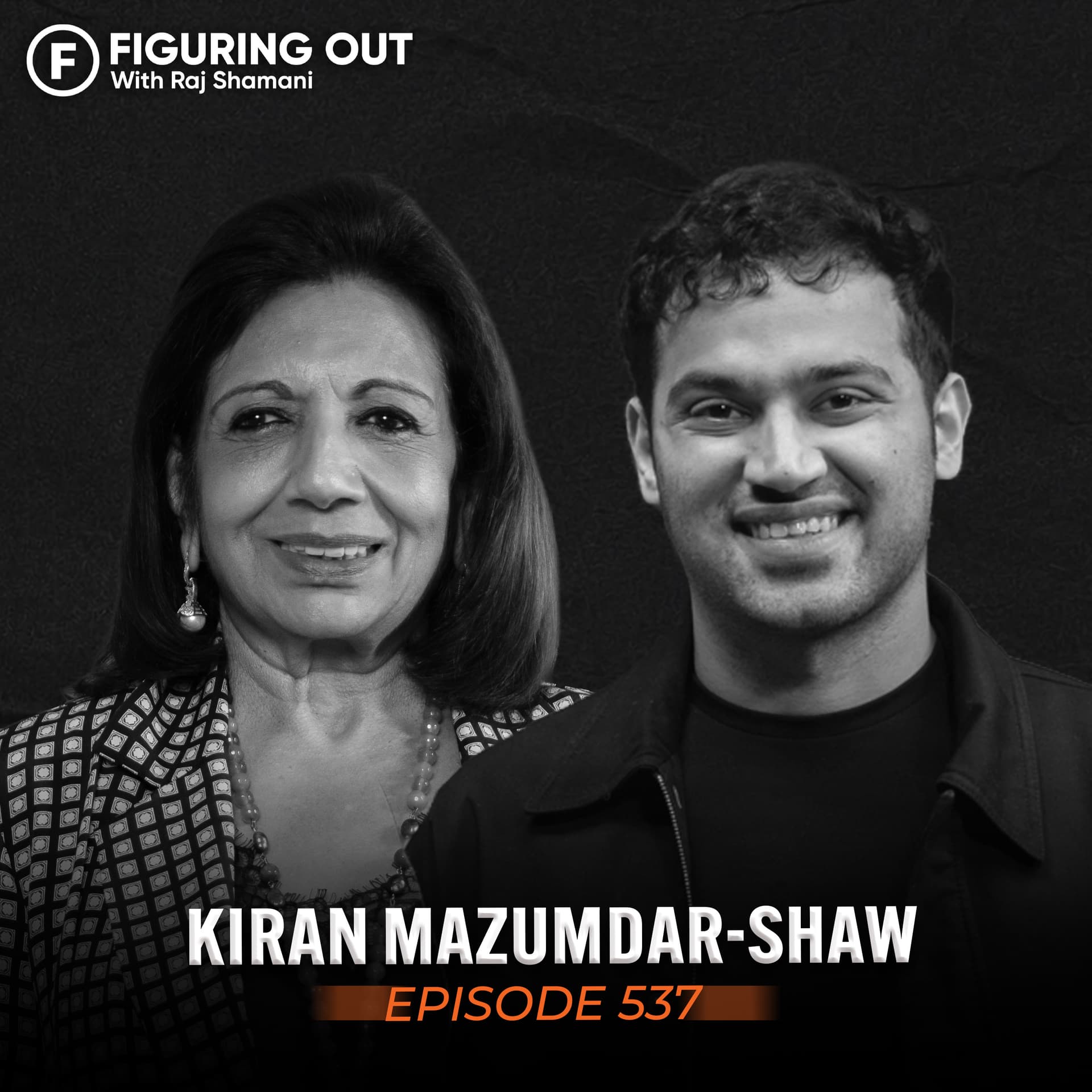
Kiran Mazumdar-Shaw discusses building Biocon from a small biotech startup into a global biosimilars and biopharma company, focusing on entrepreneurship in India, gender bias, and “early” long-bet strategy. She argues that success depends on purpose-driven clarity, strong narrative-building to excite investors, and making high-impact medicines affordable.
Guest(s)
Kiran Mazumdar-Shaw, Executive Chairperson of Biocon Limited; founded/grew Biocon across enzymes, insulin, and biosimilars. Raj Shamani (host), interviewer.
Key claims
- Purpose and clarity prevent self-doubt; uncertainty and hoping things go right create panic.
- Entrepreneurship requires telling the story clearly enough to get others excited; investors fund what they understand and find compelling.
- Women face stigma when they are more aggressive or confident; “milder” behavior is misread as weakness.
- India’s pharma innovation is often rewarded via reverse engineering more than true innovation; risk-taking is limited.
- Biosimilars are harder than generics because proteins fold and must be produced in living cells; she positions Biocon as a global biosimilars pioneer from India.
Notable examples
- Rejected for jobs in brewing due to gender; later faced licensing hurdles in the 1970s/License Raj era and obtained permits without bribery.
- Biocon’s recombinant human insulin (developed 2004) to replace expensive animal insulin; she cites price drops from ~1000 rupees to ~100 and even ~50.
- First US FDA-approved biosimilar trastuzumab (2017).
- Cell-therapy startup Immunil aiming to cut CAR-T costs from ~$1M to under ~$50k.
Written by AI. May contain mistakes. Listen to the episode to check what was said.
Chapters
Tap a time to open that second in VOThe Importance of Clarity and Purpose in Entrepreneurship
0:31 to 1:51
Discover how clarity of thought and a strong purpose can eliminate self-doubt.
“I've always been very self-assured because I've been very purpose-driven.”
Challenges Faced by Women in Leadership
1:51 to 4:50
Explore the unique challenges women face in the entrepreneurial space and leadership roles.
“Why do you think we keep doing that to our scientists and our innovations?”
Childhood Influences and Family Values
4:50 to 7:42
Kiran shares her childhood experiences and the values instilled by her parents.
“and she did a lot with the Irish nuns in Bangalore.”
The Impact of Merit and Gender on Career Choices
7:42 to 9:30
Discussing the societal views on women pursuing careers in traditionally male-dominated fields.
“She said, no, it's a, you know, you're interested in biotechnology, you're interested in microbiology, you're interested in biology, chemistry.”
Overcoming Stereotypes in the Workplace
9:30 to 14:00
Kiran shares her personal experiences of overcoming gender biases in her career.
“What do you think they were getting wrong?”
Perceptions of Aggression in Women
14:00 to 14:47
Discussing societal perceptions of women who display confidence and aggression.
“I know that everyone has watched it and come to me and said how much they enjoyed it.”
Overcoming Self-Doubt
14:47 to 15:40
Exploring the concept of self-doubt and how it affects women's progress.
“the guy behind the desk says, ma 'am, I watched your podcast.”
Kiran's Journey to Entrepreneurship
15:40 to 18:26
Kiran shares her journey from facing rejections to becoming an entrepreneur.
“I've always been very self-assured because I've been very purpose-driven.”
Navigating Bureaucracy in India
18:26 to 21:36
Describing the challenges of starting a business in India during the license raj.
Starting a Biotechnology Company
21:36 to 24:25
Discussing the inception of Kiran's enzyme production company and its significance.
“ever get it so I am really scared and he said no no nothing of the sort and in two weeks I got it but what was the idea what do you want to start I wanted to start a company making enzymes.”
Show all 50 chapters
Challenges of Securing Funding
24:25 to 25:51
Kiran recounts her experiences with banks and the difficulties in obtaining loans.
“You're only a young girl, 25 years old with no business experience, trying to start this strange business called biotechnology and enzymes, which we don't understand.”
The Importance of Narrative in Fundraising
25:51 to 27:06
Emphasizing the significance of storytelling in attracting investment.
“But I just kept getting rejected there also.”
The Passion Behind Ideas
28:07 to 29:47
Learn how passion and clarity in communication can attract investment.
Transitioning to Pharmaceuticals
29:47 to 31:21
Discover Kiran's journey from enzymes to pharmaceuticals and insulin production.
Disrupting the Insulin Market
31:21 to 33:14
Learn how Kiran's company revolutionized insulin pricing and access in India.
“And I looked at India and I said, you know, India is the diabetes capital of the world.”
The Need for Affordable Cancer Treatments
33:14 to 35:02
Explore the motivation behind developing affordable cancer therapies.
“So I'll tell you, recombinant human insulin used to be sold at 1000 rupees a while.”
Understanding Biosimilars
35:02 to 36:55
Gain insights into the differences between biosimilars and generics in pharmaceuticals.
“But I said, if you follow the science, probably the pathways also will follow the science.”
Challenges in Creating Biosimilars
36:55 to 39:23
Learn about the complexities involved in developing biosimilars compared to generics.
“So an aspirin for instance is a chemically synthesized drug.”
Pioneering the Biotech Sector
39:23 to 40:45
Understand Kiran's unique vision and early innovations in the biotech field.
“it's about using a yeast or a bacteria to make these proteins.”
The Logic Behind Early Investment
40:45 to 42:00
Discuss the rationale for making early investments in biotech and pharmaceuticals.
Innovation and Accessibility in Medicine
42:00 to 44:45
Learn about the challenges and innovations in making life-saving therapies affordable in India.
“Most Indian companies join the bandwagon, you know, like if someone has done this, okay, we'll also do that.”
GLP-1 Drugs: Benefits and Risks
44:45 to 47:59
Explore the implications of GLP-1 drugs for obesity and diabetes management.
“We are still wanting to make it cheaper.”
Market Dynamics of Indian Pharmaceuticals
47:59 to 51:24
Understand the competitive landscape of the Indian pharmaceutical market and its unique challenges.
“I can understand that if you're diabetic and, you know, you need to control your diabetes, GLP-1s are great.”
Pricing Strategies for Generics and Biosimilars
51:24 to 56:00
Dive into pricing mechanisms for generics versus biosimilars in the Indian market.
“And then that also captures the GST, which of course is reduced now.”
Understanding Pricing in Biosimilars
56:00 to 58:09
Explore how competition impacts pricing strategies for biosimilars.
“And what kind of premium in a 2-3 competitive?”
Near-Death Experiences in Business
58:10 to 1:02:28
Hear Kiran's near-failure story and insights on taking calculated risks.
“Then what happened was you had the Asian Games.”
Building Confidence as an Entrepreneur
1:02:29 to 1:05:29
Learn how clarity of vision contributes to entrepreneurial confidence.
“I've seen a lot of young entrepreneurs who come with a good vision, come with a good, you know, sort of objective and goals, but suddenly start panicking when the first thing goes wrong.”
Challenges of Innovation in India
1:05:30 to 1:10:06
Discuss the barriers to innovation investment and supporting startups in India.
“entrepreneurial journey will have mistakes.”
Access to Capital Markets for Innovation
1:10:06 to 1:11:22
Discussing the need for Indian companies to access capital markets to scale and innovate.
“If government can only do so much, they are providing the seed capital, the risk capital, but they cannot also provide the scale-up capital because then they are doing the job of a venture fund.”
Cultural Attitudes Toward Risk and Innovation
1:11:22 to 1:13:25
Exploring India's risk-averse culture and its impact on innovation success.
“Or now maybe three in 10 companies succeed.”
Case Study: Digital Path Lab Entrepreneurship
1:13:25 to 1:16:22
Sharing a personal story of supporting a digital path lab entrepreneur and his challenges.
Success Stories in Tech from India
1:16:22 to 1:18:37
Highlighting a successful case of technology adoption in healthcare and its implications.
Perceptions of Indian Innovation in the West
1:18:37 to 1:21:01
Examining how Indian companies are viewed abroad and the challenges they face.
“their own manufacturing site in nagoya they said yours is better we'll continue to make it here So I'm just saying, look what's happening in our backyard and we don't know it.”
Building Credibility and Global Competitiveness
1:21:01 to 1:24:01
Discussing the importance of credibility and scaling for India's innovation ecosystem.
“You see what those originator companies said.”
The Need for Global Vision in India
1:24:01 to 1:25:17
Discussion on the importance of balancing self-reliance with global competitiveness for India's growth.
“Sab, everyone was only talking about self-reliance.”
Comparing Infrastructure: India vs. China
1:25:18 to 1:26:36
A comparative analysis of the infrastructural development between India and China.
“Look at how advanced an economy like China is and look at where we are today.”
Civic Responsibility and National Pride
1:26:37 to 1:27:35
Exploring the role of citizen engagement and national pride in improving India.
“Yeah, I was looking at your tweets about roads and, you know, poor infrastructure.”
Challenges of Cleanliness in Indian Cities
1:27:36 to 1:28:53
Discussing the cleanliness initiatives and ongoing challenges in major Indian cities.
Political Will and Civic Engagement
1:28:54 to 1:31:10
The importance of political will and civic engagement in fostering community improvements.
“You know, when the Prime Minister announced it, yes, everyone bought into it.”
The Role of Citizens in Urban Development
1:31:11 to 1:33:09
How community initiatives can contribute to urban development and improvements.
“political action committee which mohandas pai and i started and we have a group of people who are very civic minded and they try to do a lot and the government actually listens to us and we work with the government.”
Global Perceptions of India's Development
1:33:10 to 1:37:45
Insights into how the world views India's development and the challenges faced.
“We all belong to the same city facing the same challenges.”
Personal Experiences in the Global Arena
1:37:46 to 1:38:04
Kiran shares her experiences and respect gained in global professional circles.
Navigating Doubts and Skepticism
1:38:04 to 1:41:49
Explore how Kiran Mazumdar-Shaw handled skepticism and negativity throughout her career.
“Of course, now I'm talking about in the initial days.”
Gender Bias in India
1:41:50 to 1:46:12
A discussion on the systemic gender biases and how they affect women's progress in India.
“But maybe if you ask me for the harshest truth, I think they don't respect women enough.”
The Healthcare Dilemma
1:46:13 to 1:52:05
Insights into the challenges and moral responsibilities of the global healthcare industry.
“and we do call them out on women's day but after that Why do you feel we still continue to be misogynist?”
The Ethical Dilemma in Pharma
1:52:05 to 1:55:48
Discussing the balance between patient needs and pharmaceutical profits.
“I think my only grouse with them is that I really believe that you know if medicines don't serve the patients who need them the most and many of the patients who need them are excluded just because of affordability.”
Choosing a Successor: Trust and Criteria
1:55:49 to 1:57:36
Exploring the qualities and criteria for selecting a successor in business.
“You know, I have last two questions for you and then like a last which I ask everyone.”
The Importance of Networking and Authenticity
1:57:37 to 2:01:08
Understanding the role of networking and genuine relationships in business.
“You know, I get a lot of feedback from people.”
Separation of Self and Business
2:01:09 to 2:04:48
Discussing the distinction between personal identity and business identity.
Advice Against Over-Planning
2:04:49 to 2:05:10
Highlighting the drawbacks of excessive planning before starting ventures.
“Okay, here's the last thing I ask almost all my guests.”
Transcript
Automatic transcript. May contain errors.0:00What would you tell somebody who has some skill in them but they're not confident? See, I feel that if you have clarity of thought and vision and you're only focusing on executing that vision or that purpose, then I think you don't have self-doubt. You'll be very confident. But if you're not very clear and hoping that things will go right, then I know that when it goes wrong, you'll have a real problem. And that's when people start panicking. Kiran Mazumdar Shaw, Executive Chairperson of Biocon Limited. In this episode, she shares her journey of building Biocon from a small startup into one of India's largest biotechnology companies.
0:39Have you ever had a self-doubt? Never. I've always been very self-assured because I've been very purpose-driven. So when you have a very strong purpose, I don't think you get self-doubt. You said a very interesting thing. I think it'll be helpful for a lot of entrepreneurs. He said sometimes it's about getting the other person excited. That is what entrepreneurship is. You have to get people excited about your idea. Telling the story right is the most important thing for any entrepreneur. And I think young entrepreneurs must learn how to do that. When women actually show these traits of little bit of let's say arrogance and power and confidence, do you think that is also being misunderstood by a lot of people?
1:21The moment a woman becomes a little more aggressive, she's looked at very unkindly. And then she's strolled and all kinds of unpleasant comments are made about her. It's a strange world. I don't care. Have you seen different attitudes of Indian investors versus investors in the West? I think investors are investors. It's about show me the money. The only difference is that in the US, they understand innovation much better. But if you just do innovation in India, there will be zero value for that innovation. Why do you think we keep doing that to our scientists and our innovations? We reward reverse engineering much more than we reward innovation.
2:01And why do you think so? Because we're not risk takers. What is the harshest truth about India which successful people know but they're publicly afraid to say? Maybe if you ask me for the harshest truth, I think...
2:18If you have found anything valuable from this channel, please subscribe. It's free, it takes less than a minute, but it means a lot to us. And to listen to the audio experience of this episode, please follow us on Spotify.
2:37What should I know about your childhood, which has shaped you into a person you are today? Well, you know, I always say that I had a very charmed childhood. Okay. Because I grew up in a very happy family. My father was a brewmaster at United Breweries. My mother was a housewife. And I have two brothers. You know, I'm the eldest in the family. You know, we had a very, you know, cozy family, a very close-knit family. You know, we used to go on holidays. My father was a golfer, so we went on golfing holidays. My father was also someone who was very gregarious and had a large number of friends all around the country.
3:26So we used to go all around the country for holidays. We had a very close Kashmiri friend. And so we used to go to Kashmir quite often and so on and so forth. You know, and my father was a very liberal thinker. I mean, the fact that he made me go and pursue brewing in Australia tells you what kind of a man he was. But I think we were a Gujarati family. My father and mother had come from Gujarat. My father, of course, had gone to the UK to study brewing. And he got this job at United Brewery. So, you know, that's how my parents came to Bangalore and I was born in Bangalore. But because of the fact that he had spent a large time in the UK on his own, I think he had a very different worldview.
4:19Okay. And so when we came to Bangalore, we were not sort of constricted to a very orthodox kind of lifestyle, you know. and we were very cosmopolitan in the way. Give me an example. I mean basically my father was a very you know outgoing person. He loved to go and play bridge in his club and we would have barbecue parties at home and you know my mother used to work a lot in charitable kind of initiatives and she did a lot with the Irish nuns in Bangalore. So we grew up in that way. And of course, I went to Bishop Cotton Girl School. And, you know, that's why I said it was a very charmed and happy childhood where there were no constraints, there were no restrictions.
5:12I think my parents trusted their kids. And we grew up with very strong values because my parents had very strong values. like give me one value which you still hold you know i always tell this story that you know when i was you know applying for medical college when i grew up and i didn't get into medical school because it was very tough to get into medical colleges and i had only applied to a few i was very disappointed that i hadn't been accepted by three of the medical colleges i had applied to okay and so i went to my father and i said oh by the way you know davangiri medical college has got a seat it's on capitation basis capitation fees basis and it's only 10 000 rupees why don't you pay it and i'll get into that medical college and my father said no i will never pay a capitation fee.
6:14Why? And I said, why? So he said, Kiran, always remember that money is not currency to buy favors, but to make a difference. And whether you are my son or my daughter, I will never pay a capitation fee. You have to get in on your merit. And always remember, life is about building credibility based on merit. So you know, these words stayed with me a lot. through my entire life. But he was that kind of a man. You know, he wanted his kids to be honest and everything about meritocracy was very important to him. Was he a tough father? No, he was a wonderful father. So he never like just forced you into discipline or made you do certain things?
7:03No, he would let you do whatever you wanted. But these were some of the principles he stood by. You know, and that's what I mean that you don't have to be a strict disciplinarian. But you, you know, you lead by example. And my father was always that kind of a person. So because he was your sort of an idol and you always... He was never my idol. He was my friend. Okay. You know, my dad and I were very close friends because remember, I actually pursued brewing, which was his profession. So he and I would, you know, we bonded so much on that front. He was my mentor. but did he ask you to join brewery no he was the one that actually encouraged me to pursue brewing because you know after college i said you know what should i do i want to pursue something which has you know some kind of applied opportunity i don't want to do just a phd and do research but i want to apply my knowledge to do something and he said oh why don't you do brewing so i said why brewing?
8:08She said, no, it's a, you know, you're interested in biotechnology, you're interested in microbiology, you're interested in biology, chemistry. This is what brewing is about. So I said, no, come on, it's not a profession for a woman. I said to my dad and my dad said, gender has nothing to do with it. You know, remember, you know, if it's science, if it's technology why are you bringing gender into it yeah and he was that kind of a man so you can see his thought process yes and in fact i went and you know did brewing in my brewing program in australia i topped my class i came back and you know i couldn't get a job in india and so in fact i went to my father and said what did i tell you didn't i tell you it's not a profession for a woman and you were the one who had this great idea of sending me to australia and insisting i should pursue brewing and now i can't get a job so he said these breweries don't know what a big mistake they're making you know they you are one of the best brewers i know in the country and i mean i had actually partnered him in commissioning a brewery when i came back from australia so i thought oh great you've got a great job just starting when i've come back and the thing was that i'd commissioned a brewery like any brewer you know it was a 24 by 7 job where i had to go at all kinds of times to fix problems i was doing things like you know lifting pipes spanners i was doing all that kind of you know work that you expect of a professional engineer and at the end of the day when we commissioned the brewery the owners of the brewery when i asked them so i hope i got the job and then they looked down very sheepishly and they told me you know we've hired someone else because this is not a job for a woman i said what do you mean i commissioned your brewery you tasted my beer and you said it's great no you are fantastic but you know we can't take the risk of having a woman lead this brewery because it won't work this is a very hostile environment it there's no woman in this brewery we know that it will be very difficult for us and for you to fit into this kind of an ecosystem so i don't think we can hire you And that was the refrain I got from every brewery that I went to.
10:47What do you think they were getting wrong? I mean, it was a different time, you know. And even today, people are very hesitant to give a woman a job that's in charge of a manufacturing operation. You know, so it was just a societal view of what women can and can't do. That's it, just a societal view or was it something else? I mean, basically, it stems from what society thinks of women. You know, I just gave a talk yesterday when I went to Pune. And I was talking to some journalists. And I said, look, I mean, it was about, you know, recognizing scholarships for women engineers, which Bajaj has instituted, which I think is a great initiative.
11:40but i think i said to people i said even today women entrepreneurs have a tougher job raising capital than men and male entrepreneurs because there is a stigma and a and attached to a woman which is completely misplaced you know they i keep telling people you keep saying women are not big risk takers women don't are not ambitious enough women are not bold enough i mean come on what have i proved i've been the biggest risk taker i'm very ambitious i built a global enterprise what more can i say so i'm just saying that these are the kind of you know myths about women that have to be busted yeah you know i'll give you one stat on this from our field as well so i was comparing last three years of data of all the indian and international podcasters the average number of clicks that you get on a male-based thumbnail of a male entrepreneur-based thumbnail versus a women-based thumbnail the male is much higher like even the general public doesn't click on the thumbnails where they have women entrepreneurs so so you can clearly see the bias right it's not about that women entrepreneurs are not actually being successful or killing it they all are like super successful women like you why do you think it's still there like general public is not clicking it there's a gender bias and you still feel the same way which you probably felt 40-50 years ago?
13:17No, I think basically women are much milder and meeker. You know, they don't want to boast and brag. Men love to do that, right? And the Gen Z love that boasting and bragging. I mean, look at the way they admire people who are arrogant, abusive and boasting and bragging about what they've done. They love to hear that. Women are not capable of doing that. You know, women are far more humble, far meeker and milder in the way they project themselves. And to me, that's a strength. But most people think of that as a weakness. But is it like when women actually show these traits of little bit of, let's say, arrogance and power and confidence?
14:07Do you think that is also being misunderstood by a lot of people well i think it's very unfair because the moment a woman becomes a little more aggressive uh you know she's looked at very unkindly yeah and then she's strolled and you know all kinds of unpleasant comments are made about her so it's anyway it's it's a strange world you know i don't care i'm not the kind of person who cares about it because the one thing i do know is that the podcast I did with Nikhil Kamath is very widely watched. I know that everyone has watched it and come to me and said how much they enjoyed it. And, you know, so much so that even when I check into a flight, the guy behind the desk says, ma 'am, I watched your podcast.
14:54It was fantastic. And I get a lot of young people coming and telling me that they really enjoyed my podcast. And if it's something that they learned from that podcast, I'm very happy. So I think it's, you know, you should not worry about what society thinks about you and how you're being viewed because it's going to be tough for women. I always tell women, you know, shut out the noise, have blinkers and just focus on what you need to do. Because the moment you start listening to all this noise, it again gives you self-doubt. And that's very dangerous. Yeah. Have you ever had a self-doubt? Never.
15:38Never? Never. Not even for a day? Never. I've always been very self-assured because I've been very purpose-driven. So when you have a very strong purpose, I don't think you get self-doubt. Because if your purpose is good and you know that you're on the right path, you know i really think you don't have that problem of self-doubt tell me when when you started actually when before even you started when you were just facing these rejections tell me about the last rejection what were you feeling at that time you know i was very frustrated you can you can imagine i said what are these guys saying to me i mean are they saying that women are not capable and that's what they're saying to me you know that they can't I don't fit in I don't belong it's I'm a risk they don't know how to deal with me and I said you know it is very obvious to me that women have to fight for their place and I got a job in in Scotland okay and you know I always say I'm an accidental entrepreneur because I was about to leave for Scotland when I met this Irish biotech entrepreneur Leslie Auchincloss who tracked me down and said to me look I want to start a company in India I need a partner and you come highly recommended so how about you know joining me in starting this how were you recommended he knew my one of the people in Australia whom I had worked with a brewer okay who had started his company in Australia.
17:23So when he was coming to India, he said, Oh, you should meet Kiran. Because I worked with her and she's exactly the kind of person you need. And my first reaction to him was, No, I don't think I'm the right person. No business experience. I said, I don't have any money to invest. So why me? I mean, I don't think I'm the right person. But let me try and introduce you to successful businessmen who can be your partner. but he had more faith in me than I had in myself and he said no he said you know why are you undervaluing yourself he said you come highly recommended and I trust my Australian colleague and you should give it a shot and he said I said yeah but I've just accepted a job in Scotland and he said well why don't you give this a shot and if you don't like it after a year or if you feel it's too challenging in a country like india you know i'll find you a job so with that kind of assurance i said okay what do i have to use so i took the plunge and you know instead of going to scotland i went to ireland and i learned what this business was about and you know it was you know i i when i look back on it i said wow that was quite a bold decision i made yeah and i came back and then of course another saga started which was about getting all the permissions in india if you think ease of doing business even today is not so great you can imagine what it was in 1978 yeah it was at the height of the license raj and i had to keep going to udhyog bhavan for these licenses to start my company and i remember sitting in those corridors where all these touts would be going up and down and you just had piles of files in the corridors
19:33and you know the touts would come and tell me madam ji apko agar license chahiye toh apko mujhe bata yeh mujhe pata yeh kaisa laneka hai and they would give me all kinds of numbers saying if you pay me so much I'll get it for you and I was saying oh my god do I really want to start a company if I have to keep bribing people so i went into the you know the secretary's room the the person who was in charge of licensing i remember his name was mr bishwas i said you know mr bishwas i am really in a bit of a fix and i don't know whether to start a company and forget about you know you know any notion of doing anything in india and just take up my job which i had been offered in scotland or do you think i should really still build a company in india and said why why what's wrong why are you having these doubts i said no because when i sit in the your corridor waiting for you to call me i said all these doubts come and tell me i have to bribe to get my licenses and i said i really don't know whether i can afford to bribe and whether i want to bribe because i want to build an honest company so i don't know whether i should build this company in india and he was horrified when i was so frank he said please don't listen to all these people please understand that you don't have to bribe anybody i'll tell you what from tomorrow don't sit in the corridor he told his those days they were called peons he said i'll tell my person that the moment you come here i'm giving you this disc and chair in this corner you go and sit there and i will help you to write this application and don't worry you won't have to bribe anybody and sure enough I got my license in two weeks they told me it will take me years and months that also I told him he said they told me that it will take months and years and some people have to wait forever and may not ever get it so I am really scared and he said no no nothing of the sort and in two weeks I got it but what was the idea what do you want to start I wanted to start a company making enzymes.
21:51That was the whole plan. But why? Why enzymes? What was, did you do some market survey, something? There was no market survey, but I had a ready customer in my Irish partners. They were ready to give me a buyback guarantee for what I was going to make in India. So I think it was very exciting because, of course, first it started with extracting papain, which was a proteolytic enzyme from papaya. which was growing abundantly in India. And we had to take it from the papaya latex and then extract the whole enzyme from that, which was quite a nice technology. But after that, there was this fermentation technology that we developed for fungal enzymes.
22:32Now, enzymes are, you know, catalysts which are used to basically convert processes into end products. So for example, you can use an enzyme to convert starch into sugar. You can use enzymes to convert sugar into alcohol. You know, that's the organic processes or biochemical processes that you use. And enzyme technologies are very interesting because they are green technologies. Unlike the chemical technologies, which are not green technologies, they're very polluting technologies. So to me, the concept of developing green technologies and replace polluting technologies was, you know, a great opportunity and a great purpose.
23:27Plus you had a ready customer. And ready customer and I knew fermentation science. That's what I studied. So it was using bacteria, fungi, yeast to do this. So it was a very exciting and nobody had ever done it. and i said wow this is so exciting i must do it and of course it was that was another big challenge because you know biotech nobody understood this was a new sector and even when i went to banks they would say we don't understand what you're trying to do so what is your end product and i would say oh it's a it's either a liquid or a powder you know how do we know but i said it's very valuable liquid and very valuable powder because each gram each kilogram is worth a lot i can charge thousands of dollars per gram you know that's how valuable these enzymes are and they would say yeah but how do we know it's valuable you know i'd say well because it does this this and this how why should we believe that it's so it's valuable and why should we believe that this technology is so important yeah very difficult at that time to convince them that what i was doing was unique was pioneering that india could benefit from it you know it was like pulling teeth so um i remember those days you know i was again if you think i was high risk in by the brewing industry who didn't want to hire me i was considered high risk by banks also because they I said, you're too high risk.
25:09You're only a young girl, 25 years old with no business experience, trying to start this strange business called biotechnology and enzymes, which we don't understand. And you don't have any collateral to offer us. So how can we lend you money? And those days there was no venture capital or anything. It was all debt financing and credit lines and interest at 16 to 18%. Right. So they would say, no, you're too high risk and we're scared that we won't get back our money. So I had to go from pillar to post. I had to go from bank to bank asking them to believe me and get excited about what I was trying to do.
25:52But I just kept getting rejected there also. But I didn't give up. And there was one banker who was quite excited with what I was telling. So he said, come to my office tomorrow. I'll give you a loan. Okay. So he gave me a credit line. Which bank? Canada Bank. Okay. So that actually got me started. So, you know, that was... And why did he get excited? I don't know, but I met him at a wedding reception. I still remember at Ashoka Hotel. And someone introduced me as a young entrepreneur trying to start a biotech company. He said, tell me what is this biotech can tell me. So I sat with him, you know, on the fringes of that reception.
26:34And I was telling him how exciting it is. and how interesting it is. And I just told him my version of what I was trying to do. And he got quite excited. See, sometimes it's about telling the narrative and getting somebody excited. And if they get excited, then they want to help you. So I told him how tough it is to me to get a bank credit line or a loan. So he said, no, come to me tomorrow morning. And sure enough, he gave me my credit line. And that's how I got started. You know, you said a very interesting thing. I think it will be helpful for a lot of entrepreneurs. You said sometimes it's about getting the other person excited.
27:16It's a right narrative. In fact, I told a young entrepreneur yesterday in Pune who said that she had a great idea and she still hasn't found anyone to invest in that idea. I said, you know, it's about how you articulate your idea. Telling the story right is the most important thing for any entrepreneur. so i said if you can't tell it right you'll have to find somebody who can tell it for you true so in my case i had to tell it myself and i didn't give up and i found somebody who listened to my story got excited and decided to invest in me that is what entrepreneurship is you have to get people excited about your idea and what do you think gets people excited is it your own passion about the thing or your ability to simplify a complex thing and show them the big dream well not really i mean it's really about the passion that you are displaying making that idea very very appealing and compelling and almost demonstrating how well you understand the idea you know some i mean you can always talk about simplifying an idea but simplifying the idea too much is also not good so you have to keep some mystery about that idea which excites people right yeah so true so i think that's what it's about and i think young entrepreneurs must learn how to do that do you like when somebody comes to you with so much passion and tries to put like tries to tell you a story which probably you don't understand fully do you still like it would you still invest in that no if i don't understand i'll ask them to explain it to be more because i want to know whether they understand it well yeah you know so i'm an old hand at this because i've invested in a number of startups but i want those startups to tell me exactly what they want to do and so if i don't understand what they are doing i ask them to explain it to me and you know explain to me why it's so interesting why is it such why is it such a novel idea why is it that they believe that no one else is doing it no that's the kind of you know those questions i ask interesting okay coming back to your story where so you said enzymes and then you did enzymes till 2007 i was pursuing enzymes and enzymes technology well up to in 2007 i exited enzymes but i was developing enzymes right up to that point yeah but at the end of around 1995-96 i started you know looking at our business and saying look we've got so many technologies you know and i like to challenge myself i like to reinvent my business repeatedly so i said why are we only making enzymes can we not look at making something else and at that time the idea came to me is why can't we look at pharmaceuticals because you know if we've got these interesting technologies can we do you know develop some pharmaceuticals based on fermentation science and so of course the first products we developed were statins because they were developed with fermentation i mean fungal fermentation which we were very good at so i said let's apply some of the fungal fermentation platforms and see can we make statins and it worked then came the big breakthrough because you know i looked at insulin And I looked at India and I said, you know, India is the diabetes capital of the world.
31:27We're importing all our insulins and 90 % of them are animal derived insulins. Only 10 % is recombinant human insulin, which is based on biotechnology. And no one can afford it because it's so expensive compared to animal insulin. And we know that animal insulin is an inferior insulin because it is immunogenic to humans. So why can't we try out one of our recombinant DNA technologies that we have used to develop enzymes to develop insulin? And so we had a proprietary fermentation, I mean a recombinant DNA technology based on a very special yeast called piquia. And I said, let's try it. and of course we had that eureka moment when we saw insulin being produced i said oh wow we can make insulin now so we developed india's first recombinant human insulin in 2004 and now you're the third largest insulin maker in the world right and on a very proprietary platform even today our ip on insulin is as strong as our you know the the innovator companies So I'm very proud of that.
32:45You know, we solved India's problem. Of course, after we developed the insulin, nobody ever uses animal insulins. And we actually disrupted the market. We actually forced the insulin companies which were dominating this market from the West to drop their prices. At what price were they selling before you got it? 10 times more. Give me a rough number at that time. So I'll tell you, recombinant human insulin used to be sold at 1000 rupees a while. And you made it at? I mean, we brought down the price to 100. And at some stage, we even brought it down to 50. But initially, we brought it down to 100.
33:33Wow. From 1000 to 100. Yes. And then they all also brought it down to 100. They were forced to. Yeah. which means they could have sold it at 100 but they were yeah of course because they were making extra margins because there were no competitors so and you were the first ones to do that in the world so biggest of you today in the world insulin is cheap yeah i mean you said it i'm very proud of that and that is what then gave me the idea that look we've disrupted this space and we've expanded access to millions of patients around the world right if we can do that for insulin we should do it for every product we develop and then cancer became a big area for us because i realized that was the same problem in cancer i lost my best friend to cancer and she needed these new therapies these new biologic therapies and she was paying something like two and a half lakhs per dose and you know she was quite a wealthy person i mean she was a very well-to-do professional but even she had to sell her property to afford the treatment so i said what is this you know what is happening why are we paying so much for these drugs and i said can't we make them cheaper and that's how i started making biosimilars because these are like copies of these biologic drugs which are so expensive so complex these are what we call as protein therapeutics because these are proteins which are part of our system our living systems that operate in different ways you know monoclonal antibodies it's a part of your immune system your antibodies fight you know unwanted things in your body so they fight cancer and but they are very expensive so it's like immunotherapy this is what is called as immunotherapy antibody technologies were very very expensive very complex very difficult to develop so i said look nothing has been impossible for us to do and we have great scientists so i told my scientists look let's develop this and this antibody for this breast cancer which my friend died of and see if we can develop it and you know make up the product as close to the original original drug as possible that's why it's called a biosimilar and at that time when we started developing it, there were no regulatory pathways for biosimilars.
36:23But I said, if you follow the science, probably the pathways also will follow the science. And I was right. So we started developing this antibody ahead of others. And we became the first company in the world that was approved by US FDA in 2017 as the world's first US FDA approved a biosimilar trastuzumab. for breast cancer patients that was a big big milestone for us and a very proud milestone i'm i'm gonna ask you to interrupt here and ask you a very simple definition of what is biosimilar and what is generic pharma so that's a good question so let me put it this way there are two classes of drugs one is what we call as small molecules which are nothing but chemically synthesized drugs.
37:21So an aspirin for instance is a chemically synthesized drug. A statin is considered to be a small molecule. So the size of these molecules is very small. That's why they're called small. And when you start looking at protein therapeutics, proteins are very large. If you compare a protein molecule to a small molecule, it's many orders of magnitude larger and more complex than a small molecule. So when you make a chemically synthesized molecule, it's very easy to draw out its structure because it's basic chemistry. So you can draw out the molecular structure very easily. But when you start looking at proteins, the whole structure is so different because proteins are amino acids.
38:12It's about how you configure those amino acids and how the shape of the protein is very complex. And you have to get the whole shape of the protein right because it also folds. Small molecules don't fold, but a protein folds to get a certain configuration. So these protein-based molecules would be biosimilars? If you make a copy of a small molecule, it's called a generic. And if you make a copy of a large molecule, which is these protein therapeutics, they're called biosimilars because they're called biologics. So biosimilars. And that's really the difference. And it's very, very difficult to make biosimilars because it's very difficult to copy proteins.
39:07So it's really innovation at the highest level. Because when you look at a protein, it has to be produced by a living cell. Interesting. Right? It's not about synthesizing it in a bioreactor. It's about making a mammalian cell culture or even if you look at insulin and peptides, it's about using a yeast or a bacteria to make these proteins. So, that's why it's called a biologic. and it's a biotechnology product. So when you look at it from the outside for a common man, it almost feels like all the pharma companies are sort of same because India is now a generic pharma factory of the world. Exactly.
39:58So they are making small molecules and it's very easy to make small molecules. That's why there are too many of them. Yeah. And we are the only biosimilars company in India. Oh, there's no other biosimilar company? I mean, there are companies trying to make biosimilars, but no one has been able to develop a portfolio of biosimilars for global markets. You know, many of them have tried to develop biosimilars and the furthest they've gone is India. But they haven't been able to take it to the more regulated markets. Tell me the skill, like teach me the skill of actually being early. you know because in 1978 biotech was not even a thing in india you started that then biosimilars still is probably not a very big thing in india you aced in the world in the world now and you aced it then before insulin actually became a global headline and people wanted to you know reduce it by 10 times you did it like you always were early and you were taking these long bets what is this killing what are you seeing which other people are not i think it's in my dna you know in the sense that i've always wanted to lead not follow so whatever i've done i don't want to copy someone else you know i don't want to be a me too in that sense you know like when i look at you know pioneering the biotech sector that was my starting point saying oh wow it's exciting to think that i'm the first biotech company in india the first biotech startup i would say because i started in my garage um so that was very exciting for me and then if you think about it uh you know when i got you know when i moved from enzymes to biopharma even there i was the first one to develop statins in fact we have a global you know dominance in statin production so it's like that intel inside you will probably see that almost every statin tablet one in two statin tablets in the world would at least have our api but that's how big we got um so we became you know we started looking at things very differently.
42:22Most Indian companies join the bandwagon, you know, like if someone has done this, okay, we'll also do that. So they're waiting for someone to do something and then they'll all do it. So it becomes like a herd mentality. I've always wanted to move out of the pack. So I'm saying now, how can I be different? How can I do something which nobody else is doing? And that's how I've chosen my opportunity. But that can get you wrong so many times right how can you be right no but these are logical choices right i mean if you think about it insulin was a need and i said let's develop recombinant human insulin because india needs it right you can't be wrong about that right it's not it's not like you're taking wild bits then you see you think about biosimilars now biosimilars logically would have to have a market in the future maybe it was not there when i went into it but logically i knew that there were a time would come when they when the world needed biosimilars so i just judged that anticipation right and i did it and there must be so many people who are trying to do the same thing right how are you able to get it cheap get it right and get it before because our whole innovation model is based on that the company thesis and principles are like yeah so we constantly focus on that i mean i started a another company a startup recently for cell therapy which is a car t therapy and again the whole hypothesis was this therapy costs a million dollars per patient in the west how can we ever afford that right and i know that this is a life-saving therapy i mean this is for end-stage cancer patients who suffer from leukemia lymphoma and myeloma who have a death sentence already written and you save them and give them a new life i mean what kind of isn't it an amazing therapy but can you afford to spend a million dollars in a country like india you can't so i said let's really take that up as a challenge and i started a company called immunil and i told all the scientists our challenge is to make it affordable and accessible and today we offer that for less than$50 ,000.
44:56We are still wanting to make it cheaper. But where is$1 million and where is$50 ,000? Now we have, you know, we made it accessible. Because it's like the EMIs, we allow them to pay in installments. But imagine having a new lease of life. Yeah. But still, it's very expensive. I can tell you, it is such a gratifying feeling because every time I go for a conference, I get and we call patients who have benefited from they come and touch my feet and they say ma 'am you saved my life I said don't ever touch my feet this is what we owe to all of you so you know I'm just saying this is the the joy of doing something cutting edge of focusing on a purpose which is about access and affordability you know talking about focus I was reading there a lot of large insulin companies in the world after the glp1 drug they almost it it's like they almost don't even want to make insulin pens anymore they're like moving away from and you're getting that and you're getting but you also say that you want to become the insulin company in the world right yeah why why do you want to keep doing that and not do glp no we are doing glp1s as well but glp1s is going to be like a commoditized product because so many people are jumping onto that bandwagon all the generic companies are doing it who's going to make insulin and insulin is a life-saving therapy for type 1 diabetics and many late stage type 2 diabetics you need insulin can't do without insulin so who's going to make it so i think it's important that companies like ours take on that responsibility for the world but do you think glp1 is that next magic drug of the world which is like truly one of the best inventions you know the jury is out there because we don't know the long-term side effects of this drug it's a great drug um i think for diabetics it's certainly a very important drug and for very obese people it is certainly a very good drug but it's being used as a vanity drug and i don't think it should because you know long-term use of a drug which is not really required by you i don't think you should really do it because you know it changes your whole metabolism right so it's you're you're not functioning normally now why do you need to do that if you're not well so you know why fix something that's not broken right that that's the sort of analogy you give so if you're a normal healthy person and all that you have to do is to control your diet and do some exercise why wouldn't you try and lose weight that way and i've done it i mean i know i've lost 10 kilos in the last few months six months because i felt i was overweight and i knew that you know i need to be healthy and one of the things is you don't you can't afford to be obese i mean i was not obese but i didn't want to be overweight either you can do it yes it's tough you know you can't eat sweets you can't eat fried food you can't snack you can't eat carbs too much but i think it's important for everyone to be a little disciplined yeah you know and and all young people are anyway working out so i find a lot of people are taking the easy way out and saying forget it i want to eat everything i don't want to exercise i'll take glp ones you know but GLP-1s function in a way where it changes your entire digestion.
48:54Right? It doesn't happen normally. Yeah. Why do you want to do that? If you're healthy? I can understand that if you're diabetic and, you know, you need to control your diabetes, GLP-1s are great. Especially if you don't want to, you know, get into insulin therapy. Similarly, if you're very obese, I mean, there are lots of very obese people. and you need to lose weight and it's for health reasons you want to do it sure you should do it but if you're not that obese and you just want to lose weight why would you want to do it true but people love shortcuts people love convenience it's it's vanity yeah and when you use drugs for vanity i feel it is dangerous but a lot of people do that they just at the end of the day it's like I want to take the shortcut I don't want to do the hard thing Correct But let's see what happens Because you know These are all new drugs Already people are talking about Muscle loss Right Why would you like to lose your muscle When you're young And losing muscle is very dangerous True Right And so I mean I'm just saying That's one of the very serious side effects But you launch You are launching GLP-1 in US Not in India No no So we launched Liraglutide, which is the early stage GLP-1 in Europe, US and UK.
50:22Not in India, why? It was a, you know, in India, semiglutide was coming, right? Which is the next generation, you know, GLP-1. So, and we said it's going to be a bloodbath there. So we make semiglutide, but we decided not to do it in India. Because of extreme competition. Extreme competition. we said let's focus on markets that give us better value true true and do you feel india is as difficult and competitive market in the world of medicines as it is in the west no india is a very interesting market you know this is the one of the few countries that allows branded generics so when you call branded generics brands sell right and so if a certain brand clicks you know you can charge a premium yeah and and make good money out of it but when you say good money it's still it's still a generic so you don't you're not able to make that kind of money but at the same time i think indian companies are very good at generics and when there is a large opportunity like a glp ones you have at least 20 companies making glp ones and then there's yeah market competition i read in news 42 were launching on day one correct like 42 different companies and there will be a shakeout and probably about 10 of them will do well but they will still have to market at a very low price point which brand do you feel in india from a consumer brand point of view like a generic branded drug must have seen really good results or money opportunity in the country because the brand clicked oh it's like in covid right your dolo click clicked they made a lot of money so it's like that i mean it's it's a phases it's there are phases i'm just giving you that as an example but you know croissant dolo these are well-known brands right but how many people make paracetamol right but these two whenever you go to a shop you don't say give me paracetamol give me one dolo give me a crocin that's what you say and do they command premium then for this i mean to a certain extent it's not a huge premium but they command a premium but the more important thing for brands is not so much the premium but how much they can sell so they make up by the volume of demand because if you look at the paracetamol market and and and look at which brand is selling the most the pricing may not be hugely different but the market share is very different yeah give me an example if on an aprox basis i want to understand 100 rupees okay or like 100 rupees for generic drug if a medicine is getting sold at 100 rupees at a medical counter how much is it made for you know i'm talking about generic drug let's say paracetamol for example there is something like There's something called an MRP, which is the maximum retail price.
53:42And then that also captures the GST, which of course is reduced now. So I would say, you know, the actual realization to the manufacturer can be anywhere between 40 to 50 % of that. and 40 to 50 percent will be including of cogs the cost of the goods okay so about like 50 rupees is going to the manufacturer 50 rupees is there but they are marketing distributor then they have a cost to bear because you know what is their margin because basically they are selling a product with all the cost of goods operating costs so ultimately you have to see how much they make I mean, it depends. It varies from drug to drug.
Read the full transcript
54:33And what would be for a biosimilar sort of drug? No, biosimilars, you know, if you put that kind of a frame of reference, I mean, it's a similar kind of thing, but the value of the biosimilar is much higher. It's not 100. It'll be 1000. so for that same thousand if you then start um you know capturing the value much more on a biosimilar than on a generic but even on that the 50 percent would come to the yeah it depends on what biosimilar it is you know how many market competitors i mean it's very difficult to give you an idea you asked me about generics in india i'm saying that but if i look at biosimilars you can't use the same kind of logic because it all depends on what's the market competition how many companies are producing it um you know what are the various uh formulations available so there are a lot of it's very complex it's not that simple what what i'm trying to understand but there could be a but there could be a situation where you could have 10 people competing for a biosimilar and obviously the price will be lower absolutely now what i was trying to understand is because there's so much complexity in making a biosimilar and it's so difficult obviously what kind of premium this would command in the market versus a generic which no there's no such thing as premium premium is decided by competition right um and if there are only two or three competitors obviously you can charge that so-called premium.
56:21And what kind of premium in a 2-3 competitive? No, what I mean is what is a discount you'll give to the originator? That's what it is. You know, like when a product genericizes, okay, and you take the product to global markets, the price discounting that happens, it crashes to 99 % sometimes. Why? Because of competition, the price can drop to as much as 99%. If there's not that much competition, it can drop to about 60, 70, 80%. So, it all depends. So, even in biosimilars, it's the same logic. If you have, of course, in generics, there are many more competitors than in biosimilars. But if you have just two competitors in biosimilars, you can keep the discounting low.
57:12but if you have more than 10 people competing for that same space then your company it comes down much lower so the discounting is higher okay don't tell me the drug but tell me from the biocon like the biocon group the highest amount of percentage which you have made on a drug and the lowest you have made on a drug no i think we've done quite well because it balances out There are some biosimilars where the discounting is much lower. It could be just about 25-30 % discounting. And in some, it could be 40-50-60 % discounting. But it's never 90%. Okay. So, you were never in the category of 90%.
58:00You never got into that market? Not yet. Not yet. Even in the insulin, no? No, insulin is a different business. but you know we are competing with the originators and we are all supplying at the same price so there's no it's not really discounting have you ever had a near-death experience in biocon no i mean near death meaning like what's the closest biocon has come to dying i mean in the early stages when i was i'd taken a loan to build this building okay I remember I took a loan from Karnataka State Financial Corporation. Okay. Then what happened was you had the Asian Games. So Asian Games was taking away all the cement and steel.
58:47So instead of building this building in one year, it took me three years. So if you take a loan and it takes you three years to build the building, obviously then it's a financial constraint, right? You can't produce anything for three years. so i was having problems in paying my loan back so i remember suddenly i saw my name in the paper saying biocon default i mean lot of companies not just me some 10 companies have defaulted and if they don't pay their dues by such and such a date we are auctioning their assets so i saw my name there also i said oh my god what's happened what's happened i went running to ksfc i said what have you done how can you do this you know you know that we are all going through problems you know with all this government delays and all that so I can't pay you back your installments only because of that so like I said relax relax these are standard things we have to put out I'll reschedule your loan don't worry but that was the only time I had a bit of a shock so you always had a backup or you all all your plans always work calculated risk see any any entrepreneur doesn't bet the whole house you normally take a calculated risk and say look look let me be very honest i took a calculated risk on the viatris acquisition the biggest pharma deal at that time was three and almost three and a half billion dollars 3.35 billion and that was a big bet to make and what did happen was that i had planned to raise a certain amount through private equity and a certain amount through debt but what happened was that suddenly the world changed you know that free money was not available anymore so everybody wanted structured equity what they call it is nothing but another word for a different form of a debt so my assumption that i could get free money or that i could get bcs i mean i could get private equity to invest without any um you know straight equity into the company and I could afford this particular acquisition came out to be very different because I suddenly had to rely on structured equity which was nothing but another word for debt and then I had a huge debt burden I knew I could pay it but it became an unnecessary burden and then the whole market reacted very badly saying there's a huge debt equity problem with you with biocon and you've taken on a big debt and we don't like it because we were debt-free before that so that was a difficult time because it was difficult to convince the market that we could afford the debt but you know they are very biased when it comes to how they look at debt yeah if a large company is too big to fail they will accept any amount of debt but when a small company like ours who's been debt-free takes on even small debt oh my god what have you done so it's a little bit of a strange attitude that investors and markets have did you ever doubt yourself at that point never i that's what i'm saying i never doubted myself but but i had many doubters outside but even when everyone else was doubting at that point it was disappointing it's difficult it's frustrating but you just have to accept it markets are markets where where does this confidence come in you see you know what you're doing and if you're very focused on the way you're executing you don't have that doubt and you know all of us were very very confident that we would deliver and you know i just feel the markets are sometimes you know difficult to understand you know they first doubted us they said oh you made this acquisition you've never had a front-facing commercial engine before how are you going to make a success of it when we made a success of that oh your debt is too high now when we address the debt oh but can you compete with new entrants i mean these are silly questions they keep throwing at you so they keep on moving the goalposts because there are too many naysayers in the market you know yeah and i just feel okay just ignore all these voices and these naysayers because ultimately we have a job to do let's just get on with the job you know i love this i love this the more i read about you and the more i talk to you i love this attitude of yours where you're just so optimist in in what you do you're like so confident i what would you tell somebody who has some skill in them but they're not confident how can they build this attitude see i feel that confidence comes from being very clear in your mind right if you have clarity of thought and vision and you're only focusing on executing that vision or that that purpose then i think you don't have self-doubt you'll be very confident But if you're not very clear and if you're approximating all the time and hoping that things will go right, then I know that when it goes wrong, you'll have a real problem.
1:04:45And that's when people start panicking. I've seen a lot of young entrepreneurs who come with a good vision, come with a good, you know, sort of objective and goals, but suddenly start panicking when the first thing goes wrong. And I'm telling these people, listen, are you sure that this is what your business has to be? Yes. Is this what you want to do? Yes. Then why are you panicking? You have to double down. And by the way, I told some another entrepreneur yesterday, they said, you know, she talked about failure. I said, listen, if you can't face failure, then you're not an entrepreneur. you.
1:05:28I said every entrepreneurial journey will have mistakes. Don't think that because you see me today, you think everything has been a smooth sail. No. I think I've learned much more from mistakes than from successes. Right? In fact, even when you have a success, it is not to be taken for granted. But when you had a failure, you have to learn from that failure and make sure it doesn't happen again. true at what point you stopped feeling rejected in the beginning of your career and started feeling grateful because thank god because of those failures you started by a con no i've had many failures along the way i'm not saying i'm grateful for failures because nobody likes failures but i've learned from my failures i mean and i've you know i've had many failures I mean, even this whole thing of assuming that my acquisition would be well rewarded and well accepted.
1:06:34It was completely different. And that for me was a failure to even anticipate that this is how they would take to my acquisition. So I've learned from that saying, OK, this is the way I have to deal with markets and investors. You know that I can't just constantly say, why have they been so unfair? why have they been so fickle why are they you know looking at it in this way but i have to understand how they perceive this business right and i cannot just sort of fault them because they i have to explain it better yeah yeah have you seen different attitudes of indian investors versus the investors in the West?
1:07:20Do they treat differently? I think investors are investors and it's about show me the money. And whether it's in the US, whether it's in India, it's the same. The only difference is that in the US, they understand innovation much better than India. India is very good at looking at your spreadsheets and profit and loss and ebidda and that's all they care about but in the us which is very used to building value on the back of innovation they know how to value companies that are doing very innovative stuff so today india is trying to get into the innovation game but if you just do innovation in india there will be zero value for that innovation so until you create that ecosystem of innovation you will never be able to do real innovation in india true and that's why and that's why people don't invest in innovation so you need to learn that and if india can create that like china has then i think we are talking but let's say bike the So, Baikara, right?
1:08:38Baikara is fully developed here. R &D has been done here. And yet you listed in the US because of the same reason. Because US values, you know, innovation is way better than India. Why do you think we keep doing that to our scientists and our innovations? Why do we value? We reward reverse engineering much more than we reward innovation. And why do you think so? Because we are not risk takers. Even today? problem even today you ask the markets in india will they like to back a company that is a service company or will they like to back a company that's doing some cutting edge stuff service company safe you know no risk you look at what's happening to a lot of startups in bangalore i'm telling you it's a serious problem.
1:09:32Very exciting startups. Okay, I've met a lot of these AI startups, digital startups. Lot of very interesting startups. But all of them are saying to me, we get series A, but to get series B and series C to scale up is a herculean task. Because nobody wants to take that risk. But chota, moota, they will do. nobody wants to pay nobody wants to invest that 100 million 200 million billion dollars you see we we have to invest that kind of money and they can't even access capital markets i'm saying let them access cap i've read my article came out in hindu business line about why it is so necessary for the government to allow early stage companies, clinical stage companies, pre-revenue companies to list on the stock exchange because they have to scale.
1:10:34If government can only do so much, they are providing the seed capital, the risk capital, but they cannot also provide the scale-up capital because then they are doing the job of a venture fund. Now, venture funds are the ones who are really not investing what they should. They are investing everywhere in the world. Why not India? Because in many parts of the world, like the US, like China, they are allowing pre-revenue companies and clinical stage companies to list. Then the capital markets give you. The moment the capital markets give you money, the VCs are willing to invest because they have an exit.
1:11:13So, we don't have that model in India. We are very risk averse. Our markets are risk averse. Our investors are risk averse. Companies are risk averse. Nobody wants to take risk. So, how are you going to innovate? Innovation is a risky business, right? One in 10 companies succeed. Or now maybe three in 10 companies succeed. but they don't like failure so any country where the social fabric fears failure you cannot build great innovation i mean look at what how us is building i mean you think about spacex yeah it's a crazy concept right like you want to send people you know spacecrafts to the moon and all that now okay it's a blue skies idea how many people are going to use that space you know spacex to go to will you go as a tourist to the moon how many people can afford it
1:12:19and why would you value it so high but they are excited right because they look at it as a futuristic play. Will people in India allow you to take such risk? I know how many companies after that Chandrayaan mission, private small startups did lots of things to get into space technology. Yeah. But it was never invested in at the right level. They all got stunted and they all closed down. But today there are exciting opportunities for us to look at how do we innovate you know extraterrestrially as well that concept what exciting i met one startup entrepreneur very interesting guy he said to me i said what are you doing he said i'm i'm developing a technology to a google map in space that's how he described his business what do you mean why do you need google map in space he said no because there are so many satellites being launched and he said you need to now see where you can actually launch your satellite so i'm trying to make that google map so that you can actually launch that satellite in space in the right place so think about that and these are ideas coming out of india do you think he'll get funds here he didn't get much he got small amount now he's struggling for the next round so we don't want to back these ideas i'll tell you a very interesting example about 10 years ago i backed a young guy entrepreneur who came to me and said i've got this great idea for a digital path lab see today it is all done manually you take a slide a pathology slide you know either it's a biopsy or something and then you put it under a microscope and some person reads it and then you give a readout you know and in many cases they take second opinions and third opinions and he's saying by using a computer and you know data analytics and a powerful lens which doesn't have to be like a microscope but it's like nobody has to peer down any microscope i use a camera a very high powered camera lens i take the picture of that of the slide and i can get a computer and ai to just tell me exactly what that what that slide that pathology is and i can give you a readout in minutes not in days i said wow that's great he said i want to do this all robotically sounded very interesting you know so i gave him some money i said sounds very good do it then after about six months he came back to me and said you know ma 'am i'm so sorry but i'm trying to raise money from vcs and the vcs are saying why will you succeed there is philips there is laika they can beat you hollow why should you succeed he said but they are not doing it i'm actually doing it in a certain way i'm going and getting slides from hospitals and i'm validating my algorithms i'm validating my ai and i'm very confident i'll do it he couldn't get money so i gave him a second round i said chalo he said you know i'm at this very pivotal moment where i'm trying to validate some algorithms and you know ai models i said here take some more money i gave to him then after another six months he comes back to me and says you know i want to tell you that i've got an offer from the us there's a company willing to buy me out and they are an ai company and i can't give you much of a return on your investment but i can give you back your capital do you mind if i do that and sell this business because that's what they offered me i said listen i was trying to help you if you give me back my capital more than enough i wish you the best but i'm sure you'll do well he gave me back my money um fast forward five years later during covid i still remember i went to boston someone told me oh you must meet this company called inference it's very interesting it's using a lot of digital analytics and ai and it's doing a lot of cool stuff so when i went to visit them suddenly i see this fellow i said hey prashant what are you doing here he said no no remember i told you i was being bought by the company this is the company i said wow that's great and uh so how's how are everything she said he said you'll be so proud to know that mayo clinic has actually adopted my technology and it's functioning at mayo clinic and then he showed me a video and mayo clinic has completely converted their entire path lab into a digital path lab using his technology wow and they actually said and there's some interview with the doctors and he said we have replaced we used to run this pathology lab with 40 people we are now down to three and the pramana system he's called it pramana pramana system is really amazing and they show it it's so robotic so i said wow i'm really thrilled yeah prashant damn good and all that i said you should now come to india also and offer this you know and i remember telling dr devish retty many years ago i said work with this guy you know he's trying to develop this and he told his pathology people please work with him they never did anything
1:18:15now a few months ago he told me by the way the japanese company i think it's olympus bought out my whole technology from this inference and now i'm part of this company japanese company all the manufacturing is done here in bangalore can you believe it the robotics everything is done in bangalore so he said the japanese company saw my manufacturing site here and they looked at their own manufacturing site in nagoya they said yours is better we'll continue to make it here So I'm just saying, look what's happening in our backyard and we don't know it. And he never got any money for scale up or anything from India.
1:18:57But look at what a success he's made of it. And how many the Japanese bought it for? I don't know. I don't know all that. They must have bought it for a nice price. But he doesn't get anything out of it because he had sold it anyway to the US company for a very small amount. But that US company must have done well out of it. But I'm just saying that it is not about how much what paid for whom. Today, every big hospital chain is using his system. Cleveland Clinic, Mayo Clinic, many, many other hospitals are using it. And we lost an opportunity. No, it's not lost an opportunity. We don't invest in innovation.
1:19:42See, we are very risk averse. the vcs here were so risk averse saying no why will you succeed there are others who will do better than you so what i'm saying is if you keep on doubting it how will you innovate and there's so many good ideas here but everyone will say what why will someone else not have this idea it's such a simple idea oh google in space everybody can do it so why will you succeed You know, that's the question they will ask. Everyone can succeed, but if you do it well, you know, I always tell people, it is not about being the first, but it's about being the best. Right? If you scale better, if you scale faster, if you scale in an innovative way that makes you the cheapest or the most impactful, that's all that counts.
1:20:40True. So that's what you have to remember. And that's the doubting Thomases that we have in this country. But when you started and you took this from India to the West did they doubt you? Who? Of course. US. Everybody doubted me. What did they say? How did they look at you? You see what those originator companies said. not a you know indian companies nobody can make a biosimilar definitely not an indian company that's how they used to tell us no all the guys those innovator companies would say what will they were asked questions na you know this these biocon is making biosimilars uh will they not threaten you indian companies what are they capable of that's how they used to talk and one of the big pharma ceos who was thrashed for saying it he said we don't make our drugs for poor countries we make our country drugs for those who can afford it he was hammered but those kind of people say india what is india going to make India will never make a biosimilar.
1:22:02You know how difficult it is? What do they get right about India and what do they get wrong about India? No, I think see India also has to build credibility. See, for every biocon there will be many companies who will produce substandard drugs. Then the West will only focus on those substandard drugs and say see what we told you about India. So, you see, it's about building credibility. Even in innovation, I keep giving that example. India invested through the government, of course, on semiconductors, on electronics, on computers, much ahead of others. Do you know that ECIL, Electronics Corporation of India, started in 1967, 20 years ahead of all the Samsung electronics.
1:23:06Where is Samsung electronics and where is ECIL? It was done with the right intention and we were doing great stuff, but we never scaled, right? Semiconductor complex in Mohalli, again 20 years ahead of TSMC. was supposed to make those circuit PCBs and all the things that were required for chips and on. Doing very well, but it was a small scale, right? Both ECIL and semiconductor complex in Morley were all small scale government public sector undertakings.
1:23:53They never scaled. They never thought about being globally competitive. And they never thought about the world as their market. Sab, everyone was only talking about self-reliance. See, you should think about self-reliance, but also think about being global leaders. I always say Atmanirbhar is great. But if you're only focused on self-reliance and not focused on outwardly focused opportunities of being globally competitive and global leadership, you will never realize your full potential. There is no want of scientific capability. There is no want of technology and talent. What we are lacking is investment.
1:24:38And what we are lacking in is a world vision. The world is saying, why is your R &D spend less than 1 % of GDP? Many other countries are spending 4%, 5%, 7%. Why is India sub 1 %? True. Right? So, if they've got wrong, is that something not worth asking? Absolutely. Then they've got nothing wrong about India. They've got all their facts and figures are right in what they're saying. You tell me today, you look at what China has done in 20 years and look what we have done in 20 years. Look at our infrastructure. And look at China's infrastructure. Right? Look at how advanced an economy like China is and look at where we are today.
1:25:32But do we lack the capabilities? No. I mean, if you look at how our new infrastructure is being developed in India, it's good. It's world class. But we're doing it in a small way, right? One corridor at a time. China built out everything, right? It's not that we lack capabilities to build skyscrapers. We are building lots of skyscrapers, right? But then we don't have the supporting infrastructure to do justice to that skyscraper. Or every country I go to today is a clean country. Beijing had an air pollution problem. They solved it. Yeah. Delhi is still struggling. I mean, I just lost a very dear friend to lung cancer and I'm convinced it was Delhi pollution.
1:26:29Why is no one doing anything about it? I mean, I'm a very impatient person and I go on pushing the government to do more and more in my state. What are you guys doing here? Come on, clean up. Yeah, I was looking at your tweets about roads and, you know, poor infrastructure. and I was wondering that if we can build a world-class science company out of this own city, why can't we make our roads better? Exactly. And why only science company? We are the Silicon Valley of this country and we have world-class software companies here. We have all the GCCs here and why can't we have better infrastructure?
1:27:09You tell me. Why does India keep doing it to itself? You tell me. What do you think? What's your guess? You have seen more. No, I just think that first and foremost, the citizenry is irresponsible. We are not really engaged. You know, to me, national pride should come from wanting our country to be better. The reason we fight like this is because we are proud of our country. Okay, I could have gone away from this country if I was upset with this country. But I am proud of my country. But I want my country to be better. if every one of us fought for the country to be better we would have a better country if there are good people who can actually do something they never get a chance though i'm i'm hopeful because we do have you know a handful of people who really want to do something so even in karnataka when i keep working with the government i see a positive attitude because you know the political leadership does want to do things but they get mired in all this cross fighting and pulling each other down so I am telling these guys please ya you keep fighting we don't care just give us a budget where we will do things you know so I think there needs to be political will I mean you look at even this whole Swachh Bharat initiative which the Prime Minister mooted many years ago and it was a very important agenda and the prime minister is very focused on Swachh Bharat but you tell me is is it Swachh Bharat in my city it worked I'm from Indore don't talk about Indore because that's an exception yeah okay that was a single person's dedicated effort which has now lasted right yeah and indore is a smaller city but you ask me you is is delhi clean is bombay clean is bangalore clean is chennai clean is any of the big cities clean fair it's a very fair question to us i'm asking why i mean but there's a great agenda everybody Everybody said they would clean up.
1:29:30You know, when the Prime Minister announced it, yes, everyone bought into it. But why are we still not swach? I want to ask. It seems to be like, you know, a malaise that we have. People just don't mind dumping garbage anywhere. It really infuriates me. And I'm spending so much money just keeping my road clean. and we can do it. If we can do it, why can't the government just do what we are doing? I mean, I always try to, when I see somebody throwing garbage, I go and shout at them, make them pick it up. I've done all that. Really? Yes. Because I would also question sometimes how much a government will push when you see people just pitting out of their cars.
1:30:22I mean, it's civic sense. Yeah, that's more like lack of civic sense. How much can government do? You tell me. I mean, our Prime Minister has expressed a vision but he cannot go and get everybody to do things. People have to be inspired and do it. But we don't seem to have it in us to do it. How have we landed ourselves into this place? There will be some reason, right, why we are not able to change with time, why we are not able to upgrade in this particular aspect. There are so many things we have gotten better. Because we are very, we are not we are very self-absorbed we are very selfish we want to get ahead and we don't care you know that's the problem we are not a collective community that says let's do something i mean to that extent i'm very happy in bangalore that we have something called the bangalore political action committee which mohandas pai and i started and we have a group of people who are very civic minded and they try to do a lot and the government actually listens to us and we work with the government.
1:31:26You know, we went and cleaned up, we worked with the government and cleaned up huge areas and they were very grateful to us. But you know, how much can you do like that? People also have to cooperate, you know. True. I mean, today if I shout at someone who has thrown garbage, they'll shout back at me. Yeah. When you say these things, right you're you actually if somebody looks at your journey you could have easily gone out of india you would have you know you would have stayed anywhere outside exactly and you would have stayed anywhere in the world right but you're one of the most patriot builders which we have seen in our country right and you still continue to live here and keep building out of here but when you say things like these right a lot of people would probably argue and be like oh you hate india so much you leave india and do that does that bother you those are ignorant voices because they should realize that i would not be saying this unless i want my country to be better and i think you know i know that even a lot of politicians tell me you know we have to say certain things because when journalists stick the mic in front of us and they ask us provocative questions as politicians we say certain things but we agree with you you know we are on your side so i said look it doesn't bother me because we are all in it together i said i live in the same city yeah you're not living in some other city so you see the same pain that i see traffic, garbage, bad infrastructure.
1:33:08You see it. So they agree. So we are all on the same page. We all belong to the same city facing the same challenges. But we need to find a solution. Should we all as citizens be unhappy and voice out our concerns concerns for the things that we are unhappy for the things which bother us? I think it's about time that we as citizens come together and find solutions. You know, I'll tell you what I like about Bangalore. Those, what do they call themselves? The ugly Indians. They go and clean up places, paint up places. You see how nicely they redo bad look, black spots in the city. i know how many uh you know initiatives of the citizens there are to clean up areas and we i know it because we do it through bpac through you know various other ngos you know and i know i work very closely with the greater bangalore authority and they also are trying to work with us to find solutions i've worked with you know mr shiv kumar when he was the Bangalore minister.
1:34:19He also has given us a lot of help, you know, announce, you know, budgets, budgetary allocations for building certain roads, which I told him. See, this is supporting 1 million jobs, software jobs, and the infrastructure is so bad. I mean, all your GCCs are located there. This should be a showcase road. This should be your main road where when you drive from the come and see what we're doing in bangalore instead of that you have to hide your head in shame because you can't take them there why is it it's a no-brainer just make a great road yeah and he agreed he said yeah you guys do it so we are doing it nice but you know what i'm saying is it's there's no point going on airing your frustration saying this is bad that i i can tell you i was complaining about this hosu road i said you know this is a world renowned IT corridor.
1:35:15Look how badly you've done this road, this NHAI. Mr. Gadkari was very good. He immediately called his people, fired them up. Come on now, I want this whole road to be done properly. So, they've started now. Nice. So, you know, someone has to complain but also find a solution. True. Right. So, I think citizens have to be more civic minded and they have to solve problems not keep creating more problems coming back to your story of india versus the world right when you you said that world is probably right about us because they look at certain aspects of our way of thinking our way of doing our infrastructure our imagination and stuff like that but you proved a lot of them wrong right you went out and built a company which they never Yeah, you have all these things which the world admires and respects.
1:36:11You know, the world admires our software sector. The world does admire our pharmaceutical sector. The world does admire our space technology. The world does admire Aadhaar and UPI. So, there are lots of things the world admires about us. But they also know that as a country, we haven't tackled poverty. we haven't tackled um you know education we haven't tackled health care we haven't tackled infrastructure in you know in so many ways so they know i mean i think the world is right in that sense saying we admire you for this this this this this but we think here you're wrong and and then the other part where we are the world is constantly telling us listen why are you making it so difficult to invest in india you know you're making your Your processes to invest in India are so complex.
1:37:08Nobody wants to come to India. Your taxation, you know, system in India is so complex that people don't like to come and invest. They'd rather invest in Indonesia and Vietnam, which is easier. Why are we doing this to ourselves, you ask me? We shouldn't. I mean, these are now your rupee is weak. You're losing FPI. You're losing FIIs. shouldn't you be looking at what's wrong with your system and why are people going away from india instead of saying no no we don't care you know we are very strong we are very stable we know what we want but you know there's a bit of a limit to denial also yeah india was the fourth largest and now we've dropped to the seventh because of a rupee weakening yeah so we do need to look at do some introspection and see what do we need to course correct and quickly come up true have you ever felt humiliated at any point not humiliated because you don't no just in your business or maybe some western counterpart ever tried to condescend you and say something no because you know i am who i am so i don't think i felt that or people don't do that to me personally um so not that i've had that experience and i have a very good network of friends and i'm very you know i feel that they respect me a lot you know i'm on the board of sloan kettering i'm on the board of mit i'm on the board of lincoln center and all these are very prestigious institutions and you know i have a great rapport with everyone on the board and there's a huge amount of mutual respect.
1:38:57Of course, now I'm talking about in the initial days. Have you ever felt? No, I mean, I never even bothered about it. You know, I was busy building my company. I was not bothered about what people were saying. Have you ever felt inferior in the initial days? No. I've never felt inferior, period. Never. What's one thing? You've never felt self-doubt. You've never felt inferior. you've never, you were never pessimist. I'm very frustrated. But that's a good thing, right? Because you're frustrated about the right things. You're not frustrated about some random air in the world. Right? So it's a good thing.
1:39:38Has there any negative thing you've felt in your life? Because you're not even pessimist at any point. No, not a question of pessimism. But there's a lot of, um you know i mean people have not always been nice to me right and why no because people have been skeptical about what i'm doing people have not invested in me when i needed it i mean you know even if i look at certain trolls and things on social media they say nasty things you know because they're anonymous voices they can say anything they want but you know i've learned to ignore those voices and those messages because i feel that they are so ignorant yeah that there's no point taking them seriously but before you learned that yeah before that i was very sensitive so it used to anger you yeah and i used to get into one match on twitter only with them one argumentative match what's what and then my all my cousin why Why are you wasting your time?
1:40:45These guys have got 10 followers, 5 followers. You've got a million plus followers. Why are you doing this? And you have a billion dollar company to run. And you're giving them bhao. So you're actually increasing their followers. But what used to anger you the most before this? What used to bother you? No, what has really bothered me is that we've got so much potential and we're not doing enough to realize that potential. Personally, like I'm talking about you because you said you learned to manage your anger and now you don't care. Oh no, my anger is always about all these silly, silly things, you know, infrastructure, policy, you know, why can't India realize its potential?
1:41:28You know, we should do this, we should do that. And when it doesn't happen, I'll say, why are they dragging their feet? Why are they taking so long? We have to act with a sense of urgency. But never, it used to not anger you because people were doubting you. no i mean people have not doubted me but they haven't been fair to me let me tell that what's the most unfair thing they've done to you no no like this acquisition time you know what they said to me i felt was unfair fair fair okay and you i just wrote down a question i don't know where i will fit in but you you spoke about certain names you said you work with close group of people you've been on certain boards uh there are other successful people who you closely work with other politicians so many people right what is the harshest truth about india which successful people know but they're publicly afraid to say i really don't know how to answer that question because I think to me India is a country that has a lot going for it.
1:42:35India has huge potential. But maybe if you ask me for the harshest truth, I think they don't respect women enough. There are very few men who really respect women as a percentage of the population. do you see that change in vanu i'm not yet seeing the kind of change i want to see in last 50 years you feel yeah i still feel that women are doing very well absolutely you know and when i see all these young women doing so well yesterday i went you know the bajaj foundation was uh has started a initiative of uh you know giving 500 scholarships to women engineers I thought that was just such a wonderful thing to do.
1:43:26And I met all those people who had won the scholarships. Such smart young women. These women will really go places if they really don't fall through that funnel. Because that's another problem. See, another problem in our country is that when a woman gets married, she can't do a lot of things. Because there's no equal sharing of responsibility. which happens in other countries. So, I worry a lot about these women who are very smart. I mean, you look at anywhere you go, whether it is academic institutions, whether it's entrance exams, whether it's anywhere, you'll see women doing better than men when it comes to the rankings, right?
1:44:16But then how many women make it to the top? Very few. so the funnel effect is there so you start with a large number of women and finally it trickles down to nothing and when you really look at what's happened to those women most of them have basically fallen out of the economic mainstream because they are raising families and I say why can't you do both because the husband doesn't do his bit so that's what is wrong with our society they really think a woman's place is at home and why do you think we're misogynist because of this that you think a woman's place at home and nowhere else and it's thinking why is it not changing because i'm i believe in my generation at least people around me it's changing i know so many people who still feel and I can sense misogyny in them.
1:45:16I'm saying, we should not judge it by what our society does or our immediate friends circles do. Look at outside that. What percentage of the population believe like that? You just tell me. No, I agree with you. There's a small population which agrees on it. It's a very small percentage of the population that respects women and yet women are doing so well. I mean, everywhere you go, you know, when I go to this ISRO And I see so many women scientists, brilliant people, you know, that Tessie Thomas, that this was so many, you know, smart scientists, leading programs, projects. We talk about that.
1:45:55But why don't we respect women more? Every field you go, whether it's sports, look at our cricket team, look at all the, whether it is sports, whether it's, you know, business, whether it is, you know, technology. science I mean everywhere you see women doing well and we do call them out on women's day but after that Why do you feel we still continue to be misogynist? No misogyny is quite a harsh word. I would just say that we do have a gender bias because it starts from even the investment sector where they very readily invest in enterprises or startups run by men and women find it 10 times more difficult to raise capital that itself is a starting point and a giveaway that it's it's there is a societal prejudice and then i remember once when you know when i was developing biosimilars and you know it was it was i was spending a lot of money on r &d so obviously the kind of profits that we were generating were going down because i was investing it was investment phase and i still believe that we are you know the world needs to look at r &d much more much differently than what it is not an expenditure it's an investment it's a capital investment because you get a return on capital it's a return on r &d right i look at it like that yeah but you are always meant to it'll always affect your p and l because you treat it as an expense so but the whole world does it and i think the whole world is wrong according to me but when i was doing that and when i was investing in biosimilars everybody told me aray you're making a big mistake you have no business to run a company you do you're looting your shareholders do what the men are doing why are you trying to be extra smart like this i used to get a lot of criticism then when we succeeded oh you're fantastic oh all these men should learn from you well this is how these people talk you know they are very very yeah stupid in the way they look at these issues you know it's not about men or women they i don't want to be looked at as a man or a woman i'm a business leader for god's sake and you look at me as a business leader.
1:48:29True. Oh, she's a, after all, she's a woman. What does she know? Like this, they used to talk. And they, for years, they don't have anything about the beauty, not the knowledge, that's why they do it. You know, like this, of course, on social media. And, you know, that's when I used to say, what are these guys talking? And someone said, why are you even listening to these stupid comments? And I think, this whole thing, you know, I'm only giving that as an example, saying, this is how people think. maybe anonymous voices but they think like that yeah you can sense it you know for years they said biocon is a wealth destroyer like for a couple of years after this large 3.35 billion acquisition right so and then fy26 just proved everyone wrong was that what do you think what See, I think people are so short-sighted.
1:49:26Everything is about short term. You know what I mean? It doesn't work that way. You have to look at the bigger vision, the bigger opportunity, the bigger horizon. Everyone wants money tomorrow. They don't look at what you're trying to do to make it a big global enterprise. True. So critics got short-term versus long-term thinking wrong or did they get anything else wrong? I think they don't understand what we are trying to do. And I think hopefully they'll get it right now. Because they only focus on very myopic stuff. Did you ever think that any of the critics was right at some point? No, I'm just saying you have to listen to them because you can't just say everyone is wrong.
1:50:16And yes, everyone is worried about debt. So I had to do something about debt. Which is, you know, I understand their concerns. Even if I say I can service the debt, they're very concerned, you know. So I did address debt and they appreciated it. To that extent, I said I listened to them. But to say that I'm doing something wrong and this acquisition is wrong, I don't agree with them. You know, I think it was transformational for us. Yeah, now it's proving. And I could not have become a global company without that. What's the most ruthless thing you've witnessed in global healthcare? Ruthless? That's a bit of an odd phrase to use in global healthcare.
1:51:05Well, I think in COVID is the best description of how the world dealt with vaccines. and you know they made sure that the wealthy countries got the vaccines and they didn't care about the poorer countries that was pretty ruthless but we keep hearing about the big pharma and they do these crappy things and stuff like that are they all rumors or do they like what like just they control certain things they promote a certain disease so that they could sell and actually make more money and stuff like that pharma has always been accused of profiteering at the cost of patients and they do want i mean that's what they've been alleged of doing doing but i think you know you have to look at it in a different way because every drug that they develop addresses a very large unmet need and you can't deny the fact that they are addressing health care needs.
1:52:16I think my only grouse with them is that I really believe that you know if medicines don't serve the patients who need them the most and many of the patients who need them are excluded just because of affordability. There's something wrong in that model. Because you're developing medicines to serve patients' needs, right? You're not just doing it to make money. Every company needs to have a moral compass to see what are they doing about serving patient needs. I mean, I know at Biocon, we are so patient-centric that it's all about serving patients. And we are measuring how many patients we serve.
1:53:05So I think it's very important for people to realize that. And it's not about being goody-goody. It's just about the fact that we are in a humanitarian business. And I think we do need to serve patient needs wherever they are. And you cannot deny access to your drugs because they can't afford them. and that's what happens because many many drugs that patients need in India say for instance which they can't afford at the prices that they are offering you know finally they'll say okay we will give free drugs to 10 patients like that you know I mean yeah that's a tokenism it's not addressing a real need have you seen any company prioritizing profits over patients No, it's not prioritizing patients over profits or profits over patients.
1:54:00You just need to have a sense of equilibrium that says that whatever I do, I need to be profitable, but I'll make sure that I serve patient needs. That's why I think Biocon's model is so important. you know because i think we are always looking at how do we serve those patients needs and yet be profitable yeah but have you seen big pharma choosing the other way wrong no it's just the accusation that people actually pick up no big pharma is sort of basically uh you know you know initially i mean basically they justified by saying that we spend so much on r &d that we have to recoup those costs and that's why we have to charge so much and then they have patent protection but then you can also you know find you know tell them that look you made a lot of money why are you still trying to extend your patent life and prevent generics or biosimilars from coming in they fiercely protect their patent time right timelines right and they keep on trying to extend them and they've made lots of money in the meantime so they have generated good profit now let let go of it let let it be accessible to more people i don't blame them for wanting to get their r &d investments back because obviously they've spent a lot of money and they need to get it back and you will have you know the financial model means that you will have to charge a lot in the beginning but after you serve out your patent life they still try to extend it and they deny access to generics and biosimilars because they want more.
1:55:47That's what I find a little unethical. True. You know, I have last two questions for you and then like a last which I ask everyone. So probably like let's say three questions. One of them is when you actually build something from scratch and you take it to heights right and there comes a point where you have to choose your successor and the next one right and you announced successor i think last month last month right and what did you see in her or what did you need to see in her to trust with something that you have loved so much no first and foremost you know um claire my niece is is very smart she's someone i've admired because of the way she's basically built herself up of course she's her credentials are excellent you know she went to mit she went to stanford both for her phd and her MBA and she's actually in my field which is immuno-oncology right and when I started by Cara initially I was we were controlling it remotely from Bangalore but then I realized I said no no we need someone in the US to run it as you know properly we can't do it from here and that's when I then looked at Claire and I said Claire you're the ideal person to do it please do it and then I've always looked at Claire as a you know as a possible successor to me because she had every you know all the right credentials to take over from me and when I saw the way she built Baikara and she basically took it public and created value and I've watched her because I'm on the board and I see her board dynamics and I see the way she is very highly respected by investors because I know a lot of the investors who keep saying, oh, I met Claire.
1:57:55I met your niece, Claire. She's outstanding. You know, I get a lot of feedback from people. But I myself have seen her mature. I've seen the way she's built her team, the way she thinks, the way she strategizes. She's the best person to take over from me. All those ingredients one side, what would be one top-off thing which really made it a cut for you? I think, you know, for anyone to succeed, you have to understand people. And you have to understand the market. And she understands both. Fair. And you know for entrepreneurs I feel and good business leaders you have to be a good networker. I feel that's a very big strength.
1:58:45She is a good networker. Better than you? I'll see but she has the potential for sure. are you in the beginning you spoke about how men are more show off and bratty and brash are you show off are you do you speak loud do you talk about your laurels i don't i i'm not i don't boast and brag about myself but i'm very you know i'm very gregarious i'm very social i'm a good networker and i love to discuss things so i'm not the other kind i don't talk about myself you know i don't want to say oh do you know i did this and you know i got this award and i don't do that but i'm very very interested in others and listening to them and i have really a good network of friends all around the world as a result of that you must be interested in others yeah you know that's what makes good friends a lot of my business uh you know acquaintances have become very dear friends because I've invested in them, they've invested in me.
1:59:51It doesn't always happen that way, right? True. I mean, if you're a business associate, you remain a business associate. You meet at conferences. But we've gone beyond that. So we take, you know, I've made such good friends thanks to my business opportunities that in Spain, for instance, I have very dear friends now who started being my customers. And now we are such good friends, you know, they are like family to me. In the US, I have such dear friends who were all started by being involved with me in business. And today it goes beyond business. I mean, they're all still very good friends, you know, we take holidays together.
2:00:35You know, we are all the time, whenever I'm in the US, we have to have dinner together. You know, those kind of things. And we love each other's company. so i think you have to learn to respect people you need to be a genuine friend yeah it's not true see it is not about i want this from you or you want this from me it's not that you've got to be authentic it is one of the most underrated but yet they trust you they trust you yeah and it is actually one of the most underrated things in the world to be interested in someone else without any agenda if you can genuinely enjoy that i mean i have such a diverse bunch of friends you know i mean you are nikhil nikhil and i have nothing in that sense in our business world to bring us together and yet you know he was very interested in what i was doing i was very interested in what he's doing and we spend so many evenings just brainstorming and chilling and you become friends right i mean from he's a young he's half my age but i said you know then i have people like mr premji like mr like nanda nilekani and others you know we are very close friends and we talk about different things then i have political friends you know i have hardeep puri as a very dear friend i have of course uh lots of uh friends in in in politics in in many parts of the world you know and in india but you know i i you know amitabh kant is a very dear friend you know those kind of things right i mean i enjoy talking to them because diverse set of friends very diverse set of friends in fact yesterday when i'd gone to the bhajj event they said to me they said you know my father was such a big close friend and admirer of yours i said it was mutual mutual admiration society you know rahul bajaj and me we were all i mean i just used to meet him at various occasions and we were so good you know we were so fond of each other so i think it's all about friendships that are not about an agenda but have you talking about friendships just putting my last thing forward the relationship with yourself and what I mean by that is Kiran and Biocon after 48 years after so many years of you know building your identity and everything probably has just become one right everything I don't think so you know people is there a line between you and the business I mean people say that because always companies are associated with the founders but i think now biocon has come to a stage where it's not really about just me you know biocon is biocon it stands on its own yeah they might associate it with me but it's not about biocon and in kiran are synonymous anymore i think biocon is biocon for you and kiran is kiran no for me also i'm i'm making sure that it's not synonymous with me because i have so many other things to do right so biocon is certainly my main priority but i really need to look at other things that i want to do like my philanthropy like you know investing in science investing in so many things that i want this country to advance in so you have a very like sorted clear line between yeah yeah i mean i'm very involved with biocon because i still want biocon to lead and i still want biocon to be that global company in a big big way so of course i'm in i'm very invested in biocon but um i also believe that i'm also invested in other things you know and i think today for the first time i feel that biocon is standing on its own and i'm also standing on my own and of course there are interconnections and of course i'll always be associated with founding Biocon.
2:04:44But I don't think that dependency of me and vice versa is there anymore. Nice. Okay, here's the last thing I ask almost all my guests. What is one advice that nobody should follow? That everything has to be well planned, well organized before you start. Nice. thank you so much for spending time with me it was pleasure having you and it's my honor to sit across you i've read i was telling your team i've read so much about you in forbes while i was growing up and like every time it was about someone doing something in science your name would come up and it was always like in forbes when i was reading about you i would never get what you do but when my father became diabetic and then i started to you know understand the importance of your work so thank you so much for what you do and thank you so much for inspiring no no millions like a lot thanks it was lovely to meet you pleasure it was great to meet you i've heard a lot about your podcast and it was a pleasure to be part of it raj thank you thank you thank you so much for watching this episode till the end now you have to do three things number one subscribe to this channel right now the more you subscribe the better the guests we will be able to get for you number two please comment and let us know what did we do wrong and what did we do right because the more you give us feedback the better we will be able to make episodes for you and number three please share this episode with at least one person because one conversation can change someone's entire life i'll see you next time until then keep figuring out Thank you.
From the publisher
Get your hand-picked playbook here: https://www.figuringout.co/link/fo-537
Guest Suggestion Form:
Disclaimer: This video is intended solely for educational purposes and opinions shared by the guest are his personal views. We do not intent to defame or harm any person/ brand/ product/ country/ profession mentioned in the video.
Our goal is to provide information to help audience make informed choices. The media used in this video are solely for informational purposes and belongs to their respective owners.
(00:00) - Intro
(02:37) - Childhood, Family Values & Father's Life Lesson on Merit
(07:41) - Rejected by Breweries for Being a Woman
(12:29) - Gender Bias in Funding & Starting Biocon Against All Odds
(27:08) - The Art of Pitching: Telling Your Story Right
(29:57) - From Enzymes to Pharma: Cracking Statins
(31:15) - The Insulin Breakthrough That Disrupted Global Pricing
(34:18) - Entering Cancer Biosimilars After Losing a Friend
(40:29) - Why Being First (Not Just Best) Matters
(43:52) - Building Affordable CAR-T Cancer Therapy (Immuneel)
(45:46) - The GLP-1 Weight-Loss Drug Debate
(53:13) - How Pharma Pricing & Margins Actually Work
(58:20) - A Near-Financial Crisis: The Loan Default Scare
(1:03:45) - How Can People Who Have Self-Doubt Build Confidence?
(1:07:13) - Why India Undervalues Innovation vs. the US
(1:13:51) - The AI Pathology Startup India Let Slip Away
(1:20:50) - Proving Global Pharma Giants Wrong
(1:26:43) - Bengaluru's Infrastructure & Civic Problems
(1:30:14) - India's Civic Sense Crisis
(1:35:44) - Why India Is Losing FDI to Vietnam & Indonesia
(1:38:03) - Has She Ever Felt Humiliated?
(1:41:58) - The Harshest Truth: Gender Bias in India
(1:50:51) - Big Pharma Ethics & COVID Vaccine Inequality
(1:55:52) - Choosing Her Successor: Niece Claire Mazumdar
(1:58:54) - The Power of Authentic Networking & Friendships
(2:02:47) - Separating Her Identity From Biocon
(2:04:52) - One Advice No One Should Follow
(2:06:03) - Outro
In today's episode, we sit down with Kiran Mazumdar-Shaw, Executive Chairperson of Biocon Limited, to talk about rejection, risk, and how she built India's biggest biotech company from a garage.
Follow Kiran Mazumdar-Shaw:
Instagram: https://www.instagram.com/kiranmazumdar_shaw/
About Raj Shamani
Raj Shamani is an Entrepreneur at heart that explains his expertise in Business Content Creation & Public Speaking. He has delivered 200+ speeches in 26+ countries. Besides that, Raj is also an Angel Investor interested in crazy minds who are creating a sensation in the Fintech, FMCG, & passion economy space.
To Know More,Follow Raj Shamani On ⤵︎
Instagram @RajShamani https://www.instagram.com/rajshamani/
Twitter @RajShamani https://twitter.com/rajshamani
Facebook @ShamaniRaj https://www.facebook.com/shamaniraj
LinkedIn - Raj Shamani https://www.linkedin.com/in/rajshamani/
About Figuring Out
Figuring Out Podcast is a Candid Conversations University where Raj Shamani brings raw conversations with the Top 1% in India.


