Ask ChatGPT


 Figuring Out with Raj Shamani
5 Nov 2026 · 1h 43m · 38 chapters
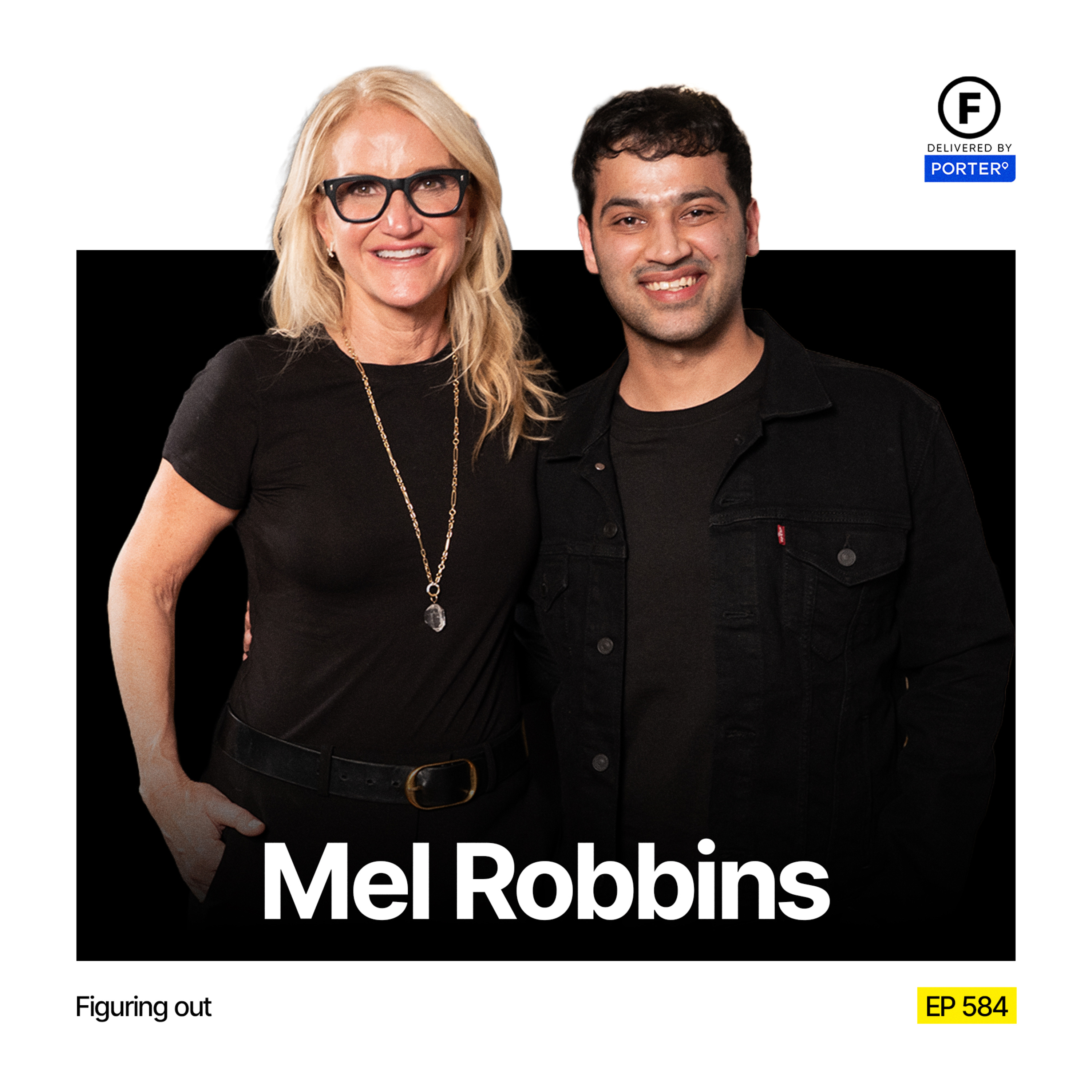
How to turn the next 10 years into the best years of your life by stopping overthinking and self-doubt, choosing clear intentions, and taking immediate action using Mel Robbins’ “five second window” (counting backwards 5-4-3-2-1 to move before emotions take over). The episode also emphasizes “Let Them Theory” (focus on what you can control), building an upward spiral with small joy and gratitude practices, and using physical movement and energy to shift mental/emotional state.
Mel Robbins is a best-selling author, media CEO, and host of a major life-transformation podcast; she’s 58, married 30 years, and has three children. Raj Shamani is the host (referenced as running a podcast and interviewing guests like Dr. K).
Motivation is “garbage” because you won’t feel ready; action first beats waiting for feelings. Discouragement is the biggest barrier, countered by gratitude/joy and daily intentions. Your life is shaped by the “knowledge-action gap” and the 5-second window. You can’t control other people; you can control your response and your own actions. Even jobs you hate can be valuable if they support family and purpose.
Raj describes using the five-second rule to stop lying in bed and wasting phone time. Mel shares her own crisis: job loss, husband’s failing restaurant, nearly $1M debt, heavy drinking, and using 5-4-3-2-1 to start acting like the person she needed.
Written by AI. May contain mistakes.
Learn how defining your goals and intentions can transform your life.
“You will be startled at what you can accomplish in 10 years if you define what you want and you know why you want it.”
Discover the importance of gratitude in overcoming tough times.
“In this episode, she reveals how to stop overthinking, overcome self-doubt, and finally take action.”
Explore daily habits to set intentions and gain control over emotions.
“And what you're doing by saying that is you are giving your mind a job.”
Listen to Mel Robbins share her influence and impact on others through her work.
“I was just talking to my team before you came here.”
Understand the significance of making small changes to create a fulfilling life.
“out of doing the things that you want to do.”
Learn about the importance of recognizing your ability to change your life.
“And you can make tiny changes that can do that.”
Explore the concept of life's unfairness and how to cope with it.
“Do you think you can change a person who doesn't want to change?”
Discover how to differentiate between what you want and what you think you should want.
“I can control whether or not I show up with compassion and acceptance or do I show up with judgment and frustration.”
Learn how to imagine your ideal life and the steps to get there.
“And I tend to be more of a negatively motivated person.”
Understand the crucial difference between knowing what to do and actually doing it.
“And then what we do, and this is the hard part.”
Learn about the gap between knowing what to do and actually doing it.
“But instead of applying for the job, you sit and think about how you feel about doing it.”
Discover how to overcome hesitation using the five second rule.
“If you think about what you need to do for more than five seconds, you will not do it, period.”
Explore the importance of engaging with tasks you may not enjoy.
“Okay, well, I learned the most I've ever learned about motivation in the brain from Dr.”
Learn how to recognize joy and practice gratitude even during struggles.
“And I just want to acknowledge and say the truth, which is until you can take care of your basic needs, you have food to eat, you have shelter, you are able to provide for yourself.”
Understand that life encompasses both joy and sorrow.
“and you're building a muscle in your brain that will help you appreciate and notice the good as you start to climb out of the hole that you're in.”
Learn how to cultivate gratitude and intention to improve your life.
“And I love that example because life isn't supposed to be perfect.”
Discover how your energy influences those around you and the importance of reciprocity.
“physically impacts you mentally, it impacts you spiritually, and it impacts you emotionally.”
Understand how to take control of your life in challenging circumstances through action.
“move about the world, you can have a positive impact on other people.”
Learn how accountability and taking small steps can lead to significant change.
Learn how to take control of your life through actionable steps and mindset shifts.
“that I would, 5, 4, 3, 2, 1, start acting like the person I needed instead of acting like the woman I felt like.”
Explore the challenges and strategies involved in overcoming financial difficulties.
“default to what's easier, oftentimes you will get to a point where you The pain has to get so bad that it's harder to stay in bed than it is to get out of it.”
Understand the value of financial safety and the mindset behind saving money.
“I put it to getting the liens off the house.”
Consider what truly matters in life beyond material possessions.
“And once I achieved financial safety, saving money was a very important thing to me.”
Discover how your actions can impact others and define your purpose.
“reasons to have beautiful things but I don't need those things to prove to anybody anything and I don't value them.”
Learn key strategies for becoming a more powerful and articulate speaker.
“people, when they speak at other people's services, when they memorialize them, they tend not to talk about, oh, they were the great thing.”
Learn how storytelling can captivate an audience and create a personal connection.
“Every point you're making reinforces it.”
Identify common pitfalls in establishing a media or personal brand online.
“And it's the really good ones, which I have felt are good.”
Discover the importance of authenticity and community in personal branding.
“Number one, you're spending way too much time on input and not enough on output.”
Understand the need for effective delegation and hiring in business growth.
“He basically said, you know, a part of an occupational hazard when you build a personal brand or you want to make a positive difference is people are going to make up all kinds of negative stuff about you.”
Learn about the importance of understanding all aspects of your business and knowing when to delegate tasks to focus on growth.
“Like I have done every single job in my company.”
Explore the complexities of love in long-term relationships, including the concept of 'normal marital hatred.'
“Well, and it's also how you stay focused because we live in a world where everything's important, which means nothing is.”
Discover the 'let them' theory that helps you set boundaries and recognize what's within your control in relationships.
“And we can't control each other and we can't change each other.”
Learn how to assess the health of your relationship and recognize when it's time to fight for it or when to move on.
“recognize that this is the reality, not the fantasy of who I want this to be.”
Mel Robbins shares her belief that no matter the circumstances, the best days of your life are still ahead.
“And I had to learn how to stop turning against him and instead join with him to work through the problems instead of making him the problem.”
Learn how a positive attitude can shape your future and the importance of personal responsibility.
“attitude and your actions, the best days of your life are ahead of you.”
Discover the personal sacrifices Mel Robbins made to reinvent herself and her life.
“Everybody tells me they want to change the world, they want to do this, but this is lovely.”
Explore the importance of inward reflection and individuality amidst external pressures.
“i'm a fan and i love what you're doing thank you for inviting me thank you for working through like everything to make this happen and there's a lot of good that you are doing in the world and I want you to get louder.”
Understand the value of studying successful individuals to master your own craft.
“I am inward looking and I'm also very careful about the input I allow in.”

Get the gist, explore an idea or ask about something said.
 Claude
On Figuring Out with Raj Shamani, what are the key points of this episode?
Searching your listeningAutomatic transcript. May contain errors.
0:00Mel Robbins: You will be startled at what you can accomplish in 10 years if you define what you want and you know why you want it. And despite how you feel, you force yourself one move at a time. And then what we do, and this is the hard part. What's the hard part? Do it. And this is what changed my life. And I call this the five second window. It defines your whole life. If you think about what you need to do for more than five seconds, you will not do it. You'll talk yourself out of it. And the way that I learned how to do it is you count backwards. Five, four, three, two, one, then move. Mel Robbins is a best-selling author and host of one of the world's leading podcasts inspiring millions of people to transform their lives.
0:44In this episode, she reveals how to stop overthinking, overcome self-doubt, and finally take action. If someone's going through a very tough time in life, jobs not working out, they lost their partner or the husband or wife or the earning member of the family.
1:00Mel Robbins: If you're watching right now and you're in a terrible chapter of your life and you're really struggling right now, one thing you can do immediately, I want you to start a small practice of gratitude. Now, what does that mean? It means you're going to train your brain to intentionally spot aspects of your life that are going well, that you're grateful for. If you get into that downward cycle. That's is the single biggest thing that's standing in most people's way right now. Unless you start to create a positive upward spiral by intentionally noticing the things that you still have to be grateful for.
1:36A lot of people know that they want to change their life. Yes. They think about it every night. They want to change it. Yes. Yet there are people who are not able to change it. What is happening?
1:45Mel Robbins: If you want to feel a little bit better in your life without being able to change anything right now, the one thing you can always change is this. And so the first step is you're going to start waking up every single day by setting an intention. And the intention I use today is going to be a good day because I'm going to make something good happen. And what you're doing by saying that is you are giving your mind a job. The second thing that I do is I always start my day thinking about the one thing that matters to me to make progress on. Because I think every day it's important to wake up and have something you need to do.
2:24Mel Robbins: You do those things every day, you have a really good life. Third thing I want you to do, if you want to feel more in control of your emotions and shift your emotional state, move your body physically. And then the final thing that I would say is
2:41I have a small favor to ask you. I need you to subscribe to our channel. The more subscribers we have, the better and bigger guests we can bring and provide you more value through these conversations. And the full audio experience of this show is also available on Spotify where you can follow us and listen to the new episodes as well. You know that feeling when you need to send just one small thing to a customer or another business? that's when you realize how hard it is to find a reliable transport partner and most transport options charge you way too much for small goods that's why i use porter their two-wheelers can carry up to 20 kg and for things that need a little more space and care porter scooter is available with the same 20 kg capacity the best part is that it's affordable and there's no negotiating.
3:32What you see on the app is exactly what you pay. So whatever you need to send, Porter makes it simple and stress-free. To know more about our title sponsor, Porter and their services, check the link in the description below. And the styling partner for this episode is Levi's. Click on the link in the description to explore their latest collection. Enjoy the show.
3:58Thank you so much. Welcome on the show.
3:59Mel Robbins: Well, thank you for having me. It's amazing. I was just talking to my team before you came here. I was like, hey, I used to... I have seen so many videos of you. I typically grew up watching you. You did? Oh, yeah. And you still invited me here. That's why I invited you. It was like one of the... You were on the list of probably top six or seven people that I always wanted to call. Really? Yeah. Because... Why? Because... You know how for the first time when you start watching these motivational videos or all these videos which you want to watch to turn your life around or want to watch just to learn how they speak.
4:42You were one of those people who I used to resonate with and I used to just like the way you speak. There were so many things in your story which I would probably not even relate to. But I would just love the way you would explain things. And I, there was a time when you, Simon, Tony, these were like, I would just listen to you guys all day, all night. So that's why you were on the list. And it was amazing. And there were so many relationship bits that you used to, like, I mean, your clips here and there, I would pick that up and just put it. And then five second rule, obviously. Yes. That was, it helped me start waking up early.
5:19Wow. So I used to be the guy who'd wake up, but then be on the bed for like three hours. Wow. And then the five second rule, I was like, okay, I need to just get out of bed.
5:28Mel Robbins: Now, why were you in bed for three hours? Was there something going wrong in your life or are you just lazy? Oh, no, just lazy. Really? Yeah, just checking phone and just, I mean, three hours exaggeration, but like one, two hours I'd be on the phone. And after two hours, I'd get up and do the work. Like I'll actually go kill it, but I would waste two hours. And then the five second rules helped me. So, so many things. If I will look back and reflect right now, I'm really grateful for your content. So thank you so much. Well, I'm honored that you have just taken the time to tell me. And, you know, for the person that's listening to us and watching right now, I think this is a very important takeaway.
6:06Mel Robbins: Because one of the things that I've done in my life, and I'm sure you've done it, and I know as you're watching and listening, you've done this to yourself, is you talk yourself out of doing the things that you want to do. And when I started putting content online and I started sharing the things that were working for me, never in my wildest dreams did I think it would go halfway around the world and reach somebody who's half my age and make a difference. And you have no idea how big of an impact you can make in somebody's life. You have no idea how much of the difference you can make. And if you don't get out of your own way and get started, you will never experience the magic that is contained within your lifetime because you will have talked yourself out of even doing the things you want to do.
7:07True. True. And now here we are and we're on your show. Thank you so much.
7:13Mel Robbins: And you're the one that's going to be putting out the content that will ripple around the world and impact somebody else's life. I hope so. So thank you for inviting me here. I'm excited to co-create this with you. Thank you so much for coming. Let's say if someone's watching you for the first time, they have no clue who you are. How would you explain them? Who you are? What do you do? And what are they going to learn by the end of this podcast? Okay. So my name is Mel and I, in terms of a job, am the CEO of a media company that makes a positive impact in the lives of, I would say, hundreds of millions of people.
7:53Mel Robbins: And I do that through writing books and through recording podcasts and through giving speeches and through putting out short form content online. And my mission in life is to be a source of encouragement to other people and to use media and conversations like this as a way to highlight wisdom and as a way to highlight research and highlight habits and hacks that can help you create a better life. But mostly what I am is I am a very good friend. I am the friend that you need that provides you the encouragement that you need when life is hard or when you start doubting yourself. and I am the friend that is annoying.
8:49Mel Robbins: When you start beating yourself up, I tell you to knock it off. When you start saying, ah, should I go to a nursing school? Should I end this relationship? I'm the one that's like, do it! And so I'm that person in your life because we all need that person. And in my life, when I have struggled and I've struggled profoundly throughout my life, I tend to learn things the hard way. It's easy to isolate yourself and it's easy to feel alone. And I try to be the person that I needed in those moments in how I show up every single day. And so that's what I would say. And then in terms of some of the other details, I'm 58 years old.
9:37Mel Robbins: I just celebrated my 30th wedding anniversary. I have three kids who are, I should say we have three kids who are 27, 26 and 21, two girls and a boy. and I am an entrepreneur and I am a deeply spiritual person and I'm outside all the time and I live, you know, despite the fact that I have a global following and one of the largest podcasts in the world and I've written the book The Let Them Theory with my daughter Sawyer all about what's in your control and what's not in your control and it's one of the most successful nonfiction books ever written. I live in a tiny town and I care deeply about my family and about the community I live in.
10:29Mel Robbins: And I am somebody who believes that every human being on this planet has worth and that there is a deeply personal purpose for you being here. You are not here on this planet at this moment on accident. You are here with the other 8 billion of us for a very specific reason. And my hope and mission and intention for being here is to encourage you and to inspire you to wake up and to recognize that the time that you have left on this planet is a gift and that you have the ability to change who you are, to change the way you think, to change the way you feel, to change your health, to change your habits, to change your career.
11:25Mel Robbins: You have the ability to do that. And there will be something that is said by either Raj or me that is exactly what you are meant to hear at this exact moment in your life. It is going to be uncanny. You're going to feel the hair on your arms lift up. And that is why I showed up today. Because you made time to listen to and to watch something that you knew could help you feel better and do better in your life. And I honor that. And I'm going to do whatever I can to spark that light inside you. So right now, if someone's watching and they're watching in a hope that they want to change their lives, there's some spark.
12:13Before even they change their lives, some people are not self-aware. So as a friend, because you love helping people as a friend, what are the most common patterns that you see that people are, without even realizing, think they're destroying their lives.
12:28Mel Robbins: So it's very, very helpful to think about your life as if it's a movie or a book. And where you are in this exact moment is just a scene in the movie. This is not how it ends. And you know how I know? Because you're still alive. And if you like the book metaphor, you're on page, I don't know, 93. And this is a big book. Yeah. So you're just on a page. And if you're listening and watching this right now, that tells me you want more out of life. See, people don't listen to you just to waste time. True. Somebody that hits play on this show, and I want to acknowledge that, that you hit play on an interview with Mel and Raj because you're like, oh, it's going to go down.
13:25Mel Robbins: Like I can't like I need that I want to I want to feel inspired You are not wired As a human being to survive your life true. You are not meant to be stuck You are not meant to feel like things are have no meaning Those things are going to happen in your life, but that's not why you're here And I personally believe that everybody wants to thrive Everybody wants to feel like their life has meaning Everybody wants to put their head down on the pillow at night and say, okay, you did a good job today. You were a good person today. I'm proud of you today. Like what you did today mattered. And you can make tiny changes that can do that.
14:08Mel Robbins: And so some of the reasons why you can find yourself in a chapter of your life or in a scene in the movie where you feel discouraged or you feel checked out or you feel that kind of feeling where you're like, is this all there is? I'm just waking up. I'm eating the same old stuff. I'm going through the motions. I'm hanging out with people who don't care about me. I'm going to a job that I hate. Going home, flipping through the channels, laying back down in bed. I'm scrolling on my phone. Look, is this really all there is? And you can find yourself there for a number of reasons. You can find yourself there because a lot of stuff has happened to you in the past and it's beaten you down.
14:57Mel Robbins: You can find yourself there because something has happened in your life right now. Maybe somebody that you love has died. Maybe you lost your job. Maybe you're going through a breakup. Maybe you're having trouble getting pregnant and all your friends are getting pregnant. Maybe you've had a string of attempts to launch something and it's not working. There's so many reasons why you can get to a chapter in your life where you feel like things are not going well. And I believe that while it's important to recognize that there's a bunch of things that led you to this chapter, the more powerful thing to do is to say, yes, and now what?
15:46Mel Robbins: Yes, and now what? Because you can waste the rest of your life beating yourself up. You can waste the rest of your life telling yourself things like that don't happen to a person like me. I could never do that. I'm not smart enough. I'm not good enough. I'm not this. I'm not that. And you can do that. Or you can have a moment, and I hope it happens as you're listening or watching today, where you say, you know what? I want more out of my life. I want more out of my life and nobody is going to magically ride a dragon into my living room and rescue me from this situation. And I don't need anybody to.
16:30Mel Robbins: Because I can rescue myself. I can change. The only person who's truly stopping me is me. Right. And so the most important thing is to recognize that you have agency and a choice in your life to change. And if you don't want to change, there's nothing I can say or do that's going to make you change. Do you think you can change a person who doesn't want to change? No, absolutely not. Never? Never. You have no control over what another person does. No control. and if someone's going through a very tough time in life how give me an example let's say things are jobs not working out they faced a big financial problem yep their health is not good okay they lost the they lost their partner or the husband or wife or the earning member of the family or they're too young and then they lost their parents like something very terrible yes how do you know that life is genuinely not being unfair it is being unfair life is unfair and what are you going to do about it really terrible things happen to amazing people and what are you going to do next it's not like i like i believe that horrible things happen to people that do not deserve it and they happen for no reason, and it's unfair.
18:04True.
18:08Mel Robbins: And you have to find a reason to move forward. That's what's in your control. The number one thing in life that you cannot control is what another person thinks, does, says, whether or not they heal, whether or not they lose weight, whether or not they get sober, whether or not they develop a sense of humor, whether or not they start processing, you know faster or they ask less you can't change another person and you create so much frustration in your life and you create a lot of tension in your relationships by wishing everybody else would be different and by stepping across the line and trying to solve everybody else's problems that's not love that's control and wishing the person that you are in a relationship with would be different that's not loving somebody that's judgment i learned this the hard way by the way Like I didn't learn this till I was 54 and I've been married for 30 years.
19:01Mel Robbins: I spent, I feel like I'm in a second marriage now that I've created the let them theory because I've learned how to truly look at my husband and accept him for who he is and who he isn't. And I've learned how to be less judgy and I've learned how to stop controlling him and focus on the one thing I can control and that's me, Mel Robbins. I can control what I think about. I can control what I do or don't do. I can control whether or not I show up with compassion and acceptance or do I show up with judgment and frustration. I can also I can't control my emotional reactions but I can control how I respond to what's happening in my body that's all you got so there are two things which you said right the second one was to let them and the first one was about you gotta move forward right yes that's very that's very simple basic advice a lot of people know this a lot of people know that they want to change their life yes they have this intention they think about it every night before sleeping they're like Like, yeah, just by from tomorrow.
20:03Mel Robbins: Thinking about it isn't doing it. Yeah, fair, fair. And then that's what I'm coming to. Like, they think about it every night. They want to change it. Yes. Yet, there are people who are not able to change it. What is happening between thinking and not changing their life? Because everybody knows that, hey, I want to change. So I'm going to write because I love a whiteboard. I love whiteboard too. So the first thing you have to do is answer this question. What do I really want and why? So that's the intention, okay? Okay. The next thing that you're going to do is if that's the intention, what is the action that causes it?
20:55That's it.
20:56Mel Robbins: what you're talking about and most people most people and this was me are not able to change your life because they don't even know what they really want what do you mean give me an exam oh i should lose weight i should get a different job i should do this i should do that i should do the other thing what they want right no no no that's not what i want that's what i think i should do okay what's the difference there's a huge difference when you say I should, you're imposing something on yourself. You're not choosing it. I should exercise. I should exercise because I need to lose some weight. Did I choose that?
21:39Mel Robbins: Or am I just thinking about something that I think I should do because other people said I should do it, but I don't really want to do it. And I know that I don't really want to do it because I don't really have an intention to do it. I'm just going to think about it and torture myself. Yeah. So how do you choose then? Well, what you do is you have to take a minute, and if there's one thing you take away from this, other than the fact that you can change, you're one decision away from a different life. But the first question you have to ask is, what do I really want? And why do I want that? And you can answer that this way.
22:20I find that sometimes it's easier to answer the question in the negative. So if you can't answer the question, what do I really want?
22:33Mel Robbins: Okay, so you can answer this one.
22:39Mel Robbins: What do I want? Okay, there's one way you can, but you have to answer either this question, what do I want? or what do I not want?
22:59Mel Robbins: And I tend to be more of a negatively motivated person. I tend to be the kind of person that what comes into focus is what I don't want first. Because that's easy to identify. Like, here's what I want you to think about as you're listening and watching. your life right now where you work where you live your habits your morning routine and by the way if you lay in bed like raj used to rotting on your phone for two hours that's a morning routine there's morning like whatever you do every morning is your morning routine yeah what you're doing on an average tuesday that's your life your life is not a vacation your life is tuesdays all added up That's what your life is.
23:42So if you think about the average Tuesday and you roll the clock forward,
23:48Mel Robbins: let's go four years. It's 2030 because your life right now is a path that you're on. And if things go okay, four years from now, 2030, that time's going to come and go before you realize it. It's going to pass whether you do something different or not. And if you think about waking up on a Tuesday in 2030 and you're in the same job, you're in the same relationship, you got the same body, you got the same morning routine, you got the same habits. Do you like that? Do you want that? And if you roll the clock forward to 2030, like, yes, I love my job. Yes, my relationship. Great. Then you know what to do.
24:34Mel Robbins: Keep doing what you do and try to insert moments of presence and joy and gratitude in your day. And that's how you magnify something that's working. But if you roll the clock forward and you think about a Tuesday in 2030 in the same job with the same bank account, with the same person you're dating, with the same, and you're like, ugh, I don't want that. Great. You just woke up. You just recognized that where your life is taking you is not where you want to end up. And in that moment, you have awareness and you get to now decide, well, if I don't want my life to take me there, what would I like to imagine could be different?
25:20Mel Robbins: Can I imagine a job where I go in to work and I'm excited to work? Can I imagine a relationship, whether it's a relationship with the person I'm already with, but we've worked on it and things have gotten better and I feel in love again? Can I imagine living in a different place? Can I imagine having a better relationship with my kids or parents? Can I imagine seeing my friends more? Give yourself permission to time travel, to the future you, and think about how you want your life to feel and think about how you want your mornings to be and think about how you want friendship to appear in your life and think about what your romantic life is like and family and imagine it.
26:07Mel Robbins: And then I want you to open your eyes and get a pen and write down what does a Tuesday look like? What time do you wake up? What does your new morning routine look like in 2030 if you're this person who feels present, if you're proud of yourself, if you're doing something with your time, if you're surrounded by people that you care about, what does that person's life look like? Your imagination, your dreams, your goals gives you the map to how to get there. And then what we do, and this is the hard part. What's the hard part? doing it. That's the hard part. Because what happens is there's a huge gap between the thinking, right?
27:04Mel Robbins: And the plan.
27:10The vision,
27:11Mel Robbins: whatever you want to call this, the goal.
27:17Mel Robbins: So here's this. This is what you need to do.
27:27And then there's the action that creates it.
27:33Mel Robbins: It's the get out of bed. The stuff you need to do is obvious. Apply for the job. Stop drinking.
27:47Mel Robbins: Exercise. Sleep. Be kinder to people. Manage my emotions. Save money. Make money. Right? Volunteer. There's the list. But here's the problem. You know what to do. You know what you want. The thing you need to do is obvious. but then right here in the middle is where you get in trouble this is the difference between thinking and doing yeah this is the knowledge action gap and how this starts is in the moment when it's time to get out of bed you're a dummy instead of just getting out of bed oh no you're like mel robbins used to be you lay in and like raj used to be you lay in bed and you think about how you feel about getting out of bed.
28:44Mel Robbins: You got to apply for the job. You know that you know how to do this. But instead of applying for the job, you sit and think about how you feel about doing it. Yeah. You need to stop drinking, but oh, but okay. And I realize there are issues with addiction that make it a little bit more complicated, but you know you're not going to have a drink, but then you feel like having a drink and now you're thinking about it and you're thinking about how you feel about it. And so the problem is here, and I call this the five second window. There's a five second window between thinking and doing. It defines your whole life.
29:18Mel Robbins: If you think about what you need to do for more than five seconds, you will not do it, period. You won't do it. You'll talk yourself out of it. Autopilot takes over. Your old habits kick in. your emotions ramp up. And this is what changed my life, is understanding that if you can move within a five second window, if you can move within five seconds of thinking about anything, you actually get yourself out of this trap. And the way that I learned how to do it is you count backwards. You have to do it backwards. Five, four, three, two, one, then move. And the reason why this works. So let's say you got to exercise.
30:00Mel Robbins: You're sitting on the couch, you're flipping through channels. You know, you got to go for a walk because you've heard the experts on Raj's podcast. We got to go for a walk, everybody. We got to get sunlight in our eyes. We got to do all these things. Like we all know what we need to do. We're not idiots. We just get stuck up here. Yeah. And instead of just five, four, three, two, one, move, we go, I don't really feel like it. I'll do it later. And that's just how your brain is wired. You are never going to feel like doing the things that you need to do, ever. And that's why I say motivation is garbage.
30:36Mel Robbins: You're going to waste your whole life waiting to feel ready, waiting to feel motivated, waiting for the right time, waiting till you're not afraid, waiting, waiting, waiting, waiting, waiting. And what you're waiting for is for your casket to arrive because you're going to be in the ground and you're going to have spent your entire life thinking about what you needed to do and allowing your emotions and your feelings and the resistance that you feel to determine what you need to do. And the secret is identify what you want and then ignore how you feel. Ignore how you feel. Yes. Cause you're not going to, you're, you're, you're not, it is part of the wiring.
31:13Mel Robbins: I learned this. You should have, have you had Dr. K on the healthy gamer? Yeah. Okay, well, I learned the most I've ever learned about motivation in the brain from Dr. K. And you should check out the episode Raj did with him. He basically says that we're all, none of us understand the way our minds actually work. It's sort of like driving a car and you think you're pressing the accelerator, but you're actually slamming on the brake. And Dr. K very plainly will tell you, your mind can change. Your mind is growing and learning and creating new connections through your entire lifetime. That's the great news.
31:52Mel Robbins: But here's the problem. Your mind doesn't want it to change. And so anytime you are going to make yourself do something, get out of bed, apply for the job, stop drinking, exercise, sleep, be kinder, manage your money, save your money, make your money, manage your emotions, volunteer. Anytime you're about to do something that you know you want to do, but you just don't feel like doing it, that's your brain saying, I don't want to do the thing that's hard. Your brain wants to do what's easy. And what's easy is sitting on the couch and eating potato chips. What's hard is pushing yourself off the couch and going for a walk.
32:30Mel Robbins: True. It's always going to be this way. Always. And so here's what I want you to know. You can feel the resistance. you can feel afraid, you can feel self-doubt, and you can still make yourself do it. You have to put the action first so that your emotions and your feelings don't ruin your life. Fair. But then, can you train your brain to love the hard things? I think it depends on you. I would prefer to not have to make myself like it. Like, I don't like picking up dog poop. I still do it. I don't like unloading the dishwasher. I still do it. I don't like folding clothes when they come out of the dryer.
33:22Mel Robbins: And I'm grateful to have a dryer. I'm grateful to have a dishwasher. I'm grateful to have a dog. But I don't want to do those things. Why would I have to twist myself in knots and gaslight myself into trying to love something that I don't like doing? How about this? How about you grow up and be an adult and learn how to do things you don't like doing so you can have the life that you love? Because newsflash, if you just did all the things you don't want to do, in 10 years you'd have everything you've ever wanted. but isn't that a bad way to live that you don't like half the things that you do i think it's a bad way to live to only do the things you like okay explain more why why because haven't you heard that you should keep doing things that you like you should fall in love with the process you should love you should fall in love with everything that you do and only do things that you love i think that's a very privileged point of view is somebody paying your bills no right so there's reality and there's fiction and fantasy.
34:24Mel Robbins: The reality is you may be in a chapter of your life where you got no choice but to go to a job you hate. Yeah. You got no choice but to drag your overweight self up the flight of stairs because you've let yourself go because you've been caring for your dying parents. If you are in that chapter where you are really struggling and I've been in those chapters, then I want to say bravo to you for waking up and pushing yourself through those chapters. And I'm not going to tell you to fall in love with a job you hate because I think that's a fantasy. What I can tell you is you can switch your attitude and you can start to find the why it's important to have a job that you hate right now.
35:11Mel Robbins: And the why it's important to have a job that you hate is because it's paying your bills. And that's important to you because you want to take care of your family. And that's important to you because you need to take care of yourself. And another why I can think of is that all work has value. Even the jobs that you hate. In fact, the jobs that you hate can often teach you the most about life, success, marketing, motivation, because showing up in a situation you hate and overriding all of the negative emotions you feel and still showing up and doing a good job, that is a skill. Being grateful for the money that you're earning in a job that you hate is a master level practice of gratitude because you are digging deep and identifying the intention and the why it matters to continue to show up in your life even when you have to do things that are really hard it is a fantasy to think that you can only you can orchestrate your life so that everything that you do is just stuff that you love can you excel at look at you laughing no i like it i really like this um what do you like about this this being super real yes being super i used to believe that get to a certain point where you're making let's say three four thousand five thousand dollars a month okay and then you start thinking about passion and love and all the things that you like but first do do everything what's necessary to just pay the bills till the time you reach that.
36:47Mel Robbins: Right. Well, let's get real because a lot of people don't acknowledge the truth, which is if you are under a tremendous amount of financial pressure, that chronic stress of not being able to pay your bills is a acute pain that you feel. Yeah. And I just want to acknowledge and say the truth, which is until you can take care of your basic needs, you have food to eat, you have shelter, you are able to provide for yourself. I'm not even talking about savings. there is a level of stress that you're going to feel because you're under threat right now yeah and when you can get to a point where you can make the ends meet now i think it's important to really look at okay if i'm in a chapter in my life where i'm really struggling what are a couple things i can insert right now that serve almost like a flotation device, a raft that can help keep me above water.
37:56Mel Robbins: And two of those things, believe it or not, one is gratitude and one is joy. I recently had a Dr. Kelly McDonnell, I think is how she says her last name. She's a psychologist from Stanford. And this really struck me. Do you know the purpose for joy? We are wired for joy. We are wired to experience. There are things in our muscles called hope molecules, that when you move your body in a physical way, just climbing a flight of stairs, going for a walk, your muscles excrete hope molecules. And joy are small experiences every day that make you want to live. That's the purpose of joy. And so I want to tell you, if you're watching right now and you're in a terrible chapter of your life and you're really struggling right now, one thing you can do immediately is I want you to start to look for small moments of joy right where you are.
38:57Mel Robbins: It could be, you know, a puppy on the street and they've got a cute little nose and just stopping and petting the puppy. It could be a beautiful flower that you stop and look at. It could be a baby and they're looking at you. Moments of joy, music that you love, a beautiful sunset. Even if you hate where you live and you look out the window, you're like, wow. it connects you to something deeper because there is something bigger for you to tap into beyond the day-to-day that you may be struggling in. And so noticing some of the good things that are going on, super important. Second thing that you can do, even when you're struggling, is I want you to start, as cheesy as it sounds, I want you to start a small practice of gratitude.
39:46Mel Robbins: Now, what does that mean? It means you're going to train your brain to intentionally spot aspects of your life that are going well that you're grateful for. How do you do that? You can do that very simply by at the end of the day, I want you to just scan your day and think about, okay, what went well today? What am I grateful for? You might say, I'm grateful that I'm alive and I live today. I'm grateful that I have a job that I hate because I can pay this bill and now I can watch a show that I love. I'm grateful that my parents are alive. I'm grateful that my brother lives near me. I'm grateful that I, you know, am able to have this glass of water.
40:30Mel Robbins: Like you and I drinking water, we're better off than millions and millions of people around the world. And so starting to notice what you have, especially in chapters in your life where it feels like you're never going to have anything. If you're able to watch and listen to the show, you have something to be grateful for. And you have to start there because by building the ability to see what's going well, by noticing small points of joy every day, you are giving yourself a life raft during challenging periods and you're building a muscle in your brain that will help you appreciate and notice the good as you start to climb out of the hole that you're in.
41:17Mel Robbins: Because if all you do is see what's going wrong, you're never going to be motivated or you're never going to feel you're going to feel discouragement. Like, I think that discouragement, this sense that there's nothing that I can do is the single biggest thing that's standing in most people's way right now. this sense that it doesn't matter if I try it doesn't matter if I change it doesn't matter that the problem seems so big or I've screwed up so much or I'm old or I'm too young if you get into that downward cycle of telling yourself that it doesn't matter the sense of discouragement that's a really hard thing to come out of unless you start to create a positive upward spiral by intentionally noticing the things that you still have to be grateful for by stopping during the day and noticing the small things it's sort of like if you've ever been to a funeral you can go to a funeral or memorial service for somebody and you can be crying one minute and then somebody's talking about the person that died and you're laughing and tears are coming out.
42:35Mel Robbins: And I love that example because life isn't supposed to be perfect. Life is heartbreak and it's also love affairs. Life is birth and death. Life is things that you achieve and things that you fail at. And you can be going through a very challenging period of your life and still see that your life is beautiful. True. You said two things. First was, did you say, if I'm paraphrasing it, physical or the mental effort leads to joy? No. What happened - Some sort of joy. Oh, the hope molecules. This is Dr. Kelly McGonigal at Stanford. There is research around around physically moving your body and it could be climb a flight of stairs.
43:26Mel Robbins: You could have a job you hate where you're loading boxes and the loading of boxes, if you know that the physical movement is giving your body energy in a positive way, it gives a positive reason for why even that job you don't like has a really important purpose in your life. So how can somebody change a story in their head while doing something that they hate and still be happy. Okay. Well, happiness is not the goal, is it? Feel a little bit of joy. Okay. Joy, contentment. So here's what I'm going to tell you. If the way that you're doing your life is working for you, don't do anything different.
44:11If you want to feel a little bit better in your life without being able to change anything right
44:19Mel Robbins: now, the one thing you can always change is this. And so the first step is you're going to start waking up every single day. And this is a trick I learned from Dr. Daniel Amen, the very famous, you know, medical doctor that is a world renowned brain expert. You start every day by setting an intention. And the intention that he recommends and that I use every day is you just wake up and say today is going to be a good day because I'm going to make something good happen and I'm going to have a good attitude and I'm going to see the good in other people. And what you're doing by saying that is you are giving your mind a job.
45:04Mel Robbins: You're setting an intention. The second thing that I do is I always, always start my day thinking about the one thing that matters to me to make progress on. Because I think every day it's important to wake up and have something you need to do, someone that you love, something to look forward to, and something that is meaningful for you to put a little bit of time in. You do those things every day, you have a really good life. And so think about what's the one thing, and it could be anything. It could be personal. Like maybe you want to, maybe somebody's birthday is coming up and you want to take a moment and write an email to the person that you care about whose birthday is coming up.
45:49Mel Robbins: And that's the one thing you want to make sure you get done today because it's going to make you feel good about you. Perfect. Maybe there's something at work that you've been avoiding and it would be really great if you spent a little time working on that report because you're starting to get nervous that your boss is going to chew you out. So if that's the thing, great. It doesn't matter what it is. You making progress on something you've said is important to you leverages what they've researched at Harvard called the progress principle. And they've found that people that feel a sense of purpose and meaning during the week, particularly at work, feel that way because they've made progress on something that was important to them.
46:26Mel Robbins: That's how you can put that in your life right now, regardless of the circumstances of your life. The third thing I want you to do is it's critical to understand that moving yourself and your body physically impacts you mentally, it impacts you spiritually, and it impacts you emotionally. If you want to have a positive shift in how you feel mentally, move your body physically. If you want to have a deeper connection spiritually to your own power, move your body physically. If you want to feel more in control of your emotions and shift your emotional state, move your body physically. You can use your physical body to cause a mental, spiritual, and emotional transformation.
47:25Mel Robbins: It's the fastest way to do it. And so if you can get in a 10-minute walk, do it. If you can lift weights, do it. If you can climb stairs at your office building, do it. Because moving yourself physically changes you mentally, spiritually, and emotionally. And then the final thing that I would say, or I'll do two more, is your energy is incredibly important. I think your energy is one of your most valuable currencies. Explain more energy. What is energy? What do you mean by energy? What I mean by energy is you have a life force in you. And you can use it for good. You can use it for evil. There is power in how you show up.
48:21Mel Robbins: And I always say leaders bring the weather. And every human being is a leader because a leader is just somebody whose behavior influences somebody else. And your energy influences other people. I want you to consider whether or not you move through life as a thunderstorm or a tornado or a cloudy gloomy day or you are a more of an optimistic blue sky warm sunny kind of person. Your energy has power and let's talk about a couple reasons why. Number one the law of reciprocity. The law of reciprocity is one of the most underutilized, like, researched facts about human relationships that everybody needs to know about.
49:14Mel Robbins: The law of reciprocity is the tendency for other people to want to return the favor when you do something nice for them. It's hardwired in us. You know, if somebody holds open a door for you and there's another set of doors, what do you do? You go in front, you take over, and then you try to open it for them. Correct. I think one of the reasons why a lot of people are like, no, no, no, no, I don't need help with that is because you feel like I'm going to have to do something for you and I can handle it and I don't want to burden you. Right. Yeah. That's the law of reciprocity. Yep. Your energy is like that.
49:47Mel Robbins: If you're a warm, sunny, optimistic person and you bring that in your relationship to people at work or your family, they feel it. They feel it. They might not give it back immediately. but the second reason why your energy is so important is the law of karma the energy you put out is the energy you receive period full stop agreed it doesn't necessarily come back to you today but if you are intentional about the energy that you put out you are sending ripples into the world that build and build and build and come back to you in waves and waves and waves when you least expected. And so understanding that you can, through your warmth, through the way you move about the world, you can have a positive impact on other people.
50:39Mel Robbins: And if you're going through a challenging time, the single best way to lift yourself up other than these things is help somebody else. Because when you compliment somebody else, when you volunteer, when you hold the door open for somebody, when you, you know, slow down and listen and, you know, tell somebody why they're important to you by helping somebody else, number one, you step out of your own life for a minute and helping somebody else shows you that you have value. And the positive energy that you get back lifts you up a little bit and reminds you that you matter. And I could go on and on and on about this.
51:18Mel Robbins: So then we're getting through our day. At the end of the day, here's what I want you to do. I want you to look back at your day and I want you to think of three things that went well or that you're grateful for. And now we're closing the loop and you're starting to train your mind to look for the things that are going well, look for the things that bring you joy, look for the things that you're grateful for and you're starting to create space in your life, even in a chapter that sucks, that's good. It's training you to learn how to appreciate what you have, even while you're working to have more.
52:02Mel Robbins: It's making you an ally and it's helping you motivate and encourage yourself through the day rather than what you're doing right now, which is beating yourself up and pointing out everything that's going wrong and telling yourself why it's never going to happen. Is that motivating? No. It makes you feel discouraged. Yeah. Can, when somebody does all of these things, and yet they go to the job which they hate, but it's necessary to go there, right? Yes. Can you become extraordinary at the thing which you hate? Yes, if you intend to. Can you excel at the things that you don't like? How? Well, there's a lot of research around this.
52:49So if you look at Angela Duckworth's research on grit and willpower, right? There's a huge misunderstanding about what really makes somebody have a lot of discipline to push through.
53:04Mel Robbins: And her research shows that one of the things that creates discipline and consistency and grit in people is that they like the thing they're doing. And if you, I don't think you have to, if you want to be, if you want to leverage the power of grit and all of her research, I think it's helpful to understand that, of course, some of the greats, you know, are fantastic at the Qatar, fantastic at basketball, are fantastic at football, are fantastic at business because they like doing it. your question is though can you become excellent at something you don't like if you push yourself enough sure but i think there will always be a part of you that is feeling the chafe and the resistance because you're spending time on something you don't actually care about and that's a sad way to live your life unless the reason why you're doing it is it serves a deeper person and allow, unless the reason why you're doing it is it serves a deeper purpose, like going to a job you don't like because your most important mission is to provide for your family and you love your family and being able to put your kids through university makes you so proud of yourself that that's the source of the motivation that has you excelling at a job that you don't particularly like.
54:30you were you were under debt oh debt yes 800k down uh-huh you were not things were not going
54:37Mel Robbins: well for you you were jobless not going well i appreciate how how kind you are in that okay things are not going well yes yes i was 41 years old three kids under the age of 10 and nearly a million dollars in debt and i lost my job and my husband's restaurant was going under then how did you find out that you ought to do this? Well, for the first year when all this started happening, I felt really sorry for myself and I drank myself into the ground and I blamed everything on my husband and the world. And, you know, it was everybody else but me. And that only gets you so far. Yeah. And like you, I would lay in bed for two hours and I kept hitting the snooze button.
55:19Mel Robbins: And you think that when life gets challenging, you're going to be the hero of your story. And what ends up happening is you tend to be the villain. And I became a person that I didn't recognize. I was discouraged. I was drinking too much. I couldn't get out of bed. Some days I avoided doing everything I knew I needed to do. And thinking and knowing what you need to do is not enough to make yourself do it. So it was at this moment, 17 years ago, actually it was a Tuesday in February, that I decided that instead of laying in bed thinking about my problems and hating my life and my husband and avoiding everything I needed to do, that I would, 5, 4, 3, 2, 1, start acting like the person I needed instead of acting like the woman I felt like.
56:13Mel Robbins: I needed somebody who would get out of bed. I needed somebody who would look for a job. I needed somebody who would ask for help. I needed somebody who would stop drinking. I needed somebody who would be kinder to her husband. I needed somebody who would get control of her emotions and not be snapping at her kids. And counting backwards, 5, 4, 3, 2, 1, helped me push through those moments where I would freeze. Like I needed a job. And I would look at the phone. And one of the fastest ways to start networking is to call your friends. yeah but i would look at the phone like yeah what am i gonna say and turn to walk up five four three went okay raj i got a problem i haven't told you this but i lost my job or a million dollars i know you didn't know that there was a lien yes there's a lien on the house and you just one action at a time and for the first i'd say six years i wasn't thinking about anything other than i've got a major problem.
57:14Mel Robbins: I have bills I need to pay. I do not have a job. My husband's business is failing. He is depressed and bottoming out and nobody's going to fix this. No one's coming. If I want my life to change, it's up to me. And if I change nothing, nothing changes. And by the way, nobody is stopping me from changing either. I'm the one that needs to change. I need to stop looking around waiting for somebody else to do it. I need to stop wasting time and energy complaining about everything and wishing somebody else would do it. And I need to get to work and I need to do it. And one of the interesting things about life, Raj, is that because your brain will always default to what's easier, oftentimes you will get to a point where you The pain has to get so bad that it's harder to stay in bed than it is to get out of it.
58:19Mel Robbins: It's harder to be unemployed than it is to look for a job. It's harder to drink than it is to get sober. That's when things change. And, you know, when people in my life are struggling, I always ask them this question. Do you want it to get worse before it's going to get better? Because it will get a lot worse or you can choose to make it better now. and that's the truth because you're never going to feel ready to change you're always going to be scared afraid and resistant that is the truth yeah and if you can accept oh okay this is what mel and raj are talking about i'm going to do it anyway because i've got up five four three two one start acting like the person i want to become your life is not out there in the future the things that you want in the future begin with how you start acting today on a tuesday yeah and you know why that's true it's not because i read it online and it's not because ai told me it it's true because the lessons that i share raj are the things that i had to learn the hard way that's why i believe what i'm saying because i've lived it and when you see the woman that you see today with the business that i've built and the work ethic that i have and the success that I have, this was hard earned over the last 17 years.
59:41Mel Robbins: And it was first earned by clawing my way out of the hole that we had dug ourselves in. And people are like, well, how do you get$800? How do you get out of debt when you're that in debt? It takes a decade. It takes a decade. You're going to have to work three or four jobs. And then you're going to have to get disciplined about where you put your money. And where I put my money is I put it to paying the bills. I put it to getting the liens off the house. And then once we were able to get the liens off the house, then it's like pay off the credit cards. And then when you pay off and you're not taking the kids on a trip, you're not buying nice things.
1:00:14Mel Robbins: You are just making the ends meet because you know what you want. And I wanted safety. I wanted to stop waking up in a panic attack because of the bills piling up. I wanted to feel proud of myself. I wanted to feel secure that I could pay my bills. I wasn't looking to do anything except for achieve the goal of getting out of this financial hole. And once I started to have a little bit of extra money, I never wanted to have that happen again. So 50 % of everything that came in the door, I put into savings because I wasn't going to allow it to happen again. And it is not glamorous to change your life.
1:00:58Mel Robbins: It's not fun. It can be grueling and boring and lonely, but holy cow, you will be startled at what you can accomplish in 10 years if you define what you want and you know why you want it. And you just wake up every day. And despite how you feel, you force yourself one move at a time. Do you still say 50 %? You said you're making, you've become way bigger than you thought about. But you know, I save it because number one, when you have an experience in life where you live through a challenging chapter and you almost lose the things that matter, your marriage, your family, your financial stability, your home, your sense of self, you don't forget the things that actually matter.
1:01:52Mel Robbins: And so I am grateful that all of this success came after that because there is no amount of success that would change fundamentally who I am and what matters to me. And once I achieved financial safety, saving money was a very important thing to me. And, you know, I live in a house that I love. I am able to go on trips when I want to. I have paid off my bills I have savings what more do you need like what what more do you need what is all this stuff for I mean you're not going to put it in the casket with you what what what is all the things that you're trying to accumulate what is it what is that for and there's there's reasons to have beautiful things but I don't need those things to prove to anybody anything and I don't value them.
1:02:45Mel Robbins: You know, I will, when I, I'm also saving money because I like giving a lot of it away and I like doing good with it. And I like investing in other people and giving other people a shot. And so I, I think it comes back to again, something that I learned from Oprah, the power of your intention, which she learned from Gary Zukav. The seat of the soul is the book that changed her life. And there is cause and effect and your actions are the cause that will affect the outcome of your life. But before the action, I want you to set an intention. What is it that you're doing and why are you doing it? What is it that you want in your life?
1:03:25Mel Robbins: And I am very clear that my purpose on this planet is to be an encourager, that people need encouragement. People need friendship. People need somebody that's rooting for them. People need to be able to borrow your belief in them in those moments when they feel down. And I misunderstood purpose for a long time. Purpose is not something you do. Purpose is what happens in other people when you do the things that you do. Explain? Nice. Yeah. Explain. Say that again and explain. What did you just hear? Say that again and explain. Yeah, like purpose is not something that you do. Yes. Purpose is what happens to other people.
1:04:08When you do the thing they do.
1:04:11Mel Robbins: Your entire, every day, you can live with purpose. If you know what you want to have happen in other people, when you walk into a coffee shop, when you walk into work, like everybody's looking to build an online platform, you already have a platform. It's everywhere you go. Because through your energy and your attitude and your mindset and your generosity, you are causing a shift in other people around you. That is your purpose. You know, it's interesting when you die, people, when they speak at other people's services, when they memorialize them, they tend not to talk about, oh, they were the great thing.
1:04:56Mel Robbins: And people are not going to be like, Mel Robbins was a... They'll be like, she was a really good friend. She was a great mom. She was a really good boss. She had a good run. And she was the kind of person that left people feeling better. People talk about how you make them feel. And if you make people feel good about themselves, what they say about you when you are not around would make you blush. You would be so proud. It's simple. Like we live in a world that's so complicated that truly the secret to relationships, the secret to a good life is right in front of your face. It's how you wake up and move through your day and how that impacts other people around you.
1:05:47Tell me, how did you learn to, because you're talking about how did you turn around your life. How did you learn to speak and write?
1:05:54Mel Robbins: Speak and write? Yeah. How did you become this articulate? Well, I think I've come to realize, I know that I'm an extremely smart person. I'm also very intellectually curious. And everybody's brains can grow and learn. And you've got to think about input. Like, what are you putting into your brain? You cannot become a good writer if you don't read. You cannot be a great speaker if you don't also listen. And to me, the basis of my intelligence is not just natural intelligence. It's the fact that I am so curious about other people. I'm interested in other people. I think you can learn probably the greatest lessons in life from absolutely anybody if you're interested in learning from other people's stories.
1:06:42Mel Robbins: And I have become as articulate as I am because I have honed the skill of it. Give me a framework if somebody wants to practice the way you speak. Oh, well, how do I speak? How would you say I speak? Really powerful, very articulate, and you attach everything with emotion and story. So that's a very good framework. Okay, so I'll give you some rules. I don't necessarily have a framework, but I will give you some basic rules. So people do not remember facts, they remember stories. Okay. So that's a very important thing to understand. And if you were thinking about how you wanted to give a speech or how you wanted to better present at work or how you wanted to be more engaging, first of all, again, I'm going to come back to the power of intention.
1:07:37Mel Robbins: What is your intention? Before you walk into a meeting at work, I want you to ask yourself this question. If I had to pick two words that I wanted people to say about me when I walked out of that room, what would they be? And that tells you exactly how to show up. And those two words are usually the learnings or the feelings? It could be anything. Because these are the things that people will say when you leave the room about what happened when you were in the room because you were there. It could be, damn, Raj is a great listener. Or Raj is prepared. Or, wow, Raj, he had such strategic ideas.
1:08:23Mel Robbins: Or Raj is hilarious. Do you see how that guides then the way you're going to show up? Second thing, people only remember one thing. I don't care if you're on stage for an hour. I don't care if you are listening to a podcast that's five hours long. they will take away one thing. What is the singular message that you want somebody to repeat? Not remember, repeat. Those are two very different things. Because remembering is a good idea. Repeating it is a sticky, fabulous idea that they just have to share. So engineer in your mind, if you're giving a presentation or you are like speaking, what is the one thing the person is going to share with somebody else.
1:09:14Mel Robbins: And you got to make it simple. You got to make it sticky. And you've got to make it memorable. Now, how do you do that? Once you have the one thing that you want to communicate that you want somebody, oh my God, I just heard about this thing that Raj was talking about, the let them theory, the five, four, three, two, one. I don't even care if my name is associated with it because I'm focused on them remembering it and wanting to share it. and it's sticky and it's useful and it's memorable. And you can explain it at a kitchen table to a five-year-old and they're going to get it. It's easy to overcomplicate things.
1:09:49Mel Robbins: The genius is simplicity. Now, how do you do that? You play it like a chorus in a song. You don't say it once. You have to say it a dozen times. Every story reinforces it. Every point you're making reinforces it. You keep coming back to it so that by the end of it, nobody can debate the usefulness or the humor or the truth of what you were saying because you just proved it through every story. You proved it through humor. You proved it through this. Oh my God. And now we come back to this thing. It's true. You have five seconds between thinking and acting. And if you don't freaking move off that couch in five seconds, you dummy, you're going to watch TV for an hour because that's what I did last night.
1:10:34Mel Robbins: And even though I know all this, there are mornings I lay in bed and I'm like, you dummy Mel, you just wasted two hours looking at social media. Don't do that. So now here's another point. Story, story, story, story, story, story. And when you tell a story, don't be lazy. Put the person at the scene. I used to be a trial lawyer. I was a public defender. When you're in a courtroom and you are representing somebody, the jury needs to be able to imagine the scene. You need to be able to describe what things smell like. They need to be able to close their eyes and feel it. And you only do that in stories with detail.
1:11:27Mel Robbins: detail. Be generous with that. And then finally, it comes back to energy because if you're tense and stiff and trying to be perfect, the audience will not actually engage with you. True. If you are having fun, if you believe in what you're saying, and if you allow yourself to just kind of have a little bit of personality, the audience leans in. And then my final, and this is the really big one, you're never actually talking to an audience. You're speaking to one person. Before any speech, before I even do a podcast, I have a little ritual where I remind myself that there's only one person in the audience that I'm speaking to.
1:12:20I love it.
1:12:21Mel Robbins: And I am showing up today because there is one person's life and that is true about what's happening right now as you're watching or listening and you're that person. One person that was meant to be here and that's the only person I'm speaking to. You will never hear me say everyone. You'll never hear me. Like I am only talking to you and the greats understand that everything is one-to-one because there is no everyone. Businesses are people. And when a person feels directly impacted by you, when a person feels that you're speaking directly to them, which I am, because there's only one person, people do not watch podcasts in groups.
1:13:05Mel Robbins: They don't listen to them in groups typically, unless you've trapped your family in a car because you want to try to change them and you've put this on hoping that somehow Raj and I are going to work magic on him. I get it. I do the same thing. But a podcast in particular is something people do alone. And a speech, even though you may be with people, you're sitting and listening with your two ears. And so to really be excellent, you've got to have a commitment and intention to just shift one person. And if you shift that one person, they will always remember what happened and they will walk out.
1:13:39Mel Robbins: And when they talk to their spouse on the way home, they'll say, oh my gosh, I just heard Raj. And he said, ba, ba, ba, ba, ba. And you shared something that shifted them and moved them. And that's how you know you've done your job. I love it. Love this one. This is good. Was the other stuff bad? No, this one's like really good. Why? What are you thinking? Because I'm thinking about every speaker who I have felt that they were speaking to me because they were just speaking to me. Yeah, they were speaking to you. And all the other ones were like, everyone and this and they're always grand. And it's the really good ones, which I have felt are good.
1:14:17They're speaking to me.
1:14:18Mel Robbins: Now, here's the thing I need to tell you. And they say you. And they don't say like, you all and everyone. They don't even use those words the way you don't use it. And every time you're using words here, you're putting my name. Like, I'm noticing this like so often you do this. It's incredible. When you're talking to audience, you're not talking to audience. You're like you. Yes. Look, I know that the person who is here with us right now, and I'm looking right at you, I know you're waking up somewhere around the world and you're exhausted. You're exhausted by the headlines. You're exhausted by the pace of life and the change that's happening.
1:14:56Mel Robbins: You're worried about your family. You want more for yourself. You want more for your family. And I know you have no time. and yet you have made time and found time and you are spending it with me and with Raj and you're doing it because you want to improve your life. I think that is the coolest thing in the world and I honor it. And that's why I'm speaking to you because I'm grateful to be able to spend the time with you and I'm grateful that you are the kind of person like I am and that Raj is that wants the world to be a better place, that wants your life to be better, that wants to share positive, encouraging, incredible information.
1:15:41Mel Robbins: And I think that's incredible. And so of course I'm talking to you because I have the intention that you wake the hell up and you take control of the things you can control and you use the time that you have to feel better in your life because you deserve that. And there's so much about life that you can't control. You can't control other people. You can't control what's happening in the governments right now. You can't control the price of eggs or gasoline. You can't control whether or not your sister's going to get sober or your mom's going to be nicer or your dad is going to have to... You can't control any of it.
1:16:11Mel Robbins: And you don't have to. Because the real power is in focusing on your response to all of it and protecting yourself from meaningless crap and other people's opinions and really focus on showing up in a way that makes you proud of yourself and generous with people and kind with your family and that makes your life better. Yeah. We were talking about speaking and speaking in a beautiful way. You just shared a good story. Taking one step forward because it's digital world and a lot of people look at you as somebody who's built this great digital empire. You're like, you're an inspiration for them.
1:16:47Tell me top three mistakes which someone who's trying to build a personal brand media empire should not make?
1:16:56Mel Robbins: The top three mistakes that somebody who wants to wear, the top three mistakes that you make if you're trying to build a media brand or a personal brand online. Probably you must have made those mistakes or maybe you avoided them. Number one, you're spending way too much time on input and not enough on output. Explain more. Huge mistake to spend too much time consuming people's content versus creating your content. Huge mistake. Huge mistake. Mistake number two is giving up too soon. You will have a long run. I mean, I started posting on social media in 2012 because of Gary Vaynerchuk. Same. And you have to understand you got to be willing to do it for 10 years.
1:18:00Mel Robbins: And giving up too soon is a huge mistake. I am convinced that the success that you receive is completely connected to how long you're willing to work for it. And it's not about other people noticing you. It's you continuing to show up until they can't ignore you. And the third thing is another mistake is thinking there's a perfect thing you're supposed to do that makes something go viral. Don't do that. Triple down on you. There's only one you on the planet. Amplify your personality. Be yourself. self because there are people around the world that need you. There are lots of people, you know, the person watching may be somebody who's a huge fan of you, Raj, because they relate to you.
1:19:03Mel Robbins: And a 58-year-old married white woman from Vermont does not have the same life experience. So you explain things in a way, even though we speak about similar things, that resonates and just zing makes more sense for somebody. Imagine if you tried to be more like me. Be ridiculous, right? Yeah. And also you would be showing up and you're not authentic. You're trying to be somebody you're not because you think this is what people want because you've seen this, you know, work for Mel Robbins. But what the world actually needs is more Raj. Yeah. And the people that need you can't find you if you're pretending to be somebody else online.
1:19:49Agreed.
1:19:49Mel Robbins: The fourth thing that I'm going to tell you is a huge mistake is caring about what other people think. People will misunderstand you. People will lie about you. People will roll their eyes at you. People will not follow you. People will judge you. Your family may not support you. And I say, let them. Because your dreams and what's meant for you is for you. And that's why other people don't understand it. They're not supposed to. Yeah. If the dreams that you have were meant for your family members or your friends, they'd be doing it. And it's a huge mistake that people make looking for support from people who don't understand what you're doing.
1:20:24Mel Robbins: You should stop looking to your family and your friends currently for support in the changes you want to make. Unless they've made those changes, they don't understand the changes. So they can't support you in doing it. people who are doing what you want to be doing are the people to follow. And the best way to build community, this was a great tip from Gary Vaynerchuk that I got, because a lot of you are trying to do something that none of your friends do, your family doesn't do, nobody in your community does it. Maybe the state you live in, nobody does it. The region that you live in, nobody does it.
1:21:01Mel Robbins: No problem. You are now part of a global community of people. Follow Raj, follow me, follow Gary, but here's the most important part. Interact with people in the comments because the people that are commenting on Raj's content and on my content and on Gary's content are also interested in what you're doing. Yeah. And so you can start to cheer for people in those comments and then you can start to become friendly with each other and then you connect through the DMs and next thing you know, you're both taking an online seminar. It's shocking how this can build, but stop looking for support for people who don't understand what you're doing and stop wasting time responding to negative comments.
1:21:44Mel Robbins: Why on earth? Stephen Bartlett taught me this. He basically said, you know, a part of an occupational hazard when you build a personal brand or you want to make a positive difference is people are going to make up all kinds of negative stuff about you. That is part of the trade-off with putting yourself out there. Yeah. Do not waste any time and energy defending or explaining yourself to people who are intent on misunderstanding or who are trying to draw attention to themselves or are just venting negative crap online. Because every time you spend time trying to convince people who don't like you to like you, you are wasting energy that the world needs.
1:22:29Yeah.
1:22:30Mel Robbins: There are people who so need your positivity and your story and your wisdom and your lessons and your humor and your comedy and your music and your art and the way you do real estate and your perspective on nursing. They need you. And the time you spend explaining to yourself to people who don't get you is wasted time because you need to spend that time focused on the people who need you. True. True. I think it might be Christian Bale who said, if you have a problem with me, text me. And if you don't have my number to text me, you don't know me well enough to have a problem with me. Yeah. Yeah.
1:23:07That's Tom Holland's clip went viral about this. Yes, but I think it was Christian Bale who said it.
1:23:11Mel Robbins: Okay. I don't know who said it, but... Somebody said it, but I'm repeating it. It's a good one. It's a good one. It's a good one. Tell me, give me one business and tactical mistake. A business or tactical mistake is not hiring somebody fast enough. In this world? In the media world? Every world. When you get to a point in business where you start feeling frustrated and you're now doing jobs in the business that aren't your skill set, stop and ask yourself this question. Who can I give this to? And if the answer is no one, it's time for you to take the risk and hire somebody. And who you need to hire is the person that you can pass the baton to.
1:23:58Mel Robbins: Because every time, think about it this way, there's in the beginning of a career or side hustle or anything that you're going to do every job and you should do everything. everything. Like I have done every single job in my company. I cannot, I couldn't, if I had to, I could edit the audio. I could edit the video. I can create all the social media. I write the newsletter. Like I can do it all because I've done it all. I take out the trash. I can pay the bills. I can clean the whiteboard. I can unplug the equipment. I can order new equipment. I can clean out the Dropbox. Like I have done everything.
1:24:34And it's very important in the beginning that you
1:24:37Mel Robbins: do everything so you understand your business. But then you'll start to realize, holy cow, I can't do business development and I can't do the one thing I'm good at because I'm now doing all these other things because I haven't hired somebody. And it's very important and it's a huge mistake not to recognize these moments where you have outgrown the current way you do things. And the first thing to ask yourself is who can I give this to? And if you don't have somebody, hire somebody because by paying somebody else to do the things that are important, but not your job, you then give yourself back the most important thing that your business needs, which is time from you.
1:25:15Mel Robbins: This comes from Seth Godin. Seth Godin is the godfather of modern marketing. And I've read every book and I'm a huge student of his and an enormous admirer of his brain. And he says the single most important question to ask yourself when it comes to your business is who is this for and what is it? The most important questions to ask yourself when it comes to business is who is this for? What is it for? Because most people don't understand who it's for and what it's for, which means you have absolutely no strategy that you can align against. You're basically throwing a bunch of crap against the wall and hoping it sticks.
1:25:57Who it's for, what it's for. Yeah.
1:25:59Mel Robbins: Who is this show for and what is it for? If you can answer that, you have a strategy and you also have an intention that you can align against. Yeah. That's a big one for me. We've been very particular about these two things from day one. And I think that's one of the reasons why we've been able to just grow month on month. Well, and it's also how you stay focused because we live in a world where everything's important, which means nothing is. And in the old world that was static, having the most amount of information made you successful. in today's world which is always changing and dynamic it everybody has the same amount of information the actual skill is laser focus and simplicity it's the ability to see through all the noise and see what's important and if you don't have an intention that's driving you if you're not clear about who it's for and what it's for you will never ever ever know what's important And you will respond to everything, which means nothing's actually getting done.
1:27:12Mel Robbins: And knowing your intention allows you to say the most important word in life, no. And the reason why saying no is so hard isn't because of the word. It's your inability to tolerate people's reaction. Yeah. Yeah. I will ask you about this, the no point. Yep. But you said something which I just wrote down, and I had this question I had to ask you. He said that you started hating your husband. Yes. Can you, and now you said that you just celebrated 30th of the year. Yes. Right? Uh-huh. So you love him. Of course I do. Yeah. Can you love the person you start hating one? Of course. Because there's something called normal marital hatred.
1:28:02Mel Robbins: you cannot live with somebody day in and day out and not have them get under your your skin do you know the reason we have families raj is because it teaches you how to love people you hate sometimes you love your mother and sometimes you hate her yeah and guess what your mother hates you sometimes you drive her crazy yeah i know i'm well aware yes and isn't it a beautiful thing that we as human beings can hold space for two things to be true. Because loving somebody isn't the same thing as really liking them sometimes. And I know that there's lots of things that I do that make my husband bananas and makes him want to tear his hair up because we're not the same people.
1:28:47Mel Robbins: And we can't control each other and we can't change each other. The secret is learning how to love someone even when you don't really like them. And the secret to marriage is something that I've recently learned. It's a couple words. It's this. You're my favorite person. Even when I hate you, you're still my favorite person because I never, ever, ever forgot who I married. I know deep down that even though you're annoying the hell out of me right now, you are still my favorite person in there. And knowing that any relationship that goes the distance requires two people who want it to go the distance.
1:29:36Mel Robbins: It requires two people who are willing to do the work to make it work. It requires two people who look at each other and deep down can still say, despite it all, and in spite of this moment, you're still my favorite person. Even though I want to just strangle you right now because you're making me nuts because you didn't do the dishes. So that's the normal stuff that happens. And you will go through chapters in any long relationship that are extraordinarily challenging. And what you have to be careful of is that life can make you very hardened. Life is going to beat you up. Learning how to not allow the way that life hardens you to harden you in your relationship is really what makes a relationship work.
1:30:34Mel Robbins: when you feel beaten up by life learning how to walk in the door and exhale and not beat up your partner verbally or emotionally and take it out on them that's what you work out in a long-standing relationship and we often we often treat the best people in our lives the worst ways because we take them for granted because we know they're not going to go anywhere and that's if I could go back in time and change anything it would be the way that I allowed stress of work or the financial pressure the really challenging periods I would go back and change like how mean and uh angry I was at my husband who was he wasn't trying to fail in business he was trying to fix it and how awful that the one person that he was cared about the most was turning on him because I was scared.
1:31:30And how do you know that this hatred is something which is normal and then you'll love this person again and this is just about a period of time? And how do you know it's time that this hatred is time to quit? It's a great question.
1:31:46Mel Robbins: So I think the let them theory is very important because when you say, and again, the let them theory is basically teaches you what's in your control and not in your control. It's two boundaries. And the way you use the let them theory is anytime you feel frustrated, upset, annoyed, worried, whatever, you just say let them. And when you say let them, you're drawing a boundary between you and another person, you and the world, you and traffic. And you're reminding yourself that what's happening right now is not in my control. and therefore trying to change, manage, get frustrated about it is only going to backfire and hurt me.
1:32:31Mel Robbins: So I need to let this person be who they are and who they're not. And what's interesting about it is if you're in a situation where you're in a relationship with somebody and you're upset with them, when you say let them, you're not allowing them to do anything. You're forcing yourself to recognize that this is who this person is. Their behavior tells me everything. and I can't control or change this person. They're actually showing me something. It's on me to recognize that this is the reality, not the fantasy of who I want this to be. So once you draw the boundary and you recognize, okay, this person is who they are and I need to let them show me who they are.
1:33:14Mel Robbins: Now I've got to focus on what's in my control, me. Let me remind myself that I get to choose what relationship I want to be in. I get to choose whether or not I'm going to put up with disrespect. I get to choose whether or not I'm going to tolerate anger. I get to choose whether or not this is the treatment that I want and deserve. Because you're not stuck in any relationship, any marriage, any job, any text chain, any friend group. You can change your mind. You can change your relationship. But it's never going to change by you trying to change them. It always changes by you recognizing the reality and then you choosing what you change next.
1:33:57But how do you know that you've had it enough?
1:34:00Mel Robbins: How you know that you've had enough is there's a couple of things that have been helpful, I think, to a lot of people researched by the Gottmans, very, very famous researchers, married researchers. Number one, it's like the majority of stuff you argue about, like 69 % of the things you argue about are never going anywhere. Sorry. You know, if your partner's a little messy, they always running late, let them. If your partner likes to watch, you know, cricket all day on TV and sit out, let them. Like, they're just things that you're always going to bicker about and argue about. And you've got to decide, is this something that I can accept?
1:34:45Mel Robbins: And are they still my favorite person? Even if they never lose the weight, even if they're never as ambitious as I want, even if they never like learn to cook, even if, if, if, if this is the person that I see, you got to be in the relationship with the reality in front of you, not the fantasy that you're in a mold in the future. are they still your favorite person that's one way you can do it the second way is ask yourself if my kids had this marriage would i be happy for them wow
1:35:24Mel Robbins: that's a good one but the really good one that's a really good one and i think when you have that reaction that you then need to ask yourself, if the answer's no, it doesn't necessarily mean you leave. It means there's work to do. And if you and your partner are willing to do the work together to make it better, then I think it's a marriage worth fighting for. If you're with somebody who's not willing to do the work to make it better, there's your answer. Because nothing's changing. And if you change nothing, nothing changes. But if you change something, everything changes. And the final thing to really think about is that if you're in a relationship with somebody that makes you compromise your values or give up on a dream, that will never work because you're going to resent the other person.
1:36:15Mel Robbins: And you're going to blame them for the fact that you could never be a touring musician or you could never be an entrepreneur or you could never move to a different country. You chose them over your dreams and that means you will resent them for the rest of your life. So even when I had normal marital hatred, I still knew that he was my favorite person. I remembered who I had married. Our values aligned. We wanted the same things. We were just going through a really hard time. And I had to learn how to stop turning against him and instead join with him to work through the problems instead of making him the problem.
1:37:01Very nice. I'm still stuck on the kids one, even though I don't have kids. But I can think of my younger brother, my younger sister, like would I want something for them? Yeah. And that just hit me hard. But everything you said makes a lot of sense. I'll ask you the last three questions that I ask everybody. Okay. These are like one-liners, two-liners, or maybe five-liners the way you want to see it. First is, what is something that you know and you believe in, but the rest of the world doesn't?
1:37:31Mel Robbins: Oh.
1:37:35Mel Robbins: What is something that I know?
1:37:41that the best days of your life are ahead of you. Do you believe in this? A thousand percent with every inch and cell in my body.
1:37:58Mel Robbins: Yes. I believe that that is true about the world. I believe that it is true about your life, that the best is not behind you, that through your attitude and your actions, the best days of your life are ahead of you. And it's the government is doing this. The AI is coming. The jobs are going to go. The economy is going to be shit. Nothing bothers, like nothing matters. Well, yes. And. And your life still will be better. Well, if we make it better. see if you can ruin something you can fix it and maybe everybody needs to wake the hell up and remember what matters to them and be part of fixing it and I believe that everybody can change and I believe that everybody has a role to play and I believe that your life has meaning and why are we all here if we're not here to make our own lives better and the planet better and other people's lives better too.
1:39:07Mel Robbins: What are we doing? True. Here's another question. The other one was, what's the most extraordinary thing that you want to do next? I want to sit on my porch next to my husband of 30 years with my dogs at my feet. And I want to look out at the sunset and I want to take a breath and I want to really relish in the magic and beauty of that moment. I want to feel the breeze on my face. I want to notice the pinks and the blues and the big fluffy clouds. And I want to feel for just a moment, a connection to something deeper. That's the first time I'm... This is the first time I'm hearing this. I like it.
1:40:03Everybody tells me they want to change the world, they want to do this, but this is lovely. Okay, and the last one is the... What personal cost have you paid to become Mel Robbins?
1:40:18Mel Robbins: The old Mel Robbins had to die. I killed her. that was odd it was the best thing i've ever done
1:40:32good thank you so much raj thank you it was a pleasure having you well raj i'm a friend and
1:40:38Mel Robbins: i'm a fan and i love what you're doing thank you for inviting me thank you for working through like everything to make this happen and there's a lot of good that you are doing in the world and I want you to get louder. Thank you so much. You are a fellow lighthouse and every piece of content that you put out is a spark of light in a world that feels dark for a lot of people. So keep doing what you're doing and remember why you're doing it. It means a lot. Thank you so much. You're welcome. Thank you. Hey, how are you? Very good. Good to see you. It's nice to see you. Let me ask you this. When you come to Los Angeles and you see all the billboards and you see what everybody else is doing, doesn't it make you think, oh, I got to have sweatshirts.
1:41:29Mel Robbins: Oh, I got to do this. Oh, I should probably do them what that person's doing. No. Not at all? Not at all. Well, then you're a very unique person. Thank you. But no, it doesn't... I don't know. I'm too inward looking. I don't care about all of this. I love that because I agree. People are too much... I am inward looking and I'm also very careful about the input I allow in. I don't get affected by the city. Yep. It's individual for me. Got it. Understood. And I think every year I make like few gods in my head. When you say I make a few gods in my head, you have people that you think are the greats.
1:42:08Yeah. I feel like they're doing amazing. Yeah.
1:42:10Mel Robbins: And then you study them. Yes. Yes. I do the same thing. Oh, yeah. But that's not, that's being strategic and that's being a student of the thing you want to master. Thank you so much for watching this episode till the end. All I want you to do is three things now. Number one, please subscribe. The more you subscribe, the better the guests we will be able to get for you and the more valuable conversation we'll be able to build. Number two, please comment and tell us what did you like about this episode and what you didn't like about this episode. And who are the kind of guests who you want to see?
1:42:44Please give us those suggestions in the comments. We read almost all of them. and number three please share this episode with at least one person whose life will change after listening to one of the lessons from the episode i'll see you next time until then keep figuring out
Download Porter Here: https://porter.in/enterprise
To know more about our Styling Partner Levi’s, Checkout:- https://levi.in/?srsltid=AYCX9vKN1wQBhovoPXfhTURdNkQMSWXoIovOaa97bkDk7z6x8Nvc8x3J
Get your hand-picked playbook here: https://www.figuringout.co/pdf/fo-584
Guest Suggestion Form:
Disclaimer: This video is intended solely for educational purposes and opinions shared by the guest are her personal views. We do not intent to defame or harm any person/ brand/ product/ country/ profession mentioned in the video.
Our goal is to provide information to help audience make informed choices. The media used in this video are solely for informational purposes and belongs to their respective owners.
(00:00) — Intro
(03:51) — Mel Robbins on Changing Your Life & the Power of Encouragement
(12:03) — Why You Feel Stuck: Let Them, Focus & Moving Forward
(19:45) — What Do You Really Want? Visualizing Your Future & Taking Action
(29:07) — The 5-Second Rule, Procrastination & Doing Hard Things
(36:24) — Finding Joy, Gratitude & Building Better Daily Habits
(47:51) — How Your Energy Shapes Your Relationships
(52:25) — Can You Excel at Work You Don’t Love?
(54:30) — How Mel Rebuilt Her Life & Achieved Financial Security
(1:16:32) — Building a Personal Brand & Growing a Business
(1:27:31) — How to Love Someone You Sometimes Dislike
(1:37:16) — Mel’s Advice on Life, Purpose and Legacy
(1:39:10) — The Most Extraordinary Thing Mel Wants to Do Next
(1:40:08) — The Personal Cost of Becoming Mel Robbins
(1:41:14) — BTS
(1:42:20) — Outro
In today’s episode, we sit down with Mel Robbins, host of the award-winning show The Mel Robbins Podcast and author of the #1 NYT Bestselling book The Let Them Theory, who has inspired millions of people around the world to transform their lives.
Follow Mel Robbins Here: Instagram: https://www.instagram.com/melrobbins/X: https://x.com/melrobbins
About Raj Shamani
Raj Shamani is an Entrepreneur at heart that explains his expertise in Business Content Creation & Public Speaking. He has delivered 200+ speeches in 26+ countries. Besides that, Raj is also an Angel Investor interested in crazy minds who are creating a sensation in the Fintech, FMCG, & passion economy space.
To Know More,Follow Raj Shamani On ⤵︎
Instagram @RajShamani https://www.instagram.com/rajshamani/
Twitter @RajShamani https://twitter.com/rajshamani
Facebook @ShamaniRaj https://www.facebook.com/shamaniraj
LinkedIn - Raj Shamani https://www.linkedin.com/in/rajshamani/
About Figuring Out
Figuring Out Podcast is a Candid Conversations University where Raj Shamani brings raw conversations with the Top 1% in India.