Ask ChatGPT

 Figuring Out with Raj Shamani
3 Nov 2026 · 1h 8m · 32 chapters
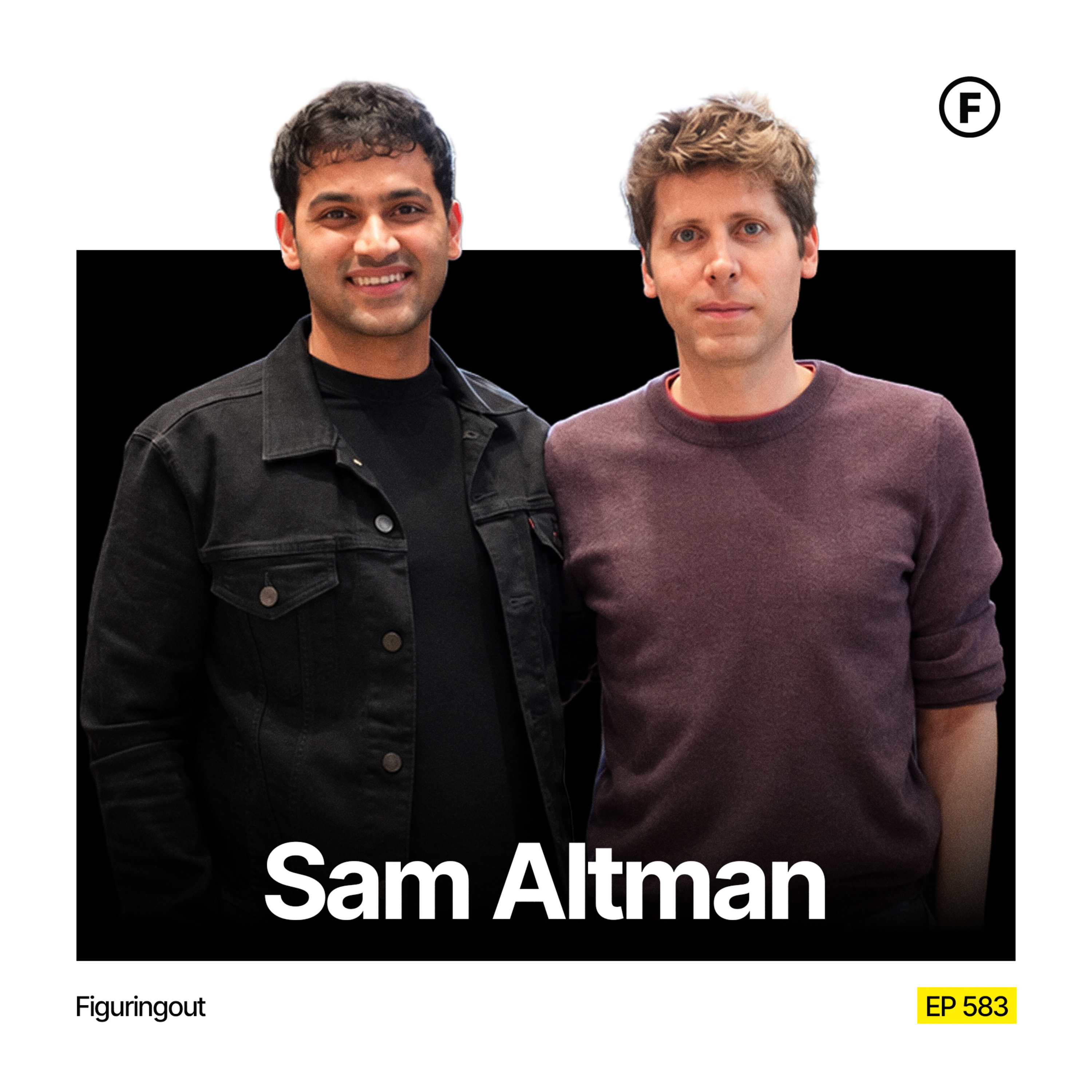
Sam Altman (OpenAI CEO) discusses the AI revolution, “superintelligence,” and how humanity should manage high-stakes AI development. He also reflects on his personal evolution from a carefree early OpenAI founder to a highly scheduled leader, and on how he makes “non-consensus” bets.
The episode’s guest is Sam Altman, a tech entrepreneur and investor best known for leading OpenAI and launching ChatGPT. The host is Raj Shamani (FO583 “Figuring Out” podcast).
Written by AI. May contain mistakes.
Explore how Sam Altman's life has transformed through his experiences in tech.
“Like who were you when you started and who have you become?”
Learn who Sam Altman is and his vision for AI's positive impact.
“Me and my team, we work every day and try to bring the most valuable conversation from the world.”
Discover Sam Altman's childhood curiosity and feelings of inferiority.
Contrast between optimism for AI in India and skepticism in the US.
“You said it didn't bother you as it would to some people.”
Sam discusses the skepticism towards tech leaders and his own experiences.
Sam shares insights on the value of long-term goals over short-term status.
Sam explains the significance of scaling neural networks and the missed opportunities.
“Well, I mean, the hard part is you don't really know.”
Explore the challenges faced in recognizing the potential of AI models during their early development stages.
“It seemed so obvious to me and everybody else in the building.”
Learn about the pivotal decisions made at OpenAI regarding compute investments and scaling models.
“and do you think if any amount of other information you would have gotten at that point you would have changed the decision?”
Discuss the balance between trusting one's instincts and considering outside advice as a founder.
“So I think we're going to see a lot of very extraordinary things companies and otherwise get built.”
Understand the rationale behind launching products early to gather feedback, even in the face of skepticism.
“You figure how to answer other people's questions.”
Learn why initial user feedback is crucial for product development.
“The another thing that I had, because we had this like internal version, and this is actually a good insight.”
Explore how AI leaders manage perceptions and misunderstandings about their vision.
“it's if you're not embarrassed about your first product then you're too late right are you okay with being embarrassed even today uh yes you're okay with being misunderstood and you're okay with being embarrassed.”
Discover the mindset needed to pursue ambitious goals in tech and business.
“I think at this point, most of the world looks at AI and says, okay, I believe this thing is going to happen.”
Understand the potential risks associated with superintelligent AI and the importance of pluralism.
“It's too early to say, but I think that'll probably be the most important thing I ever did.”
Learn about the unique advantages OpenAI has in the AI landscape.
“Why do you think that if you started, it makes less of a threat?”
Explore how a strong mission and culture can attract top talent.
“What do you think is your super advantage?”
Find out how to maintain focus and attract talent despite challenges.
“One thing is having very high convictions, extreme clarity on what you are setting out to do.”
Understand the complexities of trust and power in the evolving AI landscape.
“But then you consolidated, like you attracted all this talent in the world, right?”
Explore the dynamics of trust in leadership and personal change amidst high-stakes environments.
“I think there is something that happens in many people's brains where they only trust themselves to build this because the stakes feel so high.”
Discuss the nature of anxiety in high-pressure situations and personal coping mechanisms.
Understand how success alters personal life and the loss of spontaneity.
“And what was that one moment where you were like, okay, now I can't be careful anymore.”
Learn how to evaluate the potential of startup founders during initial meetings.
“But these are all worries that mean the same thing, which is like, how do you not have all profit margins get competed to zero?”
Examine the common traits of successful founders and the importance of resilience.
“You know, if they can like come up with new ideas quickly and improve on ideas quickly, that's a thing that I look for.”
Discuss the role of ambition in founder success and how it can be cultivated.
“are traits that many founders share, but there's very few that I would say are absolutes that exist across everybody.”
Discover how surrounding oneself with ambitious peers can foster personal ambition.
“This was one of my most pleasant surprises of YC.”
Explore the paradox of advice in entrepreneurship and the importance of discretion.
“doing these amazing things and you're like well you know we all entered this together and If they can do it, so can I.”
Learn how overcoming small challenges builds confidence and insights into advice for founders.
“if you keep getting slightly bigger, slightly bigger, slightly bigger challenges and keep excelling at them, you really do build a lot of successive confidence in learning that way.”
Understand the balance between conviction and introspection in decision-making.
“A lot of people, I think, don't drive themselves to continued forward progress.”
Explore the challenges of raising kids in a rapidly evolving AI landscape.
“I think it's like an iterative process like that.”
Discover the potential of AI to revolutionize science and unlock new discoveries.
“I have enormous trust in people to figure out how to adapt and thrive and make society better for all of us.”
Gain insights into the personal sacrifices and rewards of leading in technology.

Get the gist, explore an idea or ask about something said.
 Claude
On Figuring Out with Raj Shamani, what are the key points of this episode?
Searching your listeningAutomatic transcript. May contain errors.
0:03So what version of you has died? Like who were you when you started and who have you become? I was like much more carefree. Like when we started opening up, I was just like, you know, I was like, I had a very easy life at the time. I had a lot of hobbies and, you know, now I'm like incredibly precisely scheduled and I have not gotten to do anything spontaneous in a long time. Was there any point ever in your life where nobody else was convinced was just you? Launching ChatGPT was kind of an example of that. Not that people didn't want to launch a chatbot, but most people thought it was too early and not good enough.
0:35When you talk to other people, do they tell you that you're deletional sometimes? Yes, but I think I should probably get more of that. Why? Well, one way that like a lot of people in roles like mine have had things go wrong is they get surrounded by too many yes men. You've gone through like people suing you, people dropping out. There's government like trying to find out so many things about you. Have you changed as a person with all of this now? There's no way that anyone was going to like get to build super intelligence and not have a crazy life But I think i'm kind of like well wired for it Like I can deal with a lot of insanity whipping around me When I talk to somebody in the u.s They're slightly pessimistic about ai And when I talk to people in india, they're very optimistic about it It's an incredible difference.
1:20India is like our biggest market in the world Why do you think it's the difference? One thing that countries that are developing faster and where the economy is growing faster and there's like more of a need for products and services and are more welcoming of AI than more developed economies. So I'm sure that's part of it. Do you think you're still being misunderstood today? This technology is still not very well understood, but I think people at least understand AI is happening worldwide. This is like certainly the best time I've ever seen to make a new company. Do you worry about it? About open AI?
1:48Yeah, of course. What's your biggest worry? We have done something. We will continue to do something that is going to be an extraordinary force in society. I believe it can be a force for good, but you know, it's like very high stakes and we have like a lot of responsibility Do you feel that when you're gone you're not there to guide or protect your kids or family? Will you be very comfortable your kids growing up in the AI powered world which you're helping create today?
2:24Before we start today's episode, I just have one request. Please subscribe our channel. Me and my team, we work every day and try to bring the most valuable conversation from the world. All we want in return is just one subscribe from you. On figuring out, we try to study how the world's most extraordinary minds think. And that's exactly what today's episode is about. today's episode with sam altman is not about ai is not about technology is about a human being who's building that technology what are his insecurities what are his fears how does he think as a friend as a father as someone who's trying to build one of the most important things which will shape humanity how does he notice patterns and find the non-obvious things to work on to build something incredible in the future.
3:19That's what we've tried to understand. I hope by the end of the podcast, you get to extract some lessons from his mind and implement in your life to make your life better. Watch this episode and let me know in the comments how did you find it. And the styling partner for this episode is Levi's. Click on the link in the description to explore the latest collection. Enjoy the show.
3:44welcome on the show thanks for having me sam altman welcome on figuring out it's an honor i really appreciate you doing this you know if someone's watching you for the first time and they have no clue who you are and how would you explain them who you are in next 60 seconds um i'm like a tech fan like a curious person about the world and a believer that AI is going to be this thing that touches all of our lives hopefully in mostly super positive ways I'm a dad I really love my kids that's what I would say do you ever think about certain things that this is how you're going to think or say or speak about
4:31I do just kind of try to naturally talk about what's on my mind or what I'm interested in okay and were you like this since you were a kid always thinking about what interesting to say next i think i was like that as a kid i think i would just try to like i think i just always like followed what i was curious about and do you as a kid did you ever feel inferior to someone all the time i mean i'm sure most kids do uh but i was like you know i was like a very nerdy kid I like wasn't good at sports and I grew up at a time when like that was very much the cool thing same uh yeah I was not good at sports either and it was like the cool thing yeah yeah um so yeah total I was like not a I was not I was I always had like a lot of friends and I connected well with people but I was never like a cool kid okay did that bother you sort of um
5:40i mean it did not like i don't think it bothered me like it bothers some people but yeah i think all kids like want to be popular and cool and there's like i think it's like very painful as a kid to not feel like in the inner circle or whatever. You said it didn't bother you as it would to some people. What do you mean by that? What's the distinction? What did you think about it? I've talked to other people who are like, ah, you know, the defining characteristic of my childhood was that I was like a nerd and not cool and I hated that. And I was like a nerd and not cool and it like slightly bothered me.
6:19But I had my computer and I had like my little core set of friends and I, you know, like I had a wonderful childhood and I think I was like very happy. Okay, so here's what I want to do. I want to talk more about your brain, like how you think, how you actually make decisions and what you think about certain things because I think that's really fascinating to me. Okay. And it's underexplored. I think it's really hard to like talk about yourself this way, but I'll try my best. Yeah, maybe just the kind of things you, because you've said a couple of things in like a lot of your interviews here and there And I don't know why people didn't just go like deep down in that alley.
6:53Let's do it. That's something I want to do. So, you know, when I talk to somebody in the US, a random person, they're slightly pessimistic about AI. And when I talk to people in India, they're very optimistic about it. It's an incredible difference. Why do you think it's the difference? Well, first of all, India is like our biggest market in the world by ChachiBT users and growing very quickly. and you know there's incredible builder energy of people using it's bigger than us yeah more chai gpt is just india than the us um and i mean people are just using it in incredible ways to build companies or you know i just heard about some indian kid that needed to do some fundraising for his school and had never done fundraising before and like was able to get like the full stack of it done with a set of our tools and that was awesome um so i think it's like a country that has there's just a lot of adoptions growing very quickly um but i i do think that the u.s at least on expressed preference is unusually negative on ai relatives rest of the world and india is maybe unusually positive but why like what do you make out of it why is it Why there's difference?
8:14One thing that many people have observed is that countries that are developing faster and where the economy is growing faster and there's like more of a need for products and services and like, you know, there's just huge undersupply are more welcoming of AI than more developed economies. So I'm sure that's part of it. Interesting. thing and the other thing when i when i read about you right like with i'm and i read about you in us and i read about you in india this sentiment of being pessimistic and optimist it also reflects about you and that's the most fascinating thing that you're this person who started this most remarkable technological revolution here of our age you were the first guy you don't even own equity in your own company and yet all of a sudden you became the bad guy like how why um well i think the u.s has great skepticism of people in power and in particular of like the just enormous power that the tech industry holds um but you know i would say like this is probably a good thing in some ways it does feel to me like it's gone a little far interesting what do you think is the biggest misunderstanding about you in the world well i i mean you touched on one of them but like the i think not taking not having equity in open air has been a mistake i did it for what i thought were good reasons i think it's just been hugely confusing to people i like it's it's kind of like interesting right because like if a even artists work super hard on their art project or a sports star like practices super hard and doesn't make a ton of money from it no one has like a problem with that that's kind of understood and this is like my equivalent of that but yeah like it's it's been why is it misunderstood um what do people not like what do they not get about it i think it's just very outside of the norm of why people assume that people start companies or you know work as business people true it's just weird and like people don't like weirdly weird people don't like weird it's weird to me as well yeah and then you're like well what what like why is he really doing it is it about you know yeah and why are you doing it i think this is the most interesting work and kind of the most important and useful thing i can imagine doing it's incredibly interesting it's incredibly exciting to get to do like i mean what a quest true but it's a rabbit hole we'll just keep going into because i don't understand this at all just like a lot of other people but i really respect what you do so thank you okay one of the things you said you know it takes like like i'll read it exactly as it is that you should trade being short-term low status for being long-term high status yeah which most people seem unwilling to do right so as long as you're right, being misunderstood by most people is a strength, not weakness.
11:20I find it fascinating. But the question is, before the outcome is clear, how do you know that this is being misunderstood and this not being wrong? Well, I mean, the hard part is you don't really know. You can have like a high degree of conviction. You can have an increasing degree of conviction as you get more evidence, which I think is the right thing to go for. But you don't know for sure. That's part of the excitement that you don't know for sure. But when we first started OpenAI, it was an extremely low status thing to do. We knew it'd be valuable if we get it to work, but almost no one took us seriously.
11:56It was like, okay, AGI, maybe 100 years from now, maybe never. You're a bunch of kids and you don't have the polished academics and whatever. Very, very negative um we had like a reason to make the bet and as we figured more things out we had a reason to be more confident but it's still kind of amazing it all worked um so i think it was like a good expected value bet to take but it was far far far from certain but what were the signals that that was making you very certain that this might work there's something that i want to Yeah. I kind of think all of us get like a few of a small number of like great insights over our lives that we apply again and again in new ways.
12:48And one of them for me was the sort of surprising properties of scale. I noticed this in companies, countries, cities, individual people's careers, lots of pieces of technology that, you know, networks like Y Combinator, which was the thing I was doing before, that when you really scale up something that's working at small scale, you often see big super linear returns to doing it at bigger scale. And because like anybody else, you know, I'm a pattern matcher, whether I mean to do it or not. Once we saw that neural networks were working at all, and they were getting better with scale, I was like very interested.
13:34and I had a strong intuition that we should try to scale them up a lot more. Now, this was before we knew how precisely we could predict properties with scale. This was years before we had the scaling laws, but we had this observation approximately that if you made a neural network bigger, it could do more impressive things. And this had first led to the AlexNet result and then many more things after. But then these were the signal probably a lot of people must be seeing right what was preventing them to build on it i find this one of the most confusing things i have ever observed in my career why in 2015 2016 and then even by 2018 to 2021 um why other people were look looking at the same data and not saying this is crazy like we have to invest much more in this.
14:30It seemed so obvious to me and everybody else in the building. I mean, maybe like almost we felt delusional because we're like, how can anybody not, how can people not see this? I think there was something about
14:49it almost felt too easy. It almost felt too unfathomable. You know, you'd look at the mistakes that these neural networks were making and you would say, there's no way that something so dumb can just fix all of its problems by scaling it up. It just, it seemed like all these smart people were saying you have to have symbolic representations or you have to do this or i can give you this very good reason i remember someone articulating why our approach was never going to work and it sounded so convincing what was it um it was like it went something like all right what these models are doing is they are learning to predict from what's in their training set, what's likely to come next.
15:43But that means they're never going to be able to make new knowledge because they can only model what's in their training set. And like that sounds very, you know, reasonable. Maybe you can show a model a million math problems and it can learn how to do those math problems, but you didn't show it a new thing that wasn't yet proven because it wasn't yet known. And so, it wasn't going to be able to do that. and obviously now we know that's ridiculous but at the time it sounded very compelling and the thing that it was missing is that what these models were are learning is not i mean also is but the important thing they're learning is not the these specific math problems but the general purpose ability of reasoning and that that can expand into new things so take me to a specific decision when you were doing all of this and other people were telling you that hey this might never work out right tell me to one take me to one consequential decision that you took with 50 certainty and 50 delusion
16:44after we finished training gpt4 this was about like um i think it was august of 2022 okay and we finished it about seven or eight months before we released it to the world something like that but we were we were sitting on it and we were looking at it and we knew it was extraordinary but i don't it took us a little while to realize just like the new avenues of research this was going to open up and how quickly the models were likely to improve post gpt4 and And that we could do what became the chain of thought work and the reasoning models. And we then decided we were going to go make a very big bet on compute because we saw that we could continue to scale models and that the value of these models would be really important.
17:38But it was new and the rest of the world wasn't there yet. They hadn't even seen GPT-4. They had not internalized what we thought it could do. and so we decided we would bet the company on buying up a lot of compute and that felt very crazy to people but we had enough conviction that we were probably right because we were able to use this model and we had internalized the scaling properties and what was the other option you had a much less ambitious bet on compute and a slower rate of scaling and do you think if any amount of other information you would have gotten at that point you would have changed the decision?
18:22I think if the model were even a little bit less smart, you know, if GPT-4 had come out at like the GPT-3.8 scale, we would not have had the conviction to do such a big bet. When you talk to other people, do they tell you that you're deletional sometimes? Even today? Yes, but I think I should probably get more of that. Why? Well, I think one of one way that like a lot of people in roles like mine have had things go wrong is they get surrounded by too many yes men and you really you need the pushback but how do you make sure that today you are not surrounded with yes man um having your old friends around is very helpful having people that you've worked with for you know 10 plus years is very useful um and then really cultivating a culture where you reward people for pushing back hard when you're wrong and making that easy to do i think i think is also important but it takes like active care you know the more times that you've been right and the more sort of like power in the world you have i think the harder this is to get see here's a confusion as a founder so when you have like all old friends, really smart people, the mentors that you think about, you have them around you, and they're telling you that, hey, this is wrong, and you're thinking in the wrong direction.
19:49How do you then convince them, or probably just go against them, and how do you know that going against them is the right thing today? Because I'm sure this happens.
20:02The number of times that I do something against everyone else's advice is very small. like i it happens uh but it's rare and i i like there are i have met a lot of people not a lot i've met some people and founders in particular who take the most pride in doing something when everyone else tells them it's wrong and my own belief is you should only do that very grudgingly like if you surround yourself by smart people you should mostly listen to them and if you decide that even though none of them think what you're doing is the right thing to do and you're going to do it anyway you should like view that as a expensive unlikely to be right kind of high stakes thing you really want to have conviction on that and talking about smart people and other founders what do you think what stops them they're intelligent clearly intelligent what stops them to build such extraordinary things like you've done well i think ai's happened only once so i think we got uh lucky or did a good job or whatever on problem selection um but i think a lot of people build extraordinary things the the number the rate of great companies being created right now i have never seen it be so high um worldwide uh i think this is like certainly the best time I've ever seen.
21:32I believe it is probably the best time in history to be able to build something, to make a new company, to make a new technology, to make a new kind of creative project. We have just gotten this unbelievable gift. And I think it's incredible what people are doing right now. So I think we're going to see a lot of very extraordinary things companies and otherwise get built. So now that everyone's building company and there's so many things happening, the action happening some founders watching this right now and is thinking that things that are obvious to me because of ai and technology is not obvious to a lot of people how can that person judge that it's the right thing to do and it's not being misunderstood
22:17um i mean this is kind of what you get paid to do as a founder right like this is where if you are starting the most ambitious company you could start, you will certainly be misunderstood. Now, there's many other companies that are obviously good ideas and you can still succeed big time at those. But if the ideas are obvious, a lot of other ambitious people are going to start them too. So, when we started OpenAI in 2015, I think you could count on one hand the number of AGI labs that were being started that year. Maybe you could count it on much less than one hand. Maybe it was only OpenAI that year.
22:57I'm not sure. And yet there were probably like 10 ,000 photo sharing companies. Most people thought starting a photo sharing company was a better idea. But the problem is there were 10 ,000 others and also Instagram had a big network effect and whatever else. so so i think picking things that you have a reason to believe are more valuable than they seem even if they're unlike their work so valuable if they work that like the expected value is good um you have a real advantage when you find something like that when you understand a technology or a piece of science or something about the world before other people do um there's some instinct which i understand to say ah you know there's all these smart people and i don't want them to call me dumb so i you know they don't get it and they're going to talk me out of it but i think there's another instinct which i encourage people to cultivate which is if you really understand something and it's not just like wishful thinking um but you can articulate why it's a good bet you should cherish those moments like that's awesome as a builder that's when you should be the most excited how do you decide that how do you find a non-consensus bet
24:13uh good question i i like my own experience of this was this was one thing that just no one ever taught me and you know like very little of my experience in school was figuring out what questions to ask. You figure how to answer other people's questions. And then at some point, I think when you become a PhD student or whatever, you get to start asking more questions and then eventually do more and more of that. But I think we should focus much more on teaching people, teaching very young people to figure out what questions to ask and what things are interesting to explore that we don't already know and i think getting good at that skill was the best way that i figured out the sort of non-consensus bets to take just figuring out how to ask good questions figuring how to ask good questions can you learn that i think so yeah uh i mean like all of these things maybe not everybody's going to have equal aptitude for everything but i think this is one that a lot of people seem to be able to learn you know there's i forget which which culture which country has this rule where the kid, when he comes back from school, the mother asks the kid that, what's the question that you asked today?
25:31Really? Yeah. Do you know what culture? That's very interesting. You know what culture? I think it's Israel or something. I'm not sure, but there is some culture where mothers just ask the kids. They don't ask about the highlight. They ask about the, what's one question did you ask today? That's cool. Is that a good habit? I'm going to start that with my kids. I'll report back in 15 years or something. But how do you know that it's not wishful thinking? Is there a sign? Is there something that you can pin down to and be like, okay, if these are the signals in the thinking, the way I'm thinking, probably this makes sense.
26:04Yeah. I mean, one thing is, can you explain it to a optimistic, enthusiastic, but kind of mentally disciplined smart friend? And can you update them about why it might be a good bet? So, I remember when we were starting OpenAI, the default was like strongly skeptical. But I would talk to people and I would say, you know, here is the evidence. Here's what we've seen. Here's why this might work. Here's why it'd be huge if it worked. And here's why this is an approach that we think has legs. And then, you know, if we can make superintelligence, it was kind of obvious why that would be valuable to make.
26:51And, you know, not every time, but enough of the time. And when we talked to somebody who was like a smart person, but a non-expert, they would say, okay, that seems you can, that updated me. That seems like it's worth doing. Now, if we had convinced everybody, it probably would have been too obvious. But if we had not been able to convince anyone at all, I would have been more skeptical. Interesting. Now, as I'm saying that out loud, I'm thinking of there must be historical examples of where someone was not able to convince anyone and they were still right. so at some point you got to just like trust your own instincts here was there any point ever in your life where nobody else was convinced was just you i mean there have been like small decisions where i was like opening i was going to do this thing and none of the rest of the leadership team wanted to give me an example um
27:48launching chat gbt was kind of an example of that not that people didn't want to launch a chatbot but most people thought it was too early and not good enough interesting and what made you go against all of them and be like hey let's just launch it the yc ground i think it was yeah i think it was i think it was the yc experience really i think so like i had really i had spent so long drilling it into founders that if you're not a little embarrassed of your first version you're waiting too long to launch because what you need is feedback. The another thing that I had, because we had this like internal version, and this is actually a good insight.
28:28The retention was terrible of their internal version. I think it was like, you know, 5 % or something of the first version of ChatGPT people would use and keep using. Now, there's a bunch of reasons why it was bad data in the first place. We had better models we had other interfaces um but many people would look at that and say you can't launch a product with five percent retention that's terrible and normally that's true but then you would talk to those five percent of users and some of them like really loved it and and there's this other yc learning which is the more important thing for initial project is a small number of people that really love something not a lot of people that like it a little bit and so although the retention numbers of the kind of internal chat gpt prototype were very low the people who liked it really used it a lot and really liked it and i thought that was a very good sign and the first that you said two different things right the first was being embarrassed like it's if you're not embarrassed about your first product then you're too late right are you okay with being embarrassed even today uh yes you're okay with being misunderstood and you're okay with being embarrassed.
29:42Yeah, I mean, look, I want us to put out great products, but I'm happy for us to put out some early sketches to get feedback and learn and not all of them will work. But nothing changes with the scale of your company now? Because there are enough users and people trust you for so many. Things that we put out to all of the entire ChatGPT user base have to have a high threshold. And also, now that companies, I mean, this is like getting close to critical infrastructure. Companies are really reliant on this. And so for, you know, for enterprise products we ship, there's like a very, very high bar.
30:16Okay. So now things have changed. But then we can still experiment with other, you know, I think hopefully you'll see us experiment with many new products, some of which will really delight you and make it into the core experience. And some of which people will look at and say, you know, it seems like cool in theory, but it, it doesn't really fit for me. Interesting. And the other thing was we were talking about being misunderstood. Do you think you're still being misunderstood today?
30:43I think at this point, most of the world looks at AI and says, okay, I believe this thing is going to happen. Now, clearly, it's not all popular. And I think our vision for the world and what we hope for, how people will use this tool, this technology, is still not very well understood. But I think people at least understand AI is happening okay interesting let's come back to you trying to do something extraordinary right and you taking bets on other people as well and you're talking about yc right there's another quote which is which you have only written there's i think you're some i'm paraphrasing and it's something like your you have like your will to bend reality or your will to bend the world the percentage of that particular thing is really high most people don't even try something like that you said do you remember i remember something like this yeah like most people don't even try i think it's more like bending the reality you can like you can do it much more than you think yeah like people can do it much more than they think and most people don't try enough something like that yeah and why do you think people don't take the moonshot i have like a bunch of theories on this but many of them boil down to like
32:01people want to stay part of the herd and it's like more comfortable to not do something unusual and maybe fail or maybe look wrong or maybe look dumb and and there's like a real
32:15it's easy to point to the evolutionary biology reasons of why this would be true like you don't want to get kicked out of the tribe or whatever but i think people have like really strong pressures to not to not do that kind of stuff. Just because of the way society is built? I mean, even more than that, I think society is built the way it is because of evolutionary pressure. And I think that's probably in very deep for most of us. And what was there in you which helped you bend this will or the world according to your will?
33:02i think like a lot of tech people
33:07i've always just had which would be a negative in many other contexts like a little bit less of whatever that internal pressure to stay on the track and do the same thing as other people and i kind of think that's probably like mostly a genetic thing just genetic you don't think there's any other thing that you've built no i'm sure there's other things too but like I
33:33you know you can find like all these studies about how people that are like slightly autistic are like tend to have
33:44are more likely to sort of invent new science or like you know just get obsessed with one idea and work super hard in the lab against all the odds for it yeah and what was the will bending moment for you I mean, probably starting OpenAI. It's too early to say, but I think that'll probably be the most important thing I ever did. Do you worry about it? About AI? Yeah. About OpenAI? Yeah, of course. What's the biggest worry?
34:20I mean, we are going to do something that, or we have done something, we will continue to do something that is going to... be an extraordinary force in society. I believe it can be a force for good, but, and it will be a force for good on net, great good. But, you know, it's like very high stakes and we have like a lot of responsibility. True. You know, this takes me to the point where you wrote an essay, which was in the beginning about SMI. Yeah. Right. And And after that essay, during that May, you wrote to Elon about it. And you said something that it would be good if someone else apart from Google started it.
35:08You said that the biggest threat for continued human existence, the biggest threat is going to be SMI. Why do you think that if you started, it makes less of a threat? well i believe in pluralism i don't think i don't think like only us having it is good either um there are like i think there are two kind of cartoonish ways this goes really wrong okay um one is that there's like a loss of control to ai and we intentionally or accidentally sort of see control the future to systems that are unbelievably more capable than we are we can't get it back. And the other is like one person or company or country gets way too powerful relative to everybody else.
36:01And I think that's very unstable. I think it's actually much better for the world for there to be multiple AI efforts with slightly different approaches that are competing with each other and putting it out in different ways. And we talked earlier about the dislike of powerful people i also have this like dislike of too intense power concentration um i think that's like not i think that's not what works so um i'm hopeful we don't do that so is that what you were thinking when you started it as well that someone with all the means in the world should not get this power today well at least there shouldn't be one like you want i think many efforts okay and let's say now there are like too many right there are four or five large companies they have all the capital in the world they have the great talent they have all sorts of technology research they all are working at it what's your unfair advantage in this?
36:57I think we have the most users and the best stack from chips to data centers to models to other things that come around that to sort of put and put abundant intelligence into people's hands. I think we have the best brand and the values that people who are going to use this technology want. We want everybody else to succeed, and I think people can feel that from us. We don't want to be the one company to rule everybody. This goes back to our founding. I was talking about what makes you the Sam Malkin. Oh, me personally? What do you think is your super advantage? Uh...
37:45Well, I've been doing it the longest. I mean, I guess not true. I guess Demis has been doing it longer than me. I think I have like a big advantage of just having had a lot of time to watch this development all the way through. And not just for the intuitions about how to run the company, but connections throughout the whole ecosystem. They really help there. Interesting. But you must be doing something right. You said, not sure about how to run the company, but you're doing something right about the company because when you were fired, there were 700 people who threatened to resign. What do you think you did right as a founder, that 700 people, like almost the entire company is ready to back you?
38:24I don't think it's any like one thing, but I don't think it's even mostly about me. I mean, maybe the thing that I did is I got to like, you know, pick the leadership team and sort of set up what we run at and how we work. But I think the thing that we have done most right is we just build an extraordinary collection of people really motivated by the same mission with a very healthy culture for the right combination of being sure in high conviction where we need to be that and being open-minded and exploratory everywhere else. And that is a special culture. I think someday when the history books get written on OpenAI, the thing that I hope they talk about the most is our rediscovery of the kind of culture that makes a great research lab and why that had gone missing for so long.
39:17And what can people learn from the culture that you've built here if someone is a young founder was trying to build something like this? One thing is having very high convictions, extreme clarity on what you are setting out to do. And even if what you set out to do, maybe even more so if what you set out to do sounds crazy to most people, the fact that you are willing to take that approach to talk and think that way is very appealing to some set of people. And so when we started, we said, we're going to try to build AGI. And this is the direction that we're going to push in to try to get there.
40:03but the main thing is that like we have a bet on AGI and if our initial direction turns out to be wrong we'll change there were not many other efforts in the world that were still willing to say they were trying to build AGI I think even DeepMind at that point had stopped saying they were trying to do it and so although most people thought we were crazy and didn't want to be associated with us we were effectively able to concentrate all of the really talented people that also believed in this and as I've looked at some of the other kind of great science and innovation projects in recent history many of them have had that in common interesting so you just pick up like incredibly far-fetched big problem and be very clear about it that you're going at it that's how you build a great culture company maybe far-fetched is not what i would pick but like pick a problem that is like point at something that some really talented that people really want to work on.
40:59Be very clear and focused that that's what you're trying to do. And don't hedge, don't kind of like give other people a reason to, you know, don't let the fact that you're like, some people are going to call you crazy or stupid or worse, try to convince you to not, to mince your words. And then you can get like a very high conviction set of people together pointed at something really important. But then you consolidated, like you attracted all this talent in the world, right? And then they started leaving, a few of them. And you call this like AI drama, the Shakespearean. Yeah. So let's say Meera left, Ilya left, Dario started something else, Elon.
41:44They all are also building something of their own. They also don't get along. Like everybody's building their own thing. What is the disagreement about? You guys were the first ones to start it. Now everybody's building their own thing. Um...
42:02I think there is something that happens in many people's brains where they only trust themselves to build this because the stakes feel so high. Interesting. And is that because of the approach?
42:17Or do you feel the concentration of power in someone else's hand? they worry about that or they worry about the way that someone's going? I think they go together
42:32I think it's somehow like
42:39his approach is bad and so I can't let power get concentrated in his hands something like that approach and trust rather than that and you've gone through all of that have you changed as a person with all of this now? because you've you're young you've not got young anymore yeah but you've gone through like people suing you you starting something crazy people dropping out there's government like look there's find out so many things about you there's no way that
43:13anyone was going to like get to build super intelligence and not have a crazy life um so i'm kind of not that surprised and i remember you know early on i kind of didn't think about it in any serious way when we started open ai um but then once it became more clear to me that it was really going to work i remember like thinking very clearly like man my life is gonna get very crazy and that sucks but i think i'm kind of like well wired for it like i can deal with a lot of insanity whipping around me why do you say so i mean it seemed because i like it seems like i can and you were sure about it since you were since you started the company that I was sure I'd be like okay for dealing with it yeah no um no again when we first started I somehow like even if I intellectually realized that this would happen if we were really successful I didn't like emotionally sit with it until later do you get nervous usually you don't get nervous right I was reading somewhere um I mean I have gotten nervous before but now stuff has just gotten so crazy that like my activation energy is very high but now do you get nervous at all or no yes it's just rare like it's that's like the threshold for it is high nice so tell me it's tell me more when do you get nervous and when do you not it's a good thing the last time i remember it uh was when we were about to announce the navier stokes result i was just like this is such a crazy i mean this is like the real deal this is like a you know some of the hardest things that are harder than something that people have been able to do it and ai is now doing and i was just like this feels like a crazy moment and i was i was definitely nervous about that one that was probably the last like really kind of like heart pounding thing and do you do anything to get back to normal is there some i used to meditate a lot okay um like a couple hours a day for a well and now i don't but if i if i do get nervous i can like quickly drop back into it quickly get back like just like this or do you have some ritual or some breath work or something that you do um no i can just like sit and close my eyes and like get to a meditative state pretty fast still in like minutes or seconds a lot of seconds but not nice yeah nice interesting so what version of you has died with like who were you when you started and who have you um i was like much more carefree like when we started open i was just like you know i was like i had a very easy life at the time i had a lot of hobbies you know i was like free on a random tuesday night for dinner on short notice with my friends probably um and you know now i'm like incredibly precisely scheduled and I have not gotten to do anything spontaneous in a long time.
46:18And that's very sad. And what was that one moment where you were like, okay, now I can't be careful anymore. But you got this realization. Another version of this is people ask, what do you really miss about your old life?
46:37And the last time someone asked me that, the thing that I realized I really miss is like going to sit in a coffee shop on a Saturday afternoon with like a nice big cup of coffee and my laptop and just like watching the world do its thing and like catching up slowly on email, but mostly just scrolling the internet. And I have not gotten to do that in years. And, uh, and I don't know why, like that was the thing to like really jump out at me as the thing I missed, but I do miss that. interesting and you can't do that anymore i mean i could do it but there would be like you know two security guys sitting at the table next to me and like i would not just be like an anonymous person in the world where okay coming back to the startup and the people that we were talking about and we missed that yc thread right in yc you wrote that you used to ask people how this could become monopoly one day.
47:37Why are you used to ask this question? To startups? I think we would usually say, what's the moat going to be? Or what's the competitive advantage going to be? But these are all worries that mean the same thing, which is like, how do you not have all profit margins get competed to zero? But is that an important question to ask? When you talk about building a moat in a way that it ends up becoming a monopoly i think from day one because when you start startup you don't know i don't think it's the most important question no i was gonna say i think it's like i think it's not as important as other questions that we ask it's not the first like the only question not even the first few questions like i'd always start with just like what is the product why the users need it how are you going to get more users so it's like an element of strategy but i don't think it's like it's it's definitely not the most important one okay but is it an important one after like let's say company gets to a certain amount of scale then yeah i mean i think it's some version of the like what is your long-term competitive advantage going to be is an important question um but not like a top it's not the most important question it's all and then if so you used to meet like thousands of companies right and you have had an incredible investing career as well so you chose these companies like reddit stripe a bunch of them can you tell after meeting a founder in like 30-40 minutes that this person will be able to build a company or no?
49:08Not perfectly, but yeah, I mean, I think you can have like a pretty strong intuition. What is that? Like, tell me, what do you see? What do you understand? What pattern do you see?
49:25One of, there's like many obvious things that I could say, so I'll try to say the ones that I I think don't get talked about as much. If they're like a clear communicator and they can really explain things well and it's easy to follow, this is a huge thing that I look for. If I leave the meeting like convinced that I want to work with them, that's a huge thing I look for. Because, you know, a big part of the job of an early stage founder is to be an evangelist in all these different ways with other founders, with customers, with people that are trying to hire, with investors. So that's something that I look for.
50:08You know, if they can like come up with new ideas quickly and improve on ideas quickly, that's a thing that I look for. you know if they seem to have like interesting new well-reasoned talk thoughts on the world I haven't heard before that's a big one things like that interesting but even after all of this there's one thing that a lot of entrepreneurs talk about is pain enduring capacity can you judge that I think that's hard to judge directly in a 30-minute meeting you can ask people for and I used to do this sometimes like stuff in their life history that points that out but I think it's hard to tell that internal conversation you have to rely on stories they tell it's just and can you judge someone's lying or is telling you truth when they tell you some story about they've endured certain amount of pain this is what I mean I think this is like hard to yeah and what's about you what do you think is in you that what amount of pain you can endure that 99 % of the people will not i don't think this is like my biggest advantage um relative to some other founders i've seen but i am like i am really willing to stick with something i believe in and just keep going and who's the other founder that came in your head i didn't have like a particular okay you just said it just like that but do you know anyone who has like really good pain enduring capacity and they're like they can just be at it um i don't have like one specific name ready to go here but like yeah i was i was definitely impressed by like many yc founders over the years who would just like grind it out without much signal of success and you know with very little in the way of resources and is there a pattern between all of them stripe reddit
52:03apart from them being good communicator um i think there are all of these things that are traits that many founders share, but there's very few that I would say are absolutes that exist across everybody. One of the great lessons of YC is how many different ways and how many different kinds of founders can be very successful.
52:33But what pattern do you see in them? Because this is just well...
52:44I mean, again, I think there are these things you can say, like, you've got to be driven and smart and a good communicator. And you have to, like, have an idea you're really willing to commit yourself to. And you have to... Yeah, I think we could make this, like, long list of founders' traits. And I think we could make, like, a long list of good business traits. But one of the interesting observations, and I think why sort of existence proof for how many different ways there are to succeed, is if you took the top 10 YC companies and said, okay, all 10 of these people are great founders, clearly.
53:25All 10 of these are great companies, also clearly. I'm going to scramble which founder runs which, or which CEO runs which company. It would be a disaster. And I think there's many things that one can take away from that observation. But one of them is that there's many different ways to be successful as a founder. And there's not a single pattern that works in every case for every company. Is there a way or a single pattern that can be a disaster, which is common? Let's say if there's no formula for a great founder. There's many things that are a disaster. lack of drive, lack of focus, lack of clarity, lack of vision, lack of ability to like solve hard problems repeatedly with a smile on your face.
54:10All of these things are anti-patterns that, yeah. So there are many things that are almost certain to predict failure, but there's also, that part is easier. A lot of ways, different ways to succeed. You said the first thing is lack of drive. Yeah. It's ambition. A lot of people talk about, But can you train somebody or can you teach somebody to be more ambitious? Yes, I think you can. This was one of my most pleasant surprises of YC. I think part of why YC adds much more value to the world than people realize is that there are some things that maybe you can't train. But you can teach people to become more ambitious.
54:51Not everybody. It's hard to predict who you'll be able to. But it can definitely happen. How? How do you teach it? I found that the most successful thing was one combination of a peer group going through the same thing and two getting people to go through successive challenges that increasing difficulty and realizing that they can do more than they think do more than they think get better instincts and keep going. And did you become ambitious like this when you were in the same peer group? I think so. Or you were ambitious from before? No I think I got much more ambitious. and do you think like the ambition comes from confidence that everyone else around me is ambitious or does it come from insecurity um paul graham used to say that there was something about like the pressure of demo day coming up and people not wanting to fail and i think that's kind of that's a version of insecurity but i think much more it comes from there's like excitement and there's like a positive force of being around these people doing these amazing things and you're like well you know we all entered this together and If they can do it, so can I.
55:56For you, it's more confident? I think so. And I really think that people, if you keep getting slightly bigger, slightly bigger, slightly bigger challenges and keep excelling at them, you really do build a lot of successive confidence in learning that way. Interesting.
56:18And is it only the peer circle or the group that makes you like this? What do you mean? like is it only that other ambitious people actually give you these things no i think you can get it lots of ways but you know i think we are as people like hardwired to learn from the people around us there was that there's that famous quote which is like you're going to become the average of your five best friends so you better pick those five people really well you believe in it not quite but there's some truth to it obviously what's the worst advice you've gotten as a founder i mean almost all the advice is terrible i don't know how to pick the worst thing but i would say i would say the like uh my meta advice to founders is listen to less advice listen to less advice listen to less advice do you sometimes go home at some point and be like hey all this advice was maybe right and maybe i'm wrong i think yc could probably distill five to ten very important highly confident pieces of general advice from all of the incredible wealth of experience.
57:23And I think you should listen to those five or 10 things. Like I think the slogan of YC or the model, whatever it like makes any people want is the like, that is like the single commandment of startup advice to the degree there is one thing for early stage startups. And then there's like another list of things that are almost as important, but you're not going to become a great founder by listening to like the 800th podcast of advice about how to start a startup, you got to just like do it and figure it out on your own. And a lot of the advice that you need is so specific to your case that beyond the like axiomatic truths, there's not that much more to learn from like a one more podcast.
58:02Interesting. And, but you wrote a, you wrote an essay, 13 rules to become successful. Oh, I remember that I wrote that. I don't, I don't remember what they were. And I bet I could do a better version now. I bet I could do a shorter version now. Okay. So instead of 13, what would be? I think this point about compounding, the one I had first in there, I think this is probably underestimated. A lot of people, I think, don't drive themselves to continued forward progress. The joke of this is like, you know, I'm sure you have 20 years of experience, but you have 20 times the same one year of experience.
58:42And you really, the thing that I think is so cool about a career is you can build on each successive phase. But you have to continue to push yourself and you have to like keep doing uncomfortable, non-obvious new things. And a lot of people fall off that very early in their careers. And so staying on the compounding exponential curve is empirically not what most people do. And I think that's a very good, non-obvious piece of advice. What's the most uncomfortable thing that you do these days?
59:14I mean, kind of like most of the stuff now feels new again. that the figuring out how we're going to navigate this current debate about pacing progress feels like a very difficult thing to get right and pretty important and just you know hard and new and what do you do to make sure that you you get it right is there something that a lot of time thinking and talking to people and trying to get you know more data and more new ideas into the mix do you ever go home sometimes and be like maybe I'm wrong about this yeah of course I think it'd be disastrous if I didn't we talk about conviction and self belief and all that I think what some people take that to mean is don't introspect just like be sure in what you're going to be sure and don't question it I try to like question everything all the time I still try to like act consistently and with conviction until I find a reason to change my mind.
1:00:19But I think this is really important. Give me an example. How do you do it? My process often is just to keep thinking about the same question from every different angle, throwing out a bunch of bad ideas, trying to like break them apart or find problems with them in my own head, then going to other people, taking more input, trying a different version of it out, adapting it again. I think it's like an iterative process like that. give me an example of this like what do you let's say what's your current big problem and then you're just questioning from different angles well i think that one that i just gave the like this question of how do we think about the pace of progress as we enter this rsi era and how do we avoid these two ways that things could go wrong either way from a loss of control incident or a concentration of power incident and what is the right governance mechanism how like how do we think about how smart an AI system should be allowed to be relative to a person how quickly can that improve how do we think about the questions around security and monitoring and alignment um and you know where can we afford to take risks and not and does that change when you're at home because when you're at home yeah and you see your kids and you see your family and you see like okay maybe I think from a different lens.
1:01:40I am a big, I mean when I'm with my kids I try to just hang on my kids and be the best dad I can be and I try not to get myself distracted and think about this other stuff. But I have noticed a big difference like on the weekend mornings when I'm working at home versus in the office and I am a real believer for me at least that finding some sort of rhythm where you can like intensely be with people. and working very interactively and then have real chunks of time where you can like shut out the world and just like think and work on your own that back and forth rhythm is super important to my particular style you can do that easily or you have to learn hard way yeah that's just what works for me it's very natural and easy it's just like shutting down and shut like just shutting down it's just like a very different way of working like when i'm working in my office at home it's like a very solo style of work and if i only did that it would be a disaster but if i didn't have that and only was like constantly in meetings at the office that also wouldn't work for me so i need that back and forth interesting and when i asked you about the family what i meant to is because you said this is the biggest fear that you have that it could go either way do you feel that when you're gone and you're not there to guide or protect your kids or family will you be very comfortable your kids growing up in the world ai powered world which you're helping create today yeah i think it i mean as i said earlier there's all these ways it could go wrong and uh so i don't know what the future is going to be look like look like but i am comfortable that
1:03:24I have enormous trust in people to figure out how to adapt and thrive and make society better for all of us. And yeah, I think the world will keep, will most likely keep getting much better. Perfect. Well, here's the last two questions that I ask everybody. What's the most extraordinary anything you want to build next oh man um the thing that immediately came to mind is i am extremely excited to see how far we can push ai to discover new science um math the math results were quite amazing to me and it really made me think that we are closer to this milestone than i expected us to be but a machine that can help us understand the world better, discover the deepest insights in physics, figure out new medical treatments, new source of energy, things that I think we can't even imagine, but that better scientific understanding will enable.
1:04:25I am extremely excited for us to go build that machine. I have always been struck by how much of the world getting better is better scientific understanding. And the fact that I think we can now really have ai accelerate that is going to be transformative for for humanity and that's something that you want to build yeah and what's the cost of becoming sam altman becoming this person who's probably shaping the most important technology of mankind
1:05:07it's hard to answer that because like subjectively it's just like this is my life now you know I I gave you like the trivia example earlier of I can't go work in a coffee shop on the weekends but
1:05:31I feel like so incredibly lucky to get to do all this, that although it's like tiring and stressful and, you know, a lot of people's anxiety gets projected onto me and there's like all of these just sort of like life trade-offs. This is like all I know now. Everything else is this like distant memory of this past thing. So I don't like, I don't have this like real, like suffering. Oh, it's so horrible. what's happening to my mindset about it. Fair. Fair. Well, thank you so much. Thank you very much for having me on. Thank you so much. It was really good. I hope we get to do this many more times.
1:06:06Me too. At some point, we'll just deep dive and do a much longer version of it. But thank you so much for doing this. Thank you. Thanks for having me. Thank you. I appreciate it. Hi. How's it going? Hi, I'm Raj. Nice to meet you. Thank you so much for doing this. Nice to meet you too. Thank you so much for doing this. How are you? This is cool. I'm good. You like the setup? I've never seen a setup like this. I do like the setup. No, I'm good. It's like it's an extraordinary time in terms of just all of the model progress. How are you doing? Good. I'm pretty good at this point. A little nervous, but I think I'll get through.
1:06:45I would love if you would try this. Yeah, of course. It's great.
1:06:55Tastes good Oh, perfect What's the most important of the mushrooms? What? Is it lion's mane? Yeah Yeah, I feel good You feel good? Yeah Amazing We send you a lot of Thank you so much for watching this episode till the end All I want you to do is three things now Number one, please subscribe the more you subscribe the better the guests we will be able to get for you and the more valuable conversation we'll be able to build number two please comment and tell us what did you like about this episode and what you didn't like about this episode and who are the kind of guests who you want to see please give us those suggestions in the comments we read almost all of them and number three please share this episode with at least one person whose life will change after listening to one of the lessons from the episode.
1:07:48I'll see you next time. Until then, keep figuring out.
To know more about our Styling Partner Levi’s, Checkout:- https://levi.in/?srsltid=AYCX9vKN1wQBhovoPXfhTURdNkQMSWXoIovOaa97bkDk7z6x8Nvc8x3J
Get your hand-picked playbook here: https://www.figuringout.co/pdf/fo-583
Guest Suggestion Form:
Disclaimer: This video is intended solely for educational purposes and opinions shared by the guest are his personal views. We do not intent to defame or harm any person/ brand/ product/ country/ profession mentioned in the video.
Our goal is to provide information to help audience make informed choices. The media used in this video are solely for informational purposes and belongs to their respective owners.
(00:00) — Intro
(03:44) — Sam Altman on AI, OpenAI and India’s Optimism About the Future
(08:30) — Sam Altman’s Leadership, Long-Term Impact and the Importance of Pushback
(12:30) — How Scaling Neural Networks Changed AI
(16:26) — The GPT-4 Bet That Changed OpenAI’s Future
(20:34) — Building Companies, Finding Contrarian Ideas and Taking Moonshots
(27:28) — Why OpenAI Launched ChatGPT Early and Embraced Experimentation
(31:05) — AI Risks, Concentrated Power and OpenAI’s Competitive Advantage
(41:27) — OpenAI’s Departures, Research Culture and High-Stakes Leadership
(45:47) — Sam Altman on Life Before OpenAI, Startup Moats and Founder Success
(54:22) — Y Combinator, Ambition and the Best Startup Advice
(58:05) — Career Growth, Compounding and Questioning Your Beliefs
(1:03:44) — The Most Extraordinary Thing Sam Altman Wants to Build Next
(1:04:49) — The Price of Becoming Sam Altman
(1:06:17) — BTS
(1:07:10) — Outro
In today's episode, we sit down with Sam Altman, CEO of OpenAI, to understand how he thinks, makes decisions, and bets on ideas before the world believes in them.
Follow Sam Altman Here:
Instagram: https://www.instagram.com/sama/
About Raj Shamani
Raj Shamani is an Entrepreneur at heart that explains his expertise in Business Content Creation & Public Speaking. He has delivered 200+ speeches in 26+ countries. Besides that, Raj is also an Angel Investor interested in crazy minds who are creating a sensation in the Fintech, FMCG, & passion economy space.
To Know More,Follow Raj Shamani On ⤵︎
Instagram @RajShamani https://www.instagram.com/rajshamani/
Twitter @RajShamani https://twitter.com/rajshamani
Facebook @ShamaniRaj https://www.facebook.com/shamaniraj
LinkedIn - Raj Shamani https://www.linkedin.com/in/rajshamani/
About Figuring Out
Figuring Out Podcast is a Candid Conversations University where Raj Shamani brings raw conversations with the Top 1% in India.