
In short
Podcast Summary: Raj Shamani's Figuring Out with Sunita Williams
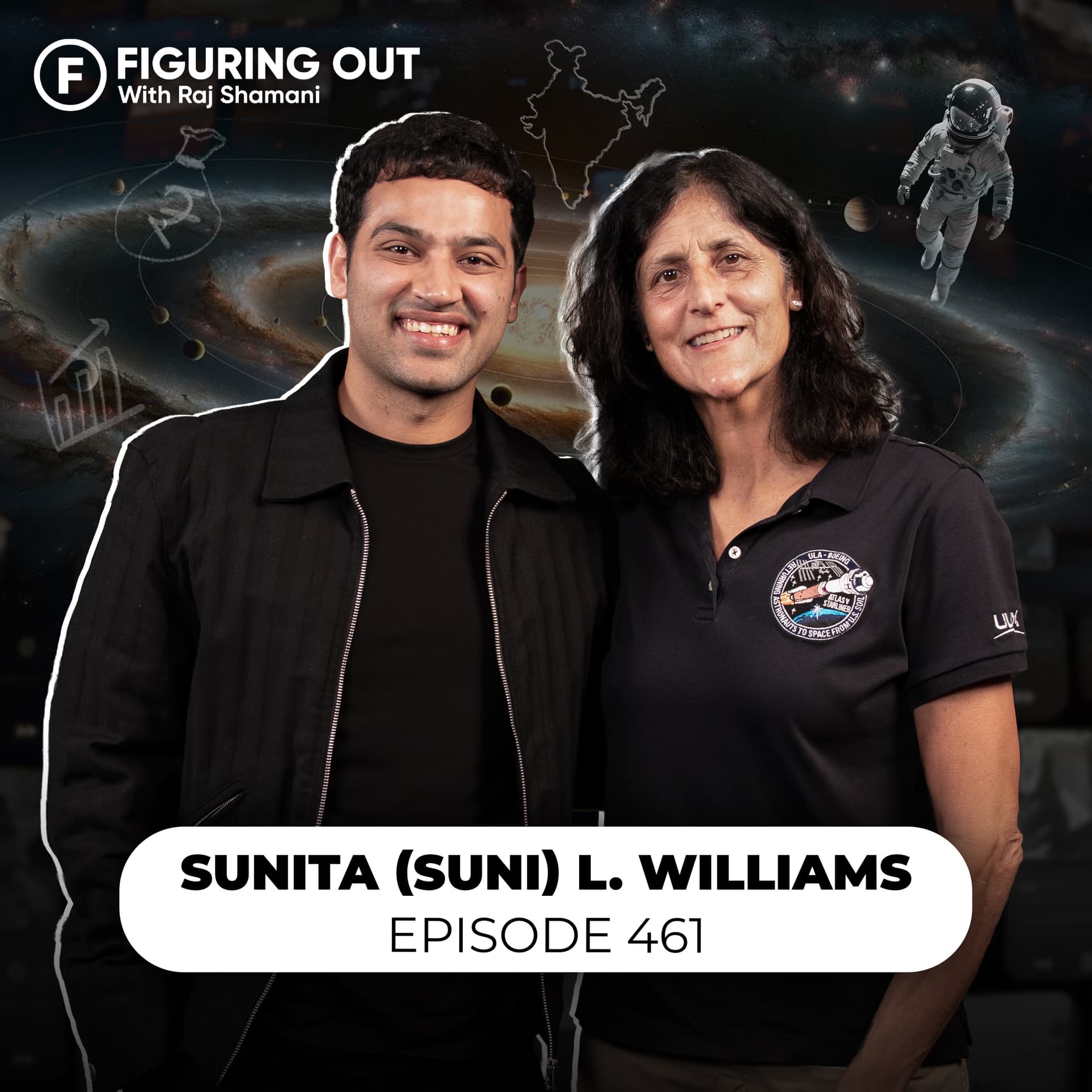
Episode Title: Sunita Williams Podcast - Inside Space, Isolation, Astronauts, Father & Media | FO461
Podcast Description: Raj Shamani hosts discussions on self-growth and navigating opportunities in various fields. This episode features astronaut Sunita Williams, focusing on her experiences in space and personal reflections.
---
Key Highlights
Guest Introduction
- Sunita Williams: Retired NASA Astronaut and U.S. Navy Captain.
- Notable achievements:
- 286 days in space, more than any other woman.
- Commanded the International Space Station (ISS) twice.
- Completed nine spacewalks.
- First person to run a marathon in space.
Notable Moments
- Childhood and Insecurities
- Sunita describes her multicultural upbringing as a strength, allowing her to connect with diverse people.
- Discusses her insecurities, particularly regarding academic challenges.
- Training and Space Experience
- Preparation involved two years of rigorous training for various scenarios.
- Space travel is portrayed as a blend of excitement and risk, where preparing for emergencies is crucial.
- Emotional Aspects of Space Travel
- Sunita candidly talks about feeling lonely and missing her family, especially her pets, while in space.
- Discusses the emotional release of crying in space and how crew members become like family.
- Life After Space
- The transition back to Earth includes physical challenges such as nausea and re-adapting to gravity.
- Sunita describes the profound beauty of Earth from space, including the vibrant colors of India and the stunning sight of the aurora.
- Reflections on Exploration and Death
- The impact of Kalpana Chawla's tragic death motivated Sunita to explore further and honor her memory.
- Emphasizes the importance of risk management in space exploration.
- Connections with Humanity
- Shares a powerful message about the goodness in people, highlighting the support she received from around the world during her time in space.
- Encourages listeners to appreciate and connect with one another.
Fun and Interesting Facts
- Space Phenomena: Sunita shares insights about the intricacies of space, including how it smells and the sounds it makes.
- Daily Life in Space: Discusses the challenges of using the bathroom in zero gravity and the experience of eating and cooking in space.
- Unique Sightings: Shares the astonishing view of India from space and the sight of fishing boats illuminating the coastline at night.
Concluding Thoughts
- Optimism vs. Preparedness: Sunita speaks about the mindset required for astronauts, balancing optimism with the acceptance of risks.
- Human Connection: The overarching theme emphasizes the need to recognize and nurture our connections with each other in a chaotic world.
---
Key Takeaways
- Growth Mindset: Continuous learning and adaptation are paramount in any field, especially in challenging environments like space.
- Community and Support: The importance of reaching out and creating a network of support during tough times.
- Appreciation of Life: A reminder to cherish our experiences and the people around us, recognizing our shared humanity.
---
Call to Action Listeners are encouraged to engage with the podcast, share their insights, and suggest future guests for upcoming episodes. The conversation aims to inspire and equip individuals to navigate life's opportunities effectively.
---
This episode of "Figuring Out" presents a unique blend of personal reflection and scientific exploration, highlighting Sunita Williams's extraordinary journey and the universal themes of resilience and connection.
Written by AI. May contain mistakes. Listen to the episode to check what was said.
Chapters
Tap a time to open that second in VOExperiencing India from Space
0:45 to 2:40
Discussion on the breathtaking views of India from space, both day and night.
“When you're in space and coming home is byproduct of this business, it's risky.”
The Reality of Space Missions
2:40 to 4:29
Insights into the challenges faced during space missions, including extended stays and risks.
“For me, I always feel a little nauseous when I come back.”
Training and Emotional Challenges
4:29 to 6:50
Exploration of training for space travel and coping with emotional aspects like loneliness.
“and is also the first human being ever to have run a marathon in space.”
Childhood Influences and Insecurities
6:50 to 9:00
Sunita shares how her multicultural upbringing influenced her life and her insecurities.
“While we were growing up, we were also swimmers.”
Navigating Life's Uncertainties
9:00 to 12:10
Discussion on how to handle uncertainties and insecurities in life and career.
“Like, if you don't, then you're not really being introspective.”
Paths to Becoming an Astronaut
12:10 to 14:03
Insights into the journey and testing required to become an astronaut.
“asking kids to like, what do you want to be when you grow up?”
Training and Testing for Astronauts
14:03 to 16:42
Learn about the rigorous training and psychological testing astronauts undergo.
“So there's testing all the way along the way.”
Handling Stress and Chaos in Space
16:42 to 19:24
Discover how astronauts manage stress and chaos during critical situations.
“Um, I'm, I like, uh, organizing, you know, my stuff, you know, everybody has their little nest whenever they're have the things that they have.”
Planning for Every Possible Failure
19:24 to 22:26
Understand the extensive planning and training astronauts do for potential failures.
“So as the thrusters were failing, yes, this is a bad situation.”
Emotional Challenges of Space Travel
22:26 to 26:10
Explore the emotional challenges astronauts face while in space.
“How many situations do you plan for before you go?”
Show all 39 chapters
The Realities of Space Living
26:10 to 28:00
Get insights into the unique lifestyle and bodily functions in space.
“Yeah, everything, water all around you gets just sort of balled up on you.”
Living with Smells in Space
28:00 to 28:36
Discover how astronauts adjust to the unique smells of living in space.
“I'm not really sure why, but everybody, everybody does.”
Sounds of the International Space Station
28:36 to 29:57
Learn about the various sounds heard inside the ISS and their significance.
“But, you know, like, interestingly enough, I think it's not that bad because like we had at some periods of time, 12 people on the space station when generally seven.”
Facing Fear and Isolation in Space
29:57 to 34:16
Explore the feelings of fear and isolation astronauts experience during long missions.
“And so then we realize what the situation is.”
Dealing with Uncertainty and Patience
34:16 to 36:48
Understand the challenges of waiting and dealing with uncertainty in space.
“So one spacecraft's going to go and land in the ocean.”
Maintaining Morale During Extended Missions
36:48 to 39:50
Learn how astronauts keep morale high and stay productive during lengthy missions.
“and you sort of have to give people some time.”
The Importance of Teamwork in Space
39:50 to 42:00
Discover how teamwork and collaboration are vital for survival in space.
“Like now you know you're not going to go home for a while.”
Teamwork in Space Missions
42:00 to 43:19
Learn how cooperation and problem-solving enhance efficiency in space.
“So when it went for me, it was like, Oh, if that person's working on the experiment, how about if I'm, I'm your right hand man, if you need something, just tell me, I'll go, go over here and get it for you.”
Facing Challenges in Space
43:20 to 45:10
Discover the mental resilience needed during critical moments in space.
“happening not even for one like moment you felt like maybe this is it i'm not going home no um we actually even before uh our spacecraft left we designed some sort of makeshift seats on this on the dragon that was there.”
The Reality of Spacecraft Safety
45:11 to 46:18
Understand the safety measures in place during space missions.
“and she was not worried because, I mean, I'm talking to her.”
Perception of Time in Space
46:19 to 48:08
Explore how astronauts experience time differently during missions.
“And somebody might have, you know, we did our best that we could do.”
Combatting Loneliness in Isolation
48:09 to 51:34
Learn about maintaining connections and combating loneliness in space.
“Um, and so time was a little bit slow there.”
Dreams and Perceptions in Space
51:35 to 53:38
Delve into how the space environment affects astronaut dreams.
“I mean, I really wasn't that lonely, honestly.”
Physical Effects of Re-Entry
53:39 to 56:00
Examine the physical challenges astronauts face upon returning to Earth.
“If I was dreaming about space, I wouldn't fall.”
Returning to Gravity: The Nausea of Re-Entry
56:00 to 58:00
Insights into the physical challenges astronauts face when returning to Earth, particularly the sense of nausea and balance issues.
“You feel a little bit nauseous and you're going to feel nauseous anyway.”
Reconnecting with Earthly Sensations
58:00 to 1:00:00
Exploration of the sensory experiences and emotions astronauts feel upon returning to Earth after time in space.
“Because I saw a video of liquid pineapple juice.”
Grilled Cheese and Family Memories
1:00:00 to 1:02:00
A touching reflection on the comfort food that reminds the astronaut of her father, including how it connects to her childhood.
“And one of the, it's funny, one of the, one of the other things that, um, Don Pettit and I had this conversation.”
Measuring Success: A Daughter's Perspective
1:02:00 to 1:06:00
A discussion on the astronaut's view of her accomplishments in relation to her father's legacy and the challenges he faced.
“And just, you know, just having a nice conversation with him.”
Carrying Heritage: The Influence of a Father
1:06:00 to 1:10:00
Exploring how the astronaut carries forward her father's teachings and the significance of cultural heritage in her life.
“I mean, I think sometimes we just don't tap our potential.”
Reflections on Loss and Inheritance
1:10:00 to 1:11:55
Explore the emotional reflections on a father's passing and the traits inherited from him.
“My mom is very, very, very active, but my father had the ability to just, um, be one with, with the world for a moment.”
Seeing India from Space
1:11:55 to 1:13:15
Discover how India appears from space and the different aspects of its geography and lights.
Unique Phenomena Observed from Orbit
1:13:15 to 1:15:52
Learn about the unique phenomena and sights, including fishing boats and the Milky Way, seen from space.
“But there's now, and I don't remember this from last night, it's like a trail to come to see India because there's fishing boats in the Gulf of Arabia off of the coast of India on the west side.”
Possibilities of Extraterrestrial Life
1:15:52 to 1:19:25
Discuss the existence of life beyond Earth and the intriguing findings from space exploration.
“Um, it's out there because Nicole Ayers took some after we left too.”
The Impact of Tragedy on Exploration
1:19:25 to 1:22:25
Understand how the tragedies in space history inspired continued exploration in memory of those lost.
“I mean, I really think the aurora and one of the really huge benefits of us being up there all of the summer of 24 this year also, or last year in 25, but we weren't there, thankfully.”
Mindset Before a Launch
1:22:25 to 1:24:01
Gain insight into the mindset and emotions experienced before embarking on a space mission.
“I know that her and her crewmates, you know, that was in their heart.”
Preparing for Space: Optimism vs. Realism
1:24:01 to 1:25:14
Learn about the mindset astronauts adopt when preparing for a mission.
“I mean, one of the, like the, I think the best things about Starliner is some of those thrusters are on other spacecraft.”
The Challenges of Spacewalk Simulations
1:25:15 to 1:26:41
Explore the challenges astronauts face during VR simulations for spacewalks.
“Um, it leaves an impression on left an impression on me.”
Lessons from Space: Humanity and Connection
1:26:42 to 1:28:08
Discover the profound realization about human kindness and connection after returning from space.
“But the biggest lesson learned is when I came back.”
The Importance of Listening and Understanding
1:28:09 to 1:28:59
Understand the significance of listening to one another amidst distractions in society.
“It bums me out a little bit because I had to go through this process to see that.”
Transcript
Automatic transcript. May contain errors.0:00How does India look like from space? Looking at India in the daytime, colors are amazing. The Himalayas are absolutely amazing. You can see when the rivers run off, how they interact. Night, India is pretty spectacular. The cities are lit up and all those lights seem to be like connected.
0:25Sarita Williams and Butch Wilmore are still stuck in space and are not expected to return. 10-day test flight turned into a nine-month-long mission in space. This is after their Boeing starliner face thrust or failure. This time, this flight, the last one was pretty messed up. Once after we launched and then we got to the space station, we knew we weren't going to come home as planned. We knew it would be six more months. When you're in space and coming home is byproduct of this business, it's risky.
0:54How many situations do you plan for? Oh gosh, hundreds. trained for two years for a launch of a spacecraft because we go through with our control team hey what if this failed what if that failed and what's the probability of this and that happening
1:11was there any point where you heard some sound and you got scared we were all a little on edge one in this latest flight when we had a satellite below us in orbit explode and then there was a bit of a debris field. And so we were woken up in the middle of the night to all go to our own spacecraft. It's called Safe Haven. And we all sort of hugged each other. Hopefully I'll see you on Earth.
1:36Did you feel lonely in one of those 286 days? People that you end up living in space, they become family. Have you cried in space? Oh, absolutely. Absolutely. I miss people and I missed my dog. So of course I cried. What was the most difficult part for you of the training? Like if I have to just go do something, it doesn't bother me. I've trained, I've done it, like spacewalk stuff, robotic stuff doesn't make me nervous. But academics in college were hard for me.
2:06Before you set a foot on your first flight, you saw what happened with Kalpana Chavala. She's a friend of yours, she's a role model, and you saw her death. This day has brought terrible news and great sadness to our country. The Columbia's lost. There are no survivors. Did that event change anything you? I think the desire to explore more. I think it gave us even more of a feeling of like, we really want to continue this. We've got to do this in their memory. We're not going to let their situation put a stop on it. They wouldn't want that. So we're going to press harder. What's the health cost you pay when you come back?
2:42For me, I always feel a little nauseous when I come back. The neurovestibular system has not been working while you're up in space. it's sort of shut down and you have other feelings of orientation while you're up there. For me, I felt pretty nauseous for like 24 hours.
2:58Do you believe there's some life out there? Absolutely. With those billions of stars out there. We're just a little planet around one star. So yeah, there's life out there. How does space smell like? Tell me about your biggest insecurity. What's the strangest thing you've seen in the space which you think is going to be hard to believe for people here? Interesting.
3:28Before starting today's episode, I have a small request. The whole team and I are working very hard to bring bigger and bigger guests for you so that we can give you more value and learnings through better conversations. And to continue doing that, I need you to subscribe our channel. It's free and takes only two seconds. And we promise that if you do this, we'll keep bringing the top 1 % guests from all around the world and make you prouder one day. Our today's guest has done nine spacewalks, spent more than 62 hours walking in space, more than any other woman in human history. Very few women get to lead the International Space Station and she's not just commanded the ISS once but twice.
4:13She has been part of three epic ISS missions, spent 608 days in space, the second most of any NASA astronaut ever. I'm talking about Sunita Williams, the woman who's flown 40 different aircraft, served as a Navy captain, and is also the first human being ever to have run a marathon in space. And just last year, she was stranded in space for nine months when her spacecraft failed. The whole world washed, but she didn't panic. She took the charge. And in this conversation, we'll figure out the training, the mindset, the sacrifices it took to become one of the greatest female astronauts in the world.
4:57And what does it take to build a mindset where you can be calm when everything is going against you?
5:09i'm just really really honored to do this i just wanted you to know this well thank you it's fun it's great to be here it's great to have a podcast i know it opens up to another audience so thank you for the invitation everybody knows you but let's say if 0.01 percent people don't know you okay then what about your childhood you would tell them which has shaped you the person who you are today I think the biggest thing about my childhood that shaped me was I came from a family that was multicultural multi-religions multi-food most important I guess and and that's a really it's a big benefit I didn't you know you don't realize it when you're a kid you know it's just it's life It's how it is.
5:53But I think just appreciation for different cultures at a young age, not even realizing it, I think was really beneficial and set me up for success. I would say just because I feel like I can relate to a lot of different people or at least have the patience to listen for a moment. At what point in your childhood you felt like this is a strength, like being multicultural is a strength? Oh gosh, I don't think I realized it for a long time, for a while. It was a little bit, I think, more so, we were different. We are a different family and we all knew that. But I didn't know if it was a strength until later on in life where just easy to deal with people, I think.
6:40What do you mean by different? Well, we were the only Indian family in our town, or partially Indian family. So I think we stuck out pretty much. My sister and I had long hair, of course, long Indian hair. While we were growing up, we were also swimmers. And so we were the type that got up in the morning and swam before school, coming into school with wet hair. And so we were just different in regards to other people in the town, I think. People knew who we were then, too, the pandyas. yeah did you at any point feel like that was maybe a weakness so that maybe put you in a different light than other people oh sure like as a kid you know of course when you're like a a kid or more so like when you're an early teed you're you're when you don't blend in with everybody else and you're a little bit different of course that's a little bit uncomfortable but also at the same time I was I think confident secure in myself that I you know I thought the more important thing was athletics and academics and I didn't really didn't really bother me that much.
7:46Were you insecure at any point? Absolutely my whole life I think every and I think everybody is they just have to sort of push through it and I think that's part of part of life is just like pushing through boundaries and things that make you feel a little uncomfortable and that's where you can achieve more. So yeah, absolutely. Yeah. Tell me about your biggest insecurity. Uh, gosh, my biggest, I don't know about my biggest, I mean, just my whole job, uh, from being, um, you know, like, first of all, as a athlete, as a, you know, you get on the starting blocks, you're nervous, right? So that's one thing you're a little bit insecure about your capabilities and your abilities, uh, gets proven in the pool or on the track or wherever it is.
8:27But, you know, just getting to that starting point, as they say, is a little bit scary. And then just, I think, in all of the things that I, in my career that I've done, I had major insecurities about it. Like, wow, am I going to be able to pass this checkride? Am I going to be able to be a pilot? Am I going to be able to know how to do a spacewalk? Am I going to be able to do the robotic arm? I think all those things, I think there's points of insecurity. Yes, you prepare as best as you can. But then at one point in time, at least myself, I doubt myself at times. You know, you do that today. Absolutely.
9:02I think we all do it. I think we all do that. Like, if you don't, then you're not really being introspective. I think. True. I think it's hard to think that, you know, everything and not have an appreciation for the rest of the world around you that might have a surprise for you. What are you insecure about today? Like you've accomplished so many things now.
9:27a lot I mean the next steps of my life what am I going to do in the next steps of my life I you know I want to we're moved I'm retired we've moved what am I going to do I don't know and I may think I'm insecure about it but I don't really care because it's going to be it's all good I know better now it's all going to work out I wish I had known that when I was a kid you know because I think those insecurities take over a little bit more when you're younger when you don't realize it's all going to work out you know it's so fascinating you do like your main work is uncertainty for living like that's what like you don't know what's going to happen the next moment and you're you think about what's going to happen next that's like you're insecure about the uncertainty in your life like what's going to happen now but you've lived all your life just thinking about let's live in the moment and not think about what's going to happen next uh yes and i think you bring up a good point let's i think that is the way you deal with it like let's live in the moment like i think people have insecurities of course when they look in the future and you but you can't you can't make it you can guide it but you can't uh anticipate every little thing so living in the in the moment is i think the best methodology you know you say a lot about that you've made a pivot every time things don't work out you made a pivot so you wanted to become something else in the childhood then you applied for certain things you didn't get in and then you finally ended up becoming who you are today how did you know that this is something that you don't want to give up because everything every time when it didn't work out you just pivoted you're like maybe not for me not for me not for me and then well i i like this is another thing i think i wish i knew when i was a younger kid that you know things work out for a reason.
11:20Maybe it's because you have better qualifications in one area than another, although you think this is what you might want to do. And be ready for those extra doors to open that you didn't even anticipate. So those are things that I, like I said, I wish I had known then because I think I was a little bit more, had more anticipation, maybe a little bit more nervousness about it when I was younger versus just like sort of going with the flow because like, let's just see what's behind the next door. Cause it might be something that I never even imagined and things like that. So that's why I mentioned this when I'm talking to kids about this, this younger age pivot about trying to know what you want to do when you're 17.
12:04That seems almost ridiculous now that I look back and think about it. And I ask, and I find myself asking kids to like, what do you want to be when you grow up? What do you want to do when you grow up? How the heck do they know? It's sort of a silly question to ask them. More should be like, what are you interested in? What kinds of things have you been exposed to? Or what do you want to do something else? Or can I guide you to a direction that might be something that you never even thought of? You know, that's, I think, more appropriate questions, honestly, now that I look back at the whole thing, because how the heck do you know what you want to do when you're a kid and you and I think that causes a lot of anxiety and stress with people and you don't need to have that true what got you interested in this in space in NASA in the things that you do I wasn't really a straight shot so it wasn't what I wanted to do when I was a kid even when I was a pilot I really wasn't a helicopter pilot it wasn't the first thing on my list it wasn't until later that I got exposed to it so that's why I say like when I was just mentioning like for if I'm talking into a kid, like, how can I expose you to something else?
13:10Like, like, um, just take a look at, you know, the space, space program, take a look at aviation. And those are my backgrounds, right? Take a look at diving or, you know, expose them to some other person, adult that has done something different. Um, just so they get an idea of things that are out there. Um, anyway, it wasn't until I met somebody who had gone to space, gone to Johnson space center. And then I was like, wow, wow, this job looks like fun. And some of those people were my friends that I had known as a test pilot. So I trusted their opinion also. So getting to know more and more people who are in the jobs that potentially you might like is a good idea.
13:50So like if I had not really talked to a veterinarian for when I went to the vet with my dog. So probably I should have done like some type of internship somewhere with a veterinarian to find out if I really liked that. But I didn't do that. true so but let's say you got interested in it but before you enter i'm assuming like before you enter a rocket they would test you in some way right maybe mentally physically there would be some kind of training going on oh absolutely when you first get to uh become an astronaut wherever you're going to be an astronaut if it's a you know an american astronaut at johnson space center european in cologne or uh you know japanese in jaxa or if you're going to be uh like um shukla and do it like an Axiom flight, you're going to be tested one way or the other here or during the process to one, become an astronaut and then two, and you're on your journey to get trained to be ready to go.
14:47So there's testing all the way along the way. So that's sometimes intimidating, right? Going back to the insecurities a little bit, that's sort of like, wow, I've never learned how to do this before. I don't know if I know how to do a robotic move, you know, operate the robotic arm or, um, you know, get ready for a spacewalk. How am I going to learn how to do this? And, you know, you find the mentors, the people who have done it before, same time, all the way back. It's, it's full circle. Like it's like having, you know, talking to a kid about something that they might want to do and find out as much as you can and learn as much as you can and, and study and, and figure it all out.
15:24And actually, if you have to studying means also like for spacewalks work out, right. Because it's, it's physically demanding. So you know what you need to do the background for each of those things and do the best that you can. Is there any psychological screening that you go through? Oh yeah yeah there is definitely some testing like just on paper testing. I'm not really sure what all that indicates but there is some of that maybe it's just to annoy you because you have to take a lot of you do a lot of written tests. I don't know what it's for exactly but then there's parts where we are looking at astronauts together as they're getting interviewed, giving them a problem that's very hard to solve and seeing how they do that.
16:05And that's not just like a paper problem, like a, you know, like take this, whatever, this table and move it over this bridge and around this water and put it there and, and put people in groups and see who naturally falls out as a leader who naturally, you know, adds to the team. So we want to make sure we have team players because none of this is done by ourselves. Yeah. And then we also do along the path when you're getting trained during the time that you're waiting. We go to National Outdoor Leadership School. So you learn a little bit about yourself as well as other people because it's taking you away out of the scenario to some place.
16:41Maybe you're backpacking, maybe you're doing rafting or something where you're in an uncomfortable situation. You're not sleeping in your own bed. You're sleeping in a tent. You're making your own food. Uh, you're going to the bathroom in weird places, you know, getting your, all getting you sort of ready for, um, working as a team and then finding out where your hotspots are, where your points are that, that make you uncomfortable. Um, I'm, I like, uh, organizing, you know, my stuff, you know, everybody has their little nest whenever they're have the things that they have. And when somebody doesn't in their stuff's all over the place, it a little bit drives me crazy.
17:18And I, so I know that about myself so I know when I might encounter a crewmate that um has stuff like all over the place that might it might cause me anxiety but that's my problem and I have to deal with that so does that make sense yeah so you understand more about yourself because you can't change other people what was the most difficult part for you the most difficult part of the training of training um hmm uh i get nervous about tests um i think it's it's more like just when you have to do rote memorization i think that's what um i was sort of well i was a lot insecure about if you want to go back to that well during my college academics um i i struggled i did really well in high school.
18:07So I had a base cause I had went to a really good high school in our public high schools. Um, but academics in college were hard for me. Just taking tests were hard understanding, you know, I don't know, whatever it written tests are hard. So that carries that's carried through my whole life. So whenever I have a written test, um, I can feel that I get a little bit nervous about it. Um, actually doing something I don't get nervous about. Like if I have to just go do something it doesn't bother me like i just i've trained i've done it like spacewalk stuff robotic stuff doesn't make me nervous i just sort of put the things together logically in my head and i can do the task but memorizing things and writing stuff down that's that's not that's that's the tough part that's tough for me but what happens like is it not tough when five thrusts are failing you're like in middle of situation where it's like chaotic you don't know what's going to happen I think, you know, like, isn't that tough?
19:08Like you have to compartmentalize that particular moment. Compartmentalization is something that we've trained to do quite a bit, like just with our military training as a military pilot, because you can only fix one thing at a time and you have to just know your systems well enough to understand what capabilities you have and how you're going to work with those capabilities. So as the thrusters were failing, yes, this is a bad situation. Butch and I looked at each other and we're like, oh, this is not so good. But we knew what we needed to do. We needed what we really needed to do was talk to the space station because we didn't know how our spacecraft would react if we were doing other maneuvers at that point in time.
19:46So that was the biggest thing. And I think, I mean, just like the movie, The Martian, if you look at how he solved problems, it's like one little bite at a time. When you have a big problem, you can't, you can't deal with it, right? It's too much. It's overwhelming. I think just in life that happens too. Sometimes you like, I don't know if you're, um, want to change something at your house. Sometimes the project looks too big and you just have to take one little bite at a time. Okay. I'm just going to start with painting or I'm just going to start, uh, you know, with picking out something that I have to add to my house.
20:19Same thing happens with these big problems, right? With thrusters like, okay, we, we can't go outside and fix them. So we have to deal with what we have and we have to just handle this situation. And we didn't start thinking about, at least I didn't start thinking about how we are going to come home. I thought like, let's just focus on docking and everything, because there's many parts of all of that and make sure that is all squared away. If that doesn't happen, then we'll work on the next thing. So you solve things one piece at a time. I think that's how you solve big problems. Is there any mental technique that helps you keep calm during the time of chaos?
20:59Is there some kind of breath work that you do? Is it some kind of visualization technique, something that you do, or you're just trained yourself so much that you don't care? It just comes naturally. I think it comes naturally at this point, honestly.
21:13We've all been in situations flying aircraft that something doesn't work quite right and you just sort of have to figure it out and get it on the ground when you can. I mean, I have my own little aircraft and that situation happened at one point in time when the winds picked up quite a bit and I had to just sort of figure out like, okay, we're not going to land here. We're not going to land here. We're not going to, we're going to land here. But at some point in time we have to land, we're running out of gas. So, so, um, you know, you have to make that situation happen. Right. Same thing with spacewalks too.
21:44Like, you know, something might not go well right from the get go, but it doesn't mean you stop and you just don't do anything. On my first spacewalk, I lost a camera. You know, you can't just sit there and be sad about these things. You just have to move on and pick the pieces up and just go with what you have. And the same thing with the thruster situation on Starliner. And, you know, we knew that there would be a plan. We practice quite a bit with our mission control team about what we call, like, no radio procedures, nor no procedures. And so if we weren't able to communicate with them, I think we would have already had a plan to go into 10 meters and wait there and try to figure out how the spacecraft flew.
22:24If the spacecraft didn't fly very well, then we would back away because we wouldn't want to put the space station in danger. How many situations do you plan for before you go? Oh, gosh, hundreds. And that's what all that training is for. So people sometimes say, like, why do you have to train for two years for a launch of a spacecraft? because we go through with our control team all of the different things that not us, only them, all of them think of, hey, what if this failed? What if that failed? And what's the probability of this and that happening? So people have talked through all of that as much as they can.
22:59So it was interesting, actually, I was just talking to somebody about an electric airplane. I'm like, what kind of failures do you have there? Because usually when you're thinking about failures of something mechanical like your car there's oil there's gas there's mechanical parts so if it's an electric vehicle what problems do you have there so batteries obviously so it's a whole different you know every every mechanical thing has some some type of problems and so you just got to be creative in the way you think about uh the failures has it ever happened that you've trained for everything and still something new has happened oh the thruster failure but Obviously, we've trained for failure, you know, thruster problems.
23:39And we've actually flown the simulator with one or two thrusters not working. And, of course, the controls are sloppy. So five was a big deal and actually went against some of our flight rules about how we were going to operate the spacecraft. And so that's when the control team came into play. And then they turned off some of the monitoring systems as well as restarted the engines. and that way we were able to at least get controllability make sure we had controllability in all six axis because we lost in one um and then we were able bypassing some flight rules because they usually say that it has to be redundant we we went in and tried to dock and were successful so that was great has it ever happened that some astronaut has has like broken psychologically like at one point they've just maybe they were not able to take it no i i mean i think the training is good enough that we um we make sure we we send everybody up that's has that those tools in their tool belt they'll be okay i mean everybody understands stress a little bit different and like i said that's why we do some of that yeah national outdoor leadership school so you can understand that and you can see that when you're with your other crewmates um you know some people like some time by themselves Some people are very chatty, you know, when they get stressed out.
25:02So there's it's going to happen. Everyone's going to it's going to happen at some point in time. So to a degree, though, everybody's in a box, in a controllable box, you know. So have you cried in space? Oh, absolutely. Absolutely. I miss people and I miss my dog. So, of course, I cried. You know that. Yeah, absolutely. There's there's been goods and bads. I mean, and also like for, for really good things that have happened to, um, a friend of mine, her mom was sick while we were in space and, um, just having those conversations, you know, that's just, you know, your, your, your friends, your colleagues, if someone told you, you know, your, their parent was sick and they were having some problems and you know, that's hard to deal with.
25:45And so you're, you're helping somebody else and you're, um, just being a friend shoulder that somebody can like lean on. And, you know, the same thing happens, like I get frustrated with something and I'm talking to my one of the crewmates up there about something or something that's happening at home. Yeah, absolutely. Yeah, everybody, everyone has everyone goes through those normal emotions here as as in there. Yeah. So what happens when you cry in space? Your tears don't fall. Yeah, everything, water all around you gets just sort of balled up on you. Same with like when you're working out, you get super sweaty because stuff just gets like too much water everywhere.
26:23So you need a couple tissues. So like you just start crying, like is it difficult? Is it like just stuck? It will just make your eyes very watery, like really watery. You got to get rid of that though, so you can see. You'll be like a fish in an aquarium. I have to ask you a weird question. what what's the worst part about using a bathroom in space oh gosh so much bad about it the gravity no gravity assist and so uh you uh for me i you know first of all you just absolutely just being able to do it first the first thing right because you need to get rid of everything at some point in time get rid of all that bad stuff so you have to go to the bathroom um so doing it first of all getting over the fear of like going because you know it's not going to fall down so it's like okay you just got to go and turn the hose on and it will it'll take it away and don't worry about it so then and then the number two part that's also adds your body's not used to it so you have to sort of get your body used to those muscles to push everything out the right way and then And then it's just sort of, I wait, I wait till I'm ready to go.
Read the full transcript
27:38And then I could just go. I think that takes care of it. That takes care of all the wooshy-washy about it. If you can't really, you have to commit. You have to just get in there and just go. You also said, I was reading somewhere you said that people fart a lot up there. Oh, yeah. Yeah, there's a lot. And I don't know why exactly, but it just happens. Everybody does. Because if it's the preservatives and the food or something like that, I'm not really sure why, but everybody, everybody does. And I think after a while, potentially people get used to it and it seems like it happens a little less for some people, but sometimes for other people, it just keeps going on.
28:15It's terrible. And then you have to live up in that space for like the days and it smells bad. No, it'll move. It'll move. We have a pretty good ventilation system. So stuff starts to move around pretty quick. But if you if somebody farted and you're like right behind them flying through the module, you're going to fly right through it. How does space smell like? It smells like us. It smells like the food that we eat. It smells like us. But, you know, like, interestingly enough, I think it's not that bad because like we had at some periods of time, 12 people on the space station when generally seven.
28:56And people are all working out. People are all eating. And to me, it didn't smell that bad at all. I mean, it was just sometimes a little stronger when some stronger types of food. I eventually got Indian food, for example, so you could smell that. Some things with garlic, you know, obviously you could smell that. I actually really like the smell of garlic. So for me, it was fine. Sometimes fish because we had like a lot of salmon or tuna fish. And so that sticks around for a little bit longer maybe, but it all ends up dissipating. So that smell, what about the sound? Because ISS, it creaks and moans, right?
29:38Like it just, you can hear that sound almost all the time. Some areas. It also depends on how our orbit is in comparison to the sun. So sometimes when we're getting heated up quite a bit, there's some areas which the metal sort of just pops and bends a little bit. And then that was reported, obviously. Somebody was like, oh, what happened? And so then we realize what the situation is. So whenever there's a lot of sun on these parts, they're called the pressurized mating adapter because they're black on the outside. If you look at different parts of the space station, you'll see most of it's silver, which is sort of reflective.
30:17But some of it is this black part. And that's the part that gets really hot and makes those creaks and moans and bumps. Other things besides that are some of the ventilation. And you can hear stuff kick on, start up and shut down. That happens periodically, obviously. you can find it on the you know if you go into the computer page where it has the system that has that specific system you probably see what happens have you heard any scary sound like what's the scariest sound you've heard i'm just like childlike curious right now at this point yeah when you were stuck like for 286 days what's the most scariest sound you heard um Hmm.
31:02Hmm. Gosh, I'm trying to think of something. I think valves moving, closing and opening. I don't know. I'm I am used to the space station. The space station is sort of like a second home. So my first time up there, I'm looking at it up on the wall. That's why I'm looking at this. I'm trying to think of what was what was scary. But my first time there when I was in the forward part of the space station, living there by myself with my two other Russian colleagues in the way back. Yeah, I got scared a little bit because first time I'm like very hypersensitive to all of these switching of pumps and fans and noises.
31:42One antenna right outside our former, there was a crew quarters there, would turn every now and then night. Or I think it was a camera, actually. And sometimes the folks in mission control would turn it so they could see stuff. and it was like right outside the window so we could hear inside. Um, so I was asking a lot of questions during that flight. Like, what's that? What's that? What's that? But now that you, I've lived there for a long time, I feel like I know most of the things that are happening or I can figure it out. Like, okay, that, that sounds like a motor. That sounds like a valve.
32:15So that must be coming from over here. So this is this. So, you know, it's just like, as though you've like, again, lived at your house for a long time. So you get used to like when the furnace kicks on or something and oh yeah that's happening again but when but for the first time you must have heard at that time did it scare you the first time it did because particularly um when i was like i said the only person living in that part of the space station and my other american counterpart had gone home and you know this is my responsibility was this part of the space station i was like oh what is that what is that what is that so i ended calling the ground a couple times probably in the in that time frame um if i remember correctly just sort of is that normal is that normal and they're like yes yes don't worry about it was there any point where in all your time in in space was there any point where you heard some sound and you're like oh this is it like this like you froze for a moment and like you got scared no um i i wouldn't say that I think we were all a little on edge when in this latest flight, when we had a satellite below us in orbit, um, explode or disintegrate or something.
33:26And then there was a bit of a debris field. And so we were woken up in the middle of the night to all go to our own spacecraft. It's called safe Haven. Um, cause the space, they weren't sure whether or not the debris would hit the space station. So we had about 45 minutes. And the funny part about that is we all met at the bathroom, essentially one last time to go to the bathroom on the, as I call it, the big hotel in space, because the spacecraft are sort of like a little camper. So they don't have really good bathrooms on the spacecraft. And so it was like, you know, take advantage of, okay, I've got 45 minutes.
33:59What am I going to do? I'm going to go to the bathroom. I'm going to get some water, say, hug my friends, say goodbye. Um, that was a little bit surreal situation. I think not because of the bathroom. The bathroom was just sort of funny. But as we were leaving, three spacecraft that have human beings that are going to return to earth. So one spacecraft's going to go and land in the ocean. One's going to land around the United States. One's going to land in the desert in Kazakhstan. One's going to land in the desert in the United States. And we all sort of hugged each other and we're like, hopefully I'll see you on earth.
34:34You know, that was a little bit weird. And I wasn't necessarily scared, just sort of, you know, it made me stop for a moment and go like, wow, this is, this would be bad if we all had to leave. And then we leave the space station. We had some things we had to do to make sure the space station was in a safe configuration as much as possible, closing hatches, getting things ready. So we didn't have time, too much time to sit around and think about it. But for it, for a second that flashed through my mind as we were all there by the bathroom and we were giving each other a couple of little hugs saying goodbye.
35:04so that was weird that was a little unsettling i guess you said this this time this flight the last one was pretty pretty messed up right when you got stuck at you when you got stuck for 286 days um i don't know if i would say messed up is the right word i would say it was a little bit unpredictable in the beginning like that whole summer was like like unfortunately that was the hardest part, I think, the beginning part for once after we launched and then we got to the space station, we knew we weren't going to come home as planned. But there was a lot of people on the ground who were still working to, we're going to get home, we're going to come home tomorrow, we're going to come home tomorrow, we're going to come home tomorrow.
35:47Like, wait a minute, we all have to understand what the problem is and understand what the fix is and all that kind of stuff. But of course, NASA doesn't want to miss an opportunity. So they still had a lot of people turned on to keep working through all this. So that, so that meant there was questions coming to us and we were answering questions back and forth. Um, when, when it seemed like the probability was pretty slim that we'd coming back in the next, you know, two weeks or month, um, we really needed to get some answers to what happened and understand that problem and see if there's a adequate fix before we would get back in that spacecraft.
36:20So that whole timeframe, frame, you know, it's hard to have patience, right? I think all of us have to work on that. They say patience is a virtue and it's very true because it's sort of like when something uncontrollable is happening, you just have to sort of wait until the appropriate answer is provided. That's hard because you sort of want to go, how's it going down there? How's it going? Have you solved the problem yet? You know, like what is the answer? Do we know yet? and you sort of have to give people some time. So we tried our best. I think we were sort of annoying at some points in time and asking the questions and try.
36:57And it's hard when you're up in space. It's like during COVID when we had Zoom calls, it was really hard to really get to the bottom of some things, right? Because you couldn't see somebody. You couldn't go and put your hands on something. You're not right there. And that's what it's sort of like all the time on the space station. We aren't there. I'm not seeing the test set up. I don't know what all the parameters are. I listen to the meetings, but you know how it is in Zoom calls, right? Sometimes your mind is doing something else. Well, you should come back to what's going on, right? So it's a little bit, it was hard to really be part of the solution process.
37:36It was easy to ask questions, but it's hard to be part of the process. And so that was a little frustrating. I think the not so frustrating part at first, but then became frustrating was my family. I think they were wonderful at first, like, oh, you know, just come home, be safe. It's all that. It's all good. You know, like, you know, you're going to be home soon. You know, you'll be home by the falls. It's all good. You know, so then I think the harder, harder part, of course, is like turning that and telling folks that you're not going to be home for a little longer. And so, you know, by the end, I think we both, Butch and I, before even the decision was made, we had an idea that this is not going to happen.
38:16And we knew the next time we'd come home is with the next spacecraft. I mean, this is the process we've been living for a long time. We know that every six months there's a spacecraft that goes up and there's a spacecraft that comes home. And they're not going to change that. It's very expensive. It's a contract. It's a, you know, it's the production of the spacecraft. So that's how it's going to go. So as the summer went on and it was getting clear that we probably weren't going to come home, we knew it would be six more months. So that's when like making those phone calls, like like around the, you know, August time frame, like I'm not coming home for a little while.
38:55We'll see you next year. But but I think I'm very, very fortunate. it, my family was like, Hey, it's okay. You know, don't worry about it. Have a good time, come home on a safe spacecraft. And, uh, I wrote journals on my first two missions and I started it, started it while we were up there for the summer. And my sister's like, just keep writing the journals. Cause they're fun to read. I'm like, Oh, okay. And you know, and it's not just fun. It's, um, I have a group of people that I sent those to. So it, it was able to, I was able to take a lot of people along on the journey with me and show them through my photographs, not just my, but my crewmates photographs and what we were doing up there, what it's like to live and work in space.
39:38And, you know, the aperture gets widened when you have time to do that. So I had a lot of people following along with me and, you know, because I was doing that, a lot of support from friends and family. So that was pretty awesome. So that first time when you, when you got this feeling that, hey, maybe you're not going home and you're definitely, you're asking questions to the ground support, you're asking questions, but when you're alone, you're not asking questions and you're impatient, what's going on in your head? Like now you know you're not going to go home for a while. Oh yeah. So, I mean, right from the beginning anyway, we had things to do for our spacecraft while it stuck to the space station, those test points just working.
40:20So we did, we just kept that whole process, right? What we had already planned to do for the, those next 10 days. And we had a little extra time. So we were doing some other little extra tests. So that was great. And then after that, you know, we had some free time essentially, which and I, of course we had, we worked out. So it's how do we help? How do I put me part of the team? You know, I need to occupy my time with that type of stuff. I like doing that. I'm not going to sit around and feel sorry for myself. It's like, Hey, there's 12 of us up here. We're going through a lot of food. How about if I transfer the food and put it in the right place?
40:52How about if I work on the toilet because we're going through the toilet supplies faster than we should? So how can I help out and just help the team? The things that are like, you know, standard things that you have to do, like take the trash out, you know, like all the things that we normally do here at home. There's specific things we do that we train for. Then there's things that you just have to do on a routine basis. So just try to jump in and help the team as much as possible. You don't give yourself time. just keep yourself occupied all the time? I do generally try. I don't like to hang out, just hang out.
41:25That's sort of silly. Specifically in space, there's a lot of things to do. It's like never a dull moment. And then once it was sort of, not even then, I think just in general, if there was free time and somebody was working on an experiment, sometimes your hands are in a glove box and then you need to get something to do something. you got to take your hands out of the glove box. It's a little bit of production or you have, uh, protective equipment on because you're working on something that's a little bit dangerous. And so then you're trying to make a phone call. That's hard. Cause you have to undo everything and call back to the ground, uh, you know, get everything off of you.
42:02So when it went for me, it was like, Oh, if that person's working on the experiment, how about if I'm, I'm your right hand man, if you need something, just tell me, I'll go, go over here and get it for you. Or, you know, you're working on the toilet with all that stuff on, I'll make the calls down to the ground and then we could work through all these things more efficiently. So there's all of that to do too, just to, just to help out the team. I mean, and that's what we're trained to do, you know, just to help out. And that makes the, that makes time go by for one thing, not that time you really want time to go by, but that also just helps everybody out.
42:33And of course the cool thing that we did while we, I think we, uh, not, not me in particular, but my crewmates were really, um, great photographers. And so Butch and Don, they ended up spending time like setting up different cameras to take some amazing time lapses and stuff like that too. So there's always something to do while you're up there. Was there a night where you lost hope? No, no, no, no, no. That's so funny that that's a question. It is interesting that people said like, and I understand, I guess I could understand why just because of the press and the narrative that was going on that we were stuck in space um i i really wasn't scared because i knew that there was hundreds of people if not thousands that are working on trying to figure out one what the problem is two can we fix it and three how do we get back so all of that was going on down on the ground i know that was all happening not even for one like moment you felt like maybe this is it i'm not going home no um we actually even before uh our spacecraft left we designed some sort of makeshift seats on this on the dragon that was there.
43:40So we had planned seats in case something happened, in case we had another safe haven or something that we had to get in our spacecraft because of something that happened that was out of our control. Um, we actually had a seat in a spacecraft. It wasn't a great seat. It did. It wasn't, didn't have, uh, you know, air breathing connections in a space suit, but we did still have a seat. So, I mean, there's always, there's always something there's, we always plan on something. Those seats needed to be completed. Those seats needed to be completed before we told starliner to leave wow yeah never that's incredible no i mean i have a lot of because like from here down here like all the press all the news all the stuff that we read it it looked like like you're stuck like you're there's no hope for you to come back no no no there's nasa and boeing fighting they're like people just arguing stuff going on and there are Thousands of people making content on you.
44:36And it just, it felt pretty scary. And I genuinely have seen so much content where people were worried. Everybody was wondering. Yeah, yeah. So, like I said, I understand why people would have that impression just because of what the narrative that was going on and the miscommunications, I think, back and forth. And I think that's a little potentially unfortunate. What did your family ever feel like? No, no. That's because we were in touch all the time. You spoke to them after coming back, and did they have the same feeling? Absolutely. You probably saw my mom at some point in time on the news, and she was not worried because, I mean, I'm talking to her.
45:18I'm telling her that it's going to be okay. It's not something they need to worry about. The sort of, I don't want to call it really makeshift, but the seats in the Dragon, that wasn't a great scenario. And we we have we talked about that and there was a little bit folks were not ready for that scenario. Like, oh, like what now we have to accommodate two more people in this dragon in case there's a problem. How do we do it? People came up with some great Apollo 13 solutions with these makeshift seats and stuff. But this is not the professional right way to do it. And so now we actually have a seat kit.
45:57So if somebody from another spacecraft needs to transfer over to this one, they'll be able to do that with a better seat and we'll be able to actually have extra spacesuits. So we'll be able to do that. We have we're working on it. I'm not sure the status of it, but like being able to connect the air with another seat with a T like a like a Y cable. So all of those are great lessons learned because that was I think the worst part. That wasn't a great platform to land. And somebody might have, you know, we did our best that we could do. We actually had a medical doctor who had a lot of experience in this in this setup.
46:35So he did as best as he can to try to come up with seats. But that wasn't optimal. It's not really the right way to do stuff. So, like I said, that was that was the most uncomfortable. We were in those seats like I don't really want to come home like this. but um but the probability right that that something would hit the space station after we had already had something happen this was pretty low um so in my estimation we we all take risks yeah we're in this business because it's risky um not because but as as byproduct of this business it's risky when you launch on a rocket uh when you're in space and coming home you you accept some of those risks.
47:14So this was not out of the box, I would say. When you're up there, you go through multiple sunrises and sunsets in a day, right? I think 16. Yeah, 16 sunrises and 16 sunsets in 24 hours. Some days would feel like very short, some days would be very long, right? Which one was the longest day for you? So when you're on a deployment or an expedition, I think time changes just in your head, right? Obviously it doesn't change in general, but it changes as once we got to that point where we, we knew we were going to stay for a little bit longer. It was almost like a reset. It was almost like the start of the whole expedition all over again because other folks were leaving and then we were going to be the normal seven.
47:57So at that point in time, it felt like it's just starting. So time is normal. somewhere in there there was a thought that we might not come home until May and somewhere around Christmas like oh that might be long we'll be up here for a long period of time and so that was that's when time sort of slowed down a little bit and also I mean it goes hand in hand with activity level also we had just finished doing a lot of science experiments we were just getting ready to do some spacewalk stuff. So we had a little bit of a lull time. Um, and so time was a little bit slow there. And then it accelerates when activities happen again.
48:38As soon as we started getting ready for spacewalks, like a week and a half, two weeks before the spacewalks, things started going fast. Um, our first spacewalk was January 16th. And then, so right after new years, it was like, Oh my gosh, now time is like accelerating. Then we had another one at the end of January. And then it was like a breather for a second thinking, okay, now we have a lot of time again, slow down. And then they said, okay, now you're coming home in March all of a sudden. And so then all of a sudden time really accelerated and everybody was like, let's getting one last picture.
49:09Let's do that. You know, what did I want to do before I left? All of that was happening really quick. So I think it goes in, in, in waves, depending on activity level, depending on, the projection of when you might be home. I'll go back to the very beginning. The summer seemed a little bit long too. That seemed like it was dragging on a little bit without decision. Did you feel lonely in one of those 286 days? I don't know about lonely. There was always people around. But family wasn't. Yeah, the family wasn't. Um, the people that you end up living in space with are like family though. They become family.
49:52Like you've probably seen pictures of us during Christmas time, uh, Thanksgiving and Christmas where we, uh, you know, we, we tried to connect with family. We actually had like, uh, in the United States, there's a big parade, Macy's day parade for Thanksgiving. We had that on a screen so we could watch it sort of makes that connection back to home. and on those on holidays we actually have some time off so it's nice to be able to call home and do like a video conference with people back at home too and you know do a tour show people around and it's fun to see your crewmates like at the dinner table and have them wave to your family and see each other's families and stuff like that too so I think when you get lonely you have an opportunity to one make some phone calls on the weekends or when you have some free time make some video calls and just try to see what's going on back at home and have folks back at home, try to see what's going on up in space.
50:46Um, I reconnected with a lot of my relatives, um, while I was up there, which was wonderful. Some of my folks, some, the capability is there, right? And we all learned it from COVID how to zoom and how to be in, do video conferences, sometimes not so successfully as everybody's talking on top of each other. But, um, you know, some of my relatives here in India, some of my relatives, uh, you know, all over the country in the United States would all get on and then I could talk to them and give them a tour around. It was, that was, that was actually a lot of fun and, um, makes it not feel like lonely.
51:20Of course, when you hang up, you're like, Oh, you know, I wish I was down doing this or, you know, when somebody is telling you some of the fun things that they're doing, of course, you wish you were there being part of that. But then you pinch yourself for a second and you just, Oh my God, I'm living up in space. This is so cool. Like go to the window for a second and see how beautiful it is. I mean, I really wasn't that lonely, honestly. Not at all. No, no. I miss my dogs mostly. Was it? So you never had the loneliest night in space? You don't remember? Not really. Maybe. I feel like I'm a robot answering these questions.
51:54But, you know, I mean, that's, I think, one of the things that I would like people to realize. Like, this is an amazing opportunity. Sure. I mean, even I think about when I had deployments at sea, you know, you get up in the morning. Maybe it's an attitude. I don't know. But you get up in the morning, you go outside, and you see some of the most beautiful sunrises that you can ever imagine in the middle of the ocean on a, you know, deployment. Same thing. You get up in space, and you go to the window, and you don't know what you're going to see. I mean, every day is like, oh, it's there. You know, it's a surprise, or it's nighttime, or what does lightning look like, or whatever.
52:33It's just incredible. And you also know that this is not going to last forever. You're going to come home at some point in time. I mean, I think that's always on the back of my mind. I was like, this is a chance. Even on my first flight, I was sad to leave. I was like crying like when I left because I was like, I don't know if I'll ever have this opportunity again. And it's so incredible.
52:54What are the kind of dreams you get in space? Is it different? Oh, interesting. My father asked me the same question because he was a neuroscientist. And, um, you know, sometimes you dream about, I think you dream about sometimes experience, right? So it was like dreaming about where you are, what you're doing, and then it gets a little bit crazy as all dreams do. Right. So they're not reality, but, but like I was dreaming that I was in space. I was dreaming that I was doing space walks. I was also dreaming that I was back at home. Like it was so interesting that you could dream about both of those.
53:24And I feel like when I've come back to earth, I've also dreamed about being in space as well. Cause I've had that experience. it's it seems like it wears off though which is unfortunate as the farther and farther you get away from your space flight you sort of come out of that like it's like I don't dream as much about space anymore I used to when I first got back quite a bit but is it different when you dream here on earth and when you dream in the space like is it the kind of dreams do you dream of falling do you dream of all the same I think the same in that regard but based on experience yeah Yeah.
54:01Yeah. I mean, I wasn't falling. If I was dreaming about space, I wouldn't fall. Yeah, exactly.
54:08Yeah. So there's nothing different about it. Do you hear like different kind of sounds because you're always constant in an environment which is either very silent or like very noisy? Oh, it's noisy all the time. All the time. I think the most, the biggest impression though, is as you're getting ready to fall asleep, um, before you're asleep, you see like little, like little pieces of light with your eyes closed and it's dark. Um, and the reason I guess it's, it's, uh, uh, radiation, I think that's coming. And so that it's not like what your eyes are seeing. It's some radiation that's hitting some part of your brain, which is triggering a vision of this little light flashes, which is a little bit bizarre.
54:51I wouldn't say it's scary but it's a little unnerving because then you're like what kind of radiation am I getting up here and I'm not protected that's some of those long term effects of being in space I think just in general health wise a little worrisome so you want to protect yourself as much as possible what's the health cost you pay when you come back so I mean initially when you come back you're not feeling very good But that that goes away pretty quick. What are you feeling? Like the moment you land on Earth. Yeah. Nauseous. For me, nauseous, a little sick. And it didn't help that this time we landed in the water.
55:29And then, you know, everybody was concentrating on the dolphins that were there outside of the capsule. But if you look at all the dolphins are swimming or when we landed, we went all the way over and then back up again. And it was funny because the thought in my head was like, oh, no, if we turn over all the way upside down, that's not going to be good. But, you know, it was just sort of like casual thought like that, like, oh, that's not going to be good. And then we came back up and we're sort of bobbing for a second like a cork. Like so if people don't feel good when they're on a boat, think about it that way.
56:00You feel a little bit nauseous and you're going to feel nauseous anyway. For me, I always feel a little nauseous when I come back. The neuro vestibular system has not been working while you're up in space. It's sort of shut down and you have other feelings of orientation while you're up there. the way we evolved, our inner ear for balance is not needed while you're up in space because gravity is not affected on it. So anyway, when you come back, all of a sudden gravity is a player. And then for me, I felt pretty nauseous for like 24 hours. And what's something that's provocative, as they say, is like getting out of your spacesuit when you put it over your head, pitch your head up like that, that really makes you feel a little sick.
56:41So we get out of, We're getting out of the spacecraft and we get out on a like a sort of like a little seat with people helping us because there's a big hole in the in the spacecraft for where the cargo is. And so nobody wants to trip and fall getting out, first of all, because you're not feeling too good. And then they just take us to the back where we can get out of our spacesuits. Right after that, though, once you're out of your suit and you're not feeling like you're going to throw up, you can stand up. And we walked up the stairs to where the helicopter was and took us out of there. So that still nauseous for me for about 24 to 48 hours is the big thing.
57:20And usually you'll see people with somebody helping them, supporting them, just because all the little balance muscles that you use here on Earth that you don't even realize and the small muscles in your neck, all of that has to get recharged again. And so that takes, for me, you know, realistically to get all the way back about a month. And we work with our physical trainers to for some certain exercises. They give us tests along the way to see how we're doing, see how we're improving. And it's actually pretty cool to see your body like come back to human self again, you know, to earthly self again.
57:55So you feel like when you come back for that month, when you're trying to acclimatize, adapt to the earth again, you feel like things are falling or like if you pick up the pen, then it's just going to go like that. Like you get these things? Because I saw a video of liquid pineapple juice. I saw that. It happens for a little bit, but you'll learn pretty quick that our gravity is the predominant force on this planet. So you can't get away from it. So it's here. it's not but you learn like pretty quickly but do you like you'll do something stupid first like i'll just drop this bottle like oh okay never mind so you do it you do one thing and then it's then it's like you're back yeah yeah yeah and is it like more difficult for you to walk after you come back no no not really it's not difficult you're just gonna potentially fall over so so i mean just because of balance so you need that's why somebody usually helps i was just looking at even in that month oh no no no no just just for like two days or something yeah yeah and um and usually i we don't drive for a little bit just because you know you're just reaction time might be a little bit slow and so somebody will take us drive us to where we need to go for the first week and all your senses do they work differently when you come back like the sound the smell uh i think enlightened to what's here on earth like i remember distinctly on my first mission, we landed in the desert in California.
59:24And the smell, when they, as soon as they opened the hatch, the smell of dirt and sage, cause there's a lot of the sage plant there, that smell was so predominant, like, wow, like I could just, we're back on a plant, you know, on planet earth again. So it was, it was wonderful. It was nice. Cause you, things that you miss, like all of that, that and like wind, those are like things that you really like, oh my gosh, I feel this. And being in the first time in a shower feels really, really good. Not just, not cause you're necessarily dirty. Cause we don't really get dirty up there. We just sweat and then, you know, take a sponge bath.
59:57Um, but just to feel something falling on you, that's really nice. And one of the, it's funny, one of the, one of the other things that, um, Don Pettit and I had this conversation. It's like, you know what I really miss is a sink. Like just to go someplace and put your hands under, wash your hands and then wash your face. Those things you just miss versus just squirting water and then rubbing it on yourself, you know? So I don't know. There's just different funny things like that that get little triggers, yeah. You, when you came back, the first thing you ate was the VegGrill Cheese Sandwich. Oh yeah, yeah, absolutely.
1:00:31Because it reminded you of your father. Yes, yes. Well, it's funny. I had that before I flew on my first flight, for sure, from my father. And I was thinking about it coming back up again. And I'm like, oh, this will be smooth. It won't be hard if I throw up. And when I came back to earth, specifically this time, over the last couple of years, my husband has started to make homemade bread. And I couldn't think of a better thing to eat than a grilled cheese with his homemade bread. It was like putting those two together. Oh, so good. What did it taste like? Did it remind you of your father? Oh, yeah.
1:01:07Yeah. Remind me of my dad, of course, just because he ate grilled cheese all the time. and just it was yummy because we don't have really good bread. You know, we have little teeny loaves of bread up there and tortillas. And so having really good bread and having cheese, which is like a little bit of a luxury in space. We get it every now and then, but we don't have it on a regular basis up there. We have some canned cheese on the Russian side, but just every now and then we get a specialty like a chunk of cheese, but we don't really have cheese all the time. You were close to your father, right?
1:01:40Yeah, yeah. What do you miss about him the most? I think I miss just going for a walk with him. That's always nice. I mean, he was one of these types of people who could really go for a walk and observe everything around him. And not that he's talking about it all the time, but he might just stop you for a second and then tell you something. And just, you know, just having a nice conversation with him. You're so accomplished. You've done so many things. and somebody asked you about your father and you said that your accomplishments are relatively way easier than your father like your father is much more accomplished why did you say so oh I absolutely believe that you know one you know he did a lot of those things his life accomplishments in his life on his own like just went out there and did it I feel like I've been sort of guided, uh, by having a military career and then, you know, not necessarily being told, but like, Hey, this is the opportunity or this is what you're supposed to be doing.
1:02:42And so I'm just doing things. And then, then some advice from some friends, like I mentioned about becoming an astronaut. Um, that's all just sort of, it seemed like it was easy and it was piled on each other, not necessarily easy. I shouldn't say it that way, but like it was obvious when things became obvious. Whereas my, for my dad, I think about somebody making the decision, trying to make the decision. What do I want to do when I grow up? I have to, um, if I want to go to school, I have to have really good grades or I'm not going to get in school. You know, I, I want to go to medical school.
1:03:15It's was very competitive. It is very competitive here in India. It's in competitive in the United States too, but I would say, uh, more so here. And, um, and he didn't have his parents to help him or to guide him. He just decided he was going to do it and decided like, this is how I have to live. I I'm going to go to boarding school. I'm going to go to medical school. I'm going to somehow figure out a way to come to the United States and practice medicine there and see how that is and decide whether I'm coming back or going. And I mean, I have my brother over there, but that's it. I don't know what this journey is going to be like.
1:03:51I mean, for us, we like get on a plane and we go someplace across around the globe or on a spacecraft. And he had to get on a boat, that whole experience. And part of the reason he ate cheese was because the first time he ate cheese was on the ship that he was coming over here. He didn't know what it was. He was like, what is this plasticky thing? So after that, he liked cheese and then he ate grilled cheese because he didn't really know what to make and how to make stuff when he came to the United States right away until he got some friends and, you know, gathered with them and then was able to make some other food.
1:04:26But grilled cheese was his go-to because it was easy. He knew it was vegetarian. It was good. Do you still measure your success against his? No, I just, I just, when people ask about it, I just... I think to myself like, oh gosh, don't make such a big deal about it because there's other people who have done some incredible incredible things and had to plan it out on their own. And so that's why I feel like his accomplishments were so much more brave and courageous than mine. And you don't take compliments well, do you? Well, I feel like I know myself, right? And I'm not extraordinary. I'm just somebody who has put their head down and done some stuff and didn't take no for an answer.
1:05:16But I'm not extraordinary. And I say that just because I think there's many more young astronauts out there and they'll probably be doubting themselves at some points in time. And that's OK, but they can do it. You know, this is not an extraordinary feat. Wow. You're extraordinary. I don't know why you think that, you know, you're extraordinary. And I'm sure like 99.99 % people will feel about that. Oh, gosh. Probably like 0.01 % somewhere thinking. No, I'm serious. But I feel, I mean, I honestly feel this way. Like, if I could do these things, anybody could do these things. I had a hard time in college.
1:05:59There was subjects in high school that I still had hard times with, you know, like, people are, they can do it. We're smart. I mean, I think sometimes we just don't tap our potential. Yeah, because you're talking about your father, I always feel like I like asking this question. So I'll go ahead and ask you, what do you wish your father would have seen in you before he left? Oh, wow.
1:06:28That's what I remember him saying one time, I'll just I don't know if I'm going to answer your question exactly. But I remember him saying I was after like my first flight or something, maybe my second flight, and we were talking about space. And he goes, he goes, you know a lot about space. And I said, Dad, I know a lot about space because I live there. Like, of course, I know a lot about space. I would say, you know, like I grew up in Native, Massachusetts, right? I would say, you know a lot about Native, Massachusetts. We grew up there. So like, it's the same type of thing, which was just sort of funny for me to have him, uh, say that, which was, and then we, we had a good laugh about it.
1:07:10Um, but I think I, you know, it's funny. I think after I became a test pilot and an astronaut, he was, you know, we were, he was doing his life. I was doing my life after I graduated from college. So I don't think he knew exactly in my mom either what I was doing. And they all came to my test pilot school graduation. And I think it was enlightening for them to see all of the aircraft that we were flying and what we were doing. Because before that, I was in the Navy and I was deploying and going away. And so I don't think it was tangible because it was so out of the realm of what folks in my family were doing at that time, like exactly what we were doing.
1:07:51But when they saw all the different aircraft and helicopters and heard a lot about that, I think both of my parents at that point in time were a little surprised that I went down that path. Like they knew that was going on, but they really didn't see it until that time because all the aircraft were there. All my classmates were there. And then when I became an astronaut, I think there was a little bit of the same thing. It seems different from everything our family was doing. So it's hard to really put your hands on it. Um, but when they all went to my first launch to see a space shuttle launch out of Florida, I think that like was like eyeopening experience for everybody.
1:08:30Like, wow, this is, this is serious. We launch on rockets. My sister was said such a funny thing. I called her once I got to the space station. I said, what was your impression? Mostly. Cause I like to hear what people's impressions are. I'm like, what was it like? She goes, oh my God, it was nighttime launch too. She goes, oh my God, there was so much fire. And I said, yeah, that's what's at the bottom of rockets. It's fire. That's how they go. But it's funny because I think at that point in time, people realized what this is all about. And I think my father at the same time figured out like, wow, she's actually going to space.
1:09:05And I think he was the one who gave me the Bhagavad Gita. He was the one who gave me the Upanishads on my second flight. And I think he was just like, you're you're you have a unique experience and uh stay grounded live and live in the moment you you carry Bhagavad Gita and Lord Ganesh still with you right because your father gave it to you so does it still feel the same or does it feel different now um like when you carry Bhagavad Gita with you now when you're now that your father's not with you yeah yeah I mean it's a A little piece of him is with it all, of course. I mean, that's why I'm Indian, right?
1:09:46That's because of him. I think at least half of my personality is because of him and understanding of the universe around us is because of him. What part of it feels different now?
1:10:05Since he's not here, it seems like he's part of all of that, which is sort of interesting thought process i didn't think about that before but like since he's not with us he's part of all of that that you feel and you study is in the universe he's not here just to be like next to me to tell me about the plants and the trees and the birds he's part of all of that nice and what specific trait you would say you inherited from your father um is there any because you've said that you got your slovenian stubbornness from your mother oh yeah you've heard it yeah yeah yeah i think uh from my father i'm very lucky to be to have the ability to stop and just observe around me uh i like this one picture don pettit took of me in the cupola because um and my friend tracy took one that was like this too it's it's nice to just have some moments of time, not when you're taking a picture or trying to do something, when you can just stop and look at what's going on around you.
1:11:14I did not get that from my mom. My mom is very, very, very active, but my father had the ability to just, um, be one with, with the world for a moment. Uh, maybe it's on a walk, but maybe it's sometimes just hanging out did any part of you change after he's gone you know um I miss him physically you know because it's always nice to just be able to talk to somebody but at the same time you know his passing was very peaceful and I feel like he was he was ready to go it's funny it was very interesting when he passed away we uh my sister and i were just coming in to see him and he just passed and he was i think he was just in a peaceful place because he was he was up and around maybe a half an hour before we had were there and so i think he was just sort of like it's my time to go to the next place and it'll be okay so that made us feel okay too and you so when you carry lord Ganesh with you you said like it's been your good luck charm it's been always there all around your house you always carried with you do you see a father in that energy now um with Lord Ganesh not not as a person you know like it's funny like I'm saying it's his it was his time to leave and and move on to the next thing right so uh as I see that as part of who I am because of him hmm yeah but you don't feel like there's some invisibly he's watching you from some oh absolutely i know i know he's watching yeah his his spark is there as he would say his spark is there watching me all the time you know because we are talking about a father and lord ganesh and bhagavad-gita i have to ask you the most obvious question is how does india look like from the space yeah so india uh is sometimes tricky to get a picture of because it's a little bit hazy at times but sometimes it's awesome.
1:13:19So it just depends on one, the weather. But there's now, and I don't remember this from last night, it's like a trail to come to see India because there's fishing boats in the Gulf of Arabia off of the coast of India on the west side. There's different parts of different fishing boat sections in the world, but it's definitely on the west coast of India. and it's so weird because I thought to myself, how could these be fishing boats? How could I see a boat? There's no way. Cause like in the daytime, sometimes you can't see the boat, but you can see the wake cause the wake goes on for miles, but they must have amazing lights.
1:13:57And for whatever reason, if they're looking into the water or if they're trying to attack fish or whatever they're trying to do, I don't know, but you can see these big plots of fishing boats all over the place. So that's new for nighttime. And you can see that coming in. And then at night, which is India is pretty spectacular because the cities are lit up, it's white lights and all those lights seems to be like connected. It's almost like when I see it, I think of like nerves, like pictures people have of when they like tell you like there's a nerve problem and these nerves are connected, like all of this little connections.
1:14:35India is like that's like very connected with lights at night. So that's, that was one big impression this time that I didn't remember from last time, last time, uh, more so, um, looking at India in the daytime and the colors are amazing. The Himalayas are absolutely amazing. And you can, you can sort of see where it, like I've said this before, it feels like where the plates bumped up into each other and, and made the, you know, made the mountains. Um, and then the coast is obviously cool because you can see particularly on the east side when the rivers run off how they interact with the water on that side the different colors and swirls from that side and then at one point in time I took a picture of the interaction between India and how do we call it nowadays Sri Lanka yeah and it seems like there's a connection there I'll just say that I'll say that I think I think that picture took there was a little bit of a discussion about that picture but it looks like there is you know they absolutely could be connected yeah there must be some there's something there there's something connected we leave it out there like yeah yeah leave it at that and when you look out of the window okay this is my sci-fi brain talking okay so just don't doubt me on this question but i'm still gonna be what's the strangest thing you've seen in the space which you think is going to be hard to believe for people here oh interesting um uh two different things that were different or have been different um there's a lot of communication satellites up there now star links and so you can this time uh 10 from 10 years ago they fly across the the view like you see the stars of course as they're coming but they fly across the view which is like whoa where did these all come from.
1:16:29And, um, there's, which is great because there's a lot of communication now on earth because we have these constellations of satellites, but there is, it was an impression, like there is a lot of stuff in orbits around the planet. Um, the other thing, which was really cool this time, uh, and we were able, it's hard to see with the naked eye, but we have some really great cameras and we were able to take pictures, not me in particular, but Don Pettit and Matt Dominic of blue jets and red sprites coming out of a thundercloud, like energy coming up. Um, it's out there because Nicole Ayers took some after we left too.
1:17:05And I think those are posted. Um, just amazing that we were able to take pictures of energy coming out of a thundercloud and out of lightning. Wow. Yeah, that was pretty amazing. So there's, there's just, and I had no idea those things existed. People knew they were existing, but it was hard to actually document it. And now with the cameras that we have, we can, we can document that. So all of that is pretty, pretty amazing. Don was able to also with his camera, because these are things you can see, you can see the Milky Way. Like it's amazing to see so many billions of stars out there, but he was, and it's hard to take a good pictures, pinpoint pictures of stars because we're moving so fast.
1:17:44He rigged up with a little gearbox, uh, something to copy the orbital rate as we were flying so he could pinpoint the pictures pinpoint the stars and then the lights on the earth were a little bit blurred that's backwards of how normal cameras or normal setups would do it so those pictures are out there also from Don Pettit if anybody gets a moment to take a look on the internet incredible pictures so I had the luxury of being up there with some amazing photographers that were able to do that do you do you believe there's some life out there absolutely with those billions of stars out there? You know, we're just a little planet around one star.
1:18:24So yeah, there's life out there. Um, I mean, there's life on earth in places we never thought that could be right at the bottom of the ocean with the thermal vents that are coming up. There's light things that live without, uh, great pressure without light, um, in the darkness. So yes. And strange gases that we found actually on our second spacewalk, which did some swabbing on the outside of the spacecraft. There's microbes that live on the outside of the space station. Yes, they're probably from us because they're in the vicinity of where there's some gas vents whenever we vent overboard. So sure, they probably came from us because they're right there.
1:19:03But what it proves to us is something can live in the vacuum of space with the heating and cooling. So that's more, you know, proof in the pudding that something can live out there. even as close as the moons of Jupiter thinking that one of them at least Europa I think it is is has water on it be nice to drop a spacecraft over there and drop a rover through the ice and see what's going on and there's some plans to do that as well but if there's water there's probably something there's obviously you know evidence of water on the moon and on Mars or some type of liquid right so there might be might have been something on mars at least that we could potentially go see if we go there so you think there's some species around there um there might be who knows who knows we have to go and see you believe in the possibility but you don't know yeah yeah no i mean i don't think it's humans for example but but there's some type of some forms of life potentially interesting but potentially i've i've like last two three questions for you yeah and one of them is tell me the most beautiful thing you've seen.
1:20:13I mean, I really think the aurora and one of the really huge benefits of us being up there all of the summer of 24 this year also, or last year in 25, but we weren't there, thankfully. But in 24, the summer, we had some incredible aurora because of solar activity and such that the aurora came down. Usually you look out the window and you see it over there. Like you're looking and like, Oh my God, that's amazing. Look at it. It's so great. We're taking pictures out the side so you can sort of see the earth. This time we flew essentially through the Aurora. It was low enough. Our orbit's 51.6 degrees.
1:20:50So it came down somewhere in that vicinity. And it was amazing. Like not only like what you typically see of green lights, but you also, we also saw pinks and then some purple, which means, you know, that was stronger And there was interacting with other, um, um, elements, uh, in our, in, in the vicinity of our magnetic field. So pretty impressive and humbling. When you think about it, first time I saw it, I was on my first flight on a spacewalk and, um, it was below me and I was like, Whoa, you know, thinking like, um, the energy that's out there in the universe is just incredible and something that we could, we, we worry about energy here on this planet all the time, but there's more out there that we could never even think about harnessing so how do we how would we do that right it's amazing so um that it was just mind-boggling and incredible yeah interesting yeah before you set a foot on your first flight you saw what happened with Kalpana Chabla and then she's she was an incredible woman yes absolutely inspiration for all of us role model yes yeah like she was she's a friend of she's role model and you saw her death did that event change anything you or the way you look at death and life because you were taking the same kind of path and she's a friend and she's role model she's the first indian american woman to do all of these things and you're going to be the next so did that change anything you about death i think not about death but about the i think the desire to explore more.
1:22:28I know that her and her crewmates, you know, that was in their heart. I mean, they were doing some really fundamental science to help us with the space station and understand how we do, how the processes work so we can make, do even more incredible experiments while we're up there and then continue this fact of us being able to live for longer in space and then how we can move on. I mean, I knew all of them and a couple of them very well, really good friends and not only Kulpna, but that was like what was in their hearts. You know, Dave Brown was a really good friend. Probably one of the reasons I came to NASA was because I knew him a long time beforehand.
1:23:09And he was one of those people who was like, Sonny, this job is for you. And so I knew in his heart, I know in Kulpna's heart, that this is what they wanted to do. So I think it gave us even more of a feeling of like, we really want to continue this. We've got to do this in their memory. And the same with Challenger. And that's why we continue to fly the space shuttle after Challenger. Like we can do this and we can do this better. And we're going to learn more about this. We're not going to let their, you know, situation put a stop on it. They wouldn't want that. So we're just going to, we're going to press harder.
1:23:42Um, and we, I think we all know that there's risks involved in this, but we've learned so much from each misstep. I would say we learned from a challenger. We learn, of course we learned from Apollo one, first and foremost, the Russians have learned there a lot of things from Soyuz issues as well. And we've learned from challenger. We've learned from Columbia. We've learned from star liner. I mean, one of the, like the, I think the best things about Starliner is some of those thrusters are on other spacecraft. How do we, now we need to understand a little bit more about this and make those spacecraft better.
1:24:18And what are the questions we didn't ask? And we can ask those questions for the next spacecraft that we're going to fly. So it didn't scare me. It got me ready to go and happy to explore in their name. Right. And so when you're strapping yourself in the rocket in that moment, are you like super optimistic or you are going with the thought that you're prepared to die? Whatever happens, we'll take care. I think we're not super optimistic and not prepared to die. Neither one of those things. I think we're ready for I mean, it was sort of like, come on. It's like a game, right? It's sort of like like at the beginning of a football match.
1:24:56Right. And everybody's pumped up and they're ready to take on the responsibility of whatever action is going to happen. Right. They're ready. I think that's how we felt at least you know Butch and I getting into we're ready for this we're ready let's go we know we know what we can handle we know what we're supposed to do like let's just let's go bring it on there's no other thought yeah no no when you do those VR simulations right in that do you do you see yourself maybe never coming back or doing something or no you're like just never thought oh no like there's a there's a vr thing that we do for uh this backpack that we have on on the back for our spacewalks right that is uh to me scary because there's you know you have to practice a little bit to figure out how to fly or with the orbital mechanics to get yourself back to the space station and when you're learning this um for me i wasn't a natural right from the get go.
1:25:51I figured it out and I have a plan, but so the first time I did it, you know, I think I missed the space station by like inches and you can't do anything because you're out of gas and like, ah, and you float away and that would be bad. Um, it leaves an impression on left an impression on me. Like you're just sitting here with goggles on and you're sweating. Cause this is, you're working, trying to figure out how to solve this problem and nervous that you're going to float away, um, such that there's just probably 99.9%. I will never, uh, get myself in that situation. I can't say a hundred percent, but whenever I got to a work site, a tether down, a second tether down.
1:26:32Okay. Now I can take my hands off. Like it left such an impression that you would really never want to get yourself in that situation. Like I don't ever want to have this happen to me never so the last question yeah is what's one question you wish people would have asked you oh uh um oh i'm so my biggest takeaway from this flight was really not there's lots of technical uh things that we learned right like i just mentioned that we could pass on and make the next flight better or make the hardware better ask the right questions maybe do the engineering process better, right? All of that is huge lessons learned.
1:27:13But the biggest lesson learned is when I came back. And again, we could talk about the press and how maybe the narrative was a little blown out of proportion in my perspective, but people would be like, I'm so glad you came back. People, I don't know. I don't know even what country they're from. I don't know what nationality they are. I don't know what ethnicity they are. I don't know a religion. I don't know what politics are from all over the world. We're like, I'm so happy you're back. You know, welcome home. Thankfully, we're praying for you. We were thinking about you, whatever, you know.
1:27:46And my overall lesson learned from this is like people are good. People are nice. And as human beings, we care about each other. And it seems like that gets lost with a lot of distractions and noise that are going around. And we just need to listen to each other because people are good. Does it get you overwhelmed when you talk about it? It bums me out a little bit because I had to go through this process to see that. And that's why I keep talking about it because I hope that other people don't have to go through a process. I hope we would just stop and listen to each other and realize how good human beings are.
1:28:29Yeah. I can see your eyes getting teared up. Yeah, no. Human beings care about each other. And we forget that. We fight over stupid things, which is unfortunate. Thank you so much for doing this. It was an honor to speak to you. It was fun. It was incredibly good. Yeah, thank you. Thank you so much for doing this. Thank you so much. And thanks to your team. You guys are very patient. Hello. Hi. How are you? Hello, Raj. Hi, Raj. Nice to meet you. Nice to meet you. Hi, guys. How are you? We're honored to have you. Oh, thank you so much. Thank you so much. What do you read? what do you usually read?
1:29:06I have read just mostly technical stuff more more recently last 10 years of my life have sort of been all consumed by this flight so um um so that and a commercial crew so I haven't had a lot of just nice reading I'm reading a funny little book right now about I got it as a gift from Slovenia about weird little Slovenian things which is fun but I I actually more so like, what is it called? Like fictional history? Which book were you reading? I'm interested in this. Like about Einstein. And then there were some other ones. But I haven't read them for a little while. But anyway, I like reading about the people.
1:29:50Yeah. Thank you so much for watching this podcast till the end. Please let us know in the comments. What all did we do right so that we can improve and keep doing that better? And what all did we do wrong so that we never repeat it? And at the same time, please give us suggestions of who's the next guest that you want to see on the podcast. And don't forget to share this episode with at least one person who will get some insights because one conversation is enough to give people enough ideas to change their lives. I'll see you next time. Until then, keep figuring out. And also, don't forget to subscribe to the channel.
1:30:29Thank you.
From the publisher
Guest Suggestion Form:
https://forms.gle/bnaeY3FpoFU9ZjA47
Disclaimer: This video is intended solely for educational purposes and opinions shared by the guest are her personal views. We do not intent to defame or harm any person/ brand/ product/ country/ profession mentioned in the video.
Our goal is to provide information to help audience make informed choices. The media used in this video are solely for informational purposes and belongs to their respective owners.
Order 'Build, Don't Talk' (in English) here: https://amzn.eu/d/eCfijRu
Order 'Build Don't Talk' (in Hindi) here: https://amzn.eu/d/4wZISO0
Follow Our Whatsapp Channel: https://www.whatsapp.com/channel/0029VaokF5x0bIdi3Qn9ef2J
Subscribe To Our Other YouTube Channels:-
https://www.youtube.com/@rajshamaniclips
https://www.youtube.com/@RajShamani.Shorts
(00:00) - Intro
(05:09) - Childhood
(08:01) - Tell me about your biggest insecurity
(10:41) - Uncertainty made her an astronaut
(14:05) - Training and the most difficult part of it
(25:14) - Have you ever cried in space?
(26:45) - The worst part about using the washroom in space
(28:33) - What does space sound like?
(28:37) - What does space smell like?
(35:10) - An unsettling time in space
(42:55) - A night when she lost hope
(47:18) - The longest day in space
(49:31) - 286 days: never feeling lonely
(52:55) - The kind of dreams people have in space
(55:12) - The initial days after coming back to Earth
(1:00:24) - Relationship with her father
(1:13:00) - What does India look like from space?
(1:15:50) - The strangest thing seen in space
(1:18:16) - Is there life out there?
(1:20:05) - One of the most beautiful things she saw in space
(1:21:48) - Did Kalpana Chawla’s death change anything in her?
(1:24:34) - “Bring it on” attitude
(1:26:44) - Last question
(1:28:53) - BTS
(1:29:54) - Outro
In today’s episode, we have Sunita Williams, NASA Astronaut (Ret.) and U.S. Navy Captain (Ret.), describing how India looks from space, the explosion of colors during the day, the Himalayas standing out like nothing else, and how rivers, land, and geography reveal patterns you never see from the ground. At night, India becomes something entirely different, a connected web of lights that feels alive.
Subscribe for more such conversations.Follow Sunita Williams Here:
About Raj Shamani
Raj Shamani is an Entrepreneur at heart that explains his expertise in Business Content Creation & Public Speaking. He has delivered 200+ speeches in 26+ countries. Besides that, Raj is also an Angel Investor interested in crazy minds who are creating a sensation in the Fintech, FMCG, & passion economy space.
To Know More,Follow Raj Shamani On ⤵︎
Instagram @RajShamani https://www.instagram.com/rajshamani/
Twitter @RajShamani https://twitter.com/rajshamani
Facebook @ShamaniRaj https://www.facebook.com/shamaniraj
LinkedIn - Raj Shamani https://www.linkedin.com/in/rajshamani/
About Figuring Out
Figuring Out Podcast is a Candid Conversations University where Raj Shamani brings raw conversations with the Top 1% in India.


