
In short
Podcast Summary: Raj Shamani's Figuring Out - Episode with Michael Phelps
Episode Title
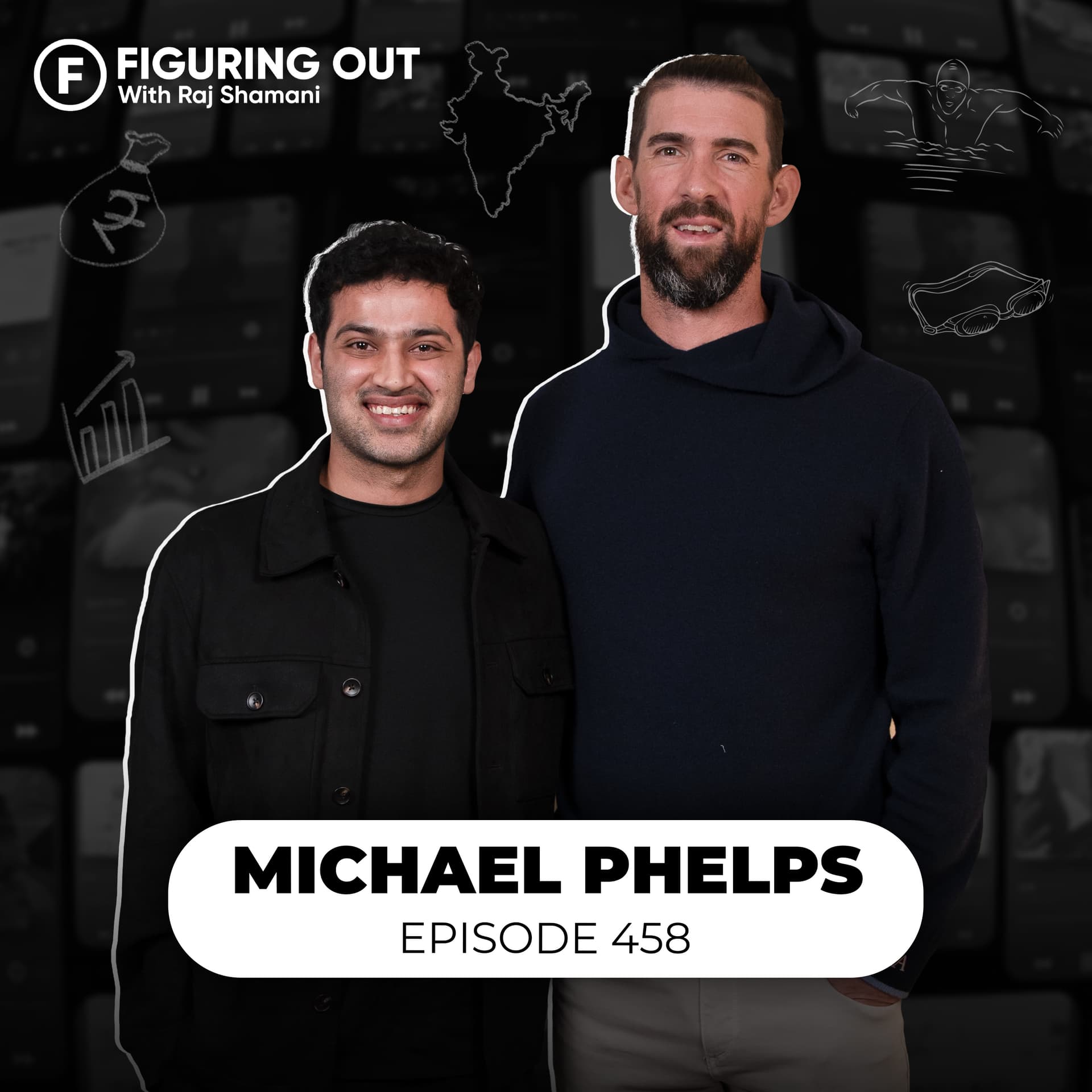
Why Michael Phelps Was Unbeatable: Obsession & Winning Mindset | FO458 Raj Shamani
Episode Description
In this episode, Raj Shamani hosts Michael Phelps, the most decorated Olympic athlete in history, to discuss the mindset, preparation, and obsession that contributed to his unprecedented success in swimming. Phelps shares insights into his journey, struggles, and the mental framework that fueled his achievements, emphasizing the importance of preparation, visualization, and resilience.
---
Key Themes and Takeaways
Introduction
- Raj Shamani's Purpose: Aims to help individuals grow and win in life, focusing on self-improvement across various domains like business, relationships, and health.
- Michael Phelps: Most decorated Olympian with 28 medals, shares lessons from his career.
The Unbeatable Mindset
- Obsession with Winning: Phelps reveals his hatred for losing, which drives his competitive spirit. He mentions he enjoys winning but hates losing more.
- "Can't" is Not an Option: His coach removed the word "can't" from his vocabulary, emphasizing the importance of a positive mindset.
Childhood and Early Influences
- Living with ADHD: Phelps discusses how swimming served as an outlet for his restlessness and frustration as a child.
- Supportive Family: His family, particularly his mother, played a crucial role in nurturing his passion for swimming.
Training Regimen
- Intensive Training: Describes a grueling schedule of daily workouts for years, emphasizing consistency and dedication.
- Psychological Techniques: Utilizes visualization techniques to prepare mentally for races, focusing on perfect execution.
Competing at the Highest Level
- Handling Pressure: Discusses the mental pressure of Olympic competition and the importance of focusing on his performance, not competitors.
- Race Strategy: Phelps developed race strategies based on meticulous preparation and understanding his competitors.
Achievements and Reflections
- 2008 Beijing Olympics: Phelps reflects on his unprecedented achievement of winning eight gold medals in one Olympics and the feeling of invincibility during that time.
- Post-Career Reflections: Expresses a desire to help others through mental health initiatives, emphasizing the importance of discussing mental health openly.
Goals and Mindset
- Dream, Plan, Reach: Phelps shares his principle of breaking down big dreams into actionable plans.
- Accountability: Stresses the importance of holding oneself accountable for actions and staying committed to goals.
Mental Health Advocacy
- Struggles with Depression: Opens up about his battles with depression and the significance of seeking help.
- Stigma Around Mental Health: Advocates for open discussions about mental health issues, highlighting their impact on athletes and the general population.
---
Conclusion and Closing Thoughts
- Living in the Moment: Phelps emphasizes the value of focusing on the present and being fully engaged in activities.
- Continuous Growth: Stresses the importance of lifelong learning and adapting to new challenges beyond athletics.
- Future Aspirations: Aims to contribute to mental health awareness and support for individuals struggling with similar issues.
---
Notable Quotes
- "I hate to lose more than I enjoy winning."
- "Preparation is everything. If you're not prepared, then you're going to get second or third."
- "Dream, plan, reach."
- "It's okay not to be okay."
---
Episode Highlights
- Time Stamps:
- (00:00) - Intro
- (04:48) - Who is Michael Phelps?
- (15:01) - Water as His Coping Mechanism
- (22:31) - Hating to Lose & an Obsession with Winning
- (49:13) - Training Every Day
- (1:42:26) - Not Coming First Feels Like Losing
- (2:01:26) - Future Plans & Mental Health
- (2:10:34) - Outro
---
Follow Michael Phelps
- Instagram: [m_phelps00](https://www.instagram.com/m_phelps00)
---
This episode serves as an insightful exploration of the mindset and habits that led Michael Phelps to extraordinary heights in athletics, coupled with his evolving perspective on mental health and personal growth.
Written by AI. May contain mistakes. Listen to the episode to check what was said.
Chapters
Tap a time to open that second in VOThe Obsession to Win
0:45 to 2:42
Exploration of Michael Phelps' intense desire to win and his mindset.
“I'm taking care of me and I'm focusing on what I need in that moment.”
Training and Preparation
2:42 to 4:43
Phelps shares his daily training routine and mental preparation for success.
“A lot of people say why and I say why not.”
Life Beyond the Pool
4:43 to 8:22
Michael discusses his transition from athlete to advocate for mental health.
“Um, you know, I think for me going through what I went through the tail end of my career, um, really helped me explore more about who I am.”
Childhood Challenges and Motivation
8:22 to 13:21
Phelps reflects on his childhood struggles and how they fueled his drive.
“something that was a big priority for my mother.”
The Power of Quotes
13:21 to 14:01
Michael discusses the importance of motivational quotes throughout his career.
“And I'm sure there's still our teachers out there in the world that are like that.”
Motivational Quotes and Their Impact
14:01 to 15:00
Learn how motivational quotes influenced Michael Phelps' mindset.
“my coach would always put quotes on the top of the workout, um, motivating quotes or just quotes that people need to hear that for me that I need to hear, um, you know, for, for whatever you're going through life.”
The Emotional Escape of Swimming
15:01 to 17:30
Discover how swimming served as an emotional outlet for Phelps.
“I was super sensitive to every little part of the water in my body.”
Finding Focus in the Pool
17:31 to 19:10
Explore how the water provided Phelps with a sense of calm and focus.
“and my middle sister Whitney was traveling all over the world and she was on world championship teams.”
Screaming as a Release
19:11 to 21:40
Understand how Phelps used screaming to manage frustration and stress.
“So, you know, we taught them this thing called a lion breath where you take a deep breath and you roar like a lion and you scream as loud as you can.”
The Drive to Win
21:41 to 24:50
Uncover Phelps' obsession with winning and the origins of his competitive spirit.
“Like when I'm in the weight room now, like I was just traveling overseas and, and I was lifting in, I think it was Mumbai and I was in the weight room and I was like grunting.”
Show all 65 chapters
The Role of Preparation in Success
24:51 to 27:30
Learn why preparation was key to Phelps' unparalleled success in swimming.
“You know, I had a couple losses that I can name for through my Olympic career, but there wasn't another person on this planet that was more prepared than me.”
A Coach's Vision for the Future
27:31 to 28:00
Hear the story of how Phelps' coach saw his potential at a young age.
The Decision to Focus on Swimming
28:00 to 29:00
Learn why the speaker decided to focus solely on swimming and the impact of playing multiple sports.
“Like the more I talk to the professional athletes from all sports, all walks of life now, that's the same thing they did.”
Trusting the Coach's Vision
29:00 to 30:00
Discover how a coach's confidence transformed the speaker's belief in their Olympic potential.
“He would say jump and I would say how high.”
Preparing for the Olympic Journey
30:00 to 31:00
Explore the close relationship developed with the coach and the journey to the Olympic team.
“And honestly, I think back to the question you asked earlier, you know, he then became a father figure in my life.”
Learning Technical Skills
31:00 to 32:50
Understand the importance of technical skills and the rigorous training in swimming.
“WR on the top of it and for people who don't know that means world record and I was like what's this he goes, you're going to break a world record in six months.”
The Process of Shaving Off Time
32:50 to 33:50
Learn how small technical details can significantly impact performance in swimming.
“It was absolutely miserable sitting there watching my friends train and be in a practice.”
Ambition in Coaches and Athletes
33:50 to 35:50
Discover the shifts in ambition between the speaker and their coach over time.
“My warmups were the same at every single meet from the time that I was 13 or 14 to the time I retired.”
The Olympic Dream
35:50 to 37:20
Understand the mindset behind not just making the Olympic team, but aiming for gold.
“have the, the relationship that we had for as long as we had.”
First Olympic Experience
37:20 to 38:20
Explore the emotions and challenges faced during the first Olympic games at age 15.
“But it's how do I get faster than my trial swim, right?”
Lessons From the First Olympics
38:20 to 40:50
Learn what was taken away from the speaker’s first Olympics and how it shaped future performances.
“So I dropped 98, one hundredths of a second and I missed a medal by less than three tenths.”
Reflections on Olympic Performance
40:50 to 42:00
Reflect on the outcome of the first Olympics and how it influenced motivation for future competitions.
“And especially in Australia where swimming is the number one sport, right?”
The Drive for Improvement: Overcoming Disappointment
42:00 to 43:40
Learn how past failures fueled a relentless pursuit of success.
“Me falling short of a goal there probably gave me more motivation to rip into that next four years to make sure I don't have that feeling again.”
The Training Regimen: Consistency and Commitment
43:40 to 46:00
Discover the rigorous training philosophy that propelled athletic success.
“But for me, it was right back into it because in the sport of swimming, when you miss one day, it takes you two days to get back to where you were.”
Obsession vs. Passion: The Mindset of a Champion
46:00 to 48:00
Understand the fine line between obsession and passion in pursuit of greatness.
“Because we had a goal back then of trying to be top 10 in the world in every single stroke.”
Daily Rituals: The Small Things Matter
48:00 to 50:40
Learn about the daily habits that contribute to peak performance.
“Um, for me, yeah, I mean, I, I would say I became obsessed, but I think it's that fine line between obsession and passionate that I always started with.”
Training Under Pressure: Adversity in Practice
50:40 to 55:00
Explore how training under adverse conditions prepared athletes for competition.
“The age of 15, 16, because I mean, I was professional at 15 or 16 years old.”
The Importance of Visualization and Emotional Control
55:00 to 56:00
Discover how visualization techniques can enhance performance in high-pressure situations.
“And naturally, my cap rips at the Olympic final as I'm getting ready to get up on the block for the 4x200 free relay.”
Emotional Control in Competitive Sports
56:00 to 56:40
Learn about maintaining emotional control under pressure to perform your best.
“If I lose, if my cat rips, my goggles break, they fill up with water.”
The Journey to Achieving Goals
56:40 to 57:40
Understand the importance of preparation and setting interim goals to achieve long-term success.
“I always hope that people can relate to, but, um, when you're trying to accomplish a goal, you know, obviously it's not going to happen like that.”
Passion and Frustration in Training
57:40 to 1:00:20
Explore the intense relationship between an athlete and their coach during rigorous training.
“I mean, by him and I have gotten in so many different arguments and, and I mean, it's almost like we were like a married couple, you know, just like fighting over like the smallest little things.”
Competitive Training Environments
1:00:20 to 1:02:00
Discover how fierce competition among peers can drive an athlete to excel.
“Um, cause that was on a video that was on a, uh, documentary that we did.”
Visualization Techniques for Success
1:02:00 to 1:07:40
Learn how visualization can enhance performance and prepare for competitive scenarios.
“training groups, you know, in my opinion, that we've had, there was every single day, there was a handful of the guys that were just going at each other.”
Controlling the Controllables
1:07:40 to 1:10:00
Understand the concept of controlling factors within your control to maximize success.
“If you don't do those three things, you're not fully prepared.”
Training Techniques and Olympic Mindset
1:10:00 to 1:12:08
Learn about the mental strategies and training techniques Michael Phelps used during competitions.
“And also I was unable to take my goggles off because when I would swim, I would wear my goggles, one cap, two cap, another cap.”
The Alien Phase: Unbeatable in 2008
1:12:08 to 1:14:48
Explore Michael Phelps' mindset during his historic 2008 Olympic performance.
“And what was going on in your head at that microsecond when you knew that goggles?”
Preparation and Pressure Before Big Wins
1:14:48 to 1:17:24
Understand the rigorous preparation and pressure Phelps felt leading up to his Olympic successes.
“Um, I just felt like I was super prepared.”
Training Regimen During the Olympics
1:17:24 to 1:19:10
Discover the daily training and routine Phelps maintained during the Olympic Games.
“he said, no one will ever win eight gold medals in an Olympic games.”
Goal Setting and Daily Motivation
1:19:10 to 1:22:30
Learn how Phelps set and tracked his goals to maintain motivation throughout his career.
“there in the afternoon or nighttime i had one i typically had one session off every every uh every major major competition um and and by that point i needed it yeah i was so tired by the end to those meets, man.”
Daily Training Goals and Insanity
1:22:30 to 1:24:00
Gain insights into Phelps' daily training goals and his definition of insanity in sports.
“Because taking steps back just, it crushes you.”
Daily Practice and Setting Goals
1:24:00 to 1:25:11
Learn how daily practice and specific goals contributed to success.
“To be able to add those times together to make the right splits.”
Competing Against the Clock
1:25:11 to 1:26:24
Understand the mindset of competing primarily against personal bests.
“was more prepared for me in those two decades of my career on this planet.”
Learning from Competitors
1:26:24 to 1:27:38
Discover how observing competitors can enhance your own skills.
“Just because like if they're doing it, then I can do it and I can beef it up.”
Motivation Through Doubt
1:27:38 to 1:29:06
Explore how doubt from others can serve as motivation to succeed.
“Um, but yeah, it was, it was just, I don't know.”
The Importance of Preparation
1:29:06 to 1:30:23
Learn why preparation is crucial to avoiding the feeling of defeat.
“I was just giving you a little extra motivation.”
Fear of Losing
1:30:23 to 1:31:49
Understand the emotional impact of losing and how it drives excellence.
“Cause it feels like shit when you lose, it feels like shit when you fail.”
Psychological Tactics in Competition
1:31:49 to 1:33:20
Examine the role of psychological tactics in sports competition.
“And, and I think they'll say they hate losing more than they enjoy winning.”
First Olympic Gold Medal Experience
1:33:20 to 1:35:04
Relive the emotions of winning the first Olympic gold medal.
“and I'm focusing on what I need in that moment.”
Reflecting on Olympic Achievements
1:35:04 to 1:38:05
Discuss the difficulty in enjoying victories during a competitive schedule.
“forget which one it was uh and he came jumping across the lane line and we hugged and celebrated it was fucking awesome like that kid is one of my favorite humans in the planet i love training with him.”
Winning Mindset: Recovery and Focus
1:38:05 to 1:40:00
Learn how Michael Phelps managed his recovery and mental focus during the Olympics.
“Do I have to eat a power bar or something like that now?”
Living in the Moment: Lessons from Parenting
1:40:01 to 1:42:05
Discover the importance of living in the now and how it shaped Phelps' career.
“I think there's a book that I have probably read a dozen times, The Power of Now, Eckhart Tolle.”
Sacrifices for Success: The Price of Gold
1:42:06 to 1:43:50
Explore the sacrifices Phelps made in pursuit of his Olympic success and how it shaped his outlook.
“But isn't it really cool winning 23 Olympic gold medals too?”
The Pressure of Perfection: Phelps' Struggles
1:43:51 to 1:46:24
Understand the pressures Phelps faced after winning multiple gold medals and his desire for freedom from competition.
“I wanted to just grow up a little bit and not just literally all be about swimming.”
Mindset and Rivalries: The 2016 Olympics
1:46:25 to 1:49:18
Hear about Phelps' mental state and rivalries during the 2016 Olympics, including an intense moment with a competitor.
“But you say that only 2016 where you've given 100%.”
Instinct and Technique: The Winning Touch
1:49:19 to 1:51:24
Learn about the physical and mental techniques that led to Phelps' victories, including his instinctual responses.
“And I looked at both of them and I was like, oh shit.”
Preparation and Precision: The Key to Winning
1:51:25 to 1:52:04
Discover how meticulous preparation contributed to Phelps' success and his approach to racing.
“I mean, the very first thing that I do when I finish is snap, turn and look at the board.”
The Mental Game of Swimming
1:52:04 to 1:54:02
Learn how Michael Phelps prepares mentally before races and manages his nerves.
“And if there's a, if I see this, yeah, that's it.”
Music as Motivation
1:54:02 to 1:55:21
Discover the role of music in Phelps' pre-race routine and mindset.
“I just want to listen to my beats, listen to my, like the lyrics or whoever I'm listening to at that moment, just to put me in the zone.”
The Phelps Protocol for Success
1:55:21 to 1:57:21
Explore the essential principles Phelps uses to cultivate his winning mindset.
“And I always try to get it in a certain spot of the song before I took it off.”
Building Habits for Greatness
1:57:21 to 1:59:25
Understand how small daily habits contribute to long-term success.
“It's trying to simplify every little small detail.”
The Importance of Mental Health
1:59:25 to 2:01:09
Learn about Phelps' experiences with mental health and the importance of seeking help.
“20 minutes, 30 minutes before that, I didn't even want to come into the gym.”
Overcoming Depression and Anxiety
2:01:09 to 2:03:15
Phelps shares his struggles with depression and strategies for coping.
“I mean, I guess the easiest way to say things is simplify it, right?”
The Journey with Mental Health
2:03:15 to 2:05:59
Explore Phelps' ongoing journey in understanding and managing mental health.
“help and care they need and deserve or trying to learn more about it.”
Facing Anxiety and Embracing Emotions
2:06:03 to 2:07:28
The speaker shares personal experiences of anxiety and the journey of self-acceptance.
“Um, you know, I, those two are the things that I can talk about because I struggle with them.”
Learning from the Greatest: Mindset Insights
2:07:28 to 2:10:30
The discussion revolves around learning from top athletes and the importance of mindset.
“Thank you for taking us through your mindset.”
Transcript
Automatic transcript. May contain errors.0:00Michael Phelps, of course, is the most decorated Olympian of all time. If he was a country, he would have the third most swimming medal ever. Where did this obsession of winning come from? Hating to lose. I hate to lose more than I enjoy winning. How did this come up? One thing my coach took out of my vocabulary was the word can't. Because it's going to be exponentially harder since you told yourself you can't. 28 medals. The second youngest male swimmer to qualify for a U.S. Olympic team. And what goes on in your head before even the race starts? When I'm on the block, nothing. I'm like a dog trying to get out of the cage.
0:38Like I'm just... Did you use any psychological warfare sort of tactic against your competitors? I'm taking care of me and I'm focusing on what I need in that moment. I don't give a shit about my competitors in that moment. When I'm on the pool deck, it is a full-blown war. I want to absolutely destroy something. Was there anyone you secretly feared as a competitor? No. I beat everybody. I didn't care who you were. I'm the shark in the water. If I smell that smallest ounce of blood, I'm going to destroy. Tell me about that phase, which is your 2008 Beijing, where you won eight gold medals. History in Beijing for Michael Pounce.
1:19Eight for eight. Those two years, I felt unbeatable in the pool. I literally felt like there wasn't a single soul on the planet that could touch me, that could beat me. Training an interview which you gave, the interviewer asked you that you have won 28 Olympic medals in your life and you said no, just 23 that count. I medaled in 28 out of 30 of my races at the Olympic Games. 23 are only the ones that we need to talk to. Silver is losing. We are second. We lost. Third place. We lost. I don't talk about the other five. It's gonna be gold. It's gonna be a new world record. Once I did make that Olympic team, when I got fifth, I was pissed because I didn't want a piece of paper that somebody said congratulations you came and competed i came because i wanted something around my neck i'm there to hear my national anthem play that's it tell me the first time you won the gold medal i couldn't get caught up in that one moment even though it was special so that gold medal is like all right finished what's next walk me through four five techniques or certain things that you would do in that five six years of training where you were truly preparing to win gold.
2:26We'd start in the morning with a training session, eat plates of food for breakfast, go home, take a nap, wake up, eat something else, go back to the pool, go home, eat, sleep, wake up and do it all over again. Every day for six years. Six year stretch where I didn't miss a single day. A lot of people say why and I say why not. There wasn't a single person on this planet during those 20 years pretty much in my career that was more prepared than me. That's why I got the results that I got.
3:02Five Olympic games, 28 medals, 23 of them gold, 39 world records. If this man was a country, he would have been the third highest country with the medals. There is no other human being, there is no other athlete in the world who has achieved this much in a single sport as much as this person has achieved. He's a beast, he's a maniac. He's achieved numbers that no human has ever touched. He's achieved numbers that might never be touched again. And for six years straight, this man trained every single day. No Sundays off, no holidays, no Christmas, nothing, no excuses. How did he build this beast wild mindset?
3:49While the world was moving, he was training like a maniac. He was obsessed, trying to be better, faster, just by one second, just by half a second. And today, on figuring out, we're sitting with this beast, the absolute goat, it's an honor to do the podcast with Michael Phelps. The greatest athlete, the greatest Olympian, the athlete which has never existed before and the world has never seen. And in this conversation, we're going to figure out what it actually takes to absolutely become the champion and to build a mindset of a beast so that you kill it every time you enter the arena. This podcast is like the masterclass of an athlete mindset.
4:39If you want to win this year, watch this till the end.
4:48you know actually before i even i even start this how about
4:57for 0.01 percent people who have no clue who you are why don't you tell us michael who are you i was a swimmer at one point in my life um won a couple gold medals broke a couple world records um competed in five olympic games um i'm a father of four now i have four boys nine seven six and almost two um yeah and i think a lot of what i try to do now is is really promote healthy and active lifestyles, whether that's water safety with my foundation, um, or it's really trying to open up the world to the importance of mental health. Um, you know, I think for me going through what I went through the tail end of my career, um, really helped me explore more about who I am.
5:57Um, but also I think with me showing my vulnerability and opening up and talking about the struggles that I go through, I've been able to hear others or see others that have become vulnerable around me and shared what they go through. And for me, I think the second part is way bigger than the first part because the second part, we're dealing with life and death. The first part was awesome. It was like, don't get me wrong. It was incredible hearing my national anthem play and, you know winning a bunch of gold medals but you know the fact that life and death is also in play with so many people I think I I just read a stat my wife just sent it to me yesterday it was this is kind of crazy to me suicide's the second leading cause of death for people 10 to 34 for.
6:59So for me, that's why I say the second part is so much, it's so much bigger. Um, you know, just being, again, being able to save a life, uh, is a thousand times better than winning an Olympic gold medal. Um, and for me, just being able to have the platform that I had, that I have, um, to give me the chance to, to speak what I'm passionate about is, is really special. let's try to understand both the phases of your life part one part two but before we go there i want to understand something about you when you were a child like from the beginning tell me what do i need to understand about you when you were 10 years old you were unable to sit in a class you saw your parents relationship falling off you were restless and not able to just cope up with everything which normal kids do yeah what do i need to understand about that michael um which helps me understand everything that came after yeah i mean i think for me uh you know going back even before 10 you know when i was seven years old i was you know non-stop kind of bouncing off the wall you know i was always around the pool my two older sisters swam so i was around the pool all the time so water safety was something that was a big priority for my mother.
8:24And, and, you know, once I was in the water and I was safe there, you know, I was just kind of playing around the pool all the time. So that's when I got into the water and then the water was kind of a release for me. You know, being able to kind of swim as hard as you want to go faster with, you know, anger, if you might have it, was something that I enjoyed. Um, yeah, it wasn't great dealing with anger as a seven, eight, nine, 10 year old kid. Um, but for me, it was an outlet. Um, and it was something that, that, you know, I ended up falling in love with and, uh, yeah, I mean, I, I remember in, uh, middle school, I was told, uh, by my teachers that I would never buy, excuse me, by a teacher, that I would never amount to anything.
9:21And I still remember her name and I still remember what she looks like. I still remember where I was sitting in the class. And I think at that point, for me, I used it as motivation. You know, the fact that a teacher, number one, would say they're doubting a student and not knowing how to deal with them, I think is saddening. It's upsetting. um but for me i was like watch this i'm gonna prove you uh and i think at the time that was pretty much when i had stopped taking um ritalin which was for my adhd uh so my adhd i literally was like i was all over the place i was leaning back in the chair on the back legs leaving dents on the in on the floor in the classroom always getting sent to the principal's office and honestly, I just had a really hard time sitting still.
10:15Um, and at that point my mom was, you know, I was playing baseball, I was playing lacrosse, I was playing soccer and I was swimming. I was playing all these different sports just to try to get the energy out of me. My mom was just like, I don't know what to do with them. Um, and it's crazy fast forward now to where I'm 40 and I have four kids. It's the same way. Their kids are nonstop. Um, but I think, you know, going back to that point i i think swimming really gave me something to focus on um yeah i was that well i still am that kind of add kind of all over the place jittery like kind of always moving around like that's just who i am that's my personality so you know i think over time i naturally took something that somebody labeled me with having or being a less than of a kid I took that into almost really making it a superpower because it gave me the ability to focus on things that I was really passionate about.
11:17So your teacher said she must have noticed and the rest of the world just noticed how you were as a kid who was restless, not able to sit anywhere. What do you think that teacher didn't get or the world didn't get about that kid who was not able to sit properly? because you definitely had something in you and you just thought she didn't know how to, whether it's a lack of better way of saying it. Like I didn't, I don't think she wanted to deal with me or knew how to deal with me or knew how to handle me or knew how to taught me, teach me. Right. Like she didn't, she just didn't know. Um, and you know, like for me, like my mother has been in education for 50 years, you know, like that's her passion.
11:59Her passion is being in the classroom to try to make an impact for a student, to try to help them take whatever they're learning in that year or that classroom and canapult it to help them into the rest of their life, to help transform them into what they want to be. And all of those steps need to happen. But when a teacher, you know, instantly shuts down on a kid, it just doesn't look good for the teacher. um but i mean i think i got like a c in her class so like let's be honest i was kind of like just get me out of here you know like that was my least least favorite class that i went to every single day which class was it english i hated english you know and maybe it was how she was teaching it to me because i had teachers that were great you know like i had teachers throughout my my elementary, middle and high school where they were awesome and they helped me understand when I had problems learning what everybody else was learning faster than what I was learning.
13:00Or if I was learning things faster than everybody else, then she gave me, he or she gave me stuff to help me stay focused. Right? Like I think it's just, everybody has a different mind and everybody is able to handle or control as much as they can. And she just didn't know what to do. It was sad. And I'm sure there's still our teachers out there in the world that are like that. And it is, it is unfortunate. It is sad. But to the kids out there who do have an experience like that, know that there are other outcomes that can happen in life. Um, I mean, people doubted me in the swimming pool too.
13:41And honestly, like for me, again, it was just, it was a form of motivation. That was it. You know, like if somebody wants to doubt me, like I've been on this kick lately where I've just been firing off quotes on Instagram, just like on my story, just ripping quotes off that just like hit me in the morning. And I'm like, I'm, I'm, I'm a big quotes person. And, and, you know, like throughout my career, my coach would always put quotes on the top of the workout, um, motivating quotes or just quotes that people need to hear that for me that I need to hear, um, you know, for, for whatever you're going through life.
14:13So yeah, I can, which one's the favorite quote now. I mean, my, my favorite quote is actions speak louder than words. You know, like that's, that's one of my all time favorite hands down quotes because it's true. You know, like you can say whatever you want, but if your actions don't back up those words, then all it is, is just a bold face lie, you know? So for me, throughout my career, I wanted to break this world record, win this gold medal, whatever it was. And I knew that there had to be a process on how to get there. I can't just say it and snap my fingers. There had to be every single day little baby things that were stacked on top of each other and little baby steps that were heading towards that goal.
14:57And if I was taking steps backwards, then I'm just cheating myself. what what do you think you said water became your escape and you were just always in the pool taking out your anger and everything like it became a coping mechanism in some sort and you were always in the pool what do you think what did water gave you emotionally which nothing else could um i mean my kids call me aquaman now so i guess it's kind of fitting um you know i i don't know I think thinking back to it and, you know, kind of being able to dive through my career a little bit inside the pool. I was super sensitive to every little part of the water in my body.
15:40Right. So like when I would swim, I'm feeling the water in the palm of my hands. Like that's where I'm feeling all the pressure. So if my shoulder, my, my arm or my body is not a certain way, then I'm not able to feel that. So it's all trial and error and trying to get in the right position. and naturally I think you know for me just being submerged in water I just felt at home I don't know for lack of better terms like you know even better even like now if I go into a big depression state or I'm just in a grouchy mood for a couple of days and workout hasn't helped and you know my normal routine hasn't helped whether it's the cold tub or the sauna you know I'll just get, you know, my wife will just kick me out of the house and say, go, go jump in the swimming pool.
16:29Um, because it's, it's kind of like the only place where I, I don't have anybody talking to me. I don't have to think about stroke. I don't have to think about what I'm having for dinner or what I'm making for dinner or what I'm doing tomorrow or this or that. I'm just there in the moment, right? Like I can just be, and I can swim for 500, which is, I mean, minimal compared to what I used to swim. Um, or I could swim 2000. It doesn't matter. Like just being able to be back in the water, being back into that environment, I think is kind of one of my reset switches, um, that kind of just levels me out.
17:14Do you think you were running away from something or you were swimming away from something or swimming towards something? I think I found swimming, yeah, as an outlet. But I think, you know, the reason why I found swimming is my two older sisters swam as well. So, you know, for me, kind of seeing what they were doing and my middle sister Whitney was traveling all over the world and she was on world championship teams. I was like, wow, that seems pretty cool. Like she was trying to go to the Olympic Games. And I was like, yeah, I want to go to the Olympic Games. Like, hell yeah. Like who doesn't want to go to the Olympic games?
17:47Um, and I just kind of followed and, and, you know, naturally as a kid, if you learn that you get good and you start getting faster, you kind of think how fast can I get? And that's kind of what I did, you know, like from the start and to the end of my career, I was kind of like, all right, how, how much faster can I get? Can I drop a second? Can I drop a half a second? Can I drop two tenths? Like what is the maximum potential that I have inside of me and how can I challenge myself in different ways? Something for me, like, again, like I would scream underwater. You can't hear me. Like I would call my coach every single fucking name on the planet.
18:32Like, sorry for profanity, but like, like I literally would like, because there were times where I was so frustrated and so angry and there was nothing else I could do, whether it was like my body was in pain, I mentally couldn't do it, or I felt like I couldn't do it. I would just scream. And then naturally I would still get through it and it would go well and blah, blah, blah, blah, blah. But it's like in that moment, like for me, screaming was one of those things. I would just let everything out. And it's something like, you know, we've taught our kids. Again, we have four boys and, and the emotions get high.
19:11So, you know, we taught them this thing called a lion breath where you take a deep breath and you roar like a lion and you scream as loud as you can. And again, with, I mean, the younger one doesn't scream that much, but like the three older ones, it's a lot of noise, but it's again, like we find once they're able to do that, their shoulders drop a little bit and they're able to have that conversation of what big feelings, emotions they're going through inside instead of carrying them along through life. Can you show me what is it? Like what's a lion's breath? Oh, you don't want me to scream in here.
19:43It's okay. You can just show it like a little bit more. No, it's just a small version of it. Obviously, you can scream as loud as you want, but it's literally just take a big, big, big, deep breath in and just scream as loud as you possibly can. And naturally, when you do that, your shoulders do drop a little bit, right? You are able to kind of come back to earth, right? Be your normal self. Like I always joke, there was the candy, the Snicker bars commercial. It's always, they always show them here, but it's a commercial where it's like, you take a bite of a Snickers and you just feel like your normal self.
20:21Like, I feel like that's what it is. Like what Snickers is saying, like when you have a sugar low, you eat some sugar and naturally you feel better. But here it's like, if you're stressed or you're frustrated and you take that deep breath, you're able to be like, ah, okay. So why am I going through that? What feelings and emotions am I going through? And you're able just to get it all out. Like for me, it's, you know, there are a bunch of different things that I do. Um, I don't do lion breasts that often, but, uh, when I'm in the pool, it's very easy to do it. Um, but yeah, I mean, there, there's a checklist that i have for my own mental health so you were so you used to scream inside the pool a lot or like underwater like underwater right like when i was going and taking like when i was doing my streamlines off the wall and i was kicking underwater i would there were a lot of f bombs that were said yeah that was one of my favorite words to scream underwater and people could hear it honestly like when you're in a set like person next to me would be like did you just scream and you're like, I did, I did.
21:22And they're like, all right, we have one more. And you're like, yeah, we got one more repeat. Let's go. Um, but it's, it's just, it's kind of like in the moment, like I feel like I needed, I needed to do that just to get through. Um, and everybody, I think probably has something different. Right. But that, that was just me. It was screaming underwater. It's same thing. Like when I'm in the weight room now, like I was just traveling overseas and, and I was lifting in, I think it was Mumbai and I was in the weight room and I was like grunting. It was like, and I like everybody in the gym, like looked at me and I was like, oh shit.
21:59And I'm looking into a mirror and everybody's face is staring right at you. But it's just kind of something that I do. I mean, I used to do it right when I get up onto the block, you know, right after I did my arm slap, it was something that I would always do, would just clear my throat so is it you were screaming a lot because you were obsessed with trying to win or was it a lot of different things it was probably yeah i wanted to win i wanted to push through whatever i was going through or i was emotionally just ready to snap and screaming was something that would help me where did this obsession of winning come from was it hating to lose but i hate to lose more than i enjoy winning even when you were like 9 10 11 how did this come up i don't know it was just something i always had like i always felt from from when i was a little kid like there was there was there was no second place that wasn't an option it's just something that i always i mean like i remember winning home run derby at 10 or 11 years old like i was the biggest kid playing lacrosse playing long stick midi just slashing people with the stick.
23:11Yeah. I mean, winning, winning was everything. Yeah. Do you think it has anything to do with not getting your father's approval when you were a kid? The absence of... I don't think so. Because I mean, I would say a lot of it probably came from him because he was kind of more of the athlete from my parents' relationship. He was a baseball player, a football player, track and field stud. I think he was the first person to get cut from the Washington Redskins back in the day when they were the Redskins. So winning or trying to be the best is something that in sports was something that he was, he was very good at.
24:02Like competition in sports, that was something that he excelled in. Um, I would say my sister Whitney and I are uberly competitive, more competitive than my older sister, Hillary, um, especially in sports. Um, there's, there's just, yeah. I mean, for us again, there was just, there is no second place. Um, you know, for me, it ended up becoming preparation, right? Like preparation is everything. If you're not prepared, then you're going to get second or you're going to get third or you're going to get last, right? Because there's always somebody that is overly prepared or more prepared than you are, no matter what.
24:41So for me, I just became that person. There wasn't a planet there. There wasn't, there wasn't a single person on this planet during those 20 years, pretty much of my career. You know, I had a couple losses that I can name for through my Olympic career, but there wasn't another person on this planet that was more prepared than me. Not period. There wasn't. That's why I got the results that I got. It's not rocket science. It's not. I put in the work. I got the results. That's it. Let's, let's go to your preparation time. And like when you first started with your coach and first, when your coach spotted you, in the same year he went to your mother and said that you're going to win an Olympics or you're going to be in the Olympics right what was that story tell me about it my coach came to North Baltimore Aquatic Club where I was swimming or my sister swim long tradition of excellence with that club in Baltimore you know from 1984 until 2016 there was at least one person on every single Olympic team.
25:54Well, so my coach came in 96 or right before 96, maybe 95. Okay. Um, and he was helping my sister's group a little bit, uh, my middle sister's group a little bit, prepare for, uh, Olympic trials and the Olympic games in 96. And then the group kind of split and he took over a different group. I think, I'm thinking I'm explaining this right way. Um, and then I remember seeing him while I was that kid playing at the pool, you know, I was only swimming like three days a week. Like I really wasn't training that much back then. And I would always play, play, play. And I would see him go up and down the pool, walk, run, arms up in the air, screaming, whistling.
26:44And I was like, like, I remember being like, you know, like if it was me back then, what I was thinking, I would be like, there's no fucking chance I'm swimming for that man. Like he is an absolute lunatic. Fast forward a year. I spent 20 years, 20 plus years of my life with that man. And he is my only coach. Um, but it's kind of crazy because, you know, seeing it, you know, I think at that age, I was like, man, like truly like this guy's nuts. Um, but what I learned, it was just the passion that he has and that he that he had back then that he still has today um but did he come to you or you know him so uh i was i was excelling in the group that i was in and and i needed to be in a higher group and and i was 11 years old at this time and the kids that were in that group were like 14 15 18 years old like way older way more mature um but i was faster than them so i i ended up swimming in that group and and i got to that group and and but before i got there my coach sat down with my parents and i and he's like well look like if if you know your son wants to make the olympic team in four years he can make the olympic team as an 11 i was 11 years old but he said that to you he said that to me and he's like but look he's like you got to stop playing baseball lacrosse and soccer but for me like looking back now like those playing those four different sports, I think naturally gave me a better body awareness.
28:15Like the more I talk to the professional athletes from all sports, all walks of life now, that's the same thing they did. Playing multiple sports, don't be super hyper-focused on one sport, but at a certain time, there's then going to be a decision that you have to make. It's just naturally, I feel like that's how it is in sports. If you really want to be the best at one sport, you have to make a decision at some point, um, just because of the process of development, this, that, and the other. Um, but back then, yeah, he, he sat down and said that. And I was like, all right, like, fine. Like I'll stop playing these other sports.
28:51I'll focus on swimming. No problem. And I just remember back then I, I was, I was the energizer bunny. Like he basically would wind me up and I would just go, He would say jump and I would say how high. Because he gave me that vision of wanting to go to the Olympic Games to then make the dream of winning an Olympic gold medal even bigger. Because, you know, I just thought about going and then I'm like, maybe I could win. Right. Like that would be pretty cool. When you were 11 and he said that to you for the first time that you could go to Olympics in the next four years, did you believe it? Or did you act like someone who believed it until it actually became true?
29:40I believed it because he showed confidence in me. As an 11 year old? Something that he saw of me in the pool gave him confidence that he could do that. He had already trained and worked with previous Olympic coaches, Olympic athletes, and he saw something. And honestly, I think back to the question you asked earlier, you know, he then became a father figure in my life. Right. Because I mean, I literally spent 25 years traveling the world with him. Right. So, I mean, like basically my whole entire life was hand in hand with him. Everything we did, swimming related, was together. And, you know, I think once I did make that Olympic team, that really, really made me trust him.
30:33Because I was like, like for me, because I know you said don't skip, but like when I made that Olympic team and I got fifth, I was pissed, but I was hungry. right because I didn't want a piece of paper that somebody said congratulations you came and competed it's not why I came I came because I wanted something around my neck that's it so I remember that day after my olympic final in Sydney the workout paper he wrote down it said WR on the top of it and for people who don't know that means world record and I was like what's this he goes, you're going to break a world record in six months. I was like, okay, sure.
31:15Let's see what happens. Sure enough. Six months later, I break a world record. So like, again, like that's where the whole trust really, really opened up. Um, but, but, you know, I think through, you know, from the time I got with him to the time I was 15, he basically just broke my strokes completely apart. Um, like he started from scratch. Uh, you know, I, I had some good things going on with my body and how I swam and the reach, obviously I have super long arms, long wingspan, short legs, really strong legs, um, short, but wide. My, my, my quads are huge. Um, so for me, like when I got to him at 11 years old, I still remember back in the day.
Read the full transcript
32:04So the people who don't understand swimming, a six beat kick is three kicks per one stroke. So it's one, two, three with your legs per one stroke. So he was teaching me the importance of a six beat kick. It wasn't at 11. I forget what age it was, But he said, every time you drop your legs in a practice and you don't do a six-speed kick, I'm going to kick you out. And the first day I got through like 500 of a 6 ,000-yard workout. Kicked me out. Next day, 2 ,000. Kicked me out. Next day, 2 ,500. Kicked me out. Next day, 3 ,000. Kicked me out. Next day, 4 ,000. Kicked me out. By the end of the week, I got to a full workout.
32:46And from that day forward, I never dropped my feet for a single stroke of freestyle for the rest of my career. Did I agree with what he was doing? No, it sucked getting kicked out. It was absolutely miserable sitting there watching my friends train and be in a practice. But I learned the importance of the small technical points that you have to have in order to be able to go wherever you want to go. right? Like it's almost like a college level class. You can't take the thousand level class without taking the one through nine, right? Like, so there's a process through it all. And he taught me that process throughout my career.
33:24And we were able just to sharpen up those tools, right? Like that's really all it became. Um, because, you know, throughout my career, we ended up, ended up just trying to shave off hundreds of a second. How do you shave off five, one hundredths of a second. Is it a turn? Is it a kick? Is it a streamline? What is it? Is it dive angle? Like what, how do we do it? Right. So it's trial and error, but it all started from those years. When we first started working together, I mean, whether it was mindset, whether it was goal setting, whether it was preparation routines you know, that's where stretching came into play, all that stuff to just get your body prepared.
34:06My warmups were the same at every single meet from the time that I was 13 or 14 to the time I retired. It didn't change. 8, 6, 4, 2 or 6, 4, 4, 2. Every single warmup. Who was more ambitious? You or your coach?
34:28you could probably say both of us at different stages of my career because i think leading up to 2008 i don't think there was anybody more ambitious than me post like 04 or 08 to 2012 he was way more ambitious he wanted and i just wanted nothing to do with the sport. Um, and then when I came back, I think we both wanted it. When I came back to finish in 16, um, we were both equally as hungry and wanting to do or wanting to finish, I guess, what we had started the right way. Um, because I mean, I I've said this and I'll say it a thousand times more, like there's not a coach on this planet that could have helped me coach me to be able to do what I was able to do.
35:25Not a single person. I was an asshole. I was a little shithead to coach. I know it. And he'd say it too. Um, and I'd say the same about him, but you know, I think again, like it's the passion that we had and, and we learned a lot about each other through the process, right? It was, you know, he had to adapt. I had to adapt because I wasn't that 11 year old kid that he once started working with when I was 30. Right. So just that change that we had to go through was, was, um, was important for us to have the, the relationship that we had for as long as we had. You, your coach also said people around you, everybody to not to say the word Olympic for two is, when was that, what was that duty i mean my mom when i made the olympic team in 2000 she like fully decorated the front yard with like all these american flags and like this that and the other and my mom's or my coaches bob goes this is the last time you're ever going to do this never again um and and i think because it's like i mean i think looking back at it now i would say because the goal wasn't just to make the Olympic team.
36:34That wasn't the goal. The goal was to win an Olympic gold medal, not just be a part of the Olympic games, but win the Olympic games, be a champion at the Olympic games. So I think once you get caught up in just making the Olympic team, then sometimes you might slip and not pay attention to the small details that are going to help you be your best self at the Olympic games. Right? Like, I mean, I see it and I see it with athletes that have been on Olympic teams with me, right? Like they have this dream of making an Olympic team. It's making, you know, that's it just getting there. It's not actually doing my best time at the Olympic games and potentially coming home with hardware.
37:19That was my goal from day one when I have my first Olympic race. Yes. But it's how do I get faster than my trial swim, right? For me, I wanted to drop so in the u.s we have olympic trials and top two people in each individual event get to go there's over 2 000 swimmers at that olympic trials and a maximum of 52 people will be on olympic team 52 out of 2 000 plus and those 2 000 will also come from like all over the place yeah so like but like you know i think it's just like god i just lost a train of thought what was i talking about you're talking about your olympic oh yeah okay now i got it you always wanted to just win the medal so yeah but like for me like when i made my first olympic team in 2000 it was about dropping a second from olympic trials to the olympic games drop one second if i can do that then I'm in, I'm in the realm of winning an Olympic medal, right?
38:24So I dropped 98, one hundredths of a second and I missed a medal by less than three tenths. And I had to wait another four years to have another chance. How did you feel like you were 15 when you entered Olympics? You were the youngest in the world to do that youngest since 1932 and then you you end up coming fifth sixth fifth how did you feel first time 15 year old youngest person fifth pissed upset they gave me a piece of paper like you have in front of you that says good job you competed you got fifth i don't want to get fifth i'm not there to get fifth i'm not i'm there to hear my national anthem play that's it.
39:11I mean, obviously that was a stretch for me at that time, but I think having that opportunity of getting fifth and representing my country and being at the biggest stage at such a young age, I think just only prepared me naturally for what was going to come. But you messed up in your first Olympics game, right? I think you, you forgot your paper. Oh yeah. I forgot my credential. Well, I didn't forget my credential. I took my roommate's credential. Um, I was roommates with another one of the younger guys in the team and, and, uh, I, we had our credentials just on like the handle of a door and I just ended up grabbing his instead of mine.
39:48We look nothing alike. So, uh, I ended up going to the pool and they wouldn't let me in the pool. I didn't have my credential. I tried to go back to the village and I couldn't get on the bus or get back in the village because I didn't have a photo of me on my credential. So that kind of delayed my warmup and my process of getting ready, um, the slightest bit. And I mean, I don't think that threw me off. I mean, because still, I didn't even tie my suit before the race. My, my strings of my suit were just tucked into my, like the top of my suit, which is, I mean, they're not going to fall off. The suits are so tight and so small.
40:27They are not going to fall off, no shot. But I mean, I just wasn't prepared. You know, I think the biggest thing I learned from that moment is, is just understanding what needs to take place at the most pressured moment. Right. You know, like for me, yeah, I've gone to the Olympic trials, but I never experienced what an Olympic games was, what a swim meet on different soil feels like. And especially in Australia where swimming is the number one sport, right? I mean, the floor was shaking. I remember it vividly. The floor was shaking because there was an Australian in my heat next to me who ended up getting third.
41:04I mean, like literally like it was, it was vibrating. There was 18 ,000 people on one side and then all the media and the dignitaries are on the left. And yeah, I mean like everything just threw me off. What was going on in your mind? I was a deer in headlights, just scared, not really knowing what the hell to do, But I knew that I had to just get up on the block and race. And that was something that, you know, still to this day, like I miss, like I loved, I loved competing. I loved racing more than anything on the planet. A chance for me to get up versus the rest of the world or versus the, like my teammates, my competitors in the US and have a chance to show who is the best.
41:45Yes. Every single time, because naturally, like I'll always go to that, that next level because because I don't like to lose. So yeah, getting fifth, it was terrible. It sucked. But again, I truly believe had I got a medal, 2004 might've been different, right? Me falling short of a goal there probably gave me more motivation to rip into that next four years to make sure I don't have that feeling again. I don't have that sadness or that disappointment again. Yeah. It took me a lot to just to make the Olympic team, but still like getting there again, you got to wait four years. I don't want to wait another four years.
42:32So again, like I want everything to be perfect when I have that chance. And I think having 2000, I think gave me the chance to do my trial run in 2004 to prepare for what was to come in 2008. So when you, when you came fifth with the paper, you came home and now you're like, I don't even know where that paper is. Whatever that thing is. Honestly, like, it's just like a, like a participation. Yeah. Like, and she's like here and I'm like, I don't want it. And then you came home and you're thinking like 2004, it's going to be my year. I'm going to come back home with gold medal. if I could place a camera in your head, what was going on in your head?
43:13Like first day when you just came back from, well, I knew it, you know, like back to that story of getting back into training the day after, you know, that's something that, that naturally athletes don't do coming off in Olympic games, right? Like you, you kind of take that four weeks, like two to four, four to six weeks, four to eight weeks, kind of just to recover, to get back into that cycle, um, to prepare for an Olympic games. But for me, it was right back into it because in the sport of swimming, when you miss one day, it takes you two days to get back to where you were. So if you miss two months, it's going to take you four months to get back to where you were.
44:03So for me, from 2000 into 2001, I didn't miss a step, right? I was right back into training. I mean, I went back into training. I mean, I would say I probably did a 5K, over 5K. I think I did like 8 200s or 10 200s backstroke long course in lane one in the Sydney warmup pool the day after the 200 fly in 2000. And on the top of the paper, it said WR in six months at nationals. And I went to nationals six months later, which are world championship trials, um, for that following summer in Japan. And the last 50, I came back on the existing world record holder at the time, Tom Mouchau. and I ran him down 10, 15 meters to go.
44:56Um, and I broke the world record one 54 92. Um, and that kind of catapulted me into that next summer. I won my first world championship at 16 and rebroke the world record. Um, and then from that point forward, rebroke it in 2002, rebroke it in 2003, rebroke it in 2004 when I won the gold medal. Um, it was just, did I? No, I didn't break it. I didn't break it in 2000. Not winning the gold medal, but I did break it in that year, in that calendar year. I just went on a tear. And I think kind of once I got that taste of success, like I was saying earlier, that was, you know, for me, it was, what else can I do?
45:39How much faster can I go? And I think that's when we started expanding and swimming different events, right? Like I was swimming the 200 IM. I started swimming the 400 IM, the 100 fly, the 200 free, the 200 back. In 2008, I was the American record holder in the 100 freestyle. I just became super versatile, and that was something that we started back early when I was working with Bob. Because we had a goal back then of trying to be top 10 in the world in every single stroke. Butterfly, backstroke, breaststroke, and freestyle.
46:15But you took four days off from 2000 to 2004. pretty much yeah because i had wisdom teeth and i think maybe like i wouldn't even say i got sick like i mean even if i was sick i was still in the water i was still training um because you're so obsessed with training and you believe that even one day off is going to take you two days back well why do you even take four days off then well i had to i mean i had to later in my career for certain surgeries i had hand surgeries throughout my career um but i think at that point it was if I'm not taking the opportunity that I have, then somebody else is going to take that opportunity away from me.
46:54And I want the opportunity to be mine. So for me, it was, you know, I think it was all about control. What can you control? I can control not getting sick by taking care of my body. Right. So I think naturally over time, I learned how to take care of my body. But did you feel guilty on the days when you were off? Do you feel bad? Like shit? It sucks. Yeah. Like, I mean, it sucked because I was missing an opportunity and a chance, but once you're going through surgery, if you have surgery, then it's kind of like you need to give your body some kind of recovery. Um, I don't think it really hurt taking those days off.
47:35Um, because I think then after that, I was like, I went on a six year stretch where I didn't miss a single day. Um, and a lot of people say why, and I say, why not? Right. There's no blueprint on how to win eight gold medals. There's no blueprint on how to break 39 world records. There's no blueprint on how to win 23 Olympic gold medals. Um, the only thing you can do is trial and error. Um, for me, yeah, I mean, I, I would say I became obsessed, but I think it's that fine line between obsession and passionate that I always started with. Um, and I, I was over, I was overly passionate about trying to be the absolute best, you know, for me at such a young age, I, I, I had a goal of, of doing something that no one has ever done in the sport and also changing the sport and taking it to a new level.
48:28So there wasn't going to be anybody that was going to stand in my way of doing that. You know, I, I looked up to Michael Jordan and what he did, you know, on the court of, uh, on the basketball court. And, and, you know, no matter what he was going through physically, mentally, personally, um, you know, when he was out there performing, he left every single ounce on the basketball court. You know, he had the flu and the flu game still dropped what 50, 40, 45. Like, yeah, right. Like there was just no excuses. Right. So, um, for me, every single day is an opportunity to get better. No matter how yesterday went, if you had a bad day yesterday today is a different day period that's it you can't live in the past and you can't live in the future the only thing you can do is live in the present walk me through four or five techniques or certain things that you would do in that five six years of training where you were truly preparing to win gold you know i'll tell before you actually go there i'll tell you one of the most washed michael phelps video is a clip by me which is funny on the internet because i was researching for this this uh podcast and i i typed on youtube the most watch michael and in that clip i'm explaining where in one interview he said that there was there was a phase in your life probably six seven years where somebody's asking you that what was the what's the reason of your success why do you win and you say just train every day yeah and they say that's the small things yeah and then you said no train every day yeah no christmas yeah no party nothing no flu just train every day and that that clip is ruined for some reason but explain me what happened in those six years i mean it's it's it basically really is what can you control what is in your control every single day and it's like you're eating you're sleeping you're drinking water you're stretching if you're sore you're lifting if you're trying to get stronger.
50:25You're working on your endurance and staying in your endurance level, working on heart rate. If that's what you're trying to improve, there are so many different little small things that you can do depending on what your goals are. So for me, it's, it's how can I be prepared every single day? Right. So like, if I go back to that point, you know, after the 2000 Olympic games, like it wasn't, you know, it was probably 2002, 2003 where I started doing ice tubs, right so it's recovery how can i how can i recover my body and my mind every single day to make sure that my body if i'm treating it like a ferrari and i want it to go that fast every single day i have to recover i have to treat my body with with love right so if i'm not eating if i'm not stretching if i'm not drinking water if i'm not sleeping if i'm not staying off my feet If I'm not all of these small things, then I don't have a chance to be my best during those two to four hours when I'm in the pool every single day.
51:24So it became literally a full time job. The age of 15, 16, because I mean, I was professional at 15 or 16 years old. So I treated it like a job. Everything I did was eat, sleep and swim. Sure. I was in school and I was in school through high school. And then I took six months of credits at Michigan and decided that I needed to focus on swimming. And that's what I did. But yeah, I mean, like it was like we'd start in the morning with a training session and then I would go and eat a bunch of plates of food for breakfast just to recover from the, you know, 7 ,500 yard workout we just did. um go home take a nap wake up eat something else go back to the pool train for two hours go home eat sleep wake up and do it all over again it literally like it became a job at such a young age every day for six years every day yeah so but your coach also created adversities during the training what was what was it like why would you train like like put do it in the dark do it without water do it i mean like there were so many different things he tried to do just to physically or just to mentally prepare us i think for things that we were going to go through or could potentially go through tell me worst three um i mean like he would break my goggles or step on my goggles on purpose to teach me to make sure i had a backup pair.
53:06And naturally in 2008, my goggles fill up with water as soon as I dive in. And I had to revert back to a training, a training habit that I did to help me count strokes to get through that race. And naturally I hit the wall at the right time, but I was able to win and I was able to break the world record too. So, you know, I think the things that he did like breaking my goggles or, um, you know, like I, I, I've had my suit rip, right. And, and, you know, during that time, if you're getting ready for an Olympic final or a world championship final and your suit rips, your emotions are going to change.
53:46Right. So I was able to then, because of what I went through, whether it's from the breaking the goggles or, or, you know, going 10 workouts a week where I'm going 10 ,000 meters every single session and going a hundred K bang, bang, bang, just every week. Um, I think it just gets you relaxed in those super high pressured, tense moments when all of these lights are on and there's millions of people staring at you. Oh, and by the way, we're swimmers, so we're half naked, you know? So it's like, um, but, but I think that's what it was. Like he was just, uh, he was obsessed with, with being overprepared.
54:27Um, you know, yeah, it's probably a little psychotic in ways, but, um, you know, looking back at it, I understand why he did what he did, why he challenged me mentally. Um, when things were uncomfortable, right? Like, you know, I remember having to swim without goggles. It sucks. Your eyes hurt, right? They burn after swimming for two hours without goggles. Trying to swim a race without goggles. No, it's not fun. But after doing that, I learned. And naturally, my cap rips at the Olympic final as I'm getting ready to get up on the block for the 4x200 free relay. I have to naturally calm myself.
55:17I asked for a teammate's cap. And I know that I can't represent his brand. and I know I can't represent his name. So I had to flip the cap inside out and just some of the black cap. But in that moment, you're calm because you've prepared for it. Right. So like, I mean, even like visualization, visualization is something that we did my whole, my whole entire career. Uh, and it would be three different ways how you want, or you would play three different tapes, how you want the race to go, how you don't want the race to go. And what if, Right. And how and what if this happens in the race? How do you how do you adapt?
55:58How do you adjust? Right. So it doesn't matter what happens whenever I get there. I'm prepared. If I lose, if my cat rips, my goggles break, they fill up with water. It doesn't matter because my emotions will stay in check. and if you can handle your emotions in the most tense pressured situations then you're able to be the best version of you right so like you know going back to 2008 i think it was you know for me i think it was you know lack of better terms it was like i i was in the matrix like literally time slowed down like i was just like all right cool like i'm more prepared let's go but it's preparation and it's again yeah had i not done those six years i probably don't get the exact results that I had, you know, like we always, this is something that, that, um, I always hope that people can relate to, but, um, when you're trying to accomplish a goal, you know, obviously it's not going to happen like that.
56:53It's not going to happen overnight. There has to be like little short interim goals through that process to reach the big goal. So through that process, my coach and I would always say, you know, coming to practice, that to deposit into the bank, right? And four years from now, I hope our bank account is massive because when we go to the Olympic games, I want to withdraw that whole entire account and just put it on the table and say, let's go. Right. So it's, again, it's just a way of looking at preparation and what you're doing every single day because greatness is really, it's just a bunch of small things that are done well stacked upon on top of each other.
57:33That's it. It's really not that hard. Um, you said he was almost psychotic. What's the most psychotic thing you did? I mean, by him and I have gotten in so many different arguments and, and I mean, it's almost like we were like a married couple, you know, just like fighting over like the smallest little things. Like it's crazy. Um, I mean, I remember there was a time, I forget how old I was, but I mean, like I said, I was a little shithead and we were doing 400s free long course. And I was supposed to be going like under 425 or around like 420. And, uh, I, I wasn't, I was just going slower and just pissing him off on purpose.
58:25Um, and he was like, you're going to go, you're going to go these times or we're going to start over. And I had like 10 or 15 seconds before the timer went off or we were about to do the next repeat. And I looked at the clock and I just didn't say anything. And right as I was getting ready to push off, I just said, no, I went back under the water. And naturally when I was training, I always had to bilateral breathe. I had to breathe on both sides. Um, so he was on my left side. I'd have to go three right, three left. So, I ended up switching it that day because I went three on my right and then I went to my left and saw him the first time and I was like, fuck that.
59:05I ain't going back to that side. I just kept breathing to my right. I'll never forget he came down to the other end, was chasing, throwing his arms up in the air, whistling, whistling like crazy and he threw a bunch of kickboards and pull boys down on top of me as I was pulling or as I was flip turning and I just kept swimming. I just kept swimming. Um, we had a talk shortly after that. Uh, we both expressed some frustration, but, um, you know, again, I think it was just the passion that we both had and, and, uh, I wouldn't change it because, you know, I'm sure I did some things that, that pissed him off and frustrated him throughout our time together.
59:46And likewise, there are some things that he did that pissed me off. And, and, um, you know, if you asked me if I would change anything that I did or do it differently in any way, shape or form, I wouldn't, um, not at all. You know, I think it's, it's kind of allowed me to, uh, be the person who I am now and feel comfortable in my own skin. So, um, and I was able to learn a lot through again, the craziness that we went through. I mean, I've thrown water bottles at him. Like it's, it's been bad. Like I, I'm really sorry, grandpa. Um, sorry for bringing this all out. People have seen videos of it though.
1:00:25Um, cause that was on a video that was on a, uh, documentary that we did. Um, no, it's just, it's, it's the passion. And again, it's the frustration because, um, for us, we were trying to work in hundreds of a second, right? You know, like two of my Olympic medals were one combined by five, one hundredths of a second, right? I won the 2 ,400 fly by four, one hundredths and then 2 ,800 fly by a hundredth right place at the right time. Yeah, for sure. But it's also hitting the wall at the right place at the right time with the right amount of force and momentum and speed, but it's also being able to judge when to go all out and when not over swim a race and this, that, and the other.
1:01:07So again, it's like everything we did, it was, it was a full blown chess match. Um, and we were able to damn near perfect it. Or I only, I broke seven world records and won eight gold medals. It should have been eight for eight in 08, but it was eight for seven in 08. So, um, but yeah, it was, it was awesome. And I think it, again, like having the opportunities that I had later in life, whether it's 04 or 12 or 16. I don't like talking about 12 because I hate that Olympics because I didn't swim very well. Um, but it wouldn't have been possible without those things that I did back in the early two thousands, right?
1:01:46Like, you know, from 04 or 2000 to 04. And then that transition from 04 to 08, when we were at university of Michigan and, and, uh, you know, we assembled the training group that we had there with, I mean, that was one of the most iconic training groups, you know, in my opinion, that we've had, there was every single day, there was a handful of the guys that were just going at each other. And by saying at each other, it was just competition after competition after competition, every single stroke that you took during practice. And it was something that I just thrived from. I loved being in that kind of environment.
1:02:23You know what I really love about you and your coach's partnership, the more I read about it, I was telling you what I really love about you and your coach. You both kept each other on very high standards. There was an incident I was reading where he didn't show up because he was sick. And you texted him that, why would I have a coach if I have to coach myself? So I said, like, I was ruthless. Like, I was absolutely ruthless. I was such a jerk. But it was like any time that I had the chance to come back at him, I took it. Um, and I was like, I remember that I was like, why the hell am I swimming for somebody else?
1:03:01Like you're my coach. Like if you're not here, why the fuck am I here? I think I literally said that. Um, also to the point because I, I knew it would piss him off. Like there would be times where I would just say things on purpose to make him mad because it was fun and I just enjoyed it. Um, I enjoyed getting under his skin. And I also knew that if I did ever want to get kicked out and I didn't like the practice that I could make him pissed off and say something and he would he would he would toss me. So there weren't many times like that. Yeah. I mean, I there I knew what to say to get a reaction.
1:03:47And that's what I wanted. I wanted a reaction. And one thing that you just mentioned, your coach, you guys did almost every day. There was a videotape technique, the visualization in your head. Walk me through it. If somebody who's watching this right now, someone like me who wants to become an absolute champion in whatever they are doing, what is that visualization technique? Like, what would you do sit down in your room every day? I would just lay down. It would be like. you know like if i'm getting ready to go to practice or you know if i just have like 30 minutes to lay out on the couch or laid on my bed and just visualize it would just be so what are you thinking let's just walk me around yeah so it would be like what's going on in your head right now like in a perfect situation like say i'm swimming the 200 butterfly if i'm swimming the 200 butterfly like what does a perfect race look like a perfect race looks like a great start good entry 8 to 10 dolphin kicks pop up right before 15 meters take 16 to 17 strokes that first 50 hit the wall with speed and momentum on a full stroke, um, get out into open water, um, kind of make the rest of the competitors deal with my wake and my waves and make them fight through that.
1:05:05So it's harder for them and they have to use more energy, um, hitting the wall, breaking a world record, how the race doesn't, or, you know, yeah. I mean like the perfect scenario, like no matter what it is. Are you going in for a work pitch and you're trying to get your company to, or you're trying to get another company to sign your company? Yeah. Then it's a home run. Like the, you know, how like the perfect video is your vision of it going perfectly, how you want it to, how you dream it to be, how you don't want it to go is you get touched out by a hundredth of a second because you screwed up a wall or you misjudged a turn or you didn't have the right start or your preparation wasn't good.
1:05:53Your warmup wasn't good, right? Like all of those things. So it's trying to almost really make sure your ducks are in a line and every little small piece of that puzzle is fit into the right spot. Uh, and then how the race could go would be, what if I wake up and they don't like all of a sudden they don't have the same food that I've been eating every other day? Or what if I wake up 20 minutes late? Or what if my suit rips? Or what if my cap rips? Or what if I get sick, right? All of these things are already played out. So once I get to the Olympics or once I get to world championships, if it does happen, I'm like, all right, cool.
1:06:42If I get sick, doc, what do I need to do? Right? Like we got a team doctor, doctor, what do I need to do to make sure I can get out there to compete and be my best? um all of those yeah i mean it's again it's it's another form of preparation because i feel like if you get into a situation that you're not prepared for you haven't thought of then you're not able to be your best self yeah so i guess in a long way of saying it it's controlling the controllables you know like controlling the controllables is something that that uh a dear friend of mine, Greg Harden taught me back in 2004. And it's really just such an easy quote and a powerful quote because you can really relate it to so many things in life, right?
1:07:25Like if I'm thirsty, right? You saw my water just explode. So I was trying to break the ice. So I'm going to have a drink of water, right? Like if I'm tired, I'm going to go take a nap or I'm going to go to bed earlier tonight than I did last night. It's literally that simple. What do you need to get ready for a meeting? X, Y, and Z. You have a list. Do those three things. If you don't do those three things, you're not fully prepared. You're going to go to that meeting and you'd be like, oh shit, I wish I would have done that. Well, tough break because you didn't. Right. So, and if you don't learn from doing it that way to get ready for the next time, then what are you doing?
1:07:55Right. So it's, it's, it's just, it's different ways to look at preparation. And for me, again, like I became obsessed with it because I wanted to have the opportunity to be great. I didn't want anybody else to take that opportunity from me. I wanted to earn it so i prepared and i worked harder than anybody else did period but would you play every day in your head that you're winning no perfect race no that was i mean that's just like that's just for big meets like i'm just doing i'm just visualizing for big meets i'm not doing it for every day like like i'm not laying in bed tonight and being like ah what's a perfect day tomorrow not tomorrow tomorrow was like no like it's like it's more it's more just like six months before a race before a big meet like you know just kind of getting ready into that mindset because when that moment comes again like yeah world championships you get a little bit more often than the olympic games but the olympic games you gotta wait four years you know how long four years is to just have a chance to go compete and represent your country at the olympic stage like it sucks it's awful but like that's what i'm saying like if you're not prepared somebody else is especially at that level right because people do obsess right and winning a gold medal it's what to have the chance well to win a gold medal it's less than one percent of one percent
1:09:23so but for six months you would play the perfect perfect hiccups the failure every day in your head So there was an incident where you won a goal, even when your goggles almost broke, like there was water inside your goggles, you couldn't see, there was blackout and you still won. How many times did you play that in your head or how many times did you practice with broken goggles before even you actually get there? Well, I think, you know, when my coach broke my goggles and I had to swim a race without having a pair of goggles, I think taught me to always have a backup pair. and when that happened I was just like oh shit okay I guess I got to figure out what I'm gonna do and I think for me at that time I reverted back to what I did in training because every single one of my 200s throughout my career every one of my 200 butterflies throughout my career when I was competing first second third and fourth 50 all were the same strokes 16 17 18 and then 19 or 20 depending on how many kicks I took off the last one so I was like all right cool I'm just going to revert back to what I do because in training we do these things called stroke and time 50s so if you're trying to go 30 seconds then you take 20 strokes 29 19 28 18 27 17 so for me naturally I just started counting my strokes after the first well I guess right when I dove in because I realized I started counting my strokes as soon as I dove in because I realized that, um, they weren't going to stop leaking.
1:11:01And also I was unable to take my goggles off because when I would swim, I would wear my goggles, one cap, two cap, another cap. so i couldn't rip all of it off and swim with no cap or goggles it would just it would yeah it just wouldn't be good so i ended up counting my strokes at the first wall at 16 second wall at 17 third wall at 18 fourth wall is 19 or 20 i don't remember um but ended up yeah winning a gold medal breaking a world record um and you can go back and look at that video i i was honestly pissed after us all the time why i could have gone faster i should have gone faster i think i could have gone at least a half a second faster than that for sure 100 just because of the goggles yeah i was i was firing on all cylinders going into the olympic games but why would you be pissed because i didn't do what i wanted i wanted to go faster that's me like honestly i didn't hit the goal that i wanted right the goal the goal is hitting a certain time it's not winning it's not winning a gold medal because i know if i get to a certain time i'm the only one that's thinking about doing it i'm the only one that's doing stuff every single day to get there so if i hit that time the rest will take care of itself nobody else nobody else will win that gold medal if I do that time.
1:12:32And what was going on in your head at that microsecond when you knew that goggles? Did you go like, oh shit, what do I need to do? There was nothing I could do at that point. That was out of my control. The only thing I could do was what was in my control and that was try to win the race. So what was at hand? I knew I was the most prepared person there i just had to worry about my stroke i had to worry about counting my strokes that's all i did 16 17 18 and then bang 1920 ripped off and i was 150 150 i should have been 150 point should have been 150 for sure i thought honestly like i i truly thought i could break 150 in the 200 butterfly at some point in my career i only went 151 i think i could have gone a second and a half faster at some point in my career that that's insane even after breaking a world record of winning goal you would not be happy but it's the goals right like you know like like for me like i i just held myself to such a high standard and i put the most pressure on myself.
1:13:52Like, it didn't matter what everybody else was saying or doing. The one person who put the most amount of pressure on me was me. Because it is in my control, right? I'm not going to be able to skip two weeks, a month, six weeks, eight weeks, and just wake up one day and break a world record. You have to do the work. If you're not doing the work, then skip it. Do something else. tell me tell me about that phase which a lot of people call it the alien phase which is your 2008 beijing where you won eight gold medals you competed in eight races and you won all of them there's never been an athlete in the world till now who has ever gone that far and have won so many medals what was what was that phase like that alien phase where everything you touch you would turn it into gold i mean yeah during those games and like i guess from like 07 08 like those two years like i i truly felt i felt unbeatable in the pool i really did um what did you feel like unbeatable like i literally felt like there wasn't a single soul on the planet that could touch me, that could beat me.
1:15:11Um, I just felt like I was super prepared. Um, you know, everyone says it's like that 10 ,000 hour mark, right? Like I think 2007 was my 10 ,000 hour mark. Um, and it just, it just kept getting better. I mean, 2007, those world championships in Melbourne were, I mean, I might even say performance wise were better than what they were in Beijing. I mean, the times that I did, the amount that I was breaking world records by, I mean, they were body lengths behind me. Yeah. I mean, again, it's just, it's the preparation that I had done years prior that were showing. That's all it was. It's right. Like, you know, if you go out and buy a piece of property and you want to build a house, you can't snap the fingers, right?
1:15:57You just got to put it up one brick at a time. And that's what I did one day at a time leading up to that point. You know, 2004 was, you know, obviously a learning process for me. Yeah, it was a great experience winning six gold medals. But I think it truly just prepared me for what was coming in 2008 to make sure that I was overly prepared, obsessively prepared for every small detail because I knew how hard it was going to be to win seven, let alone eight. What was different about that phase?
1:16:34I mean, coming off of 2004, obviously, you know, it was my first gold medal, right? So, you know, 18, 19 years of dreaming of winning a gold medal and it happens. You win a couple of them, you get off of that Olympic games. And then literally every headline is Michael Phelps fails because he doesn't win seven gold medals. And I'm like, what are you talking about? Like, this is a joke. Um, honestly though, like, uh, you know, to just have the chance to win one was incredible, but you know, winning six in an Olympics and then winning eight in the next Olympics. Um, yeah, I was, I was just prepared, you know, like, I mean, even, even going back to like the, the, the quote that Ian Thorpe said going into 2008, he said, no one will ever win eight gold medals in an Olympic games.
1:17:28Like that for me is motivation, right? Like everything I did during that time, you know, truly was about trying to be as perfect as I could. And perfect was going eight, eight for eight. Um, but again, like I, I was competing against somebody who is pretty much fresh every single time, right? Like people go to the Olympics and they might swim one or two races. Exactly. Right. And I'm swimming a total of 17 races, 18 races in eight days. Yeah. That was like insane, right? That's a training. Fascinating. Like it's a full training week. Like during that week with all of the warmups, warm downs. So, So that's, that's 2000, 2000 meters for warmup, 2500 meters for warmup, 2000 meters for warm down is doing it twice a day.
1:18:22Plus all the racing. I mean, I'm swimming, I was swimming like 60 ,000 meters during a competition week. There are people that don't even train 60 ,000, 65 ,000 yards or meters a week period. so again like everything i did from 2000 to the first step i got with bob from him destroying my strokes and recreating them into what they were throughout my whole entire career got me to that point so you started competing on 10th august and then 10 11 12 30 there was only like one day i think 15th august was off i had the morning off yeah at a morning or i had a morning or an afternoon because the finals were in the morning for that olympics um were typically there in the afternoon or nighttime i had one i typically had one session off every every uh every major major competition um and and by that point i needed it yeah i was so tired by the end to those meets, man.
1:19:32Did you sleep the whole day, like on 15th when you got an off between those events? No, like during an off day, I would wake up normal time. I would stay on that schedule, that routine. I would wake up and I would have like a morning, like a splash. And I literally would do 800 to 1000, like not much. I was supposed to do more, but I never did. And I I would just go and just kind of feel and just feel how I was feeling, see if I needed to get a little massage or whatever. I needed a stretch or something before the finals. Um, go have lunch, watch a movie, play some games. I don't know. Like we were always playing spades or risk hearts, um, some kind of game to kill time.
1:20:22But yeah, I mean, it was, it was a pretty normal day. I wouldn't really, I wouldn't think about much. And by the time the afternoon came, we, we always have a team meeting before we would go over to the final session. And, you know, from the team meeting, it was headphones go on. No one talks to me or I don't talk to anybody. They might talk to me, but I, I ignore absolutely every noise, get to the pool about two hours before my race, stretch for about half hour dive in the warm-up pool 90 minutes before my race and then do my warm-up get out dry off put warm clothes on 30 minutes before my race get my racing suit on jump back in the pool for three to five hundred just kind of stroke play kind of feel my body make sure everything's going get out walk up for the race 15 20 minutes beforehand and then bang that's it you get either i mean my races were anywhere from 47 seconds to four minutes and three seconds that's it did you ever feel like taking an off in that alien face taking it off yeah like an off day of training or maybe just you didn't feel like like today is not the day i'm sure there must have been at least one day where you must be.
1:21:45I mean, yeah, but I think the goals that I had were, were too big. They were big enough where I couldn't take a day off. I couldn't. What did you tell yourself on the day when you were feeling sick and you didn't want to get out of bed? I mean, for me, like when I, when I would get out of bed, the first things I see are my goal sheets. Like literally the first thing I wake up, they're on my desk, they're on my bedside table because I, you know, for me, I want to know why I'm waking up. What is the purpose of that day? yeah, I might feel like shit, but if I can get 10%, if I can get 20%, if I can get 50 % out of that day, then isn't that better than getting zero?
1:22:22Yeah. You know, like as long as you're not taking a step backwards, because if you are, try to flip that car around and go a different direction, right? Try something different. Because taking steps back just, it crushes you. Absolutely crushes you. So what does a goal sheet of a world champion looks like? I mean, for me, it was, they were, all of my times were broken down into fifties. Right. So like if I'm swimming a hundred, it's broken down the first 50 and the second 50 and then it has my total time. They're, they're down to the hundredth of a second. Every day you would have this? Well, I just see, like, I see, so I would have short term goals and long term goals.
1:23:04Long term goals are what times do I want to swim at the Olympic games or world championships? And then the short term goals are what times do I need to hit this season in order to give me a chance at the end of the season to rip 154 in the 200 I am or 155 in the 200 I am back there. And then, yeah, it's just, I mean, and then I basically, I wrote, I would write down basically 100, 200 free. he would always make me do the mile at least once a year. I fucking hated the mile, uh, a hundred, 200 back, a hundred, 200 fly, 200, 400. Cause I had some, all of those races throughout the year. And I had sometimes some, a breaststroke race too.
1:23:48Um, but yeah, I mean, like, I think for me, you know, for the 400 IM, I knew that I had to, I knew that they're like, my strokes had to be at a certain level in order to do the times that I needed to do in the 400 I am, right? To be able to add those times together to make the right splits. And it all came when I was doing it all came from what I was doing every single day, right? Like if I'm going in, like if I'm going in for a practice, my coach would like Bob would show me the practice and be like, these are, this is what we're doing today. We're doing 10, 400 back or 10, 200 back short course.
1:24:23And the last one, I want you to try to go 140. I'm like, all right, cool. Let's go on 40. And I would start and just descend my way down to that time. And he would give me goals every single day of what to hit in practice because those goals then were hand in hand with what I was trying to do long-term. Right. And if I did that every single day and I did, whether it was freestyle, backstroke, breaststroke, butterfly, I am, it didn't matter. I was doing those times back to back to back to back to back to back to back every single week. Why? Because nobody else was. What's the definition of insanity?
1:25:00Doing the same thing over and over again and expecting different results. I was doing different things over and over again, expecting different results. I knew I was going to get them because again, there wasn't another person on the planet that was more prepared for me in those two decades of my career on this planet. There just wasn't. That's why I was able to have the success that I did. Was it all about competing yourself, the old version of you, or was it about competing with other people who would come as your competition in the Olympics game? I was competing. Were you competing against yourself or others?
1:25:37No, I was competing against a clock. That's it. Against a clock. That's how my time or that's how my sport was defined by a time. How fast can you go? And again, like I was saying, if the times that I dreamt of and I believe that I could go were faster than the world record or faster than what other people believed if i did those times guess what would happen i'm gonna win yeah right so for me it became a numbers game but it said that you knew your competition better than you they knew themselves for sure why would you say that you would study on them i mean i knew how they would swim their races it's easy right like i i feel like like would you study your competitors the way they would do style what would you study about well i mean like i i always i learn things from them right like i would go back and you know if you talk about ian thorpe like i would learn from his freestyle and how he swam and his kick and his underwaters and you know just how his body moved in the water um You know, I took a lot of core exercises from different countries that I would see on the pool deck.
1:26:57Just because like if they're doing it, then I can do it and I can beef it up. Like I can alter the exercise and change it and make a hybrid. But like Lochte, like, I mean, I swam against Lochte for 15 years, 10 or 15 years, right? So, um, you know, I felt like I knew him almost better than he knew himself just because of the history that we had. And of course, yeah, like I watch a lot of tapes. I, I, I mean, I, I don't, you know, I, I don't have any connection to the sport anymore now. Um, you know, there are a couple international people that I talked to a couple of international athletes that I talked to, but I have zero connection with anything to do with the sport of swimming anymore.
1:27:39Um, but yeah, it was, it was just, I don't know. studying them yeah you just i mean because it's like you could you yourself can only do so much right so it's like if if you can't learn from others or others that have come before you then you're just never going to grow and again like it was always back to that goal of wanting to change a sport and take the sport to a different level and you're talking about ian thorpe he also said it's very highly unlikely that you will win eight goals and you taped that quote on your locker room. Why would you do that? It was in the back of my locker in Michigan in 2008 because it's kind of like the same story back to my teacher, right?
1:28:23Like my teacher telling me I'd never amount to anything and proving her wrong. And if a fellow competitor and a friend of mine is telling, excuse me, if a friend of mine and a competitor of mine is telling reporters that it's not possible to win eight gold medals. Guess what? I'll have the last laugh. Um, and I, it's, you know, like Thorpey is a great friend of mine always has been. Um, but even like after, after that, and then after 2016 in Rio, cause he said no one over the age of 30 will win an Olympic gold medal. Um, he, he sent me a text, uh, right after, and I was giving him shit for it.
1:29:03And he was like, dude, he's like, I know how your mind works. I was just giving you a little extra motivation. But no, I, you know, I always like proving people wrong, especially if they doubt something that I think is possible. You know, I think one thing my coach took out of my vocabulary was the word can't. Because if you say you can't do something, you can't. Your mind has already made it up for you. Like you made that choice, right? Don't do it. Don't think about it anymore. don't think about whatever that was, move on from it. Because it's going to be exponentially harder since you told yourself you can't.
1:29:43So it's such a negative word. So we removed it from my vocabulary. And for me, I just believe that whatever I did, whatever I dreamt of, excuse me, let me take a step back. Whatever I dreamt of was possible based off of the actions that I did. It's back to that quote actions speak louder than words right what you do every single day how you show up when you show up it matters and it's gonna matter at the most important time right so um yeah that's it would you ever imagine yourself losing a race uh yeah why not what if i lost yeah because i never want it to happen so of course yeah do you do that yeah and what if i get second by a hundredth of a second instead of winning by a hundredth of a second yeah i'd be fucking pissed but the only way i can change that is controlling what i do every day so maybe i have to prepare better right and was it any well i think i think to i think to better answer that like i remember my losses more than i remember my victories because the feeling of defeat I never wanted to have again.
1:31:00Right. Cause it feels like shit when you lose, it feels like shit when you fail. It's not, it doesn't feel fun. Right. So for me, I looked at it as if I failed, it was my fault because I didn't prepare. I didn't take the time to focus on the small details that are going to help me down the road. So those defeats motivate me even more to never have that happen again. What's about losing that you hate so much? I just don't like the feeling of somebody being better than me. No, honestly, I think that's what it is. Like I just, I, like you, I think it's, it's like you ask the greats or the goats of all sports or probably all walks of life.
1:31:50And, and I think they'll say they hate losing more than they enjoy winning. It's just that just the feeling of defeat. Like I just, I don't like it. It's just something I don't enjoy. And if there is something in my control and my power to make sure that I have a chance at least to succeed, then that's what I'm going to do. And if I fail and I fail because that person is more prepared than me, then so be it. but I'm not going to show up unprepared, right? Like it's just, it's not who I am. Did you use any psychological warfare sort of tactic against your competitors, which you secretly would use and not share it with anyone?
1:32:32No. I mean, I would say some people probably think me doing my back slap and clearing my throat on the block was a form of trying to get in their head intimidation that wasn't um you know the clearing of the throat I don't know when that came in I feel like it was maybe post 2008 um but my arm slaps I I've been doing those since I was eight years old seven years old I've done that my whole life you know so it's just a part of what I needed to do in order to get as prepared as I can be. And if what I'm doing is messing up them, it's not my problem. It's not my fault, right? Like I'm taking care of me.
1:33:19I'm taking care of me and I'm focusing on what I need in that moment. I don't give a shit about my competitors in that moment. I could care. Why? Why would I care about them, right? Like I'm trying to beat them. I don't care what they're doing. I don't care anything about them. When I'm on the pool deck, it is a full-blown war. I want to absolutely destroy somebody. was there anyone you secretly feared as a competitor feared feared yeah no i beat everybody even your head you would not be like maybe this new guy or somebody's better than me or someone's gonna beat me if i was prepared why would it matter you didn't care i didn't care i didn't care who you were if i smelled blood in the water i'm gonna destroy you i was like a shark yeah tell me the first time you won the gold medal at the olympics how did you feel oh four first time ever in 2004
1:34:16because that's what you ever that's what you wanted right yeah uh yeah i mean i mean going back to 2004 400 im i was in the center of the pool went 4082 408.26 maybe somewhere in there um i remember turning back around and seeing that i had broken the world record won the gold medal first gold medal um we were an outdoor pool uh in athens greece where the olympics had started um i remember looking up and just looking for my mom my mom my sisters uh i caught them and then i was on the award stadium or the award podium hearing the national anthem play we're actually the u.s went one two in that race uh eric vent got second from lane one or eight i forget which one it was uh and he came jumping across the lane line and we hugged and celebrated it was fucking awesome like that kid is one of my favorite humans in the planet i love training with him.
1:35:18Um, and then once we got our medals, uh, that was day one of the meet. Um, I had the 200 free, I think the next day, a relay the next day or something. And I remember sharing it with my mom through a chain linked fence. I passed it through, um, through the fence and, and we just talked about it and we shared the moment for, I think it was a total of like 30 seconds. Um, Um, and I was like, mom, I did it. Um, and that was it. And we, from that point, I heard my coach whistle, Bob whistled. He had a couple of different whistles that meant a couple of different things. Uh, and he whistled like the one trying to get my attention.
1:35:58And I turned around and he just pointed at the warm down pool and he was like, let's go, you got to warm down. Cause I hadn't warmed down from the race yet. So I needed to clear my lactic acid to get ready for the next day in my next race. Um, so I think that was the first time for me where I learned that, um, I couldn't get caught up in that one moment, even though it was special, right? Like, yeah, I just won my first gold medal, but I had five or six other races that I had to get ready for. So that gold medal is like, all right, finished. What's next onto the next race. Um, you know, like, it's crazy.
1:36:39Like I throughout my career, I, I don't know, like in the actual moment with a gold medal around my neck, like I, you know, I don't think I really enjoyed it or like lived it as much as I did in 2016. Um, because I knew it was my last one period. Like I knew I wasn't coming back. And, you know, that's why I kind of let the tears started coming out during the national anthem when I was on the podium, just because of, you know, going back and thinking through every little moment throughout my career. But, you know, in 2004 and 2008 and 2012, I couldn't use those emotions up in that way because I had so much other stuff going on that week.
1:37:26So, it really was trying to manage those physical and emotional or that physical and emotional energy throughout, you know, an eight to 10 day program. Um, so yeah, you, you really couldn't, I couldn't, excuse me, um, enjoy those moments as probably as much as probably people would have thought. Um, but I think for me after retiring, I've been able to kind of go back and, um, put myself back in those spots. And, um, it's been really cool, uh, just being able to look at each medal and you know tell you exactly what was going on in my head or you know who i was swimming against who i touched out this that or the other um just trying to break it all down right because i think that at times there's there's still that like that thought you're like is that a dream or did that really happen right so you still got to pinch yourself every now and then but winning the gold medal getting it in your hand you're standing at the podium and you're not thinking about that feeling of winning you're just thinking about okay tomorrow next race yep i can't i could not do it i couldn't because i couldn't i i had to i had to make sure that like in that moment i had to make sure that i was getting the right recovery right like if i was finished for the night and i had warmed down already then i'm like all right am i getting back on the massage table and then right into the cold tub to then go back and eat?
1:38:55Am I eating first? What am I doing? Is there food here? Do I have to eat a power bar or something like that now? Or carnation and some breakfast just to give me some energy before I get back to the village? Yeah, it was one thing in front of another. I mean, like even in 2012, right? Like 2012, I swam the 400 IM, which fuck, I still probably shouldn't have swam it. But whatever, it was a learning experience and I did it. uh, where I got fourth, I got fourth and missed the podium. Um, and that was the very, very first day of the Olympics. Right. So at that point it's like, all right, well, that didn't go as planned.
1:39:34So now how do you redirect yourself and your energy to make sure that doesn't affect the rest of the meat? So I was like, I had literally, I just threw it out. Just forgot about it. Next day I came back and had an unbelievable split on the relay. and then kind of built momentum back from there. But yeah, it's, it's, it's, you know, really living in the moment. And I think it's, you know, I still haven't mastered it, but, you know, I think throughout my career, it was something that I was really good at. I think there's a book that I have probably read a dozen times, The Power of Now, Eckhart Tolle.
1:40:09Like, it's just, it's incredible. Like there's something really to living in the moment. And I think it's something we can all learn from. Like, I mean, you guys have heard me talk about having four kids and those four kids do it perfectly. They live in the moment, every single waking moment of their life right now. Um, and I, you know, I think it's, there's just a lot of power to that. It's something that I try to do at every moment of my life. It is hard, um, this complicated world that we live in. But, um, I think there's, if that's one thing that, that you can try to do, it's living in the now.
1:40:42I think it truly allows you to be the best version of you.
1:40:49What about the time when you won all eight gold medals? After that, there was nothing to look forward to, at least during that time. Did you not enjoy that as well? There wasn't, there was nothing to look forward to because at that point I had just done something that no one else had ever done that I had literally set my life to do, to try to do. So did you enjoy that feeling a lot. Yeah, it was awesome. But I was just like, all right, cool. Like I just need space from the sport. And that's when I kind of like stiff arm the sport a little bit and just wanted to be me. I wanted to be a kid. Um, I learned a lot about myself that way too.
1:41:29Put myself in a couple of different situations throughout my life. But, um, yeah, it was, i mean but but i think like like if i can understand a little bit of what you're asking like for me like the sacrifices that i gave up throughout my career allowed me to have the opportunity that i had in the swimming pool and i don't regret giving those things up you know like for me throughout my career it yeah would it have been cool to go and like party with your friends or go on a road trip for the weekend. Yeah, sure. But isn't it really cool winning 23 Olympic gold medals too? You know, so like for me, like it was almost like I have this opportunity to do something really special and I'm going to have that same opportunity to do whatever they're doing right now in 15 years.
1:42:21Right. So it's just like kind of lock in and just go. You know, what's funny because you just said 23 gold medals. I was listening to one of the, somebody was explaining an interview which you gave and the interviewer asked you that you have won 28 28 olympic medals in your life no yeah 23 and you said no just 23 that counts yeah i don't even know how many how many silver and and bronze i have i mean it's it's like i said it's like yeah i don't i don't like to lose so uh silver is losing you're second right you got second place you lost third place you lost yeah it's losing i don't talk about the other five i went 28 for 30 here's a better way of saying it i medaled in 28 out of 30 of my races at the olympic games 23 are only the ones that we need to talk about.
1:43:25Because again, like I, I was unprepared in the other ones. Somebody else was more prepared than me. So in 2012, when the bad phase started and you won four gold medals in the Olympics and you were sad about it. Yeah, it sucked. I just won. But at that point, like, I think I was sad because I just wanted to be done with the sport. You know, like I think at that point I was just over it. I wanted, I wanted space. I wanted to be a kid. I wanted to just grow up a little bit and not just literally all be about swimming. And like, I think for me, I think that's what, that's when I really kind of stiff arm the sport.
1:44:04So you will, because all I had done was swim, swim, swim, swim, swim. And I think at that point I was like, what else do I need to do? There's nothing else that I need to accomplish. And I just kind of rebelled a little bit and did my own thing. And then, um, you know, realized that I still wanted it and came back in 16, you know, but like, yeah, in 2012, you know, the 200 fly, if I, if I don't have a shitty first, second, third turn or hit the finish with any amount of momentum, I win the race. If I win that race, I probably don't come back in 16. Right. So it's like, for me, like 2012 was like, I think that that Olympics was worse than the 2000 Olympics.
1:44:52And I came back with six medals. I hated swimming then. I hated it. I didn't want to do it. I did it because I had to, I was contractually obligated. I had to, if I didn't compete, I lost all my sponsors. So I had to swim. I did the best I could with not doing much work. I mean, I literally trained, I trained less than two years of that four years from 2008 to 2012. And you still ended up with four goals. I don't think I was a hundred percent in Beijing. Yeah. I want to talk about that. I want to talk about that, right? It's... I broke my wrist six months before the Olympic Games. In 08. Before the Beijing.
1:45:41I spent three days out of the water and had surgery 24 to 36 hours afterwards. Right there. There's a scar still. And there's still a pin in there. I have a titanium pin in there. I slipped on a piece of ice. But you gave what you had. I slipped on a piece of ice. My wrist snapped back. and there was a basically looked like a golf ball coming out of my wrist and i just popped it it popped it back in held it had surgery the next day yeah but no i like i truly don't think six months before the olympics six months before trials six months before olympic trials and you still ended up winning eight all eight but i was probably only it but here's what i don't understand 85%, 90%.
1:46:31But okay, explain me this, right? 2004, six medals. 2008, eight medals. Yeah. Gold. 2012, four gold medals. And 2016, again. But you say that only 2016 where you've given 100%. Yeah. Before that, London was not 100%. London definitely wasn't. Beijing wasn't 100%. Beijing wasn't. Oh, four was. But like, oh, eight. like yeah i don't think i was i was fully at 100 no i could that's what i'm saying like you asked earlier like the 200 butterfly yeah i was pissed even though i broke the world record and won the gold medal because i knew i could have gone faster like that's what i'm saying like i i truly coming off of 2007 that was like arguably probably better than 2008 even though i only won seven um because we we i could have i should have won eight but our morning relay got dq'd um so disqualified.
1:47:25Uh, yeah, 2007 was unbelievable. Like that best year of my career. Um, and then broke my, broke my wrist six months before trials. Uh, yeah, that, that recovery was, was brutal. Um, but we did whatever we could and, and yeah, it ended up working out, but yeah, it could have, it could have been better. And I think being better, I say from a times like a times perspective, a times standard. I think the times that I did there would have been faster had I not broken my wrist, but that was my fault. So whatever. What was going on in your head in 2016? Because I heard there was a competitor who said Michael Phelps should shut up.
1:48:14And then he, you were sitting in the, in the ready room. I don't think he said shut up. I don't remember hearing that, but like somewhere there was like, he said he, there was a news about it. Right. And then he was shadow boxing, shadow boxing in front of you. And you gave him this fell face look. I mean, like for me back then it was kind of crazy. Like, like I, I was on a mission. I didn't care really what anybody said, what anybody did. If anybody got in my way, I was, I was going to push you out. Like I was just on an absolute tear. I was feeling the best I had felt in years. Um, and I remember seeing Chad, uh, shadow box and I was like, what are you doing?
1:48:57Like, I don't ever remember seeing him do that once, um, prior to that point. Uh, and it almost looked like it was on purpose. Like it looked like it was on purpose right in front of me. Um, and honestly for me, it just pissed me off and pissed me off more than anything else. and I knew there were going to be two cameras, one in each corner. And I looked at both of them and I was like, oh shit. Cause I saw the red lights. So if you see the red light on a camera on the bottom, you know, that thing's rolling. So I was like, man, they're going to have a field day with the reaction and the facial expressions that I had, because I don't really hide my emotions well, right?
1:49:36Like if I'm pissed off, you're going to see it. If I'm happy, you're going to see it. Like, it's just how I am. And, and, um, yeah, I think the, the, the best photo for me coming from those games or one of the best photos was him looking like this during the race as I'm a half a body length ahead of him and I ended up winning the gold medal. Right. So I think that's a lesson within itself, right. Focus on you and what you're trying to do, not what others are doing and don't try to intimidate other people because it's only going to waste your time and your energy yeah that's it right focus on what you got to do period cut and dry i was watching that video where in the 2016 rio you race and just like the moment you touch the wall you just come up and you do this oh you knew like i knew you knew that you won yeah i mean zero one second which made you win like just it was it was a close one that 200 fly had it been 201 meters i probably would have lost the race but um yeah i just you just know in those moments um but 0.01 second how did you know that you won it like it's just 100 it was pure instinct to go that extra half i mean yeah like in in 2008 when i did take that half stroke yeah you had to because it was all situational Like, you know, for me in that moment, like I started judging the wall 10 to 15 meters before the end of the race, before, before I get to the wall.
1:51:07So, um, unfortunately I didn't judge it. I didn't judge it very well there. Um, but I hit it at the right spot. Right. So I was always taught to hit it with force. You got to hit it with force. Cause if you kind of baby it, it doesn't stop until you really hit it. So, um, the half stroke that I took won me the race. and the glide stroke that michael kavik took lost him it's if you look at the video he's going like this he's finishing like this his body his neck and his hands are completely out of body position so um yeah 100 every second so you were so focused on yourself you didn't care about anyone else but what in your body knew that you won because until you look at the board or anything yeah i I mean, like you just came out of the water.
1:51:58No, dude. I mean, the very first thing that I do when I finish is snap, turn and look at the board. Okay. I know where my lane is. I know where my name is. And if there's a, if I see this, yeah, that's it. Like, I mean, like most of like, there are some races where I'll win by a body length or two body lengths and you don't even have to look at the scoreboard. But like some of the races, like, I mean, I think if you add, it's like six of my races together, eight of my races. No, it's probably six. I think it's six or seven of my races together, the margin of victory. I think, um, six or seven of my Olympic gold medals, the winning margin is less than half a second.
1:52:38So yeah, it's preparation. Yeah. It's being in the moment, the right place at the right time. But, um, I mean, I, I practiced those finishes that I did in every single one of my races a thousand times, 2000 times, 5 ,000 times, 10 ,000 times. So when I'm in the race, you don't think, you just be. That is it. And what goes on in your head when you're on the podium? Nothing. I'm singing the national anthem. That's it. No, before even the race is started. Oh, when I'm on the block? On the block? Nothing. Zero. There's so many people. I'm not thinking of my start. I'm not thinking of my breakout, my kicks, my streamline.
1:53:25I do my normal stretch, my legs on the block, my arm slap. That's it. I don't think about anything. There's nothing I can change in that moment. But right before the race, you're not thinking about winning. You're not thinking about beating, competing. I'm like a dog trying to get out of the cage. Just let me out of the cage. Like I'm just, no, I'm like, again, I'm the shark in the water. if I smell the smallest ounce of blood, I'm going to destroy you. And I mean, like you can tell people who are nervous being in the ready rooms too. It's obvious. Like that's why I always have my headset on. I don't want to talk to anybody.
1:54:02I just want to listen to my beats, listen to my, like the lyrics or whoever I'm listening to at that moment, just to put me in the zone. And you would listen to Till I Collapse? eminem i mean it was everybody yeah i mean em wayne tell me top three songs you always listen to or you used to man before you would get out it's all low wayne stuff to be honest uh a lot of it was uh let's see low wayne was there it was well till i collapse as eminem low wayne was i guess like a milli like those are big ones back in young jeezy was a big one i mean every one of m &m's albums uh biggie um there there wasn't really one song that stuck out it was kind of like a hodgepodge of songs that uh were just going through i don't know kind of whatever, whatever put me, put me in the mood.
1:55:12Uh, and honestly, I think during each competition week, it would really get narrowed to probably just a handful of songs. And I would just repeat, like I get off the bus, restart the song, walk out to the pool deck, restart the song. And I always try to get it in a certain spot of the song before I took it off. Just to give me one final little, little motivation before I dive. I mean here's the last question because I know we're running out of time it's
1:55:48if somebody listening to this and want to build the same kind of mindset that you have the same kind of things that you have done in your work they want to do it in their work. and they could just pick up three specific principles or habits or rituals or mindset from you, what would that be? Let's say we call it the Phelps protocol. What would that be? It's so hard to narrow it into three different things. I mean, I think one of the things that I really live by is dream, plan, reach, right? Like we all have a dream of something that we're trying to accomplish. And if you don't have a plan that goes along with that dream, then you're going to be lost.
1:56:28Right. And then honestly, it's just reaching for it. Look, like, was I afraid to drop all of my other sports and just focus on swimming? Of course. But I also was able to learn that it was the best decision for me. Right. Like I found something that I love, I enjoy it and that I was pretty good at, you know, so I think it's really just keeping it as simple as you possibly can. Right. Like what is your goal and figure out the smallest little details that you need to get to get there, to reach, to just have a chance to get there. Right. I think that's the biggest thing is, is people want a chance to do something, but if you're not doing the things that it takes to give yourself a chance, then all it is, is words, right?
1:57:07It's back to that actions speak louder than words thing. Um, I think it's just what you do, holding yourself accountable for things. Um, but again, it's, it's, it's, what can you do right now? It's not yesterday. It's not tomorrow. It's right now. It's trying to simplify every little small detail. Again, I say this a hundred times. My career wasn't rocket science. It was just a lot of small things that were done well over time. And that's it. Don't have an excuse. If you didn't want to do it, say you didn't want to do it. Then if you didn't want to do it, then your goals didn't matter. If your goals are something that matter to you, you'll never have an excuse, period.
1:57:48period. Like for me, like you asked me, yeah, there were days where I wanted to hit snooze and not get out of bed, but those goals were important to me. That's a push me. It's the same thing now. Like how can I give my kids the best chance to succeed in this world? What does that look like? I don't know. I don't have the answers, but I'm trying to figure it out. Right? Like for me, that's all I think about. It's all my wife and I think about every day is how can we do the, how can we be the best parents to give them the best life to succeed however they want, whether that's in the pool, whether it's in a classroom, I don't care, right?
1:58:20I just want them to be the best version of themselves. So it's, what do you do every single day? What are your daily habits and what are your daily routines that prove that you are trying to be successful and you are trying to be great? Because if your habits aren't aligned with those things, then you need to look at yourself in the mirror and figure out what you're doing and who you are or your goals need to change. i don't know i don't know if that answered the question but it's just like you know i always hear people like whether it's a weight loss goal or this that or the other like oh i really want to do this and you're like well what have you been doing nothing i've been meaning to do this or i've been meaning to do this no just go do it right like literally just go out and do it like i didn't want to go into the gym today my head just wasn't wasn't great this morning whatever but i went in and i got done And I was like, like, I feel different, right?
1:59:13Like you feel different when, when you set your mind to something like I got in the gym this morning, I was like, this is going to suck. And I was like, I'm gonna put my music on. I'm gonna put McAfee on TV. I'm gonna stretch. And by the time I stretched, I was excited and I was ready to try to get stronger. 20 minutes, 30 minutes before that, I didn't even want to come into the gym. Right. So it's crazy to me that if you try to or if you force yourself to do something that you don't want to when it's uncomfortable, how quick your mind and body comes back around and you're not in that shitty mood or depressed mood or unhappy mood.
1:59:57Like for me, like that's why I work out still every day. Because if I don't, then I'm not giving myself the best chance physically and mentally. because for me for 25 years of my life i swam damn near every day right so some form of exercise so that's what i have to do now for me to be the best version of me that's there's no excuses i have to get in there for an hour hour and a half plus no matter what no matter how i feel tomorrow i'm gonna be sore as hell from the weights today but you know what i get through tomorrow the next day is going to be even better and then i am going to build muscle and i'm going to get stronger right?
2:00:33It's that process of it. It's the process of things that I think people don't like or skip or give up after they're a week, two weeks, three weeks into it. Trust it. It takes 30 days to create a habit. It takes 30 days to get rid of a habit. For me throughout my career, I would do different habits. So when I'm in the pool, I would learn and create different habits for strokes or repetitions or streamline or kickouts or this, that, and the other. So naturally after a 30 day period, it becomes second nature. You don't have to think about it. It's a part of who you are, right? So it's, I don't know.
2:01:10I mean, I guess the easiest way to say things is simplify it, right? Like break your goals down in the smallest terms, smallest things and take a little bite out of each part. If you try to conquer everything at once, You're just going to fail and spin and it won't be good. But what now? Doesn't it feel empty because there's nothing to look forward to? What are you looking forward to now? I mean, for me, everything I'm trying to do in the mental health space, you know, suicide is the second leading cause for people 10 to 34. Like that, that's frightening. You know, for me as somebody who has thought about suicide multiple times.
2:01:48What got you out of it? What's that? What brought me out of it? just being able to learn more about who I am and, and being okay. And understanding that it's okay to share and talk about the things and the feelings that I experienced, where in the past, all I would do is compartmentalize and shove them down. But, you know, I think over the last 10 years, I've learned that it's okay not to be okay. Right? Like it's okay to have a hard day, but what did I learn from it? How can I try to be better? How can I try to not have it affect the whole entire day? Who can I talk to? Who can I go see? What can I learn more?
2:02:24Right? Like for me, like, I just want to ask questions. Um, and I know there are so many people in the world that are probably suffering from similar things that I do, whether it's depression or anxiety. Um, and for me, I, I, I want them to get the help, the help and care that they need and deserve. Uh, you know, for me being able to see a therapist or having the chance to see my first therapist and save my life. And who knew that just talking about things would make you happy and make you freer and just be your normal self. Um, so yeah, for me, it's, you know, chapter one of my swimming career.
2:02:58Yeah, it was incredible. And, and, um, you know, it was something I always dreamt of. Um, but you know, for me, I think the next chapter of mental health and, and, um, you know, trying to de-stigmatize it still, uh, or get people to help and care they need and deserve or trying to learn more about it. I just think it's so unknown to so many people. And, you know, I guess for me, it's trying to help people become vulnerable because vulnerability is a scary word, right? But if you allow yourself to become vulnerable, then you allow yourself to grow and you allow yourself to change. And sometimes change isn't always bad.
2:03:44Right. So, um, yeah, I could talk for hours about it, but like for me, the mental health journey and what I'm trying to do on that, on that front. Um, yeah, it's, it's, there's no timetable, right? Like it's just going to be a never ending thing and, uh, something I look forward to. Um, you know, for me again, being able to save a life is way bigger than ever winning an Olympic gold medal. You know, I heard the president of this country say something like depression isn't a thing, get busy working so hard that depression doesn't even affect you. And in your case, you were working so hard and still hit you.
2:04:21Do you, do you buy what he was saying? Um, you know, I, I, depression is something, it is a thing. Cause I go through it. People if they're like just busy working day in and day out. Um, I, I think you, you know, for me, I can speak from my personal experience. Um, you know, when I did that, I just ended up stacking a bunch of stuff on top of each other and compartmentalized it inside of me. And then I've just erupted like I'm a volcano. So for me, like when I go through depression, it feels like the room is shrinking on top of me. And I do feel all alone. So I, you know, and it doesn't matter if I go work out or if I go and do my everyday errands, I still feel like shit and I still feel really dark and the thoughts that I have aren't good.
2:05:10But I think for me, it's when I do have those moments, I'm lucky that I have the tools that I have to help me get out of them. And that is whether it's going to talk to my therapist, whether it's calling my therapist, whether it's calling my men's group that I'm a part of, whether it's calling a friend, whether it's talking to my wife, whether it's journaling, whatever it is, there are things that I have, whether it's getting in a cold tub, whether it's sitting in the infrared sauna. There are so many different things for me as a self-care checklist that if I'm not doing those every day, then I'm not being the best me.
2:05:42I guess I agree to disagree with this comment then because I think if you have your routines and you stick with your routines, then yeah, you're going to be the best version of you and you'll learn more about yourself. But if you do compartmentalize and shove the things down, they're only going to come back stronger and harder. Um, so yeah, I mean, I, I wouldn't ignore depression spells. I wouldn't ignore anxiety. Um, you know, I, those two are the things that I can talk about because I struggle with them. Um, you know, I get, I get anxiety when I have to go and speak in front of 2000 people, right?
2:06:15Like, but it's, it's a part of me like that. So you'll see me like I'll spin my ring or I have like, I have, uh, like crystals that I'll take and I'll just kind of ground myself. They're just things that I've learned that, that work for me. Um, yeah. And I, I mean, my depression and anxiety are never just going to leave me. I can't snap my fingers and have them disappear at will. I can't, it's not possible, right? They're a part of who I am. Um, I don't want to say I'm thankful for it, but, um, they challenged me. They challenged me to learn more about me and how I work. And I guess I'm thankful for it.
2:06:54It sucks sometimes. And it's really hard going through the roller coasters of emotions that I go through. But again, that's what makes me who I am. And, you know, I enjoy looking at myself in the mirror, this white beard and this man bun. You know, I don't see what I used to see. And I used to see somebody with a pair of goggles in the swim cap on, not somebody with feelings and emotions. So yeah, the journey that I'm on now is a pretty cool one. It's a pretty fun one. You get some bumps along the way, but it's part of life. Thank you so much. I'm thankful for this conversation. Thank you. Thank you for coming here.
2:07:32Thank you for spending time. Thank you for taking us through your mindset. It was really an honor to talk to someone like you. You know, in the middle of the conversation, you said somewhere, every time you go ask the goat of anything, they're going to say this, this, this. And in my head, I'm like, well, I'm asking the goat. But it's true. Like, honestly, like I've gotten to know a bunch of them and like a bunch of the real goats and like legendary athletes and, you know, our mindset and how we go about our everyday routine or schedule or job is pretty similar. It's, you know, it's, again, that's why I always say it's not rocket science.
2:08:11it's really not um it's a mindset and it's making a choice right if you had to give a name to your mindset what would it be i don't know i have no idea i'm bad at that think about it no i mean i don't know it's just you know it's i i but you know like when you say something like that that I, I don't know if I can take credit for all of my stuff, right? Because, you know, what we were talking about, uh, knowing your competitors, it's, I've been able to take borrow what I've learned, you know, from whether it's other athletes or mentors or, or just people that I've come in contact with. And I've been able to put it into my terms in my way and understand it that way.
2:09:11Right. So I think it's, you know, I, I used to hate talking to people. I used to hate talking in general. But I enjoy having like really fun conversations with people. And, and, you know, for me, I'm still looking for, you know, different ways that I can change my routine to better myself, right. From, from any conversation that I have, right. Whether it's a retired basketball player, football player, baseball player, politician, it doesn't matter. Right. Like, like, like for me, I'm just always, I'm always trying to learn. I'm always trying to be better. Right. So, you know, I, I, and in that process, yeah, I'm going to be my authentic self, but yeah, whatever we learn, I think from everybody and, And, you know, the people listening here, like, you know, I wouldn't say do it exactly my way.
2:09:59But, you know, the things that that we talked about today, if there's something that fits in a spot in your life or fits in your mindset or fits here, like I do it because right. Like that's what we're all here to do. We're here to help each other. Right. And try to help each other be great. Right. Like I couldn't have done this by myself. Yeah. Like I swam my ass off in the pool for 20 years. but like it wasn't all me right so i think the more that we can work together the more that we can accomplish thank you thank you so much how are you good i just got done a workout so sorry i'm It's alright.
2:10:42It's alright. Just got out of a workout and now we're good to go. I'll do it. Is you... Oops.
2:10:54It's alright. It's alright. I don't know. It's a very American thing to get ice with water. In India, they don't give you water with ice. Even though we are a much hotter country than you are. Thank you so much for watching this podcast till the end. please let us know in the comments what all did we do right so that we can improve and keep doing that better and what all did we do wrong so that we never repeat it and at the same time please give us suggestions of who's the next guest that you want to see on the podcast and don't forget to share this episode with at least one person who will get some insights because one conversation is enough to give people enough ideas to change their lives i'll see you next time until then keep figuring out.
2:11:41And also, don't forget to subscribe the channel.
From the publisher
Guest Suggestion Form:
https://forms.gle/bnaeY3FpoFU9ZjA47
Disclaimer: This video is intended solely for educational purposes and opinions shared by the guest are his personal views. We do not intent to defame or harm any person/ brand/ product/ country/ profession mentioned in the video.
Our goal is to provide information to help audience make informed choices. The media used in this video are solely for informational purposes and belongs to their respective owners.
Order 'Build, Don't Talk' (in English) here: https://amzn.eu/d/eCfijRu
Order 'Build Don't Talk' (in Hindi) here: https://amzn.eu/d/4wZISO0
Follow Our Whatsapp Channel: https://www.whatsapp.com/channel/0029VaokF5x0bIdi3Qn9ef2J
Subscribe To Our Other YouTube Channels:-
https://www.youtube.com/@rajshamaniclips
https://www.youtube.com/@RajShamani.Shorts
(00:00) - Intro
(04:48) - Who Is Michael Phelps?
(07:26) - Childhood & Living with ADHD
(15:01) - Water as His Coping Mechanism
(22:31) - Hating to Lose & an Obsession with Winning: Second Place Means You Lost
(25:14) - Coaching & Preparation
(34:10) - Ambition & the Olympics
(42:45) - Finishing Fifth, Then Breaking Records
(49:13) - Training Every Day
(57:36) - The Most Psychotic Thing His Coach Did
(1:03:50) - Visualization Techniques
(1:13:34) - Putting the Most Pressure on Myself
(1:14:19) - The Alien Phase
(1:22:38) - The Goal Sheet
(1:25:21) - Competing Against the Clock & Learning from Competitors
(1:30:17) - Remembering Losses More Than Wins
(1:34:05) - Winning His First Olympic Gold Medal
(1:40:50) - Winning 8 Gold Medals at Once
(1:42:26) - Not Coming First Feels Like Losing: Not Wanting to Swim Anymore
(1:53:05) - Thoughts Before a Race
(1:55:40) - The Phelps Protocol
(2:01:26) - Future Plans & Mental Health
(2:07:27) - Closing Thoughts
(2:10:34) - BTS
(2:11:09) - Outro
In today’s episode, we have Michael Phelps, the most decorated Olympic athlete of all time, to break down what it really takes to become the greatest, and what it costs behind the scenes.Michael also reveals how he visualised wins before they happened, what he focused on mentally right before diving into the pool, his pre-race playlist, and why preparation is non-negotiable because “somebody else is already trying to beat you.”
Subscribe for more such conversations!
Follow Michael Phelps Here:
Instagram: https://www.instagram.com/m_phelps00
About Raj Shamani
Raj Shamani is an Entrepreneur at heart that explains his expertise in Business Content Creation & Public Speaking. He has delivered 200+ speeches in 26+ countries. Besides that, Raj is also an Angel Investor interested in crazy minds who are creating a sensation in the Fintech, FMCG, & passion economy space.
To Know More,Follow Raj Shamani On ⤵︎
Instagram @RajShamani https://www.instagram.com/rajshamani/
Twitter @RajShamani https://twitter.com/rajshamani
Facebook @ShamaniRaj https://www.facebook.com/shamaniraj
LinkedIn - Raj Shamani https://www.linkedin.com/in/rajshamani/
About Figuring Out
Figuring Out Podcast is a Candid Conversations University where Raj Shamani brings raw conversations with the Top 1% in India.


