

 Fintech Insider Podcast by 11:FS
19 Nov 2026 · 48m

 Add vo to ChatGPT or Claude to ask about everything you hear
vo listened to this episode to put together the overview and transcript, so there may be the odd mistake.
Europe’s payments infrastructure future—payment sovereignty vs resilience, and how to avoid new single points of failure while ensuring payments keep working during outages, cyber/physical events, and counterparty failures.
0:00Buy stocks to sell before the end of the week. You might be missing the opportunity of the year. You're not being positioned. Now it might be a good time. The buy guy says now is the time to go all in. Real traders still hear the noise. They just know when to stop listening to it. Find and research opportunities to fit your strategy with thinkorswim trading platforms from Schwab. Discover features like robust charting, nearly unlimited customization, and built-in risk management technology. Plus, get 24-7 support from real trading specialists. That's Schwab Trading. Learn more at schwab.com slash trading.
0:44Hello and welcome to Fintech Insider Insights from 11FS. I'm Ross Gallagher, the Head of Consulting here at 11FS. Now today we're talking about the future of Europe's payment infrastructure. This show is in partnership with Infuse. There's been a growing conversation around payment sovereignty and whether Europe needs greater control over the networks and systems it relies on to move money. But there's another question that's just as important. How resilient is that infrastructure? We rarely think about what happens behind the scenes when we make a payment. We just expect it to work. But when something does go wrong, the impact can be felt by businesses, consumers, and the financial institutions they depend on.
1:24So does building more independent payment infrastructure necessarily make you more resilient? And what does it actually take to make sure payments keep working when the systems behind them fail? To explore all of this, I'm joined by Nicholas Appeland, the co-founder at Infuse, Tom Borges, the CEO and co-founder at Wallapay, and Victor Mithuad, the VP of EMEA at Mamu. So with that wonderful panel and a really interesting topic, let's dive in. Now, I think it's worth starting with setting out the bigger picture. We know that the geopolitical landscape has shifted quite significantly in recent years.
2:06That's challenged longstanding both political and economic relationships. Nicholas, I think it'd be good to come to you first and maybe get your perspectives around what impact these changes could have on Europe's critical payments infrastructure? Yeah, I think a lot, to be honest. I think, first off, it sparked the conversations, finally, I would say. I think Europe has been, for a long time, dependent on a lot of the major players and kind of not a single point of failure, but similar to it, right? I think it's good now that the lights are shining on this and that we try to step up our game in Europe and trying to see what it means to not only for payments, but for any critical infrastructure.
2:50I think that is the shift also, like payments are critical infrastructure. It should be considered as telecommunications or similar. And therefore, it's good now that finally this is happening and glad to be talking about it, I would say. Likewise. And, you know, I suppose the emphasis is on that word critical, right? I mean, we're talking about stuff that is of the highest level of, I suppose, sort of national importance. You know, I think it does obviously speak to the degree to which some of those existing relationships have shifted to think that we're even talking about something like payment sovereignty.
3:34Tom, I suppose maybe worth reflecting on how some of those geopolitical shifts are starting to shape these conversations. Yeah, and I think going into that just quickly, I think, what does sovereignty mean in practice, right? There's sovereignty and there's resilience and it's all of these fancy words, but how do we apply it? Sovereignty is about who controls the system, right? But any system that is managing payments needs to be resilient and resilient is something else. And I think I would say that if we are now saying, okay, we want a sovereign European payment system, absolutely. But how do we make it resilient?
4:13Because if we're just replacing a bunch of non-European payment systems with one European system, well, then all of a sudden we have another single point of failure. So how do we avoid that, not falling into that trap? That's a fair question to ask also, I would say. Yeah, and I'll echo Nick here in terms of, you know, this term critical infrastructure, right? I think it's pretty clear now that payments infrastructure kind of falls under this bracket of strategic national or even supranational infrastructure. we've obviously seen you know what can happen when you don't have sovereignty right it's it's not just about what you control but it's it's especially about you know can you be prevented from accessing this kind of infrastructure um so i think that that's super critical but um you know in terms of this this tension between sovereignty and resilience you can also kind of expand that out to sovereignty versus interoperability, right?
5:15We're in this world that is becoming kind of more complex in the sense that, you know, globalization is still there. We are still, you know, living in a world where we rely on global economy and kind of global interaction between economies. But at the same time, you know, we see this reality of needing to require our own sovereignty. So it's certainly getting more complex and that tension, I think, is being highlighted ever more. And Tom, what about that point that Nicholas made that I think is a really interesting one around, because it's not just kind of looking at necessarily the systems that exist today and kind of going, all right, well, how do we do that?
5:58But how do we do that for the UK or Europe or whatever else it is? This isn't just about replacing one single point of failure with a new single point of failure? And how do you design for the future, I suppose, rather than the past? Yeah, well, you know, I have my own opinions on this, right? So I think for me, when we think about this tension between kind of the global geopolitical picture that is emerging against the need for sovereignty and resilience in payments infrastructure, I think we have to think about Europe as one body, right? I think it's going to be very difficult from a geopolitical perspective if we are thinking as in, you know, all independent European countries.
6:52So that to me is kind of the most important thing that we need to think about is how do we successfully innovate and interoperate as Europe in this global picture? Yeah, I want to jump in on that. Actually, we talked about this in Amsterdam, actually, Ross, about this. I want to use a quote from there that sovereignty doesn't mean isolation, it means optionality. I think that also goes hand in hand with what you said, Tom, that Europe needs to think it's the entire Europe. So how do we have optionality within Europe and not just one selection of payment scheme or whatever it might be? Victor, I'm really keen to get, I suppose, your reflections on the points that Nicholas and Tom have made so far.
7:40And also, I suppose, you know, obviously, we're a fintech podcast. So, of course, we're talking about payments. But actually, it feels like there's a much bigger picture here than just payments. And I think, echoing on what has been said, I think sovereignty and resilience are two different topics that also collide today. in some cases because we start from a base where Europe has been digitally colonized by a lot of infrastructure hyperscalers. And if they came in and won Europe because they started back from the need and they developed infrastructures that, if you look at today, are probably the best ones from a cloud perspective if what you're looking for is resilience, is DR, is multi-AZ.
8:28but before we go there just sticking on the point of sovereignty which is an interesting one there's the geopolitical landscape especially with the lens of AI that I think telescopes as well on payments a little bit clearly there's an understanding that now certain technology and certain dependencies are not necessarily acceptable and I don't think that's made up the top of the agenda for necessarily any bank per se The tier ones have always been on-prem. They have always operated in that fashion. The tier three are moving to cloud. And for them, there's a bit more sensitivity as where the cloud is and who owns the cloud.
9:09But it's not a deciding factor. I don't think sovereignty has made it to the top of the agenda, per se. We do see, though, in the agenda of the European Union. And I think Europe, when it comes to payment infrastructure, if you compare it with the US, I think it's doing a pretty good job at creating the base when it comes to VOP, when it comes to instant payments, of laying out what's the groundwork of a lot of payment schemes. But as we're starting at it from a regulatory side of things rather than necessarily consumer use case side of things historically. Done a good job at it, but a decent job at it, let's say.
9:47Much better than on the GOs, but not as good as the countries like Brazil. For me, Brazil is the example of country that really has reacted to the sovereignty imperative and is really through the ecosystem they're building around PICS trying to keep off the American credit card issues at bay. We're not down that road just yet. But maybe on the point of sovereignty, the only thing I would add is that there's clearly a difference, especially in the geopolitical within Europe with the political pushes to the extremes. There's also a difference between what the two, And I agree with Tom on the fact that infrastructure network effect has to be as broad as possible.
10:26It has to be European. It has to be on Euro. But there's today in this world a push of national sovereignty. And that tension, I think, is still a bit unresolved. There are things that go in the right direction, like initiatives that were initially national initiatives, like ideal in the Netherlands, like BZoom in Spain, which were local C2C schemes that are built on European infrastructure. that are now trying to interconnect, so to the point that we're making on terapolity. That goes in the right direction, but Europe has to stay together despite the geopolitical context. I think sovereignty is being pushed in Europe's direction by the global geopolitics, but the internal politics of Europe are going probably the other way politically.
11:10It's so interesting, Victor. And what I love is some of the examples that you mentioned around where, I suppose, individual countries are going some way towards solving for these issues themselves. The other one, I suppose, that comes to mind for me is the unified payment infrastructure in India. And I think, again, to the point that you made, you know the cost there has been supplemented by the local government because it makes sense and they're sort of driving the banks to adopt it and all of that sort of stuff. So I think, Nicholas, maybe coming back to you, it's probably a good opportunity to start to explore what are some of those specific vulnerabilities today in Europe's existing infrastructure and maybe how do we start to think about designing systems that start to address some of those?
11:54Yeah, exactly. I think the biggest vulnerabilities I see them is it's the ones that we don't know and the ones that are shared between the others. And I think an example is a couple of weeks ago, Google had a big outage in London, right? And there's so much dependency on one single shared service. It was not even known that all of these banks were actually dependent on that single point of region from Google. and this applies not only to the cloud, it applies to this, whatever we are building in Europe, whatever it will be, this payment schema of Europe will be, that if we have a shared dependency that isn't mapped holistically, then we have no idea and then we will end up in a serious problem because those vulnerabilities are the hardest one to know when we don't.
12:43And that goes also in the whole journey, right? Like it's consumer, it can be the merchant, it can be the payment terminal, it can be the acquirers, it can be the banks, it can be the issuer processor. So in all of those steps, you might have shared infrastructure. And in the worst case scenario, all of those steps share the same infrastructure and then we're really screwed. So I think start mapping that out and start understanding where are those shared responsibilities and shared single points of failure. Tom, I'm keen to get your perspective on this as well. I mean, obviously, those sort of unknowns will naturally pose an enormous risk.
13:17Yeah, I think for sure we see it at the cloud provider level, right? So Nick, you mentioned Google. I think Amazon had a similar issue in the US a couple months ago or something like that. So that's certainly something that's very present. And it seems like we are reminded of that about every two months or so. I'm not sure how much is being done about it, to be honest with you, but we're certainly reminded of it. One thing that we are seeing for sure in terms of pure payments infrastructure and how money is moving is also concentration risk and dependencies on specific banks. So taking Wallapay as an example here, we deal a lot in stablecoins and moving money around the world using stablecoins and then converting in and out of local currencies and local payment rails.
14:14One thing that we've seen here is that there are only a handful of banks, if you take the U.S., for example, or even in Europe, that actually are supporting some of these activities when it comes to the money movement in these local payment rails. So if we're going from a stablecoin, for example, to a local currency like euro, ultimately what we're seeing is that the money movement is happening through a very constrained set of banks. In the US, there's probably a handful. In Europe, we see names like ClearBank, like Banking Circle. There's really only a handful. And what can happen also is that you have a lot of EMIs and other fintechs that are providing the service to end users who actually are built on top of these underlying banks, right?
15:11And sometimes there's actually multiple layers of EMIs before you reach a certain bank. And so what ends up happening is if one of these banks, you know, has an outage or worse, that may kind of trickle all the way back up to several different EMIs and you may see a pretty wide blast radius, right? And that's something that I think is very hard to get visibility on until it's really too late. And that can cause real issues in terms of money being stuck, accounts being blocked and things like that. And I think that's something that's really important to get visibility on at a higher level than just one particular bank.
15:58It's such an important point because you've got all of the EMIs, as you mentioned, or whoever is owning that user interface. And in theory, they're sort of abstracting all of the pain and the complexity away from the consumer perspective. And so the consumer perception is probably, oh, well, this is so much easier and it's so much more seamless and so much more straight through. But actually, the complexity that sits underneath, Victor, it'd be great to bring you in and get your thoughts on this, but I suppose that complexity poses its own risks and challenges and vulnerabilities. I completely agree with Tom on the fact that there's lack of visibility on the counterparty risk.
16:36If you take the risk that is in the infrastructure today, you have a counterparty risk. Who do you trust to hold the balance sheet, to take the risk, to be regulated? Especially for some of these players that you mentioned, Tom, the risk profile can swing quite widely, based also on the base of their experience, the regulators' feedback, what happened from a fraud and compliance perspective over the past six months. So counterparty risk is, I think, one aspect and it's hard to get visibility, especially for the models that push a bit the boundaries, like Wallapé. There's the technical provider risk, and that's a cascade that's now orchestrated by a nearby DORA.
17:20I think Nicholas Unfuse, Mambo, we support customers that look at us on the door and say you need to make sure that you can satisfy everything from a critical infrastructure provider standpoint and that cascade also has certain risk because you ultimately have dependencies in the technical infrastructure on AWS cloud in the region or even a supplier, a KYC supplier coming down can create systemic business risk and we've seen that with There's a lot of technical infrastructure lately. And I think that this third risk, which hasn't materialized in Europe, but it's not completely unthinkable, unfortunately, is the physical infrastructure risk.
18:02Like we've seen in the Middle East with the AWS infrastructure-again bond that this clustering of physical infrastructure to the data centers, they become strategic geopolitical hot points. And in the UAE, from one day to another, all the AWS servers were bombed. So if you don't have a disaster recovery in place that aligns with the geopolitical tension, there's significant risk of outages and you can paralyze the country. And I think the fact that now this is acknowledged as a playbook for warfare is worrying. And it's a risk that hopefully will not materialize, but you never know. Yeah, Victor, there's also, I think we're seeing this more and more recently, is cyber risk.
18:47that, you know, doesn't really have to be a physical risk. So it's not necessarily about bombing, you know, a data center or something like that. But, you know, even what we're seeing with like grocery stores in Belgium and other countries recently, right, where they're being targeted and completely rendered useless for periods of time, right. Or even, you know, this is less nefarious, but in Spain, we saw this about a year ago, if I'm getting my days right, but when there was this big outage in terms of the whole electrical grid going offline for nearly a day, right? That can have cascades across kind of different parts of the infrastructure and payments could certainly be affected.
19:30Yeah, it's more a question of when rather than if, like constant cyber attacks with the rate of AI. Again, it's when, not if it's happening. And AI, I think to bounce from the point, there's a technical risk of denial of service attacks, cyber attacks. You also have it actually on the trust side of things. Like apparently the document forgery with AI has increased 90x in the financial services over the past 12 months because of how easy it has gotten. And so there's also risk on where the trust is and how do you fight that back? Back to KYC, back to document checking. There is just so much growing uncertainty that I think is underpinning effectively this conversation around particularly sovereignty, but obviously resilience, et cetera.
20:21You know, the UK government recently announced its Be Ready campaign so that people are prepared for any sort of major event. Of course, one of the things alongside tinned goods and bottled water and wind-up radios, one of the things that they recommended that everybody should have is some cash. You know, and I suppose this is the thing, right? I mean, once these payment systems go offline. You know, and I think actually one thing that is worth reflecting on there, Nicholas, before we sort of end on this segment is actually that, the impact on the consumer. Yeah, I mean, essentially, you mentioned cash, but that's exactly the feeling.
21:03If a payment rail doesn't work when you're standing at the merchant, what does happen? It feels like you don't have cash, you don't have access to your money. And it could even be that feeling that what's happening with my money? I have no visibility. I log in the bank and I see no money. Like that feeling. And it's the same kind of thing regarding incidents, I would say. And bear with me here. I think the consumers can accept things are not working, but they lose trust when they have no transparency and where is my money? What is happening with my payment? Have it been double booked? What is going on?
21:38And I think that is also key for when the system goes down, that transparency piece and because things will always go wrong and and things will happen and we need to be able to inform and we need to be able to show what did go wrong and and when can you use your payments again and um yeah i mean it's essential right grocery is one thing but medicine or getting home is something else and that's critical stuff for for anyone and not being able to buy of course different payment schemas again visa mastercard or whatever still the same bucket in that sense. And then cash is a valid option, I would say, as a backup.
22:16Yeah, and I think it's important to probably underline the fact that we're not just talking about this purely in the theoretical. Over the last number of years, we have seen even some of the largest banks sort of systems go down and whether that's people not getting money into their account on payday or they're stood at a card terminal in store trying to make a payment and it's not going through. And of course, it's an awful experience. All right, so we're going to take a very quick break here. Please don't go anywhere. In part two, we're going to look at what it actually takes to build resilient payment infrastructure, from switching between providers to preparing for outages, and what Europe needs to prioritize for the future.
23:02Launching innovative payment products is only the beginning. Real progress comes from what happens next. Paymentology fuels continuous compounding momentum as a cloud-native issuer processor, helping banks and fintechs grow beyond go live with global reach, local know-how, and the power of its Loom platform. Powered by more than 500 paymentologists across 68 countries, they make card programs work naturally across markets. Want to keep the momentum going? Head to paymentology.com. When it's time to scale your business, it's time for Shopify. Get everything you need to grow the way you want. Like, all the way.
23:45Stack more sales with the best converting checkout on the planet. Track your cha-chings from every channel right in one spot. And turn real-time reporting into big-time opportunities. Take your business to a whole new level. Switch to Shopify. Start your free trial today.
24:06All right, welcome back to the show. Victor, I'd love to start this segment with you, if I may. I know in the previous segment, we talked a lot about the importance of resilient systems. I suppose one of the things is this idea of sort of businesses switching between different payment providers, making sure that there's a fallback option should their main payment system go down. I suppose it would be useful to get your reflections around how practical it is to design systems in this way? It hasn't necessarily been the way that these systems were designed. I think if you look at the banking system overall, the approach to designing system has been very much monolithic.
24:46You make a choice on an end-to-end software stack and you stick with it on seven to ten years contract because that's how it's been done. Mambu is a company, we are a global composable banking leader, our approach is that there's a better way to do this, especially if your objective is revenue, is serving better customers. And it's also to the point that you raise on how do you manage these switches? How do you build strategic optionality, both for growth purposes and for the risk purposes? And that has to be an architecture choice. That's a lot of the fintechs do very well, but the banks historically, because of that monolithic approach, haven't done very well.
25:29So maybe answering the question on the, and maybe on two sides of the financial system equation, like on the FinTech side of things, from a Wallapia perspective, I think the optionality, the fact that you need to be resilient, especially if you have an innovative model, is built in your mindset, usually as a FinTech from the get-go, because you know that you have risk in your banking partners. You know that even if you have one main banking partner, you need to have one ready and be halfway onboarded with another. And you need your infrastructure to be able to follow that whenever there's a problem.
26:05That's part of how you manage the risk that you are taking. And it's very cool to you how you push the boundary from a customer perspective. So here, I think in the fintech space, that's in the DNA. And we support fintechs from our side with infrastructure that's even driven API first that has this ability to scale across any number of schemes. so we can grow with them. On the bank side, I think the view is historically been you have a banking partner and you stick with it. It's all about relationships. And the modernization is much more complicated because if you want to build that optionality and that risk, you need to completely rethink how you approach your architecture and progressively unbundle it.
26:50So you're not talking about software anymore. You're talking about transformation that leads to come with a mandate. and only a very small number of banks are really extremely serious about transformation. I think the number from McKinsey was 2 % of banks that really truly undertake the kind of core transformation that would really give them that ability to reinvent the architecture. We do as a company see a lot of opportunity to do this in sync with compliance. Compliance for us, when you have instant payments coming in, you have the digital euro coming soon as well in two, three years. these are moments where the financial system needs to think about sidecars that can potentially scale within the core business.
27:32So there are moments in time when you can be more proactive in driving this switch to resilience and optionality, but this is a point in time. It's a long journey. Yeah, and it's interesting, I think, on the bank side, I think one of the examples that we've seen that's been spotlighted quite a bit, I think for good reason, is Monza, where they've effectively built a shadow bank so that if any of their core services go offline, then they can quickly switch over and sort of get everybody back up and running. But I suppose, Nicholas, it's not. I suppose if I reflect on Victor's point about that 2 % stat from McKinsey, this stuff isn't easy, right?
28:12Exactly. I think switching where the message goes, I think that's the easy part, right? That's the switch of an endpoint or like, okay, yes, route this traffic here now. but the problem becomes where that new system needs to have first all the necessary information to make the right decision on whether approve that payment. We are talking limits, we are talking spending, credit, all of these things need to exist in that new system. Synchronizing, replication, that's when things get complicated. And these are problems that have existed a long time And they're still very relevant in order to be able to switch between systems.
28:53So I think also, then when you switch, what happens with the in-flight? Like, okay, we got the response, we didn't get the response, we got the request, but we didn't get the response. The response comes from another, how do we make sure we're double booking? So these are all, you might say, corner cases, but these, when you talk volumes size of Monzo or any other legacy player, they can have tremendous effect. And I think maybe that's also why it's easier for fintech to be able to, because we're not talking that massive volumes that the legacy banks are processing, where we're talking hundreds, maybe a thousand transactions per second, where a switch of a glitch actually affects real money real fast.
29:34And I guess as well, to continue your fintech example, you know, it's Greenfield. And I suppose it's always easier to design these things from scratch rather than trying to do it. Exactly, you don't have your COBOL database there in between that you need to sort out. Exactly. Tom, what do you think on this? It's actually reminding me of the point you made in the previous segment about the amount of complexity that goes into trying to make these seemingly seamless customer experiences or end user experiences. Yeah, so the Monzo example is a good one, because in the ideal world, you know, you are owning as much of the underlying stack as possible to limit dependencies and really have full control over the end user experience, right?
30:23And on top of that, you have a set of redundancies that you can, you know, easily switch to in case anything goes wrong on your own stack. That is very hard to do. It takes a long time and it is very expensive, right? So, you know, companies like us, we don't own our entire stack. We try to, we're trying to get there, right? But for most fintechs, I don't think that's really realistic. So what we end up doing is working with several different partner banks in different countries that we operate in, and then building this kind of orchestration layer on top, right? But as Nicholas mentioned, that has its own set of complexities.
31:07First, there's incredible disparity between different banking partners and providers, right? Some are very advanced in their technical capabilities and operational capabilities and so on. And others are, let's say, quite a bit further behind, right? So you have to rely on infrastructure that is super different across different providers. And that means that the way that you built your own orchestration layer has to respond to those differences. Right. It is, again, of course, expensive because typically, you know, when you're working with these different bank partners, there is a cost to that.
31:47You know, there's fixed costs to dealing with that. And then as Nicholas mentioned as well, on the kind of ongoing operational side of things, it can get really complex, right? Because if we take just a single payment as an example, you know, and you're routing a payment through an underlying bank partner, and for some reason that payment fails, you may not get feedback right away as to why it failed, right? Or what exactly is happening with those funds? And are you going to get those funds back right away? Or are they staying with the bank partner? These little kind of things, right? These little hiccups have ripple effects throughout the rest of the value chain of that payment, right?
32:31How do you decide then which other provider to route to? How do you know if you can release funds, etc.? And so that is happening, you know, on one payment. But of course, when you're doing, you know, several hundreds of thousands of payments on a given week, that can, you know, that can really become a quite material issue that you have to deal with. So I think there's, you know, it's a very expensive and complex problem to solve. I actually wanted to bounce back on the expensive part that Tom mentioned. Also, what Nicolas mentioned, if the payment system goes down, it's not just about the payment system.
33:15It's about what's around it. It's about the case. It's about the ledger. It's about all the surrounding elements. And there has been quite a few projects in discussions as a company as well on many projects, some of which we've implemented, on building digital twins of systems. So you have a system the same way that Monzo has done it with their shadow banking, and you build a digital twin of that system. The cost of this insurance, because you want to, to the point that Nicolas made, you need to switch over within SLAs, which are extremely stringent. So that means that you need to sync data. There's a lot of data that needs to be synced.
33:55There's a lot of history that needs to be copied. These are all immutable ledgers on which you have very little margin of error. the cost of maintaining that digital twin or shadow infrastructure is extremely significant for a bank. It's a visible part of the iceberg. And in the economics discussion, we haven't, for the very large banks, yet gotten fully to the point where the insurance is at the cost that is acceptable versus the perceived risk. And it's a question of perceived risk as well. Perceived risk is only going to go up. But the cost is very significant. Exactly. Yeah. When you show the price tag, not many are willing to actually pay for that insurance because then it becomes a risk decision, right?
34:43I agree with that. But you should highlight the risks. And I do think that bigger banks, bigger volumes, the greater risk and then maybe willing to pay. But I agree with you definitely, Victor. Often everyone wants it, but then you show the price tag and people are afraid. But it raises such an interesting question. And this is where my mind was going. um tom when you were talking about um the decision that monzo has made um to sort of build that shadow bank and and and obviously they they own as much of the stack as they do and so that becomes um an easier thing for them to control and an easier thing for them to deliver but you're so right in that not everybody is in that position and so where my mind went was you know to what extent should that sort of resilient become a competitive advantage for someone like a monzo relative to others and to what extent should it be an industry-wide endeavor?
35:33Yeah, that's a very good question. I think for sure it can be a competitive advantage and we're certainly not waiting for regulation to come in to attack that problem, right? We think absolutely it's not only something that's existential at the fintech or the institution level, but it's something that can become a competitive advantage. And certainly that's how we, you know, that's how we see, well, we see a response to that messaging in the market, right? And so I think it is the responsibility of institutions to, you know, be as resilient as you can. But then there are, of course, plenty of things that remain outside of our control, right?
36:19Outside of the control of a given fintech or institution. And that's where, you know, industry-wide or even, you know, nationwide, you can have regulation that kind of at least sets the bar for certain critical pieces of infrastructure. And I think you guys mentioned Dora earlier, like that's, you know, a step in that direction. But certainly, you know, there are elements of the system that would be made stronger if we do kind of all participate and work together towards establishing those standards. Yeah, I agree on that, Tom. I do think that, of course, there's a competitive advantage, but I think historically Europe has been good in following, like I'm from Finland, we're good in following compliant regulations, stuff like that.
37:10So I think it would be good with a bit of push, like bare minimum at least. These are the different standards with the shared technical acceptance, whatever it might be. Some kind of door is, as you said, on the right track but more concrete might be beneficial for in general the Europe and the consumer at the end. I think there's been an attempt to regulate like there's regulation on the residency to the point of DORA. A lot of the banks are already you know putting 45 % of their spend into compliance so how holding them to a higher standard is whatever the standard is is a hard one and I On the discussion of resilience, is it a competitive advantage?
37:51I'm not sure, actually. I think there's a bit of tension that's baked in between putting the energy in resilience, building a shadow bank, and putting that energy into building a consumer proposition that can differentiate, where you can gain market share. It's a choice. And I'm not sure, you know, it's a bit of a cliff. Like, you're probably better off to, I think, to put the energy into launching new products, opening new markets, especially as a younger fintech. But the problem is that if you go off the cliff in terms of reliability and with the regulator or with your customer, then it's zero.
38:27So how do you make that trade-off? I think is what every regulation institution has to do. And historically, I think fintechs have also been able to gain share given the smaller size because they put themselves on a trade-off, which is very different from the banks. The banks' trade-off on risk is very different from a fintech's trade-off on risk. I see a bit of tension there, is what I'm trying to say. We should be careful not killing innovation by mandating too much from new engines. Totally. And it's a lot harder to demonstrate resilience than, you know, a nice customer value proposition, right?
39:09And ideally, you don't want to demonstrate that. But yeah, I do think in practice, though, you know, So at least from our experience, having that interoperability or rather redundancy underneath has been quite helpful for us. But just going back to the previous point, you know, Nicholas, I'm from Belgium, but I kind of grew up between Europe and the U.S. So I see the tension very clearly, right? You want to have some level of compliance and some level of shared kind of understanding around what the standard should be. But you can't preclude competition, right? Because competition kind of leads to innovation and hopefully, as a result, better end user products.
40:01And I think, you know, if I'm being honest, I think in Europe, we've kind of tended to go a little bit too much in the compliance direction. So it's a little bit, you know, it's tough. But yeah, that balance is incredibly important to get right. And actually, Tom, that's an interesting point because it speaks to, I think, quite a defining cultural difference, right? On sort of both sides of the Atlantic, I think it's sort of similar in the same way that maybe the US is being incredibly ambitious and bullish in terms of how it's driving AI and sort of adoption and all of that sort of stuff. but there's parallels here, right?
40:40Yeah, I think 100%. Right now, so much of the innovation in AI is being driven out of the US. But I think in Europe, and whether it's mainland or the UK, we have been actually pioneers, I think, in terms of fintech and payments and so on. And so there's a lot to build on, right? I think here it's about not losing sight of that and just continuing to push in that direction and not being over-encumbered by compliance. But at the same time, maybe having this Europe-wide kind of interoperability and working together to establish resilience and just standards around safety and so on. It's been such an interesting discussion.
41:31I almost hate to say that we're sort of coming to the end of it. but maybe it might be nice to sort of wrap up just by getting you guys reflections on maybe what does good look like moving forward from here? What does maybe meaningful progress towards that greater payment resilience and everything that we've talked about look like? Maybe I'll start with you, Nicholas. What does good look like? Yeah, good question, I think. First off, I would say the whole sovereign versus resilience. I do think that I don't want us ending up replacing one system with another one and having the same single point of failure.
42:08I think good looks like when we have optionality, we can choose the payment system that we want to do and they are accepted in every place because I think that's also a challenge we didn't talk about here. Of course, we can launch a bunch of payment systems, but if they are not accepted anywhere, it makes no sense. So we need to find a way where we can make them acceptance also wherever we have existing payment schemas. understanding also dependencies between them. I think, again, we talked about this where you have a bunch of payment systems but if they all rely on that same single point of failure then we are in a bigger problem and I think that's the hard part to get visibility on like how do we, because every company works in their silos and build their own payment system and how do we get that more holistic view of how we are treating Europe as a whole as a payment system and a sovereign entity.
42:59so yeah I think that's my two cents on what good looks like It's a good wish list, I love that point about universal acceptance and you're right we didn't talk about that but it's such an important takeaway Victor how about you, what are your reflections Maybe one point I think the tension between sovereignty and resilience probably appears when you don't have options to actually go for a sovereign option with the same standard of resilience an example that we're confronted with very often on our side is cloud. We multi-cloud as a company. There are standards that are sovereign for cloud now by country, where, you know, Secnum in France is an example.
43:38But you don't have supply, and you have also cloud suppliers, you know, across the different jurisdictions, but none of them are funded to the level of the hyperscalers and they don't have the depth of the features, they don't have the infrastructure, the compute that supports the ability to choose. You force something when you want to be sovereign and then you look at what's available for you as an infrastructure, you force into choices that you might not want to make without sovereign lands. So what good looks like, I think, is that we look at sovereignty as a holistic end-to-end that includes infrastructure.
44:16The kind of play and funding that Mistral is doing for AI, for instance, is an interesting inspiration. and we give financial innovators the ability to choose a real sovereign option. Because today the sovereignty is a bit limited when you want to deliver best-in-class resilience. Tom, I don't underestimate how difficult it is going last on this question when the guys have done such a good job. Great points. Yeah, absolutely great points raised. I think maybe just to build on that and incorporating both, I would love to see a greater focus on interoperability between existing payment networks in Europe.
44:56But I, you know, coming back to this idea that like Europe needs to be one block in this geopolitical landscape. But we already have several different payment rail schemes, et cetera, right? So there are some efforts in this direction, you know, linking systems like BZoom and other kind of local schemes. But I really would love to see a greater emphasis on interoperability, which hits at, you know, resilience, but also sovereignty, if you think about it from a European perspective. And yeah, ultimately, if we can get that right, I think we'll be in a good place. But I will end with a slightly less optimistic note in that what Victor mentioned, you know, earlier on in this discussion, how there is kind of this tension between the external pressures on Europe and then the internal, you know, discontent and activity that we're seeing at a national level in Europe.
46:00It's a very interesting tension and I really don't know where that leaves us and where that gets resolved. So that's just kind of an interesting undercurrent. But if we can focus on the payment side and get that interoperability right, I think at least will be one step in a better direction. Yeah, I guess it's kind of a control of the controllables, isn't it? All right, well, look, on that note, that does wrap up today's discussion. And to end, maybe we can just hear a little bit around where people can find out more about you guys, both in terms of you as individuals and then also your companies.
46:36Let's start with you again, Nick. Yeah, absolutely. So website, nfys.com, newly launched, newly branded, so please pay a visit and then reach out to me on LinkedIn. Excellent. How about you, Tom? So wallapay.io if you want to learn more about what we do. And then on the personals, I'm Tom Borgers on LinkedIn and Thomas Borgers on Twitter. Excellent. All right. And how about you, Victor? I could say the same, but changing the company in the name. So Mambo, we are the global leader in composable core banking solutions for fintechs and banks. Find us at mambo.com or LinkedIn anytime. I love to discuss payments.
47:14amazing as ever you can find me also on LinkedIn and if you want to find out any more about what we're doing at 11FS it's 11FS.com thank you very much for listening if you like what you've heard please do follow our podcast don't forget to leave us a review it really does help us to make the show better as always if you want to join the conversation find us on social media just search for 11FS or FinTech Insider or email podcasts at 11FS.com thank you very much again and goodbye
47:46Progressive's Accident Response can contact emergency services if you're in a major accident. The only thing worse than someone you love being in an accident is not being able to help them. So Progressive is here to help when you can't. So get peace of mind knowing your loved ones are protected with Progressive's Accident Response. Learn more at Progressive.com. Progressive Casualty Insurance Company and Affiliates. Limited availability in California. Driver is responsible for emergency and towing charges not covered by the policy. coverage subject to policy terms and conditions.
48:20Sometimes, remembering where you started makes you think where you're going. What if there's another way? Another way to breathe. Another way to connect. Another way to create. What if there's another way to grow? Another way to fly. There's always another way. Paradigm, Eau de Parfum and the new Parfum by Prada The secret society of semi-homemade Listen up Sam's Club has pre-made dishes for a Thanksgiving feast that's ready in two hours all while tasting suspiciously homemade Come join us Sam's Club Individual oven times may vary
About this episode:
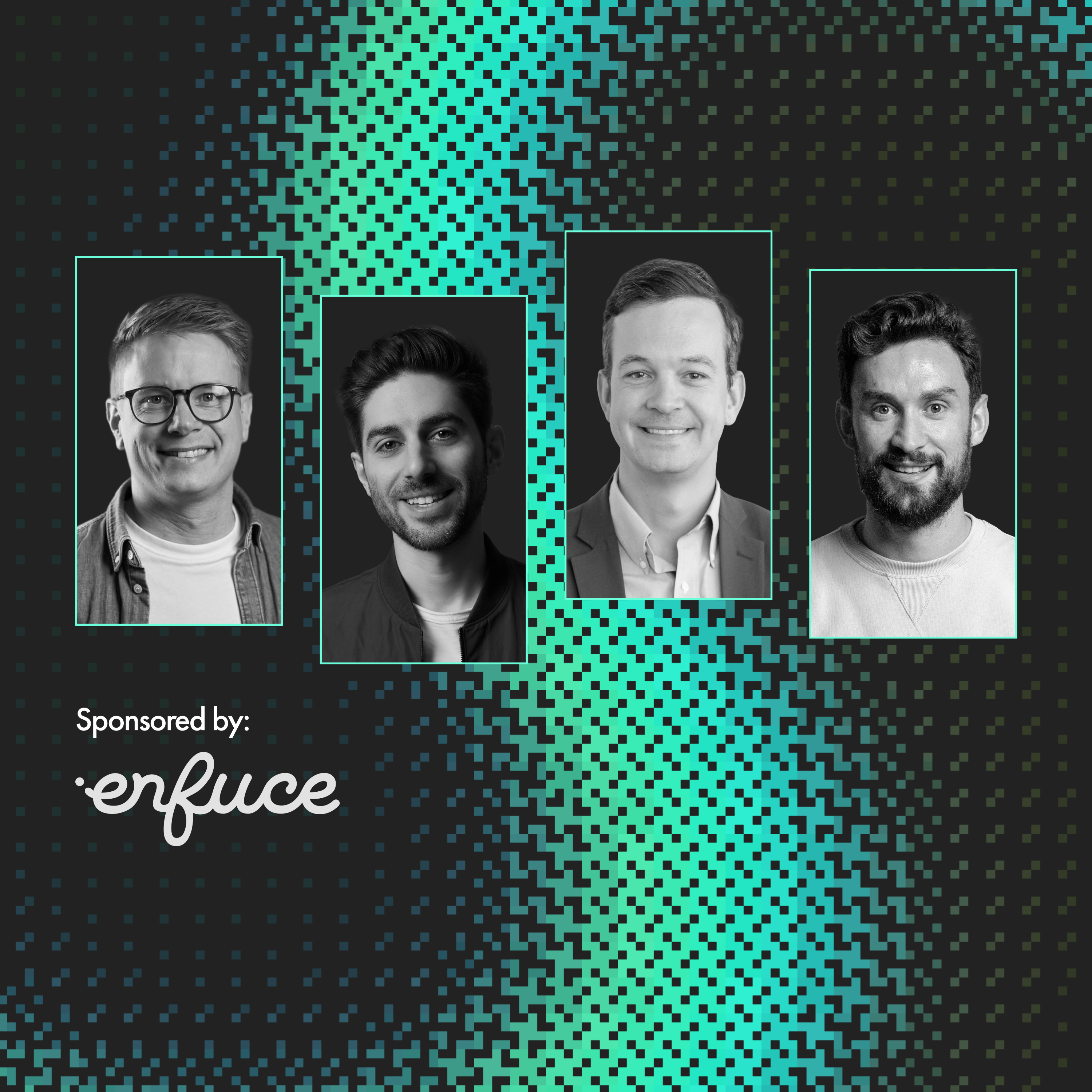
In this episode, recorded in partnership with Enfuce, host Ross Gallagher is joined by Niklas Apellund, Co-Founder of Enfuce, Tom Borgers, CEO and Co-Founder of Walapay, and Victor Mithouard, VP EMEA at Mambu, to explore the future of Europe's payments infrastructure.
They discuss the vulnerabilities in today's payment systems, the risks of relying on shared infrastructure, and what it takes to build genuine resilience through redundancy, interoperability and industry collaboration.
As Europe pushes for greater control over its payments ecosystem, can it build infrastructure that's not just more independent, but more reliable too?
Find out more about Enfuce at https://enfuce.com/
This week's guests:
Niklas Apellund, Co-Founder - Enfuce
Tom Borgers, CEO & Co-Founder - Walapay
Victor Mithouard, VP EMEA - Mambu
Links to check out:
We're on Substack! Subscribe for bonus content from the podcast, exclusive episodes, early access to events, and our weekly newsletter, Bitesized.
https://substack.com/@11fsfintechinsider
Join our WhatsApp community, where you can get the inside track on all things 11:FS, as well as having your say on the things we should be paying attention to.
https://chat.whatsapp.com/KpA4gFbbWDlLFm7kx39raf
About Fintech Insider:
Fintech Insider by 11:FS is a bi-weekly podcast that covers everything from finance and banking to technology and the latest trends in financial services.
Our expert hosts, with hands-on industry experience, are joined by key decision-makers, VCs, and top reporters from across the financial landscape, including guests from companies like Stripe, Revolut, Plaid, PayPal, and Monzo. Together, they break down the biggest news and innovations shaping the space.
Our weekly news show drops every Monday, covering major stories like mergers, new product launches, regulatory shifts, and emerging tech trends. On Thursdays, our Insights show goes deeper into the hottest topics driving the future of finance, including AI in banking, decentralised finance, and the evolving landscape of embedded finance.
Whether you're already in the fintech game or just starting to explore, this is the #1 podcast for you.
If you enjoyed this episode, don’t forget to subscribe and leave a review!
Got a question for us? Email podcasts@11fs.com!
Learn more about your ad choices. Visit megaphone.fm/adchoices



Scan the code with your iPhone camera
Listen in the app.