Ask ChatGPT

 Fintech Insider Podcast by 11:FS
9 Nov 2026 · 1h 1m · 22 chapters
FinTech Insider News episode 1114 covers three main fintech stories: (1) Binance’s $6.3bn hack and the resulting customer run, (2) Mastercard’s OpenAI partnership to build “agentic commerce” via agent pay, and (3) Revolut’s New Zealand banking license. Guests discuss key claims: the Binance incident wasn’t a cryptography break but a compromised human/process step (fake job interviews and a malicious internal AI tool), and prevention requires stronger identity verification and separation of duties. They also note “stickiness” of remaining deposits (97.2% stayed, possibly due to withdrawal constraints). For Mastercard, they highlight agent pay (tokenized transactions, verifiable intent) and agent connect (merchant discoverability to AI agents), with Shopify as an early deployment; they argue verifiable intent and identity binding (voice/face biometrics) are the core barrier. Revolut’s license enables direct NZ banking with NZD 120m investment over five years and deposit protection up to NZD 100,000.
Avop CEO deepfake case ($25m loss), North Korea “fake jobs” targeting DevOps engineers, and UK side-hustle tax allowance rising to £3,000 (plus Belgium fines).
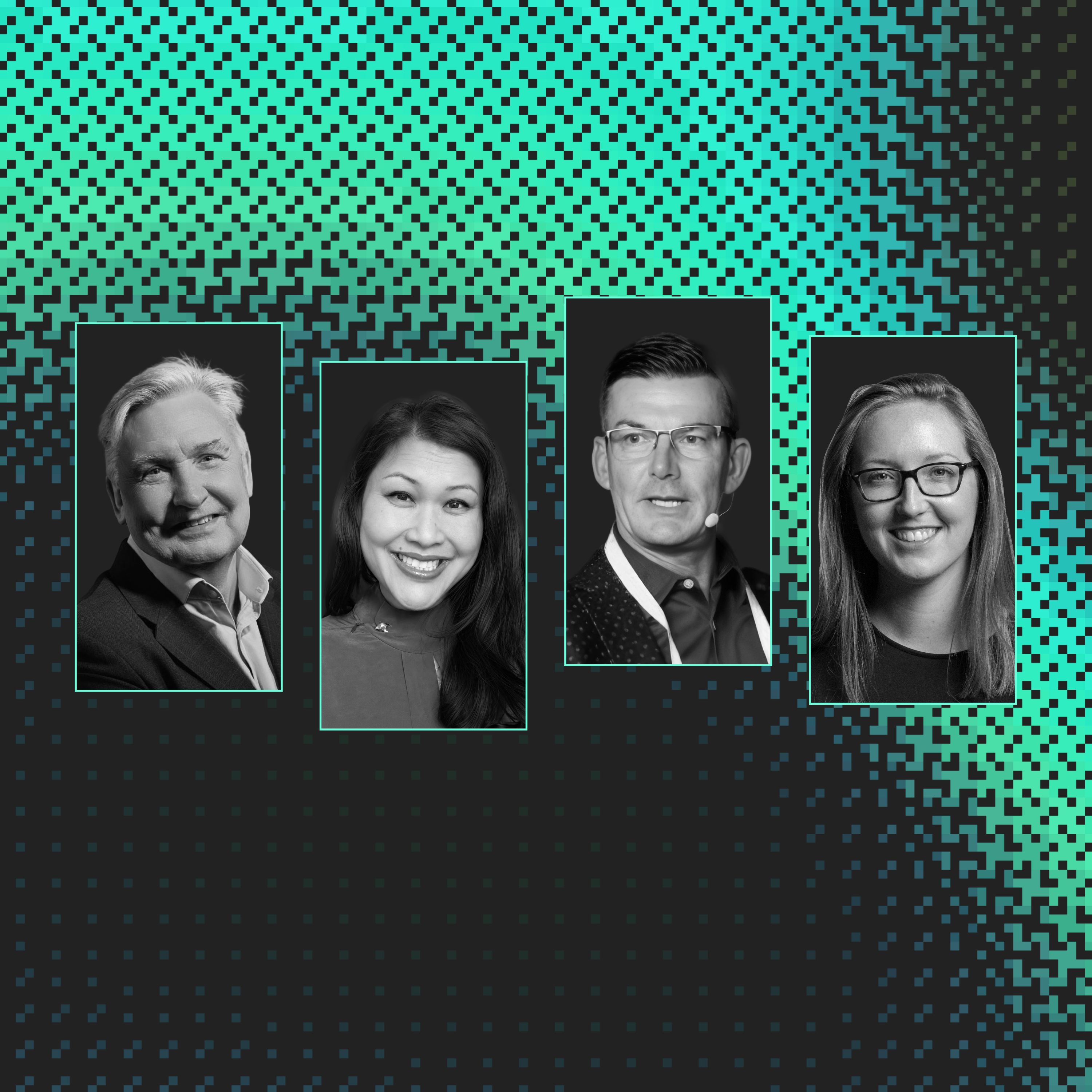
Dr. Clive Summerfield (CEO, FarX), Wincy Wong (founding member, TechSheCan), James A. Brown (CEO, Leeds Credit Union).
Written by AI. May contain mistakes.
Introduction of the host and expert panel for the episode.
“to build the next generation of financial services.”
Discussion on the recent $6.3 billion hack of Binance and its implications.
“Okay, our first story comes from an extra but has been covered all over the place for big news.”
Panelists discuss the security challenges highlighted by the Binance hack.
“I mean, what does the scale of this attack tell us about the security challenges that the crypto industry is facing?”
Exploration of how human error plays a significant role in financial fraud.
“of course, all the digital cryptography and the firewalls and all the digital security.”
Discussion on customer trust issues following security breaches and retention factors.
“And it is because it's so lucrative, it's so profitable.”
Panel's insights on the need for regulations and future security considerations.
“So, yeah, I mean, it's very unfortunate and certainly we wouldn't want to see too many instances of these, but I think, you know, I wouldn't say in Clive, we're right.”
Concluding thoughts on human risk in financial services and preventing future incidents.
“And there might be some regulation or other bodies coming in to help police that maybe in the future as a response.”
Explore real-world instances of cyber fraud and the importance of identity verification.
“and that has been used to defraud the bank.”
Discuss MasterCard's partnership with OpenAI and the future of agentic commerce in payments.
Delve into the exciting developments in payment technologies and consumer convenience.
“Okay, our next story is taken from the papers and that is MasterCard partners with Open AI on agent pay and AI transformation.”
Examine the challenges facing AI in payment systems, including interoperability and user adoption.
“things to do, there's a never-ending list of things to do.”
Discuss the importance of biometrics in verifying identities for payment transactions.
“has made its verifiable intent open and aligned with Google's protocols.”
Explore the complexities and concerns surrounding digital identity and verification in today's tech landscape.
“that authentication and identity verification layer confirming.”
Get insights into the upcoming Fintech Connect event and what attendees can expect.
“So could you tell us a little bit about what's going to be happening this year and what attendees can look forward to?”
Learn about Revolut's groundbreaking banking license in New Zealand and its implications.
“Our final main story this week is taken from FF News, but again, covered in lots of places.”
Discuss the significance of digital banks like Revolut disrupting traditional banking in New Zealand.
“It's easy for them actually to deploy things actually a little bit more quickly than the likes of KiwiBank.”
Discussion on Revolut's strategy to expand globally and its implications.
“So I think that'll be interesting to see.”
Overview of HSBC's plans for a new AI institute in Hong Kong and its goals.
“On that note, we're just going to take a quick pause here.”
Exploration of the UK government's tax-free allowance increase for side hustlers.
“You already alluded to some of the amazing developments we're seeing in AI in China.”
Discussion on the impact of side hustles and personal experiences shared by hosts.
“I was thinking about this actually earlier on.”
The hosts discuss their personal side hustles and experiences growing them.
“to stifle any entrepreneurial spirit and entrepreneurial side hustling because you never know where side hustling takes you.”
Guests share where listeners can connect with them and their companies.
“Today's guests are absolutely not gangsters.”

Get the gist, explore an idea or ask about something said.
 Claude
On Fintech Insider Podcast by 11:FS, what are the key points of this episode?
Searching your listeningAutomatic transcript. May contain errors.
0:04This is FinTech Insider News. This week, Binance users withdraw$5 billion in wake of hack, Mastercard partners with OpenAI on agent pay and AI transformation, and Revolut secures landmark New Zealand banking license. We'll be tackling all of this and more on today's news show, so don't go anywhere. This holiday, all plans, even unlimited, are just$15 a month. A holiday deal this good obviously deserves an enormously expensive holiday song, like All I Want. Right. Okay, we can afford that. You know what? Forget the music budget. We're going to stick with whatever's in the public domain. Give it a try at mintmobile.com slash switch.
0:45Upfront payment of$45 for three months,$90 for six months, or$180 for 12-month plan required,$15 per month equivalent, taxes and fees extra. New customer offer for initial plan term only greater than 50 gigabytes may slow when network is busy. See terms.
1:07Hello and welcome to episode 1114 of FinTech Insider News, brought to you by 11FS, the six-time consultancy of the year that works with financial providers, big and small, to build the next generation of financial services. I'm Kate Moody, Customer Strategy Director here at LoneFS, and today I've been joined by a brilliant panel of guests who are going to help me unpack the biggest and most interesting stories from fintech and financial services across the past week. We have Dr. Clive Summerfield, CEO at FarX, Wincy Wong, founding member at TechSheCan, and James A. Brown, CEO at Leeds Credit Union.
1:42Pretty awesome panel, so let's get going. Okay, our first story comes from an extra but has been covered all over the place for big news. Binance users withdraw$5 billion in the wake of hack. Binance customers have withdrawn almost$5 billion from the crypto exchange following a massive cyber attack last week, which reportedly saw North Korea-linked hackers steal$6.3 billion in digital assets. The exchange temporarily suspended withdrawals before reopening on Sunday, triggering net outflows of$4.72 billion, around 2.8 % of the assets held on the platform. Binance says withdrawal volumes have since started to stabilize while deposits remain substantial.
2:25Hackers who stole a record$6.3 billion, that's about£4.7 billion, from Binance used fake job interviews and a compromised internal AI tool the firm has revealed. Pretty crazy numbers. Clive, where do we even start with this? I mean, what does the scale of this attack tell us about the security challenges that the crypto industry is facing? Well, it's a very interesting hack because the one thing you can say is that the cryptography in this didn't break. It was the people and the processor broke. So crypto concentrates billions behind a handful of privileged engineers and automated approvals. And you only have to compromise one trusty person that can access these systems and you can then move, as we've seen, billions in a matter of 20 minutes or more.
3:20And then, and of course, because it's blockchain, of course, there's no recall on those funds. So the real lesson here is that the weakest link is who is allowed to essentially press the button and transfer the funds. it's not a it's not a break of the cryptography it's actually a break of the people in the process and what do you mean what do you is there anything that could have prevented this like do you think you obviously i appreciate the information is still coming out and we're still learning precisely how it happened but yeah i guess yeah can you maybe help our listeners maybe understand dig beneath the surface a little bit more understand what actually did happen and could it have been prevented well yes it can be prevented i mean banks move these kinds of funds um they've been moving this kind of level of money for decades now.
4:04But they've always actually had dual controls and separation of duties. The gap is that today approvals check a device, a token and a login, and they don't actually verify the live human. Now that's fixable. It's a design choice, not a law of nature as such. So it becomes understanding the process and the people, which are always the weakest link in these types of fraud and heists, for want of a better term, because you essentially socially engineer the people to get around, of course, all the digital cryptography and the firewalls and all the digital security. And this is a hallmark of a whole range of hacks that have been happening over the past couple of years.
4:57Absolutely. Wincy, what was your response to this story? What was the first thing you thought of when you saw the news? I mean, I think Clive touched on a lot of it. It is very much technology that is important, but then it is the people. It's how do you have controls? How do you have separation of access? Who gets to access what? That's incredibly important. And these job interviews or however it was that they got this poor DevOps engineer to download some malware was extremely unfortunate. I spent over 15 years in that West, one of the large banks in the UK. And one of the biggest things that we used to see was fraud happening not necessarily with technology, but with people.
5:42So the engineering always comes through people. There are criminals out there who dedicate their entire lives on breaking the psychosis of people working in places like the bank or like at Binance in order to access funds that they shouldn't be. And it is because it's so lucrative, it's so profitable. I remember when I spent time doing transformation in the call centers, we would get an alert when someone unknown fraudster was on the move because they would switch from banks to bank because if they spent all their time on just one bank or one financial institution, they wouldn't get very far very soon.
6:22So they would move from there to there to there and find all the vulnerabilities that they could find to poke. So in a way, the bigger these crypto ledgers become, I think, the more attractive they become to these types of people who are exactly that, trying to look for ways to get access to funds that they shouldn't be. Yeah, I mean, I totally agree with what Wincy and Clive have said. It's interesting, isn't it, that when new technology comes into the marketplace, is it actually sort of governed by the same rules, especially in the financial services sector like the banks are? You look at buy now, pay later.
7:06It's been around for quite some time, but it's only very recently actually that that's been regulated. So I'm not overly shocked that this incident has occurred. Do I think it will be the last? No. And I think Clive and Winsorne are spot on. that we as people are fallible. But I think also when you're a CEO of big organizations dealing with people's money, you actually have to make provision for that. And I think that's where a lot of organizations are not leaning into the investment in the technology piece as much as they should. So although you could argue it's a technology thing, it's the human in the loop that's not making the decision to put the guardrails in place in order to protect the people, the customers that they actually deal with.
7:54So, yeah, I mean, it's very unfortunate and certainly we wouldn't want to see too many instances of these, but I think, you know, I wouldn't say in Clive, we're right. We just need to be very mindful that as big as these campuses are for the likes of Amazon and Google and Facebook and Meta, whatever else, there's the replication of that somewhere else with bad actors trying to get into their systems. And that's the level of investment that they are willing to put in and spend in order to do what they've just done. I just wanted to talk about also what was interesting, I think, in the story is that everyone is talking about how 2.8 % of those deposits were being withdrawn.
8:39And then, of course, quickly, Binance kind of stopped the ability to withdraw. And this is something that financial institutions that are regulated have been dealing with for many, many years as well. What we're not hearing so much about in the news is the 97.2 % who have stayed. And again, with all financial institutions, it's a combination. It's not necessarily that they have so much trust and belief in Binance that they've stayed. It is because maybe they didn't move fast enough or they're maybe trapped in that ledger and they can't get the Bitcoin out or whatever other crypto they're holding in Binance into other depositories.
9:20And that probably is also worth noting. So it's almost they're held a little bit in captivity as well. So it's stickiness of that deposit. I think that's really important. One of the things that has happened over and over and over in financial services in the past are runs on banks, for example. You know, we had savings and loans and everything where we had people running to long queues out the door. I mean, in 2007, I think it was Northern Rock in the UK, where people were just trying to get their money out into a safe place. But in the end, what actually resolved it is not the bank saying, don't worry, we will cover it for you.
10:04It is the financial services compensation scheme that actually came in and said, actually, we're an independent, regulated body that will insure your deposit. And that is what kind of steadied that ship. And that will be really interesting to see, I think, in this perspective, because Binance has that SAFU situation where they say, you know, we will cover things if something happens and we lose your crypto. But that's probably not, I don't want to say not good enough in the long run, but maybe it's not enough of a reassurance to give to their customers, I think, in the longer run. And there might be some regulation or other bodies coming in to help police that maybe in the future as a response.
10:53Yeah, I mean, if I take us back just for a moment, just let's say pre-COVID, you know, the majority of the world was chasing down. Let's move away from cash. You know, who is going to be the first country in the world to be a cashless society? And then lo and behold, what happened, COVID hits and that conversation disappeared. because we were all forced into the digital world, whether we liked it or not. In the UK, there wasn't the abundant use of QR code technology as there is now. And nowadays, we just take it for granted. We get our phone out, we scan it, and off we go. But back to my point, do we actually know what we're scanning?
11:37Do we know what data we're actually giving away at that point? do we actually read terms and conditions when we sign up for things? No. So there's lessons, I suppose. So, you know, not necessarily always dwelling on the negative, but let's look to the positive. Will this maybe get organizations to sort of maybe stop and think actually about what they need to do to actually improve their security levels? I would hope that it probably would for some, especially in the financial services sector, but we're talking about crypto just for the moment and you know I've seen some great companies coming out of APAC and some great companies coming out of New Zealand that the first thing the the first thing that they sort of started with or that main point was how secure is their platform before they then went to the marketplace and I think we just need to sort of like come the conversation on its head ever so slightly.
12:31Yeah no absolutely I mean Clive probably give you the last word on on this story before we have to move on but fundamentally what do you think finance and other platforms in this space at this similar scales need to do differently to one like just you know prevent these types of things happening in the future and also to kind of build that trust in customers that an episode at this scale isn't going to happen again well i think the problems of this scale are going to happen again because at the end of the day the the weak link in all of these uh these uh types of processes is the human, coming back to the call center discussion earlier, it was always the human agent that was the source of the problems.
13:15I've been involved in a couple of fraud cases where it's a human agent actually in the bank that was defrauding the client's accounts. And really, the only way to strengthen that process is really a stronger verification over the identity of individuals that are actually accessing services. And of course, with the advent of deep fakes, the notion that you've got to check to see if the person interacting with a particular service is real and not a synthetic individual. And we've seen now numerous hacks where essentially high net worth individuals have been cloned and that has been used to defraud the bank.
14:05There was the famous case at Avop, the manufacturer whose CEO and various senior executives were cloned who instructed the staff to then transfer funds. They lost$25 million in that particular incident. And these are not isolated incidents. these are becoming real and everyday. And we've seen this, particularly in things like private banking, wealth management, where there is a lot of money to be had from tools that are relatively cheap and easy and quick and effective to use in order to create a realistic likeness of a high net worth individual or a person with a lot of influence and power. And coming back to it, the fraudsters, and particularly the state actors, I mean, they're particularly interested in crypto because it bypasses all the sanctions.
15:07Very easy to launder that crypto via other chains. So you can convert that crypto very, very quickly. And they're also patient. So, you know, they don't mind taking their time social engineering software developers, planting particular individuals into organizations. The famous incident of all the fake jobs or software engineering jobs that were being undertaken by North Korean operatives. So this is not going to go away anytime soon. and it always comes back to the human element. And as I say, technology, and this is where my particular interest is, technology that one validates identity and secondly validates that identity is real is becoming kind of central to any cyber security profile for many of these organizations.
16:11Yeah, absolutely. Well, yeah, it'll be interesting, as you say, to see what happens in the wider industry, like how the wider industry responds to this, also what Binance do specifically as well, but a massive story and we'll continue to keep an eye on it. Okay, our next story is taken from the papers and that is MasterCard partners with Open AI on agent pay and AI transformation. MasterCard has announced a strategic partnership with Open AI as the payments giant looks to accelerate its push into agentic commerce. MasterCard believes AI agents will increasingly help customers discover products, make purchasing decisions and complete transactions.
16:44However, CEO Michael Mibak, apologies Michael for mispronounced, acknowledged that agentic commerce is still in its early days with transaction volumes remaining relatively small. The company is developing an entire ecosystem around agentic payments, including agent pay, which enables secure tokenized transactions, verifiable intent, which records what customers have authorized, and agent connect, which helps merchants become discoverable to AI agents. Shopify is already among the first major deployments, integrating MasterCard's agent pay technology through ShopPay. Wincy, come to you first on this one.
17:20What was your take on this? What does it tell us about where the payments industry sees its next big growth opportunity? I think this is super exciting and super interesting. You know, the whole technology that they've launched about agent pay, which is about, you know, just making the payment and then in terms of, you know, making merchants discoverable, let's agent connect. But then the verifiable intent is probably the major barrier that most people face. And by the way, I love this episode. We're talking so much about security, I think, as well, which is such the bread and butter, I would say, of any good financial institution is trust and being able to keep your money safe.
18:02So that verifiable intent layer, I think, is what's really interesting. I think that they're right investing in this part of where things are going I think agentic commerce is coming very fast if you look to Asia you've seen that they've already successfully launched AsianPay in Korea Singapore and Malaysia I believe and also in China they've actually built agentic commerce straight into the hardware into the devices and into their cars which is incredibly convenient. And I think that's one thing people will understand over time, convenience. Convenience is what allows adoption to happen. A great example is a long time ago, you know, I'm aging myself now.
18:54I used to feel like I could not buy produce unless I walked into a shop, touched the tomatoes, the broccoli, and selected this specific one that I wanted to buy. Somewhere along the way, I stopped caring because I am happy for some random person to go and just pick a packet for me, put it in a box, and ship it to my house at the time that I wanted to arrive. So things like agentic commerce is incredibly powerful because it will become incredibly convenient. In a world where we are over-inundated as consumers by more and more things to do, there's a never-ending list of things to do. Some of this load being taken off us for others to be able to do, like the weekly shop or things like that, will be an absolute godsend to some people and to some families as well.
19:43So I think this is the right investment that they're making. I know that a lot of people talk about back when we were launching Open banking, for example, in the banks, say that, oh, no, we're going to lose the interface. I think one thing that I've learned through a lot of launching a lot of innovation projects at NOWAS with consumers is this is a controversial thing I know to say on this kind of a show, but people just aren't that excited about their banking. They want it to work. And they are very much pissed off when it does not work. And that is when they come calling and crying and things.
20:26So that's why I think the bank's job is always just to keep things running and make it easy for the customer. And MasterCard has not necessarily been the front user interface for people in a very long time. But they managed to make plenty of money. So I think there is definitely something in. So this is very natural, I think, for MasterCard and their competitor Visa, who has also invested in this, to go into this in this way. Yeah, absolutely. James, what was your take on the story? Yeah, no, I suppose I was just going to add, actually, that I agree we win to some extent, but I think there are organizations now in the marketplace that have actually, and I'm not a big fan of the word, gamified financial services.
21:14And I use my wife as the example here in that. She hated everything, financial services. Have I been paid? Can I go out and spend my money? That was the extent of it. When we moved back from overseas, she asked me the question, who should I bank with? And I just said, just bank with Monzo. It's really nice. It's really easy. It's a good user experience. now it's have you seen what they're doing oh my goodness this is absolutely amazing so it's it's quite a big transformation but I think back to the story I do agree with Wincy it's the sort of next evolution isn't it really things things have to progress you know when I set up fintech back in sort of the early 2000s it was the new thing it was the new sort of like the new poster child AI is obviously now sort of superseded that so it's to be expected that big organizations will try and sort of like have that sort of first mover ability when we're actually thinking about where do we generally spend a lot of our time we spend a lot of our time transacting it's just that they've taken it into the payment sphere to actually make it much easier we are all very busy regardless of who you are the job that you do we're generally all we're all and I know you're going to talk about it later we're all hustling actually to sort of like get out of life what we want the adoption of sort of a genetic payment or genetic agents doing things for you I think it's just another way to free up some of that stuff that was very precious which is time that we actually then can allow ourselves to then make the choice about how we want to use that time because you know I love Wincy's point like you know we don't like doing the weekly shop I mean And if people do, then that's a bit strange.
23:00But, you know, so there's a lot of functionality, the things that we do when it comes to payment technology, that this will remove and actually just give us or allow us to make different decisions about how we want to spend that time, either for ourselves or with our family or with maybe different hobbies. I really like to do the weekly shop if it gives me an excuse to leave my children at home and have some time alone in the supermarket. But that's not really about doing the weekly shop. Yeah, you do realise this has been recorded and it is going out, so they might hear it. They're too young, it's okay.
23:30Clive, I thought it was interesting in this announcement as well that the Mastercard CEO was quite open about the fact that actually current levels of usage of agents are really, really small. It's quite refreshing, right, to see there's so much hype around AI. Is it kind of refreshing to see someone being a bit more honest about how early stage this is? Well, yeah, and unless they fix the interoperability of these AI agents, then its growth will always be stifled somewhat. You know, credit cards won because it was standardized, you know. Merchants in Auckland could take cards that were issued in Atlanta, for instance.
24:14So if every AI platform has its own way of paying merchants, it just doesn't scale. And so that's really going to be the challenge, I think. So it's encouraging to see that MasterCard has made its verifiable intent open and aligned with Google's protocols. And so I think we'll start to see standardization of these agentic AI processes, which I think will then drive the growth in this sector. But yeah, it's nice to see someone that's a bit realistic about this stuff. but I think in 10 years time I think Agentic AI will be much like credit cards are today Yeah, absolutely and obviously some of the examples we've talked about understanding about doing the personal shop and freeing up individual time make a ton of sense but Wincy Mastercard have also stated in this release the opportunity for Agentic within B2B payments as well microtransactions where do you think the most meaningful value will land first?
25:23I think actually the value will be in B2B, to be quite honest. There is a lot of, I think, in buying, in personal consumer spending, where you're making big purchases and maybe you want a bit more review. But if you're a company trying to place an order for 500 widgets every single month, you have to fill out 100 forms in order to do it and to go back and forth with the supplier, ensuring also that you find the best price for something, I think AI will be an absolute game changer for B2B. We'll talk about it a little bit later. I'm doing a bit of a side hustle at the moment where I'm helping my friend run her restaurant and we're sourcing a lot of things from China at the moment.
26:06And it is the amount of messages I get inundated with with China with the time differences and all of that in order to source the supplies, putting the AI layer in front of it, which actually has started to happen, will be an absolute game changer. And I think once it becomes better known, it is become probably proven to be safe and proven to be able to make the right choices, for example, then I think it will definitely take off. Yeah, I mean, we had a story on the news show last week about indemnification of genetic payments. Obviously, we're kind of touching on a similar space here. it kind of feels like the recurring big problem well maybe it's not a problem there but it certainly sounds like mastercard are making a first effort here at trying to solve that with their sort of verifiable intent technology trying to really record you know what has actually been authorized um and clive from where you're sitting this did you agree that this is like the key problem to be solved it's it comes back to exactly that's the same problem as before how do you bind the um the real life person, this biological entity to a, what is essentially a digital entity that you've authorized to go off and perform these transactions.
27:25How do you bind those two together? And, you know, I have a line here that, you know, there's only really one technology that binds biological and digital identities, and that is biometrics. And there really is only two biometrics that make any sense in an online world, and that is voice and face. And, you know, we're, We're talking to each other here online and verifying our identities to each other using voice and face. So that is really the challenge here is how do you strengthen that layer, that authentication and identity verification layer confirming. It's back to the same line as before.
28:10Or how do you confirm that this is a real authorised person to actually authorise this agent to go off and do whatever they're going to do? And is this person real? Or not a synthetic or an injected individual into the process? And that's where it goes, June. Yeah, I mean, I suppose all I would add, I mean, I remember doing a TV interview, actually, in New Zealand, and it was all about digital identity. it was at the time when COVID was hitting and how are we going to allow people to move around and should there be a digital identity, product, platform, device, etc. But when I was actually giving the interview, I turned around to the presenter and I said, how do you know I'm actually real?
29:01He nearly fell off his chair in the studio. And he's like, oh, I hadn't, oh, actually, I hadn't, I actually quite frightened him, if I'm honest. But I think back to Clive's point, I mean, it's like, as the technology becomes more sophisticated, we've, you know, my, my, you know, my friends are doing it at the moment where they're sending pictures of each other, but they all of a sudden they've put on six kilos of muscle and it's like, well, clearly someone's been at the gym. So we, we, we have to sort of balance out that as the good actors obviously adopt this technology that the bad actors are also trying to accelerate how they break things and I've worked with digital identity providers I'm sure we all have and the challenge is that when we started wearing masks it became a bit of an issue for some providers so it's nice to see and I think your point is very valid about how open MasterCard are actually being about where they are at the moment but what their aspirations are for the future.
30:04Yeah, absolutely. Well, we have AI stories pretty much every week on this show because it is just like the big thing. So I'm sure we'll be coming back to this topic again and again, and the news will keep changing, the technology will keep changing. So watch this space. On that note, we're just going to be taking a very quick pause here. We'll be back shortly.
30:23Launching innovative payment products is only the beginning. Real progress comes from what happens next. Paymentology fuels continuous compounding momentum as a cloud-native issuer processor, helping banks and fintechs grow beyond go live with global reach, local know-how, and the power of its Loom platform. Powered by more than 500 paymentologists across 68 countries, they make card programs work naturally across markets. Want to keep the momentum going? Head to paymentology.com. This holiday, all plans, even unlimited, are just$15 a month. A holiday deal this good obviously deserves an enormously expensive holiday song, like All I Want...
31:06Right. Okay, we can afford that. You know what? Forget the music budget. We're going to stick with whatever's in the public domain. Give it a try at mintmobile.com slash switch. Upfront payment of$45 for three months,$90 for six months, or$180 for a 12-month plan required,$15 per month equivalent. Taxes and fees extra. New customer offer for initial plan term only. Greater than 50 gigabytes may slow when network is busy. See terms.
31:29Before we get back to the news, I want to take a moment to talk about another exciting event coming up in the FinTech calendar, FinTech Connect. Wincy, I know you're involved with the event. So could you tell us a little bit about what's going to be happening this year and what attendees can look forward to? Yes, I love FinTech Connect. I am on the advisory board for digital transformation. There are seven different stages. Digital transformation is one of them. One of the things that is different, I think, about FinTech Connect, which I love, is that it was developed with 40 real practitioners, so people who are working in banks, financial institutions in FinTech, working together to develop the agenda, the talks, the panels, and all of that.
32:10But there has been over 9 ,000 registrations so far. It's set to be probably one of the biggest fintech events in London or in the UK this coming year. So I think it'd be a great place to kind of get into financial innovation, fintech, all the new things that are happening. What I was really keen on in developing that agenda was that we don't just have the practitioners, as important as they are, but also we have regulators, technologists, or people who can see what's coming or what's coming in the future and see how that will affect the day-to-day operations of working in financial services in the future.
32:53So very, very exciting. I will be there both days. Please come find me, talk to me. I am there to go meet people, see what everyone is doing. I'm extremely excited. So please do reach out to me. It sounds awesome. We'll make sure to include a link to Fintech Connect in the show notes for anyone who wants to find out more and would definitely recommend that you do. Okay, right, back to the news. Our final main story this week is taken from FF News, but again, covered in lots of places. Revolut secures landmark New Zealand banking license. Revolut has officially launched as New Zealand's first digital-only bank after securing a banking licence from the Reserve Bank of New Zealand.
33:35The London-headquartered fintech is committing$120 million New Zealand dollars to the market over the next five years as it looks to challenge a banking sector traditionally dominated by established players. The licence means Revolut can now offer banking products directly to New Zealand customers, starting with an instant access savings account. Eligible deposits of up to$100 ,000 NZ dollars will also be protected under the country's depositor compensation scheme. Revolut has been operating in New Zealand since 2023, but the banking license represents a significant step forward, allowing it to compete more directly with traditional banks.
34:09It's also part of a much bigger global expansion strategy. Revolut says this is its seventh banking license worldwide, and its fifth secured this year alone, with the company now operating as a licensed bank across 34 markets. Obviously very excited to have a New Zealand expert on the show, but we also have another expert, Binu Paul, consultant at Savvy Kiwi, who sent us a soundbite. So let's listen to him.
34:34Revolut securing a banking license in New Zealand is certainly big news in the local financial services ecosystem. Clearly another milestone for the business as well in that it secured another license in this part of the world, having secured one in Australia recently. So this makes Revolute the very first digital-only bank in New Zealand. The relevant context here is that for all of these years, the banking sector here has been dominated by four Australian-owned banks. Revolute entering the market as a fully licensed bank means genuine digital-first competition. I look at it as a technology business with banking services wrapped around it rather than the other way around.
35:18And obviously, there'll be some immediate perks for consumers, as Revolut will now be on a mission to sign up new users as well. And as you would expect getting to this point, which is to get licensed by the Reserve Bank of New Zealand, it's a reasonable commitment for any business. So any business would be facing strict regulatory hurdles, evidence, financial resources, prove their long-term commitment to the country. We're looking at local leadership teams and governance teams and the risk management systems and what have you. But I believe Revolute is established as a locally incorporated entity and has committed about$120 million into the New Zealand market over the next five years.
36:00And I'm hoping that translates into employment locally as well. And for consumers, what changes is that previously Revolute operated locally as a payments and currency app. Now as a registered bank, it falls under the reserve bank's regulatory umbrella. So immediately customer deposits are officially protected up to$100 ,000 here in New Zealand under the depositor guarantee. So it definitely transforms the business from a kind of new age travel card app into a more secure and mature banking provider. Always a delight to have a Kiwi accent on the show. James come to you first obviously this is an area which you know a market that you know super well how significant is this for consumers and businesses in New Zealand yeah back to Binu's comments love Binu by the way for an awful long time fabulous man he's done great work not only in the New Zealand market but also here in the UK he spent some time actually consulting to both regulators was actually during my tenure at FinTech NZ when we were actually part of the digital team during the free trade agreement discussions between both countries because we were quite keen to get financial services into the mix because it's traditionally obviously more about tariffs and sort of like produce.
37:27But back to your question, massive. You know, Benny talked about it there. The financial services sector absolutely completely dominated by the Australian banks and in the main because they've actually sort of got the capital behind them because they've got the big brothers sitting across the pond. It's easy for them actually to deploy things actually a little bit more quickly than the likes of KiwiBank. Steve Yukovic, my ex-boss when he was at ASB Bank, I think he had a bit of a vision and ASB was actually sort of, at least in the marketplace, seen as the tech first bank. Quite honestly, after Steve left and a number of others, that they sort of lost that.
38:06It's now the Bank of New Zealand, a BNZ that have got that. But the reality is that some people would look at this and go, but why would they want to go to a country with only 5 million people? It doesn't actually make any sense. It makes sense because they can go in and they can disrupt, but they can also actually prove the model. I remember speaking to Matt, sort of the CEO sitting in Australia, and him saying, oh, we've got plans to move into the New Zealand market. And a number of people around that table at that time more like but but exactly that point why see because we actually can come in and make a make a difference it's taken them a little bit longer to get there but now they're there the question i suppose i would be having of all the other ceos around that table is how are we going to move how quickly can we move and what are we what are we going to in order to actually protect their customers from migrating across because there's different ways to also to consider this a lot of people around the world tended to follow what the parents did so if your parents actually banked with bank of new zealand you probably would have a bank of new zealand account at some point but what we're seeing now the reality is that you you might have that account but what are you using that account for and actually then are you using your revolute historically for your fx um or now the opportunity to actually use it as a normal let's call it a normal banking function um and that's the bit that always gets me is when you watch people in in sort of the coffee shop or wherever it might be and you know they pay by if they still have a physical card or if they pay by phone what's the app that they're actually using and you know if you spot the accent and the accent's not necessarily local you might go actually they're paying by revolute or they're paying by wise because it's easier to actually use that as an FX model.
39:54And that was the bit that sort of got me going back probably, what, 10 years. There was this phraseology, and at least in the APAC region, bundling, unbundling and re-bundling of products and services where a lot of the big banks actually started, you know, sifting off the FX division, the insurance division, the wealth division, because they started to realize they weren't actually very good at it. What I was surprised, though, is that they didn't then go out to the market and say, hey, Revolut, Wise, or whoever it might be, you're really good at this. Can we figure out a way to actually sort of like coexist?
40:29So if I was still in New Zealand, and I do hope to go back there early 2027, I think I'd be very excited at this announcement and actually what the prospect will actually bring. The government, you know, when I used to sit with the Prime Minister, as she was then, Jacinda Down, we need more competition in this landscape well now you've actually got it the question as opposed to follow up is now that they've gone in will we see others go in and then what would that actually look like so the market's been screaming out for it for years you know they've been very dominated it's been price heavy which is not in the sort of in the in the favor of the consumer now that you've actually got a new digital first challenger in the marketplace.
41:15I think it's fabulous. You know, throw in the grenades, stir it all up and just see what comes of it. So, yeah, really excited. Yeah. Wince, if you look into your FinTech crystal ball for New Zealand, what impact do you think this will have from your experience of watching how FinTech's deployed globally? So, not to be the boring one, but I think people, when they see a banking license, They're like, oh, this company is now authorized, is a trustworthy company we can use. What they don't necessarily think about is the capital requirements, liquidity management, you know, resolution planning, all these things that you need to answer to a regulator in order to maintain and keep your license.
41:57And those are things that would slow any company down, much less someone who is trying to operate in 34 markets or whatever it is that Revolut is currently at. So I think that'll be interesting to see. The model that they've clearly taken is about giving competitive savings products, for example. It is a playbook that we've seen quite often for the likes of, for example, when Uber was first starting out, it would go to city to city to try to take over a monopoly, basically, of that industry with incentives, so to speak, financing cars, et cetera, to get drivers, all of that. And this is kind of their small version.
42:39I don't necessarily think that Revolut is looking to get everyone to switch right away. I think they, or I don't know, I have no idea what they're thinking in their heads, by the way, but this is my conjecture. But what I think they're probably planning to do, which is similar to what happened, I think, in the UK, is to create an alternative, as James talked about, a competitor in a landscape that didn't have as much. And that hopefully people use it as a secondary account and maybe move to them in the next decade or so or over a long period of time. It takes a lot to push someone to switch. I mean, in the UK, we have a switching scheme.
43:24And what it has proven is just how sticky people just are. People just cannot be bothered with the paperwork required to switch from one provider to another just because of the amount of forms and things that you need to do or fill in. So I think it's very smart. I think the world is becoming more global as everyone is more connected throughout the world. I certainly find myself paying for things in many different countries on a daily basis now. And having something like a global bank account that is truly a global bank account is extremely interesting and exciting because there aren't any of the major banks who have quite done that really well across the board.
44:14Even, for example, HSBC, which marketed itself as the world's bank for a very long time, a couple of years ago, just closed up all their operations for retail banking in the U.S. So that just goes to show how hard a business it can be in different regions. So it'll be very, very interesting to see how Revolut continues as they continue to expand, not just in New Zealand, but other markets as well. Clive, I'm keen to give you the final word on this one. I mean, certainly from my perspective, it's just, yes, it's amazing for New Zealand, but it's like New Zealand, in addition to all of the other markets that they've got the license in this year.
44:54I mean, what's your take? Yeah, they've industrialized the license application, haven't they? They've basically made that into their central business process and hoovering up all the markets that they can apply to and get into. And I think you're right, it's becoming a truly global bank, an online digital bank that's a global bank. and I think it's a very interesting move. There's a lot of overhead associated with it because as you probably appreciate, the regulations, the reporting, the compliance, identity verification is all quite different in these various jurisdictions but full marks for them for taking on a basically global expansion strategy and I lived in Australia for 40 years so I know what the Aussie banks are like.
45:50it's a good job you know they need a bit of competition over there and and good on them for for driving that that competitive landscape I think Commonwealth Bank ANZ NAB and Westpac have had it to you know far too long to alter themselves and so it's good to see particularly in New Zealand which actually has a a long heritage of adopting new technologies early. I mean, I have a very fond place for New Zealand because in my previous company, its government, IRD, the New Zealand Tax Office, deployed voice biometrics and got pretty much 80 % of the adult population of New Zealand enrolled in two years.
46:43On a per capita basis, It's orders of magnitude beyond what anyone else in the world has done. So, yeah, best of luck to them is my comment to all of this. And well done. Well, kudos to Revolu. And yeah, it just sounds like a general loving for New Zealand full stop. So, yeah, we'll keep our eyes peeled. You know, what they actually do bring to market. But yeah, to Wincy's point as well, how they keep on top of all of the stuff that happens behind the scenes to not just win the license, but keep the license as well. On that note, we're just going to take a quick pause here. We'll be back shortly.
47:24Okay, now for a quick look at a story that we don't have time to cover in full. This one's taken from FSTech, and that is HSBC to establish Hong Kong AI Institute. HSBC has announced plans to establish a new global AI and emerging technology institute in Hong Kong as it looks to accelerate the adoption of emerging technologies across the bank. Set to open in early 2027, the Institute will focus on areas including AI-powered fraud prevention, engineering efficiency, employee upskilling, and AI safety alongside technologies such as blockchain and post-quantum cryptography. HSBC is partnering with the Hong Kong University of Science and Technology on the initiative bringing academic research and industry expertise together.
48:02This will be the bank's second dedicated AI hub following the launch of its global AI Center of Excellence in Singapore earlier this year. The announcement comes as HSBC continues to expand its AI strategy, having appointed its first chief AI officer in March, whilst also acknowledging that greater adoption of AI could lead to job losses. Obviously, just by chance, this story obviously overlaps with quite a few of the other things we've touched on in the show already. You already alluded to some of the amazing developments we're seeing in AI in China. I think probably not a coincidence that they've moved to Hong Kong.
48:35Obviously, in their statement, they did cite the strong connections across the Chinese mainland And as one of the key drivers for locating this second institute here, we've also touched on the need for global banks and maybe HSBC, maybe changing its interpretation of what it means to be a global bank. So, yeah, really interesting to see them taking this initiative, obviously getting ahead and staying ahead in this space, in the AI space is absolutely the name of the game as we look ahead to 2027. So, yeah, watch this one to see if HSBC's investments actually pay off in terms of AI use cases they can deploy across the bank.
49:07but also more importantly from where I'm sat you know directly to customers as well. Okay on to our and finally story. So wherever you're selling your old clothes on vintage, walking the neighbor's dog or running a secret NC empire there's some good news for Britain's side hustlers. Although if you're doing the same thing in Belgium you might want to check your paperwork. This story comes from The Guardian and that set out that UK side hustle tax-free allowance is set to rise to£3 ,000 next year. The UK government has announced plans to increase the tax-free trading allowance from£1 ,000 to£3 ,000 from April 2027, giving a boost to people earning extra income through side hustles.
49:48The change announced in the budget could benefit up to 1.4 million people, including those making money from activities such as tutoring, dog walking, and selling products online. Around 400 ,000 people are expected to see their tax bills fall, saving an average of£380, while approximately£100 ,000 will no longer need to report their trading income to HMRC. According to HMRC figures, 2.6 million people earned money selling goods through platforms, including eBay, Vint and Etsy last year, compared with just£450 ,000 in 2024. But while the UK is making life easier for side hustlers, Belgium is taking a different approach.
50:23Belgian authorities have issued 98 fines this year to people earning undeclared income through platforms such as Instagram and Vinted without registering as self-employed. James, come to you first on this one. Are you a side hustler? Is this good news for you? It's interesting. I was thinking about this actually earlier on. Not so much now, I must admit, as I have been historically. But I do have a garage full of items that have yet to be posted on to Vinted, I have to say. But we had friends actually up at the weekend and he shared with me actually a couple of websites that he purchases from and it sort of got me thinking that there's items on there like, you know, shoe, I mean, all sorts of different things that you are able to pick up at the fraction of what you would potentially expect to pay in the high street shop.
51:15So I think if I look at it with my current role lens on and the members that we deal with, I think this is a fabulous initiative to give people the opportunity to actually get more money back into the pocket where, you know, cost of living crisis, energy pricing, et cetera, et cetera. And I know there was some stuff in the budget that will help with that, but I think you'll start to see more and more people actually having these little sort of side hustles in order to sort of create that extra income that allows them to do the things that they want to do. And, you know, without getting too dramatic about it, for some families, it's actually just, you know, as simple as actually putting food on the table or actually allowing their kids to sort of, you know, go to school with a pair of shoes.
51:57And the reason why I referenced that, you know, back to New Zealand, a lot of kids used to go to school with no shoes and nothing in the lunchbox. So I think it's a good move from the government. And I think, yeah, you'll start to be down in the pub speaking to people and overhearing conversations and I'll be like, oh, that sounds interesting. I'm going to go and have a look at that because there's money everywhere. It's just about how you, I suppose, focus your time to actually execute on it. Oh gosh, I'm feeling like a bit of a Grinch now because when I think about side hustles, I just feel like, oh, it's another thing that I need to feel guilty about for not doing, not getting done.
52:31I don't know. It feels like if you don't have, maybe is this me being too OTT? I don't know, Winsley. I feel guilty for not having a side hustle. Maybe I'm being too sensitive. So I'm actually moving to New York in December and I am doing a massive clear, I would say, in the house. And if it wasn't for Vinton, I don't know what I would do. I think for me, what I've found or what I've discovered is the connections and the stories. I think it's more than just selling it to make a couple of quid back. It is about not throwing it in a landfill and actually offering it at prices so that people who wouldn't normally be able to purchase those types of clothes would be able to access them.
53:16And I think that's been wonderful. I've gotten so many messages. For example, I have a lot of old maternity clothes that I've got rid of. And I had some people reach out to me to say that, you know, I have this baby, but I have no maternity clothes. I need nursing outfits and I can't afford it with the cost of everything, much as James has alluded to. And it's been wonderful to just have these interactions. I've also seen a lot of examples and a lot of stories where Gen Z, Gen Alpha, are young people who aren't able to find a full appointment have taken it upon themselves to become entrepreneurs in this way.
53:51And it's amazing when platforms like Vinted or Etsy or others allow people to start businesses a lot more easily because it is a full-time job. I mean, it takes the whole family. My husband's the one who drops the parcels off in the evening or I have to go or whatever it is. And it does take a lot of time and effort. Raising it to 3 ,000, I think, makes more sense because it doesn't take long to get up to 1 ,000 pounds, I think. I think up to 3 ,000 pounds is still valuable for a casual, I would say, seller, someone who just has a bit of stuff around the house and wants to get rid of. I am big on side hustles.
54:33I've always had side hustles, I think, in my entire life. As I alluded to, I'm currently an interim CEO of a restaurant called Darjeeling Express. in Seoul, in London. So if anyone wants incredible home-cooked Indian food, please do come by. It is the only Indian restaurant run by a bunch of aunties. So it's all female and they strongly believe that the best food to get was cooked by mothers and aunties rather than necessarily trained chefs. No shade to trained chefs, by the way. It's just the ethos of the restaurant. Yeah. We need to record the next episode from from your restaurant by the sounds of it.
55:13So coming towards the end of the show, I suppose, so just to close off on one thing, if we all had to start a side hustle tomorrow, what's it going to be? Clive, what's your new side hustle going to be? Oh, well, Pharex was a side hustle, remember? I mean, I'm of an age where I was drawing my pension and I needed something to do. So I started Pharex and look where I am now. So it's one of those things that side hustles that convert into big businesses. That's what you're trying to do with this. I mean, the name of the game is to make jobs, to employ lots of people. And, you know, I think that it's very short-sighted of the Belgian government to stifle any entrepreneurial spirit and entrepreneurial side hustling because you never know where side hustling takes you.
56:10I mean, you know. Yeah, fair enough. Wincy's already told us about her side hustle queen. So we'll skip Wincy. JB, final shout out to you. What's your side hustle going to be? Yeah, well, it is ongoing. When we set up FinTech NZ in 2016, my aspiration was to connect all FinTech hubs around the world. so we are actually we have created a platform uh in order to try and do that it's sort of it's sort of stalled a little bit i think since i left that part of the world but it's something i suppose that i i still have in the back of my mind so it's like a bit of a project to sort of like complete um but the basis of the technology is actually there are other things of a similar nature out there but i think i'd like to get this across the line um because you know we talk about as a global digital bank.
57:05But the fintech, you know, doesn't recognize geography. So if we can actually make it easier for people and organizations to connect around the world when they're actually working in the same sphere, for me, that would be a win. Absolutely. You guys have all got very genuine, credible, admirable side hustles. And I obviously need to go and have a long, hard look at myself in the mirror and just sort my life out. Okay. I was just going to give you a quick story about side tussles. So when I was much younger, my side tussle, like a lot of people, was a paper round. But my paper round became so big, I used to earn about£100 a week.
57:46So back in old money, that was quite a lot of money. I got to a point where my weekend papers were so heavy that I had to employ two of my friends to actually do my papers. so I actually got to a point where actually I didn't work at the weekends I just employed Harry and Joe to actually do my papers and then further on down the line I actually then sold them a third of my paper round so that I only did the little bit around my house and yeah it was you know I used to go down on a Saturday morning to the Dumfermline Building Society with a wad of cash and I'm sure the women and the people in that branch thought what is this young guy doing where is he getting all his money from?
58:26Look at that brand new bike out there. I've never seen that model before because I'd imported it from America. So that was my side hustle when I was a kid. I think, I mean, I'm sure it's not true. It does make you sound slightly like a gangster, but maybe that's a good thing to end on. Okay, thank you so much. Today's guests are absolutely not gangsters. Where can people find out a bit more about you and your companies, Clive? Well, we're firex.ai, so you can look us up on the internet. and you'll find us on LinkedIn as well. So follow us on LinkedIn and you'll learn all about voice biometrics, face biometrics, how we fuse those together and synthetic voice detection.
59:06Awesome. Check it out. Wincy, what about you? Find me on LinkedIn. I'm very active. And also find me at FinTechConnect. I'll be there. Yeah. Look out for the details in the show notes. And last but not least, James. Yeah, well, I'll be at FinTechConnect as well. I'll actually die on the Monday. so maybe I'll pop around and have a look at that restaurant and then speak in on the Tuesday but yeah leadscreditunion.co.uk we're sort of I think the sixth largest credit union in the country member based not shareholder based doing a lot of work in the community so pop along and see how you can get involved yeah love a credit union and as for me you can find me Kate Moody on LinkedIn as well that wraps up today's episode thank you so much for listening to today's show if you like what you heard please make sure to follow us on your favorite podcast platform of choice.
59:53And if you really like what you've heard, why not share the podcast for a colleague or a friend or a side hustling buddy, anybody really. As always, if you want to join the conversation, find us on social media, just search for 11FS or Fintech Insider or email podcast at 11affairs.com. And we are also now on Substack. You'll find a link to subscribe to us in the show description below. Thanks again and goodbye.
1:00:19This holiday all plans, even unlimited, are just$15 a month. A holiday deal this good obviously deserves an enormously expensive holiday song, like All I Want. Right. Okay, we can afford that. You know what? Forget the music budget. We're going to stick with whatever's in the public domain. Give it a try at mintmobile.com slash switch. Upfront payment of$45 for three months,$90 for six months, or$180 for a 12-month plan required,$15 per month equivalent. Taxes and fees extra. New customer offer for initial plan term only. Greater than 50 gigabytes may slow when network is busy. See terms.
About this episode:
Host Kate Moody - Customer Strategy Director at 11:FS - is joined by some great guests to discuss the biggest stories from the world of financial services over the past week.
This week's guests:
Dr Clive Summerfield - CEO of FARx,
Wincie Wong - Founding Member of Tech She Can
James A. Brown - CEO of Leeds Credit Union
Plus voice note from:
Binu Paul - Consultant at SavvyKiwi
Stories/timestamps:
Binance users withdraw $5bn in wake of hack - (01:15)
Mastercard partners with OpenAI on Agent Pay and AI transformation -(15:53)
Revolut Secures Landmark New Zealand Banking Licence - (31:44)
HSBC to establish Hong Kong AI institute - (45:52)
UK side-hustle tax-free allowance to rise to £3,000 next year - (47:40)
Links to check out:
Fintech Connect on 1-2 December, 2026 - Excel - London!
https://www.fintechconnect.com/
Join us at London's Village Underground on Thursday 12th November for a live recording of Fintech Insider News.
https://www.11fs.com/services/media/after-dark
We're on Substack! Subscribe for bonus content from the podcast, exclusive episodes, early access to events, and our weekly newsletter, Bitesized.
https://substack.com/@11fsfintechinsider
Join our WhatsApp community, where you can get the inside track on all things 11:FS, as well as having your say on the things we should be paying attention to.
https://chat.whatsapp.com/KpA4gFbbWDlLFm7kx39raf
About Fintech Insider:
Fintech Insider by 11:FS is a bi-weekly podcast that covers everything from finance and banking to technology and the latest trends in financial services.
Our expert hosts, with hands-on industry experience, are joined by key decision-makers, VCs, and top reporters from across the financial landscape, including guests from companies like Stripe, Revolut, Plaid, PayPal, and Monzo. Together, they break down the biggest news and innovations shaping the space.
Our weekly news show drops every Monday, covering major stories like mergers, new product launches, regulatory shifts, and emerging tech trends. On Thursdays, our Insights show goes deeper into the hottest topics driving the future of finance, including AI in banking, decentralised finance, and the evolving landscape of embedded finance.
Whether you're already in the fintech game or just starting to explore, this is the #1 podcast for you.
If you enjoyed this episode, don’t forget to subscribe and leave a review!
Got a question for us? Email [email protected]!
Learn more about your ad choices. Visit megaphone.fm/adchoices