

 Fintech Insider Podcast by 11:FS
16 Nov 2026 · 1h

 Add vo to ChatGPT or Claude to ask about everything you hear
vo listened to this episode to put together the overview and transcript, so there may be the odd mistake.
Fintech Insider News After Dark episode covering (1) Revolut’s valuation jump and US bank plans, (2) Anthropic’s Claude launching a personal finance read-only tool, and (3) Amex partnering with Fanatics for a sports-themed co-branded credit card; plus a “FinTech Hotline” segment on banking/fintech frustrations.
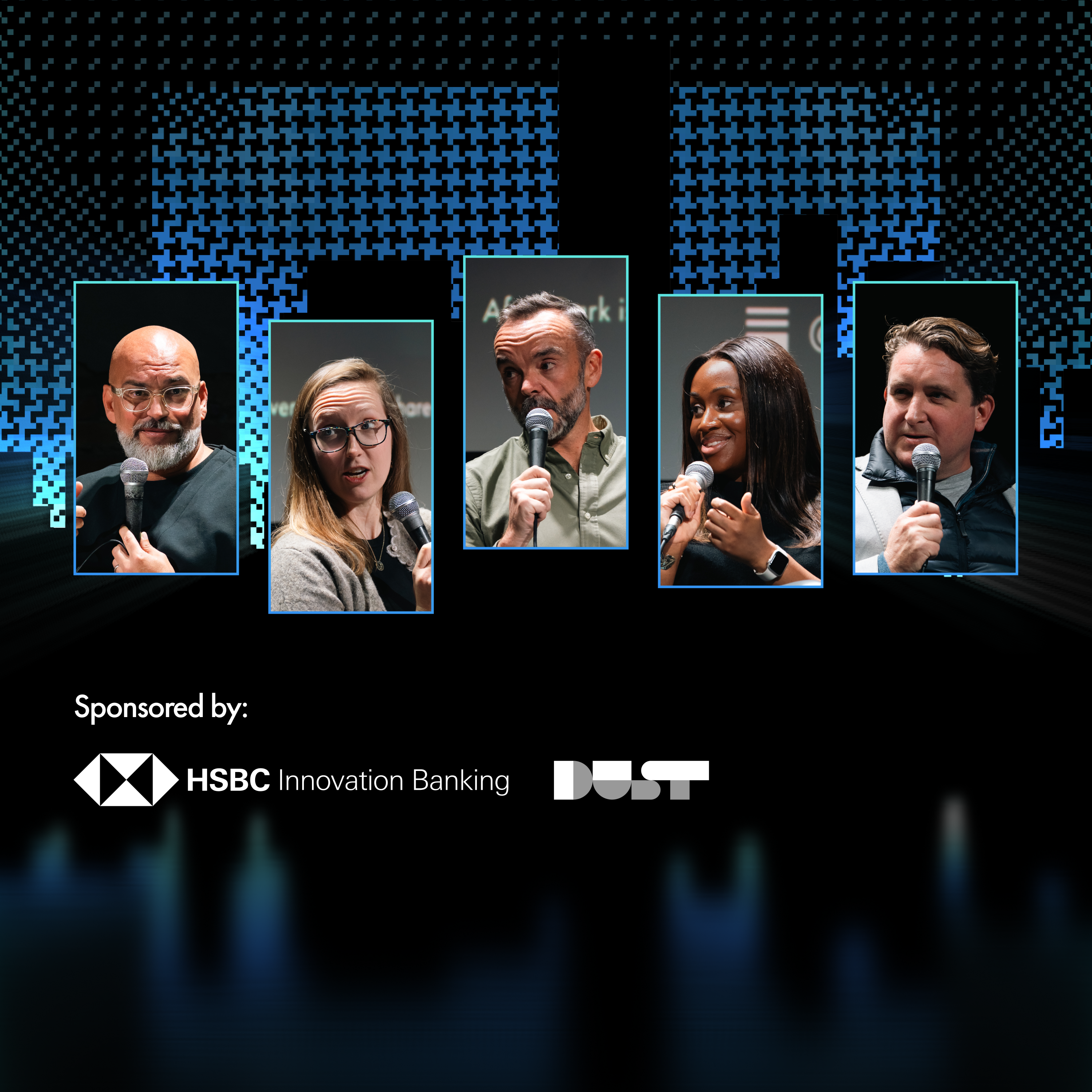
David Breer (host/CEO, 11FS). Kate Moody (Customer Strategy Director, Leavener Fest; fintech events/swag enthusiast). Tom Easterby (Head of Fintech Venture and Growth Banking, HSBC Innovation Banking; funds/debt/ecosystem connectivity for VC-backed firms from seed to IPO). Valerie Contour (founder, Black in FinTech; collective of Black founders/operators/investors focused on inclusive innovation). Joe Parkin (Managing Partner, FG Partners; UK fintech investor/operator/advisor; growth-stage B2B fintech focus).
Revolut’s $115B valuation reflects both fundamentals and “aspirational” growth; rollout success tied to founder-led culture and scalable tech. Claude’s tool is read-only and positioned to avoid regulated advice, but raises trust/liability questions. Fanatics/Amex card uses fandom rewards to drive wallet share, with potential upsides and concerns about encouraging more spending.
Revolut secondary share sales (valuation path $45B→$75B→$115B), US bank launch targeted for 2027, Claude demo questions like “where your money went,” and Amex/Fanatics roster of 500+ NBA/NFL/UFC/WWE stars; card requires $500/month spend for 12 months to get a $100 jersey voucher.
0:00Progressive's Accident Response can contact emergency services if you're in a major accident. The only thing worse than someone you love being in an accident is not being able to help them. So Progressive is here to help when you can't. So get peace of mind knowing your loved ones are protected with Progressive's Accident Response. Learn more at Progressive.com. Progressive Casualty Insurance Company and Affiliates. Limited availability in California. Driver is responsible for emergency and towing charges not covered by the policy. Coverage subject to policy terms and conditions.
0:43From 11FS, this is Fintech Insider News, live from the village underground in Shoreditch. My name is David Breer, CEO at 11FS, and on this episode 1116 of Fintech Insider, we're going to be covering Revolut's valuation jumps 53 % to$115 billion in new share sale as it prepares to launch in the US bank. Claude gets a personal finance tool, and Amex goes after the sports-mad crowd with Fanatic's credit card. All of this and many, many more things to talk about tonight. Tonight we have a brilliant panel, though, joining us to get into some of the biggest stories. First up, though, my co-host, well, not first up, first.
1:33That was making out like you're not a good guest, is it? That was very rude. We have Kate Moody, Customer Strategy Director at Leavener Fest. How's it going, Kate? You good? Yeah, not too bad. I think my day has been absolutely made by nabbing a pair of these HSBC Innovation Banking socks. You are welcome. so I mean again I realise this is a podcast so for our listeners this will not make sense but if anyone is observing the clash between my shoes and my socks that was not a choice but I'm proud to be representing on stage. Continuing the thing of Kate will do anything for free swag basically it's sells her soul for some socks basically.
2:10It's true I can't deny it. It's been a busy year and we've done quite a few of these here but like 2026 has been quite a quite a fun weird fintech Again, it feels like this is a New Year's Eve show that we're doing slightly, but are we all planning not to come into London for the next six weeks or so? Yeah? There's a few people. Travel is expensive these days. I can understand it. But, yeah, busy year? Yeah, really busy year. I mean, I think we've covered a whole range of different stories on the show, from investment rounds to new product launches. I mean, I guess that's the kind of reason we've got to over 1 ,000 episodes, is FinTech just does not stop.
2:49So, yeah, no, it's still an amazing space to be in and, yeah, amazing always to record this show with the people that listen to it. So, yeah, fantastic coming along. Thank God for always having something to talk about, for sure, yeah. All right, well, joining us tonight we have Tom Easterby, who is the Head of Fintech Venture and Growth Banking at HSBC Innovation Banking. How's it going, Tom? Hey, David, and well, thank you. Good to have you back on the show. For anybody who lives under a rock, what is a HSBC Innovation Banking? Well, HSBC Innovation Banking, we are a specialist banking team within the broader HSBC family.
3:24We provide banking, debt funding, and general ecosystem connectivity to VC-backed businesses from seed stage all the way through to IPO. Very, very cool. Thanks very much for joining us. Lots of stuff to go, so we're going to crack on through the introductions. But next up joining us is Valerie Contour, who is the founder of Black in FinTech. How's it going, Valerie? I'm good, thanks. How are you? Yeah, pretty good. Welcome back to the show and welcome to After Dark. It's a bit different from the normal shows, but it, like, you know, flows quite nicely. So let's see where we get to. But tell us a little bit more about you guys and your organisation.
3:59Yeah, so Black and FinTech is a collective of black founders, black operators, black investors, really coming together to, A, change the face of FinTech, but B, also look at, from a product inclusion lens, given that we are the most underserved when it comes to financial services, what does inclusive innovation look like? Very cool. and yeah lots of angles on some of the stories tonight as well and with that regard as well so great to have you on the show uh and last but definitely not least joe parkin managing partner of fg partners how's it going joe very well thanks david great to be back a long time listener first time after dark guest right exactly i think came on the show sort of first time about 10 years ago almost scary isn't it time flies when you're talking fintech nonsense doesn't it which is which is good.
4:43The nonsense is mostly me, not you, Joe. But tell us a little bit more about your role for everybody's benefit. For anybody who doesn't know Joe, Joe's been instrumental in UK fintech for well over a decade, never mind the first time you were over the show. So really big guy in the UK scene. That's very kind. Thank you very much. Investor, operator, advisor to the UK fintech market. I've worked across sort of traditional financial services, Goldman Sachs, BlackRock, and now I launched the FinTech Growth Fund, which was acquired by Oxus last year. And since then I've been helping a number of FinTechs we're involved in, plus some new ones.
5:20So I really specialize at sort of growth stage, B2B FinTechs. Very, very cool. I remember a story, I didn't say we were going to say this, but I remember when you were at BlackRock, you got a panel of people to come and talk and it was really good fun because I was one of the speakers and one of the other speakers was Gary V. Do you remember that bit? That turned into a very long day. But the level of optimism and motivation out of that day was crazy. Do you know what I mean? I feel like I'm still coming down from it, and it was seven years ago, essentially. But it was good fun. It was great fun.
5:55I mean, I think Gary Vee is the only person I know to have cooler trailers than David Breer. I honestly imagine having Gary Vee in BlackRock. I mean, I really thought my time at BlackRock was going to be very limited. I mean, selfies. I mean, it's just what it was. Yeah. It's good fun. Anyway, all right, well, we better move on to the stories because that's why we're here, right? And a huge story that was covered in a bunch of places, but we picked up in TechCrunch was Revolut's valuation jumps 53 % to$115 billion in new share sale as it prepares to launch the US bank. So the UK fintech has reached a staggering$115 billion valuation following its latest secondary share sale, a 53 % increase in last year's valuation.
6:39It's been quite the year for Revolut. Expanding its banking operations internationally, surpassed 18 million retail customers, and is now preparing to launch a US bank in 2027, subject to regulatory approval. While Revolut is seemingly going from strength to strength, it has been an interesting few weeks, for some of its UK rivals. Monzo's reported takeover with New Bank fell through. and Starling sounds like their CEO might be changing and is reportedly preparing to step down and so there's quite a lot of different fates going on for the the sort of big three in the UK fintech battle but um okay it's quite a quite an interesting I mean god damn like Revolut are just on a charge for everything and everywhere aren't they yeah it genuinely does feel at this stage like they sat down at the start of the year and thought like what big thing are we going to do every single week for the whole year.
7:34We did think about changing the name of this show to like, what has Revolut done this week? I mean, I think we try and keep some balance in the news stories we cover, but it's hard not to just talk about Revolut pretty much every week, because yeah, they're just absolutely bossing it. I mean, I think we haven't kind of covered it in the blurb here, but they've also got their banking license in Israel as well. So there's almost just like so much going on that we just can't cover it all. But yeah, it's a phenomenal raise. I think this is their third consecutive year in a row of doing these kinds of staff sales.
8:05So I think, you know, 45 billion, 75 billion, 115 billion. I'm intrigued to see, you know, if they do another one next year, where do they get to next year? But yeah, it's crazy numbers. And I guess the thing that I'm interested is, you know, obviously this is a staff sale. That's money that's going back into the pockets of either current or past Revolut employees. You know, these are people that are tried and tested builders in this space. You know, what are those people going to go on and do with that money, it's either going to be a lovely Christmas, or they're going to hopefully maybe put that money back into the sector.
8:36Maybe they're going to become the next round of angel investors, founders potentially. So, yeah, I think hopefully it's an exciting way to celebrate Revolut's growth and success, but also maybe to unlock the next generation of founders and investors. Wow. I mean, I think I saw somewhere this puts them as, I think in Europe it's like the seventh or eighth most valuable bank or something, Joe. Like, that's crazy, isn't it? You know, from where they've come from and, you know, all of the things that have been in the way. Like, does this valuation sort of accurately value them now? Or is there still a lot of numbers, a lot of commas in here that make it an aspirational?
9:15Yeah, I mean, first things first, this is a UK fintech, right? Which is, let's celebrate that, because I think we put ourselves down too much from a UK fintech perspective. And it's an amazing story. and they're probably the first firm that's going to be like a really truly global retail bank you know everyone else would claim to be but you know anyone who's actually banked across the world with some of the more traditional players realize they're very separate entities in different regions or different countries so I think that's a massive success story I think you know if you want to get sort of technical about it when you start to look into it I think between a third and a half is kind of how you would actually value it if you were looking at the numbers today and then between 75 % or the two-thirds and the rest of the half is kind of the aspirational stuff.
10:02But the other thing as well is, are they really a traditional bank? And I think we can talk about this when we get to the other two that have been in the news, who I think are far more traditional bank in the sense of the word. But you start to look at what they do in terms of crypto and investing and all that sort of stuff, and they're not your atypical bank. Listen, I think having said that, they have made I think there was a 45 % increase over the last year in terms of primary bank accounts, which I think is a major step forward. I mean, I've got a Revolut account. Do I use it in my primary bank account?
10:35No. But if they start to get that kind of nailed and that sort of stuff. But then there is also a bear case scenario you see here, right? They are starting to slow. They are finding things more tricky. So, you know, I think it's a phenomenal valuation. It's interesting that it's been priced exactly the price Nikolai needed to be priced at, which I think is, but, you know, I think they can grow into this valuation, but there is a downside risk as well if they do start to slow. Yeah, it did feel like it was picked specifically, you know, maybe Nikolai has to pay off the boat. I don't know, like there's something, there's something happening somewhere in this.
11:11I mean, Tom, what do you think on this one? I mean, it doesn't seem like these huge growing fintechs have got any risk of not getting funding at this stage, right? the appetite seems really there yeah very much so and i think this is kind of testament to the fact that they've done such a fantastic job of growing the platform and also now at the moment to joe's point around how that split of the valuation between kind of what is growth and what is kind of current fundamentals is is really really important because the actual multiple off of last year's ppt versus this year's ppt is pretty much the same so investors still have that sentiment of this is a business that has so much opportunity and skill i think that is testament to the underlying investors wanting to put checks out wanting to kind of still be part of that journey knowing that there's lots still to go we often talk about how the kind of growth stage of the market is drying up a little bit but this is an evidence that actually for the right opportunities there's there's there's checks still to be deployed over the course of this year there has been gaps that we've seen that some of our clients are finding it slightly harder than others to get funding at the series abc sort of stage but actually a very very buoyant seed precede that early stage market where you're seeing kind of new innovative tech coming through and actually getting that kind of uh that funding to me feels like it's um a market that has capital wants to be deployed find the right homes rather than some of those down markets we see when actually investors are saying you know sitting on my hands gonna wait and see or not got any lps so help me find them before I can deploy.
12:45Yeah it really feels like both from evaluations and the money coming into the big businesses people are you know not even doubling down like quadrupling down on where those are and I mean it takes a takes a lot of fuel to build a business that scales in every geography at the same time doesn't it? Absolutely I mean rolling out in different geographies is probably one of the pitfalls that so many companies fall over on right. Revolut's done a fantastic job of being able to do that kind of like have a core market go into new markets and kind of do it via a kind of semi-agency sort of model and then scaling that in that different ways they're kind of the u.s banking license that they're hoping to get i think early part of next year is evidence of the fact they've taken a model where they piggyback on someone else and then they've gone brilliant my brand is great over this huge market now let's kind of take the rest of the value chain by going out and kind of getting that license and they've done a very very good job of that many many other fintechs haven't done that in the past and they've all stumbled in that same sort of way.
13:43To your point, it takes a huge amount of capital, and you underestimate that at your peril. Yeah. It feels like maybe this year, I mean, Valerie, the fintech part, you know, probably more tech than fin revolute for a very long time, but it feels like every three days they're announcing a new banking licence somewhere, you know. It's quite impressive, isn't it, as a rollout strategy, you know. I mean, how much do you think the UK licence was like a catalyst for... I like to bring it back to everything's important about the UK, but do you think that might be it? I mean, how have they done this? I have no idea.
14:20Yeah, it's impressive. It's just sheer will of making it happen, isn't it? I guess part of that story was... So if you look at Starling and you look at Monzo, they've sort of not really got many of their founders around. Nikolai is, like, tripling down on the next 10 years of his... So how much do you think the founder being part of it, they've kept the same culture they've kept the same drive to make it happen um i think the founder presence does play into that right i think nick is very a very vocal around his vision and like that passes down to revolute and i think revolute has been very impressive by way of just the legacy that you've seen out of it i think there's like been more than 100 revolute alumni that's gone on to found businesses so it's a very similar cadence to what you saw with like the paypal mafia back in the day coming out of silicon valley i think like revolute is the equivalent of what we're seeing coming out of London so I do think the founder presence was playing to that.
15:12It's weird isn't it when people talk about the PayPal mafia Elon Musk was one of them like that's where that's where he started as well has anybody seen the video of him when he did that? Yeah. Creepy guy really creepy guy like it's like him and Bezos they've aged very well haven't they like in comparison Peter Till another creepy young guy it turns out it turns out being a billionaire suddenly makes you look better and more attractive. We should all try it, maybe. I don't know. But what do you think on that founders changing in it? I wonder if Revolut's sustained pushes consistency in the culture.
15:52Yeah, I mean, obviously you touched on in the intro the differing fates of Revolut versus Monzo versus Starling. Both Monzo and Starling have changed their leadership, going down different routes, obviously, as well. but yeah you do have to kind of think that that that plays into it um you obviously have not met nick stronsky but you know everything he puts out there he as you say has a very strong culture very strong vision i suppose the thing that stands out to me as well especially given what we've seen this year in terms of the the market deployments the licenses is i think he's been very clear from you know very early stage you know we're going to have 100 million customers in 100 markets and probably maybe i don't i don't know when he first said that but probably a lot of people were like, yeah, right.
16:33And now after this year, you look at it and go, yeah, shit, right. I don't think there's many geographies where a bank's not going, oh, fuck. I mean, we're definitely seeing that on the consultancy side at Levin Affairs. We're speaking to people across the world and the markets that don't have Revolut in are all just like, uh, guys, help. Yeah, what's the strategy? What do we do? Good luck. He's quite clear with his direction around it. The amount of times over the last kind of like five or ten years that he's really stuck out to say this is what we're going to do and delivered on it and now it becomes quite almost like um prophecy-esque doesn't it and so you kind of is it a case that they're uh following on own hype or actually is this just such a good visionary leader that actually you're able to kind of get an entire workforce to kind of galvanize behind and deliver on that and there's been many a story on the podcast around the kind of culture in different areas and so some of that has been deemed to be negative at times, positive at other times.
17:28But whatever it's doing, it's kind of driving a workforce that's able to deliver on a very, very, very clear and executable plan. And I think you can also see it playing through into the technology stack and into the new things around the tier, the subscription offering they've got now. They've obviously designed that to be something that can be quite easily rolled out across different markets. They've built a structure where it's quite easy for them to have core product benefits, but also to swap in individual like third party partners that are relevant to customers in specific geographies so i think again this comes back to that kind of point about like why are revolute following one path versus what monzo are doing versus what starling are doing i think when you set out from the beginning with the aspiration of being a global bank you probably do make different choices early doors that are completely invisible to the rest of us um but are probably now playing out in in the success they are having as we can see so far in rolling out in all these markets at such speed which obviously we're seeing monzo also deploying in in other markets as well it'll be interesting to see as they you know go into ireland go into spain um how their platform adapts to being in multiple different markets with different customers with overlapping but fundamentally different needs as well um i don't know about you guys but the the rumor about monzo's sale to new bank like i'm actually quite happy that didn't happen i don't know about you i'm opposite you what sorry i'm the opposite you you wanted it to happen yeah okay i was really interested from like diaspora perspective so like the latin american corridor coming into the uk and the fact that monze was entering into like spain and portugal of course new bank are prevalent in latin america they've opened up in the us i was thinking they'd be like a really good and of course like new bank they started off with credit cards right monze started off with everyday banking there's a really good like product layering aspect but also from like a cross-border perspective there's so many people that you can like service and also that like trust this cross-border trust so i feel like that would have been like the I think like that would have been the coolest story to come out so I was looking into that and watching that.
19:22You were pro? Yeah. What do you think Joe? I was very happy it didn't happen I'm a massive Monzo fan I think the event I did before was actually you came with Gary Vee was with Jason Bates and it's called Mondo and he's handing out these free these cards these these you know you load it on the cards and everyone went mad for them so I've got a you know it's a big and I think the way that you know Monzo have approached financial services as well which I think is very very different it's it's it's a little bit more traditional it's definitely more about you know the customer and how you bring the customer into a really good place from a financial services perspective I think is is a is a really awesome way to have to have built a mega mega business and they obviously don't have the growth or the valuation of you know some of the others but full kudos to them because I think they've bought a group of people um you know into financial services that truly love what they do as a and have got huge following and huge uh loyalty amongst it yeah and as that you know when you look at the transition and arguably you know starling and monzo have sort of made the similar transition away from founders and you know they seem to have found some sustainability of the culture keeping going forwards as well for me it's like it moving away from the uk that would you know bigger bank by smaller bank in the UK the the roadmap would change and the emphasis would change and the community would shift so yeah I'm sure a lot of the founders would have been very happy with the payoff but for me I'm like you know I'm happy it's still a little UK bank.
20:54In your intro you used the phrase IPO and I think we're all just dying to have some fantastic UK fintech IPOs and so to have another candidate come off the roster on that would just be such a disappointment. Well fingers crossed this time next year we will have talked about many of them hey we'll see see where we didn't didn't we say that 12 months ago possibly yeah possibly we did did that but uh but it's the anticipation that makes it enjoyable isn't it so uh anyway right we better move on to the next story um this one again was picked up in a bunch of places but we picked it up in fin extra is anthropics claude gets personal finance tools so um it's launched personal financing claude a new feature that lets users connect their bank accounts and credit cards and ask questions about their money in an everyday language.
21:37So instead of jumping between your banking apps, you can now ask Claude where your money went this month, where you're spending more than usual, or how much you've left until payday. It's currently rolling out in beta to paid subscribers in the US. And for now, it is read-only. So it can look at stuff and tell you about it, but not actually do anything. So Claude can help you understand your finances, but can't actually move or invest your money. it feels like this is just like sort of direction of travel really isn't it it's like AI tools getting their fingers into more things but what do you what do you think on this Kate yeah I mean I think it's not a shock I think we've all been expecting this I think you know perplexity rolled out something similar earlier this year obviously this is US focused at the moment it's a different regulatory environment either doing this through their partnership with Plaid and I thought it was interesting in the in the press releases they they had surrounding this they've been quite explicit as claude that you know this is just as you say read only you know they have definitely stated their intention for the future direction of travel for them not to be offering regulated financial advice they kind of have explicitly said that they believe the place for that is by them partnering with established regulated entities i'm sure we'll maybe cover this on the panel but i think that's maybe where the the kind of tension is in this space because you see the story get announced and I think our brains straight away jump to that much more engaging um dynamic agentic type of financial relationship that isn't what this is and it's really cool you know when you look at the demo it looks really swish the fact that it can look across multiple different bank accounts you can see the utility of that you know saving you having to sit down and it's got a nice swish demo where it tells you you can afford to go on holiday to Rome and eat loads of ice cream and who doesn't like that but um yeah I mean I can see that it's useful.
23:26It's not in and of itself kind of the end of the world as we know it. And I just think it's interesting to see that at least outwardly they're not planning to take on the banks directly, but obviously this changes the landscape and it's changing where customers are looking. Do you feel they're saying that so much that it sounds like they're actually going to do it? You know, I mean, it's like, we're definitely not going to start a bank at all. Don't worry at all, everybody. And it's like, oh, fuck, they start a bank, you know. It feels like when Apple said they weren't going to get into payments a lot and then really got into payments, you know?
23:57Yeah, I mean, I guess the thing will be to look at the hires, right? To kind of look at, yeah, which I've not had time to do, definitely will try and do before Christmas. But yeah, I think that would be the kind of thing, is to try and get a sense of what's going on behind the scenes as well. Like, yeah, you can understand why the language is as it is. You know, we've seen, I think, some very strong language come out of the UK regulator, I think, teaming out of Ofcom and some of the other agencies as well, just to really remind people that even if you're an AI platform, In the UK, at least, you are still subject to the same laws and regulations around guidance and advice as other players.
24:31So, yeah, you can understand the framing and the positioning. But as you say, in terms of the internal machinations, we can only hypothesise, I suppose. Yeah, it feels like a real changing market, doesn't it? And actually, like, we're, I mean, we've talked for ages about sort of disintermediation of banks from customers. But it feels like AI tooling actually has a better chance of doing that in terms of changing the way the customers interact with finance than maybe some of the fintechs do. Absolutely. And I think that kind of that agentic piece, which we're kind of starting to see in so many different parts of our lives, our everyday lives, coming into finance in this way is almost inevitable.
25:08And so it's about embracing that in the right sort of way. When I read this story, my kind of key takeaway from it was a bit, maybe this is a theme of the evening is about patriotism there's a absolute rock star fintech in clio uk clio who already does exactly this piece for the and is building building it for the last 10 or 12 years around taking that agentic piece building an agent that can plug into your finances and educate you in that sort of way and it's been growing phenomenally in the u.s but being able to have someone like anthropic be able to do this on a much much much bigger scale it's really quite quite frightening and impressive i do think it'll then start to filter in everybody's everyday lives um provided that we can all get the trust element kind of sorted but it's weird isn't it because there's um there's almost like everybody sort of says the reasons why nobody will use ar you know nobody's going to feed all of their banking information into it they're too smart and it's like oh fuck everybody did it it's like yeah yeah they're not going to get good advice oh no they're getting quite good advice do you not think the kind of the way it's starting with read-only, you know, it's like, we'll just plug in, we'll just have a look for now.
26:12We'll just kind of see what's in there and tell you interesting things, and then get hooked on that and the next is like, actually, I know you're quite lazy so we'll just do that payment on your behalf. Yeah, yeah, I'll just tap that in. That's bullshit. It's like when I say to my wife, I'm like, I'm just going to go in and look at some shoes. I'm not going to buy any shoes and then I'm like, I looked and I bought some shoes. So it's like, they're definitely going in that direction, aren't they? But I think I'm nervous about this. Like, I think I don't mind it in a closed loop with a bank or a trusted partner, but I don't think that we've had enough proof yet that these guys can be trusted, especially not, even if it's read-only, you know, with your bank or your company's bank or, you know, whatever it might be.
26:53So I am quite nervous about this. And, you know, I don't mind it being given, like, you know, you're going to ask it about its investments or certain questions that you fit into it. But I think giving access directly into your bank, I'm pretty nervous about at this point in time. Like, you have to prove a lot of trust to me to get to meet into that place. Well, it is creating, you know, like you used to sit in a pub and have a conversation and then you'd look it up on the internet, right? It's giving everybody a friend who is an expert in everything. Do you know what I mean? Like, to the point where, like, parenting is impossible now.
27:27Like, you used to be able to get away with bullshit with your kids. And now, like, my son asks ChatGPT and calls me out immediately. Like, it's like there's no, like, fabrication of rules anymore. It's hard. But it seems like a lot of people are still using it. Valerie, there's a stat that we got on the show notes. 58 % of UK adults have used generative AI tools for financial service tasks. but only 22 % say they're ready to hand over day-to-day money management. I'm like, that's 22 % of people saying they're ready to hand it over. So that's like, of the 58%, 22 % have gone, yeah, let's just give them everything.
28:03Are you doing that? I don't use AI for my personal finances, personally. I think I work in wealth management full-time, so I have that bias when it comes to managing my personal money. But I see the win for doing it, right, because there is a customer segment out there that do not trust banks or haven't spoken to banks traditionally and just want to talk to someone about it. Again, you can't really call up Barclays right now and ask them, hey, what do you think my spending is on McDonald's this month? But you can do it with AI. So do you think there is a customer segment out there that is going to be willing to trust it in a way that if you didn't grow up going to your bank, physically to your bank to open up your bank account and say, what is a savings account?
28:39I'm 15 years old. There are going to be a generation of people that do want to do that, A, that haven't trusted banks or just haven't had that experience. and I think there's going to be a spectrum of trust, right? You're going to have people that have this what's the word? There's a concept called algorithm adversion where if you consistently trust something and the minute it makes a mistake you no longer trust it. So it's the same way if I sent my boyfriend to the shop to buy some apple juice and he brought me back some milk, I'm going to be like if you made a mistake, go away. It's going to be the exact same thing that you're going to have with AI.
29:12As soon as it makes a mistake you're going to be like, okay cool I can no longer trust it. I remember asking in like chat gbt earlier this year around like my credit card and what to do versus like taking up a personal loan gave me bullshit information i've only ever worked in credit so i was like okay cool like no thank you um so i do think like for me that i'm on that that spectrum but i think there's also like people that live on the other end of the spectrum right where they have this like i think it's a concept called like automation bias where like you just consistently trust it even when it makes mistakes so i do think we're all on that journey at some point around like yeah our spectrum of trust i mean that that's the worry is like people who don't have your background or experience and just be like sounds about right let's do that you know but but i i wonder if that's from an industry's perspective we've sort of painted ourselves into a corner a little bit so you know because banks use a lot of language to make themselves feel important you know like and actually that sort of obfuscation of language and then actually the regulator regulating that look if you fuck up you we're gonna we're gonna fine you you know and it's like actually so everybody everybody's terrified about giving guidance or giving advice or breaking terms down to be understandable whereas chat gpt is like okay i've got a hand puppet i'm going to explain to you credit and it's like that's sort of what people need isn't it breaking down these complex things to make them understandable right yeah i think the so the fca they have that financial no sorry it's like vulnerable customer guidance framework one of them is like around like low capability and I think that there is going to be like a new angle of people that will be financially vulnerable off the back of like AI given guidance because again like if you have low capability aid like you don't understand your finances and now you've taken ill advice from an AI agent that in chat GPT they're not going to be liable to the FCA from what I know so again like that is going to be someone that has like financial detriment off the back of advice that came from chat GPT so that's going to be a problem that I think we need to a be aware of but again like where does that liability sit it doesn't sit the ai provider does it sit the bank that gave them the data probably not so i think that's a question that we should be thinking about i just don't have the answer um should we ask chat jpt and see yeah exactly no i think i've been looking at this from a kind of more an investment perspective so financial advice away from the banking side of things and there's three things that have come up the first thing is that 58 is not just younger people like it's almost universally across the board and you don't really see a drop off when you get older.
31:33Second thing is you're seeing way more informed consumers around their financial services and products, which I think is a really good thing. And this is your point around what is credit. If we'd have gone into a bank and asked that, you'd have got a really complicated, with lots of three-legged acronyms. And then the third thing is actually the financial advisors and big financial advice firms are still saying they've got people who want, they come to them with the AI advice, but they still want to, it's almost like they're checking the AI advice with the financial advisor now whether that will stop over time and someone will actually just make the decision on their own who knows but I think it's um you know I think I actually think this is really positive in terms of getting people more informed you know and actually calling out you know bits of advice that may not be accurate right because if you're trying to give someone a bit of advice to do something that you shouldn't be or you're putting someone into some money you know a place where it's not a good investment for them that will be called out yeah we're still at a very early stage with this the wrong way so we look at that stats around usage that is you know we might think it's a very small step actually you know that's kind of the starting point and so when we get more confidence with this and when people be able to learn and develop and build that element of trust and actually to your point around who's to blame if things go wrong when guardrails and regulations come out that give us confidence around that i think that curve is going to be quite pronounced yeah no i agree i think also the speed of what you're seeing with ai and chat tpt is going to have to slow down once regularly regulation does time in as well so yeah i um my sort of like thesis on this is like all of it leads to trying to make us better at doing it ourselves still do you know i mean the agentic stuff takes it further but but basically everything is geared towards like me being a better driver of the car when i don't want to drive you know i mean like so i think the the shift over time will be uh does it make me make better decisions i don't want to make the decisions i want people who are better than me making the decisions, if that makes sense.
33:24So that finance is something that we talk about on a podcast, but I don't have to think about it at the weekend. But hopefully that's the direction of travel. It's sort of self-driving money in that sense, isn't it? All right, we better move on, because I think we could talk about that one for a million years as well, couldn't we? But for our final story tonight, we're moving away from AI and into the world of sports. So this is Amex goes after sports mad crowd with Fanatics credit card. We picked this up on the Wall Street Journal. So American Express has partnered with sports platform Fanatics to introduce a new co-branded credit card in the US.
34:05Inspired by Top Trump's trading, customers can choose their favorite athlete from a roster of more than 500 NBA, NFL, UFC, WWE stars to feature on their card. The card offers rewards in fan cash, fanatics, loyalty currency, which can then be redeemed for merchandise, collectibles, tickets, experiences, blah, blah, blah, blah, blah. A wait list opened on the 9th of November with invitations to apply expected later on this year. I guess, you know, credit cards have usually competed on much more serious things like interest rates and stuff, but now they're sort of tapping into fandom. Like, is this just a, you know, a healthy everything around the stadium and live your brand and all of that thing?
34:52Or do you think it's a bit of a gimmick? I mean, I think if you think about this within the context specifically of the US credit card market, which is where this is, I mean, you know, when we do projects in the US, we speak to US consumers and they talk me through, like, all of the different accounts and cards they use. Like, no matter how often I do it, I'm still blown away. like they'll rattle out like 9, 10, 11 different credit cards and they've all got specific categories like this is my gas and this is my shopping and this is this. So I think in that environment, I can absolutely see how a credit card proposition like this, which has just got something else to it that makes it interesting, makes it dynamic, could make a case for adding itself to your wallet.
35:34And I think that's probably what the challenge is in the US context is how do you persuade a customer to add in yet another credit card and it's a really interesting universe of benefits it's kind of similar to Revolut in a way in that they've kind of got their own internal loyalty mechanism through fan cash don't necessarily agree with some of the tie-ups between the incentives around prediction markets and their casino offering and how that relates to rewards as well so I think there's lots of really positive parts around it and embracing sports fans and giving them a way to sort of celebrate their teams be rewarded for their loyalty um but yeah you just kind of hope that they keep it responsible and sensible as well i mean joe they're sort of building a community you know we sort of talked a little bit about how monzo built a community and built a bank around it they're sort of building financial services around communities that share a passion like that sort of feels like that makes a great deal of sense doesn't it yeah i've long thought this like it's it's always quite weird that you, I mean, you have these deep passions, right?
36:39And, you know, these sports teams you support and you have a follower of Formula One. And really those guys, apart from when they're marketing to you, know very little about you. Whereas you've got a bank often which you care less about or very little about. And they know everything about your spending habits. So I've always thought this could switch a little bit and you could actually, you know, associate yourself financially with different brands through the use of this. So, you know, your different teams in America. So I always saw this kind of like a bank of one versus, you know, having Amex offering to everyone.
37:15You could actually associate financially your life with different areas. And perhaps we're moving in that direction. But anyway, I love anything that engages people in financial services and makes them better at kind of understanding and managing their money. And I think this is a, you know, a reason big tick, whether it's successful or not. and as we said in the room, perhaps air miles have run its course and you can't spend them anymore. It's very difficult to spend them and so this is the next leg. I feel like it would be a weird behavioural thing where if I had to pull a card out with an Urich City player on it, it would make me spend less money.
37:46So somehow it would be like a self-control thing that was being built into a mechanic. If you could do it for your kids with embarrassing photos of them on as well. I said backstage, do you remember when Barclay Card did cards? that were personalized. Do you remember when they did that? No? Oh, you've got one. But did you then realize that people started putting, oh, the naughty pictures onto credit cards as well? I didn't know if you did that then. I didn't see it vividly enough in the front row there. But yeah, people spool things real quickly. But I guess products that are designed around fandom or brands or we've seen some weird collaborations come out over the years, haven't we?
38:30But do you think this would be more of a healthy relationship, I'd say, maybe not with you and Kobe Bryant, potentially, but a positive engagement with a brand that people love, right? Yeah, I think we've seen really good. Actually, there's a bit of both. My thought just came into my head. I think there's an element where price sensitivity normally goes out when you're an extreme fan. I think when you think about extremism, the fact that people spend hundreds of pounds and use buy now, pay later to go and see Beyonce is bizarre. In some cases, but I do think there is a case where you're creating a financial experience and meeting that person where they're at.
39:06If I'm going to buy collectibles or buy, I don't know, a T-shirt and then resell it, that's already something that we're going to do. But if you build a financial experience around that, I think that's really valuable. I was going to just use the example of Cash App in the US. They're really prominent across the black community. I think there was a stat that came out a few years ago that said 58 % of black Americans use Cash App. And what they did is they started to get referenced in hip-hop songs. there's about like 250 hip-hop artists that reference cash up in their lyrics so what they did was like partner with like kendrick lamar and serena williams and there was a campaign with um magdied stallion and what they did is give her like a million pounds uh to invest in like stocks and stuff like that and get her bands more like embedded in like investing as a financial behavior beyond just savings so i do think there is like a pro to like embedding yourself within the community the culture or like the financial behavior and creating experience around that because they are already going to do that or you'd want to educate them around like a new financial behaviour.
40:01So I think there's extremes on both ends, but I think there is a massive benefit if done right and done correctly. Yeah, engaging people and bringing them into a subject matter and then is it a financial promotion? Like, is always an interesting fine line, as I think all of the Kardashians have found out at some point, haven't they, of straying over that line. But I guess there is a balance there, Kate, isn't there? Like, do people know what they're saying? Like, because I imagine with this credit card, there is like a three-digit APR off the back of this in terms of what they're doing, right?
40:32Yeah, I must admit when I looked at the APR, it was not front and centre. But it doesn't have an annual fee. I think the barrier to entry is relatively low. So I think they're really focusing on trying to, as I said, allow people to add this card into their wallet. I think, again, when you look at the headline benefits, they've got a big flagship benefit around. you get a$100 voucher to spend on your team's next jersey or whatever you want to spend it on. But to do that, you have to spend$500 a month for 12 months. So again, depending on the audience, that might be easy or that might stretch them.
41:07And again, I think with all these things, you can see a really positive angle to it where it's taking something that engaged, committed fans are already spending money on and enjoying spending money on and just making it more rewarding, more dynamic, creating a community around it but you can also see that there's like a sort of unhappier path to this where it's trying to create an environment that just encourages people to spend more and more and more on their teams and we know how committed people are i mean again my husband is a newcastle united fan i don't really want to think about how much of our family income goes on to newcastle united memorabilia it's a lot um so i i know firsthand how how difficult it is to sort of not spend on on these things when you're so emotionally connected um and again when you look at the t's and c's of the fan cash currency you know this isn't money that sits in your account forever it expires after 12 months so they're really trying to create this environment that encourages people to spend money on their team and then keep spending so again i think many positives but also some things to watch out for as well very cool very cool well yeah i won't be applying for one of these just yet for Norwich, but if it does come to the UK, we will see, won't we?
42:19All right, moving on then. So we've talked about billion dollar valuations, AI getting involved in our personal finances, but have we actually spent enough time talking about what companies think we need? What about what we actually want? Because for all of the innovation that we've seen this year, there are still plenty of things about banking and fintech that drive us absolutely mad. And tonight, what we're going to do is try and do something about them. So, welcome to FinTech Hotline. Again, definitely sound silly, but let's go with it. Ahead of tonight's show, we asked you to tell us your biggest frustrations with banking and FinTech.
42:55The problems you'd love to see someone in the industry actually fix. And you certainly didn't hold back, which is good. We turned some of your submissions into calls to our very own. I think to hide your personal details, we've added a voice to these things. So here's how this is going to work. We're going to play the call, and then our panel will have to come up with a solution. No strategy pack, guys. I know we can do that, but we're talking about a quick resolve to these situations. So after we've heard the callers, we'll open up the hotline to the room. so if you guys want to start thinking about any problems or anything you want to share, again, not personal problems, finance problems, okay.
43:42All right, let's take the first call then. Hey, Think Tech Insider. I feel like we're still missing a truly gamified end-to-end experience. We don't need another bank or investment app. Who can build a commercially viable orchestration layer that really makes money work for everyone? Interesting. I was like, a commercially viable orchestration layer? Yeah, sounds like there's definitely a pitch pack somewhere for that one, isn't there? But Valerie, what do you reckon? What's actually stopping us from making this simpler? Like, is it, again, are we talking about distribution and manufacturing being done by separate people?
44:16Or what do you think on this one? Yeah, I think it's just someone wanting to own that problem. I think, A, finding people that actually want to pay for that. B, also thinking about, like, open finance beyond just, like, savings. Beyond, yeah, savings in, like, current accounts, right? We need to think about pensions, investments, mortgages, all that good stuff. That's not embedded within open finance just yet. And then also, who owns liability of data? So if you can find someone in the ecosystem that wants to own that, if there's anyone here tonight, let me know, then you have your solutions. I think those are the main three things that come to my mind when I think about actually being able to have that as a toolkit and your financial toolkit, yeah.
44:53Yeah, I'd be very interested in understanding the question more if you find us at the bar later, basically. But yeah, I think I agree with you. All right. We've got another caller waiting on the line. So if we listen to the next one, please. Hello, FinTech Hotline. I find it really frustrating that banks can freeze customer accounts without necessarily having to explain why, leaving people unable to access their own money, sometimes for extended periods. And with so little transparency or clarity on when the issue will be resolved, what are customers supposed to do? well we're having fun now we're talking about fraud aren't we so or various different security measures but tom what do you reckon this is i mean this is quite a serious one really in the context of you know actually the reasons why that happens sometimes yeah i guess uh aml financial crime prevention is the license for banks to be able to operate right we need to get that right for the sake of the broader economy and so that's paramount across all banks and across the entire stack of our business.
46:00Silence is never a great communication tool at all, but unfortunately, in many situations, silence is the only option when tipping off could be a problem around that. So without sounding too flippant, I think my response to the caller would be to maybe think about not committing any financial crime and we won't have to cancel your accounts too often. Or indeed, have a spare, have a backup. Yeah, definitely don't do a crime, everybody. That would be the advice. Simple, yeah, effective. It is. Like you say, though, the communication method of saying nothing, it's like sulky boyfriend, isn't it? It's like, what's wrong?
46:44Nothing. No, but really, why can't I? No, nothing. Would you prefer in the message section it was just blue ticked? I don't know. Yeah, I don't know. I'm not sure. Yeah. Go back to the advice. Don't do a fraud, everybody. All right. The fintech line is still open. Let's get the next caller. Hey, guys. My question to you is, why are banks still making us read endless terms and conditions in PDFs? PDFs were designed for printing, not for reading on our phones. It's 2026. Surely we can come up with a better standardized digital format that's easy to read, secure, and legally reliable. Why are we still treating digital banking like it's the 1990s?
47:27That's a good question. In many companies, it still is. What do you think, Joe? I mean, it is a weird one, isn't it? The PDF is like the, you know, a PDF at the end of an FTP is still, you know, digital distribution in many organizations, isn't it? Yeah, and I've looked at this several times in terms of how do you reinvent engagement with customers in and around the reporting that they receive. I think a big, big element, well, there's two big elements. The first one is regulatory, and they have to fill out a regulatory document. The other thing is, historically, everyone's come at it from a reporting problem or what do they need to send to the end customer, not necessarily a data problem.
48:03So they start with a report. They then work out what fields need to be filled out. But actually, more and more firms are starting to realize if they get the data right, then actually how they deliver the information to the customer is there or thereabouts. And they can do it using a multilingual rules engine that does that. So I think we'll get there. The other thing that's going to get them there is the fact that PDFs are not AI readable. And so actually they've got all these PDFs out in the Ether advertising their services and AI can't read them. So they're not getting involved in that. So if you're thinking about, you see AI, it never has a PDF there for that very reason.
48:40Yeah. It's interesting, isn't it? The PDFs are kind of from the yesteryear of, like, print proofs before they go to make booklets and things, aren't they? But, like you say, the control mechanism of somebody who has access to the CMS can't fuck around with a PDF, that's why they do it a lot, isn't it? I mean, I'd say from, like, a chat GPT or a Claude perspective, like, pumping all those things at it and then asking it questions actually works quite effectively. But yeah, hopefully we get a bit more sophisticated than PDFs over the next couple of years, but I doubt it in many cases. All right, now we've heard from our anonymous callers, but is anybody brave enough now to give it a go in the room?
49:20Has anybody got a banking or fintech frustration they'd like to share? Well, I mean, that is a... It's like Crimestoppers was trying to protect your identity, sir. Like, if you'd like to come forward and find a microphone on your way, you're... I say, sir, if you're a lady and I've just embarrassed you, I do apologise. I can't actually see you very far. Hello. I feel like a bit of an imposter because I'm not actually currently in the fintech world, but the fintech sphere is... Are you about to apply for a job somewhere, essentially, is it? No, no, definitely not. Are you a long-lost child of somebody from the panel?
49:59Like, I feel like this is going to go Jerry Springer-y. yes I am your long lost son damn it I knew that would come out eventually my question especially in the fintech sphere is there's a lot of technology going on and a lot of developments that we've mentioned in not only this after dark but a couple other live after darks but it's more geared towards any fintech solutions for small to medium enterprises or mainly specifically high street organisations or local level organisations that are looking to expand. So for context, I work in a coffee roastery. We are currently at the cusp operationally of expanding to a national level, potentially international.
50:44Wow, congratulations. And as the business development lead, trying to chase up people for invoices, everything from the current offerings from Sage and QuickBooks to loan applications it's all a bit of a mess and I feel like there's a gap for businesses from the again high street level to the national international level and I was wondering what potential solution should I be on the lookout for or keep an ear to to try and bridge that gap and not only benefit the business I'm a part of but other businesses that are currently at that stage. Yeah, and it's an interesting one and it's a hard one because actually many of those tools that work really effectively for you when you're small and you're like, great, it's like$10 a seat and it's great.
51:33And when you get bigger, you're like, oh, shit, suddenly all of these things are costing a lot. And weaving that tapestry of all of these capabilities together to run your operation how you want to is really difficult. You scale through Sage, you scale through Xero, you start needing treasury capability, you're doing all of these things. weaving that tapestry is quite difficult. I mean there's banks out there who have the experience of industries that can actually support you to make those transitions happen like these guys over here. So I'd look for partners rather than solutions, like people who have got people who have gone through that transition and have got experts in those fields, right?
52:16Because you don't want a banking product or a banking service you want a partner. I would echo that from a kind of long term perspective I think finding a business that can kind of take you from one part of your journey right through is always very rewarding and phenomenal if you build those partnerships with individuals and people rather than looking into the tech that's kind of the opportunity to help move your dial and to kind of have access to a broader element of network. what's the name of your business? Camden Coffee Roastery, it's not mine I'm currently the head of business development for it, but yeah if you guys are looking for coffee in your office It feels like a product placement we're doing, we didn't do that I mean listen I think it's really really hard to at the moment work out what is new agile tech because I think everyone has an amazing demo.
53:13You've never seen a bad demo has anyone. So the only thing I can sort of advise is that you actually do like a proof of concept with these guys and you put them in and say here's a load of our data, we want to achieve this and give them a very small amount of time and see how agile they actually are because I do think there's the established players who are desperately fighting to work out how they deliver for the new world and then you've got the agile players coming up so that would be my bit of advice for you. definitely yeah there's a big difference between the ux you'll see and actually the underlying capability what's behind it very cool very cool any other thoughts on that all right thank you very much so uh any more for any more anybody else uh want to stick out yeah there's a chap in the middle i'm a fan i'm a fintech founder uh what's your fintech uh serene oh yeah yeah um i had a question from a sort of fintech industry.
54:07Do you guys think we've become a bit too obsessed with AI in the last two years? And I ask that in terms of a wide spectrum of things from everyone's on LinkedIn, there's a lot of LinkedIn posts that are very AI and there's a lot of emails being sent around that are very AI. And there's also a lot of AI solutions being deployed for the sake of just efficiency and not actually good customer outcomes. And actually, who is it actually benefiting so I was just interested in hearing your opinions yeah I mean I'd say the industry has done a lot for the industry and also made it awful you know I pretty much abandoned LinkedIn at this stage because it's like it's just slop you know like it's complete slop it's someone's AI crap talking to somebody else's AI crap you know and it's just like why are we doing this guys like what's the point in it so So, but it does have the potential to do amazing things as well.
55:06But most of the amazing things that I think it has the potential to do in financial services is actually quite worrying from a human capital perspective. Because actually a lot of the middle office that stops people being able to provide the service that they want to is people. You know, it's costly to provide great service. So, at the point where you can create a great service for 10 % of the cost and 2 % of the people that changes the industry quite dramatically you know i mean um the audience for this podcast in like two years time might just be bots but um what do you what do you think yeah i mean i suppose the question is about like do we think the obsession is is bad and i think we can all imagine outcomes for ai and financial services which are bad but i suppose i think back to seven eight years ago where we were in the financial services industry and it felt like at that point in time new technology came onto the stage, and a lot of the industry's reaction was quite, like, I'm not going to look at that.
56:04No, I'm not touching that. Whereas I kind of see this as a bit of a proof that the whole industry has kind of grown up a bit, that there's this new technology, and people, yes, maybe are obsessing a bit, but at least they're not trying to run away and hide from it. Pretty much all of the banks, all the fintechs, are trying to get their heads around it, trying to understand what they do with it, how they make it work. So, yeah, so I think it's, obviously there are some people that are too obsessed but i think i see it as a as a positive sign that as an industry we're collectively becoming more open to change than we were when i first joined 11 of us and we we kind of talked earlier about how we're really early in the journey on this right so yeah we might be quite obsessed because it's new and it's interesting and we don't know where it's actually going and kind of all that kind of stage of the moment but i think there's so much potential to really move the dial in such a pronounced way that i i i think i can't be anything other than excited rather than uh fed up with the ai slop that is on social media the the potential is amazing isn't it you know the potential for change and disruption is phenomenal um it's it's kind of the industry has become a little bit fashionista you know like um open banking and then distributed ledger technology and crypto capability and all that so actually people have a tendency to try and focus on the new shiny thing rather than fundamentally fixing the problems really that they've got but i think the i think the ai one goes the people who were looking at ai like a better chatbot and thinking about it wrong the ones that are looking at it as a fundamental change to how they operate as an organization that feels like it changes everything you know but what's the old saying is like it's more promise than substance sometimes but it does feel as you say this time it probably feels different because of the rapid nature of it but yeah what do you think Joe any final thoughts?
58:03I mean listen I mean 10 years ago I was sitting in an office big office wearing a suit tie uncomfortable shoes and a guy with very trendy changes turned up and started talking about jobs to be done and that you know and it's true right and you know with all this hype around ai everything it can do and the power is incredible ultimately it's about the jobs to be done and i think if you go back to that you can't go too far wrong from a customer perspective and i you know i know that's you but i think it's a very solve problems for customers you seem to do all right doing it don't you uh i'm afraid we've run out of time we're going to get kicked out at some point and we've got drinks to have and food to eat so we better go and do that as well but it has been an incredible year like we said and always really brilliant to bring so many of you guys together we're gonna have to close out now hope you don't mind thank you so much for joining us thank you for Village Underground for hosting us a massive thank you to the sponsors HSBC Banking Innovation Innovation Banking and Dust for helping us make tonight happen and finally a huge thank you to Kate, our brilliant host, and Tom, Valerie, and Joe.
59:09If you're listening at home, thank you for tuning in. If you're in the room, I'll see you at the bar. See you later, everybody.
59:29Progressive's Accident Response can contact emergency services if you're in a major accident. The only thing worse than someone you love being in an accident is not being able to help them. So Progressive is here to help when you can't. So get peace of mind knowing your loved ones are protected with Progressive's Accident Response. Learn more at Progressive.com. Progressive Casualty Insurance Company and Affiliates. Limited availability in California. Driver is responsible for emergency and towing charges not covered by the policy. Coverage subject to policy terms and conditions. The secret society of semi-homemade.
1:00:01Listen up. Sam's Club has pre-made dishes for a Thanksgiving feast that's ready in two hours, all while tasting suspiciously homemade. Come join us. Sam's Club. Individual oven times may vary. Your sausage McMuffin with egg didn't change. Your receipt did. The sausage McMuffin with egg extra volume meal includes a hash brown and a small coffee for just$5. Only at McDonald's for a limited time. Price and participation may vary. Promotion pricing may be lower than meal pricing.
About this episode:
Our expert host David M. Brear, CEO at 11:FS, and co-host Kate Moody, Customer Strategy Director at 11:FS, present a very special edition of Fintech Insider News live from Village Underground in London. Joined by some fantastic guests and our live audience, discussing some of the biggest fintech and financial services stories of the week.
Stories covered on the podcast this week include:
Revolut reaches a staggering $115 billion valuation following its latest share sale, as it prepares to launch a US bank. But while Revolut continues its global expansion, rivals Monzo and Starling are facing very different challenges. We also explore Claude's new personal finance tool, which lets users connect their financial accounts and ask AI questions about their money. Plus, American Express teams up with Fanatics to launch a credit card featuring customers' favourite sports stars, raising questions about personalisation, loyalty and whether fandom should influence financial decisions.
And for our final After Dark of 2026, we're opening the Fintech Hotline! We asked our audience to share their biggest frustrations with banking and financial services, from juggling too many financial apps to frozen bank accounts and endless terms and conditions. Now it's over to our panel to come up with solutions, live on stage.
This week’s guests:
Tom Easterby - Head of FinTech, Venture & Growth Banking, HSBC Innovation Banking
Valerie Kontor - Founder of Black in Fintech
Joe Parkin - Managing Partner of FG Partners
Timestamps/stories:
Revolut’s valuation jumps 53% to $115B in new share sale as it prepares to launch US bank - (05:49)
Claude gets personal finance tool - (20:46)
Amex goes after a sports-mad crowd with fanatics credit card - (33:12)
This edition of After Dark was sponsored by HSBC Innovation Banking.
About Fintech Insider:
Fintech Insider by 11:FS is a bi-weekly podcast that covers everything from finance and banking to technology and the latest trends in financial services.
Our expert hosts, with hands-on industry experience, are joined by key decision-makers, VCs, and top reporters from across the financial landscape, including guests from companies like Stripe, Revolut, Plaid, PayPal, and Monzo. Together, they break down the biggest news and innovations shaping the space.
Our weekly news show drops every Monday, covering major stories like mergers, new product launches, regulatory shifts, and emerging tech trends. On Thursdays, our Insights show goes deeper into the hottest topics driving the future of finance, including AI in banking, decentralised finance, and the evolving landscape of embedded finance.
Whether you're already in the fintech game or just starting to explore, this is the #1 podcast for you.
If you enjoyed this episode, don’t forget to subscribe and leave a review!
Got a question for us? Email podcasts@11fs.com!
Learn more about your ad choices. Visit megaphone.fm/adchoices



Scan the code with your iPhone camera
Listen in the app.