Ask ChatGPT

 Fintech Insider Podcast by 11:FS
5 Nov 2026 · 48m · 16 chapters

How AI agents that automatically manage saving, borrowing, and investing could break traditional bank economics built on sticky deposits, customer inertia, and bank-controlled decisioning; what replaces it and the stability risks (faster “agent-speed” bank runs).
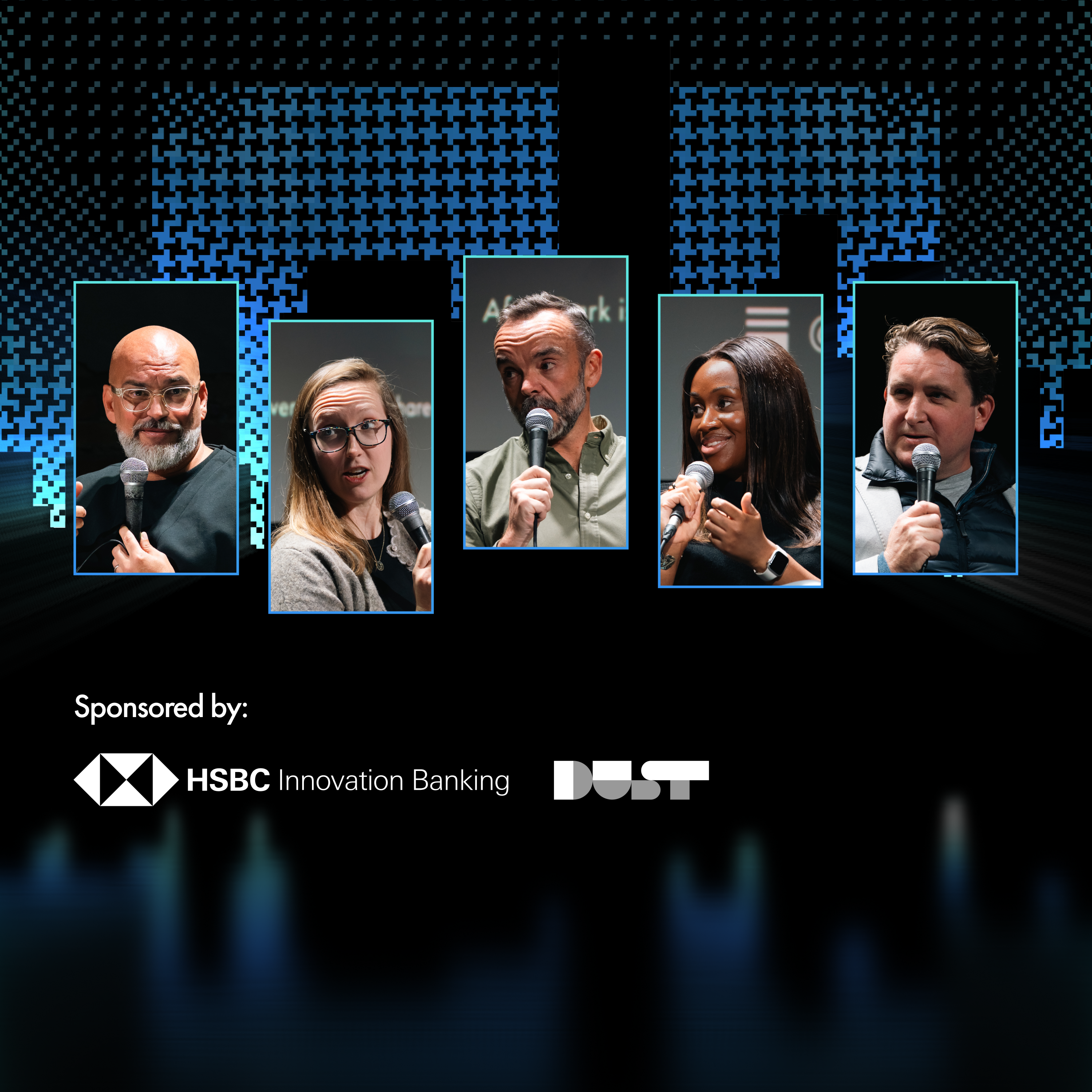
Ross Gallagher hosts. Panel: Conrad Ford, Chief Product and Strategy Officer at Alica Bank (SME-focused UK/Europe fintech bank); Marusha Naidoo, Global Head of Partnerships at Paymentology (payments/issuer processor partnerships); Aurelian Bonnell, CTO of Next (narrow banking concept; “doesn’t lend,” focuses on 24/7 money movements).
Written by AI. May contain mistakes.
Discussion on how AI agents could transform banking behavior and economics.
“But AI agents could change all of these things.”
Exploring how banks have relied on customer inertia and the implications of AI.
“I think the real question is how quickly and where it happens first.”
How traditional banks must adapt to stay competitive against AI-driven services.
“I think traditionally, banks have benefited from customer inertia, right?”
Discussion on how banks are re-evaluating their business models in response to AI.
“And I think ultimately, a bank's loyalty or their customer loyalty is going to need to be continuous.”
Exploring how deposits and banking models might fundamentally change.
“So it's becoming quite challenging for banks who are not, you know, making the change and who are not evolving.”
Speculation on how the banking landscape might evolve with AI agents.
“And that will change the costs to every customer of a bank.”
Explore the classic adoption curve and its implications for the banking industry as AI and consumer comparison sites emerge.
“we're going to say classic adoption curve.”
Learn about Paymentology's cloud-native issuer processing and its impact on banks and fintechs.
“Launching innovative payment products is only the beginning.”
Analyze how financial institutions are adapting to AI agents and the competitive landscape of banking services.
“Marisha, we ended the last segment with you.”
Learn how banks must adapt their customer acquisition strategies for AI agents.
“I mean, I love that point about building these native experiences with agents in mind, obviously, rather than it being a sort of bolt on or even an afterthought to sort of what you're already doing.”
Explore how new banks can leverage their position to innovate without the constraints of traditional incumbents.
“So we don't face the innovator's dilemma.”
Discover the complexities of integrating AI agents into banking and the necessary guardrails.
“So the comparison sites, they're presumably going to be building agents or working with agent firms.”
Understand how the relationship between banks and customers is evolving with AI and autonomy.
“this is Fresh Beast and a lot of things through and I'm really enjoying it.”
Examine the importance of culture and openness in adopting new banking technologies and practices.
“I'll use that bank for other services as well.”
Learn how innovation and culture in banking can drive customer satisfaction.
“We've talked about things about, you know, sort of leaning in, embracing that challenge, as well as all of the other things that we've talked about in terms of like technology, partners, architecture, guardrails.”
Discover insights from various fintech leaders about their companies.
“If we end just by you guys giving us a little bit of information in terms of where people can find out just a little bit more about you about your companies.”

Get the gist, explore an idea or ask about something said.
 Claude
On Fintech Insider Podcast by 11:FS, what are the key points of this episode?
Searching your listeningAutomatic transcript. May contain errors.
0:01This episode is brought to you by Google Chrome. You think you know a browser, but Gemini and Chrome? That's new. It can help you with practically anything on the web, like restoring a vintage motorcycle from a 50-page restoration block, or finally break down that long article you've had open for weeks. Gemini and Chrome is here for it. Ready to make anything online make sense? There's no place like Chrome. Check responses set up required, compatibility and availability varies 18+.
0:40Ross Gallagher: Hello and welcome to Fintech Insider Insights from 11FS. I'm Ross Gallagher and today we're asking a question that could fundamentally change how we think about banking. What happens when our money starts managing itself? Banks make money when we borrow, when we go overdrawn, and sometimes when we miss payments they also benefit when customers leave deposits sitting in low interest accounts or simply don't bother switching to a better deal but what happens when ai agents start eliminating some of that behavior what happens when customers no longer leave money sitting in the wrong accounts borrowing is constantly optimized and financial decisions are made automatically for decades banking has benefited from relatively sticky deposits customer inertia and owning the customer relationship.
1:29Ross Gallagher: But AI agents could change all of these things. So today we're asking, does fully automated money break the economics of banking? And if it does, what replaces the traditional business model? Now joining me to unpack all of this is our wonderful panel, Conrad Ford, the Chief Product and Strategy Officer at Alica Bank, Marusha Naidoo, the Global Head of Partnerships at Paymentology, and Aurelian Bonnell, the CTO of Next. Right, so let's dive in. Let's start by imagining what fully automated money could actually look like. Conrad, maybe I'll come to you first if you don't mind. As we sort of teed up in the intro, banking has sort of historically benefited from those sticky deposits that customer inertia and people maybe not always being on top of every little financial decision how do you think you know this sort of this move now towards AI agents starts to I suppose eliminate some of those behaviors and then what does it mean for some of the banks?
2:36Yeah so certainly in certain segments incumbent banks have been too reliant on I think two things firstly customer ignorance and secondly customer apathy and I think agents is kind of the perfect super weapon for both isn't it because In terms of apathy, it does it for you. That's why they're called agents. But also they are intelligent, AI agents. In other words, you don't have to be a financial services expert because they probably know more about financial services. And I do, and I've spent most of my life in financial services. So that's kind of the high-level problem statement. I think it's pretty much inevitable this is going to happen.
3:16I think the real question is how quickly and where it happens first. So let me try and approach that first question. I think the perfect sweet spot where this happens really quickly is an alignment of two things. It's where customers are very AI native. In other words, customers are pushing themselves towards AI and agents. So that's kind of part number one. And then also where the incumbents have sort of gone too far in terms of taking advantage of customers. So let me talk about our segment. Our segment is quite traditional large SMEs. On one dimension, they are very much taken advantage of.
4:01So although their deposits are actually more attractive to a bank, they get a penalty of a couple of percent, actually 200 basis points or thereabouts, less than a corporate, despite the fact that in capital and regulatory returns, it's more attractive deposits. So certainly being taken advantage of is very much there. But our customer base, generally speaking, isn't at the front of the adoption curve when new technologies come along. So for example, our customers would typically still be using desktop accounting software, which is a paradigm that dates from the 90s. Large chunks of them have adopted the cloud, but actually that's still a minority.
4:36So I think the interesting question is what's that going on on that forward square to do a management consultant. Bank to take advantage. And I think we've got a pretty good guess about where that's going to be, it's almost always the younger generation, right? And just as Monzo won the millennials, Gen A I think it is, is the generation that's come of age in the in the agentic age. No doubt they will be the ones using these tools, not thinking hard about these tools, not worrying about these tools, they will just be natural for them. And I think that will be an interesting dimension. Although I have to say, the downside, of course, is that that generation is not going to have much money.
5:16So I think it'll be some time until the really sticky, large deposit basis, which is larger SMEs, our segments, but also the mass affluence of semi-retired segments. I think it's unlikely they'll be jumping into agentic AI as early adopters, but we shall see. I may be surprised.
5:33Ross Gallagher: It does. I mean, Marussia, I think it, you know, it sort of puts a spotlight, I suppose, on, I suppose a kind of uncomfortable truth, right, for the banking industry, which is banks do often benefit when consumers behave in a way that doesn't necessarily get them to the best outcome. Yeah, absolutely. I think traditionally, banks have benefited from customer inertia, right? Right. You know, banks set their rate and they just customers have to accept it. I think it's it's twofold. The first one is the banks don't give customers enough options so that they can actually pick and choose. They're quite prescriptive.
6:15Well, you know, traditionally. Right. And I think but I also think at the same time, we can't just say, look, it's, you know, customers making poor financial decisions. I think it really comes down to what are the needs of the customer and how big of a pain point is it for a customer to actually think about, you know, moving, right? And in the past, even looking for other providers, that was typically very, very difficult. That's where AI agents come in because, you know, even if I look at, you know, some of our customers, they kind of say, okay, well, I'll take this price because I understand it.
6:48It's easy and it kind of makes sense. They don't have the tools to look for competing products, competing banking services, competing rates. With AI agents, this now makes it a lot easier. So do I think that the traditional banking rails are going to still be able to rely on passive customers? Definitely not. The banks are now going to need to really compete for the first time with these newer digital players that are coming in. They're going to need to make sure that they are, you know, re-looking at their commercial models to retain their customers. So I think that's one of the biggest shifts that we're going to see.
7:25And I think ultimately, a bank's loyalty or their customer loyalty is going to need to be continuous. They're going to continuously need to show customers their value.
7:36Ross Gallagher: And Marisha, because it's a really interesting point, right? I agree with you. I mean, there's no world where this doesn't force banks to become more competitive. But it's interesting, isn't it, when you start to think about some of the decisioning when it comes to those agents. Is there also a risk that actually banks become a little bit more commoditized and actually it does just become about who's offering the best rate? So in certain products, I would say. So if it is very easy transaction banking, then customers, it's very easy for customers to look for the best rate, the best solution. What we're seeing happen now is when you have the likes of a Revolut entering the market, right?
8:19And we're seeing this happen across all of our regions, right? When you see the likes of a Revolut entering, when you see a large digital bank coming in where they also have AI capabilities or AI agents to help with the optimization of the way these banks operate, I think one of the things that we are seeing is banks are now saying, look, they need to, even from processes like us, they really need to look at their commercials because their bottom line is really being put under pressure. And so we are seeing that that is a continuous problem when it comes to some of the more traditional banks. We're seeing very large banks across Africa, across LAC, even across the Middle East, who are now saying to us, okay, we used to do this before.
9:06We've had relationships of over 20 years. We now need to re-look at our commercials at a product level for every single service that we're offering because, you know, they need to just be more competitive. They need to offer better services to customers. Even when it comes to, you know, sharing interchange, giving better interest rates, all of those different things, where it would typically just be a revenue driver for the bank, they're now having to share in that revenue. So it's becoming quite challenging for banks who are not, you know, making the change and who are not evolving.
9:40Ross Gallagher: Brilliant. How much do you think that, you know, those deposits becoming less sticky and then I suppose by definition less stable, How much does that start to undermine some of the traditional banking model? A great deal. Firstly, I want to kind of challenge what Conrad said in that, you know, it might be a slow uptake and it hasn't yet come to fruition, right? We are seeing our clients use MCP all the time, use moral context protocol. They use their agents to trigger money movements. It's happening and it's not always the most shiny or flashy companies that do it. The beauty of AI is that anyone that pays for a commercial model with AI has the opportunity to be technically more advanced.
10:27And so even companies that you'd consider older are able to do it and reap the benefits from it. So the deposits are less sticky already. That is the case. It fundamentally changes the way a bank has to think about the deposits. They're no longer free to use for a 10-year mortgage across town. We basically break the illusion that a deposit is there in your account and also available for lending. So banks have to think very candidly about standing up a model that they can monetize the utility of the bank rather than just making money off the deposits. We think at Next, we are a narrow bank, we don't lend.
11:15we think there will be two banks in the future. The ones that are full utility play that do not lend and just offer 24-7 money movements with deposits that are safe and sound always and available. And there will be specialized institutions that provide specialized credits, specialized lending for the highly complex cases. Both of them need to be monetized independently and no longer as one bundle. And that will change the costs to every customer of a bank.
11:46Ross Gallagher: Yeah, I mean, and I think, you know, what you are describing is a fundamental redesign of, you know, how we've understood banking to work. Aurelien, if I go back, I suppose, to the question that I posed then to Marusha about some of this sort of spotlighting that uncomfortable truth around the incentives for the banks and the incentives for the customers not necessarily always being aligned in terms of outcomes. Do you think that then this fundamental redesign that you're talking about starts to change that? Like, is this a better world for customers? Yeah, I mean, I think it depends on who the customer is.
12:25I can't right touch on this, right? Institutionals, commercial customers and retail customers have a different appetite for different things. For a retail customer, the speed and the cost are major incentives. for a commercial customer, the relationship matters more. You do want a full service offering. Sometimes you will, or you want better guarantees or better rates. So the models are already changing. I think banks are still trying to figure out where they're going to land, which services they're going to offer and which ones they're not. We can already see, for example, that JP Morgan turned off their agentic workflow and made it in-bank, right?
13:09rather than just opening up to everyone. I believe the opposite. I think if you're in a company, you are not just with one bank. You're with five, ten banks. You don't want to use five to ten tools to manage your money. You want to use one tool. So we are in that space right now where the ecosystem is being figured out, the banks are exploring options, and everyone is trying to see where they can get an edge in the first place and then how the revenue models need to update to make sense to them in the future.
13:40Ross Gallagher: And Conrad, I guess that's kind of the fun about speaking about and speculating about where this goes, right? Because we can sort of place our bets, but actually what we're talking about is such a fundamental change that really we've got no idea, you know, realistically sort of how this plays out and who wins. I do think in this topic, we're going to say classic adoption curve. I think we're going to say the classic crossing the chasm adoption curve. So what that means is it starts slowly and then it's suddenly, as the kind of mass of consumers take over. The analogy I'd give here, which is a pretty direct analogy, actually is the emergence of consumer comparison sites with the internet.
14:24So it was, you know, at the start, they were a pretty niche thing. And then suddenly just it happened really, really quickly. Suddenly the majority of consumer financial services were purchased through a comparison site. So this come like slowly then suddenly, which I think is famously a description of how you go bankrupt, but maybe that will be the outcome for some of the banks. So I think that's what we're going to see. I do think we are, you know, I would say we are still in the early adopter phase, but the early adopters are the ones that kind of tell us what the future is going to look like.
14:53You know, to put this in context, right, what's the UK savings market alone? It's trillions, right? And there's clearly not trillions at the moment being moved down with agents. so that's how that's kind of my framework of how we think about this so it's going to be an adoption curve and you can guess pretty well where the initial adopters are going to be or certainly the sort of the early bit of a curve is going to be customers that are taken advantage of and and are ai native and as i said i think i think we can get some pretty good clues there in my world of sme for example i think the kind of modern tech and scale-up and firms are probably already doing this stuff, right?
15:33We're building MCPs for our customers and we're not the only ones and that's happening in the US as well. So I think you will see that classic adoption curve and I think it's going to be exciting. In the long term, what does this mean for the big incumbents? Because of course, it's still the case that they sit on the vast majority of deposits, certainly in most Western markets. And in the UK, that basically means four or five banks are in the deposit market really, and the rest are the fringes. And there'll be a case of many European markets actually. So what does it mean in practice? I actually think their biggest challenge is going to be wide operating costs.
16:08So they have thousands of people sitting in head offices sending PowerPoints to each other, right? This is the overhead that's covered by that current lack of apathy and ignorance. It's covered by that, right? They haven't really attacked that. The other problem they have to deal with, of course, is in a country like the UK where branch usage has declined massively. They've also got the branches to worry about as well, which is, um, it's not just economically hard to exit. It's also politically hard to exit those branches. So, but they are going to have to face into that, um, um, cost operating cost challenge, because in the end, right, there is always going to be demand for deposits.
16:47It's just, you're going to have to pay more for them, uh, cause they're going to be less sticky. So, uh, I think it will actually force the big banks to finally actually confront their own cost
16:54Ross Gallagher: places yeah um and and again i mean um in terms of shining spotlights i mean no bad thing conrad i thought you're you know the the slowly and then suddenly all at once um analogy and then tying that to uh you know going bankrupt i think that's uh an interesting analogy because um and maybe aurelian it'd be interesting to get your thoughts on this you know as much as it's it's exciting to see sort of how this plays out and how it transforms the industry. Of course, there's potential risks associated, whether that sort of bank runs and the potential for all of that kind of stuff happening really, really, really quickly.
17:37Ross Gallagher: How much should we be worried about the impact that this can have on the stability of the financial system? Yeah, so the system is inherently fragile and was designed as such, right? In the 1930s, when you had a bank run, it would occur over the course of weeks, right? Because people had to get off work. They had to line up outside of the branch and orderly get their money slowly until the bank run had occurred. You know, the past few years, the bank runs that have happened have been over the course of days because you've had basically API interactions that triggered the money movements. With agents, it's even worse, actually, because they all get the same signal at the same time.
18:23In engineering, there's this concept called the thundering herd. It's basically, everyone gets a signal at once and they all rush to do the same thing. That's exactly what's going to happen with agents. You're going to have bank runs potentially triggered in seconds. Not hours, not days, not weeks, seconds. So it exposes a system that is inherently quite fragile, right? The fractional reserve system, the fractional banking system that we have right now, basically banks keep you know 10 20 percent defined by capital ratios they keep that as cash and the rest is loaned out if you cannot sustain the agents all redeeming their money at once because they got an event from bloomberg that triggered them to do this then your system is is at risk right and so i think we're going to see an evolution of this system we're going to see more narrow banks that do not lend like Next that are coming up.
19:19As far as I know, there are none in Europe right now. I hope to see some in the next few years. But globally, it's the same problem everywhere. It's the same system we're all running on and it needs to change to adapt to be at agent speed rather than human speed.
19:37Ross Gallagher: Marisha, I'm really keen to get your thoughts and I suppose your build on that as well and I suppose leaning on your sort of institutional expertise. Yeah, absolutely. So I think what Aurelien was saying is so true. So the infrastructure is key to keeping all of this together, right? If you don't have stable infrastructure, which A, the AI agents can tap into quite easily, so access, right? but also the platforms to actually service this many transactions within a very short space of time. I think that is absolutely key. So when we look at the more traditional players, they do, like we're saying, they do run on three or four days.
20:24This is like real-time payments. You've got to have the infrastructure, the capabilities, the guardrails in place to make sure that A, the system can handle it. B, there are rules in place to also mitigate any kind of fraud or agents that are doing transactions which they shouldn't necessarily be doing. But it's also making sure that from a, like for example, from a processing perspective, do you have the right partner who can ensure that you can manage all of these global payments at the same time with all of the guardrails while still making it fundamentally easy for the AI agents to trigger and successfully make these payments?
21:03So I think all of those components together is what is going to make this a success. And I think that's one of the challenges so far that we've seen, you know, with a lot of players who have tried or have started to enable AI agents. They've done it in a way that is very intentional, but intentionally small, so they can actually test their own infrastructure and see what works and what doesn't work. The first movers are the ones who are saying, actually, we need to either change a partner out because it's not working, or we need to rethink our overall architecture. And so that's one of the reasons why we see it being slightly slower than I think the market expects it to be.
21:41But I think once you get that infrastructure layer right, this is going to be an area that completely changes how we look at banking and servicing customers on a daily basis.
21:53Ross Gallagher: Yeah, and I think that point about testing and learning and doing that in a controlled environment before you start scaling this stuff out, I think is going to be so key. All right, look, I think we have done a pretty neat job of setting the scene. We're going to take a very quick break, but we will be back with you very shortly. In part two, we're going to explore how banks might actually need to reinvent themselves, where the opportunities to make money could actually emerge, and then what a profitable banking model might actually look like in an increasingly automated world. Launching innovative payment products is only the beginning.
22:33Real progress comes from what happens next. Paymentology fuels continuous compounding momentum as a cloud-native issuer processor, helping banks and fintechs grow beyond go live with global reach, local know-how, and the power of its Loom platform. Powered by more than 500 paymentologists across 68 countries, they make card programs work naturally across markets. Want to keep the momentum going? Head to paymentology.com. This episode is brought to you by Google Chrome. You think you know a browser, but Gemini and Chrome? That's new. It can help you with practically anything on the web, like restoring a vintage motorcycle from a 50-page restoration block, or finally break down that long article you've had open for weeks.
23:17Gemini and Chrome is here for it. Ready to make anything online make sense? There's no place like Chrome. Check responses set up required compatibility and availability varies 18 plus.
23:31Ross Gallagher: Welcome back. Marisha, we ended the last segment with you. I'm going to start this segment with you as well. If AI agents increasingly decide where customers save, borrow, and invest. How do you think that competition then between those financial institutions begins to change? Yeah, I think when we look at, you know, how financial institutions are going to start competing effectively, is they really need to focus on how do they make themselves visible, right? Because that visibility is key to making sure that AI agents A can actually access the information or the services, products, features, everything from commercials to what makes the service better than any other, right?
24:20And I think that's one of the areas, I mean, even if you go on ChatGPT now and try to, you know, look for a holiday, if you ask the same question a couple of times, you're going to get different answers, right? Now, you can't afford for that to happen when it comes to your banking infrastructure or your banking services. You need to trust that the AI agent is bringing back the best results. Now, when it comes to the banks that we're working with, so for example, we have Malbank in the Middle East. They are an AI native bank, so they have built in AI agent capabilities from the start, right? And so what they've made sure is their bank is visible at all times.
24:59they specifically built it in a way that AI agents can receive the data that they need in the best way possible to give them the best scoring, right? And so they've typically thought through an agent being able to access information by an agent, right? So optimizing the way the data is actually transferred, accessible and visible, right? What they've also done is they've looked at what are the key decision makers or drivers that AI agents usually use when making a decision around ranking rating. And so when we look at their proposition, we can already see outstanding results from the way their agents are operating, from the search results that we're seeing.
25:44So I think it really, there's a big difference between AI native banks and banks that are adding AI agents onto their propositions. Because the banks that are adding AI agents onto their propositions, they are a lot more nervous. And their guardrails need to be better than an AI native bank. Because there are so many moving parts within a traditional bank, right? There are so many different rules, configurations. All of those things need to be, you know, reviewed. They have to have guardrails around the actual product service features commercials, then put an AI agent on top of it. Whereas AI native banks are actually doing that correctly from the start.
26:25So I think that's the kind of competition that we're seeing. But I think the other thing that we really need to focus on is, you know, when we start to enable these different services or these different services that AI agents can find, one of the things that we're doing when it comes to our digital experiences is we have a whole project around how do we make products features more visible by using API first infrastructure, making sure that we have SDKs that you can plug in. and gain access or information very quickly, but also, again, making it very easy for the agent to actually trigger these payments or these transactions.
27:07So it's a combination of factors, and it just depends on what type of institution you're at right now. Are you AI native? Are you, you know, more legacy and trying to add in an AI feature? Or are you really just looking to enable certain products? So, for example, what we are seeing with some of the more traditional banks is they are saying, okay, we want to attract a certain demographic, which is, you know, the more tech savvy individual. And so we're going to spin up a specific proposition that AI agents can use specifically for these types of transactions. So more traditional banks are saying, okay, we need a virtual card.
27:45We need to be able to tokenize it and add a token for a specific agent. Now, that can be a completely different spinoff from the more traditional products that the bank has. So there's different ways that banks can actually enable agents, be able to compete and offer a better value proposition to customers. I do.
28:03Ross Gallagher: I mean, I love that point about building these native experiences with agents in mind, obviously, rather than it being a sort of bolt on or even an afterthought to sort of what you're already doing. um really in one one area i'd be really keen to get your insight because i think it's going to be an area where people within financial institutions everywhere are going to be sort of noodling this question is you know when you start to think particularly about something like customer acquisition um and when banks are you know competing to be selected by ai agents um And that's quite a difficult thing for a lot of people, I think, to get their heads around.
28:44Ross Gallagher: It's quite a fundamental shift. What do you think about that? Yeah, so the traditional model of acquiring customers no longer applies here, right? So free coffee at the branch, the agent doesn't really care about this. He can't drink it. So you have to basically put the promotional material in a way that is understandable by agents. That means, first of all, a brand new wave of marketing that banks are not used to, right? you need to hit the channels that you would not normally see banks touching, Reddit, X.com, you know, X Twitter. So all of those channels that are used as sources of data for the agents basically need to become the marketing channel that the banks are touching.
29:24And then you need to make a case that other banks are not doing. If you're just competing on the interest rate, it's basically a race to the bottom where everyone just loses their margin progressively over time. So you need to find something that is compelling to an agent. They all think in the same way. That's the point of the commodity tool. So you just need to find something that is more niche, that is more applicable to a specific class of customers. And instead of seeing marketing campaigns that are just shooting from the hip and trying to get as much of a demographic as possible, we're going to see banks, financial institutions generally, finding the pressure points for specific ecosystems like shipping and logistics, like your courier van, your mail delivery person, and try to find aspects that are interesting to them that they need help with from a financial standpoint and generally try to become more and more niche.
30:26That means the bloat of marketing is going to become bigger and bigger and bigger, unfortunately, as well.
30:32Ross Gallagher: It's kind of back Conrad to your point about the sort of cost of operations, but I'm interested in like how, how are you guys thinking about, I suppose, differentiating in this new, this new context, but also then sort of avoiding that race to the bottom that I think Aurelien quite, quite rightly mentioned. Yeah. I mean, my starting point would be that we don't face the innovators dilemma that the incumbents would face. so you know at the moment we've got what five billion or so of of asset of liabilities on balance sheet um and and our total market is 250 300 billion okay that's how much SME deposits there are in our segment in the UK alone right so um why does that matter it means if you think the world's going a certain way uh you have the option of actually accelerating that move rather than um it attacking you know because one of the big incumbents will have tens of billions of that of that chunk and their existing customer base on which they'd be paying little or no interest.
31:35So we don't face the innovator's dilemma. I'm sure the big banks would claim that they're not going to think like Kodak, right? But it never happens that way, right? In the end, people get fired for thinking like the innovator in big institutions. So we do have that option. So first and foremost, we're building that kit for our customers and for non-customers as well. So in other words, The soundbite I always say is that if you imagine our customer is a business with a few million pounds or euros of turnover, okay? And they're quite sophisticated, quite complex. They will have often subsidiaries.
32:11They'll have significant payroll, lots of staff. I say our customers are big enough and complex enough. They need a treasurer, but they're not remotely big enough to afford a treasurer. In fact, they won't even typically have a strategic finance person at all, right? They'll have an external accounting firm and maybe an internal bookkeeper. So there isn't really somebody who thinks about money as a day job. So why can't your bank think and act like a treasurer on your behalf? Why can't it think ahead and say, well, okay, there's a big lumpy tax bill in April. We haven't set the money aside. Let's set it aside and earn some interest.
32:46Or it looks like payroll is tight in May, so let's actually pre-approve an overdraft. So why can't your bank do that? So you can probably guess what Alec is going to do, right? and we don't just have to do that for existing customers, right? Why not do that for non-customers? Because one would assume that if we pre-approve an overjob for them, that's a pretty compelling reason to think about moving to Alaka. So that's where we're going. We've got a number of bets, new bets in that space. But in the end, the thing that we don't know is basically there's going to be many other participants in this market.
33:19I would expect the comparison sites to be playing here, right? This is their natural territory. So the comparison sites, they're presumably going to be building agents or working with agent firms. And then you've got accounting software has the same level of insight that we do. And actually, in some cases, more. They can see invoices in the future, for example. So they have a slightly better insight in some cases. So my point is basically, we can't just try and solve this for our customers and solve it as a monoline. We also have to lean into the fact that there's going to be other solutions out there.
33:53and that means, of course, that we need to be thinking MCP. So, in other words, we need to be building a bank, our bank in such a way that if people, if our customers want to interact with us via agents, by their agents. So, I mean, I think that's a really interesting topic, by the way, because everyone, the technical stuff around MCP is really not that hard, right? If you've built an API-first bank, like the MCP is fairly basic, actually. The hard bit is being API first. Of course, if you were founded more than 10 years ago, it's freaking hard to be API first because you didn't have a crystal ball, right?
34:27But if you're a modern man like us, API first. So the technical side is actually the, I think there's a softer side, right? So we need to think through all the things around payment authorizations. So is it going to be the same as buying on the internet? In other words, up to 100 quid, the agent can do what it wants, but over 100 quid, the human being is going to need to horsewise it. So he needs to think through all of those things. And it's not clear whether or not the regulator is going to tell us, well, that's how it is, or we're going to have to come up with our own rules, or the industry is going to collaborate on rules.
34:58We don't know. So you've got that bit. But even harder to think through is basically there's a whole list of questions that come out with agents, right? So let's say that I confide to my chat GPT that I'm feeling lonely, right? My chat GPT thinks I can help and just goes and buys you a dog, orders you a dog online, right? Yeah, very rational thing to do if you chat GPT. Terrible idea in practice, right? We're going to need a whole new class of defensive agents, right? They're kind of like, hang on, you can't just buy a dog. You can't do that, yeah? They're kind of like puppies not for life, right?
35:33So we're going to need a whole new class of agents and a whole new class of thinking. It's a very exciting time, but people kind of underestimate the extent to which this is Fresh Beast and a lot of things through and I'm really enjoying it. You live the times like this in your career when new things happen.
35:49Ross Gallagher: And I love those examples because it does actually start to bring to life a little bit how you can start to differentiate some of these offerings in a sort of agent native context. Picking up Conrad as well on your point about the innovators dilemma and we are already starting to see some tension around who controls access to customers' money. We referenced, obviously, JP Morgan earlier on, sort of restricting access to those AI agents. And obviously, they're citing things like security and liability concerns, and all of that stuff has to be worked out. And of course, we want all of that stuff to be prioritized.
36:31Ross Gallagher: But I think for me, it raises, I suppose, if you're going to apply a slightly more cynical lens, it raises questions around sort of protectionism. if you're not quite ready to sort of adopt that sort of AI native approach, then sort of lock things down. You know, how long can we preserve the status quo? I mean, I think there's an obvious comparison there as well with Amazon restricting access to the likes of Muse on the basis of sort of similar concerns. But I think then when you start to dig a little bit deeper, is it because they're trying to protect their advertising revenue because agents don't care about advertising and all of those sorts of things.
37:11Ross Gallagher: What's your perspective on that? Yeah, I mean, there's obviously a lot of noise right now because agents have been detected within bank accounts, certainly in the US. I think to some extent, right, this is what happens in these very early stages, right? And by the way, we've seen this movie before, right? Because early days of what became open banking, right? There was screen scraping and there were many people and businesses that found that screen scraping of their bank account to be so valuable and they just kind of ignored the T's and C's saying you're not allowed to do this and they did it anyway.
37:46And then over time, the kind of use cases became so well understood by the incumbent banks that they kind of began to see that this was actually something that they should properly lean into. So a real example in my world of SME banking is that it's table stakes now to have an integration with accounting software, what they call bank feeds, which is just a variant of open banking, where basically you no longer have to manually type in your bank transactions into your accounting software because there's an automated feed. So I think there's been a lot of noise about this and lots of people angsty about what this means for competition on Twitter.
38:21The reality is this is normal stuff. And FYI, you don't want your bank just saying, go fill your boots, right? There's a lot, as I said before, there's a lot of thinking going to be done. But I do think the winning banks are going to be those that kind of lean into this, right? So kind of, you know, constantly trying to block this and stop this rather than actually try and come up with constructive ways to make this work, I think will be the winning players. And I'd certainly like to think that we'll be in that category. So I think that's the way to think about it. But a lot of the noise at the moment, I think is massive.
38:55It's like you can't just allow agents into an account without any rules or guidance or principles. It's just not a thing, right? whatever we might think.
39:03Ross Gallagher: And Marisha, I think one of the interesting shifts here is, you know, particularly when we sort of rewind a little bit to where the sort of digital arms race was really flying. And I think, you know, one of the worst things that a sort of a bank exec could fathom was this idea of sort of not only the customer relationship, disintermediation. but I mean what we're talking about now takes that to a whole other level right? Yeah absolutely and I think there's a real shift from you know now the question is who is the customer right? What is the customer identity versus who is actually making the payment right?
39:50So now you actually have two components where you have to satisfy both and so that balance is really important, right? Because the bank still cares about the customer identity. They still care about the profile of the customer to say, is this a high revenue customer? Do I need to keep them happy? If I need to keep them happy, I have to help them to simplify everything that they do within the banking service. And actually, it's no longer about how much time do you spend on the banking app. It's about how many transactions and whether those transactions are being enabled by an AI agent is actually going to help the bank to create a better, you know, a better relationship with that customer and actually make that customer identity a more successful one, right?
40:38And so I think what the banks want to do is, and we hear this every day, banks are saying they want to enable AI agents, they want to create an easier way for customers to make payments, which is more autonomous. The challenge that they have is the guardrails. Like Conrad was saying, the most important thing is how do you give the agent the flexibility to make the payment while also giving the customer identity the control to say you're not allowed to buy a dog right but you can buy me a box of chocolates if it is below 50 pounds and if it is at these MCCs and you know so giving those giving the agent the guardrails a satisfies the customer need of you know control but also flexibility that the agent can make those payments.
41:25And the bank is still happy that they own the overall profile. They are satisfying the customer's need to be able to make autonomous, or the customers need to allow agents to make the autonomous payment, still be in control. And now what happens is I trust my bank more. They give me what I need. I still have control and I trust them more so I stay. And you know what? I'll use that bank for other services as well. So that's where banks need to get to.
41:54Ross Gallagher: Yeah, I mean, I couldn't agree more. Aurelien, one thing that I'm really keen to sort of touch on before we close, because I think we've probably talked around it. We've talked about things about, you know, sort of leaning in, embracing that challenge, as well as all of the other things that we've talked about in terms of like technology, partners, architecture, guardrails. You know, in terms of determining who wins here, how important is like culture, like organizational culture and just how, you know, sort of open-minded they are and sort of brave in terms of how they take on some of these opportunities?
42:35Ross Gallagher: That's a great question. I actually think we saw a little bit of this here in the answers that were given, right? We asked the west side of the Atlantic and the east side of the Atlantic, kind of clashing on some points. So I'll take the west side of the Atlantic and more the US-centric side. Innovation is something to be embraced. We don't necessarily wait for regulator approval. In fact, what we see a lot of is the financial companies are pushing regulators for changes to make it work for them. I think as technology changes faster and faster, and it's not going to slow down, it's only going to get faster, what you need to see in companies is an adoption of the unknown and not a fear of that unknown.
43:27So MCP came out, AI came out, then MCP, and now we're talking about agentes, workflows, everywhere. Waiting for the regulator to have an opinion doesn't really suit the customer, right? The customer wants to make use of that technology. And if they don't, fine, they don't. Give them a way to opt out. But if they do, we've talked about giving them permissions to move money, there is something that has existed for the past 30 years, make an approval workflows, right? The agent can create the money movement, and it requires a human hand to approve that thing. So that can happen. So I think we just need to find a way to marry the innovation with controls that have already been vetted, have already been in existence and have worked for people.
44:10And then we need to find a way to get to the customer faster. The reason why those tools are being talked about now is because clients actually want to use them. It's because there is an adoption. And if you just wait and don't try things out, you're not going to get to a model that is a good landing point for the end customer. It's just going to end up another status quo, like you've mentioned, where the banks make money on lazy deposits and no one gets challenged. So what we really need is embracing the innovation. banks need to hire people probably that are younger or more native in those AI worlds and put them in positions of leadership and power and then finally just need to be a marriage between the regulators needs and wants and what the clients want as well, all that facilitated by the banks, not just the banks pretending like, oh no, we're only doing this because X, Y, Z and it needs to be a conversation that needs to move the regulatory agenda.
45:16Ross Gallagher: I love that. I love that point. It's kind of a, it's a call to arms, isn't it? And I think given what we're talking about, I think that feels like a really fitting note on which to leave the discussion. So I think we'll wrap it there. If we end just by you guys giving us a little bit of information in terms of where people can find out just a little bit more about you about your companies. Conrad, let's start with you. So yeah, we're a fintech bank for established SMEs in the UK, but shortly also in continent Europe. So if you're interested in better banking, and you're in that category, then the alica.bank is where we are online.
46:04Me personally, I'm on LinkedIn, I'm quite hard to connect with. But if you follow me, and I look at your profile and decide not trying to sell me something, I might connect back. Love that.
46:14Ross Gallagher: I think we can all identify a little bit with that. Thanks a lot, Conrad. Marisha, how about you? So you can find me, Marisha and I do on LinkedIn, but you can also find us at paymentology.com. And if you want more information, visit the Issuer Academy on LinkedIn as well. Awesome. Thank you, Marisha. And how about you, Aurelien? you can find out about next at n3xt.io next.io you can find out more about narrow banking on wikipedia there's a whole page about it and I really do believe that's the future and then you can find out about me on linkedin and twitter now x thanks so much Aurelien as ever for me you can find me on linkedin thank you very much for listening if you like what you've heard follow our podcast and don't forget to leave us a review because it really helps us to make the show better and it also helps other people to find it.
47:07Ross Gallagher: As always, if you'd like to join the conversation, find us on social media. Just search for 11FS or fintechinsider or email podcasts at 11fs.com. Thank you very much again and goodbye.
47:22The secret society of semi-homemade, listen up. Sam's Club has pre-made dishes for a Thanksgiving feast that's ready in two hours,
47:30Ross Gallagher: all while tasting suspiciously homemade. Come join us. Sam's Club. Individual oven times may vary. Your sausage McMuffin with egg didn't change. Your receipt did. The sausage McMuffin with egg extra volume meal includes a hash brown and a small coffee for just$5. Only at McDonald's for a limited time. Pricing participation may vary. Promotion pricing may be lower than meal pricing. When an intruder approaches a home, they expect a camera. What they don't expect. Stop. This is SimpliSafe. Police are on the way. Using smart AI cameras, live U.S.-based agents help deter intruders in under 30 seconds.
48:05Don't just record a break-in, stop it from ever happening. Plan starting around a dollar a day. Right now, get 70 % off your new system with professional monitoring at simplisafe.com slash Spotify. 30 seconds response time requires monitoring plan with outdoor protection starting at$49.99 a month. Visit simplisafe.com slash licenses for alarm license information.
About this episode:
As AI agents become capable of automatically moving money, optimising savings and making financial decisions on our behalf, could they fundamentally challenge the way banks make money?
Host Ross Gallagher is joined by Conrad Ford from Allica Bank, Merusha Naidu from Paymentology, and Aurélien Bonnel from N3XT, to explore what fully automated money could mean for the future of banking.
They discuss whether AI agents could disrupt traditional banking revenues, make deposits more mobile and introduce new risks to financial stability. Plus, as banks compete to serve AI agents rather than just customers, what will it take to remain profitable, and who stands to benefit from a more automated financial system?
This week's guests:
Conrad Ford - Chief Product and Strategy Officer at Allica Bank
Merusha Naidu - Global Head of Partnerships at Paymentology
Aurélien Bonnel - CTO of N3XT
Links to check out:
Join us at London's Village Underground on Thursday 12th November for a live recording of Fintech Insider News.
https://www.11fs.com/services/media/after-dark
We're on Substack! Subscribe for bonus content from the podcast, exclusive episodes, early access to events, and our weekly newsletter, Bitesized.
https://substack.com/@11fsfintechinsider
Join our WhatsApp community, where you can get the inside track on all all things 11:FS, as well as having your say on the things we should be paying attention to.
https://chat.whatsapp.com/KpA4gFbbWDlLFm7kx39raf
About Fintech Insider:
Fintech Insider by 11:FS is a bi-weekly podcast that covers everything from finance and banking to technology and the latest trends in financial services.
Our expert hosts, with hands-on industry experience, are joined by key decision-makers, VCs, and top reporters from across the financial landscape, including guests from companies like Stripe, Revolut, Plaid, PayPal, and Monzo. Together, they break down the biggest news and innovations shaping the space.
Our weekly news show drops every Monday, covering major stories like mergers, new product launches, regulatory shifts, and emerging tech trends. On Thursdays, our Insights show goes deeper into the hottest topics driving the future of finance, including AI in banking, decentralised finance, and the evolving landscape of embedded finance.
Whether you're already in the fintech game or just starting to explore, this is the #1 podcast for you.
If you enjoyed this episode, don’t forget to subscribe and leave a review!
Got a question for us? Email [email protected]!
Learn more about your ad choices. Visit megaphone.fm/adchoices