
In short
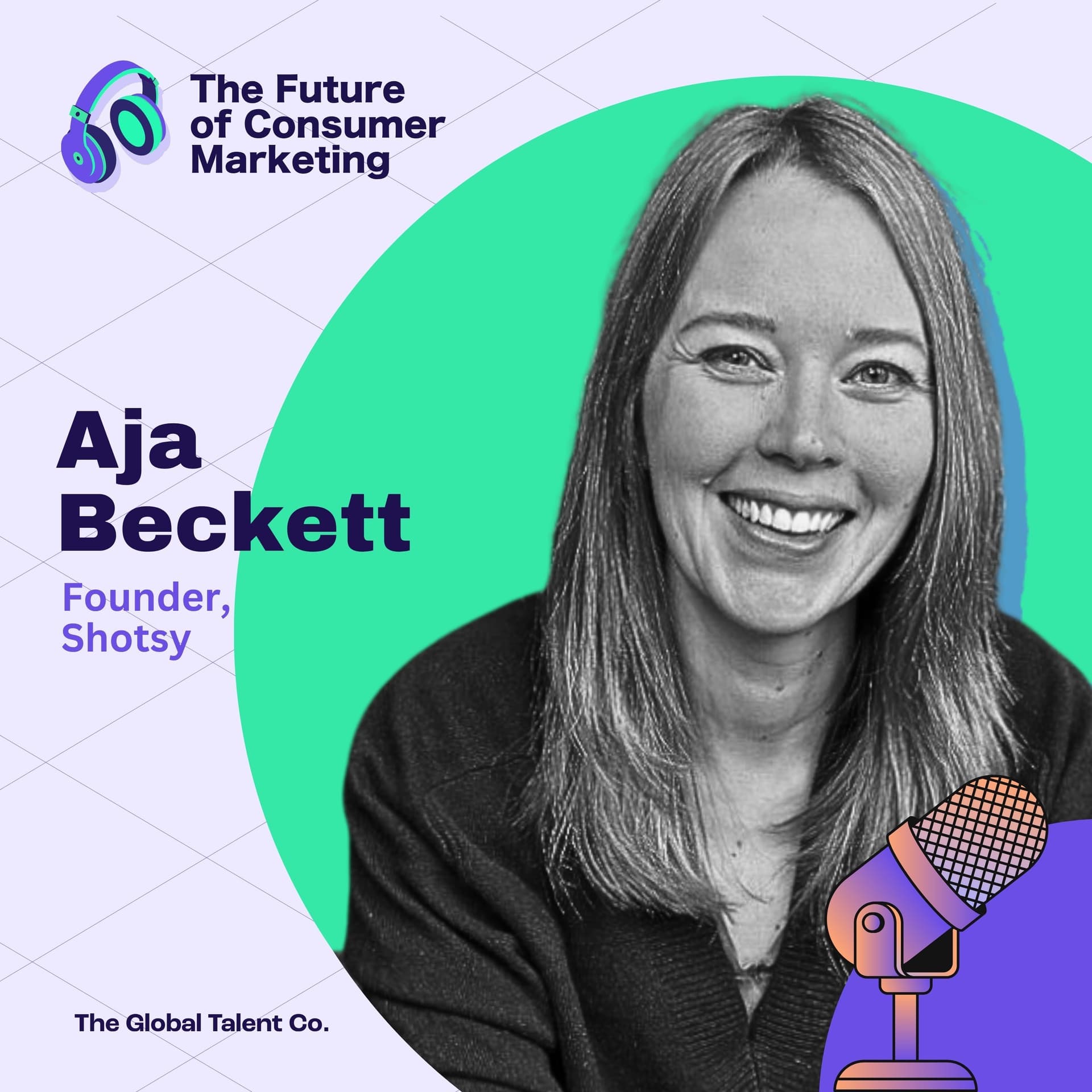
Unique Vintage VP Rita Sahir argues marketers should optimize for profit, not just ROAS, by building customer segmentation and product-level contribution margin into ad targeting—because algorithms don’t know business constraints like margins, inventory, and return costs.
Guest backgrounds
Rita Sahir is VP of Marketing and E-Commerce at Unique Vintage (female-owned vintage-inspired retail/wholesale). She has ~20 years in e-commerce/marketing across shoes.com, Famous Footwear, luxury fashion, software/mobile apps, and Polaris; she also consults for early-stage/turnaround brands.
Key claims
“Let the algorithm handle it” is flawed. Dynamic product ads can waste spend on low-margin, high-return items. Using profit-on-ad-spend metrics (LTV:CAC, contribution margin) enables faster, structured testing.
Notable examples
She cites dynamic product ads showing sold-out items and poor margin/return products. With partners (Genius AI, BarkAI), her team integrates conversion, inventory, return rate, and margin; they reportedly beat ROAS by ~30% using targeted segments vs platform automation.
Written by AI. May contain mistakes. Listen to the episode to check what was said.
Chapters
Tap a time to open that second in VOUnderstanding Marketing Metrics
0:00 to 0:47
Learn about the importance of profit on ad spend and effective marketing metrics.
“So everyone's been using ROAS and blended ROAS, particularly if you don't have advanced multi-touch attribution tools.”
Rita's Marketing Journey
1:35 to 3:08
Explore Rita's diverse career path and experiences in marketing.
“Yes, we are very excited about being able to make this work and to hear all about your experience and what you've lived as vice president of marketing.”
Marketing Philosophy and Practices
3:08 to 5:00
Understand Rita's marketing philosophy centered on data and structure.
“And about how long ago did you start as VP of Marketing at Unique Vintage?”
AI Impact on Marketing Practices
5:00 to 7:07
Learn about the role of AI in optimizing marketing strategies and practices.
“Yeah, I think prioritizing your energy is very important in today's market.”
Algorithm Trust Issues in Marketing
7:07 to 11:14
Discuss the challenges of relying on algorithms for marketing decisions.
“I've spent using AI for like three hours after my work hours are done.”
Identifying Profitable Products
11:14 to 13:20
Discover how to analyze product performance and profitability effectively.
“How long did it take you, Rita, to create this workaround to that flaw that you noticed in the platform's algorithm and how it actually does everything?”
Shifting Focus from Revenue to Profit
13:20 to 14:02
Learn the importance of focusing on profit over revenue in marketing.
“to justify having them in ads ever so really exciting stuff but um again i think it's just like start anywhere, start somewhere and start thinking about what is a more precise KPI I can move towards.”
Recognizing Market Dynamics
14:02 to 14:37
Learn how Rita identified paying customers and the dynamics of best sellers.
“And I love the fact that you were able to notice you're paying these people to buy your product.”
Building Relationships in E-Commerce
14:37 to 16:55
Explore the importance of relationships and community in e-commerce success.
“doing with the company um like how how how does somebody get to use this for example so again i've mentioned before, I'm a geek, but I'm always in the market.”
Effective Team Building Strategies
16:55 to 19:08
Discover Rita's approach to building and scaling a marketing team.
“So, you know, if you work for a bunch of different brands, if things are changing, which they always are in e-commerce, like you know what's working, not just in your segment, right?”
Show all 12 chapters
The Hybrid Work Model: Preferences and Practices
19:08 to 21:48
Understand the advantages of a hybrid work model in modern businesses.
“And in terms of remote first style of working or in the workplace and physically, do you have a preference, Rita?”
Goals for Profitable Growth
21:48 to 23:01
Learn about Rita's focus on building a growth engine and profitable scale.
“And Rita, I'd like to ask you one more question before we actually close out the show.”
Transcript
Automatic transcript. May contain errors.0:00Rita Zahir:So everyone's been using ROAS and blended ROAS, particularly if you don't have advanced multi-touch attribution tools. But let's start to look at profit on ad spend. What is your marketing philosophy? Operating with clear metrics, things like LTV to CAC ratios and contribution margin focus, but always in service of the brand equity and long-term value. Are there any best practices in the marketing world that you disagree with? Marketers will say, let the algorithm handle it. The algorithm doesn't know your business. We're creating customer segmentation that's layering on third-party data and building a model and understanding the most profitable customers.
0:35Rita Zahir:And so we can beat the ROAS on those campaigns by 30 % with our targeted segments versus what the algorithm is doing.
0:47Hey, everybody. Welcome to the show. My name is Andres Figueira, and I'm going to be your host for the day. This show is brought to you by The Global Talent Company, helping fast-growing teams hire exceptional remote talent from Argentina, South Africa, and beyond. We connect companies with world-class professionals who bring skill, reliability, and a global perspective to every role. And just for our listeners, we're offering an exclusive 10 % discount on your first hire. All you need to do is visit GlobalTalent.co, click Start Hiring, and mention the podcast listener discount when we reach out.
1:18And today with me here, I am speaking with Rita Sahir, Vice President of Marketing and E-Commerce at Unique Vintage, a female-owned and operated vintage-inspired e-commerce retail and wholesale company. So with that said, Rita, it's a pleasure to have you on the show. How are you doing?
1:36Rita Zahir:Hi, I'm great. I'm great. It's so good to connect with you. Yes, we are very excited about being able to make this work and to hear all about your experience and what you've lived as vice president of marketing. And Rita, just so that we can get hit the ground running and get the audience a bit more in context, would you be able to tell us further about your background and how you came to be VP of marketing? Sure. Yeah. Well, I've been working in e-com for honestly 20 years after I went to grad school at USC and I just dove in and started with like some really amazing shoe companies. I worked for shoes.com.
2:13Rita Zahir:I ran online marketing for famous footwear, a lot of branded sites and have really had a very nonlinear career across a ton of different types of. kind of industries from shoes to luxury fashion and, you know, software, mobile apps. And as well, I worked at Polaris for a while. So I ran marketing for Trans-American Auto Parts, all of that business. Yeah. So very, very nonlinear. But I have been working more in the kind of either early stage startup or turnaround space, helping companies become more profitable as they seek for total revenue growth, but to have that be profitable and scalable. Okay, okay.
3:09And about how long ago did you start as VP of Marketing at Unique Vintage?
3:13Rita Zahir:So I've been here for about two years, and I also run marketing for some startup brands still at the same time, some in the luxury accessory space. Okay. So you're actually like working this role of vice president and also serving as a consultant for some other smaller brands. Yeah, still helping some of those early, early, early stage guys. You can't get away from that. Like you love those guys in that early stage founder kind of place. And Rita, in terms of your learnings from working as vice president of Unique Vintage and also with these smaller companies, what is your marketing philosophy?
3:55Rita Zahir:I really think that marketing is one of the very few hands-on sports that still exist in the business space, particularly when it comes to e-commerce, because it's such a fast-paced, changing environment that people who kind of say, like, set it and forget it is sort of gone in our space. But I also think within that, that it's really important to build structure. So that's my philosophy is, like, operating with clear metrics, things like LTV to CAC ratios and contribution margin focus, but always in service of, like, the brand equity and long-term value. Okay, okay. You know, just like making sure you have the structure so that you can enable both your team and yourself to run fast and be aggressive in the space and be learning and testing and all of that.
4:46Of course. Now, and being able to have that structure also provides you with the possibility of understanding very well the data that you're presented with and knowing what works and what you got to reiterate with and what you need to leave alone because it just did not perform well. And that way you also have a better insight as to how to act and where to actually, what's it called, invest your energy.
5:08Rita Zahir:Yeah, I think prioritizing your energy is very important in today's market. Of course. And in terms of marketing practices that you've seen, Rita, do you have any marketing practices that you like to apply that you see are commonly used? A lot of people are just getting into the early stages of truly understanding like more precise metrics and KPIs and making that shift from very general things like gross margin down to getting back to like specific contribution margin. But that shift is something that I think I'm seeing a lot more of. And obviously, the more advanced AI tools are helping companies get there a lot faster, right?
5:57Rita Zahir:Without having a BI team, without having a dedicated analyst, working with tools that help you have actionable insights and just like move fast, you know, things that you used to have a whole department to do before, I think is a lot easier to do now. And you're seeing it grow a lot more. AI optimization and efficiency is something that we can't deny. It's a crazy trend. Like, it's been a while now since AI has been within us and among us. But I'm just flabbergasted at it. A lot longer than we think, right? I mean, since before we were calling it AI in marketing, right, it was called machine learning and it was called iterative learning.
6:41Things like that back in the day. Oh my goodness. And like nowadays, it's an update every single week, every single day. It's this new platform where you can do it or this new software that they launched. And it's crazy and it's hard to keep up. But it really is such an exciting moment to be, what's it called, like tinkering with these tools and making sure that you're trying to understand the best way to apply them. Because it just gets very entertaining at one point. I've spent using AI for like three hours after my work hours are done. and I'm just like laying with it.
7:15Rita Zahir:And I think that's the best mentality they have because a lot of people are feeling overwhelmed or anxious about AI, but like just start somewhere. And there's so many little places, so many of your current partners that are already evolving AI tools within their tools that you're using. I think that's the best place to start. And for me, that was definitely critical to getting more involved in rolling out more advanced AI tools. So you mentioned a common practice that you really like or that you see as being applied, but then are there any common practices or best practices in the marketing world that you disagree with?
7:54Here's my biggest pet peeve, and you hear it a lot,
7:58Rita Zahir:but marketers will say, let the algorithm handle it. And all your vendors will say that, right? Meta will continuously say, hey, just trust the algorithm. let the algorithm in. And there are places where you can like start there. Right. But I think giving up complete control of one, your data and insights and like building customer segmentation and testing that against the algorithm. But two is the algorithm doesn't know your business and you need to make it your business to know your business. Right. So my my really biggest example of this is dynamic product ads, which now you're seeing everywhere.
8:43Rita Zahir:We've been running them in not just meta, right, and kind of like Google shopping forever, but Pinterest, we've seen some really great results with dynamic product ads and Reddit and these kinds of places. Well, the algorithm likes to have the entire feed and it says like, let the click rates and like, you know, let people sort of like let the algorithm figure it out. But the algorithm doesn't understand your contribution margins, your inventory forecasts, how quickly that inventory is turning over. And if something was getting a lot of clicks and it's sold out, it's still showing that those items or the margin is way bigger on these or the return rate.
9:23Rita Zahir:Right. The algorithm has no idea about products that are getting returned and thus costing you money to sell. And so I think you got to do two things here. You got to really understand your data and optimize it and create a data feed that's going into these algorithms, right? That's optimized towards your main KPI. You want to understand contribution margin at the product level and you want to optimize, but you also want to own that data. So the other place where you're seeing that is the beast of NJOMEDA, right, on Meta, where they're just like, feed it as much creative as you can, and the algorithm will figure out your customer segments, right?
10:04Rita Zahir:But it might not figure out your prioritization of your customer segments, your most valuable customers, your highest LTV, your highest margin customers long-term. But you need to know that. And so I've been testing through one of our partners, There's this testing it against like Advantage Plus or something where we're creating customer segmentation that's layering on third party data and building a model and understanding the most profitable customers. And we're seeing, particularly in times of tumult, of like holiday or changing of the season, beginning of the quarter, we saw a lot of change.
10:44Rita Zahir:The algorithm hasn't figured it out yet. And so we can beat the ROAS on those campaigns by 30 percent with our targeted segments versus what the algorithm is doing. So not to be too technical, but just to say, yes, it's a good place to start to start creating creative and doing that. But like think about long term how you're going to own your data and how you're going to own your customer versus all the platforms making those decisions. Now, I understand. How long did it take you, Rita, to create this workaround to that flaw that you noticed in the platform's algorithm and how it actually does everything?
11:26Rita Zahir:So I've been working with two different partners. I'll start with the first one, Genius AI, for years, a few years before even the algorithm changed this way that it has, before Meta launched Andromeda. to say you should know your customer segments. You should layer on the data that you have, but also as much third-party data, this idea of behavioral modeling that sounds very complex, but you should understand who you can target that's the most valuable, but also what experiences you can give them, right? And so that we've been doing for years, But as things like the platforms being more aggressive with wanting you to just give them everything and the algorithm makes the decision has progressed, in some places that works.
12:18Rita Zahir:So you're testing that, in some places owning this. But more recently in the last year, I've been working with a partner that's helped us kind of integrate all of the things in one place to understand conversion rate, inventory, return rate, margin, contribution margin, contribution margin per view. Right. And and that was the first time I've seen that as a company called BarkAI. Really, truly interesting because they're trying to say, OK, this is how you prioritize your budget. These products will drive this much profit per view or impression. And these you're actually paying people to buy. long term you're losing money every time you buy one of these because you're um the advertising costs the conversion rate the return rate the margin is so low um we got a bunch uh a rid of a bunch of products in our feed where the margin um at the end of the day was not enough to um to justify having them in ads ever so really exciting stuff but um again i think it's just like start anywhere, start somewhere and start thinking about what is a more precise KPI I can move towards.
13:35Rita Zahir:You know, I'm always saying like, OK, yes, everyone's been using ROAS and blended ROAS, MER, right? And that's great, particularly if you don't have advanced multi-touch attribution tools. But let's start to look at profit on ad spend and how do we get there? How do we like start to build a structure to understand what's actually driving profit versus just revenue volume. Of course. And I love the fact that you were able to notice you're paying these people to buy your product. That's a first. I had not heard that. And sometimes it's best sellers. We're like, oh, we've been selling this for years.
14:14Rita Zahir:It's a best seller. We sell so many. Okay. But you also have been advertising it for years and you drive a ton of traffic there. And actually, the conversion rate is lower than a brand new product and actually the return rate is x and like yeah to start to think about things um with more clarity is wow it's really cool and rita did you devise or do you have like proprietary claims over this solution or is this something that you're doing with the company um like how how how does somebody get to use this for example so again i've mentioned before, I'm a geek, but I'm always in the market. I'm walking the expo floor at the conference.
14:54Rita Zahir:I'm like meeting partners, but I'm having conversations with current partners. So Genius AI is out there, someone I've worked with and I recommend a lot, right? Bark AI is the one that's pulling in all the data and making the analysis of contribution margin. I highly recommend them, but there's just a ton of players out there that are trying to build into the next evolution of e-commerce. And I think being an active part of the e-commerce community is super helpful because you're meeting people, you're having conversations, you're going to dinner and saying, well, what's working for you at a different brand?
15:34Rita Zahir:And then having those conversations with your partners as well. We're a relatively small brand and I've worked for some early stage startups over the years, right? And those relationships with your vendors who become your partners is so important, right? We did an early stage like alpha test with Meta, where we were one of five companies globally that got to be part of their voice AI beta. And And it was because like we were in the conversations, we were attending the events with Meta, we were going to their office and saying, what's new, what's evolving? Like we were culturally like opened to testing and saying, hey, no, we know that some things are going to work and some things are going to fail.
16:26And like and I think those are the things that help people, you know, get to be a part of like early stage. No, and that really, it's as you mentioned it, like it allows you to be a part of the conversation and you're always like in this ecosystem that is moving and you're just there and people understand that you're a part of it. So you'll be invited. You'll be somebody that is considered and whose opinion actually will be heard. Because if you're at the table with all these people, then it's just crazy. It's amazing.
16:56Rita Zahir:And you've built a relationship. So, you know, if you work for a bunch of different brands, if things are changing, which they always are in e-commerce, like you know what's working, not just in your segment, right? Not just in like apparel, right? Right now I'm pretty heavily focused in apparel and accessories, but I'm keeping my eye out over what's happening in car parts. not just because I used to work there, but because I think there's some interesting evolutions that occur there first or in beauty. There's a ton of AI stuff that came out in beauty first, right? And so I think that's really important.
17:34Rita, I would also love to hear your take on team building. And since you're the VP of Inique Vintage, of like VP of Marketing, how have you built out your team and how does that work for you?
17:47Rita Zahir:Um, so again, I've been, I've been in income for like 20 years. Um, and I have worked at vastly different, um, organizations, right. Um, billion dollar public companies like Symantec and Ziff Davis and Polaris, um, and early stage startups. And I think, um, for me, I'm always like, I'm going to be the coach of the A team. I heard, uh, one of my bosses said that a long time ago. And I said, yeah, like I want to be the coach of the A team, meaning like I hire and grow people I believe in and that I'm learning from and that are the best at what they do. And I think even in an early stage, super lean, I've been in that space, right, under five million, scaled to 16 million in less than two years.
18:37Rita Zahir:Like that's team building from the ground up. That's knowing each, you know, knowing retention and building it out and then hiring someone. Knowing paid media so well that you could build out the structure, you can hire an agency, you could build out relationships and then bringing someone in. And I think depending on the stage of your organization, the leadership needs to have both the knowledge but also the interest in those areas to be able to build teams like that. And in terms of remote first style of working or in the workplace and physically, do you have a preference, Rita? Or I'm not sure how they do it at Unique Vintage or from your side, what is what you prefer more?
19:20Rita Zahir:I've always loved the office because the internet's always been faster. And especially when you work in dot coms, there's always like snacks and it's fun and you're interacting. And I think particularly early in my career, I was learning so much being in the office. And I think a lot of people who come out of college and are remote only miss out on that. But these last few years at all these companies that I've been at, it's been sort of this hybrid model, which I now think is definitely a preference because you do have those days in office where you're brainstorming and maybe there's a whiteboard even involved.
19:59Rita Zahir:super old school right um and you have the interactions and you're building relationships and you're making it so that people feel comfortable it's a safe space for people to experiment and bring up ideas and question things right um but there are those days where you can be super head down especially if you have a commute like you just got those two hours back and be focused and get stuff done. So for me, I found the hybrid really, you know, for me, starting to be like, oh, this is great. Like, this is a great combination. And Rita, in terms of the talent that you guys use or the talent that you have, have you ever outsourced talent?
20:43Have you used and worked with people from Latin America, Europe, South Africa, or anything like that?
20:49Rita Zahir:I think that's a really interesting thing. We definitely outsource now. We're trying to test different places. Right. And all of the brands I've worked for in the last few years have been trying to sort of understand what's the next step in where you're getting your talent. How do you, especially for brands that are global, right, and selling into different markets, how do you expand your knowledge base? How do you expand the creativity and kind of the diversity of your team? I think, and if you're a super lean team and you can't afford headcount, testing into external resources, whether that's for a project base or a certain time base or whatever it is, is really good for that kind of evolving early stage startup in particular, as well as like a turnaround company that's like 20 years old.
21:47All right. And Rita, I'd like to ask you one more question before we actually close out the show. And that is, well, what is your what are your goals for this year for 2026? And what would you like to have accomplished towards the end?
22:02Rita Zahir:So I have really focused on this idea of profitable scale and building a structure that supports that, building the right relationships, finding the right vendors and partners, the right team to build a growth engine. And so I think also something that's repeatable and can be used in other places is really interesting to me because I think not a lot of people are super focused on profitable growth, even if sometimes they say that. I love how you mentioned that you want it to be repeatable and usable in other places because that is when you really notice and understand that what you created is good to go and that you have a hell of a process.
22:51Because if you're able to reiterate, as I mentioned before, based on something that went well and it goes well once more and it repeats in doing that, then I think you've hit the jackpot. So I really hope that you are able to, Rita, and I will keep my eyes peeled and I'll connect with you via LinkedIn just to see how you evolve and keep on growing this year.
23:11Rita Zahir:Yeah, that's great. I feel like I've been a lot more involved in the community this year, especially on LinkedIn. So that'll be great. That is amazing. And with that said, just wanted to say thank you, Rita, for hopping on the episode with us, for providing your insights, your story, and just telling us all about what you're doing. We really appreciate your time and being able to do this with us. Yeah, my pleasure. No problem at all. And to anybody who is here listening to us, we also appreciate you for coming on this podcast with us to learn about the different personalities that we're talking to and all the industries that we are seeing.
23:43So with that said, have a good one.
From the publisher
Rita Zahir, VP of Marketing and E-Commerce at Unique Vintage, delivers a data-dense masterclass on the one metric most e-commerce brands are still getting wrong: the difference between revenue and profit. With 20 years across Shoes.com, Famous Footwear, Polaris, and now a female-owned vintage-inspired brand, Rita breaks down why "let the algorithm handle it" is the most dangerous phrase in modern performance marketing — and how a combination of custom behavioral segmentation and contribution-margin-level analytics helped her team beat Meta Advantage+ ROAS by 30% during the most volatile periods of the calendar. This is a rare, practitioner-level conversation about the infrastructure behind profitable e-commerce growth.
Topics Discussed
- Rita's 20-year e-commerce career: Shoes.com, Famous Footwear, luxury fashion, software, Polaris (Trans American Auto Parts), early-stage startups
- Current role: VP of Marketing and E-Commerce at Unique Vintage (2 years), plus concurrent consulting for luxury accessory startups
- Marketing philosophy: structured metrics (LTV:CAC, contribution margin) as the foundation for moving fast with brand equity intact
- The shift from ROAS and blended MER to profit on ad spend (POAS) and contribution margin as the real performance north star
- The algorithm's blind spots: contribution margins, inventory turns, return rates, and products that lose money after ad costs
- Dynamic product ads on Meta, Google Shopping, Pinterest, and Reddit — and why surrendering your data feed to the algorithm is a profitability trap
- Meta's Andromeda/Advantage+: why "feed it everything and let the algorithm decide" misses your highest-LTV customer segments
- Partner Genius AI: behavioral modeling and customer segmentation layering third-party data for years
- Partner Barkai: contribution margin per view/impression — a tool that calculates actual profit generated per ad exposure and flags products where every sale loses money
- Custom segmentation beating Meta Advantage+ ROAS by 30% during high-volatility periods
- One of five companies globally selected for Meta's Voice AI Beta
- "Bestsellers" that are secretly unprofitable when fully loaded with ad costs, conversion rates, and return handling
- Team building philosophy: "coach of the A team" — hire and develop people you're actively learning from
- Scaled a brand from under $5M to $16M revenue in under two years
- Hybrid work as the preferred model; global talent outsourcing for lean e-commerce teams
- 2026 goal: profitable, repeatable scale — a growth engine that can be systematized and replicated