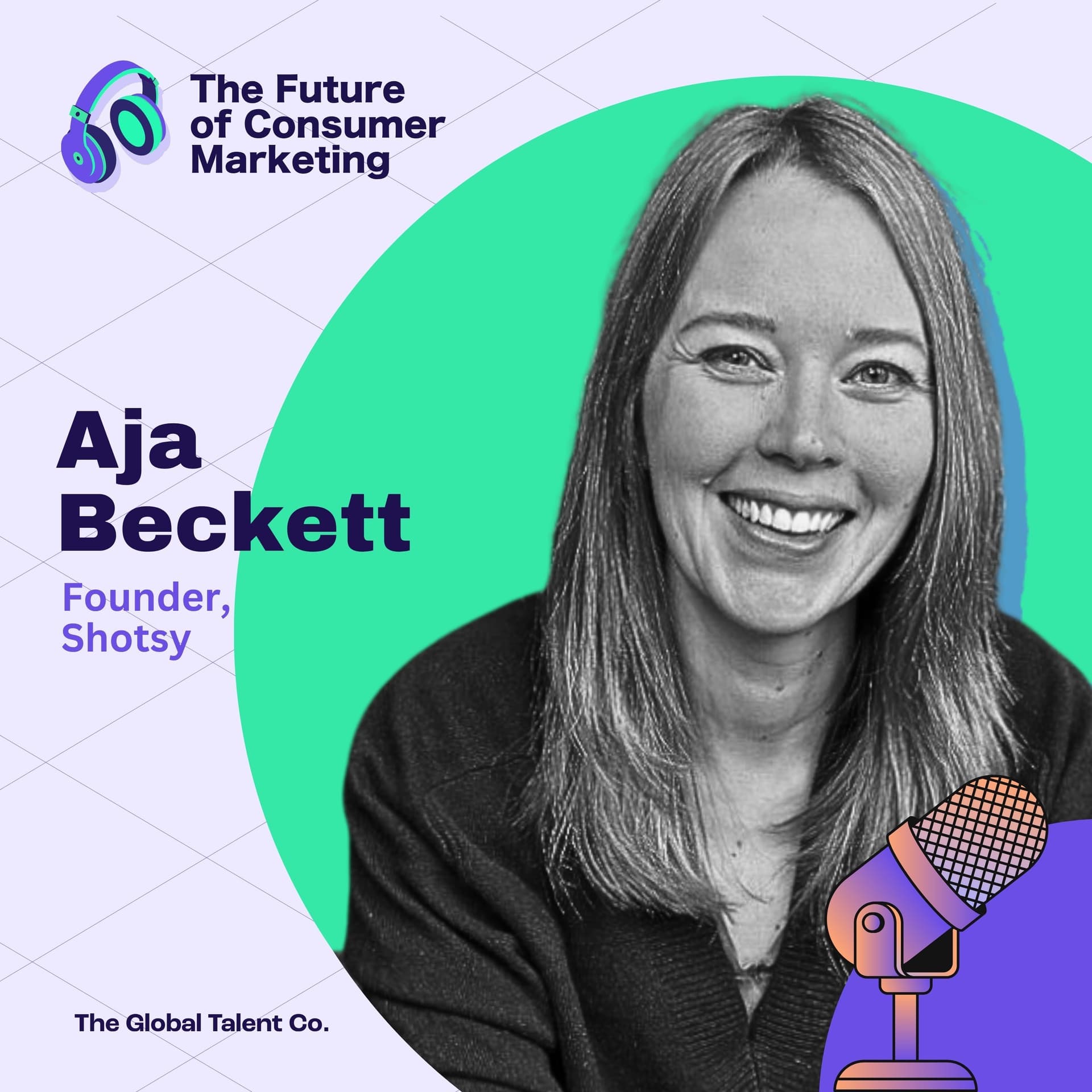
In short
Aja Beckett explains how she built Shotzi, a GLP-1 companion app that helps users manage weekly injections, track treatment, and stay on track—reaching 1M+ downloads without ad spend. She describes organic growth via Reddit, privacy/regulatory approach, and how the app uses charts and estimated medication-level curves to help users understand correlations (e.g., side effects, calories).
Guest
Aja Beckett, CEO/founder of Shotzi/ShotSea; iOS engineer and independent app developer; personally used GLP-1s after struggling with obesity for years.
Key claims
GLP-1 prescriptions often lack ongoing support; the app fills that gap. Word-of-mouth on Reddit drove adoption. Business model avoids selling ads/data. AI is used for internal development speed, not user-facing medical advice.
Notable examples
Reddit subreddits for GLP-1s; screenshots/shared posts; 100,000+ paying subscribers; 25,000+ five-star US reviews; chief science officer Eric Praxlis (ex-FDA informatics).
Written by AI. May contain mistakes. Listen to the episode to check what was said.
Chapters
Tap a time to open that second in VOThe Need for Support in GLP-1 Treatment
0:00 to 0:47
Learn about the lack of ongoing support for GLP-1 medication users and how it inspired Aja to create an app.
“I ended up getting prescribed one of these new GLP-1 medications, but realized right away that there's a real lack of ongoing support.”
Creating the ShotSea App
1:36 to 3:39
Aja shares her journey in developing the ShotSea app and its importance for GLP-1 users.
“We are very happy that we were able to make this work as well.”
User Adoption and Feedback
3:39 to 4:37
Learn about ShotSea's user engagement, downloads, and how it resonates with users.
“Those are the best stories when I hear of a founder that's creating an app or a company.”
The Benefits of GLP-1 Medications
4:37 to 6:20
Aja discusses the broader benefits of GLP-1 medications beyond weight loss.
“It's a freemium product, but a lot of people choose to subscribe to the premium features.”
Emotional Support through Technology
6:20 to 8:14
Explore how the ShotSea app provides emotional support for users managing obesity.
“I had no idea that it worked also in that way.”
Regulations and Compliance in Health Apps
8:14 to 11:15
Aja explains the regulations surrounding health apps and the importance of user privacy.
“This is not going to be another like, you know, negative experience for them.”
Launching ShotSea with Organic Marketing
11:15 to 14:03
Aja recounts how she launched ShotSea through organic marketing on Reddit and her app store insights.
“has made it a little, I think, more straightforward for us.”
Launching the Surge App: Experience and Strategy
14:03 to 16:46
Learn about the experience and strategies behind launching an app successfully.
“And it just started to take off that way.”
Building a Team and Venture Capital
16:46 to 19:36
Discover how team dynamics and funding impact app growth and development.
“And we are 100 percent remote, mostly based in the U.S.”
Incorporating AI into App Development
19:36 to 21:39
Explore the role of AI in enhancing efficiency and product development.
“So I understand why you would stray away from the user interface having AI within it.”
Show all 12 chapters
Future Goals for the Shotzi App
21:39 to 23:23
Understand the future goals and features planned for the Shotzi app.
“What are your goals towards the end of this year?”
The Power of Organic Marketing
23:23 to 24:12
Learn how genuine product development can lead to organic marketing success.
“And so the more charts we give them, the better.”
Transcript
Automatic transcript. May contain errors.0:00Aja Beckett:I ended up getting prescribed one of these new GLP-1 medications, but realized right away that there's a real lack of ongoing support. I ended up building the companion app that I really needed, and then, yeah, it ended up being useful for a lot of other people as well. When you put the app out, did you need to market it in any way, or did you have to advertise it? It was kind of word of mouth on Reddit, because people immediately started talking to each other about it and sharing screenshots. Because you really created an app that came from a good, noble place. As long as we are building a product that they find useful and valuable and being responsive to their needs, then a sizable percentage purchase enough of the premium subscriptions that we can keep the business going.
0:47Hey everybody, welcome to the show. My name is Andes Figueira and I'm going to be your host for the day. This show is brought to you by the Global Talent Company, helping fast-growing teams hire exceptional remote talent from Argentina, South Africa, and beyond. We connect companies with world-class professionals who bring skill, reliability, and a global perspective to every role. And just for our listeners, we're offering an exclusive 10 % discount on your first hire. All you need to do is visit GlobalTalent.co, click Start Hiring, and mention the podcast listener discount when we reach out.
1:17And today with me here, I am speaking with Aja Beckett. CEO and founder of ShotSea, the number one companion app for people taking GLP-1 medications, helping users manage their weekly injections and stay on track with their treatment. And with that said, Aja, it's a pleasure to have you on the show. How are you doing today?
1:37Aja Beckett:I'm good. Thank you so much for having me. It's great to be here. No problem at all. We are very happy that we were able to make this work as well. And just so that we can hit the ground running, Aja, would you be able to tell us a bit more about your background, how you came to found the Shotzi app and maybe what it is in your own words, although I believe it was very self-explanatory. Absolutely. No. So my name is Asia. I am an iOS engineer, or at least that was my most recent position. And I have been an independent app developer for many years. And I'm also a person who has obesity and I've struggled with my weight my entire adult life.
2:19Aja Beckett:And I ended up getting prescribed one of these new GLP-1 medications a couple of years ago and started taking it, immediately changed my life. So GLP-1s, if you aren't familiar with the term, these are this new class of medication, Ozempic, Wagovi, Manjaro, there's several of them now. But they work in a way that nothing else has before to really address the symptoms of obesity and really help people kind of manage a lot of these metabolic disorders that we've been struggling with for a long time. So I started taking one of the medications, had a life-changing experience, but realized right away that there's a real lack of ongoing support and kind of tools and education, you really do just kind of get the prescription and then largely get left to your own devices, at least here in the United States.
3:20Aja Beckett:You know, maybe countries with better health care offer more support, but, you know, here we're sort of left to our own devices. And so I ended up building the companion app that I really needed as part of my experience. And then, yeah, it ended up being useful for a lot of other people as well. Okay, I love that. Those are the best stories when I hear of a founder that's creating an app or a company. It always comes from a point of friction that you found in your own life. And then somebody else is always going through that problem as well. And it's so nice that you were able to devise a solution and actually place it out to the public and that it was something that people could use.
4:00And Aja, how long has the app been out in the App Store and being used by people?
4:05Aja Beckett:You know, it's almost two years now. It's hard to believe it's gone by so fast. But yeah, we were the first app on the market for, you know, specifically the GLP One experience. And yeah, I think it just immediately resonated with people. And we've been able to kind of stay in that number one position ever since. Wow, that's beautiful. And how many users does your app have? Do you have that kind of metric? Yeah, you know, so we have, we've had over a million downloads at this point. We've got hundreds of thousands of monthly active users, we have over 100 ,000 paying subscribers. It's a freemium product, but a lot of people choose to subscribe to the premium features.
4:49Aja Beckett:and yeah it's you know I think we're at the 25 ,000 five-star app reviews on the app store in the US so it's it's definitely found its audience. Wow that's amazing and I really love that it really addresses an issue that is is common with people and I know and I believe GLP-1 medications are for obesity as you mentioned and also diabetes too if I'm not mistaken. You know they were originally for diabetes because, you know, they really do address a lot of these, you know, metabolic and kind of, you know, blood sugar issues. But they found that, yeah, it really does have an incredibly positive effect on not just obesity, but also, you know, I think kind of a surprising list of benefits.
5:39Aja Beckett:You know, people are experiencing improvements with their sleep apnea and with their blood pressure and cholesterol. But then even things that are not necessarily related to even your physical health, but mental health. I know I've felt a lot of benefits kind of before and after starting this. And a lot of people report reductions in cravings for alcohol, cigarettes, even things like compulsive shopping. It seems like they really interrupt that dopamine cycle and make it much easier to make good choices. Wow, that is so interesting. I had no idea that it worked also in that way. I thought it was more mainly for these like insulin type issues and more physical things like obesity or anything like that.
6:28But that is crazy.
6:29Aja Beckett:I think there's a lot of really complex interrelated issues when you get down to it. It's true. And when you think about obesity as well, obviously it comes from things in the physical realm of the person, but it's also a bit of a compulsive behavior because you go and you look for dopamine with food. So maybe it's all, what's it called, intertwined and connected. It does. It does seem like we're learning more every day about, you know, how our minds and bodies work. And these drugs are really helping us, you know, really get to, I think, a lot more knowledge and understanding about it. Wow. I love it.
7:02I love it. And Asia, is the app only available in the US or have you let it out worldwide and can anybody?
7:10Aja Beckett:Yeah, we're everywhere, almost everywhere. But yeah, no, it's available in 18 languages. We're on iOS and Android. I mean, we have paying customers in 185 territories, I think. When the product works, it works and it speaks for itself because you don't even have to sell it. People will just get it because they like it. Yeah, well, yeah, I think, you know, it's, it's, you know, obviously, there's practical considerations, it's a weekly injection, you, you know, really benefit from practical, you know, shot reminders and staying organized and, you know, just being able to have a record to show your doctor at your next appointment.
7:47Aja Beckett:But, you know, there's an emotional side of it that is also important for especially for people who have struggled for a long time, like like I have, you know, and maybe have been through a lot of failed experiences. There can be a lot of, you know, it can just be a very emotional process. And, you know, I think this app, even though it's, you know, very much utility, there's something about it that, you know, I think helps people understand what's happening to them. And it helps them feel more confident that, you know, this is not going to be another failure. This is not going to be another like, you know, negative experience for them.
8:21No, I understand it. And it's as you mentioned, it's a companion app that makes them feel safe and even maybe so a part of a community as well of everybody that's using the Shots app.
8:32Aja Beckett:Yeah, you know, we haven't really done anything to, you know, as they say, make it multiplayer. But we're very interested in, you know, in that kind of emotional support component or, you know, aspect of the experience. And we're looking for ways that we could let people support each other in positive ways. you know but no I think I think that's beautiful because having such a big what's it called like a base user user base and and so many people that use it it's like it could really create a very nice community where people help each other out but Aja another quote I do have is even though it's not the medicine itself having a nap that talks and helps and accompanies people with that medication.
9:16Are there any regulations that come with creating an app like this?
9:20Aja Beckett:Yeah, you know, that was definitely top of mind early on. It was funny because I built it for myself. I solved my own need. But then as soon as it started to take off, I realized like, oh, wait, I need to make sure that I'm doing this properly and that I'm not crossing any lines. And so I was really lucky to connect with our chief science officer, Eric Praxlis. And he was formerly a chief science officer for informatics at the Food and Drug Administration in the United States. And he has a long history of working on exactly this type of question and health data privacy and, you know, tech apps and apps that are kind of in the health space or adjacent to the health space and making sure that, you know, patient safety is the top priority and that, you know, things that need to be regulated are, you know, going through the proper channels.
10:11Aja Beckett:So since this is more like a weight tracking app or like a calorie tracking app, it doesn't need to go through the full set of FDA regulations. And so we just have to make sure that we're adhering to data privacy laws. And we also really keep, depending on the platform, we either don't collect any personal information at all. or if, you know, if we do have to collect people's email address, like on Android, it's really hard to do anything without a Google account. But we're super careful about keeping, you know, anything sensitive away from contact information because we really, you know, we don't do any sort of advertising, like we don't sell ads, we don't sell data, we don't have a business model that gets us into any, you know, sort of gray areas.
11:05Aja Beckett:And so, yeah, I think the combination of having kind of that expert oversight and then just also a business model that makes it very easy for us to stay on the side of the users has made it a little, I think, more straightforward for us. No, I love that because that's what I was thinking when you were telling me the story. Like I know HIPAA compliance is a big thing and keeping things private for the users is the most important part. So I wasn't sure if you were asking them what they had or why they were using the GLP-1 medication, but all that info, it turns into something you need to safeguard And it really turns to a database that if it leaps or anything like that, it could be a huge issue.
11:43But staying on the side of the user, I like that perspective because you really create an app that is it came from a good, a noble place. So it doesn't really need to be for getting data, selling it to people so they know what to do. It's like it's really for the user. So that's really it's really nice. It's really nice.
12:01Aja Beckett:Yeah, I mean, I think it's great when you're able to have a business like this where, you know, the only group that we have to answer to is our user community. And so, you know, as long as we are building a product that they find useful and valuable and, you know, being responsive to their needs, then, you know, a sizable percentage purchase enough of the premium subscriptions that we can keep the business going. And, you know, it's a really, you know, I think good position to get to be in as a founder, you know, because oftentimes there can be these competing interests where you have to start exploring these business models that can be, you know, less ideal.
12:38Aja Beckett:And we're fortunate that we just don't have to do that. I love it. Like I meant, and I totally understand. And I was I believe you mentioned it a little bit before, Aja, but I was dying to know when you put the app out, did you need to market it in any way or did you have to advertise it or did it just take off by itself due to its functionality and the problem it addressed? Yeah, you know, that's a great question. I wouldn't say that I advertised it. I mean, I certainly didn't go buy any ads or, you know, start hiring influencers or anything. but I was a member of a Reddit community, one of the subreddits for the medication that I was taking.
13:15Aja Beckett:Just authentically, that's where I was getting a lot of my information as a new user because there was, you know, I didn't really have a doctor that was available for day-to-day questions. And honestly, I mean, as silly as it sounds, the community on Reddit was a helpful source of information. And so, you know, so I was participating authentically. And then when I was looking for beta testers, that was where I, that was where I posted. And, and then, and then excitement started to build, I think, because of the beta test. And then a month later, I let people know, I made another post saying that it was live on the app store.
13:52Aja Beckett:And that ended up being sort of the first channel for the app was, was kind of word of mouth on Reddit, because people immediately started talking to each other about it and sharing screenshots and sharing it on their Facebook groups or whatever. And it just started to take off that way. I do, I have, I have a lot of experience with working with the app store. I know a lot about sort of, you know, organic rankings on the, especially the Apple app store. And so I had kind of a lot of those tools in my belt when I launched this because Shotzi is my seventh app. Yeah. Yeah. So, you know, I had some practice and I had a lot of failed attempts.
14:35Aja Beckett:And so I knew a lot of what not to do. And especially when it comes to sort of that app store marketing side of things. And so I think that I was able to avoid a lot of those mistakes and kind of start off on the right foot. And And actually, a lot of what was there on day one with screenshots and the purchase screen and the keywords and the title and everything, even the name, everything kind of worked well enough that we didn't really touch it for a long time. Wow. I feel and I love this expression because I feel you got very lucky, but luck is when opportunity meets preparation. So you had everything under your belt and knew what to do.
15:17and then this app, Surge. And it's crazy how the organic marketing worked by itself via Reddit. I'm hearing your story and I'm like, AI would have gone crazy with this nowadays because they pull all their info from Reddit. So it could be a very different story and a lot more massive nowadays that if it all started in Reddit, it's just crazy. But the community in Reddit is one of the most faithful ones there is. So it's very nice that you were there and were able to get help beforehand and everything like that.
15:46Aja Beckett:I was astonished by the support. It was really, it was, it was really incredible. Well, yeah, when it works, it works, you know, the app, the app speaks for itself. And another question I do have is how big is the team that you have helping you out with the Shotsy app? Because from what I understand for now, it's been mainly you and you creating the app, but with it getting so many more users and having grown, have you needed to grow the company as well? Oh, yeah, absolutely. It's definitely not just me. It was at first, but yeah, no, at this point, we have a great team. We're still a small team, but I decided to raise some venture capital in our first year.
16:29Aja Beckett:And so just to precede round, we brought in some money, largely because I could see that this was going to be much bigger than I had initially expected. And I wanted to make sure that we had, you know, kind of the resources to be able to maintain our position and reach more people. And so, yeah, we are now a team of we have five full time and then four contractors. And we are 100 percent remote, mostly based in the U.S. But I don't think none of us are in the same city. But but yeah, we get to we get to meet up often. So that's always. Wow. But it's a small and nimble team. I was expecting a bit more people knowing the amount of users you mentioned you have.
17:10But when I think about it and I know it's an app and all the experience you have and don't even need to market it, it's like, OK, I get it that it can be an agile team. The one that you are. What's it called? The one that you're helping out and that is helping you out. And Asia, another question I do have after I talk about teams is that I would love to know how you have begun leveraging AI. If you can tell us about that, any particular uses within the app or to understand the data that you receive or anything you can tell us.
17:38Aja Beckett:Yeah. So, you know, I think there's there's there's different aspects of of incorporating AI into a company like this. Right. And so, you know, for us, we have decided to incorporate it into our product development process. It's definitely been helping us get more efficient with software development. You know, we're fortunate to have a lot of expertise on our, you know, human expertise on our team. And so I think we're well positioned to be able to kind of put the guardrails around it that you need to have in order to leverage it. But we have seen our speed has really picked up since we've started to incorporate these tools.
18:16Aja Beckett:Just places where we were hitting a lot of bottlenecks, just being a small team, and especially being able to do code reviews quickly. There's several places where we've just been able to speed up our process a lot more, which is wonderful because we're getting to ship features faster and be more responsive. Like that delay between, you know, receiving a customer support request and being able to actually ship, you know, a response to that in the app has gotten much, much shorter. So, yeah, we're definitely making good use of it there. But, you know, I see other apps that are incorporating AI into the user experience in apps like these.
19:01Aja Beckett:And that's where we've drawn the line. You know, I think, you know, I think it's been very useful as a software development tool, but I'm much more careful about it as something that speaks directly to users, especially because this is in a health context. and I think when it comes to privacy, when it comes to accuracy and, you know, really not wanting to present anything that could be construed as, you know, medical advice, you know, I just think it's really important to maintain a lot of control and quality assurance around the things that the users experience in the app and it just does not feel like the right place for them to be talking to AI personally.
19:39No, no, it's true and I agree with you now that I hear you say it, it's like if ai were to give advice that was not properly uh asked for or that it just what's it called branched down on its own and gave some unsolicited advice it could turn into a thing and it really is a sensitive topic when it comes to health and especially more well i believe it's with privacy in general because ai right now doesn't have like the proper uh what's it called guardrail as you mentioned to keep things private at all it like it stores them in its own memory and it's a little bit weird. So I understand why you would stray away from the user interface having AI within it.
20:18But so nice that Trable to actually ship features faster and use it to your advantage there because it really has been crazy how much AI has allowed us to, what's it called, like just make everything more agile. It's just so, like I even use it in my own personal life, like with music and image creation and everything like that. And it's impressive about everything you imagine, you can just bring down to earth via AI, but you gotta be the judge and curator of what it outputs, because if not, we're not lost.
20:46Aja Beckett:Oh yeah, absolutely. Yeah, I mean, you know, there's no outsourcing taste and judgment. And especially for something, you know, even with software, there's endless decisions about taste and, you know, what's appropriate, what's gonna be understandable, what's actually gonna benefit the users. And we have to, we do a lot of, yeah, there's a lot of tight controls around it. But yeah, it does get us to, it lets us get to the part where we're being creative and and making our own good decisions a lot faster exactly it allows you to then focus on what matters most and allow that more of the legwork that used to be needed to be done by us it can be done by i just make sure you you check it out make sure it's okay and then you focus on whatever you want um and aja another question i do have for you is in terms of this year 2026 we're already practically halfway through it it's been a very fast Q1 and now Q2.
21:39What are your goals towards the end of this year? What would you like to have accomplished with the Shotzi app as the CEO? Yeah, absolutely.
21:47Aja Beckett:Well, you know, I think we're always working hard to, you know, earn our number one position. We want to make sure that we continue to be the most trusted and useful everyday companion app for people who are taking these medications. You know, recently that's meant expanding it into, you know, know, supporting kind of related things that people might be doing and also supporting more of the new types of GLP-1s that are available. So now there's pills. And so we worked hard recently to make sure that we offer daily pill support in addition to the daily and weekly injections. But some of the things that we're working on now, I think, you know, a lot of it is just we're very excited about the product development that we have in our in the next, I guess, this is this.
22:33Aja Beckett:Oh, my gosh. Yeah, we are almost halfway through with the year. It's wild. But yeah, we have a lot of new features and things that we're adding to the app, both iOS and Android. People love our charts and we have lots more charts. People really want to be able to drill down into their data and see all of the different potential correlations. We do these estimated medication level curves that people find very helpful because there's kind of a high-low cycle that happens between injections that can be very helpful to kind of visualize an estimate of where you're at in that process. And then people, once they have that, they want to be able to see like, well, how does my calorie intake get impacted by that?
Read the full transcript
23:18Aja Beckett:Or like, how do my side effects get impacted by that? And they love crunching the numbers. And so the more charts we give them, the better. And, and then, yeah, like I said, you know, we're interested in ways of, you know, finding ways for them to connect with each other in ways that are positive and supportive and kind of, you know, make you feel less alone in this journey. So yeah, there's lots of things that, you know, I think our favorite thing to, I know this is, we're mostly talking about marketing, but we really do love to kind of just stay heads down and work on the product too. I love it.
23:50But that is also a type of marketing in and of itself, because you don't need to be paying for vanity metrics or paying for ads, because when you're doing the proper work for such a noble cause, it just markets itself. And that is also an experience that needs to be talked about. But with that said, Aja, I really appreciate your time for hopping on the show with us and telling us everything about the Shotzi app, how you got there, where you are and where you're going. I'm certain that you'll keep on creating features and making the best app possible. So really appreciate your time.
24:19Aja Beckett:Awesome. Thanks so much. Really appreciate it. And, uh, and yeah, if, uh, if anybody's interested, then, uh, yeah, please, uh, uh, take a look forward. It's on the app store and play store. And, uh, yeah, of course. So if you're using any GLP one medications, you heard it here first from Asia app store, Google store, just make sure you go there and check it out and download it and give your reviews and give it five stars. Always please on my view. Awesome. All right. Thank you so much. No problem at all, Asia. And to anybody who is here listening to us, we really appreciate you hopping on the show with us as well to hear about all the different personalities we're talking to and learning about all the industries that we are seeing as well.
24:59So with that said, have a good one.
From the publisher
Aja Beckett, CEO and founder of Shotsy, didn't set out to build a company. She got prescribed a GLP1 medication, found herself completely unsupported after leaving the doctor's office, and built the companion app she needed. Two years later, Shotsy is the #1 companion app for GLP1 users — 1 million+ downloads, 100,000+ paying subscribers, 25,000 five-star reviews, available in 185 territories across 18 languages, with zero paid advertising and no data sales. In this episode, Aja shares how a Reddit post became her launch strategy, why her 7th app was the one that finally worked, the business model that lets her answer only to her users, and why she has made a deliberate decision to keep AI entirely out of the Shotsy user experience — even as she uses it aggressively to ship faster on the development side.
Topics Discussed
- Aja's background: iOS engineer, independent app developer with 6 prior apps before Shotsy
- Her personal GLP1 journey: prescribed medication, life-changing results, no support infrastructure left her on her own
- Building the companion app she needed — and discovering it was what everyone else needed too
- Shotsy's growth: #1 GLP1 companion app, 1M+ downloads, 100K+ paying subscribers, 25K 5-star App Store reviews
- Global reach: iOS and Android, 18 languages, paying customers in 185 territories
- The broader benefits of GLP1 medications beyond weight loss: blood pressure, cholesterol, sleep apnea, mental health, reductions in cravings for alcohol, cigarettes, compulsive behaviors
- Regulation and health data: brought in Chief Science Officer Eric Praxis, formerly Chief Science Officer for Informatics at the FDA
- Privacy-first business model: no ads, no data sales, freemium with premium subscriptions as the only revenue model
- Launch strategy: authentic Reddit community participation, beta tester recruitment, organic word-of-mouth from day one
- App Store expertise: keywords, screenshots, purchase screen, title — got it right on day one and didn't need to touch it
- Pre-seed venture capital raised in year one to resource growth and maintain the #1 position
- Team: 5 full-time + 4 contractors, 100% remote, US-based, no one in the same city
- AI in development: faster code reviews, quicker feature shipping, reduced bottlenecks for a small team
- AI deliberately kept OUT of user-facing experience: health context, privacy concerns, accuracy risk, no unsolicited medical-adjacent advice
- 2026 goals: maintain #1, expand pill support for oral GLP1s, more data charts and medication level curve visualization, community and social connection features