In short
How Pets Deli rebuilt operations and decision-making from a small D2C startup to a larger, profitable company, and what signals show the business is healthy (ownership, stable structure, unit economics). It also covers handling supply-chain and market shocks (Brexit, COVID, wars) and balancing risk vs over-preparation.
Guests
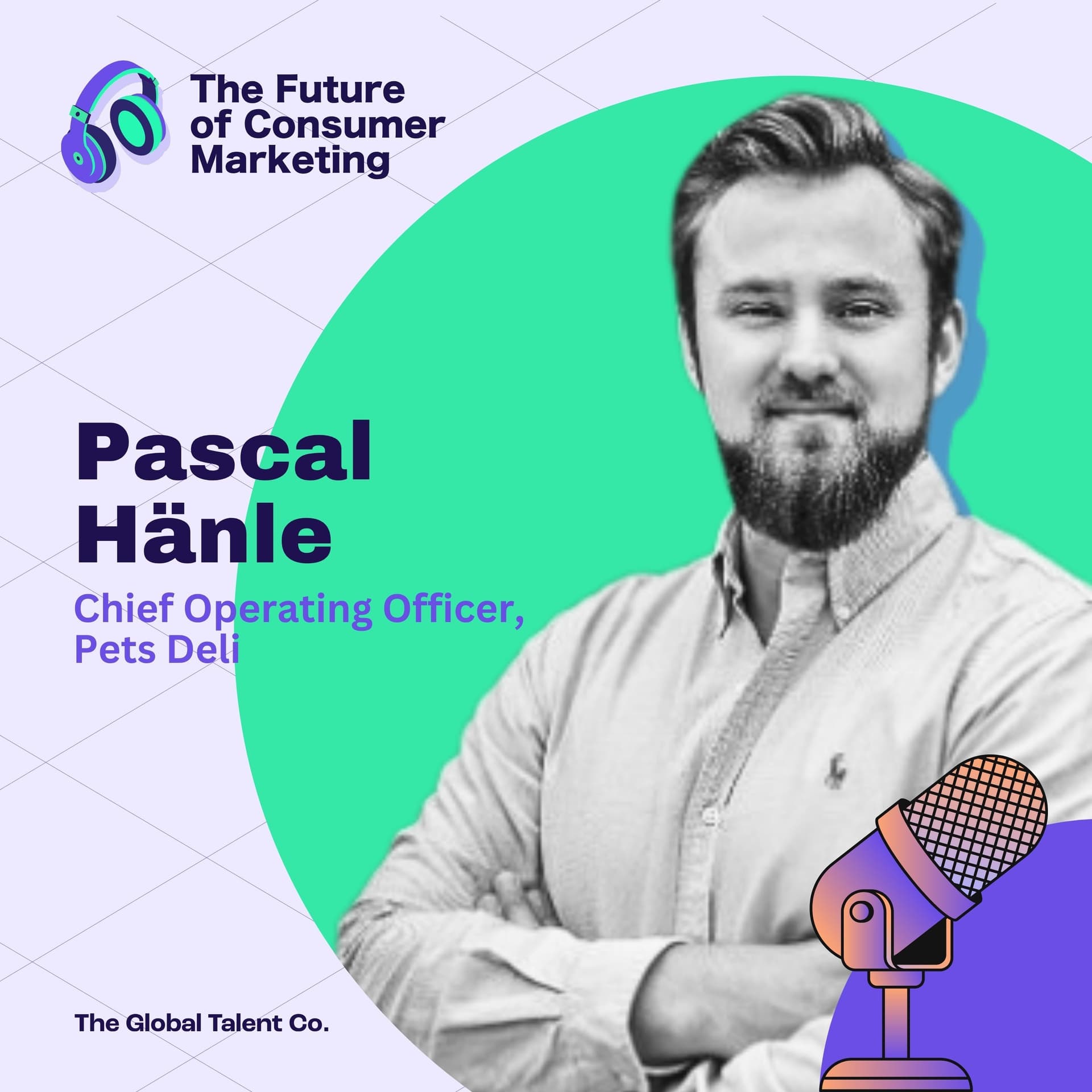
Pascal, CEO and MD of Pets Deli (10th year). Oversees operations: warehouse/fulfillment, supply chain, B2B sales, customer service, and finance.
Key claims
Growth alone doesn’t fix problems; solid unit economics come from “nitty-gritty” supplier renegotiations, diversification, and tuning. Company success is when people can take real ownership and the CEO can take a two-week vacation without opening a laptop.
Notable examples
During insolvency, Pets Deli was bought via an asset deal by “Kuna,” and Pascal rejoined as an early employee. He personally helped test fresh-food supply by sawing frozen meat in the office kitchen. Brexit led to overstocking tri-food and best-before issues due to risk aversion.
Written by AI. May contain mistakes. Listen to the episode to check what was said.
Chapters
Tap a time to open that second in VOTransitioning from D2C to B2B
0:00 to 0:45
Learn about the challenges of evolving from a direct-to-consumer model to a B2B structure.
“When we started we were mainly a D2C company.”
Pascal's Journey at Pets Deli
1:08 to 2:56
Discover Pascal's reflections on his ten years at Pets Deli and the evolution of the company's culture.
“I'm with Pets Deli actually for, I mean, my 10th year now.”
Navigating the Insolvency Challenge
2:56 to 6:10
Pascal shares his experience during a critical insolvency period at Pets Deli and how he contributed to its recovery.
“And also the last couple of years, I think, have also been quite a challenge for probably every e-commerce out there with, I think, first Brexit, then COVID, then the Ukraine war.”
Rebuilding Pets Deli's Product Portfolio
6:10 to 11:16
Explore how Pets Deli transformed its product offerings and operational strategies post-insolvency.
“there was actually a new company or new investor, who bought in an asset deal the most important or relevant assets out of this insolvency mass.”
Lessons on Unit Economics and Business Growth
11:16 to 13:10
Learn the importance of unit economics and the realities of achieving sustainable growth.
“but we were willing to do stuff we were willing to go the extra mile and solved some things.”
Signs of a Healthy Company
13:10 to 14:03
Pascal discusses key indicators that show a company's stability and success.
“I wanted to ask you, what is it that you look at in order to understand that the company is doing well, the company is healthy?”
Building a Stable Company Structure
14:03 to 15:10
Learn how establishing a stable structure allows employees to take ownership and accountability.
“That there's a stable structure and a stable structure in terms of structural integrity of the company but also people doing the work.”
Preparing for the Unexpected
15:11 to 17:08
Discover strategies to prepare for unexpected events and the risks of over-preparation.
“But to be honest, if you have a solid company and people who are willing to adapt and change things, you can take those risks.”
Scaling Headcount: From Small Team to Company
17:09 to 18:58
Explore the changes in decision-making and culture as a company grows from a small team.
“So overpreparedness can also come with new risks and also can come with risks that you don't take chances, opportunities.”
Current Culture at Pets Deli
18:59 to 21:06
Understand the evolution of company culture during COVID and the importance of employee connection.
“How would you describe current culture at Pets Deli?”
Show all 19 chapters
The Importance of Ownership in Operations
21:07 to 22:56
Learn how fostering a sense of ownership leads to accountability and improved decision-making.
“But there's also a real purpose behind it because ownership leads to accountability.”
A Personal Example of Leadership and Accountability
22:57 to 24:46
Hear a personal story illustrating the impact of ownership on team dynamics and accountability.
“So I think it was three years ago when we were doing our annual stock taking and it was the first time it was audited.”
Strategies for Future Growth at Pets Deli
24:47 to 27:31
Discover the ambitious goals and challenges facing Pets Deli's growth strategy moving forward.
“Growing while keeping CACs low, that's a hard thing to do currently.”
Overseeing Multiple Functions in a Growing Company
27:32 to 28:01
Learn about the various functions managed within Pets Deli and the teamwork required for success.
Warehouse Expansion and Logistics
28:01 to 28:29
Learn about the company's expansion of warehouse space and logistics operations.
Team Structure and Leadership
28:30 to 29:18
Discover how the team structure has evolved to include departmental leaders.
“happening something and that's great you mentioned that you're kind of overlooking multiple functions at the same time, such as customer care, operations, and what else?”
Values in Team Dynamics
29:19 to 30:11
Understand the importance of mutual respect and personal connections in the workplace.
“I think all those people have in common that we share a common belief and this is that just taking care, just being accountable for what you do is this one common belief and then we have a difference, a different people.”
Aspirations and Future Growth
30:12 to 31:09
Explore the goals for growth and the challenges that come with it in the company.
“Maybe to finalize our beautiful conversation, you could share what is your aspiration for the upcoming year?”
Market Expansion Plans
31:10 to 31:20
Get insights into the company's plans for expanding in Germany and potentially new markets.
“Yeah, I'm looking forward to it because it's then again a new challenge.”
Transcript
Automatic transcript. May contain errors.0:00When we started we were mainly a D2C company. All our processes were built for D2C and now you have B2B. Things move so quickly.
0:08Pascal Hanle:What fundamentally changed in between of headcount 3 to 130? The way you work and you do decisions. Because when you are a very tiny team you can talk about everything. When you grow larger as a company things change and a company requires a different set of rules. What is it that you look at in order to understand that the company is doing well? People taking real ownership and accountability. And that's like, this is success. Revenue is nice. Profit and all that stuff, because it helps to keep orders afloat. But it's probably also the result of the structure of these people.
0:44Pascal Hanle:Welcome to the new episode of 10x Team COO by Global Talent, where we talk to the CEOs behind the hottest and loudest startups on the block, aka Europe. Excited to have you here, Pascal. Pascal is the CEO at Pets Deli. Maybe you can start with shortly introducing yourself and also, you know, talk a little bit about the company. My name is Pascal. I'm with Pets Deli actually for, I mean, my 10th year now. So no more than I expected. Also never expected to end up in Petful, to be honest. Yeah, I'm the CEO and MD at Pets Deli. I'm responsible for operations, including our own warehouse, so fulfillment, supply chain, B2B sales, customer service, and finance.
1:33So a broad range of responsibility, but yeah, I grew over time.
1:38Pascal Hanle:Quite a renaissance man. Yeah. Happy to be here. What is this that keeps you interested at Pets Daily? What is it that keeps it interesting for you throughout the years? Good question. a question also sometimes i ask myself actually and i think it changed over the years so in the very beginning when i was also a new start and do the whole career thing and working i think it was this very hands-on approach that you could change so much you could do everything basically because it was this raw mold of a company and there was not much there well after the insolvency at least and going from there it was these different stages of the company going through so this hyper growth phase where we started like with four employees in a tiny room and then going into a big office with like 100 people and going through this whole motion and all these different aspects it's brought to itself so this whole thing of culture change in a company how to moderate culture change when the first people who join the company are no longer there and there's a new set of people and all that stuff.
2:51I think that kept it always very interested. And also the last couple of years, I think, have also been quite a challenge for probably every e-commerce out there with, I think, first Brexit, then COVID, then the Ukraine war. and now the Iran war and all that. I think the challenges it brought made it always very interesting. And one piece dogs. We have dogs in the office I love dogs I don't have the time or don't want to take the time to raise a puppy and care for it but having a dog in the office or dogs it's always been the uncle to a baby you can go there, play with go home, don't need to take care of
3:40Pascal Hanle:well everything invested the best of the two worlds yeah exactly so speaking of insolvency you actually joined at the very critical moment that the company was was going through so i can imagine that was very interesting but also very challenging right maybe you can talk a little bit about how exactly that was and yeah you mentioned you were the first employee in the company a friend of mine was working at pet sealy and he was building up the customer sales and d2c tiller sales unit um and he called me i was working still in flyberg in my first job if i want to move to berlin and join this fancy new startup doing great pet food and stuff and was like yeah okay i am now five years in flyberg i want to do something new so i moved to berlin in february i think on the 8th of February, joined the company on the 15th and we were doing good stuff there.
4:39So we were building up the telesales unit, doing good unit economics and stuff. But the company struggled a bit. It also struggled a bit I think in the year before when they already had a wave of layoffs. But it also looked kind of promising because there were always talks of new funding rounds, extending the runway and stuff like that. Well, that didn't materialize and at some point i think it was in maydem around yeah there was a guy uh insolvency lawyer turning the office calling in all hands and telling us yeah the company is bankrupt this very morning it was filed and yeah let's see how we progress from here because back then there was still disbelief because there were always these talks about funding rounds that the company could survive this and maybe be restructured and then yeah going on a new path but it never happened so there was never a new investor coming in but we did manage to run the company maybe one month longer and also during that time period for some reason right i was in tele-sales and at some point i was doing operations and customer service just to keep the company afloat a little bit, which was in the end good for me because when this whole insolvency thing fell through, so it was new investment, no new funding coming in, there was actually a new company or new investor, who bought in an asset deal the most important or relevant assets out of this insolvency mass.
6:23and they contacted the insolvency lawyer okay how do we take over this company actually from here yeah the company was bought out so the assets the most important assets were bought by kuna and they asked the insolvency lawyer okay how to progress from here is there anyone who can help us take this over so they're running business more or less so they don't lose all the customers they bought and the insolvency lawyer gave them two phone numbers actually one from a b2b guy who manage the b2b logistics and all that stuff and my phone number and wow so i joined the company and was through only foreign consultancy helping them get it started up and i had another job lined up actually but we had a great understanding so the new management team and myself and then also tanya and ricardo two pharmacy level from petzeli joined the company again and it felt like a really good thing yeah and so it came that i rejoined at steely at steely 2 as we sometimes call it and was actually more or less the first real employee then in a company that was in i think my official contract is from the september 1st
7:39Pascal Hanle:exciting it's actually super exciting that you uh you got to witness like both that's delhi and that's delhi too at the same time what do you think like what fundamentally changed actually in between how how can it be that the same company the same product all the same just starts working all of a sudden what exactly changed did not work all of a sudden because that's important thing what we did in the two years past then so 2017 2018 we basically rebuilt the company. To be honest, sometimes it felt like it would have been easier to start a new company and taking over the old one. Because product portfolio completely changed.
8:21Back then, we were doing only frozen pet food, which had also terrible unit economics, to be honest. Why? So it's frozen pet food. It was sourced from an external supplier who did everything by himself and we only purchased a product basically. The logistics was not ideally set up and all that combined led to terrible contribution margin tools. So something which would probably never have been sustainable.
8:51Pascal Hanle:And logistics was also outsourced? Was also outsourced, yes. I think outsourcing is a valid option, but back then it was not a rifle, to be honest. And we already did that. So the whole portfolio changed. which led to better margins. We kept fresh food, by the way. My first project was to restructure the fresh pet food thing. So we took over the supply chain by ourselves and only had a co-packer doing all that, which was a bit weird. So because I did all that, I needed to source also material. And there was this one scene where, well, if you source material, material in that, well, it's meat. and meat is typically delivered in 20 kilo blocks frozen.
9:42I needed to source new meat suppliers and needed to test product quality. What happened? At one point, there was a frozen delivery drug coming to the office, delivering a pellet with frozen meat. And yeah, I was in the office, in the kitchen, going to the Baumarkt, getting a saw and sawing meat pieces into cubes in the kitchen. that was a senior start of life um but we read it the whole product portfolio also insourced fulfillment in 2020 and yeah basically changed the whole company all around and that led to use solid unit economics and also improved marketing efficiency and that led to a good clb keg ratio down the road and well that's where we are now
10:33Pascal Hanle:building the supply chain on your own from scratch did you have experience working with supply chains before or so my previous job was actually it project management but it was a junior back then so actually no idea and the good thing was it was not only me alone it was also Tanya, who was also the CEO at Pets Daily who was next, a prior company so she was also more junior she had more experience but still also junior CEO I would say but we figured it out also so I think a lot of hard work and just trying it out led to where we are so now we had no idea but we were willing to do stuff we were willing to go the extra mile and solved some things.
11:25Pascal Hanle:A lot of things has changed, thankfully, from that moment. But what do you think you learned? What is the most valuable thing that you learned during that period of time? I think also that changed. I would have probably two or three years ago, I would have said something different. Now I have the strong belief that just pure growth doesn't solve problems. So a lot of companies or startups they always have this when they do their business planning and stuff like that they always have these economies of scale in their head and at some point yeah that will magically happen and what the covid times taught me and all the margin pressure we faced that actually having solid unit economics is a result of meticulous effort like having economies of scale is nice, but you need to do nitty-gritty renegotiations with every supplier, need to do diversification projects and all that stuff.
12:31Yeah, and that leads to good margins. Good margins are built by nitty-gritty work, which is not always nice, but that leads to results. I think that's something which is really ingrained in my brain now.
12:46Pascal Hanle:So a lot of tuning and also time, basically. Lots of time and tuning. Is it fun to renegotiate with a paper supplier who has a purchasing volume of 20 or 30k per year? Probably not. Is it still relevant? Yes. And all those small blocks add up. But it's an effort. I wanted to ask you, what is it that you look at in order to understand that the company is doing well, the company is healthy? And you just named unit economics, right? But okay, aside from that, is there anything else? Yeah, definitely. So in the first couple years, I never took many vacation days. And when I had the vacation days, I worked parts of it every time.
13:35So I think the first couple years, I never had a real vacation day. And now, I think in November last year, I was two weeks in Egypt.
13:46Pascal Hanle:Nice. didn't open my laptop once. Wasn't needed. The company was running well and that's a real sign that I see. This is a company which has succeeded in some ways at least. That there's a stable structure and a stable structure in terms of structural integrity of the company but also people doing the work. This is not reliant on one person anymore. there's a structure there's processes in place and people taking real ownership and accountability and that's like where i see this is success revenue is nice profit and all that stuff because it helps to keep orders afloat but it's probably also the result of the structure of these people working doing the stuff as someone working in the operations i do agree uh it's just a sign that the processes are happening people are working things are delegatable if one can say so so um the company is up and running and pretty much stable in the in its ways um of course i can imagine that there are still unpredictable things happening but the probability that that's going to happen during your vacation is probably is diminished yes definitely and you can always prepare for the unexpected in some ways.
15:13But to be honest, if you have a solid company and people who are willing to adapt and change things, you can take those risks. And would it change so much if I be there in that moment when something goes off? It always depends on the scale. I think when it's an operational topic, probably I'm then less qualified than some of my team members to handle it because to be honest some of the process details I don't know anymore I trust them
15:45Pascal Hanle:and you mentioned preparing for the unexpected earlier how do you prepare for the unexpected I think there are some things you can do you should be aware of things which could destroy your company so if you let's take supply chain for example you should be aware that there are certain supply chain risks and should have at least in your head some scenarios how to hedge those and those scenarios which could break your company you should be aware of those because if something points in that direction you're already ready to steer against it but there are some of the things you cannot prepare for i think it's also a risk actually to over prepare because we've done it also once in the past when brexit happened our main tri-food supply was in uk and yeah nobody gonna knew how brexit would end up because it was all this vague scenario how it will play out and we were very risk averse i would say and we overstocked tremendously on tri-food which led to a situation where we had two or three 100 100 k's in tri-food spend, which was running into a best before date issue because we overstocked so much because we didn't know how to handle it.
17:11So overpreparedness can also come with new risks and also can come with risks that you don't take chances, opportunities. So we prepare, but not too much probably, but we have a statement.
17:22Pascal Hanle:What is your current headcount? So we need to split it a bit because we have our headquarter with around 65, 70 people more or less. Then we have some physical stores actually, three in Berlin, one in Potsdam and one in Lucerne. That adds another 20, 25 FTEs, depending on how you count. And our warehouse in front work is around 45 people. So in sum, I think the last time I calculated, 130 FTEs, 135 FTEs, somewhere in that range. What fundamentally changed in between of headcount 3 to 130? The way you work and you do decisions. Because when you are a very tiny team, sitting in a room probably not much larger actually than this one in the beginning.
18:14Pascal Hanle:Do not reveal the size of our studio. And you start in a room, in a small room, you can talk about everything. You have small decisions and everyone can take decisions. when you grow larger as a company, things change. Also, the first 20 employees who are there, at some point, they are no longer there. And that changes stuff. It changes how you work. It changes culture. And I think that actually is what changed the most when you were this small team, family-like, and all that stuff. And at some point, you are a company. And a company requires a different set of rules if you want to call it structures, processes and all those things which help make a company.
19:02Pascal Hanle:How would you describe current culture at Pets Deli? So I think culture in the COVID years was a bit tough because it came to a lot of disruption. There was also this change in culture because people were leaving new people were joining. Right now I would say we are at a good point in terms of we have a great team of individuals who are very different from one another so different people who bring all the different things to the table but one thing is in common i feel like that people care about the company there's a deep care about petstaley which feels like it's not only a random company or product whatever but it's like this thing we all care about because many of our employees also have pets have dogs or cats and it's it's a natural connection to what we do and why we do stuff so yeah different people different way of working also so in the beginning we had one day home office per month now you can work from home whenever you want so it's different but yeah there's still this deep care for the brand for pit steely there and this brings connection and that matters because it also leads to things like ownership taking accountability and all that stuff because yeah you care there's probably still a very high ownership sense even though it is a scaled company uh yes because it's also i think a point of emphasis for us actually um i think ownership is one of the most important things so it's also something which is very important for me as a human but also very important in how company functions in leadership because i think yeah ownership is also this linkedin buzzwords stuff, right?
21:09But there's also a real purpose behind it because ownership leads to accountability. Real ownership also leads to fast decision-making, which is not reliant on me, for example. But it also needs certain things. It needs people who care. I think that is one part. People who want to make decisions, but you also let them make decisions and that's sometimes hard because yes sometimes you know yeah i would decide differently and still not stepping in and letting them make the decisions that's sometimes hard but it's important because otherwise people will stop making decisions and when people stop making decisions for themselves ownership stops that's already giving me a glimpse into how you are as
22:03Pascal Hanle:an operator but maybe you would like to describe yourself in your own way what kind of an operator are you what is it that you enjoy working on most so i think which also brought me a bit into this operation thing as a whole i like to bring structure a bit into chaos so So building structure in terms of processes, but also enabling people to bring structure, that is something which really drives me. So enabling people to do a good job in terms of taking ownership, making decisions, executing, which often comes with a certain structure. and building the structure, enabling people with it. That's what I like to do.
22:56Let me make an example. So I think it was three years ago when we were doing our annual stock taking and it was the first time it was audited. So we didn't know how to do it, right? Not really. And the first day went from the morning, I think from seven up until 10 in the evening. It was a long time. but because we had some little fuck ups sorry for language the auditors were not quite happy and they said okay we need to do a recount for certain items the next day and because I didn't want to have any risk there and redo the stock taking I was the next day at half past four in the morning again counting items by myself and the good thing was I think 20 minutes later one of the shift leads also arrived without talking to him or like making a deal we both do it in the morning because it also wanted to do it because he felt like okay this is his ownership that's his fuck up and why because i won't it was the first time in a company i think where he could take over ownership like this being a shift lead where it's like yeah it's your responsibility so you need to be accountable for it but you also have the decision power to do some things and giving people the structure to do it and them having this ownership, that's what feels right.
24:25Pascal Hanle:Is this colleague still at the company? Yes. He's still there and he manages now half of the team in the warehouse. He actually joined in 2020 as one of the first employees in the warehouse and he's still there. He's doing a great job. He's one of the people helping us also improving so much because minor details or build up or blocks in margins is one of the people driving margin improvement in the warehouse by constantly optimizing little processes and it's his decision power to do those and sometimes there are mistakes sometimes or most of the times there are good things happening it's 2026 kind of one quarter deep you probably set some goals for yourself as of last year how's that going and maybe you could share a little bit about what exactly you guys are trying to do right now at Petsdeli.
25:28Sure yeah so we are always very ambitious because we have high goals so we have to score for 2030 the one across the 100 million mark uh still some way to go there and yeah there's a path leading towards them um and i think there are some areas where it's harder currently i think d2c new customer growth is always a bit challenging not only for us but for the whole industry, I think. Growing while keeping CACs low, that's a hard thing to do currently. So this is probably something which is challenging. Other parts are very promising. So when we started, we were mainly a D2C company. We are still primarily a D2C company, but we have also this diversified revenue stream of B2B sales, which is growing quite nicely coming with a new set of challenges though because we were a D2C company first.
26:35All our processes were built for D2C and at some point when you build processes for D2C you can do proper forecasting because you have repeating purchasing behaviors and all that stuff leading to a nice forecast you can plan with that, purchase plan fulfillment and now you have B2B. There's no proper forecast because things move so quickly and are so differentiated. So that's the challenge.
27:03Pascal Hanle:Who's your typical B2B customer? Our B2B customers are things like Fresnof, for example. Fresnof, Edeka, and all those. Then, of course, selling merchandise back again to the end customer. But those are our typical customers. And yeah, they are sometimes, Fresnof is a huge customer. They have around 1 ,000 POS. so great customer but also of course has its own set of challenges to handle and navigate and yeah this is something where we have our eyes on for this year at least in terms of operations to really build a powerhouse for b2b that we scale there because if we want to do this year around double digit million revenue in b2b next year we want to do at least 50 plus and so on so this is growing quite nicely hopefully and we need to build for that currently looks good we expanded our warehouse so previously we had only around 3k in warehouse space and had a different set of 3pl logistics providers where we stored some pallets and handled some logistics and now we internalize all that so we added another 8k in space more or less and have everything now in our hand and yeah that's currently in motion so when you asked me before what keeps pets really interesting such things yeah it's always something new it's always happening something and that's great you mentioned that you're kind of overlooking multiple functions at the same time, such as customer care, operations, and what else?
28:45So it's customer care, it's operations, including supply chain, warehouse, B2B, and finance. But I'm not doing it by myself, right? I have a great set of people, of leads and heads, taking care of day-to-day business and leading their departments. So that's also something changed. Previously, you either have done it by yourself, so really customer service, by yourself. Then you had some customer service agents and now you have people leading customer service agents.
29:18Pascal Hanle:What do you value most in those people? I think all those people have in common that we share a common belief and this is that just taking care, just being accountable for what you do is this one common belief and then we have a difference, a different people. Just taking care and also something I learned on the way those are all people I like to work with so in terms of how people treat each other like this mutual respect and it's hard to describe actually but when I was younger I had the sense that okay there is someone who's doing a good job I can't get along with him but fine that's something you need to tolerate and actually now I'm thinking no So if I need to work with those people on a daily basis, I need to like to work with them.
30:17It's not something which is optional. It needs to be there.
30:22Pascal Hanle:All right. Maybe to finalize our beautiful conversation, you could share what is your aspiration for the upcoming year? What is it that you're really looking forward to at Pets Deli? I think it's taking this next stage of growth, actually. Because, yes, we are now an established company, I would say, a profitable company and all that. But this next stage of growth where it's like, okay, we're not long a small company, but a significant player on the German market. That's what I'm really looking forward to. Because it then changes, again, how you do things, right? And it changes how you do operations.
31:03It changes how a team functions when it grows. And complexity adds up. at some point. Yeah, I'm looking forward to it because it's then again a new challenge.
31:14Pascal Hanle:So you plan on expanding within Germany? We're planning to expand, of course, in Germany, but maybe also new markets. Oh, that's exciting. All right, Pascal, thank you so much for coming. I really appreciate it. It was a blast. Thank you for having me.
From the publisher
Pascal Hanle, Chief Operating Officer of Pets Deli, tells one of the more unusual origin stories in German DTC: a pet food company that went bankrupt, was bought out of insolvency, and was handed to its most tenacious early employee to rebuild from scratch — beginning with Pascal literally sawing frozen meat blocks with a bow saw in the office kitchen to test new suppliers. Now in his 10th year at the company, with 135 FTEs, a warehouse that grew from 3,000 to 11,000 square meters, B2B accounts at Rewe and Edeka, and a target of €100M by 2030, Pascal shares what it actually takes to build durable unit economics, why ownership is the only metric that matters beyond revenue, and why the real sign of a healthy company is whether its CEO can spend two weeks in Egypt without opening a laptop.
Topics Discussed
- How Pascal joined Pets Deli 1, survived the insolvency, and became the first real employee of Pets Deli 2 after an asset deal
- The rebuild of 2017-2018: completely changed product portfolio, took over supply chain and logistics internally
- The bow saw moment: sourcing new meat suppliers and sawing frozen meat blocks in the office kitchen to test quality
- Why the original business model (frozen pet food, outsourced supply chain) had structurally terrible unit economics
- The core lesson: good margins don't come from economies of scale — they come from meticulous, unglamorous supplier renegotiations
- The Brexit overstock mistake: overpreparing for supply disruption led to €200-300K of dry food running into best-before dates
- The vacation health test: two weeks in Egypt, laptop never opened — that's when you know the company is working
- Current company: 135 FTEs across HQ (65-70), 5 physical stores, and a 45-person warehouse in Frankenberg
- Warehouse expansion: 3,000 sqm → 11,000 sqm, all logistics now fully in-house
- B2B growth: Rewe, Edeka as major retail partners; ~1,000 Rewe POS locations; targeting 50%+ B2B revenue growth
- D2C vs. B2B operational challenge: D2C has predictable repeat behavior for forecasting; B2B is erratic and fast-moving
- Ownership philosophy: real ownership requires letting people make decisions — even the wrong ones — or ownership dies
- The 4:30am warehouse story: shift lead showed up independently to recount audit items; now manages half the warehouse
- From startup to company: the first 20 employees are gone; processes replaced personal relationships; culture requires deliberate maintenance
- 2030 goal: €100M revenue; expanding German footprint and potentially entering new markets