
In short
The episode covers multiple news segments. Main topic: Yemen’s Houthis reportedly seized the port city of Mocha and an island near the Bab al-Mandab Strait, a crucial Red Sea shipping chokepoint next to the Bab al-Mandab Strait (and more vital since the Strait of Hormuz is closed).
Key claims
the Houthis may target ships linked to Saudi Arabia, giving Iran extra leverage in negotiations with the US; Yemeni government forces struggle because the UAE withdrew support about a year ago and they lack weapons and airpower; about 46,000 people have fled fighting, with humanitarian aid difficult to reach.
Notable examples
BBC Verify images/videos show armed men at Mocha airport and in pickup trucks in the city.
Guests
Nawal al-Maghafi (BBC senior international investigations correspondent, Yemen reporting). Other named contributors: Zoe Kleinman (tech editor), Nedda Taufik (reporter), Frank Gardner (BBC security correspondent), Sarah Smith (North America editor), Richard Gagoy (global affairs reporter), Charlie Pickering (Melbourne radio presenter).
Written by AI. May contain mistakes. Listen to the episode to check what was said.
Chapters
Tap a time to open that second in VOHouthi Control in Yemen
0:43 to 1:41
Discussion on Houthi rebels taking control of strategic locations in Yemen.
“Houthi rebels reportedly take control of a Yemeni island in a key shipping route, sparking fears about global oil supplies.”
Significance of Bab al-Mandab
1:41 to 2:20
Exploring the strategic importance of the Bab al-Mandab Strait for global shipping.
“It's in a strategically important spot, right next to the Bab al-Mandab Strait.”
Iran's Influence in the Region
2:20 to 3:37
Analysis of how Iranian control impacts the geopolitical landscape of the region.
“knows Yemen well and has reported from there.”
Challenges for Yemeni Forces
3:37 to 5:39
Discussion on the challenges faced by Yemeni government forces against the Houthis.
“They've expanded their presence in that region next to the Bab al-Mandab Strait.”
Humanitarian Crisis in Yemen
5:39 to 6:55
Insights into the devastating humanitarian situation resulting from the conflict.
“And so with air power, they can retake it.”
September 11th Anniversary Events
6:55 to 8:08
Overview of events commemorating the 25th anniversary of the 9/11 attacks.
“One verified image shared on Telegram shows four armed men outside the Mokka Airport terminal building.”
Political Divisions Surrounding 9/11
8:08 to 9:21
Discussion on how 9/11 anniversary events have become politically divisive.
“Giuliani said he was offended that Mayor Zoran Mamdani would attend the memorial.”
MI5's Call for Collaboration
9:21 to 11:19
MI5's call for collaboration with other sectors to enhance national security.
“Rudy Giuliani, New York's mayor on 9-11, was recently condemned for these comments about the current New York mayor, Zahran Mamdani.”
Evolution of Intelligence Operations
11:19 to 14:01
Exploration of how intelligence operations have adapted since 9/11.
“They're also having to deal with state-backed threats.”
Challenges in Planning Large-Scale Attacks
14:01 to 15:18
Explore the increased difficulty of planning major terror events post-9/11.
“How difficult is it still to plan a large scale terror event like 9-11?”
Show all 17 chapters
AI and Its Dual Use in Security
15:19 to 17:08
Discuss the dual potential of AI tools for both positive and negative applications.
“I've been wanting this time for a while.”
Alarmist AI Warnings and Regulation Needs
17:09 to 18:52
Review the growing alarm over AI risks and the call for regulatory measures.
“Earlier this week, we reported that an AI researcher was putting the chance of AI wiping out humanity within the next decade at more than 10%.”
Trump's Promises and Political Strategy
18:53 to 21:11
Analyze Trump's campaign promises and their implications for voter influence.
“Critics have pointed out that offering payments to influence voting is illegal under U.S.”
Online Romance Scams and Their Origins
21:12 to 23:34
Investigate the rise of online romance scams and their Nigerian connections.
“six Nigerian citizens who are wanted in the U.S.”
NFL's Historic Game in Australia
23:35 to 25:39
Celebrate the NFL's first game in Australia and its impact on local fans.
“So that's how you would see some Nigerian nationals have really been caught up in this crime.”
NFL's Historic Game in Australia
26:17 to 26:45
Celebrate the NFL's first game in Australia and its impact on local fans.
“Save on all your favorite personal care essentials and earn four times the points.”
Reflections on the War on Terror
26:48 to 27:15
Reflect on the consequences of the War on Terror two decades later.
“I'm Asma Khalid, host of the Global Story podcast from the BBC.”
Transcript
Automatic transcript. May contain errors.0:00This BBC podcast is supported by ads outside the UK.
0:30and more options to their lineup, can shop at machinefinder.com. Booyah! This is the Global News Podcast from the BBC World Service. I'm Celia Hatton, and at 14 hours GMT on Friday the 11th of September, these are our main stories. Houthi rebels reportedly take control of a Yemeni island in a key shipping route, sparking fears about global oil supplies. Anthropic says it has detected attempts to use its AI models to develop biological and conventional weapons. Events are held across the United States to mark the 25th anniversary of the 9-11 terror attacks. We go to New York City. Also in this podcast.
1:17They were able to gain trust of these perhaps lonely pensioners and business people. They were able to defraud them and they disappeared into thin air. Six Nigerian nationals accused of defrauding more than 100 women through online romance scams are being extradited from South Africa to the U.S.
1:41Let's begin in Yemen. It's in a strategically important spot, right next to the Bab al-Mandab Strait. It's a narrow waterway that connects the Red Sea to the Indian Ocean and has become even more vital to global shipping traffic now that the waterway next to Iran, the state of Hormuz, has been closed. And now in Yemen, we're learning that the Iran-backed Houthi rebel group has seized a key port on the Bab al-Mandab Strait, the city of Mocha. Adding to that, local officials say Yemeni forces have withdrawn from an island in that waterway, allowing the Houthis to move in. Our senior international investigations correspondent, Nawal al-Maghafi, knows Yemen well and has reported from there.
2:22She gave me her thoughts on this latest development. It's incredibly significant. These are locations that the Yemeni government have had control over for nearly a decade now. You know, Bab al-Mandeb is significant worldwide because of it being one of the main shipping routes. And, you know, the Houthis in the last couple of months have launched offensives on multiple fronts. They've launched an offensive in Taiz, which is in the southwest of Yemen, in Marib, which is in central Yemen, and then also in Muqa, which sits right next to the Bab al-Mandeb Strait. And that one is the most important because as soon as they have control of it, it means that they have direct access to all that shipping that is passing through Bab al-Mandeb.
3:07And as you know, Bab al-Mandeb has become a lot more important these days because what's happening across the Arabian Peninsula in Iran, and Iran having complete control of the Strait of Hormuz and having a huge impact on the shipping that is passing through there. So having Iran in charge of the Strait of Hormuz and its friends in charge of Bab al-Mandeb is, you know, incredibly complicated and also threatening to the global economy. Noa, how might the Houthis use that ability? They've expanded their presence in that region next to the Bab al-Mandab Strait. How might they use that control? I mean, for now, they're saying that they are only going to target ships that are linked to Saudi Arabia and that their fight is with the Saudi coalition.
3:57But of course, one of the things that's going to come out of this is that it will give Iran an extra bargaining chip. It will give it more leverage on that negotiating table with the United States, that it's in control of the Strait of Hamus and its allies, the Houthis, are in control of Bab el-Manda. There are reports that Saudi Arabia has asked the United States for help in order to deal with this emerging problem, the continual threat posed by the Houthi rebels. But how might the Saudis or even the Americans try to address this expanding presence in Yemen by the Houthi rebel group? I think something that's really important to note is the forces that were based in Makkah, the forces that are part of the Yemeni government, they were being supported by the UAE for nearly a decade now in this conflict.
4:48And the UAE pulled out of Yemen just under a year ago. And ever since then, they've been relying on the Saudi-led coalition. Now, I've been speaking to commanders that were leading that fight against the Houthis for the last couple of days. And they told me that the fight is fierce. We don't have enough supplies. We don't have enough weapons. There is no way of confronting the Houthis without airpower. And we need that airpower from the Saudi-led coalition, and we're just not getting it. And so it's clear that the UAE pulling out and them not having that kind of support from the Saudi-led coalition is what's gotten us to where we're at today.
5:24The Houthis in complete control of the city of Mokka and now in control of the island that sits across it. And so it is incredibly important for that support to come in in order for the government forces to be able to retake control of that region. It is not difficult. It's desert terrain. And so with air power, they can retake it. And, you know, the Houthis don't have significant air power. But whether the Saudis want to involve themselves in the war without U.S. support is a different question. You know, they've been able to distance themselves somewhat since 2022. And so I think they are afraid of taking this on all by themselves.
6:03And that's probably why they've asked for support from the US. Now, while we've been talking about the big players involved in this conflict, but just to focus on the humans at the centre of this fighting for a moment, there are reports that 46 ,000 people have fled from the area to escape these battles. What more are you hearing about life on the ground in that part of Yemen? It is absolutely devastating. You have the people who had their homes in that region. It's completely erupted and disrupted from the fighting that has happened in the last couple of weeks. And, you know, they don't have refugee camps to go to.
6:38They don't have alternative places. I've been speaking to people in Aden who have said they have seen tens of thousands of people in the streets. And so, you know, the humanitarian situation will deteriorate significantly over the next few weeks. And NGOs are finding it very hard to get there to help them. In the last few hours, BBC Verify has been examining material which shows fighters inside that key Red Sea port city of Mokka. One verified image shared on Telegram shows four armed men outside the Mokka Airport terminal building. Another video shows armed men in pickup trucks driving in the center of the city.
7:16Now, it's an important day in the United States. Commemorations are taking place across the U.S. to mark the 25th anniversary of the September 11th terror attacks. Nearly 3 ,000 people were killed when planes were flown into the Twin Towers of the World Trade Center and the Pentagon. A fourth plane crashed in Pennsylvania. As we record this podcast, remembrance ceremonies have got underway.
7:46But while it's usually a time for solemn remembrance, this year's anniversary of the September 11th attacks has become embroiled in divisive American politics. There are controversial calls for New York City's first Muslim mayor to sit out the event, including from Rudy Giuliani, who was New York City's mayor on the morning of 9-11. Mr. Giuliani said he was offended that Mayor Zoran Mamdani would attend the memorial. From New York, Nedda Taufik reports. This is the site of the deadliest foreign attack on American soil in modern time, the World Trade Center and Memorial, a fulfilled promise to rebuild and to never forget.
8:25Today, events of 9-11 are a moment in history for the youngest generation. But for those who lived through it, it's a pain that never fully fades. On the morning of September 11, 2001, al-Qaeda hijackers flew commercial planes into the 110-story Twin Towers. Nearly 3 ,000 people died that day. Their bodies later recovered from the rubble. Thousands more would lose their lives in the following years from breathing in the toxic cloud of dust that remained. That day forever changed America, altering lives, both domestic and foreign policy, and putting a target on Muslim Americans. 25 years on from 9-11, Muslim Americans are experiencing a record rise in discrimination, according to rights groups.
9:10While the city has its first Muslim mayor and a sign of some progress, there's also been an increase from politicians on the right, amplifying conspiracy theories about the community. Rudy Giuliani, New York's mayor on 9-11, was recently condemned for these comments about the current New York mayor, Zahran Mamdani. They want to dominate us. That's what they're taught from the day they begin their extremist religious education. Mandami is a clear supporter of that. All of the Muslims he supports are murderers. Zishan, whose brother Salman Hamdani died in the North Tower, says that kind of rhetoric adds to the pain of the day.
9:54I have three kids. It's more painful because now I've explained to my kids the hate of Islam. The hijackers from 9-11 hijacked the religion, right, and hit the towers. I'm like, Islam is being hijacked now to cause division within our country. You've got to be better. My brother gave his life. He's Muslim. Does his name not belong there now because he's Muslim? On a day meant to unite, it's still proving difficult for America to put to rest its divisions. Nedetofik, the head of Britain's domestic security service, MI5, has used today's anniversary of the 9-11 attacks to warn the UK's government can no longer handle national security alone.
10:49Ken McCallum says the government must partner with businesses and academia to help defeat looming threats. The BBC security correspondent Frank Gardner told me more. He's basically saying that the government can't do it on its own. And this isn't a budget thing. It's a capability thing. He calls it a call to arms to cooperate with business, with industry, with academia. that together this is a kind of whole-of-society approach to tackling not just terrorism, but threats. The threat landscape, he says, has changed dramatically since 2001. So back then, they were dealing with really big, major plots, but today they're having to deal with lots of internet-inspired plots, sometimes in some cases just somebody in their bedsit, in their bedroom, being inspired by what they're seeing on the internet.
11:43They're also having to deal with state-backed threats. So, for example, there have been over a dozen kidnap and murder attempts, they say, by Iran using proxy groups, using low-level criminals to attack dissidents who are critical of the Iranian regime, for example. There are Russia-backed and China-backed spying attempts that they're having to deal with. So they're pretty stretched, and they're saying that they need help from academia and from industry. Frank, how is state intelligence changing to try to keep up with these threats? They've had to adapt a lot. Let's take MI6, for example. That's the Secret Intelligence Service, kind of the equivalent of the CIA in America.
12:25They had a disastrous thing in 2003. So just in the run-up to the Iraq invasion, the US-led invasion of Iraq, Britain got dragged into the whole charade of thinking that Iraq had weapons of mass destruction and certainly Saddam Hussein the Iraqi president at the time was behaving as if he had something to hide but they didn't have any that had all been destroyed after 1991 and Britain's MI6 had supplied intelligence that turned out to be flawed that was flaky from somebody who essentially it wasn't properly checked. And that was fed into the whole government effort to send troops into Iraq. That probably wouldn't have happened if the intelligence had been correct, and the intelligence simply wasn't there.
13:11They've had to do a big root and branch change in how they operate. So nowadays, for example, agent runners who get the raw intelligence from people inside Iran, North Korea, Al-Qaeda, wherever, they supply that, and that's got to be then checked by a reports team. And often it's sent back, almost like having homework marked, saying, no, try again, you need more substantiation on this. MI5 have changed the way they operate. They now operate very closely with the police. They sit in, well, initially in fusion centers and now in a combined counterterrorism unit in London. In America, the 9-11 Commission report identified a serious failing of imagination and intelligence, a failure of policy, a failure of strategy, because the CIA and FBI had the little pieces of the jigsaw that if they could put it all together, they could have stopped 9-11.
14:04At least that is the accusation. And today they share that intelligence. How difficult is it still to plan a large scale terror event like 9-11? How have we come on from that? I'm not going to say it's impossible, but it's much, much harder because that takes a huge amount of planning, which would be very difficult to do under the noses of intelligence agencies, because they've got far more oversight now, they share much more, they're much better informed, they've got better agents, their systems are better, and they're sped up in many cases by AI. So for example, if you've got a vast amount of data, let's say it's mobile phone metadata, artificial intelligence can help them sift through that to do kind of mass searches for things, and can identify in milliseconds, oh, this person here phoned that person on such and such a day.
14:58They can't necessarily know exactly what was discussed, but they can find that metadata very quickly. You've got biometric recognition, face recognition, gait recognition. There's all sorts of things that make it much harder for terrorists to get across borders. Frank Gardner. Still to come in this podcast. Love the NFL, been going for years. We flew in from New Jersey. Yeah, big day. Can't wait. I've been wanting this time for a while. An American sport touches down in Australia.
15:35This is the Global News Podcast. The artificial intelligence company Anthropics says it's uncovered attempts by some malicious actors to use its AI models to develop biological and conventional weapons. The findings can be found in the firm's recent Threat Intelligence Report, as our technology editor Zoe Kleinman began by telling me. This report is just based on activity from this year, and it says that it has spotted people around the world trying to misuse its AI models in various ways. It didn't really name check many people, but it did name check countries. So it says it was attempted to be used for espionage, for surveillance, for fraud, for scams, for cyber activities in countries like Russia and Iran and Yemen.
16:23The most concerning, and I think the one that's made all the headlines today, was research within a military institute. We don't know in which country into a virus called chikungunya, which could either have been an attempt to develop a vaccine, but it could also have been an attempt to look into whether it could be made into a bioweapon. And I think it's fair to say that, you know, it's been a scary week for AI news. And today is no exception. This report is an extremely sobering read. Anthropic says, obviously, this is activity that it has spotted and it's blocked and it has deleted those accounts.
16:57So those people no longer have access. But it says it is publishing this because the world needs to know that the tools are getting better at doing both good and bad stuff. And people are trying to do bad stuff with them. So you mentioned that it's been a scary week for warnings around AI. Earlier this week, we reported that an AI researcher was putting the chance of AI wiping out humanity within the next decade at more than 10%. Can you reflect for us on these series of increasingly alarmist warnings? They're not new, are they? We have been hearing various warnings from various AI bosses for the last few years.
17:34And the growing call now is, of course, for regulation to step in. You know, there is still very patchy regulation around the world. There are still companies all doing their own things on AI safety. We've had incidents where we've seen powerful AI agents getting around their guardrails and doing stuff that they're not supposed to be able to do. And now we have a former researcher saying, giving us this 10 percent figure. So I think there's a lot to bear in mind here. It is only his opinion. He works in AI safety, so he will have been exposed to the absolute worst case scenario disaster planning.
18:08And that will no doubt have given him a perspective that perhaps other people don't have. You've got to bear in mind these companies also want their tools to appear to be very powerful and dangerous because it makes them more powerful and also more valuable. I spoke to a top executive at one of the AI giants yesterday, actually, and he said we need a UN style body for AI safety governance. It needs to happen now. It's been visionary in the past. It's been a kind of nice idea. Now he says it's pragmatic. But I think it's important to know that he was not volunteering to be the person that started it.
18:40And he also said, and I am troubled by this sense that, you know, something bad is going to happen before the world sort of leaps into action. Our technology editor, Zoe Kleinman. Donald Trump has doubled down on his promise to pay every American adult citizen$5 ,000 if his party wins the midterm elections in November. Critics have pointed out that offering payments to influence voting is illegal under U.S. federal law, and they've questioned how his government could afford it. But speaking at the closing of the Republican Midterm Convention in Dallas, Texas, the president said it was possible because he said the U.S.
19:18is taking in trillions of dollars. Our North America editor, Sarah Smith, was watching on. It was Donald Trump's own idea to have this extraordinary Republican convention, convention, just like it's his idea to make the midterms campaign all about him. And look, he definitely enthused these supporters here and excited MAGA fans across the country. But the crucial question is, will he have won over any of the voters who are so frustrated about the high cost of living and the war with Iran that's driving prices up further? There was a very extravagant promise to try and get their attention with Donald Trump saying he will pay five thousand dollars to every American citizen if Republicans win in November's election.
20:05Quite a few people might be rather skeptical, though, about whether they would ever actually see a check. Donald Trump has made promises like this before and he's never actually paid out. It was really noticeable tonight. What an enthusiastic response the crowd gave Vice President J.D. Vance when he made his speech. They were shouting J.D. 48, indicating they want him to be the one to take over from Donald Trump in two years time. That's got to give him a significant advantage over his closest rival, the Secretary of State Marco Rubio. He's in Peru right now, not here in Texas with the party faithful.
20:44But this event was designed to keep the spotlight on one man, and that's Donald Trump, because he thinks he's the one that can drive voters to the polls in November. And by making himself the face of the Republican campaign, that means he's going to have to own it if Republicans are defeated in November. And right now, that's what polls suggest is likely to happen. Sarah Smith. Let's go to South Africa now, where police are handing over six Nigerian citizens who are wanted in the U.S. for allegedly being involved in an online romance scam. The group is accused of targeting more than 100 women in the United States and defrauding them of more than$6 million.
21:27Our global affairs reporter, Richard Gagoy, told us more. They are accused of defrauding 100 women in the United States through what police in South Africa described as sophisticated online scams. So what they would do basically is that they would pose as a romantic partner, that they're currently on a trip to South Africa, where they're backing on a project, and then they get back to them and tell them that they have been robbed, they have been, you know, scammed by people in South Africa, and they desperately are in need of cash, they need to buy phones, you know, laptops, and even to pay legal fees, because, say, there's an emergency that has come up in the course of doing business.
22:12And so that's what they were able to do. But principally, they were able to gain trust of these perhaps lonely pensioners and business people. And then over time, they were able to request them to send them money. So in the process, they were able to defraud them and they disappeared into thin air. Wow, it must have been heartbreaking for the people involved on the other end of these scams. I mean, Richard, I wonder if you can tell us more about the rise of these love scams in general. Is it fair to say that a lot of them originate in Nigeria? Well, you would say that predominantly some of the cases originate from Nigeria.
22:49But then if you look at, there's a group, it's an organized criminal network called the Black Axe. And that's why the police arrested these six suspects five years ago in South Africa, because they were targeting this network that has been operating not only in South Africa, but in many parts of the world. But it did originate from Nigeria as just a student movement. And then it evolved into what it has become right now as a criminal syndicate. And then also in Nigeria, you'd have groups of young people who call themselves Yahoo boys. So they're just network of individuals. So they don't have jobs, maybe because perhaps of the socioeconomic situation in Nigeria.
23:26So you have a huge population of young people who are educated, but they don't have job opportunities. And so for some of them, they say that online romance camps are an easy way, a lucrative way out of poverty. So that's how you would see some Nigerian nationals have really been caught up in this crime. Richard Kague. And finally, a new frontier has opened up for American football. The NFL has played regular season games in seven countries. Now it's held its first ever game in Australia. The city of Melbourne hosted the NFL game with the San Francisco 49ers taking on the L.A. Rams. More than 100 ,000 fans packed into the Melbourne cricket ground to watch the game.
24:08These fans couldn't wait for the NFL to touch down in Australia. Love the NFL. Been going for years. It's actually our fourth Rams game. So first one at home, but I've been to a few in LA and the US. Fantastic. We've been Niner fans for like a long, long time. So we flew in from New Jersey. Yeah, big day. Can't wait. I haven't wanted this time for a while. Melbourne radio presenter Charlie Pickering was there. What definitely happened here and what we definitely saw today was that there are a lot of NFL fans here in Australia and they came out in force. It was funny, like getting on the train to come into the ground today, heading in, you started to spot more and more people who were wearing their team jerseys of all different teams.
24:48And the names on the back, the players on the back suggest these have been fans for a long time. And this is probably the first time they've all been in one spot like this before. it was like, I don't know, like a massive family reunion of people who didn't know that there were other people like them out there that actually were so serious about their football. So I will say that there are a lot of fans here in Australia. We love sport and there are a lot of NFL fans, but this was probably the first time that they could all come together, see a game, obviously, for the first time in Australia and really feel like they had a community.
25:20And I think the NFL, American football is something different again. It's so uniquely American. There's literally only 32 teams in the entire world that play at the highest level. And it is such a spectacle. It's safe to say that football got a foothold today. I think that's absolutely true. Maybe it's not everyone's cup of tea, but it is building an audience, definitely. And the results, the 49ers beat the Rams 27-7. And that's all from us for now. If you want to get in touch, you can email us at globalpodcast at bbc.co.uk. You can also now watch our episodes in full. Just search for the Global News Podcast on YouTube.
26:01This edition was mixed by Callum McLean, and the producer was Alfie Halverson. The editor is Karen Martin. I'm Celia Hatton. Until next time, goodbye.
26:16Hey, it's Ryan Seacrest for Jewel Osco. Now through September 29th. Save on all your favorite personal care essentials and earn four times the points. Shop in-store or online for items from your favorite brands like Native, Pantene, Crest, Always, Gillette, Oral-B, and Tampax and earn four times the points. Points can be redeemed for discounts on future purchases on groceries and gas. Get these deals before they're gone. Offer ends September 29th. Restrictions apply. Offers may vary. Visit Julesosco.com for more details. Did America's War on Terror work? I'm Asma Khalid, host of the Global Story podcast from the BBC.
Read the full transcript
26:55In the words of a former U.S. official, on September 11th, 2001, the terrorists hijacked not just airplanes, but also the direction of U.S. foreign policy. 25 years on, what were the unintended consequences of the war on terror? For the full story, listen to The Global Story on BBC.com or wherever you get your podcasts.
From the publisher
Reports from Yemen say fighters from the Iranian-backed Houthi group have taken over the island of Perim, in the Bab el-Mandab Strait - a crucial shipping route. Hundreds of people have reportedly been killed and thousands displaced since the Houthis launched an offensive in the south-west of the country a week ago.
Also: the artificial intelligence company, Anthropic, says it's uncovered attempts to use its AI models to develop biological and conventional weapons. We report from New York as the city marks the 25th anniversary of the 9/11 attacks. Six Nigerian nationals accused of defrauding more than 100 women through online romance scams are extradited from South Africa to the US. And a new frontier opens up for the NFL in Australia.
The Global News Podcast brings you the breaking news you need to hear, as it happens. Listen for the latest headlines and current affairs from around the world. Politics, economics, climate, business, technology, health – we cover it all with expert analysis and insight. Get the news that matters, delivered twice a day on weekdays and daily at weekends, plus special bonus episodes reacting to urgent breaking stories. Follow or subscribe now and never miss a moment. Get in touch: globalpodcast@bbc.co.uk
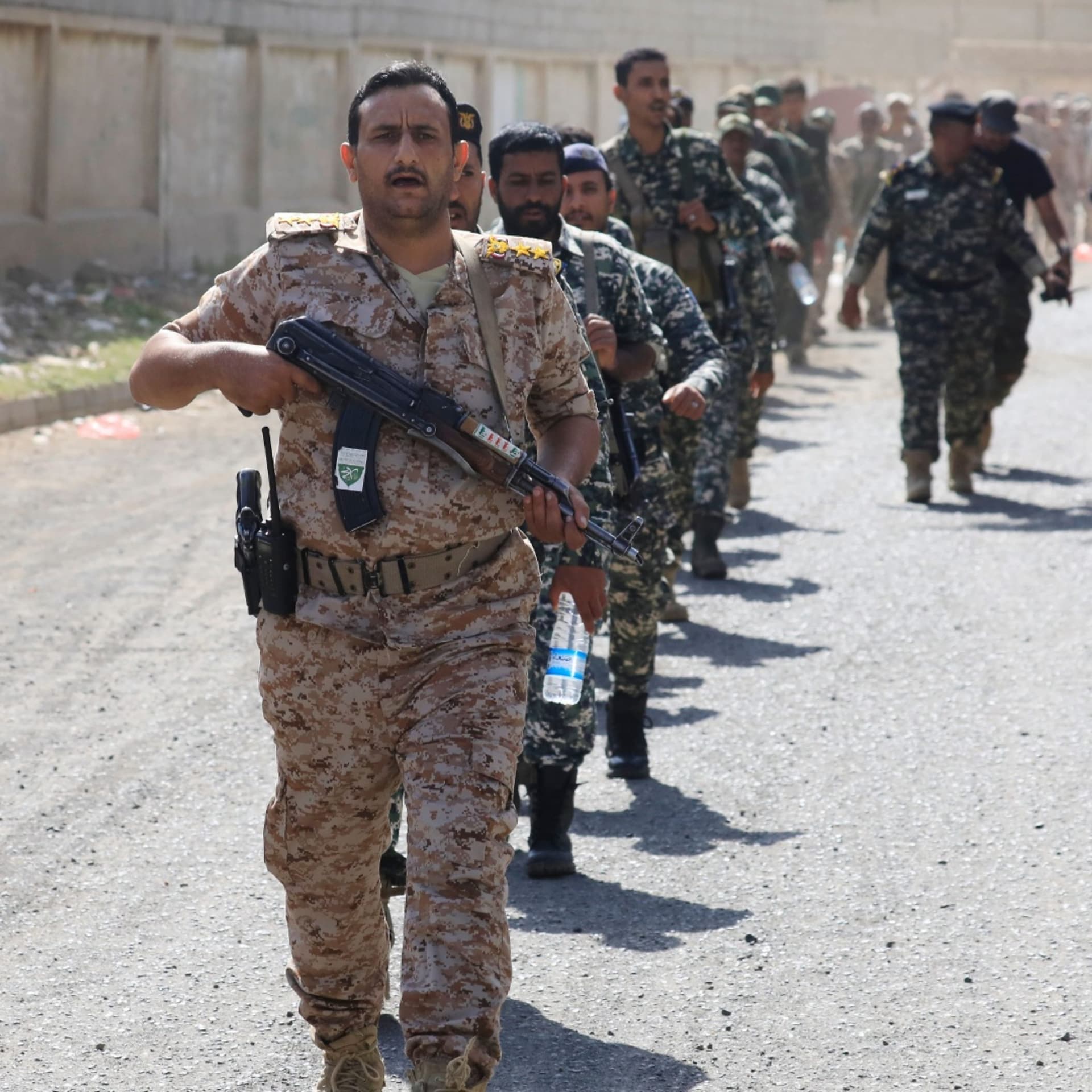
Photo: Houthi fighters march during a campaign to mobilize more fighters amid an escalation of fighting in Yemen Credit: EPA/Shutterstock