Ask ChatGPT
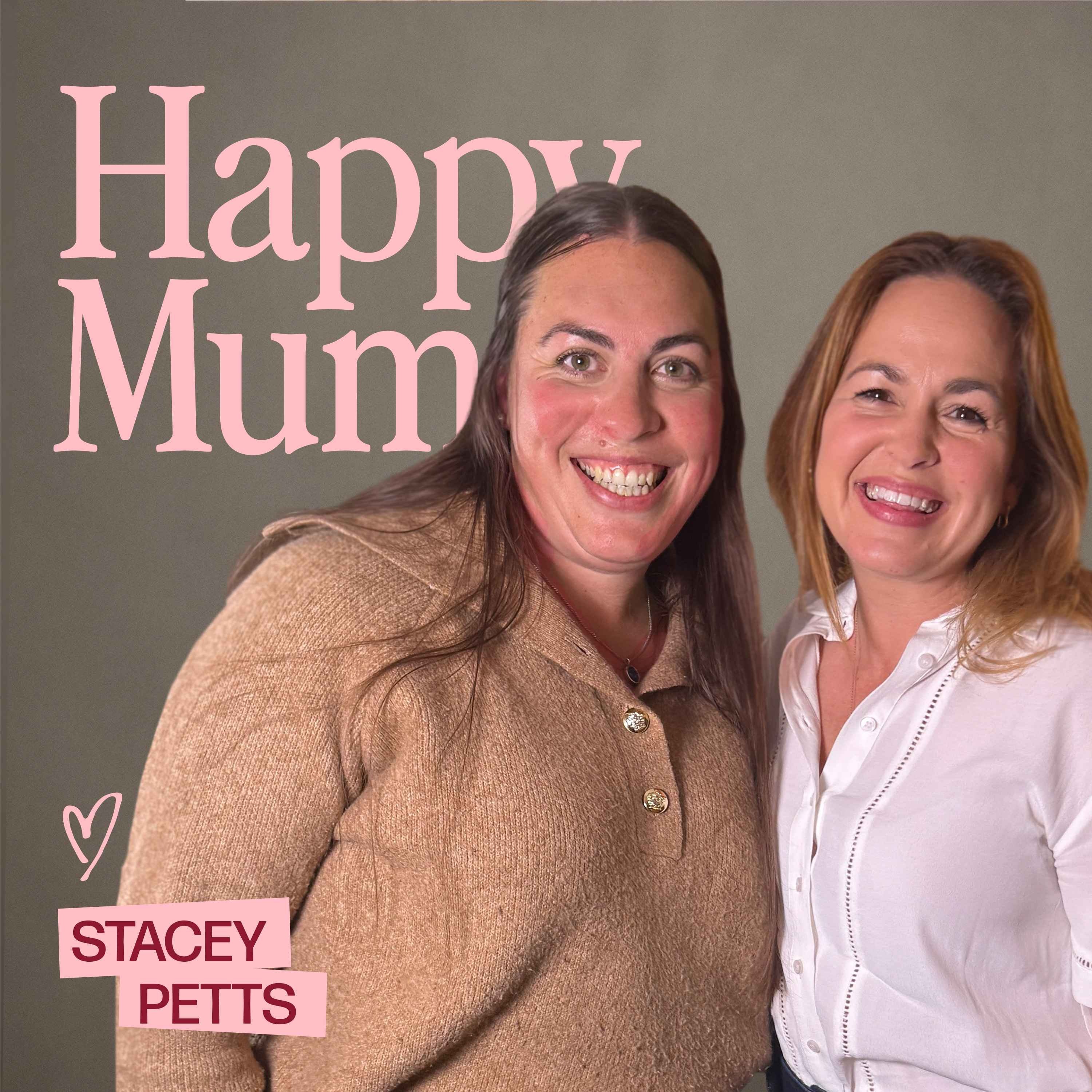

Host: Giovanna Fletcher
Ali Harris
A deeply moving conversation about motherhood, loss, and finding hope through grief. Ali Harris shares her experience losing her third child, Poppy, and discusses her journey towards healing through writing her latest novel, This Wasn't Meant to Happen.
Written by AI. May contain mistakes.

Get the gist, explore an idea or ask about something said.
 Claude
On Happy Mum, what are the key points of this episode?
Searching your listeningAutomatic transcript. May contain errors.
0:01Coming up on Happy Mum, Happy Baby This bit's really hard to talk about and it's not something I've shared a lot because it feels deeply personal and it is something that isn't talked about a lot, you know, even within how much the conversation around baby loss has grown over the last 11 years. We were put in a situation that I had never heard of. Delivering Poppy, having her naturally was something that she and I shared and that has become something that I am incredibly grateful for but I would never have been able to have been told that at the time by anybody. How is there not a place for that when we are inundated with stories of complete horror, when there are thrillers, when there is domestic abuse, when there is...
0:41Blows my mind. When we have horror upon horror thrust upon us on television and film and yet something that is tragic but beautiful, something that gives baby lost parents this gift of infinite love that we treasure forever and that we want to honour and you're telling us that there isn't a place on the shelves for it.
1:06Hello and welcome to a brand new episode of Happy Mum, Happy Baby, the podcast. Today's guest is an amazing author who has always really been supportive and encouraging of me ever since I became an author myself. She has just been phenomenal. Her work is incredible. The first last kiss is something that I just cherish. So special. Following the stillbirth of her third child, Poppy, she took a step away from writing. And now she makes me emotional to think that she's back because she's back with a story that only she could tell in the way that she has. The book is called This Wasn't Meant to Happen.
1:46Mother of four children, Ali Harris. Hello, hello. Honestly, when you emailed me to say that you were writing again, because we'd spoken previously about how it was something you just couldn't do, the fact that you were back and that you were writing a book that starts with baby loss. Yeah. You know, we've spoken about it. It's that thing of it's not a part of someone's story that happens towards the end. It's a bit of a twist. This is where we are. Sponson Centre. Yeah, it had to be. it was really important to me from a while ago that if I was to write about this subject and for many years I couldn't write about it I had no words for it, I could barely speak about it, that if I was to put it to the page I needed to do it in a way that gave all the space it needed for all the emotion for all the versions of the story and the journey from the character in the book Sophie's perspective but also being able to make space for Rory, her husband, for her mother, for her friends, for her environment around her.
2:51You know, so you sort of understand the impact that something like this happens on your entire life. You know, that it affects, it touches every single part of your life in every single way. And yet so often we're sort of told that we should just be quiet and sort of not talk about these babies that aren't with us. And so for me, in order to honour that story, to honour every single person who has gone through this story, and there are many, we know the statistics, right? We know, you know, one in four, you know, pregnancies and miscarriage. There are seven stillbirths a day. I know the statistics, but I'm not a statistics person.
3:26I'm like the opposite of Sophie, who is an actuary. And, you know, she lives her life by numbers and avoiding risk, whereas I am emotional and creative and maths does not compute. And statistics don't really compute. I need to sort of connect on an emotional. You follow your heart. Absolutely. And so for me, you know, knowing that there's people out there doing incredible work and that the baby loss conversation is, you know, 11 years on because it was 11 years ago nearly that Poppy died. It's very different from, you know, where I was 11 years ago when there was really nothing. You know, I could find nothing that has moved on, thankfully, in so many ways.
4:07and there's incredible people, you know, out there doing the work, sharing, you know, those statistics, other people sharing their own personal stories. But for me, what I felt was missing was this place, which I have always turned to, fiction, books, they have always been my comfort and my joy, but also the place I go to make sense of the world, sometimes through my own experiences, but also, you know, not necessarily my experience, to understand other people's version of the world that I will not ever and cannot ever experience. And so for me, the fact that I couldn't find a version of my story that was the central narrative in fiction just felt like we were missing something, the community, the baby loss community, and actually just us as humans.
5:00They say that half of adults in the UK will either have experienced baby loss or know someone who has. So yeah, it just felt to me that this was a universal story of love and loss and that it's something that we all need to understand and to read in order to either have the support ourselves or to have the opportunity to support someone who might be going through it around us. We're going to come back to the book in a bit. I want to go back to your younger self and that feeling of wanting to become a mum, when did that sort of start creeping in to your world? Really early. Really? Yeah. I'm one of those people that was really uncool at school and probably at work and everywhere because I sort of made it clear that, you know, being a mum was sort of my big dream.
5:52You know, I had other dreams too, but that was, you know, something that even as a little girl, you know, it was something that I wanted. I, you know, I am one of two, so I have an older sister, but she was like grown up from the age of three. She was not a playful sister. She was quite serious and lovely. And, you know, we adored each other, but she got on with her life and she would make games for me. But I would then not play them. Yeah, she'd be like, and I'm done. And I'd be like, but you've just spent three hours making me a den and now you're going and leaving me and I want to play. And I think I just wanted, I just had this urge for this sort of busy, bustling, chaotic house full of love and full of kids.
6:32How old are the oldest two now? Oh, my goodness. So my eldest has just gone off for his first day at sixth form, college stay. So he's 16, he'll be 17 in January, Barnaby. And then my middle girl, she is 14. Right. And my little one is seven. and those first two did family life look how you had envisaged it to look it did pregnancy and everything like that was everything I wanted it to be and I utterly fell in love with Barnaby you know it was what I imagined but I think writing books happened at the same time as well so it was sort of more complicated than my childlike view of it but I was so determined that I was going to be this full-time mum but also not let go of this dream of writing a book that I'd had for quite a long time and that only really happened around the time of my sort of pregnancy and having him and you know it sort of all came to fruition at the same time as these things do you know and it was really busy I think I worked off adrenaline for about the first two years without realizing that's what I was doing I was on a high yeah I really was on a high but I think that was masking quite a lot looking back I can see that that was fear and anxiety and panic over what?
7:47Over getting a lot of stuff wrong over not taking the opportunity yeah I think of trying to do everything and do it without dropping any balls without missing out on time with my baby without, I wanted this vision that was incredibly hard to, which I think we were sold you know I'm of the generation that was sold the kind of you can have it all but I also knew myself well enough to know that I didn't want it all by going back to an office I knew that I wanted it all by having a career that I could control that could work around my children I used to work in magazines and I always knew that I didn't want to be an editor I didn't want to work my way up I wanted to be a writer you know I knew that was my box and that was where I was really happy to stay and that once I had children I would be that mother freelancing at home and it would all be wonderful oh my god so naive I mean we're both friends with page two right and I can remember Paige saying to me that when she was writing one book she was literally writing away at a desk and literally, she has since clarified this and it wasn't quite how I had it in my head she was just bouncing the baby with her foot in the bouncer whilst typing away and I was like, that's what motherhood's going to look like Well, the thing is, I think Paige managed it Really, it's why she's written 107 books and I've written three I don't know, I did not manage it I was just like, oh my god, oh my god, oh my god You know, like just complete panic at all times.
9:09But the panic didn't come across in terms of how I was mothering, although I was also a first-time mother. So, yeah, there was huge anxiety over, you know, Barnaby had a rocky start when he was first born. So we were back in hospital. He ended up in a neonatal unit. He'd sort of lost loads of weight and all the kind of nightmare stuff that happens a few days after. I'd had quite a traumatic birth, you know, all these things, that perfect vision. But I was still clinging on to the perfection even through that. Oh, yeah. Like his birth was insane. It was like, you know, 49 hours and ending in a C-section.
9:42And, you know, after two hours of pushing, I literally ticked every box on the bingo card, you know, like complete exhaustion. But I remember in the months afterwards just being like, yeah, I did it all. Just like, yeah, I did that. Do you feel like you had to just say to everyone? I don't. I think I was saying it to myself. Right. I think I was convincing myself so that it wouldn't put me off doing it again. Right. because it had been deeply traumatic. But I think it was just my coping mechanism to protect myself, the future version of myself. And I think, yeah, I definitely did that after Cece was born as well.
10:15We decided then to sell our house and to move out to the countryside. And I struggle with the timelines, but I think Miracle, my first novel, had been sold. And I was then having to write The First Last Kiss, which was a hugely emotional book and quite complex in the way that I was writing it. And I had baby brain and I was also still trying to freelance and I had a toddler and we were selling the house and we were moving. And then my husband was working in London. And I again, that sort of next year. So there's two years between my two eldest and we moved to our new house. My husband was commuting, so he was pretty much gone from six in the morning till eight at night.
10:56I just was sleeping less and less and less because I think that sort of high octane version that had sort of carried me through that first sort of two and a half years was having this impact on my anxiety and my sleep and everything so I was just wired all the time I'd go to bed at half ten and just run off this list of things to my husband and he'd just be like, whoa! Can we deal with this in the morning? Literally, can we deal with this in the morning? and I'd be like, you know, it'd be September and I'd be like, but Cece hasn't got a winter coat. I was just projecting constantly all the things that I had to do and I just felt like I was failing on a daily basis.
11:32And he, bless him, would say, he would list all the things that I'd done that day that had been amazing. He would say, you took them to music class, you did this, you're doing this, you know, you've made them fresh food, you've done this, you've done that, and I'd just be weeping. Because I couldn't see it. But so much of being a mum is about pulling yourself up for all the things that you didn't do. The one thing on holiday that you didn't pack, but you were meant to pack because you're in charge of packing. Absolutely. You know, all those things, it's just, it weighs so heavily. Heavily, it really does.
11:59Yeah, to the point where you're sort of blinded by what you haven't done rather than what a great job you are doing. And, you know, you stop being kind to yourself and then when your brain isn't being kind to yourself, you're not going to go to sleep. You're just going to lie there worrying and being anxious and beating yourself up for the things that you haven't done. So that was kind of that part where the kind of crash came. And then I was promoting Miracle and trying to write the second. And I just found it all very complex. And I didn't have the energy anymore to pretend that this version that I had sort of created and this story that I believed for myself too was going to be able to carry on like that for much longer.
12:37So at what point did you sort of stop and go, oh, maybe this isn't quite working? Well, I didn't.
12:45Because I know that we've had a great chat about boundaries. isn't you know yeah well this is why I was trying to help you because I was like I really didn't manage it so then I had my next book contract and I decided I wanted another baby yeah because that had always I didn't want the books to take away this dream that had always been there before the books that I wanted this big family and so yeah I just um felt like I could just crack on through and just keep going it'll be fine and I was writing my third book which turned out to be a really difficult third book I think because I was basically struggling with anxiety and depression but I had not kind of admitted that to myself in any way you know that had not been something that I had acknowledged you know I was crying a lot and I had my head on the desk you know stuck in the middle of the book that I couldn't finish and obviously wasn't sleeping anymore literally I'd go nights where I just didn't sleep at all but still throwing massive birthday parties and Halloween parties for the village and doing all this stuff on the outside and seeing friends and showing up in every way that I could for everybody yeah but the thing that was going was the sleep and my mental health but I had I didn't really have a version where I really understood that because it had never happened before and I think it probably was a sort of prolonged postnatal depression that wasn't the sort of postnatal depression that you would put in the box of, oh, she's postnatally depressed because I was so happy.
14:09Well, there's a little bit about now as well with matrescence where you are literally, it takes 10 years for your body to kind of work out what is going on. So actually, you're in that for a long time. It's basically like a butterfly coming out of a cocoon and every part of you has changed and altered and it's about kind of learning who this new version of you is. Of yourself, yeah. and trying to recognise and kind of find a scaffolding again with which you recognise yourself and understand what your values are I think, you know, I knew desperately that my kids had to come first and I was really clear about that all the time that as much as I love, you know writing books, they are very demanding and I was not someone that could just deliver one a year and that was the expectation really, you know, that you write a book you deliver it, you start writing another one and that is ready Before it's even come out.
15:01Yeah, before the next one has come out and you're on this kind of treadmill. The issue with that third book is that I hadn't quite understood what the book was about. And it was about someone who had a history of depression and anxiety. And I had been sort of writing that without realising it into the book, but not acknowledging that's what I was doing. So I was so confused by this book. And it was also a kind of sliding doors type novel. So it was also really confusing because that's quite hard to write, you know, two separate timelines and, you know, stories when your brain is all over the place.
15:29them and then I felt pregnant so yeah for the third time and was overjoyed yeah utterly overjoyed because whatever I had been feeling and whatever I had been dealing with and I had dealt with those you know I had dealt with sleep I had gone to the doctor I'd had some CBT so I had I had recognized and acknowledged enough about the journey that I've been on so far to understand that I needed some help yeah but that wasn't going to stop me having another baby because that was the dream and so I had sort of brought myself back I think by understanding by sort of looking at what my priorities my values were what would I regret you know what would I regret would I regret not ever writing another book or would I regret not having another baby and it was always the not having another baby I somehow finished written in stars and fell pregnant with Poppy and you know it was magical it was again I just felt like so lucky to be pregnant again.
16:25Did it feel like a relief as well for it to happen at that time? Yeah. And that's kind of a weight lifted. Absolutely and I was writing my fourth book but I had actively chosen that this was a book that was only going to bring me joy. So I love musicals. I can't remember if I've told you that before but I'm a complete musical theatre geek. Always have been to performing arts at university and you know dreamed of being a starlight express one day so i'm quite jealous of you stole my role as the child um no uh i i decided to write a book about broadway um and sort of set parts set in the 1950s parts set in modern day and and research went to new york to research it went backstage it was lucky enough to go and meet you know it was an utter dream and it was like the book that was going to be the thing that brought me back to absolutely loving and owning my my authorship you know not these you know I wanted to leave behind the tricky very emotional books yeah I didn't do a very good job there did I and uh and and come back with something that was just fill a cup in a different way absolutely and so because there is also something I think every book that we write that is it's also there to teach us something yes and I think you know sometimes I think with your third book and the book that I was that I've been writing I think sometimes you're just not ready to hear that lesson no absolutely it takes time for it to percolate and to and you're also not writing for you you are you know you are trying to write a story that is going to resonate with other people ultimately I don't feel that I'm necessarily trying you know I never feel like I'm trying to put my life on the page you know it it happens because you sort of bleed through your fingertips sometimes you know you can't help it and you know you're working with the sort of inner processes of your mind and even if you've got a story that feels entirely different there are things that and storylines and themes that weave in without you sort of expecting it because that's how books work they are kind of uncontrollable sometimes absolutely and what you think you're writing actually ends up being not what you know what you were writing at all so um yeah so that was a very conscious decision that I was going to have this baby this book was going to bring me joy at the same time and it was all going to be perfect and wonderful and you know that was the happy ending it was supposed to be.
18:43How was your pregnancy with Poppy you know was it different? No it was I always had very easy lovely pregnancies I was incredibly lucky I always craved cheese and crisps and that was the same with and was delighted to be able to eat them at any you know opportunity I didn't have sickness or anything like that tiny bit of nausea at the beginning and that that was it um yeah there was no reason to feel like this pregnancy was any different at all you know we had our 12-week scan and that was wonderful and you know normal and you know no concerns and I just sort of carried on and I was promoting Written in the Stars um then and doing book festivals and events and life was sort of perfect it was the most perfect it had ever been I felt like I'd sort of recalibrated from those early days of motherhood I'd worked out how to be a present mother but also how I needed to write books how to sort of set boundaries around that which I had sort of done with you know my publishers and everything like that and I've yeah it felt like this place of you know peace and calm after you know what what are complex years for any new parent at what point were you aware that something wasn't quite right not until our 20-week scan um and yeah at yeah we went for our 20-week scan expecting everything to be completely normal and we had for the first time decided we were going to find out the gender of the baby which we'd never done with Barnaby and Cece um I think because what made you this time because I wanted it to be different but and for them I sort of wanted them to be able to connect with whether they were having a brother or sister because they were older whereas when so many people asking them do you want a brother or sister yeah yeah I Yeah, you can know.
20:28Yeah, I sort of wanted to differentiate because I think there would have been three, maybe four years between Cece and Poppy. So there had been two years between Barnaby and Cece. So Barnaby didn't really know what was going on when Cece was born. She was just this little blob that appeared and he got, weirdly, a Woody from Toy Story as the gift. Here's the baby and here's your Woody. And he was delighted. Yeah, he was very happy with Woody and couldn't be less bothered with the baby. But this time it felt like they were both old enough to understand and be excited and everything. So, yeah, we had decided that we were going to find the gender.
21:02So that had been the entire focus. Again, complete naive because, completely naive because, you know, we had been so lucky with our previous two pregnancies to have very smooth journeys, nothing to worry about at any moment. So we went for our 20-week scan. It took the stenographer a long time, but I like to think that she was an incredible actress because or my naivety and my lack of knowledge of science or my ability to just kind of live in a dream world meant that I did not pick up that there was a problem or that it was taking a long time at all. She just at one point said, oh, you know, I find this baby's being a bit naughty and I'm finding it hard to get all the measurements.
21:43So why don't you two go for a little walk and have a bar of chocolate and come back in 10 minutes and, you know, we'll have another go because maybe the baby just needs to move around a bit. So again, I was just delighted to be told to go and eat some chocolate. Because you hear about people being told all the time. Yeah, so off we went and I didn't think anything of it. But then we came back into the room and there was someone else there. Right. And I remember thinking, okay, this is not what I expected. And they spent some time doing some measurements and then told us that Poppy had a hole in her heart.
22:21and that we would need to have another scan, so we were going to be referred to Great Ormond Street Hospital and that we would get notification of that sooner rather than later. And again, naively, because coincidentally, when Cece was born, she had a hole in her heart, and that was discovered at her 24-hour check-up. Yeah. And we'd been referred to Great Ormond Street, and it had all been fine. We'd gone back at six weeks, at her six weeks check, we'd gone back and told, don't worry, it's all fine. It's very normal with babies. So we left that scan knowing that this was not great. We also had found out that she was a girl because they said, do you want to find out?
23:07And I said, absolutely, because I just knew that I wanted to know who this little baby was. And we sort of left in a bit of shock. But I remember saying to my husband, OK, I think it's going to be fine because this happened to CC. And I'm aware that because it's been found in a scan that perhaps it's more serious. But what I need to do and what I want to do is do a bit of research and Google a bit to find out a bit more about it. And he said, don't do that, Ali. Let's not do that. Let's just wait. But I was really determined, which is quite strange for me because generally I like to not know. facts about bad stuff.
23:45I'm kind of the person that just wants to, again, live in the dream world. But I sort of felt like I needed to have a bit of control over it. And so I did Google, but very lightly. I didn't deep dive. And everything that I was given was very positive, that ridiculous statistics, but something like 92 % or something of babies that have a hole in their heart are, it's absolutely fine at birth, or they can be operated in that first year of birth, and they're absolutely fine and healthy. And it's, you know, blah, blah, blah. And yes, it could be markers for some other things but I did not look into what those other things were because that was enough to give me hope that was enough I need that was actually what I needed was something that told me that it was going to be okay I wasn't looking for something you were looking for reassurance absolutely absolutely did you go home and tell we did still because I absolutely believed that you know it was going to be okay so we sorted the little envelope and told them they were having a baby sister and then what were their reactions oh they were overjoyed Yeah, yeah, they were overjoyed.
24:42There was, yeah, they were just, yeah. Neither of them were like, oh, my brother. No, no, weirdly. Even Barnaby. Yeah, he, no, they were just overjoyed. I think being, because of the excitement of being, of finding out, you know, getting to find out, I think that sort of overtook from which one it was. All I remember about that, I think it had happened on a Friday, our scan, and we got the call on that day to say, come in on Monday. And I remember thinking, oh, that's really quick. that's kind of unusual and I remember not sleeping that weekend and what I did was build a Pinterest board for her nursery I remember vividly just creating a world for her that she was going to exist in that was what I did it was sort of my way of just putting out into the world that this was going to be okay and she was going to come, you know, that it was going to be okay so that's kind of my vivid memory of that and then yeah we um went to the next scan at Great Ormond Street Hospital and did you and Ben talk about it I can't remember to be honest it's such a long time ago I just have that vivid memory of me sat at the computer just slowly building this nursery and him I think he he was he is much more pragmatic than I am yeah thankfully because god forbid if there were two of us like me far more sensible and sort of driven by facts right and so he was worried I know he was I know we were both worried you know I wasn't not worried I was just determined that it was going to be a happy ending and that I could control that somehow yeah because I liked controlling things you know that's that's what I did I controlled stories and I controlled my story and that's what I was going to do so and then we went yeah we went for this scan on on Great Ormond Street and yeah it was in that scan that they said that yes there was this hole in the heart but there were some other issues that they were concerned about other other things I don't remember them specifically saying what they were in the scan.
26:56I think that happened afterwards. We got taken to a room, but she had lots of other markers for something that we were told was a condition that I had never heard of called Edward syndrome. And as well as the hole in the heart, there were issues with her valves, her fists were clenched. She had, you know, various different problems with her heart and her organs that are markers for this condition. But we weren't told that until we were sent to a room where we sat for like an hour waiting, knowing that there was something deeply wrong with our baby at this point, that we weren't kind of, you know, the naivety had gone, but we didn't know what or what the kind of prognosis was.
27:47And yeah, and it's really hard to talk about and it's I'm it's not something I've shared a lot because it's you know it feels deeply personal and it is it is something that isn't talked about a lot you know even within you know um how much the conversation around baby loss um has grown over the last 11 years I think part the reason why it was so complex and confusing for me because of this we were put in the situation that I had never heard of, you know, it had never crossed my mind that my baby would not be born and be okay. It had never crossed my mind that, you know, even I might have a miscarriage or anything like that, you know, or that something could happen after a 12-week scan or after a 20-week scan.
28:33Well, because you're constantly told that after a 12-week scan... Everything's fine. Yeah. So none of that was, you know, in my, you know, arsenal. I just didn't have a concept of that. and then to be moved to this room and told by someone that our baby had this very, very serious genetic condition, which means that they have an extra set of genes. It's called trisomy 13 and that it is not compatible with life and that our baby was very sick and that we had a choice to make, that we either continue the pregnancy knowing that our baby would die at birth because the hole in her heart was so big that they wouldn't be able to operate it.
29:18You know, the condition that she had, babies don't survive Edward's syndrome, it's not a condition that is. And, yeah, we could either continue the pregnancy knowing that that would happen or we had to make a decision to stop that pregnancy then, which was, you know, as you can imagine, completely devastating and, yeah, We just couldn't fathom it. We were sat in this room being told something that we couldn't even get our heads around. And that's really tough. Termination for medical reasons is something that's not discussed. It was that term was not used with me. I didn't hear that term for about another four or five years.
30:04That sort of language 11 years ago was not out there at all. or I hadn't come across it or even after everything happened, it was not something that I found. I had no language for that. Did they leave you in the room to talk about it? Did they tell you to go away and think about it? They gave us, yeah, we were able to go away and think about it but what we were given was an option to have an amniocentesis, to have the absolute clarification that it was Edward's syndrome. So that's what they believed, you know, from all the scans and all the measurements and everything that they'd seen with Poppy and with her little body.
30:47And what, yeah, an amniocentesis would just be that kind of full stop that would say that this is definitely what it is and that we would have our local hospital. So we did decide to choose to have that amniocentesis, I think, because, yeah, I just, I think I needed it. Yeah, I just needed that clarification because I still, I think, had hope. I would have had hope otherwise I wouldn't. Yeah. And yeah. And then it was confirmed in that amniocentesis. That's what she had. I mean, walking out of Great Ormond Street that day compared to how you walked in. Yeah. I yeah it was it's an absolute blur I remember being in the room and how long we were in there for and the newsreel just going round and round and this realisation that that reel was sort of indicative that the world was still turning but my world wasn't it had very much come to a full stop in that moment, in that conversation, being given this decision that we had to make where there was no choice.
32:01Yeah, the journey home was pretty dark and bleak. And then you go back to two children. Did you talk or did you... Were there any words? No, I don't think there were at that point. On the way back from the hospital after the original one we had, but it was still, like, bleak. There was still, like, a bleakness after the hour of first scan because we weren't coming out going, yeah, it's a girl. You know, there was this underlying sort of heaviness. But this time it was just pure shock from both of us and devastation. And just having to get back to our children who are being looked after by the grandparents.
32:35Trying to process what we'd heard. Still being pregnant with my baby. Not understanding any of what was ahead. Because you're in just deep, deep shock and instant. Yeah. it's sort of like a numbness like a yeah it must have felt quite overwhelming to walk back into your home yeah it was and to um yeah it was a it was sort of like at that point it was just like a waiting game we had to obviously carry on for the children but carry this like dark knowledge of what could potentially be to come um it was also October it was Halloween Halloween had always been something that was really big in our house we're sort of known for throwing these huge Halloween parties with all the children I would make games and all my creativity would come out and we're still sort of known for it in the village with decorations and everything but that year it was just like none of this is happening and suddenly it was just this a celebration of death and I couldn't you know I think I I was just a husk I was just a husk instantly apart from when I was around Barnaby and Sisi because I couldn't be because you can't when you're um and obviously we had the next stages to get through the amniocentesis and the results of the amniocentesis and the conversation um a couple of days I think we actually they called us on Halloween and the kids were out trick-or-treating and um and that was yeah it was uh I can still I can still see myself sat on the sofa with Ben taking the phone call and me just weeping because that's when they start to tell you what what what is going to happen next and they ask you your choice and we had decided that the pregnancy was going to end for the sake of me, for the sake of Poppy, for the sake of our children.
34:42Like I couldn't carry on with it knowing that that was where it was going to end in another three months' time. But I also couldn't fathom how I was going to get through this next bit that was so beyond the realms of my understanding. Is part of that also trying to gain some control within a really difficult situation? There wasn't any control at that point. There just wasn't because you're literally giving a choice, neither of which you want to make. And then it's sort of horror upon horror. That's the only way I can describe it. It's like one thing after the next, like, you know, your baby's got a hole in the heart.
35:20Your baby has this terrible condition that means it's not going to live. You are going to have to make a decision that will impact your entire family and you for the rest of your life. You are going to then have to deliver your baby. Did you realise that? No, not until they said it. And that was a huge shock. I remember the consultant saying on the phone to my husband, your wife will have to deliver the baby. And I'd only had, I'd had C-sections with both Barnaby and Cece. Emergency both times pretty much like Barnaby was obviously the long one. Cece had, I ended up getting cholestosis and she was a week late and they said, right, you need to come in and have a C-section because you're probably going to end up having the same labour as you have with Barnaby, even though throughout the whole pregnancy they told me that that wasn't the case, as they do, and you're like, oh great, you could have told me this six months ago.
36:15And so I knew that my body didn't give birth easily and that it hadn't actually managed it before. And I remember just crying and saying, I can't, I can't do that, how can I do that, I can't. And then saying to the consultant, she can't do that, that's not going to be possible. and they basically kind of said she sort of has to because it's the only way, it's the safest way for the mother and C-sections are something that are done to protect the baby, basically the life of the baby. So it was not an option to not. So that was kind of the next stage that we had to go through and obviously it was petrifying.
37:02but ended up being the experience that I will always treasure the most delivering Poppy. Having her naturally was something that she and I shared and that has become something that I am incredibly grateful for but I would never have been able to have been told that at the time by anybody because it just felt completely unfathomable that I could even begin to go through something like that and survive it.
37:41What was the timeline of that phone call? At what point did things start? So it took quite a long time, to be honest, for personal reasons as well. You know, between the 20-week scan, between finding out that she had Edward syndrome, between having amniocentesis, I actually ended up delivering her at 23 weeks and five days. So it was quite a prolonged process from that stage to the end. And, yeah, within that time, it was just trying to just survive each day and sort of survive it for the kids that were at home with us and then have this experience and work out how to survive the next bit. yeah which and how do you prepare to go into hospital and give birth well they so you don't go into they induce you so you take a tablet and then knowing that but even that I mean going preparing to take that step into going into hospital yeah yeah because also you don't know when it's going to happen and I was so petrified of would it be an incredibly long labour like well you know you sort of prepare in the same way you have a hospital bag you have everything that you just know that your baby isn't coming home yeah um again it's quite hard that the specifics are blurry of that time it was 11 years ago and I think a lot of it you block out naturally there is the the the kind of those days leading up were just about trying to survive it and get and and not um allow the two children I had at home to see what we were going through and to pick up on what we were going through it was all about protecting them and I do I do remember that children are so instinctive you know as well that they were also a source of great comfort I remember Cece saying to me the day that we came back actually from the from the 20-week scan she told me that I had two hearts in my body and I was like I don't what do you mean I have two hearts in my body and she said all yours and the baby's and I remember just being like oh my god because we just you know had been told this news about her heart and it was almost like she had somehow subliminally picked up on that particular thing and sort of fed it back to me in a really beautiful way but but in a really difficult way at the same time and it just felt like there were these little threads of connection where your children sort of somehow articulate very simply how they're going to carry you through does that make sense by making everything very simple and um yeah so did you say anything to the children not not until we had her just how do you you can't um they were too young and um it was only when we came home from the hospital after I delivered her that we told her and that was instantly as soon as we had had poppy that was my concern it wasn't it was firstly how am I meant to leave this hospital without my baby?
40:48I can't do that. But secondly, how am I going to deliver this news to my children and how are they going to be and how am I going to be able to support them? And it was sort of very much, yeah, the transference was always away from myself and my pain. And in delivering Poppy as well, it was very much about I was taking the pain so she didn't have to. That was how I sort of transformed it in my head and found the strength to do it, I think, and to find the strength to do it in a way that allowed me to find pride in the experience and beauty in the experience as well, because I did. Did you? Yeah, absolutely.
41:33Like I say, it's something that I will treasure forever. You know, having her, holding her, being in the room with her, spending, I think we spent six hours with her. Did you feel that in that moment? Very, very deeply. I didn't want to leave that room. I wanted to stay in that room. You know, if I could have lived in that room with my other children, I would have done. And did it surprise you? Before stepping into that room, were you scared of what was to come? Yeah, because they ask you so many questions. Are you going to name your baby? Do you want to hold them? Do you know all these things that you're just like, I don't know.
42:03How are you meant to know until you're in that? I don't know. I don't know. I can't. All I can do is get through each next thing. I cannot think beyond the thing that I'm having to deal with right now. There is no version of which I can work out how I'm going to manage next. I had thought about her name only because Poppy was Cece's favourite name at the time. but also I delivered her on November the 12th and obviously Poppy's everywhere and it's a flower that means remembrance and it just felt it was not the name that we would have chosen for her. You know, it wasn't on my list. It was a special name that was hers and that was given to her for special reasons by me and by Poppy, you know, and by Cece, you know, and yeah, and that's also been a source of great comfort, just that symbol and everything over the years has been um yeah a huge a huge comfort yeah yeah and the fact that it means yeah remembrance and hope and every november yeah i get to see these like beautiful poppies and to sort of remember her and to have her with me at that time i honor that day as much as i honor the day that would have been her birthday because i knew that i would have had to have had a c-section so she has two days yeah my other children only have one she And on those days, it is her day and it is my day to find the ways to be close to her.
43:25I can. Yeah. But yeah, I didn't want to leave the room. And driving away from hospital, that was devastating. What was it like holding her?
43:40Heartbreaking. Petrifying.
43:49But I think I just felt like she was tiny. I remember feeling like I could see my other children's features in her. But she also wasn't a baby that was well. So it was incredibly difficult. I'm not going to pretend it was not difficult. I didn't hold her for long. It wasn't hours of holding her. It was our moment. We had that moment as three of us. but then it was petrifying before and then there was a piece that came with it in it. Everything that I was scared about was far worse in my imagination than it was in reality, if that makes sense, because I, in terms of delivering her and in terms of those questions that were asked afterwards, do you want to give her a name, do you want to hold her?
44:38You know, I'd taken a little, I'd chosen a tiny, tiny little outfit that was obviously still going to be too big for her. I had brought about that's that is actually how I prepared I remember actually weirdly I'd gone into John Lewis in those days when I knew that I was going to have to deliver her um I forced myself to go into John Lewis I don't know why just to prove that I could that I could do it for her because I wanted to choose her blanket I wanted to do the things that I would have done yeah and that I did do for my other babies and so um yeah I sort of collected these little things I wanted her to have a blanket and a little sort of jelly cat bunny like the other children had had um and And that was something that I could take and that she could have and that she could keep and that she could be wrapped in.
45:20The outfit was massive, so they couldn't do that, but she was in the blanket. And yeah, I just did what I could to mother her the best that I could in the moments that I could, knowing that they were going to be very short and brief. and that realising that that opportunity that mothers decades ago didn't have was a real blessing and I cannot imagine not having had those moments now to hold on to so I'm incredibly grateful for them and for the care that we got and the kindness of the midwives and everything you know the ways in which we were supported in those moments you know the the time that was taken to explain everything to us and you know we were given all the kind of literature and but all that stuff can't actually help you in that moment but those people are there to help you and they and and just sort of gently guiding you through those choices and giving you the opportunity to make those decisions was very carefully done and I really appreciate that.
46:20Also makes you realise how as much as people don't want to talk about the loss of a baby that it happens yeah you know these things exist because it happens so as much as people don't like talking about it doesn't mean that it's going to go away yeah absolutely yeah and yeah you you have to realize that you're stronger than you realize yeah I think that's that was the thing that I realized in those moments was that everything that I couldn't imagine getting through I got through and I survived but I did it for her I didn't do it for me I did it for her and that sort of going forward all I could do was make sure that I somehow could survive each day and then work out a way of of honouring her as her mother for the rest of my life in the best way that I could.
47:08And that was all I could do to sort of make peace with it all. It must have been, well, there are no words, you know, stepping away from that room or away from the hospital. No. No, there was. I didn't have it. And I think, again, it's so hard to talk about because it's probably the last big taboo of baby loss. It's the story that I really couldn't find. It's not the story I've written. And the reason that I have not written my particular story into this book was because it had to be fiction. It had to be separate from me. I didn't want people to read a book that felt like my version of this story.
47:50It is a book that is about a woman that experiences the stillbirth of her baby who loses the baby that she loves. And that is a universal story for anyone that's been through baby loss. It doesn't matter how it's happened or what version of baby loss you've had. Anyone that's been through it has those same experiences and the same emotions and the same feelings and, you know, the similar journey. And so I sort of don't want to conflict my experience and kind of confuse it with the book. Does that make sense? Because it's not about me. That was the point. That was the point of why it took so long for me to begin to write again, because for those years after Poppy died, I had no words.
48:30I didn't have the words to talk to my family or my friends, really. You know, like I just didn't because I had no example of how to. I was given nothing. You know, all there was at that point was with forums, I would say, which I did visit. but they felt like terrifying places because they were faceless. They were like, you know, it wasn't like going onto Instagram and hearing other people's version of a story that you could connect with this particular person. It was very much like someone with a number for a name. And because of the nature of my experience, it didn't feel like a safe place. It felt that there could be people in there with certain agendas.
49:05It felt like my experience of Poppy and my love for her and my journey to being her mother could very easily be turned into something ugly by people and I couldn't let that happen. So I sort of had to protect it. But then with that protection and silence comes shame, which you know that you don't deserve or need or not guilt. I didn't feel guilt because I knew I didn't need, you know, that wasn't. But by not being able to talk about it openly, that, you know, I wasn't able to clarify my own head. What do I say? Was it a miscarriage? Was it stillbirth? And it took me such a long time to even know how to even articulate that because I was in this messy middle that no one talked about.
49:56I'd go back to Google and try and, you know, I'd remember celebrities who had perhaps had a pregnancy, a late pregnancy loss and wonder, like, was that, you know, But those stories, you know, I just didn't know how to find the version of what I was going through. Now that we have the term and now that people do talk about it more, how has it been for you? I think there was peace in knowing that it was talked about. I don't think I've been, I don't love the term. It feels like a bunch of letters. It feels very harsh still. To me, it wasn't a termination. I remember listening, obviously I've always been a happy mum, happy baby fan, and listening to Elle, who I met at one of your book launches as well, because I stalked her at her book launch and went up and basically said how amazing she was.
50:48Because she was one of the very first voices, Elle Wright, the way that she loved and talked about Teddy within the baby loss community on Instagram and how articulate and everything she was. Hers wasn't my story. It wasn't the version of baby loss that I'd had. But how she talked about it was hugely inspiring to me. And all those things helped me find, like, the baby loss community on Instagram and the Baby Loss Awareness Week, which I'd never heard of, and the Wave of Light and all these beautiful things in this community of people that do know exactly what you're going through. And then you find this sort of sub-area with the termination of medical reasons.
51:32But yeah, I remember Elle on your podcast saying that she preferred the term compassionate induction. And I just thought that's so beautiful. Like I wish people use something like that more because I just don't think that term does it justice. And I find it quite hard to see and harsh to see because it just doesn't peel back the layers of that experience in any way. you know I'd also obviously been very visibly pregnant around the village and I it was the thought of bumping into people the thought of having to share what I'd been through you know like or having those sorts of sympathetic or people getting you know any of that I couldn't do I didn't do the school run for months I had incredible friends my husband was incredibly supportive they rallied and protected me share that news with close friends I think Ben did it I don't think I could.
52:26I just, again, didn't have the words. With my family, I did, but it was hard. It's sort of... No one knows how to talk or react when you give someone news like that. You don't know how to talk about it. You don't have the words. None of that was easy. I think my friends knew because we are close and Ben was able to feed them that information to protect me because I just didn't have it in me to articulate it at all. So, yeah, I just felt that I had to grieve and survive and work out how to get myself through this journey in a way that would mean that in years to come I wasn't going to fall apart.
53:11So face it, not going to just bury it. Absolutely face it, yeah, not bury it. And that's what I did. I was lucky enough to be offered counselling with Petals, who are an incredible baby loss counselling charity that are actually based in Cambridgeshire and at the time they had a contract at Addenbrookes Hospital where I had Poppy and I had six free counselling sessions which I started three months after I had her. And that was sort of the beginning of my journey of learning how to talk about her because it was an incredibly safe space where for an hour a week I was able to try and articulate everything that was in my head because that's the other thing about grief is it's so messy and so confusing and so all-consuming and so exhausting.
53:52And there were so many different, and with the experience that I'd had, there was so much trauma. It was a lot to carry. It's a lot to carry around in your head when you're also trying to... And with the fact that within a household you would have four people that are experiencing grief and processing it in a different way. Yeah, yeah. So to go and have that time was absolutely life-saving. And I am so grateful for that. and feel very lucky because I'm now working with them a bit to try and support them and their incredible work. And I feel very lucky that this book is sort of taking me on a journey where I'm able to now give back in a way that I have always known that I could one day when I was ready, but it was just going to take time.
54:43How did you talk about Poppy at Home?
54:49not a lot with the kids we told them when we came back from hospital you know very simply in very simple terms that poppy had been very sick she had a hole in the heart and she had died we were advised that anything else any other version is just so confusing for children so we told them the very next morning they both had very different you know reactions and then you know children channel things in very different ways um my daughter just had constant questions you know she was very articulate and I why couldn't the doctor put a plaster over the hole why couldn't you know she was she wanted to know why that happened and she was able to articulate it in a way that sort of you know using her you know just just just kind of get those those words and those thoughts and those questions out whereas I think my son struggled he was older and it was incredibly emotional and then kind of quite introverted so we just had to gently try and keep things as normal as possible for them you know I think that was that was our way of coping was not to talk about it endily I just think that was too much for those little brains it wouldn't have been fair to ladle the complexity of the situation and my grief and everything else on them.
56:07And it's such a personalised thing, you know, because I know that, you know, like we were talking about Elle, who wrote a book called Ask Me His Name. It's very difficult to expect every single parent who has experienced baby loss to want to talk at a point that is right for the person they're talking to. Do you know what I mean? Just because you are interested at that point doesn't mean that I am able to share. You know, and in the same way within a household, how do you honour that baby, honour Poppy, but at a point where everyone is comfortable, happy and happiness is something that obviously when you're in your depths of grief, it's not something you're focusing on at all.
56:52But managing that for everyone, it's not something that's going to upset everyone, but knowing that she's such a massive part of who you are that you feel like you want to include her in conversations. Well, I think we did it by we planted a cherry blossom tree in the garden for her. That was one of the very first things we did. I wanted something in the garden that would grow with the children and that would be a place that I could visit, that we could talk about her, that was, you know, that would bloom in the spring when she should have been born rather, you know. And that has been a source of great comfort and sort of that's her.
57:28That's her little symbol. So for me, something out in nature, which is always where I felt very close to her, has been incredibly important. And that was that was our way of doing it rather than constant conversation or the children who are now much older. They know that, you know, the candle will be lit for Baby Loss Awareness Week. They know when it's her day, but it is their choice to choose how to honour that, not mine. And so all of us are handling it or have handled it differently. And I think that is what is the beauty of grief, isn't it? Is this deeper understanding and deeper connection to life and the world and our place in it and the fragility of life.
58:09By experiencing that at its absolute core depths, you are opened up to such beauty on the other side. And it's that other side that I want to show because that's the bit that people don't see because they're so scared of the grief. I know that as much as this is a book about loss, it is also a book about survival and finding that place on the other side. I could talk about this book forever in the baby loss community, but it would be an echo chamber ultimately because this book is for them. Yes, it's a gift for them, but it's actually for the people around them too. And for people who may need to support someone in the future.
58:50And I think it's the sort of story I think people will be surprised how much they can gain from it. Timing is everything when it comes to writing any book. Yeah. And it was after Rex came along. Yeah. And you decided to get back to writing. Was, in your mind, was there no doubt that your return would be a book like this? No, I mean, there was doubt that I was ever going to write anything ever again. Yeah, because I think you mentioned Megs. Like after Poppy died, I knew desperately that I wanted to have another baby. And that was part of the confliction of my grief was also this deep urge to still have this thing that I wanted.
59:34But knowing that it was going to be very different because Poppy would always be there. And so my whole entire focus became about having another baby because I knew that I couldn't do that and try and write a book or do everything else at the same time. So, yeah, having him and then I, it was really only when he was a year old. I'd sort of been so focused on this dream of having another baby that took three years. You know, previously I'd fallen pregnant very quickly and it didn't happen easily with Rex because there was so much fear. I don't think, you know, there's so much complexity around pregnancy after loss.
1:00:11My head wanted to tell me that I was ready, but I don't think my body was. And so it took a really long time. And when it finally happened, obviously, I wanted them to very much protect the pregnancy and to make sure that there was no stress in my life and that I was just able to focus on that. But there was this sort of little glimmer of something. I think I had had a title at some point that I just then put away. And, yeah, it was when he turned one, the sort of, I say, the kind of clouds parted and this sort of clarity came through that I was ready, that it had been four years since Poppy had died.
1:00:47I knew that I had grieved deeply and in a way that honoured myself and her and my family and that I had survived it and that I had come through it and that that meant that that survival would allow me to have the space to write something for other people, not for me. You know, I was looking back over emails and I was on a flight and I'd sat the whole flight and just read it. And well, I messaged you when I was on 157, page 157. I just have to message you right now and just let you know that I've just this this flight has just gone because I've just been sat there. And you feel like you are so connected with this character there.
1:01:28And there's a feeling of being allowed in to something that is so deeply personal to this character. You wrote this without any book doing place. Yeah. Was that really important to kind of go this I'm writing this on my timeline and writing it in my way. Yeah. And then afterwards. And my timeline was about three and a half years. That sounds about mine, to be honest. Yeah, I just, I didn't want any other people's voices in my head telling me what they think this book should be. And I also didn't know if I was ever going to get to the end of it. You know, I didn't write it thinking this is going to be a book that's published.
1:02:01It was the book that I needed to write for the version of me four years previously who knew that it wasn't out there. The book that I knew that I could write, but I didn't know if anybody wanted it or would want it. and you know at the time when I was sort of deep in the depths of writing it was Covid and everyone just kept telling me that everyone in the publishing industry I knew that everyone just wanted like romanticity and sexy dragons and that's not it. Spoiler alert there are no sexy dragons in this book yeah sorry next one maybe. That's got to be hard though when you pour so much into something yeah and just for people to go it's too sad yeah and that is what happened when it went out as well.
1:02:44So having spent three years writing it, my agent, who is incredible and who'd stood by me throughout the last decade of me not writing, was incredibly supportive and saw the power and the beauty of a book like this and understood that it's something that women need and that we need our stories out there. And that's what I feel very deeply as well, that so many things about our lives that we're told to sort of keep private and to ourselves. And that's come back to pregnancy and why you're meant to not share it until after 12 weeks in case something happens. Well, why? So that you can be entirely alone in your loss or you can pretend that it didn't happen and no one knows.
1:03:24And so you just carry on as normal when this kind of seismic thing has happened to you and your body and your life. You're meant to just carry on as normal. And she understood the power of that and was hugely supportive. You know, I think I only shared it with her when I had written pretty much the messy first draft. and it took another year and a half to kind of lick it into shape because it was 300 ,000 words. And I had written every version of every scene. I had probably written several times. And I think there was also this sense that I didn't want to stop writing it. Like I didn't want to.
1:04:01It was a way of keeping Poppy close because I was, you know, writing this journey that had changed my life through the eyes of other characters, I just didn't want to stop. And so I'd finally got to a place where we were both happy with it and it was submitted to great excitement and great hope from my agent who believed that this was something that was going to make this big impact in the industry and that we would be inundated with offers for people who wanted to publish it. To only then get like no after no after no after no. And then, yeah, this sort of tsunami of rejections came in. The most beautiful rejections I've ever had of a book where it was like, this book is so powerful.
1:04:51We love it. We love Ali's voice. We think it's so important, but... And there was always a but. And the but was always, we think it's too sad. We don't know who it's for. We don't know how to market it. We don't know. So, and I, you know, we came close a few times as well. There was a few publishers that were like, yes, and then it would get to the marketing department. They'd be like, I don't know how we would put this out in the world. Well, the whole we don't know who it's for thing, you actually shared some statistics of reach and engagement of baby loss community. I did, yeah. And on platforms like TikTok.
1:05:21So in the last three years, 904 million views for hashtag baby loss, 2 billion views for miscarriage, 2.5 billion for infant loss, 279.6 million views for baby loss awareness 1.4 billion for miscarriage awareness that actually gives me chills because I think if you've got that many people searching for a community you have your readership right there you've got a collection of women who just need they need people to talk about it but they also need to see it in fiction because in fiction it's very different to reading it in non-fiction absolutely and it filled me with fury it was really funny because I sent out that book and when we did send it out it was the hardest thing actually I was the day that it was submitted I was actually physically ill because I couldn't protect it anymore I couldn't protect this from it was sort of you know going out to people who were going to judge it and I found that incredibly hard and when the responses came through I was so grateful for the kind words because they were really the best sort of loveliest things I'd ever had in my career I was so furious that they couldn't see why these stories need to be out there.
1:06:34I was so furious to be told, like, no, this story shouldn't be seen. Let's put it back in the box because people don't want this. And they were saying it's, you know, too much to who. And I was just thinking that this happens to one in four women that we know of. You know, we know that those statistics, you know, don't actually tell us anything. Because so many people that happen to be out in close to it, they don't share. They don't, you know, go to a doctor, go to hospital. You know, like, we know that. How can you say that something that impacts so many people is something that shouldn't be talked about when it is done in a way that is also trying to share how to survive this?
1:07:09And how the people around us can help to support us through this journey? How is there not a place for that when we are inundated with stories of complete horror, when there are thrillers, when there is domestic abuse? Blows my mind. When we have horror upon horror thrust upon us on television and film, and yet something that is tragic but beautiful, something that gives baby lost parents this gift of infinite love that we treasure forever and that we want to honour, and you're telling us that there isn't a place on the shelves for it. I was furious, and it's really funny as well, because throughout my grieving journey, the one emotion that I actively avoided at all times is anger.
1:07:54Really? I'm not an angry person, don't like anger, never liked it. Anyone shouts at me, I'll cry. Don't like shouting at anybody else. And so for me, I was going to navigate all parts of grief apart from the anger bit. And I remember even in my counselling session, Petal was just being like, no, I don't feel angry. No, I'm not angry. I don't feel, you know, and she would say, but Ali, you've been through this awful, you know, and she would try and draw out like that that was no. And I would articulate it in a very emotionally intelligent way that I understood that, you know, this could happen to anybody.
1:08:22Why should I be angry for something that's just happened to me when I'm so lucky to have these two beautiful children that I've got? I can't be angry. I can be sad. I can be completely confused by it. I can, you know, I just wanted to fast forward to the place of acceptance and totally navigate around that messy bit. And turns out the anger came out later and it came out because I was like, no, I know this is needed. I absolutely know because I needed it. And anyone that I've ever spoken to, anyone that's read it has said how important it is. And it's not for me. This isn't for me. It hasn't been the book that was my catharsis through my grief.
1:09:00I had done that on my own. This book is for other people out there. Also because you waited. I waited, yeah. I have written this from the wound, not the scar. No, the other way around. I've written it from the scar, not the wound. Like it has come from the place of healing, not from the place of deep grief, because that's how I could write about the deep grief and that journey from the other side. Knowing that you will get there and that I can guide you there through this book and that you will find that beauty through that book if you just pick it up. And months after all these rejections, we got this glimmer of hope from this email from my incredible editor, Charlotte, who said all the concerns, said all the wonderful things, said some of the concerns that they'd said, but didn't say but.
1:09:50She just said, but this book needs to be out there and I'm going to work out those problems. I'm going to work out how, you know, we are going to work out the way to package this because people need to read this book. And the moment we first talked, I just knew it was her. And also there was publishers out there that I didn't want. I was also willing to say no to people because I was not going to give this book to anyone that I didn't trust with it. There were some emails that had come back where some of the wording I hadn't liked or they had kind of been very flippant but had shown an interest and said, well, we're going to take it to this team.
1:10:21And their reactions are important because obviously you've got an experience of talking to people about your experience and seeing what those reactions are and what it doesn't say. Absolutely. So even in actually terms of how you and your agent, what you both thought and your differing of opinions of what the reaction was going to be, you have the, you know, you have the experience of speaking to friends and that conversation not being met correctly or, you know, in a way that is useful to anyone. And I think as well using your instincts and I think as well for me when I wrote this book out of contract not knowing it was going to be published, I didn't need it to be published for me.
1:11:02I had stepped away from my career a long time ago. This wasn't about coming back with some big shiny book deal. It was about I believe this book is needed for other people and I would have self-published it had that email not come through. It would have taken a long time because I don't seem to do things very quickly and I'm not very organised. So I'm really glad someone did say yes. Because, and I think actually the writing of it had obviously been emotionally exhausting, but the thought of then having to do everything else myself, you know, I was trying to get my head around that as in the period of time before we got that one yes.
1:11:36There was a period of a good couple of months where I was like, what next? Because I need this out there, but I don't know how. and I just need space and time to heal from the journey of the submission and to work out how I can share this in the future. What is the official publication date? The 11th of September, so a week to day. A week to day, so by the time this goes out, it's actually out in two days. Yes. So if you are really wanting to read this and you can't get your hands on it and Amazon, you know, it's not there and it's sold out. But if it's sold out, there is a Kindle. I hadn't thought of that, Javon.
1:12:12There is Kindle. Is it on Audible? So there are other ways you can actually get your... You know what I mean? And I feel like actually, as an author, I don't care how people are reading it. Libraries. Yeah. So there are ways. Yes, there are ways. And also, if you buy a copy, pass it on. Give it to the person who you think either might have needed it 10 years ago, like me, or if you're someone who is going through this journey and actually you can't read it yourself, it is too raw, it is too much for you, give it to your friend, give it to your best friend, your sister, your mother, give it to the people around you so that they can support you and understand what you are going through.
1:12:58That's who it's for as well. Ali, if you could write a letter on motherhood, who it would be to and what would you say? So I knew you were going to ask this. I had to write something, Giovanna, because obviously I'm a writer at heart. I mean, I like to talk to, clearly. But once you start me, I don't stop. But I had to write something because I knew that who I wanted to write to was to any mother who has experienced baby loss however long ago. and that includes me. So, you know, it's to me 11 years ago at the same time but it's also to anybody who has gone through it or is going through it. I've just got to say, Ali is the first guest to actually come along with a piece of paper.
1:13:49She has written this letter. I did check first, didn't I? You did. This wasn't like it. I hugely appreciate this thought. I feel like a student that's come in and been really like, I've done my work already. Thanks. That's made me really happy. That A-plus made me really happy. I was that kid. So was I. Yeah. Not achievement. Yeah, thanks. Love it. So, to the mother whose baby is still, but who is still a mother. I know your pain, the shock, the disbelief, the trauma. Your brain can't register it, but your body feels it in every single cell. Your heart is obliterated by it. You are shell-shocked, cell-shocked.
1:14:30You don't know how you'll survive the next minute. let alone the next week. You don't know who you are anymore. Now you're a mother without a baby in her arms. It's incomprehensible because they are still embedded under your skin, their handprint pressed tightly against your broken heart. Perhaps like me you have other children who need you. They are your world and you will survive this for them. They will put you back together even as your heart breaks again for them. Perhaps this was your first pregnancy and the emptiness feels colossal. You may not have the routines of parenthood but you know the depths of love through your loss.
1:15:08That is where your journey begins. At first survival feels like silence but silence is suffocating. You don't know what to say or how to reach out but you know you need people, friends, family to be there so you can say aloud my baby died and I don't know where to begin. That is how you begin. If they don't know how to answer, find the people who know your pain too. They can help you. You wonder how life could throw you such a tragic curveball, but within the devastation comes clarity. How lucky you are to hold, to nurture, to love the children who are here, or to love the people that you love and who love you.
1:15:49You may not know how to survive living when your baby isn't, but the ones who are will be the place you always return to. You'll learn that grief is messy, but so is life. That you don't have to do it perfectly. Some days, just breathing in and out feels a lot. Adrienne Mishler can help you here. On others, you manage to put one foot in front of the other. Some days you run, further and faster than before. You won't go back to who you were before, even though the people around you really want you to. You try, and you fail. and then you feel worse. You want to beg them to let you wear your grief as a cloak to keep your baby's memory close.
1:16:33You'll learn that wearing that cloak allows you to carry them with you in the way you mother your children, your friends' children, your nieces and nephews, yourself or how you allow yourself to be mothered. Maybe in the way you'll mother another baby or babies. Science will tell you that you still carry your baby in your body, in your tissue, your organs. They are part of you forever, but you already know this because your heart told you so. And then one day you'll wake up and realise you're living with more gratitude, appreciation and purpose and with a kind of determined, rebellious joy that acknowledges grief, accepts it even, but also tells it firmly that if it is to be a permanent fixture, it must now add to your life, not take any more from it.
1:17:24As Cheryl Strayed wrote in Tiny Beautiful Things You can't go on as you have before So you must go on as you never have There will always be cracks in your heart that only they can fill But it's there, in those cracks That the light shines through and your infinite love will render them gold You know you are a mother still And always will be Oh Ali that's absolutely beautiful thank you and i love that we're both wearing these necklaces beautiful daughter made she did like i said don't wear them in the shower i'm sure cc's made them very very well actually they're all gonna stay together but they are little hearts that have been put back together again and that's yeah with gold because that's the message of the book, that your heart can be healed and it will be more beautiful because of this journey that you've been on.
1:18:25And, yeah, there is beauty on the other side. Ali, we end the podcast with you completing three sentences. The first one is being a mum means? Well, it means having your heart broken and fixed back together with gold. It means being remade over and over again, of knowing that you are stronger and more resilient and that you have this infinite love that is never going to go away no matter what happens. No matter what happens, that will stay the moment you become a mother, the moment you know you're pregnant. That is there forever and no one can ever tell you otherwise. Since having children, I?
1:19:11Oh my God, I am an emotional wreck. But I always was. I was going to say, you know, wasn't it? I am... I'm whole, I think. I'm whole. And I am aware of the fragility of life and how lucky we all are to be here and to have the privilege of motherhood and loving other people in whatever way we choose to motherhood. And mothering comes in all those different forms. Yeah. And finally, I'm happy when? Well, I was thinking about this. It used to be back in the day when my family were all together, snuggled in bed in the morning, you know, a cup of tea. We always had this ritual that we wouldn't get out of bed before we'd had a cup of tea.
1:20:00And we somehow trained our children to read books in bed, like with us, we would read to them. I don't know how. but my children are much older so I have 16 year old, 14 year old and 7 year old and they all require very different things so nowadays it's actually about those one-on-one moments with them and really making space for each one of them and yeah so recently I climbed a 2 ,000 foot cliff with my 16 year old in Norway. I mean basically right now you're doing anything just to be able to spend time with him. Just like whatever he led the way he was like amazing and it really yeah It was like, what can I do?
1:20:34I need to push myself. And I wouldn't have done it for anybody else, only him. And it was so lovely because it sort of felt like he was leading me on this rocky terrain in this crazy cliff in Norway. And that's kind of what he did with me in motherhood too. He was my first. And then my daughter, Taylor Swift, era tour last year. I remember that forever. I cried so much. I looked at her and saw her love and her joy and those moments that are the big moments, but just hanging out with her. And then with Rex, oh, my God, he is a bundle of joy and craziness. But, yeah, I'm happy when I'm on the beach with him and I'm making a massive shark with an open mouth out of sand and he's sticking his head in it.
1:21:19And we've spent two hours doing it together. That's like pure happiness. I love that. Ali thank you so much I'm going to be thinking of you next week when the book is published and goes out into the world and just thank you for your utter kindness and compassion and generosity in having me on and how amazing you were when you read this book so early and reached out and told me how you felt about it so early you treated my heart with such kindness and I'm so grateful so thank you for having me and for everything you do it's been a pleasure thank you so so much
1:21:59you
On this week's episode, Giovanna sits down with author Ali Harris for a deeply moving conversation about love, loss and finding hope through grief.
Ali carried her third child, Poppy, for just under twenty-four weeks until the day she delivered her, knowing she had already died. She opens up to Gi about navigating this loss, and how she has channeled that pain, healing, and hope into writing.
Her latest novel received countless rejections - “no one wants to read about baby loss'. But Ali was determined to create space for these stories in fiction, not only for the millions of women who know this grief firsthand, but also to help bring these experiences into the wider world of storytelling.
Ali's new book, This Wasn’t Meant to Happen, is available from September 11th.
Hosted on Acast. See acast.com/privacy for more information.