 Ask ChatGPT

Matt Haig discusses parenting a neurodivergent child after his son’s autism diagnosis, and how Haig later realized he is also neurodivergent (autism/ADHD). He connects these experiences to his own mental health history, recovery from depression/anxiety, and the role of storytelling in reducing stigma.
Matt Haig is an international bestselling author known for mental-health-focused work, including The Midnight Library (12 million copies sold) and Reasons to Stay Alive. He has spoken publicly about anxiety, panic attacks, heavy drinking, and recovery from suicidal depression. The host is Hannah Burner (Happy Mum / Giggly Squad).
Autism/ADHD can be reframed as difference rather than handicap; diagnosis helped Haig with self-compassion and behavior change (including stopping heavy alcohol and leaving Twitter). Fiction can be easier to discuss than non-fiction because it reduces pressure to be “perfect.” Homeschooling improved his son’s social confidence by removing school pressure.
homeschooling in Brighton with built-in groups; Haig’s childhood “special needs” label and dyspraxia; a 1990s Ibiza breakdown with panic attacks; his son’s stimming and long storywriting; Haig’s “one-star review” coping via externalizing depression.
Written by AI. May contain mistakes.
Introduction of Matt Haig and his work on mental health.
“Hello, and welcome to a brand new episode of Happy Mum.”
Matt discusses his transition from writer to mental health advocate.
“But at that time, I mean, it's very different now.”
Matt talks about the pressure of writing non-fiction and sharing personal stories.
“too much I think I also felt a little bit of a fraud in the sense that you'd be talking to people about this subject, about recovering from suicide.”
Discussion on the evolution of reading and the importance of adapting to new formats.
“Silver's nice, reason to say that's Fern's Midnight Train I listened to it and I absolutely adored it.”
Matt shares his experiences with homeschooling his children.
“And I'm from a family of teachers and I'm a passionate supporter of teachers and probably would have even been a teacher, I don't know, in another life.”
Exploration of the pressures and challenges of homeschooling children and parenting as they transition to adulthood.
Discussion on parental worries regarding health and mental health, particularly in autistic children.
“My worry, because of my own history, and since we've known Lucas was autistic, has been about health and mental health and things like that.”
Recalling personal childhood experiences and educational challenges while growing up, including struggles with perceived special needs.
“I'd say the similarity is that my dad, he had a very old-fashioned, quite posh boarding school background in Sussex.”
Narration of the experiences of moving to Ibiza and the cultural atmosphere of the 90s, including issues related to mental health.
“So we thought, oh, getting a ferry, this will be quite exciting.”
Describing the experience of panic attacks and the societal stigma surrounding mental health in the past.
“and say they were depressed in a way which is relatively normal now.”
Exploring personal experiences with mental health and recovery.
“I went the very long, slow way to recovery because there wasn't the support and I couldn't find the support.”
Discussing the complexities of mental illness and personal growth.
“because of your writing, because of the way you've shared it, that difficult time has now become something that gives so many other people hope?”
Navigating the fears and realities of becoming a parent.
“So how the hell am I going to cope with like, you know, what if Andrea's like this?”
Exploring the challenges of parenting amidst personal chaos and mental health
“and saying, bothering her with the most mundane stuff.”
Discussion about the signs of autism observed in the speaker's son
“and needs a little bit of silence on its own?”
Reflecting on personal diagnosis of ADHD and autism and its implications
“It's a difference rather than a handicap.”
Discussing the challenges of parenting with mental health considerations
“I think I hadn't got a problem because most days I wasn't drinking.”
Sharing insights from family history to cope with mental health issues
“I don't want to say I'm like an eternal teenager because that just sounds a bit pathetic.”
Explore how personal experiences with mental health inform parenting.
Discuss the significance of sharing personal experiences with children for their understanding of mental health.
Delve into the challenges and realizations of fatherhood as children grow.
“Because it is, you know, it's nice to get emails and, you know, get hearing back from people in foreign countries and stuff.”
Examine the societal pressure of perfectionism and its impact on parenting and self-acceptance.
Reflect on the importance of acknowledging and appreciating parental figures.
“I was thinking of this in like the five minutes before.”

Get the gist, explore an idea or ask about something said.
 Claude
On Happy Mum, what are the key points of this episode?
Searching your listeningAutomatic transcript. May contain errors.
0:00Confidence. It's listening to your gut. It's moving forward even when the path ahead is unclear. For nearly 160 years, Pacific Life has helped people keep their promises, building confidence for generations. Whether you're confident in your financial future or just beginning to envision it, we're here to help. Ask a financial professional how. Pacific Life. The power of a promise. Pacific Life Insurance Company, Omaha, Nebraska, and in New York. Pacific Life and Annuity, Phoenix, Arizona. Hey, it's Hannah Burner from Giggly Squad, and the holidays are around the corner, which means I'm officially entering my hostess Hannah era with Arm & Hammer Hardball Cat Litter.
0:43You guys know I love cats and fostering, but when I'm hosting, I do not want my house smelling like cats. I want people focusing on my hosting skills. That's why I love Arm & Hammer Hardball Cat Litter. It delivers long-lasting odor control and forms compact clumps that make cleanup easy, so that's one less thing I need to worry about when people come over. Be guest-ready with Arm & Hammer Cat Litter. Find it now at Walmart or Amazon. Most women have been there. Something feels off. You don't feel like yourself. Yet your doctor says everything looks fine. Spoiler, it's your hormones. Midi is a virtual care platform built for women by women and offers specialized hormone care from trained clinicians.
1:21Plus, it's covered by most major insurances. Getting started is easy. You can book your first visit with a clinician right away. It's not you. It's your hormones. Visit joinmidi.com to book your first visit. That's joinmidi.com. Insurance coverage varies. Check with your plan for coverage.
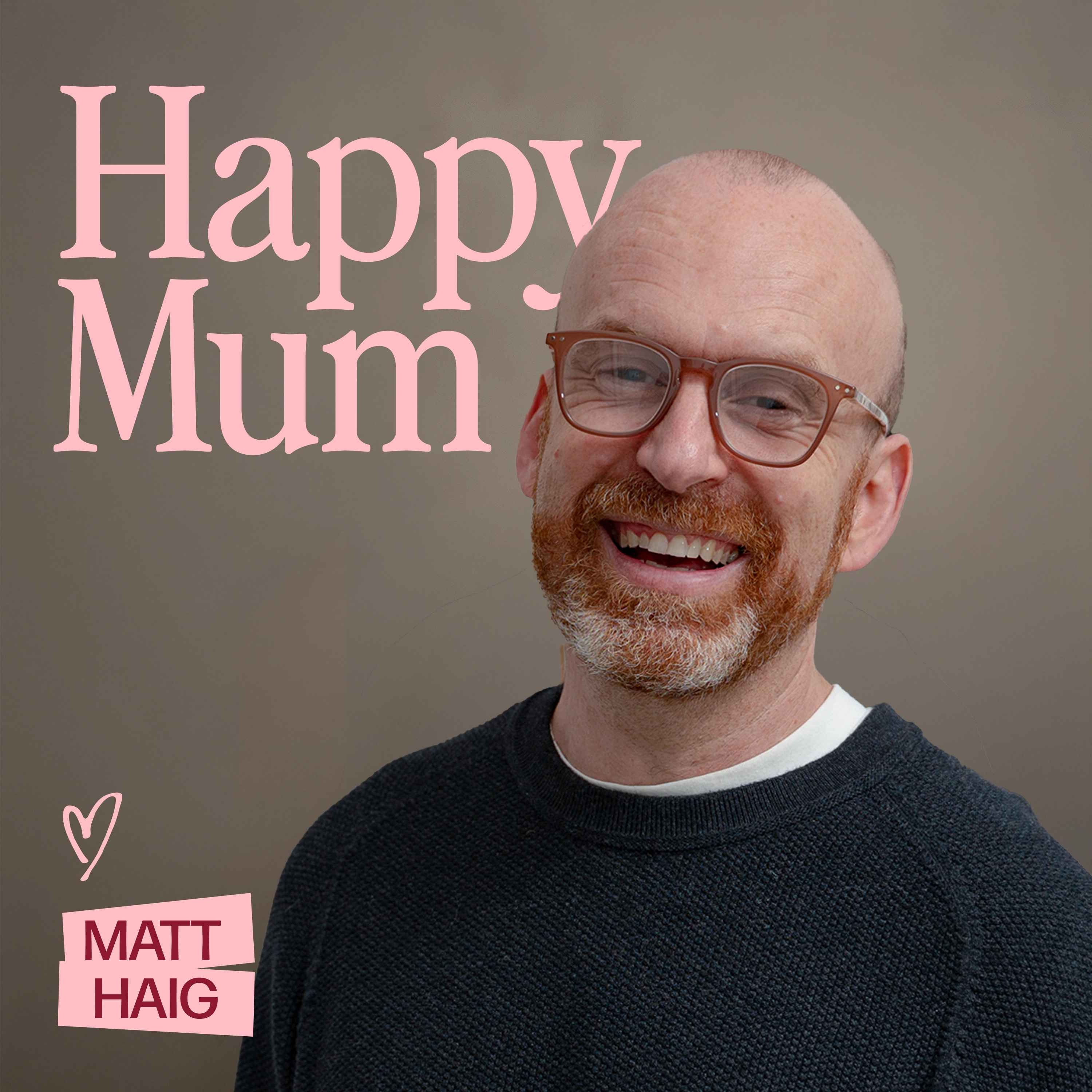
1:44Hello, and welcome to a brand new episode of Happy Mum. Today, we have a dad on. It's only the international bestselling author, Matt Haig. Yes, it is. I mean, international bestselling. The Midnight Library has sold 12 million copies, 12 million copies. That's a lot of copies of one blooming book. It's amazing. Obviously, Matt Haig is someone who speaks a lot about or has over the years spoken a lot about mental health. When we talk about it in this chat, he's become this sort of advocate for mental health and for us talking about these things and not shying away and absolutely leaning into those chats.
2:22He has, perhaps bizarrely for him, become this beacon of hope for people when it comes to their mental health. I've loved researching for this chat, I've got to say, because I got to both read and listen The Midnight Train, which was a pure delight. We talk about neurodivergence in children, parenting as a neurodivergent adult. He's a deep thinker. He's an amazing talker. talker and I think you're gonna love it so enough of me here's Matt Haig
2:54Matt Haig: I mean no one had really read me before uh 2015 when I wrote a book called Reasons to Stay Alive about my mental health I've got it and do you know why I've got it because I've nicked it from Fern Cotton because I was at her house once and when me and Tom are leaving she was like you have to take this you have to read it and we have nicked her copy so sorry Fern yeah I should give it back I won't no she was she was an early champion no she really was yeah she was really yeah good for getting me known but the the tricky thing psychologically is like in my head I was just writer and had written like 10 fictional stories before that yeah but then that became my first bestseller and everything and I was sort of known for that and so suddenly I wasn't a novelist I I was mental health advocate, mental health ambassador, spokesperson of, you know, mental.
3:49Matt Haig: And I'm not a professional person. I'm not like a therapist. I'm not a doctor. I've got no qualifications in it. But at that time, I mean, it's very different now. In the space of a decade, the mental health conversation has become just so everywhere and everyone. but at that point there were a few figures there was Stephen Fry and everything but there were that many books about it at that point you know so I felt a lot of responsibility to be representative yeah of a wide thing and got a lot of it wrong and lent into that role a little bit too much I think I also felt a little bit of a fraud in the sense that you'd be talking to people about this subject, about recovering from suicide.
4:36Matt Haig: And people would tell you how much you've helped them. And it's all very nice. But there'd always be this slight disconnect because very often around that time, I was still drinking quite heavily. I was having my own issues, still having the occasional panic attack, still very often feeling I was on the cusp of depression. So you would have this feeling like you're this answer to a question for lots of people, but for yourself you're still the question you can't work it out you know you're still very much stuck there so there was that weirdness uh whereas in fiction like with the midnight library and things like that i feel less of that pressure to be the sort of like perfect person so you give you give so much of yourself i think when you write non-fiction especially in this in this world and then the promo of that on and the talks around it demand even more of you in that way to share more or to revisit whereas i do think even though with fiction we always use there's always bits of our heart i think within those stories it's an easier thing to talk about it's not quite so gut wrenching to talk about fiction in the way that it is with non-fiction yeah that's true and and there's a weird thing happens onto your point there with fiction i think about there's a kind of a paradox in the sense that the further away the character is from you sometimes you're then freer to put more of you in said character for instance the very first draft of the midnight library it wasn't the character of a female character of nora as the protagonist it was a man a guy called adam and it was terrible the book was terrible the first draft was just awful and i think the problem was i was just writing me yeah i was just writing this guy and I think it's like you know like sometimes it's hard to know what you look like because you've seen your face too much and you've seen your face in the mirror too much and you think I need to be someone else to know what I look like and so by flipping my gender changed my age a little bit changed my location suddenly it was a character and so that freed it up and I could just let okay no one's going to think I'm Nora so I can just go for it it's so true anything that's too close suddenly I feel boxed in I can't possibly write that because then people will know you know whereas actually if you just kick it a bit it's easier.
7:01Matt Haig: I suppose that's what actors feel isn't it like they can be more of themselves when they just find that channel You are promoting many a thing first of all I love this very shiny nice silver copy of the Midnight Library Yeah silver's nice isn't it? Silver's nice, reason to say that's Fern's Midnight Train I listened to it and I absolutely adored it. I was doing the digital show. Tom had come in and because I was doing the whole thing between Kindle and Audible, which I absolutely adore that you can do that, and I had to finish cleaning up after dinner so I was like, right, I'm going to carry on listening.
7:35And I had it on loud and Tom had come downstairs and I was like, you can't, I've got to go to the headphones now because you have to read this. So he's not. And then, if that's not enough, you've got a gorgeous version of The Midnight Library which is a graphic novel. I've never known anyone do that.
7:52Matt Haig: Well, you know, I mean, it's cheating really, isn't it? Because I didn't have to do a single thing. This guy called Fred, who lives in Brighton, Fred Fordham, he's a master at doing adaptations of novels. He did To Kill a Mockingbird and some other things. And yeah, so he's made this beautiful graphic novel. I mean, I'm a great believer now because, sorry, I'm rumbling all over the shop. No, you're not. But there's a lot of headlines about reading at the moment, about how books aren't doing so well and lots of depressing headline about readers. But my own theory of it, and this is related to the graphic novel thing, is that every single person is a reader.
8:35Matt Haig: We're reading things all the time. Not everyone is sitting down reading a big heavy book all the time, but we're reading words all the time. We're reading pictures all the time. Reading a picture book, reading a comic, reading a graphic novel, reading words of graffiti, reading an Instagram post. It's reading. So this idea that there aren't readers, it's just what we're reading is changing. And I think there's just a big challenge for writers and the book industry to make sure that we're meeting the times and we're actually creating stuff that people want to read. And I actually get quite excited by that.
9:11Matt Haig: Because books, I don't think books, books have been around for 5 ,000 years. They're the oldest technology out there. they're not going to go away so it's just how we adapt them and you know sometimes I get a bit frustrated with the industry about its sort of pessimism or short-sightedness about this but actually it's just about opening it wide open and seeing everything as a book and changing the formats I guess that's the interesting thing about an industry that is so old that people get fixed in well that's just the way we do stuff or why do we do stuff like that can't we just nudge it in that direction or just change things up a little bit.
9:48Matt Haig: It's true. And obviously with books as well, there's a kind of snobbishness that's just tied into it, especially in this country because we've obviously got the class system which is still there to an extent and books are a way to kind of, they symbolise that for a lot of people. And I think it's all well and good. And I'm from a family of teachers and I'm a passionate supporter of teachers and probably would have even been a teacher, I don't know, in another life. But I also think there's a problem when we tie books so much to education. Yeah. We do all these initiatives. If you invented the school system in 2026, it'd be so different in order to meet the needs of 2026 to what we've sort of inherited.
10:31Matt Haig: And it's just because it's tradition, just because we all do it and we go along with it. But, yeah, I'm one of those homeschooling weirdos. Well, I've got one homeschooler. Okay. And he actually got there through anxiety. but how long have yours been home schooled? Okay, well, we used to live up north in York and our kids, they never really went to a proper, proper school because they went to like a Steiner school, which is like a hippy-dippy school. But it was very good, actually. Certainly for the younger years, it was very sort of child-centred. But my son, who has since been diagnosed as autistic, was presenting, you know, certain signs that he wasn't fitting in and was getting really kind of like mentally distressed for a very prolonged continual period of time.
11:26Matt Haig: Coupled with the fact that my work was starting to take off and I was sort of travelling about a lot. And so we had this idea that maybe we'll try a year out of school, you know, we could, you know, we have this sort of romantic idea of this travelling family, you know, teaching as you go. And it wasn't quite like that. But, you know, once the genie was out of the bottle and we were doing it and like we saw Lucas's confidence, his social confidence, strangely, also improve. This is a big thing that anyone who's homeschooling gets. You know, what about the social side? It's like, well, school was the thing that was killing his social side.
12:03Yeah, yeah, yeah.
12:03Matt Haig: Because, you know, there was some, you know, if you're, it's fine if you're the extrovert popular kid, but if you're the kid who's on the margins or getting a little bit bullied or just not fitting in, then you are learning to be an introvert. You're learning to hide yourself away. So it was actually strangely taking that away where people were saying, oh, his confidence has shot up. But what we did do is we moved from York, where I think at that time there were about seven homeschooled children in the whole of York. No. Well, certainly who were doing the groups. Right, OK. To Brighton, where I think even then it was over a thousand because, you know, Brighton's Brighton.
12:45Matt Haig: It's just alternative everything. So there's obviously a lot of homeschoolers, even more now post-COVID. Yeah. So they had the social stuff built in because there was always a group to do. the maths group if you wanted to do it the science groups there's everything groups so you could just do a sort of pick and choose school if you wanted so we did a sort of mix of that with our own stuff i was pretty much 50 50 with andrea up to that point when it can just could just be like fun yeah i'm not serious and i could be like the supply teacher coming in and just doing like Shakespeare rap battles and things but then you know when it got serious and like GCSEs were looming and stuff I took a bit and also I was away more so I took a bit of a back seat then but there was a time I like to think I put my weight in but then it got serious and then I was a bit useless and then my daughter after Lucas she ended up homeschooling as well just because she, we didn't really have an argument.
13:49But also you kind of know what you're doing at that point. Yes.
13:53Matt Haig: Yeah. Well how was it received by the teachers within the family? Oh, tricky at the start. Yeah. Yes, it's interesting because my mum, as a teacher I can remember she used to go on conferences and we used to take a lot from homeschooling and sort of so she's quite liberal and open minded so she wasn't, she couldn't be too against it but she'd definitely have notes and send us things and you know I think when we started my mum yeah she was probably just about retired so it's possibly the worst time because she had all this energy or the best time but then she'd send the stuff we should be doing and things like that but no fully on board now but there is that pressure because you think you never know you never know if you're making just more mistakes or you can never see the parallel life where you're a different parent and doing something differently so we don't have that privilege as humans to be able to sort of like run a different option and see where you'd end up so you don't know and people obviously when you say you're homeschooling kids people have their own prejudices about that yeah and so not necessarily want you to fail but if if something's going wrong they will think oh it's because of that and you're not so you have an extra little bit of pressure but uh we're out of that now because our kids are sort of 18 and 17 and very much that must feel quite nice kind of going and and we're nearly we're near completion this parenting thing i've completed yeah just fine you know they're just becoming you know just on video games all the time uh no i mean pearl has just what i think it's helped them do because school was that great pressure to be an all-rounder because you know that's the way the curriculum's designed up until a level you know you're meant to be sort of good at everything i think what they what we've allowed them to do is hone in on themselves yeah and really sort of go for that so with pearl that's music it was dance for a while but now it's predominantly music and lucas is writing uh he's he's also got a very like probably the most niche youtube channel in the world which is there's a sort of online game called balatro which is a sort of online card game it's not right it's not gambling he assures me no it's not it's not gambling but anyway he's got this community and it's apparently very big with neurodivergent teenagers of which he is one and so he's got his little gang on there so he's a balatro influencer whatever that is it sounds very cool it's hard I just think you spend so much time when they're younger worrying about everything yes so it must just be nice to kind of take a little bit of a breath now and I'm sure the worry doesn't stop when they turn 18 and you know the problems get bigger in lots of ways and then they've actually got to navigate a different world yeah I mean my I don't know if this is like just sort of like privileged talking or whatever but My worry has never been about career side or academic side or grades or anything.
17:10My worry, because of my own history, and since we've known Lucas was autistic,
17:16Matt Haig: has been about health and mental health and things like that. Those sort of things. I mean, we've had a few moments where I've catastrophised. I mean, three years ago, Lucas had a really strange reaction to a virus. It wasn't COVID, but can you remember that winter there was a really bad flu? In the COVID years, it was then on top of it, it was a really bad flu. He caught that flu over Christmas, and then afterwards he had two weeks of being very paranoid, very delusional, never angry, never threatening, just very scared to the nth degree. And then he had it again two weeks later. So me being an anxious person myself, you're thinking, oh, goodness, is it this?
18:06Matt Haig: Is it schizophrenia? And so he came out of that and he's been fine since. But, you know, with him being autistic and stuff, we always have those worries. How does that compare to your childhood? There are some similarities. I'd say the similarity is that my dad, he had a very old-fashioned, quite posh boarding school background in Sussex. And he went to boarding school. He was the sort of kid who, at eight, his parents drove him to the school in September, dropped him off in the car park. And he didn't know where he was going. I remember saying, oh, you're at your school now. We'll see you at Christmas.
18:51Matt Haig: And then he'd have like three minutes. So, you know, old school, old fashioned, did very well academically, went to Oxford University, discovered he had epilepsy, had a breakdown and didn't like him. And he had a total crisis at university where he switched to study architecture somewhere less fancy in Sheffield. and so his whole he already had that thing of not pushing you to you know go to Oxbridge or being best in the class or whatever so he had that and I think that was very useful for me growing up my mum a little bit different a little bit more traditional because she was adopted she wasn't particularly posh she she went to teacher training college became a teacher and so she had a slightly different attitude to it all but and I grew up in a town called Newark-on-Trent which back in my 80s and 90s didn't have much culturally game for it so I and I was a very insecure teenager who got into all sorts of trouble and alcohol and drugs and got arrested for shoplifting when I was 16 and um wasn't a bad kid but i was very uh very let's say undiagnosed is the short way of saying i had a lot of things and like you know because of the era it was you'd be called special needs i was branded special needs in art in history in art in art just because i couldn't do a color wheel you know those stupid color wheels yeah and i well the teacher already didn't like me because i was just pratting around and being a clown and then uh yeah i was just so messy and dyspraxic i was just sort of like i couldn't do the color wheel and so they just looked at she i can remember her bringing me aside after the lesson and she was just like staring at the color wheel and staring at me and saying i think you might need some extra help and you know special needs blah blah blah and That was the only class I actually did is special needs.
20:56Matt Haig: So that really knocked my confidence. And also the other subject, weirdly, was history. And I ended up doing a degree in history just to sort of prove my history teacher wrong. But, yeah, it was... If that's not a reason to do a degree, don't worry. I know. I think revenge is such a good motivation, isn't it? I hope they know that you did that. Yeah. How old were you when you moved to Ibiza? And is that something that you and Andrew did together? Yes. well with it was very strange how it happened um i was at holy university then we went on holiday to barcelona i was a total snob about things like abifa and i had such preconceived ideas about it and some of them were very true but uh we met some spanish people in barcelona and they said we said oh where do you go out in the week and we said oh no what you want to do is get a ferry to Aviva and then go there.
21:53Matt Haig: So we thought, oh, getting a ferry, this will be quite exciting. So we had three days then there in 1996, and then we went back the next year for the full summer. Andrea got a good job. She was like manager, office manager of the sort of biggest club and hotel empire there. So she could then employ me doing a job that I could do, which was just sitting down selling tickets. uh for the club and most of the time apart from one day no one was buying tickets for the club so i was just sitting there getting three free alcohol all day in a bar and a beef and um yeah it was possibly the very worst thing for me yeah it's the classic adhd thing isn't it of being very drawn to the very worst thing for you so it's a kind of self-harm that doesn't feel like self-harm you think you're enjoying yourself you think you're a party animal you think you've missed a good time but really you've just got a lot of issues that you're not recognizing and not really been allowed to recognize also it's very you're going against the grain a lot to kind of go well this party atmosphere that we're all meant to gravitate towards maybe it's not for me yeah You know, that's a big old leap for people, especially at that time.
23:17Matt Haig: At that time and that age and the 90s, there wasn't a mental health conversation. Men certainly were not being able to talk to other men and say they were depressed in a way which is relatively normal now. And it was a culture of, when you look back at the 90s now, it was excess was so such a sort of aspirational thing you see it in art music everything it was people admired what people are sort of scared of now you know everything was like overboard and excessive and extreme and there were some exciting things about that and some creative things about that but on a personal psychological health level it was uh disastrous uh for someone who was quite a sensitive introverted person who had sort of thrown themselves into literally excessively loud chaos where if you're only taking drugs once or twice a week you were relatively square so so the normal you know if you were just an alcoholic like i was then you were you would never think that that person was unhealthy because there was always someone to point to who was doing ketamine or cocaine or ecstasy so you were in a very uh distorted context yeah and you know so the most extreme people the most addicted people the people or the celebrities or whoever it was the people who had issues that weren't being recognized they all especially in 1998 1999 they all seem to be in a beef and so outwardly it looked like this fun time but the sort of yeah it was too much but to be honest it wasn't actually to do with substances or maybe not even alcohol why i had a breakdown when it was the third summer there the winter before i'd finished university i'd done a load of dead-end jobs.
25:29Matt Haig: I had all these problems when you go to a beef you drink some more but I was getting a little bit cleaner I wasn't doing drugs I was running in the morning and stuff and actually when I had my first panic attack it was like 11 in the morning but it was a week away from when we were going to go back to London and then the world seemed to end and I had a panic attack that didn't stop so I didn't know it was a panic attack. My only idea of a panic attack was sort of like someone breathing into a brown paper bag and 10 minutes it passes so this thing that wasn't ending and I couldn't sleep I couldn't eat how did that that feel how did that manifest that it built on itself so I was literally in this beautiful we were very very lucky to be living rent free um with our bosses basically in this villa and they were hardly ever there so it felt like we had this villa to ourselves in the most quiet part of the island and it was luxury and lovely and you had this most glittering Mediterranean and I was out running one day I came in and then my heart started to just go and then my breathing went and I was looking at this gorgeous view and thinking I'm in paradise and then I remember sort of like falling into feeling like I was falling into hell and all these melodramatic 24 year old thoughts were in my head and i just couldn't the panic just built so i thought i was having a heart attack then i thought i was going mad then i thought i was about to die you know so you have all these thoughts building and they don't stop you eventually exhaust yourself so much you slide into like depression but then when the energy comes up again you're in panic mode so you're literally swinging between two extremes and both extreme feel like they're worse than the other one when you're in it so you go from terror to depression and back again and i did that for about um three years i was two weeks in abifa prescribed diazepam enough diazepam to get me on an airplane home um got home got to my parents house my childhood bedroom sat on the bed for basically about three months uh went to the gp wasn't offered therapy wasn't offered pills we're talking over 20 years ago as well aren't we so it's really i would imagine there wasn't much no there wasn't much there was so much stigma around it i know it still is but back then it was you know like if they asked you have you ever taken recreational or drugs and you said yes then the conversation was over and the blame was on you and you know my parents were okay but they didn't have excess money for to just you know get me therapy or you know put me up ever forever so we had a bit of a situation I was very agoraphobic as well so I felt like I couldn't go out to work it made me realize that this divide we have between mental health and physical health is just a totally arbitrary man-made literally thing you know i mean what does it even mean what does mental health mean i mean what is mental that isn't physical like our brains are physical our nervous system our heads and our guts are physical our neurons are physical it's just a physical health that's harder to understand yeah so we call it mental like you can understand when a heart goes wrong um and we've got the right tablets and everything but with our brains we still don't really understand it that much so it was very i felt physically ill and mentally ill and very physically heavy you know i don't think people you know people say they feel heavy with depression it's not always a metaphor i literally felt a heavy weight on me heavy weight on my chest when i woke up sometimes my tongue felt so heavy that I couldn't speak and like I also couldn't speak you know like if a friend came around when I was at home so a friend I knew from school came around wanted to go to the pub I literally couldn't think of anything worse than walking down the street to go to a pub so all those simple things but I couldn't explain it so you'd lose friends you just like you didn't look like you didn't like people.
29:56Matt Haig: I went the very long, slow way to recovery because there wasn't the support and I couldn't find the support. And also, I was a little bit scared, a little bit phobic about getting the support because I'd had a bad experience in Spain in the hospital with diazepam. I'd had a bad experience with the GP locally. So I was left with like, I don't know, a couple of hotlines. and, you know, basically trying to work it out for myself. I don't, I'm not wallowing. I don't feel like I really massively regret going through all that because in a way I wouldn't recommend it for anyone else and I wouldn't want to repeat it.
30:41Matt Haig: But because I had to do that, I learned a lot about myself at the most base level of things that made me feel better, things that made me feel worse and slowly you piece it together along with that big massive cliche which is a cliche because it's true which is you know time heals things yeah time disproves depression in the sense that um you know depression has a sort of power and confidence to it and it you know told me you will be dead at 25 this will happen your relationship will break down this will happen you'll be mad you'll be in a straitjacket and so as time goes on and all these extreme worst case scenarios don't happen your brain adjusts and thinks well it stops giving it the same platform and power in your mind but it did have so it's a very slow process but you know every time you go on a train and it doesn't kill you every time you go on a plane and it doesn't kill you.
31:46Matt Haig: Every time you can walk past six lampposts or whatever, and you go to seven lampposts, you know, you build up stuff. And so your mind still tortures you, but that torture becomes something that's more like a tinnitus or something that you can kind of tune out of. Hi, everyone. It's Katie Couric. And on my podcast, Next Question, we love stories about how women are taking control of their lives. They are increasingly leading financial decisions in their households, yet many say they don't feel fully prepared for the long-term financial choices ahead. Real confidence comes from knowing your financial future is protected whatever happens.
32:29Matt Haig: Pacific Life has helped generations protect what matters today and prepare for tomorrow with life insurance and lifetime income solutions. It's a promise Pacific Life has kept for nearly 160 years so its customers can keep theirs. Ask a financial professional about how Pacific Life can help you create a more confident financial future. Pacific Life Insurance Company, Omaha, Nebraska, and in New York, Pacific Life and Annuity, Phoenix, Arizona. This episode is sponsored by ZocDoc. Have you been putting off a doctor's appointment or need a dentist and you don't know where to start? We've definitely been there and that's why we use ZocDoc.
33:13Matt Haig: Actually, over the holidays, Michael had a dental emergency and seemingly every office was closed. But we hopped onto ZocDoc, found an in-network dentist, had great reviews, saw real-time appointments available, which was key. It was on New Year's Day and booked an appointment in just minutes. It took so much of the stress out of the already stressful situation. ZocDoc makes it easy to search and compare over 250 ,000 local in-network providers across more than 200 specialties. So you can find the right doctor or dentist and book instantly. Taking care of your health just got easier. Download the ZocDoc app today and book that appointment on your to-do list.
33:56Matt Haig: That's Z-O-C-D-O-C. ZocDoc. Does it feel strange that it's such a difficult time for you to live through because of your writing, because of the way you've shared it, that difficult time has now become something that gives so many other people hope? It must be a very strange thing. It's a very strange thing. And it's a very strange... I'll tell you what. It's strange because... And I'm sure other people who've gone through similar experiences experiences unwritten about it or spoken about it feel a similar thing because one of the symptoms of mental illness and depression and certainly anxiety and certainly the kind i had is this kind of like derealization where things don't feel quite real so you you sometimes feel a bit detached like an actor or even like depersonalization is where you don't feel real derealization is where the world doesn't feel real and i felt both of those things at different times like in panic attacks and so it's like a sort of happy benevolent version of that that it doesn't quite feel real but it's not an unpleasant thing it's just like a processing issue um certainly like when i wrote the midnight library which although is a novel its theme is recovery from suicide mental and stuff so i hear from a lot of people that it's helped them and that's lovely uh but it can be hard to absorb it or know what that really means it took having a book that yes a lot of people love it but a lot of people hate it you know it took having a kind of like a marmite experience of people having very strong opinions on both sides and thinking, actually, you're probably both wrong.
35:56Matt Haig: You know, I'm not a genius and I'm not like the worst writer that's ever lived. I'm just like a person and I'm trying to live a normal life. So, yeah, I'm glad that the Midnight Library had extremes because it's kind of like cauterised me. You know when you go to the doctor because you've cut your finger and they burn it and then you can't feel that bit of your finger anymore? I feel like that part of me that was very, very sensitive. Like if one person in like America said a bad thing about me on Twitter, you know, in 2017, that would have really ruined my day. Now, well, I would have no good days ever again.
36:35It's because that feeds into every single insecurity you've ever had about yourself. Suddenly that one person is completely correct. They've seen the true you.
36:43Matt Haig: Yes. like in 1999 i had a lot of negative voices but they're all in my head yeah it's externalized the madness so i have to joke about it but it's true but like in my low patches like my most recent low patch was like 2021 or something i would just sort of like go on goodreads a book review website and just click on the one star and just go through and i was like what am i doing But I think this is just externalizing depression. You're literally just putting the ones that... And, I mean, it is kind of like... You do feel like it's something therapeutic, though. If someone says a one-star review, and they actually have a point, and then you click, like, on the one-star review, you're like, I might have just progressed as a human.
37:38Matt Haig: I might have leveled up. That is amazing. I don't think I've ever heard that anyone doing that before I love that I mean it's fair to say that you'd gone through quite a lot before having kids yes did everything that you'd experienced and everything that you'd lived through with your mental health did that impact your desire to start a family well it made me feel like I I would be crap at it I was terrified I was such a cliche of a young man who was scared yeah um and so and that was a tension in our relationship because when we started trying to trying for kids um i was sort of like in a halfway like i'd go for days thinking oh yeah i'd be all right i'd love to have it you know it'd be really lovely and i i you know i i could rise to the challenge then other days right no way but andrea was just starting to feel the tick of a biological clock and thinking let's get on with it so that tension of me just saying no it's okay um let's just wait a while and andrea like no as we just should have happened last year so there was that classic i think it's a classic gender thing isn't it the cliches but um obviously everything changes with the actual event of becoming a parent and i mean you know i still felt and possibly to a degree still feel like i'm not you know i'm not a natural necessarily at you know whatever the sort of like perfect archetypal idea of a father is i'm probably not it because i get too sort of like stressed about things and too but if you know the amount of love that becomes at you instantly when you create something outside of yourself as human being um was yeah immense and i yeah i'm bad at talking about it but yeah i i it was it was a lot and i did you feel that as soon as you found out Andrea was pregnant well Andrea for one thing for context um Andrea had really terrible pregnancy like she was I forget its name but you know the proper morning sickness where she had to be in bed for months and could only eat we lived in the center of Leeds at this point and there was a cafe nero at the corner and the only physical things she could eat without being sick were and everyone thinks she was lying but it literally was true salt and vinegar crisps chocolate muffin and a strawberry milkshake that is all she lived on and so that was my routine i'd just go panic and i think like and i was i can remember thinking I can't even cope with Andrea being in bed and immobile.
40:53Matt Haig: So how the hell am I going to cope with like, you know, what if Andrea's like this? And I'm, you know, so I had all this pathetic me, me, me sort of worries. But, and I also, you know, which was quite symbolic of my state of mind. when Lucas, firstborn, was born in the hospital, I had about three hours with him before the sort of dad was kicked out and it was 9pm in the hospital. And I literally spent about an hour and a half trying to find my way out of the hospital. I was in such a daze. I just went through corridor after corridor, left x-ray, I don't know what I was seeing. I was going through all sorts of, you know, probably went through literal, you know, surgery rooms, theatres.
41:45Matt Haig: Trying to find my way out of this hospital in York. And then, you know, I got back and I can, I think, yeah, I don't think I've ever publicly admitted this. but I remember phoning Andrea that night and saying, bothering her with the most mundane stuff. I was trying to look for a charger or something. I thought, where's the charger? I think I was having something. But no, I have processing issues. But once it's processed, I'm there, I'm okay. It's hard talking about being a parent because you don't want to make it about yourself. But you can't really make... But you can on this podcast because it's about you as a parent.
42:29Matt Haig: so it's all right that's all right there's a reason I never fell quite as hard after having kids and it's not because it's some magical wonder switch you know in many ways life became harder in lots of ways certainly like financially because this was years before I had any sort of success in my career I'd been dropped by my publisher the week Lucas was born and was in disarray in terms of that because I still felt I couldn't go out and get a proper job so it brought all sorts of issues but I didn't have um I never had a depression that was suicidal again after that touch wood um I had panic attacks I had bouts like it tended to be about three week bouts of depression bits of agoraphobia coming back but I never had that sort of like full-blown uh slide into suicide or depression and it wasn't you know we weren't sleeping well yeah and you know our kids were difficult sleepers and all of that but i think it it's just that sense of having someone or something outside of yourself that's bigger than you is quite therapeutic sometimes isn't it to actually think it's not just about me it's not just about me you know I was a caring person before and all of that but I always felt like people can manage without me you know everyone's fine without me everyone's better off but when you see a kid looking up at you and my son looking up at you and thinking right well I have to stay around I have to be here yeah how did you manage with the chaos of family life of a brain that perhaps is a little bit chaotic and needs a little bit of silence on its own?
44:22Matt Haig: Not great. But actually, the silence thing, I don't know if this is ADHD or what, but I've actually always liked a bit of noise, a bit of chaos. I like being distracted. In fact, when I'm left on my own, that's when I'll just be doing social media, wasting time on YouTube, not doing anything. Whereas when people are there, I feel like I need to be working. and you know so my daughter you know she just distracts me all the time about pop music K-pop and Bruno Mars predominantly and my son is just well he's obsessed with his online card games but also the idea of Grand Theft Auto 6 coming out so he's talking about that all the time and also that's another thing which is quite good for your brain because there's lots of things that are bad for your brain about being a parent, mainly sleep deprivation and all of that and stress.
45:18Matt Haig: But one thing that's good, especially as they become teenagers, is you get interests that are outside of your interests. You know, if you love someone enough, then their interests become your interests. Is this you saying that you're really excited about Grand Theft Auto 6? I'm just really willing to come out soon. Mainly about seeing Blackpink live. But no, no. and like my son is like so very he gets it he typical autistic person he does things like chronologically and in list form so he has lists he's very much into what is it letterbox you know where you do the film reviews right so he's always got star rating for each film he sees and wants to know my star rating for each film he sees and then he's just gone through every single david bowie album in chronological order and wrote his little own reviews of them and I you know I mean David Bowie's a genius but going through every 1980s and 1990s David Bowie well that's quite dedicated to that cause.
46:22At what point with your son did you sort of look to get that diagnosis and was there an inkling did you you and Andrea think that that he um might be autistic before that?
46:33Matt Haig: It was me, actually, before Andrea. Yeah, Andrea was quite a little bit wanting to deny it. But, like, it would be... Well, A, we knew the trouble with school, but we just, especially as we didn't know I was neurodiverse, we just put that down to being sort of prone to anxiety. And also you can kind of go quirky character. Quirky character. Quirky character, you know. And even when he was, like, writing his own little stories and he'd write literally 30 ,000-word stories about our Maltese terrier. Were you like, give me some of those words? Yes, with a speed. He'd get on, I'd be doing six words and 27 tweets.
47:16So those days are painful, really, really painful.
47:20Matt Haig: Yes. So even when he was doing that, we were thinking, just, yeah, a bit eccentric, but, you know, he was walking on tiptoes a lot, stimming, moving his hands and wrists about making little noises sometimes to comfort himself so it just got to an accumulation where we thought it actually needs because there's certain things he does better and then there's certain things where he's a bit behind at so we just wanted to know we thought it would make his life easier to know And that generation, they're so up on it all and they're so non-stigmatising about it all. So he doesn't really think about it.
48:07Matt Haig: It's like being left-handed. It's just a thing he has. It's a difference rather than a handicap. It's just something that he has. And we work around it. And it is very much a difference. He's better at some things. He's not so good at other things. And that's just how he is. And then at what point during him getting a diagnosis did you suddenly go, hold on a minute? Well, it took me 20 years to get therapy. Yeah. And it was only when it, I think it was because of Zoom and the ability to just sit down at home and talk to a therapist made it so much easier than the idea of going into a therapist's office for me.
48:49Matt Haig: and so I was having normal mainstream therapy with a very good therapist who could not obviously diagnose me with neurodivergence because he wasn't a psychiatrist but he was noticing things during the sessions and I was talking about my son so he suggested I should possibly look at getting a diagnosis at that point autism wasn't Because I feel, and I am, very different to my son. And I'm very much an ADHD stereotype. So I thought I was just going for an ADHD diagnosis and thought I'd get an ADHD diagnosis. So even him saying that, it wasn't kind of a thing that made you go, what? No. No. I mean, because I knew at that point, people were much more aware of what ADHD was.
49:43Matt Haig: Yeah. You know, we're talking about five years ago. So not that long ago. And so we knew it was tied to addiction issues, impulse control. And I had to, you know, every pickle I'd ever been into in my life was due to those things. Right. Whether it was arguing with people I shouldn't be arguing with on the internet or drinking too much gin on a Saturday. Whatever it was or taking drugs, you know, it was to do with that lack of being a mediator in my brain between the impulse and the doing. And so I knew that was very ADHD. I think I read an interview with someone like Richard Bacon or someone, and Andrea said, that's just you, everything he's saying.
50:28Matt Haig: So I thought I was just going along to get an ADHD, but the person said, you are ADHD, but you're presenting even more clearly as autistic. So that was the thing I couldn't get my head around, really, because ADHD is one of those sort of things that's, I don't know where we're at with sort of stigma about ADHD. I think the problem people have with ADHD is not taking it seriously enough because everyone says it like, you know, it's the moniker from friends thing with OCD, isn't it? ADHD, oh, I'm a bit ADHD. Yeah. But autism has always, because of my generation growing up and watching Rain Man and the idea of autism being quite extremely socially isolating, I thought I'm not autistic so that's the thing that took me hard to sort of see myself as um and also on one level it's kind of useless getting a diagnosis because they don't give you a pill for autism they don't say here's your autism pill but I found it very helpful on the level of self-compassion yeah self-understanding which in turn leads to actual changes in reality um you You know, I haven't drank alcohol since my diagnosis.
51:45Matt Haig: And I was drinking a lot of alcohol. I'd binge once a week, very heavily. I think I hadn't got a problem because most days I wasn't drinking. But then when I did drink it, it would be a problem. And I haven't done that since. I haven't argued with anyone. Oh, I better not say that. Have loads of people writing in. I think you're fine. I've argued with fewer people. I came off Twitter. Oh, there we go. Has processing your diagnosis at the same time as your son is sort of learning to navigate the world with his, has that helped you understand each other a little bit? I think so. I mean, my worry as a father is that, you know, it become...
52:37Matt Haig: I don't want him to... I want him to identify with me, obviously, and I want to be a role model for him. but I don't want him to feel that my path has to be his path. It's that balance, isn't it? You want to be a good inspiration in his life. You want to be a positive force in his life but you don't want to be his life. You don't want to, you know what I mean? You don't want to be like, this is your destiny. Especially in my case because he would think, oh, well, I'm inevitably prone to having a major breakdown or whatever it is. So you don't want any, you want, I mean, it's always about freedom, isn't it?
53:11Matt Haig: You want the child to feel as free and safe as possible and to do, you know, and I think no one really talks that much. I mean, you possibly do. But, you know, as your child gets older, the changing nature of how you parent and what your role is. So I think it's very rare. I'm sure they do exist, but I'm sure in most cases there's parents that are better at the very little stage. Absolutely, yeah. And then there's the parents who are really good at the teenage phase and they're sort of like going shopping and going to concerts with your teenagers. Or sitting down and having the chats rather than playing on the floor.
53:53Matt Haig: Yeah, exactly. And some people love the playing on the floor because you're there, everything. And there's a kind of grief as that sort of changes. I don't want to say I'm like an eternal teenager because that just sounds a bit pathetic. But I really do like having their teenage selves. And I feel like I'm quite good at those sort of teenage chats about stuff and music and life and whatever it is, celebrity nonsense or whatever, just talking, you know, teenage stuff. Yeah. We were saying earlier about, you know, the things that worry you aren't necessarily the grades or aren't the grades, the career stuff.
54:34It's the mental health stuff. it's the fact that you know they're taking how have you navigated that stuff because i guess it's it's it's something that you've got to think about in a different way to some people because your history is out there so you've got to not only talk about this is my history but also i want to arm you with the tools but not throw it you know throw at you in a way that that's a lot
54:55Matt Haig: to take on what i like to think when i'm in a positive frame of mind is that my lesson is one of recovery survival getting out of a difficult situation and being able to survive the thing that was most inspiring and comforting for me in my life was reading my mum's diary from when she had postnatal depression and she had it for a long time with me and then two years later with my sister so from like 1975 to 1981 my mum was you know clinically depressed and we didn't know that until years and years and years and decades later and when I was in recovery in my 20s for depression my mum gave me access to her five-year diary of that time so you could see the same day you could see like January the 25th 1975 1976 77 so on and so like you know to see that she didn't really change year by year and she was prescribed the same pills and she was needing to call my dad from work because she couldn't she felt like she was danger to the kids and all this quite extreme stuff but and she didn't know whether to show it me and I'm so glad she did because my mum is a fun person she's a happy smiling person she loves people she's gregarious she's out there she's just been on holiday to bordeaux and had an amazing time drinking loads of wine and eating you know she's a anyone who met my mom would think she was full of life full of joy she's not a stereotype of depression or sad or even like you know overly intense or serious she's just really out there person and uh so knowing my mum and knowing that she went through that was just so important for me especially back then you know where there weren't as many like known people with depression on a personal level or on a cultural level you just didn't know and the people you did know tended to be the tragic stories for suicides Kurt Cobain or sylvia plath or you know whatever and so you didn't or the addiction stories you didn't hear the positive stories or just the realistic survival stories so i hope for my kids what they get is if they ever do and touchwood i really hope they never do feel those absolute depths but at some point life hits you with something it hits you with grief hits you with depression hits you with pain at some point so the question isn't how do you shield your child from that it's how do you make your child the sort of person who would be able to cope and survive that and so i hope that has been my lesson that i'm a you know i may know you know i'm a very imperfect quite immature human being but you know they know that if even he can survive all this then probably i can too and now they are older you know because you are sharing online is there a point where you have to include them in the conversation before things even go out yeah a little bit and and they're very quick to tell me uh if i've ever sort of posted something that i shouldn't do so i don't really i don't post too much new stuff no about my life really nowadays i don't and i don't really see myself primarily in the same role i had about five six seven years ago where i predominantly mouthed off just about mental health i'm i you know it's a side of me but it's not the whole thing that i present to the world now no i completely agree and also you can't that can't be your whole life no it can't be your whole life and that's a danger and you see it happen all the time don't you like you see it especially like on things like instagram where you become known for one thing and it's the worst thing that ever happened to you yeah and so you have to repeat your eating disorder your depression your addiction issue forever because that's what people see you as and want you as and complain if you're not doing that but i've become very at ease with disappointing people and losing followers and just not you know what i mean i'd rather be a kind of non-brand person.
59:29I think it's pretty special that if ever, and in touch with, they never do, but if ever your children find themselves in a place where they aren't feeling great in the same way that you were able to look at your mum's diary and feel that impact, they'll be able to look back at the stuff that you've written and how open you've been. And so those people that are just people on the internet that are, you know, readers that have read it that feel removed from your life that have had that positive impact, knowing that maybe one day it could be one of your children or your grandchildren, whatever, you know, that's quite special.
1:00:03Matt Haig: Yeah, that's lovely, actually. Because it is, you know, it's nice to get emails and, you know, get hearing back from people in foreign countries and stuff. But when it's your own kids, although having said that, they're not that into reading my books. but maybe now it's a graphic novel no they have read like one or two but no it's great and you know they are my best friends and it is it it's just uh yeah it becomes a point i think where you're learning as much from them as they're learning from you as they get older and they're sort of like more plugged in to the current than you know maybe are and stuff like that has that That should have been nice, like not feeling like you have to be the one that has the answers all the time.
1:00:53Matt Haig: Yeah, definitely. And to ask them questions and not be their kind of like permanent Wikipedia that they're going to. That's quite a challenge, isn't it? Like when they say like, where, you know, where does rain come from? And why did this happen? Why is the sunshine? I don't know, actually. But, you know, to not be a scientist. so it's nice that they bring their own stuff and they've got their own interests and yeah and you know I know the history of Rockstar Games now I know every single member of Blackpink and their favourite food so much knowledge so practical so useful has fatherhood been what you thought it would be uh has fatherhood been no it's been uh i don't think i thought i don't think i i thought in advance i just thought i wouldn't be capable of being a father but like everything in life you become capable by doing that's the whole thing with life it's a first draft isn't it every single thing you go through in life is a first draft so yes you'll be the person who survives depression yes you'll be the father and you'll somehow make it work and yes you'll be a husband you'll be this you'll be that and you do it by doing it don't you it's hard thing to accept though isn't it it's a first draft that you have to get rid of the idea of perfection yes and i think you know because we've been encouraged to be in this like culture of perfection and social media plays a part in that and there always seems to be someone who's better at it and better at doing whatever you're doing whatever career you're in there seems to be someone who's doing it a bit better and you know so you and we always are encouraged to look above us and we're overloaded by comparison but i think it's about seeing that i heard a very interesting fact have you ever heard of dunbar's number no there's this very brainy guy from oxford university called roger dunbar and he came up with the number 150 being the amount of people a human being can realistically know in terms of social anthropology so if you go back like hundreds of years and see the average size of a village or community or tribe anywhere in the world from south america to china to europe there were always around 150 people because that's how many people you can realistically deal with now of course with cities and technology and social media that number explodes yeah so we're overloaded and if we go on instagram we're not seeing the 150 people who would be the cross section of the village we're seeing 150 people we're aspiring to we're seeing people at the extremes and so inevitably you get caught in comparison and it's so useful to know that everybody feels this it's exactly the same and i think that's why i wrote like the midnight library it's about whatever life you think you want you will bring yourself into that life so you need to address everything if you have some external thing you think you want you think that's going to make you happy if you get there and you haven't sorted yourself out you'll actually feel worse because you no longer have that thing you think was causing your unhappiness you think oh i've got the thing i thought the lack of was causing me to be unhappy about and now i have it and i still feel crap so it wasn't not having the partner not having the career not having the best-selling book or whatever it is it was me but it was easy to think i needed to strive for this thing um to to get there because it that gave me forward momentum that gave me a reason a cause for this sort of uncomfortable feeling so and i think that's also what the midnight library is about you know the life where she's super famous for life where she's got the perfect family the life where she's a top scientist you know none of those lives are going to bring instant happiness without yourself being sorted out and so that's every life you know you can have in any life horrendous sadness grief difficulty and also joy wonder hope and all those things and i think we focus too much on external causes and external things and we're in a very external age where we look at other people all the time and sometimes you know we're not encouraged to be satisfied and we're not encouraged to be content because the whole of sort of consumer culture is run on us feeling a bit dissatisfied so we buy the next thing to make ourselves look younger or make ourselves do this or you know what I mean it's a continual dissatisfaction if you could write a letter on being a dad yeah who would it be to and what would you say yes I I was thinking of this in like the five minutes before.
1:06:13Matt Haig: I think if I'm allowed to, I don't know the rules of this. There are none. Okay. I'd write to my dad. Yeah, you can do that. To thank him for all the things I didn't thank him for. He's still with us. So I do this regularly. I'm very fortunate I can still say this and I've made this realisation while he's still alive. to thank him for all the things that I resented him for as a teenager. Because my dad, when I was a teenager, I saw all my friends' dads, and they were proper macho men, and taking the kids to football, and they were solid in the territorial army. And there was my dad in a pink shirt and cowboy boots, and being eccentric and just talking about 60s music, and he had long hair and sideburns and he just was always, for our small town where we grew up, he was different and so himself.
1:07:13And not effeminate, he just didn't try to be a man.
1:07:19Matt Haig: You know what I mean? He had no sort of sense of insecurity about being a man. So if he didn't want to go to the pub, he wouldn't go to the pub. He didn't have that separation. and I so I just would say thank you to my dad for making me feel like masculinity and fatherhood and being a male human in this world is sort of wide open because I think we're at a time where certainly fellow men are trying to shrink that idea of what being a man is or being a partner is and I think I'm I'm very grateful and I definitely didn't see it at the time but my dad didn't play that game I didn't have that insecurity that is really wonderful that's really beautiful and we end the podcast with you completing three sentences oh dear okay this is pressure for a writer isn't it and then sometimes i get paragraphs sometimes i get one word being a dad means being a dad means surprising yourself all the time and being surprised all the time in both bad but mainly predominantly good ways since having children i Since having children, I have had something outside of myself that if I'm like 6 ,000 miles away from home, I can always sort of close my eyes and feel anchored and having a purpose, which I probably didn't feel before.
1:09:09I'm happy when.
1:09:11Matt Haig: I'm happy when the people around me are happy. Matt, thank you so much. I've adored this chat. Thank you. It's been really good. Really good therapy session.
1:09:37Confidence. It's listening to your gut. It's moving forward even when the path ahead is unclear. For nearly 160 years, Pacific Life has helped people keep their promises, building confidence for generations. Whether you're confident in your financial future, or just beginning to envision it, we're here to help. Ask a financial professional how. Pacific Life, the power of a promise. Pacific Life Insurance Company, Omaha, Nebraska, and in New York. Pacific Life and Annuity, Phoenix, Arizona.
We have an international bestselling author in the studio this week! It’s the brilliant Matt Haig.
Matt talks to Gi about his decision to homeschool his children and, drawing on his own experiences of depression and recovery, why he believes it’s not about shielding our children from life’s difficulties, but helping them develop the tools to cope when things get hard.
He also shares how his son’s autism diagnosis led him to discover he had autism and ADHD himself, and how better understanding himself has helped him understand his son.
Matt’s latest novel, The Midnight Train, and a graphic novel adaptation of his multi-million-copy bestseller The Midnight Library are out now!
Hosted on Acast. See acast.com/privacy for more information.