 Ask ChatGPT

A midwife’s frontline experiences delivering triplets in South Sudan, plus her later humanitarian work (Haiti, Bangladesh/Rohingya camps) and her own personal losses and recovery, ending with reflections on UK maternity care and midwife burnout.
One guest, a midwife (Anna’s story continues). She previously worked with MSF after training as a midwife; she has also worked in UK maternity care, including Labour Suite continuity roles and SmokeFree/“smoke stop” support.
Aid work can save lives but leaves families without protection after discharge; humanitarian settings can’t always prevent outcomes; access to the NHS can be life-saving; midwifery requires investment to reduce burnout; pregnancy loss adds workplace pressure.
South Sudan triplet birth (two twins then a pale, floppy third; placenta percreta causing hysterectomy); MSF Haiti after the 2010 earthquake with cholera; Bangladesh Rohingya camp birth unit (100–200 safer births); her miscarriages and later 24-week birth of daughter Fatima after a cerebral teratoma; healing birth for daughter Aisha.
Written by AI. May contain mistakes.
A midwife shares her harrowing experience delivering triplets in South Sudan.
“We'd felt onto her belly she was labouring and there was definitely two in there, so we sterilised two lots of kit on the autoclave over a wood-burning stove to make them sterile.”
The midwife recounts her experiences in Haiti and Bangladesh, including her personal challenges.
“And then the earthquake has such a huge, devastating impact.”
Explore the challenges of balancing personal grief with professional responsibilities in midwifery.
“And Jane was my amazing midwife at the birth of my second daughter, Aisha, who's now a vivacious nine-year-old, who absolutely keeps me on my toes.”
Learn about the importance of kindness and support for pregnant women facing challenges.
“I'm better than that now, I hasten to add.”
Discuss the optimism and potential improvements for midwifery and maternity care.
“than maybe it would look from the outside.”

Get the gist, explore an idea or ask about something said.
 Claude
On Happy Mum, what are the key points of this episode?
Searching your listeningAutomatic transcript. May contain errors.
0:00The following episode includes challenging and emotional experiences related to baby loss. If you feel this might be a difficult listen, please consider choosing another episode.
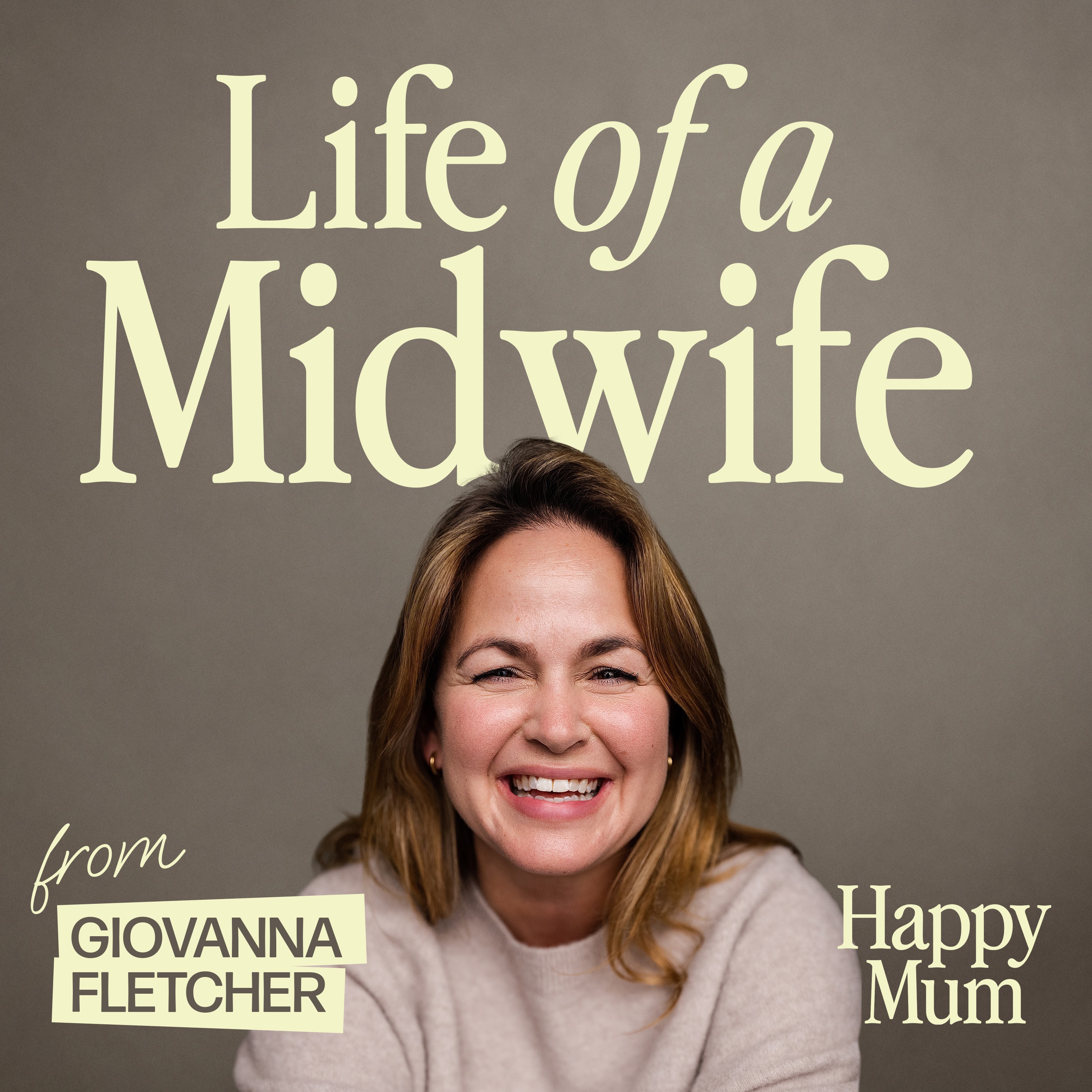
0:20Strength can be found in many forms, in many places, in steady hands, in clear decisions, in the simple act of showing up. For midwives, resilience isn't an abstract idea, but something vital, lived and learned in the course of their work. This week, we hear from a midwife who knows this intimately, from the raw, complex realities of frontline care in some of the world's most challenging settings to her own experience of profound personal loss. I'm Giovanna Fletcher and from Happy Mum, this is Life of a Midwife
1:05Last week we heard from Anna, who went on to train as a midwife after working as a nurse with Doctors Without Worders or MSF
1:16In this episode we hear more of her story, beginning with one of the very first births she attended nine months into her time in South Sudan, before she had even qualified as a midwife.
1:32Grace had come to us. We'd felt onto her belly she was labouring and there was definitely two in there, so we sterilised two lots of kit on the autoclave over a wood-burning stove to make them sterile. And the first baby was born. He was headfirst, came out, cried. I mean, he was only about a kilogram, but he, you know, showed all, like, on our Apgars was, you know, a responsive baby. The second baby started to be born, but when that baby started to deliver, we'd sadly had the week before a baby with a genetic malformation that hadn't survived the birth, and I didn't recognise the body part starting to be born from the second baby, and I wondered if it was a microcephaly or something.
2:15But actually it was breech and it was the testicles being born, which had swollen because of the breech position. And so the baby then was born quite quickly as breeches often are. He needed a basic sort of rub down and basic resuscitation, but then cried. So we were then celebrating, you know, twins in a war zone, how wonderful. And that's when I fell onto Grace's belly before giving the oxytocin. And I was like, there's another one in there. So we had to like sterilise some more equipment and get them in the towel. and a little baby girl was born headfirst, but she was pale, floppy, all of our worst nightmares.
2:53Any midwives listening to this, you can feel it, can't you? It's still in your heart, in your throat, that pressure. But we did have a bag of masks with us. We didn't have everything, but we did have basic resuscitation, so we did the resuscitation we could for the third, for the triplet. And she resuscitated and cried. God, that cry, still I can picture it sort of ringing in my ears now and that cry of a newborn you don't think is going to cry is quite magical.
3:25Then Grace did have her big bleed. She had placenta procreta where the vessels of the placenta had grown through her uterus and we just couldn't stop the bleeding. She had access to an MSF surgeon. We went to theatre. She ended up with a complete hysterectomy and blood transfusion, but she did survive. So remembering in a war zone, there's no social services for those babies if the mum dies in South Sudan. Sometimes girls are recruited into sex work and boys are recruited into being child soldiers. So it's a very bleak life if you don't have your parents to look after you.
4:04Months later, as we're waving Grace off back home, one of the biggest lessons for aid work was it's kind of like a two-sided coin so what an honor to work with grace and to be part of this amazing team that saved her life and the baby's lives just how important is that work but then as we waved her off across the runway and they're still like i think we worked out in that area there was an estimated 10 million land minds and in South Sudan women don't have high socioeconomic status they often don't have a voice there's often no agency over if you have babies if you get married no access to education still the snakes and the mosquitoes and the lack of access to nutrition and dirty water sources and it's to care about somebody so much but not to be able to protect them when they leave the hospital is a really difficult, that's the other side of aid work, it's the bearing witness to humanitarian atrocity and there is some things you can do, you can patch it up in the moment but there is also some things you can't do and that did weigh heavy on my shoulder for a long time to come, maybe even now.
5:29but certainly set a fire in my belly that I absolutely had to be a midwife
5:46Anna: 102 miles ago the oil light came on 100 miles ago you noticed now it's time to head to take Five, this oil change, fall in love with your car all over again. In just 10 minutes, your dream technician will check your tire pressure, top off fluids, change your oil, and verify with Carfax exactly what your car really needs, all while keeping you in the driver's seat. Take five, the stay-in-your-car 10-minute oil change. Save up to 30 % on your next oil change to take five. $15 value, valid at participating locations, terms and conditions apply.
6:24And so Anna flew home, got her midwifery degree and started working on a labour suite in the UK but it wasn't long before she was called out on another mission It was 2010 and a catastrophic earthquake had just struck Haiti
6:42So the thing about the healthcare for Haiti at that time is it was already the most dangerous place in the whole of the Americas to give birth, and MSF was already working there. And then the earthquake has such a huge, devastating impact. A lot of the hospitals are destroyed with the medical staff inside. And so you've got this concentration of massive need, but also reduced provision of need. And so the great thing about MSF is that it's ready for the next emergency that obviously we hope won't ever come. But there are staff that can literally just flay out. So I'd taken some time off because I was planning if I was going to work with MSF again and had a call from MSF basically asking, can you go now?
7:31And I think within about 16 hours, I was on a flight to Port-au-Prince, the capital of Haiti.
7:42I didn't speak French and ideally you would speak French going to a French-speaking country but the emergency was extreme enough that it was felt my skill set would be helpful especially because there was also a cholera outbreak in Haiti and I've worked with cholera before in South Sudan. So I went to Haiti for a reasonably short mission, came home for a week over Christmas and then I went back for another year with MSF and this time I went to Bangladesh Bangladesh as a country has actually done loads of positive steps in the last 10-20 years or so to reduce the maternal mortality and a lot of the Bangladeshi staff I worked with were so brilliant like access to education has improved there's still things to work on but the difference is with the population I worked with it was with a group of people that are Rohingya people so originally from Myanmar or Myanmar or Burma depending on your interpretation of political history but Rohingya people were not recognised as being legal in Bangladesh so at that point couldn't access any health care and were in a extensive set of refugee camps on the borders between Bangladesh and Myanmar and I was the nurse midwife for one of the refugee camps that we called the makeshift camp, which was a population of 30 ,000 people.
9:08So I had overall sort of lead role for all maternal care and all pregnancy related care to a population that had no other access to health care except through us.
9:24At that point midwifery wasn't recognised as its own career path in Bangladesh. you had obstetric nurses. So we trained Bangladeshi nurses to be midwives. A little side note to that is I was really fortunate in 2015 to do a short teaching course on the first ever midwifery course in Bangladesh. And absolutely midwifery is now a recognised profession in Bangladesh, which is great, but at that time it wasn't. Over the time that I was there, we created the first birth unit for the population. So it was 24 hours, open, free, good quality care for people whoever needed it, either side of the population, Bangladeshi population nearby and the Rohingya population.
10:04And we would then have, I mean it still does have somewhere between 100 and 200 safer births in the birth unit, which was a great advance, absolutely. I took surfing lessons. Cox's Bazaar in Bangladeshi has got a beautiful world's longest sea beach, natural sea beach and beautiful surf and sparkly waters and my surfing structure was very attractive. We ended up having a relationship and I ended up unexpectedly being pregnant and you're probably thinking oh but you're a midwife you should absolutely know how to avoid an unwanted pregnancy but life sometimes has a way of stepping in and we know that half of all pregnancies in the world are probably unplanned so I'm gonna forgive myself.
10:56And very sadly, on our wedding day, I miscarried that pregnancy, which was a real shock because I've obviously worked with miscarriages all over the world, but I just didn't think it would happen to me. We went on and we were fortunate and I was pregnant again quite quickly, but very sadly for just a moment. I want to speak about this, but just let me. So when we were 20 weeks pregnant, we found out that my unborn daughter had a brain tumour, which is like a one in a million called a cerebral teratoma and we knew that she wouldn't be able to survive outside of my body and so we were faced with that awful decision.
11:38It's called a medical abortion but for me I experienced it as birth so we opted. I didn't really have a choice but she was born in around 24 weeks of pregnancy and that was to save my life because I had also developed polyhydramnus and she hadn't developed an airway so we knew that she could never live outside of me. And oh gosh, I, you know, it can still bring me to my knees and this is 10 years later. But I also know that I've got so much to be grateful for so I got an owl with her alive before she died which was so special and my midwife was so good. I birthed my daughter Fatima in the NHS and I've worked out that there was at least 10 ways that the NHS saved my life.
12:33Having the scan, having the neurosurgeon, having a great obstetrician, having great midwives, but also I had to retain placenta and I ended up with a GA in theatre and antibiotics and the list goes on. you know alongside my grief which I hold and I I'm not saying I want it but my mindfulness means I accept it that's part of the love I have forever I've got nowhere else to put but I also have gratitude because I know as a woman in Sudan absolutely that that pregnancy would have killed me there's no you know we we wondered if it was about a one in eight death rate of women in South Sudan at that time where we were working.
13:19And I also recognise how fortunate I am that I had access to the NHS. And I'm not saying at all we always get it right. I'm very aware of where we fail and where it's not gold standard and where it's unsafe and the trauma that we need to stop families experiencing and staff experiencing. But what I am acknowledging is that if I had been a woman in South Sudan, I would be dead. And that is the difference that the access to the NHS gave to me. And I have to be grateful for that and I have to recognise and honour that. It was really, really pretty shit. I don't have a better word for it. but also baby loss within when you're a midwife has got added layers of pressure because it's your it's your workplace and it's your skill set and sometimes you can know too much and when it came to my time afterwards I took some convalescence time in Bangladesh I then conceived very quickly afterwards again I might not have been thinking as a midwife I may have been thinking as a grieving mum but I was pregnant again very quickly so I I'm quite a pragmatic person and I knew that I would need maternity pay a second time and so I chose to return to work um out of need rather than actually maybe it was the best idea for me emotionally um but one of the I guess one of the bonuses of being a midwife is that you you know the system I mean, you can kind of choose your own midwife, isn't it?
15:04You know how to navigate that space. And Jane was my amazing midwife at the birth of my second daughter, Aisha, who's now a vivacious nine-year-old, who absolutely keeps me on my toes. Strong, independent women. Fabulous for the world. Tough for the mum. My ex-husband wasn't at the birth through his choice. And I had an amazing independent midwife, Nicky, with me as well. we had this great space, birth pool, lovely gentle lighting in a hostel where I felt safest compared to my other options at that point and it was a really healing birth which I'm really grateful for because I absolutely know that is not a given.
15:50When I actually left midwifery for a few years it was it was a complicated set of reasons there was there was grief there was the breakdown of my marriage at that time um there was also I was living on a canal boat and my when Aisha started to crawl I was like nope have to be off I need to be on land now so there was a move and so there was a lot of there was the working environment there was a lot of things combined but also I'd as I'd left the hospital um after Fatima's death there was some pregnant women smoking at the doorway and I felt very complicated feelings including anger and including a bitterness and an unfairness.
16:31I'm better than that now, I hasten to add. But at the time, I just felt I don't know that I can look after women when I'm feeling so, so many heightened emotions. And I went back to nursing for a while, which was great because I love nursing as well for different reasons. And I just missed, you know, I'm not saying I'm amazing or perfect, I think I'm a good midwife and I genuinely care for people. And I'd missed that privilege of being with people in what can be this most amazing and certainly intense space. And I'd missed that role of all the positives that you can hopefully offer in that space.
17:12And so I'd gone back into maternity care and with quite an ironic circle of life moment, I now work within smoke stop within maternity care, which what I've come to realise is that people make the best choices they have the skill set for. And what I've been ignorant in with my negative feelings to those women smoking in pregnancy, which felt so unfair when I'd done everything right and my baby had died. what I've really come to realize is that space doesn't need people to judge them what we actually need is a lot of love and a lot of kindness in there because actually what are the reasons why somebody would smoke in pregnancy where can we be helpful in that what is positive and proactive and and often people need a space without judgment and love and kindness and support like real support somebody on their side to help them make quite a difficult change, a challenging change, and I've really found that space to be positive both for them and for me, which is quite ironic given essentially it was the reason I'd left midwifery.
18:31What we all need, don't we, in our midwifery work is to feel that the input we give has a positive outcome. And I think that's what's so challenging about midwifery in this current context in the NHS, but definitely within... It's one of my roles. I have other roles. I work as a clinical midwife as well on Labour Suite and with families that would benefit from continuity. So it's one of my roles, but I've really loved it and actually I've got a lot more out of it personally than maybe I initially thought I would. The important thing is that sharing space and really hearing somebody with what that experience is and then using your experience and your clinical judgment to then do something positive is really exciting.
19:17It's a much more exciting role and much more positive role than maybe it would look from the outside. What it's made for me now is a real determination that we have to get it right here, because how I don't get it there is no keener group of people than a group of student midwives you know they've gone through so many hoops to get into that training in the first place midwives I know at least start off being some of the best people I've known in the whole entire world and yet how do we end up with this situation where midwives are burnt out and suffering and the people under our care are harmed and are suffering when every element to be the best in the world is there.
20:08You know, my mind is blown, but I am determined that we can make it better and that is through investment in midwifery. It's about, OK, so how do we have these nuanced conversations in a safe place where we make it better? And that's what I'm really excited about, the future of maternity care in the UK because I'm ever the optimist. You know, I bear witness to what it's like if we don't have the NHS and it's much worse. So we have to make this work for us. It's hard to recognise in this context, but being in the UK is, you know, in the top 25 safest places in the world to give birth. I believe that's the current data.
20:57Where I worked in Sudan is the, if not the, but certainly close to the most dangerous place in the world. So with that understanding, how can we make this better? I am optimistic about the future. We have to be.
21:33Thank you so much for listening. Please do like, subscribe and leave us a review. We would love to know what you think. And if you're a midwife and would like to take part in this series, You can find contact details in the podcast description.
22:19Anna: your tire pressure, top off fluids, change your oil, and verify with Carfax exactly what your car really needs, all while keeping you in the driver's seat. Take five to stay in your car 10-minute oil change. Save up to 30 % on your next oil change to take five. $15 value. Valid to participating locations. Terms and conditions apply.
Trigger warning: this episode incudes challenging experiences relating to baby loss. If you feel this may be a difficult listen please consider choosing another episode 💜
This week on Life of a Midwife we hear more of Anna’s extraordinary story, beginning with one of the first births she attended in South Sudan before she had even qualified as a midwife.
Anna also speaks candidly about her own experiences of having children.
If you’re interested in being part of the next series of Life of a Midwife, we’d love to hear from you — just drop us an email [email protected]
Links from our midwives:
Donate to Médecins Sans Frontières
BabySZN™ is a platform built to help women train specifically for fertility, pregnancy from a birthdual-qualified midwife and performance trainer
Frontline Midwife by Anna Kent
Hosted on Acast. See acast.com/privacy for more information.