Ask ChatGPT
 Happy Mum
30 Jun 2026 · 1h 24m · 28 chapters
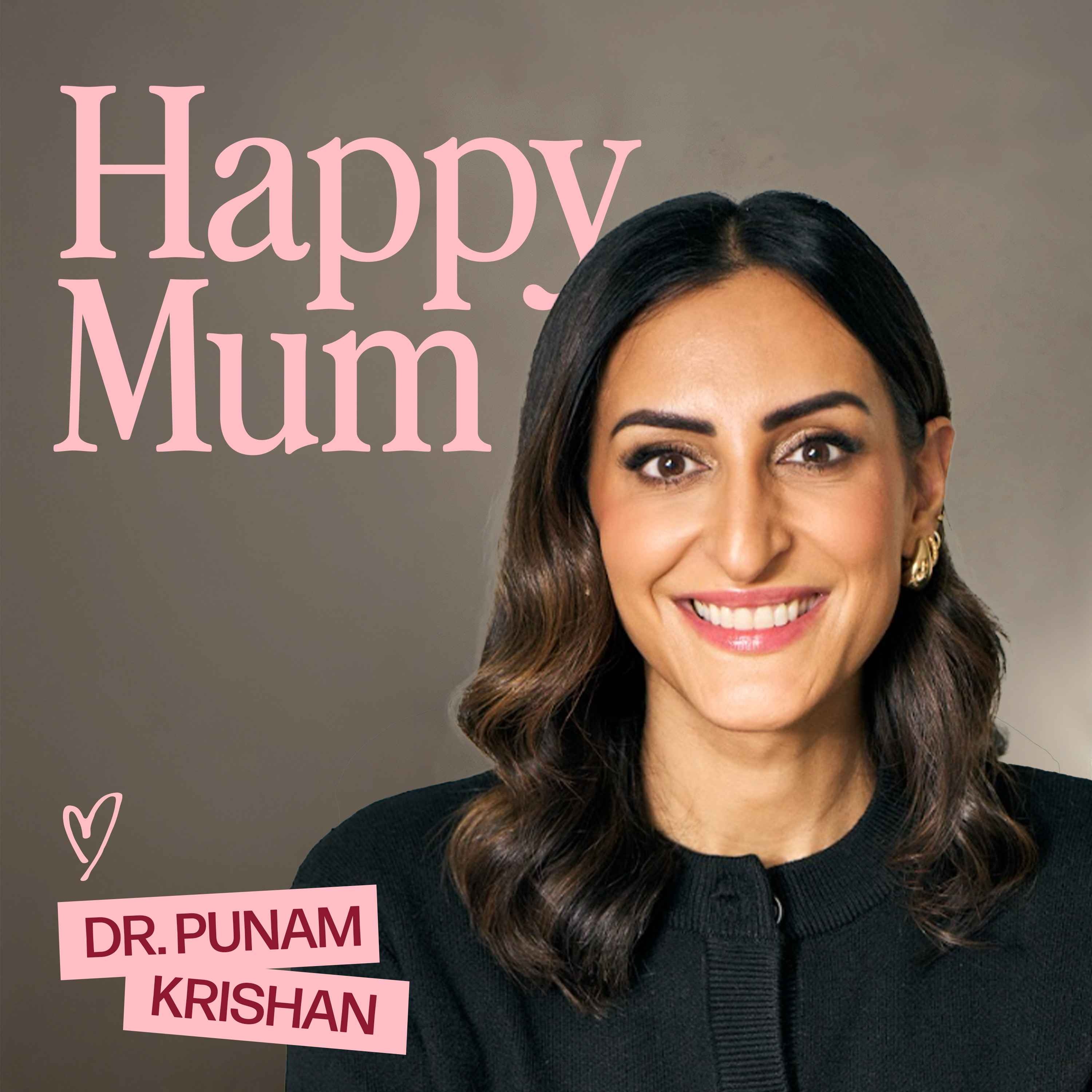
Maternal health beyond the “first year,” including maternal mental health, physical recovery, and the “motherhood health penalty” (women normalising symptoms and being under-investigated). Dr Poonam Krishan also shares her own traumatic birth history, postnatal depression/PTSD, later breast cancer recovery, and how she advocates for self-care and timely help.
Dr Poonam Krishan is a GP and author of The Motherload (debut adult book). She has lived experience of traumatic childbirth with severe complications, long recovery, postnatal depression and PTSD, and a later breast cancer diagnosis (recovered). She also describes being a mum across multiple stages, including parenting through perimenopause/menopause concerns.
Medicine focuses on the baby after birth and gives limited time to assess the mum; symptoms are often dismissed as “normal mum life” or perimenopause. Women should be asked if they are a mum because it changes clinical needs. Trauma and bonding aren’t always “instant,” and breastfeeding/bonding difficulties are common and treatable. Don’t delay appointments; ignore “gut instinct” at your peril.
Her first birth involved forceps delivery, 3b tear, massive blood loss, anaphylaxis to blood products, multi-organ failure/sepsis, and ICU ventilation; later severe PND/PTSD and a child’s delayed diagnosis after being dismissed as an “anxious mum.” She later received NHS birth-trauma psychology in a subsequent pregnancy, leading to a planned C-section and improved healing/forgiveness.
Written by AI. May contain mistakes.
Explore the challenges and misconceptions surrounding postpartum recovery.
“You know, I think that when I was pregnant, and all the books are there for the pregnancy, and then you're like, right, next, what happens next?”
Discuss how societal expectations lead to the neglect of mother's health.
“But the effects of that, we just tend to kind of ignore and get on with it because mums normalise everything.”
Learn about the issues women face in seeking maternal health care.
“But I would argue that it's even less of a gap that's been made aware of when it comes to maternal health.”
Differentiate between what is 'normal' and what is commonly experienced by mothers.
“oh it started when my son was born 40 years ago why haven't you come in before this I thought it was just normal and that is the motherhood health penalty.”
Discuss the emotional journey of mothers and the importance of support.
“But now actually you can only speak to me about one thing.”
Reflect on the shared experiences and challenges faced by mothers.
“When I was writing this book, I had my daughter at the forefront of this as well because I was like, what do I want to pass to the next generation of mums?”
A mother recalls her emotional six-week check with a patient and the challenges of motherhood.
“Like yesterday a patient came in, I was doing a six-week check and she had loads of things on her and she was trying to get her stuff together.”
Dr. Punam shares her surprise at discovering her first pregnancy while partying.
“Available at major retailers, in-store and online.”
A detailed account of Dr. Punam's difficult labor and unexpected complications.
“The pregnancy was actually, the pregnancy was okay.”
Exploration of feelings and trauma experienced after a difficult birth.
“and I didn't meet my baby even for, you know, until I was conscious again And even then, I remember that my first memory of that is just going, where's my baby?”
Discussing the importance of maternal support from family during recovery.
“They've had the experience that you romanticised in your head and you think, oh, and then that isolates you further because you think I've not got anything in common.”
Sharing the challenges of bonding with a newborn after trauma.
“where I just sat and cried to my mum and you know had this little baby and we'd look at him and you'd be like, he's so perfect and so beautiful, we're so lucky.”
Emphasizing the necessity for medical support and mental health care.
“But you obviously have the background and the knowledge of being a GP.”
Discussing lasting impacts of childbirth experiences on women's health.
“Recently, I've shared online, I have recovered from breast cancer.”
Highlighting the significance of continued care beyond the early weeks.
“I found that, you know, just really fascinating to read.”
Learn about the struggles of postnatal depression and the impact of healthcare interactions on new mothers.
“And of course, I'd been delivered the big whammy of you won't be able to have any more children.”
Discuss the anxieties and fears surrounding subsequent pregnancies after trauma.
“And so many women that have experienced any form of traumatic birth experience, lots of them don't go on to even try to get pregnant again because they go, the trauma was too much.”
Explore the contrast between traumatic and positive birth experiences and their lasting effects.
“I was definitely very nervous the next time round pregnancy wise.”
Understand the complex emotions of forgiveness and healing as a mother.
“And at the time, before it, I remember pacing the room going, I don't know how I'm going to do this.”
Reflect on the impact of COVID-19 on family dynamics and new motherhood.
“I didn't know the sheer number of women because it's a quiet topic.”
Discussion on the impact of COVID on family bonding and personal reflections.
“But actually, this is a different chapter of your life that you're actually all able to take that slow time with.”
Importance of early detection and personal experiences with breast cancer symptoms.
“and the thing is when you have another child you get to fall in love with your older child in a whole new way.”
Personal narrative of receiving a breast cancer diagnosis and its emotional toll.
“But I'm really, really grateful that we picked it early.”
Strategies for communicating illness to children while maintaining normalcy.
“And so we made the decision that actually until I knew what was going to happen, I wasn't going to tell them anything.”
Explore the emotional struggles of motherhood and the importance of communication with children during crises.
“So the moment they would go to school, I would be at home crying.”
Learn how personal health challenges can reshape perspectives on strength and the importance of health.
“I remember afterwards feeling not annoyed but just going there's no gifts there's no gifts what gifts.”
Understand the significance of community and shared experiences in dealing with health challenges.
“You've just got to put one foot in front of the next.”
Reflect on the lessons learned from motherhood and the journey of writing a book for future generations.
“And an incredible thing a year on to kind of be like, to be able to process.”

Get the gist, explore an idea or ask about something said.
 Claude
On Happy Mum, what are the key points of this episode?
Searching your listeningAutomatic transcript. May contain errors.
0:01What if your favorite way to unwind could actually reward you? With Mistplay, it can. Stop scrolling social media for nothing. Mistplay lets you earn points just for discovering and playing mobile games. Redeem them for gift cards from brands you love, simply for doing what you already do to relax. Download Mistplay today and make your downtime more rewarding.
0:37Hello and welcome to a brand new episode of Happy Mum. Today's guest is someone who always makes me cry whenever I talk to her. It's Dr Poonam Krishan. She's a GP, a working GP who we do see on the telly, but she talks so eloquently and so warmly and so just beautifully about maternal mental health and being a mum and all the things that come with that. Poonam had a really traumatic birth, which led to, I mean, she's going to tell you, triple organ failure, sepsis, and then postnatal depression, PTSD. And that was a long old recovery out of that. That has led her work. And I think it's that passion that drive of how women should be treated that makes her so special.
1:23She's also written an incredible book called The Motherload that's out now. that doesn't just focus on the first trimester, you know, of being among the fourth trimester, as we call it. You know, that first little chunk of time. It focuses on your role as a mother and what that impact that it has on every aspect of you. It's a really gorgeous book. I've got a quote on the cover that says, a must read. I stand by that. It's a must read. Poonam also had said that she had a breast cancer diagnosis last year. So we talk a lot about that as well. She's super clever in the fact that she has this GP head.
1:53She's got the medical knowledge, but she also is able to link what she is talking about to her personal experience. And that creates just this gorgeous account to listen to. And I think that's probably what makes me feel like I want to cry every time I talk to her. Even just writing the notes for this chat, I literally cried. So maybe it's not that surprising to learn that we do cry during this chat. But if anything, take away from this chat the fact that you must advocate for yourself. You must put yourself first. And don't delay going and checking out whatever is on your mind. Anyway, enough about me.
2:32You actually want to listen to this week's guest. It's Dr. Poonam Christian.
2:38Welcome Poonam, who likes fiddling with knobs. It's a whole podcast. How it's all fine-ish. Publication week, The Motherlode is out The Motherlode is out, my baby is out in the world What book is this, what number? So this is my debut adult book So I've been writing kids books up until now but this is one that has been there since the beginning of time as a mum and it's just been something that's existed in my heart, in my head on little notes throughout the years and little messages to myself in between patients, conversations and then just being able to have a place to actually put it all and to have a conversation with mums, but also written it to myself.
3:23You know, I think that when I was pregnant, and all the books are there for the pregnancy, and then you're like, right, next, what happens next? So it's that first year, you know, and it's all about the baby. What happens to mums after that? Well, also, I think we've started talking about the fourth trimester, but at the end of that first year, I think there is an assumption that you go back to normal. That's it. Everything's back to normal now, guys. What happens to mums after that? Yeah. It's like, we've done a little bit better because we've included that first year of motherhood. Yeah. But actually, it goes beyond that.
3:54It is. It's almost like there's this kind of thing out there that goes after the first year. That's you. You're sorted. Get on with it. And it gets easier. So you assume everything's going to be fine. And you go, well, it'll all be better when they start crawling. Gosh, this is quite hard. When they start walking, when they start talking. Right, they're at nursery. It'll get better. Primary school. And actually, each stage, we forget that we're also growing and evolving. And our bodies have gone through so much during childbirth and in the years after giving birth. But the effects of that, we just tend to kind of ignore and get on with it because mums normalise everything.
4:29So, you know, we have exhaustion. We have musculoskeletal pain. Some women have incontinence, pelvic floor issues. They have problems with intimacy. They're feeling tired all the time. But we just go, oh, that's normal. That's just mum life. Do you think part of it is feeling like it's normal and because it has been so sort of, it's not been talked about for so long and actually starting those conversations about so many of those topics is really hard. Yeah, it's hard because it's not spoken about and for so long it has just been normalised. We've heard other mums speaking about their experiences and if you happen to be somebody that's had a very different experience, you kind of feel almost left out.
5:08And I think that motherhood is one of those things that it's quite an isolating experience. And no two mums will ever have the same experience, yet we have this textbook that almost assumes that we should have the same experience. And I think that that can be tricky. And I think that, you know, something that I've gone into in my book a lot is about the motherhood health penalty. You know, we talk often about the gender health gap. We know that since the beginning of time, you know, all medical research trials have been based on male bodies, male physiology, trials as well have all been conducted on men.
5:44Women have been absent in all of this. But I would argue that it's even less of a gap that's been made aware of when it comes to maternal health. We've got so many different parts of a woman's life. Yeah. With all the hormones and stuff. So I wonder with that, there's so many variables within that. So you actually need to take women at different stages and properly investigate each part. Yeah, we've never actually looked into maternal health properly. And I think that every year, millions of women across the world are giving birth, but they're experiencing health problems during pregnancy, during childbirth.
6:19But then once the baby arrives, the focus is very much on the baby. And then there's a limited amount of time where space is given to check the needs of the mum, which really includes basics of how are you feeding? How's the wound? What contraception do you want? tick tick tick and that's and that is maternal health she has gone through this huge transformation neurologically hormonally physically emotionally and that's it tick tick tick off you go out into the world and actually what happens is I every single week in clinic will have women who come in in their 40s 50s and they think it's perimenopausal changes you know kids have maybe grown up and they've got a bit of time to actually come in and talk about themselves and they say oh I'm feeling very dry down there oh do you know every time I laugh I pee myself you know I've had problems with incontinence and issues with my lower back musculoskeletal issues they have like anxiety low mood, brain fog they're like oh it must just be perimenopause but then you track back how long has this been going on for oh it started when my son was born 40 years ago why haven't you come in before this I thought it was just normal and that is the motherhood health penalty.
7:35It's kind of going, what is normal? And sometimes the normal thing makes people feel, whether that reassures them to let them know that they're not on their own in those thoughts. Like with maternal mental health, knowing that you're not the only one who is maybe questioning your choices, worried about your bond, like all those things are so common. It's common, not normal. It's those things, isn't it? And kind of going, look, just because you have this and you're experiencing it, doesn't mean you have to live with that. There are things in place that can actually help you. And I think that is what we're bad at.
8:07We're bad at finding the time, but we're also bad at just accepting the help when it's there. When I go to the doctor now, I kind of, I will kind of, well, while I'm there, I should probably mention that and that and maybe that. And you're kind of like, well, actually, no, I am slowly falling apart. Yeah, yeah. But now actually you can only speak to me about one thing. So let's focus on maybe the one thing that, you know. And I think that there's a huge thing that's missing in medicine in general and that we're taught about taking a history. And in the history, we ask about past medical history, family history.
8:40I feel it should be absolutely mandatory to ask every woman that comes in, are you a mum? Because it completely changes what their needs are. You know, mums I typically find will come in with their children. They'll come in with elderly parents. They'll come in as a carer. They'll put themselves at the bottom of the pile. they'll delay appointments they'll apologize I'm so sorry uh and and all these things I just think what no sit down or another thing that I've had recently actually happen a few times is mum's coming in an appointment has been made for them but they've gone my baby's actually developed a rash or my baby's got a cough so can you actually just see them and I'll make another appointment and I think because we are so used to putting the needs of the people we love first that we have normalized it's okay just to put yourself at the back of the page I literally When I read in your book that that's the first question, or one of the first questions that you ask people, are you a mum?
9:32It literally made me want to cry. Yeah. Because I just, that does change everything. You know, and as much as we all want to believe that being a mum doesn't overwrite everything else that there is about us, it informs so much. Yeah. A lot of people don't realise this, but during pregnancy, our brains actually structurally change. So we become more tuned, especially in things like social cognition. empathy attachment because the changes that happen i mean motherhood doesn't just change your life it rewires us in every sense but with your brain it's tuned to be able to look at the needs of your child and to strengthen that bonding but what those adaptations as powerful as they are when it comes to looking after children they they weren't designed to cope with the the sheer volume of stuff that modern motherhood brings us you know you've got constant we're living through a culture of constant output you know so it's not just the physical load that you carry but actually the mental load is nuts we've got whatsapps work deadlines emails school apps we're trying to you know keep up with social expectations and so many different people wanting different things of you that suddenly you feel like a bad human if you don't go but how can how can you possibly tend to the needs of everyone all the time like i've been talking about this a lot i am so out of love with my phone oh me too like massively i just think it's a massive distraction of actual life and and we no longer think about the things that we are consuming or what is what it's costing us what it's taking from us all the time absolutely um i love the book i just think it's amazing i i said it's a must read and um and i think you are an exceptional human um and every time i chat to you i i come away feeling nicer but i i think i always cry too not afterwards I think I drew in the chat I just think you marry your knowledge and compassion as a GP with your lived experience and the two come together in such a beautiful way having it written down on a page that literally makes you go it doesn't matter how old your kids are like we can work through this and actually we're all still going through it you are still you know figuring things out and let's all be supportive of each other and not shy away from those difficult chats.
11:54Yeah. When I was writing this book, I had my daughter at the forefront of this as well because I was like, what do I want to pass to the next generation of mums? So they're one step ahead again. And I can't predict how it's going to change the world. But I think the common thread between all of us is that there always is these feelings of not enough, I'm a failure, mum guilt, I don't know what I'm doing what's wrong with me I don't want that narrative to be passed on to the next generation it's about okay I'm in this new season of life what's the challenges ahead of me what's going on I want to know so I know what to do with it and I think that that's I kept thinking what would I want to write for my child one day if she becomes a mum and it is just to walk into that journey and be like yeah you're not alone absolutely not alone and you've got this you absolutely do I completely agree I also think that it's actually really healing for anyone who's gone through it a long time ago, like our parents, to actually understand themselves and what they went through as well and offer themselves a little bit of forgiveness and love.
12:59Yeah. Because everyone's just making it up as we go along. So showing ourselves compassion is so important. Yeah. Did you always know that you wanted to have your own children? I always wanted kids. Really? Yeah. I wanted three kids. So I've got two children and a wee dog who has the third child. and it's lovely. So when you met your husband, were you both on the same page straight away? I mean, I said straight away. I was like, I want kids. He was like, I want kids. So he's an only child. So he was like, I've always wanted a sibling and so actually one of the things was that when we had Irish and we were told you might not be able to have any more kids and that was just, it was like the most earth shattering news.
13:40Unfortunately, bless, we had a wee miracle baby six years later and I was like, you know, we've got these two beautiful children and I feel very, very lucky. But, yeah, we were both just like, we want kids. And now I'm just so over the kind of boat, can't have any more. And I keep looking at other mums. Like yesterday a patient came in, I was doing a six-week check and she had loads of things on her and she was trying to get her stuff together. And I said, do you want me to hold him? And she was like, yes. I was like, give me that baby. oh my god, this is so inappropriate. But those women, those always, like, you know as a mum what that heat that's rising through that woman's body as she's trying to...
14:26But actually as a bicep, as someone who's removed from it, everything is so much calmer. Yeah, it is. Do you know what? I can help you in this situation. Yeah. Don't you worry? Yeah. But I think each stage of it you're still figuring it out. Like, I mean, I've got my almost teenager right now. I'm just starting to kind of... Just when you think things are steady, you know, something happens and you're like, oh, we're into a different season. And then you start going, are you going to be all right? Is your mental health OK? Have you got friends? Are you being bullied? You know, oh, you're talking about body hair.
14:57How do we have this conversation? What do I do to help you? I heard us spraying teodering today. And it's that silly little thing. I've always had rollers or whatever. But just that, I was just like, oh, I've had him in his bathroom. Like, I don't know. It's just such a silly little act. So you're just like, oh. Yeah, it's almost like you want another bystander beside you going, it's all right, they're going to be all right. Look at him, look at him spraying deodorant like an independent little man. Stop worrying about it, it's all right. This episode of Happy Mum is sponsored by Dove Whole Body Deodorant.
15:28So as a mum of three young boys, I'm constantly on the move from one event to another. It might be attending a school sports day, taking the kids for their swimming lessons or even sorting out all the bits we need for the long family days out together. And throughout it all, I just want to feel fresh, confident and put together, which can be hard at times. Well, that is where Dove All Body Deodorant comes in. It gives you all-day odour protection with added skincare. It goes way beyond your armpits. We're talking underboobs, thighs, back and even your feet, helping you feel fresh and confident from head to toe.
16:07So with that in mind, Dove have asked me to create my busy mum starter pack, the essential items that live in my bag for whatever family events are thrown my way. OK, I'm going to pull out. This is a one item. It looks like two, but it's not. It's majorly linked. A notepad and a pencil case. They are non-negotiable must-haves in my bag at all times. Firstly, because, you know, I never know when inspiration's going to hit. It makes me look like I am studious at all times to have this notepad and pencil case But actually, it's a secret weapon because wherever I am, instantly I can pull out a little bit of activity.
16:43We can play noughts and crosses, which is always needed. When we're out for dinner and, you know, it's not a buffet, my kids, they're hungry. So something to either have a little drawing game. We often play a game of guess the picture, which sometimes takes a long time, depending on who's drawing and what they're drawing. But for me, notepad and pencil case, that is non-negotiable. has to be in the bag. Next up we have a big old bottle of water. My children seem to suddenly be completely dehydrated if we are away from a tap of any kind, even if they've been home for a few hours and not needed a single little bit of water.
17:25Suddenly they are parched beyond, you know, we're talking Sahara Desert walking across with nothing, starting to see hallucinations, you know, mirages popping up. They instantly need a drink to the point where, can we pull over the car? And even if you think, you know, that's enough, that's a lot of water. No, double it, triple it. You will never have enough water if you are travelling with kids. And third item for me would be my headphones. They are mine. However, if a child needs a little bit of a timeout or I need a lot of time out being able to listen to to music is really useful to me sometimes I'll tell you a little secret if I am traveling around and I'm not with the kids so therefore I am not with the chaos I don't want chaos to follow me around um so sometimes I'll put my headphones on and nothing will be playing nothing nothing I'm just blocked out because I'm a tired mum all right OK, now finally, the item that we cannot forget to add to our busy mum starter pack is Dove's Whole Body Deodorant.
18:37There it is. So this range is great as it comes as spray, a stick, a cream, each designed for different parts of the body. From our chest, to our thighs, to our backs and even our feet. I've been using this a fair amount. The other day I was at Chelsea Flower Show. I know, posh, fancy. walking around a lot I would say and you're talking to people the whole time getting your garden geek on so I wanted to feel fresh and confident all day and that is what this definitely gave me and I've got to say I'm going away for a family wedding and it is going to be hot, hot, hot and I want to feel fresh I want to feel like I can talk to people and not worry about feeling a little bit stinky so this will be in my bag at all times to make me feel confident, fresh and good.
19:28Make Dove Whole Body Deodorant a non-negotiable in your busy mum starter pack. Add it to your body care routine so you can stay fresh, comfortable and fuss-free whatever family plans come your way. Feel fresh everywhere with Dove Whole Body Deodorant. Available at major retailers, in-store and online. Did you get pregnant quite quickly first around? First time round, yes. It was, it's one of those ones where I'm like, well, maybe I'd been out partying too hard. And it was not at a time that we were actually expecting to have a baby. So we'd actually not long been married. So this was me going, yeah, we moved to London.
20:08We were just both junior doctors at the time. No, actually, I wasn't a junior. I was a GP. I didn't know that you lived down here. So I moved to London. Yeah, my husband's from London. So I tried, you know, I've done everything in Glasgow. And then I was like, I want to move away. and as far as I could get was London. So three years I lived in London and I worked in a lovely practice in East Dulwich and we lived in Clapham. But at that time, yeah, just nearly qualified GP and we were like, let's live at large. And so we're out partying all the time and I didn't actually know that I was pregnant the first time round.
20:42And so it was only that I just felt funny and I'd just done a pregnancy test on a patient and I had a spare stick. I've never told this story actually it's terrible I'm not doing yours I might as well do mine and it was hard because I was like oh god I was partying too much last night but anyway the spare stick was just sitting there staring at me and I needed the toilet so I was like I'll just dip my urine and I was not expecting at all for it to be positive to the point where I actually had like a full blown panic in the toilet I was like, oh my gosh. And my husband had literally just got a job up in Sunderland.
21:22So he was away. So I called my practice manager. I was like, I need to go to Sainsbury's. I'm in the toilet. I was like, I need to go to Sainsbury's. She's like, why? I was like, can you just come with me? Because I'm like really freaking out here. So we then went, and then the toilet's at Sainsbury's. I was like, oh my God, it is actually. I don't know why I didn't trust the practice. That's so funny. People go to the practice for it to be official. Whereas you're like, no, I'm going to Sainsbury's. Give me clear blue. It just goes to show in that moment, we're all just the same. And I just remember thinking, oh, my goodness.
21:54And the thing was, at the time, obviously, I'd been incubating this little thing for the last six weeks. But I became cat obsessed during those six weeks. I'm not a cat person. I'm a dog person. But that time I was like, oh, maybe I'm just so alone because my husband's away. I'm in London. I need a cat. So he had surprised me with a little kitten for Diwali, which I just did not know. and so then when I said to him I was like we're having a baby and he was like ah there's a kitten arriving I was like I don't think I can be around so it was just one of those things I was like I don't think I needed a kitten I'm pregnant so then we fortunately found somebody to see the little kitten I ended up you know pregnant with my baby I love that it turns out I didn't need a kitten I was just pregnant all along hello kitten such mixed signals Oh my gosh.
22:43So yeah, it was funny. It was very unexpected. So once you did know, how was the rest of the pregnancy? The pregnancy was great. The pregnancy was actually, the pregnancy was okay. Like I had no issues. I was, you know, went to all my little yoga classes and everything like that. And at that point I was in London. And there would have been loads around that area. Actually it was like all the yummy mummies over in Hampstead. And it was just a really nice time. Pregnancy was great. Looking back, no issues. And how did you feel heading towards the birth? Because obviously being a doctor, I know you're not, you know, not in that field, but you know about the body, you know how things work.
23:22How did it feel knowing that you were, that's where you were heading? yeah I think that for me I felt very I think just maybe it was all the kind of hypnobirthing etc that I had kind of planned for in the courses I had done but I didn't want a medicalised birth I wanted to be as natural as it could be I was very aware that I don't have any control on what actually happens but in terms of going into it I was like this is going to be amazing I'm going to have my baby of course why would you think anything otherwise and uh and so heading in it you know I was just like can't wait to meet my baby I very much some of the books I'd read almost kind of thought about maybe maybe it is possible to have these orgasmic births you know that people talk about the monkey brain and all the rest I was like really prepared that it was going to be in the water and dippy and um it just didn't go to plan so how did things start yeah so things started with a very difficult and long labour.
24:26So with, did you go into labour at home? Yeah, so I went into labour at home and then we went into hospital and just hours and hours and hours. It was just lots, I think the timing of when we arrived into hospital, there was so much commotion, lots of handovers of different staff, locum staffing and it was just a really hideously long labour and nothing much was really happening and then eventually I got my epidural in and these are just like kind of the bits that I remember uh and it was a forceps delivery which resulted in a horrendous 3b tears it's the one that extends all the way to the the anus and uh and it was just blood spatter everywhere I lost huge volumes of blood my baby was born he was healthy he was okay how many weeks were you at this point um I was uh 41 weeks I think it was just a week over I can't even remember gosh that's terrible and also being a doctor and usually being the one in control and your husband's a doctor to suddenly be in that environment where the room is spinning yeah you know the situation is spinning out but you are you are at the center of that it is the most vulnerable experience ever uh you are so exposed in every sense you have no control and the thing that I do recall both times actually both very different birth experiences but your entire focus is on is my baby okay?
25:49Is my baby okay? You're listening for the tracing. Why is the tracing doing that? Is my baby okay? Always on the baby. Always just on the baby. And I vividly remember that but you have no control so you know that people are changing things and doing things and you're not quite understanding but you're just going, oh my God, I'm at your mercy here. When you found out forceps were going to be used at that point, Were you able to, even with your hypnobirthing, sort of let go of what you had intended and dreamed of having birth wise? Yeah, yeah. I very much, I just wanted my baby to be OK. And at this point I'd had my epidural, couldn't feel a thing.
26:27So I was just like, oh gosh, is he all right? His heart rate was getting quick. And they were like, we need to do this. You don't feel anything when you've got, you're all numbed in down there. You have no idea what's going on. You're like, OK, just get my baby out. And they got my baby out and he was safe. and then everything went wrong that could have gone wrong. Just I lost a huge volume of blood in seconds. My husband, he was an orthopedic surgeon and he was used to operating and he even recalls, and it's years later, he was able to speak about it because it was such a traumatic birth for both of us and we often forget the dads that are stood there watching this happen and they're just going, they feel so helpless.
27:11and I had to be rushed to theatre and he was like I've never seen so much blood it was just everywhere and then in theatre my memory is just of seeing Can you recall any of that? No, I can't recall I remember just hearing the baby cry I remember then the next minute seeing him in an incubator and they were trying to operate to try and control the blood loss and I remember just going Arish, his name is Arish but I can't remember anything after that. It's just this big blank but I ended up with a huge anaphylactic reaction to the blood products. I ended up with multi-organ failure and overwhelming sepsis.
27:54I was on a ventilator in intensive care for a week. My husband was told that she might not make it and I didn't meet my baby even for, you know, until I was conscious again And even then, I remember that my first memory of that is just going, where's my baby? You know, and I think that's just mum's right down to the T. We're just instantly primed, aren't we? Whereas it's so intuitive. You just go, my baby. And you've got all these tubes. Your body's like 10 times the size of itself because it's so swollen. And I just remember feeling grateful that he was OK. Grateful that I was, I always get so emotional talking about this, that I was alive.
28:39And I think that over the years what I've definitely seen in the narrative with women who experience traumatic births and a traumatic birth doesn't need to be what I've had. Trauma is whatever you have perceived. It could be a frightening birth. It could be a feeling of nervousness or it could be you've had a tear. It could be anything. Trauma is very personal. But what the constant narrative is, well, I should feel grateful. I'm grateful everything was okay. but actually there's so much that's happened and I just did what I had to do which was you know go through the motions and you want to heal which physical healing took a very long time uh and then I had really severely like bad postnatal depression well it must be what was it like coming around and hearing about all this stuff that's happened and being so unaware of all of that stuff that's happened to you.
29:31And then it is like that stuff has happened to you. But like you said, there's a massive impact on your husband and your family who have had to watch that and then think, we're walking out of here with a baby, but no mum, no wife, no sister, no daughter. My husband, actually, there was a lady next to me who'd had twins and she was exactly the same as me. so in the next cubicle to my husband was this this other dad with twins and the two of them it's only later many years later that he said he said we had a cry and I was like you never told me and he was like because you had so much going on um and and I think that in that moment it is there's just there's so much there's so much that goes through you I remember a lot of feelings of what's wrong with me?
30:26Why me? What did I do wrong? You know, and then I think that feeling just intensified and intensified over the next few weeks and months as you start going to classes and meeting other new mums and, you know, other mums have had very different experiences. They've had the experience that you romanticised in your head and you think, oh, and then that isolates you further because you think I've not got anything in common. You're still dealing with all these aches and pains and issues with healing. And my mental health just took such a dip, such a dip. In those early days, was it a relief when you were finally allowed to leave hospital?
31:06Yes, it was a huge relief to go home. And actually, the reason I was there three years, as soon as he was born, I only lasted in London for six weeks. Really? Because I needed my mum. All I kept saying was, I need mum. I need my mum.
31:23and and so I came home and we moved in with my mum and dad because I just need to I needed someone that just saw me it's like you've got these awful wounds and you feel so vulnerable and your mum's your safe person yeah and and I just remember her really just me feeling bad like she was celebrating the birth of her grandson here this is her first baby in our family but I could see how worried she was that she'd helped me clean myself and you just feel like oh you shouldn't be doing this at the age of you know I was 30 at the time but my mum was there and I just really couldn't have done that without her I just you know and I felt like maybe my husband at that time just felt like about the spare part I was like here you just go I just need my mum and so yeah I think there was lots of days where I just sat and cried to my mum and you know had this little baby and we'd look at him and you'd be like, he's so perfect and so beautiful, we're so lucky.
32:17But then part of me would be like, oh, why? It must have been a really difficult thing as well, having that feeling of gratitude, that your baby's here and safe, the reality of what's going on with you, and then the connection of what's happened with you and the baby and that bond. Yeah, yeah. Like, did it have an impact again? Because that's something else that we romanticise. Yeah, yeah, yeah. You're told, you know, you're instantly bond. And it is, you know, of course, our babies, they're an extension of us. And that bonding is, you know, for a lot of women, it can be instant, but it's not always the way.
32:53And I think that that's something that is OK to say. And a lot of women feel really guilty admitting that or they feel ashamed to admit that. And I did think, what is wrong with me? Because I really struggled. I'd been away from him for a week in my head. I was going to breastfeed from the get go. I hadn't seen him and I remember just sitting there and I feel so sorry for that that poonim because you know really trying I need to get the colostrum out I need to give him because I had all this that I'd built up. Also having had a week of not being able to that must have impacted it was so so hard but I was beating myself up so much and then thinking I'm denying him.
33:31No never mind that I nearly just died yeah no what am I not doing what am I failing at in this situation? can I breastfeed? Why is this not happening? And it was so painful. It was so challenging. And then, of course, Instagram and everything just is like, and I think that our phones have this ability to be able to listen to our thoughts because all the content that comes in front of you is like women experiencing breastfeeding is the most beautiful part of their journey. And I'm like, what's wrong with me? This is what I wanted. It is another thing I failed at. And I think that all of that really contributed to like really spiralling mental health and it was just several months in where I think everybody around me could see that I wasn't, I don't know, behaving like a normal mum.
34:18I was very much happy on the surface but I didn't want to ever be left alone with my baby. I really struggled with that. I felt that everybody else was better with him than me and that's a really horrible feeling to have and I was like am I ever going to have this bond but then fast forward to he's nearly 13 and we couldn't be closer he is my heartbeat we have this bond that is just unbreakable and I think somewhere along the line it's because he went through it with me we have been on a journey that only me and him know and he feels like I mean if I hurt myself are you alright? sometimes I'm not even in the room and he's like are you alright?
35:02how was your day today? are you sure? okay and I'm like you know that it's just something's bubbling away you know in a way that I think that yeah bonding does come it's just it doesn't have to be instant you know as a mother and our child your your unique experience is what sets you apart and you will find your way and I think I really wanted you know I go back to the book but I really wanted that to come across that all of us have got our own journeys and alongside that our children are growing with us and you'll you'll find what works for you and don't compare it to anybody else's experience.
35:36But you obviously have the background and the knowledge of being a GP. So with you, you would have had women in to talk to you about various things or you would have learnt about it in your studies, but you didn't recognise it. Nothing prepares you for when you're in it yourself. Do you think that's because you're lying to yourself or you just don't want to admit it? I think you're just human. yeah so I think we're just we're it's you can be objective with other people and I think that obviously in medicine we learn about signs and symptoms and patterns and my job in that moment is to help the person in front of me and I can piece the you know the bits the puzzle together and figure out okay what's going on I can help you but when the pieces are all fragmented and they're to do with you yeah you do need somebody else to just come and figure it out for you because you're too lost in it.
36:26You're too close to it. And it's happening to you. You're feeling the sadness. You're feeling the loneliness. You're feeling the helplessness. You're feeling so vulnerable. And in those moments, clarity goes. So you just have to take the next step in front of you and hope for the best. And I was lucky because I was surrounded by people that loved me and supported me and were there for me. I know a lot of people don't have that level of support, but I think whatever that looks like for you, it's just being able to actually unapologetically say help you know I had to go home to my mum because I was like help and that's okay because that's the single thing that really saved me in that moment because I could have just been alone in London trying to muddle through it and and that probably would have been so much worse for me but it is it's hard I think no amount of knowledge which helps in many years on.
37:20Recently, I've shared online, I have recovered from breast cancer. I was diagnosed with breast cancer last year. And one of the commonest questions I get is, but as a doctor, you know, and I'm like, it doesn't change anything. I too need doctors. I too go to see my GP when I have a medical problem. I cannot diagnose myself. Really? Of course. Yeah, yeah, absolutely. I never give medical advice to myself.
37:52Because I inevitably, like any other woman would do, I'm very busy and I would just go, it's probably another thing. But I make a conscious effort not to do that. I never diagnose my children. Really? No, because I'm too close to it. I can tell you intuitively or instinctively something's not right. I always say that to mums never ignore that feeling never ignore that gut instinct but when it comes to diagnosing and treating them I can have an idea or I think I know what's going on but I would never treat them and we're not allowed to either as doctors but even with personal medical advice my mum would call me I'd be like okay I think I know what's going on but you need to go see your doctor you need somebody objective Your physical recovery was two years Yeah, yeah, it took a lot.
38:42And I think that some of the effects and again, why I was so passionate about sharing that and writing about it for other mums to know is that a lot of the time, some of these changes that take place at the time of birth do last for a long time. And it might feel like you don't have the time to invest in like, you know, getting pelvic floor help or mental health support. It is worth everything because they don't just go away. They manifest many, many months later. I love the fact that in the book as well, you really make a point of actually ignoring it. It's only going to exacerbate it, actually, as you do go through perimenopause or menopause and your hormone levels drop and things like that.
39:20I found that, you know, just really fascinating to read. Yeah, it absolutely does. And especially if you have had a difficult birth or experience along the way when you do end up hitting those hormonal changes again. And of course, perimenopause brings with it multiple things. You know, it's not just your temperature regulation, but it affects your emotional nervous system as well. And so when you go through all those emotional sort of changes, a lot of that, what you've experienced back when you were pregnant or childbirth can resurface. Some of those changes, especially as the oestrogen drops, you start to go, why is that suddenly feeling so much worse?
39:56Well, actually, the initial trauma, the injury happened many, many years ago. So I would say do not ignore it. put the time in there I know it's hard to find time as a mum but when we are well and we're physically strong we're able to really really take care of our families around us but otherwise we're just waiting for a problem to to get bigger and bigger and then when it's crisis point which is when a lot of mums come in and they go help and we're then trying to go backwards you know yeah I actually didn't realize that um that a female physio uh was an actual thing yeah that women's health physio was I think it was a third birth that I actually found the amazing um Emma Brockwell and and suddenly went oh this is this isn't just normal like I can go and talk to someone about it and uh that that is a whole area that I've no doubt is underfunded yeah um uh but there are also amazing people that you can follow online and and have that reassurance and those things put in place but obviously going to actually speak to someone is key I think it's one of the single most important things that every mum should be offered and there's this method well if you've had a c-section you don't need that no you absolutely do because carrying yeah i mean the amount of pressure and strain that goes on our pelvic floor during that time we do need help to rebuild that and strengthen also the whole six weeks thing is a little bit quite like that's that is it doesn't make sense no but that is the measure of maternal health in this country but what like six weeks that isn't that crazy yes absolutely why i've written this because i was like what happens to us after that like it is mums just fall off the cliff after that it's like jobs done well done carry on yeah you're just back to being an ordinary person which we're measuring by the way on a male body so it's just it's it's mind-boggling but you are your maternal health starts there and maternal health doesn't just finish at six weeks or the first year of having your baby it goes all the way not just the perimenopause even beyond that and actually the needs only get bigger and bigger and bigger and the demands on our bodies get more and more and and women aren't being told that.
42:05With your physical recovery and your postnatal depression was there a point where you felt like everything started to lift and you could actually start leaning into being a mum and the joy I guess that comes with that I think that I needed a lot of support so I remember going in to see my GP I was given in and out in a few minutes an antidepressant but I took an antidepressant and even with that that must have informed you and gone well I won't be doing that that was a single point that changed my whole trajectory of the way that I do medicine because I was literally sitting in that car park thinking you didn't see me you didn't actually see me I'm never going to make a mother feel like that ever in my life and with that doctor's appointment did you have to detail your birth as well yes it was in and out the health visitor contacted the GP worried about this mum I'd made the appointment which I'd been putting off and off and off and the worst thing was it was an older female GP but it was just like okay here's an antidepressant I ended up having therapy so I saw a psychologist to try and unpack some of that.
43:15You had PND and PTSD. Yeah, so I had both of them. And of course, I'd been delivered the big whammy of you won't be able to have any more children. And that early on as well. Yeah, it was just, you know, and I think it was just quite a lot to deal with. I had a little baby who had silent reflux, but I wasn't getting taken seriously because I was an anxious mum. And I knew there was something wrong with him, But it was just being poo-pooed until he had a respiratory arrest at six weeks old. And he had to be taken into hospital. And that's when he was diagnosed. So then we had a year of NG feeding and all these appointments back and forth where I was like, I'm not crazy.
43:56There was something wrong with him. But this is what happens. We just have this set root pattern of our idea that this is what it looks like. So she's had a hard birth. She's a bit anxious. She's a first time mum. She's a warrior. stop she's gone through so much just stop who's decided that uh and so i i definitely i needed a lot of therapy and then when we found out that we were pregnant that we were pregnant that i was pregnant uh and it was a complete miracle but my initial thought as much as there was a lot of joy wasn't immediately like oh god i want this baby of course i want my baby but it was like okay this time around I'm definitely going to die that's where my brain went to instant instant it was just and I was like I don't know if I can go through with this and very early on second time around thankfully the team was just incredible my midwife from the get-go was like you're a high risk pregnancy we're going to get you all the support and that's the interesting thing right so even if you hadn't been told that you couldn't have children any more children if you if you hadn't been told that then maybe you would have decided actually I can't put myself through that again yeah you don't know what that would have been yeah whereas actually then you found yourself in a position where you have to face that but this time you're not you're not mentally prepared for that or you know if you had decided actually we would like more but I'm going to spend some time unpacking this so that when I do get pregnant I'm going into it feeling uh positive and then we can we can change things it's not going to be a repeat yeah whereas actually in this situation it's thrust upon you.
45:32Absolutely. And so many women that have experienced any form of traumatic birth experience, lots of them don't go on to even try to get pregnant again because they go, the trauma was too much. They don't go in for medical appointments. They don't go in for routine examinations or investigations. They miss their screening appointments. And so, yeah, in this moment when I'm told this incredible news, that this is a miracle, I'm thinking I don't think I can go through with this because now I've got a child and I can't die this time and so I was a high risk pregnancy, they put me in immediately for, they call a birth trauma psychologist, which is on the NHS and a lot of people don't know this but if you are listening and you have experienced a traumatic birth before and you're thinking about having another baby, you're pregnant again you can ask for this to your midwife and they are available and they're incredible and yes you don't get one instantly and I had to wait for a period of time but that was really amazing because it helped me because immediately I started it was the trauma that came back I was able to smell the hospital room from the first time round I was just having all these kind of strange just sensations where I was having flashbacks it was a really unpleasant experience but being able to unpack that with a psychologist was really helpful.
46:59I was definitely very nervous the next time round pregnancy wise. So whilst the first pregnancy was lovely, this pregnancy was really stressful. I was very anxious and I don't birth very well because on this occasion, just two weeks before my baby was born, the country was into lockdown. And suddenly everything that had been put in as a control mechanism I was like what's going to happen now like what we're going to they were like your husband might not be able to be in the room with you it was a planned C section this time around because of my risk from before and I was like oh god this is not happening again but there was really good news at the end of this in that this birth couldn't have been more magical and beautiful if I tried felt like there was just angels everywhere it was just a really beautiful controlled stunning birth she came out she was crying and I remember because I was so traumatized when the first time I was like I'm not breastfeeding don't want anyone putting their opinions on me I'm going to be bottle feeding this is my decision I was like really gung-ho about that and this time around she came out and I was like give me the bottle she did all the stuff that you read about you know she started rooting and she before I knew it she latched on and she was feeding and I was like and that's when the release really came really like I side eye crying was nuts because it was just instant forgiveness because I think I had been carrying for all those years that it was my fault forgiveness for yourself isn't that mad you nearly died forgive yourself for what I know, crazy but I just remember going it's ok, it wasn't my fault thank you just kept thanking her, thank you, thank you because it was, I think that a lot of the time mums feel like I'm the one that's broken yeah uh and we're not broken you know we're constantly piecing ourselves together and it's beautiful and it's crazy and it's messy um but yeah my little miracle girl came and she was perfect she is perfect and i healed so much in that moment all those years of trying to heal it was instant in that moment and the world had locked down there was nobody allowed near me and And it was just me and her left.
49:20That must have felt like a gift. It was. And at the time, before it, I remember pacing the room going, I don't know how I'm going to do this. And just left alone. I'll never forget that night. It was just beautiful. It was just me and her. Big window, night sky, world, quiet. And I was like, thank you. Just to have a moment just to be like, it's okay. And I think forgiveness is a really powerful feeling. yeah um and so yeah we always cry i told you i can't trust you in here you made me cry um and and yeah and i think that i hope every mum that's listening that has had any challenges just knows that i don't think any mum gets away without any challenges i think we all have our stories to tell that's why i love talking to mums this is why you love talking to mums their stories are beautiful they're just books in themselves so many different chapters and we learn so much and actually if we share that with each other more we learn that we've got more in common than not yeah and sometimes we can fall into the trap of comparing ourselves for all the wrong reasons when really what we want is we want to be healthy we want our babies to be healthy we want our families to thrive and we want to get to the end as best as we can just full and armed and loaded with loads of fun stories but also all the messy bits my kids love listening to their birth stories and there's no sadness in that because that's just our story boom how how do you talk to your son about his birth yeah we talked about it much many many years later when he was at an understanding i think actually it could have been around the time of when my daughter was born so he would have been seven at the time but he's aware that it was just really difficult mommy was very very sick when he was born but I think we are in such we have such a gorgeous relationship that it's never it's never come up as like a sad conversation it's just gone gosh that must have been hard I mean that's as far as it's gone but you know yes but you're here yeah and we have he is such a dynamic person he's so full of life and vibrant and colorful he is like a rainbow he couldn't have come into the world in any other way than a big bang so I feel like you know it's how I don't think I've reframed it it's just what it is that he he has this incredible story and I say incredible in the sense of like it's it's a big moment in our family timeline but we've grown so much as a result of that and it's given me an appreciation I would never have been able to to help as many mums and be with as many mums as I have if I hadn't had this experience well so you've done a lot of work yeah to get to this this point where you are able to to to use your experiences to um to lean into it in a way that uh is empowering for you to work with what's happened you know it's but but that is because you have put the work in yeah to make that so yeah i've always at medical school we're taught about you know babies and pregnancy it's it's not a huge amount unless you go into doing obstetrics and gynecology but i remember just at medical school when we went in to see births and stuff you didn't get to see the traumatic birth experiences so i think that that combined with the antenatal classes and all the chit chat we tend to have in the spheres when you're pregnant or on tv it's all depicted as this beautiful simple easy journey and when that doesn't happen which actually is very common there's lots of women every single day that are experiencing challenging births or have had health issues during pregnancy and childbirth we have to be able to give space to that and it was me having gone through this experience i don't know about birth trauma really like i didn't know the impact it could have, the devastation it can cause.
53:29I didn't know the sheer number of women because it's a quiet topic. Women don't speak about it. I mean, we're getting a little bit better at doing that. But back then, nobody was speaking about it. So, of course, if I could go back, I wouldn't want to go through that. I wouldn't want any mum to go through that. But I look at it and I go, OK, my job as a doctor is to help fix people. I went through that experience. And as a result, I've been able to come away and go, every mum every mum I see a kid you know I'm just like I've got you I've got you and I love to see them I love to be able to help them and support them and remind them that they're just not alone and I think that experience really just changed it for me time must be a massive healer as well because you've got that thing of you know we talked about um a lot of people like yeah but but your baby's here, but your baby's here.
54:22Whereas actually you said that at this point in the conversation, I'm so grateful I've got my son. But actually that's 13 years that are getting you to this point. And it's very different from in the moment not acknowledging what you have gone through or what someone has gone through and just telling them they should be grateful to being at this side of it and kind of going, two things can be true. I can say that that was traumatic and horrible and awful and, you know, that I nearly died. And I can also say I am lucky to have this child. Absolutely. And I think that we often think you can only experience one emotion and one feeling at a time, but it's not.
55:03You can. And I think that can be quite conflicting sometimes because you think, well, how can I feel this? How can I be grieving and be grateful? But I have experienced that, you know, many times in my life. But for this experience, yeah, and it's still, you know, I think that healing is one of those things. It's a funny thing. It comes and goes. Whilst I'd say that physically I'm moved on and emotionally I'm in a great place, but I saw a video on Instagram last week and it was just this mum with a newborn and it said, if you could go back and hold your newborn again, your eldest newborn again, what would you say to them?
55:41I just bawled my eyes out. Do you feel like you were robbed? Yeah. Oh, absolutely. I would love I mean the second time I'm with my girl I remember everything I remember the first cuddle I remember all of it I don't have memories so yeah
56:03and I think that's that's quite hard I think my memories of that stage really started when he was a little bit older even pictures I sometimes look at them like oh just step into to that just with this like insight and wisdom now um so yeah to be able to relive that moment again on a very different space would be beautiful and the and the four of you actually you know as a new family of four have having to go through that during covid yeah that actually must have given you a lot of time as a family to really you know it's not your eldest newborn days. But actually, this is a different chapter of your life that you're actually all able to take that slow time with.
56:50I mean, it was, don't get me wrong, COVID times were really, really tough. Never want to ever homeschool again. I'm very, literally flashed my boobs to like an entire class on Zoom as they were trying to do this. Like, I don't know how to do this. And the teacher's like, you might just want to come apart. those were quite difficult times but to be able to have slowness not to have to be rushing around and just to experience moving and flowing through a day it was nice not being bombarded with people first time around everybody wanted to come and see my boy and of course you all want to go see a new baby I used to hate it because I'd have to just I've sat there putting on this front and said if I'm okay but just watching everyone fussing over him and then feeling a bit of resentment why is nobody asking me?
57:43Has anyone seen me? Has anyone heard what happened to me? But you don't feel like you've got any space to be able to say that and you feel selfish for even thinking that and there then comes all the guilt and the shame of all of that so you're just sat there just going okay we're a second time right now I was like oh don't need to entertain anybody this is us figuring it all out watching and the thing is when you have another child you get to fall in love with your older child in a whole new way. You just feel like it's like the first time around when you see dad with a baby. You're like, oh, God, I love you so differently.
58:17But watching your child love the newborn, you're like, oh, my God. How did my baby become this? So actually getting to experience that was just really special and magical. And I hold that time as just being sacred. And my little girl, her birth story, she's like, I was so special when I was born, I shut the world down. I was like I like that version for you you came with a big bang you were like mighty go I'm here my boy she I'm just making everybody just chill at home have some quiet we'll take that you touched on it earlier with your breast cancer diagnosis take me back to when did you realise that something might be going on because I think this is really important because I think when it comes to breast cancer as you know I'm a patron for for copperfield um you are amazing with copperfield uh but we talk so much about the fact that for so long um i always assumed it was someone in their 70s 80s a woman always a lump but actually we we know that that's not the case um chris elenga who found a copperfield she was 22 when she had symptoms was dismissed at 23 after the third visit she was referred found out it was breast cancer at that point it was stage four um you know and that's why she set up copperfield and actually over those those uh years of of the the charity forming younger people the the increased rate of younger younger people being diagnosed is really going up yeah and it's not just women 400 men a year are diagnosed um and knowing that we're not just looking for lumps we're looking for any changes yeah we we don't well i always say we don't know i've been banging on about it for years But there is that thing that so often we aren't looking for it or any changes.
1:00:08So it's dismissed. And again, it's one of those things where it's fine. It's hormonal. Nothing to worry about. Yes, yes, absolutely. I think that we need to get better at checking ourselves in general. I don't think we, and it's touching on something we talked about earlier, that we're so distracted, we're so consumed. We are more disconnected than ever before to ourselves. And we don't take the time to check in on ourselves. and making that a routine habit like your life depends on it because it does we should be building that into our our lives and actually people don't do that for various different reasons and the thing is that if once you get good at knowing what your normal is you can pick up subtle changes our body communicates to us all the time it's whispering to us all the time and And so if you pick up something early on and you act on it early on, that is saving your life.
1:01:02Early detection is everything. Everything. It is everything. And it's what helped me. Like it was, you know, I still I'm still healing and recovering from the trauma that has been a breast cancer diagnosis. But I'm really, really grateful that we picked it early. And that I was someone who regularly checked anyway. Yeah, I did. And actually, I didn't have a classic lump. Really? So I had an unusual feeling. Yeah. And I had a gut instinct that something wasn't right. I had a feeling it was an unusual ache in my left armpits and into the breast area. And it was on holiday last August. And I remember just going, I kept doing this.
1:01:48I was like, that's a bit funny. And I said to my husband, I wonder if it's my heart. this is why I don't look after myself and I was like I guess what you mean to hide and I was like I wonder if it's my heart and he was like it doesn't sound like it but I've got a strong family history of heart problems and women notoriously do not pick up heart signs and symptoms we tend to minimise it we tend to get reflux so I always have that at the back of my mind so I wonder if it's my heart but it wasn't going away and that was it so about three or four weeks I was like this is not going away it's a funny feeling and everything in me was just going this isn't right and I made an appointment with my GP and I did the classic I am a terrible patient but I sat down I was like I'm so sorry to take up your time and you know I'm probably sure it's my heart but this feeling that I've been having and da da da and then I was like I'm perimenopausal so it's probably that as well it's going on again changing hormones yeah yeah yeah maybe I was thinking about HRT and she had a look at me and she just kind of was oh it's generally lumpy but thankfully she listened and she went and I think that we should just refer you and just get you seen and I was like okay and so she referred me on the urgent cancer pathway I don't know and at that point were you just like I really I really didn't think it was going to be anything like that I have no family history had that not gone onto your radar at all as a potential I think when she referred me she was like let's just refer you to the breast clinic first and i was like what she felt what she felt uh being a doctor and a patient can be really crippling because your head goes to worst case scenarios so although i didn't think it was going to be anything like what happened my head was like why is she putting me on a cancer pathway you know i do these referrals every day but i don't like this referral being sent for me uh and and that was the beginning of it but thankfully she listened she could have easily gone yeah it's probably perimenopausal changes it's just lumpy breasts just you know go away and come back yeah and thank god she didn't do that uh and and yeah two weeks on i am in this clinic get all the different things and each stage already you know they did the mammogram and they were like oh just looks you know generally lumpy you know lots of perimenopausal women have very dense breasts and I was like dense breasts risk factor can't necessarily pick up anything ultrasound they couldn't really see anything but then she felt a little a little lump and she was like oh you know let's just biopsy this and we'll give you a call in a couple of days and I was like okay she said definitely not worried you know do not worry about anything we'll just phone you you don't need to come back to the clinic I remember it so clearly I was stood in pre-mark of all places and the phone rings and I was like oh that'll be the it's gonna be nothing and then she went to say the words that we have been taught over the years of the warning shot it's what we call it she went would you be able to come to the hospital and bring somebody with you I'm still very raw from it um and I just dropped everything thing that was in my hand we were hot like just and I and I was like can you just tell me what is it just like can you just bring are you on your own just now I was like yeah she's are you safe to drive and I was like oh I know where this is going and I was like please can you just tell me and I remember just saying this I'm a doctor I can understand can you just tell me she's like please can you just come in bring somebody with you that drive to my house to get my husband I was hysterical it was like one of the worst drives ever and then I phoned my sister and she was like coming to the hospital we just knew she's a medic as well my sister we just knew what the sentence means and just as we sat down and he's like it's earth shattering nothing prepares you to for those words and I have unfortunately been the bearer of bad news many times over the 20 years I've been a doctor sitting on the other side nothing prepares you and I've always like heard from patients and had loved ones you know with cancer and they talk about this concept of just the world just shatters in front of you the ground just swallows you up that's exactly what happened I just it just everything in a life that felt you know pretty free suddenly everything became conditional, my mind instantly went to my kids.
1:06:28My kids. And that was it, yeah, it's just... And also, when you hear those words as well, but not knowing what that means... You just don't... I always think it's... I find it crazy that that news is given, there is no plan yet at that point. All you've got is that word. Yeah. You know, usually, there's no other real information. There's no other plan. The plan doesn't exist yet. And without a plan, you've got that word and that's it. That's it. And we all know what that word has done to so many other people. That instantly your head must have gone to so many different places. And I don't see, like I think of the breast cancer clinic, my team was phenomenal.
1:07:16And my breast cancer nurse was just so reassuring. She's like, what you don't see, because of course as a GP, I get letters all the time. I, you know, and there is, of course, a spectrum of how the illness manifests itself and looks for different people. She's like, we see lots of people, vast majority of people don't come back. They get cured. But you're not listening to that. Yeah. And I think is the word. And I remember, you know, always being taught, you know, people don't listen. So don't give too much information in that moment. Anything that they said, I did not hear a word. I was just going cancer, cancer, cancer and it's vibrating through every part of you and I think the word and my experience has changed my relationship with the word because I think that there's people living through so many different conditions and disabilities and going through so much but we put this pressure and emphasis on this word that's so loaded that instantly the word equals death and that's just not the case.
1:08:20No, it's not. And actually in that moment you're just thinking, well, what's going to happen to me? And you're thinking, oh God, I'm going to lose my hair, I'm going to do this. But at the front of everything was just how am I going to tell my kids I have to be here for my kids? And I think there's just something that really, it's difficult because like everything, there's no book. There's no book that tells you how are you going to mother through this. Yeah. and how are you going to create this safe space yeah when you feel so terrified yeah yeah uh and I didn't know what to do I just didn't uh I decided that I've got kids with a big age gap one with you know access to the internet and lots of knowledge and we've had family and friends that have been affected by cancer I had to be really careful with how I spoke to him my baby she's six her understanding's very different and I just didn't know I was like if I don't know what's next, what can I tell them?
1:09:19If I am so scared, I don't want to put my fear onto them. And it's hard also because being in the media space as well, you don't want anyone else writing a story for you because I just wanted to protect my children more than anything. And so then my focus became protecting my peace, protecting my kids. And so we made the decision that actually until I knew what was going to happen, I wasn't going to tell them anything. And so we did what so many mums carrying grief or their own illnesses or whatever. You just get up and you get on with it and you show up as normal and you still make the pack lunches and you do the homework and you giggle with them.
1:10:02And somewhere, actually, that ordinary normal space became my sanctuary. Really? So the moment they would go to school, I would be at home crying. My dog was like my saviour because he'd be looking at me going. And he knew, my dog knew, and my dog wouldn't leave my side. But we'd go for walks and, oh, my God, we just walked and walked and walked and walked and cried and cried and cried and cried. And then it'd be home time and I'd pick them up and I'd be mum again. I'd be Poonam again. And actually in doing this, we just started getting through the days. And, you know, as a parent, you don't have the luxury of just falling apart in front of them without that having a consequence.
1:10:42and so I didn't tell them until actually we knew what was what and it was hard to find the language. I always said to my husband, I said, I'll tell him the day I can say the words without a shaky voice. I still can't do it. Did you tell them separately as well? Yeah, well, I don't think I ever had the conversation with my six-year-old. Like I came back from hospital and the thing was, thankfully, like my kids had been in that hospital and for their appointments over recent months. So actually going to the hospital, that and it was in the same hospital. Ironically, it's a hospital I trained in.
1:11:15And it was the team that I was a junior doctor on that looked after me. So it was just this kind of real revolving door, weird situation. But on the day of my surgery, they dropped me off. And they were like, all right, so you're going for your appointment. I was like, I'm going in for my appointment. We'll just see what the doctor says. They found a little lump. And if they don't like the lump, they're just going to take it out. And so at the end of the day, thankfully, I was able to go home that night. and I got in and my little girl went, oh, you got an ouchie? And I was like, I've got an ouchie.
1:11:45I said, you can't cuddle me on this side. And it was very easy because they just went, oh, she went to hospital, something the doctor didn't like, they took it out, mummy's got an ouchie, mum's got, you know, she'll get better. So her understanding was very much, hug you really tight on this side, mummy's getting better on that side. But then with my son, it was sitting down and really just, oh like it's it's just an impossible conversation and wanting to make sure that you get that word out before someone else says that word around yeah yeah so apart from like my mum and dad and a couple of really close friends it just wasn't something that he'd even got an inkling of yeah but you know there's no other way to say it so mummy has to tell you that you know mummy's got breast cancer and you just watch this moment and just don't know which way it's going to go and kids are so beautiful and innocent and it just the magic of them is they just see it as it is and and he just went are you going to die and I think at that point I was so blessed to have the knowledge that I'm not going to die so I was like no and that was like the hardest question and answer I've ever done and he was like okay are you going to lose all your hair and I was like maybe some of it and he's like are you going to change?
1:13:02No you're going to be okay yeah it was so yes like quite looking for the matter of fact give me the facts and then he was like you're going to be okay and I was like yes and he went okay and he went back to doing his homework and I looked at my husband and I was like thinking have I messed him up? what have I done? is he processing this? is he not? and it was also a bit just like landed and then it was later that night that he came into my room and I was like you're right and I get a hug and I was like yeah I just want to tell you I love you more than anything in the world and so we come back to the moment where me and him started to this like couldn't love you more um and it gives you so much strength in that moment you just think I just don't want to hurt you kids like I just don't and it's not my fault but yeah I think that and then we just move on and actually what's been lovely throughout this is I remember at the beginning one of my friends actually you probably know Carly, Carly Moo?
1:14:09Yes and I spoke to her and I remember her saying to me at the very beginning I'll never forget I was like crying walking with the dog and she went you won't be able to see it right now but there will be some gifts from this. I remember afterwards feeling not annoyed but just going there's no gifts there's no gifts what gifts. Now I'm like ah I see the gifts of course I would wish that this never happened I wouldn't wish this on anybody you know but I feel like it's given me such a different perspective on everything. I have never experienced what being present truly means than now and every day I get to experience I feel so grateful for my body I find like yesterday I was you know carrying my suitcase and I've done this a few times carrying my suitcase and suddenly going being able to carry it and I find myself talking to myself you're so strong look at your body it's amazing I've never felt strength like it considering what I've gone through and like in the past this is the first time I'm really going because I think that I didn't have conscious awareness of being given like hours to live you know that was my family were listening to that here I was told this is what's happening you've diagnosed this you're having somebody talk about your mortality in front of you they're talking about your statistics they're talking about your cancer and you're like I you're talking about me in five years and you're equating five years to the ages of your it's too much so I think that now I I do look at wow what strength looks and feels like because I had that taken away you know accelerated muscle laws being on all these medications that that feel at times they're just really stripping away so much of you but at night time I'm thanking my pills I say thank you to them because I'm like thank you and I think that feeling this new I don't say new but I do feel that my whole perspective has shifted from what matters and every day it's health it's health over everything my health my children's health and halfway through writing this book was when I was diagnosed and so understanding actually what other mothers feel and what they carry when on top of everything you get this layer of illness put on you or grief or bereavement or whatever, how you carry on and show up.
1:16:50You've just got to put one foot in front of the next. How was that? Because obviously as mums we have our own fears. Yeah. But then actually showing up for the kids who are now aware of this situation of what's going on, but knowing that you want to be there in a way that takes the fear away from them. Yeah, I think that what's been nice has been from the moment I could tell them or my son, you know, like it's, they've kind of come to, we've normalised the word cancer in our house. I think that has been a really powerful thing. It's a word that so many people fear. and as I said we've sadly lost people in my family to cancer and I think that that was the first thing that my son you know are you going to die but cancer has different faces cancer has different pathways and I've since connected with other mums who've gone through it and are going through it and there's just this sisterhood yeah and sometimes you don't even need to say it but you just go I see I know the challenges you have I know what you're thinking at night time when you put your head on the pillow and you've said good night to your kids you think about everything in such a different way uh and you know if if this is the kind of perspective and foresight that I've got now moving on with the rest of my life and it's it's lovely to know actually the only day that counts is today and everything that I can do to nurture myself and look after myself is what matters and all the rest is actually just noise we have been trying to get you on a couple trick for years you and me yeah we've been trying to work out dates and it's never aligned yeah and it feels quite fitting that this year you are able to come you're going to be coming to the great wall of china severe cats in on one of the i'm so emotional about this but it's so fitting it is going to be amazing they are just the most life-affirming trips ever and to have a collection of people together that just hold each other in such a beautiful way that you can talk freely to without feeling like you're going to give them that emotional baggage like it's worse you just your heart is free yeah uh and i'm just so glad that you're going to be able to i'm so grateful experience it with us i'm just so grateful i feel like it's it's it's everything that just sits in my heart.
1:19:15I feel like you don't choose to go through anything like this. But what's beautiful is that, again, you realise you're not alone. And I think there's something just really powerful about being together and to do something and achieve another mission together. And go, do you know what? Look at what we did. Look how strong we are. Look how wonderful we are. Our bodies are bloody incredible. I can't wait to experience that. I've always kind of felt it through all the videos that you've shared. But, I mean, it gives me goosebumps. I'm ready. I'm just ready for it. I think this next chapter is going to be really, really interesting, exciting.
1:19:53And I feel like if I've gone through all this, you know what? After I've done my wee bit, let's just have a bit of fun now for a minute. Yeah. And an incredible thing a year on to kind of be like, to be able to process. Because I've got no doubt that as a mum, you're constantly moving forward and you're not able to take that time and kind of go, look at what has just happened. Yeah. So, yeah, bring on the steps of China. Oh, can't wait. Cannot wait. We need to go to your letter. If you could write a letter on motherhood, who would it be to and what would you say? Gosh. I would say that this is my letter.
1:20:29This is my letter. It's a blooming long letter, but I'll take it. It's a long letter. No, it is. Pulum is picking up a book for anyone that's listening. Oh, yeah. I wrote The Motherload because it was me speaking to every mother, whether she's just about to start her journey or she's somewhere lost in the midst of it. It was written to younger me, who was in the early days of motherhood trying to figure it out and not know where to go. And it's written to my daughter, who one day, should she become a mum, she's got this letter here saying, these are all the things that might happen along the way, but I love you, you are seen, you are value, you matter.
1:21:10and you're not imagining any of it. It's a beautiful ride, but it's hard and that's okay. I honestly, I mean, I know I've picked up the book already, but I honestly think it's an incredible book for anyone to read who's gone through it, no matter where you are in your journey. But it's also an incredible gift to give to someone else who's going on it or you might feel like it's anywhere in it. I just think it's a real gift of a book, a real gift. So thank you. Thank you. We end the podcast with you completing three sentences. The first one is being a mum means. Being a mum means experiencing unconditional love.
1:21:56It's messy. It's stressful at times. You worry like you've never worried before. But to experience a love that is completely and utterly unconditional. That's what mum means to me. Since having children, I? Since having children, I have had the privilege of being able to experience childhood again. Through their eyes, all the ordinary moments that are just so magical. A wee ladybird, a puddle, an ice cream in the sunshine. And this time round, I've got the wisdom to know that these moments don't last forever. And that feels extremely precious. and finally I'm happy when I am happiest when I've got everyone I love under one roof, do nothing fancy maybe a wee bit of Uno kids rolling around with the dog a wee cup of tea or sitting watching a movie but I'm happiest when those that I love are all under one roof or nowhere else to go Purnan thank you so much, I mean I didn't expect us to cry multiple times you know what I mean honestly But honestly, you came on for a Parenting SOS episode and I knew that we needed you in for a main ep.
1:23:14You know what I mean? I felt like I needed you to be on as you. Like I said, you marry the doctor in the you so well. But I wanted to hear your story because I know that actually you will help so many others. You do help so many others. And now, obviously, with everything that's happened in the last year as well, we've got to look after ourselves and there's so many, sadly there are so many women who have changes during pregnancy, post birth and they simply don't take it they don't look into it, they don't take it seriously they think it's, you know, oh it's just you know, blocked milk or anything like that everything's so dismissive whereas we know that it's that area of women that are falling through the cracks when it comes to a breast cancer diagnosis so keep checking yourselves, get to know your normal and please advocate for yourself if you are dismissed with a meh, it's probably hormonal Amen Thank you
In this episode Giovanna sits down with NHS GP, resident GP on BBC Morning Live and bestselling author, Dr Punam Krishan!
Punam opens up about her own traumatic first birth and the life-threatening complications, postnatal depression, and PTSD that followed.
She also talks about the breast cancer diagnosis she received last year that reinforced the importance of listening to her body and advocating for herself. Please take this conversation as a reminder to check your chests!
Dr Punam's latest book, The Mother Load Every Mother’s Guide to Juggling Health, Life & Happiness, is out now!
Hosted on Acast. See acast.com/privacy for more information.