Ask ChatGPT
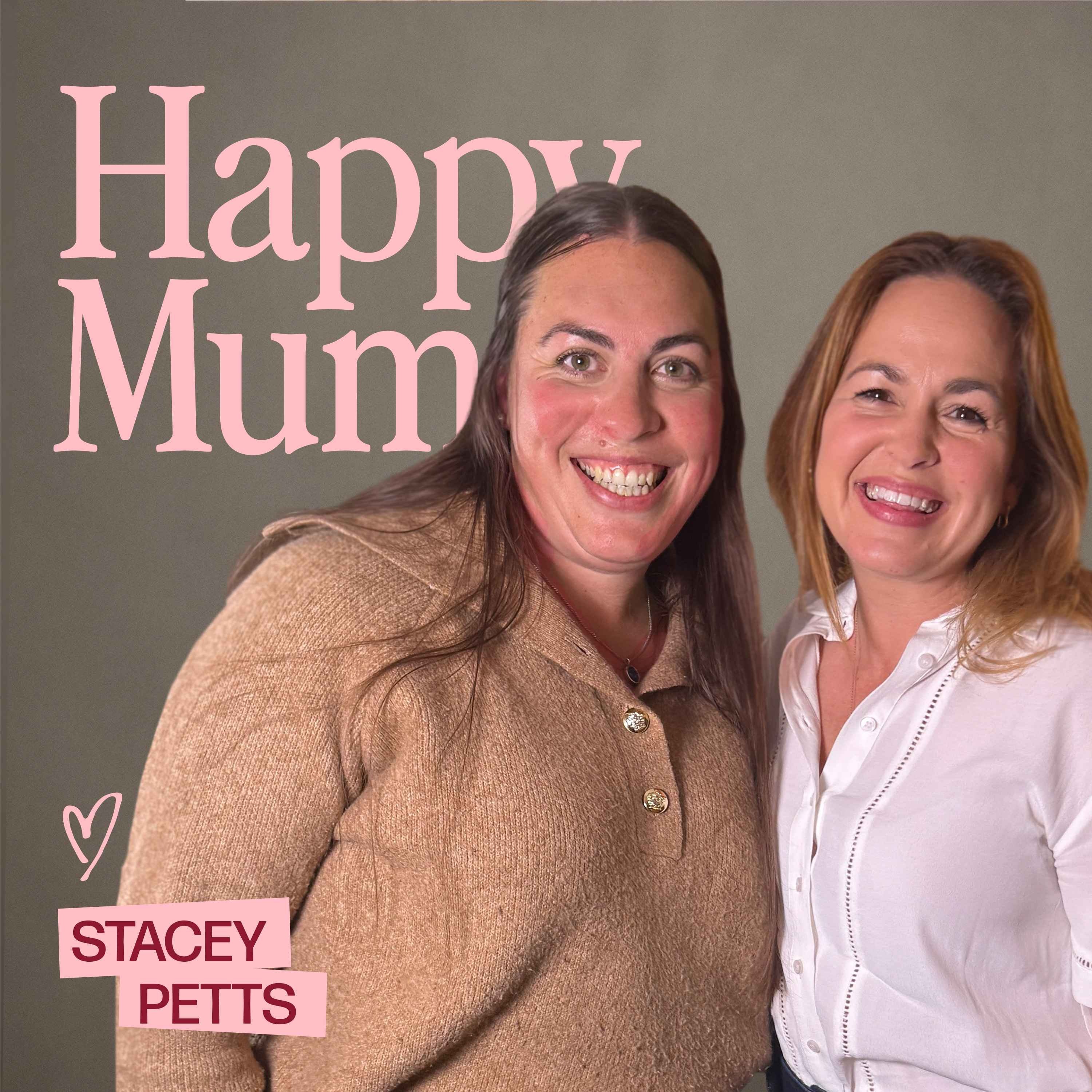
 Happy Mum
13 Jan 2026 · 1h 11m · 38 chapters

In this episode, Giovanna Fletcher welcomes Mina Holland, author of "Lifeblood: A Mother in Search of Hope," to share her extraordinary journey after her daughter, Vida, was diagnosed with a critical illness shortly after birth. Mina recounts the harrowing experiences that led to a life-saving blood transfusion from her son, Gabriel, as they navigated the complex emotional and medical landscape of parenting a child with a serious health condition.
Written by AI. May contain mistakes.
Host introduces guest Mina Holland and her book.
“She'd written a book and it was incredible.”
Mina shares the moment they discovered their daughter was ill.
“Because I think in my first two, three years of motherhood, I probably saw more of you than any of my friends.”
Discussion on Mina's early motherhood experiences and expectations.
“Me and Nigel were just, you know, his co-stars.”
Mina discusses her journey towards conceiving Vida and the emotions involved.
“right, we're going on to this next chapter?”
Mina describes the uncertainty during her pregnancy and ultrasound results.
“And also being hungry makes it worse, I found.”
Mina recounts the experience of her labor and the unexpected cesarean.
“And so we were there for five days and eventually they recommended a cesarean.”
Mina shares the emotions of meeting her daughter for the first time.
“Yeah, and I remember the first night, again, I say we hadn't slept for those five days, but the first night she wouldn't let us put her down and we didn't want to go to sleep.”
Learn about the emotions and experiences of early parenthood after birth.
“it's a very weird thing to close your eyes when the most precious thing in the world is next to you.”
Discover the concerns surrounding newborn's health and hospital visits.
“Often do those just resolve on their own.”
Explore the mother's intuition about her baby's health amidst professional reassurance.
“So that happened actually not at six weeks but nine weeks, just the system being slow.”
Understand the critical moment when the baby's anemia was diagnosed.
“What happened at that first appointment?”
Learn about the experience of the first blood transfusion and its immediate effects.
“Blood tests were done there and then And then the results came back and her haemoglobin was 29, which is like the normal range is sort of for a baby, they should have an HB of over 120.”
Discover the emotional aftermath and confusion following the hospital stay.
“care of their child and yeah um it's really difficult it's really because how how how do you approach things like that without causing offence.”
Discussing the anxiety and uncertainty during the hospital stay for tests.
“They had said to us during those five days in hospital that they were confident it wasn't blood cancer.”
Explaining the impact of blood transfusions on the baby's health.
“But we'd been discharged under instruction to bring her back twice a week for blood tests.”
The emotional journey of searching for a diagnosis over several weeks.
“It showed that she probably wasn't able to make the red blood cells that we all need to stay alive.”
Describing the discovery of a rare diagnosis and its implications.
“It was seven weeks of knowing there was something gravely wrong, but not knowing, not having a name for it.”
Exploring the mixed emotions of receiving a definitive diagnosis.
“I hadn't accepted that, but I knew that that was a likely outcome of what we were going through.”
Detailing the process and frequency of blood transfusions for the baby.
“and having lunchtime wine and stuff, sensory classes, real life ones.”
Discussing the need for long-term solutions beyond blood transfusions.
“Just appetite sort of faded away and quite listless.”
Exploring the possibility and implications of a bone marrow transplant.
“And I think for my own, I realised, and everyone was telling me this, in order for her to be okay, you need to be okay.”
Discussing the decision-making process about having another child through IVF.
“Is that because she has to be isolated throughout a large chunk of it as well?”
Debating the ethics of choosing a child's genetics for medical needs.
“I mean, I don't think anyone can really have an opinion on this until they have a child.”
Sharing the difficulties faced during the IVF process.
“And, you know, I have no opinion on anyone doing it for anything.”
Learn about the emotional journey of deciding to pursue natural conception instead of IVF.
“We were looking at spending tens of thousands of pounds, not covered on the NHS, for something that was unlikely to work.”
Explore the differing emotional impacts of trauma on family members and relationships.
“And and so I did actually get pregnant again quite quickly.”
Understand the importance of community support during challenging times.
“And, yeah, she looked quote-unquote normal.”
Discuss the emotional complexities of expecting another child after a traumatic experience.
“That's got to be such a small community of people.”
Learn about the preparation and emotional considerations for a sibling donating stem cells.
“So we knew, we found out he was a boy and, you know, it was all, I, on the whole, it was a good, it was a good pregnancy for me.”
Experience the emotional weight of a child's stem cell donation and its impact on family.
“Were you able to separate Gabriel from that possibility?”
Explore the aftermath of a transplant and the challenges faced during recovery.
“So after Gabriel had made his donation, What did that look like then for Vida?”
Explore the emotional and logistical challenges of the hospital stay during Vida's treatment.
“Biked back to where we were, St Mary's, and then put into her like a blood transfusion.”
Discuss the transition from hospital to home and the new challenges faced post-transplant.
“Did you have to go back routinely anyway to get more blood tests done?”
Reflect on the emotional aftermath of Vida's illness and the importance of therapy and storytelling.
Learn about the motivation behind writing a book on motherhood and the unique challenges faced.
“Like my baby being dangerously ill and she could have died.”
Discuss the day-to-day realities of motherhood and the unexpected joys and fears involved.
“But yeah, no, motherhood's not relaxing.”
Enjoy a heartfelt family moment as they celebrate together.
“walking the dog, running around, and we're eating something I've cooked and the kids instigate a cheers and our cups are full.”
A discussion on the journey of hope and healing shared by Mina.
“Mina, thank you so much for coming and chatting.”

Get the gist, explore an idea or ask about something said.
 Claude
On Happy Mum, what are the key points of this episode?
Searching your listeningAutomatic transcript. May contain errors.
0:03Hello and welcome back to happy mum, happy baby, the podcast. I've been recording this podcast now for over eight years. We're going into the ninth year. And I love having an eclectic mix of different stories. Stories from people in the public eye, stories from people who have gone through something that a lot of us will never live through. I think we're so busy in life, we don't get to just sit and chat in the way you can in this podcast studio, in the way you can listen when you're at home, when you're in your car, when you're out walking your dog or out walking your baby. There's something about audio that is so special.
0:37And being able to share incredible stories is such an honour. It's a massive part of why I love doing this podcast. A little while back, I spoke to author and journalist Mina Holland. She'd written a book and it was incredible. And I'd read that book and we just knew we needed her to be in this studio with us. I wanted to share with you her incredible story. Mina and her husband, Freddie, found out their baby Vida was seriously unwell two days before she turned just 12 weeks old. In the whirlwind that followed, their worlds shifted overnight. What happened next was nothing short of extraordinary.
1:13This episode is about fear and hope, heartbreak and resilience, and the remarkable strength that parents can summon when they have no other choice. This is my chat with Mina Holland.
1:29I have to say it's so surreal to be sitting here opposite you. Because I think in my first two, three years of motherhood, I probably saw more of you than any of my friends. I feel like we should be going, hello, Giovanna. A lot of the baby club watched. I love this. And also because that's what it was. It was for that, you know, for parents that couldn't get out. And obviously then COVID happened and then no one could go anywhere. To kind of have that little bit of time with your baby at home without the stress of, you know, having to go somewhere if you couldn't. So I love the fact that, you know, that that has helped so many families.
2:07Well, for me, there was, you know, the first year of having a baby, I self-imposed some isolation. And so I was giving her something of the baby sensory classes I might otherwise have done through the baby club. And also we spent a lot of time in hospital. So there was a lot of keeping her still. And yeah, you know, baby bear. And you. Mostly baby bear. Mostly baby bear. It's all about baby bear. Me and Nigel were just, you know, his co-stars. When you were younger, did you ever look to the future and think, I'd love to be a mum? A hundred percent. I never called it into question. Really? It was so clear for me that, yeah, it wasn't really up for discussion.
2:49I made it very clear when I met my husband that it was something that we would be doing if we were to stay together. He's a bit younger than me. I was sort of, by that point, like ready to get going. Really? Yeah, as I say, I really wanted a house full of kids and dogs. And yeah, I was ready to realise that. So funny, isn't it? You kind of grow up going, I am not going to be, I'm not going to do what my mum and dad did. I'm going to do things very, very differently. And actually what you want is that safe space that they created. Well, yeah, exactly. But you kind of like drift towards it, perhaps a bit unconsciously.
3:23Yeah. But, you know, it's interesting. Like I've got a lot of friends who have been a bit more ambivalent about having kids. Some of them have then gone on to or have decided not to. But there was never a kind of empirical weighing up. You know, it was very clear to me. And so I think then when I had my first baby and things didn't go as I'd imagined, there was a strong kind of reflex reaction of, I didn't sign up for this. This isn't what I'd imagined. This isn't my dream. So, yeah, it kind of comes back, I think, to like, you know, I fell from a greater height because, in a way, I had been so clear.
4:09And, yeah. You also don't expect something like that to happen. But talking about you and Freddie, when you decided to start trying, you know, was that a big moment in your life to kind of go, right, we're going on to this next chapter? We'd agreed that as soon as we got married, it was all systems go. Really? Yeah. And I've actually never talked about this before, but I had in the past had a termination and I felt, you know, there'd been a lot of guilt and some regret about that. And so I sort of felt like, you know, once the wedding had happened, I was ready to go. And then it did actually take a while.
4:50Did it? Yeah. And with every passing month that it didn't happen, you know, the stakes felt higher and I was you know there was a huge amount of anxiety around conceiving yeah Vida um especially when you look back and kind of go I felt like that pregnancy happens so it's not effortlessly yeah yeah exactly and I think there was an aspect of of that that just made me think all right I've blown it um yeah but you know we did we're lucky like we we were able to conceive and um what was it like finding out magical I mean I'd kind of got used to talking myself into being pregnant every month really scouring mum's net the forums all the symptoms yeah like you know seeing if um trying you know trying to work out if the blood was implantation bleeding or if it was just my period coming you know all of that and so in a way you know obviously I hoped that that month I'd get a positive, but I'd learnt over the previous six, seven months not to expect to get the result I wanted, but I did.
5:52And we were in Cornwall staying with some of Freddie's family. And we got up really early that morning to go kayaking on the Camel River and it was just the most beautiful early summer light and quite a magical thing to do, having just got the positive test that I'd been dreaming of. Yeah. How was your pregnancy? I would say it was, it followed quite a typical trajectory. First 14-ish weeks, I remember being, like having morning sickness, but never very vomit. I was just, you know, a bit sick and ate a lot of crackers and grapefruit. But being the foodie that you are, was that a bit like, oh, crackers?
6:36Do you know what I mean? You love your food. Yeah. You don't have to eat about food. So was it that thing of suddenly you can't eat certain things? Yeah. You're drawn to crackers? Yeah, I was definitely never a pregnant person who didn't feel like eating the things that I loved, that I wasn't allowed. Right, okay. I always wanted a drink. I always wanted the washed rind cheese. But no, I mean, I think when you're feeling that sick, you're just sort of responding to what your body needs. You're just getting through it, aren't you? It's sort of managing the sickness. And also being hungry makes it worse, I found.
7:14So it's kind of just like making sure that you're never hungry, but obviously you don't want to eat too much. It's sort of a balancing act. And was that until 14 weeks, did you say? Yeah, 14 weeks both times. It was, yeah, almost to the day. And then the second trimester was like, you know, a bit of a breeze. I really enjoyed it, felt quite energized. And then the third trimester, I just both times. Second time was worse, actually. Horrific sciatica. Yeah, just hobbled around. And with Vida, with the first pregnancy, it was in, I can't remember, it was a 30, 32 week scan. I got, you know, a dodgy result, basically.
7:55And no one to this day can really tell us what reason there was for it. It probably is linked to the diagnosis she later got, but nobody really knows why. and I think that's because we're dealing with something very rare. What was that, Dr. E. L.? So it was, you know, when you have an ultrasound, they look at Dopplers, so the blood flow between the baby, between the placenta and the baby. The umbilical pulsatility index was very, very, very high. Like, you know, they sort of print a scale, like a graph, and mine was, like, off the chart. Right. So they said, come back and have another one in a couple of weeks.
8:33Went back and they were like, oh, it's fine now. you're kind of discharged. But they said, if you want to have another scan, come back and we'll do it. And I did. There was just a sort of niggle. There's always that thing of if you want to. Why would I say no? Yeah. But also, it's so thrilling, particularly with your first baby, to just see your baby on the screen, isn't it? It's wonderful. So I took that, hoping, of course, for the best. I don't think I was overly anxious about it, unlike Freddie, who, until she arrived, was just on the edge of his seat. That's interesting as well, isn't it? Especially if you've not had anything happen to that point to kind of make you worried.
9:12I know that there's one thing off the chart, but sometimes those can be moments. And if you've had one after that's fine, kind of like, take a breath. But actually for Freddie, that wasn't the case. No, but I think that taps into the life experience he'd had and also his character, which I can go into later. But I think I felt very reassured, but I did just want to go and have this next scan. So that happened. It was, I think it was the day before I reached term. So 36 plus six went in and it was again off the chart high again. so they said come in tomorrow we're going to induce you 37 weeks which we did and it was my first taste of how in hospitals there is absolutely no observance of any kind of routine circadian rhythms um you know we we they they started my induction at three o 'clock in the morning wow with a pessary and and you know did that for a few days and just nothing my body didn't respond didn't want to go into labour.
10:21She wasn't ready to come out. And so we were there for five days and eventually they recommended a cesarean. And I really... Nothing in those five days at all? Nada. No. She really wasn't ready. No, she really wasn't. And she was very little and, you know, only 37 weeks as well. So, I mean, I guess it was cosy in there. But they recommended a cesarean. I really, I had this idea of the birth I wanted. Yeah. And it's kind of a bit like the idea I had of the home I would create. I saw myself as some kind of earth mother, I think. I'd done the hypnobirthing, brought the Clary Sage to hospital, wasn't allowed to burn it on the ward.
11:02You've got to get the oil, just the oil. That's the way forward. Yeah, next time. I think there will be one. And anyway, so yeah, I really didn't want a cesarean. But I have to say, I am such an advocate of them. I've had two now and they've both been very positive experiences. Was it hard dealing with that shift of kind of going, or five days in where you were just a bit like, I was ready. Yeah, we were knackered as well. And that actually didn't make it particularly difficult because we'd been awake all night for five days because they were administering the meds at three in the morning. So we were really, really tired and ready for the baby to arrive by that point.
11:43We were psyched up. um and so yeah she was born uh by cesarean and it was you know wonderful and and actually feeding established very quickly um that that side of things was quite easy how was a cesarean because obviously if you're um not in your head thinking that that's the route you're going to go down then all of a sudden you are that's a lot of things happening that you've not even considered or had you thought about it in terms of like being in a theater ward being on a theater ward having all those people and you know I think it comes back I was just ready by that point and I I'd been in an NCT group with and I was the Vida was the last baby in our NCT group to be born and so I that they'd been the kind of precedence and some of them had had elective ones some of them have had had to have cesareans and so I was sort of I knew that that was a possible outcome by that point I was I think I probably had got over this desire to push because by that I was so so so tired so it was all right actually um and of course it's very painful recovering from that surgery but um there were a lot of hands on deck and we are lucky both of us were brought up in london so we had both sets of grannies on hand yeah what was it like meeting veda for the first time just there's nothing else like it is there unreal we were just mesmerized by her she was so elfin she had this amazing head of hair from day one that was sort of quiff like it was like tinting um and it was funny because I remember being pregnant and you sort of wonder how your baby's going to look but then she arrived and she was just so herself from the word go and she couldn't have been like looked any other way being any other she was so much herself from that first day and I really see that in pictures now when I look back.
13:41Yeah, and I remember the first night, again, I say we hadn't slept for those five days, but the first night she wouldn't let us put her down and we didn't want to go to sleep. We were just sort of mesmerised. There's a very weird thing, isn't there, when you're in hospital and they say you're meant to sleep but your baby's there. You're like, but if I fall asleep and my baby's, you know, it's a very weird thing to close your eyes when the most precious thing in the world is next to you. Yeah, yeah. In a strange space. Yeah, but I just produced this creature from my body. It felt so miraculous.
14:12Yeah, why would I have slept on that first night? But it did make the second night really painful when Freddie went back home to get some much-needed rest. And at that point, I needed to get some sleep. And the sort of sleepy baby from the night before was no longer. She was awake and hungry. and I remember, again, it's all the stuff that you think you're not going to do. I remember just going online and buying all the plastic, the dummies, the you and the sheep, everything. All the stuff, all the swaddles with the Velcro. So at what point did you leave hospital? After two nights there. So they let us go home.
14:55I think they'd been a bit concerned about, well, linked to those Dopplers. Yeah. Also, she was born with a little, what they call a PFO. It's a little hole in the heart, which is very common. But they'd said, you're going to need to come back in six weeks and just have a follow up on that. Often do those just resolve on their own. And they do, yeah, I think so. And in fact, hers has. So they allowed us to go home. And yeah, getting back to our flat after basically a week in hospital was a really wonderful moment, you know, as a family of three. At that point, because she's with you, are you worried about any of the readings or anything?
15:35No, she's arrived and she looked perfect. She was little, but, you know, not that small. She was born at 37 plus four and she weighed six and a half pounds. Oh, yeah. It's fine. Yeah. So, no, and the feeding did establish quite well. And so we felt quite good about that. And then, you know, the first couple of weeks were exhausting but good. You know, sat up holding her all night. because she didn't like being put down. She also fed for a short amount of time. Well, that happened later. Oh, did it? Yeah, so the feeding was going quite well. But I think it was, in a way, I would recommend people do antenatal classes, not necessarily because of what they quote-unquote teach you, but for the community because even though comparison became a problem for me, it was quite instructive, like seeing how people in my group were establishing routines and the opposite was happening for us.
16:30The feeding was going downhill. She became quite quickly a really unhappy baby, just cried and cried and cried and didn't sleep for very long, was very difficult to get down to sleep because she was hungry. Yeah. But, I mean, I don't know physiologically what happens to an anemic child when they don't fit. I mean, she was starving but not hungry and not able to feed for whatever reason. Without the energy, I guess, to feed. Yeah, yeah, I guess. At what point did you think that something was wrong or was going on or did you have to go back anyway for that routine appointment? So that happened actually not at six weeks but nine weeks, just the system being slow.
17:20I didn't know that something was wrong with her. I just felt like, more and more it felt like it was me and that I wasn't made for this. Yeah, so many people will relate to that. Yeah, and I don't want to call it gaslighting because there was nothing malign or malicious in people's reassurance because that comes from a very kind place. It also comes from a place where there are lots of fussy babies. There are lots of babies that struggle to feed and there are lots of anxious mothers. And so I was sort of surrounded by this very warm culture of reassurance that was on the one hand lovely, but just really, in my case, misplaced.
18:11So, you know, we saw, again, three money at the problem, lactation consultants. We went to the tongue tie clinic, you know, explored all the different possibilities. But time and time again, we were just told, you know, she's fussy, she's got colic, witching hour, all of, you know, babies are so hard to explain. And, you know, there would be moments where I would I would sort of not even not even like consciously think something, but something would strike me. So, for example, giving her a bath at night. You know, this is before she we went back to have the hole in the heart looked at. so probably she's six weeks old or so I remember having her in a little white baby bath and washing her and seeing my hand against her body and thinking, God I look old like my hands are so wrinkly and gnarled and red and gross and actually they looked that particularly old and gross because her body was so white because there was so little blood in her and I look back at the pictures now of that time and, you know, there was really, like, she's almost grey, like there's no hemoglobin.
19:26But also, as a mum, you don't know that. No. You know, you don't know what you're looking out for. You just, you don't know what you're doing anyway. So to be in that situation, you know, it's impossible to kind of go, well, that's not what her skin should look like. But also, with blood stuff, they actually come and do the heel prick test when they're a few days old. So in my mind, she'd been tested for blood disorders. and yeah and as you say you don't you don't know to look for it but also she was in decline from the moment she was detached from me and it was slow it was gradual and I was with her all the time so it was just it was a draining away and I I you know it wasn't like you know if I'd seen her when she was born and then seen her 12 weeks later like before she had her first blood transfusion And yes, that would have been probably been much more alarming than this kind of ebbing away of blood cells and well, well-being and yeah, health.
20:28What happened at that first appointment? So we went in to have the checkup. By this point, we had actually moved or we were spending a lot of time at Freddie's mum's house in North London. Like I was just finding being away from him, just being on my own with the baby all day who just cried and cried and cried and didn't feed really oppressive and difficult. And I just dreaded Freddie going to work. I dreaded Freddie going to work from the moment he got home from work every day. And so at that time, he worked very close to his mom's house. So we moved in with her and she's a therapist. So she was able to kind of check in with me every hour between patients.
21:10so we were up there and it was by this point just so hard I wasn't sleeping she wasn't sleeping she I knew from like taking her for weigh-ins that she wasn't putting on weight and I could feel like you know you just sort of have a sensory memory of how your baby I just I just could tell she wasn't gaining weight and she wasn't thriving I didn't know anything was seriously wrong. Did the health visitors say anything about that no I think there's a health visitor had stopped coming I think yeah I actually can't remember when they they I think it is quite early yeah no so no and she'd had her six week check at nine weeks and I think the GP had been a trainee and had just said she's you know she's she looks fine you seem fine your your wound is healing fine um my best friend came with me to that appointment and took photos of the baby and she she was so so pale so anemic so anyway at nearly 12 weeks we were we went into our local hospital in south london for the for the follow-up and the pediatrician just sort of looked at her and just said how do you think she's doing and by this point we've been doing this for nearly three months and we're so on our knees but we've also learned that having a baby is just really hard and we weren't prepared for it.
22:33So we were just kind of cheerleading ourselves like, yeah, it's good, we're getting the hang of it. And she just cut across us and said, she's very anemic and we're going to have to admit her today. She's going to need a blood transfusion. And this was based not on seeing any blood results, this was just on how she looked. Blood tests were done there and then And then the results came back and her haemoglobin was 29, which is like the normal range is sort of for a baby, they should have an HB of over 120. So it was basically termed incompatible with life. And that was the beginning. And we stayed back at our local hospital for another five days and they gave her a blood transfusion over that period of time, tiny amounts.
23:23and even after the first little bit of blood, which didn't bring her haemoglobin up by much, but enough to make her feel a difference, she latched on and I was just like, oh. And then that night in hospital, Freddie and I are top and tailing in a camp bed, not really ideal conditions for a good night's sleep, but we slept really well, partly because Vita slept through, well, she woke up once for a fee, But also I think there's something about just having experts around you. That was very reassuring, felt very held. And actually that perpetuated. Having really sort of resented being in hospital for so long during the induction, I've now got to a place six and a half years on where I'm very comfortable in medical spaces and I feel very reassured to be surrounded by medics and nurses.
24:16Such a personal thing, isn't it? because I know some people hate them, but other people have a really positive reaction towards them. One thing that you say in the book is you talk about the doctor saying to you, I'm going to paraphrase, but it's something along the lines of how didn't you see, why didn't you see, or couldn't you see. Yeah, awful. But that is, in terms of mother's guilt, in terms of all of that, that is you're a new mum who has gone to the doctor, who has done everything you're meant to do, but to suddenly put it on you that I found that really difficult to read so I don't know how that would have felt for you to receive yeah we just felt really stupid and really guilty and like you know we we had been turned away so many times that I don't know if we would have taken her in if we hadn't had an appointment that day yeah um yeah it was it was a it was a dark moment that um but as I say I think something in me did did see like those moments in the bath but I it was so gradual and I had gone to see experts and nobody had pointed it out and like people subsequently people that I love who were like very close to me said you know I did think she was a funny color and I there's a part of me that thinks why didn't you say and then there's another the part of me that just thinks that would I I don't I don't know how I would have received that yeah and so it's it's it's difficult isn't it like how how appropriate is it to say certain things to new parents um that sort of suggests that you're questioning their ability to take care of their child and yeah um it's really difficult it's really because how how how do you approach things like that without causing offence.
26:14Exactly. The mother's guilt was real. And I did have some maternal intuition about things not really going as smoothly as my NCT friends. And, you know, my feeding had started well for us, unlike for other people, and was going downhill. Their trajectories were going the opposite way. There was a real, like, niggle for me there. But when you've got this, when you're surrounded by this din, of reassurance um and and so many people telling you it's normal yeah after that initial um blood transfusion what happened after that were you sent home but more tests done we were sent home um and they they gave us a discharge summary um i write about this in the book and we got home for the weekend and in my experience whenever you desperately need to get hold of a hospital it's the weekend and you can't we got home and I started reading through the papers of what had been written on her discharge notes and basically a nurse had pressed the wrong thing on a drop down menu so they'd put instead of putting that she was under the care of the paediatrics team they'd put that she was under the care of the palliative team and so obviously went into a huge spin about that and I think that really changed the course of things for me.
27:43I went to a place with it of just blind fear and I don't think I came back for a long time. Really? Did you have a whole weekend thinking that that is the case? Yeah, because they'd been testing us for a lot of, over that weekend And she'd had like panels and panels of tests for various different viruses or, you know, causes, potential causes for neonatal anemia. And all of them had come back negative. They had said to us during those five days in hospital that they were confident it wasn't blood cancer. But the fact that they were testing for so many very serious things did leave me feeling quite worried.
28:26And then to see that she was under the care of the palliative team. I mean, it just blew my mind. But we'd been discharged under instruction to bring her back twice a week for blood tests. Right. So they were like, you know, we've topped her up with blood. We just have to see what she does with it now. And lots of, well, there's no lots. This is all rare stuff. But in babies that have become metanemic, for some of them it's just a kind of transient anemia and one blood transfusion will kind of set them on the path to good health yeah and then there's another cohort who that's not the case for and um so they needed to to see which camp vida fell into and how was she after that initial well it was amazing i was like oh my god this this is what i've been missing you know she we was sleeping better she was feeding better and we had a sort of a couple of weeks like that but we were still taking her back to hospital every few days.
29:29And what did those those bloods show? So they did they there was one blood test that showed a bit of red cell production but it was a complete anomaly and no one can explain why that happened and then they just started dropping again and as soon as they the the hemoglobin started to drop and consistently kept dropping that was that was a bad sign. It showed that she probably wasn't able to make the red blood cells that we all need to stay alive. So is our body continuously producing them? All the time. Millions a second. And yeah, it's amazing science that we are completely unaware of. But she, I mean, I can talk about the diagnosis she went on to have and it took what I now understand to be not very long to diagnose her, but it felt like forever.
30:30It was seven weeks of knowing there was something gravely wrong, but not knowing, not having a name for it. And in that time, I became very obsessed with Googling. with Dr Google. That's so hard right because you want to inform yourself you want to kind of have some sort of information so that you don't feel like you're just sitting in the dark but at the same time Google is a scary place to be that was going to feed you a lot of stuff that isn't relevant. Yeah I really took to the whole situation like a journalist I think. Really? Yeah I think I just wanted to arm myself with information and a lot of it wasn't welcome but I kind of I somehow for some reason I found some reassurance in it it felt like action yeah and I fell upon this very rare diagnosis called diamond black fan anemia which I think I still remember seeing it for the first time and it kind of like a diamond like stood you know twinkled it kind of stood out um on the page and web page and she was just an absolute like to the letter fit for um you know in terms of the timings of how things had played out you know became symptomatic at two months and then usually babies are diagnosed at four months we were approaching four months when the when the diagnosis came through um did you take that to the doctor's bed as a hospital So from our local hospital, I pushed to be referred to the Evelina in St.
32:05Thomas'. And I said to the paediatric haematologist that we saw there, I've been reading about this thing called diamond black phalanemia. And I think she could be a fit for it. Obviously, I'm really scared. And she said, I really, I think it's very unlikely. We can do a test for it, but it's unlikely to be that. And it was. it was yeah
32:38what did it feel like to get that diagnosis because it's one thing kind of searching things and kind of trying to find an answer but then knowing what you're faced with that it's got to there's no more guessing we know exactly what it is like is that a relief or actually the reality of what you are then facing hits at the same time I was devastated by it but I think by the time it had come through I had I was pretty sure I'd convinced myself and so you know what I mean about relief it's not that you're relieved that she's got it but relieved to have an answer to it and know what what you can do totally there was a reason and and by that point I think she'd had two or three blood transfusions and And I definitely hadn't got my head around taking my child to the hospital every three weeks to have a blood transfusion to stay alive.
33:31I hadn't accepted that, but I knew that that was a likely outcome of what we were going through. And so, and she'd also, there'd been a blood test a couple of weeks before that had shown she had a high, very high protein that was kind of suggestive of the diagnosis we feared. So it had kind of added up to this point. And so the diagnosis came through at the beginning of the summer. And then, yeah, that maternity, that summer maternity of maternity leave, which, you know, before I'd left, I'd gone on leave from work. I'd imagined just frolicking around galleries and having lunchtime wine and stuff, sensory classes, real life ones.
34:17That summer just became this very dark time where I spent a lot of it behind closed doors coming to terms with something that was, well, it felt pretty unimaginable before. So what is Diamond Black Femme and Enebio? So it is an inherited, it's a genetically inherited blood disorder where the bone marrow doesn't produce any or enough red blood cells to stay alive. And you need red blood cells to carry oxygen around the body in the form of hemoglobin. And so patients like VEDA need to have a blood transfusion every three or four weeks to stay alive. And is that three or four weeks, is that measured by how quickly those red blood cells go down?
35:09Yeah, so they generally live for that long. And so we would give her a transfusion of donor blood and it would bring her hemoglobin level up to the normal or quite high normal count. And it would just gradually drop over the course of that period. We did every three weeks because she just wasn't thriving in the fourth. But yeah, as we neared transfusions, we would start to see glimpses of that very difficult, quote unquote, fussy, unhappy baby that we'd seen before. Just appetite sort of faded away and quite listless. Yeah, mood changes, quite unhappy. At what point do you start talking about the future and, you know, Amvita having a life that doesn't require her to have blood transfusions every three weeks?
35:57For me, instantly. And I know that that's not necessarily typical. I think, you know, there are some parents facing this condition or similar ones who come to terms with the blood transfusion life. For me, it felt much easier to tackle the enormity of genetically engineering a sibling child and Vida having a bone marrow transplant than it did to just go through the motions of getting her the blood she needed every week, every three weeks. Is that also because I can sense that you're a doer and you're pragmatic and you like to have some, not control, but feel like you are actively doing rather than sitting back and waiting for other people to do?
36:47Yeah, absolutely. And I think for my own, I realised, and everyone was telling me this, in order for her to be okay, you need to be okay. How easy is that though? It's not, it's quite, you know, like lots of these platitudinous things. It's quite difficult. It's like, how do I act on that? I'm not okay. This is really hard. But for me to be okay in that, it felt helpful for me to have a project, to have a goal. And that became it. So I had, in all my reading, you know, breastfeeding in the middle of the night by the light of my phone, I'd understood that diamond black vein anemia can be treated in one of three ways.
37:34Blood transfusions, which come with quite a lot of complications. Some kids respond to steroids, which sort of jolt the bone marrow to produce red cells. We did a trial for that. It didn't work. Or a bone marrow transplant. And then there was this kind of dangling carrot in the future of gene therapy, but it felt very far away. And so I started looking into bone marrow transplant and it's a risky procedure and it's at least a year out of mainstream life and it's an endurance for the whole family. Is that because she has to be isolated throughout a large chunk of it as well? Yeah, exactly. Quite intense, very intense chemotherapy to kill off the whole immune system.
38:18And then donor stem cells are put in. And then the recipient's immune system is kind of suppressed for a long time and gradually immunosuppressant medication is sort of weaned, but it takes a very long time. And so I looked into that and I understood from my reading that there's a bone marrow register and that there would be a good chance of her finding an unrelated donor. But the gold standard is to have a sibling. And so then we started on this path of like, do we have a, we know we want another child. We've always wanted, you know, a bigger family. Do we go about that the natural way? There's a one in four chance of it happening.
39:05or do we try and give ourselves the best chances or her the best chance of having an ideal donor and do IVF? So we started looking into that. You talk a lot about that in the book, about your almost conflicting views on it or the idea that you are not designing your baby in a way of having blonde hair, blue eyes, or being a girl or a boy, but actually looking at the genetics of a baby, kind of go, is he or she a match? for a bone marrow transplant. Yeah. I mean, I don't think anyone can really have an opinion on this until they have a child. But it's also that thing, isn't it, in the media, all we're ever talked about in terms of this is someone who's selecting a gender.
39:50That's the only way that we're ever presented the idea of looking at those cells and seeing what's going on. Yeah, yeah. But I think for medical purposes, like our very rare situation, how fucking wonderful that this is possible. It actually wasn't possible for us. It didn't work. But it did blow my mind that you felt like it was something that was divisive in this case. You know what I mean? And, you know, I have no opinion on anyone doing it for anything. But the fact that you felt that there would be a response to the fact that you'd gone down that route blew my mind. Because until you have a baby that is that sick, How can someone possibly have an opinion on what you're going through?
40:35Absolutely. I mean, I don't know whether I should mention this, but we had when when the book came out, a publication that shall remain nameless ran an extract of it with the headline. we had another baby to, I actually can't remember verbatim what the headline was, but insinuating basically, not even insinuating, saying that we had our second child to save our first. And that is categorically not the case. We knew we wanted a second child. We knew we wanted a sibling for Vida. But we just thought if there's a chance that this baby could help his sister in the future, their sister in the future, then why would we not do that?
41:20And in the end, I didn't even go through fully with the whole procedure. I just wasn't responding to the IVF meds. Didn't realize that was a thing. Again, you don't know until you go through these things. Yeah, exactly. So your body just didn't react to the... This wasn't. The hormones weren't coming up. They gave me boosts of, what do they call it, Clomid. They were really, really trying to get more follicles. And there were only three or four there. and then added to that that we then needed to make embryos that were a stem cell match for V. There was a one in four chance of that working. And then you have all the crazy odds of IVF anyway.
41:58Only one in four of those transfers work. We were looking at spending tens of thousands of pounds, not covered on the NHS, for something that was unlikely to work. But by that point I was just so psyched up for having another child and I felt like, again, that in itself was a kind of project and I just said, like, let's go about it the old-fashioned way. Was it difficult saying goodbye to the IVF route? Because obviously in that way there's an element of control but actually by just going the old-fashioned way you are leaning into having a baby, you know what I mean, rather than all the other things that comes along with the IVF route.
42:42I was relieved actually in the end when I got a clear steer on it. The clinic we were working with really leveled with me. And I'd already spent a fortune with them. But, you know, they could have encouraged us to go ahead and spend loads more. And actually they just said the chances of you getting, you've been through a lot. And the chances of this ending in your desired results are quite slim. And I just remember leaving the clinic that day and going and buying like, you know, a triple shot coffee, which I hadn't had caffeine for weeks and just thinking, OK, we're just going to have to, you know, go about things differently the way we know how.
43:27And and so I did actually get pregnant again quite quickly. and that second pregnancy was a trip because we found out I was pregnant I think like a few days after the first lockdown was announced and Freddie wasn't able to come to loads of the appointments which I think actually spared him a bit I think he was just, you know he'd been very traumatised by what we'd just gone through That's got to be hard you know, it's that thing isn't it It's not even what Vida's going through. It's how it's affecting you. It's how it's affecting Freddie. It's how it's affecting your relationship, you as a family.
44:08There's so many people react to things in very different ways. But doing that and sticking together, that's got to be a challenge in its own. Yeah, we went on very different paths with it. I think it's interesting Freddie hadn't had such a smooth ride as me in a way like I, both my parents well my parents together they were healthy and you know the only people I'd lost to be my grandparents that was not the case for Freddie he lost his dad when he was quite young and he said to me quite poignantly during that very hard summer I think I said to him well no, I remember him saying at some point that summer I thought I paid my dues I thought like I thought I was safe and I had just assumed I was safe and I very much, he was quite pragmatic and just went, he just he's very much like you know breaking down a problem one foot in front of the other let's just get make sure we've got the hang of the transfusions and as I said before like I needed to have the grand project, I spiralled and found it very, very difficult to accept.
45:30Also because when she was full of blood, she was just a gurgly, happy baby. It doesn't marry with what you know is going on on the inside. Absolutely not. And, yeah, she looked quote-unquote normal. You know, not all disabilities are visible. Yeah. And so I kind of disbelieved. I went through phases of disbelieving the diagnosis, thinking they got it wrong. You know, it was kind of crazy making.
46:02And I went to see lots of therapists in that time. But one in particular, who I still see to this day, said to me, you know, we suffer alone and we heal in relationship. And that doesn't mean in a relationship, not necessarily a romantic one. But I think what she meant by that was you are always going to suffer if you're isolated. And it's in finding community that we can heal. And that was certainly the case for me. And I think that I didn't realize until I'd finished the book, until a long time after I'd finished it, that so much of it is about finding community. Even though I spent so much time alone.
46:45and there is nothing that makes you feel like a part of a community in the way that being reliant on blood donors on behalf of your child does. I think I was just very inarticulate, but yeah. But even in that, you know, Vida's got such a rare blood disorder that you don't, how do you find those fellow parents, you know? That's got to be such a small community of people. so finding people that can relate exactly to what you're going through or have their own experience that you can gather some sort of hope from yeah must be really really it would yeah and i and there is a there's a facebook group for the charity for her condition you said you kind of watched yeah i was very sort of voyeuristic at first and and i would i felt quite horrified by some of the things people shared because i was scared yeah um and i really didn't want to engage with it because that felt like accepting something I just hadn't yet and I wasn't I wasn't ready to step into that role of carer yeah I was already doing the caring but it was about it was about and it was up my identity I suppose it was like having to shift that and but eventually I did you know I did start engaging and I've made friends through those groups and they you know they will be in my life forever and and I I wouldn't have got through some of those dark times without having them to sort of bounce off.
48:20It's like you said earlier you know having those thoughts of I didn't this isn't what I signed up for and actually part of what you what you then are signed up for is a huge part of it is acceptance before you can even you know process what's going on you've got to accept it. Exactly yeah yeah and that that first year was was a process of accepting. And just as I was ready to start emerging, COVID hit. You'd gone back to work as well, hadn't you? Just, yeah, just gone back to work. What was it like finding out you were pregnant again? I was so happy. I was so excited. Freddie, I think it's really hard for the partner because you're one step removed.
49:06removed and we I would be lying if I said it was a it wasn't quite an anxious pregnancy not so much because of COVID for me COVID was weirdly quite a positive experience for me because I felt no longer alone in in this you know fearing a potentially quite serious medical emergency there was a it was a problem shared Freddie was very worried about about the virus and how that could affect well as as was i with vita but um the the pregnancy itself i think we you know i i knew that the chances of this next baby having vita's condition which i should add neither freddie or i have it was a spontaneous thing um i knew the chances were slim but i think when you've been through something so rare and you feel like anything could happen yeah um you He had a harmony test at 10 weeks.
50:04We had a harmony test. So we knew, we found out he was a boy and, you know, it was all, I, on the whole, it was a good, it was a good pregnancy for me. I decided to have him at the hospital where Vida had her transfusions. I had, you know, I think it's really important for people to remember that they can change consultant if they want to. They can request, you know, change in the personnel that are looking after them in maternity wards. I had, I actually didn't request this, but they gave me a midwife who specialised in maternal mental health because of my history with FIDA. And my, I requested that the, I stayed with a fetal medicine consultant.
50:49So we did try and test Gabriel for DBA with amniocentesis. Well, you went to the appointment. Went to the appointment. And then he just said, you do know that you've got a higher rate, you've got a higher risk of miscarriage from having an amniocentesis than the chances of this baby having DBA. And so, yeah, I got up and left. Again, though, it's that thing of knowing that you can change your mind. Yeah. Yeah, exactly. And I think that's been a real learning curve, actually, like learning to advocate for myself and obviously for my child in medical settings. But yeah, it's been quite a sort of extraordinary introduction to parenthood, really.
51:37And we sort of, when Gabriel was about two months old, we got a call saying that they'd got the results and he was a perfect match for her. How did that feel? Were you able to separate Gabriel from that possibility? Because obviously you're leaning into the fact that you're pregnant and it's amazing, you wanted more children, but there's also this added hope that comes alongside his, but it's an alongside thing. It was an alongside thing. I never wanted him to feel any pressure. Like, or I didn't want to put, well, not that he would as a baby, but I didn't want to put any pressure on him. There was a hope there.
52:17You know, we thought that wouldn't that be amazing, but there was never an assumption.
52:24And so when we found out, it was just, you know, we were just overjoyed. Yeah, it was wonderful. And I think it was at that stage that we felt pretty clear that this would be the, road we were going to go down. I think we needed, he wasn't allowed to donate till he was two, but we needed a couple of years as a couple to bring our outlooks, our approaches in line with one another's. I think I'd always been quite quietly confident about thinking the transplant would be my personally preferred route. And taking my cue from the medics, I wouldn't have pushed for it if I felt that, well, I wouldn't have wanted it if I'd felt like I was putting her at undue risk.
53:15But in the time between her being diagnosed and her having her transplant, there was lots of literature published about really good outcomes for transplant patients. and we had this kind of gold standard of a match. When it comes to the transplant actually happening and you then have two children who are going through a procedure, that's got to... I know the aim is... I hope the aim is an amazing outcome for all, but then that must... Were there moments where you kind of felt the weight of it? Yeah, and I did... I think on the morning of Gabriel's donation, There was a real heaviness to that day, knowing that we were going to be putting him through actually a very similar procedure to some that Vida had had, like biopsies in her back.
54:10What they do is they put a needle into the back of the hip and extract stem cells that way. But putting him through that, not for any, you know, life saving or nothing to do with his own health. that was that there was a there was a heaviness to that but I also you know we'd had to have counseling with a psychotherapist um clinical psychologist beforehand to to make sure that we you know we were we were holding our children's needs in balance and and we had to write down uh why we why we felt it was important for Gabriel that Vida had the transplant and And so I think we were very on the same page and we felt very confident that we were making the best decision for us as a family, not just for one child.
55:01And reading about it, it seems like a bit of a blessing, really, that Gabriel was so young. Yeah. Because older siblings, they have their... They have the cancelling. Yeah, yeah, yeah. Yeah, exactly. Yes, we... Whereas this thing has happened that he will not really... You'll obviously talk about it, but in a lot of ways, he won't be physically aware that anything has happened. No, I don't think he really remembers. I think he remembers being given a dinosaur truck afterwards and that being pretty fucking cool. But, yeah, I don't think there's a lot of memory there. He does know that he shared his blood with Vida.
55:35Sometimes he says he wants it back. If they're arguing, give it back. It's my blood.
55:46So after Gabriel had made his donation, What did that look like then for Vida? So she'd had a week of chemo before that. And then basically the cells were taken from Gabriel that morning. They were taken on a motorbike to be cleansed and loads of stuff to be done to them at another hospital. Biked back to where we were, St Mary's, and then put into her like a blood transfusion. It was very familiar to her, the whole procedure. She wouldn't have known it to be any different from the treatment she'd been having for four years. and at this point she's four so how aware is she of what's happening or is she just not she's aware that she's living in one room for six weeks and really wants to get out, she's aware that she's getting lots of presents and it's taken quite a long time to sort of wean her off for her not to answer the front door and say have you got a present for me so I think you know what there were really traumatic bits of it for her namely when we tried to transition her to oral medication because originally like when you're in the kind of the height of the transplant everything goes through a hitman line but in order to go home you need to take stuff through your mouth and i mean it was just that was carnage and she actually didn't she had to go home with an ng tube that we i really had training in she was just very very young to be taking that number of gross concoctions four times a day.
57:16But actually, I think there was a lot about it that was, you know, I guess maybe it's just hindsight, but I am able to see some positives to that time. She had a lot of one-on-one time with me and or Freddie. Were you able to switch in and out? We're really lucky. Our parents are in London and actually Freddie's mum lives quite close to the hospital, so we would do a night-on-night-off each and like you know you have a kind of anti-room outside where the the kind of sealed transplant room and you kind of go and scrub down and get ultra clean before you can enter again um uh so we would you know live like that for six weeks um and then i think like there was a kind of simplicity is not the right word but we we it was quite a well-oiled machine that we had during that really acute phase the really hard bit I think I think Freddie would agree was when we got home and then we were really like suddenly we felt quite exposed and and in charge you know there weren't nurses coming in every three hours to do her orbs and we had to keep a really close eye on temperatures and um you know any time a post-transplant patient has a the hint of a fever they're admitted for a few days and I think that was really hard for Gabriel you know one of us Usually me would disappear for a few days with Vida.
58:43He was very young. So, yeah, it was a challenging day. Did you have to go back routinely anyway to get more blood tests done? Two to three times a week we were driving into Paddington. Yeah, so I basically took another maternity leave. Did you? Yeah, yeah. It was parental leave, but it sort of felt... How do you... You can't juggle the two. One is, you know, it's more than a full-time responsibility. Yeah, I couldn't have done.
59:19So it was, yeah, it was all hands on deck. And we were, yeah, we were in the hospital a lot. And she was under kind of quite close surveillance for 15 months after the transplant and then rang the bell in June last year. Wow. Yeah. How did that feel? yeah the heart soared it was it was amazing it was amazing to be living this moment that I had been dreaming about from the like from the moment that you know she'd received the diagnosis really I hadn't been dreaming of the transplant but dreaming of of of her ringing the bell and that proclaiming a transfusion independent life and this massive procedure having worked was unreal at that point are you able to look back and I know that book writing the book would have really helped you look back at everything you've been through but is there a moment where you stop and kind of go whoa like that did that all just really yeah happen yeah I think and I think it does take some distance from the whole thing for for that to happen and it still it happens you know quite often actually really the sense of reeling like I don't know sometimes I have to kind of stop because life you know they're both at school now and we're both working again and sometimes I'll just have to remind myself what we've gone through and and to go slower and to yeah be what I've been I have been fundamentally rewired by the whole thing and sometimes life can feel like a lot and because everyone is doing well now there's kind of almost like maybe it's the expectation is of myself like just to get on with it and the thing just I've got the outcome that I wanted I wanted her to be transfusion independent and well and so things are fine right but actually we've gone through a lot of you know trauma.
1:01:30Yeah so I think you might have been going through therapy whilst everything was happening but surely that's got to be a continuation of things yeah of you looking of you continuing to allow yourself that time to just sit and reflect well I think writing the book really did that for me and I therapy I think will become more helpful over time when I've got a bit of critical reflective distance from the whole thing um writing the book was a really important exercise for me because I I mean it sounds a bit cliched but I really did feel like this this condition our experience is this thing that had happened to us so was in control of me and there was something about doing that that turned the tables and I sort of felt in command of my story um and and in the same way that you were looking for people that had had a baby with this diagnosis and looking for the hope that is also what this book is is is about yeah it's that hope yeah and I don't mean that it's it's just for people I think it's it's an incredible look at at your life at that time and what Vida's been through um and it is though that human story I think that is is so touching and about a family really and and you know all the things in life that are important um but getting it down it's a really incredible thing to do I I definitely felt like I I wanted to write the book that I hadn't been able to find for myself I think the exercise of writing it felt felt like it was for me yeah but the fact that it is now out in the world and I have had some messages from people who have found it helpful um or have it's resonated with it's just it just it means so much and um yeah I think I just I I there was no precedent like what what happened And it felt like my worst fear, right?
1:03:33Like my baby being dangerously ill and she could have died. And there was no precedent for how to manage that situation that I could find. And so it felt like there was a role for something that did that, that just recorded a mother's journey with it. Interestingly, the fact that there's a reason why those books don't really exist. because publishers are quite apprehensive because it is everyone's worst fear. They're not very commercial propositions. But it was quite a hard sell. But, yeah, I definitely am very happy it's out in the world and has a life beyond my life. Do you feel like you're able to finally relax into motherhood now?
1:04:24I mean, it's not relaxing. What are you talking about? But just kind of go, look, this is just the everyday chaos of motherhood. Are you able to, is there, does the fear still sit with you? Or are you able to just take a deep breath and just be in the moment? I actually think I am able to be in the moment. Yeah, obviously, like, I do get glimmers of the fear. like there was a terrible moment in the summer when Gabriel got like some sort of helicopter toy hit him in the eye and he was screaming that he couldn't see he was fine but you know that like chilling just and that was so avoidable but I mean you could say that's not different from any parent like that is a scary scenario but um I I do think that this what I've been through has given me a very helpful perspective on things like before the only thing that I really worried had to worry about was my own anxiety my imposter syndrome you know insomnia issues like just stuff that um petty worries and I'd be lying if I said that that stuff didn't still come up for me now but I do have a pretty massive experience that puts it into perspective, which I do feel grateful for.
1:05:50But yeah, no, motherhood's not relaxing. I did last night get into a real stress because I thought Vida really wants a LeBouBou. Oh, I've heard all about the LeBouBous. And I got one for her on Vinted and I just became really obsessed with whether it was real or not. I went into a bit of a rabbit hole. But she doesn't care. She's not going to know. She doesn't care. No, I know. It's definitely fake. The fact that it's called a LeBouBou makes it very... Yeah, well, ours is a LeFouFou and it was actually even... I don't think this Lefoufou is real. No, that is the name for a fake. I was like, well, maybe that's the name of one of the Leboobies.
1:06:25It's just Lefoufou. And then I'd written to the vendor saying, just how do we tell if it's real? And she never responded. So we got fake. Lefoufou. See, I call my fanny a foof.
1:06:40Lefoufou. I'm now going to jazz it up a little bit. Wow. Lefoufou.
1:06:47I think it's fair to say that motherhood hasn't been what you imagined it to be. But how are you feeling about you as a mother now? I'm just really here for it. I feel like I am. It took a long time for me to comfortably wear the mum hat. You know when you have your first baby and you're suddenly pushing a pram and you feel ridiculous? like I think it took a long time for it to sink in that I was a mother, I was a mum and I feel like I have, it's almost like I've just, I've experienced motherhood intensified by going through all this medical stuff. If you could write a letter on motherhood, who would it be to and what would you say?
1:07:35I've actually written down an answer to this. Go for it. because I was going to dedicate it to my younger self and then Freddie sort of suggested something else and we had an argument about it and then I realised I thought he was right. I'm sorry, this interfered with your marriage. Yeah.
1:07:56I would write it to my younger self but I think perhaps by proxy to expectant women who might be on the cusp of a very challenging start. not many people level with mums to be about what to expect and if they do it's a bit questionable you know when people say you know you're going to be so tired and just you wait a bit douchey so you're never really prepared for any version of motherhood let alone one with complications and I think that's why I'd have really appreciated this from my older self I'd say that motherhood won't be what you expect but that however it turns out it will be your life's most important work.
1:08:33You won't always love it, but your love for them will carry you through those times. It's a love that is intense, steadfast, sometimes even terrifying, and unlike anything else you'll ever know. A love and a life that pushes you to new extremes and reveals a different dimension to yourself. On the hardest days, remember that how you're feeling will give way to something else. Things will shift, something different will come, and there is relief in remembering that. with or without medical complications motherhood changes and intensifies your life irreversibly with or without medical complications it's so much richer for it beautiful how is Vida now?
1:09:12she's great, she's thriving, she's in year two she's quite thespy she's very creative and she really lives up to her name she is a life force I love that I love that so much We end the podcast with you completing three sentences. The first one is being a mum means. Being a mum means welcoming life in all its messy unpredictability. The highs and the lows and the bliss and the brokenness and the laughter and the tears and loving your kids through it all. Since having children, I? Wear earplugs at night. And I'm happy when? I'm happy when we're all sitting around a table after a day, walking the dog, running around, and we're eating something I've cooked and the kids instigate a cheers and our cups are full.
1:10:14I love that so much. Mina, thank you so much for coming and chatting. I've absolutely loved it. Well, I've just loved listening to you share your story and it is one of hope. so hearing that Rita's doing so well now is incredible Thank you so much for having me Pleasure
Being able to share incredible stories is a huge reason why we do this podcast.
Last year, Giovanna read Lifeblood: A Mother in Search of Hope by author and journalist Mina Holland. The book reveals Mina’s harrowing journey after learning her baby, Vida, was critically ill just two days before turning 12 weeks old.
What unfolded next was nothing short of extraordinary. Now, Mina joins Gi to share her powerful story firsthand.
Hosted on Acast. See acast.com/privacy for more information.