Ask ChatGPT
 Happy Mum
25 Mar 2025 · 56m
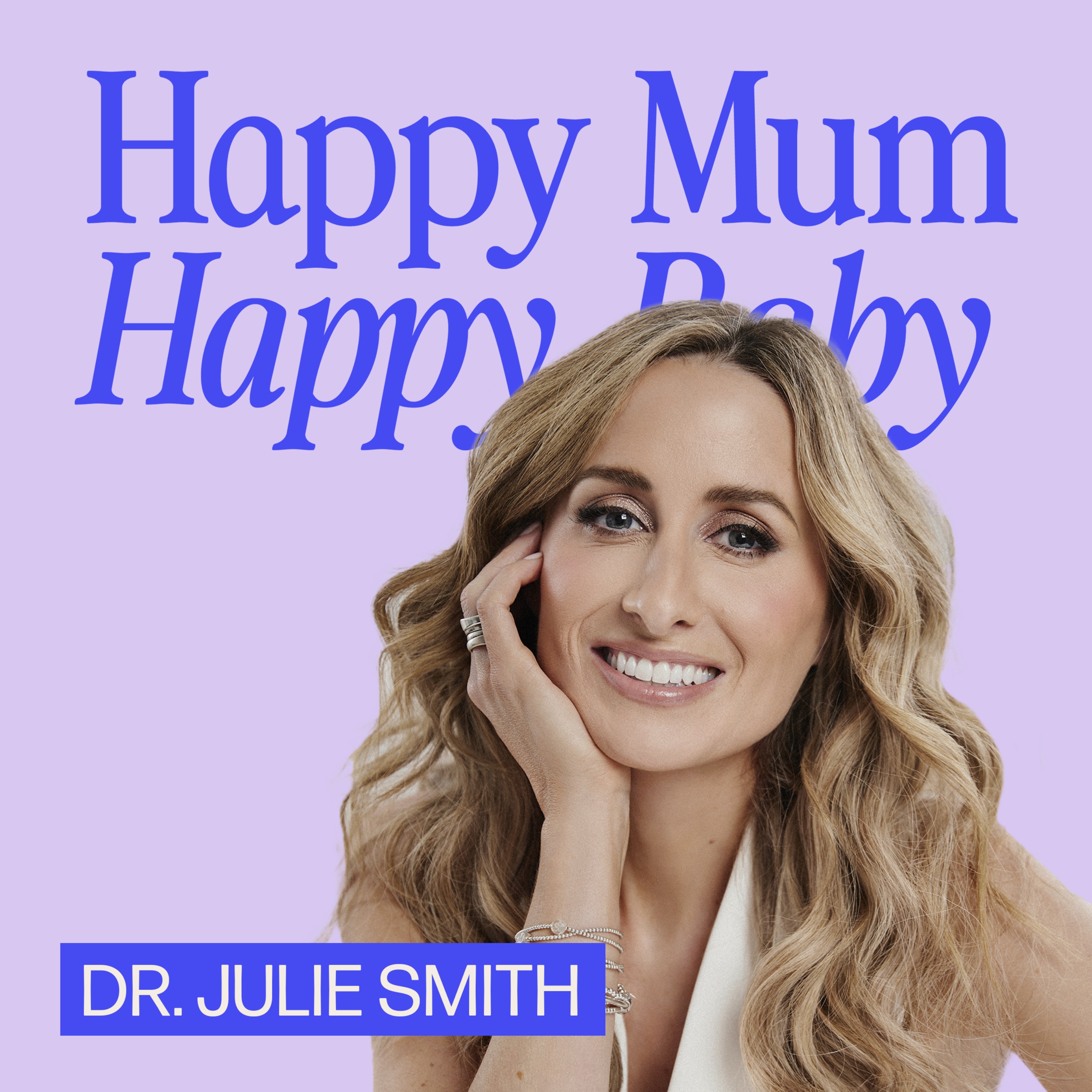
In this episode of the Happy Mum Happy Baby Podcast, Giovanna Fletcher engages in a heartfelt conversation with Clinical Psychologist Dr. Julie Smith about the pressures of perfection in parenting, the challenges of motherhood, and the significance of mistakes. Dr. Julie also shares her personal journey of being diagnosed with breast cancer and how she navigated discussions about it with her children.
Written by AI. May contain mistakes.

Get the gist, explore an idea or ask about something said.
 Claude
On Happy Mum, what are the key points of this episode?
Searching your listeningAutomatic transcript. May contain errors.
0:01Coming up on Happy Mum, Happy Baby If I didn't eat almost every hour, then I would start retching and things like that. It was just hideous. And so I was just scrambling around for food all the time in between appointments, like stuffing crisps in my mouth and things just to have something on my stomach so that I didn't retch in appointments. It wouldn't be very nice, would it, if you're giving your life story and stuff like that. It'd be awful. I always remember from my training, we did a postnatal module or whatever, And this guy came along, this professor, and he was doing his lecture and said, a woman's mental health is never more at risk in her lifetime than in the first year after she has given birth.
0:45And I remember at the time thinking, wow, why? And now I get it. Not only because of what she's been through, but because of the positions we put women in today after they've given birth. Everybody has these moments where they're not parenting the way they want to and then have different ways of coping with it afterwards. you're just so much more informed about what your options are and it was kind of a revelation to me to think I could apologize to my child but then you realize what it teaches them because they won't do what you tell them they'll do what you do and so if instead of talking and repairing you're brushing stuff into the carpet and pretending it never happened then that's what they'll do too
1:29Hello and welcome to a brand new episode of Happy Mum, Happy Baby, the podcast. Today's guest is a clinical psychologist. She is an online educator. Her first book, Why Has Nobody Told Me This Before, ended up in the top 10 for a staggering 100 weeks. I've never heard of this before. It just blows my mind. It's phenomenal. She's now back with another book, Open When... She's also the mother of three children. Today's guest, I'm so happy she's here, is Dr Julie Smith. Hello. Hi, thanks so much for having me. A hundred weeks in the top ten is astounding. It's wild, isn't it? And then when Open When came out, they were in there together, which is nice.
2:16But isn't, you know, like, how does it feel to know that your work is so vital? You know, we hear how important it is to go and, you know, talk about our problems or dive deeper into why we're feeling a certain way and to seek help. But actually, that help isn't readily available. And you've made it so that it is accessible to people. So it's not something that just people that get to the top of the list get to have help with or people that can afford help get help with. You know, you have made it so that it is there for everyone, whether that's through a book or through the videos that you share.
2:47Yeah. And I think that's it is that, you know, a lot of people would come along to therapy, but they didn't need long term in-depth therapy. Once they had the educational parts of it, they were raring to go, you know, and that's where the title of the first book came from, because people were saying variations of why on earth has nobody told me this before? You know, this isn't rocket science, but when I take it seriously and I put it into my day to day life, it's making a really big difference. and so I don't think we have to be all or nothing we can go and educate ourselves a bit if we don't have access to therapy or the med mood that's not for us there are still things you can do to realise that you don't have to be at the mercy of it all and there are things we can do to kind of make the moment a bit better and the great thing about the latest book is that whole idea of when certain moments happen it's not a book that you have to literally open and you start from the beginning and work your way through actually there's certain chapters that will speak to you at different moments yeah I mean who has time to read a book cover to cover these days right and so I was really keen with both of them actually I wanted it to be sort of book that you could leave on the side and dip into and back out you know so if you had a question in mind about you know what would a therapist say about this or that that you could go straight in there find what you needed and get back out again especially when you're struggling you haven't you haven't got the headspace to go oh let's start at the beginning and work through and you know so you just want a little bit of a pep talk or a bit of advice you don't make things seem overly complicated or medical you know the video that's on the top of your page at the moment with the fish and the toxic water it's such a nice visual that you use that makes everything again that accessible word yeah yeah and if you can say it in 10 words say it in 10 words but actually now that I've been you know doing short form content for a few years I feel like I can't talk for more than 60 seconds now I'm like I'm done now it's just wired into you but hopefully you'll talk for more than 60 seconds on this it's fine so how does it feel having another book baby out in the world different this time actually because the first one was such a sort of phenomenon by itself this one felt a bit different I think when it went to number one I felt more relief than excitement because you set yourself up with your own you know expectations and but also I kind of caught myself on that because I sort of felt that relief rather than excitement and then I was talking to someone just you know watching my kids play football and I said about the Sunday Times and I said what's the what's the Sunday Times list then and then that really kind of took me back to reality of like most people don't even know what this is let alone care so you know catch yourself on your own expectations Julie.
5:23That's such a massive life lesson as well isn't it so often things that go on in our lives that we feel like oh everyone's gonna know this or no one cares. Yeah. You know what I mean? They just, the things that bother us simply don't bother other people the majority of the time. Yeah, yeah. And actually there's a bit in the book where I say something like, you know, no one's as concerned with your imperfections as you are. You know, I have to use some of my own advice sometimes. We, you know, have these human moments and you have to just check yourself a little bit. And yeah, I love that. We'll come back to the book again a little bit later.
5:54But I now want to talk about you and where you grew up and what your childhood was like and how you got into doing, you know, what drew you to psychology, I guess, as well. Yeah, so I'm one of three sisters. Where are you in the lineup? I'm the middle child. I hope so. The quiet one. I was very shy as a kid and read a lot. So, yeah, I mean, I'm recording this here from the Penguin office. And even to be here as such a book nerd is like, oh, my gosh, thank you. so yeah and neither of my mum and dad had particularly privileged backgrounds so you know life was simple but that showed me I think what matters most I followed my interests when it came to psychology I didn't have any of these like big epiphany moments where I wanted to save the world and all that I just I was just fascinated by people and so when I had the chance to study something that kind of could teach you a little bit about how what makes people tick and do what they do well that sounds interesting and then I really enjoyed it and so when I didn't then know what to do at university but everyone seemed to be going there but well let's just do this thing that I really find fascinating and any chance I had to keep studying it I did and um six years of uni later I found myself as a yeah psychologist so just a nerd a psychology nerd have you found yourself though throughout that kind of understanding more about yourself throughout all of your learnings that thing of kind of oh that's why I do that or you know yeah and and even actually my tendency to read fiction I think was about that to a degree uh you're sort of being a shy kid and not necessarily knowing how to be in interactions and that's what you get from fiction isn't it and all the stuff I used to read as a kid really was I never read you know like science fiction or fantasy stuff it was all stuff about human lives and that's exactly the same as what I was like as a kid and I ended up writing fiction and I do think it is that and I think it's all that thing of it's about relationships and those connections you know I loved I was reading people like Jane Green, Adele Parks, Dorothy Coombson people that were talking about what I consider to be the real life stuff yes you know yeah yeah and and it's exploring real life stuff in a safe environment isn't it where you can experience things going really wrong and see how people react and how they get through it and without anything really actually going wrong because it's fiction.
8:25And when you were younger did you ever think ahead to your future and think about motherhood? Do you think I definitely want to be a mum? You know it's going to be a big part of my life or did it just sort of happen as you got older? Yeah no probably the opposite really. I remember when I got together with Matt my husband at 21 we were driving along and I remember saying I didn't I don't know if I even really want children and the car kind of screeched to a halt where I went what and and he just couldn't believe it and but it was really just me having not really thought about it because I was so I was buying into this narrative that the thing you do to gain any kind of respect in the world was that earn money and I now realize how off the wall that is and how untrue that is and once we were kind of married and settled and had a home I had this sort of almost instant shift it wasn't a shall we have children now it was a I need I need to have a baby and it was a fundamental it was like an aching it was like a need to it was it consumes me then suddenly can And you remember finding out you were pregnant for the first time?
9:39Yeah. So my younger sister had just had her baby just before Christmas. And I was due to go up and visit and meet baby for the first time. And I did a sort of early detection test, you know, and you have a, is there a line isn't there? And a faint line appeared, but I was just about to hop in the car and go drive up to Yorkshire and see my sister. So I hadn't even spoken to Matt Yeah, I just had a look and thought, is that, is it? Is it not? But I just felt like maybe it was. And so I remember sitting there meeting my niece and holding her in my arms and thinking, oh, not once time. Is this going to happen?
10:18Isn't that wild? I think the idea of kind of wanting to get pregnant and the reality when that line is there, it's such a different feeling. Yeah, yeah. And your ability to look after yourself shifts as well, doesn't it? so I then I think I then did the proper test it was like New Year's Eve I think because we were due to go up to Snowden with a few friends of ours over New Year's Eve stay in like an Airbnb place and and climb Snowden on New Year's Day as I remember we went out to this tiny little village pub that was about the size of this room and it was just like someone's lounge kind of thing this village pub and we all had some drinks and then because Matt knew and I knew but we didn't want to tell anybody i would accept offers of alcoholic drinks but then when no one was looking matt would drink them so he was absolutely flotted on this new year's eve um and i was absolutely fine but nobody was any the wiser and then the sort of you know climbing the mountain the next day he's like are you okay are you gonna be able to do that yeah i'm fine i'm absolutely fine to climb up a hill is that yeah like you just don't know in those early days you know i i don't know about you but I google so much you know am I allowed to do this am I allowed to eat this you know what does this mean yeah yeah there's a lot of that isn't there suddenly everything you and that's the thing motherhood starts the moment you realize you're pregnant because then every action you take is influenced by them every you know shall I eat this shall I not eat this shall I do that shall I not do that and so everything changes from that moment on all it did for me and everything was dependent on whether it was the best thing for the baby or not.
11:56And how was that pregnancy? Yeah, I was sort of nauseous. I wasn't physically sick, but I was nauseous for the first half, which was just hideous. Was that the same in all three? Yeah, yeah. And I remember a colleague, at that time I was in the NHS and I was in a sort of communal office and the girl next to me, he already had a couple of kids, she saw me holding onto the desk, trying to trying to just be still and not feel sick for a minute she looked at me and she gave the eye like she'd been there she knew that green look and uh so it was it was tough because then I was doing in the NHS I was doing you know back-to-back appointments with people but I knew that if I didn't eat almost every hour then I would start retching and things like that was just hideous and so I was just scrambling around for food all the time in between appointments like stuffing crisps in my mouth and things just to have something on my stomach so that I didn't retch in appointments and things like that so it wouldn't be very nice would it if you're you know giving your life story and stuff like that awful did you have to look after your mental health more than you normally would during you know pregnancy and but and actually I guess and beyond because we speak so much about maternal mental health and the importance of being aware and you would have known so much about what women face you know with the surge in hormones and stuff is it something you were acutely aware of yeah I think I was really aware I remember um when I used to work in a crisis team which is essentially a sort of 24-hour service for for people that you know are on the cusp of do they need to come into hospital don't they and you make decisions like that whether you're going to treat them at home and I remember within that working with some people who were in that sort of postnatal period and the huge distress that could be caused by unrealistic expectation you know if you if you set yourself up with these ideas or rules before a baby comes along and then you have this discovery that actually that is not going to work out that way that if you continue to hold on to those old expectations the thing that pays the price is yourself usually and it's not always best for everyone and what's not best for mum is not best for everyone else either and so I think I probably had that in my mind that you know I was going to go easy on myself and things like that but what I did find was I because I'm that sort of hard shy quiet person I don't sort of tend to put myself out in the social situation I didn't join groups and do the things I should have done that sort of things and I had all three of my children are autumn babies so I essentially had you know several months of dark cold rainy days where you don't go out and walk into town or you know do something to get yourself out the house you're just at home and that was probably the wrong thing to do in hindsight that you know being around people and saying is that happening for you yeah that's happening for me oh my goodness that kind of stuff and actually even though with all of your expertise and stuff and all of the experience that you would have had of you know talking to different people who were going through stuff I guess it's it is that thing it's a different thing when you're going through it and when it's you yeah that you rest back on your sort of natural inclinations don't you to do what you naturally comes to you and I probably would have enjoyed that time more had I connected with other mums of infants and I would now I would now breach that to people but I didn't necessarily do that myself yeah when I was looking at you know I think when I had buzz I joined four different groups a week and that was ridiculous you know you can't be in four groups it was just too much so I had to pull back but there was so much about you know the babies and their neurological pathways and all this stuff and I was like yeah let's join the groups because it's gonna be great for his brain but actually looking back now I got like maybe that was true but actually the main part for me of those groups was to take get yourself out of the house away from the noise that is just there Be with your baby, but also be with other parents.
16:05So you can have those moments of, God, mine didn't sleep last night. It's almost like cutting through the rubbish that you tell everyone when they come over. Oh, it's great. Yeah, it's amazing. And actually kind of just allowing yourself to simply be. Yeah. Yeah. I think what I did as well with the first one is I tried to read all the books so that I could get it right. And that caused so much more distress for both me and the baby than ever needed to. And by the time I had my third baby, I almost wanted to rebel against all of us. No one tell me what to do. Yes, my baby will sleep on me every nap.
16:40That's what I was at with my third. Yeah, I thought, you know, all this stuff just goes against nature, a lot of it. And I knew what I was doing. And if it worked for us and made our lives easier or better or made him less distressed, then I was going to, you know, do what worked for us. And that made the whole process so much more enjoyable. I wasn't anxious about what I was getting wrong and whether I was any good at it because, you know, I wasn't holding some sort of scoreboard up for myself. I wonder what, you know, if we were to revisit our new mum selves with our firsts, what things we would do differently or what we would actually, you know, the things that I used to stress about, the whole, you know, must put a baby down to sleep because otherwise, you know, the whole rod for your own back stuff that we all get told by books or by, you know, well-meaning strangers who were just sticking their oar in.
17:27And, you know, I wonder what those those things would be would be and being able to just enjoy it all a lot more. Yeah. Yeah. And to trust your own feelings. So, you know, if it doesn't feel right to leave your baby crying to, you know, apparently teach them how to sleep or if it doesn't feel right to to leave your baby and go somewhere, then you can you can listen to those feelings. I think a lot of the advice teaches us to look outward for what's right and okay and teaches us to not trust our own judgment and our own feelings as a mum. And actually a lot of those natural feelings that you have are, you know, as old as human beings.
18:09And they've done a pretty good job of helping infants survive so far. So it's okay to trust those. And if you want to hold your baby for three months, hold your baby for three months. they won't lose out for it. If anything, it makes me feel really sad looking back at that, you know, the first time around and kind of going, should I just held him? Because you get told the whole thing, it goes so fast, you know, you'll look back. And, you know, I think that's a really difficult thing to hear as a new mum when there is, when it is all up in the air and everything feels so chaotic and everything is so new and you feel like you're failing at everything.
18:41To have people saying to you, enjoy it. It goes so fast. It feels like I am literally in survival. Like I can't enjoy this. Yeah, yeah. I remember thinking actually with my first baby at some point, I don't know if I can take this level of anxiety forever. You know, this constant worry about are you getting it right and doing the right things. And again, it's the expectations. It's this idea that there's some set of rules that says this is right and this is wrong or this makes you good at parenting, this makes you bad at parenting. and you can just get yourself into turmoil with it. But yeah, by the time, I think it was probably difficult with my second because there's only two years between the first two.
19:28So then I had a toddler who was potty training and a newborn baby and we were moving house and that was, again, survival mode but for probably a slightly different reason. I was probably more relaxed with my second baby but had more on my plate because I had a toddler at the same time. Whereas then there's another four years before I had my third. So with him, I was just like, oh, come here, let's just cuddle for three months.
19:56I have loads of happy memories of looking back at the third and doing that. Yeah, and even now, I mean, he's six. But, you know, if you wake up in the night and you want to get a mummy's bed, you do that because it won't be very long and you won't want to do that anymore. and you might be much longer and then you probably would have left the house altogether and you'd be cuddling someone else in bed. So, come on, get in. I always used to say, I don't know any 18-year-olds that get into bed with their mum. Not any boys anyway, so you know. I'm sure they'll grow out of it at some point. Yeah, and then you learn to cherish those moments because you know it's not going to last forever.
20:29How did you feel heading towards the births? Was birth something that you'd thought a lot about beforehand? Yeah, I probably thought about it a lot with the first one. And do you know what? I remember it wasn't an easy it was long and difficult and then I remember I was awake in the night just staring at my baby and and you know totally in love but then also I remember feeling quite upset that I was like almost a bit angry why did no one tell me that could happen why did Really? I didn't want to say that. I felt like maybe in that first pregnancy, everybody was, you'll be fine. You'll be fine.
21:10You'll be okay. It'll be worth it. And maybe wasn't. Did you have ideas of what that birth would look like? Not really. I don't remember having a plan or spending lots of time on that. It was a sort of, I think there was lots of, maybe anxiety from other people, but it'll be fine. it'll be you know just get the baby out and then it's worth it sort of thing and then trying to kind of gloss over what the difficulties that can occur and so then I think with the next one I was worried and anxious about doing that again so I then did hidden birthing which was incredible and really really helpful. Did it help you sort of feel calmer about what had happened previously as well oh definitely and it helped a lot and um i would recommend that to anyone and and you know because i think what you need in that situation as with any situation is a sense of your own agency so you know i'm doing this but but what can i do in and around it that's going to help me get through you know just a few tools is uh can be transformative in terms of how you feel about the situation it doesn't change the situation but it you feel much more in control if you if you know there's certain things you can do to manage the feelings that come with it because a lot of it is the fear of pain and things like that isn't it and so when yeah when you shift your your perspective on on the pain you know I remember in hypnobirthing there's a lot about sort of dangerous pain and healthy pain and that you know birthing pains are positive ones but because that's what's supposed to happen but you know it's different to breaking your leg pain which is a dangerous pain and and those sorts of things that can it helps you to i guess embrace the sensations that come along even though they're uncomfortable it allows you to know this is what we're doing this is part of it yeah hypnobirthing just makes everything make sense in a you know in a really simple way that whole idea of well i know for some people they change terminology so instead of pain They might say surges or instead of contractions, waves.
23:21For me, that was never a massive thing. I felt like words didn't affect me like that. But the breathing, the looking at what your body's doing, looking at the, you know, the fear causing a rush of adrenaline and how adrenaline pushes all of your blood and therefore oxygen into your arms and legs. You can run away, whereas you don't want to run away. You want all that blood and oxygen to be, you know, in your uterus and, you know, around where your baby is that it can help do the job of helping your baby come out. Looking at breath and how that can literally not only just calm you, but aid in that as well.
23:55Like it is that feeling of control. It's control and power. It's empowering. And, you know, and I know that in birth, we all have to keep an open mind and we don't necessarily, you never know what's going to happen. but there is something brilliant knowing actually I don't have to fear this I can I can feel empowered by what my body can do and it's that even when fear comes along that you get to choose how you approach that and how you move forward through that fear and you know whether you it's activating and you then you know what your choices are and you can move forward or whether you you don't want to do it anymore or you know so there's it's it's even when the different emotions pop up along the way that that you know you have a choice about how you how you take on those feelings and what you do with them and it's that we were saying before about you know expectations and things and our approaches even with hypnobirthing it's about taking the bits that speak to you but any aspect of parenthood it's about what what works for you so not feeling like you have to be a purist in anything or feeling like if it doesn't go a certain way that you've failed it's it's kind of going actually I like this element let's let's adopt this and and see what happens yeah and I think you can do that with anything can't you where educate yourself then use the bits and the tools that resonate for you and that you know you'll use and yeah it's okay to kind of cherry pick a bit and use what you know you'll use and will be helpful for you I mean how does it make you feel looking back to first time round and just knowing that actually I guess it's why there's no one told me this before it's that whole thing of almost being kept in the dark about what's about to happen yeah and I think that well that's why you know podcasts like yours are so good because um I think they're conversations that women never used to be able to have because we were told that it's something you just be quiet about it and don't scare them and you know and actually it's okay to be a bit scared because then you can then use tools to deal with the fear and I think it's definitely moving in the right direction and thanks to people like yourself who are doing that kind of work and allowing people to have those conversations, even when women are like they often are in our modern society, quite isolated.
26:03You know, if you don't have people to talk to at that point, you can listen in on conversations like these and go, oh, God, yeah, people have felt like that as well. So I think that's what got me was my tendency to kind of withdraw and be on my own. I now see it just wasn't a good thing. And yet modern society puts women in a very lonely I always remember from my training we did a postnatal sort of module whatever and this guy came along this professor and he was doing his lecture and I don't remember one line from that lecture when he said a woman's mental health is never more at risk in her lifetime than in the first year after she has given birth and I remember the time thinking wow why and uh and now i get it not only because of what she's been through but because of the positions we put women in today after they've given birth that they're in a house on their own for the majority of the time they're not with each other they're not really given the recognition and respect that is deserved absolutely deserved when when they're going through that and so the world is just not set up to place value on it and recognition in that way.
27:16Well sadly the reason why I think I feel so compelled to do this podcast and to keep going is that statistic that the leading cause of death and new mums within the first year is suicide. You can't hear that and not be compelled to keep having these conversations and letting people know that whatever you're feeling like right now you're not on your own and this isn't going to be forever and so I think it's vital that we continue talking but hearing that and then experiencing that are two different things so did that click into place more like the reality of that when you actually then became a mum and found yourself within that first year you know it is one thing understanding but it's another thing kind of going oh no now I I can understand why a woman might feel that way yeah I think so especially when you go through those sort of periods where I don't know if I remember it must have been quite early postnatally We were going to have some friends, some family friends that were going to come down and come meet the baby.
28:11And and you want things to be kind of set and OK. And it was just one of those days where the baby just wouldn't stop crying and she wasn't happy for some reason. And and I remember my mom coming around. I think I'd called her to say, can you come and help me? And I think when she got there, I remember sort of getting upset and saying, I just don't think I'm any good at this. And now I look back and I think, oh, God, you know. but those are the sort of feelings that you have, aren't they? It makes me want to cry to hear you saying that because I know that I felt that absolutely and I know that I can imagine that nearly every single woman listening to this would have had that moment at some point.
28:49Oh yeah, and they are dark moments often because you're doing it alone, aren't they? Because you're at home on your own reading these stupid books that tell you that if you're getting it right your baby will be happy all the time and I can't remember where I heard it said now some interview where someone said that babies of you know tribal women and things in africa that are carried all the time never cry because they're being carried on and i thought what a load of rubbish a baby being you know i carry my baby all the time around town and they would still give me great you know and it's just um but you don't realize it's rubbish until you're talking to other mums and you're actually experiencing it
29:36was it six years between the top and the bottom yeah yeah so how how was that then having three suddenly did that feel different yeah so sienna was in school then so i remember being scared about the school run like you know when matt was going to go back to work i remember that fear of how am I supposed to get all three of these out the house and get her to school on time like what don't leave me um there was a bit of that and again you have to shift your expectations you know bath time was my thing I was like how am I gonna do that how do you bath three children and get them to bed and yeah and even now you know I think a lot of the focus is around the the baby period isn't there but now you know my oldest is 12 Luke's 10 and then six and even things like I want to spend time with them all reading but I can't do all three at the same time and so something has to give sometimes and I think the the shift of expectation is continuous has to be this idea that you know you're going to adjust you know that that sort of baby period is finite and then life goes back to normal or life is easy after that and it's there's just different challenges along the way because people look to you for answers and you know and support and stuff do you feel like there's an expectation on you or is this something that you've had to let go that you should have all the answers and therefore live a life that is just content and happy all the time do you feel like you have to let go of that for yourself as well there are different things like um you know when when home life is stressful or when you make a mistake and you you know um lose your temper or you do you do something that you think oh that's not how I want a parent oh I don't you know so you have to kind of remind yourself that you're human and that there is no perfect parent you know and you wouldn't want it it's fantastic if children see you do something that you consider a mistake and then work hard to repair it because they're going to make mistakes too and they need to know how to repair them and to learn from them and make them better and try harder and different things like that so I think that's a big thing for me is realizing that your children don't need you to be anything other than human you shared an amazing quote from Jill Churchill I think it's an open when you said there's no way to be a perfect mother and a million ways to be a good one I loved that I love that so much yeah and that's why it's so good talking to so many different people who are going through it because everyone will have slightly different ways of doing stuff but they all get through so there's not only one way of of doing it that enables kids to thrive because it's not only dependent on you it's also dependent on the child right and those individual differences that would affect the choices you make about how you do stuff it's good to always try and improve but only from a place of curiosity about what could be better rather than a place of you know shame or lack of worthiness or anything like that Yeah, which a lot of us, you know, once the bedtime's gone wrong and you find yourself just sat there kind of berating yourself and kind of going, oh, if only I'd done things differently.
32:40It's almost like we give ourselves an appraisal at the end of the day and it's all negative. Yeah. And I think as soon as you start to attack yourself for getting it wrong, you then feel shame. And once you're in shame, you're never going to bring your best parenting to your child. that's when you know you snap or you shout or you because you're in such turmoil yourself you know patience has gone out the window and so you know it makes sense to to work on the stuff where you're looking after yourself everyone in your family benefits from you looking after yourself so that you can bring your best if you're if you're not looking after yourself then you can't bring your best then absolutely yeah and actually that you know the whole snapping thing and the anger thing we talked to dr caroline boyd about this which for the episode that's got out this week which will be last week if you're listening to this which is uh it's amazing that we're able to talk about things like anger and motherhood now and maternal rage rage and things like that because it takes the shame away if we're able to just talk about it because i think that perpetuates it even more if we're trying to just bottle it up and then feeling that that anxiety and that shame that it even is there.
33:49Yeah, yeah. And when you realise everybody does it and everybody has these moments where they're not parenting the way they want to and that they all feel different shades of terrible about it afterwards and then have different ways of coping with it afterwards, that you're just so much more informed about what your options are. And, you know, it was kind of a revelation to me to think I could apologise to my child. you know, in the early days, because the generation before us just weren't taught to do that. But then you realise what it teaches them when, because they won't do what you tell them, they'll do what you do.
34:27And so if instead of talking and repairing, you're brushing stuff into the carpet and brushing it ever happened, then that's what they'll do too. Obviously, life throws us big curveballs sometimes. And last year, you were diagnosed with breast cancer. Yeah. That's quite a massive curveball. and one thing that I think as a busy woman and as a mother one thing that really spoke to me when I was reading about this was the fact that you did the typical thing of not finding the time to go to the doctor you know that typical thing that we all do of you know oh it'll be nothing and it will but you did eventually go to the doctor yeah so I gave myself a bit of a talking to in the end because I was about six weeks away from handing in the manuscript to Open When And so I had loads going on, deadlines, under pressure, also, you know, being mum, two or three children.
35:22And so when I sort of discovered the lump, I kind of thought, should I just wait until I've handed the book in? And then I'll try, you know, do I even have the headspace to think about it as a stressful thing? I knew what it was like because I'd had lumps and bumps before that had been biopsy and stuff and they'd all been fine. so I in a sense I kind of thought it's a lot to deal with but also it's probably just going to be nothing and that's going to waste my time so I just and then a couple of days in I thought why are you being so silly that's just the worst thing you know sort of gave myself a bit of a talking to and then made an appointment and um yeah turns out the time was my you know biggest weapon so I got diagnosed about a week before handing the book in and uh yeah it shifted everything and and suddenly priorities shift right suddenly the work projects and things are not the most important thing in the world or you know making sure everyone gets to their sporting club after school or whatever it's not the priority suddenly but isn't it interesting how sometimes we need an emergency to remind ourselves that all the time I think I think it becomes about sadly it takes things like death or you know anything that could take you towards that way to make you stop and really go what's what is important in life and it's awful that that it takes that to to get there yeah but it is a big perspective shifter isn't it and um certainly was for me and and you know thankfully we we found it super super early so everything was fine you know um had surgery and came out the other side no problem and um so that's you know super super grateful for that when it comes to the kids though you you did tell them about what was going on how did you come to that decision do you know what I thought they're going to find out at some point in their life and I I never want them to not trust me I wanted them to know that the truth was something we could all handle and and I was super lucky you know I was lucky that I knew that we'd caught it early and that I was going to be okay and and that kind of thing so I didn't want to tell them until I knew all of that stuff so there was a period of time where there was lots of uncertainty I had lots of because you find out and then they do other tests on other areas and they and they so there's this period where you don't really know what the plan is and you don't know how bad it could be and so you're waiting for these other tests that was the kind of probably the worst point where you feel like you know when you first find out you're pregnant and you feel terrible but you can't tell anyone and you know you're holding it all in yeah that was a tough time for Matt and I but we knew that if I was going to do it and Sienna is so emotionally aware and she she absolutely I've never been able to hide that from her she would have picked up on it for sure but we wanted to be able to tell them in a very controlled and safe way where we already knew what the plan was and we could reassure them that it was all going to be all right but at that point I didn't know either how much they'd heard the word cancer and what they associated it with and so I thought that might be a bit of an issue but do you know my son my middle son had had sort of big surgery on his skull that shit Great Ormond Street when he was about two and he's absolutely fine now and so we used that as a comparison to say okay mommy's got this thing we actually told them we we had a holiday booked and while these different referrals were going across we hadn't we knew we had a couple of weeks of waiting the holiday was already booked so the surgeon said go on your holiday you know distract yourself and then we'll see you on the when you get back and uh so we went on the holiday anyway so we actually told them on the way to a theme park in the car we said oh yeah mommy's got to have this operation right she's got this lump and if we don't get it removed it's going to turn into something nasty but you know Luke had that operation and it's not as bad as what Luke had so he'll be fine and it was at that moment you know first of all there was like a what and then when we compared it to something but he sat there absolutely fine like oh okay so she's gonna be fine pass her lego let's move on and so that was just perfect and lovely um later on you know Sienna would she's the eldest so she would have a couple more questions so what does this mean which was nice so she could do that in my own time privately with me and but we were just super aware of that's where parenting I think makes you the better version of yourself because all the way along I wanted to deal with it in a way that looked after them and gave them a good demonstration of how you can cope with uncertain stuff and so that made me I think that made me deal with it in a way that wasn't always easy but would make me feel proud of it afterwards you know yeah um yeah and again doing what you do knowing what an impact that moments like that do have on people i i would think it would be impossible for you to go into you know talking to your kids about that not thinking about you know what how to do it in the best way to to minimize the impact you know essentially yeah and i don't want to give the impression that I you know did it all perfectly and was fine all the time I had some dark moments but I was able to have those quietly without the children being too aware of them although that took its toll as well so that period of uncertainty where you you know but you don't know everything and you haven't told the kids yet or you know people around you and you're holding it all in, which I'm not great at doing.
41:02And then I remember my youngest, we had a bit of a standoff over a magazine in a supermarket. Been there. You know, these challenging times where I thought, you know, we have to say no sometimes. And then once I'd said no a few times, I thought I've really got to follow this through now. He was tired. He was just starting to really kick off in the supermarket. And it's a small town. I knew people knew me. and I had to sort of carry them out. And then I got back in the car and I just whooshed. And I think all the kids thought, oh, we've broken her. You know, because I went to pieces in the car.
41:41And I think that's because I was holding all this other stuff in. You know, my stress was at capacity. And so a tantruming, not quite toddler, but four-year-old at the time, is enough. Even when you're not stressed, that's a lot. so I realised it just sort of took me over the edge and that was probably the time that the kids saw me just burst into tears in a bit of an extreme way. Like, are you alright mum? I don't usually do this. You should buy the magazine mum, it's only£3, come on. I'm never taking you to a single pocket again. And so I want to kind of, I guess, let people know that that happens to everyone.
42:21You can read all the books and you can know all the stuff that if you're dealing with high stress and high emotion and a lot, then big emotions are going to come out and that's okay. And it's like we were saying about giving your own sorry or your own apology. In the same way, is it healthy for our kids to see our emotions when they're not the pretty ones? You know what I mean? Is it important that they see mum cry, that mum not having the answers? Is that as important as seeing a happy mum? Yeah, absolutely, because it's all part of being human. And I remember working with people in therapy, you had lifelong problems because no one was ever allowed to experience anger at home.
43:00You know, these sorts of things where on the one hand, people think, well, that's really positive. You know, nobody ever gets angry at home. And that sounds great. But actually, then you don't have any template for what anger means. And it teaches you that anger is unacceptable or awful or it says something fundamental about who you are as a person. And none of those things are true. You know, you can feel anger and then it can calm again. There are things you can do to help that calm and then you can repair any damage that it's caused. And, you know, and so that's human life. And so I think we're doing ourselves and kids a disservice if we if we don't teach them that.
43:37But some of the most sort of helpful things that I've found with, you know, any of my children is kind of high anger is still being available to them, showing them that you can handle it. even when they're having these kind of painful or uncomfortable emotions that like say aren't the pretty ones or the pleasant ones that you're okay with that that um i get it i get it i'm here when you're ready i'm here when you're ready and you know i spent a few times just you know sitting on the end of the you know it's when your child doesn't want you to comfort them because they're angry or you know they're and and you know sitting on the end of the bed and saying i'm i'm here i'm here when you're ready I'm still here and knowing that they're still acceptable to you even though they feel cross you know I found that stuff really much more helpful and it helps you to reconnect with your own child I think even at the times when they don't want to connect with you because they're feeling angry at you for something or um yeah yeah talking about parent-child relationships I love in open when when you're talking about our relationship as adults with our adult parents you know and how actually at some point that has to shift to an adult to adult relationship where actually you both have an input into what that looks like you know you're not just waiting for your mum to phone you or you know you both get to have a have a say in in that yeah yeah and I think there's a lot of stuff online isn't there around you know what mistakes your parents may have made and the impact that might have had on you and things like that.
45:12And then I think that's fair enough, but then a lot of that narrative leans towards sort of feeling that things are their fault and that they need to repair that, despite the fact that you're now grown-ups and that what you now, I think we have that tendency, don't we, when we spend time with our parents as adults to step back into the child role. You know, my go-to parents have to sit down and wait to be, bring me a cup of tea or whatever but that happens in a sort of wider context as well and I think it's a really positive message that that as an adult you you get to mold this relationship in a really positive way it's not that if your parent just recognizes all the mistakes they've made and apologizes that that would fix everything because often parents have just as little insight as they ever had about what was damaging or not also I think it's so important to think about the time so it's so easy to kind of go you didn't do this you didn't but what did they do you know and I think that there is definitely that thing of kind of blaming so much of who we are and you know how we deal with things with what came before but then it's completely dismissing what they were up against as well and I know there's extremes of it and you know but you know on the whole I think some of us are looking backwards for answers in a way that maybe isn't helpful in moving forwards yeah and and I think if you can sort of fully blame your upbringing for any of your shortcomings then you also need to give your upbringing credit for all of your strengths because you can't have one without the other and and so yeah to a degree it's like a really nice exercise to kind of shift to gratitude as well you know what are the parts about your upbringing that you really really value despite the fact that there are parts of it that you you know would try and do differently with your own children and and and also you know what kind of relationship do you now want to have with your parents even though it might still be difficult they might still do things that you think oh you know stop criticizing me or whatever it is but in a way that says okay now it's not adult to child so I'm not totally dependent on that parent I do have choices in in the boundaries I set in this relationship therefore what what kind of relationship do I want to have with my parents that's going to enable that to be fulfilling for me and them and for potentially my own children but is also going to look after my own well-being so you know for some people that might be I don't know let's say if your parents are highly critical or something that might be limiting the amount of time you spend with them or it might be not asking their opinion before you make choices so that you don't get wrapped up in whether they're going to disapprove of you or not or you know it's just it means much just making slight adjustments so that you know you can have your own family unit that's based on your values and what you've learned over the years and recognize that that that relationship might not always or ever be perfect or the way you want it to be but that you are also responsible for making it a positive one everyone does the best they know how with what they have at the time right so if your parents came from you know a very kind of victorian household where they didn't show physical affection or say nice things to each other but they worked really hard to put food on the table then that makes sense that that's why your parents did that they were doing what they what they thought was the best thing at the time and and i'm sure our kids will look back and say you know things about us because we're all learning all the time and and that's progress yeah absolutely what do you think has been your biggest learning of motherhood or from motherhood so far gosh there's so many I feel like it's a constant learning isn't it probably about my my own my own self-worth you know I was talking about you know that the idea that I didn't think it was even what I wanted to do and now it's hands down the most important thing I know I have ever done or will ever do yeah probably a learning about my my own sense of purpose and why I'm here and the perspective it gives me constantly um you know when when I talk about the diagnosis thing last year that was my first thought my first thought um and it's the one that gets me every time you know it's the because it's it's all about that is the purpose which enables you to then be stronger through all sorts of things that you never thought you could cope with because the purpose is so powerful and so strong that must have been really scary in in the early days of that when you're waiting for the answers of what's going on with your body what that lump is and what that impact is going to be on you and your in your family that must have been really scary yeah and there's this real sort of um maybe a mama bear thing like a almost like an anger or they're not ready to be without me yet so just sort this out now like a real fight um and I think that's what it does children gives you that fight because they're dependent on you and then eat you and so you find depths of strength that you never imagined you had because you have to you're in a very similar position to me like my kids are 11 9 and 6 and actually we're in a similar position where it feels like you're just in a new phase of you know it's not baby or toddler anymore you know it's not that and actually we're in a new area of of parenting I think how are you finding that uh so my eldest just started senior school and that's where I'm gonna be in September I don't if I could go.
51:01Yeah, I think she's changed more in these few months than she had in four years of junior school. You know, being exposed to teenagers and she was, gosh, she's so aware. She said to me herself, I think I caught her trying to put eyelashes on for school in the morning. Oh, wow. What are we doing? What? I was still in Bermuda shorts when I was 12, like, you know. And she said, but mum, at senior school, everyone's, you know, looking at each other and they're ready to criticise each other for their appearance. I thought, wow, how, you know, insightful at 12 years old. She just nailed it. And it's like, OK, fair enough.
51:42Put it on. It's fine. Really? You know, because a lot of that is about survival, isn't it? And it's that period of life where it is actually about fitting in for a bit. And later in life, when you leave school and it's not such a kind of boiling pot, that's when you realise that you can branch out and be different and try new things and you don't have to be in with the crowd all the time because it's safer to do that. And so, yeah, it's a whole new world of challenges. A whole new world. So you've got rid of the changing bags but now you've got eyelashes on your shopping order. Yeah, and I keep losing shoes and clothes and then I find them.
52:26Someone else's bedroom.
52:31Julie, if you could write a letter on motherhood, who would it be to and what would you say? It would probably be to versions of my younger self, you know, that those other girls that might be, you know, at university or someone like that, who maybe are being taught that just focus on your career and just focus on how much money you can make and just focus on, I don't know, whatever else, how you know successful you can be at this that and the other and and that's what being a great woman is all about it would be something along the lines you know of trying to show them that that concept that you're that narrative you're being sold that that's where your worth lies is a lie and it's not true and while it's wonderful to go and do have wonderful adventures in the world and see what you can achieve.
53:23I've seen too many women in therapy who get to an age where they would then like to start families and then can't and then grieve for the rest of their days because they weren't taught how special and important it is to be a parent and so just put it off and put it off and put it off. It must be so bizarre to people who hear us talking about things like that, about how special it is and how fulfilling but then also hear us talk about the early days where you feel so lost and depleted and you know it must feel like but but it made you feel so lost but it made you feel so fulfilled you know what i mean that's the um that's the sort of everest question mark isn't it like yeah like okay well nobody really climbs a mountain for that few minutes of standing at the top they climb the mountain because it's so hard and it challenges them and it you know sends them to places they never thought they could go and then what you gain from doing that is so profound and changes you it's not because you took a photo on the peak you know it's not for those really special moments it's for it's for the process of of doing it and the most satisfying fulfilling and purposeful things are the most difficult ones aren't they absolutely absolutely uh julie we end the podcast with you completing three sentences.
54:44The first one is being a mum means. The first word that comes to mind is everything. It is everything. It means discovering parts of yourself you never knew could exist and finding a purpose you didn't know could mean so much to you I think. Since having children I have become a better version of myself through all the challenges that it's presented me with and I'm happy when I'm happy when I'm with my little family in my home do you know I it was my birthday last week and my son said should we come out should we do something no no we we got food in and we all sat in my bed together and watched movies together and giggled and had fun and rest about and that was just perfect it's so important to take those moments right because i feel like life's constantly moving moving moving moving moving yeah and actually just to take time to just stop and be together yeah yeah and with all the you know the way that my life has changed and all the different things that we could be doing and things that is the most important um that's the place i would prefer to be anytime dr julie thank you so much i have absolutely loved this you know you give so much comfort and support to so many people and you know on top of that you're you're a brilliant human so thank you so so much likewise thanks for having me
On this week's episode of Happy Mum Happy Baby, Clinical Psychologist Dr Julie joins Giovanna to talk about perfection, parenting and letting go of the expectations we place on ourselves.
Julie opens up about being diagnosed with breast cancer last year and tells Gi why and how she talked to her three children about it.
Plus Gi and Julie discuss hypnobirthing and the importance of having agency during birth.
Dr Julie’s new book Open When is available to buy now: https://www.penguin.co.uk/books/453995/open-when-by-smith-dr-julie/9780241663936
Hosted on Acast. See acast.com/privacy for more information.