 Ask ChatGPT

In this episode of the Happy Mum, Happy Baby podcast, host Giovanna Fletcher is joined by Dr. Mine Conkbayir, an expert in neuroscience and early childhood education, who also navigates parenting with ADHD. They discuss the unique challenges that ADHD presents for parents, particularly focusing on the hormonal effects of pregnancy and postpartum, as well as strategies for fostering understanding and support in parenting dynamics.
Written by AI. May contain mistakes.

Get the gist, explore an idea or ask about something said.
 Claude
On Happy Mum, what are the key points of this episode?
Searching your listeningAutomatic transcript. May contain errors.
0:01Coming up on Happy Mum, Happy Baby, Parenting SOS. All of this is about awareness, but also a willingness to be gentle with yourself and not berate yourself. You've just been conditioned to believe that something is wrong with you and wrong with your brain. Nothing is wrong with you and nothing is wrong with your brain. But it is different. Getting those around you to also be honest and saying what frustrates them about how it shows up and what you can do about it together. us. My 12-year-old, she will write me post-its to remind me. She will send me text messages. We problem solve together instead of staying focused on the, but you didn't do that.
0:41You did that wrong because we can push past these traits. During pregnancy, progesterone and estrogen levels rocket. When we have the baby, they plummet. Estrogen inextricably linked to dopamine. You know, it regulates its uptake, it minimises the deterioration of dopamine. So when these things change, immediately it affects our mood and our behaviour and our ability to tap into our executive functioning skills.
1:15Hello and welcome to Happy Mum, Happy Baby Parenting SOS. Now, parenting is a challenging journey for anyone. But when you're navigating it with ADHD, it can feel even more demanding. We're starting to see a lot more information out there when it comes to supporting children with ADHD, which is amazing. But what if you're a parent with it? Well, today we are super lucky to have Dr. Mina Junkbier with us. Mina is an expert in neuroscience and has worked in early childhood education and care for 25 years. Mina is also a parent and was diagnosed with ADHD herself in 2023. Hello. Hello. Hello. Thank you for inviting me on.
1:54How are you? What have you let yourself in for? Blimey. It should be interesting. It will be interesting. Yeah. It will be interesting. I feel like we might already need an E on this episode. Yes. Already. Yes. It's going to happen, isn't it? It is. It is. Let's just go with it. Let's just go with it. Yeah. I guess to kick us off, first of all, you and your husband have a podcast together where you do talk about ADHD and it's absolutely incredible and you're shedding so much light in this area for adults with it because I think there's so much about children you know and so as parents you know we're constantly looking at our kids going how can I help you and we hear from adults who are like oh if I had known when I was younger you know how life would have been different but I guess let's start with the term ADHD because actually that's something that you're not fond of.
2:43No and why would you be how could you be attention deficit hyperactivity disorder There's just so much confusion around that term. And the current authors of the DSM-5TR, the Diagnostic Manual for Mental Health Conditions, the latest edition, they acknowledge there's nowhere in the scientific research that has actually proved that ADHD is a disorder of the brain. So why on earth are we still using that term? It's far too vast. It's nebulous. And it isn't accurate. And it just makes us feel like we are to blame for this, what is essentially a neurological difference. We are not consumed by deficits, disorders, disease and all things negative.
3:28We're actually quite fabulous. But the world isn't designed to cater for brains like ours, which is kind of strange because since time began, there have been ADHDers. They just haven't been diagnosed as being ADHD. But what are the symptoms and the setbacks actually of ADHD? It varies for everybody, but generally there are differences and I'm not saying disorders in, I'm saying differences in, for example, attention, memory, organisation, problem solving and the ability to self -regulate, which means our ability to manage our emotions and the consequent behaviours. so if you were to ask me what how my ADHD manifests anyone and everyone would say emotional regulation my daughter would be at the front back and you know middle of that queue organization I am so meticulously organized but I have problems with processing what I'm reading or being told wanting to be organized instead and getting on top of things before it does that help you almost feel emotionally regulated having that organisation but actually also that organisation kind of feeling like it's slipping away sometimes.
4:42Yeah big time I mean we have differences in dopamine uptake but the the reward and the hormone that kicks you into action basically with along with adrenaline so there are differences there is it a deficit it's unproven is it a regulation problem we don't know the jury's out but we can have real problems in initiating tasks and following them through as well so even to get to the point of organizing something or you know doing something in a timely manner can be really difficult for us but I think what helps immensely is knowing about ADHD and reflecting then on how it shows up in you so that task initiation for example you know what can you do to push past that or it also might be procrastinating yeah or procrastivity as we call it's you're procrastinating but you're still doing something but not what you're meant to be doing right you go on side quests is that something that trips you up is it lateness you know so getting those around you to also be honest and saying what frustrates them about how it shows up and what you can do about it together so I mentioned my 12 year old she will write me post it to remind me she will send me text messages whatever I ask her to do or what she thinks is a good idea to do we'll do it so we problem solve together instead of you know just staying focused on the but you didn't do that you did that wrong there is a lot going on there that really deserves to be understood instead of being mislabeled and criticized yeah because we can push past these traits and they can become strengths when you've got you know the best of intentions but you get sidetracked we don't you know things don't work out in the way you intended do you then get you You know, is there shame attached to that?
6:33There's massive shame in being an ADHD. You know, you think from childhood we receive approximately, the science tells us, 20 ,000 more corrective and negative messages from our teachers, authority figures, parents, primary carers than the neurotypical child does. That's all throughout childhood into your adolescence when that developing brain has another seismic shift. And then into adulthood, you know, we are led to believe that we're stupid. We're lazy. We don't care. Oh, but if you just tried a bit harder, do you know how hard we're trying? You know, you haven't got a clue. So I really think that we need to spend more time understanding what ADHD is and what it isn't.
7:19I'm not saying it's an excuse for, but it is definitely the reason why we are the way we are. And instead of trying us to change who we are, enable us to succeed then, you know. And every week we interview guests. I harp on about the education system. Teachers, I'm not cussing them. I am one. And I know I have never, ever forced a square peg to fit in a round hole. I've always met my students exactly where they are. And it's never failed any of them. That makes me feel really emotional, Mina. because so many teachers don't. And I feel like the education system is, you know, I think at a point where we have so many adults getting diagnosed, kind of going, I wish when I was younger, and then we have so many kids being diagnosed who are then, the system hasn't changed.
8:09No. You know, and so we just see so many kids being lost. It's all about zero tolerance to behaviour. I don't care about the reasons why you did that timeout, you did that isolation. Well, we know the school to prison pipeline works via detentions, isolations, exclusions, permanent exclusions. Then where are they going to go? Where are they going to go? One way. And it can all be avoided if we dared to do differently and put that child first. Forget about your outcomes, because once you have a happy child, that child will thrive beyond any expectation and perceived barriers. They will, I know, because I've done it.
8:53Not one of my students failed. But if you walked in as an inspector, you'd say, oh, my God, how the hell did she get in? Because, yeah, they were allowed to wear hoodies. If they wanted to chew gum because it's a stim, they could chew gum. I had students that didn't want to wear socks. They wanted to feel the texture of the carpet under their feet. I had them working on their tummies, leaning against the walls, leaning over a chair. we'd go out to the local green spaces whatever they wanted they had it my goodness some of them are now foster care champions midwives teachers one's a neurosurgeon you know because you believe in that child no matter where they come from what they've gone through there is no reason why they are destined to fail we talk a lot about parenting children who are you know ADHDers But what if you are the one that has that diagnosis?
9:50What are those challenges? Firstly, if you suspect that you're ADHD, I would recommend you do seek out an assessment and get diagnosed. Well, because you weren't diagnosed until 23. Yeah, but it never occurred to me, even though anyone would default. Did it not? No. No, because you see, I'm not using the word symptoms on purpose because it's not a medical illness, it's not a disease. My behaviours or ADHD behaviours typically greatly overlap with trauma and complex trauma, especially in terms of cognition, emotional ability and the three key brain regions affected of the hippocampus, which is the seat for memory learning, memory recall, the amygdala, which is like the brain's panic button, emotional centre and the cortex, which is where that rational thinking, thinking for you act takes place.
10:43and they're all very similarly affected. Same with bipolar, actually. So it's very difficult to start unpacking it and saying, right, you're in that box, you're in that box, because there is a great overlap. And my childhood was absolutely carnage, littered with traumatic experiences. And, I mean, the legacy of that parenting, which is probably something we should touch on here, impacts me greatly as a parent. And I hate myself for it. So ADHD and parenting, I would say get that diagnosis and from there seek to understand what it means. How does it affect you? How does it frustrate you if it does?
11:27And what can we do together? That's how I go about it. And if you can, you know, I don't, ADHD coaches are very popular now. make sure they're accredited fully and regulated they can be very affordable online webinars you can you know access for free attitude add itude that great website with tons of resources so there is help out there but i think understanding actually are you adhd first and taking it from there is really really important yeah when you have you know your baby you come back from us Everything is so overwhelming and new and, you know, it is overstimulating. It's so strange. Like when I was, I had to have a C-section, a cesarean.
12:14And that day before I went in, I was walking along the Euston Road, preparing myself going, well, this is the last day as a non-parent. And then the next day, I mean, I'll come on to the postnatal depression in a sec. But I remember then with my baby in the buggy, walking along the upper street, places where I've clubbed and, you know, stomped about for years. Everything, Giovanna, felt so different. I felt like an alien on Earth. It was very overwhelming. I'll never forget that feeling. But eventually over time, things do slot back into place. You have to give yourself some credit, man, and just say, whoa, I've just gone through a seismic trauma psychologically and physically.
13:00And that's if it goes OK, let alone any birth trauma. You know, if you haven't got supportive family around you or a partner, if your child is born without any differences. I mean, there's a lot. And I think women are so consumed by these societal roles and expectations. They've got to be perfect and do this a certain way and feel a certain way by a certain time. They haven't got to do anything. It's all nonsense. You have to be led by how you're feeling and really honour that and respect it and give yourself what you need in order to feel OK. Because if you're not OK, hey, your baby's not going to be OK.
13:43No, exactly that. And it manifests very quickly because feelings of stress, you know, toxic stress particularly, they affect our baby from in utero. Studies are showing that time and time again, a quick saliva test will demonstrate cortisol levels in our babies. When it comes to things like organisation, going through, you know, life pre-baby, you kind of work out how you're doing it, even if you find out your ways, they work for you. And then a baby comes along and it feels like all of that gets chucked out of the window. Yeah. If someone has been diagnosed with ADHD, is that even trickier to work out how that slots into...
14:20Massively so, because during pregnancy, progesterone and estrogen levels rock it. We know that they have to, but when we have the baby, they plummet. Estrogen, inextricably linked to dopamine, it regulates its uptake, it minimises the deterioration of dopamine. I mean, so when these things change, immediately affects our mood and our behavior and our ability to tap into our executive functioning skills, all the things you need to be an organized, perfect mummy. So we I think we need to be told this stuff. We're not going mad. We're not insane. We're not destined for depression. I mean, these things are very likely, but please understand it is so expected and normal, whatever that is.
15:13Your brain is going through a massive flux. I think they say it takes up to two, three years for hormonal levels to even out post-pregnancy and birth. And that's if you're lucky and you've got the support networks around you. So also, you know, we're fighting not a losing battle, but in terms of ADHD research and support for girls and women specifically, let alone regarding puberty, pregnancy, perimenopause and menopause, the research is scant. I think they say it's at 2%. No. Yeah, it's ghastly. Do hormones affect things like that? Oh, I guess is it just because that kind of makes you, you know.
15:54Completely. We all know it makes us feel dysregulated in some way. You know, we all feel a bit wavy. And so it must just... It is. It's completely down to hormonal flux, completely down to it. So we have to give ourselves that grace and say, you know what? It's all going to go nuts for a couple of years. And I have to do what I need to do to help boost my dopamine levels, my serotonin levels. Hopefully the oxytocin, the love hormone levels are going to be boosted when you're looking at your baby, giving them that eye contact. When you know that absolutely it's driven by a hormonal change, then what can you do to up those hormonal levels naturally?
16:33I think it was Denise Welsh, Katie Price, where by estrogen gel. Yeah. Absolutely massive. But do your reading, speak with your GP or healthcare practitioner. And that also helps with the pre - Massive. Perimenopause. Massively, massively so. What else can you do to naturally boost your dopamine levels and estrogen, get outside, go for gentle walks in nature. I am a massive fan of gyms because of my ADHD and how it manifests. I have to get it out of myself three hours every morning so I don't feel as wriggly and creepy in my skin. It could be meditation. It could be yoga. I know people laugh at meditation, but it's scientifically proven to strengthen the prefrontal cortex, that seat of rational thinking, and it helps to quieten our brain's panic button, the amygdala.
17:25We battle with so much as women and it's dismissed and we have to take this very seriously and enlist the support we need. How can parents or should parents talk about ADHD with their children? Absolutely. Age stage appropriate understanding. You have to. You have to. You owe it to yourself and you owe it to them as well because we can be frustrating. Yeah. We really can. Like my RSD, rejection sensitivity dysphoria, oh my goodness, I am so sensitive to any perceived criticism or a feeling that I haven't done enough or I've failed them or something wasn't appreciated. And again, the root of that is we find it difficult to regulate our emotions and our behaviours.
18:15So like, you know, there was a chip gate thing with me that we joked about when we went on holiday. And instead of getting just one portion of chips for my daughter on the beach, I got two so everyone can share. And everyone took the mick. And I'm like, yeah, but I'm a Turk. And there was seven hours until lunch was maybe going to be ready. I need her to be fed and hydrated. Oh, the way they went on and the facial expressions of my daughter. I disappeared for the most of two days. Really? And then we went back at the airport, you know convened you know that the pet the family meeting said look I am sorry I took it too far but I was really distressed I know it's stupid too but I feel things very deeply I said if it hits a two out of ten for you it's a 50 out of 10 for me so it's about I'm I can be like this it will help me if you're like that more or not so much like that and that will depend on the parent and the child and the partner based on what how that adhd manifests for that parent but no we're not all a bit adhd yes we all have difficulties sometimes with short-term memory or you know organizing something but the difference is it's a neurotype our brains are wired differently it is structured differently and our brain regions key brain regions operate differently we have very different hormonal levels, key hormones that play a role in rational thinking and emotion regulation.
19:55So on Have Mum, Have Baby, Parenting, SOS, what we do is we ask you your three most common asked questions. You've touched on the first one, but I want to dive into this. Your first one is how can I manage RSD as an ADHD mum? Explain what it is and then answer the question. Yeah, so RSD, rejection sensitivity dysphoria, is basically, to put it bluntly, us overreacting to something very disproportionately. Is it overreacting and overthinking, that fact that you're kind of then looping that, how everyone reacted? Absolutely, because that overthinking can stay with you for years. It can disrupt your sleep for years, which it does.
20:36I can remember things from when I was a very diddy child. And it's like, let go, you can't let go. So you just have to find ways of coping with it. How can people cope? So I've noted down the STAR method, which I am getting better at using. So STAR is stop, think, act and recover. Critically, it's getting to know your triggers. What upsets you? Any particular times of the month? Is everything OK at home? Are you more sensitive because it's that time of the month, for example, or after? Something's happened. What is the reason behind that trigger? But a big thing is acknowledging that your feelings are valid.
21:17You're not being stupid. Yes, to the outsider, it's dramatic, but valid. But I feel like this. This happened, or you said that to me. I'm not saying you made me, but I did end up feeling a way. So sit with that feeling because when we try and push it down and mask it, then you know that that you know when you've shaken that bottle of fizzy drink and then you take the lid off yeah just go yeah I feel crap about that I really am upset okay well how can we work with that so reflecting on all of that individually but also with your family and how you can overcome those triggers so that you are able to just hit pause and think before you act in future instances and knowing that all of that takes persistence that our brains are forever malleable the harder work we put in the better it's going to be for changing those neural pathways and ultimately our behaviors and also I am getting better at practicing affirmations really affirmations and that will depend on on you know on your situation on what your triggers are but I will say I am worthy of love I am worthy of respect I can make this change and I do the same for my daughter and she's now journaling and she loves it it's a it's her go-to in times of emotional distress whatever you find that works for you please use it and don't think no it's crap it hasn't worked you've got to stick it yeah everyone is different you've met one ADHDer you've met one ADHD.
22:57Yeah, absolutely. So I guess when it comes to RSD, a massive thing with that is awareness then. Yeah, absolutely. All of this is about awareness, but also a willingness to be gentle with yourself and not berate yourself and put yourself down. You've just been conditioned to believe that something is wrong with you and wrong with your brain. Nothing is wrong with you and nothing is wrong with your brain, but it is different. another common question is how can I advocate for my child at school my daughter literally yesterday I had to blast the head teacher and the head of drama because she forgot a bit of homework my daughter is so diligent she makes herself ill from being such a perfectionist and trying really hard she forgot she forgot the homework she's got two behavior points I said can you tell me exactly where in the scientific evidence it is proven that giving a behaviour point is going to improve memory.
23:57Also, how does it correlate with behaviour transgressions? It's not disrespectful, it's not encouraging disruption. No, you're absolutely right, sorry, we will get that removed. So what I'm waffling to say is never, ever, ever be scared to stand up for your children and challenge what's going on. I wonder if adult ADHDers who will have perhaps had a certain experience at school, who might have felt like they had to mask or were treated a certain way, labelled as naughty, whether actually when it comes to advocating for their children in school or their children being in school and having to deal with that, whether there's different triggers that come along with that environment.
24:38Massively. It's very common for a lot of parents who want to stay away from anything to do with school because of their own bad childhood experiences. But I would say get to know your parents, teachers, build a rapport if you've got the time and the energy to do so and just flag that you know you have had these bad experiences and you just want them to enable your child to feel safe enough to succeed. Your next most asked question is what can I do instead of punishing my child? We can look at the reasons why the behaviour is happening and I like to encourage teachers, adults, social workers alike, police officers, foster carers, to think of behaviour as that iceberg, right?
25:19I know it's well overused, but it's clearly not used enough. So at the tip of the iceberg, we see shouting or swearing, hitting, throwing furniture. But what's going on beneath that behaviour? Or and the antecedents? What's just happened? Right? Have you just shouted at them? Have they been humiliated by a teacher? Have they been ignored? Have they been shamed publicly? What has gone off? Are they hungry? Are they tired? Are they bored? Are you not stimulating them enough? Are you not emotionally present enough? What's going on? But most importantly, as a teacher, yes, and a parent, we can do emotion coaching, simple free steps.
26:04And emotion coaching enables us to acknowledge fully that all emotions and feelings are great there are no negative emotions there are no bad emotions let's just stop mislabelling anger as bad it's a brilliant emotion we have to get angry otherwise we'll be done to for all our lives we won't care about the injustices that happen jealousy that can be telling us actually what do i need then is something missing from my life frustration or what needs to change in this environment. OK, so all emotions are OK, but not all behaviours are OK. All right. So three simple steps are recognising and empathising with your child's feelings.
26:53So instead of saying, oh, stop crying, cry, baby, boys don't cry, all these crap things, you know, acknowledge. I can see you're really upset. That must have really upset you. And then you'll find that in seconds and minutes, that anger is dissipating. Why? Because it's been given a safe outlet. It's safe. Secondly, validate and label the feelings. I understand you're feeling frustrated because we didn't get to finish that game. Screen time's finished. We set limits on the behavior, but we give them alternatives. We problem solve. I get it. It's OK to feel angry or frustrated, but we don't throw puzzles.
27:40We don't hit. Let's take a break and chat about what we can do instead. I know people criticise, what is it called, gentle parenting. It's not saying be a walkover, pushover. There are boundaries in place, but you put them in place respectfully and sensitively. It doesn't mean you're going to be abused by your child or have liberties taken. I'm very, very firm with my daughter. All it takes is a change of tone or a look, and she knows, and we have a dialogue. and we think of alternatives and we move on. That way what you're doing is you're putting tools in their emotional toolkit. Absolutely. We also ask the community for their questions, all right?
28:25We've got three in. We've got three to ask. Is it supposed to be this hard to remember everything slash organise as a postpartum mum? 100 % absolutely yes, unequivocally yes. Like I mentioned, 80 % of postpartum mums experience the brain fog because your brain your mind and your body have experienced the most almighty seismic shift yeah hormonally physically psychologically i would say you're not the same person at least for a good two or three years let alone in that immediate six week period give yourself some grace understand that hormonally you are at the polar opposite of where you should be because of those plummeting estrogen and progesterone levels so it's up to I want to say it's up to you but please do seek out support be it from your GP healthcare practitioner the family you have around you if you're lucky enough to and just say I need help yeah I need help but also acknowledge that it is going to be a strain for everybody involved but you're learning together And it's a team effort.
29:36And I think that can go a long way to easing the impact of those postpartum symptoms, if you like, with the brain fog, the mood, the depression, the forgetfulness, the lapses in concentration, no energy whatsoever, a complete disinterest in sex. Of course, you're going to be disinterested in sex. Come on, what's just happened to you? You know, and a disinterest in life itself. And I think if you're feeling like it's going on one month becomes three, four, then really do please press upon your GP to get this intervention, whatever that might be that you think you need. because looking back now, I would say I definitely had it.
30:18I remember, yeah, volunteering myself to get a bit of therapy or counselling when my baby was newborn because I was having hell with my mum and I just felt like an idiot because there I am writing books about child mental health and parental mental health and, you know, I've delivered these courses and I was like, oh, man, what's going on, you know, but you can get through it. It's not a sentence, not a life sentence but I've now got a near 13 year old and it does, it's a cliche but it goes so fast. Oh my goodness, just try to embrace it, embrace your baby, your child and just get all the help you can.
31:02Absolutely. Another question, I'm in my late 30s, is there any point in trying to get a diagnosis now? I would say yes, it is worth it and ask yourself if you are, oh, a bit yes and a bit no, I don't know. What purpose is it going to serve you? What do you think puts people off? I'll tell you what I get quite concerned by are the parents that write in to me saying, I think my child is ADHD, but I don't want them labelled. Now, we are living in a type of society that we do need the label in order to get the help that we need. so for that reason I would say definitely get your child assessed also you do not want to carry the guilt when that child hits adulthood and said why didn't you get me the help so for you as a 30 year old I'd say yes please I would recommend the diagnosis especially you know later on in life as well when we hit perimenopause menopause there's so much still to be understood and the help that we need and I think if that diagnosis gets you a step closer to receiving the help you deserve to navigate life as an ADHD woman, then do it.
32:15Yeah, absolutely. Another question is being the non ADHD parent, it feels like the mental load of parenting is all on me. That's not even a question. That's the statement. Yeah, and it probably does feel like that. And I can relate to it as well. So I'm sorry you're feeling that way. There is a way around it, though. Speak to your partner tactfully, sensitively and honestly, just say, look, I know you're struggling with ABC but it's taking its toll I'm knackered I'm frustrated I'm snappy however it's affecting you and just sit down and have a non-judgmental chat about it maybe grab a notepad and pen and talk about how you can better help each other to understand what each other is going through yeah I think if you've got one parent trying to mask and be super mum or dad as an ADHDer but generally probably tripping up all over the gaff then you're picking up the pieces oh how can you do that so stupid I told you to do why did you forget to do and when you've got children it's really the stress is just then amplified isn't it because you have got deadlines uniforms that need washing on certain days and homework that needs to be done it's no longer just you you know feeling like you're letting other people down you're letting your child down in that setting yeah that suddenly feels like it's absolutely and you know we have this thing of the perfect parent but you know dw winnicott the psychiatrist has this motto and it's lasted the age and that is just be a good enough parent and i think there's all that pressure we've got to be perfect at this this and this we've got to excel and multitask and spin all these plates you can't as an adh theory it's so taxing so taxing and I think just being honest about your struggles but also in that chat with your partner take a moment to celebrate your strengths as that partner who's supporting the ADHD but also what the ADHD and mum or dad is adept at doing you know I'm great in a crisis but can I find my I get lost on the way to the studio every year all the time And Paul's like, are you doing it on purpose?
34:21I'm like, I don't know. If I turn around, I'm gone. That's it. My bearings are skewed. So I just think take it easy on each other and take a bit of time out together as well if you can and dare to laugh. Well, and do you feel like your diagnosis, because it's been two years now, do you feel like your diagnosis has helped you within parenting, within being a mum? Has it helped you be kinder to yourself? Has it helped you with your awareness and everything, especially like in the parenting? Oh massively so. I'm really glad I got my diagnosis. For me it's helped because I understand why I am the way I am.
34:57And it enables me to advocate for myself better. So going back to the 30 year old who says you know do I get a diagnosis or not? That's another thing it will give you. It will give you the confidence and the grounding to advocate for yourself. I need this if I am expected to do this, this and this. it's not you being difficult it's not you being inept you are markedly different and you need certain things put in place in order to thrive so I would say in that sense it's been invaluable for me and and it helps people to understand me and even if I'm going to take a phone call to do with work or I'm working with someone I don't know I'll say like I did this morning look I'll forget what I'm saying mid-sentence, let alone where I am and what my name is.
35:44Just be aware of that. So can I bring notes? Or if I'm about to give a public lecture, I will invariably gobbled up by anxiety. So I'll say, please, can you send me a photo of the premises, idiot-proof directions of how to get there with landmarks so I know that I'm doing all I can to do my best for others while not letting myself down, you know. but that we're not here to be abused and put down and dismissed by neurotypical, typically others who don't understand or make the effort to understand how we're different and what we need in order to get by. Yeah, absolutely. We end the podcast with you completing three sentences.
36:26The first one is being a mum means. Loving your children unconditionally, showing humility and apologising when you get it wrong. If I could tell you one thing, it would be. Okay, there are two things. Oh, I'll tell you, you have two. Yeah, only because it comes from my daughter, the second one. So the first one is never, ever, ever, in brackets, physically punish your children. And the second one is from my daughter. And she says, put yourself in our shoes and remember how it felt to be a child. Oh, and finally, I'm happy when? My daughter is happy. aww thank you so much this has been it's been more than ADHD it's been it's been here there and everywhere in the most perfect way which I guess is actually just like our brains yeah exactly that exactly that and you know I think it's just such a fascinating conversation I think you know whether someone has had a diagnosis or not thinking about getting a diagnosis or just becoming more self-aware about what their quirks are and what their needs are you know I said I know when my head goes fuzzy.
37:33I know those certain things. And I think it's so important that we all, we get off the people-pleasing train or whatever it is and kind of go, what is it actually that serves me? Absolutely. Thank you very, very much. No, I'm really grateful. Thank you. It's been an absolute pleasure.
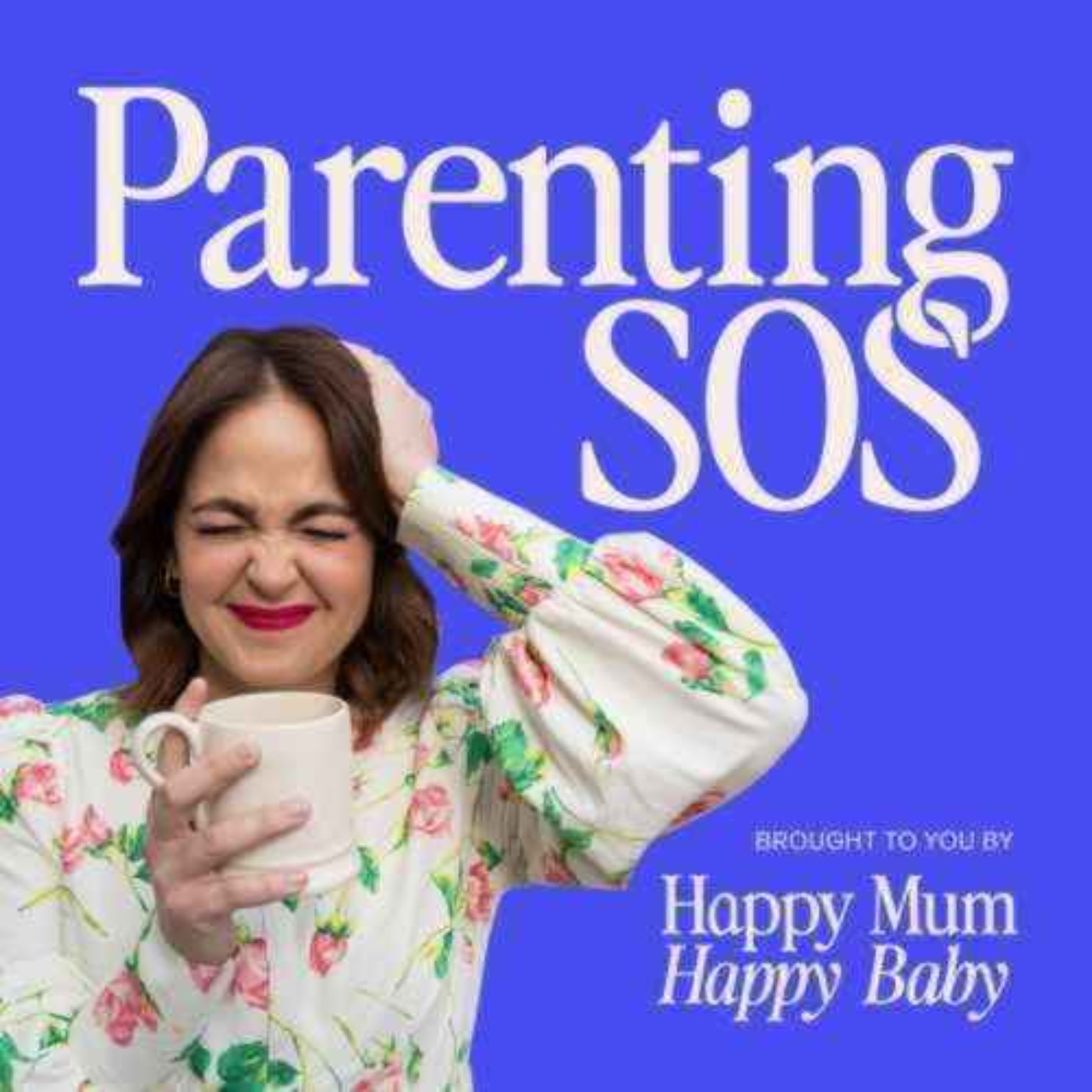
On this week's episode of Parenting SOS, we’re joined by Dr. Mine Conkbayir. Mine is an expert in neuroscience and has worked in early childhood education and care for 25 years. She's also an ADHD mum of one.
Mine and Gi discuss how hormonal changes during pregnancy and postpartum can impact ADHD behaviours, and the importance of honest, supportive conversation between ADHD and non-ADHD parents and children.
Plus Mine answers your questions on all things ADHD.
You can listen to ‘I’m ADHD! No You’re Not!' Mine's hit podcast with husband Paul Whitehouse here.
Hosted on Acast. See acast.com/privacy for more information.