Ask ChatGPT
 Happy Mum
7 Jul 2026 · 1h 2m · 21 chapters
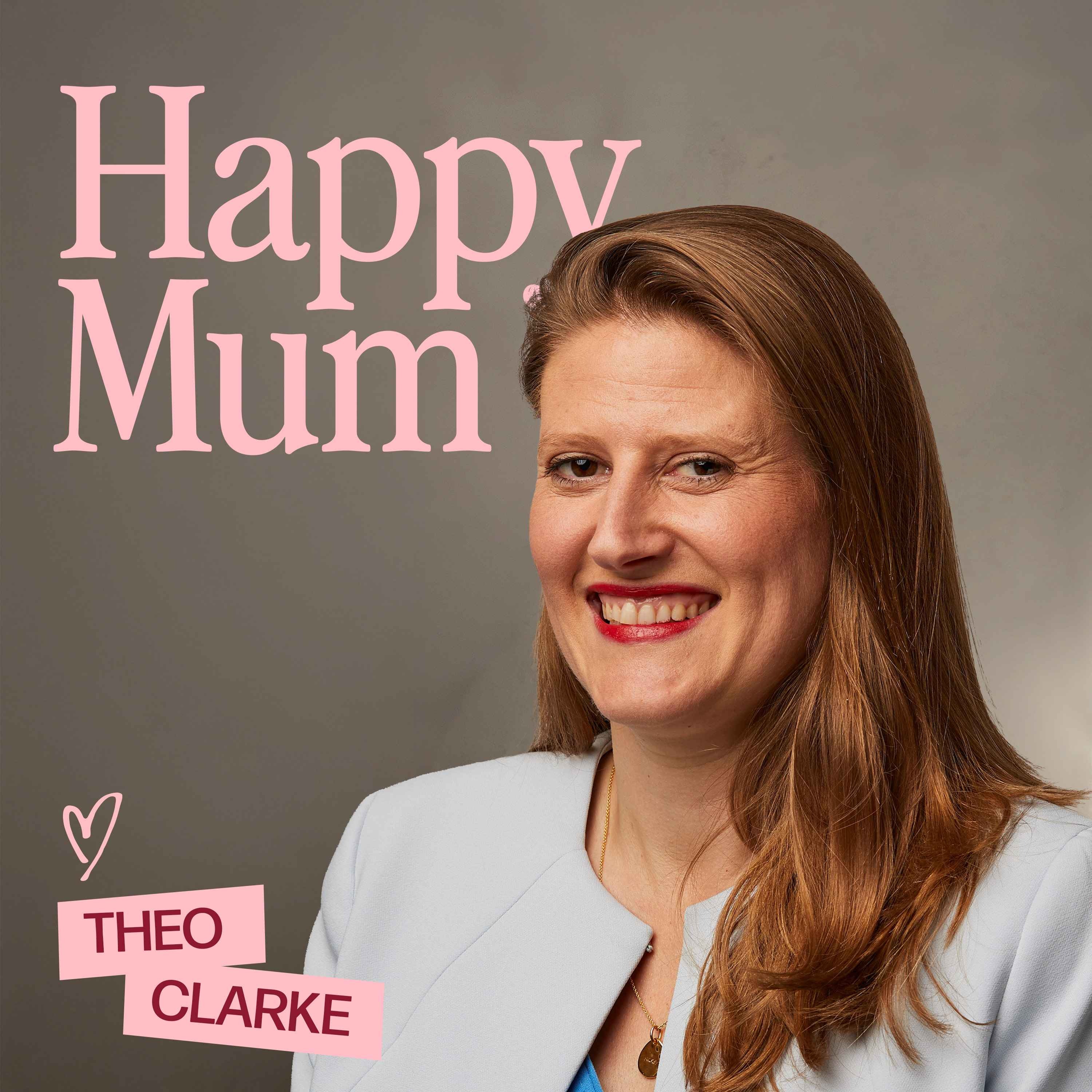
Theo Clark’s traumatic childbirth and how it reshaped her from a former MP and campaigner into a maternity-care advocate; she also urges listeners to sign a petition for maternity care reform.
Theo Clark is an author and podcast host, a former MP for Stafford, and a long-time campaigner. After a “very complicated” birth, she focuses on maternity care. The episode mentions Louise Thompson as a collaborator on the petition (her own experience was discussed in a prior episode).
UK MPs aren’t entitled to statutory maternity leave; maternity care systems lack equivalents for MPs when they’re unable to attend Parliament. Birth planning can be unhelpful if “what if it goes wrong” isn’t discussed. Trauma from emergency care can lead to PTSD.
Theo resigned from Boris Johnson’s government while in maternity assessment after her baby’s heartbeat issue; she had severe blood/needle phobia, an epidural, a third-degree tear, postpartum hemorrhage, and emergency surgery while awake. She describes being left without help, delayed reassurance about her baby, and later abuse from constituents expecting her to return to work.
Written by AI. May contain mistakes.
Theo discusses her transition from MP to advocate and the challenges of political life.
“Like people literally stop me and ask what perfume I'm wearing, which you know I love.”
Theo discusses her transition from MP to advocate and the challenges of political life.
“like it's a very different thing to just being here, being you.”
Theo shares her journey into motherhood and the impact of her political career.
“It's about making changes to people's lives and you have to be in the room to affect the change.”
Theo recounts her pregnancy experiences and the pressures of being a politician.
“you know, it's not something that you're seeing.”
The challenges Theo faced in balancing health appointments with political duties.
Theo describes a critical moment during her pregnancy amidst political turmoil.
“Talk to me about finding out you were pregnant the second time.”
Theo opens up about her extreme phobias related to childbirth and their impact.
“I really want to talk about your pregnancy and your phobias leading into birth, because you've got really bad phobias.”
Discussing the intense fear and anxiety surrounding the birth experience.
“And I actually had to be referred for mental health services to try and kind of have basically a form of therapy to try and overcome it.”
Reflecting on the limitations of birth plans and the need for contingency discussions.
“So I think it's really helpful to talk through your choices.”
Describing the stress of political events coinciding with the pregnancy.
“Let's go back to the birth because you'd handed in your resignation you're now waiting to be assessed what happens from that point?”
Sharing the grueling process of labor induction and its challenges.
“And I just kind of sit in front of the fan with like a tea towel, just like on my tummy, just trying to stay cool.”
Detailing the birth experience, including complications and emotional aftermath.
“And I remember basically talking to the midwives and saying, you know, what can we do?”
Learn about the emotional and physical challenges faced during a traumatic childbirth experience.
“And then people running in and out of the room.”
Understand the struggles of postpartum recovery and the emotional challenges of early motherhood.
Learn about the challenges faced by a politician dealing with birth trauma while managing public expectations.
“So obviously she was so excited to meet her first granddaughter.”
Explore the conflict between public duties and personal recovery after childbirth.
“like I was in recovery from a major operation, a postpartum hemorrhage and sleep deprivation from my newborn baby.”
Understand the shortcomings of current parliamentary policies regarding maternity and illness.
“If you've been elected, it's you that's elected, you're the one that answers everything and if you're not there, those questions just don't get answered.”
Discover how sharing experiences with other mothers can be cathartic and empowering.
“It's got to be really tough as a politician to kind of go, these are my stances on lots of different things.”
Learn about the historic parliamentary debate on birth trauma and its significance.
“And we'd all had a really tough time, but they were obviously doing much better and they were like further in their recovery journey than me.”
Experience the emotional impact of a politician sharing her traumatic birth story in Parliament.
Learn about the emotional journey of a politician sharing her birth trauma in Parliament and its implications for maternity care.
“I spent over two hours awake without a general anaesthetic and I could hear them talking about me and obviously it was not looking good.”

Get the gist, explore an idea or ask about something said.
 Claude
On Happy Mum, what are the key points of this episode?
Searching your listeningAutomatic transcript. May contain errors.
0:00Is your kid's birthday coming up? Don't stress the prep. The Party Shop at Michaels is your one-stop shop for everything from bluey to rodeo. Transform your space into a birthday wonderland with dream-worthy tablescapes and decor starting at 99 cents. Plus, get free helium inflation on select balloon styles. Whether you're crafting a one-of-a-kind bash or grabbing the essentials, Michaels has everything to make their big day legendary. Shop now and order ahead for delivery or in-store pickup. michaels everything to celebrate anything hey it's page from giggly squad and i want to let you know that if you want the newest and hottest beauty products you have to go to sephora i'm obsessed with the one size liquid blotting paper spray it's the first of its kind blotting spray that mattifies for up to eight hours it's unreal there's also the summer friday shade drops spf 50 which basically lives in my bag at this point oh and the kayali eden plush pear smells so good It's sweet, warm, and addictive.
1:00Like people literally stop me and ask what perfume I'm wearing, which you know I love. So if you want the makeup, skincare, hair, and fragrance products everyone's about to be obsessed with, shop only at Sephora. Hi, it's Paige from Giggly Squad, and this episode is sponsored by Experian Boost. Summer glow up? Check. Credit glow up? Even better. Boost your credit scores instantly by getting credit for bills you're already paying. Your phone, utilities, rent, and insurance. I wish dating kind of worked like that. Connect your bank account, add those on-time payments to your Experian credit file, and your FICO score updates right away.
1:37You could instantly raise your FICO score by an average of 14 points with Experian Boost. Download the Experian app for free today. Results will vary. Users who received a boost improved their FICO score 8 from Experian by an average of 14 points. See App Store or Experian.com for details.
2:17Hello and welcome to a brand new episode of Happy Mum. Today's guest is Theo Clark. Now, Theo is an author, a podcast host, a former MP for Stafford, and she is a woman who has always campaigned for people. She's always been in support of others. She's always been of service to others, I would say. And then following a very complicated birth, her focus has shifted and it's become razor sharp on one thing, and that is maternity care. She had a very traumatic birth, so it's probably worth highlighting that now, actually, that it might not be a very comfortable listen in places. So there are other episodes, if that is the case, if it's not right for you right now.
2:58But she does talk on a very personal level, which I always think if someone is campaigning for something like this, if they're able to draw on their personal experiences, it just makes it, you know, it makes everyone get behind it. Because how can you listen to someone talk about something in such a raw way and not think, well, that's not good enough and we need to do something? This campaign is all about maternity care and looking at it more closely and making change. Saying that, today, the 7th of July, is the final time that people can sign the petition that she has been campaigning. The petition is one that she's put together with Louise Thompson, who we had last year on the podcast talking about her own experience.
3:36The two of them are paired up, which in my mind makes them a little bit of a dream team. So please do follow the links in the show notes to where you can sign it. Here's the episode with Theo Clark. I would imagine life in the political world, you have to really be thinking, like it's a very different thing to just being here, being you. I basically don't have to have a filter in my brain every time I say something. So actually it's kind of liberating now I've left the tent to say what I think and be not have to constantly edit in my brain. That's wild. Like reading your book, Breaking the Taboo, I was astounded by that part of it do you know what I mean that thing that people just come to you whenever I didn't even think that that is the life of an MP just having people go I need this from you you're not giving me this or the abuse or any of that stuff that really surprised me and do you know what's interesting when I read reader, listener feedback I sort of thought I was writing the story of my maternity campaign but loads of mums who are not interested in politics actually messaged me to say they found that the most interesting bit of what it was like to be a mum and a baby.
4:45And partly why I wrote the book was because every other political memoir is an outgoing prime minister getting on the record what happened to them. Or it's like a minister who's trying to do a hatchet job. And I was like, who's ever written a book about having a baby in Parliament? Nobody. So maybe we should write that book. Was this, were you the 56th? 56th MP in British history to have a baby whilst elected. Wow. I mean, that's crazy. Yeah, which in like a thousand years is like not a great stat. didn't it? Yeah. So maybe we should do something about that. Yeah, it's really not, is it? It's really not.
5:18Did you always know that you wanted to go into politics? No. So I didn't even study politics A-level. Definitely didn't vote when I first turned 18. And I had no grand plan to be prime minister like the boys since the age of five. So on the contrary, I just fell into politics through campaigning. And that's when I realised that that's actually what politics is. It's about making changes to people's lives and you have to be in the room to affect the change. So yes, it was very much a gradual thing from working on other people's campaigns. So I never expected to be an MP. Did you always know that you wanted to be a mum?
5:53Do you know what? That's such an interesting question. So I'll be honest, I actually didn't. And I think it was partly because I hadn't read the right person. And I think when I first met my husband, I really do believe in love at first sight. We met at a literature festival that his mum was speaking at and I just literally knew straight away. Really? And we went on our first date and it was just not like it had been with anyone else. So I often do wonder if I would have had kids if I hadn't met my husband. And I'm so glad, obviously, that I've had my daughter and that we've started a family. And also a bit later in life, you know, I was nearly 40 when I had my daughter.
6:25Also, if you are the 56th or were the 56th MP to be pregnant, you know, it's not something that you're seeing. Yeah. I did think long and hard about whether I should have a baby as a politician because we do know that if you take time out as a politician and you're kind of most unlikely to probably get promoted in a future reshuffle and it will have serious implications on your career. Which might be really hard when you've worked so hard to get into the place that you are. Yeah and I do think that is the case because you're kind of out of sight out of mind. I was in my constituency for six months after my baby arrived and in some ways I was really lucky because I was in my late 30s when I got pregnant.
7:04I did unfortunately have one miscarriage very early on which I didn't really talk about at the time and I find that interesting now because I didn't feel like I could share that experience with friends or family at work. I remember one MP I think just a couple of days after it happened I was in Parliament waiting to vote and I was obviously quite upset and one of the MPs said to me are you okay and I just burst into tears and went into the loo and I actually didn't tell anyone that I'd had a miscarriage and I didn't feel able to share that in my workplace or with friends at the time and they're quite surprised I think it's such an emotional sort of personal journey for you to lose a baby and it was very early on and it was kind of unexpected and I kind of was trying to process it myself really before I could share it with anyone else and then back to your point is I do feel like politicians were held in a kind of different regard and if they think you're trying to have a baby are you serious about your career I mean I discovered when I had my daughter it's the only job in Britain where we're not entitled to statutory maternity leave like isn't that an extraordinary point so well the argument that I was told was that because you're an elected representative you're therefore not employed and you can't be taking leave from your business so if I was juvie's extra for charity which I was before obviously I'd have an acting CEO and I'd just be off for my maternity leave and someone would cover the role but their argument was well there is no equivalent because you were elected it was your name on the ballot and as I'm sure we'll discuss later I had a really tricky time and it was so apparent to me that like what happens when there's a major debate and affects your constituency and I'm in hospital and no one else can go and speak in the chamber do I have to drag myself to London and actually be there representing my constituents and that was incredibly difficult because there's basically no equivalent of you and there is no system set up in place currently to have a representative to be instead of you.
8:54Talk to me about finding out you were pregnant the second time. How did that feel? Yeah, so I remember it so clearly because it was a Friday and I'm not normally in the House of Commons on a Friday because we don't normally have votes, but they have kind of private members bills. And I was in Parliament and I remember going to the loo and I did a pregnancy test in the loo. I wonder how many people have taken a pregnancy test there. I reckon not a lot. Not that many. And I was so paranoid as well about one of my staff coming in or putting in the bin or like, what do I do with the test? And then obviously I did another one a few hours later.
9:27Did you take two in with you? No, I took in two. No, I definitely took in two because I wanted to be 100 % sure. And then that weekend we were going to stay with my grandparents. And I really wanted to tell my husband in person and obviously him to be the first to know. Did you feel like you could focus on your pregnancy? That was really difficult. There was a lot going on at the time. There was so much going on. I mean to be honest I found it really difficult even to find time for things like going to my midwife appointments so I had my care originally at a hospital near parliament for the simple reason that it's really hard actually to leave the building so we have this thing called a three-line whip so that means when the government has a vote you are literally not allowed to leave the building you have to be within a few minutes walk of the division chamber so the bell will ring and I literally would start wearing trainers because you'd have to like run from my office near Downing Street to get all the way to the chamber to vote.
10:19So I literally would have to get permission to leave the parliamentary estate to go and attend my health appointments with a midwife. And if there was an important vote, they'd be like, well, you can't leave. Which was crazy that basically your health was not considered more important than the government vote. So I think after my birth, when I had hospital appointments, I was a lot more fierce about saying I am going and if I miss a vote, tough. But I think in those early days when I was a kind of very new politician, and I probably didn't know to ask. Quick overview. What was happening in politics, in Parliament, during your pregnancy?
10:53It wasn't like a nice, smooth period, I would say. Absolutely not. I mean, if you were picking a moment in British history in the last 100 years, about the worst time, I think, to have a baby. So my pregnancy coincided with all of the Boris Johnson shenanigans and obviously the change of three governments. So literally the time that I had my final trimester giving birth and my recovery afterwards was the change of the government and then the death of the monarch. So, so much stuff happening in several months. And I wrote about this in my book, Breaking the Taboo, of this kind of blend between the person on the political.
11:29And I can give you one really good example of that. I actually resigned from Boris Johnson's government. When did you do this? When did you do this? Well, so I was sat in Stafford County Hospital for just my normal midwife appointment with my husband. and they've got something wrapped around my tummy and they're checking her heartbeat and the midwife looks at me and goes, I'm really sorry, but we're not picking up a regular heartbeat and a lot of people came in and she said, this is quite serious, we're going to have to take you to Stoke, which is the nearest sort of A &E to be in the maternity assessment unit and that's a half an hour drive.
12:02She said, don't even wait for an ambulance, your husband should take you right now and drive you to the hospital and you may end up having an emergency caesarean because my daughter was skipping a beat. And at the same time, my husband's BBC alerts go off on his phone. And it said that Rishi Sunak and Sajid Javid, who at the time were the Chancellor and Health Secretary, had just resigned from the government. And so this is all kind of happening simultaneously. And I discussed with my husband at what point I was going to resign. And I decided that I kind of reached the end of the line. I could no longer support the Prime Minister.
12:33But at the same time, I was thinking, oh, my God, I've got to draft my resignation letter. I've got to put in my vote of no confidence. and at the same time my husband's like frantically driving me to the hospital and I'm waiting to see the consultant and we arrive at Royal Stoke Hospital and I literally was like in the loo dictating my letter to Graham Brady who was the chair of the Conservatives 1922 saying I no longer have confidence in the Prime Minister. Then I wrote a resignation letter which I published on social media all the same time that I'm sat in the maternity assessment unit waiting to see the consultant.
13:05So I don't think that was helping my daughter's heartbeat, having all of this simultaneous. Because as I said, you're just basically never off duty. So even in the hospital thinking I might be rushed into surgery, I was still thinking about my job. I really want to talk about your pregnancy and your phobias leading into birth, because you've got really bad phobias. Yeah, I mean, really extreme. So I have a massive phobia of blood and needles. And I told my husband this before we went to our appointments, but he literally described it to me afterwards that he said your reaction was like they were amputating your arm to the point that in certain instances they actually couldn't take a blood test.
13:48So, for example, when I had my gestational diabetes check, I took all the glucose tablets and my daughter was kind of whizzing around like a washing machine. But I was so distressed and would have a panic attack, like hyperventilating, extreme crying that they actually couldn't get the vein to actually get the test done to do the blood test. And that became really tricky for me. And I actually had to be referred for mental health services to try and kind of have basically a form of therapy to try and overcome it. And you can imagine that made me so agitated because I was then thinking ahead to having the birth and I just did not want to end up in surgery.
14:23You were full of fear ahead of the birth. One hundred percent. And I think because I have such an extreme reaction, I don't know why. I mean, I literally had months and months of therapy on the NHS to try and get to the bottom of it. And unfortunately, it didn't really reduce it. And I had to go and see the hospital anaesthetist. And actually, that made a huge difference. So they gave me a tour of the hospital. and they then added to my notes that it was a really extreme phobia so actually when I came in and I ended up having an epidural and they had to obviously put in an IV line which for me was a really distressing experience at least the anaesthetist knew and my husband made it really clear like you've got one shot to get it in or she'll be so distressed you won't get a second and they did a really good job and they got it in the first time because for a lot of people that have a fear of birth um you know going down the elective c-section route for them it's kind of like well it takes out all of the it helps people feel like they're in control of the situation but actually your experience and and your phobias are the exact opposite of that which is why it's rare you know we're told with this with an elective c-section you know you go in everything's under control it's nice and chilled whereas for you getting to to to that point where you're having to have a c-section was just that that would make a head spin yeah and and to be fair the hospital did offer me an elective c-section but i think because my phobia was so extreme the thought for me yeah of going into hospital and and then they say oh yeah we'll be fine with 20 minutes you'll be awake i mean hearing that you might be awake in surgery just filled me with terror um and i just thought you know i really want to give birth in the unit we'll have midwives present i actually I wanted to have a water birth.
16:06That's what was in my birth plan. I wanted to keep it as kind of relaxed as possible, not to have any interventions. Had you done hypnobirthing or had you just kind of taken part of it? So I tried a hypnobirthing class. As I said, I went to antenatal classes. I was one of those people, G, where I really tried to be organised. So I did read the books. You know, I did listen to the podcast. I made my bloody husband come to the classes. But I think what I learned now is that nothing can really prepare you for a baby coming out. and I think also we don't really talk about enough with honesty when things go wrong you know we talk a lot about having a birth plan but actually it will probably go out the window and secondly I wish I'd had a birth after plan where we'd actually discuss with my husband in advance like if things don't go to plan what should we do and actually that's advice I always give to mums is have that conversation with your partner before the birth so that in the event something happens you've discussed it not in an emergency scenario where you're super stressed but you've had that opportunity to kind of think about it in advance.
17:04What are your thoughts on birth plans? So I think it's really helpful to talk through your choices. When I was doing my intonation classes, I was basically led to believe that there'd be this golden hour where my daughter would arrive and she'd be placed on my chest and she'd do the breastfeed, you know, kind of newborn crawl up to start feeding. And I think I had a lot of expectations about that kind of one hour of the golden moment of the bonding. And unfortunately, that's not what happened to me. My daughter got taken away and I got rushed into emergency surgery. and that's why I think the birth plan was helpful in some ways that we talked about things like did I want to breastfeed or not but it was unhelpful in that we hadn't talked about what if I can't yeah and I think that's the conversation that we probably need to have is like mums actually knew you need to think about these things because in my case I had such heavy blood loss and she couldn't produce enough milk and actually couldn't feed my daughter because I couldn't sit properly after surgery and my husband literally was sent to the supermarket and he had to buy formula and bring it back and we had to cup feed her and I found that really difficult because my expectations were that I was going to breastfeed and I think society puts those expectations on us as a mum and my husband was really keen for me to try as well for all the antibodies and all the reasons that we know but I just couldn't do it and it was so distressing to me and I found it really really tricky and that was not my birth plan and we hadn't discussed what happens if you can't do it so I think I had completely the wrong expectations going into the birth and that's why I want other mums listening today to kind of think about that and say you know what happens in that scenario like me where I couldn't do it what do you want to do in that scenario and think about it now and not at the time.
18:38Let's go back to the birth because you'd handed in your resignation you're now waiting to be assessed what happens from that point? So after all the drama I then waited several hours to see the consultant and then they actually looked at my daughter's heartbeat and then decided it was okay and I got sent home and what an anticlimax but you have to remember I just resigned from the government so we get home and obviously my phone is just going off the charts because everyone wants to know kind of what's happening and I woke up the next morning and Boris Johnson was still there and I was only number seven I think to resign out of the government out of what became I think more like 40 resignations and I thought oh my god have I gone too early and then I've been given very strict instructions by the hospital to just rest and not be doing too much because we didn't want to trigger your own heart rate must have been going like the clock like it must have been and also i was watching kind of the bbc like all day seeing what was happening and obviously i'm on all the np whatsapp groups of all the chats and actually boris johnson resigned two days after i did and stood down as prime minister and it was really difficult for me because obviously i was in my constituency so close to giving birth and when we um actually had the vote of no confidence in the prime minister which originally he won the first time, I was actually told by the Whip's office that they were rescinding what's called my slip, which is when you're given permission to not vote and I was told you have to come to London.
20:04And I was so close to my due date, I just put my foot down and I said, I'm heavily pregnant, I am not being forced to travel to London to vote and support the Prime Minister who I no longer have confidence in. And I refused to go and I just stayed in my constituency. And I said, I'm staying near my hospital, I'm doing what's right for my baby and that is not travelling all the way down to London. Yeah, absolutely. And then in terms of giving birth, when did things then sort of start moving? Yeah, so my daughter was not keen to come out. She knew what was going on politically. She was like, I'll stay in.
20:36She probably decided I'll just wait and see who's Prime Minister by the time I arrive. So she was late and I actually went two weeks past my due date, so I had to be induced. Which you don't really think about. I know that that's the window. There's a window, 37 weeks to 42 weeks where our bodies are all different. But you very rarely hear of a woman going so, so late. Yeah. And it was that really hot summer and it was like late 30s. And I was just, I mean, walking around with a baby inside in that last week, literally just felt like I had a hot water bottle inside that I basically couldn't take out.
21:09And I just kind of sit in front of the fan with like a tea towel, just like on my tummy, just trying to stay cool. So I got induced. But I didn't really know what that meant as a kind of process because I've been so focused on having a kind of natural delivery. And as we've discussed, I didn't really want to have any interventions or instruments during birth. And the induction process, I'll be honest, was pretty grueling. At that point, mentally, were you a bit like, well, I need to get her out? Like, is that part of it sort of easing the start of it or like going in for it? Yeah, well, I think firstly, I knew the stats and I could see that it's obviously more dangerous, right?
21:46Every day you go past your due date. So I was really keen for her to come out. But I also was really keen for my body to try and go into labour naturally, which it just wasn't doing. I did have kind of Braxton Hicks contractions probably like the weekend before I was out on a walk with my husband, literally trying to walk baby out. I think I tried everything, spicy food, eating pineapple, every single thing that I could Google. I did try, but nothing worked. And then for induction, I remember the first day thinking I was going to get booked in and I packed my hospital bag and they said, be ready from seven o 'clock in the morning.
22:17and I literally just didn't get the phone call. And I remember calling the hospital like every hour saying, am I going into the hospital today? What's happening? And basically nobody called me. And I had this really distressing experience where there was just like no response from the hospital. And I was quite lucky that because I'd had mental health support, I had what's called a PMA, which is like a personal mental health advocate. So I actually had a real person at the hospital with their name and their telephone number. And I rang her and I said, I'm past my due date. I'm waiting to be induced.
22:47No one has called me back. I'm literally wait, like packed and ready to go to the hospital. And she just said to me, what do you mean? You've not been called like this is getting dangerous. And she went and looked in the ward for me and said, your name's on the board. I'm like shocked you've not been rung. And she said, pack your bag now and come in. And like half an hour later, I was with my husband in the hospital. And induction is such a different process. I mean, you're basically in a shared ward with other mums at different phases of labour with a kind of really thin curtain pulled between you and they basically just start to pump your body full of drugs um and i'll be honest the experience was pretty unpleasant i had to have what are called pessaries which is a bit like having a tampon which is kind of inserted in you and then it releases um drugs to kind of force your body and kickstart into labor and my body was just really resisting so i had this for 40 hours that my body was being forced into labor and basically every sort of six hours I'd have a vaginal examination which became more and more painful because obviously they were having to check if there was any dilation and it basically took me two days to get to two centimetres.
23:57They had to force my waters to be broken and it really got to the point where I was just getting so tired because they were just trying to force my body into labour and I remember my husband was with me at the time and he basically just had to sleep on the floor in the bay next to me he actually got told off even bringing in a sleeping bag and a pillow and I was a bit like well he's here for three days he needs to sleep please can he not go home um so the the turning point I suppose was when they broke my waters um and there was that's a very strange experience in itself because not to be too graphic but they basically like insert like a kind of fishing hook inside and then they rip um the sack and then all the kind of liquid from the amniotic fluids kind of go all over the table and then that did eventually start me going into contractions and then I had this just very strange experience was kind of like up all night and I get really strong contractions and they go away and then they come back again but then obviously they got more and more intense and the way I describe it it was almost like having a tube door a train like repeatedly closed on my stomach was kind of what they felt like and I have heard that that induction can bring on much like stronger contractions because of the medication and I got absolutely exhausted.
25:10And I remember basically talking to the midwives and saying, you know, what can we do? And I, again, was offered a C-section. I was really keen to give birth naturally. And they decided to give me an epidural because I was so exhausted. And do you know what? It was blissful. I had the pain relief and it was like, oh, my God. And I actually went to sleep. But I imagine that was something that you would have been fearful of, you know, having an epidural because of your fear of need. That must have been something that you were so fearful of in the lead up and then to have it in it to give you that yeah that relief so firstly when they try to put in the iv line so to have the epidural and they obviously have to do the injection on your lower back and the way i can describe it it was almost like a sort of hornet sting when it went in and you're told to sit really still not to move because they don't want to paralyze you when they put it in so for me that wasn't too bad it was the putting the iv line in my hand I was so incredibly distressed and my husband did a really good job actually of kind of advocating for me to the team and keeping me calm and as I said they had kind of one shot to get it in which they did and then he actually did quite a good thing he kind of literally got like a pashmina scarf and just wrapped it around my hand so I actually couldn't see it in my hand because it was making me so queasy and distressed during labour um so I think that really helped but god I'm glad I took it I mean the intensity that I had from the contractions at that point was so strong I don't think I would have coped with the pain if I hadn't had the epidural yeah and I think what really helped is it actually sent me to sleep and I've been in labor for 40 hours and I was exhausted I hadn't slept I was absolutely exhausted um and I woke up and literally it's on my notes I went from two to ten centimeters in the time that I was asleep so it just shows how anxious I was that my body just relaxed and then when I woke up I think they gave me a slice of toast and I remember the midwife coming in and saying you know you've got one chance to push your daughter out this is the final hour you've got to go for it and and I did give birth vaginally but what happened was because as I said I was a geriatric mum and my daughter's head was quite large when she came out I now know what happens but basically it almost felt like I was being split open like I was kind of pushing a probably like a pumpkin out of something the size of a tennis ball and basically my daughter ripped me when she came out and I suffered from a major perineal tear which I subsequently discovered was a third degree birth injury but what happened was my daughter was unhanded to me and she was put on my chest and I met her and they kind of cut the little tag off her.
27:39At that point did you feel like that's over? Yes well from my perspective I was completely exhausted and I thought it was all fine and my daughter had arrived and she was breathing and I heard her crying and it was all fine. And then what happened is I had a massive hemorrhage and started bleeding very heavily. And that's actually my husband who just saw all the sheets go red and was like, oh my God, what's happening? And then people running in and out of the room. And then basically I'd had a postpartum hemorrhage and my daughter got taken away immediately and I got rushed onto a trolley bed and then I got rushed into emergency surgery.
28:13And after everything I've just described with my phobias and everything, that was basically the worst thing for me. But there's also, surely there's a thing of fearing something that isn't happening and having that fear and living through it. Yeah. You know, we can always be apprehensive of something happening and that manifests itself. But actually, when you're in that situation where there is all that blood, needles are like that, you must have been absolutely terrified. I mean, honest answer is I really was. I mean, I basically thought I was going to die. that's that's what I thought um and I lost a lot of blood I remember being on the trolley and it going down the corridors and like bumping into the into the walls and they actually like slid me onto the operating table and I basically thought this is it I mean I felt this is what it must be like in a war zone you know when you're in a kind of operating environments where you know people might live and might die and because of my phobia they basically said to me you're going to have to stay awake in surgery and I actually put on my birth plan that I wanted to have a general anaesthetic in the event of an emergency c-section and then my worst fear was being awake in surgery and they came and spoke to me and said because of your epidural and the level of pain relief you've had I was not allowed to have a general anaesthetic and I was going to have to be awake in surgery and that was the one moment that I put my foot down and I refused to go into theatre without my husband which is very unusual because for a c-section your partner's always allowed in but for emergency surgery that's very unusual and I actually said I won't give my consent for you to operate without my husband being there and I think my husband had the most difficult two hours of his entire life he was basically sat with me in theatre and you know he wrote about this in my book because he wanted to share his experience as a dad but he just describes like you know these huge cotton pads just being filled up with blood and then taking it away and he said there was one moment where basically the doctors looked at each other and he thought I was going to die and he was going going to be a single dad and I've had so much therapy about that particular time and also I'd only met my daughter for the briefest of moments and I really thought I was never going to see her again and it was incredibly difficult and basically my husband held my hand the whole time and he basically kept me kind of sane from having you know further panic attacks and almost that two hours has almost become blanked from my brain because I think it's so traumatized from that experience that it's like even after doing years of therapy to talk about it it's like I can't quite get deep enough into that memory because it is so buried and it is such trauma that's still buried inside and I think really that's what gave me PTSD after the birth was that experience and after everything I'd have with the blood phobia for me to be awake in surgery for over two hours thinking I was going to die was the most terrific experience of my life.
31:09Because even if you try and you know just focus on your husband and just sort of close the zone of there's it's like being in a room where you know this conversation is happening or something else that is always going to take a place in your brain that's always going to like pull your attention over there's no way you can shut off from what is going on and happening to your body yeah and and also i was really terrified about seeing blood of all of the doctors holding you know medical equipment and all the noises from the machines. I actually wore an eye mask during surgery so that it was just like blacked out my eyes so I couldn't see.
31:41But then you have that sensory experience where because you can't see, everything you can hear is massively amplified and they are talking about you as the patient. It was almost like I kind of disassociated and was almost like I was kind of a person looking down on me below because, you know, I really thought that was it. Is your kid's birthday coming up? Don't stress the prep. The Party Shop at Michaels is your one-stop shop for everything from bluey to rodeo. Transform your space into a birthday wonderland with dream-worthy tablescapes and decor starting at$0.99. Plus, get free helium inflation on select balloon styles.
32:19Whether you're crafting a one-of-a-kind bash or grabbing the essentials, Michaels has everything to make their big day legendary. Shop now and order ahead for delivery or in-store pickup. Michaels, everything to celebrate anything. Hey, it's Paige from Giggly Squad, and I want to let you know that if you want the newest and hottest beauty products, you have to go to Sephora. I'm obsessed with the One Size Liquid Blotting Paper Spray. It's the first of its kind blotting spray that mattifies for up to eight hours. It's unreal. There's also the Summer Friday Shade Drops SPF 50, which basically lives in my bag at this point.
32:55Oh, and the Kayali Eden Plush Pear smells so good. It's sweet, warm, and addictive. like people literally stop me and ask what perfume I'm wearing which you know I love so if you want the makeup skincare hair and fragrance products everyone's about to be obsessed with shop only at Sephora can you remember leaving theater so I remember coming out of theater and there was a lady who has coming to see me in the trolley bed to take six vials of blood for them to check if I had an infection because I had a very high temperature a spike after the birth and apparently I literally just lay there my husband was like it was almost like you were dead and completely floppy and they could just do it and that's how distressed I was that for them to take in effect like the equivalent of six blood tests I just let them do it because I was so out of it and so distressed but then I remember she um said something to me like oh well you've just had a c-section and I remember screaming at this lady probably the only time I've used a full letter word like screaming at a member of staff and I just said read your notes like I have not had a c-section and I was like really shocked that they hadn't bothered to to check and see what it said and then I got taken and put in a side room and obviously I hadn't seen my daughter and I was like where is she I mean at this point by the time you've prepped me for surgery taking me to surgery taking me to the recovery ward it's probably like six hours I haven't seen my baby and actually one of the things I worked on in therapy a lot was those memories of that six hours and to be honest I actually thought my baby had died so no midwife took the time to come in and tell me that my daughter was okay and that she'd survived and I subsequently discovered she was absolutely fine she'd apparently been taken into like the tea room with all the midwives on their break because obviously my husband was in theatre with me so she was just basically having a nice time where they're having tea and biscuits and being handed around but I actually find it shocking that they didn't come and tell me as the mum how my daughter was and then the other thing that happened was when I eventually got moved to a room and my daughter came and joined me she was put in a cot next to me and at the time because I'd had the epidural and surgery I was basically paralyzed from the waist down I had a catheter in I couldn't move I was very very pale you know you lost a huge amount of blood basically couldn't move without being carried and assisted I think my husband went to buy formula or do something I was on my own with her in this side room and she was in the cot next to me and she was screaming and obviously needed feeding and I couldn't pick her up I couldn't hold her I couldn't do anything and I remember pressing the buzzer in the hospital for someone to come and help and this NHS professional came in when I was on my own having just come out of theatre and she just looked at me and said not my baby not my problem and she just walked out and left me there and I have never been in such a vulnerable moment in my entire life as I was at that moment when I needed the most help.
35:44And that really shocked me. What did you do? Well, I couldn't do anything. I just had to wait until someone could come and help me. And I think either my husband or my mum came back when they'd gone to get lunch or whatever. And I felt so helpless because, you know, as a mum, your job is to protect your baby. And I literally felt on that first day that I just failed at every front. I'd failed to breastfeed. I'd failed to be able to hold my daughter and do skin to skin I couldn't even pick her up to feed her I literally had to be like carried to the loo by my husband and kind of hosed down after the birth and I was basically incapacitated as a parent and I found that incredibly difficult to hear her next to me crying in distress and I couldn't move was a really horrific experience What was it like when it was just you and her for the first time and your husband's not there are you able to kind of go what the fuck has just happened well first thing I say is I wasn't thinking that much about my baby I was in shock gee is the honest answer that I just wanted to sleep and I really wasn't able to engage that much and I think I was so out of it from the heavy blood loss and the 40-hour labor and the induction process that I basically just didn't have the energy to be a mum at all and I beat myself up about that so much in the kind of first few days after the birth but now I know if you've been in a car crash you've been in a major surgery you're just expected to just rest and do nothing yeah and looking after newborn baby is incredibly difficult for anyone let alone after my experience so I found that really difficult but I do remember the first time that I held her properly and my husband and I were kind of like a three and I just felt such an outpouring of love especially for someone who wouldn't really plan to be a mum necessarily it wasn't like my life goal that I just felt that immediate bond with her which I'm so grateful for because I know a lot of other mums who've had a traumatic birth didn't have that experience I was really lucky that I did and straight away I just had such a strong connection to her and I think that's why I find it really difficult not being able to breastfeed because I really wanted to hold her and have that skin to skin and especially if you're saying all these things you know I failed at that I found that you know and I I always have such a a thing when mums come in and say that they've failed at different bits because it gets me emotional because I'm just a bit like you've not failed like how how on earth is that a failure when you're literally there yeah if you know fighting to survive or you know um but especially when you've got all those things that you feel like you've failed at um and then that just becomes another thing to add to a list that you're just already beating yourself up over absolutely and And breastfeeding was so difficult.
38:27So I bought things like, you know, breastfeeding pillow in advance. But basically my milk just wouldn't come out. And I was in the hospital and the first sort of couple of days they tried to sort of collect clostrum and then they put me on a pump. And firstly, it was just so difficult to get her to latch. So my daughter just really didn't want to latch. And I think part of the problem was I couldn't sit properly. So because of my birth injury, my perineum was severely damaged. I actually had to sit on a donut cushion for several months. So I basically couldn't sit to hold my daughter. So the only way that I could breastfeed was lying down and I could only really get her to latch on one side.
39:00And it was just so difficult. So straight away from the beginning, I could never produce enough milk for what she needed. And literally from the first hour, she had to go straight on to formula. And I found that a really difficult experience because I had expected to be breastfeeding. And people tell you, which is so true about obviously immunity and how important it is that they have your antibodies and the breast milk. But I just basically couldn't do it. And I think I put so much pressure on myself. And I ended up doing what's called combination feeding, where I basically would try and breastfeed a little bit.
39:32I'd also pump to give her breast milk and then she'd have milk on the bottle. And God, it was exhausting. I mean, I remember seeing like the schedule that I'd written down in my pregnancy notebook. And it was like every three hours I had on this routine and sterilizing the pump and the bottles. Like it was like a full time job, 24 hours a day just to try and keep my baby alive and try and do that. and looking back now I think I just put way too many expectations on myself and probably I should have stopped breastfeeding earlier than I did and pumping because I also found pumping really difficult because it almost found me fade like hung over every time I did it because it was like your body being so drained yeah literally drained but I do think what was good about having bottles was that my husband could help yeah and that first couple of weeks as every mum knows is just brutal.
40:21I mean, there's a reason sleep deprivation is a torture tactic. Like, I am one of these people that likes to sleep eight hours a night. I sleep straight through. To get up every three hours to feed her was just relentless and brutal. And obviously, you know, your breasts are still producing milk, so you still have to get up to pump, and it's very uncomfortable if you don't. But at least it meant that my husband could give her a bottle at three in the morning. Also, the fact that babies generally wake up crying, you're waking up to a cry. That's such a like a heart going, your body going, everything, you know.
40:52Yeah. Yeah. And I think also I was really lucky that first two weeks, obviously I had my husband to help. But God, it was a shock when he got back to work. And I mean, it's crazy to me that paternity leave is not longer than 14 days. I mean, even if you just had a normal experience and a good birth and your partner's there for two weeks, that is not long enough for looking after a newborn baby. and in my case I was basically stuck in the bedroom and I could only really kind of crawl to the loo and I didn't even go downstairs for the first like two weeks. I just basically stayed in bed, all my meals were brought up on a tray and I just stayed next to my daughter in the bathroom and didn't leave the house.
41:29And when he went back to work that was incredibly difficult and we actually had to get an external help to support me because I actually couldn't look after my baby. That moment of being in the hospital and your daughter being with you at what point did you feel like you could share the news because of that you know you've got this amazing your baby is here isn't that amazing but also you nearly just died so what what is that when you're sharing that information like how do you do that in a way that is but also like do you address what has just happened to you can you yeah and then also I had the added pressure because I was a politician everyone was waiting for me to like publicly announce when I had my daughter So firstly, I had a bit of a fight with my husband about when my mother-in-law could come.
42:15So obviously she was so excited to meet her first granddaughter. And I just basically said no. I said, you can't come. And obviously now she understands everything that's happened to me and understands why I said no. But you can imagine at the time, I basically refused to have visitors. So no friends, no immediate family. And I just literally had my husband there and said, I don't want to have anybody in the house. So I didn't feel in a fit state to see anybody. And I do think it's really important that we do set those boundaries. And like you should see people when you feel ready to and don't feel pressurized because they want the photo holding your baby.
42:49And so I didn't tell anyone for probably like two weeks or something. Oh, really? That I actually then texted like friends. And now they've subsequently said to me they were worried because they obviously knew my due date and they were waiting for news. But obviously they didn't want to put pressure on in case something got wrong. And that was really difficult. and then obviously because I was an MP I then had to put out a public statement to say that I'd had my daughter and then the thing that was like the icing on the cake which just really impacted on the trauma was I started getting abuse the week after I had my baby so constituents started writing in to say she's had her baby get back to work we pay her wages I had constituents complaining they couldn't have a face-to-face appointment with me one local guy said well she had her baby a whole week ago I demand to see her in person I couldn't even leave the bed let alone see a constituent and be talking about HS2 or any of the other important issues.
43:41And that was really difficult because I felt like I was letting down my daughter, but I was also letting down my constituents. It was the time when Liz Truss got appointed prime minister, and then it was the change to Rishi, and then we had the leadership election. So again, I was in this really strange scenario where from a medical perspective, like I was in recovery from a major operation, a postpartum hemorrhage and sleep deprivation from my newborn baby. But at the same time, like the news does not stop. And I remember when the Queen died and my daughter was only a few weeks old. And that was a really major moment for me because that is a huge moment in our history.
44:16Like the death of the monarch. You cannot say, I'm with my newborn baby. I'm not coming to work today. People expect you to be doing your job. And we also had a discussion a couple of weeks later because obviously the King comes to Parliament as the new monarch. and there's this special ceremony where you basically swear allegiance as members of the government and the parliament to the new monarch. And I was like, what do I do? I was in like a really bad way from the birth injury. I was worried about getting to the loo. I had major issues with incontinence from having my third degree tear. And at the same time, there was this like massive moment in our history and I was expected to be there.
44:52So we thought long and hard about what to do. And actually my husband's employer was really supportive and he let him take some extra time off work so he could look after our daughter. And I remember pumping as much as I could to kind of put it all in the freezer so that he had breast milk. And actually, my mum drove me all the way down to London. And God, it was a strange experience. I remember walking into Westminster Hall on this like really iconic day. It's like, you know, the arrival of the new monarch, this huge moment. And I went into Westminster Hall, which is, by the way, very large. It's like several cricket pitches kind of put together in this historic building.
45:23And I'd been given a seat sort of at the front with the kind of VIPs and the other politicians. and I got in there and I just could barely walk because I was literally hobbling from my birth injury and I had in my handbag my breast pump and I had all of my codeine and all the painkillers that I was on and I actually couldn't walk that far so I just went to the doorkeeper and said can I sit at the back in the back row and I said I might need to leave in case I have issues and have to go to the toilet and then I saw some colleagues after the service when the king had left and they were like oh do you want to come and join us and have a cup of tea and we'd love to hear your news and tell us about your baby and I was just absolutely drained and I was like I can't be here anymore my mum drove me back and it made me realise I was just in no fit state to be working or to see anyone and you look at photos of me then you can see I almost look anemic because obviously I've lost so much blood and I had to have iron supplements and that was a really difficult day because I felt like I wasn't doing my job to the best of my ability but I just didn't feel well enough really to be up to be doing it I remember there was a funny moment when I was shopping with my baby at the time in my supermarket And people come up to me and I'd be in the push chair, you know, buying formula in Aldi.
46:31And people would say like, you know, what are you doing about X? And can you please sort out ambulance waiting times? And I just have to say, I'm really sorry with my daughter. She's screaming and she's really hungry. Please, can you make an appointment on Monday to come and see me and speak to my office? and I did find that blend of the kind of personal and professional being so mixed together really tricky because I totally appreciated why everyone wanted to talk to me and they wanted me to be dealing with their issues but I was just not in a fit state is the honest answer to be dealing with it.
47:00Is there nothing in place then? No. If you've been elected, it's you that's elected, you're the one that answers everything and if you're not there, those questions just don't get answered. So I can give you two examples. So the one good thing that Parliament's done is they brought in what's called a proxy vote. so for the six months from my birth to six months later I was given what's called a proxy vote where I could vote remotely so there was a member of the government on my behalf who I kind of nominated to be my person but they still ring me every day and say by the way today we've got the vote on x y and z how would you like to vote so you couldn't not let you turn your phone off I'm still looking at the order paper and seeing what the legislation is etc um so that's really good and I'm pleased they've done that because crazy that mums with a newborn baby regardless of how your birth went were being dragged back to Westminster to vote.
47:42But they basically don't have a plan for what happens when there's an urgency constituency situation. So I'll give you an example. My constituency was cut in half by HS2. So a lot of my farms were being cut in half and that was a massive issue for me. And they will suddenly call a debate on HS2. There is nobody else who can go to London and speak in the debate. If there's Prime Minister's questions and I want to ask a question, there is nobody else who can stand up in the chamber and ask that question. And that's what I mean of like, they haven't thought it through. Like even if, and not just for people with a baby, but I have colleagues like Tracy Crouch, who's spoken very movingly about breast cancer.
48:18Like they'll be in chemo. And again, they're told they've got to come in and be there in person. Like how can that be the system? They've got to modernise Parliament. Honestly, it's not female only either. Surely there's things that pop up for men as well that might mean that they can't be there. Yeah. And do you know what I find so ironic? Is that in the pandemic, they brought in all of these things for us. So we tried remote voting. I remember giving evidence like, you know, where they actually had screens. Do you remember in the House of Commons and we could ask a virtual question? Like that would have been amazing for me.
48:48I could have sat literally with my daughter and I could have been beamed into the chamber and ask a really important question. And all of those things are rolled back and removed after the pandemic. And I actually ended up writing a chapter about it in my book because I do actually think it affects policy because the number of women standing for elected office is still not high enough. and I really want us to have 50-50 gender parity. But mums are not going to put themselves forward if they don't think it's a family-friendly workplace. And I'm sorry, but the House of Commons is not and they really need to modernise it like it is not acceptable to me.
49:20It's got to be really tough as a politician to kind of go, these are my stances on lots of different things. But actually when it's so personal, to know that you have to make your point maybe hit harder, to be able to bring in the personal to that, which is also difficult I think as a woman to you know not have eye rolls or here she goes terrible you know people give birth forever you know all that rubbish that comes with it at what point do you kind of go I need to make this a focus and I need to give a part of myself to make it carry even more weight yeah so firstly I didn't tell anyone for a really long time and isn't that so telling so I remember the first time I went to see sort of anyone really after the birth was like several weeks later when I was allowed to drive and I remember going to the pub a few miles away from my house to meet up with my mums that had been in my NCT antenatal classes and I didn't really tell them what had happened and actually was an interesting example of kind of I think where I had these intrusive thoughts and really the kind of mental health issues that I had after the birth because it was probably a seven minute drive or something from my house to the local pub and I literally drove my daughter and I was just convinced that she had died in the back seat and I'd basically drive 100 meters stop the car get out go and check her and I'd drive another 100 meters stop the car get out go and check on her and looking back now I can completely understand that those are basically because of my memories of the traumatic birth and having these kind of intrusive thoughts and flashbacks that I basically always thought something was going to happen to my daughter who by the way was absolutely fine she was probably enjoying the trip and going out and about and not being stuck in the house of mum but I didn't tell any friends that at the time and it's only now I've learned so much more about birth trauma that I know that's actually quite a standard symptom that a lot of mums will have experienced who've had a similar experience.
51:06But I didn't tell any of the other mums. And the first time that I did was, first I had to tell the speaker because my proxy vote ended at six months. But because of the number of hospital appointments I had to have, it basically became really apparent that I would just be missing votes all the time for the government. So I think I'm the first MP in British history who had to go from a proxy vote to what's called this new illness injury proxy vote, which they then extended it, which meant that I could go into Parliament, I was allowed to speak in a debate, go to committee meetings after six months, but I didn't have to stay at midnight, one in the morning to be there for votes.
51:39So I was really grateful for that. But it was, yeah, a really difficult time. And I think the first time I really told somebody who wasn't just immediate family was when the Birth Trauma Association came in to see me. And that was a really interesting moment because Kim Thomas, who's their chief exec I basically just reached out to her on Facebook when I was back in Parliament and I started researching about sort of birth trauma and I came across them as a charity and obviously there was no public information at the time right that I'd had a difficult time so she got this random request and came in to see me in my office and I basically told her what had happened and she just sat there in shock and was like you know I'm so sorry and then she offered for me to meet with some other mums and I had like 10 mums who came in to see me in Parliament for this kind of cup of and just have a chat and at the time I knew nothing about NHS policy I hadn't spoken about it to anyone and that moment was so important for me because I'd actually never met any other mums who'd had a really similar experience and we spent nearly two hours and they just went around the room and shared what would happen to them you know ranging from kind of baby loss to fourth degree tear to losing their job and all these things that happened to them and bearing my eyes on my place of work I just burst into tears listening to their stories and I think also So it was like a reflection on me as well, that like I'd had this really difficult time, which I hadn't felt able to talk to anyone about it.
52:58And that's why I'm such a big advocate for charities like them, because the first time that I spoke to another mum was so cathartic for me. It was like that peer to peer of like, oh, I'm not alone. I'm not the only person this has happened to. And we'd all had a really tough time, but they were obviously doing much better and they were like further in their recovery journey than me. And really, I think that was the turning point meeting those 10 mums, because I was really shocked. no one was listening to them they were like you're basically the only politician who's taking the time to see us and I was like well don't you meet regularly with health ministers or going to number 10 and they were like no no one no one really cares about birth trauma and and I was really shocked and I was like well I've got to do something so it's that isn't it is it something that has to give you a fire I think to make you go no actually now I've got I you're in the position where you can take it to people that will listen yeah and and someone asked me the other day of like what was the moment I decided to start my campaign.
53:52And I think it was partly meeting the mums, but also I was in Stafford and the hospital director invited me to St George's, which is my local hospital. And because he knew I'd had a baby, they invited me to meet with some mums on this special unit. And at the time I didn't know anything about postpartum psychosis, but I met with some mums who were suffering from it and their partners. And I was absolutely shocked. And I remember this mum who was further down with her recovery saying to me that when she'd first arrived and she'd had this breakdown after the birth she didn't recognize her baby and she started going around the NHS team saying will you take this baby away this is not my baby and she was talking to me about how difficult it was to have her recovery and her partner not naming me nearby and in some instances there's actually not a mum and baby unit which is what I was visiting and I remember literally googling like how many mum and baby units are there there were 18 Stafford happened to have one of them there are 650 constituencies like what happens to all the mums that don't have them in their patch and that's really when I started just kind of investigating what was going on in maternity because I just thought hold on a minute all these things are going wrong and these mums need extra help and who's actually giving it to them and off the back of that I ended up leading the first debate in British history on birth trauma and I'll tell you a funny story actually because I remember going into the sort of back bench business committee where you basically have to pitch to host a debate in parliament And my pitch was very simple.
55:16I said, I was planning to speak in somebody else's debate and talk about my story and care for new mums. And there actually wasn't one. I discovered in a thousand years of British history, they had never held a debate on birth trauma. and I said that is astonishing and that needs to change and I led this debate and it was a super quiet Thursday it was two by-elections on the same day not that many people in the chamber and I'd invited about maybe 30 mums to come and listen and they were sat in the chamber above me with my husband and I'd obviously done my speech I met with the minister and I was talking about basically how did it feel giving your speech yeah so stood up in the chamber which by the way is really small it's like much smaller than it looks on the tv and you're in these historic green benches where you know you know Margaret Thatcher has stood and Winston Churchill and all these figures from history and I started to give my speech and to share my story and completely unexpectedly I burst into tears in the middle of my debate live on tv I was separated from my baby and rushed into the emergency room for surgery I remember the trolley bumping into the walls and the medical staff taking me into theatre and being slid onto the operating table.
56:28I spent over two hours awake without a general anaesthetic and I could hear them talking about me and obviously it was not looking good. It was the most terrifying experience of my life. Will my honourable friend give way? Yes, I'll give way. It was so moving to watch because I just think we were instantly with you. And actually watching it back before today, another MP sort of stands in and takes over. I thank my honourable friend for what she is talking about, which is just about the most difficult subject for any woman to have to cover, Madam Deputy Speaker. And I absolutely heartily applaud her determination to raise this issue so that other mums who've had such a terrible experience can also take some comfort from it.
57:21I think she's doing an immensely brave thing and she has the support of members right across the house. The colleague you referred to was Dame Andrea Leadsom who's done a lot of work on babies and she basically interrupted me to give me time to catch my breath and have a glass of water and then continue my speech. And I think I felt such a weight of expectations because I could see these mums sat in the gallery above me with my husband and they were like for the first time you know you're talking about this in somewhere where it can actually make a difference and I felt such a kind of weight of their expectation of like I was a politician I had a platform and I could try and change it and I felt it's really important to share my story but also it was very vulnerable for me to do that in front of all my colleagues and it was a really difficult moment for me to share that and it was that moment of basically describing going into the hospital surgery and being still at the operating table was the kind of moment that I broke down because I was obviously recording those memories and I think it also just showed to me how even after that time like the memories were so strong and the trauma was still there that it was coming out when I was talking about it so in the January of that year we then launched the birth trauma inquiry with the call for evidence and straight away we had 1300 submissions of mums that wrote to me with examples on mental and physical health and what had happened to them and I felt that was really a kind of watershed moment because finally you had a cross-party group of politicians actually acknowledging that birth trauma existed and taking it seriously.
58:49And we spent several months listening to evidence in the House of Commons and basically letting mums share their stories and dads too, really important to hear their perspective as well as NHS professionals. And that turned into a big report where we had more than 40 recommendations to the Prime Minister. And this is a very good example of where politics is a nightmare with changes of governments and reshuffles. So I remember, you know, speaking with number 10 and going to the Prime Minister and I went to see the Health Secretary and I basically lobbied really hard to say the headline recommendation of a report is mums are not being listened to.
59:21And there's a postcode lottery and maternity care in the UK. And what are you going to do about it? And here's our list of practical recommendations of what you can do, like ruling out birth injuries, training door hospitals, making sure there's access to mental health support for mums across the country. And I stood up in Prime Minister's questions and the Prime Minister at the time, Rishi Sunak, basically accepted the headline recommendation of the report, which at the time was to have a national maternity strategy because there wasn't one that was written down in one place that we can all read.
59:50And can you imagine what happens one week later? They got the general election. And I was just so frustrated because we'd done so much work and we'd listened to the mums, we'd got the stories written down. So do you have to start again or can you resubmit? Yeah. What do you do? So this is the biggest frustration I have with politics is that basically every time a new government comes in or there's a new minister, you're basically at the whim of the new government and what they want to do. And I was really hopeful that the government would basically, when they came in, just accept the previous recommendations, which were cross party.
1:00:24Previous prime minister had agreed to headline recommendation that they just agree and they didn't. And it just showed me yet again that maternity care is just not prioritised by policymakers. We had Louise Thompson in and actually I think you two are a bit of a dream team in this because from a political point of view, you can absolutely, you know policies, you know how things work, you know how that system works. And Louise has maybe a different profile that she can address it in a very different way. And I think that's why it's a dream team. Where are you currently with your campaigning? Well, firstly, so Louise and I met because of our birth trauma.
1:00:59She actually came to see me in Parliament to share her story. but I'm really grateful to her for joining with my campaign because the other recommendation that I had in the Birth Trauma Inquiry report to the government was to have a maternity commissioner because I basically worked out, and I think it's proven by the current context, I think I'm on my eighth or ninth health secretary that I'm now making this argument to, it's like who's the person who wakes up every day in Westminster and job it is to care and think about the mums like me and Louise and the thousands of others that have written to me and I think we've got to have an independent expert whose job it is to be the Maternity Commissioner to actually drive outcomes.
1:01:36Who doesn't change every time the government changes. Yeah, because how can everyone be a specialist and everything? You can't. You have to have a person that that is their role. Exactly, and we already have like a Domestic Abuse Commissioner. We have one for children. So the precedent is already set in government in other areas. So first, if I was Health Secretary and you have to pick a top priority, every single person in the UK is going to be born. So birth should be in your top priorities. and I think given the huge number of scandals that unfortunately we keep seeing in hospital trusts, I think that's why we've got to have someone to grip the situation so we launched a petition in January basically calling on the government to make this appointment and we've already had over 150 ,000 signatures and today is the very last day that the public can sign it and then we'll get to submit to number 10 the number of signatures and I'm afraid having been a politician, like the government will listen if you will raise your voice and say that you really want somebody to drive outcomes and standards and care there are 752 recommendations from previous inquiries into maternity that have never been implemented 752 what's the point of even making those reports if they're not going to be listened to exactly my point so that's what i really want the maternity commissioner because it would be their job to actually make sure that we're learning and that we are actually implementing all of these changes in trust.
1:02:54So today's the last day you can sign the petition and please just keep signing it and keep writing to your MP because you've just got to put pressure on the government to say we've had enough, we want investment in women's health, we want it to be prioritised as policy and we want to improve standards in maternity care so that no mum does have a traumatic birth and doesn't have access to help and resources. Absolutely. If you could write a letter on motherhood, who it would be to and what would you say? Do you know what? I think it would probably be to my daughter. actually um because you know hopefully she will be a mum in the future and and as we've discussed on the podcast today I had a really different expectations about kind of career and motherhood but obviously she's changed my life in a completely different way and particularly in terms of priorities so I'd probably like to write her to say how important family is and it's the little things that are really important and that you remember in 50 years time not what was I doing at work that day but like the first time we went on the beach together or the first time that she rode a bike and those are the memories and I think that's really important and she should know them lovely um we end the podcast with you completing three sentences the first one is being a mum means being a mum means facing a constant juggle and highs and lows since having a child I have really changed my whole approach to my career and more prioritized family time.
1:04:22Final sentence, I'm happy when? I'm happy when I hold my daughter's hand when she's asleep and she just nestles her little finger in my palm, particularly when I've been at work late and she's asleep and I'll just hold her little hand in the dark when she's asleep. So she might not even know I'm there, but I just really like that kind of quiet time. Theo, thank you so much. thank you it's such a a strange juggle of being a politician being able to talk about things on a on a very different level than the personal and being able to marry the two yeah like I said keep doing what you're doing because it's gonna it's gonna let's force the change yeah let's force the change yeah thank you
1:05:19Is your kid's birthday coming up? Don't stress the prep. The Party Shop at Michael's is your one-stop shop for everything from bluey to rodeo. Transform your space into a birthday wonderland with dream-worthy tablescapes and decor starting at 99 cents. Plus, get free helium inflation on select balloon styles. Whether you're crafting a one-of-a-kind bash or grabbing the essentials, Michaels has everything to make their big day legendary. Shop now and order ahead for delivery or in-store pickup. Michaels, everything to celebrate anything. Hi, it's Paige from Giggly Squad, and this episode is sponsored by Experian Boost.
1:05:57Summer glow up, check. Credit glow up, even better. Boost your credit scores instantly by getting credit for bills you're already paying. Your phone, utilities, rent, and insurance. I wish dating kind of worked like that. Connect your bank account, add those on-time payments to your Experian credit file, and your FICO score updates right away. You could instantly raise your FICO score by an average of 14 points with Experian Boost. Download the Experian app for free today. Results will vary. Users who received a boost improved their FICO score 8 from Experian by an average of 14 points. See App Store or Experian.com for details.
1:06:35Results will vary. Not all payments are Boost eligible. users who received a boost improved their fico score rate from experian by an average of 14 points some may not see improved scores or approval odds not all lenders use experian credit files and not all lenders use scores impacted by experian boost see experian.com for details hey it's page from giggly squad and i want to let you know that if you want the newest and hottest beauty products you have to go to sephora i'm obsessed with the one size liquid blotting paper spray it's the first of its kind blotting spray that mattifies for up to eight hours it's unreal.
1:07:05There's also the Summer Friday Shade Drops SPF 50, which basically lives in my bag at this point. Oh, and the Kayali Eden Plush Pair smells so good. It's sweet, warm, and addictive. Like, people literally stop me and ask what perfume I'm wearing, which you know I love. So if you want the makeup, skincare, hair, and fragrance products everyone's about to be obsessed with, shop only at Sephora.
Former MP Theo Clarke joins Giovanna this week to share the story of how the birth of her daughter led her to become a campaigner for better maternity care.
Theo talks about navigating pregnancy while working in politics, including the challenges of having no statutory maternity leave as an MP and the pressure of being on duty during a period of major political upheaval.
She also opens up about her traumatic birth experience and the lack of adequate postnatal support she received afterwards, experiences that led her to launch the first UK parliamentary debate on birth trauma. Since then, she has continued campaigning alongside Louise Thompson for the introduction of an independent maternity commissioner.
UPDATE: Since recording this episode, the government has announced the appointment of the UK’s first-ever Maternity and Neonatal Commissioner, as part of efforts to improve maternity and neonatal care across England.
Links:
Maternity Commissioner Petition
Our interview with Louise Thompson
Do you follow our new Substack yet? Join the private village behind the podcast! xx
Hosted on Acast. See acast.com/privacy for more information.