 Ask ChatGPT

Two midwives discuss how “purpose” is discovered through high-stakes maternity work—especially in crisis settings and through life-changing births.
Written by AI. May contain mistakes.
Discusses how people discover their purpose in life, especially in midwifery.
“In this episode, we'll hear from two midwives whose stories are defined by that kind of calling.”
Anna shares her path to becoming a midwife and her experiences in challenging environments.
“Anna has been a nurse for 22 years and a midwife for 10, working in some of the most challenging environments in the world, including war zones.”
Anna describes attending her first birth, a vaginal delivery of triplets in a war zone.
“So I had a slightly unusual entry into being a midwife.”
Anna reflects on her early inspirations in humanitarian aid and her education in nursing.
“One of the first births I attended was actually the vaginal birth of triplets.”
Anna discusses her overseas experiences and the importance of specialized training.
“So the next time there was a tsunami on TV or the next time we heard about the crops failing, it solidified in me that I just wanted to be helpful.”
Anna recounts her experiences in South Sudan, highlighting the healthcare challenges.
“I knew it would be a hostile environment.”
Anna shares a difficult case involving obstetric fistula and the trauma faced by women.
“My role was going to be for a year in quite a rural area called TAM, which is on the border of South Sudan and Sudan, and to run a primary health care unit with another nurse.”
Reflects on the lessons learned from working in a crisis environment and the sense of purpose derived from it.
“It's called gefilopelvic disproportion, which had happened to her.”
Demi introduces her pivotal birth experience that solidified her commitment to midwifery.
“You do not debate at all your reason for being there.”
Demi describes a home birth experience that turned into a medical emergency.
“It usually is the first thing that slaps you in the face like you were there yesterday and for me that birth was to this day the reason I believe I became a midwife.”
Learn about a critical situation faced by a midwife that tested her instincts.
“that point and they said no the protocol states that actually she doesn't need an appointment for the following week because it's her first baby.”
Discover how experience shapes a midwife's responses during complex labor situations.
“As women we have got such strong instincts, it's built so deeply within us and it's I think it's so innate in us for a good reason.”

Get the gist, explore an idea or ask about something said.
 Claude
On Happy Mum, what are the key points of this episode?
Searching your listeningAutomatic transcript. May contain errors.
0:00The following episode contains explicit and graphic descriptions related to childbirth that may be distressing or upsetting to some listeners. If you feel this might be a difficult listen, please consider choosing another episode.
0:22Some people seem to know exactly what their purpose is in life from an early age. But for many of us, vocation is far less straightforward, discovered gradually, in unfamiliar places through difficult realities, in moments that remind us how much we still have to learn. And often it's in those very moments that our purpose shines most clearly. In this episode, we'll hear from two midwives whose stories are defined by that kind of calling. The first is Anna, who has spent her life answering the quiet pool to be useful where it matters most. and Demi, whose instinct in a single, life-changing birth became the clearest confirmation that she was exactly where she was meant to be.
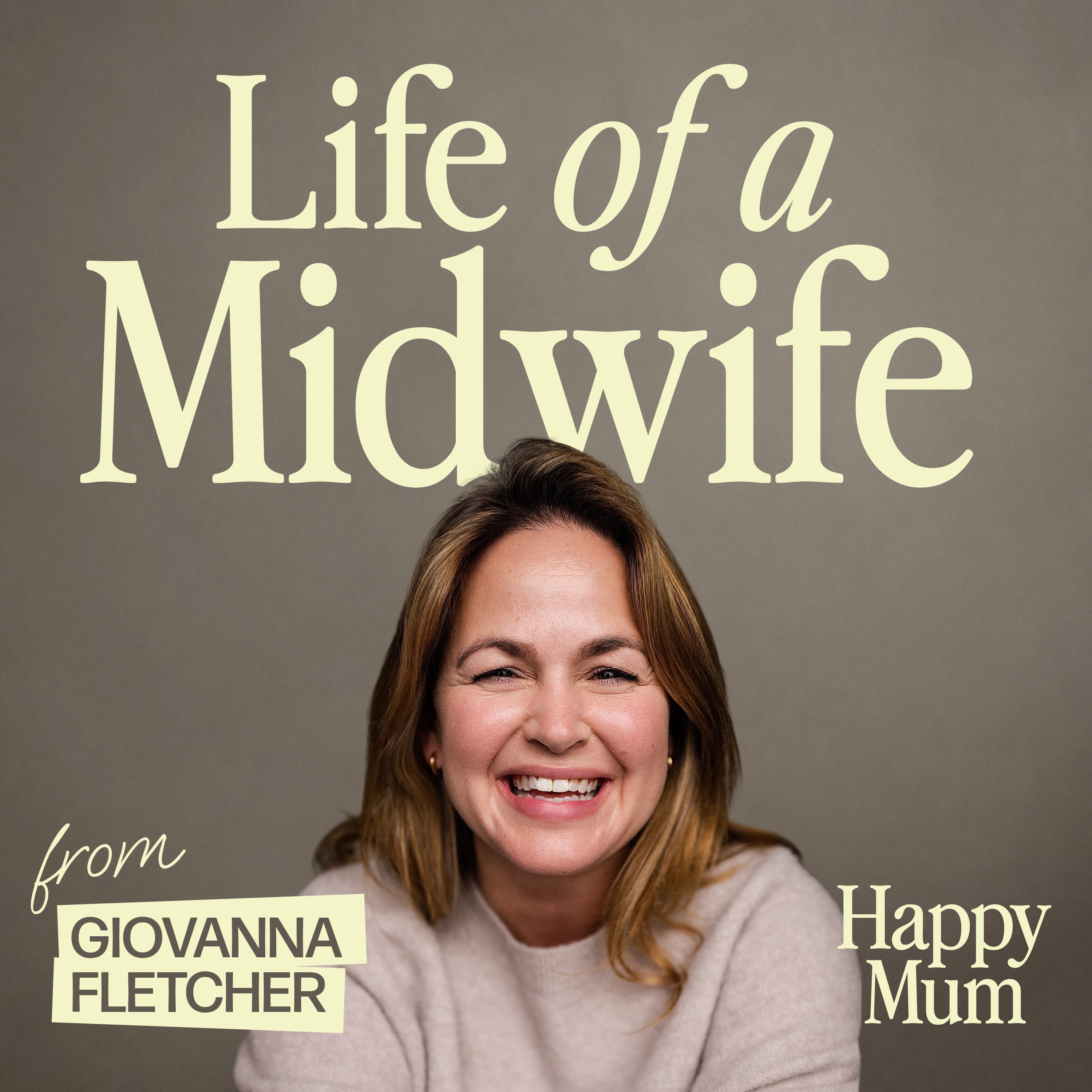
1:11I'm Giovanna Fletcher and from Happy Mum, this is Life of a Midwife.
1:27Anna has been a nurse for 22 years and a midwife for 10, working in some of the most challenging environments in the world, including war zones. She's witnessed firsthand just how vital maternity care is in crisis settings.
1:48So I had a slightly unusual entry into being a midwife. I had become a nurse because I always wanted to work within humanitarian aid and I was really fortunate to travel to some of the most extreme places in the world with Médecins Sans Frontières, MSF or Dots Without Borders. MSF, for those that don't know, it's an international humanitarian aid medical organisation, so it gives impartial medical aid to anybody that needs it on either side of the conflict, and that's regardless of your race or your religion or who you choose to love or which politics you follow.
2:27One of the first births I attended was actually the vaginal birth of triplets. It was definitely a birth of fire for my career. Vaginal triplets in a war zone, and we all survived, So it was quite a thing, yeah.
2:46I absolutely felt that I had to learn more, know more, to be safe. Within humanitarian emergencies, maternity care is so important. And so I then returned to the UK, qualified as a midwife, and went back out to work with MSF for a few years. so my story we can take it right back to the 80s for anybody that was around then there was live aid on the tv which was the first time that humanitarian aid was really shown publicly so i was five and i absolutely cannot claim as a five-year-old i knew what i wanted to do with the rest of my life but there was a moment of real shock that another five-year-old that was staring back at me through the TV could be dying of starvation.
3:39I mean, it was so unbelievable. It really shook me.
3:47That plan to want to be helpful in the face of that adversity only ever grew. So the next time there was a tsunami on TV or the next time we heard about the crops failing, it solidified in me that I just wanted to be helpful. For me, the most efficient route that was to join nursing. So I did a master's in nursing in Nottingham, qualified and then worked in the emergency department where we would be exposed to gunshot wounds and stabbing wounds and violence and you know road traffic incidents. I did a short overseas placement in Zambia which again solidified that I felt I wanted a skill set that would be helpful to the people that need it most.
4:31Through training in tropical medicine in London at the London School of Hygiene and Tropical Medicine, which was so great, if anybody is considering humanitarian aid along the medical thread, then absolutely I recommend it. So it's bridging that gap between, okay, so you know about gunshot wound treatment, but do you know what if the person who's been shot also has malaria or leishmaniasis or schistosomiasis or all the other tropical diseases that we don't see so much here. So it really bridged that gap for me as a nurse between wanting to do aid work but being more helpful in doing aid work.
5:13So you can picture the scene, I'm now 26 and I think I'm really well trained and I've got good intentions so I probably had a sense you know now I get to finally do my bit, absolutely, It inverted commas because, you know, how big is a bit? And I went to South Sudan as my first posting. So it was going to be for a year. I knew it would be a hostile environment. So 50 degrees centigrade at lunchtime is very hot. We knew there was risks of violence. So at that point, so it was South Sudan now. At that point, it was part of Sudan. There'd been 50 years of on and off civil war, which had devastated any infrastructure, education, roads, hospitals.
5:54It was thought to be one midwife at that point in South Sudan and arguably one of the most dangerous places in the world for women to give birth. My role was going to be for a year in quite a rural area called TAM, which is on the border of South Sudan and Sudan, and to run a primary health care unit with another nurse. All I knew about him is he was American, But then out of the mud dust from the A-plane steps this six-foot-two Californian guy with a handlebar moustache and a shaved head. And there's taps on one side, a Buddha on the other side is the intertwined snakes. He was 62 when I was 26.
6:37I can't do accents, but he tipped his cowboy hat and he was like, howdy, paro. And then he proceeded to tell me about his time in prison for smuggling marijuana from Mexico. and I'm like, ah, this is... I thought we'd all be wearing khaki and talking very sensibly, but suddenly I'm in the middle of nowhere with this clearly crazy man who ended up being one of my best friends in the world.
7:06Fast forward, we were living in tents, just one-man tents each, like the one you might take to Glastonbury. in rainy season gosh it really rained it rained so much that our mud runway would be unusable for weeks on end and James and I my my American colleague worked with 10 amazing Sudanese staff who most of whom hadn't had the privilege of education because that's what conflict does it it takes away people's access to anything that could be helpful to them and we ran a basic healthcare unit which was former tuts and we had basic medications basic education for the staff and we would see somewhere around a thousand patients a month it doesn't sound like a massive tertiary infrastructure which it wasn't but amazingly we could still save the lives of most of the people that came to us in this environment was then i met my first obstetric emergency.
8:08So if I can be open and blunt, because this is a maternity-based podcast, but just a short trigger warning, the story going forward is challenging. So the lady that I met had been pregnant, as anybody has the right to do if they choose. But sadly, without any access to a midwife, her baby had died internally. She'd had an interuterine fetal death. But her challenges didn't end there so without access to a hospital there was no ability for her to birth safely because what happens in starvation as a child is potentially your your pelvis doesn't grow to its genetic potential so you have a pelvis that is smaller but then if there's better nutrition and your unborn baby grows to its potential you have a mismatch so the baby can't fit through the pelvic arch.
9:02It can never be born vaginally. It's called gefilopelvic disproportion, which had happened to her. And so with her unborn baby who had died, she then couldn't birth the baby and it had rotted inside her. One of the impacts of that had been that the pressure had created a hole, so a fistula, a hole that shouldn't be there, but it had gone from her uterus through to her bladder but also through to her bowel so basically anything that any of us pass into the toilet um everything came out of her vaginally without her being able to stop it so her next layer of trauma is that her family then ostracized her because of the smell that she had no control over this had happened two years before i met her which is just I mean I'm somebody that can find words but I can't find the words in this moment so her obstetric fistula had then caused sepsis and that was the point she'd sought help with us I mean I'm gonna put my hands up I was reasonably useless in that scenario we could do antibiotics etc but I'd never worked with obstetric fistula before and actually remembering I'm there as a nurse.
10:19I'm not there as a qualified midwife at this point. Thankfully, the MSF team around me also, we had the ability to fly her to where she had access to a doctor. The amazing thing about obstetric fistula, in many cases, it can be resolved with a reasonably straightforward surgery. And she got to live again.
10:41What I've come to accept is that it also did have an impact on me because I thought I was there to save the world and actually my first obstetric case that I'm faced with I was, if I'm very honest, there was very little that I offered and that's quite a crash of confidence when you're in the middle of, you know, James and I were providing healthcare to an area the size of Belgium that had no other access to healthcare so it's also quite a crash of confidence.
11:17But we continued. We set up against all odds a reasonably well-functioning basic healthcare unit. We could fly patients for surgery if they're required. And there was huge amounts of success stories. I don't want to put any rose-tinted glasses, or if that's the same, onto it. It is really tough, but with the work, the freedom of it is you have absolutely focused sense of purpose. You do not debate at all your reason for being there. Because we all want a meaningful existence. You know, it's a core human desire, whether maybe we're aware of it or not. You never doubt that, you never debate it.
12:26For some midwives, there's one birth that reminds them exactly why their work matters. For Demi, that moment came just six months after qualifying.
12:47When you think about a birth that changes you as a person and not only as a midwife, most midwives will have a number one. It usually is the first thing that slaps you in the face like you were there yesterday and for me that birth was to this day the reason I believe I became a midwife. That sounds really bizarre but it feels like it was like a colon.
13:17I was six months qualified so pretty brand new at the wrapper and at the time it was quite unheard of in my area for midwives newly qualified to be a community midwife which means you're on clinics, do post-natal visits, sometimes attend home births and the reason for that was because at the time it was quite normal to have a couple of years in the hospital to gain some experience.
13:42So very quickly I had a caseload. This lady, I remember to this day, she was 40 weeks pregnant. She was due an appointment at my clinic and I couldn't get her booked in. It was completely full. And the midwives at the time, all my seniors, we were all in a shared office and I explained the situation to them because I was still learning at that point and they said no the protocol states that actually she doesn't need an appointment for the following week because it's her first baby. I don't know why I squeezed her in before I went to that clinic and saw her at home. I don't understand to this day why I did it, I just had a feeling and I did it.
14:28Everything was well, it was just me, herself, her dog, Did our full check-up, movements were great, all was well. The last thing I had to do was book her in for a sweep and listen in to Baby. I listened in to Baby and the heartbeat was 40 beats per minute, which for anyone that doesn't know, if you were in a ward setting, that would be an emergency buzzer in immediate care. I was 40 minutes away from a hospital and I was six months qualified and all I really knew was pressing a buzzer.
15:04I called the ambulance and I told them what was the situation and I basically just needed to run as soon as possible. And then I phoned the hospital just to give them a heads up because with something like that you need communication to be closed loop, everyone knows about it and it's as quick as possible so I did that.
15:28I took her on her way to the ambulance and I left to go into my clinic shaking. I had to go and see pretend everything was normal, all was well to all the other girls that I saw that day. During the middle of the clinic I actually got a phone call from the consultant and the triage midwife. They basically said well done, that was a very close call. It so happened that it was a placental abruption and the cord was wrapped around baby so what would have happened was she would have probably called in a few hours with either extreme pain, bleeding and baby would already have passed away.
16:12I ran straight to the hospital after the clinic, went to see her and her family, she'd just come out of general anaesthetic, cried, cried together, thankful and I stayed with them until quite late that night and I waited until I could take them to the neonatal unit so we went all together as a family which is beautiful.
16:34As women we have got such strong instincts, it's built so deeply within us and it's I think it's so innate in us for a good reason. I had a lady that it was her fourth or fifth pregnancy she'd had quite a few babies so it wasn't her first rodeo and we were very much keen on the fact that she would probably deliver very quickly usually women that have you know many births often show no signs of birth the next minute there's a baby so we were expecting that she was in the ward upstairs just being observed because she was having a little bit of bleeding. And with bleeding, it can be the cervix that's starting to open up, but we're obviously a bit conservative because sometimes it can be something quite serious.
17:18For instance, like placental abruption that comes off the uterus. This lady had a bit more increased bleeding and she also had pain. Now, for every midwife, it's alarm bells ringing. However, with this particular lady, her pain was very much mimicking a pattern of contractions. So it was very difficult to see whether this was the start of her labour or whether this was a bit more sinister. We brought her down to labour ward. She was still doing the same thing, using a bit of gas in air. We were reassuring her. The medical team didn't seem that concerned. They just thought, this is labour, but just in case, we'll keep an eye.
17:56I went off to my break. My manager then looked after the lady for me. So when I came back, she's obviously fantastic at her job. Everything was done. so medication was all up to date so I plopped my bum next to this lady to feel her contractions like you usually would and when I felt her stomach when I felt her abdomen it was like I could feel initially this big mass and I thought wow this baby's got a big bum but I had already palpated and checked her uterus when they come down and you do an initial assessment so I was like I don't remember it being that big but baby's maybe moved and pushed back and there's a new position I don't know why but I wandered my hand across and then I felt another big mass and I was like this is definitely one child in this in this abdomen this tummy I was like she's definitely pregnant with one child and then for a split second because at the time it's almost like a it's like a roulette going in your brain that's the only way I can describe it because you're trying to very quickly eliminate what it could be.
19:01So this probably happened within about three seconds. But I felt this other mass and I thought, OK, is it malposition? So I'm trying to think, is it transverse? Is it this? Is it that? And I thought, but nothing would feel like that. And then literally, it was like three seconds later, bam. It was as if someone was like, duh. That is a pool of blood. This is placental production.
19:24so I very gently I said to her I'm going to have a little press at your tummy you let me know how that feels if that's okay so I pressed it and instantly she crouched over on her bed and I thought that's definitely abruption so I said listen I think this could be a little bit of blood I said we're right here the baby is well whereas usually with that sort of abruption the baby would be the first sign if you put that monitor on usually the heart rate isn't great whereas it was beautiful. So I said, it could be wrong. I said, I'm going to go and check with him. If it is wrong, don't panic. We'll deal with it.
19:57You're here. You're going to be safe, OK? Screwed enough, went to theatre. As she was getting prepped for theatre, that's when the tracing of the baby's heart rate started to go very south. They opened the abdomen and there was 1 ,500 mils of blood in there.
20:18I was like, I knew it All was well, it was very well managed, they were all fine And it just reminded me how strong your gut is I think the only reason that I'm prepared for it is because I basically was brought up by midwives The toughest of nails, you know, the most gentle Like I can feel like I've got a special gift that was given by them It was definitely them, I wasn't born with it and it's like I can walk into any room and just shapeshift and adapt to what anyone ever needs. It's like a golden key that only you... It's so special that I'm so grateful that I have it for the rest of my life.
20:58I'll protect it for the rest of my life. I'll protect midwives and women for the rest of my life.
21:19Thank you so much for listening. Please do like, subscribe and leave us a review. We would love to know what you think. And if you're a midwife and would like to take part in this series, you can find contact details in the podcast description.
Trigger warning: this episode contains descriptions related to childbirth that may be distressing or upsetting to some listeners.
Purpose isn't always comfortable. Sometimes it takes you somewhere extraordinary.
This week we delve into the inspiring stories of two midwives whose paths were shaped by a pull they simply couldn't ignore.
If you’re interested in being part of the next series of Life of a Midwife, we’d love to hear from you — just drop us an email [email protected]
Links from our midwives:
Donate to Médecins Sans Frontières
BabySZN™ is a platform built to help women train specifically for fertility, pregnancy from a birthdual-qualified midwife and performance trainer
Frontline Midwife by Anna Kent
Hosted on Acast. See acast.com/privacy for more information.