Ask ChatGPT
 Happy Mum
2 Jun 2026 · 1h 1m · 25 chapters
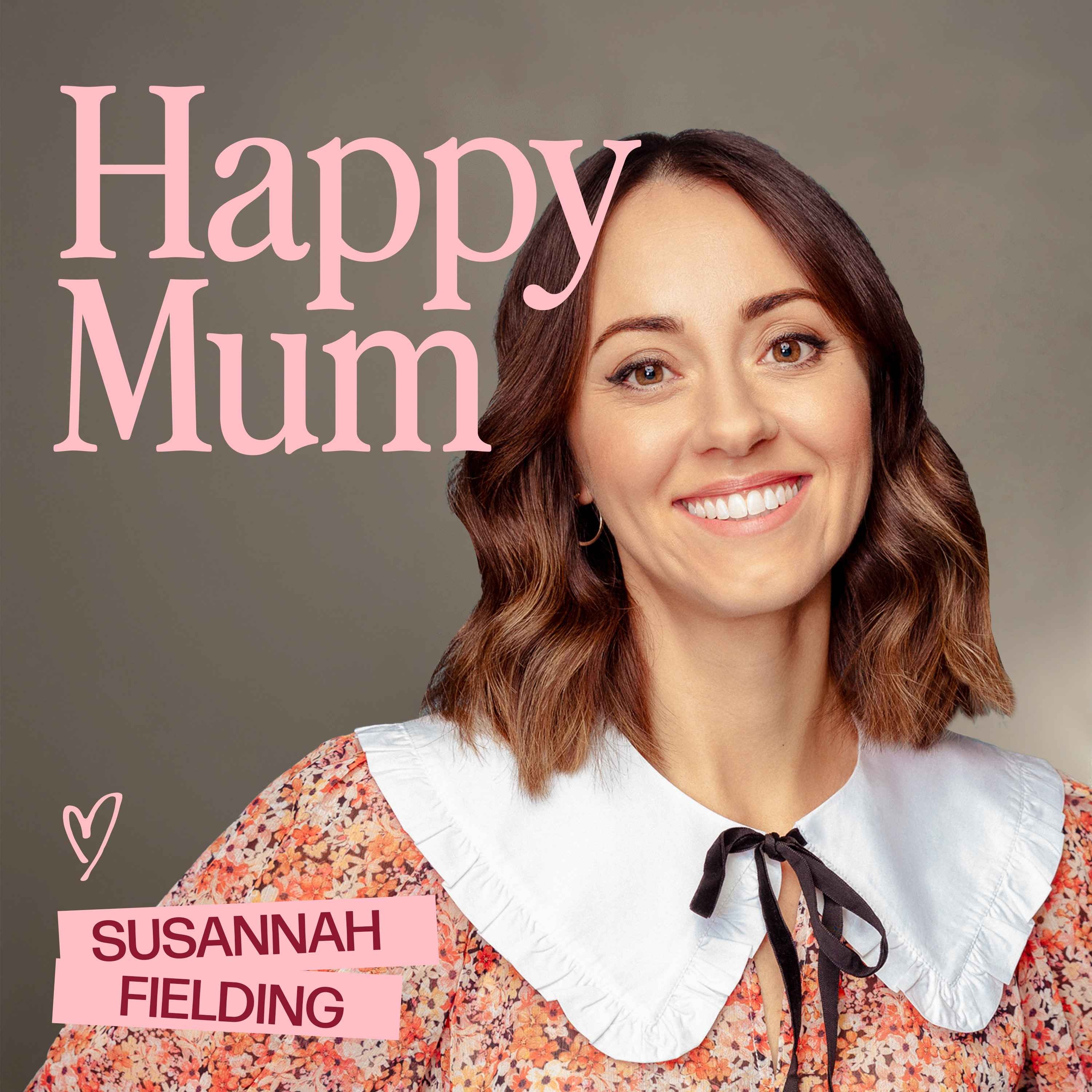
Susanna Fielding argues that every parent should learn attachment theory, linking it to “good enough” parenting, managing anxiety, and building a secure bond with her son. The episode also covers motherhood logistics (sleep, bedtime routines), the emotional pressure of “getting it right,” and how therapy/learning can reduce the urge to repeat childhood wounds.
Susanna Fielding (Anna Fielding), British actress with extensive theatre awards and TV work; she’s preparing for a production of “Serrano de Bergerac.” She discusses her transition back to stage after becoming a mother, and her belief that motherhood reshaped her confidence and nervous system.
Parenting involves getting things wrong and that’s OK; attachment theory helps parents understand bond-building; motherhood can intensify unresolved childhood issues; breastfeeding is emotionally charged but attachment isn’t guaranteed by breastfeeding alone.
Her 10-hour sleep goal vs real 8 hours; bedtime routines with multiple stories; toddler “wee on me” morning; deciding against a Broadway-level job at four months; miscarriage in Spain followed by progesterone pessaries; home birth attempt with later emergency C-section after labour complications; breastfeeding struggles leading to mostly bottle feeding at seven weeks.
Written by AI. May contain mistakes.
Explore the anxieties and expectations of parenting and the concept of being a 'good enough' parent.
“We talk a lot about bonds in this and about attachment theory, about being a good enough parent, about the stresses and anxiety that comes with being everything that you hope you can be for your child.”
Discuss the realities and struggles of establishing bedtime routines with children.
“Exactly and sometimes you're so tired aren't you by 10 o 'clock that you're like I'm a bit bothered to wash my face.”
Understand the balance between parenting responsibilities and pursuing a career in acting.
“Sometimes they're very happy for us to go.”
Delve into the transition back to the stage and the impact of motherhood on confidence.
“In the early evenings that you have to go out.”
Examine the thought process behind choosing the right time to return to work and the importance of job location.
“It kind of doesn't feel like it's there anymore.”
Explore the factors influencing career and parenting decisions.
“I'd love to have another one at some point in the future, but I don't know if I will.”
Understand the emotional roller coaster of parenting toddlers.
“oh, I've got so many things I must put in practice right now.”
Discuss the impact of childhood experiences on parenting styles.
“You know, it teaches you to be really resilient and kind of I'm a bit of a hustler, I guess, you know.”
Learn about the emotional journey of trying to conceive and experiencing loss.
“But during my 20s, I suppose, I was really focused on, you know, just getting my career underway.”
Explore the emotional rollercoaster of early pregnancy and the importance of support.
“back home again and just just kindness of strangers yeah she drove me all the way in her car and it It was, you know, it was a pretty horrible experience to go through.”
Discuss the impact of progesterone during pregnancy and its effects on women.
“So, yeah, I had 12 weeks of progesterone pessaries, which was not very fun and made me feel pretty flat and low.”
Understand the difficulties of maintaining a career during pregnancy and the fear of unemployment.
“I'd hoped the voiceovers would be flooding in and I'd be doing pedigree chum and, you know, keeping myself busy.”
Delve into the anticipation and preparations leading up to childbirth.
“I was so massive and I had such a big baby.”
Examine the labor experience, from planning a home birth to unexpected challenges.
“And it was quite funny because we were sort of doing the last bits of painting and sweeping the path and mowing the lawn.”
Discuss the emotional transition from labor to an emergency C-section.
“We were living in a flat at the time and I had to sort of go and break it to them.”
Explore the emotional complexities surrounding childbirth and personal growth.
“Because also being a bigger baby, which is like whatever it takes to get them out safely.”
Discuss the difficulties of breastfeeding and the emotional toll it can take.
“It's so funny as well because people always say how when you first have a baby, the baby that you birth is not the baby that you expect, not for the first 24 hours.”
Understand the transition from breastfeeding to bottle feeding and its implications.
“And then if it takes an eight, like everything just takes forever.”
Learn about the significance of attachment theory in parenting and its impact.
“But it was a relief because it just meant we could concentrate on our baby and and also, you know, sharing night feeds and stuff like that is no bad thing.”
Reflect on the healing aspects of motherhood despite its challenges.
“and attachment or not but yeah I'm sort of I learned about attachment theory in my 30s and And it was like the biggest wake up call.”
Discuss the need for education on attachment theory for future generations.
“I think those three months were probably, yeah, probably the best three months of my life.”
Learn how understanding attachment theory can impact parenting and child development.
Explore the personal reflections on motherhood and the joy of observing children grow.
“We end the podcast with you completing three sentences.”
Discover the funny and charming moments that bring joy and pride to parenting.
“and what he had for breakfast and just feeling like bursting with pride for him.”
Hear about the transformative power of theatre and its emotional depth.
“But you say how you actually say it and then say it in French accent because it's too good.”

Get the gist, explore an idea or ask about something said.
 Claude
On Happy Mum, what are the key points of this episode?
Searching your listeningAutomatic transcript. May contain errors.
0:05Hello and welcome to a brand new episode of Happy Mum. Today's guest is actually someone who was in my life about 18 years ago. I'd done a play with someone that she knew and we started hanging out for a little while and then life happened as it does. So when her name popped up in my diary I was so happy to see that we were going to be having this chat this is anna fielding she's an amazing actress uh was in theater a lot got a lot of awards for her theater stuff then went into a lot of tv work and is now going into rehearsals for serrano de bergerac and that's how i say it common lb she says it much more fancier and uh she also does it at the end in a french accent which is amazing so it's worth listening to this episode just to hear saying serrano de bergerac in her french accent if i'm honest in all of my research for this chat Susanna's not really spoken about well she hasn't spoken about motherhood we could find zilch so much so that lovely producer Alex had to just make sure that she did have a child I knew that she had a child but she's just not spoken about it and that was really fun actually going into this chat knowing that you know she is someone I have a history with a very happy history with and that I was going to learn about this whole area of her life along with you about how motherhood has presented itself, I guess, in the last few years.
1:28We talk a lot about bonds in this and about attachment theory, about being a good enough parent, about the stresses and anxiety that comes with being everything that you hope you can be for your child. Yeah, often in life we go into parenting worried about all the things that we're not going to be able to bring to the table or just kind of going, oh, am I going to get this right? I think this chat is all about learning that you will get things wrong, but that's OK. Susie's done a lot of work on herself and finding out what she can do to help the bond between her and her son. Here she is, Susanna Fielding.
2:09I think you're going to really enjoy her humour and her heart. No, and I need a lot of sleep. Do you? Ideally 10 hours. which is one of my it's like my major fear having a baby I was like I might lose my mind and I have survived I mean I've survived it but I'd say I've survived it I wouldn't say I've thrived but you're not getting 10 hours now God no no I mean I mean sometimes sometimes I'll get maybe like 8 you know on a good night I do sometimes get into my pyjamas when he does I think that's a really good move yeah I do it still now I'm like we're going upstairs that's one less thing to do.
2:51Exactly and sometimes you're so tired aren't you by 10 o 'clock that you're like I'm a bit bothered to wash my face. Sometimes I brush my teeth when the kids brush their teeth first of all it stops snacking and you are one step closer. Yeah, I call it bed ready. Do you? Yeah, I'm getting bed ready. Not ready for bed but I'm getting bed ready. Just in case. Just in case. Are you good when you do bedtime are you a kind of a say goodnight out the door or are you having to lie in there? it's a bit of a we're kind of heading into I think a nice little patch where we do two stories and then a lights out story which usually involves him listing a long a large number of characters that must be contained in this story why do you just have to make it up?
3:32I have to make it up, yeah, which I can do he also asked me to do it while I'm driving sometimes and I realised the other day, actually no I can't do that that is not safe but yeah, so he will but he's so knackered because he's just dropped his nap so he's so knackered that he's falling asleep quite easily at the moment but when you're still having a nap sometimes bedtime would take three hours and you're just like i can't do this yeah that's the thing though because i i think people don't really realize how long that sleep routine can take i know yeah putting them to bed i didn't understand what that meant like pop them into bed see you in the morning yeah not at all and it changes all the time doesn't it but i suppose maybe your boys are read are they reading their own books uh one of the i mean when you're one of three the oldest of three you're always going to be the one that's kind of good luck mate yeah self-service you know this isn't you're not part of this now uh yeah he goes and sorts himself out yeah um and then the other two will generally read to us at bedtime which is nice yeah although i do find that the weight of a book over the last 12 years it gets my hands are tired i don't want to hold the book anymore just you know what i mean it's kind of falling on your face yes um yeah so that is nice However, two of them, they go through different stages, actually.
4:48Sometimes they're very happy for us to go. I've got to go downstairs and get some work done. Yeah. See in the morning. Yeah. And other times they want us to lie with them. Most of the time, I'm OK with that because close my eyes. Yeah. I play the game of let's see who falls asleep first, knowing full well it's going to be me. Within four seconds. Sometimes I'm like, shh, I'm sleeping. I came in the room the other night and Mark had been trying to put Alfie to bed and he'd just gone to have a little nap on the bed because he was obviously so tired and Alfie was asleep in a chair like this. I was like, this bedtime didn't really go too bad.
5:23He is asleep, so you have to tick the box in one respect.
5:31On a hard dining chair. How is the dropping of nap going? Well, in some ways it gives you freedom, doesn't it? Because when they're really small, you're always working to a schedule of like we've got to get home by 12 or it's all going to fall apart um so it is quite nice and and it means he's going to bed at like half six so I'm getting a real evening that is nice that is nice yeah although yeah it's going to be you know a little bit a little bit trickier when I've got to go and do a play in the evenings and um and he's going to be awake all day yeah because that mid that middle of the day like island getting stuff done for yourself yes oh my god yeah actually it feels like a distant memory now but yeah you would work towards it sometimes wouldn't you yes yeah yeah mine went through a um two of them actually went through a long period of only going to sleep for half an hour it would literally be like put them down and they were a bit difficult to get down to sleep at various points getting them down and slowly like backing out of the room like a ninja yeah getting downstairs doing maybe one of the jobs and then hearing a cry and be like i haven't even sat down yet i haven't even gone for a week what is this god it's heartbreaking especially if it's taken you an hour to get them to go to sleep you're like this is not a good use of my time this is not what i signed up for no no it's bleak the three hour sort of middle of the day when they're babies that feels like well how are you feeling about the old missing bedtimes thing yeah it's um it will be difficult I mean because you did it last year yeah I did two plays back to back so actually that ended up being like from April till November um not doing bedtimes and yeah I was ready for a change I was definitely ready for a shift in my routine and to get back to work and use my brain and hope that my brain was still there in some way um but I yeah it is it is hard it is that nice sort of closing of the day together isn't it and also like I say I like to get into my pyjamas at six o 'clock so it's gonna be it's gonna be a real wake-up call yeah it's gonna be a real wake-up call but I am really looking forward to getting back to work you know there's you have different parts of you don't you and I I love the fact actually that with my job I do get to really focus on being a mum for a few months at a time but then there's always a bit of me that's kind of itching to use that other bit of me what you say as well the majority of your day you are still going to be a mum mode yeah I will In the early evenings that you have to go out.
8:01Exactly. I mean, the worry slightly is that you kind of go to sleep at 1am and they wake up at half five, six. Yeah. And then you're just like walking dead all day. But yeah, I'll have to have a lunchtime nap. Maybe he'll put me down for a lunchtime nap. That would be ideal. Read me Peter Rabbit. It sounds like he's already doing that anyway with your partner. Yeah, yeah, that's true. He's worked things out. They've got it sorted, yeah. I've got to say, there's something about being, I don't know whether it's theatre, but there's something about stepping away from the house, being in that space where for that period of time when you're on stage, nothing else exists.
8:41And you are, as a company, really holding each other. There's something very, very, very special about being part of that. And I always find it kind of, that fulfills me in a very different way. Yeah. I really missed it. I didn't do, so I started my career doing almost all theatre for 10 years. I did back-to-back plays pretty much with some gaps of unemployment, of course, and then 10 years where I didn't do any theatre at all. Yeah, I saw this in an interview and I was like, wow. How did that happen? Yeah. Yeah, it wasn't a choice at all. I mean, partly I suppose there was a choice. Around the age of 30, I was like, oh, I really need to make some money at some point because otherwise I'm going to be living in this basement flat looking out onto a wall when I'm 60.
9:28And so I kind of really set my sights on trying to get some more TV work. And I had this sort of wild experience of putting myself on tape for a show in America, which, you know, people, actors do day in, day out, right? You send these tapes off, you never hear anything back. But I got this call saying they're really interested. Can you get on a plane on Tuesday and go and meet all the producers and do a test? And I was like, what? This is wild. anyway it felt like a sort of universe thing I do slightly believe in that that things things happen and come into your life when you need them um and so anyway that show ended up getting picked up and I moved to LA and signed a six-year contract and thankfully it didn't run for six years because much as I love LA it's a kind of a crazy place different place to live yeah and certainly not somewhere I'd want to be long term um but that sort of kick-started TV a bit for me And so I ended up doing that for 10 years.
10:25And I think I was afraid maybe to go back and do a play. There's a part of you that goes, oh, God, can I still do it? But you had such an amazing run before that switch. Yeah, it requires real courage. And I think you do panic that you'll kind of lose your nerve. So, yeah, I was I was really glad to get back to it. But I really did wonder, like, I thought, do I really still enjoy this? and I was also so much in baby mode I'd been you know full time mumming for two years I remember going to a press night at the theatre and sort of standing there and thinking I don't think I'm really part of this world anymore that's a really weird feeling isn't it yeah I was sort of like satelliting around it and I said to my friend I don't know if this is really me anymore and she was like it will be, it will be and yeah six weeks later it was my press night and there I was you know sort of in in my element again and she went see I told you um but do you think that motherhood affected your confidence in terms of going back on stage yeah definitely I mean I really think my brain went to jelly I I couldn't you know I'd be trying to talk to new people and not be able to think the right words any joke I might have made the punchline was gone like you know I just the telling of it oh I don't know where I was going you just sort of power down halfway through the sentence and yeah I became quite sort of nervous about speaking because I just think your brain isn't functioning in the same way and it's sort of clinically proven isn't it that you are, your brain chemistry changes and the matter changes so that you are focused on your baby and so all that kind of all the skill set of being an actor which is so much about having plates spinning like saying the lines knowing where you are on stage, noticing that your co-stars forgotten their prop, hearing the audience member coughing, but you're still saying your monologue, you know, all of that skill set.
12:21It kind of doesn't feel like it's there anymore. Yeah. And you're much more just focused on the sort of, yeah, the routine of taking care of someone. But it did come back, thankfully. And I feel like for me, I made the right decision to not go back too soon. Yeah. I was offered a couple of really lovely opportunities when Alfie was four months old and it was really, really, really hard not to do that job. It was a sort of career changing job and it was going to go to Broadway. And I just knew for me that I couldn't manage it all. And there were lots of people saying to me, you can do it, you can do it.
12:57And I really think you can. And people have proven that you can. But for me, it felt like it was going to be too much for my nervous system, if nothing else. Yeah. And that's a really hard thing to juggle, isn't it? Because what is right in one way or what might work and what other people perceive as, no, it's doable. Yeah. Yeah. Maybe doesn't feel like it's right for you. And actually your judgment call within that is it's not easy to make. Yeah, it was. I had a helpful conversation. I sort of deliberated for ages and had a helpful conversation with a friend. And she said, I know you, you're just going to be in rehearsals watching your watch, looking at your watch, going, when can I go?
13:38When can I go? When can I go? And that's not the right kind of energy to bring into a job. You know, as we both know, you have to be so committed to what you're doing to get the most enjoyment out of it, as well as to be as good and to honour all your other castmates and the director. But I just knew that she was right and I would be constantly feeling like I should be somewhere else. And, you know, I have one child. I'd love to have another one at some point in the future, but I don't know if I will. And I guess I didn't want to feel like, oh, I kind of missed it. You know, whereas there'll always be another play.
14:14Yeah. Hopefully. Yeah. Yeah. Hopefully. What was the nudge to kind of go, well, now the time's right? To go back to work? Yeah. I suppose, yeah, an offer came in of something that was sort of handed to me. And I thought, yeah, that would be a really fun. and also if I'm being completely honest it was in a theatre that was like a 10 minute train journey from my house which makes a massive difference yeah and those things suddenly become a really important part of your decision making like can I be you know can I get back easily if I need to is it going to exhaust me doing another a really long commute or would I have to travel to Manchester and all of those things as you know as a mum becomes so much more a part of your decision making um so yeah what what the sort of most appealing jobs now are not necessarily the most exciting ones sometimes the two align and sometimes you just have to put that on the back burner for a bit yeah so you had your long stint your long run last year how are you feeling about this year I'm yeah I'm looking forward to going back I mean I'm right in the middle of toddler twos.
15:22So you are out of that door. See you. I am not dealing with this now. Good luck. See you in four months' time when I hope you'll be a little bit more palatable. No, I mean, he is adorable, of course. This is the thing about this age. It's such a roller coaster, isn't it? They keep you on your toes, yeah. And you have these glorious moments where they say something or you connect with them or you realise they've understood something that you didn't know they had. And then you have this morning, I got woken up at 5.30 with Alfie screaming, Mummy, get into my bed. So I went and got into his bed. Then he shouted at me for being in his bed.
16:02Then he demanded I go and make him some toast and then he weed all over me.
16:09I'm like, okay. I wouldn't call this my favourite morning. So, yeah. Are you weeing on me? Yeah. Okay. So, yeah, we're in that. Lots of big emotions and, yeah, lots of tantrums. And I feel kind of as prepared as I can in terms of reading books and educating myself on how to handle them. But it's wearing. It's really wearing. Well, it is also hard when we've read all the books to kind of go, oh, I've got so many things I must put in practice right now. 100 % and I've got to get it right. and if I don't get it right, these are the potential ramifications. But that book said that, but I forgot to do that bit.
16:53It's a lot of pressure. And yeah, it is helpful because I think at least sometimes you feel like you have a bit of a roadmap. And if you don't have that, you're just relying on what your own parenting experience was, which may have been great, but may not have been. And so, yeah, but it also adds a whole layer of responsibility that I think our parents' generation just didn't really have. And we won't know the benefit of that for perhaps another 20 years. I'm sure there's something else we're doing wrong. Oh, God. You know what I mean? We're being therapy for something. We just don't know what that thing is yet.
17:26Exactly. I mean, we absolutely will. We'll be criticised for being too soft or giving them too much space for them, not making them kind of just get on with it, stop moaning, get on with it like we were told. I just think of like my childhood. I had a lovely childhood, but I would say that we were on our parents' schedules. Like at weekends, we were visiting their friends. we were watching their TV shows, we were listening to music that they wanted to listen to. Yeah. You know what I mean? I suddenly said to Tom the other day, it's really bizarre how our lives are so child-focused, so child-led, you know, that we actually don't...
18:03I find it really fascinating. Yeah. I mean, a lot of my childhood is remembering just waiting around for my mum to do stuff. Yeah. Being dragged around, you know, C &A or whatever. sitting in the bank playing with the bank you know the pen those tiny pens in the bank or whatever but that was so exciting a trip to the bank to play with the tiny pens and we might be able to write some rogue pieces of paper exactly that was a day out in our day wasn't it and we'd be blooming grateful for it as well back in my day before we just went to see the pens how have we got here G. I know absolutely no it's crazy.
18:41Yeah but it is a very it is a very different thing and I suppose I don't know maybe we've gone a little bit far the other way. What was your childhood like? Was it you and your mum? It was just me and my mum so yeah no siblings and my dad was not really around he was sort of intermittently in and out of my life which I think you know has had quite a profound impact on my own kind of romantic relationships and my own sense of self and is probably why I became an actor. You know, you've got to have some sort of wound, I think, to want to become an actor. But my mum, you know, was incredibly capable, thank God.
19:18She brought me up on her own with no money and no support. And that has taught me some amazing life skills. Like, I really don't think I would be doing the job I'm doing or have made it work in the way that I have been able to without that sort of, you know, challenging start, watching her kind of hustle and find ways to bring money in and keep a roof over our heads kind of against the odds. You know, it teaches you to be really resilient and kind of I'm a bit of a hustler, I guess, you know. I've kind of, I don't have that safety net. I don't have and I never have. And so I have to make it work.
19:59And there's something about that, I think, that, you know, gives you a real drive. But yeah, I mean, my mum is kind of an inspiration in that sense. But I think, you know, it was hard having only one parent. And yeah, I do think that's really impacted, I guess, yeah, my sort of sense of self. And I have done a lot of work to try and, you know, improve my own self-esteem and recover from that abandonment, I suppose you might call it. Was that important to you before starting your own family as well? Yeah, and I think, of course, when you have children, anything you haven't dealt with comes rearing up, doesn't it, just at the time when you don't have the capacity to deal with it.
20:43So, yeah, I did know that I had to kind of look at that stuff. And I also was choosing partners who were just unbelievably unsuitable and reflective of my dad. And so it became obvious after a while that that was something that I really needed to kind of turn the wheel on and steer the ship in a different direction, which, you know, again, thankfully, like I had the money to do that and was able to pay for therapy. You know, I think I've been lucky in lots of ways as well. But yeah, I think trying not to pass on my own kind of trauma and issues to my child has become a major focus in the last sort of three years.
21:24Yeah, he'll be three next week. So that's crazy. so yeah and maybe a bit of an obsession I'm sure it is a bit of an obsession but I hope that if I don't if I don't manage to not pass it on at all but that it's reduced at least yeah is there anything in seeing your son as well though and kind of having that connection and that bond and also going how like how do you to have a broken relationship is one thing but not to have that constant care and love and place in your life as a parent. Yeah. That's got to be like to actually see your child and know that love and know that must be really hard to sort of not come to terms with but to understand.
22:12Yeah, I think I've seen the decisions that my dad made in a really different light. I don't have a lot of time for it. I worked you know quite hard to sort of repair that relationship during my 20s and 30s and I have stopped um that's you know that's the decision I've made you know other people might choose to do it differently but um I also just don't want that kind of that energy to be in his life at all um and it is it's really hard to understand how you could not want to like reach out and you know I haven't seen my dad for a long time but I often find myself on stage thinking why aren't you here why wouldn't you want to come and see me do this you know I find that really I could I could just can't get my head around it that you wouldn't want to um so yeah it is still painful but what I have now is a chance to make things different and and yeah kind of change the story a bit and I think that's sort of a really a beautiful thing about having the opportunity to have children isn't it is that you can change the family you know generational kind of pattern of things and try and yeah make something a little bit more positive out of it does it also make you look at your mum and kind of go wow you did all this on your own and and and I think we also forget that not only would she have been doing it but she'd also have her own feelings and heart ache and everything else that she was having to deal with whilst being the best mum to you yeah I mean it actually blows my mind I sent her a message again I was on my own for four days because my partner was away and it was really hard you know and there were bits of it which you know Alfie got ill and various other little challenges popped up but I sent my mum a message saying you know I really want to say again how extraordinary I think it is what you did because there are especially especially when you're overwhelmed or emotional or you've had a tough day just having someone come through the door where you can go over to you I need to go and a cry in the other room or over to you I'm just not really coping with this situation and a change of energy and another person to be there is just such a relief isn't it so yeah I think it's pretty extraordinary and and you know my mum didn't have the easiest childhood either so she would have been dealing with all of her things that would have been popping up for her and and maybe without the sort of understanding of all of that and and how to cope with it so I think it's pretty miraculous really that yeah that um that she did it and and I just have so much respect for anyone parenting on their own whether they're co-parenting or single parent or yeah any kind of caregiver that's that's doing the lion's share on their own it's it's just yeah especially when you're not just dealing with the parent side you're dealing with the love your life side the other side yeah yeah exactly yeah you've got to keep it all ticking along haven't you and and deal with your own kind of stresses and bringing in money and all of the kind of day-to-day stuff it's it's it's a lot it's a it's a huge it's a huge challenge yeah did you always know that you wanted to have a family yeah I I knew I did particularly because I'd been from you know such a tiny family just me and my mum and so I always had this longing for to be part of something and to feel like I sort of belonged.
25:36But during my 20s, I suppose, I was really focused on, you know, just getting my career underway. And so, yeah, it took until I was 38 to, yeah, to have Alfie. But I'm so, and at that point I didn't know, like, am I going to be able to get pregnant easily? There's so many different factors, like work-wise, taking that gap, but also not knowing when that is going to be or if it's going to happen. Yeah. Like how you plan for that. Yeah, and you can't. It's one of those things. And I am a big planner. I like to know exactly what's going on. I like to be in control. So I did do all of what I could.
26:11You know, I was weeing on sticks and writing charts and, you know, my version of like controlling this totally uncontrollable thing of getting pregnant. What made you feel like that moment was the right time to start? well I had a very early miscarriage and the excitement I felt finding out I was pregnant I was in Spain on a job and I um my period was late but I'd been kind of busy and I'd been flying a lot and so I didn't think much of it and then sort of realized oh god no I'm like two weeks late and um and my friend said do a pregnancy text don't be ridiculous anyway I'd never done one before so I didn't understand that you had to wait um so I weed on the stick went no I'm not pregnant, went to the shops, came back, went to put it in the bin and went, oh God, oh my God.
27:02And I was on my own in this flat in Barcelona, a long way from, you know, my partner and all my friends. Very sweetly, my partner got straight on a plane and flew out. And we had this kind of magical night of going, oh my God. And then the day after I started to get all these awful pains and we actually decided to go and get some food because I think he thought me having something to eat might help we really didn't know what we were doing or what was going on and and yeah so I miscarried that pregnancy but it was one it was sort of one of these sort of mad things that happen in your life this lovely woman from this pharmacy could see I was in a lot of pain and she came out and she said are you okay and this was all in Spanish and my Spanish is pretty you know not bad but it's not you know it's not kind of medical grade and she took me to her friend who was a gynecologist and worked in a local hospital and they helped me and you know checked what was going on and got me to a point where I could go back home again and just just kindness of strangers yeah she drove me all the way in her car and it It was, you know, it was a pretty horrible experience to go through.
28:14But it was also like really beautiful that another woman would just step in and she said, I've had this twice. You know, I know what's going on. Come with me. So, yeah. But it was that excitement of feeling, oh, my goodness, that made me go, oh, yeah, now's the time. Also, had you not done that test that day or it had been a couple of like, who knows when that feeling would have flooded in? Like, is there something in the fact that everything turned out in the way that it did? I mean, my first pregnancy ended in a loss as well. And I think it then has ramifications of how you feel in subsequent pregnancies.
28:54Yeah. But that feeling of magic that kind of worked its way through that. Yeah. That little period. Yeah. Because you just wouldn't have known. No, I wouldn't have known. and I think I probably had had one before and not known as well. Yeah, I think, yeah. And because of that, I don't know, when I was pregnant with Alfie, I did tell people because I thought I'm not going to, like I was very nervous that it would happen again and 12 weeks is a really long time to deal with that on your own. And I thought, no, if this happens again, I need people to know. I need people to be there at the end of the phone.
29:35and so I told quite a lot of people like I'm pregnant you know again let's hope it goes right and I decided to not keep it a secret and I don't know for me personally I think that's kind of I don't know a male thing that's sort of been slightly inflicted upon us like oh well don't tell us of your woes yeah don't tell us of your woes and we don't we don't want to hear about it we only want to hear about it once it's all nice and safe and yes exactly and I think that's exactly when you need your friends absolutely it's exactly when you need other women to be like are you okay and trying to hide it at work and trying to hide it from people I I I understand not telling like the general public but those people who are going to be there for you like yeah absolutely
30:20and then I had to have progesterone which because I'd had these two very early miscarriages they said and progesterone would be a good idea so I had to have that which for me sends me completely do lally did you know that before no no i found that out the hard way the hard way um i think i think it does for quite a lot of women but of course everyone's so different aren't they that's why we're still struggling with hormones in the way we are because we're all so sensitive to amounts and fluctuations in so in such different ways and of course we haven't put the research and money into really investigating that stuff yes it doesn't I wonder why.
31:00I wonder why. Yeah, exactly. So it's all still kind of an unknown. So, yeah, I had 12 weeks of progesterone pessaries, which was not very fun and made me feel pretty flat and low. But I sort of spent three months on the sofa watching Sarah Beanie's house in the country and eating crumpets and I got through it. But, yeah, aside from that, it was a fairly straightforward pregnancy. So I was very lucky, yeah. Did you work throughout it? I didn't, no. Nobody wanted to employ me. What? I know. I'd hoped the voiceovers would be flooding in and I'd be doing pedigree chum and, you know, keeping myself busy.
31:41But I really wasn't. It was nothing. So, of course, that's a bit scary because you're not earning any money. Well, then you know what's to come the other side of it. Well, I don't really want to work then. Exactly. So you hope that little bits and bobs will come in during those nine months. So, yeah, really, I had three years off work because once I'd finished that job in Spain and came back, I didn't do anything. Were you panicking throughout that? Because I always feel like I start panicking mid to the end of a job, kind of going, well, that's it, I'm never going to work again. Well, that's it for me now.
32:12Yeah, yeah, goodbye. It's been fun. See you later. Goodbye and good luck. Retiring. Yeah, I know. The fear is always there. And I don't think that ever goes away. Even actresses that I speak to who had been doing it for 50, 60 years still have that kind of panic. But I suppose the flip side of that is that sometimes you'll get a phone call and your whole life will change within a day. And I do love that variety. And I suppose that's maybe one of the things about parenthood that I find more challenging is the sort of monotony and repetitiveness of it. And I'm so used to a life of like, I'm going here today.
32:51And oh, my God, I'm right. I'm going to Manchester next week to do this thing. and I'm going to meet so-and-so. And I really like that variety. And, you know, obviously there's variety in what your child throws at you on a daily basis or what the challenges are. But, you know, the kind of routine of it is quite different. Yeah. And the different people that you see. Yeah, yeah. Exactly. And the energy that you get from that. Yeah. So pregnancy-wise, all fine. Apart from having to take the... Progesterone at the beginning. Yeah. I mean, I was absolutely enormous. I was so massive and I had such a big baby.
33:29Did you? Yeah, yeah, yeah. He was like, well, he was nine pounds, which fit going quite a sort of slight person. So yeah, I had a massive, massive baby. How did you feel heading towards the birth? Well, my plan being a control freak was to have a C-section and just be like, right, then I can plan it. I know what time it will be. It will be on this day. I'll have my bag packed and off we all go. but then the sort of the hormones started to flood in towards the end and I decided to have a water birth in the kitchen oh so different so different yeah so different I mean I'm not quite sure when that change happened but I do think it was like a sort of I don't know a sort of womanly hormonal thing well we said about reading lots of books had you started reading loads of books and gone well I can do this yeah I think a bit of that yeah I think you're right I think it was a bit of that and then there was a bit of me that did sort of start to chill out a bit before uh in the last few weeks um maybe because I knew then it was kind of probably going to be okay and you know all of that but yeah I read all the hypnobirthing books and I decided right I'm going to have a home birth and I I am someone that's quite sort of like responsive to my environment so it made sense that like being at home might be nice and I love my candles lighting is very important to me so strip lighting doesn't sit well with me it does nothing for anyone at any time yeah no certainly not when I'm naked with my legs on the air um uh so I decided let's let's do this at home and my partner dutifully went and got the blow up you know found a blow up birth pool and um and I got in touch with the home birth team and they came around and I was really lucky to be under the care of the home birth team at King's they're quite a sort of progressive unit and they visit a lot beforehand and you get you get an individual midwife so you see that same person so I had a really kind of I was very very fortunate in that and they sort of they slightly had me on watch because they'd known about my kind of mood fluctuations with PMT and things and so I was slightly geared up for having you know some sort of real drop when the baby was born and I think that's why they were also happy to be involved um was it surreal to see the pool up once it was there were you like ah this is definitely happening yeah we sort of blacked out all the windows and it was it was a very odd looking kitchen I'll be honest the kit that had bin bags all over all the windows and plastic sheeting everywhere and a um and a birth pool and yeah that was there's a picture of us both in there kind of thumbs up the night before it happened.
36:09And yeah, he was a bit late. So we had sort of an extra weekend to plan and sort of get our heads in gear. And it was quite funny because we were sort of doing the last bits of painting and sweeping the path and mowing the lawn. All things are really, really important. Really important. But it's just you nesting. That's it. Yeah, obsessive nesting. But it was sort of like the mayor was coming and we were all doing all these final preparations. He's going to judge us. He's going to judge us. This isn't done. Babies hate a messy hallway, you know. So, yeah. But then sort of at eight o 'clock on Monday morning after that weekend of industriousness, I feel like something in me went, OK, I'm ready.
36:49Eight o 'clock, bang on the dot, my water's broke. I was like, I like this guy. I like this guy. He's punctual. I like that. And then did things move quite quickly from there? Well, I'd thought that your water's breaking was like in the films and it just went, gush, gush, done, okay, the ambulance arrives. I heard gush and actually the baby just swims out with it. Yeah, me too. That's very much the sort of vibe I had, how little we knew, right? And so then I waddled down to a cafe, not realising that my waters would probably break again, which they did on a seat in a cafe. Have you got any blue roll at all?
37:27it was that so it was a day was your partner still with you though you just heavily pregnant in labor trying to clear up no thankfully he was there uh he was there for the whole thing we both stopped looking at each other like this go what happens now so we had a day of that and then about 6 p.m things started to kind of heat up and um and get going and we'd done this brilliant like birthing course actually which was all about what positions to get into and that and with this brilliant woman um so we kind of had a bit of a sort of framework of how we were going to labor at home and all the different kind of ways that my partner could hold me and you know so we did that from 6 p.m all through the night till about 3 a.m right when the birth pool got filled up and the midwife arrived and it all looked like it was going had you done a test to see how long it took to fill up the pool?
38:18No, we hadn't. But luckily we had quite a long time. Oh, that's good. Because if you're in a hurry, then yeah, you probably don't want to be doing that, worrying about that, or getting it at the right temperature. But getting into a birth pool when you've been in labour for, you know, it's pretty glorious. So yeah, so then I carried on labouring. But actually the coolest thing about being in labour at home is that I sort of like, sounds a bit nuts, but I sort of like danced my way through it and sang my way through it. And I think my acting training really kind of came into its own. Like I really sort of really like used my body and I felt very free and very like, yeah, sort of at one with what was happening.
39:04Did you feel like you could almost give yourself over to the experience? Yeah, I did. And I really vocalised it. I kind of sang through my contractions and like intoned them. And I know I sound like a bonkers, bonkers hippie, but that really helped me. And I have a lovely memory of sort of dancing in the kitchen and then happy birthday coming on the Stevie Wonder song, dancing to that, eating a Roundtree's fruit lolly ice cream and being like, OK, this is going well so far. and then of course it all kind of got a bit more complicated and um yeah he got stuck and I yeah he was so big he was trying to come out at right angles and yeah so um the midwives kind of said look let's um let's get you into hospital so were you managed to deal with that pretty swiftly yeah pretty swiftly we lived like five minutes from King's thank goodness so um an ambulance came and all the neighbours came out because they'd obviously been hearing me in labour for the whole night.
40:06Sorry, neighbours. We were living in a flat at the time and I had to sort of go and break it to them. We've decided to have a home birth. Here's some earplugs. So they'd sort of, I think, been quite aware of what was going on all through the night. And then the ambulance arrived and off I went, sort of blue lights. And mentally, were you OK? Were you just kind of a bit like, look, this is just part of, the plan has changed and we can go with it? At that point I was, yeah. I mean, for me, the sort of oxytocin had this wild effect where I just felt so chilled out throughout the whole thing to the point where at one point my boyfriend said to me, you know, what are you thinking?
40:47Do you want to carry on at home or do you want to go into hospital? And this is where things were still going quite well. And I was like, yeah, do you know, I don't really mind. Like, whatever. He was like, what? you're the person that cares how the towels are folded who is this who is this free and easy like happy-go-lucky woman um but yeah the power of hormones right I guess um so yeah I at that point I was still okay I still thought I was going to have a you know natural birth and that it would be quite soon because I was like you know eight centimeters and it was all kind of you know moving along but um and then I got into the hospital and had an epidural because I was in quite a lot of by that point um and that was a real relief really yeah oh such a relief yeah and I sort of had a bit of a sleep um and then it was then a few hours later that the doctor came in and checked me and said you're not eight centimeters dilated you're four centimeters dilated so she said that because the baby had been sort of smashing his head against my cervix that it had swollen just swollen up um So of course, at that point, she was like, emergency C-section now.
41:59Yeah, so that's what ended up happening. Because also being a bigger baby, which is like whatever it takes to get them out safely. Exactly, yeah. And it did take me a minute. I was like, just give me a second. Can I just have like five minutes to just breathe through that change and have a little cry, had a little howl. Did you? Yeah, I did. Do you reckon that's because of all the effort and everything that you'd taken to get to that point? or do you reckon it was because you weren't having the birth that you had envisaged? Yeah, probably both of that. I suppose also maybe I felt a bit like, oh, well, that was what I was going to do in the first place.
42:34I've been through all of this and like, you know, 36 hours of labour and now we're back to the original plan. And yeah, it felt, I suppose maybe it felt like a sort of, yeah, I felt disappointed, I felt sad. But I feel really grateful, actually, that I had the experience of going through labour and knowing what that feels like and proving to myself that I'm so much stronger than I had ever known. And it being such a positive experience at that time at home and stuff. Yeah. Yeah. It was I was like, wow, I'm badass. I'm a warrior woman. And that's not really something I'd really thought of myself.
43:15Yeah. But I think for me that's kind of parenting encapsulated really, that it stretches you and finds the bits of you that you didn't know were there and pushes you to the absolute extremes of what you're capable of and what you can mine within yourself. Yeah. How did it feel heading to theatre? Yeah, I mean it was, yeah, quite, I think at that point we were just like, right, let's get this done. and then they gave me all the you know anesthetic had a lovely team a wonderful team of doctors at King's who were kind of about to do the operation and then they had they were literally about to do the incision and then a emergency came in a bigger emergency came in so the entire operating staff left and left me on the slab for four hours yeah and of course I couldn't walk or anything so I couldn't go anywhere because I've had all my um yeah so they went off and did this other operation and then came back um and eventually did mine and but unfortunately what it meant was that Alfie had had so much anesthetic that when he was born he was sort of like like that for about the first month just so sleepy really yeah so it was that side of it was a bit of a shame because it meant that breastfeeding didn't get off to a great start and because he was just so sleepy um was he sleepy when he came out did he cry straight away or was he he did thankfully yeah he did he came out kind of crying like this with his bottom bottom lip out going what the hell's been going on where have you been I'm trying to get out for days that and he had a lovely covering of sort of dark black fur on his shoulders and me and my partner were both like oh he's he's lovely he didn't know just one very hairy no both thankfully it was symmetrical at least but I didn't know that babies quite often have a little downy kind of covering.
45:18I was like, oh, it's a little bear. It's a little bear. Hmm, okay. So, yeah, it was, yeah. It's so funny as well because people always say how when you first have a baby, the baby that you birth is not the baby that you expect, not for the first 24 hours. They are not going to look like how you expect them to look at. Yeah, we laugh about that. The fur fell out. Quite swiftly? Quite swiftly. yeah yeah so no it was it wasn't straightforward but oh my goodness I don't know how many people have a straightforward birth um with breastfeeding was that something that you just like that is absolutely what I'm gonna do yeah I was really looking forward to it and and then it sort of looked like it was going okay but then he wasn't putting the weight on and and you know understandably they're quite sort of panicky about that aren't they I think if if I have another I might be you know a bit more confident to sort of take that in my own time and maybe not worry quite so much about the statistics of things yeah um but at the time you know I felt like I didn't know anything and so I was just sort of following instruction such a rabbit in headlights I think with every little thing that you that you encounter you're just waiting for that person that knows because how can you possibly learn everything and have everything put into place and into practice having never done it before exactly and every every route is so different you know if I hadn't ended up having the c-section you know breastfeeding might have just gone like a doddle or it might not there's so many different you can't prepare for it um so yeah I was I was really disappointed and I worked really really hard and you know had lots of lactation consultants and went to breastfeeding cafes and you know just kept trying and trying and trying and then I was in this horrible cycle of like pumping, feeding, you know, what do they call it?
47:09And then bottle feeding. You become fixated, right? That's all. And then if it takes an eight, like everything just takes forever. Yeah, exactly. And then you don't really leave the house or have a chance to kind of enjoy your baby. Not at all. No. Like with my eldest, I was literally like feeding took so long. And if I wasn't feeding him, I was trying to put him back down for a nap. Oh my gosh, it's back up an hour later. Let's get you back on the boob. Yeah. Yeah, yeah. It just, nothing. It really, I found it, it took, it took the enjoyment out of motherhood, or having a newborn, but it definitely interfered.
47:46Yeah. It felt like that was the big thing that was the most important. Yeah, and were you pumping as well? Yes, I did. After, I think I left it a little while, and I think with one of them I pumped too soon. Oh, really? Can you do that? Well, I think it just meant, it's supply and demand, isn't it? Yeah. So I think I pumped too soon and then the agony was just, you know. Right, yeah, yeah, because they're not actually sort of emptying the breasts enough. And again, it's like hormones, isn't it? Every woman's body responds in a different way and produces different amounts of milk. And so, yeah, it's a whole minefield, isn't it?
48:20And it did sort of take over a bit. But at sort of seven weeks, I kind of went, let's take this off our plates. And so moved to mostly bottle feeding at that point. Was that a relief? It was a bit. Yeah, it was it was sort of a sadness. I felt like I'd failed a bit. But it was a relief because it just meant we could concentrate on our baby and and also, you know, sharing night feeds and stuff like that is no bad thing. So I was really lucky my partner had three months off work paternity from a quite progressive company that he was working for at the time. Thank you. and that's how it should be for everyone across the board.
49:00I mean, again, like anyone whose partner goes back after days or weeks, it's just so hard. I think I probably still haven't come to terms with the breastfeeding thing. Yeah, I mean, I would go out and meet my sort of NTT gang and they'd all be sitting there feeding and I'd feel so sad and come home feeling worse than when I'd gone out And so I sort of stopped spending time with, you know, with those groups of people because I felt like it sort of just highlighted what I wasn't able to do. And I still feel that way. I still feel emotional. Isn't it crazy that you still feel that way, even though your son is now three?
49:39Even if things had gone right, the likelihood is you wouldn't still be feeding. No, exactly. Likelihood is. Probably, yeah. But it's still something that you carry. Yeah. I think I might need to do a bit of work on that. Unpicking. bit of EMDR or some therapy on that because it does still make me feel very emotional watching people breastfeed. Some of the issues in my childhood have meant that I've struggled to maybe have the relationships that I wanted to have in my adult life have been so hyper vigilant to make sure that Alfie's relationship with his primary caregivers goes right and understanding how it can impact if it doesn't go quite right and the importance of it for like the ripple effect throughout the rest of your life so the sort of wanting to create a secure attachment with him and I guess I thought breastfeeding was a big part of that you know ultimately it's it's a lovely thing but it's not it's not going to like differentiate between whether you have that bond and attachment or not but yeah I'm sort of I learned about attachment theory in my 30s and And it was like the biggest wake up call.
50:47I don't know if you. Yeah, it's like, I mean, I'm not a psychologist, but for anyone who doesn't know, like secure attachment is when you have a kind of a really healthy bond with your primary caregiver. And it means that you can therefore form really healthy attachments with other people in the future, whether it be friends or romantic partners. And it means it helps you feel good about setting boundaries. It helps you feel good about yourself. It helps you kind of, it just makes life kind of smoother. So knowing that I had the responsibility that I could make that possible for someone else, having not had it myself, felt like the be all and end all.
51:27Did it also put pressure on you in terms of creating the bond between you from the very start? Because we hear so much about this magical bond. and I think it's another expectation of what's going to happen. And then for so many people, when the baby's out, you're like, oh, he's got hairy shoulders. I don't know where the bond is going. But you know what I mean? There's already that pressure for you to have that bond instantly. Yeah, and that isn't the case for lots of people. It really varies, doesn't it, on so many factors. And I think for me, I felt very excited, but I didn't have that kind of flood of, oh my God, you're the best thing I've ever seen.
52:11And that sort of developed over the following days and I was lucky that it came quite soon. But for people for whom it doesn't, for various reasons, I think that's another bit where you can just feel like you're failing and that you're not a good mum. You were talking earlier about mental health and kind of keeping an eye on that post-birth. How was that? I was probably the happiest and most relaxed I've ever been in my life. Really? I mean, it just shows you, doesn't it? You think you know yourself. You don't even know yourself in terms of how things might affect you hormonally. I was so relaxed.
52:51I think the oxytocin is obviously a really good one for me. Who knew? Who knew? Who knew the love hormone could have such a positive impact? I started ordering sprays off the internet. I was like, I bloody love this stuff. Get it in me. I was so relaxed and happy. I think those three months were probably, yeah, probably the best three months of my life. Yeah. Just that's the smallness of being at home and everyone else can fuck off. Were you good at that? Were you good at like pulling up the drawbridge and kind of going, no, this is what I need? Yeah, I was really. Yeah, I felt really like vindicated in doing that.
53:27And I guess that's one of the times when not having a big family is quite useful. Like if, you know, I didn't feel the obligation from hundreds of aunts and cousins that they wanted to visit. And we just had this sort of magical three months at home, just the three of us, just like, you know, giving him his bath in the garden and occasional visits from my mum and people. But, yeah, kind of kept it really small. And, yeah, I have so many happy memories of that time. I love that. Yeah. But in my head, of course, the worrying part of my head thought it was going to be the complete opposite. it um I think I found it harder when obviously when my partner went back to work and uh things like teething came in and you know all of those well there's always something is there's always something lurking around the corner exactly yeah but um but that was the really really special time if you could write a letter on motherhood who would it be to and what would you say it would be to the government and it would be to ask them to offer the circle of security course to every parent who wants to do it for free because I think yeah I think the world would be a really different place if everyone understood the impact that those first few years can have and if those and if you don't know you don't know you know and if if you don't understand even what that is or the impact of it like you don't know but I think I honestly think our world would be a completely different place if people understood i think children should be taught taught about it at school i think attachment theory should be on the syllabus um so that we understand the kind of partners we should be looking for and the kind of what a healthy relationship looks like and how to offer that emotional support and reassurance and kind of presence to your child so that they feel safe in the world because if you feel safe in the world the rest all falls into place do you feel like motherhood's been healing um I mean it rips you apart it rips you apart but yeah the joy the joy is just the joy and the yeah the love is like beyond anything that I had ever experienced before and yeah it's very healing you know you get another chance it's a fresh start isn't it a fresh start with a blank canvas and like the privilege of being part of that is yeah huge what do you feel like that course gave you um it well it validated my own feelings of like oh okay that's why I feel that way um and this is of no criticism of my mum at all she did her absolute best and with the information she had at the time and in a different generation exactly different generation and yeah so there's no criticism there but yeah it gave me a really clear sense of okay when I feel a certain way but my child needs something for me from me these are the times when it's really important to turn towards them and still offer them that even when it feels uncomfortable and the impact of of how that can kind of set up a really good template and blueprint in their computer system as it were that will yeah kind of Yeah, refract for the rest of their lives.
56:51Yeah. We end the podcast with you completing three sentences. Yes. The first one is being a mum means? Stretching yourself in all directions, your capacity for joy, your capacity for frustration, your capacity for playfulness, your capacity for boredom, your capacity for patience. it's like you're doing this with your personality and your body and everything, stretching. Since having a child, I? I'm much more selective about who I spend my time with because I have so little. So, yeah, the time I have that's for me is really slim. So if you're someone I spend time with, I must really love you. I love that.
57:42And finally, I'm happy when? I'm happy when I'm out and about with Alfie on a train or a bus and we're talking about what we're seeing and I'm seeing his curiosity and seeing his confidence and seeing him talk to people on the bus and tell them where we're going and what he had for breakfast and just feeling like bursting with pride for him. So funny, the things that you find pride in when looking at your kids, it's so rogue. Yeah, isn't it? Yeah, it's not those Instagram moments, actually. It's like him telling everyone on the train that we're going to see the dinosaurs at the National History Museum and what he's watched.
58:27He's kind of very confident. He likes talking to people, but he's also quite into girls. And so he went up to this girl the other day and went, hey, girl, like watching Andy's Dino Adventures? I was like, this kid. What a chat-up line. I love that. I love it. Those sort of moments where you see them operating in the world on their own or starting to foray out into the world and seeing how they interact with people is just pure joy. Rehearsals start Monday? Yes, rehearsals. When does Serrano start? And I say it didn't to you. I say Serrano de Bergerac. It's what I say. But you say how you actually say it and then say it in French accent because it's too good.
59:13well I say Cyrano de Bergerac you're in it it's not going to be right well I don't know I don't know if it's right but I can also say Cyrano de Bergerac that's what I would like to see and everyone would think I'm a total wanker so I won't say that when does the run start? start in June so we've got three weeks rehearsal and then we come into the West End to the Noel Coward on the 13th of June I think it is and it's yeah it's a pretty pretty extraordinary play to be part of well you were saying before that it's the best? I think it might be the best thing I've ever been in. Yeah, it's, it's, again, a bit like motherhood.
59:48It's a play that just like takes you to all bits of your soul. Yeah, it makes you laugh until you cry and breaks your heart. I've never been in a play where I've heard the entire audience sobbing at the end and people, you know, grown men in their 80s to sort of, you know, women in their 20s, like and everything in between, it seems to touch a really profound bit of us as humans and that sort of subject of us not quite feeling enough and the beauty of sharing that with someone and what that feels like yeah just what we've done today oh my love thank you so much thank you i've loved this me too it feels like no time has passed just 18 years yeah just 18 years but here we are a few more wrinkles in fact i think the last time we were together i think we were i think maybe we'd gone to pizza express and then gone to see a show yeah i think we had yeah yeah amazing yeah i'd like that
This week Gi reunites with her old friend Susannah Fielding! You’ll know Susannah from This Time with Alan Partridge, Man vs Baby, and Wolf Hall — but her most important role is being mum to her two-year-old son Alfie.
Susannah opens up to Gi about growing up with a single mother and an intermittently absent father, how those experiences shaped her relationships, and why she’s so focused on breaking cycles and not passing trauma on to her own child.
She also shares the story of her planned home birth that turned into an emergency C-section, the challenges she faced with breastfeeding, and what it’s been like returning to the theatre as a mum.
You can catch Susannah starring opposite Adrian Lester in Cyrano de Bergerac at the Noël Coward Theatre from 13th June.
Hosted on Acast. See acast.com/privacy for more information.