Ask ChatGPT
 Happy Mum
8 Sep 2026 · 58m · 22 chapters
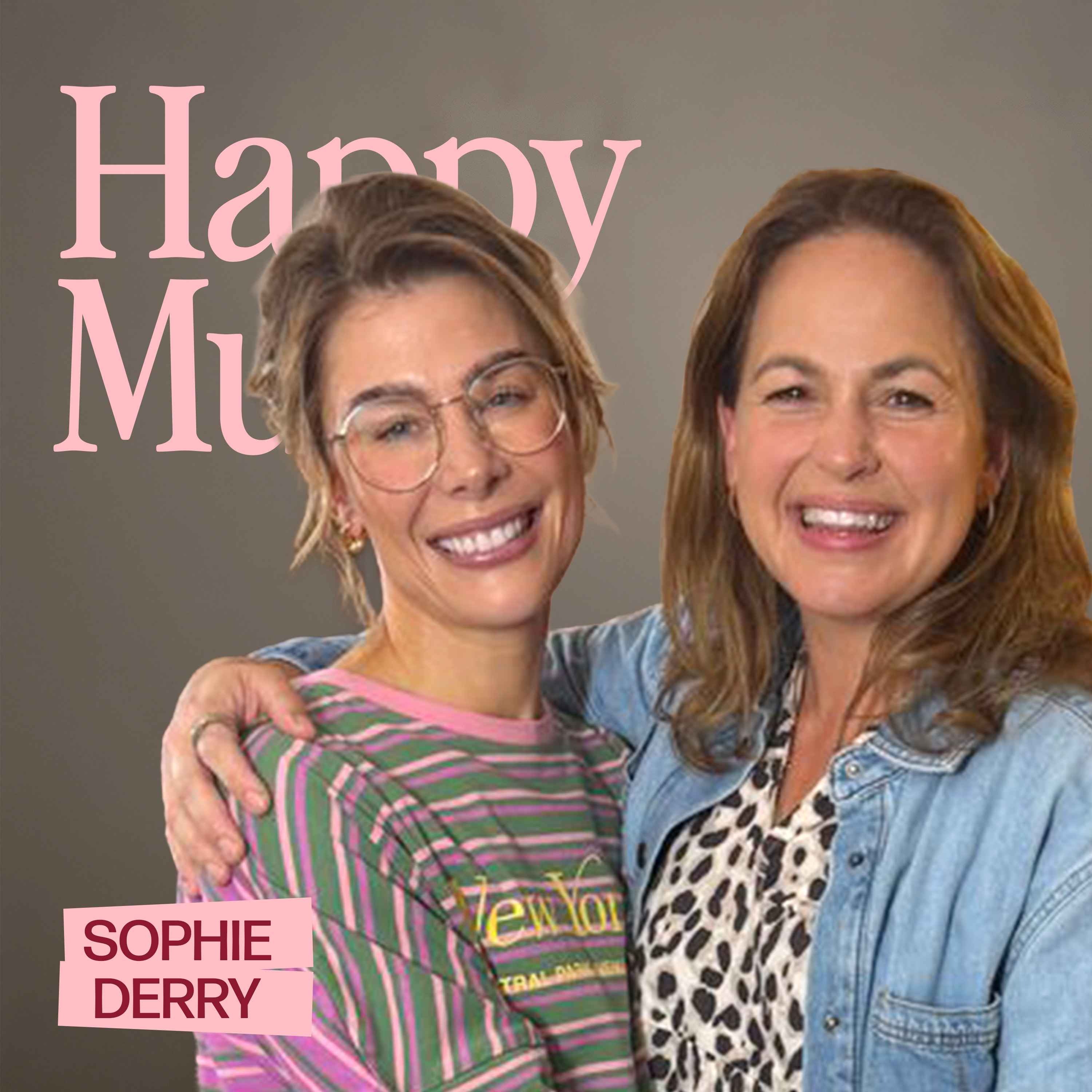
Sophie Derry discusses raising awareness of childhood cancer after her family faced two separate diagnoses: daughter Odette (brain tumor at age 3) and daughter Eliza (leukemia at age 4). She emphasizes that “treatment ends” is not the same as “life is over,” and highlights hope, resilience, and support systems.
Sophie is a mother of two (Odette, now 7; Eliza, now 5). Her husband Tom is from Phoenix, Arizona. Sophie says she and Tom became “experts” through repeated hospital experiences and relied heavily on nearby grandparents and pediatric oncology teams.
Childhood cancer can be survivable, but it reshapes daily life through long-term monitoring and complications. Children can remain joyful and “normal,” especially with play workers, home chemo, and charities. External support reduces emotional burden on family.
Odette’s cerebellar glioma surgery (Feb 22, 2022) followed by shunt failures (six shunts; 15 brain surgeries in ~7 months). Eliza’s leukemia diagnosis after pale appearance and weakness (March 2025), followed by chemo and home-based treatment. Charities mentioned include PASIC and When You Wish Upon a Star.
Written by AI. May contain mistakes.
Sophie shares her family's experiences before Odette's diagnosis.
“We've definitely been there and that's why we use ZocDoc.”
Sophie shares her family's experiences before Odette's diagnosis.
“me and the team were like, absolutely, we need to speak to Sophie.”
Sophie discusses the initial signs of Odette's illness and their concerns.
“and it hasn't happened, you haven't had any scares or anything like that, you kind of go, well, you know, what's actually going to happen when we do start trying?”
The moment Sophie learns about Odette's brain tumor diagnosis.
“So, yeah, but it did happen quite quickly, I think.”
Listen as a mother recounts the moment she learns about her child's brain tumor diagnosis.
“that problems are right in front of him.”
The challenges of managing family dynamics and hospital visits during treatment are discussed.
“And in that moment as well, like many families of multiple children, you are with one child nursing them.”
A detailed account of the surgery process and the subsequent complications faced.
“But yeah, it just, so it was just awful.”
The emotional turmoil of multiple shunt failures and their impact on the family is explored.
“But anyway, shunt number six was placed in August 2022.”
The family's resilience is tested as they navigate the recovery process and prepare for Eliza's health journey.
“with an appointment and I'm like oh yeah.”
A sudden health scare leads to the shocking diagnosis of leukemia in Eliza.
“And actually, I remember in the pool, I said to Tom, oh, I really hope she doesn't have leukemia.”
Learn about the emotional toll and family dynamics following a child's leukemia diagnosis.
“Even me that goes down the worst case scenario, even I was like, no, it's going to be nothing serious, surely not.”
Gain insights into the different types of leukemia and the treatment process for children.
“You know, again, are you then waiting or is it slightly different?”
Explore how charities provide essential support and experiences for families dealing with cancer.
“we're hoping to go to Disney World in November.”
Learn about the emotional and practical challenges of a family facing multiple childhood cancer diagnoses.
“It is important because I recognise that going through it once is very rare, but going through it twice is insanity.”
Explore how the family strives to maintain a sense of normalcy for their children while managing health challenges.
“You know, they're just, you have to get on with it because they're looking to you to be strong, but they give us strength.”
Discuss the struggle of retaining personal identity while being a caregiver in a challenging situation.
“And they have the same Macmillan nurses that come out to the house and do home visits.”
Learn how to foster positivity and strength in children affected by serious illness.
“Creating that lightness in that space, I would imagine, falls heavily on you.”
Uncover coping strategies that help navigate the complexities of caregiving and emotional challenges.
Reflect on the unexpected lessons learned in motherhood, including the importance of letting go.
“But yeah, Tom's like I say, he reigns me in.”
Learn how a family's experience with childhood cancer reshapes their perspective on life and the importance of ordinary moments.
“But being that control freak that you talked about in terms of labour and giving birth, to now know that you have to give...”
Discover the hope and strength that comes from sharing personal stories of resilience in the face of childhood cancer.
“Thank you for having me and letting me just tell their story.”
Discover the hope and strength that comes from sharing personal stories of resilience in the face of childhood cancer.
“Hello, I'm Monica Reinagle, host of the Nutrition Diva podcast.”

Get the gist, explore an idea or ask about something said.
 Claude
On Happy Mum, what are the key points of this episode?
Searching your listeningAutomatic transcript. May contain errors.
0:01Waiting for your sign? Here it is. Shop Labor Day appliance deals at Lowe's before they're gone. Get up to 45 % off select major appliances. Plus, get free delivery, haul away, installation and parts, and a two-year Lowe's protection plan on purchases of$999 or more. Labor Day deals are on now at Lowe's. In-store and online. Valid through 916, while supplies last. Selection varies by location. See Lowe's.com for more details. Hi, this is Kim and Penn Holderness from the Laugh Lines podcast. This episode is sponsored by Oli, your wellness partner for back to school and beyond. Back to school season is here.
0:39Packed backpacks, packed lunches and packed schedules are officially back. Oli Kids Sleep helps little dreamers wind down with a gentle blend of melatonin, L-theanine and botanicals for restful sleep. Translation, an easy way to put those school night negotiations to bed. And for the grownups, Ollie's sleep helps you fall asleep, stay asleep, and wake up feeling refreshed. Because as you know, the morning mayhem comes early. Visit Ollie.com and stock up on back-to-school must-haves today. That's O-L-L-Y dot com. These statements have not been evaluated by the Food and Drug Administration. This product is not intended to diagnose, treat, cure, or prevent any disease.
1:19This episode is sponsored by ZocDoc. Have you been putting off a doctor's appointment or need a dentist and you don't know where to start? We've definitely been there and that's why we use ZocDoc. Actually, over the holidays, Michael had a dental emergency and seemingly every office was closed. But we hopped onto ZocDoc, found an in-network dentist, had great reviews, saw real-time appointments available, which was key. It was on New Year's Day and booked an appointment in just minutes. It took so much of the stress out of the already stressful situation. ZocDoc makes it easy to search and compare over 250 ,000 local in-network providers across more than 200 specialties.
2:03So you can find the right doctor or dentist and book instantly. Taking care of your health just got easier. Download the ZocDoc app today and book that appointment on your to-do list. That's Z-O-C-D-O-C. ZocDoc.
2:25Hello and welcome to a brand new episode of Happy Mum. Today's guest is a listener who wrote in to talk to me about her two children, Odette and Eliza. When Odette was three, she was diagnosed with a brain tumour. And when Eliza was four, she was diagnosed with leukaemia. So mum Sophie Derry wanted to raise awareness about cancer in childhood and she hopes that in doing so she's able to provide hope to others who might be going through similar experiences. Needless to say, when this email popped through, me and the team were like, absolutely, we need to speak to Sophie. So here she is.
3:12As they get older now, the bedtime thing just gets laid to me. Oh, it does. It does in the summer. It does. Well, you just stay up. Yeah, who do you? And then we'll all go to bed at the same time. Exactly. I'm dreading the day where I go to bed and they don't go to bed. They don't. And then you're, yes, I remember my mum and dad waiting up for me when I was a teenager. Like, when is she going to be back? All that worrying bit. I know. Well, as your mum said, you were the wild one. Well, I mean, I don't think I was, G, but I was compared to some of my friends. I was extremely tame. Yeah. But that's not what your mum and dad saw.
3:45No. Oh, God. Another life. Yeah. How did you and Tom meet? Gosh, we're childhood sweethearts. Like you and Tom, we met, I was 19, he was 18, and he'd just moved over from the US. Right. So he's from Phoenix in Arizona originally. And we just both worked in a gym and, yeah, I liked his accent. I was like, ooh. That's exotic. Exotic accent overall, yeah. So, yeah, it's just always been him. so yeah yeah and when you were younger like did you two talk about because like me and tom i felt like we had um we always knew that we wanted kids in our future but it felt like something that was this abstract kind of at some point it never felt like it wasn't going to happen it was just that thing at some point absolutely and uh but there does become a point where you actually need to make talking about it a reality yes but did you guys talk about it from for a long time Not really.
4:43I mean, we were together, like I say, 11 years before we got married. And then we were married five years before we had Odette. I think we both knew we wanted children, but we weren't desperate. It wasn't, you know, we both had our careers and everything. And I just, yeah, I think one day we were like, oh, it's like I'm cracking on with the age. You know, I thought I better get started, really. And yeah, so we just, yeah. And it's obviously hugely life changing, as you know. No one prepares you for it. No one prepares you for it. Had your brother already had kids by the time you had a dad? Yeah, he had Penny before Odette was born, about three years before.
5:20And then they lived local to us, so we had a bit of experience with little nieces. Did that start you thinking, oh, maybe it's time? Yeah, I think it did. But like I said, I was quite aware. I say I was aware of my age. I was 34, which is nothing, but I just think, oh, gosh. And then with Eliza, I think in hindsight I would have liked a bigger gap. I had her just shy of two years later. But I thought, oh, it's going to take ages. And it didn't. But that's the hard thing, right? Because you never know. And I think when you've been with someone for so long and it hasn't happened, you haven't had any scares or anything like that, you kind of go, well, you know, what's actually going to happen when we do start trying?
5:55Exactly. And I had a miscarriage before both girls, actually. So it's, yeah, it's not as straightforward as you think. But yeah, that's it. And we always wanted three. Oh, really? So I think it's safe to say we're probably going to stop at two. Tom's hoping for that boy I'm like Tom we don't make boys we're a girl heavy family my brother's got two girls when I got pregnant with Max which was a little bit of a surprise it is that thing of we know that we make boys so if it turns out to be a girl that's a miracle in itself but let's prep in our minds that this is going to be a third boy exactly so yeah like I say life's thrown a few curveballs at us so I think uh they've probably done well and that's um that's the interesting thing because you are someone who listens to the podcast and reached out and wanted to come on and share your story um and uh and and part of that is the fact that you you've gone through something so massive as a family and the understanding the realization that actually in talking about it you can help other people yeah of course and I I would imagine that the road that you've been on has felt really isolating at times.
7:11So thank you. Thank you for reaching out. Pleasure. Honoured to be here. Let's go back to, shall we talk about births and all the fun things? Yeah, let's get into it. Let's do that. How did it feel when you found out you were pregnant with Odette? Gosh, I mean, we were trying, so I guess it was, yeah, it's always a surprise, isn't it? I think, you know, you think, well, we're trying, but actually when you see those two lines, It's like, oh, God, it actually happened. Yeah. So it was, yeah, it was sort of a bit of a surprise, but it wasn't at the same time. So, yeah, but it did happen quite quickly, I think.
7:50I think it was like three months of trying or something. So it was it was quite quick. Yeah. Yeah. And how was your pregnancy? It was pretty straightforward, to be honest. Yeah. Pretty, pretty unremarkable. I had a bit of nausea, but nothing, nothing major. Yeah. And yeah, it was pretty, pretty straightforward. Nothing major to moan about. Were your mum and dad excited? Yes, they were. Because I know your brother had his daughter by then, but there's something very different, possibly, about their daughter's children. Yeah, they were excited. And like I said, I did have a very, very early miscarriage before Odette, which was obviously difficult.
8:28And I didn't realise how often that actually happens. No one really talks about it much. So and then when I did talk to friends and other people, oh, yeah, that's happened to us or I know someone that's happened to you. So it's common, isn't it? Did that make you feel anxious during your pregnancy at all? Yeah, I think it did at the very beginning. It was nice to get past that like 12 week mark and think, OK, well, you know, we can start telling people now and things. But, yeah, I think my mum and dad were happy. They love being grandparents to my brother's baby. So, yeah, I think they were just happy to, yeah, add more grandkids into the mix.
9:01Yeah. And how did you feel heading towards the birth? Yeah, I was nervous. It was just phenomenal. I had an amazing doctor and she delivered both girls and I felt very, I'm someone that kind of needs to be in control quite a lot. So I was like, okay, I know that I'm going to need pain relief and I sort of, you know, I'm quite controlling in that way. So it was great. Did you manage to get the birth that you wanted doing it that way? Yeah, absolutely. I mean, they were so supportive of a birth plan, but also telling me, you know, it might not go to plan. You've got to, I know you like things to be in control, but, you know, we all, births don't always go to plan.
9:38So, but it was amazing and really, really lovely. And it was in an NHS hospital. So you had that reassurance of like NICU and stuff if you needed it. It was fabulous. Yeah. Amazing, amazing doctor who, like I say, delivered both girls. So that's really nice. Yeah. So there was a point where you had both girls and life was good. Normal, some would say. Yeah. So we were obviously COVID, which was crazy for everyone. So as normal as it could be during those crazy times. But yeah, I had two girls. So was Eliza born during COVID? So she was born in October 2020. Oh, wow. Yeah, so it was the beginning of lockdown when I just found out I was pregnant.
10:18And yeah, that's when the country went into lockdown. And it was, yeah, craziness. It must have been a really surreal time to be pregnant. In some ways, being able to focus on the fact that you're pregnant. you know you're all at home and that's a you know we don't often get that we often get everyone sort of flying around and life carries on tom was home working at home so we yeah we were all together yeah but also not knowing what's going to happen when you get to that date yeah exactly hearing all the different stories around the country yes the partner's not being allowed to be there yeah for scans and things yeah it was yeah it was it was definitely scary and like i say so many women were in that same position so it was um but yeah luckily it all went went well yeah so well and Especially if you're having to drive down to London.
10:57Yeah, that was the scary part because we weren't sure. We were like, are we going to be allowed to leave? Like, oh, it was quite, I was thinking, oh, gosh, I might end up delivering in my local hospital. But luckily it all went to plan. And, yeah, everything went really well. Yeah. So when did things start shifting? I guess you started noticing that Adette, she was getting travel sick? Yeah. So I think when people hear about brain tumours, you think oh there's going to be really obvious symptoms and um you know and there really wasn't she she was always such a laid-back child you know she and she just all of a sudden started to sort of slightly change she'd get very upset about things that we were like why is she like proper meltdowns which just wasn't like her um and I remember just crying to my mum on the phone one day saying oh she I don't know what's wrong with Odette she just seems upset all the time but we thought we've just had Eliza maybe she's just adjusting to being a big sister and she's three You know, you hear so much about three majors, you know.
11:58Yeah, absolutely. So, yeah, that was sort of the first thing I noticed. And then occasionally she'd complain of her headache. She'd wake up during the night sometimes saying her head hurt. But again, not every day, not enough to sort of make us go, oh, something's strange here. And then I suppose the biggest symptom was, yeah, she started vomiting in the car. Nearly every car journey she would get sick. But again, Tom used to get car sick as a kid and we just thought, oh, she's just car sick, didn't really think anything of it. We went to a couple of GPs after this had been going on for a while.
12:31And then during the second GP visit, we mentioned the headaches and she said, look, just be taking her for an eye test. Just go and get an eye test. And obviously she was only three and I think it's sort of five they recommend your first eye test. And I thought, there's no way she's going to sit still to have the photograph taken over the back of your eye and everything. God love her, she did. She sat there and, you know, brilliant, had all the photographs taken. and we went in and she did the eye test whereas you don't you don't read the letters at that age she was just identifying pictures and she did and the eye test was fine and everything in that respect was fine and the optician I remember her so well her name was Manisha she just graduated it's like a new new optician and she just showed me the photograph of Odette's optic nerve at the back of her eye and she said this isn't looking right you know you need to get this checked out you need to go down to A &E I sort of thought oh god what and she said it's just very fluffy usually your optic nerve is very it's a very clear circle but hers just looked quite swollen did you at that point did she say anything to you about what that could mean did you google no i said to her do you you don't think it's a brain tumor do you because i i tend to catastrophize a bit um you know i sort of go down the worst case scenario that's sort of my nature um and she sort of said to me look there's so many reasons that you could have a swollen optic nerve let's not jump to conclusions and, you know, go down that path.
13:46But I just knew. I just had that gut feeling it was something bad. And I remember walking to the car park to drive home and phoning Tom and trying not to cry because Odette was with me. And I was like, I just know it's something bad. And Tom's such a stats guy and he deals with things that problems are right in front of him. He's really, really good at that. And he was like, look, let's just get it checked out. It'll be fine. Don't worry. And he took her down to our local A &E that night. and on the way to the hospital she was sick in the car. She was sick in the waiting room and it just, something just wasn't right.
14:18And obviously I had Eliza at this point. She was one and I was breastfeeding her and so I stayed at home. And it got to quite late in the evening and Tom and I, we're not really big, we don't really phone each other much, we're texters, we tend to text a lot. And we were texting and she'd had a CT scan and he was like, yeah, no updates, no updates. And I said to him, if you phone me, I'll know it's something really bad. Ha ha. And then no sooner had I sent that message that the phone lit up and it said Tom. And I just, my heart dropped. And I answered the phone and he was sobbing. And he's not a crier.
14:52And he just said, there's a mass on the back of her brain. They've done the CT and there's a big mass there. We don't know what it is. But they're going to transfer her to our sort of nearest neurosurgical centre, which was in Nottingham. And it's like in the movies, I just fell to my knees. You know, it was that you never expect to hear that news. And in that moment as well, like many families of multiple children, you are with one child nursing them. Yes. Well, even though you know she's in that moment absolutely fine. Yeah. But you've also got a partner that's dealing with that and you're not together.
15:27You're not together. And you're both having to deal with things in wherever you are with the children that you're with. Yeah. that that must have been such a surreal thing to go through from the very beginning in that sense. Yeah, yeah, absolutely it was. And little did I know that Tom, he'd found out the news and he'd contacted my parents who only lived 10 minutes away and he was like, you need to go to Sophie, like this is bad, you know. And so they turned up at my door and yeah, it was just, everything went 100 miles an hour from there really, you know. And at that point, you don't know, you know, when someone finds a tumour, you don't know what that means.
16:09No, no. So there's this whole period where you're just in limbo. You're in limbo because there are so many different types of brain tumour and sort of my limited knowledge from my physio and stuff. You know, obviously I went to worst case scenario. And yeah, my dad was like, don't Google. But of course, you know, you do. Well, in those times, it seems like that's the only information you can get. Absolutely. And there's a reason why information isn't given to you because unless it's relevant. Absolutely. Yeah. Yeah. And then that's what they said in the hospital. They're like, look, don't don't do we won't know anything until we do the biopsy and until we go in there.
16:42But yeah, so Tom was taken to Nottingham with Odette and I had Eliza. And and it was obviously Covid at the time. So you couldn't have two adults on the ward. So it was Tom had to then leave and I had to go. And it was always a constant swapping. The only time we could be together was when the neurosurgeon sat us down with her MRI scans and sort of told us what he thought it was and the plan and things like that. But yeah, it was always just on our own on the ward, which was difficult. How long was that wait from finding out that she had a tumour to actually... What we were dealing with. Yeah.
17:16It was about a week and a half. So she had to have a week of steroids just to take the swelling down because she had hydrocephalus is when the fluid builds up in your brain, obviously because of the tumour. So, and it was on her cerebellum. So that explains why she was vomiting because the cerebellum controls your balance. So obviously when she was in the car, it was throwing everything off. So they did a week of steroids, which were awful. Steroids are just, they have their place, but they're just, the side effects are awful. It makes you very, very hungry and very, very angry. So she just, yeah, was sort of a little personality was taken over for a week to take the swelling down.
17:55And then they took her into surgery. It was February 22nd, 2022. And she was in theatre 22. I'll always remember that. I was like, what is all these random numbers? And it was almost 10-hour surgery. And, yeah, we did a lot of steps that day, pacing the corridors of the hospital. So we weren't allowed to be on the ward together, but we could walk around the corridors of the hospital together and just sort of sit in the cafe together. and yeah, we didn't say much, to be honest. They said they'd just let us know when she was out and that was it. And only one of us could go down to the recovery room to be with her and I went down and that was horrific.
18:38I thought she was going to still be sort of very drowsy and very sleepy and she was on all fours screaming. They were trying to get a nappy on her, I remember that. And because she'd been face down on the operating table because they had to access, was the cerebellum at the back of her neck, because she'd been face down for so long, the pressure, her eyes were, she looked like one of those fish, you know, that would have the big bulging, oh, it was awful. Yeah, horrendous. Even just leaving her to go to surgery must have been. Horrendous. To hand your child over to those professionals. You put your trust in them.
19:12Yeah. Yeah, Tom took her down to surgery. But yeah, it just, so it was just awful. and then she was out of it for quite a long time after that. For a couple of days, she was really, really out of it. And yeah, we just... I knew actually it was funny, when I was walking down to recovery, I saw her surgeon, her amazing, amazing neurosurgeon. I saw him in the distance and he was obviously coming to the ward to talk to me and I knew by the way he was walking it had gone well. He had a bit of a spring in his step, like, I've done a good job. I've done a good job here. And I knew it had gone well and he just came to me and he said, I think I've got it all out.
19:47I think and I just broke down. It was just such a relief to hear that. And in Nottingham they have this incredible piece of equipment called an intraoperative MRI scanner where they take the tumour out and then they sort of open these big doors and they take them into an MRI scanner. Straight away. To check they've got it all out. And if they don't think they have, they'll take them back in, go again. It's an incredible bit of kit. But yes, they did get it all out. In the end it turned out to be a glioma. brain tumour but yes they managed to get it all out. What is a glioma brain tumour? So a glioma is kind of an umbrella for lots of different sort of levels of brain tumour and hers wasn't too aggressive which was good it was an astrocytoma and it was one of the lower levels so they got it all out and thank god she didn't need chemo at that time so they said with this type of tumour if we're happy we've got it all out we don't need to do anything else if it grows back will then think about chemo and stuff.
20:46But thank God she didn't have to go through anything like that. But the tumour removal itself went really well. And after a week in hospital, we came home and we were like, this is it? Seems too good to be true. Like, they've removed it and that's it. But that's sort of where the start of all her complications happened. And she ended up just having all manner of complications to deal with scar tissue and things like that. And she ended up needing something called a shunt, which is basically like a catheter that goes into the ventricle of your brain with a tube that basically her spinal fluid, because of all the scar tissue, it can't flow around like it does with me and you.
21:23So she has to have like a special tube in that helps the flow, basically. And a shunt is something, it doesn't last forever, but they're supposed to last for years, you know. And hers failed about two weeks after she had the first one. And we were just like, well, God, why is this failing? And you can't just take a shunt out when it fails and put another one back in. you have to have essentially like an external drain, like a catheter for urine, but it's for your spinal fluid in a bag on the side of your bed. But then that spinal fluid, does that have to then go back into your system? No, no, you just empty it out like a urinary catheter basically.
21:57And they have to do that to make sure there's no infection. So you sort of have to have that external drain for three weeks and then they put a new shunt in. Anyway, shunt number one failed, shunt number two failed. Three, four, five failed as well. So this was over a period of about six or seven months. And so she was in hospital all of that time. And we just, they didn't know why these shunts were failing. They just were scratching their heads and the sort of no infection. They just, her body was just rejecting these shunts. And it was getting really scary because she needed, she couldn't live without a shunt.
22:30She needed that. And I think it was the July of 2022. we really thought we were going to lose her because she was just you know she wasn't eating the news she had an ng tube and then she had to that wasn't working and she had to be fed through a gastrostomy in her stomach and she was just wasting away she was there was nothing on her and we really thought we were going to lose her in the july just because of they couldn't get the nutrition in her um and the neurosurgeons were just scratching their heads are like and that was when it got scary because when they don't know what when they're thinking oh god what would That makes you think, oh, my gosh, what?
23:06But anyway, shunt number six was placed in August 2022. And thank God for some, thank God it just still touch wood to this day. I don't know why that one worked and all the rest didn't. So did they change anything in that one? I think they put like a longer catheter in or something. But essentially it was the same thing. But, yeah, it was a really terrifying time with all the complications. But she had 15 brain surgeries in the space of about seven months. to this day it's amazing you wouldn't know looking at it now it's amazing that she doesn't have any sort of obvious deficits that we're aware of but you know gosh yeah how old is she now?
23:46she's seven she's doing amazingly well she's just gone to yearly scans now so you know they do them every month, every three months, every six months and now she's just gone to annual scans and it's all looking good and with something like that especially with all the shunt drama is there a point where you're like and now take a breath because obviously one of the big things with tumours and with cancer is that I feel like from an outsider point of view people go and that's the end of your treatment we're done go and live your life whereas we know that's not the case but was there a point where you thought this is the end of this and now we can carry on living our lives and put it behind us or do you feel like you knew that it was actually going to linger Not really.
24:32I think we were so used to her shunts failing. And so when number six was still working, after every day you'll think, because it's very obvious when they fail. Very, very obvious. Yeah, she'll be throwing up and her eyes will dilate, pupils will dilate. It's very, very obvious. So every day you're just watching her like a hawk. But yeah, I'm relaxing. Obviously with everything that's happened with Eliza, it's sort of sometimes you almost forget about what Odette's been through. And then I'll get a letter from Odette's oncology team with an appointment and I'm like oh yeah. So how long after things started to sort of relax a little bit I don't even think they did you know when did you notice that something wasn't quite right with Eliza?
25:16Gosh so and that must be a strange thing in itself because you're parenting two children one is obviously demanding so much of you and the other one you kind of oh they're fine. They're fine because they're not sick. That's it. Yeah. So I suppose, like I say, Odette was discharged September 2022. And then we could, you know, had all the scans and everything in between. And then it was the beginning, March 2025. Yes, last year. Nothing significant. Again, Eliza was at nursery and she just looked pale. Did it feel significant when Eliza was three, and she got through being three. Did that feel like a thing?
25:59You know what I mean? Because obviously, I feel like sometimes those numbers we can be fixated on a little bit. Yeah, absolutely. No, I don't really think I thought about it that way. But yeah, she was happy. She was at nursery and she was just pale one day. And of course, you just think, well, she's picked up a virus. She's at nursery. They're just a Petri dish, aren't they? Nurseries of germs. And, yeah, I remember the staff there were like, oh, she's looking a bit peaky and she's a little bit off. But, again, nothing. She was eating, drinking, fine, nothing, no issue. And I remember the Saturday, exactly one week before she was diagnosed, we took her swimming.
26:36And we were in the pool. And I said to Tom, Eliza's lips are blue. She's had really blue-tinged lips. But she was fine. She was having a great time in the pool. And, yeah, she'd just been a bit off for a week. So, yeah, a week later, which was the Saturday, again, she was just very, very lethargic. and she had a bit of a weakness down one side of her body. She was just sort of struggling a bit to move the one side. So we thought, God, we'll call 111. And again, we thought, nothing. And actually, I remember in the pool, I said to Tom, oh, I really hope she doesn't have leukemia. Did you? Yes. I thought I should just keep my...
27:10Because that's where I go, G. And it's the same as, you know, with Odette, because like I say, I sometimes think worst case scenario. And we laughed. Tom was like, oh, you know, come on, the stats and also what we've been through. Be quiet, Sophie, be quiet. And, yeah, we called 111 and they were great. And they were like, well, yeah, just take her down, take her down to A &E. And so we took her down to our local A &E. And, yeah, she was just very pale. And they just did some bloods and, obviously, a lot easier to diagnose. And this lovely consultant, obviously, they knew what I'd chatted to them and told them about Odette and everything.
27:44And, oh, I felt so sorry for him. And this consultant came in and he just looked at me and he just said, I'm so sorry it's some kind of leukemia and I it was nothing my reaction was nothing like with Odette I just looked at him and I just said can you please check again like this can is it any could it be anything different and he said I'm so sorry these bloods are just yeah it's some sort of leukemia but we don't know what Tom's in bits again and I'm just I couldn't even so it is it is wild to me that essentially Eliza just looked pale and not quite, you know I know that she sort of lost the beauty down by the side and I think I read somewhere that you said maybe it was in your mind maybe she was having some sort of stroke or something like that Yeah, you think about all those things Yeah, you think your mind goes but it is wild that the paleness was the thing that really triggered it for you and you could have easily been dismissive of it and gone after all we've gone through Of course my mind is going there, but she's fine.
28:46Yeah.
28:50Even me that goes down the worst case scenario, even I was like, no, it's going to be nothing serious, surely not. I just couldn't believe it. And then Tom, he left after a while. And I remember standing in recess because my mum and dad, I didn't say throughout Odette's journey, my mum and dad have been solid. They live 10 minutes away from us and they've just been, we couldn't have done it without them. They've carried me and carried Tom and just been an amazing, just an amazing support whilst going through agony themselves. And obviously I'm their daughter and they're worried about me. So anyway, they were amazing.
29:24And they're both in their 70s. And I remember standing in an empty recess in that A &E thinking, I've got to call my mum and dad. I've got to call my mum and dad and tell them that their second grandchild is going. And I just remember that I felt so guilty. you know and I remember calling my dad obviously they were devastated but my dad was just stoic so strong and so amazing and my mum yeah but yeah I do feel very guilty I know it's not our fault or anything but you just feel God we're putting all this on our family and my brother was so worried about my parents really? and us of course the thing isn't it it's that ripple of you know having an amazing support team but knowing that it impacts everyone yeah yeah absolutely but no they're just like i say incredible and obviously you spend so many weeks months on pediatric oncology wards and there are families that don't have any support they have literally no one and and so i'm so grateful so grateful to have that support yeah
30:58We'll be right back. Cilos.com for more details. This episode is sponsored by ZocDoc. Have you been putting off a doctor's appointment or need a dentist and you don't know where to start? We've definitely been there and that's why we use ZocDoc. Actually, over the holidays, Michael had a dental emergency and seemingly every office was closed. But we hopped onto ZocDoc, found an in-network dentist, had great reviews, saw real-time appointments available, which was key. It was on New Year's Day and booked an appointment in just minutes. It took so much of the stress out of the already stressful situation.
31:38ZocDoc makes it easy to search and compare over 250 ,000 local in-network providers across more than 200 specialties. So you can find the right doctor or dentist and book instantly. Taking care of your health just got easier. Download the ZocDoc app today and book that appointment on your to-do list. That's Z-O-C-D-O-C, ZocDoc.
32:06When it came to Eliza's diagnosis, what happened after being told? You know, again, are you then waiting or is it slightly different? Yeah, so again, there are so many different types of leukemia. I feel like Tom and I, we became experts in neurosurgery and brain tumours and all that sort of thing. And now we're like, oh gosh, leukemia, blood cancer. Yeah, so we got taken to a Birmingham Children's Hospital and then left back to Leicester and found out what type of leukemia it is because there are so many different subtypes within that. And then within that type, you're either high risk or low risk.
32:43And that means how likely it is to relapse, all these different, it was a big learning curve for us. But they basically find out your type and then they start you on the chemo regime, really. Leukaemia is... And after having that sort of relief of knowing that Odette wasn't going to have to have chemo, suddenly knowing... And there's so much to this because you've seen your child be so ill and have to go through the worst possible thing to know that Eliza's going to have to go through her own experience that's going to be very different to that. Yes. But seeing another of your children go through such hardship and having an experience of what that might be like, that must have come with so much apprehension of, you know, having to go through it again.
33:34in yeah absolutely and and you know obviously eliza was so young she doesn't remember anything that odette went through but it it was so sweet sweet yet horrifying that odette you know they'd both had ng tubes and they'd both had hickman lines where the and so odette was like oh i had this and i had and we were showing eliza photos of odette so it was horrible but so sweet that they sort of have each other yeah and and yeah just but yeah so uh leukemia is such a an we've come on leaps and bounds no it was it was a death sentence in the 60s 70s um and now it's got such a high cure rate um all types of leukemia really but um it's a really intense regime it's it's not easy so so many different types of chemo and um and things and it just obviously completely knocks knocks you out and yeah it's been been really difficult and she's still still in the thick of treatment at the moment but she's handling it so incredibly what kids do they're so resilient they're so paediatric oncology wards are the most horrendous place but they're also so incredibly inspiring you go on there and you see it's the parents that are dying in there and the kids are just, they're so inspirational you know they're ill but then they're like well where's the playroom what's for lunch, you know they're just they just get on with it and that's Do you feel like that's a little bit of, not a misconception but do you wish that that's something that people could see, the fact that you know I guess because of Copperfield and the work I do with them I meet a lot of a lot of people who are living with cancer like that's such a massive thing and I think for so long maybe that cancer has had that thing of you know associated so much with death but actually you have so many people living with it and do you feel like you is there is there something about seeing kids absolutely living with whatever it is that they've been diagnosed with they're still children Yeah, 100%.
35:32Yeah, absolutely. Yeah, it's heartbreaking that they have to deal with it. It's almost like the loss of innocence that's really sad. Kids shouldn't ever have to know about any of this, of, you know, chemo and all that. It's heartbreaking that they have to know. But like I say, they're just so resilient and amazing. And Eliza loves going to hospital because the staff there are incredible. You know, we all hear about the NHS and how much strain it's under, and they're just incredible. They really are. She loves going there, gets all the attention, and, you know, she's got these incredible play workers that are like beacons of light.
36:06They're just phenomenal. So these people carry you through. Has that surprised you, how much light and goodness there is in that world, in that space? Definitely, yeah, absolutely. I never thought I'd sit on a paediatric oncology ward and laugh you know you do it's that you do like I say you have these incredible play workers and the nurses and that I don't know how they do it they're so wonderful and you know they see it day in day out and just discovering it it can be quite a joyful place that we you know you imagine oh gosh an oncology ward let alone a pediatric oncology ward I would never want to go there but yeah it's it really is it can be a an uplifting obviously it's horrendous a lot of the time but um And I've got to mention the charities as well.
36:52There are so many incredible charities that you never wish to hear of them, but they're there and they come and they support you. Young Lives vs. Cancer, there's an incredible charity called PASIC who have supported us with both children. I remember when they phoned me the second time, obviously they'd supported Odette through it and then now with Eliza as well. And they're just amazing. And then you've got your charities like When You Wish Upon a Star, our wishes for kids that give you incredible experiences. And, yeah, they're just, they're angels. They really are. And things like that, like charities that set up things like that, what does it mean for a family?
37:30Is it that feeling of there's other people that know that we're going through this, that support? Like, what is it about those charities, do you think, that impacts so much? I mean, so, for instance, hopefully, if Eliza's well in, we're hoping to go to Disney World in November. and just with insurance-wise for the girls, Odette is pretty much uninsurable with her shunts and how many failures. And the same with Eliza. As a family, we could never take them over there. So they cover everything for you and you've got the support. It's just amazing. So that just means so much. They're basically giving you memories and they're giving you experiences to have as a family that isn't cancer.
38:09You're just having a normal holiday and you can do normal things and sort of forget about the horrors that you're having to deal with, you know, week in, week out. So, yeah, and just everything, just a shoulder to cry on. I've just had people from charities sit with me and just cry with me, you know, it's just amazing. And having someone that's external, you know, I know your mum and dad are an amazing support. I know your friends will be an amazing support. But they're family. Yeah, and they're connected, right? And they'll be carrying their own weight of that. but actually having someone that's external that can just listen.
38:45Definitely. Absolutely. That's it. I don't like to burden my parents and stuff with it. So, yeah, it's really nice to have that impartial view and someone that doesn't have that emotional involvement. So, no, they're just amazing. There's so much support. And as a family, how do you all process what you're going through? I think everyone's got their different ways of processing things. Tom and I talk about this a lot, actually. Tom's not a talker. He very much likes to throw himself into work and he doesn't really like to talk. He very much pushes things down, which is probably not the healthiest thing to do.
39:22And I do sometimes as well. And, you know, you'll look at photographs of Odette and think when she was really, really poorly and I've almost, you know, your heart starts to beat. That trauma comes back up again. And it's amazing how much you actually do push it all down. But I feel like since 2022, our lives have been cancer. And that has an effect on your relationship. You know, it's, yeah, Tom and I have had to be tight because it could break you apart. And, you know, we've really had to, you know, yeah, just try and be the best team that we can for the girls and for each other. Yeah. It's making sure we still think about our relationship as well.
40:03and not feel guilt about that. Not feel guilt about it, absolutely. And yeah, because it definitely takes over your whole world. Especially if you're constantly kind of going, like sort of tag teaming. Yes, yeah, absolutely. And I mean, I've been lucky enough, I've been able to step away from work. I'm so lucky to be able to do that. So all my focus has been on O'Day and now on Eliza. But Tom has a really intense job, which he loves. That's what makes him happy. and he takes his mind off things. But I'm very grateful that I've been able to step away and put everything into Eliza at the moment.
40:40I mean, you've brought in some pictures of the girls, and they're both absolutely beautiful. Seeing photos of Odette when she was, you know, after her surgeries and stuff, and, you know, at her weakest, does that in some way give you hope with Eliza? has seeing one child, the journey that she's been on, does that give you hope and comfort? I think so. I mean, it was such a different journey, but Odette's, in a way, was so uncertain. Eliza's treatment's very mapped out, whereas Odette's was so uncertain and when they were sort of not sure what to do and we were so close to losing her where it hasn't been like that with Eliza.
41:28But yeah, I mean, completely inspiring. Odette's come back from what she's come back from. Do you have any therapy or anything like that? Oh, gosh. Do you know what? Again, going back to the charities, they're amazing. You get it thrown at you left, right and centre. And Tom and I are like, we need to do it. I don't think Tom ever will because I think he's a bit like, oh, no, I don't know. Typical man, you know, sort of like, I'm not going to do that. But we should. I think it's something that it's important to unpack all of that, isn't it? And like I say, talk to someone who isn't a part of the family.
41:57Yeah, it's something we need. It's on the to-do list, but I think it is important. Yeah. It is important because I recognise that going through it once is very rare, but going through it twice is insanity. Your nervous system must, you know, be on high alert. Yeah, yeah, it is. Yeah, I was saying to one of my best friends, I was like, I don't really cry anymore. I feel quite numb. I feel, I think maybe it's your body sort of protecting you, but I don't really, yeah, I feel a sort of sense of numbness, to be honest. Well, has there weirdly become a sense of routine about everything? Yeah, I think there has.
42:31Yeah, absolutely. It's just like, it's sort of normal now. This is our life. And obviously going into it with Eliza, it was completely unbelievable. But we'd been through the hospital side of things. We'd just been through it all. So it wasn't that, we were like, hey, we're on a different ward. And, you know, we were sort of used to it in that way. But, yeah, we were sort of the talk of the MDT. In fact, one of the oncologists that looked after Odette, he goes between the two hospitals and he looks after Eliza as well. And he was like, oh, this is a career first for me, you know. And it's the opposite of a medical miracle.
43:07But, yeah, it's, yeah, it is crazy. But we move, get on with it, and they inspire me. You know, they're just, you have to get on with it because they're looking to you to be strong, but they give us strength. But also cancer, it doesn't become your identity as a family. so the other side of stuff still continues and how how have you balanced all of that so that you know Odette still gets to go off and do all the things that she loves doing that Eliza is still seeing mates and going to nursery exactly and yeah it's it's really tricky with Eliza actually because obviously she's on chemo and she's got her immune system is very very low so it's trying it's I am a basket case sending her to school and and because you know going to parties and stuff it's trying to keep that normality and letting her do those things but also wash your hands you know trying to keep her well um because of course if she picks something up she can't have a chemo so it's it it's a fine balance yeah but just trying to keep life as normal as possible and i think it's just it's hard because odette sort of thinks i'm like this isn't normal you know obviously she's been really poorly eliza's been poorly very very sadly she lost one of her classmates who was only six to cancer last year and so it's she sort of thinks this is normal that's a lot to be in their worlds yes it is and I try to remind her this darling this is very rare this isn't you know but it's sort of yeah it's very difficult because it's sort of all she's known really yeah do you feel like it's had an impact on Odette and her personality that's a good question it's really hard to know to be honest because I'm not sure how much she remembers she'll look back at pictures of herself oh yeah I remember this and I remember that um I don't know she's a quite a little introverted little thing and so I don't know I don't know what goes on inside her inside a little brain bless her I'll try to talk to her and I'll say you know if you want to ever ask mommy any questions or if she's like no no no who knows maybe it'll all come out when she's a bit older.
45:10But yeah, they're both just amazing. They really are. I wonder what it's like for her to see Eliza going through things. I know. I know. I don't know, to be honest, but she is just the best big sister. And yeah, I think Eliza finds comfort in that, knowing Odette's been through, like had similar tubes and things like that. And they have the same Macmillan nurses that come out to the house and do home visits. And they, you know, Odette remembers them from when they used to come and see her. Like family friends. Like family friends, welcome back. Yeah. That must be nice, though, having people come to you rather than having to go back to them.
45:48That's great, yeah. And that's where it was very different from Odette, where she was an inpatient, obviously. She was attached to all these, you know, drains and things. Whereas Eliza's treatment, we don't go into hospital that much, thank goodness. You know, at the start there was quite a bit, but now they come and do her chemo at home. So that's been lovely. And she can go to school as much as possible. And it's been easier to lead a more normal life. Yeah. than we had with Odette, with her treatment, because it was so surgical and so invasive. I feel like with motherhood, so often we lose our identity for a period of time, right?
46:18We lose our pink. Yeah, we lose our pink. We also become mum. Our name goes out the window. In this scenario, where are you? Where's your identity and your space to let go, to breathe, to take time? Yeah, that's tricky. I don't really. Yeah, it's difficult because this is just our world all the time. But it is. I do try and do things for myself. Tom's great. He's like, come on, we need to take time. And again, my parents are amazed. They're like, you need to go away and have like a night or something. Remember who you are as a couple and try and get out of that cancer bubble for a bit. But yeah, it's definitely trying to carve out that time.
47:05But it is difficult. it must be it must have been quite a roller coaster over the last few years and there must be times where it all just sits really quite heavily yeah yeah but there's also got to be a lot of light within that as well like and I know that that is something that you really want to focus on you know that the cancer in childhood isn't just this doom and gloom scenario there is so much brightness and so much hope within it as well. Creating that lightness in that space, I would imagine, falls heavily on you. And how the girls are able to go about their lives in a way where cancer doesn't define cancer.
47:53You know, it's very much something that you're living with and through. It's, you know, they are still having a childhood. Absolutely. Yeah, yeah, absolutely. Like you say, just trying to keep life as normal as possible. and Odette has so many external scars from all her surgeries and Eliza does too and it's just about teaching them confidence and you be proud of those scars. We call them warrior scars and things like that and it's a story to tell, you know, be proud of those. So yeah, it's just trying to make it all positive and just a reminder of how strong they've been to be honest. Yeah. Your girls are amazing.
48:31Thank you. Yeah, no, they really are amazing and like I say they keep us strong we are able to do it every day to get up and carry on because they're great and they they give us strength Have you always been really aware as well of what you give out in terms of what they're seeing?
48:54Yeah it's difficult because when you're in hospital and when you're the staff are like you need to be really honest with them, you need to use the correct terminology you know use the word brain tumor I sort of think oh god sometimes I think they're so innocent they're still so young so it's yeah it's it's difficult I try to be as honest with them as possible but I'm I'm also trying to be age appropriate with them I don't think they need to know everything you know until they're older so do try and keep it as sort of as light as if you can if you can keep count the light but yeah it's it's just trying like I say trying to keep things normal and not not scare the living daylights out of them so yeah i i'm winging it i'm winging it there's no guidebook obviously like yeah there isn't and it must feel like you know in the same way that when you become a mum you're suddenly just you've got this influx of stuff that you're you seem like you're meant you feel like you're meant to know right yeah and i would imagine that when you go into that world it's the same thing like all of a sudden there's all this stuff that you feel guilty if you don't know it you should know it and you should know how to be and you should know how to handle it you know so to get your your you must feel like you're playing catch up with yourself but in the but being like a duck yeah you know and kind of presenting as if you're absolutely you know you know what you're doing but trying to figure it out yeah yeah definitely and trying to not be upset in front of the kids i always try and you know just be calm and never like look scared in front of them already because you know if i'm calm there calm and Odette she can read me like a book yeah she's very sort of intuitive like that so yeah like I say I'm just I'm definitely just winging it so is Tom but there is an amazing thing with that though I always feel like if we if we help other people through sometimes it's like it bounces back yeah don't I mean like the words that we say to our children that are comforting that are there to reassure sometimes just saying those out loud even if we aren't feeling them 100 percent in that moment they they they come back to us yeah yeah definitely yeah they really do um I mean it's fair to say that that motherhood hasn't been what you expected it to be it hasn't it hasn't been what I expected it to be and I think sometimes I feel really sad about that and I'm like gosh the parenting journey has not been quite what I expected and then I I often have that sort of why me like why them victim mentality moment and Tom's like it's okay to have that you can have that but then after a while you know stop that doesn't serve anyone so and thoughts are thoughts right we're allowed to have like we cannot police those like the kids they they come and it's about what we do with them is if you know how we respond to them um so i you know yeah we're not living in 1984 no georgia you know we kind of these things we're allowed those thoughts to come in and kind of go well let's ponder that let's think acknowledge them Yeah, absolutely.
51:48But yeah, Tom's like I say, he reigns me in. He's like, babe, we dodged a bullet. We dodged two bullets. You know, thank goodness they could remove Odette's tumour. Thank goodness leukaemia has such a high cure. Like he's really good at having that gratitude, basically, which is, yeah, it pulls you out of that darkness that I tend to sit in more naturally than he does. So yeah, compliment each other. And as much as you know, I'm sure as mums, we kind of beat ourselves up over a lot of things, right? And I'm sure one of those things is not being able to give your girls the childhood that you had wished for them.
52:27You know, there's no, that's not a rational thought, but that's a thought, right? and I know because one of your friends actually emailed in I know that you are absolutely giving the girls a childhood that doesn't evolve around the other things that are going on you know they are still being children and that is what you know I think it's such a lovely thing to hear from our friends in terms of how they perceive what we're going through and what we're doing and And it was just glorious to hear that you are absolutely, your children are children. You know, they push boundaries. You have to tear them off.
53:12They have, you know, they have fun times and all of that. And, you know, even though we carry guilt for all these things that are out of our control, you are doing above and beyond for them to have those pockets of normalcy. Yeah, no, absolutely. That's lovely. Has it been a really isolating experience? I mean, I wouldn't say no, to be honest, because like I said, I've got obviously an incredible family and friends, but you meet so many other families. That's the sort of lovely thing on the ward. You meet so many other families that are in the same awful position that you are and you become so close to them.
54:01And so I've met so many people that we now text each other for updates and things. And so you do feel that sort of sense of community in that world. And they're all incredible. If you go back to the start, what would you say to yourself? Buckle up, buttercup. Gosh. Oh, my goodness. You're so much stronger than you think. I think that's what I would say. just yeah because if you put this on paper this is what's going to happen I think no way yeah no way I'm checking out because um but yeah I think just you can deal with so much more than you than you think and being the catastrophize that you are I would imagine with both girls you you instantly went to the worst case scenario absolutely you know and it again I think when we hear tumor when we hear cancer that's where our brains go to yeah of course yeah but science is an amazing thing incredible I'm so so thankful for yeah for for all the doctors and nurses and scientists and yeah it's just incredible we're so lucky do you feel like you've learned anything about yourself yeah I guess just I'm more resilient than I than I thought I was I guess I never thought I'd be able to handle anything like this but I'm handling it so yeah you know we're so yeah I think I've I just learnt that I'm, like I say, can handle more than I thought I could.
55:28Yeah. It's probably the biggest thing, yeah. If you could write a letter on motherhood, who would it be to and what would you say? Oh my goodness. Probably write a letter to myself and just tell myself that you just don't worry so much because you have such little control over life. and me being quite a control freak. Just, you've got to let it go. So just relax. Which is easier said than done. How's that relaxing going, Sophie? Not very well.
56:08But that's a massive thing, right? Go with the flow. But being that control freak that you talked about in terms of labour and giving birth, to now know that you have to give... You have to just hand it all over. Yeah, absolutely. Yep. And have we learned that maybe letting go a little bit is... Yeah. Let it go. Yeah, absolutely. You just definitely need to try and go with the flow, which I definitely feel like I'm doing that a lot more now. Has it made you look at life a little bit differently? Yeah, I think just cliche, but just don't take anything for granted. You know, like I say, I'm I'm happiest when I'm just we're at home.
56:52We've got no plans and everything feels quite ordinary because actually ordinary is a privilege to have that, you know, that day where you're just all together. And yeah, it's just ordinary. And that's because it hasn't been for the past few years. So, yeah. Yeah. Like I say, ordinary is a privilege. You mentioned before about Tom being back to work. Yeah. His his work had been amazing. during this whole time as well. Which is also really important to know because I think, you know, employees wouldn't know how to be in that situation. Absolutely. So what have they done that's made such a massive impact?
57:30Oh, gosh. Well, he's with a different company now. So the company he was with when Odette was ill were incredible. He basically had eight months off and they would fill our fridge with food every week. Every week. They'd call and be like, what do you need? We're going to give you meals. You know when people say, what can we do? What can we do? you know and everyone's so kind and but actually the practicality of that was just amazing so we didn't have to worry about and like I say I was at home with breastfeeding Eliza so yeah every week our fridge would magically fill up with food and that was all from his company and then he's now moved on with a different company but they've been amazing too with Eliza so but yes not everyone has that there were people on the ward you would see with their laptops trying to do their full-time job whilst their child was like throwing up into a bowl honestly just we're so lucky because it is not like that for everyone and you touched on the fact that people don't know how they can help and I think so often people go let me know if I can do yes like what for you would be the idea like how can people support yeah I mean well I feel like everyone has their different thing like I say the food that was amazing because that was such a practical thing um some of my friends like just come and sit with me and obviously an ear I've got one friend who I adore her she just makes me laugh she's comic relief so sometimes you just need to laugh and you just you don't want to talk about the bad stuff and um so that's sort of her role she'll just she'll just come and make me laugh but yeah people have just been amazing absolutely incredible but it's interesting though gee on the flip side of that when you're in this world of cancer you do lose people sometimes because it's heavy and it's hard and some people truly do not know what to say to you um and so you know there have been a couple of people that have sort of faded off into the background and sort of get it because it is it's horrible and especially when it happens twice you think oh god um and some people that you maybe don't know as well that are in the periphery of your life just come in and And they've just been absolutely amazing.
59:32So, yeah. But, no, we're extremely lucky to have incredible support. Yeah. Yeah. I'd like you to complete these three sentences. The first one is being a mum means? Means being someone's safe space or safe place. Yeah, definitely. Since having children, I? Have realised that you just cannot control life. You have very little control. Yeah. And I'm happy when? It's like I said before, I'm happiest when it's just the four of us and we're just together. We don't have any plans. And everything's just very ordinary. Yeah. There's no drama. We're just there. No appointments. Yeah. Yeah. And everyone's being kind to each other.
1:00:20Maybe, yeah, not arguing. I've got a hot cup of tea and I can drink while it's still hot. Oh, and that's an important part of it as well, isn't it? Like, they are children and they will bicker. and they will push your buttons and you'll have to tell them off and all of that stuff. It doesn't stop just because they have cancer, yeah. Yeah. Absolutely. Thank you so much, Sophie. Thank you for coming in. Thank you, G. It's been an honour. Thank you for having me and letting me just tell their story. What do you hope sharing your story will give others? I just hope that anyone else going through a similar thing will just make them feel not alone.
1:00:56And if you're feeling like you just can't do it and can't go on, And then we're an example that you can. It's happened to us twice and you're so much stronger than you think. And just raising awareness. Raising awareness of childhood cancer. It's obviously super rare, but it does happen. Absolutely. Sophie, thank you so much. Thank you so much. Thank you.
1:01:57We'll see you next time. Shop Halloween decor now at Wayfair.com. Wayfair, every style, every home. Hello, I'm Monica Reinagle, host of the Nutrition Diva podcast. Summer is here and with it, the hot and sticky weather. A morning working in the garden or maybe on the golf course can leave you more depleted than you realize. And plain water isn't always the most efficient way to restore the balance. That's where Liquid IV comes in. Its science-backed formula is clinically proven to hydrate faster than water alone. Whether you're exercising, playing outside, or simply surviving a summer heat wave, it's an easy way to stay hydrated.
1:02:34Shop now at liquidiv.com. Liquid IV, hydration that goes wherever life takes you. I'm Serena Williams, and I'm healthier on Rho. I've lost 34 pounds in a year with GLP-1's diet and exercise. On Rho, you can access GLP-1 options, including the first FDA-approved GLP-1 pill for weight loss. Go to roe.co slash journey to see if you qualify. 14 to 20 % average weight loss in one year in non-diabetics with obesity or overweight with a weight-related medical condition versus 2.2 % to 3.1 % in placebo R. Rx only. To stay informed about serious side effects, go to roe.co slash safety. When you're running a growing business, the right systems can unlock your full sales potential and make fulfilling every order effortless.
1:03:16Switch to ShipStation before peak season so you're prepped and ready before the rush hits. ShipStation connects Shopify, Amazon, TikTok shop, and over 200 more marketplaces with one platform that does it all. You can manage orders, sync inventory, track returns, all automatically. Everything your operation needs, all in one place. Upgrade your shipping operations to stress-proof your biggest sales days and capture every bit of potential revenue. Go to ShipStation.com and use code AUDIO and get 30 days free.
This week on Happy Mum, we are joined by strong, inspiring and incredible mother of two Sophie Derry.
When Sophie's daughter Odette started vomiting on car journeys and having headaches, doctors initially put it down to travel sickness. An eye test changed everything, revealing a brain tumour that would lead to emergency surgery and fifteen further operations over seven months. Before the family could catch their breath, Sophie's younger daughter Eliza was diagnosed with leukaemia.
Sophie opens up to Gi about what it's like to face childhood cancer not once but twice -- the fear, the exhaustion, and the moments of hope.
If you’d like to show your support for some of the charities that have been there for Sophie, you can find links to them below:
PASIC
https://www.pasic.org.uk
When You Wish Upon a Star
https://www.whenyouwishuponastar.org.uk
Young Lives v Cancer
https://www.younglivesvscancer.org.uk
Hosted on Acast. See acast.com/privacy for more information.