Ask ChatGPT


 Happy Place
14 Sep 2026 · 1h 16m · 29 chapters
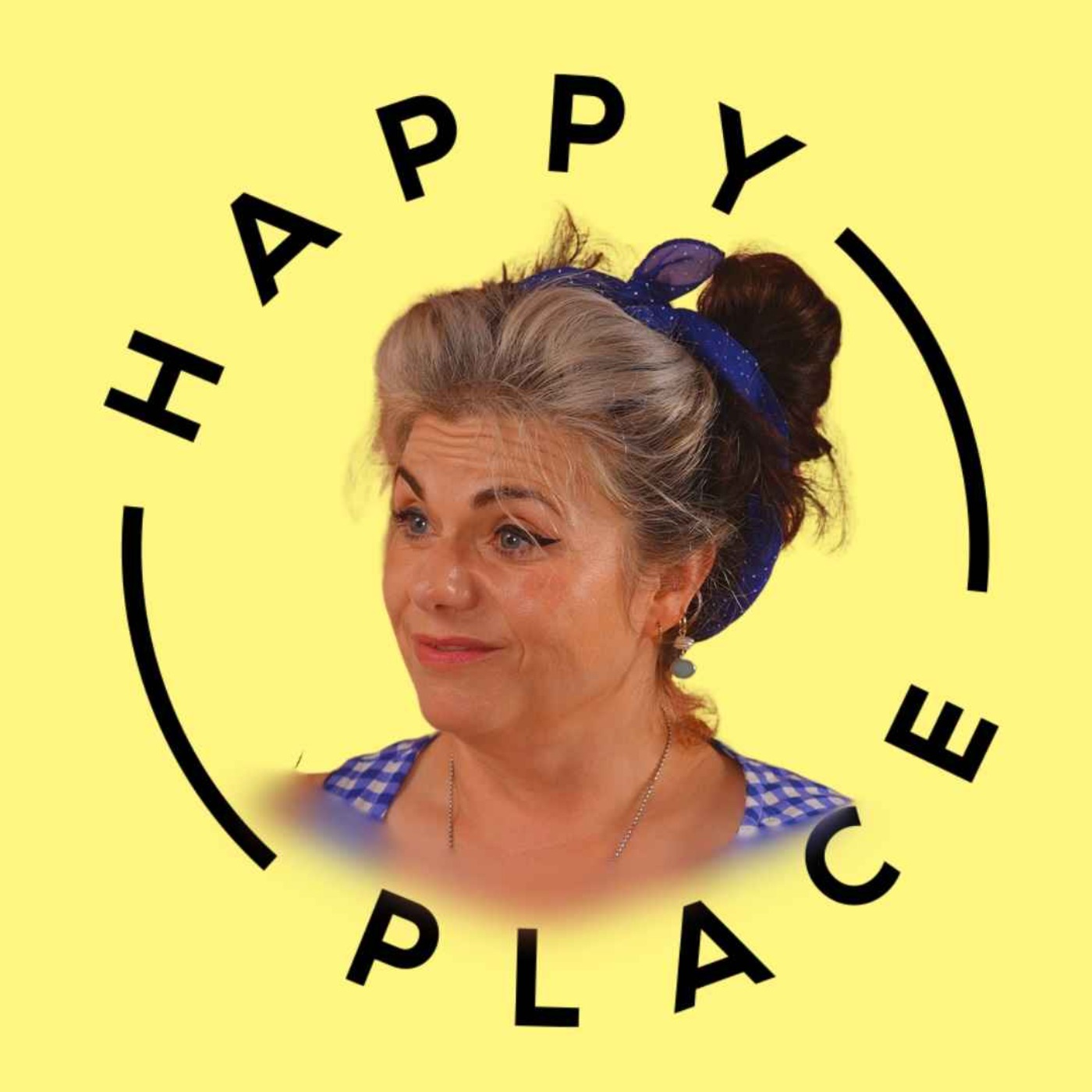
Caitlin Moran discusses her recovery from long-term anxiety and how she learned to calm her nervous system through small, controllable actions, limiting doom-scrolling, and reframing “hope” as realistic attention to what’s okay.
Caitlin Moran is a British writer and broadcaster. She describes her early life in Wolverhampton on benefits, a childhood shaped by secrecy about her disabled father, and later years of intense anxiety (including panic attacks that limited her ability to drive and do live TV). She has written the book How to Be Hopeful.
Hope is “optimism with a broken heart” (Nick Cave), not denial. Social media and 24/7 news flood people with “shit,” distort what feels “normal,” and can worsen mental health. She argues for practical “actionable” help over online activism, and for pointing to good stories. She says anxiety can become a “best bad friend” that once protected her, but must be understood and treated.
litter-picking her street daily; switching to Sunday and local papers instead of constant news; withdrawing from Twitter; “don’t become an activist” (donate/volunteer instead of arguing); her first panic attack after a neighbor revealed her family was on benefits; sitting by the letterbox for months waiting for a benefits letter.
Written by AI. May contain mistakes.
Caitlin discusses her mental health struggles and her path to finding hope.
“But what I will say is that wherever you sit on that scale of get me the fuck out of here to yay go me, this episode I think will be very joyful for you to hear.”
Caitlin discusses her mental health struggles and her path to finding hope.
Fern shares exciting news about early bird tickets for Happy Place festivals.
“But first, something I'm very, very excited about.”
Fern shares exciting news about early bird tickets for Happy Place festivals.
Caitlin discusses her book 'How to Be Hopeful' and the theme of hope.
“This book that you have written is so phenomenal.”
Caitlin reflects on how social media influences perceptions and mental health.
“And there's a thing that I kept hearing from people of my age going, when will things get back to normal?”
Explore the pressures of social media activism and its impact on mental health.
“if you don't say something about it midday, people go, I thought your views on this would be useful.”
Discuss actionable ways to contribute positively rather than just posting online.
Delve into the importance of local news and the need for a balanced view of information.
“That will catch you up on everything that's happened.”
Highlight the necessity of positive news and how it can change perspectives.
“If you spend the whole thing not trying to find the good bits, if you just sit there going, no, some people disappointed me once.”
Exploration of the lack of positive stories in media and social media.
“subscription that I have is the New Scientist magazine in which every week nerds just tell you what's being invented now.”
Discussion on the importance of highlighting positive actions instead of negativity.
“I mean, you, I've got three thoughts going on in my head at the same time.”
Insight into how personal struggles can lead to passionate advocacy.
“There's so much of a backstory that we don't ever explore or even assume is there.”
Addressing the harmful effects of belittling individual struggles.
“The notion of saying to someone, oh, well, blah, blah's got it worse than you.”
The necessity of expressing emotions to aid healing and understanding.
“And they will get people going, but you go to a lovely school or you've got a pony or like you're thin or you're beautiful or you're white.”
The necessity of expressing emotions to aid healing and understanding.
“Yet your doctor says everything looks fine.”
Caitlin discusses her personal experiences with anxiety and recovery.
“Let's talk about anxiety because this is my specialist subject.”
Caitlin shares her experience with anxiety and panic attacks, detailing the physical sensations and emotional turmoil they caused.
“I will be earning enough money by then to say, it's okay, family.”
Caitlin discusses how anxiety fueled her creativity and work, highlighting its dual nature as both a friend and a foe.
“And it would get to the point where when I was doing live tours, like 30 seconds before the curtain went up, I would be lying face down behind the safety curtain.”
She explains how beta blockers helped her manage anxiety and regain a sense of normalcy in her life.
“When you're anxious, your body is giving you that adrenaline.”
Caitlin and the host discuss the shared experience of anxiety, the pressures of social interactions, and the importance of communication.
“Yeah, I would, like, I mean, I've really worked on that.”
Exploring the complexities of anxiety in social interactions.
“Maybe we should all start a separate WhatsApp group and talk about how weird she is.”
Discussing the importance of sharing personal struggles and experiences.
“I didn't even know that other people had the same thing.”
Discussing the importance of sharing personal struggles and experiences.
“75 % of women who seek menopause care don't receive it.”
Examining the journey to rediscover happiness and emotional connection.
Explore how communication methods have evolved and their societal impacts.
“Like, that's who we are underneath all of this.”
Learn practical steps to cultivate hope and mental well-being in daily activities.
“Literally that, as they say in Al-Anon, all you can do is keep your side of the road clean and your reality is, to a massive extent, your choice.”
Discover how pets can bring joy and comfort, and the power of nostalgic memories.
“Third Cotton, it's a really lovely world.”
A discussion about Caitlin's insights and the impact of her book on personal growth.

Get the gist, explore an idea or ask about something said.
 Claude
On Happy Place, what are the key points of this episode?
Searching your listeningAutomatic transcript. May contain errors.
0:00Fearne Cotton: Hello, I'm Fern Cotton and this is Happy Place, the show that looks for the little joys in life. And today I'm chatting to Caitlin Moran. I became so convinced that society was crumbling and that humanity was doomed that I put in an offer and it was accepted in a remote farmhouse in Wales. I intended to grow my own food, have my own water source, have goats and thankfully the sale fell through. then I was like right okay I'm sane now I need to stay here in my own life and make it better and the first thing I did was litter picking my street is a trash bin I'm on the way to a railway station every morning my steps are covered in vapes and empty cans of monster and I just took my litter picker and started doing it so normally this bit of the podcast I think I meant to say something interesting or something that is helpful to everyone but some days I don't I mean a lot of the days I haven't got I don't have a bloody clue I don't know what's going on um like the rest of you I'm muddling through life through middle age um with varying degrees of success some days I feel like I've nailed it and I've done solo parenting well I've done work well and then other days I just think I might book myself a taxi to Heathrow and uh do a runner um and some days I'm somewhere in the middle.
1:18Fearne Cotton: But what I will say is that wherever you sit on that scale of get me the fuck out of here to yay go me, this episode I think will be very joyful for you to hear. I mean, number one, I fucking love Kathleen Moran. I love her so much. She is someone that I could listen to for hours and hours with complete concentration and I have zero concentration span. I have none. She is someone that I, I mean this is such like a deeply embarrassing thing to admit but she's someone that I really want to like me. How sad is that? But to me she epitomizes all the things I feel I've not quite been over the years like she's naturally just so cool she's insanely smart I think that's the bit that really gets me like I I want her to like me because that makes me feel like am I smarter than I believe I am um and I just want to be in her orbit and also I am not as you well know listeners I'm not a mysterious person who you have to like work hard to read I just am what I am and I often say too much and can't help myself I'm like overexcited so I DM'd her about four billion times before she came on the podcast why am I such a bloody nerd.
2:59Fearne Cotton: I kept DMing her because reading her book I had so many epiphanies and I kept underlining things, dog-earing pages, screenshotting it, sending it to her. Oh my god this bit really spoke to me like I'm too much. I don't know how to play it cool. I certainly don't know how to play hard to get. Not that I'm playing hard to get with Catelyn Moran but I don't know how to do that. I don't trust that people, I will even come into people's brain space if I'm not going like, hey, I think you're great. Can we be friends? So that's my starting point with this chat. This new book is called How to Be Hopeful.
3:34Fearne Cotton: Catelyn sort of basically felt like she had reached peak despair, like that moment where you think, sod it, I'm going to move to a remote island or go on an epic adventure. That would be the only thing to help if I do something really drastic, which is basically what I said about five minutes ago. But instead of doing that, Catelyn decided to change little things about her day instead, like just stuff she could control, reading local newspapers instead of doom scrolling through world events and sitting on the bus without headphones and rewilding a garden. This was honestly a completely eye-opening chat for me about how we can all reclaim a little bit of hope and happiness when the world otherwise feels way too overwhelming.
4:18Who says Halloween only lasts one day? With Wayfair, one night of Halloween becomes a whole season at home. From larger-than-life yard decor and moody lighting to festive accents for every room in the house, Wayfair has what you need to make Halloween feel like magic all in one place. Because the best Halloween memories aren't made in just one night. They're made all season long. Shop Halloween decor now at Wayfair.com.
5:11Wayfair, every style, every home. stimulating multiple receptors in the brain associated with wakefulness, including dopamine, serotonin, norepinephrine, histamine, glutamate, and orexin. It's a more complete solution that gives you 10 to 12 hours of steady focus and energy. To learn more, go to mod.com. Fill out your intake form, meet with a licensed provider, and if approved, ModAlert ships straight to your door. Go to mod.com to get started. That's M-O-D dot com.
6:12That's joinMIDI.com. Insurance coverage varies. Check with your plan for coverage.
6:18Fearne Cotton: Right, to Catelyn in just a moment. But first, something I'm very, very excited about. Early bird tickets. I can't believe I'm saying this because we've just bloody done it. To both of our Happy Place festivals, London and Tatton Park. 2027 are available now. We honestly had the most magical time across our two weekends this year. Pure joy. I'm still buzzing from all of it. And if like me, you're missing that buzz or you were sad because you couldn't make it, you had some other plans or you just didn't get around to booking tickets. If you head to happyplaceofficial.co.uk, you can get your early bird tickets now.
6:54Fearne Cotton: All right, let's do it. Here's the show.
7:17Fearne Cotton: Catelyn Moran. Fern Cotton. God, where do we start? Where do we start? This book that you have written is so phenomenal. I've literally hit up your DMs 800 times in the last week. It's given me such joy. Because this book, which is called How to Be Hopeful, I think could have been called many things. How to Hopeful is a fine title but also the book of common sense Right, yeah How to be a human Yeah Like you've covered all of it in one book Thank you so much Are we done now? That's it We have finished the interview Yes, that's it We've covered everything there That is it You've written a perfect book Well done, farewell I love the subject of hope As you say actually more towards the end of the book It's often an icky subject to bring up Like people react weirdly when you start to say that you are a hopeful person or even have hope.
8:09Fearne Cotton: Oh, it's not polite. In the same way that in feminism, I realised that like even the most beautiful women in the world could never say they were beautiful. It was impolite. So you get Scarlett Johansson, like measurably financially the most beautiful woman in the world. And if someone says you are beautiful, she goes, no, but I've got a weird nose and like my knees are a bit dry and stuff. You have to hate yourself. Yeah. It's delightful 15 to 20 % if you're a woman. And similarly, it's impolite to be hopeful. Why is that? Well, there's many reasons. First of all, there's a misunderstanding of what hope is.
8:35So there's that brilliant Nick Cave quote, which is that hope is optimism with a broken heart, which I think is...
8:40Fearne Cotton: Yes, hope is optimism with a broken heart. So it's not simple polyanerishness. It's not I'm ignoring everything. It's not I'm pretending everything's okay. It's going the quest is to find the things that are okay. Yeah. And hope is a choice. Your perception is a choice. Your reality is a choice. If you look at any study that's done about neuroscience and the way they perceive the world. So for instance, you know that advert that used to be in the cinema years ago where there were loads of people playing basketball and it goes, count how many goals are scored in basketball. And then the screen goes blank and it says, did you see the bear?
9:10And then they replay the film. And because we were told to watch the basketball players, we have not seen the massive bear that is kind of like, you know, electro popping through the background. And what we see, what we think we're seeing is 80 % what we expect to see. We have a perception of what we think is going to be happening in the world. And unless we have things drawn to our attention, we do not notice them. So at the moment, what we're having drawn to our attention is terrible things.
9:34Fearne Cotton: Yeah. And so much of the book, and I'm sure we'll get into this later, is about how our lives have changed since social media came around. And there's a thing that I kept hearing from people of my age going, when will things get back to normal? This feels like the last 10, 15 years have been so chaotic, so rapid, so confusing, so extreme. So we have Brexit, then Trump, then COVID, the economy. So Trump's going to invade Greenland. He's going to buy it. It's a constant stream of stuff. And that's the only thing that has changed, is the fact that we have this constant influx of news because social media is giving it to us 24-7.
10:08If you think about genuine cataclysms, like, you know, tsunamis, like being hit by a comet, we haven't actually had any of those in our country. Normal people who are worried about the world being a terrible place. There was a brilliant study done in America where they asked people two questions. The first one was, do you think your country has had a bad year? And the majority of Americans answered, yes, it has. and then they were asked, have you personally had a bad year? And the majority of Americans said no. And that's why people think it's impolite to say they're hopeful because we go, oh, everyone's having a bad time.
10:39It would be bad if I said that I actually am having an all right life. It's not perfect, but I have reason to be hopeful.
10:45Fearne Cotton: We had a really interesting chap on the podcast called Todd Rose and he has written a book called The Collective Illusion, which is exactly that, that you go with the norm. Like, well, everyone says the world's going to shit. So I guess, you know, it's going to shit. And I won't mention that I've actually had a really bloody great year. And also that has been drilled in. Again, social media is the big cataclysm of our time. So first of all, who's got control of the word normal? Now, I was on Twitter in the early days. And what was astonishing, the first time we invented the ability for people across the world to talk to each other unmediated.
11:17You didn't have a TV show or a radio show or be a columnist. Everyone could have their say. Everyone could talk to everybody. And at the beginning, and when I tell people, young people this, they're like, that can't be true. Twitter was parodically lovely. Like the classic story is of a woman in Welling Garden City who lost her child to teddy bear. And everybody started reposting it. We've got to find the bear. Got to find the bear. By midday, the deputy prime minister, John Prescott, had written a poem about the bear. Stephen Fry had written a eulogy to the bear. And by the end of the year, we found the bear.
11:45And it was like, hurrah, we found the bear. That's how it started. but then around about 2012 2013 it started to go sour and if you talk to people in the government now they will say it was a completely vulnerable space like kind of like you presume everybody in there's a nice normal person a normal citizen an actual human being but what it actually is is a load of bots a load of people who have a political agenda and particularly and again you know the government talk about this openly now you know we are at cyber war with russia and china and these These are countries that Russia cannot grow its economy.
12:14All it can do is destroy other countries' economies. And how do you do that? You turn populations against them. You produce chaos. You make people feel that they're hopeless. And Steve Bannon, he's one of the most powerful political operators at the moment, who works with Trump and Berlusconi and Maloney. His big thing was two things. One, politics is downstream of culture. So culture, if you can control the culture, what people are thinking, society, what people are saying, then you will then influence politics. And secondly, flood the zone with shit. Make sure there's a big story, a chaotic story every day.
12:45That's what Trump does. That's what the far right do. So you are, you know, you're going on social media, which tells us what is normal and what people are thinking. And it's not normal. And it's not what people are thinking. It's foreign agents. It's governments. It's bots. It's people who are mentally ill. It's sour people. It's people with agendas. And that's what we think the world is. And my thesis, having gone through a year of withdrawing from that and trying to live in my actual real world, is that's not the real world.
13:11Fearne Cotton: There are great people out there and there are lots of great people out there. Like you say, it is flooded with shit. And I think most of us don't realise what that's doing to us. That has sadly become our norm. But I just feel slightly electrocuted all day because I'm bombarded this deluge of shit constantly and I'm not filtering any of it. Right. And you're told, as you know, as a good lefty progressive person, which I self-admittedly am, you believe that you have a duty to consume news, you know, to be uninformed about this, you know, kind of why would you turn your back on the world? You must read news and consume news and listen to analysis.
13:45And I reached a point in the book where I was like, do I have to? Like at the point where it's affecting my mental health, I don't want to become ignorant. But if you're on a 24-7 news cycle, say on Monday, Trump says he's going to buy Greenland. Everyone's up in arms on social media. And there's a whole thing on social media, if you're prominent on social media or have a big following, if you don't say something about it midday, people go, I thought your views on this would be useful. Your silence is violence. Why have you not come out onto your social media balcony like Evita and addressed the world and said, I deplore the movement of the Trump government?
14:17And you are led to believe that that's what you should do. And it makes no difference at all.
14:21Fearne Cotton: Makes none. I felt so under pressure in so many situations where I've tried to do my reading on something and educate myself in all areas of it. But A, I'm still learning and I might not have an opinion yet. You're not an expert on Greenland fun. But also, do you think that some random TV presenter who grew up in the suburbs, who knows fucking fuck all, is going to have any impact on what Putin's doing? Literally this. Putin's like, oh, Cotton's angry. Fern Cotton's tweeted, better stop the war. Right. Better stop it. Right. What the fuck am I going to do? Literally this. And also, so that happens on Monday.
14:54You're pressurised to say something about it. That's the social media culture. By Sunday or Saturday, if you just read the weekend papers, what I do now, you just read a report going, yeah, like some governments talked to Trump, like the UN have had a word. It's all blown over. Yeah. So if you've been reading the news every day, every day, your zone is flooded with shit. You're supposed to react. If you're simply just reading the Sunday papers and local papers, 90 % of the time, the world has sorted out and they managed without us.
15:19Fearne Cotton: Yeah. Somehow. Right? Isn't that amazing? Isn't it amazing? And there is a point where it does, you do start to go, well, this is like kind of a form of narcissism. Like, again, I talk about several case studies in the book of like people that I've known. I would say that the mental health attrition rate of people that I know on social media has been fully one fifth have become seriously mentally ill. Yeah. Or radicalized or self-radicalized, like or have had to leave or have been destroyed and shamed on social media. And these people, you see people sort of posting, you know, they start posting about one issue.
15:48They get obsessed with one issue, whether it's Gaza or Trans-Rite or Ukraine or the environment or vaccines or guns or whatever it is. And as soon as that post takes off, suddenly that's their cause. They become obsessed with it. They're being rewarded by clicks. People are going, I love that was the post. You're the girl. Say more. And suddenly a year later, you're so deep in this that you're posting videos at four o 'clock in the morning sobbing, going the government should be hung from lampposts. They are vermin. I can't believe they're allowing this to happen. You know, with something like Gaza and people are going, you know, I'm now on antidepressants.
16:18I can't hang out with my children because all I can do is imagine it happening to them. And I just think that is a form of narcissism. If you went and talked to someone in Gaza who's just been bombed and said, there's a woman in Hackney in a really nice house who's crying on Christmas Day, saying her mental health has been affected by this. She would say two things. First of all, are you insane? I'm being bombed. You're not. And secondly, if you look at the way these topics then become divisive in our country, she would say, why have you imported a conflict in our country where people are divided and imported it into your country?
16:47where you are now having marches and riots and bricks thrown through windows and whole families and social groups falling apart, surely the first thing you learn about conflict and war is don't spread it. Don't import it into your peaceful country that generally we've all jogged along quite nicely.
17:01Fearne Cotton: Don't bring it here. No, no, no. And if you, like this is in a chapter called Don't Become an Activist, Don't Be an Activist. Yes, Don't Be an Activist. Don't Be an Activist. And looking at what you actionably can do is the sensible, the common sense outcome of I believe in something, I really want to support whatever it might be, whatever issue, animal charity to disability charity, whatever. Amazing that you feel passionate. But talking about it on social media with anger is not going to do as much as you, I don't know, whether it be donating a tenner or doing a fun run or something that is actionable.
17:36Oh, if you talk to anybody who works for any organisation that is actually doing something, they are pulling their hairs out because people think they are making things better. People think they are changing the world simply by posting it on social media. And of course, the thing is, as soon as you say you stand for a cause, the other half of the world usually opposes your cause. So suddenly you've made loads of enemies. They're going to pile onto you. You're going to destroy your mental health. And in those hours that you spend at two or three o 'clock in the morning arguing with people on the Internet, someone's wrong on the Internet.
18:01I'm going to fix it. You talk to these people from these organizations and we're like, if they come and volunteered and drove some people around, if they mentored someone, if they raised some funds, if they came and helped decorate a community center, like saying something. we've been led to believe that simply saying something our job is done and it's not go and
18:18Fearne Cotton: do something so this for you was litter picking that's where i started that's where you started that's such an easy thing i mean me and my kids will always do if we're at a beach we're like let's just pick up any plastic we see put it in a bin at the end of the day or take it to a recycling thing like just do it's like a tiny thing but it makes you feel great and you know you've done something i'd like to invent the phrase selfish altruism like kind of like if you've turned upon a beach and it's just all full of rubbish like and rather than sitting there which I used to do going the government should do something about this David Cameron has is responsible this who do I vote for someone should do something about this someone should fix this there's a day where the light bulb goes on and you go oh it's me I'm the someone I'm sitting on this beach right now I can see a problem I could fix it in 10 minutes and then I will enjoy my day and I'll feel a beautiful underrated smugness and glow that I've just made a tiny difference and this was my gateway into the book starts with me explaining I was having a proper full-on midlife crisis the menopause had started but I didn't know my friends kept saying you need to go and see a doctor you're you know you've lost your sense of humor and I became so convinced that society was crumbling and that humanity was doomed that I put in an offer and it was accepted in a remote farmhouse in Wales where I intended to grow my own food have my own water source have goats have a forge so I can make my own rakes and thankfully the sale fell through then I got HRT yes and then I was like right okay i'm sane now and i'm i'm not a tech bro millionaire who can build an apocalypse bunker in the hills no there's a reason why the tech bros are doing that it's really expensive i need to stay here in my own life and make it better and the first thing i did was litter picking my street is a trash bin i'm on the way to a railway station every morning my steps are covered in vapes and empty cans of monster and i just took my litter picker and started doing it and if anyone from our generation who played pac-man it's like real life pac-man you're going on gobbling things up for like points in your head.
20:09Yes. In front of you is a trashy street. Behind you, serene, clean, like Tokyo at 4am. It's beautiful. Yes.
20:15Fearne Cotton: Any of us can do that. Right. Any of us can do that. So when it, as you just stated a minute ago, when it comes to imbibing news, you've got rules around that now for yourself that you'll do the Sunday papers and we're done. And the local papers. And the local papers. That's the other key thing. Because when I added up, again, it's like, you know, we need to know about the news. That is what a good person does. They stay informed. I added up how many news shows, podcasts, analysing the news, and how much time I was spending on Twitter with the news scrolling past me. It was around about 18 hours a week, which explained why every morning before I got HRT and realised I was going mad, I would wake up just literally flooded.
20:50I'd wake up like that scene in Pulp Fiction where they stab her in the heart with a adrenaline pen. It's another day on this terrible world. Put the radio on. Terrible news. Go on Twitter. Terrible reactions. So I added it up. 18 hours is too much. The Sunday papers is enough. That will catch you up on everything that's happened.
21:07Fearne Cotton: Yeah, and you've got some lovely little supplements in there. I love the supplements. Well, culture is equally important. Don't remember Yoko Ono. 30 years ago, God bless her going, the news is so weird. Like we have the news and it's usually the bad news. And then it's followed by the sport. Why is it followed by sport? That is nuts when you think about it. Why isn't it culture? Why isn't it the environment? Why isn't it like humanitarian efforts? Why isn't it like advances in philosophy? Did we find out an answer? Right. And sport just goes on forever. so it's quite frustrating because like I actually hate sports it never ends I keep up every year when the league starts I'm like didn't they settle this last year like why are we still talking about you know who the best ones are the ones who won last year like can we just leave this now like are we done all of our male listeners if we had any have now left the building no I totally get it that is so weird but I love learning about other people's lives so the supplements for me like this Sunday Rich D.
21:54Fearne Cotton: Grant was on the front of the supplements and I was like I want to read even more about this man this fascinating character So he's now a granddad. Let's go. He's dealt with such grief. Such grief. His wife died. He adored her. Everyone adored her. And here he is. But that's the thing. You get the longer story. National news. So I've worked in newsrooms and the slogan there is if it bleeds, it leads. So when we watch the news, we think we're watching the news, but we're watching the bad, dramatic news. So one example would be if some kid goes into a school and shoots it up and 10 people die. Worldwide headlines.
22:27The day before, in the same town, at the same hospital that all the victims are taken to, a surgeon could have saved the lives of 30 people. But that will never make the news. There's that saying about how you can hear the axe felling the tree, but you do not hear the forest grow. And good news is slow. It's hard to tell, which is why we find it in culture. This is why we read books. This is why movies exist. And local papers tell the whole story. So in the riots last year when they were burning down refugee hotels, that was reported all over the place. and we get a picture of what our country is like and where we're at now politically and how we feel about immigrants.
23:01And then in the local papers, it was explained that the next day, volunteers turned up and started cleaning up those hotels and rebuilding them. And in fact, volunteering in this country doubled in the weeks after the riots because there were so many good, quiet people who the day after everybody trashed anything went, I will rebuild it. And this is the thing, whenever you're talking about a national disaster, like a friend of mine was going, how do I talk to my kids about awful things? You go, look for the helpers. Look for the silent majority of good people who will want to come along and fix it.
23:30And local papers tell you the full story. Like kind of like something awful will happen. And then you see the community reaction. Then someone goes and talks in the schools about what it's like to be an immigrant. Then the kids write essays about it. And it's also got news like a new bicycle lane has opened. There's a new bakery. A girl has gone to university. Someone's cut their hair off and raised money for cancer. And that's the news of your world. That's your local area. And as humans, we're not really built to know 24-7 global news in countries that we've never been to. It doesn't mean being non-empathetic or informed.
24:00But your world, you know, until 100 years ago, what we would know is happening in our valley, a neighbouring valley. And maybe if Napoleon did something in Europe, we'd hear about it. And that's about the level of news that we're built to cope with.
24:13Fearne Cotton: But it's also the news that we can react to. We can do something about. Like that feels important. And it also feels important, equally as important, if not more, to hear good things. But like you've said so many times already today, and it's something that I couldn't get out of my head whilst reading the book. And I still don't, I haven't landed on the why. Why do we believe that it's really smart to know about all the terrible shit, but that it is maybe a bit basic to know about the good stuff? What the hell is that? It's interesting, isn't it? So when the riots happened and they were burning down all the refugee hotels, I can remember thinking, watching it all and going, okay, how does this make me feel?
24:52It makes me think maybe in this country, the majority of us don't welcome immigrants. We are angry. It's gone too far. We're rebelling. Like maybe this is, I'm getting this information now that our country has reached a point where we don't like this. Like this is why these riots are happening. And then when I read about the volunteers the next day, 65 ,000 extra hours of volunteer work going on, suddenly my view of the country changed. and I was like, oh no, we are a country that likes to help. We're a country that goes in and builds things. We're a kind country. We're a good country. And it's important to realise, I think we think it's grown up, particularly people in newsrooms as well.
25:25They've got this kind of like, you know, it's still usually men, adventurous men, sort of like, you know, and they think in the same way that it's cool to drink whiskey, even though it makes you shudder and it's disgusting and not as nice as a chocolate milkshake.
25:35Fearne Cotton: So true. That's bad news. That's hard news. That's disasters. That's the thing that a grown up man drinks. But why is it smart? Why is it smart? That's the bit I can't get mad. Because I, like you, you describe yourself as an optimistic but anxious person, or you were anxious. And we'll get to that in a bit. I feel the same. I, over the years, have actively, not so much anymore, but back probably in my, like, 20s, 30s, especially when I was, like, working on Radio 1 where you're meant to be cool, I thought, God, being enthusiastic is not going to fly here. Like, I need to dull down this natural optimism and hopefulness.
26:09Fearne Cotton: because I'm meant to be like, and I've got the news on my show all throughout the show as well. So I'm hearing all of this shit. Like I need to be smarter. I need to be well read, know about all the terrible shit going on, less enthusiastic, less hopeful. Now I've been to all that. I am enthusiastic. I'm energetic and I want to feel hopeful about everything and like there's forward motion. But there's something in me that still feels like, and is that a problem? Am I thick? Yeah. Am I being a stupid girl? Am I being stupid? Stupid little girl. What the fuck is that? Well, it's a phase you go through.
26:42If you look at who controls the news, it tends to be very driven men still, sort of in their 30s, 40s, 50s. And so you go through a phase. Everyone is born hopeful and an optimist. And then something may happen to you at some point that will make you anxious or hypervigilant. Or cynical. You know, the definition of a cynic is a disappointed optimist. So you feel like you've had your heart broken by the world, but you haven't continued that journey. which you must go on, which is to find a way to fall back in love with the world again. And the reason that's the smart thing and why you must do that and realise that your cynicism is a phrase is this is the only life you've got.
27:19This is the only planet there is. If you spend the whole thing not trying to find the good bits, if you just sit there going, no, some people disappointed me once. So I will presume that everyone will disappoint me again. Some governments and politicians disappointed me once. So I must presume that everybody is awful and we will never progress as a species. First of all, that goes against facts. you know I read a lot of history and we go through cycles there are bad cycles but then there are good cycles if you listen to Melvin Bragg's in our time every week it's about right Melvin right and Melvin taught me everything I know I didn't go to school they're like what he's always doing is it usually starts with a huge problem or a pickle that humanity is in and then someone smart comes along and fixes it suddenly we enter a renaissance suddenly we have an enlightenment suddenly someone invents penicillin that's the story of the world yeah you know people are always my biggest subscription that I have is the New Scientist magazine in which every week nerds just tell you what's being invented now.
28:08Great stuff. Right. Stuff that will save the world. They've found a bacteria now that eats carbon dioxide. Incredible. So carbon dioxide is what's giving global warming. We need to get it out of the atmosphere. This bacteria eats carbon dioxide and turns it into an edible protein. Fucking brilliant. So we can feed the world on the thing that's giving us global warming. Yes. It's just like, that's incredible news. Why don't we know about that en masse? Literally this. We need to look at the way that the news is presented. And I found it really interesting that even with social media being as awful as it is now, still there's so many people online who will just go, found this cool story, feel like we need this today, just going to pop this in your timeline and cheer you up.
28:44We have a need for good news. And it's not being served to us generally by, you know, the big TV shows because they're still stuck in that old fashioned thing of it's serious and grown up to show things being destroyed. And also it's hard to show slow good things. And that's a creative problem that we need to fix. It should be just as exciting to see someone fixing things and changing things and making them better as it is weirdly, darkly threading to see something being bombed or destroyed.
29:10Fearne Cotton: I agree. I mean, you, I've got three thoughts going on in my head at the same time. Hey! You say one of the most important things we can do. One of the most important, if not the most important thing on social media is just point to the good things. Fangirl. That's one of the best things I've ever heard. Like, just point to the good stuff. Yes. Point to the good stuff. Yeah, because we're now 15 years into an experiment where arguing with people you disagree with, going online and tearing someone down. You know, I've been there. I've been torn down. I've gone on there and torn some people down.
29:40If you see someone doing something wrong or bad, you're like, I'm going to go on there and I'm going to attack them and explain why they're wrong because I'm a good person and I think this person is wrong. Yeah. That takes weeks. Those arguments take weeks. They go on forever. Everybody's followers pile on. It becomes like warfare. People break up friendship groups. Families are destroyed. It goes on. And at the end of it, even if you've won that argument. And by the way, no one ever comes and says you've won the Internet. Here's a badge. Yeah, literally. Yeah. The bell doesn't ring. I know. Like kind of like even if you win that argument and the majority of people are on your side, then what you do?
30:12You're standing in rubble. Loads of people have like literally lost their sanity. Loads of people have been destroyed. Friendship groups have broken up. What do you do then? And the thing you would do next is go, so here's how I would do it better. Half the time, people don't have an idea for how you would do it better. So don't start that argument anyway. But if you do have an argument for how you think things could be better, rather than spending months trying to destroy someone's bad idea, just start there. Start immediately with, hey, this thing's going on. Here's how I would do it better.
30:40Or here's how a different country have done it better. Or here's how in history we solve this problem. Just start with the good stuff. And if you don't have an idea of how you can make things better, Find someone who has and put your energy into platforming them and supporting them. Point at them.
30:53Fearne Cotton: Point at them. Be a fango. Like you say, whether it's starting an argument online, pointing out that someone's severely wrong and needs to be cancelled or even pushing a cause or something that you believe in deeply. There's so much of a backstory that we don't ever explore or even assume is there. Whether it's someone's having a really shit time because they're getting divorced, they've lost their job, someone fucking beeped at them on the way to school and in the rush hour gave them some fucking road rage. Like there's always something under it. Literally this. The amount of times because a lot of the people that I know who've suddenly become really passionate about one cause and they're the people doing the crying videos at three o 'clock in the morning.
31:33Because I know them, I know they've had some stuff in their childhood they still haven't dealt with. They're going through a divorce. Their mental health is difficult. They've just come out of hospital. Of course, they're not posting that. Instead, they're posting that the cause becomes a proxy for their grief. So all this emotion that you see when they're crying, so much of it is actually their lives are terrible at that moment. But of course, they can't post that because we've invented this thing on social media about 10 years ago that if someone said, I'm going through a bit of a rough time at the moment, some pious people on your side would turn up and go, privileged.
32:03Check your privilege. Like kind of like you're weeping first world tears here. Your woes are nothing compared to that of Sudan. and so understandably now everyone's like well I'm crying because of Sudan yeah and like you know underneath it all the thing that initially made well always humans feel an emotion first and then we ascribe a thought to it yeah and we will keep searching for a thought until it's an acceptable thought that gets us traction but we started with an emotion yeah and if we can start with the emotion of I feel really lost and sad and lonely I am going through a terrible time and we could be honest about it then we would save ourselves all these factional wars that are driving people apart.
32:37Fearne Cotton: I so agree with you. I put a post out on Instagram recently about this very thing. The notion of saying to someone, oh, well, blah, blah's got it worse than you. Yes. Which we've all had said via, you know, a parent, a teacher or a mate, meaning well. They're doing it from a place where they want you to feel better. But you instantly go, put a lid on that emotion. I'm not going to feel the actual deep sadness that you're allowed to feel because you're a human being. There will always be someone who's got it worse than you. In my eyes, I can only speak from my personal experience. And I did that for years, by the way, gaslit myself.
33:12Fearne Cotton: Like, you do not deserve any emotions because you are lucky. And people have had it way worse than you. So I pushed down anger, sadness, the feelings of injustice, all this shit that I had genuinely felt, which is the only thing that matters is you feel it. When I could acknowledge it and look at it and feel it, I could deal with it and I could go to therapy and I could look at it. And now I don't feel those things. If I'd kept a lid on it, I would probably be on Instagram going, fuck this, fuck that. Because it's still in there. And also because you finally put on your oxygen mask before helping others, you are now healthy and well and optimistic enough to actually go and help other people.
33:48Yes, correct. And go and help in Sudan or wherever and make your donations and stuff. But if everybody's just broken and able to talk about. And also as a sidebar, that whole idea. I don't believe in a hierarchy of sorrow.
33:58Fearne Cotton: No, it's not the suffering Olympics. Yeah, exactly. If you are distraught, you are distraught. And what I've noticed from like particularly young women who develop like eating disorders or self-harm, they are often middle class girls who ostensibly have lovely lives and they feel upset and anxious something's happening in their lives. And they will get people going, but you go to a lovely school or you've got a pony or like you're thin or you're beautiful or you're white. You live in the first world. You should be happy. And so it has to metastarsize into something bigger. Yeah. If at the very first outset, their sorrow was enough and they went, I'm really lonely at this school and I feel really worried about my future.
34:31and they got the help then it would be fine. But because everyone's like, no, cheer up, it'll get better. You're lucky, compare yourself to everybody else. That's when those kind of sorrows fester and start turning into something deeper and darker until you are clinically unwell and then people will take your unhappiness seriously. So belittling someone else's sorrow is incredibly dangerous. And also if we're just talking about simple finances, it costs our NHS billions. So even if you don't believe in being nice to people and you think that's soft, then just look at it from a financial point of view.
35:00Fearne Cotton: And also we don't know the half of what people are going through or what they've been through or what's happened in their childhoods. We don't know. We base it on like 2 % of what we see. It's crazy. I always presume everybody's had a bad day. I always presume someone is presuming, especially women of my age, I always presume they're probably looking after an ailing parent. They have troubled teenage kids. Their personal lives are falling to bits. If it's not true, I've lost nothing. But if it is true, you've just saved someone so much misery and grief by presuming that they're okay. yeah I so agree people are walking around carrying stuff we just don't know about we don't we really don't I love that thought there's a really cheesy phrase that I love which I'm going to say out loud which is you've got to feel it to heal it yes and it is that simple if you can really accept it and go oh god I actually am really sad I'm sad there doesn't even have to be a reason just I'm sad then you can go and what next how do I how do I feel unsad what do I do about that and you can sort it out yeah but if you are suppressing your sadness then you'll turn into an angry person or a bitter person and that's so much harder for someone else to deal with than you just simply going I'm sad I've had to catch it myself I'm in the generation where you didn't go you know I'm sad or I'm anxious you just plastered on a spine and cracked on a Tuesday yeah and you know I can see now that kind of I thought I was doing the best thing for my friends and my family by not but I but they were having to suddenly deal with someone who was mysteriously angry who was mysteriously peevish you know who was suddenly mysteriously short with them and it was the mystery was solved as the day that I could just go actually I'm just feeling really sad right now and then they can help.
36:29You know, it's really hard to help an angry mum, a mum who's crying and you can put your arms around them. And I'd also thought that it was bad parenting for your children to see you being sad. And then it was explained to me after a lot of therapy that if your children don't see you being sad and admitting to it, how can they do that? Yeah. And you wouldn't want your children not telling you that they're sad. So suddenly all these things, I think particularly as women and mums were like, no, it'd be selfish to do this. As soon as someone goes, what are you teaching your children by that behaviour?
36:56Yeah. you're not actually being a good selfless parent.
36:58Fearne Cotton: You're also not acting human. Right. Just like being a human, which is so bumpy. That's the job. Yeah, it's great. It's awful. It's sad. It's happy. It's all the things. And we have to show that. Yeah. And that's literally our only job on earth. We're alive for a very short amount of time. You've just got to try and live a truthful and honest life, be open to the people that you do, and try not to be a dick. Try not to be a dick. Just give it your best shot. Every day, don't be a dick.
37:23Who says Halloween only lasts one day? With Wayfair, one night of Halloween becomes a whole season at home. From larger-than-life yard decor and moody lighting to festive accents for every room in the house, Wayfair has what you need to make Halloween feel like magic all in one place. Because the best Halloween memories aren't made in just one night. They're made all season long. Shop Halloween decor now at Wayfair.com. That's W-A-Y-F-A-I-R dot com.
37:51Fearne Cotton: Wayfair, every style, every home. Most women have been there. Something feels off. You don't feel like yourself. Yet your doctor says everything looks fine. Spoiler, it's your hormones. Midi is a virtual care platform built for women by women and offers specialized hormone care from trained clinicians. Plus, it's covered by most major insurances. Getting started is easy. You can book your first visit with a clinician right away. It's not you, it's your hormones. Visit joinmidi.com to book your first visit. That's joinmidi.com. Insurance coverage varies. Check with your plan for coverage. Mod.com is changing the way people battle excessive fatigue.
38:28Ever hit a wall in the middle of the day and a third coffee just doesn't do it anymore? Here's what's actually happening. Coffee only briefly blocks adenosine, the chemical that tires you out. When it stops working, your system is flooded and you crash. Modafinil is a prescription treatment that works in a completely different way. Modafinil works by stimulating multiple receptors in the brain associated with wakefulness. including dopamine, serotonin, norepinephrine, histamine, glutamate, and orexin. It's a more complete solution that gives you 10 to 12 hours of steady focus and energy. To learn more, go to mod.com.
39:10Fill out your intake form, meet with a licensed provider, and if approved, Mod Alert ships straight to your door. Go to mod.com to get started. That's mod.com. Then I thought, what if I've scaled businesses? What if I've scaled my philanthropy? What if I did as much in one year as I've done in my whole life? See how your wealth could have even greater meaning at creativeplanning.com slash impact.
39:38Fearne Cotton: Let's talk about anxiety because this is my specialist subject. Will it make you anxious talking about it? Where are you in your anxiety journey? I never quite know. I'm not where I was 10 years ago. which is great. Ten years ago was like, I'm having eight panic attacks a day. Can't drive on a motorway. Can't do live TV, which actually I still haven't tackled, but whatever. I'll get down to that. I can drive, which is brilliant. And most of the time I feel okay, but it's a subject that I am deeply fascinated in. I've only managed to tackle mine because I have a loose idea. I have a good idea of some of it and there's loose ideas of other bits that I'm still figuring out now, which feels really great.
40:19Fearne Cotton: Like it's only bringing me clarity so I can continue to tackle it. But you are two years anxiety free. Yes. Yeah, I'm in recovery from anxiety. It's a pretty sweet place to be. I love it. And I never thought such a thing was possible. So I went on a journey. So during this, so the book, the first sort of half of the book is me kind of going, I'm really anxious. I'm having a midlife crisis. What are the practical things I can do? So I start litter picking. I donate blood. I rewild my garden because I'm sad about the environment. I do practical things. And I get to the end of all this and I'm like, okay, I've materially improved a huge amount of life, but there's a big end of level baddie that I have not tackled.
40:54And I know the reason I have not tackled it is because I have a complex relationship with it and it is my anxiety. So I call my anxiety my best bad friend because for a long time it really seemed to be helping me. And that was why it was so pernicious. So when I was 13, I was not an anxious person to the age of 13 and we were raised on benefits in Wolverhampton. My dad was disabled, but we had to keep it a secret because often he would have to bind up his legs with bandages and take a huge amount of painkillers and go outside and mend the car because we did not have enough money to send that to a garage.
41:27And he believed that if someone saw him, if they knew he was disabled and they saw him mending a car, we would be dobbed into the DSS and we'd have our benefits taken away from us. And this was like the biggest job that we had to do as a family was keep this secret. so we kept the secret until one day I was walking down the road and a lovely old lady at the end of the road invited me in to see her kittens and I ate many of her delicious chocolate biscuits and I was very garrulous and sort of gossipy because I hadn't spoken to anyone for ages because we were being homeschooled and suddenly in a kind of gossipy burp it came out that we were on benefits and then about 20 minutes later I left skipping down the road until I got halfway back to my house and suddenly something happened to my body as I had the thought what if she betrays us what if she tell someone what if we have our benefits taken away and it's my fault my job was to keep that secret and I have let that secret go and my family could literally be ruined if our benefits go where we are homeless and this thing happened to my body as I kept thinking this thought that I the time I did not know where it was but it felt like a cross between a heart attack and being poisoned yeah your thoughts just go faster and faster and faster and faster something happens to your guts it feels like your veins are turning black yeah like everything is full of electricity you have you don't know what to do with yourself and I know now that was my first panic attack and from that day on I was incredibly anxious so my plan was that I had to forestall any kind of badness that would happen to my family by sitting the post the first post would come at 7 30 and the last one would be at 12 30 and I presumed the first thing that would happen if we were dobbed in was that we get a letter from the DSS saying we're taking away your benefits so I sat at the bottom of the stairs opposite the letterbox for about four months so that if that letter came I could get the letter and I don't know what I would do next but that was my only plan I get the letter and I don't know ring them up and go can we can we talk about this or rip it up I don't know what the plan was and after four months I realized that even if I got the letter they would probably still take away our benefit so I needed to have a second plan and I was still so full of this anxiety and adrenaline that I was like okay I need to earn money I've now got the energy I can't sleep I'll write I'll write until I earn enough money so that even if they do take our benefits away.
43:33I will be earning enough money by then to say, it's okay, family. I screwed you on the benefits, but now I'm a millionaire because I've written a book. And so I started writing and I could write a book at the age of 13 because anxiety is drugs. It's amphetamines, cortisol, and noradrenaline. And those are drugs that they increase your brain speed. They give you physical strength. They keep you awake all night. Amphetamines are what they give armies. Like the Nazis marched on amphetamines. When you're anxious, suddenly you're your own drug dealer. You're flooded with these amphetamines that mean you can kind of do anything.
44:09You're riding this massive adrenaline wave. And so for the next 30 years, it was my best bad friend because I could write 10 ,000 words a day, 15 ,000 words a day, nine books, screenplays, columns, features, like kind of it was my friend. I was I was proud of it. I wanted to protect it. First of all, it earned me money. Secondly, I thought it made me clever and thirdly I was proud of it because I thought if you aren't anxious about the world if you're not running to get somewhere safe if you are not working as hard as you can to make your family safe then you're probably just a bit stupid you know someone who is not anxious is a foolish Pollyanna-ish person who has not seen the world for what it is I'm a cortisol kid I'm proud of that I make my money and I take my drugs and I keep working and that I carried on until I was 47.
44:55And by that point, my guts were screwed because if you're constantly pumping adrenaline into your body, it is a bad time on the toilet, Fern. You are nodding as if you know that. I know. Right? Bad toilet times. I'm a cortisol kid. And I was – I could tell. Yeah. And it would get to the point where when I was doing live tours, like 30 seconds before the curtain went up, I would be lying face down behind the safety curtain. And there would be a stage manager there going, are you okay?
45:18Fearne Cotton: Yeah. And I'd be like, yep, as soon as that curtain goes, I'll probably be fine. Yeah. But right now, I'm dying. Yeah. But I will be professional. Don't worry. When that comes, I'll be on that stage. I'm going to be smiling and laughing and no one will know. But at the end of that last tour, I realized that my adrenal gland was just starting to die. I could not do it anymore to myself. I would look haggard. I could not sleep. My toilet times, as I've described, were terrible. And I was like, I'm going to have to go cold turkey from anxiety. And I had to sadly sit my family down and go, look, mommy's going to become really stupid and poor now.
45:52mama's got to come off these amphetamines like mama mama gotta mama gotta have a normal life so i'm just gonna turn into a kind of dim mooing creature and i won't be able to write and we'll all be really poor but i can't do this anymore i'm really sorry and i am so you assumed all motivation would just disappear i i could not see where i ended and my anxiety began i presume that was a very huge and probably the best part of me i was really really proud about i was like you know it's like in the industrial era like kind of you know they build those factories and they fuel them with coal and they poison the rivers but that's the industrial era that's how you build your factories that's how you build an empire and I was like I have to convert to a cleaner fuel now I am past my industrial era I must find some kind of renewable clean solar power to run myself on and so I went and got a bunch of beta blockers I told my doctor about my anxiety and he was astonished that I had not told him about this in 30 years he was like why would you not tell me about this and he was like particularly if you're in the public eye or doing public speaking everyone I know who does that has beta blockers you don't even need to take them but just having them in your pocket and touching them yeah we'll reassure you so I took the beta blockers and that immediately broke the physical link so instead of waking up every morning and immediately going because I was immediately full of adrenaline about the terrible day as soon as I felt that I would just take a beta blocker forget and then 20 minutes later there was no anxiety because it simply turns off the adrenaline it turns off the amphetamines and I thought that would be stupid and that everything would be terrible.
47:16But I just felt normal. I finally understood what it was to feel normal. I was like, I felt safe. When you're anxious, your body is giving you that adrenaline. It's an old evolutionary development so that if you're in danger about to be eaten by a tiger or someone stealing your child, that you run with your super amphetamine pair and save them. But then you get stuck in that mode, even though the danger has passed. So you never feel safe. And as soon as I removed the adrenaline, I finally physically, mentally and emotionally felt safe for the first time of my life. And ironically, I could write more because I didn't.
47:50My body wasn't thinking that at any minute my house was going to burn down or that something awful was going to happen. And and that's what anxiety is. You constantly think you're in a danger mode.
48:00Fearne Cotton: And do you still have to take beta blockers or you can? Every so. I mean, they're always there. Yeah. I kind of like I took one this morning, but that was more because I'd had five coffees to write a column before I came here. That was a caffeine thing. but it was the thing that got you out of a hole because I had the same I had the same with antidepressants 15 odd years ago when I was in a very black hole and I used them to get out of the hole yes and then I weaned off and I learned a bunch of new stuff that would help me and then I'm the same I have the isopan by my bed if I need it and one in my bag if I need it but I'm not reliant on it but I like knowing it's there but you do have to find like other things that help well with you because my theory is that like because we're not born anxious no no something happens that makes us anxious and then we never come out of that state we remain hypervigilant no yeah mine was started at 34 34 and was there a reason for that oh yes there was a reason but then now i've done so much therapy and tried all these different things there's other stuff there's usually always other stuff I think and I reckon that I've probably had an underlying anxious thing going on forever but really I don't think I felt it at all like that acutely until I was 34 that's when it was like boom we're we're having panic attacks and like hearing you talk there not only about your younger self which made me feel like very emotional hearing you talk about that because that's such a weight for like little you to carry you're holding all of your siblings and your parents on your shoulders looking at the post box every morning waiting for a letter like that is so much for a little kid to deal with like that is full on but that's if you look because I you know most of the time I'm interviewing like famous people who've done incredible things and they all have pretty much the same origin story yeah there's a moment where you're you know you interview Paul McCartney like kind of you know you know any of the creatives you go through history they've all had a moment where suddenly they had to grow up really quickly real quick where the family was in trouble and you stepped forward and there's good things you know it's not an entirely negative thing to suddenly learn to feel your power to go i can change things but then you become hyper independent yes you can never ask for help yeah right i'm hyper independent i don't trust that anyone will do the thing did you read that book by oh god who is it by uh amanda palmer called the art of asking no i found that yes she's just like women cannot ask for anything.
50:29Fearne Cotton: I find it impossible. Yeah, I would, like, I mean, I've really worked on that. Yeah. But like until very, until I started tackling my anxiety, because once you take anxiety out, you start working on all these other things as well. They all feed off each other. Yeah, I'm not there yet. That's where I want to be. One thing in this book that I've almost obsessed over because I've never heard, I've never seen it written on a page. I've never heard someone say this out loud. I thought, because I'm finding it interesting that you're talking about, you've really worn your anxiety as a badge of honour at times.
50:58Fearne Cotton: I have felt only mortified that I'm anxious. I feel like at worst I felt like an absolute freak, like what is wrong with me? And on a good day I'm like this is unbelievably annoying and disproportionate and it's getting in the way of so many things. I want it to fuck off. I've never ever seen it as something that I'm happy about at all. But one, like the secret layer below that is this thing that you've talked about where you would dread meeting up with friends because interactions don't feel safe. Yes. I narcissistically thought, no one else, that's just me. You got it too. I still have it now.
51:43Fearne Cotton: In this situation, I don't have it. There are rules. This is a podcast. I've written notes. I've done research. I know how this is going to go. If I were to bump into someone on the street out there, that's my worst nightmare. I don't know how this works. What if I say something fucking stupid? I upset them. They walk away and then I can't sleep. But it has ruined so many brilliant moments like going for dinner with friends, meeting up with someone for coffee that I haven't seen for a while. And I've got to like do the catching up thing. And it's not only the dread. That is like I could deal with the dread.
52:16Fearne Cotton: it's the when I'm there I feel like I'm stiff like my whole body is sort of rigid my check like this area of my body is like it has its own fucking pulse going on it's like out like my heart's here but there's something else like like fucking pulsing here my head is literally like again fucking stiff as a post everything's like I'm ready for action I'm ready for something to go terribly wrong I'm not relaxed I'm not like carefree about it shooting the breeze no no I'm Overthinking everything I'm saying. What's my face doing? What are my hands up to? These are people that I've known for fucking 30 years.
52:53So if I put a date in the diary to see my friends, it would sit there like a black toad for months. These are my best friends. Because I would be doing that thing of going, but I know what was making me anxious. You're scared. You're describing kind of terror there.
53:10Fearne Cotton: Yeah, yeah, terror. What's the worst thing that could happen? What is it that you're thinking when that's happening? it's it's it's got to be something around them I hate being misunderstood it's one of my biggest fears people walking away from an interaction thinking she's this she's that like she's fucking clueless or I don't know whatever judgment they've established and I've done a lot of therapy on this stuff like what is that what is that thing like it's usually boils down to she's stupid She's clueless. Yeah, she hasn't got a clue. It's around that, that they walk away feeling that. So my job, I've got a job to do in that interaction, is to prove that that is wrong.
53:51Fearne Cotton: Yeah. That I am just, I'm just good old me. Like, I haven't changed. It's normal me. I'm so normal. I'm so normal. I got into this profession when I was 16. I'm trying to prove that I'm still that. It's like, no, of course I'm not. I'm 45. Like, that's nuts. That's absolutely nuts. When did that start? Did you have it as a kid? Again, no, no, no. This was, again, like around 33, 34, all of it came at once. I did not have it before. I would happily meet up with friends and I would, you know, probably say stupid things and I didn't give a toss. I would walk away and feel absolutely fine and sleep at night.
54:23Fearne Cotton: When that anxiety hit, all of it lumped in together. But I have never heard someone admit to it. It feels dangerous to see your friends. It's crazy, isn't it? Crazy. And when I admitted it to my friends, they were like, my hardcore friendship group is just the four of us. And I told it, I'd gone away for this girls weekend away that, you know, and every single one had been delightful, ostensibly, had always been relaxed and delightful. I'd been so relaxed and delightful in every single one of these, except I would very notably be drinking faster than everybody else. Oh yeah, drink helps massively.
54:52Fearne Cotton: Right? Once you'd had three, I would be like, I would be working out, like if we were meeting in a bar, I'd be like, it never got to this, but I'd be thinking, if I did a shot before I got there, maybe I'd be, but as soon as I got in, And I'd be like, I'll go to the, I'll be like, I'll get them in. And like, I wouldn't want to start talking until I'd had the first pint because that would like take the fear off. And then I would seem relaxed and stuff. So I finally, so we'd had all these lovely, sensibly wonderful weekends away for like, you know, a decade and a half. And I finally had this massive panic attack and my head just crashed down onto the scrabble board.
55:19And I was completely wigging out. And I had to finally admit to them that the entire weekend I had been full of dread. And for the last decade and a half, I'd been full of dread. And two of my friends were absolutely astonished. They were like, why wouldn't you tell us? That's crazy. This is so horrible. I'm so sorry for you. This is mad. I've never heard of this. And then they got to the end of that. And my other friend who'd been quiet all the way through this went, yeah, me too. And then I turned to her and I was astonished. Oh, everybody was going, oh, what's normal? What's not normal? How many other people don't we know that are terrified of having a lovely girl's weekend away?
55:54We're sitting around in fluffy bathrobes just chatting. But it's terrifying to someone who wants it to be perfect. I know. Who's so worried they might have a conversational accident, mishear something slightly, say the wrong thing, and worry that afterwards people will be sitting around going, yeah, Kat completely misunderstood what I was saying there. I just think she was weird. Maybe we should all start a separate WhatsApp group and talk about how weird she is.
56:17Fearne Cotton: And then sometimes, I mean, especially in our profession, you do get critique, which makes you think, oh, yeah, people are definitely talking shit about me. But then I've even had it with friends, and these are people that I love, but like someone not that long ago, I'm even saying this out loud, said, like, that they thought I was much more relaxed these days and that I used to be very angry. And I was like, oh, fuck. I don't know if I ever knew that I was coming across angrily. Like, I must have been and I didn't know about it. Do you think the anger was masking the fear? I don't know what it was, but it freaked me out for, like, weeks.
56:54Fearne Cotton: I couldn't stop thinking about it. And that's what, like, that to me felt dangerous. Like, oh, God, I wish I hadn't had that interaction because I sort of didn't need that in my head. And now I'm panicking. Does everyone think I'm really angry? Like, have I just always come across angry and no one's ever had the guts to say to me? And now I'm going to be super self-conscious when I see that friend again. So I can never be angry. But with every interaction, I must remain like, oh, don't get too passionate or angry. And, you know, sometimes I'm fucking angry. Like, we all are. There's shit going on in your life and you're pissed off about it.
57:20Fearne Cotton: But it has now become like a slight paranoia. So I think then when you get proof delivered that, yeah, oh, it's not always safe just to go out and have a drink with someone because stuff like that happens. So your hypervigilance is now increased. Yeah. Like I have not nailed that one at all. Have you told any of your friends this? No, no. This is the first time they'll be hearing about this. Are you formally coming out now as somebody who's terrified of friendship? Yes. Terrified. I mean, there are certain people in my life where I don't have it, where there is such a level of comfort because of our dynamic or our history where that doesn't exist.
57:53Fearne Cotton: But I would say there are still quite a few friendships where I don't feel relaxed at all in any interaction. Do you think you'll tell them? I'm going to have to now because they might hear about it here before I've said it. It definitely was a catalyst for me to start thinking about this is something that we should all be talking about because there'll be a bunch of people out there that go, oh, my God, me too. I would imagine listening, half the people are going, that sounds so weird, I can't imagine that, and the other half are going, oh, my God, me too. I didn't even know that other people had the same thing.
58:24Fearne Cotton: honestly it was one of the best things I've ever read I was like honestly it is just it's totally been a game changer even if it is just me saying it out loud now thing is bear this in mind you're braver than me like you're doing a harder thing now because I never talk about any problem that I've had until I've solved it and I'm ready to put it in a book so I never told anyone I was anxious until I'd solved it and I can put it in a book. Well, this is a self-belief that is probably not completely elevated and probably slightly self-damaging. But I personally, and this will be my upbringing, but I personally think you should never admit to a problem because that might be whining until you've got a solution to it.
59:07And clearly that's something I will need to do therapy about. But that's, you know, like when people write books that are just only about bad things that have happened in their lives and they don't have any solutions, I feel like oh you've just dumped all your trauma on me in a book that I paid 20 pounds for and then left me to work out what the solutions are so my belief is that as my belief as a writer is if you want value for money from me then only when I can tell you about something that you might share
59:29Fearne Cotton: and I can give you a solution will I bore you I mean it's really proactive I would say my take on it is I'm not paying my books anywhere near in your league but I'm finding the solutions as I'm writing it a lot of the time and sometimes because I've committed something to paper I have to address it so like the last book I wrote was called likeable and it's all about the fact that likeability had this huge weight for me like if you're not likeable you don't have a job so you better fucking be nice and you better please everybody around you which I took to every extreme and I learned a lot writing it but actually I've just written a little extra chapter for the paperback and it gave me a year's reflection of since I wrote it and actually I have taken so much action in that area in the last year so it's almost it sort of forces me to do something about it but this is the brilliant thing about culture isn't it that's that's the reason why books and films and podcasts and conversations exist it's like kind of like it's the moment where we take time like it most people listen to this do not have the time to sit down and figure stuff out or have a conversation like this and that's kind of our job you go and be a nurse you know you be a fireman, you do the accounting, that's your important job.
1:00:39We're the, you know, leisured lucky dicks that get to sit there and work this stuff out and then have these conversations. And that's our job. That's the deal. And I like that system. I like that we don't wait for governments to sort these things out, that just two mums can sit here on some fluffy chairs that look like minges and go, let's tackle anxiety.
1:00:57Fearne Cotton: Without a doubt, because I think something like as niche as I don't feel like interactions with my friendships are safe, can't be tackled by anyone. It's an individual thing that you have to go off and have a little experience and a journey with yourself. But that needs to be unearthed. So I'm so glad that you did. Don't reduce your work to like, oh, I'm just sat here leisurely in a chair. It's fucking important. And it's massively changed how I see things. So thank you. Thank you. It's my app. I mean, that's all I, the thing that I have with the books that I've written is like, I mean, every day, any time I leave the house, I will always have at least two or three women coming up to me and going, a thing you wrote 10, 15 years ago, sometimes they'll say they've forgotten.
1:01:38They'll go, that put into words something I'd felt but had never worked out. I thought I was the only person who felt like this. Particularly all the stuff in How to Be a Woman about being a teenage girl. So many girls of that generation were just like we would pass it around like kind of clandestine kind of information because it explained to us how we could go from being children to women in a way that was fun. in a way that we understood ourselves, that we felt sort of bold and brave and proud and not scared to be honest. So that's, I really like being useful.
1:02:05Fearne Cotton: Oh my God, you're beyond useful.
1:02:10Who says Halloween only lasts one day? With Wayfair, one night of Halloween becomes a whole season at home. From larger than life yard decor and moody lighting to festive accents for every room in the house, Wayfair has what you need to make Halloween feel like magic all in one place. Because the best Halloween memories aren't made in just one night. They're made all season long. Shop Halloween decor now at Wayfair.com. That's W-A-Y-F-A-I-R dot com.
1:02:38Fearne Cotton: Wayfair, every style, every home. 75 % of women who seek menopause care don't receive it. The lying awake at 3 a.m. wondering what's happening to your body ends now. Midi is virtual care built for women in perimenopause and menopause with clinicians who specialize in women's health. Plus, it's covered by most major insurances. Getting started is easy. You can book your first visit with a clinician right away. Midlife needs MIDI. Visit joinmidi.com to book your first visit today. That's joinmidi.com. Insurance coverage varies. Check with your plan for coverage. Mod.com is changing the way people battle excessive fatigue.
1:03:15Ever hit a wall in the middle of the day and a third coffee just doesn't do it anymore? Here's what's actually happening. Coffee only briefly blocks adenosine, the chemical that tires you out. When it stops working, your system is flooded and you crash. Modafinil is a prescription treatment that works in a completely different way. Modafinil works by stimulating multiple receptors in the brain associated with wakefulness, including dopamine, serotonin, norepinephrine, histamine, glutamate, and orexin. It's a more complete solution that gives you 10 to 12 hours of steady focus and energy. To learn more, go to mod.com.
1:03:56Fill out your intake form, meet with a licensed provider, and if approved, Mod Alert ships straight to your door. Go to mod.com to get started. That's M-O-D dot com.
1:04:13Fearne Cotton: right we've talked about some some things that you've actioned that you know have made you they've boosted you they've made you feel great in your everyday life but what it sort of specifically helps with the anxiety you get out of bed in the morning you've limited your news intake and social media intake what else is helping keep you you know so you can continue to abstain from this anxiety well breaking the physical so it's you know we know that thing that a month establishes a new cycle like my body has forgotten how to be anxious now because i've so assiduously done look at your face you're so envious i would like that you're like you have the face uh that women are supposed to have when they're talking about diamonds i want them i would way rather be anxiety free than have diamonds right give a fuck about diamonds it does feel very luxurious i have to say so many things in my life make sense now i'm not anxious i understand how to love people properly like kind of like you know i can feel joy i had this thing which thing a lot of people had after lockdown and my daughter was really at the time it's called anhedonia where you feel just completely flat you've crushed all your negative emotions but you can't only crush your negative emotions so you just cut off all emotions and you just flatline and uh i was and you know once lockdown was over and my daughter was better i was like oh i'm ready for joy and you know euphoria to come back into my life and they just didn't come and then i was talking to a therapist and she was just like do you leave space for happiness to grow and i was like please speak more on this subject she was like for instance if your daughter comes over and hugs you how do you feel very happy what would you do next and I thought and I was like I'd hug her and then I'd immediately say are you hungry do you need anything like should we go and do something you know kind of like how was your day and la la la being useful and she was like just stop and don't do that you don't need to be useful in that moment why don't you just sit there and give space for happiness to grow just have the hug stay silent and experience that moment was that excruciating It was amazing.
1:06:01I mean, I felt for the first 30 seconds, she hugged me. I so wanted to be of service to her and immediately make the experience even better and just show her how much I loved her. But I stayed silent and I hugged her. And after 30 seconds, she suddenly realized I wasn't going to say anything or ask her any questions. And she just melted. And the hug got even bigger. And then I sort of sniffed the top of her head, which always smells like a baby, even though she's 23. And she just looked up and she was so soft and melting. She just went, you're such a lovely mom. And I went, you're such a lovely girl.
1:06:30And we hadn't had to be clever or useful or accelerate the conversation. We were just two very simple mammals going, I love you. I love you too. Because all that needed to happen was to be happy in that moment. And you don't need to maximize. We're so into maximizing.
1:06:44Fearne Cotton: But also the anxiety is driving you needing to say, do you need anything? Are you okay? So that goes, you don't need to do all of that shit. Literally that. Was there any element of superstition that made you feel like you needed to still say it? Because I've had a bit of that going on. like there is a superstitious, totally illogical bit of reasoning behind why I have to ask the question, do the thing, be responsible for everything. Is it that the world will end and civilization will crumble? And it will be my fault. Yeah. So obviously that was the driver that I had when I bought that house and I was going to buy that house in the mountains and stuff.
1:07:14And I, you know, when you're on social media, you're constantly being told that we're possibly in our final era. Like young people now are saying, I don't want to have children. You know, you've got people in the White House like J.D. Vance, who genuinely believe that the second coming is happening there's hard right christians who are talking about this elon musk is going to go to mars he's like life on earth will not continue like the most powerful richest people with the biggest voices in the world are constantly talking as if we might not be here in 10 years time it's all going to end and so the smart thing to do would be to stay hyper vigilant and constantly be ready to save your family but that's not going to happen like we're not going to go to mars the world isn't going to end humans will be here in a thousand years time things will come and things will go like kind of like but if you read history you know whole continents have torn apart whole countries have disappeared under the ocean we've had infinite depressions and viruses and you know beliefs that drove people crazy made them kill each other and wars that have flattened europe but we're still here yeah like this is a relatively okay era it's not primo but like if something could happen in 10 years time where we go actually that that time like 2026 that was actually okay yeah that the problems that we had were normal problems like things need to be funded some infrastructure needs to be done we need to sort out some problems but they're not end of the world stuff no and so that really reading much more history allowed me to stop being hypervigilant and kind of going I must be ready to save my family because I can't I don't have an apocalypse bunker and and if you do want to try and make the world you know if you do want to make the world a safer place then becoming a calm and sane person and spreading calm rationality and reading history and doing local practical things and falling back in love with humanity and believing in people and trying to make your day as lovely and helpful and pleasant as possible.
1:08:59That's our job. That's the best we can do.
1:09:01Fearne Cotton: Yes, exactly. And that's the only thing that has ever made the world a better place. Of course. The anthropologist Margaret Mead just goes, you know, all the way through. The two things that she said were, one, all the way through history, you should never underestimate what a small bunch of concerned citizens can do to change the world. It's the only thing that ever has. And secondly, which blew up the anthropology world at the time, She went, everyone's, you know, all the men are going on about how the biggest inventions in human history that we find in archaeology are weapons and the invention of fire and stuff.
1:09:27And she's like, no, this is the most important thing that we've ever found that explains what humans are. And it's a mended femur from, I think, the Sumerian era for like 30 or 40 ,000 years ago. And everyone's like, why is that so significant Margaret Mead? And she goes, because this was a bone that was broken when someone was 16 or 17. But this person died when they were 16. so already at this point we believed enough in each other and we had enough of community and we believed in love that even though this person was so badly injured that if we were uncaring people we would have just left them behind as we were migrating we loved that person we bound that bone we kept them in our tribe and they lived to be 60 i found the first evidence of love i found the first evidence of society i found the first evidence of community and that's the oldest thing we found and that predates fire and that predates weapons and that's who we are yes and These are the things that I hold on to.
1:10:17Margaret Mead's broken femur. Like, that's who we are underneath all of this.
1:10:21Fearne Cotton: It also, there's something that I kept picking up on throughout the book that seems really important in a human practice of hope is turning lots of words into verbs. Gratitude, turn it into a verb. It's a doing word. Happiness, turn it into a doing word. Winter. Yes, wintering. We love Catherine May. Yes. Turn it into a thing that you do. Make these things action-led rather than happiness is in the future when X, Y and Z has happened and I'm this, that and that. Or I can be grateful when blah, blah, blah. You've got to do it. Well, this is the cataclysm of social media. There's a brilliant, very short book written by Naomi Alderman that's called Don't Burn Anyone at the State Today.
1:10:59And she's talking about how when we're talking about this is a mad chaotic era because of the invention of social media. She's going there are two examples where something like this has happened before in the past. And they're both when forms of mass communication are invented. so when we invented the written word that was a massive explosion revolution because before then the way you had knowledge was in old people and you could only hear it orally so unless you knew a clever old person you would have no knowledge as soon as people started being able to write it down and send it to other cities and spread knowledge huge revolutions and foment and who do we trust and what does this mean and that went on for like nearly a thousand years and then the second time was with the invention of the printing press which again you know ends up in witch trials and revolutions and stuff but each time the the chaos after it is shorter and shorter and what So the third form of mass communication that we've seen in our lifetime is the invention of social media.
1:11:44Everyone can talk. It is genuinely mass communication. So there is, as there has been in the previous two times, this uprest, the kind of like false information, the facts that you can't trust, factionalisation, people breaking apart. But what always happens when you've invented a new form of communication is eventually people go, the things that are most important are facts. You cannot run a civilisation unless you have verified facts, things that we can believe in, people cooperating moving together revering knowledge and having places that you trust and at the moment we're just sort of like we're figuring out how this is but we will go back to because this is what we always do when we're creatures of habit we will believe in facts again there won't be conspiracy theories there won't be fake news we will need facts because civilizations can only prosper with them and we have to find a way to get on even though we have these massively divisive opinions because that's the history of humanity that is inevitably what we will do yeah so that's where you need to hold tight now like kind of like we are in this period of upheaval but we've been through it before and on the other side of it the good things about people being able to communicate across the globe are still hugely underrated the voices that we hear the informations that we have the insights into other people's lives i still love the idea of social media but this current iteration has been poisoned and it's not good for your social health and if you look if you walk down the street once you know i stopped wearing my headphones and i came off my phone and when you walk down the street everyone is on their phone and they have headphones on and they're listening to other people and this reached its apogee when I was on the Piccadilly line at about midnight and everyone had their headphones on apart from me and I heard this terrible screaming like I've never heard before and someone shouting and everyone had their headphones on so they couldn't hear their heads were down and then suddenly the tube ground to a halt the doors burst open and the emergency services ran in and off off off and a woman had taken her life by throwing herself in front of the train and all these people were now finally taking their headphones going off go what's happened what's happened and I was the only person who'd heard it and those are all people who will probably go home and say something like the modern phrases that we hear all the time everything feels a bit weird I don't quite know where I am like kind of it feels like we're so fragmented things feel isolated now like kind of like and it's like yeah if you're walking around with your headphones on and you're facing the phone where are you yeah you're not there you're not here you're not in your life you're not in your day and we saw it as a liberation to be able to like listen to a million voices and communicate with a million people on our phones but there's a million people looking at that website or listening to that song whereas when you take your headphones off and put your phone away if you're like walking through the rain on your own in a forest that is a couture moment just for you no one else that's your life no one else is experiencing that and that's free and that's good
1:14:19Fearne Cotton: for you and that's the point of life yeah it is the most simple basic shit yeah it really is it isn't it's no more complex than being in the rain and in a wood i can't think of anything i'd rather do i know and we and the thing is we know this and that's why it needs to be like a kind of cultural tipping point because when i talk to people in mental health they say they always ask the same two questions to their clients and they come in first of all they go where's your mental health on a scale of one to ten one being bad and ten being good and they'll go it's two it's bad And then the second question they ask is, and what have you done today for your mental health?
1:14:51And we all know what the things are. Put away your phone, eat some good food, have some exercise, engage in something that gives you a sense of like awe or spirituality, some beautiful music. You know, look at something beautiful, you know, help someone else rather than helping yourself. It will make you feel sort of like, you know, empowered and part of a community. And we know all these things and we still don't do them. And I think now I feel like we've reached peak despair, like culturally. I think everybody's so hungry for there to be a different mood. And the logical next opposite cycle that you have after despair is hope.
1:15:24And I really, really, you know, when I wrote this book, it was like, you know, I don't generally believe in manifesting or wishing, but it was like manifesting going around the time this book comes out. I think people are going to be looking for a manual to be hopeful. And I've done this and here's everything I know. And if you follow this, you might not cure everything, but you will feel better by the end of it.
1:15:45Fearne Cotton: Let the next zeitgeist be hope. Right. Wouldn't that be amazing? Yes. I want that. We all want to live through a golden era. Of course we do. We all want to live through hope. And if not for ourselves, for our kids. Yes. You know, we're the rave generation. You know, we were glow sticks and like, you know, incredibly high quality ecstasy. Like, you know, we should remember what joy and euphoria is. And if we're not showing our kids, you know, we need to get our emotional glow sticks out, Gen X, and just wave them in the air and tell our kids, like, we remember community and hope. Like, kind of like, let's have a little bit of nostalgia.
1:16:14Fearne Cotton: let's go back to that yeah let it be hope i'm so here for it i mean i could sit and talk to you for weeks and weeks and weeks and i would not have enough of you katie moran um but just thank you for this book which has not only personally been just like my brain has exploded reading it but will just help so many people get get onto this like little habit of being hopeful and doing little things that that lead towards all of us having a more hopeful day that's all we can do is make our own little worlds better, help the people around us and then the ripple effect of that, we don't know where that will end up.
1:16:49Literally that, as they say in Al-Anon, all you can do is keep your side of the road clean and your reality is, to a massive extent, your choice. Like, choose which reality you want to live in. Do you want to live in the online reality or do you want to take your headphones off, put your phone down and live where you actually are? Because you know what? If you open the window and look outside, people are really lovely. It's actually quite a lovely world.
1:17:08Fearne Cotton: They're so lovely. You went really brummy there. Really lovely. It's a lovely world. Third Cotton, it's a really lovely world. To be fair, it is not half bad. Okay, we're making a Happy Place playlist. Amazing. Why don't we put on a hopeful song? What song makes you feel drenched in hope? Oh, my God. Music questions are hard. I know, there's too many songs. Right, when I did Desert Island Discs, that was like six months of trauma trying to pick those out. What do I love? I mean, Elbow, I find, Elbow and Blur are my two bands of this century. like kind of like they speak to my soul. I mean, Tender by Blur.
1:17:45Tender. When they played Glastonbury and they came off stage and everyone continued singing, come on, come on, come on, get through it. That's all you need.
1:17:54Fearne Cotton: That's it. That song makes me weep. Yeah. I love it. I saw them at Wembley and I sobbed. I was going through a really bad time. My book about men had come out a year too early for people to want to listen to them, think about the Man of Fear. And I'd had terrible reviews and it was awful. And I went to see Blur in the middle of the tour and I have never sobbed like I did. Oh, you so needed that. Yeah. Damon was singing that to me. Yes, he was. Hold on, hold on, hold on. Get through it. And I did. And I did get through it because we always do. We do. We do. That's going on the playlist. My final question is, where is your happy place?
1:18:25See, that does sound like a euphemism for vagina.
1:18:28Fearne Cotton: It can be. Although it's very troubled at the moment. I've got terrible cystitis. My old enemies come back. Oh, no. Get the cranberry out. Does that do anything? No, it doesn't. No, it's a med. No, I've got an Achilles urethra. Where is my happy place? I mean, it is just every night me and my husband get into bed and just the dog is on the bed. And we always pretend the bed is a boat and we're sailing away from the day and going up to dreamland. It's like we're back in the boat and we're sailing away from the day to the safe place of sleep. Oh, that is adorable. Right? That's such a cute little thought.
1:19:00It's really soothing. If you ever have problems sleeping, just pretend you're in a little boat floating away from the world. Yeah.
1:19:05Fearne Cotton: Of course you do. You're fun, can't you? You're really anxious. Never sleep. turn your bed into a boat I'm going to get you a cockapoo they really help my cats will go nuts but I like the idea of it a dog will I mean there's the reason why there's a whole chapter about the dog in there because we look for like I was like why can't I get an electronic item that teaches me how to enjoy my life that you know that just beeps when I need to like stretch or feel happy we told I'm a good girl when you get a dog that's it it's a furry Fitbit that just says come for a walk right now I love you I'm going to lick you we should have a snack why don't you roll around on the floor with me and sort your back out so cats don't do that they just go fuck you where have you been get me some food cats are cunts and I respect them for that that's why I love them I understand the dance me and my friends have got half of us are cats and half of us are dogs in personality and their icon is Prince who is the ultimate cat right yeah and the icon for the dogs in the group is Noddy Holder from Slade that's kind of because he's the ultimate dog so niche so niche I didn't see it coming it's Christmas such a dog Noddy's the biggest dog in the world like a Labrador yeah right yeah so good thank you so much for coming back on the podcast i am deeply honored it's my absolute pleasure let's go and ring your friends now and tell them that you're anxious i think i'm gonna fucking have to do it oh god i love her even more now what am i gonna do about that what am i gonna do why why why can't i be in her like four best friend group i just think she's so amazing the thing is right at the end of that chat I looked at my notepad and there was half an interview I hadn't even gotten to because we we covered so much but there was so much that I missed out like one thing I missed out that I was gutted about was in her book she's got this brilliant little phrase that she wrote which is you are what you click like we all know the phrase you are what you eat which is you know been going around for yonks you are what you click seems even more totally and utterly spot on.
1:21:03Fearne Cotton: Like we're creating these algorithms for ourselves. No one else is doing it for us. And we imbibe whatever we see each day. And many of our thoughts and opinions are based on that. Sorry, that is genius. I need that on a t-shirt. Catelyn's book, which, I mean, I'm not going to force you to read it, but you bloody well should. It's called How to Be Hopeful. And it's out on the 17th of September. I cannot wait actually for the next few episodes of the podcast because we're going to be reliving all the festival chats that we've had at Tatton just a couple of weeks ago so a lot of fun stuff happening on the talk stage in the meantime a massive thanks to Katlyn and to you lot keep finding those little glimmers of hope gang
1:22:04Fearne Cotton: Happy Place is researched by me, Fern Cotton. The producer is Anushka Tate at Happy Place Studios with studio engineering by Basil Oxtoby. I thought, what if I've scaled businesses? What if I scaled my philanthropy? What if I did as much in one year as I've done in my whole life? See how your wealth could have even greater meaning at creativeplanning.com slash impact. Who says Halloween only lasts one day? With Wayfair, one night of Halloween becomes a whole season at home. From larger-than-life yard decor and moody lighting to festive accents for every room in the house, Wayfair has what you need to make Halloween feel like magic all in one place.
1:22:43Because the best Halloween memories aren't made in just one night. They're made all season long. Shop Halloween decor now at wayfair.com.
1:22:54Fearne Cotton: Hey guys, it's Paige from Giggly Squad. Okay, can we all agree that hosting is so much fun? And I really do love it. Every weekend, it's come over for snacks, let's make dinner together, and somehow the second you put out a fruit platter, it seems that bugs show up before your friends do. This is why I have to have my Zeevo flying insect trap. You plug it in and you let it do all the work. It's specially designed blue and UV light attracts the bugs you didn't know you had. and wow did we have a lot like house flies fruit flies gnats and then with zivo bam next thing you know the pests are caught in the sticky cartridge and away from your yummy treats without any mess or strong odors the best part is the design is actually sleek and curved so it hides the bugs it catches keeping them out of sight and when the cartridge is full you just grab the no mess tab throw it in the trash pop in a new cartridge and then you're done no mess no stress so whether you're hosting a dinner party or spending an afternoon baking treats with all your friends and you want to focus on hosting and not constantly swatting at bugs, Zivo has you covered with 24-7 bug protection.
1:24:02Fearne Cotton: Plug in a Zivo flying insect trap so you can work smarter, not harder, and actually enjoy your time at home. At QVC, shopping is more than just checking out. It's discovering something new every day. Start with today's special value. Then explore exciting finds across the brands and categories you love. From beauty and fashion to home, culinary, and outdoor living. Shop now at QVC.com.
Writer Caitlin Moran's anxiety started when she was 13, when she accidentally let a family secret slip. That anxiety kept her wired for the next 30 years.
In this chat with Fearne, Caitlin explains how choosing to be hopeful and see the good in life means she’s now two years anxiety-free.
They also talk about how social media has drastically altered our perception of reality, and just how unkind (or kind!) a place the world really is. Angrily posting on Instagram at 3am? It’s not going to change society, but volunteering to pick letter... well... that might!
Caitlin talks about the severe dread she feels when meeting up with her best friends; do you have that social anxiety too? Because Fearne does... Plus, how could presuming everyone’s having a really bad day make you a happier person?
Caitlin’s book, How To Be Hopeful, is out on September 17th.
If you liked this episode of Happy Place, you might also like:
Hosted on Acast. See acast.com/privacy for more information.