Ask ChatGPT


 Happy Place
3 Aug 2026 · 45m · 17 chapters
ADHD and neurodivergence through the lens of big feelings and busy brains, focusing on self-regulation, trauma overlap, emotional triggers (including RSD and misophonia), and why education systems fail neurodivergent children. It also discusses the usefulness vs harm of labels and Minna’s campaign work around safeguarding guidance.
Written by AI. May contain mistakes.
Fern shares her experience with ADHD diagnosis and its emotional impact.
“I felt quite scared and angry and upset.”
Fern describes her memorable moments at the Happy Place Festival with guests.
“doing to change the education system and loads of really useful stuff about how to self-regulate our emotions.”
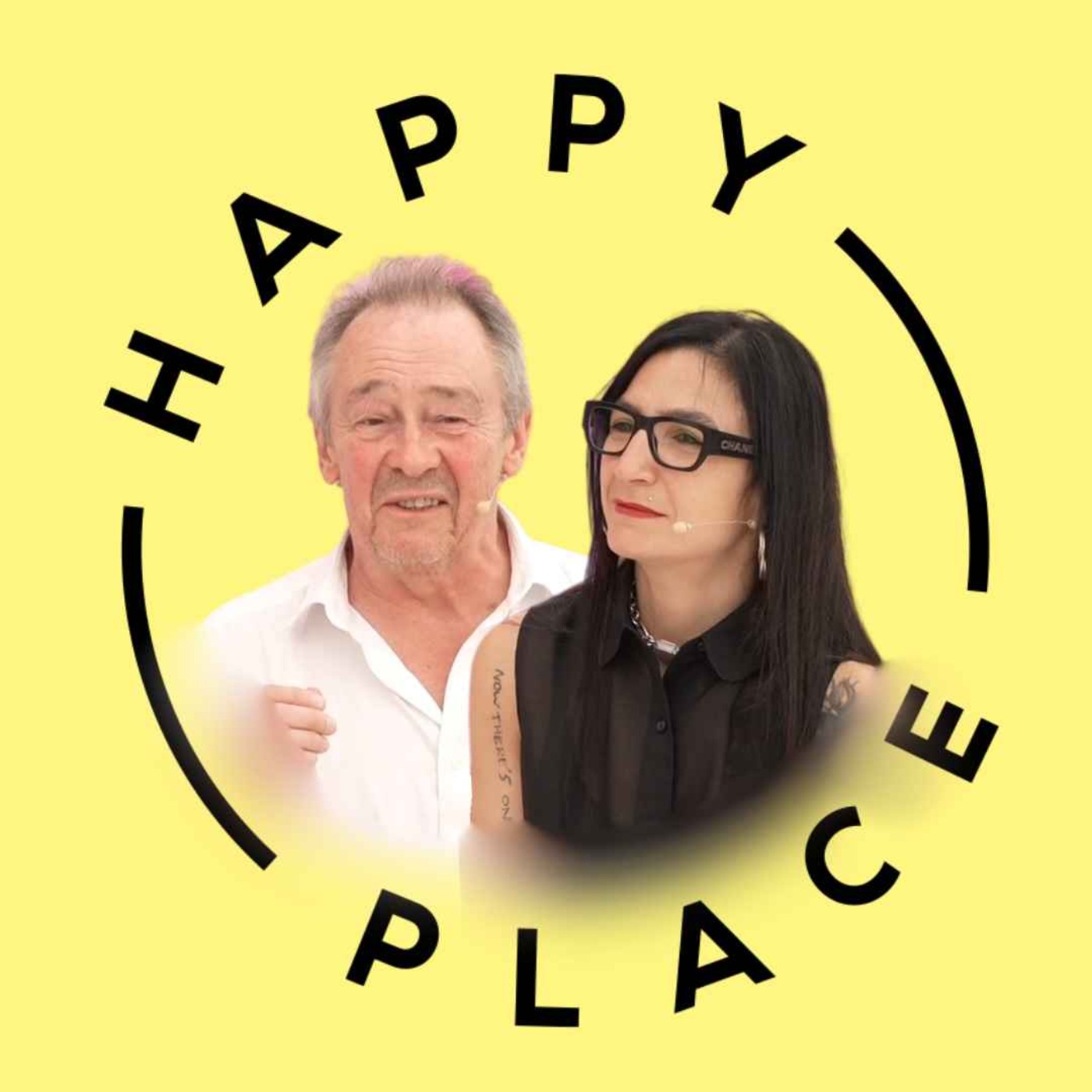
Fern introduces Paul Whitehouse and Dr. Minna, highlighting their background and podcast.
“I'm so short, I just wanted to elevate myself.”
Paul and Minna discuss their ADHD diagnoses and the complexities surrounding it.
“I think that there's a lot of overlap there.”
The trio discusses the challenges of ADHD in the educational system and societal perceptions.
“And I can speak to that as a parent and as a teacher and a lecturer.”
Explore insights on ADHD, its societal perception, and the importance of emotional support.
“All of our guests, you know, because one could say, oh, they're all successful, they're all celebs, yeah, but listen to their stories.”
Discuss the significance of emotional regulation for young people and its effects on education.
“Every single comedian that came out started with that line.”
Learn effective strategies for helping children with emotional dysregulation.
“enabling our children and young adults to self-regulate.”
Paul discusses his health issues and how they shaped his outlook on life.
“So obviously you need to do certain things that keep you just feeling...”
Exploration of the benefits of spending time in nature and bonding through activities like fishing.
“But now I've got a very legitimate excuse to do it.”
Discussion on the importance of exercise and its positive effects on mental health.
“And we all know the importance of getting out into nature, don't we?”
Insight into RSD and how it affects emotional regulation, especially for those with ADHD.
“It's always, you know, some of them obviously have been like for a lot of substance abuse.”
A look at the struggles faced by those with ADHD and their impacts on relationships.
The significance of ADHD diagnosis for personal understanding and support in education.
“At night, all my lights are on, the radio stays on.”
Explore the challenges faced by neurodivergent children in the education system and the importance of diagnosis.
“And schools have a legal duty under the Equality Act 2010 to provide those reasonable adjustments.”
Discuss a campaign that challenged Ofsted's labeling of autistic children as extremists.
“If only, you know, she reached out to us, it could have all been sorted out.”
Hear about personal happy places from the guests, highlighting the importance of self-care.
“And also collectively, I absolutely love the podcast.”

Get the gist, explore an idea or ask about something said.
 Claude
On Happy Place, what are the key points of this episode?
Searching your listeningAutomatic transcript. May contain errors.
0:01Fearne Cotton: Hello, I'm Fern Cotton and this is Happy Place. Today, a real treat, not one but two guests live from the Happy Place Festival. I'm chatting to Paul Whitehouse and Dr Mine Conkbayir MBE. It was my then therapist who suggested I might be ADHD and the mere thought, you know, shocked me deeply. I was like, what? You know, but I had headphones on, chewing gum, book in one hand, book bouncing. Well, what gives you that idea, you know? And I said, well, look, you know, I'm not interested in the labels, but might be something for you to pursue in the future. And when I was diagnosed, I hit top marks across the board.
0:43Top marks? I cried. I felt quite scared and angry and upset.
0:49Fearne Cotton: I am recording this little intro from home today and I'm still absolutely bloody knackered slash elated about the weekend. I had such a good time at the Happy Place Festival. It was just quite dreamlike. I've spent a lot of time like you do after you've been on holiday looking back at all the beautiful photos. It was just so, so special and I was so happy to meet Paul and Dr. Minna. I think I've met Paul before. Some of the 90s were a little bit blurry around the edges, but I'm pretty sure I've met him before. But we had such a laugh. They're a wonderful dynamic duo. Not only do they host an amazing podcast, but they're husband and wife.
1:29Fearne Cotton: And they've got their own set of rules for life that they really live by that I really love. And they're fascinating and they're funny and they bicker and they're just brilliant. and a little kind of behind the scenes look at the day. After we came off stage, we are really good friends with this amazing brand called Electric Eye Apparel. I've got loads of t-shirts. If you ever see me wearing a t-shirt with like a band lyric on, it's from this brand. Very small brand run by one lady and she very kindly said that she would make some of our Happy Place Festival guests a gift. So we got their favourite song lyrics and then we had them put onto jumpers and t-shirts and we gave Dr Minna hers after the podcast and she was so touched that she cried and it was just such a beautiful moment like so lovely it couldn't have been nicer after like the high of being on stage and we had a big hug it was just it was beautiful and then we gave Paul Whitehouse his and it was lyrics from the Womble song which was in vast contrast hilarious now of course we all know comedian Paul from the far show which was just iconic tv for me growing up in the 90s I didn't miss an episode me and my dad still quote it now and of course Mortimer and Whitehouse gone fishing which is the most gentle show where you get to see Bob Mortimer and Paul Whitehouse obviously fishing but also chatting about all sorts it's really beautiful and also of course his wife Minna she's an absolute powerhouse too she's a lecturer and has a PhD in early childhood education and neuroscience she also has ADHD but was diagnosed later in life so together they host this award-winning podcast that I adore called I'm ADHD no you're not and that's what we talk about a lot today why some people find labels really useful and others just don't both are fine and also the work Minna's doing to change the education system and loads of really useful stuff about how to self-regulate our emotions.
3:29Hey it's Paige from Giggly Squad you know when you finally get started on a project around the house and then five minutes in you realize you're missing one thing somehow it's always that one thing that sends you back to the store that's why i love this from lowe's if you're a my lowe's rewards or my lowe's pro rewards member you get free same day delivery honestly lowe's will make the run for you making it that much easier to get what you need just place your order and lowe's handles the rest it seriously makes life so much easier especially when you've already got a million things going on. Members get more at Lowe's.
4:03$25 minimum and loyalty membership required. Order eligible items by 2 p.m. subject to weight and size restrictions and availability. Terms at lowes.com slash shipping terms. Hi, I'm Jack Crivechi, Kramer host of The Best One Yet. At T-Boy, we're always talking about small decisions that can have an outsized impact. One of the simplest is staying hydrated. Whether Whether I'm traveling, getting a workout in, or heading into a busy day, I keep Liquid IV on hand. It's clinically demonstrated to hydrate faster than water alone and contains three times the electrolytes of the leading sports drink, plus eight vitamins and nutrients.
4:38It's an easy addition to your daily routine and helps support hydration when you need it most. Shop now at liquidiv.com. Liquid IV hydration that goes wherever life takes you. Do you keep hearing podcast ads like this one, for example, but always wonder how you actually get involved with them for your own brand or organization? Well, it's easier than you think. We're Acast, and we give you the platform to do it all yourself. Browse thousands of popular podcasts, choose the shows that match your perfect audience, set your budget, and launch. And if you want a hand, our podcast specialists are there to help you launch with confidence.
5:14This is podcast advertising without barriers. Get started at acast.com slash advertise.
5:25Fearne Cotton: Right, here we go. This is the show.
5:49I'm expecting about three people.
5:51Fearne Cotton: No. These are your groupies right here. Millions of you. Look at them. There he is. I've gone fishing now. I'm not Bob Mortimer, you know that, don't you? I'm better than that. Dr Minna, look at your shoes. I had to. I'm so short, I just wanted to elevate myself. She's only about that high. I am. Please tell me you're going to do yoga in those. I'd love to. I've played football in them before and I've scored. She's done down-dogging them as well, but we won't go into that. No, it's a bit early for that, I would say. This is the earliest gig I've ever done, by the way. Wake me up in about 10 minutes.
6:28Fearne Cotton: Okay, we will. Welcome, welcome to the festival. I hope you have a really lovely day today. I love what you're doing as a couple, as a dynamic duo. I think your podcast is brilliant. I'm ADHD. No, you're not. Yeah. It's absolutely brilliant. You've had some amazing guests on. Robbie Williams, who was so open chatting to you guys. Yeah, very generous. And I really loved Serena and Roger Taylor, which was a recent one. I thought that was fascinating. It was, and that means we've been to the houses of two of the richest people in the world. What did you nick? She always nicks some. Bog roll. Bog roll.
7:05Fire rolls. Tea bags. Right. Do they know this? They do now.
7:12Fearne Cotton: Yeah. But it's so brilliant. I love the conversations that you're having, but also as you're a couple, I love that you quite frequently pee each other off during the interview. Surely not. Just a really fun little domestic to listen to. I like it. What was it Angela Barnes said? It was like being in the backseat of the car and your parents are having the argument that's going to lead to the divorce in the front on your way to your summer holiday. It's great. It's a really interesting thing to listen to. And obviously you're talking about big topics. You're talking about ADHD formally. Dr. Minna, you were diagnosed at what age of ADHD?
7:53Fearne Cotton: 43. Surely not, darling. So three years ago. How am I doing? Shut up. Very good. I mean, like many of the women that you've interviewed on the podcast, there's misdiagnosis, there's completely getting it wrong or ignoring it, certainly in childhood. and there are a lot of women, more specifically later on in life, getting these late diagnoses. What did that mean to you and what led you to going to get that checked out in the first place? It was my then therapist who suggested I might be ADHD and the mere thought, you know, shocked me deeply. I was like, what? You know, but I had headphones on, chewing gum, book in one hand, book bouncing.
8:35Well, what gives you that idea, you know? And she said, well, look, you know, I'm not interested in the labels but might be something for you to pursue in the future. And when I was diagnosed, I hit top marks across the board. Top marks? I cried. I felt quite scared and angry and upset. But I also don't think it's the full picture for me because there is early childhood trauma and the anxiety and the depression. I think that there's a lot of overlap there. And it's very difficult to pick up the thread and say, this is because of this this is because of this and you know you also then have to go well that apple doesn't fall far from the tree it's 90 genetic hi mum I've just been diagnosed oh best wishes and get well soon but it's nothing to do with me I'm like um really best wishes best wishes kind regards and best wishes daughter in Turkish she said get michelson which means get well soon right and I'm like it doesn't work like that no um so it's you know difficult conversations were then had and she softened to it and is now a bit more open but she's nearly 80 what does adhd mean to her and she's survived all her life let's say with it but you know life has been very difficult for her and i'm trying to not make those mistakes as a mum but that might be another story i don't know there's a lot going on there it's not i don't think adhd is my full picture i think it's It's more about the complex trauma.
10:02I'm trying to interrupt and talk over you here. Oh, I've got the noise coming out. Alan Hansen, he used to sit like that. He goes, it's all about peace. It's all about peace. Well, you've just ruined my pace. I don't even know what I was saying. And now it begins. Yay. No, what I was going to say, I was just going to pick up on that because the title of the podcast is I'm ADHD, No You're Not because there are so many variables. And with you, I think your sort of very traumatic childhood either sort of masks the fact that you are ADHD or triggers it. And that's something we're still debating really and trying to unpack.
10:43People say these days, don't they? Yeah, they do say unpack.
10:46Fearne Cotton: You're absolutely right. Yeah, they do, don't they? Let's unpack that, shall we? Let's unpack it and circle back to that. Oh, my thinking. Yeah, yeah. So. But it's such an interesting topic because it is quite newly discussed. You know, if we look back 20 years ago, this wasn't a thing. You know, I'm not diagnosed and we can all sit there and go, oh, some of it resonates, I feel like it could be. But for girls, especially in school, when you're a young kid, it could be, you know, looking out the window, daydreaming, and you were just the kid that was, you know, slightly not in the room. Whereas now we take a bit more time and care to go, oh, is there something going on there?
11:22Fearne Cotton: Is that something we need to look into? And I think that's why it's so important to be person-focused before seeking a label anyway, because you could be ADHD and not get the support you need anyway. And I can speak to that as a parent and as a teacher and a lecturer. I didn't know I was ADHD at the time, let alone all my other flipping diagnoses. And I didn't know that my students were some of them, but I knew that they all came from very traumatic backgrounds. So I met each one where they were. And that did look like chaos in the classroom. A lot of the time, you know, There'd be some on the floor lying on their stomachs, shoes and socks off.
11:58Some would be leaning the pads on the wall. Some would be just outside. I'd take them to the green space that was local a lot of the time just so that I could be present for them as a lecturer and as a caregiver. Because a lot of them had defences that were really high. They struggled to stay focused in the classroom. So it is, again, I'm going to say it's about meeting that person where they are. And I think there's a lot of resistance to ADHD and autism today. And, you know, at one end of the spectrum, you've got everyone's a bit ADHD today, so it doesn't exist. Well, you know, the wiring is different.
12:39That is proven. It doesn't mean it has to be steeped in the narrative of deficits and struggle all the time. But again, I think that comes back to how we make, I don't even like the word accommodations, but how we make space for it meaningfully for that individual, be they a child or an adult, whatever. And I don't think society's good at that. They're not willing to just yet. No, no. Steps are being paid. I think it's bizarre that we expect five-year-old children to sit in a classroom for any length of time. This is crazy. Yes. It's mad. It is, though, isn't it? You know, what five-year-old do you know?
13:17Unless they've got a device. A device. It's all right, so you're going to go, oh, I can't wait to sit down for eight hours.
13:23Fearne Cotton: Exactly. But it's like my Victorian sort of schooling system. This comes back to the education system being too narrow, too bland, too unfit for purpose for anyone that has that spark of interest, that wants to learn in a way that is dynamic, and it's not forced upon them in this irrelevant curriculum that doesn't cater for their needs or their preoccupations. and that, you know, almost every single one of our guests was failed by the education system. They were bullied, they were kicked out, they didn't get the grades. Who didn't, surprisingly? Sir Stephen Fry flourished after a while. Is he ADHD?
14:00I didn't know that. Oh, he's everything. Oh, right. Oh, yeah. I did not know that. How interesting. I mean, I call it the unholy trinity. All of our guests, you know, because one could say, oh, they're all successful, they're all celebs, yeah, but listen to their stories. every single one brought with them a story of anxiety depression thoughts of suicide some attempted suicide and it's what are we failing you know to grasp with these individuals you can't just dismiss everyone and say oh but they're adhd and that's why as if like that's you're destined for that you know it's about how we support these individuals and i just think that remains lacking i think we you know sometimes we it feels like we're being critical of teachers absolutely not completely the opposite.
14:45You know, I think, you know, trying to sort of open up the education system and make it not so sort of linear and crushing actually will be liberating for teachers. Yeah. Because what they have to do is try and keep 20, 30 kids, you know, under control in the classroom, which we know is a, you know, a false kind of hope really.
15:06Fearne Cotton: Yeah. So, as I say, I mean, I'm very supportive of teachers. My mum ended up being a teacher. So, you know, Min's a teacher. We're very supportive of teachers. But I think, you know, we say, can we change the system to adapt to individual needs? It's not going to make it more difficult, weirdly, because you're not asking children to do something that's very unnatural. So hopefully that, I mean, I don't know, everybody wants a share of the pie, don't they? But, I mean, our children's education is obviously the most crucial thing. It is. You know, I mean, I don't know if it's a mantra that people say a lot, but I've always said half the class size is double teacher's wages and you'll get an extraordinary education system that ultimately can only produce people that are going to be beneficial for everyone.
16:01Yeah, exactly. Anyway. I'll just be flipping it upside down. It's a pipe dream, maybe. Your second round of applause. Oh, yeah. Mortimer would never have thought of that, not in a million years. Or Enfield.
16:18Fearne Cotton: Paul, what have you learned through Minna's diagnosis and learning about ADHD and being with someone with ADHD? What have you learned about it? And the rest of the diagnosis. Well, like Minna says, Minna had a very traumatic childhood and a lot of complex trauma, PTSD that have caused her many problems. So I've sort of always been conscious of that. She thinks I'm ADHD. I'm not sure anymore. You're something. I don't know. I'm something. You're something. Well, definitely something. Yeah, they haven't thought of a category yet. But no, I think what I've really learned is that Minna's approach, which is not to see it as the deficit and disorder within the acronym ADHD and not to look at it like that.
17:09Not that I particularly did anyway. You know, some of my best friends are ADHD. No, so many comedians are. And in fact, that was one of the reasons why men had said, look, we should try and do something about, you know, ADHD. And we went to see, a mate of mine was doing a stand-up slot. It was his first one, an open mic. and it was a couple of the cast of Only Fools and Fools. I did a musical of Only Fools and Fools. All right. We're back again in 2027, all right? Anyway, we went to see him, didn't we? Yeah. To do an open mic slot. And he was waiting, well, two of my mics from, but one of them, this is his first time, and he was about six on the bill.
17:52And every person who came out, came out and went, hi, I'm ADHD. HD. And then we were like, what? Every single comedian that came out started with that line. And he's going, oh, fuck, that's my set gone. But it did make us think, my God, it's so prevalent. And so I think that's what made us, well, do the podcast and come up with the title. Yeah, I do want to stress, though, by saying I don't buy into the language of medicalisation and deficits, I don't mean to minimise any ADHD experience at all. I really don't. For some, it is debilitating. But again, I'm going to come back to society not being set up for our wonderful brains.
18:39It's not that you are the problem and you are broken. It really isn't. I just think there's so much to be done. But dialogues, you know, places like this are really helping to push the conversation forward. And it is my hope that one day through all of this that all of us are doing, we co-construct something different and that ADHD doesn't reside in a manual for mental disorders like it does now, the DSM -5 text revisions, because it's not a mental disorder. I just find it deeply offensive. I just wanted to say.
19:15Fearne Cotton: It seems to have also really inspired the work that you're doing with young people. When I was looking over your website earlier on in the week, there's a lot of discussion around emotional regulation, which is another thing that gets slightly misconstrued, whether it's on social media or people talking about it. What does that mean to you? And what can you see within young people that do have neurodivergence? So the ability to self-regulate in a nutshell is our ability to manage our own thoughts, our feelings and emotions and responses. and it's grossly underdeveloped in many of us, in me particularly the irony as my then therapist would say, well, you know, why don't you read a page out of your own books on it?
19:59Because I have another meltdown. True, if I hold it in front of her like that, read that woman. Our 14-year-old also, you know, the irony isn't lost on her, but again, it comes back to how we were co-regulated, how we were held emotionally as infants and children Or in my case, and I'm sure some of us here, we were never contained emotionally. So we now have nervous systems that are wired for stress and primed for stress and trauma. And it's really difficult to get out of that and to get into healthier habits. Again, I'm not using the language of maladaptive behaviours because those maladaptive behaviours as children kept us bloody alive and safe.
20:43in a sea of chaos. So yeah, that's what self-reg is. It's managing how we respond to others, how we come back to equilibrium in a state of chaos. But those children, those young adults that I work with weren't able to do that. You know, it's tough, man. But if you create an environment that is trauma-informed and it recognizes that these people have come from some tough shit and I'm here to help provide a bit of safety what happens what I managed to create was a beautiful scenario where they looked at for each other my students you know come on man don't do that you know miss is looking after us you know she's got our backs and it's just beautiful it's collaborative it's co-constructive and that that's missing today so when I go back to talking about self-reg it can't happen without being co-regulated and those of us that haven't been co-regulated then start to draw on ways that might prove problematic for us and and this is why your festival is so bloody gorgeous I walked in dinner and I said I felt peace yeah it felt beautiful and instantly grounding and calming and I think we need to invest more time in our curricula enabling our children and young adults to self-regulate.
22:07So like I was saying earlier on, prioritise wellbeing over learning, you know, in line with how the brain develops, because if those emotional regions are being bypassed, like the brain's panic button, the amygdala, you're not going to have much hope of tapping into those executive functioning skills. Geography ain't going to mean much, is it? Ain't going to mean sure. You're dysregulated. So, you know, make your students feel safe and then the rest will come. if you bypass that critical element, you're not going to achieve much. What about with parenting? Can we get back to geography, please?
22:39Fearne Cotton: Let's talk about geography. Cows on the lowlands, sheep on the highlands. That's all you need to know. That's your geography lesson for the day done. There'll be people certainly sat here in the tent and there'll be people listening at home that are parents of kids that might have a diagnosis but also might not, but they can certainly recognise that emotional dysregulation where maybe the reaction to something is disproportionate or it could be triggered by you're out in a really busy environment in a restaurant and your kid just starts flaring up. What do you do? What's the best way to help the child?
23:15Fearne Cotton: Probably not that. See that? Did you see that? Did you see the provocation? No. Constant. I was just getting some flies away. She hit me. I was getting a fly off you. it's knowing no flies on me girl there are there are knowing your child's triggers is crucial yeah so when you said they're kind of rightly disproportionate response but to them it's not no so misophonia you're referring to is massive particularly among our neurodivergent children and adults alike and it's knowing those triggers and trying to minimize them it might be okay noise defenders it might be fidget toys it might be avoiding the place or you know going at a time that when it's quieter or something like that never ever reaching for first line treatments as in medications as like oh my god that's what we need and I've got a lot of parents saying oh you know my son's just been diagnosed but you know what can we do the diagnostician is pushing for medication I'm like but what have you tried well nothing yet but I'm like well try some other strategies first and I just think knowing knowing your child's triggers but also giving space for yourself as well and looking after your own mental health however you know whatever that might look like so that you're able to contain your child emotionally well that is such a good point because I think often we think how can I get the child to calm down because it's easier and then everyone you if your kid's happy you feel happy but you're so right that if we're not looking after ourselves we're already on the back foot.
24:55Fearne Cotton: We're depleted. We're stressed out. We're at max capacity. We don't know, you know, what to do next because we're not feeling okay. What do you individually do to make yourselves feel all right? Gym, walking. Gym, fishing. Yeah, but now I've got the idiot, haven't I? Paula, no, Paula. I didn't wind, honestly, Paula, didn't I? Oh, Paula, I've fallen. Oh, my shingles, palman. You know. But no, obviously I'm that. But again, the gym, exercise, I know it's a cliche, but it's crucial. Yes. It's crucial for you, obviously, for your body. I have to do it for heart rehab stuff. Yeah. But mentally, if I miss it now, I really find it disconcerting.
25:43But I don't, I mean, I don't, I didn't have Minna's traumatic upbringing. So I don't sort of, I don't know, how can I say this without getting a clump?
25:56I'm fairly sort of balanced, really, aren't I? I mean, I don't get upset or angry. Hey, it's Paige from Giggly Squad. You know when you finally get started on a project around the house and then five minutes in you realise you're missing one thing? Somehow it's always that one thing that sends you back to the store. That's why I love this from Lowe's. If you're a My Lowe's Rewards or My Lowe's Pro Rewards member, you get free same-day delivery. Honestly, Lowe's will make the run for you, making it that much easier to get what you need. Just place your order and Lowe's handles the rest. It seriously makes life so much easier, especially when you've already got a million things going on.
26:41Members get more at Lowe's. $25 minimum and loyalty membership required. Order eligible items by 2 p.m., subject to weight and size restrictions and availability. Terms at lowes.com slash shipping terms. Hi, I'm Jack Ravici, Kramer host of The Best One Yet. At T-Boy, we're always talking about small decisions that can have an outsized impact. One of the simplest is staying hydrated. Whether I'm traveling, getting a workout in, or heading into a busy day, I keep Liquid IV on hand. It's clinically demonstrated to hydrate faster than water alone and contains three times the electrolytes of the leading sports drink, plus eight vitamins and nutrients.
27:18It's an easy addition to your daily routine and helps support hydration when you need it most. Shop now at liquidiv.com. Liquid IV hydration that goes wherever life takes you. Here's a tip for you. There's a podcast out there with fans waiting to be your next customer. They tune in every week. They trust the host. And that host wants to talk about brands like yours in their own words to their audience. The problem is you just haven't been introduced yet. We're Acast, where that introduction happens. As the world's largest podcast marketplace, we let you browse shows, see who's listening, and book host-read sponsorships or run your own ads all from one platform.
27:58Transparent pricing, real-time data, complete control. Start advertising on podcasts by visiting acast.com slash advertise.
28:10Fearne Cotton: You've been really open about your physical health and your heart issues that you've had. So obviously you need to do certain things that keep you just feeling... Is there panic or anxiety that comes with that? No, well, not really. I mean, I think Bob did. Bob had a lot of anxiety. My heart's disease came about after something else I'd had, which was very life-threatening. and then I was being monitored afterwards and they saw that my blood pressure was raised, my blood flow wasn't right and I needed to have some stents. So in a way for me, that treatment was just, it was quite straightforward and I'd already had this thing to deal with that I'd overcome.
28:53So the stent treatment was quite straightforward. So when Bob actually had to have his stents done, I was his stent buddy, if you like, and I got in touch and said, you're going to be fine. and they got him in and he had to have an emergency triple bypass. You know, out came the old chainsaw. And I was like, oh, sorry, Bob, I gave you a wrong steer there. So for me, it wasn't. But having said that, the exercise for me now is sacrosanct. And I'm not very good at just saying, no, you know, I'm not listening to anyone. That's my time and I'm going to do it. But now I've got a very legitimate excuse to do it.
29:34I do make that time. And that gives me, as I say, not just physical sort of well-being, but definitely keeps me sane up there. But Bob did, you know, that's a shock, isn't it? You know, you go from some idiot like me saying, yeah, you'd be fine, you'd be in and out in a day, to having a triple bypass. Yeah. And there is some, obviously, I'm sort of trivialising my experience a bit because it is your heart. And so afterwards, you're always conscious if there's any slight, you think, oh, God. Yeah. You know, it's not like other illnesses and diseases. It's not a slow burner. If you, you know, once your heart is compromised, you do think for a while, you know.
30:18Yeah. But that's, as I say, that gradually with medication and exercise diminished for me. It was much worse for Bob because it was an emergency for him and he was suddenly incapacitated, whereas I was capacitated, if you like, you know.
30:32Fearne Cotton: And did you have that sort of, I don't know, slightly cliche, but rightly so moment going through anything health wise of, wow, this is all very precious and fragile and I want to really live life to the full even more? Yeah, to an extent I did. But as I say, I went from this other quite traumatic experience, which was very emergency operation. And then the heart thing. So it was almost like a sort of a kind of, you know, I started to go up, you know, like that. and definitely for Bob when he started to come out of his shell and we started going fishing together this is in real life you know we started something I he'd wanted me to do for ages and I hadn't done and I thought I better do it quick just in case so you know that we'd been mates for years but we'd never actually been out fishing so we started doing that and you know I know fishing is very niche and it doesn't appeal to many people but but the idea that you're out in that environment and you're actually the world is over there then for you know it it doesn't really matter whether you I know some people just want to catch fish but it's our excuse in a way for getting out into the most beautiful places and that's what it's always done for me is like even if I'm fishing on the canal with my dad or my mates when I was a kid but it takes you out of the world and I've been to some very beautiful places as well so So it's definitely been, you know, that's my escape.
31:59And we all know the importance of getting out into nature, don't we? And having a chat. Yeah.
32:05Fearne Cotton: Just having a nice chat. Oh, no, I'm not sure about that. Oh. We're blokes, you know. I keep saying to Bob, can we just shut up? Just have some silence in the beautiful countryside. Yeah. And we're over there and he'll be looking at our flokes. and then Sunny will go, what's your favourite powdered drink, Paul? Your favourite powdered drink? Yeah.
32:33Fearne Cotton: What a great question. I know. I've never asked anyone that before. I might have to make a note in my pad. I like that. No, it's so important to have something that's outside of work, outside of the noise, that's just for you. But definitely for me, it's exercise, isn't it? Yeah. thing really it's proven to you know boost serotonin endorphins you know clinical studies always showing it could be more potent than even antidepressants you know some regards so and it also creates new neurons in our hippocampus the seat for learning and memory which is fantastic and most necessary for adhds like me yes there was all our guests say say exercise yeah yeah They all do.
33:15It's always, you know, some of them obviously have been like for a lot of substance abuse. Yeah. You know. Yeah, yeah, yeah, yeah. Sean. Sean, who's Sean? What's his name? Oh, blimey. Ryder. Yeah. Oh, yeah. Sean Ryder. Oh, right. Oh, yeah. Okay, yeah. Yeah. The poster boy.
33:34Fearne Cotton: Exactly. But he said, get on me bike now, get on me bike at nine o 'clock in the morning and I come home about 12 hours later. Yeah, but does he or is it not? I thought he meant a station. No, he means a fucking bike. He's going out. He's having a big cycle. You sure? Yeah. Yeah, yeah, he does. And now he goes, he does about 10 hours a day. And I think given what he went through, you need that. Yeah, it's a better option, cycling. A much better option. Another thing that I found very interesting that you've talked about in various guises on the podcast, on your website, is RSD. And this is something which is perhaps a comorbidity, am I right, to ADHD?
34:17Don't use the language of no.
34:18Fearne Cotton: No, get rid of that. Okay. So this is something that can come along for the ride with ADHD. Yeah, but it's not exclusive to ADHD. And apologies, everyone. But again, I find this is ADHD only. It's not. It's something that can affect any one of us. okay it may be disproportionately those of us who have experienced trauma trauma in childhood adulthood whatever but it's not exclusive to adhd and it does stem from a difficulty in regulating our emotions so yeah so for anyone who's not heard that that term rsd sensitivity dysphoria well who who probably experiences rsd here quite a few you know so we're just get over it what's it with you yeah that just being extra sensitive to what we might perceive as criticism or hostility it might not even be real it might be in our minds but the the pain we experience is quite visceral and I think you might have been referring to the episode of Denise Welsh yes where I got upset because I bought two portions of chips for my daughter on holiday but knowing she wouldn't get lunch for another six, seven hours.
35:34And they all cussed me because I got too many chips and I had a breakdown, got physically sick. Chip gate, we call it. Didn't surface for a couple of days. We don't want two bags of chips here. No, but we don't want them. Not here. Oh, fuck that. But yeah, but you know, yeah, yeah, basically. You disappeared for a day. I did. I got quite ill and my stomach went up the spout and I was in tears and woe is me. but in that moment I mean it is because you just think everyone hates you and you're rubbish and useless and you're sensitive to people's responses and behaviors and it and it is tough it is but again that comes from the emotion regulation difficulty that's to be worked on it's not every ADHD also has RSD right Mina so if you know that you're maybe you're in that
36:25Fearne Cotton: or that's happening again for anyone that's felt that or has been through it recently or you know you're in a situation where that could be triggered what what would you do what would you advise someone could do to just maybe shift the perspective or get themselves feeling a little bit better about the scenario they're in i i organized a little family meeting in the airport on the way home just saying look i am very sensitive i am sorry i might have you know looked like I was overreacting to you, but I did get upset. And it's only because I care. And just talking about why you are the way you are sometimes, and also maybe, you know, stock responses and things not to do or say, like to have a go at me and shout at me even more, because it's like pouring fuel on the fire in that moment.
37:12But everyone is different. They're affected differently. They've got different triggers. So I'm always going to come back to knowing your own triggers, being self-aware and reflective and honest enough to go okay this is how i am what can i do about it and how can those around me help me to make some changes that will benefit all of us because at the end if you don't you are going to be sabotaging and undermining your relationships with these people who are probably very important to you as well so yeah only probably you ain't completely innocent you know so yeah one thing that people are endlessly fascinated
37:50Fearne Cotton: about is the fact that you don't live together is that that still stands yeah yeah yeah when we say that to married people they all go oh yeah i used to fight jealousy yeah i used to oh babe i don't even have a t-shirt or a toothbrush in your house and i'm like fuck i can't envisage sleeping next to someone
38:18also this is a very real thing like i i am a sensory seeking person and i mean only last night in it baby he had the wimbledon on and i had the music on he's like which one do you want to turn enough, I went none. So the telly's on, the music's on. At night, all my lights are on, the radio stays on. I've got to get out of there. I don't even draw the curtains. And he and my daughter, our daughter, are the opposite. So it works well for all of us. So what you'll do, like a day in someone's house and then you'll go? No, we're all way, no. In fact, we're very close. It's been months and months and months I've been in your gaff.
38:58Well, you're welcome any time, darling. I'm not welcome.
39:02Fearne Cotton: I'll never feel welcome in you, to be honest. I love it, but why be conventional if it doesn't suit you? Oh, God, so conventional. Yeah. Boring. Boring. Yeah, you've got to find what works for you. I'm not trying to change the subject, because we're happily talking about that all day long. But one thing that's come up quite a lot with on the pod with our guests is pretty well all of them, Only very few wanted to rid themselves of ADHD. Yeah, only two chose to get rid, right? Gemma Stiles and... Simon Day. Lucy Beaumont, that hasn't aired yet. And Simon Day. And Simon Day. And what were their reasons?
39:43Because that's really interesting. Life's been too much of a struggle. Really, really, really difficult. Especially for Simon. He ended up in... Simon ended up in Thorstall, you know. And I think with him, he's got a brilliant... mind and you know he's so funny and he functioned great in the fast show because we could contain him a bit but you know it was an outlet for and it was an outlet for his mind but when that's not there he spins out of control and and he hates himself for it you know so he found it very difficult he's he finds it difficult and he's he has to deal with a lot but he's doing you know he's doing brilliantly but you know that's when you see the the flip side you know some people with ADHD who have been successful, you know, they've found a path and they can flourish in that path.
40:32But if you don't find that path, so many people end up, we call it, as I'm sure you all know the phrase, the school to prison pipeline. And unless you find a way out or, you know, you're helped and contained and understood, you know. And also it's kind of weird. Some people really liked having the label because it gave them, made them, helped them understand. their behaviour or the trajectory that their life attain. Some people don't want the label. And again, there's a split. But yeah, I mean, there will be most people who have done well, despite a lot of problems and trauma and misery and difficult times.
41:15If they found a path, they keep it. But if you go down a different road, I'm sure you don't want to keep it at all.
41:24Fearne Cotton: that's what I think is very interesting with if you do seek a diagnosis for I've got you know many friends who have done that later in life women and there has been a sense of liberation like a I understand myself and also I don't have to actually it's the self-loathing thing hate myself because I don't know why like one of my friends had a real issue with keeping time and there was just no way that she could keep on top of it she tried so many different techniques and tactics and after her diagnosis after her diagnosis it's she stopped hating herself because she was like I get it I get myself so it might not work for everybody but for some people it can be a real gateway to getting maybe the right help they need or just understanding themselves I think particularly important for children's diagnosis because of the setup of our education system it's crushing our neurodivergent children yes there are some pockets of excellent practice I know that but I also get the letters pretty much daily from parents begging for help because their child's again been shunted into bloody detention isolation for forgetting equipment forgetting homework you know daydreaming and I just I'm sick of it it's just so discriminatory so having that diagnosis you know can be a gateway like you said for greater support greater understanding or whatever that needs to look like for that particular child.
42:50And schools have a legal duty under the Equality Act 2010 to provide those reasonable adjustments.
42:57Fearne Cotton: And it's also a subject that we're still in real time learning about collectively. So it's going to keep changing. And that's why it's important to have podcasts like yours where in real time we're getting the information, you're talking to people that are getting diagnosis and working out different ways and methods to deal with it. and that's helpful for everybody. Yeah, I think it's important we listen to each other and we're not into these little groups that have split off and they're really hostile to one another. Well, why do you call it, why do you have, you know, inverted commas above disorder and the D?
43:29Because I don't believe it is. That's just my belief, you know, that's how I view it. I know it's difficult for some. I don't think it's a disease. Some still call it, what the, it's a disease about ADHD. Yes, it's a bloody difference. So take these things on board, formulate your own opinions that are informed, evidence-backed, and I just hope we're moving on from this spot.
43:52Fearne Cotton: Yeah. I have to give Minra a bit of a round of applause because recently she started a campaign, actually, well, over the last two years, but recently came to fruition because Ofsted had included in their prevent training the phrase that their practitioners should look out. Oh, don't open that up. No, no, no, you need to talk about it. You need to talk about it because it's come to a successful conclusion. Okay, in a very tiny quick nutshell, basically, Ofsted in its prevent safeguarding guidance was, quote, unquote, labelling children and young people with autism as likely extremists because of their propensity to develop special interests and because of their language and communication difficulties, right?
44:37Again, I'm condensing it because it's been bloody long and painful. They denied it. They obfuscated the I organised campaign, got some celebs on board, loads of allies, and we handed in a letter to 10 Downing Street. Angela Rayne was on board, loads of other MPs, lords, and they did remove the wording. They did, but the same day Martin Oliver said that it's preposterous. Sir Martin. I never do the sir. Why did you have to point out the sir? Said, you know, ridiculous. If only, you know, she reached out to us, it could have all been sorted out. We've never said such a thing. So I went online and said, this is all the correspondence, you know, him to me, you know, saying sorry, it's staying because it is a real threat and we have to acknowledge it for safeguarding purposes.
45:28All the parliamentary questions I drafted for these high profilers, all of it, it was all denied. But yeah, it got removed, basically. But then The Guardian reported on it on the 5th of July and made it all about Chris Packham, who's just a babe. He's a proper star. But I kicked off saying, look, man, I instigated all of this. I've been, you know, for the two years. Go on, Minna. Sort it out. And they did rectify and put my name in there. Good. So, but, yeah.
45:59I love that. But it was extraordinary. I mean, I know Ofsted are not going to go, yeah, thank you, Minna. Yeah, we were wrong. You know, they said, oh, it was never in the manual and we've taken it out. And I've got proof of everything. But, you know, we do have to stand up for our neurodivergent children. They're not a threat to anybody. They're grossly misunderstood. And, you know, it just breaks my heart. So we have to fight fearlessly for them.
46:29Fearne Cotton: Yeah, well, it's a beautiful thing that you're doing. And also collectively, I absolutely love the podcast. And what a brilliant career pivot for you at this point. I love it. Who thought you'd do an ADHD podcast? Yeah, I know. Yeah, it's a strange twists and turns life takes. It's brilliant. And it's highly entertaining as well as massively important and educational. Before we wrap up, I would love to ask you both, where is your happy place? Paul, let's start with you. Well, I mean, I suppose on the riverbank, you know, I would say, you know, I get lost in that world. You know, I would say, yeah, I would say that.
47:04Lovely. What about you, Dr. Minna? Somewhere in a nice open field or the gym. A gin? No!
47:11Fearne Cotton: Gym with an M. It's a dry festival, no gin. Sadly. Well, thank you so much for being at the Happy Place Festival. I hope you have a lovely time walking around and enjoying the whole thing. Please give it up for Dr Minna and Paul Whitehouse. Thank you very much.
47:29Fearne Cotton: Oh, Paul and Minna, what a pair. I love that we all got such an insight into just their relationship and their dynamic I love the amount of times Dr Minna was like oh shut up just so brilliant um what a brilliant duo and so amazingly educational and reflective and funny it was everything I love about doing this podcast so thank you Paul and thank you Minna we've still got loads more to come from the festivals so keep your eyes on your podcast feed across the next few days and on instagram too we are at happy place official on instagram in the meantime a huge thanks again to paul to dr minna and to you you are the bloody best
48:37Hey, it's Paige from Giggly Squad. You know when you finally get started on a project around the house and then five minutes in you realize you're missing one thing? Somehow it's always that one thing that sends you back to the store. That's why I love this from Lowe's. If you're a My Lowe's Rewards or My Lowe's Pro Rewards member, you get free same-day delivery. Honestly, Lowe's will make the run for you, making it that much easier to get what you need. Just place your order and Lowe's handles the rest. It seriously makes life so much easier, especially when you've already got a million things going on.
49:10Members get more at Lowe's. $25 minimum and loyalty membership required. Order eligible items by 2 p.m. Subject to weight and size restrictions and availability. Terms at lowes.com slash shipping terms. Hi, I'm Jack Ravici, Kramer host of The Best One Yet. At T-Boy, we're always talking about small decisions that can have an outsized impact. One of the simplest is staying hydrated. Whether I'm traveling, getting a workout in, or heading into a busy day, I keep Liquid IV on hand. It's clinically demonstrated to hydrate faster than water alone and contains three times the electrolytes of the leading sports drink, plus eight vitamins and nutrients.
49:47It's an easy addition to your daily routine and helps support hydration when you need it most. Shop now at liquidiv.com. Liquid IV hydration that goes wherever life takes you. While every other channel is fighting for your customer's attention, podcasts are where they've already given it. No one accidentally listens to a podcast for 45 minutes. They choose to be here. They trust the voice in their ears. And when that voice talks about your brand, it doesn't sound like advertising. It sounds like a recommendation from a friend. Acast gives you that trust at scale. Digital precision, post-read authenticity, and performance data that proves it worked.
50:22Fearne Cotton: Don't fight for attention. Buy it with ACAST. Learn more by visiting acast.com slash advertise.
Are you aware of what can trigger big emotions in you? How to do you act on those difficult emotions? Comedian Paul Whitehouse and his wife Dr Mine Conkbayir MBE – who has a PhD in neuroscience – talk about learning to emotionally regulate.
In this chat with Fearne – live from the Happy Place Festival – Mine explains what led to her late ADHD diagnosis, and the childhood trauma that plays into her own behaviour. Meanwhile Paul’s had physical health scares, and explores how his lifestyle has changed as a result.
They all talk about how the education system needs to change for neurodiverse children, why labels might be useful for some and not for others, and how to calm others with your own behaviour.
Plus, why do this married couple choose not to live together?
Listen to Paul and Mine’s podcast I’m ADHD! No You’re Not! wherever you’re listening to this right now!
If you liked this episode of Happy Place, you might also like:
Hosted on Acast. See acast.com/privacy for more information.