Ask ChatGPT
 Harvard Business Review
21 Nov 2026 · 41m · 17 chapters
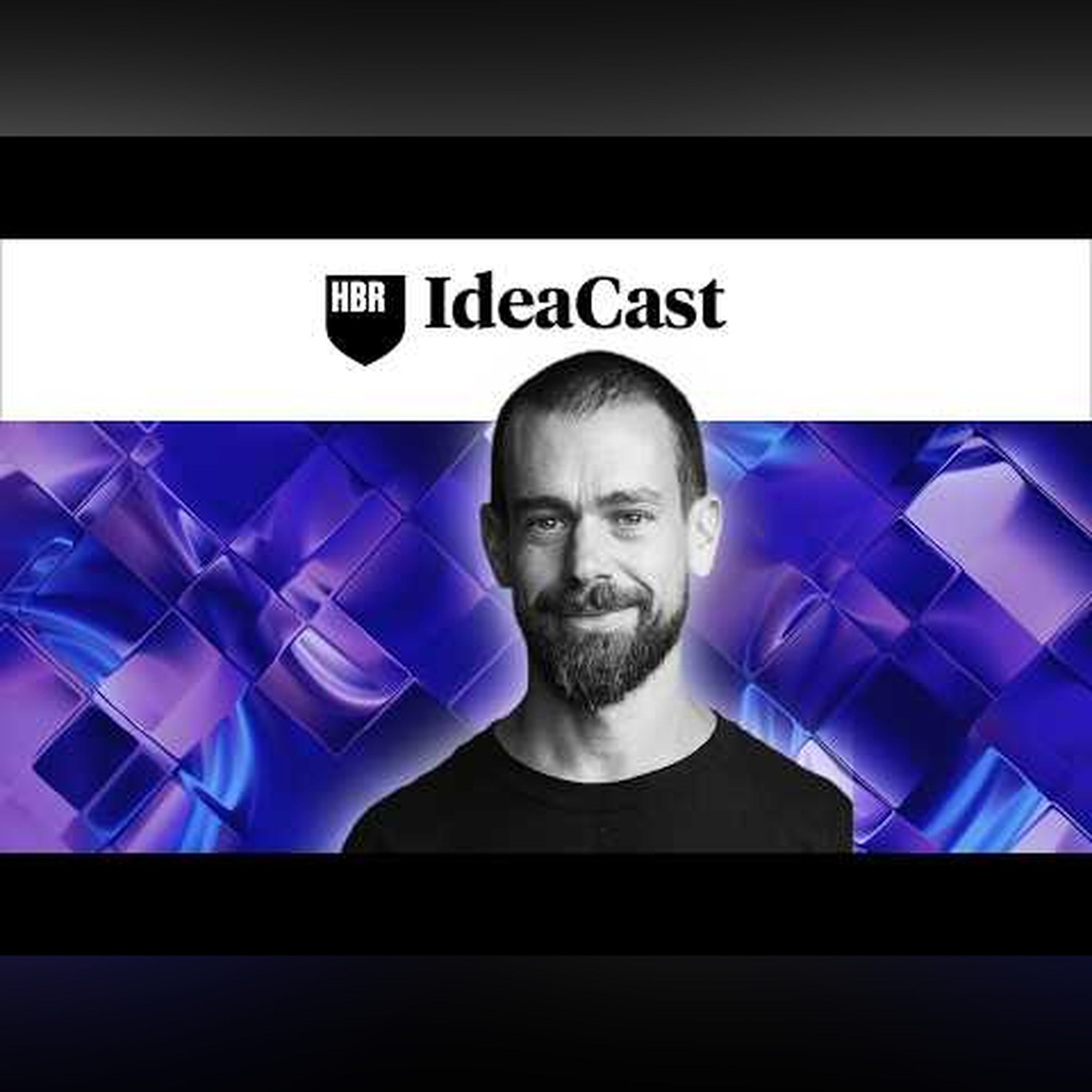
Jack Dorsey (Block) explains how Block reorganized around functions (engineering/design/finance) and later around “intelligence,” treating the company as an information-flow technology. He describes a remote-first model where every interaction leaves queryable written artifacts, reducing communication hierarchy and enabling faster, context-rich decisions. He also covers bottom-up innovation, AI tool adoption, open-source commercialization signals, and AI risks (especially concentration of power) plus compute efficiency via world models.
Jack Dorsey is a Block executive leading intelligence-driven innovation. He discusses Block’s use of open-source agentic tools Goose and Buzz, and world-model research; he also references Block’s DESA voice model and open-source/open-weight philosophy.
intelligence comes from human judgment operating on legible internal artifacts; roles become IC/DRI/coach with agency; success is customers using tools in unexpected ways; open source distributes and signals value; security requires constant upgrading and decentralization.
Goose/Buzz adoption (Stripe forks Goose quickly); DESA runs on a laptop and predicts next actions from speech; “Twitter updates to the world” as an innovation analogy; conversational platform emergence from unintended use.
Written by AI. May contain mistakes.
Jack Dorsey discusses Block's reorganization towards a more functional structure.
“Now we can organize all the information, all the working artifacts that we have into one surface where anyone can query it at any time.”
Dorsey explains how to mobilize employees during disruptive changes.
“Cash App grew quite rapidly after about five years of Square.”
Understanding how to turn a company into a technology focused on intelligence.
“to folks, you know, and that they, like I'm making decisions that I believe in that may not feel credible or decisions that are wanted throughout the business.”
Dorsey highlights the importance of information flow in company hierarchies.
“and then just make sure that I'm communicating that all the time.”
Exploring the shift towards a flat organization with empowered employees.
“usually leaves some sort of written artifact behind.”
Discussing how to align bottom-up innovation with long-term company strategy.
“This episode is brought to you by Indeed.”
Dorsey shares his approach to keeping up with rapid AI advancements.
“And that's us understanding who we are and who our competitors are and who our customers are and what our goals as a business are as well.”
Learn how Jack Dorsey explores AI tools to understand their boundaries and capabilities.
“and I read either two to three papers and sometimes I only get to one because I want to go deeper on the subject.”
Understand how Block predicts customer actions using financial data.
“Walmart Plus and Sam's Club Plus savings among members of both for one plus year versus non-member or club member pricing slash fees.”
Learn about the commercialization process of internal open source tools.
“Predicting the next, not the next word, but the next behavior is pretty cool.”
Explore how Dorsey measures success based on customer engagement with tools.
“especially these machine intelligence tools.”
Dorsey discusses potential risks of AI and how to mitigate them.
“or an entirely new use case that grows the business itself.”
Dorsey explains the need for efficient computing in AI development.
“And as you build more of block around AI, how much does that strategy depend on cheap, readily available computing power?”
Discuss the evolution of team models to be more intelligence-led.
“So Simon, who's a VP technology advisory at CGI asks, he's interested in how you think with the forward deployed everything model at the moment, which is very much grounded in command and control.”
Learn how individual agency and AI tools can enhance problem-solving in various disciplines.
“And I think the models will become more and more capable with where those things become less necessary, even the harness itself.”
Discover strategies for fostering innovation and changing mindsets in traditional businesses.
“ocean strategies that can catapult to achieve 10 times growth?”
Explore how to empower decision-making in flatter organizational structures for better innovation.
“I was forgetting the name of the book, but thank you.”

Get the gist, explore an idea or ask about something said.
 Claude
On Harvard Business Review, what are the key points of this episode?
Searching your listeningAutomatic transcript. May contain errors.
0:00This episode is brought to you by Indeed. You're ready to level up your business, but the pressure to find the right person to make that happen is intense. Indeed Sponsored Jobs can help carry the load. It boosts your job post to help it reach quality talent fast. Cut through the chaos with Indeed Sponsored Jobs. Get a$75 sponsored job credit at Indeed.com slash podcast. Terms and conditions apply. Hiring now? Then this is a job for Indeed Sponsored Jobs. Sam's Club is the club for every holiday club. Guess who's joining the club this season? Walmart Plus. Yep, Sam's Club Plus membership now comes with Walmart Plus at no extra cost.
0:39Two memberships, one great price. Just$120 a year can save you time and over$700. Want to get in on the membership duo of the century? Visit samsclub.com. Come join us. Sam's Club. Annual plan only, auto renews, TNC apply, estimate based on average combined Walmart Plus and Sam's Club Plus savings among members of both for one plus year versus non-member or club member pricing slash fees. Excludes membership fees. See Walmart Plus terms and Sam's Club terms for more info. Now we can organize all the information, all the working artifacts that we have into one surface where anyone can query it at any time.
1:08Anyone can act on that information at any time. And it really diminishes the need for the communication hierarchy.
1:23Jack, thank you so much for being here. Thanks for having me. Yeah. So let's start by going back a few years. In 2024, you reorganized Block around functions rather than business units. Why was that an important first move to set the stage for the intelligence-driven innovation that you're pursuing now? It was more getting back to how we started. We were organized by discipline, by engineering, design, and so on and so forth when we started the company in 2009. And we didn't expect to have an entirely new business line in Cash App. We started with Square. Cash App grew quite rapidly after about five years of Square.
2:07There were two mentions of it in our S1 when we went public. But then it just took off and we decided that we would experiment with having a separate business within, you know, this larger business. So we had these two separate ecosystems. We kind of ran them as separate companies. But we realized we weren't getting, we didn't want to end up just being a conglomerate of loosely coupled businesses. We wanted to be two ecosystems that actually benefited one another. So it made sense to remove the business structure from them and move back to a discipline base where we can really focus on, you know, getting all of our engineers to mastery, getting our designers to mastery, getting our finance and council folks to mastery instead of like just serving a pure business function and having differences along the way.
2:58So now we have standards across the company and it made it much easier to deploy like similar tool sets and policies and culture. Like each one of these businesses back in the day had different cultures and they were using different tools. And there was just a lot of duplication that was unnecessary, especially as we entered more into using AI tools, which really normalized a bunch for us and made it much easier to just move faster because we weren't choosing all these different vendors and tools. Yeah. So you acknowledged back then that that initial move was disruptive and uncomfortable, as is the more recent shift to organizing around intelligence, which involved layoffs this year.
3:41So how do you mobilize your people to embrace a change that's going to radically shift their roles and might eliminate some of their work? I think there's many times in my career where I had to be comfortable with not seeming credible to folks, you know, and that they, like I'm making decisions that I believe in that may not feel credible or decisions that are wanted throughout the business. any change is going to be disruptive and it's not often the case that change is embraced but when i feel very strongly about something i get feedback from a bunch of people that would have differing opinions and it builds a lot more confidence in the action um and i'm okay with losing a little bit of credibility if that outcome over the longer term is going to be successful and it's going to take time for folks to get there.
4:45And it generally worked out quite well, but it is, you know, it's hard along the way, but it gives me a sense of empathy of like what I have to do as a lead of the organization. This episode is brought to you by Indeed. You're ready to level up your business, but the pressure to find the right person to make that happen is intense. Indeed Sponsored Jobs can help carry the load. It boosts your job post to help it reach quality talent fast. Cut through the chaos with Indeed Sponsored Jobs. Get a$75 sponsored job credit at indeed.com slash podcast. Terms and conditions apply. Hiring now? Then this is a job for Indeed Sponsored Jobs.
5:29Sam's Club is the club for every holiday club. Guess who's joining the club this season? Walmart Plus. Yep. Sam's Club Plus membership now comes with Walmart Plus at no extra cost. Two memberships, one great price. Just$120 a year can save you time and over$700. Want to get in on the membership duo of the century? Visit samsclub.com. Come join us. Sam's Club. Annual plan only, auto renews, TNC apply, estimate based on average combined Walmart Plus and Sam's Club Plus savings among members of both for one plus year versus non-member or club member pricing slash fees. Excludes membership fees. See Walmart Plus terms and Sam's Club terms for more info.
5:59How we should see the organization from everyone's point of view. and then just make sure that I'm communicating that all the time. It's really like, why are we doing this? Why is it important? Why does it set us up for the future? And, you know, not everyone's going to agree. Not everyone's going to believe it immediately, but it's my job to prove it as quickly as I can. Yeah. Okay, so now the big question, what exactly does it mean to turn a company into an intelligence? How does it practically change the way that the company is structured, how it operates, and most particularly how it innovates?
6:34I mean, I don't think we often think about it because it sounds a little strange, but a company itself is a technology. The way we organize, the way we build into departments, how we meet, how we structure our communication, our collaboration, we don't necessarily see it as a technology because we think of technology as electronics, but it's a technology that serves distributing information and distributing tasks and accountability. And it's something that when we started our company, we borrowed a playbook from Google, which borrowed it from Silicon Graphics, which borrowed it from Hewlett-Packard, which borrowed it from GE and so on and so forth, all the way back to the railroads and all the way to Roman times.
7:22And it really, if you look at what it is, It's this technology around information flow. And the hierarchy around a company is really to make that information flow as efficient as it possibly can. But all the intelligence of the company is within human TEDs, and it's all dependent upon these information flows working. and the speed at which people can organize the information, provide context, disagree with it, answer questions, ask the right questions and whatnot. Now, every single interaction we have in the company usually leaves some sort of written artifact behind. We're a remote-first company, so everything we do has an artifact associated with it that can be queried and ingested by an intelligence.
8:17And now we can organize all the information, all the working artifacts that we have into one surface where anyone can query it at any time. Anyone can act on that information at any time. And it really diminishes the need for the communication hierarchy. And then, you know, you get down to like, okay, so what are our roles? Like, how do we think about our work? and to us it came down to three significant roles which is an individual contributor which is someone who builds or makes something or operates something a directly responsible individual which is someone who's strategic and can take accountability and build out a roadmap and then a coach which used to be called a manager and that's someone who's tasked and assigned us to an IC or a DRI that can help them master their craft so we have those folks for engineering We have them for design.
9:09We have them for finance. But it's no longer a command and control structure. It's more of a coaching assignment. Because ideally, we want everyone in the organization, especially the ICs and the DRIs, individual contributors and the directly responsible individuals, to have a lot of agency. Now they have all the information around the company. They can pretty much build anything they want. And they can be very, very close to the customer, which means they can make context-rich decisions and act on them almost immediately. And it turns out that the chain of command and the communication hierarchy were just slowing a bunch of that information down or making it so lossy because someone didn't want to bring this up or they forgot about this context or forgot about this idea or question.
9:56Now we get to see everything and we can make much faster decisions. This episode is brought to you by Indeed. You're ready to level up your business, but the pressure to find the right person to make that happen is intense. Indeed Sponsored Jobs can help carry the load. It boosts your job post to help it reach quality talent fast. Cut through the chaos with Indeed Sponsored Jobs. Get a$75 sponsored job credit at indeed.com slash podcast. Terms and conditions apply. Hiring now? Then this is a job for Indeed Sponsored Jobs. Sam's Club is the club for every holiday club. Guess who's joining the club this season?
10:33Walmart Plus. Yep. Sam's Club Plus membership now comes with Walmart Plus at no extra cost. Two memberships, one great price. Just 120 bucks a year can save you time and over$700. Want to get in on the membership duo of the century? Visit samsclub.com. Come join us. Sam's Club. Annual plan only, auto renews, TNC apply, estimate based on average combined Walmart Plus and Sam's Club Plus savings among members of both for one plus year versus non-member or club member pricing slash fees. Excludes membership fees. See Walmart Plus terms and Sam's Club terms for more info. It's with much richer context, with a lot more data.
11:02And it just seems to me that is the company structure in the future. It's a lot more flat. It's a lot more organized around assignment rather than command and control. And everyone has access on a level playing field to the very data, the very intelligence of the company. And we can also build systems based on our knowledge of the company that can help us predict the next actions the company should take. And then we get to decide if we actually want to do that or not based on everything that we're seeing. I think that gets at my next question. So with all of this bottom-up innovation, how do you ensure that the work everyone's doing sort of is adhering to the company's long-term strategy?
11:50I think humans are the edge and they're the ones that are aligning. like you have this core central intelligence within the company that represents everything that we're doing and around the edge you have the humans and they're constantly aligning based on what we want to be based on our values based on our purpose based on what we think is strategic or not we have customers every day telling us like what they want in our products and it's up to us to make those decisions as to whether that fits with our direction our values and and so on and so forth. And because it's so easy to build something, what becomes hard is having the right judgment to determine if something is correct to go out to all of our customers or to live on or to take the resources that we'd have to exert in order to build it or to maintain it.
12:40And that's us understanding who we are and who our competitors are and who our customers are and what our goals as a business are as well. So in terms of someone building an AI system or a general intelligence, you have humans constantly working to align that to particular directions or sometimes goals or sometimes outcomes. And I don't think it's all that different from what you would do with a company as well. So again, like a company, like if you really look at it, it is a technology, it is an intelligence already, but it's not as legible as what we can make it today. Now we can make it like almost perfectly legible.
13:30And that gives us a lot of great insight on where we are and where we want to go. Yeah. Yeah. Speaking of where you want to go, how are you and your top team staying on top of the latest developments in AI that might be useful for your business? It's developing so rapidly. I dedicate three hours in my morning. I open a site called Archive, which is just research papers, physics, biology, engineering, mathematics. and I read either two to three papers and sometimes I only get to one because I want to go deeper on the subject. And that just makes me think in a different way, but I also get to use the tools to help me better understand whatever the subject matter is.
14:21I get to see what the tool boundaries are currently. I spend a lot of time building with the tools as well to, again, understand their boundaries and understand their capabilities and what I can ask of our team. what's changing. I'm a big proponent of open source. So I really appreciate and I'm grateful for the open source models and the iterations on how to build intelligence. Like we have a significant focus right now as an industry on LLMs, but there are other paths towards intelligence. World models is one I'm particularly fascinated with and it corresponds a lot more to our business because...
15:29Sam's Club is the club for every holiday club. Guess who's joining the club this season? Walmart Plus. Yep, Sam's Club Plus membership now comes with Walmart Plus at no extra cost. Two memberships, one great price. Just$120 a year can save you time and over$700. Want to get in on the membership duo of the century? Visit samsclub.com. Come join us. Sam's Club. Annual plan only, auto renews, TNC apply, estimate based on average combined. Walmart Plus and Sam's Club Plus savings among members of both for one plus year versus non-member or club member pricing slash fees. Excludes membership fees. You see Walmart Plus terms and Sam's Club terms for more info.
15:59We're not predicting the next word in a language, but we're predicting the next possible action a customer might take. And we have this really unique signal in money and transactions, and it's a very honest signal. So we can build this world model for our customers about how they spend their day and literally spend the money in their day, and the same thing for our sellers. And we can get to fairly accurate predictions on what sorts of actions they would take next. and how we can help them, most importantly. And that can lend itself to like, what actions should the company take next? We can build a world model for the company itself based on our understanding of what the company, where the company is and what it's doing.
16:44So by, you know, exploring the boundaries of the frontier every single day and pushing myself to like use the tools and see something new every single day, I feel fairly forward of where the field is right now. Predicting the next, not the next word, but the next behavior is pretty cool. So you've developed several open source agentic AI tools. Goose and Buzz are two of the names. Your teams use them. You're now bringing them to other companies. How do you know when an internal open source tool is ready to be commercialized? Well, with Goose, within like a month, we had a number of companies such as Stripe fork it immediately for their own usage.
17:32And if there's a will to fork it to make it your own, there's also a potential for us to build a business around it. And it would be the case that, you know, the more that people want to pay us to host the tool or to constantly update the tool versus fork the tool and do the development work themselves, is an indicator of our success in building something valuable enough that people would want to pay for. So I think it's really around that. Like open source is a distribution mechanism for us. It allows a lot of people to see what we're doing. It allows a lot of developers to extend it and then give back to things like Goose and Buzz and all of our Bitcoin efforts as well.
18:20but also it's a signal on is it valued or not and we can take that and we can say well here's the things that become a little bit harder open source you know I can host it but hosting might not be something I want to deal with hooking up all the models might not be something I want to deal with so I'll pay for inference hooking this into my company to deal with all the compliance and security and risk issues and all the systems I use on a daily basis. I don't want to deal with that, so I'll pay Block to make those connectors and supply them. So there's places in the chain which are valuable, which ultimately save customers time.
19:02And I think the easiest exchange of value is paying to give me time back. And that's where I think we can play with our open source offerings, especially these machine intelligence tools. With all of these initiatives, how do you measure success? If customers use them and value them, and they value them if they use them more, then they find new, interesting use cases for them. I'm a big fan of Clay Christensen and Jobs to be Done, and the idea that true innovation comes from you putting something out there and you see a customer using it in a way that you didn't expect. And then you support that and you get a little ahead of it.
19:52It's exactly how we started Twitter. Like we started with updates to the world. We saw that people were happy. This episode is brought to you by Indeed. You're ready to level up your business, but the pressure to find the right person to make that happen is intense. Indeed-sponsored jobs can help carry the load. It boosts your job post to help it reach quality talent fast. Cut through the chaos with Indeed Sponsored Jobs. Get a$75 sponsored job credit at Indeed.com slash podcast. Terms and conditions apply. Hiring now? Then this is a job for Indeed Sponsored Jobs. Sam's Club is the club for every holiday club.
20:32Guess who's joining the club this season? Walmart Plus. Yep, Sam's Club Plus membership now comes with Walmart Plus at no extra cost. Two memberships, one great price. Just$120 a year can save you time and over$700. Want to get in on the membership duo of the century? Visit samsclub.com. Come join us. Sam's Club. Annual plan only, auto renews, TNC apply, estimate based on average combined Walmart Plus and Sam's Club Plus savings among members of both for one plus year versus non-member or club member pricing slash fees. Excludes membership fees. See Walmart Plus terms and Sam's Club terms for more info.
20:59Mentioning each other. They were literally trying to have a conversation. We made that a feature and suddenly it became a conversational platform. That's not what we planned. that's not what we expected. We had very similar aspects within Square and also CashUp that we've seen in Goose and Buzz. And it's just kind of seeing those threads and observing what your customers are trying to do but failing and building for that. I think that's ultimately where true innovation comes from because it pairs a really strong skill of customer observation, looking at patterns, not just like asking customers what they want, but looking at patterns across the mass and inferring what they're actually trying to do with this thing that you didn't plan for, you didn't expect, but you could support and it may open an entirely new line of business or an entirely new use case that grows the business itself.
21:59So obviously I look at our core metrics, but also the potential of like, here's something customers are trying to tell us that we should be doing. And again, if you see the company as an intelligence, they're telling you that every single day, but it's very hard to see. So now we just have much better insights in terms of what they're trying to do with our tools and our systems that we can act upon much faster. So we've been talking about all the opportunities presented by recent advances in AI. There are obviously a lot of risks too. There's been much recent news about rogue agents, cyber attacks.
22:35So, you know, what is your nightmare scenario? What keeps you up at night for AI going wrong at block or, you know, in the broader industry? And how do you protect against it? I don't know if I have a nightmare scenario because I'm an optimist. And I think even in the security cases, all these things are racist, right? Like you can never build a perfectly secure system. you can only be 10 steps ahead of your adversaries and of adversarial activity. So if you want to build a secure system, use the same tools to constantly upgrade the security, and it's never going to stop. That work never stops.
23:14Then you just move. Life is motion. And the more we can move and the more we can build, we can keep the adversaries and any issues at bay. and I think the more eyes on a system the stronger that potential becomes which is why I'm such a huge believer in open source and open models and open weights. I think it's really important that we all have this intelligence at our fingertips so that we can even get at the level where we can build secure enough systems that can be resilient to very capable models attacking them And I think that's absolutely possible. But if it's locked up in a few labs or we're pacing that frontier, I think it's quite dangerous because you don't know who's able to use that and why and what they're trying to do with it.
24:05So I guess that would be the only thing I worry about is a significant concentration of power controlling this intelligence. But at the same time, I don't believe that can happen. It can't be contained. and I think it's folly to think that it will be contained. It's just how do we deal with this? How do we, you know, knowing that this exists and it will always exist and always grow, like what are our policies going forward? How do we act with it? Like how do we be good stewards of it? What are we learning from it? And how do we stay ahead of the adversarial energies and activities that will definitely come our way?
24:45But we've always proven to be able to do that. It's just a decision to be more decentralized and giving more and more of that power to more people, especially when it comes to intelligence. Viore's Sunday performance jogger. He'll love how soft and lightweight they are. Great for training, stretching, even just running errands. And the Strato Tech T, the most comfortable piece of workout gear he'll ever own. Whether it's the Sunday or the Strato Collection, Viore's best-selling styles make gifting simple for everyone on your list, including yourself. Get 20 % off your first purchase at viore.com slash Spotify.
25:27Terms and exclusions apply. It's the last week to beat the Black Friday crowd, Lowe's. Get 25 % off select pre-lit artificial Christmas trees. Plus, My Lowe's Rewards members get same-day delivery for free. Shop now, beat the rush. Thank us later. Black Friday deals are on now at Lowe's, in-store and online. Valid through$11.25,$25 minimum and loyalty membership required. Order eligible items by 2 p.m. Subject to weight and size restrictions and availability. Terms at lowes.com slash shipping terms. And as you build more of block around AI, how much does that strategy depend on cheap, readily available computing power?
26:09power? I think the LLMs are extremely inefficient right now, and they require a lot of power and a lot of compute. I don't think that's the only path. There's a long standing history in machine learning and deep learning around world models that are much more efficient and take much less resource. We released a voice model called DESA, which is a very human-like sounding. And it's trained entirely on speech. Sound has no knowledge of language. It just understands sounds and it tries to predict the next best action and sound. And we trained that on very few resources and we can run the whole thing on someone's laptop and we'll eventually get it someone's phone.
26:58So I think it's more interesting to me to be able to decentralize all this compute and utilize it. And we are not at the efficient frontier of where these models can be even trained on and how they can operate. So I don't believe in, you know, you need massive amounts of compute and power to do something interesting in this space. And Dessa, you know, proved it without a doubt. Great. Well, I want to turn to some audience questions because we have a lot coming in. So Simon, who's a VP technology advisory at CGI asks, he's interested in how you think with the forward deployed everything model at the moment, which is very much grounded in command and control.
27:45How do you see that evolving to be more intelligence-led team pod as Block's doing? I think a lot of, like everything we have in a harness like Cloud Code or Codex or even forward deployed engineers, I believe is a gap in capability from the model itself. And I think the models will become more and more capable with where those things become less necessary, even the harness itself. So I think it works for now. We need bridges to get to these technologies. I think the alignment aspect, I think, is more important. Like, what do I want this thing to do? What do I want it to be? Is it aligned with our values and our purpose and whatnot?
28:32and being able to make quick, informed, context-rich decisions based on that, I think becomes a real skill and is very, very hard to do. And it hasn't necessarily been the most valuable in the past where it's been watered down. So I think someone paired with a really, really capable model that has really exceptional opinions and a point of view that's differentiated and taste. I think all this comes down to, like, I have a really strong point of view and I have the courage to get it out there. And the model, like, makes it happen. But I don't think that requires, like, a forward deployed engineer or, like, a lot of command and control because it's just so much agency for the individual.
29:24And as an organization, it's like how we align all that energy. Again, it all comes back to alignment for me. Yeah, so this is along the same lines in terms of individual agency. Rima, who's the global head of design and strategy at Hitachi, says that it's great to hear about your discipline-specific organizational structure. How do you view that structure when given the AI tools available today? there are discussions that product can do design, design can do engineering, etc. All these disciplines have different ways of thinking. Like an engineering mindset is very different from a design mindset.
30:03While they can do tasks that are not in their discipline, the problem solving abilities and the way they approach problems is quite different, and I think complementary. And I think going deeper within that, how you face problems and how you approach them with these tools is great because I could be a great engineer using a model to build something and asking it to design the interface for me. And it may look great to me, but I don't have a lot of experience like really tuning the feel of it to provide the right experience or to like provide in like an intuitive interface that people don't even have to question they look at and they know exactly what it does that takes a lot of thinking a lot of like experience with tools that you don't like using and the ones that you love and being able to articulate why and to be able to do that for technologies and also interfaces at the same time is quite rare there are people that can do all those things at once but it's quite rare.
31:10So I appreciate the depth of each discipline because it's really like how they face problems and solve problems. And now that they have tools to see different facets of the same work, but mastery of those different facets is a very different thing. And I don't think that that goes away. I want to be very deep in one discipline and know enough to be dangerous and everything else. And do you think that younger employees have the ability to develop mastery now that they do have access to these tools and make those jobs easier? Oh, yeah, because the ability to see more. Like in the past, like in my career, like I had to, if I'm facing a problem, I like imagine a tree, the roots of a tree, and I pick one path, and it takes me a very long time to first pick that path, and I have to be more or less correct about what that path is because I'm going to go deep on it.
32:10And then I realize, oh, wait, wrong direction. I have to go back up, start all back over again. Now with these tools at the root, I can see like a superficial level of all the potential paths, at least 10 of them or 20 of them or infinite amount. And then I can like really think about it and pick one and I can go a little bit deep. And if I like it, I can go deeper or I can pull back up and, you know, go deeper on another one. So the cost of experiencing more diminishes completely. And I think true taste and judgment comes from you experiencing a lot and forming an opinion on it and developing that point of view above all else.
32:53That's the superpower to me. I like that visual analogy. That helps me understand it. So based on your, this is a switching tacks, based on your startup experiences, what advice do you have for a COO who runs two portfolio companies for a family office, who's used to conservative traditional tactics to drive the business instead of blue ocean strategies that can catapult to achieve 10 times growth? How do you get traditional business people to adopt the kind of mindset that you have? I mean, I don't think you can ask them to do it. I think you show them what's possible. And the only way I've found to change mindset is to put tools in front of people and ask them to do the simplest thing they can imagine with it.
33:42Just get them a taste of the power. And then if they decide to go deeper with it, they're going to own it. And not everyone's going to want to do that, and that's fine. You're not going to be able to force it then. because if you force it, it's just going to create a lot of friction for everyone. So they have to want it and they have to be curious enough to own it. And but being able to take that first step is really important and just making it as small as possible so they're not overwhelmed. I think people like just start with, they try to start with too much. um like uh you know an analogy like um people i i very familiar with meditation and like people start with a practice of meditation they start like i'm gonna i'm gonna do 30 minutes meditation every single day for the for the year and that's my resolution and they do it once and they you know they forget to do it the next day and it's too much trouble the next day and something's going on if instead you start with um i'm gonna meditate for one minute every day for two weeks it's no investment but it gets the behavior in and you can replicate and build on the behavior so then after that two weeks you never go beyond the one minute for two weeks and after two weeks you can expand that to five and again it's just like it's getting the behavior and the habit built in.
35:10And then you can expand to 10 and 15 in an hour, whatever you want. So all skills to me are like that. Spend one minute exploring this tool for two weeks, force yourself no more than a minute. And then after two weeks, you spend 15 minutes and whatever that ends up being. But getting that habit, getting that behavior ingrained, I think is the most critical part first. That reminds me of James Clear's Atomic habits. Good advice. That's where I got that practice from. He laid that out so well. I was forgetting the name of the book, but thank you. Yeah, yeah, yeah. So Andrew, who's a director of transformation at PRS for music, wants to dig a little deeper on the human in the loop idea or the human decision maker idea.
35:54So he's asking, with flatter organizations, how do you make sure that every decision doesn't have to go to the most senior management to encourage the pace of innovation and embracing risk? Where are you slotting in those decision makers? I think that kind of started with maybe three years into running Twitter. I wasn't a CEO before, and it really forced me to think about what is my job? Like, what am I supposed to do here? I was an engineer, and I was used to building things. So I answered it with, I believe I have three jobs. One is to set up the environment for people to work in. And setting up that environment means like we have clear purpose, we have clear mission, we have a culture we can articulate.
36:38We have like how we behave with each other and, you know, why these things are important. Number two, which gets at the question, which is ensure that decisions are being made. And not that I have to make every decision, that's a failure, because I'm a single point of failure in that case. But the decisions are being made and they're being made in the right context. They're being made in consideration of our customers, industry trends, competitive trends, whatnot. That I can see someone who's making a decision has set that decision up correctly and is using all that available information. And it's contextual.
37:13And then third is to raise the bar on what we believe is possible. So an organization will always bend towards some steady state. and it's my job to like step step change out a bit and question some things and question like what may what we believe made us successful in the past not hold it sacred not take it for granted change it completely remove it um delete it and um i don't think that changes with these tools um and i don't think it changes as the organization gets flatter it gets even easier and better um You can tell how people are making decisions and whether those decisions were successful and how quickly they realized that it was the wrong decision and what they used to correct that action after the decision.
38:05And you just have so much more legible information around it. And it's really a decision to pay attention to that or not, right? Oftentimes in the organizations of the past, we don't pay attention to it. great organizations do like retrospectives and they're really like, okay, we made this decision and here's why and here's what happened and here's what we could have done better and here's what went well. And that's a very, very healthy organization, but it's extremely rare. And most, if you see that in an organization, that practice is usually only after something bad happens, not when something good happens, not when you're doing everyday decisions.
38:47So these practices become stronger with these tools because you can provide even more context that's company-wide. Okay. So one last question before we give our audience a break. What advice do you have for leaders, maybe especially those outside the technology industry, about how to most effectively put AI to work in their organizations right now? Got to start with yourself. Put it to work for you. Build something. Build a system that gives you time back. Build a system that helps you learn something, but build a system. Not just ask the questions, but actually build with it, create with it. Have something that you can take away and show other people and be proud of.
39:33If you have kids, build with your kids because you can see how they learn through their eyes. And I think that one of the most important things is to see that because it changes how we think and gets us shaken out of our ways as we become older and more precious about what we have and not questioning things and taking everything for granted. But you're not going to be able to
40:01see this within your business no matter what role you are unless you can see it within yourself and how it changes you, if it changes you, and whether you allow it to. And again, These are all decisions you can make and you can be diminished by it. You can ignore it. You can be amplified by it. It's all a decision. It's all your agency. Terrific. Well, Jack, thank you so much for joining us. I really appreciate it. Thank you all. Appreciate it.
40:36Viore's Sunday performance jogger. He'll love how soft and lightweight they are. Great for training, stretching, even just running errands. And the Strato Tech Tee, the most comfortable piece of workout gear you'll ever own. Whether it's the Sunday or the Strato Collection, Viore's best-selling styles make gifting simple for everyone on your list, including yourself. Get 20 % off your first purchase at viore.com slash Spotify. Terms and exclusions apply.
The biggest obstacle to getting more value from AI may not be the technology, but the way your company is organized. Block Head, Chairman and Cofounder Jack Dorsey sat down with Executive Editor Alison Beard at HBR’s recent Innovation Summit event to explain how he's rethinking traditional hierarchies, redefining the role of managers, and using AI to help employees make faster, better-informed decisions.Uploaded 19-11-26He shares his approach to leading disruptive organizational change, encouraging AI adoption, and developing the human judgment that becomes even more valuable as technology advances.Listen to the HBR IdeaCast episode with Jack Dorsey http://hbr.org/podcast/2026/11/innovation-summit-2026-blocks-jack-dorsey-on-building-a-company-around-intelligenceSubscribe to the HBR IdeaCast wherever you listen to podcasts https://hbr.org/2018/01/podcast-ideacastOur next virtual event is the 2027 Strategy Summit, happening on February 11. You can buy tickets now at hbr.org/strategysummit.Books, tools, and more: store.hbr.orgFollow us:https://hbr.org/https://www.linkedin.com/company/harvard-business-review/https://www.facebook.com/HBR/https://www.instagram.com/harvard_business_reviewSign up for Newsletters: https://hbr.org/email-newsletters#HarvardBusinessReview #YourCareer #Career #Job #Work #Business #Harvard #HarvardBusinessSchool Copyright © 2026 Harvard Business School Publishing. All rights reserved.
Learn more about your ad choices. Visit megaphone.fm/adchoices