
 Ask in Claude
 Ask in ChatGPT

547 episodes
by HBR · English
At Harvard Business Review, we believe in management. If the world’s organizations and institutions were run more effectively, if our leaders made better decisions, if people worked more productively, we believe that all of us — employees, bosses, customers, our families, and the people our businesses affect — would be better off. We try to arm our readers with ideas that help them become smarter, more creative, and more courageous in their work. We encourage comments, critiques, and questions. We expect our community to be a safe space for respectful, constructive, and thought-provoking discussion. We reserve the right to remove or turn off comments at our discretion. We do not tolerate bullying, name-calling, or abusive language related to identity, including race, gender, ethnicity, religion, sexuality, age, or region; spam; copyright violation; extreme profanity; or p*rnography.

Jack Dorsey (Block) explains how Block reorganized around functions (engineering/design/finance) and later around “intelligence,” treating the company as an information-flow technology.
21 Nov 2026 · 41m · 17 chaptersNVIDIA CEO Jensen Huang discusses how generative AI works, real-world uses of NVIDIA tech, and how to run a fast-moving tech company.
12 Nov 2026 · 33m · 7 chaptersThe episode argues that “rational” (realistic) optimism—belief that your behavior matters—improves performance and resilience, and that leaders can cultivate it through specific behaviors and…
5 Nov 2026 · 34m · 27 chaptersWhy high-performing teams don’t need to like each other; focus is on alignment, structured “unstructured” interaction, and productive conflict rather than social bonding.
24 Oct 2026 · 38m · 9 chapters
Toto Wolff and Anita Albersi discuss how Mercedes built a winning culture during eight straight team-based championships, what it felt like when that streak ended, and what leadership changes…
13 Oct 2026 · 13m · 5 chapters
Jan Wenner (Rolling Stone founder/publisher) discusses how Rolling Stone launched and scaled while spotting and managing creative talent—using intuition over planning—plus how the magazine maintained…
13 Oct 2026 · 30m · 10 chapters
How new and mid-level managers should engage in office politics constructively by recognizing organizations as inherently political, building influence through relationships, and avoiding…
13 Oct 2026 · 20m · 9 chapters
Doug McMillon, Walmart CEO, discusses leading “with purpose” amid AI disruption and geopolitical/tariff uncertainty, while keeping prices low and investing in people.
13 Oct 2026 · 36m · 13 chapters
Building, repairing, and maintaining trust at work—especially in hybrid/remote teams—using ability, benevolence, and integrity, plus practical behaviors and a “team charter.” Guests: Tyree Mitchell,…
13 Oct 2026 · 8m · 6 chapters
Turning a passion for video games into a full-time career via Twitch/content creation, including how streamers grow, monetize, and what it takes to start.
13 Oct 2026 · 13m · 8 chapters
How to recognize and navigate a “bad boss” (especially a first bad boss), protect yourself, and heal afterward; includes strategies like defining personal values, understanding motivations,…
12 Oct 2026 · 32m · 16 chapters
The episode argues U.S. two-party politics functions like a dysfunctional industry with “win-lose” competition, where Republicans and Democrats benefit from voter dissatisfaction and polarization,…
12 Oct 2026 · 8m · 4 chapters
Anti-ableist allyship at work—how ableism shows up in policies, everyday behavior, and algorithmic HR/management, and what allies can do to intervene and advocate for systemic change.
12 Oct 2026 · 13m · 5 chapters
How AI is changing corporate strategy from productivity automation to organizational redesign, emphasizing AI agents, new human/AI collaboration (“conjurer” work), and leadership skills for an…
11 Oct 2026 · 39m · 17 chapters
Workplace gossip—how it can help (information sharing, positive reputational feedback, norm-setting) and how it harms (productivity loss, misinformation, confirmation bias, trust erosion, morale and…
8 Oct 2026 · 15m · 6 chapters
The episode argues Econ 101 is taught like a natural science with “law-like” inevitabilities, when it should be treated as political philosophy and moral choice.
8 Oct 2026 · 8m · 1 chapter
Whether consulting is the right career, what consultants actually do, pay expectations, required skills, day-to-day challenges, misconceptions, work-life balance, and how to break in and interview.
8 Oct 2026 · 12m · 9 chapters
How racial disparities underpin U.S. mass incarceration, tracing roots from slavery and post–Civil War “Black Codes” through modern “tough on crime” policies, and evaluating reform vs abolition…
8 Oct 2026 · 30m · 12 chapters
How to build a professional network from scratch—making authentic first outreach, using elevator pitches, cold DMs/warm intros, avoiding common networking failures, and sustaining relationships over…
4 Oct 2026 · 33m · 11 chapters
The episode argues that U.S. two-party politics functions like a “win-lose” industry dominated by a duopoly (Republicans and Democrats) that benefits rivals even when voters (“customers”) lose.
4 Oct 2026 · 8m · 4 chapters
How to effectively say no at work when asked to stay late, take on extra projects, or meet unreasonable deadlines, without seeming ungrateful or difficult.
4 Oct 2026 · 12m · 9 chapters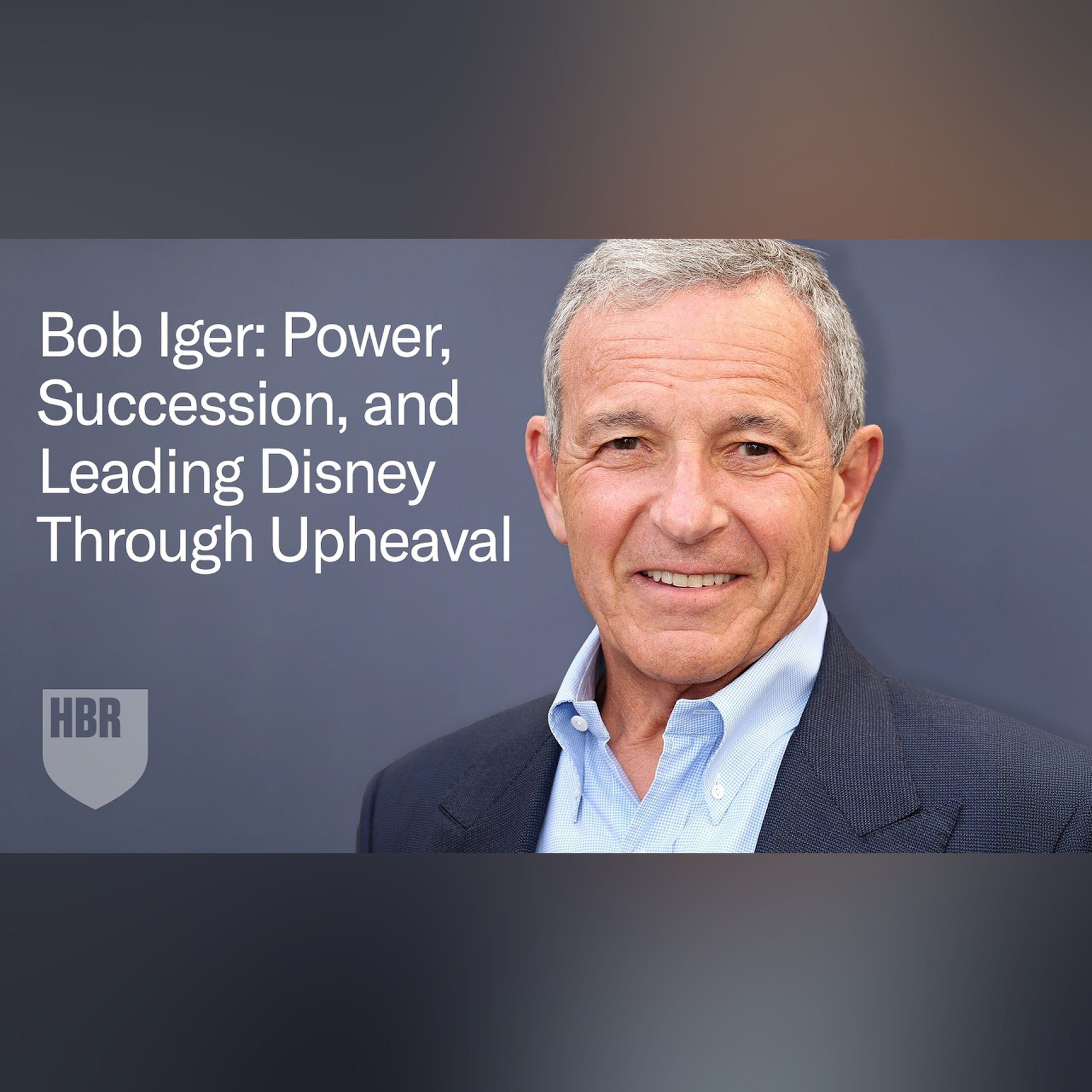
Bob Iger discusses how CEOs shape outcomes, leading Disney through animation decline, cultural change, time management, and succession planning.
25 Sep 2026 · 31m · 12 chapters
Dan Schulman (Verizon turnaround CEO) argues that successful turnarounds begin with culture—truth-telling, customer-first behaviors, risk-taking for learning, and “playing to win”—not just strategy.
22 Sep 2026 · 44m · 14 chapters
Bill Gates discusses his book How to Avoid a Climate Disaster and argues leaders must reach net-zero emissions by 2050 through innovation, not just behavior change or incremental efficiency.
16 Sep 2026 · 30m · 12 chapters