
 Ask ChatGPT


The episode argues that “rational” (realistic) optimism—belief that your behavior matters—improves performance and resilience, and that leaders can cultivate it through specific behaviors and communication practices.
Michelle Geelan, author of Resilient Optimism. Background described as engineering and a data-focused approach; she draws on research and the LOTR scale (dispositional optimism) adapted to work settings.
Optimism is tested as a protective factor (higher productivity/sales/promotion likelihood; lower burnout). Resilient optimism differs from generic optimism by staying strong under prolonged setbacks. Leaders should avoid leaving conversations at problem analysis; they should shift to agency and next steps.
A study where 3 minutes of negative news increased later negative day ratings by 27%; adding solution information improved later creative problem solving by 20%. A UBS stress study showed a 23% drop in stress symptoms after reframing stress. Nationwide Insurance and Microsoft/Jet Propulsion Laboratory examples use “positive leading” meeting openers; Nationwide reported a 237% insurance application rate increase and 50% gross revenue growth.
Written by AI. May contain mistakes.
Understanding rational optimism and its importance in facing challenges.
“What we're talking about here in this research and what we measure is rational optimism.”
Exploring how resilient optimism differs from general optimism.
“Michelle Geelan, author of Resilient Optimism, thanks so much for being here today.”
Discussing how optimism improves productivity and performance metrics.
“You're worried about the state of the world.”
Understanding the LOTR scale and how optimism is assessed.
“And it's literally some of the best fuel we can lean on, not just for our well-being, but for our performance as well.”
How to maintain optimism through challenges and setbacks.
“But why let eczema take over when you can talk to your doctor about ebglis?”
How to maintain optimism through challenges and setbacks.
“My husband probably encountered the craziest version of optimism one time.”
Strategies to change mindset towards optimism and resilience.
“So at our organizations, we want to be really clear about what's happening in the markets, with supply chains, with restructuring, layoffs.”
Exploring how information influences optimism and performance.
“So let's talk first about how an individual cultivates a more resilient, optimistic attitude.”
Learn how to focus on solutions and possibilities instead of just problems.
“So making sure that I'm listening to a good podcast like this one, that's getting me to think about possibilities and the progress that we've made.”
Understand the approach to consuming news with a focus on opportunity.
“If I'm reading a news story, I'm not just focused on the problem or I think what is not the best use of our time going down the list and getting filled up on all the problems in the world.”
Discover the importance of researching impactful stories and solutions.
“I spend 10 minutes or so getting caught up because it's online.”
Learn techniques to adapt your stress response in professional settings.
“You also talk about transforming your stress response.”
Understand how stress can enhance cognitive abilities and energy levels.
“And there what they did was they split them into two groups and they put one through a typical stress management training.”
Identify the underlying messages stress conveys in everyday life.
“And then they taught them how to see, own, and use this stress to their advantage.”
Learn to pivot your behavior in response to stress signals.
“That might be part of it, but probably it has to do with the safety and the fact that, you know, you'd like him to come home in a timely manner so that you know where he is.”
Implement a system to prioritize tasks and manage commitments effectively.
“You also talk about rethinking commitments, sort of looking at your schedule and as part of that finding time to recharge.”
Identify and focus on core responsibilities to maximize impact.
“you can put them on the not-to-do list and you save yourself a lot of time.”
Learn how delegating tasks can reclaim valuable time.
“and helping the parents through workshops that she was doing.”
Discover practical changes to enhance time management in the workplace.
“So she just had a printout sitting in the office and she would be like, yep, you should see this.”
Understand the role of optimism in leadership and team dynamics.
“So I think it's about being really conscious about how you spend your attention.”
Learn how leaders can shape team mood and mindset.
“So once you've started to build these resilient optimism muscles, how do you become more intentional about it at work, especially as a leader, so that you're not just changing yourself, but you're changing your team?”
Implement the 'power lead' to enhance team meetings and discussions.
“There was a phenomenal study done at the University of California, Riverside, where they got groups of strangers, these three people at a time, to sit in a room in silence for just two minutes.”
Explore a case study on how optimism transformed a sales team.
“Especially if there's a challenge that your team is facing by bringing in the progress that's come before, the possibilities that you have, the resources, the people who are in your corner.”
Discover the tangible benefits of implementing optimistic practices in organizations.
“Five stocks to sell before the end of the week.”
Learn how optimism influences team performance and well-being.
“Insurance application rate went up by 237%.”
Discover strategies for encouraging positivity in workplace interactions.
“a ferry this past weekend and there was a woman in a beautiful dress that almost the color of yours.”
Explore effective practices leaders can apply to foster a positive environment.
“So we've talked about a lot of things that individuals can do and leaders can do to sort of cultivate more resilient optimism.”

Get the gist, explore an idea or ask about something said.
 Claude
On Harvard Business Review, what are the key points of this episode?
Searching your listeningAutomatic transcript. May contain errors.
0:00Buy stocks to sell before the end of the week. You might be missing the opportunity of the year. You're not being positioned. Now it might be a good time. The buyback says now is the time to go all in. Real traders still hear the noise. They just know when to stop listening to it. Find and research opportunities to fit your strategy with thinkorswim trading platforms from Schwab. Discover features like robust charting, nearly unlimited customization, and built-in risk management technology. Plus, get 24-7 support from real trading specialists. That's Schwab Trading. Learn more at schwab.com slash trading.
0:30Progressive's Accident Response can contact emergency services if you're in a major accident. The only thing worse than someone you love being in an accident is not being able to help them. So Progressive is here to help when you can't. So get peace of mind knowing your loved ones are protected with Progressive's Accident Response. Learn more at Progressive.com. Progressive Casualty Insurance Company and Affiliates. Limited availability in California. Driver is responsible for emergency and towing charges not covered by the policy. Coverage subject to policy terms and conditions.
1:00Michelle Gielan: Optimism doesn't stop cars from hitting us or reality from negatively affecting us. What we're talking about here in this research and what we measure is rational optimism. It's taking a realistic assessment of the present moment while maintaining the belief that our behavior matters. It's not just looking at the problem, but it's saying, I believe my behavior matters and what I do next will make a difference.
1:32Michelle Geelan, author of Resilient Optimism, thanks so much for being here today. Thanks for having me. Yeah. So let's start with how you define resilient optimism. How does it differ from what people know or assume about both optimism and resilience?
1:47Michelle Gielan: So optimism is typically understood to be an expectation of good things to happen. What resilient optimism is, is it's optimism that stays strong when it's tested. So instead of having this fleeting feeling of I can do this, instead, resilient optimism is being able to sustain that optimism when the setbacks keep stacking, when the challenge lasts longer than expected, when change just keeps coming or we're exhausted. The reason is that it's so easy to start with optimism, right? A new job, a new career, a new project, a new school year. We are so good at beginnings, but what happens when we are met with challenge or we're feeling burnt out?
2:31Michelle Gielan: Resilient optimism is that set of behaviors that we can turn to that makes positive change easier to start and it builds our resilience at the same time. Yeah, I think that resonates with me because I'm, like many people, sometimes find it hard to be optimistic, you know, particularly when things don't look great. You're worried about the state of the world. Your company is struggling. Your team has missed its targets. It can feel hard to shift away from pessimism. Pessimism almost feels protective. So why should we fight that feeling both in ourselves and on our teams? Right now, we're experiencing a time when the volume of problems feels louder than the volume of progress.
3:17Michelle Gielan: Meanwhile, though, optimism is one of the greatest performance advantages that we see available in the data. Optimism fuels nearly every single business health and educational outcome that we know how to track. 31 % higher levels of productivity, 37 % higher sales, 40 % greater chance of promotion. we have an 11-year data set of more than 25 ,000 business professionals looking at optimism, resilience, and a host of other things. And what we found is that people who are highly optimistic, so they score in that top quartile of that particular metric, they are three times more likely to be highly engaged at their work.
3:53Michelle Gielan: They're five times less likely to burn out. So optimism even acts like a protective factor. When we make an investment in optimism, it acts like infrastructure for our lives. And it's literally some of the best fuel we can lean on, not just for our well-being, but for our performance as well. So before we get into how to build optimism, just tell me, how do you measure it in people? There's a scientifically validated scale, which is widely used in research called LOTR. I consider myself an engineer, and I love data. My background's in engineering, and I can pour through scientific journal articles all day long.
4:34Michelle Gielan: What that tests for is dispositional optimism. So it's how you look at the world. So in our data set, we included lot R, but we ask about it in the work domain. So how likely are you to act like an optimist and think like an optimist? But I think one thing that, you know, we should probably level set about optimism before anything else, because I've run into some crazy definitions. people sometimes think, oh, she's talking about... Hey, it's Kelly Rowland. You may not know this, but I have eczema. So I get how it can steal your time. But why let eczema take over when you can talk to your doctor about ebglis?
5:12Ebglis, Lubrikizumab LBKZ, a 250 milligram per two milliliter injection is a prescription medicine used to treat adults and children 12 years of age and older who weigh at least 88 pounds or 40 kilograms with moderate to severe eczema. Also called atopic dermatitis that is not well controlled with prescription therapies used on the skin or topicals or who cannot use topical therapies. EBCLIS can be used with or without topical corticosteroids. Don't use if you are allergic to EBCLIS. Allergic reactions can occur that can be severe. Eye problems can occur. Tell your doctor if you have new or worsening eye problems.
5:42You should not receive a live vaccine when treated with EBCLIS. Before starting EBCLIS, tell your doctor if you have a parasitic infection. Paid partnership with Lilly. Respect your time. Ask your doctor about EPCLIS and visit EPCLIS.com or call 1-800-LILLY-RX or 1-800-545-5979. Five stocks to sell. You might be missing the opportunity of the year. Now it might be a good time. The buyback says now is the time to go all in. Real traders still hear the noise. They just know when to stop listening to it. Find and research opportunities to fit your strategy with thinkorswim trading platforms from Schwab.
6:16Discover features like robust charting, nearly unlimited customization, and built-in risk management technology. Plus, get 24-7 support from real trading specialists. That's Schwab Trading. Learn more at schwab.com slash trading.
6:30Michelle Gielan: Optimism, she must mean rose-colored glasses, Pollyanna ignoring reality. My husband probably encountered the craziest version of optimism one time. So his name is Sean Acor. He is also a happiness researcher, which I know we're two married happiness researchers. Must make for a happy marriage. That's good. We definitely have tools to keep it on the happier side. So one time he goes to a talk to give a talk at a company on the power of optimism. The CEO afterwards loved the research and said, I'd love to embed this in my organization. Can I give you a ride to the airport so we can talk about it?
7:06Michelle Gielan: So Sean gets in this guy's car and he clicks on his seatbelt and the CEO gets in and doesn't put on his seatbelt. So after a while, there's the seatbelt bell going off. And if you know Sean, he has a really funny TED talk. He's very, very funny on the fly. And he turns to the CEO. He thinks he's making a joke. And he says, oh, so you don't wear seatbelts? The guy's like, no, man, I saw your talk. I'm an optimist. Right? So such a great reminder. Optimism doesn't stop cars from hitting us or reality from negatively affecting us. What we're talking about here in this research and what we measure is rational optimism.
7:39Michelle Gielan: It's taking a realistic assessment of the present moment while maintaining the belief that our behavior matters. So at our organizations, we want to be really clear about what's happening in the markets, with supply chains, with restructuring, layoffs. We want to understand our business challenges and have a full picture. We just don't want to leave the conversation there. We want to move the brain on to what we can do in the face of challenges. And that's where resilient optimism comes in. It's not just looking at the problem, but it's saying, I believe my behavior matters and what I do next will make a difference.
8:17Michelle Gielan: Yeah. So I do come from that philosophy that people are sort of born glass half full types or glass half empty types. And I think there is psychological research on prevention mindset, which means you're looking to avoid risk versus promotion mindset, which means you're seeking opportunities. But you argue and have shown that people can sort of move the needle toward optimism and particularly toward resilient optimism. So what evidence do you have that that can happen, that people can change in that way? Well, we're all born with a genetic predisposition towards optimism or pessimism, like a lot of things that we can test for.
8:56Michelle Gielan: Meanwhile, there has been study after study that shows that if we invest in positive interventions, these positive behavioral shifts that I talk about in the book, that we can move our set point higher. And that means that we're at any point able to cultivate a more optimistic mindset. The thing with pessimism, you know, to your question earlier, is that pessimism will we are seeing if we're rational, we're seeing the landscape as it is. But pessimists just don't believe their behavior will make a difference. And I think that's an important distinction that actually doesn't do well for our organizations if we're trying to troubleshoot problems.
9:37Michelle Gielan: We do want people who can see risk. We want people who are identifying issues that are, you know, that we're encountering. But we just don't want to leave the story there. We don't want to ultimately say, OK, well, we don't believe in our behavior matters because then we see in our organization's disengagement. People are not they put their head down. They're asking whatever what what I do doesn't make a difference. So that's why optimism becomes so important. Yeah. So let's talk first about how an individual cultivates a more resilient, optimistic attitude. You said it starts with mindset. So what are some shifts that I might make?
10:15Michelle Gielan: So I think one of the biggest things you can do is making sure that the information that's coming into your brain is feeding you the best way possible. I did a series of studies with Arianna Huffington looking at the impact of information on the brain. Hey, it's Kelly Rowland. You may not know this, but I have eczema, so I get how it can steal your time. But why let eczema take over when you can talk to your doctor about ebglis? Ebglis, Lubrikizumab LBKZ, a 250 milligram per two milliliter injection, is a prescription medicine used to treat adults and children 12 years of age and older who weigh at least 88 pounds or 40 kilograms with moderate to severe eczema.
10:55Also called atopic dermatitis that is not well controlled with prescription therapies used on the skin or topicals or who cannot use topical therapies. EBCLIS can be used with or without topical corticosteroids. Don't use if you are allergic to EBCLIS. Allergic reactions can occur that can be severe. Eye problems can occur. Tell your doctor if you have new or worsening eye problems. You should not receive a live vaccine when treated with EBCLIS. Before starting EBCLIS, tell your doctor if you have a parasitic infection. Paid partnership with Lilly. Respect your time. Ask your doctor about EBCLIS and visit EBCLIS.com or call 1-800-LILLY-RX or 1-800-545-5979.
11:30Buy stocks to sell before the end of the week. You might be missing the opportunity to hear. You're not repositioning right now. The mind that says now's the time to go all in. Real traders still hear the noise. They just know when to stop listening to it. Find and research opportunities to fit your strategy with thinkorswim trading platforms from Schwab. Discover features like robust charting, nearly unlimited customization, and built-in risk management technology. Plus, get 24-7 support from real trading specialists. That's Schwab Trading. Learn more at schwab.com slash trading.
12:00Michelle Gielan: In the first study, we split research participants randomly into two groups. One group we exposed to just three minutes of negative news. The other we exposed to three minutes of neutral news. And then we tested them both on a whole host of psychological and performance metrics. And what we found is, as you would imagine, the people who had been exposed to three minutes of negative information actually experienced a decrease. But what made the study amazing is that we tested them six to eight hours later. So six to eight hours later, as they are closing their laptop off after a busy day or they're picking up their kids from schools, those that had been exposed to just three minutes of negative information had a 27 percent increased likelihood of reporting their day as negative.
12:45So I should stop scrolling social media in the morning, except for the cat videos? Yeah.
12:50Michelle Gielan: So the cat videos can be really good for you because they're bolstering your positive resources. And it's the news. Yes. And so, yeah, I mean, it's being mindful of what information is coming at us. And I think the follow-up study was significantly more hopeful and actually points us in the direction of where we want to take this research and how we operate in the world. It changed how I do my mornings. Yeah. So for that study, we exposed half of the participants to a serious problem. And then the other half were exposed to that same problem, but they also read about solutions that they could take to help solve it.
13:28Michelle Gielan: So removing the brain again from the problem to what you can do about it, reminding their brain about the agency that they have. And what we found is that people that had thought about solutions were 20 % better on creative problem solving tasks later on in the day. So as leaders, we have the opportunity to make our teams smarter and better at whatever they're doing by just sometimes engaging them in a brainstorming discussion where they're saying, here's the problem and here's what we can do about it. Yeah. So how have you changed your mornings? Yeah, so I usually actually don't get caught up on the news in the morning unless I've had an opportunity to bolster my positive resources.
14:08Michelle Gielan: So making sure that I'm listening to a good podcast like this one, that's getting me to think about possibilities and the progress that we've made. Or I look at a challenge, but I'm able to see what solutions other people have taken. If I'm reading a news story, I'm not just focused on the problem or I think what is not the best use of our time going down the list and getting filled up on all the problems in the world. Instead, what I do is I get my news online. I spend 10 minutes or so getting caught up because it's online. I get all the opportunities to choose or skip certain headlines. And then what I really try to do is when there's a story that I think is exceptionally important, I will do whatever kind of research I can or I follow people that have already done it for me on what we can do in the face of this challenge.
15:03Michelle Gielan: And so in that moment, I'm reminding my brain that, hey, this I can make a difference here. Someone has made a difference here. This is what the potential is to overcome this challenge. And I think that mindset fuels the rest of my day. You also talk about transforming your stress response. So how do you do that, particularly at work and in difficult professional circumstances? Stress is one of the biggest challenges we're all facing. But oftentimes I think the problem is not the stress itself. It's misreading it. There was a study that my husband, Sean, and two researchers from Yale did at UBS with stressed out managers.
15:44Michelle Gielan: And there what they did was they split them into two groups and they put one through a typical stress management training. And then the other group, they actually talked to them about the scientific benefits of stress. So stress can make you have higher levels of energy, have mental cognition. That is. Hey, it's Kelly Rowland. You may not know this, but I have eczema. So I get how it can steal your time. But why let eczema take over when you can talk to your doctor about ebglis? Ebglis Lubrikizumab LBKZ, a 250 milligram per two milliliter injection, is a prescription medicine used to treat adults and children 12 years of age and older who weigh at least 88 pounds or 40 kilograms with moderate to severe eczema.
16:25Also called atopic dermatitis that is not well controlled with prescription therapies used on the skin or topicals or who cannot use topical therapies, ebglis can be used with or without topical corticosteroids. Don't use if you are allergic to EpGliss. Allergic reactions can occur that can be severe. Eye problems can occur. Tell your doctor if you have new or worsening eye problems. You should not receive a live vaccine when treated with EpGliss. Before starting EpGliss, tell your doctor if you have a parasitic infection. Paid partnership with Lilly. Respect your time. Ask your doctor about EpGliss and visit epgliss.com.
16:54Or call 1-800-LILLY-RX or 1-800-545-5979. Five stocks to sell before the next week. You might be missing the opportunity of your year.
17:07Real traders still hear the noise. They just know when to stop listening to it. Find and research opportunities to fit your strategy with thinkorswim trading platforms from Schwab. Discover features like robust charting, nearly unlimited customization, and built-in risk management technology. Plus, get 24-7 support from real trading specialists. That's Schwab Trading. Learn more at schwab.com slash trading.
17:30Michelle Gielan: We're fluid. Your memory improves. And then they taught them how to see, own, and use this stress to their advantage. What they found was months later during a very stressful time in the industry, those that had gone through that training that taught them how to rethink their relationship with stress and basically read it in a different way, they were reporting a 23 % drop in stress-related symptoms like headaches, backaches, and fatigue. So what I recommend is the next time you're feeling stressed, take an opportunity to or take a moment to ask yourself, what is this stress really telling me?
18:08Michelle Gielan: And oftentimes there's a meaning behind the stress. You're not stressed that your son hasn't shown up for curfew just because you're frustrated he's not listening to you. That might be part of it, but probably it has to do with the safety and the fact that, you know, you'd like him to come home in a timely manner so that you know where he is. And there's oftentimes a story underneath that stress. So I recommend something called the signal check where you ask yourself, what is the stress trying to tell me and how can I pivot my behavior in a way that's more helpful? So to our organizations, instead of, for instance, getting frustrated with a team that they're not following the deadline, instead of just saying that to them, you can ask yourself, what can I do here to make their path easier to move through?
18:53Michelle Gielan: And ultimately, you realize that the stress is coming from the fact that you really care about the results of your work and you want to help your team to thrive. You also talk about rethinking commitments, sort of looking at your schedule and as part of that finding time to recharge. So talk about how a busy executive might make that happen. A lot of times when we're busy, we think, oh, I need to double down on work. But not everything on our to-do list requires and should be given the same level of energy and attention. So I recommend a tool that I call commitment triage, where you make sure that everything that's on your list should actually be there.
19:38Michelle Gielan: There's three lists. You can divide all the things that you do into these three lists, and it gives you a better picture of how you spend your energy. There's the core impact list. This is probably why you were hired at your organization in the first place. These are activities that help move the needle. And as leaders, part of that usually is keeping your team motivated, keeping them educated, maybe the communication that you offer them. There is a not-to-do list, which is probably my favorite, but this is stuff that can be delegated, delayed, or just dropped. A lot of times we inherit things from the person who used to do our job before us, or we think we should be doing stuff and it just, our to-do list balloons.
20:18Michelle Gielan: When we really take a close look, we realize that there's sometimes you you can put them on the not-to-do list and you save yourself a lot of time. And then there's a secondary work list. This is stuff that we sort of have to do as part of our role. There, I think the question is, can you be more efficient? I worked with a therapist and she was running a very busy therapy practice with many therapists under her. She also was managing a home renovation project and continuing to raise her two kids. So she was exceptionally busy. I put her through the commitment triage process. And what she found was her core impact list was seeing teenage patients and helping the parents through workshops that she was doing.
20:58Michelle Gielan: The not-to-do list were a bunch of things that she had just decided were her responsibility, but she had an office manager to handle that step. And then the secondary work list was where the magic actually happened. One example was she needed to give psychiatry referrals at the end of the patient visits, and this email would be hanging over her head for the rest of the week. Instead, what she realized was, yeah, I've got to do this, but there has to be a better way. So she just had a printout sitting in the office and she would be like, yep, you should see this. Hey, it's Kelly Rowland. You may not know this, but I have eczema.
21:36So I get how it can steal your time. But why let eczema take over when you can talk to your doctor about EBCLIS? EbGliss, Lubrikizumab LBKZ, a 250 milligram per two milliliter injection, is a prescription medicine used to treat adults and children 12 years of age and older who weigh at least 88 pounds or 40 kilograms with moderate to severe eczema. Also called atopic dermatitis that is not well controlled with prescription therapies used on the skin or topicals or who cannot use topical therapies, EbGliss can be used with or without topical corticosteroids. Don't use if you are allergic to EbGliss.
22:08Allergic reactions can occur that can be severe. Eye problems can occur. Tell your doctor if you have new or worsening eye problems. You should not receive a live vaccine when treated with EpGliss. Before starting EpGliss, tell your doctor if you have a parasitic infection. Paid partnership with Lilly. Respect your time. Ask your doctor about EpGliss and visit epgliss.com or call 1-800-L Lilly-RX or 1-800-545-5979. Progressive's Accident Response can contact emergency services if you're in a major accident. The only thing worse than someone you love being in an accident is not being able to help them.
22:41So Progressive is here to help when you can't. So get peace of mind knowing your loved ones are protected with Progressive's accident response. Learn more at Progressive.com. Progressive Casualty Insurance Company and Affiliates. Limited availability in California. Driver is responsible for emergency and towing charges not covered by the policy. Coverage subject to policy terms and conditions.
23:01Michelle Gielan: Person or this person, here you go, and hand it off at the end of the appointment. That small shift, along with a couple other small tweaks to her schedule, gave her four hours of time back every single week. So I think it's about being really conscious about how you spend your attention. And again, back to optimism, this is reminding your brain of the ways in which your behavior matters. If you're constantly doing stuff, but you don't feel like you're making progress, that is a problem. And that is a quick way to chip away at your optimism. So once you've started to build these resilient optimism muscles, how do you become more intentional about it at work, especially as a leader, so that you're not just changing yourself, but you're changing your team?
23:43Yeah.
23:44Michelle Gielan: And I think as leaders know, your team is constantly looking to you to explain how to process the world around them. That narrative is exceptionally important. So the thing that I always get leaders to think about when I give keynotes at organizations is I want you to think of yourself as a broadcaster. My background is I was a national news anchor at CBS News during the height of the Great Recession. And there I saw what would happen when we changed the content of the news, how that would impact the national conversation. There what we did is we focused on what you can do in the face of financial challenges.
24:23Michelle Gielan: So we had a whole week of solutions-focused content. We got the greatest viewer response of the year. And what it showed me was the power that we constantly have to transform other people. But I don't think that power is actually reserved for broadcasters. Everyone at any level in an organization can influence other people. There was a phenomenal study done at the University of California, Riverside, where they got groups of strangers, these three people at a time, to sit in a room in silence for just two minutes. And they tested their mood and mindset before and after the experience. And what they found is that the person who is most non-verbally expressive of their mood and mindset actually significantly influenced the other two people.
25:07Michelle Gielan: So if they were sitting there with a scowl on their face or looking otherwise negative, they made the other two people feel more negative. Meanwhile, if they were relaxed or smiling, they made the other two people feel more positive. And that's in two minutes in silence. So can you imagine what power the leaders have at our organizations to transform their teams? The number one way that I recommend is using something I call the power lead. And as you can imagine, this is taken from my days in media. When you start off a conversation or a meeting, think about the first piece of information that you're sharing with other people.
25:45Michelle Gielan: Basically, what is your top story? Because that transforms the brain of the people in the room and how they process the information that they're about to receive. Especially if there's a challenge that your team is facing by bringing in the progress that's come before, the possibilities that you have, the resources, the people who are in your corner. By getting their brains to focus on those good things, we're transforming what follows. So the power lead is sharing one positive or optimistic thing. And then because, you know, people are socialized to reciprocate, the hope is then that their brains are thinking about all the good things, too, that they could offer up as well.
26:25Michelle Gielan: I've seen that transform organizations. And one quick story is they did redid the morning meetings along with a handful of other things at Nationwide Insurance. with a sales team. There, it was focused on successes, small wins from the past 24 to 48 hours that the entire team might not have heard about. And then anyone who needed a little extra support that day, they were given an opportunity to speak up. Their colleagues could rally around them. Can you imagine having your colleagues offer that help? It was tremendous. So we tracked them over time. 18 months later, their new... Hey, it's Kelly Rowland.
27:04You may not know this, but I have eczema, so I get how it can steal your time. But why let eczema take over when you can talk to your doctor about ebglis? Ebglis Lubrikizumab LBKZ, a 250 milligram per two milliliter injection, is a prescription medicine used to treat adults and children 12 years of age and older who weigh at least 88 pounds or 40 kilograms with moderate to severe eczema. Also called atopic dermatitis that is not well controlled with prescription therapies used on the skin or topicals or who cannot use topical therapies, ebglis can be used with or without topical corticosteroids.
27:36Don't use if you are allergic to EpGliss. Allergic reactions can occur that can be severe. Eye problems can occur. Tell your doctor if you have new or worsening eye problems. You should not receive a live vaccine when treated with EpGliss. Before starting EpGliss, tell your doctor if you have a parasitic infection. Paid partnership with Lilly. Respect your time. Ask your doctor about EpGliss and visit EpGliss.com or call 1-800-LILLY-RX or 1-800-545-5979.
28:29Five stocks to sell before the end of the week. trading.
28:31Michelle Gielan: Insurance application rate went up by 237%. Their gross revenues went up by 50%, which for them was$300 million. So the president - It's extraordinary. Yeah. The president gave a lot of pushback in the beginning about, you know, oh, optimism, it can be perceived as a soft science or whatever. Oh, he's one of the greatest proponents of positive psychology research because he saw that it not only impacted the performance of the team, but it also positively impacted their well-being as well. In your book, you also talk about this idea of an ecosystem of optimism. So I think we've talked about a few steps that leaders might employ to get themselves there.
29:12But what does that look like in practice when it happens? Like, how do you get to that nirvana type state?
29:20Michelle Gielan: Well, one thing you need to know from the data is that, so we have this 11 year data set of more than 25 ,000 business professionals. And I just did a reanalysis of it because I was curious. Everyone talks about the changing landscape of optimism and pessimism over time. But what I wanted to know was about the behaviors since resilient optimism is based on the behaviors. And what I found is that eight in 10 people in our study still consider themselves optimists, but their behavior tells a different story. And specifically, they're less likely to express their optimism. So if someone presents a new idea, they're less likely to speak up and say something encouraging.
30:01Michelle Gielan: If they're thinking something optimistic, they're less likely to tell someone else about it. And if they start a conversation, the power lead, they're less likely to employ that. Why this is significant when we're talking about culture is that optimism isn't just a private belief. It is information, evidence that we transmit to other people about progress and possibility. And so if we're keeping that stuff to ourselves, we're literally missing out on the fuel that helps open our mind up and allow our brain to perform at the highest levels. So for leaders, the good news is that you've got as many as eight in 10 people already optimistic.
30:43Michelle Gielan: So you don't actually need to transform them. I did a separate study a handful of years ago that found when we're talking about expression and optimism, that 31 % of people are optimistic, but they're not expressive of it. So there's still other people that are optimistic, right? And they're saying stuff and whatnot. But now we've seen the expression over time drop even more dramatically. So as a leader, if you can open up a space for people to talk about the good, to talk about the progress, the meaning embedded in the work they're doing, their things they're grateful for, you're actually setting a stronger social script of optimism and ultimately reaping those benefits.
31:22Yeah. This is making me think I was on a ferry this past weekend and there was a woman in a beautiful dress that almost the color of yours. And I had noticed sort of as we got on the ferry and then as we were walking off the ferry, I said, hey, I just want to let you know I love your dress. And my husband and I said, and I've been admiring it since we got on the boat. And my husband was like, you sound like a stalker. But But as a middle-aged woman, I think it's really important to share compliments. And I think that's sort of what you're talking about. It's like I have the power to put that lady in a good mood.
31:54And as a boss, you have the power to put your team in a good mood by complimenting them on any good work that they do.
32:00Michelle Gielan: Yes. And we've seen this play out in dramatic ways at the organizations that we've worked with. So, for instance, at Microsoft, there the team lead had to deal with all the fires they needed to put out. And he would have a meeting first thing in the morning with his team. I mean, talk about a stressful job. He decided to start with three things he was grateful for. One thing about the team in general, one thing about someone specific on the team, and one thing he was grateful for about his own life in general. So bringing in his personal life and really starting the meeting off on a different note.
32:33Michelle Gielan: Not only did people attend the meeting more, but they also came at those problems with a totally different mindset. I worked with the Jet Propulsion Laboratory at NASA, and there they decided to try to increase the amount of positive expressivity. And they would do it by starting meetings by saying, what's one thing, for instance, what's one thing that someone has done here recently at work that's made your job easier? Or what's one way that you've noticed effort has really paid off? By just asking those what I call positive leading questions, those questions that don't get our brain to a specific answer, just get the brain to positive territory, you are modeling positive expressivity.
33:17Michelle Gielan: You're opening a space for it, and it's activating all of those closet optimists to actually speak up. Because the reality is if someone presents an idea and you're thinking, well, okay, this idea has potential and you don't say anything, your optimism has no effect on the room. Meanwhile, the person sitting next to you is like, I've got 12 reasons why this is not going to work. If he says something, that is now the conversation. When optimists go quiet, pessimists get the floor. As we talked about, pessimism can be a destructive force at our organizations. So we've talked about a lot of things that individuals can do and leaders can do to sort of cultivate more resilient optimism.
33:57What is the one strategy that you feel like gives most bang for the buck in terms of one of our listeners walking into their office tomorrow and doing this thing and having a positive impact on those around them?
34:12Michelle Gielan: It can be a twofold practice for yourself and for your team. Yeah. If we want to recalibrate our mindset and get our brain to focus on all the good that's existing around now, I would say tonight when you get home, write down three to four good things that happened from the day. I did this, I started in the busy blur of the pandemic. I realized that there were good stuff happening. There was good stuff happening, but I was maybe not recording it because I was so exhausted. So I started sending my husband a text message with three to four good things. I was like, please don't even respond. Don't even throw a heart on it.
34:51Michelle Gielan: This has nothing to do. I just want another phone to have these messages. But the idea was I wasn't asking, was today good? I was asking what was good in today? Yeah. And so that helps us, again, bolster our positive resources. And then for your team, you can hold a meeting where you ask, tell me something good that's happened, and you go around the room. Tell me one way your effort mattered. Tell me one thing that the entire team might not have heard about that would be really good for us to know. Getting that positive conversation to happen, it's a fuel not only in the moment, but it's sort of the opposite of the three minutes of negative news.
35:32Michelle Gielan: It'll help fuel them for the rest of the day. Terrific. Well, in what can feel like very trying times, I think this is an important message. Michelle, thank you so much for coming in and talking to me. Thank you so much for having me.
35:50Life is all about making decisions. Sometimes you make questionable ones, like buying a new TV that's too big for the wall because the electronics store employee was a little too good at their job. Then, sometimes you make great ones, like protecting your home and auto with Progressive. You get customized coverage options, so you can be sure you have the right coverage. Get your quote today at Progressive.com. Progressive Casualty Insurance Company affiliates and other insurers. Not available in all states. The secret society of semi-homemade? Listen up. Sam's Club has pre-made dishes for a Thanksgiving feast that's ready in two hours, all while tasting suspiciously homemade.
36:30Come join us. Sam's Club. Individual oven times may vary. I wrote a little song to remind you. Choice Hotels gets you more of the experiences you value. The Cambria Hotel's got it all. A rooftop bar, have a ball. Bring a date, your squad, or even your mom. Book direct at choicehotels.com.
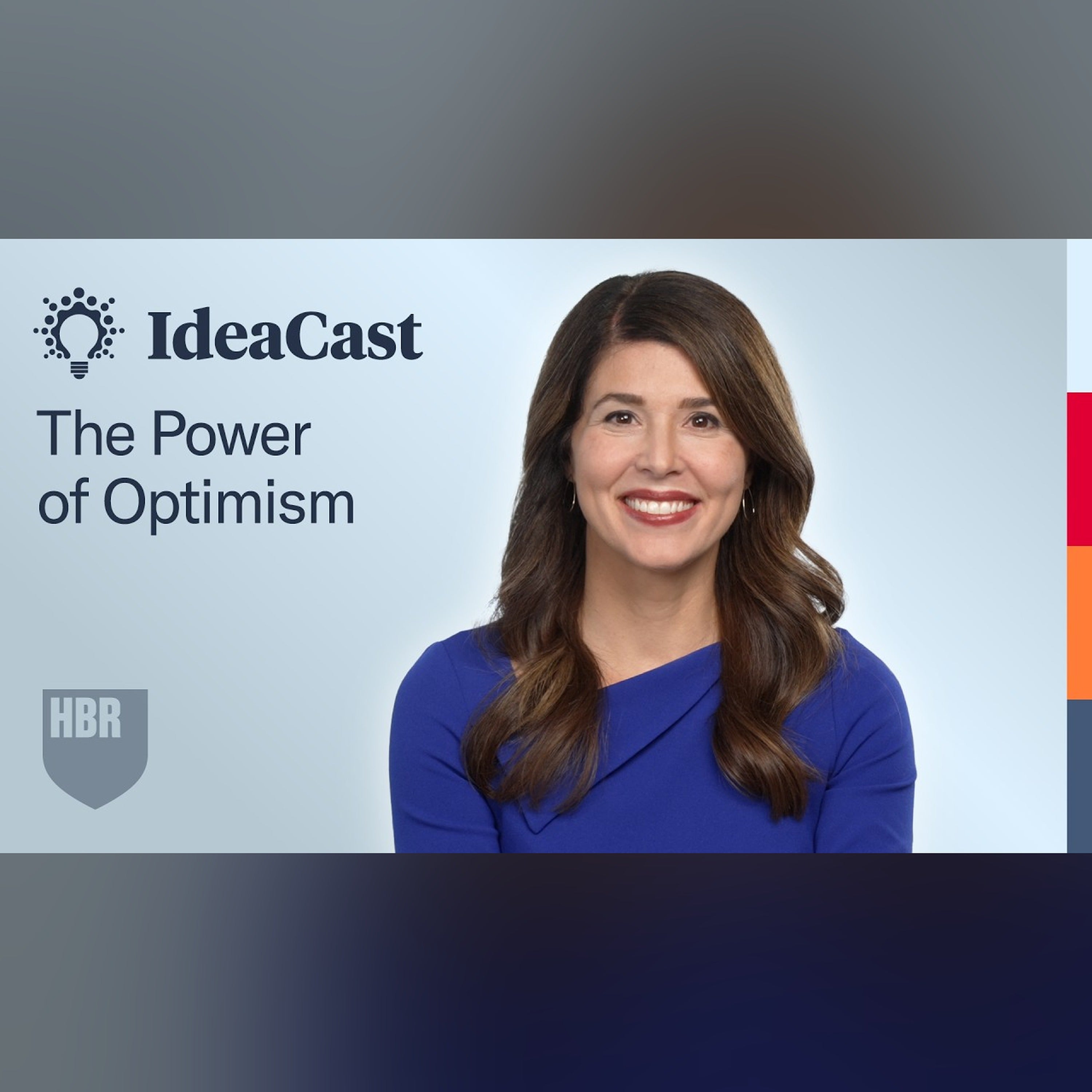
Can optimism make you a better leader? Psychologist and researcher Michelle Gielan says yes—but not by ignoring problems or pretending everything will work out.In this episode of HBR IdeaCast, Gielan explains why resilient optimism—the ability to acknowledge difficult realities while believing your actions can make a difference—is a powerful driver of individual and team performance. Drawing on 11 years of research involving more than 25,000 business professionals, she shares evidence linking optimism to higher productivity, stronger sales, greater engagement, and lower burnout.Uploaded 03-11-26Gielan also discusses how leaders can cultivate a more optimistic mindset, reframe stress, and help teams focus on solutions rather than getting stuck on problems. Plus, she shares practical techniques for building momentum, including how to start meetings with a “power lead,” recognize small wins, and create a culture where people speak up about progress and possibility. Gielan is author of Resilient Optimism: The Science of Sustaining a Positive Mindset in Tough Times (https://www.amazon.com/Resilient-Optimism-Science-Sustaining-Positive/dp/B0GD61J2KJ/) and the HBR article “How Leaders Counter Pessimism in Trying Times“ (https://hbr.org/2026/11/how-leaders-counter-pessimism-in-trying-times). Books, tools, and more: store.hbr.orgFollow us:https://hbr.org/https://www.linkedin.com/company/harvard-business-review/https://www.facebook.com/HBR/https://twitter.com/HarvardBizhttps://www.instagram.com/harvard_business_reviewSign up for Newsletters: https://hbr.org/email-newsletters#HarvardBusinessReview #YourCareer #Career #Job #Work #Business #Harvard #HarvardBusinessSchool Copyright © 2026 Harvard Business School Publishing. All rights reserved.
Learn more about your ad choices. Visit megaphone.fm/adchoices


