 Ask ChatGPT


Election Day coverage focused on whether last-minute “surprises” could shift tight midterm races, what voters in battleground states say is driving their choices, and what election observers are allowed to do at polling places.
Ryan Nobles, NBC News Chief Capitol Hill correspondent; Jane Tim, NBC resident election-policy expert.
Late developments may matter most in races already within the margin of error (Michigan and Alaska discussed), but observers can only watch and report—DOJ observers are there to enforce federal civil-rights/language-access rules, not to intervene. No evidence elections won’t be secure; claims of non-citizen voting are rejected by courts.
Michigan: Haley Stevens’ late endorsement of Republican Mike Rogers; Alaska: New York Times reporting alleging Dan Sullivan ballot/“decoy” controversy tied to Mary Peltola’s campaign (denied). Voters cite cost of living (New Hampshire), affordability/corruption/big tech/data centers (Texas), and long early-voting lines (Alaska).
Ryan Nobles; Jane Tim.
Written by AI. May contain mistakes.
Analysis of recent surprises impacting key Senate races, particularly in Michigan and Alaska.
“And we're going to share with you how folks are feeling ahead of tomorrow and what matters most to them.”
Discussion on how recent endorsements and controversies may affect voter turnout and decisions.
“And, you know, they had strong candidates in Michigan for a long time.”
Insights into polling data and predictions for key races in Virginia, Maine, Michigan, and Texas.
“So in terms of the House, Virginia is a great state to look at because, first of all, the polls close early.”
Voter sentiments from battleground states regarding affordability and political issues.
“So if you're one of the millions that has voted early or you're going to show up tomorrow on Election Day and get your I Voted sticker, I'm sure you've got a lot of issues on your mind that are driving your decision.”
Learn about the key issues impacting Texas voters and their enthusiasm for the upcoming elections.
“How is the price of diesel impacting you now?”
Discover the early voting experience in Alaska, highlighting voter dedication and engagement.
“Early voting is underway and you can see the enthusiasm, this line stretching deep into the mall here in the 49th state.”
Get insights on the role of election observers and what voters can expect on Election Day.
“And we're back with Here's the Scoop from NBC News.”
Explore the concerns regarding election security and the administration's claims about non-citizen voting.
“The Justice Department says it's sending out 1 ,000 staffers to ensure federal laws are being followed.”
Understand the limitations of poll observers and the legal framework governing their actions.
“And the president and his administration seem very keen on trying to cast out otherwise.”
Learn how polling sites are preparing for a smooth Election Day amidst potential chaos.
“It is illegal to send immigration authorities, armed officers, to the polls in any capacity.”

Get the gist, explore an idea or ask about something said.
 Claude
On Here's the Scoop, what are the key points of this episode?
Searching your listeningAutomatic transcript. May contain errors.
0:00There will be Republican observers, there will be Democratic observers, there will be nonpartisan observers, there's I think poll chaplains going out, just an endless amount of observers. Hi everybody and welcome to Here's the Scoop from NBC News. I'm Yasmin Basugin. So today on the show we are talking about tomorrow, which is Election Day. It's finally here. And if you haven't voted already, you're going to head to your polls tomorrow to vote. And when you get there, you might actually see election observers. Some are going to be from the Department of Justice. Some are Republicans. Some are Democrats.
0:33We're going to talk about what they're doing there and what they're actually allowed to do. Plus, we have NBC reporters all across the country talking to voters right now. And we're going to share with you how folks are feeling ahead of tomorrow and what matters most to them.
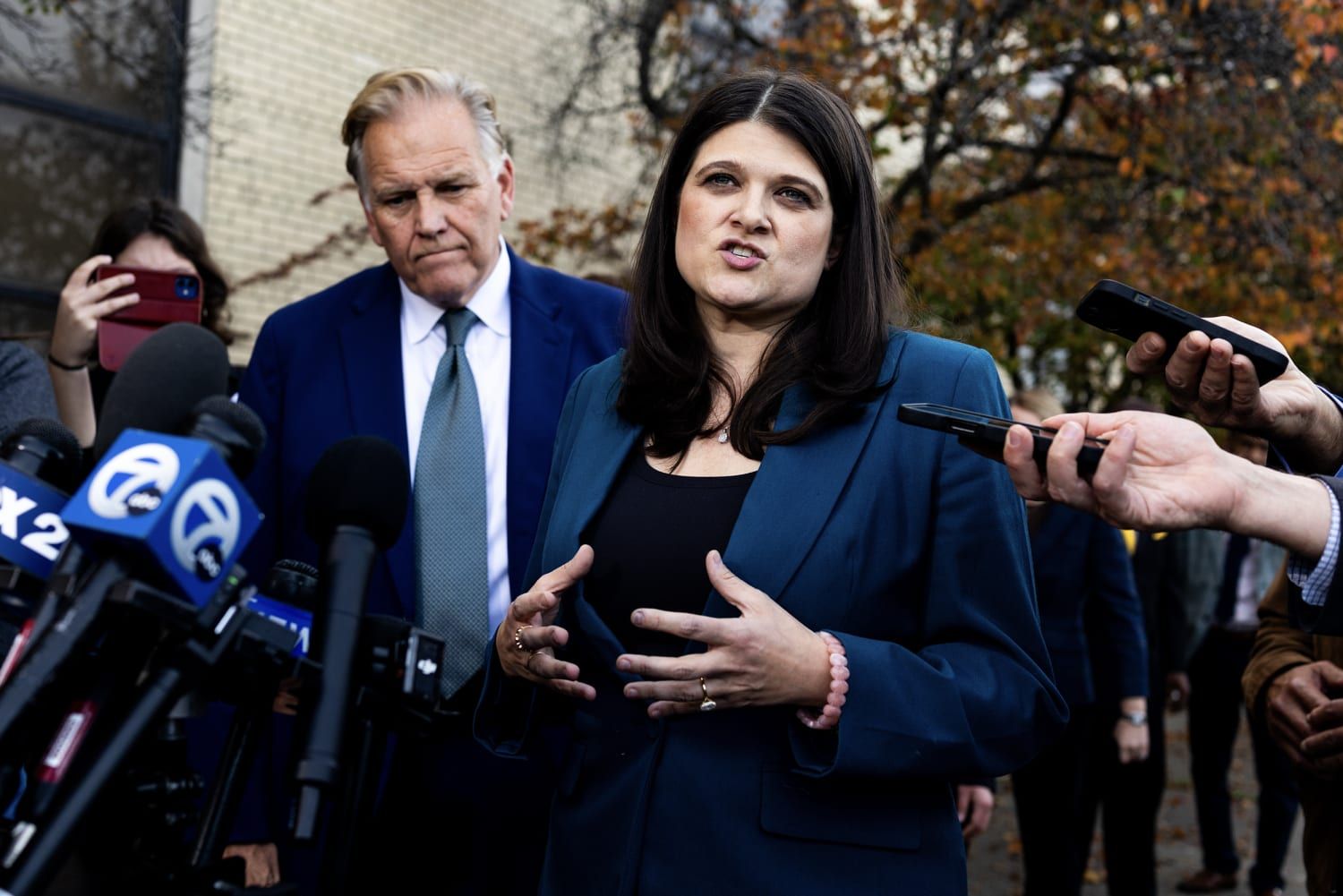
0:55Up first, though. So some last-minute developments are adding some more uncertainty to several key races. In Michigan, Democratic Representative Haley Stevens' shocking endorsement of Republican Senate candidate Mike Rogers in Alaska. The Senate race is basically a toss-up. And as we talked about on the show last week, that election got a late October surprise when the New York Times published a report detailing how a second Dan Sullivan got on the ballot. And with Democrats leading in Maine, Texas, and Kansas just by a hair, how much of an impact could these late-breaking stories actually have for the balance of Congress?
1:31For this, I want to bring an NBC News Chief Capitol Hill correspondent, Ryan Nobles, who has made the journey all the way from Washington, D.C. to here at 30 Rock for Election Week. Okay, I want to start in Michigan. You got this unexpected reversal from Haley Stevens, now back in Republican Senate candidate Mike Rogers. Is this going to kind of move the needle at all? So the one thing I would say is that we expect this race to be extraordinarily close. Yeah. And, I mean, there are a lot of voters in Michigan, so it would take a significant number of voters to decide to change their vote at the last minute because of Haley Stevens for it to have an impact.
2:05But I think in a race like this, where the polls have basically shown it within the margin of error from the very beginning, any little movement one way or another, any little change in the dynamic or change in the narrative could have an impact on a significant swath of voters. But my gut tells me that the reasons that someone would break from voting for Abdul al-Sayed and voting for Mike Rogers are probably already baked in. Right. They've already made their decisions. Exactly. I mean, the reason that Haley Stevens has reservations about Abdul al-Sayed is because of his stance on Israel. She felt that he did not distance himself enough from this ad that the Young Turks put out that the al-Sayed campaign had nothing to do with, that she thought was anti-Semitic.
2:44She's just worried that he's not, that he's too liberal and too progressive on a whole host of issues. All of those realities existed before Haley Stevens decided to come in at the 11th hour and say that she was going to vote for Mike Rogers. So I'm not saying that's an insignificant development in this race, but my guess is if you were a Democrat or somebody that voted for Haley Stevens in the primary and you had not made up your mind to vote for Mike Rogers, I don't think that this made a difference. You probably already knew you were voting for Mike Rogers. We're taking a look at polling, though.
3:14I mean, Elspyed is leading by a pretty strong margin at this point. Yeah, I mean, the numbers would say, and I think this is pretty much across the board in most of the key battlegrounds, at least in the Senate, that this is the Democrats' race to lose. And this is still the Democrats' race to lose. I mean, if the Democrats lose in Michigan, the hill they have to climb in order to win back the Senate majority is significantly steeper. You go from having to flip four seats to now having to flip five. And so Democrats are counting on this. And, you know, they had strong candidates in Michigan for a long time.
3:46You know, Gary Peters is the incumbent there. Had he decided to run for reelection, this race probably wouldn't even be something that we talked about. El-Sayed is a different kind of candidate. He certainly has the base and the energy of the younger voter and the more progressive voter. But there's obviously concerns about him in other respects. And he's also running to become the first Muslim United States senator in American history. That's a difficult hill to climb. So, you know, I think the polling here is good news for Democrats, but Al-Sayed has traditionally performed under what his polling is telling us.
4:21Remember, we thought he was going to sweep the primary against Haley Stevens, and he just squeaked that out. So that's why I think Republicans still believe they have a shot. So let's talk about the other kind of like whatever October surprise we can call it, even though Haley Stevens was actually technically a November surprise. A November surprise, right. So, and that is Alaska and New York Times reporting on Mary Peltola's campaign, essentially, you know, saying that there's evidence to suggest, also talking to her former campaign manager that her campaign essentially planted Dan Sullivan, right?
4:47Found him. And then lied about it. And then lied about it. They continue to deny any involvement in this. I want to play a little bit from a voter, Catherine Foy in Juneau, who did not disclose her party affiliation, but said that her trust had been violated by the Peltola camp. I find that to be dishonest. I think we deserve more from our politicians. But then you actually have a Peltola supporter, Ricardo Lopez in Juneau, who said it's just politics. They've been playing tricks on each other for years, you know? I mean, you can go ahead and, you know, political one way or political. They've been doing this stuff.
5:26It's normal. It's an interesting take, honestly, from both of those voters. Does this move the needle? Yeah. So I think this goes back to the old adage, all politics is local, right? And I think that this is a story that has caught national attention over the past week or so in light of the terrific reporting by The New York Times. But it's something Alaskans have known about since, you know, March when this issue first came up. And I thought the most interesting dispatch came from our team on the ground, Katie Wall, our producer, and Steve Patterson, our correspondent. They were at a early voting location in Anchorage where voters there were waiting two hours to cast their ballot.
6:03And they could not find a single person in line that would tell them that this controversy had moved their vote one way or another. So, again, much like Michigan, probably even more so because we expect only 300 ,000 votes total to be cast in Alaska. 1 ,500 to 2 ,000 people whose minds might have been changed because of this controversy could be enough to win or lose that race. So I'm not going to say it's not going to have an impact. But, again, this is something that Alaskans have known about for a long time. And I have not seen anything that would necessarily move the needle. And we're almost to D-Day at this point.
6:40Okay. Bellwether for tomorrow night. What do you mean watching? So in terms of the House, Virginia is a great state to look at because, first of all, the polls close early. They close at 7 o 'clock. So we'll get their returns first. Virginia, too, ultimate swing district. One of the most competitive swing districts in the country. I think it was like a Trump plus 0.1 in the last election cycle. Whichever way the winds are blowing, that's the way that district goes. So if the Democrats win there, if they're supposed to, they're headed toward a majority. Virginia won. That's a Trump district. It's one that Republicans normally would win, but it's one where they've got a serious chance at winning.
7:15It's rated as a toss-up now. Democrats win there. That's a sign that they're headed toward a big night. Virginia 5 is a significant Trump district. If Democrats win that seat, which polls show that they're within shouting distance of, we're talking tsunami territory. We're talking Democrats perhaps going somewhere in the 235 to 240 range in terms of their seats. So watch those three districts on the House side. Now, on the Senate side, it comes down to Maine, Michigan, and Texas. Democrats need to win two of those three states. Michigan, of course, would be a hold. Maine and Texas would both be pickups.
7:52If they can win two of those three states, they should win the majority. Now, is it going to be a 53-seat majority or a 51-seat majority? That I don't know. But if they only win one of those seats, they're likely looking at losing the Senate 51-49 or a 50-50 tie. Eat your Wheaties, Ryan Nobles. I'm strong, Yaz. I feel great. I'm not tired yet. And then go back to your football watching and your bills. When we talk Wednesday afternoon, we'll see how I'm doing. Yeah, exactly. We're going to talk to Ryan again on Wednesday afternoon. We'll see how he's doing at that point. Yeah. Thanks, Yaz. All right, coming up, we're going to hear from voters from some of the biggest battleground states in the country about the issues that matter most to them in the midterms.
8:34And while you listen to the ads, go ahead, share this episode with someone, maybe a friend who keeps texting you about the midterms. It's a great way for us to find new listeners. I'll see you on the other side. This message comes from Wise Business, the only account your business needs to scale globally. You're building a business with global ambitions, but hidden fees are eating into your margins. With Wise Business, you can pay overseas suppliers without exchange rate markups. Have customers worldwide get payment details in 22 currencies so you get more of each hard-earned payment without hidden conversion fees.
9:12Be smart. Get wise business. Download the app. T's and C's apply. I'm Livvy Dunn, All-American gymnast and Viore athlete. When you travel and train as much as I do, you find happiness where you are. On the mat or on the sand, movement and comfort are essential. That's why I live in Performance Joggers by Viore. Made from DreamNet fabric that's made of 89 % recycled materials. Effortlessly soft and made to move as much as I do. My happiness starts here, in the softest joggers on the planet. Get 20 % off your first purchase at viori.com slash libby. That's V-U-O-R-I dot com slash L-I-V-V-Y. Exclusions apply.
9:51Not only will you receive 20 % off your first purchase, but enjoy free shipping on U.S. orders over$75 and free returns. Go to viore.com slash Libby and discover the full versatility of Viore clothing. Exclusions apply. Visit the website for full terms and conditions. If your workday happens in two languages, this one's for you. Whisperflow is a voice-to-text app. You talk, it types in any app in more than 100 languages. The email in English, the text to your mom in Spanish, the client note in Portuguese, and it switches languages as you do with the ums and typos gone. four times faster than typing.
10:31Whisper Flow is free. Get it at whisperflow.ai. That's W-I-S-P-R-flow.ai.
10:41And we're back with Here's the Scoop from NBC News. So if you're one of the millions that has voted early or you're going to show up tomorrow on Election Day and get your I Voted sticker, I'm sure you've got a lot of issues on your mind that are driving your decision. Well, our team's here at NBC News. They've been traveling all across the country to talk to people in some of these battleground states about what is driving their vote and also what's not. And we want you to hear from them. So roll the tape. Hi, I'm Julie Serkin. I just got back from New Hampshire where I spoke to a number of voters, top of mind for them when they go out to vote on Tuesday, pretty much the same as the rest of the country, the high cost of just about everything.
11:20But in New Hampshire, heating your home is particularly important. It's about to get really cold there. Voters I spoke to said those bills were so much higher already. We prepay our oil bill, and that was a shock. How much more was it? It was probably about$1 ,500 more. That's a sticker shock. Yeah, it's difficult, yeah. I know people are really struggling just to put food on their table, and at the same time, I want a life. I want to go out to eat. I want to go on vacation, you know. I want to go to a musical show or something like that, and the price of everything is just kind of outrageous.
11:57And New Hampshire voters are not the only ones worried about the cost of living. Again, I speak for many of Michiganders. We've, myself included, have had to, you know, pick and choose. Pay my bills or get groceries at times, yes. I am blessed enough to say that I can sort of find that balance, but not everyone can. To get a dozen eggs, it's like an arm and a leg, you know. To get a gallon of milk. A lot of people are blaming this on the Trump administration. If you could say something to the president right now, what would it be? It would probably be to stop the war. Remember, we're all struggling.
12:32We're all Americans. We need the gas prices to come down. We need these interest rates to come down. A lot of business owners, small business owners are struggling. We just need help. I mean, I'm a person that's affected by how high things are in the country. And I understand where it comes from. So the people in power have misused their power and set this country on a downward spiral. And I feel like getting involved will change your trajectory. But how much is affordability going to impact the vote? Polls show some races in red states are extremely tight, including Texas. What makes you think this is the year it can finally flip?
13:13I feel like a lot of people are actually looking at the issues. I think people are pissed off about, sorry, are mad about. You can say that. Okay. are mad about data centers, which I think is really funny because they were so pro-business or whatever. I think people are upset about that. I think people are upset about the corruption. I think they're finally starting to really look at individual issues rather than just the letter behind a politician's name. But that letter may be more important than Democrats think. Is there anything else that you think the White House or D.C. could be doing to help people like you?
13:53I think they're on the right track, cut all the fraud out of the government and and keep get the diesel down, which I think they're working on now. So and give us a safe place. How is the price of diesel impacting you now? It's a little tough, but I will say this, you know, it's anything worth having is a little hard sometimes and we got to go through this. You're willing to ride out this pain at the pump. You think it's worth it? Oh, yeah, definitely. I'm Ryan Chandler in Texas. We've been speaking with voters all over this big state, from red rural Texas to here in the big blue cities. And what we've heard from voters of all stripes is that issues like affordability, perceptions of corruption, and big tech's influence on politics, whether it be Elon Musk or data centers in their communities, Those are the issues that could be setting Democrats up for a seismic win in a state they have not controlled all century long.
14:53But there's still plenty of voter enthusiasm in every corner of this country, even up north, where NBC News correspondent Steve Patterson has been talking to voters in Anchorage. Hello from the great state of Alaska. Early voting is underway and you can see the enthusiasm, this line stretching deep into the mall here in the 49th state. How long did it take you to vote? It took us two hours. It was really important for us today because we weren't sure if we could make it to our voting poll this Tuesday. So we just wanted to come in on our day off to make sure that we can vote and make our voices heard.
15:27And I'm going to leave you with this message from John Ballas from Allen, Texas. My wife and I are always usually in the first 10 people to vote. If you don't vote, you know, you really shouldn't be in the United States. It is a privilege to vote, and you've got to vote. And special thanks to Hal Sullivan, Hope Puzo, Rhea Rogers, Francesca Dion, Louis Marcelino, Tony Gooden, Sarah DeFrancisco, Lowry Hunt, Jessica Lee, and John Ballas. All right, when we come back, we're going to talk about who's watching the polls on Election Day and what they're actually allowed to do. I'll see you after the break.
16:16This message comes from Wise Business, the only account your business needs to scale globally. You're building a business with global ambitions, but hidden fees are eating into your margins. With Wise Business, you can pay overseas suppliers without exchange rate markups. Have customers worldwide get payment details in 22 currencies so you get more of each hard-earned payment without hidden conversion fees. Be smart. Get wise business. Download the app. T's and C's apply. I'm Livy Dunn, All-American gymnast and Viore athlete. When you travel and train as much as I do, you find happiness where you are.
16:57On the mat or on the stand, movement and comfort are essential. That's why I live in Performance Joggers by Viore. Made from DreamNet fabric that's made of 89 % recycled materials. Effortlessly soft and made to move as much as I do. My happiness starts here, in the softest joggers on the planet.
17:42If your workday happens in two languages, this one's for you. Whisperflow is a voice-to-text app. You talk, it types in any app in more than 100 languages. The email in English, the text to your mom in Spanish, the client note in Portuguese, and it switches languages as you do with the ums and typos gone four times faster than typing. Whisperflow is free. Get it at whisperflow.ai. That's W-I-S-P-R-F-L-O-O-D-A-I.
18:16And we're back with Here's the Scoop from NBC News. So if you're planning to vote on Tuesday, you may come across election observers at your polling place. The Justice Department says it's sending out 1 ,000 staffers to ensure federal laws are being followed. But they won't be the only ones that are there. Democrats and outside watchdog groups are also planning a massive presence over concerns that the Trump administration is going to try to interfere with the vote. So what is this going to look like on the ground? And what role are poll watchers actually allowed to play? For this, I want to bring in our resident expert, Jane Tim.
18:52Hi, Jane. Hey, Yaz. So the president was asked on a podcast today about whether or not he thought the elections in Alaska, for instance, would be secure. And he said no. So the Democrats cheating. We've had Decoy Dan in Alaska. It's terrible. Ilhan Omar. Are you confident that these elections will be secure, that you've managed? And this is not the first time in which he has, you know, intimated that there's a possibility that there could be corruption in these elections or that these elections could not be necessarily, like, safe and secure. And then his administration just asked the Supreme Court to require California to separate out ballots that they suspect of being from non-citizens.
19:45And by the way, lower courts have already rejected this attempt. What do we know about that effort and also the claims that the president is making that there's a potential for this election not to be secure? There is absolutely no evidence this election will not be secure. And the president and his administration seem very keen on trying to cast out otherwise. They are claiming there are non-citizens voting. They are throwing all of these things against the wall. Yeah. Litigation, claims about, you know, the other Dan Sullivan on the ballot, which, as we know, has been an issue for months. The courts in Alaska have decided that they are OK with it.
20:27If you look on the ballot in Alaska, it says one is an incumbent, one is a registered Republican, and the other one is just listed on the ballot. It isn't even in the first time that two Dan Sullivans have appeared on a ballot in Alaska together. So the president clearly has an agenda here. And I think that's part of the reason we know that there's going to be so many poll observers this week is because there's so much concern about what the president is going to do with the power of the federal government at the polls. But I want to be really clear. The elections are going to run just fine. So let's talk about these poll watching efforts that you talk about, right?
21:01Because the DOJ is increasing their presence at polling sites across the country. What does that look like? So the Department of Justice has always sent poll watchers out. They're supposed to look for things like making sure there's language assistance in places where there's enough people who speak a minority language, that they have ballots in the right language, signs in the right language, making sure that people's civil rights are being preserved. And they say that's what they're going to do this time. They're sending more poll watchers than ever. And it's, I mean, of course, there's the concern based on what the rest of the Department of Justice has been doing that it may not just be about enforcing people's civil rights.
21:40that they may be sort of looking for something to make more noise about. Do we know where they're going to be? They have said they're targeting large jurisdictions, places with a lot of population, as well as places that are very close. This is not surprising. I mean, these places, the DOJ observers are usually there. There's just more observers, and there's also going to be more sort of reactionary observers, observers watching the observers, and also state representatives watching the DOJ observers. In many states, the states are actually sending lawyers to watch the DOJ observers and make sure that they are not doing anything outside the realm of their authority.
22:18And the DOJ observers are considered to be partisan because they're coming from the administration? No. No, they're not. DOJ observers are just DOJ observers. Okay. So will the Republican Party also send observers in addition to the DOJ observers? Oh, there will be Republican observers. There will be Democratic observers. There will be nonpartisan observers. There's, I think, poll chaplains going out. Just an endless amount of observers. There may be a crowd at your polling site, but all they can do is watch. There is also this worry that there will be potential immigration agents at these polling sites.
22:49Have you heard anything about this? It is illegal to send immigration authorities, armed officers, to the polls in any capacity. The administration has said they will not be planning to send ICE agents to the polls. We had one early report of a CBP, Customs and Border Protection car, outside a polling site. It turns out those individuals wanted to vote. They couldn't vote at that site, and that was sort of a confusion. But so far, we have heard no incidents of ICE showing up at the polls. And as Webb said, it's not legal to send armed officers to the polls. Is there really a sense that these observers can actually step in and do something if they feel like something off-kilter is going on?
23:30Observers in every case are just that. They are there to watch. They can report back to lawyers. And that's what observers typically have done is if they see something that they think is illegal or problematic, they can report it to their lawyers or their campaigns or their administration or whoever they report to. And someone can go to court. But observers themselves can do nothing. We have seen instances and examples in our recent history of polling sites become really chaotic, right? How are folks preparing at these polling sites across the country, these tabulation centers across the country, for the potential of something like that to happen again?
24:09You know, I think election officials are very focused on trying to just keep things orderly. And you will notice that if poll observers from any party or organization start stepping outside their legal bounds, they will be removed from the polling site. that they can be removed and election officials have the ability to essentially kick anybody out who's not following the law. So I think you will see election officials be quick to make sure that everyone understands the rules and try and make sure everyone is following the rules. But I have sat in these polling sites with many election observers and honestly, it's a pretty sleepy job.
24:45I think we have to remember that there may be a crowd, but the crowd's just going to watch. parting words as we head into the next 72 hours. The elections are going to be smooth. Go vote. Get out there. Use your Democratic rights. Yeah. I love Election Day. I know. It's my favorite day of the year. I do. Come on. Your favorite day of the year? I'm an election policy reporter. Yes, but like your birthday, your children's birthdays, like Christmas. I didn't say, okay. It's my favorite work day of the year. Okay, got it. There you go. Jane Tim, thank you. Thanks, Yaz. That is going to do it for us.
25:21And here's The Scoop from NBC News. I'm Yasmin Vasugan. We'll be back tomorrow, Election Day, with whatever the day may bring, likely a lot. And if you like what you heard, subscribe wherever you get your podcasts. And you can also subscribe to our daily newsletter, The Inside Scoop. It is a deeper dive on the main stories of the day that comes out every weeknight straight to your inbox. You can sign up for The Inside Scoop as part of our paid subscription at NBCNews.com. We'll see you tomorrow.
26:16Transcription by CastingWords with skills are 60 % more likely to find a successful hire. Hire skills first. Learn why at tearthepaperceiling.org. Brought to you by Opportunity at Work and the Ad Council.
Heading into Election Day, most polls indicate that Democrats are likely to take control of Congress. But with only slim leads in several key Senate races, could late surprises in Michigan and Alaska change that calculation? NBC News chief Capitol Hill correspondent Ryan Nobles breaks down which recent developments could end up moving the needle — and what states he’ll be watching to read the election tea leaves as polls close tomorrow night.
Plus, what’s motivating Americans at the ballot boxes? NBC News teams have been traveling all over the country, speaking to voters about why they’re showing up this year.
And lastly, there will be an unprecedented number of poll watchers – Republican, Democratic and nonpartisan – observing this year’s elections. NBC News senior reporter Jane C. Timm explains why they’re there and what they’re allowed to do.
Hosted by Simplecast, an AdsWizz company. See pcm.adswizz.com for information about our collection and use of personal data for advertising.