Ask ChatGPT

 Here's the Scoop
28 Sep 2026 · 24m · 4 chapters
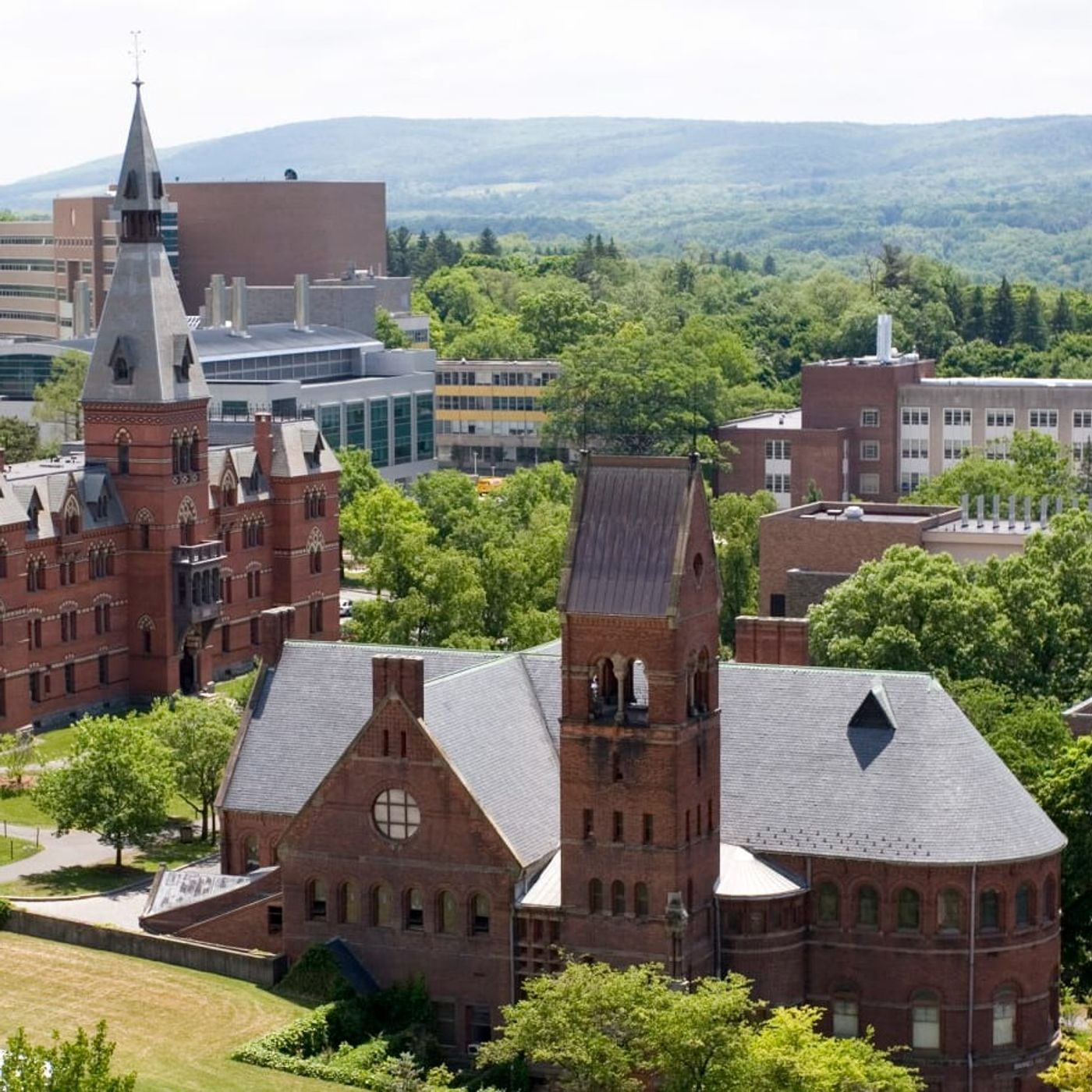
The episode covers two main stories. First, New York prosecutors are reopening an alleged 2024 Cornell University gang-rape case after a civil lawsuit by “Jane Doe.” She alleges she was drugged and raped at the Chi Phi fraternity house on campus from Oct. 19–20, 2024, reported it to Cornell Police on Nov. 8, and says two accused students were expelled but no arrests followed. Key claims include negligence, breach of contract, human-rights violations, sexual assault, emotional distress, and Dramshop; the DA cites new evidence such as damaging group-chat/social media messages (e.g., “free [slur]” around 1:45 a.m.).
Misty Maris, NBC News legal analyst, explains Title IX process and how it differs from court. Second, NBC politics reporter Alan Smith discusses some Michigan Republicans distancing from Trump on issues like the Iran war and AI ahead of midterms, including Senate candidate Mike Rogers and Congressman Tom Barrett.
Evan Bush, NBC News science reporter, explains a climate study linking about 10% less atmospheric dust over 20 years to faster warming via more sunlight reaching Earth.
Written by AI. May contain mistakes.
Discussion on the reopening of a sexual assault investigation at Cornell and the implications.
“So in her suit, Doe says that she was drugged and she was raped at the Chi-5 fraternity house in October of 2024.”
Exploration of Republican candidates' strategies as midterm elections approach.
“So we're about five weeks out from midterm elections.”
Exploring how some Republicans are creating distance from Trump ahead of elections.
“So they're trying to kind of have it a little bit both ways.”
Discussing a study linking rising temperatures to decreased dust in the atmosphere.
“And we are back with Here's the Scoop from NBC News.”

Get the gist, explore an idea or ask about something said.
 Claude
On Here's the Scoop, what are the key points of this episode?
Searching your listeningAutomatic transcript. May contain errors.
0:00So there's, did you say there's a dust researcher? Oh, there's many. Yeah, there's a whole dust research community. So there's a guy that you, like, meet at a bar or a lady that you meet at the bar, and they're like, I'm a dust researcher. I met one of them. That's real. And we biked across the Great Salt Lake together. Hi, everybody, and welcome to Here's the Scoop from NBC News. I'm Yasmin Basugin. So there is a climate mystery, right? Temperatures have been rising faster than expected, so scientists have been looking into why. Well, there is a potential new culprit that we're going to talk about.
0:33Also, we're having a conversation about politics in the lead-up to the midterm elections. And Republican candidates, especially in Michigan, that are breaking from the president in the lead-up. So we've got a couple questions. How is the president reacting? What are they breaking on? And will it actually work? Up first, though. So prosecutors in New York are reopening an investigation into an alleged gang rape of a former Cornell University student from 2024 after the former student, identified as Jane Doe, filed a civil lawsuit earlier this month. So in her suit, Doe says that she was drugged and she was raped at the Chi-5 fraternity house in October of 2024.
1:14She says that she then reported this incident to Cornell University Police Department almost three weeks later on November 8th. And then Cornell launched an investigation. Her attorney says two of the accused students were expelled, but no actual arrests were made. Now, in a statement on Monday, Cornell says they support the district attorney's decision to, quote, provide an opportunity for the victim's story and then go on to say to be heard by a criminal grand jury. This case has prompted outrage across the country, especially as there is new evidence, including some social media messages that were written that night that have now circulated.
1:58So here to break it all down is NBC News legal analyst Misty Maris. Hi, Misty. Hi, yes. Okay, so this former female student at Cornell University filed the civil lawsuit. What is she alleging happened? So the lawsuit is actually against multiple entities. Cornell, the Chi Phi fraternity, the fraternity that she was in, Tridell, as well as seven individuals that she said plied her with drugs and alcohol and sexually assaulted her. And the claims that are being made are negligence, breach of contract, violations of the human rights law, sexual assault, intentional infliction of emotional distress, and Dramshop.
2:34There's also a bar that's being named. So the crux of the case is that the university knew or should have known that sexual assault was a foreseeable risk given a history of issues with fraternities on campus. And it's important to note the fraternity house that she alleges these acts took place in is actually on the Cornell University campus. So all of those would be legal issues to be hashed out in the civil lawsuit. What does she allege happened? She alleges that on starting October 19th, but going into the early morning hours of October 20th, she went to the Chi-Fi fraternity house around 11 p.m.
3:13And she was already intoxicated when she arrived. Okay. And once she got there, several of the named individuals in this lawsuit engaged in sexual contact, including rape, and that she was unable to consent due to being intoxicated and also consuming drugs, which she says that she was forced to take. So you mentioned the date in which this happened, right? October 19th to 20th of 2024. Yeah, so she says this, you know, this started when she gets to the Chi-Fi house and lasts until 5.45 a.m. in the morning. So it's important to note there's a lot that she's alleging happened during that time frame and that it, according to her lawsuit, went on for a significant period of time.
3:57So that they took drugs, that she was in fact gang raped. These are all allegations that are made by this Jane Doe. Three weeks later then, Shreer reports this incident on November 8th, 2024, to the University Police Department, right? Cornell put out a statement on Monday saying they, quote, conducted a thorough Title IX investigation after her report. What do we know about a Title IX investigation? What does that process look like? Yeah, so a Title IX investigation is an administrative process. And Title IX is a federal statute that says there can't be gender discrimination in education. Usually think about it in the context of women's sports.
4:39But it also protects and provides a process with regard to sexual assault, sexual misconduct type of allegations. And every school that gets federal funding is required to have a Title IX process. So once a complaint is made, then there's what's called a Title IX coordinator. An investigation will take place. And ultimately, there will be a hearing. Now, this all happens as confidentially as possible. But, Yaz, it's a very different process than what plays out in a court. There aren't the same evidentiary rules. Statements are made. An investigation is conducted. Every individual who would have been a responder— An investigation is conducted by the university.
5:19—by the university in the context of a process that's laid out. Okay. And every individual who is accused would have the opportunity to provide a statement. In this case, the allegations say that they were actually given the opportunity to write an essay to mitigate the potential consequences. But because it's this administrative process, a lot can come into that investigation. Yeah. So we know here that the Title IX complaint is made to the university November 8th. The Title IX process started in January, and 12 hearings were conducted in May. The general rule is the hearing is supposed to take place within 90 days.
5:55But sometimes when it comes to collecting witness statements, evidence, it can take longer. And especially in these cases where digital evidence is really going to potentially be critical. Because there's some Snapchat evidence that has been referred to. We've heard Snapchat evidence. We know that there's a photograph of a conversation that went on apparently at the Ki-Fi house between some of those individuals on the night of the alleged assault. And there's also an interesting allegation that says Jane Doe, the alleged victim here, heard around campus about what happens, was hearing that others were talking about it.
6:33This is really important because in a Title IX investigation, you don't have the same type of hearsay rules. So there might be witnesses who are identified that could come in and speak about what they heard, who they heard it from. They could actually take testimony from that during the hearing. Correct. The Title IX hearing, which could then be included in the university's decision as to whether or not to pursue further. Exactly. The panel, so it's three individuals on a panel and somebody who acts as kind of like an organizer oversees the hearing process. They make all the decisions about what evidence to take into consideration, what evidence is credible, what evidence is not.
7:04But it's largely more expansive than you would ever have in court. And so what would be revealed in this Title IX process, there is a tremendous amount of information with regard to what was discovered during the context of an investigation that's potentially in those records. And just to be clear also, the panel is made up of folks that have an interest in the university, that work for the university. Okay, so the Tompkins County DA put out a lengthy statement in which he says Jane Doe's sworn statement in November of 2024 was very different than the claims in her lawsuit, right? Writing this, Doe's statement described her participation in drug use and sexual conduct as voluntary, conscious, and consensual.
7:50And yet here he is reopening the case. Yes. So what does that lead you to believe? The district attorney said that there was no follow-up investigation outside of the statement that was made to the university police, which means that whether or not there was consent from the perspective of, okay, if somebody is using drugs or alcohol, even if their use of it is voluntary, they can still not consent to sexual contact. But that investigation sounds like it never happened. And now the district attorney has made the representation that the text message that's in this lawsuit saying free P word, very, very damaging text message from that night that's in a group chat.
8:32He didn't have that before. Let's just be clear here. There are allegations that there was a text message circulated amongst the men in this fraternity in which they said free P word. Yes. Alluding to Jane Doe. From that night at 1.45 a.m. which is why that timeline is really important. And the district attorney said that he didn't have that before as part of his determination on whether or not there's enough to potentially bring charges. And I want to mention, though, it's not uncommon for the university police to be the first line, and then it sometimes can get referred to the county or town police department.
9:09This is not really podunk here. This is Cornell, and there's also another college there, Ithaca College. This is a huge area, collegiate students. And so it's a little concerning when you see just the lack of follow-up. And this is not uncommon because of the he-said-she-said nature of these types of allegations. So what happens next? So the civil case will keep on pressing forward as of now. And that is a lengthy process when it comes to civil litigation. You're talking about a couple of years in a New York state court. but in that process will be what's called discovery. That means getting anything and everything relating to the allegations, the defenses that will be exchanged between all of the parties.
9:51Now, we know the DA has said that he may present this to a grand jury, which means potential criminal indictments. And that could be against the individuals, depending on what evidence is available, what evidence the grand jury considers, whether or not there's probable cause that a crime was committed and probable cause that individual committed the crime. So kind of dual tracks there. And the Title IX procedure is over, but all of that came out during Title IX will likely be a part of definitely the civil case and if there are criminal charges, the criminal case. Misty Maris, as always, thank you.
10:28Thank you. All right, coming up. Republicans in some of the most competitive midterm races have been distancing themselves from President Trump on issues including the Iran war and AI as well. Will the strategy help or hurt them with voters? That's next. And also, while you're listening to the ads, just take a second. Share your favorite episode of Here's the Scoop with a friend. They will appreciate it, and so will we. It is a great way for us to find new listeners. I'll see you on the other side.
11:03Who's ready for a bike ride? Peppa Pig is learning to ride her bike. First, pop on her helmet. Safety first. Then attach the push stick and give her bike a push. And watch Peppa paddle. Her legs go round and round as the wheels turn. With more than 75 sounds and phrases, every ride is a big adventure. Peppa Pig Ready Paddle Go. Available at all major retailers now. At Jared Jewelers, we know it's about more than fine jewelry. It's the moment they open the box. That smile they can't hide. Knowing you chose exactly right. Because the right gift can bring a lifetime of meaning. A promise. A milestone.
11:49A memory in the making. Make every moment unforgettable. Find great gifts starting at$250. Jared, make the holiday last forever. Shop Jared Jewelers.
12:05And we are back with Here's the Scoop from NBC News. So we're about five weeks out from midterm elections. And we've talked a lot on this podcast about the Trump effect, the impact of President Trump's support on candidates. President Trump has even called on his supporters to vote as if he's on the ticket. But with the president's approval ratings hitting new lows for his second term, some Republican candidates in competitive races are starting to break with the president on some key issues. Here is Michigan's Republican Senate candidate Mike Rogers in an ad released last week on X. Michigan families are struggling with the price of everyday life.
12:45Groceries cost too much. We have to bring prices down. The war with Iran needs to end and end quickly. But will this strategy actually win over independence in battleground races? And then on the flip side, could it end up alienating MAGA voters and the president himself? So for this, I want to bring NBC News national politics reporter Alan Smith. Hi, Alan. Great to be with you, yes. Great to have you, as always. So interesting, right? We're hearing that ad there from Mike Rogers in which he's saying the war with Iran needs to end right now, right? In that same ad, he has proposed a temporary embargo on diesel exports to help bring down energy costs until the war is actually over.
13:26He has also somewhat distanced himself from President Trump. What is the calculation here on Rogers' part? Well, you know, there was a New York Times-Siena poll last week in Michigan that showed, even among Republicans, There was 20 to 40 percent disapproval of the president's handling of issues like the cost of living, the war on Iran, gas prices. So he's trying to get to where, you know, a lot of the electorate is on these things and doing it without having too harsh of a break with the president. There was an advisor to another candidate in Michigan who told me, you know, the breaks that these candidates are making with the president aren't being done in a way that would be seen as disrespectful or a little too out there.
14:06So they're trying to kind of have it a little bit both ways. He's not the only one who's doing this, right? Who else is doing this? Well, in his same state, Congressman Tom Barrett is also separating on some of these issues, whether it be on data centers or the war in Iran. He's actually voted for the War Powers Act as it's gone through the House. So there are candidates in battleground races that are – they're seeing the lay of the land. We've heard a lot of Republicans in the last week expressing a lot of concern about the direction that these races are going. So you're seeing it with battleground candidates in close races trying to create some distance, which, again, it's not that abnormal for a midterm that takes place, especially in a president's first term.
14:41The novel thing about it, as an advisor to Barrett told me, is that it involves Trump, and you just so rarely see Republicans do this. Do you think voters buy it, the voters that they're trying to court, or could Democrats actually make a dent? I mean, it's unclear at this point. You know, in Michigan specifically, the campaign against Abdul El-Sayed, the Senate candidate, And Will Lawrence, who's the candidate running against Tom Barrett, has been very focused on extremism. Seeing these candidates is a bit too far to the left for the state. And Republicans have really been hammering away at that.
15:10In the last week, though, the tide has looked like it's turned a little bit. I mean, there's polling that's come out that shows El-Sayed's actually winning more Republicans than Rogers is Democrats. So it looks as if some of these candidates have been on the back floor. Do you think that's because of El-Sayed or because of Rogers or because of Trump? Like, why? I think it's actually a combination of the three. Okay. Rogers is someone who doesn't hail from the party's MAGA wing. He's definitely more of a traditional Republican. Same with Barrett. So they're not exactly fits for the MAGA movement.
15:38El-Sayed has been someone who has tried to court Republicans just as Rogers has tried to court Democrats. He's running an ad in the state that actually features Jesse Waters promoting him as someone who would run against the system and won. Right. Fox News host. Yes. He's trying to embrace some of the America First language of the MAGA movement. So he's doing that. And then, of course, the president's disapproval ratings are running up pretty high right now, some of the highest in his whole career in politics. And you're seeing numbers on specific issues where Republicans even are saying we disagree with his handling of this.
16:11Okay, so let's talk about the economy because one of the biggest economic policies for the president has been his tariffs, right? He just made this deal with China to reduce tariffs on$60 billion worth of goods, including agricultural products like corn and wheat. could something like this, could a deal like this move the needle for those folks that are disapproving of the current Trump economy? Absolutely. It depends on how fast people feel the effects, though. I know the latest agreement with China, it does involve a lot of agricultural products. And you think about a part of the economy that's really struggling right now, the farmers.
16:46This has gotten so much attention. It's the combination of the high diesel prices and the tariffs. Getting those guys any relief could be good for the president, not just in, you know, how these guys feel about the economy, but the broader narrative about the economy and the election because, you know, the farmers, they have a very, very large voice and presence in coverage of these races in states like Iowa, even in a place like Michigan. So it could get more positive attention for the direction the economy is going, but it really depends how fast, you know, these measures are actually reflected in prices.
17:17I think kind of the logical follow-up here is how is the president actually responding, right? Because obviously, Texas Senator John Cornyn, Thomas Massey, the president supported the candidates that were actually running against them. And those guys, they lost. Right. So how is the president now responding to these folks that are potentially breaking from him in the run up to the midterms? So this is actually something that's really interesting and new here is that, you know, he has not come out hard against any of these Republicans, be it Rogers or Barrett in Michigan or some of the others elsewhere in the country, in terms of being, as we would expect, highly critical of folks that are putting distance between themselves and him.
17:57There have been, though, some instances in which the president has specifically come out against some of these candidates. So he did, over the weekend, do a post on Byron Donalds, who, you know, had removed images of the president and him from his campaign website. It was done in a very kind of middle of the road way where he wasn't criticizing Donald specifically, but was calling out the coverage of Donald's having changed his campaign website. And then, of course, there's Congresswoman Salazar, who had cut a direct-to-camera ad recently, you know, pretty much begging the president to change his immigration policies, saying that it was having a really negative effect in her South Florida district.
18:35Be careful what your advisers are telling you about immigration policies. The same Hispanics who helped you get to the White House in 2024 feel betrayed today. And, you know, because of the way that was done, you saw the president recently reposting some criticism of her on social media. So these guys don't necessarily have a clean path to break in any way possible. But so far, a lot of the folks who have broken have been able to fly under the radar. And the folks that I spoke with for the Michigan story, they said that on these specific policy issues, be it the war in Iran, data centers, AI, that the candidates would not be surprising Trump or surprising the White House with these moves.
19:13They would be consulting with them beforehand to see, hey, is this going to be OK if we do this? How can we do this in a way that is, you know, the least offensive possible? You know, to them, it's clear there's some level of communication, you know, with a wink and a nod that would go on here. But to the point you're making about, look, it's a general election, not the primary. I mean, the president knows that if Republicans lose control of the House and Senate, his next two years are going to be very difficult. So he knows that a lot of these guys, they have to get across the finish line any way they can so that his next two years look anything like the last two years that he's had in the White House.
19:46Alan Smith, thank you. Thank you so much, Yaz. All right, coming up. A new study is pointing the finger at a dark horror suspect in a climate change mystery. That's after a break.
20:04Who's ready for a bike ride? Peppa Pig is learning to ride her bike. First, pop on her helmet. Safety first. Then, attach the push stick and give her bike a push. And watch Peppa paddle. Her legs go round and round as the wheels turn. With more than 75 sounds and phrases, every ride is a big adventure. Peppa Pig Ready Paddle Go Available at all major retailers now Creators, the idea shows up on a walk The script gets written at a desk three days later, if at all Whisperflow is a voice-to-text app You talk, it types, the hook, the script, the caption, the reply to a comment, and any app It cleans up the ums and the rambling So what comes out is a real draft Four times faster than typing Whisperflow is free Get it at whisperflow.ai.
20:58That's W-I-S-P-R flow.ai.
21:26Make it happen. Capella University. What can't you do? Visit capella.edu to learn more. And we are back with Here's the Scoop from NBC News. So we are talking today about a climate mystery. So since 2023, global temperatures have been rising a lot faster than expected. And scientists have been struggling to figure out exactly why. But a new study is now pointing at an unlikely culprit, dust, or the lack thereof. So I want to bring in NBC News science reporter Evan Bush to help clear things up for us. Hi, Evan. Hi. Thanks so much for having me. It's great to have you. Okay, so this study actually found that there is less dust in the atmosphere, and then that may be leading to rising temperatures across the globe.
22:22Walk me through how exactly less dust can make us warmer. Sure, yeah. So the researchers found that over the last 20 years, 10 % less dust is in the atmosphere. And what the dust does, it can actually both heat and cool the atmosphere depending on its characteristics. But on the whole, it's reflecting sunlight back to space. And so that's really important because that prevents a lot of the heating. And what the scientists think is happening is we have less dust and therefore more sunlight reaching Earth's surface and heating the Earth. Why do we have less dust? It's a great question, and that is a big unknown.
23:04There's three potential options that they've thrown out there. The first is the total chance that there's a 20-year trend and this is just how the coin flipped and that's just what happened. The other option, though, is that it could be that climate change is slowing winds in dusty regions like the Sahara, for example. It could also be that dusty regions are growing more green and that less dust and less erosion is actually happening. Have scientists always been tracking dust? Like, is this a thing in science that they track the levels of dust? I mean, I'm literally asking because I have zero idea of the answer.
23:44Sure. So there are a bunch of different dust researchers out there. I mean, I think of the Great Salt Lake in the United States. There's a lot of work going on to understand the content of that dust, what types of winds kick that dust up. There's concern that some of that dust is toxic. And, you know, for the city of Salt Lake, that's a big deal because it gets into neighboring communities to the lake. So did you say there's a dust researcher? Oh, there's many. Yeah, there's a whole dust research community. So there's a guy that you, like, meet at a bar or a lady that you meet at the bar, and they're like, I'm a dust researcher.
24:17I met one of them. That's real. And we biked across the Great Salt Lake together. I mean, he spends most of his time on the lake. They call him the king of the playa, the playa being the dusty lake surface. So he's a fascinating guy and does a lot of really important work. There's great concern for the future with dust storms in that region. Has science always known the benefits of dust? I mean, to make this like very colloquial, like I'm always trying to get rid of dust in my home. So I'm wondering if I've been doing the wrong thing the whole time or if that's bad dust. Well, there's a difference between household dust and mineral dust.
24:58But, I mean, functionally, it looks the same to your eyes. You know, dust is really important and people don't often understand that. Dust, if it layers on, you know, say the Wasatch Mountains in Utah, that can actually, you know, suck up more heat and melt the snowpack earlier, causing an early meltout for our water supply. Dust, if it deposits with iron in certain parts of the ocean, it can cause phytoplankton blooms. There's all kinds of different things that dust does that we sort of take for granted. Evan Bush, thank you. Thank you for your time. All right. That is going to do it for us at Here's the Scoop from NBC News.
25:40I'm Yasmin Basugin. We'll be back tomorrow with whatever the day may bring. And if you like what you heard, subscribe wherever you get your podcasts. And you can also subscribe to our daily newsletter, The Inside Scoop. It is a deeper dive on the main stories of the day that comes out every weeknight straight to your inbox. You can sign up for the Inside Scoop with Pervert paid subscription at NBCNews.com. We'll see you tomorrow.
26:25you type. Say the progress note, the referral letter, the patient instructions, and it comes out clean and formatted with your terminology spelled right. Four times faster than typing and HIPAA ready. Whisperflow is free. Get it at whisperflow.ai. That's W-I-S-P-R flow.ai.
A New York district attorney is reopening an investigation into an alleged “gang-rape” at Cornell University in 2024 after a former student, identified as Jane Doe, filed a civil lawsuit against the university and others earlier this month. NBC News legal analyst Misty Marris explains how the initial Title IX investigation differed from a criminal investigation and what role new evidence, including social media messages written that night, may play. Then, some Republicans in competitive midterm races have started distancing themselves from President Trump on issues including the war in Iran, AI and data centers. NBC News National Politics Reporter Allan Smith explains their motivation and why the president has mostly refrained from turning his supporters against them. And finally, global temperatures have been rising faster than scientists’ projections for years. NBC News science reporter Evan Bush tells us about a new study that points the finger at an unlikely culprit: missing dust.
Hosted by Simplecast, an AdsWizz company. See pcm.adswizz.com for information about our collection and use of personal data for advertising.