Ask ChatGPT

 Here's the Scoop
16 Sep 2026 · 25m · 10 chapters
The episode of NBC News’ “Here’s the Scoop” covers three linked stories: (1) the Fed raising interest rates by 0.25% to fight inflation (3.4% vs. 2% target), with inflation blamed partly on the Iran war’s effect on oil/diesel and supply chains; it notes the decision ahead of midterms and likely effects on credit cards, auto loans, and mortgages. (2) The Trump administration planning a ~$2.8B arms sale of heavy one-ton bombs to Israel, reversing a Biden pause; guests say Congress can disapprove but may not have time, and the bombs’ use in dense Gaza raises civilian-casualty concerns. (3) Music controversy: Ed Sheeran dropping Macklemore from Gillette/other tour dates after Robert Kraft/venues pressured him over Macklemore’s pro-Palestinian speech (“Free Palestine”).
Allie Canal (NBC business reporter), Garrett Haake (NBC chief White House correspondent), Doa Madani (NBC breaking news reporter). Key examples: Macklemore’s MetLife speech; Fed’s next meeting Oct. 28; bomb deal framed as a loan that returns money to the U.S. economy.
Written by AI. May contain mistakes.
Discussion on Ed Sheeran's concert controversy involving Macklemore.
“So Ed Sheeran drops Macklemore, but is actually pointing the finger at the promoters who made the final decision.”
Exploring the Fed's decision to raise interest rates to combat inflation.
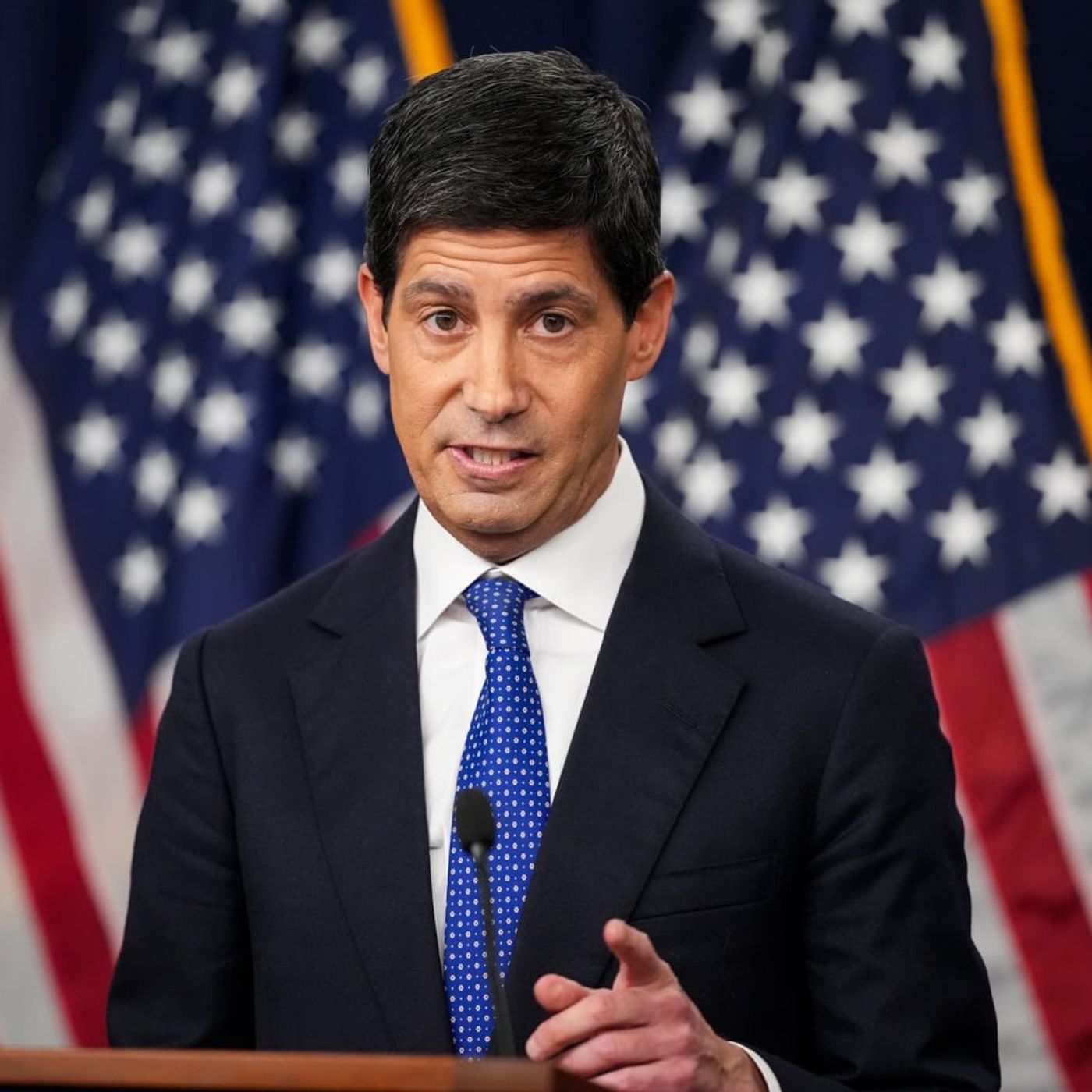
“Here is Federal Reserve Chair Kevin Warsh.”
Analyzing the implications of the interest rate hike on consumers.
“fight this inflation fight to try and bring that inflation number back down to 2 % and perhaps allow for more breathing room so that prices don't get out of hand, which we do tend to see over time.”
The Fed's rate hike is seen as a stance to credibly fight inflation.
“The irony of all that is the Fed says that's exactly why we can raise rates, right?”
Discussion on how the interest rate increase may affect the upcoming midterms.
“So really, to your point, he talked about this strength and resiliency.”
Transition to discussing the proposed arms deal between the U.S. and Israel.
“The Trump administration is planning to sell$2.8 billion of heavy bombs to Israel.”
Examining the details and implications of the heavy bomb sale to Israel.
“They're very useful at blowing up bunkers or buildings or taking out large areas with an explosion.”
Learn about the evolving views on Israel and Palestine among American voters.
“And if Democrats win control of the House and the Senate, the president's definitely going to have a battle, but he could still do it.”
Discover the impact of Macklemore's pro-Palestine speech on his tour with Ed Sheeran.
“As the American public support for Israel falls to historic lows, the political controversy is spilling out into the music scene.”
Explore the fallout from Macklemore's removal from Ed Sheeran's tour and its implications.
“So it looks like Ed Sheeran is going to be the last man standing when it comes to his tour.”

Get the gist, explore an idea or ask about something said.
 Claude
On Here's the Scoop, what are the key points of this episode?
Searching your listeningAutomatic transcript. May contain errors.
0:00It'll be Ed and a guitar if he continues at this point. He's not made any sort of announcement that anyone's joining his tour right now. I mean, Ed Sheeran and a guitar is pretty great, but I'm not quite sure that's what he was going for. Hi, everybody, and welcome to Here's the Scoop from NBC News. I'm Yasmin Basugan. So today on the show, in fact, we are talking about the controversy. I mean, everybody is talking about it, right? Ed Sheeran, Macklemore, and Robert Kraft. So Robert Kraft owns Gillette Stadium. Ed Sheeran was supposed to be having a show there. Opening for him, amongst others, was Macklemore.
0:34Robert Kraft comes forward and says, no, no, no, you cannot perform here if Macklemore is going to be your opener, because he has said some pro-Palestinian things, especially at the last concert that he played in New Jersey. So Ed Sheeran drops Macklemore, but is actually pointing the finger at the promoters who made the final decision. So we're going to get into all of that, the controversy around it, what people are saying and who they're blaming. Plus, 40 ,000 heavy one-ton bombs could be heading to Israel within this$2.8 potential billion arms deal between Israel and the Trump administration.
1:10So why is this happening now? And is Congress going to have a say in it? Up first, though. So we're all feeling it, right? From gas to groceries. Inflation has been ticking up since the beginning of the year. To combat that, the Fed raised interest rates by a quarter percent today. Here is Federal Reserve Chair Kevin Warsh. The plain fact is that inflation is too high and has been for too long. Now, this is, of course, the opposite of what the president has been demanding, and it's all coming just ahead of the midterms. So why this decision? Why now? And what effect is this going to have on regular consumers?
1:51For that, I want to bring in NBC News business reporter, Allie Canal. Hi, Allie. Hi, Aspen. Okay, so let's talk through this because Fed Chair Kevin Warsh has decided to raise interest rates by a quarter percent. Why now? Why now? Well, the Fed Chair was pretty strong in the fact that it's due to inflation. So you have to remember that the Fed has a dual band-aid to maintain stable prices, which is keeping inflation in check, and also making sure they're achieving sustained maximum employment. So that's focused on the labor market. The labor market has been strong. The problem area has been inflation.
2:29So right now, inflation is at 3.4%. The Fed's target is 2%. Now, here's where it gets a little interesting. The main reason that inflation has been so high, especially over the past few months, is due to the war with Iran. That's been raising oil prices, which is having a ripple effect across the supply chain, especially if you look at things like diesel prices. The Fed raising interest rates by a quarter percentage point, that doesn't reopen the Strait of Hormuz. It does not lower oil prices. But what it does do is it establishes some credibility with the Fed that they are willing to fight this inflation fight to try and bring that inflation number back down to 2 % and perhaps allow for more breathing room so that prices don't get out of hand, which we do tend to see over time.
3:15Listen, one of the reasons why the president became so upset with former Fed Chair Jerome Powell towards the end of him being the Fed Chair was the fact that he would not lower interest rates. Right? Yeah. And in fact, the talk was that Kevin Worsh was in favor of lowering interest rates. So now, a few months into him being the Fed Chair, he has in fact increased interest rates. So was this a surprise? It wasn't a surprise at this point, because back in August, when Kevin Warsh took the stage at the Jackson Hole Symposium, he gave a pretty, what we call in the biz, hawkish speech, right? Really targeting inflation, basically telegraphing that they want to bring inflation back down to 2%.
4:06The best tool that the Fed has in order to do that is interest rates. So that started to tip markets off. Okay, maybe we will see a rate hike. I think a few months ago when Kevin Warsh first took this position, I think it would be a surprise, especially before the midterms. And President Trump, you know, he ran on affordability for his election campaign. He ran on lowering mortgage rates. Right before the war broke out, mortgage rates were at 5.99%. Now we are at around 7.2%. That's a pretty rapid increase in a very short amount of time. And for Americans that are hitting the polls, for those that are going to their grocery stores, filling up their tanks or wanting to purchase a home, those affordability pressures are really top of mind.
4:49How's the president reacting? Do we know? We haven't seen any reaction from him at this point. I am sure he will be weighing in. He has consistently maintained that position, right, that the U.S. economy can afford to lower interest rates because we're booming. The irony of all that is the Fed says that's exactly why we can raise rates, right? Because the economy can withstand higher interest rates. I did think the messaging of this whole thing was really interesting, right? Because between the statement from the Fed along with what we heard from Kevin Warsh at the podium is that, listen, here's the bad news, essentially, right?
5:18He didn't say that. But, like, here's the bad news. We're raising interest rates, but—and it's because of the war. It's because of geopolitical concerns overseas and the uncertainty. But also, we have a resilient economy. We have an economy that is in really good shape, right? Like, I'm wondering if in part the speech that the Fed chair made was messaging directly to one person and one person only, and that is the president of the United States. Yeah, and I want to read an exact quote from his presser. He said there was a quote, an attitude of optimism is exactly what I heard inside the FOMC these last two days.
5:51So really, to your point, he talked about this strength and resiliency. And he did say that inflation has been high and above target over the past five years. So in a way, he could be placing the blame on President Biden, on his predecessor, Jerome Powell, the previous Fed chair. So it'll be interesting how President Trump interprets this and who he ultimately blames. We've seen him blame Biden time and time again, even recently. And to be fair, inflation was running hot, incredibly hot under President Biden's term, at one point reaching 9 percent. And that was post-COVID. There were obviously so many different shocks and factors going on at once.
6:31There's a much different economy than we're in right now. Yeah. And even beyond just the war with Iran, we have tariffs that are adding to inflationary pressures. We are still in the midst of that fight with our neighbors to the north, Canada, where we have a very significant trade relationship with. To be clear, these are all Trump policies. Yes. And these are Trump policies, too. So it's not like we've been devoid of political shocks. There's been plenty of those to deal with. What does this mean for the consumer, right? Because, yes, raising interest rates is supposed to lower inflation. But what about mortgage rates?
7:00The Fed funds rate, it directly impacts short-term borrowing costs. So think credit cards, the loan you pay on your car. Those APRs, they're already pretty high right now, hovering at around 20%. So I would say if you're a consumer, call your bank. Make sure you're getting the most attractive APRs. And it does have a filter-through effect into mortgage rates. Now, mortgage rates are more tightly correlated with the 10-year Treasury yield, which we know hovering at their highest levels since 2007. But what the Fed does has an indirect impact to Treasury yields as well. So it's all really interconnected.
7:33Now, on a positive note, when it comes to savings, if you have extra cash, make sure you're putting it in a high-yield savings account. Those can be very attractive right now, especially if the Fed is going to be on this rate-hiking cycle. That's a way to grow your money without just keeping it in your regular bank and not earning any interest on that. So in this presser, Warsh also said, quote unquote, this was a sober decision, a serious decision, and he wasn't going to predict any kind of future decisions. The next time they're going to meet is, I believe, October 28th, right, just days before the midterm elections.
8:09It has been kind of pro forma that the Fed usually keeps rates steady ahead of an election to not kind of rock anything? Do we have any indication as to whether or not they're going to stay in that lane? Well, the projections say the majority of Fed officials anticipate one more rate hike by the end of the year. Now, beyond that October meeting, there's also a meeting in December. So they could stay on hold for before the midterms, and then after the midterms are done, they could raise rates in December. But it does seem like the appetite within the Fed, they've acknowledged that you need to raise interest rates in order to get back to target because we are just so beyond target right now.
8:51And we're not going to hit 2 % till 2029, I believe the projection is. So we still have a long, long way to go. Allie Cannell, thank you. Thank you. All right, coming up. The Trump administration is planning to sell$2.8 billion of heavy bombs to Israel. We're going to get into Trump's motivation after a break. And while you're listening to the ads, why not use the time to make sure you're subscribed to Here's the Scoop? That way, you're never going to miss an episode. And if you are already subscribed, thank you, by the way, be sure to rate and review us. I'll see you on the other side.
9:30Welcome to The Circle. In this game, you never meet the other players. Your goal is simple, become the most popular. But should you play as yourself or catfish as someone else? With the new host, celebrity contestants, and this time, audience voting will influence the game. You decide who has what it takes to win. Watch the Hulu original series The Circle on November 17th. Streaming on Hulu and Hulu on Disney Plus for bundle subscribers. Terms apply. Let's face it, modern work life is complicated. But good news, we're here for you. I'm Kayla Lopez. And I'm Kyle Heggie. And together, we've helped thousands of Morning Brew subscribers grow in their careers.
10:10And now, as the co-host of Per My Last Email, we're bringing that advice straight to you each week with hot takes and tactics on how to succeed in every area of work. Whether that's figuring out if you're being underpaid. Or how to stand out in a remote work environment. So join us each week on Per My Last Email on Spotify, Apple, YouTube, or wherever you get your podcasts.
10:33And we're back with Here's the Scoop from NBC News. So we got some news overnight that the Trump administration is planning a$2.8 billion sale of so-called heavy bombs to Israel, one of the largest deliveries of U.S. munitions to the country. That is according to a U.S. official and a source familiar with the matter. The Biden administration had paused delivery of these types of bombs over concerns about their potential to cause even more devastation to Gaza. The war has already left tens of thousands of Palestinians dead, including children, with Israel increasingly isolated on the global stage.
11:08So why is the U.S. planning to do this? I want to bring in NBC News Chief White House Correspondent Garrett Haake, who's got more on this. Hi, Garrett. Hello, Yasmin. So tell me about this deal and why the Trump administration is overturning the Biden administration's pause. Well, our great colleague Abigail Williams was able to confirm this with a U.S. official and another official familiar that basically the U.S. plans to sell almost$3 billion worth of munitions to Israel in one single tranche here, essentially. Israel says they need them to continue to defend themselves, to continue to potentially prosecute their conflicts, their wars against Hamas in Gaza and against Hezbollah in Lebanon.
11:52And these types of bombs, these bombs were used in Gaza. Yeah, and the IDF has taken a ton of criticism for using these types of munitions in Gaza because these are not particularly discriminant weapons. They're very useful at blowing up bunkers or buildings or taking out large areas with an explosion. But in a dense urban setting, like you have so much of the fighting in Gaza, they're almost guaranteed to increase the risk of civilian casualties. And so there has been a lot of focus on Israel's usage of this kind of weapon in that kind of place. Even President Trump has actually criticized this a little bit.
12:31He sort of plays it off like a joke. But I have heard him in speeches criticize Prime Minister Netanyahu for, you know, blowing up a building to get one guy. This is the kind of weapon to blow up a building and get one guy. And it has driven an enormous amount of blowback from human rights groups for the way in which Israel has used these weapons in that theater. So then do we know how this is actually going to work? Like, do we have a timeline for how this thing is going to be rolled out? because a State Department spokesperson said the department does not confirm or comment on proposed arms sales until they have been formally notified to Congress.
13:07The way it works is Congress can essentially will vote whether or not to disapprove of this sale, not to approve it. But they're not even really going to get a chance to do that. I mean, we learned today that the House is going home now until after the election. So the wheels might well on be turning here on the delivery of these weapons before Congress even gets a say in it in the limited manner in which they do. Because the president can push this deal through without congressional approval if he wants. That's right. Yeah, exactly. I mean, Congress can vote to disapprove of this deal, but they would need a two-thirds majority in both chambers because the president could veto that disapproval and then go right on about his business.
13:44So it's kind of a commander-in-chief power essentially with some limitations from Congress. But by and large, he can approve these sales unilaterally unless you have overwhelming disapproval from Congress. Because there's a reality that this thing could not actually hit the floor until after January. And if Democrats win control of the House and the Senate, the president's definitely going to have a battle, but he could still do it. He's going to have a battle for sure. And the way that the politics around Israel are changing, it could be a significant battle. But I do still think, you know, unless there's another sea change and the politics on this are moving very quickly, that it's a battle that the president would probably win.
14:26By and large, Republicans have been historically and in this moment more supportive of Israel and providing aid to Israel than our Democrats in this moment. It used to be this was a pretty bipartisan position across the board. But we've seen really dramatic shifts in support for Israel, especially when it comes to military support for Israel, in how Democratic voters and how younger voters view this issue. A majority of Democrats now view Israel unfavorably. And a majority of voters across both parties have a more favorable view of the Palestinians. It's a similar story with younger voters across both parties.
15:02I just don't know if it'll be enough in 2027 to make a difference. That said, this could also be part of the reason that the Trump administration is going forward on this because the politics in this is very clearly moving in one direction. And if you don't make this sale now, there might not be the votes to do it in two years or four years. So they want to get out ahead of it in a way. Yeah. Can we talk about the money for a moment? Because in an exchange like this, you would expect that Israel would say, here's your$2 billion. And the United States would say, and here are your weapons. Yeah.
15:40In this instance, correct me if I'm wrong, the United States is saying, here's your money. And Israel is saying, thank you for the money. And here's your money back. And now we get the weapons. Yeah, it's a little bit convoluted, but I think you have the thrust of it correct. This is essentially a situation in which the U.S. provides a loan, a military aid loan to Israel, who then turns around and buys U.S.-made weapons. And so from the government's perspective, this is money that basically ends up back in the American economy. And so it's sort of all well and good. But this is exactly the kind of thing that frustrates particularly a lot of these more outspoken Democrats, this idea that, you know, this is U.S.
16:24dollars at the end of the day going to fund Israel's wars. You know, I do want to kind of dig a little bit further on this idea that you talk about where we're seeing support for Israel domestically here in the United States eroding while it seems as if the administration, the Trump administration, is doubling down on it. What reporting are you getting from inside the White House as to why? Well, even inside this White House, there is a lot of frustration at times with Prime Minister Netanyahu of Israel. He and President Trump have a decades-long relationship and friendship, but it is complex.
16:58And President Trump has at times lashed out at Netanyahu over elements of his conduct of the war in Iran, over elements of the way in which Israel has prosecuted the war in Gaza. But that said, the president sees Israel as a very important ally, specifically as it relates to the war in Iran, but also as an important kind of political supporter. I mean, there have been times in the polling, and I don't know the most recent polling, where President Trump was actually more popular in Israel than Prime Minister Netanyahu was. So the politics here are deeply intertwined, and they're deeply intertwined, by the way, with electoral politics here in the United States, where Jewish voters tend to lean Democrat.
17:37But as I was just saying, like, if you're if Israel and support for Israel is, you know, a top tier issue for you as a voter, you might look at this and say, all right, maybe I need to stick with Republicans who are more inclined to stay the course on this. And so I think the president is doing a couple of things. He's trying to support domestic weapons producers, which is important to him for a variety of reasons. He's trying to support somebody who's been an ally and a critical one in the war in Iran. I think he's trying to look for political edges where they exist in the upcoming midterms. Garrett Haake, thank you.
18:12You bet. All right, coming up. As the American public support for Israel falls to historic lows, the political controversy is spilling out into the music scene. We're going to tell you about that coming up next.
18:29Stay informed with the NBC News app. Major developments out of the White House. Read, watch, and listen throughout your day. And now, unlock even more with an NBC News subscription. Get deeper reporting and exclusive articles. Plus, more insight, analysis, and content only for subscribers. When you really look inside these numbers, it's more context and clarity from the reporters you trust. Download the NBC News app now and subscribe for more. Over the years, I've met people whose lives were changed forever in a single moment. In my new podcast, Before and After, I explore what happens after that decisive moment.
19:11Personal, powerful conversations with Colin Kaepernick, Jeremy Renner, Gabby Giffords, and others. Join me wherever you get your podcasts. Listen to all episodes of Before and After with Lester Holt now, wherever you get your podcasts. Want to know how Russian pranksters tricked a top government official? Or how the only copy of a Wu-Tang Clan album got auctioned for millions of dollars by the Department of Justice? The answers are out there. The trick is getting the government to share them. I'm investigative journalist Jason Leopold. I spend most of my days getting documents from the government.
19:47I'm attorney Matt Topic, and I fight them in court to open their files when they don't want to. From Bloomberg and No Smiling, this is Disclosure, Disclosure, a podcast about prying loose government secrets. To listen early and ad-free on Apple Podcasts, subscribe now at Bloomberg.com backslash podcast offer.
20:08And we are back with Here's the Scoop from NBC News. So it looks like Ed Sheeran is going to be the last man standing when it comes to his tour. That is because all of Sheeran's scheduled opening acts and his house band, They've left the tour in protest after the rapper Macklemore was dropped from the remaining tour dates. Here's what happened. So back in September, in the early part of September, Macklemore opened for Sheeran at New Jersey's MetLife Stadium. And then he made this speech in support of Palestine, which he has made several times before. He did this before performing his protest anthem about Israel's war in Gaza.
20:45One of the reasons why I wanted to come on this tour was because I wanted to stand up here on stages and stadiums across America and say two words that are very near and dear to my heart. Free Palestine. And then as part of his speech, he also said this. To all of my Jewish brothers and sisters, criticism of Israel, criticism of apartheid, being against genocide in no way is a criticism of you. My message is for peace, love for all human beings to be treated with dignity, respect and equality. So Macklemore says his remarks about Palestinians are why Sheeran and his team kicked him off the tour under pressure from stadium owners.
21:41So I want to bring in NBC News senior breaking news reporter, Doa Madani, who has been covering this. Hi, Doa. Hi, Az. So for those that have not been following the TikTok of this whole thing, how did it get from Macklemore's performance and the speech that we just heard to where we are now? So essentially, McLemore gives this speech before going on to perform Hins Hall, which is his anti-war protest anthem inspired by the Columbia University protests a few years ago. This is not a new performance from him, but it did get some attention and headlines, which drew the attention apparently of Robert Kraft, who owns Gillette Stadium and the New England Patriots.
22:22According to Macklemore and also Ed Sheeran, Ed Sheeran started getting all of these calls from venue owners saying that basically Macklemore was not going to be welcome as a part of the tour. Did Kraft pick up the phone himself and call Ed Sheeran? That is what Ed Sheeran says. That is what Macklemore says. Robert Kraft does not deny this. Okay. And so basically, Ed Sheeran starts getting all this pressure and being told that he's going to have to cancel his shows if Macklemore performs. Okay. Macklemore says also that Robert Kraft rallied the other venue owners against him in this situation.
22:58Robert Kraft does not address that in his statement, but he also doesn't deny it. This all happens in the week after Macklemore's performance. Macklemore gets dropped from the tour. Ed Sheeran says this was not his decision. It was the tour promoter's decision. But either way, Macklemore's no longer there. and Macklemore puts out a statement explaining what happened and reiterates his support of Palestinians and reiterates his beliefs in this and that he's really standing firm in all of it. Robert Kraft is saying that this is not for him about trying to stifle Palestinian advocacy. He feels that there have been issues in Macklemore's past that for him are just a real concern to the Jewish community.
23:40So he's standing firm and saying that Macklemore has crossed a line. and there's also additional fallout because once Sheeran drops Macklemore, then what happens? So a lot of people were angry at Ed Sheeran. They believed that he didn't stand up for Macklemore. He didn't take a stand on this issue. Ed Sheeran put out a statement the day after Macklemore, basically explaining his side of the story, doesn't quite take a stance on any particular issue, but does say that this is something he deeply cares about and that he was trying to build bridges between the venues and his tour and Macklemore this entire time, but the promoters made the decision to drop him.
24:21In the hours after Sheeran puts out his statement, Phineas says that he's no longer going to open for Ed Sheeran, and two other opening acts also say the same thing. Then his house band also decides to pull out of the tour. So at this point, he's alone on the stage. Yes. There's literally nobody with Ed Sheeran. It'll be Ed and a guitar if he continues at this point. He's not made any sort of announcement that anyone's joining his tour right now. Have we heard from the promoters at all? Messina Touring Group did put out a statement with Rolling Stone on Monday saying that basically they were told that if Macklemore was coming, that these venues would cancel their dates and that would have caused really big repercussions through the line.
25:04So they've decided to basically part ways with Macklemore. They have not responded to our request for comment. So what's interesting to me, too, is that Sheeran was actually scheduled to perform at AT &T Stadium in Texas, which is also where Kanye West is scheduled to perform in November. And, you know, Kanye has made a lot of news over the last few years in making anti-Semitic remarks, including praising Adolf Hitler and denying the Holocaust. We don't know which stadium owners have joined in on kind of what Kraft has asked of Ed Sheeran, but why would they allow Kanye and not Macklemore? That's the million-dollar question that a lot of people are asking, and it's not just AT &T Stadium.
25:52It's also Raymond James Stadium in Florida, Tampa, Florida, that did have a scheduled performance by Kanye, but is also supposed to have Ed Sheeran on the tour. So, I mean, this is a question a lot of people are asking. If we look at this in a big picture sense, how do you think this is going to be communicated to other artists who have thought about and or are like wading into the political waters, right? Like folks that take the stage and say things like what McLemore is saying, you know, on one side or the other, right? Does this encourage it or discourage it? One publicist I spoke to said, you know, if this is happening to Ed Sheeran, it could happen to much smaller artists who have much less leverage.
26:34So it is really hard to tell what people will do going forward. I think something about a win for Macklemore is that he now has a larger audience that knows what he stands for. People who also stand for that might be flocking to him that would have never thought to go listen to Macklemore's music. Hint Hall is on my way in here today. It was number three on the iTunes chart. It was released two years ago. So one of the things that's best for a brand is consistency and authenticity, and that is a win for Macklemore. But as to what other people might do, it's really hard to tell. Doha Madani. Thank you.
27:13Thanks. All right. That is going to do it for us. Here's the scoop from NBC News. I'm Yasmin Vasugan. We'll be back tomorrow with whatever the day may bring. And if you like what you heard, subscribe wherever you get your podcasts. And you can also subscribe to our daily newsletter, The Inside Scoop. It is a deeper dive on the main stories of the day that comes out every weeknight straight to your inbox. You can sign up for The Inside Scoop as part of our paid subscription at NBCnews.com. We'll see you tomorrow.
27:53Be, look, I know how busy life can get. And sometimes we all just need a moment to pause and connect. Well, that's what my podcast, Making Space, is all about. Real conversations with people who've learned how to live with purpose and heart. Think authors, thought leaders, actors, performers. And every time I walk away with something that changes how I see the world. And I think you will too. Join me for Making Space every week, wherever you get your podcasts.
President Donald Trump has been calling for the Federal Reserve to cut interest rates, but on Wednesday, new Fed Chair Kevin Warsh defied the president, announcing the first rate hike since 2023. NBC News business reporter Allie Canal explains why this decision came now and how American consumers could be affected. Then, the Trump administration is planning a $2.8 billion arms sale to Israel — including 40,000 heavy bombs — according to a U.S. official and a source familiar with the matter, which would be one of the largest deliveries of U.S. munitions to the country. NBC News chief White House correspondent Garrett Haake explains why the Biden administration had paused delivery of these bombs — and why Congress might not be able to stop it, despite changing public sentiment toward Israel.
Plus, all of Ed Sheeran’s supporting acts and his house band have left his tour after rapper Macklemore was dropped for making a pro-Palestinian speech. NBC News senior breaking news reporter Doha Madani breaks down how New England Patriots owner Robert Kraft is involved and why this controversy might boost Macklemore’s sales.
Hosted by Simplecast, an AdsWizz company. See pcm.adswizz.com for information about our collection and use of personal data for advertising.