Ask ChatGPT

 Here's the Scoop
14 Oct 2026 · 22m · 4 chapters
This episode of NBC News’ “Here’s the Scoop” covers three stories. Topic 1: Inflation and midterms.
Ryan Nobles, NBC News Chief Capitol Hill Correspondent.
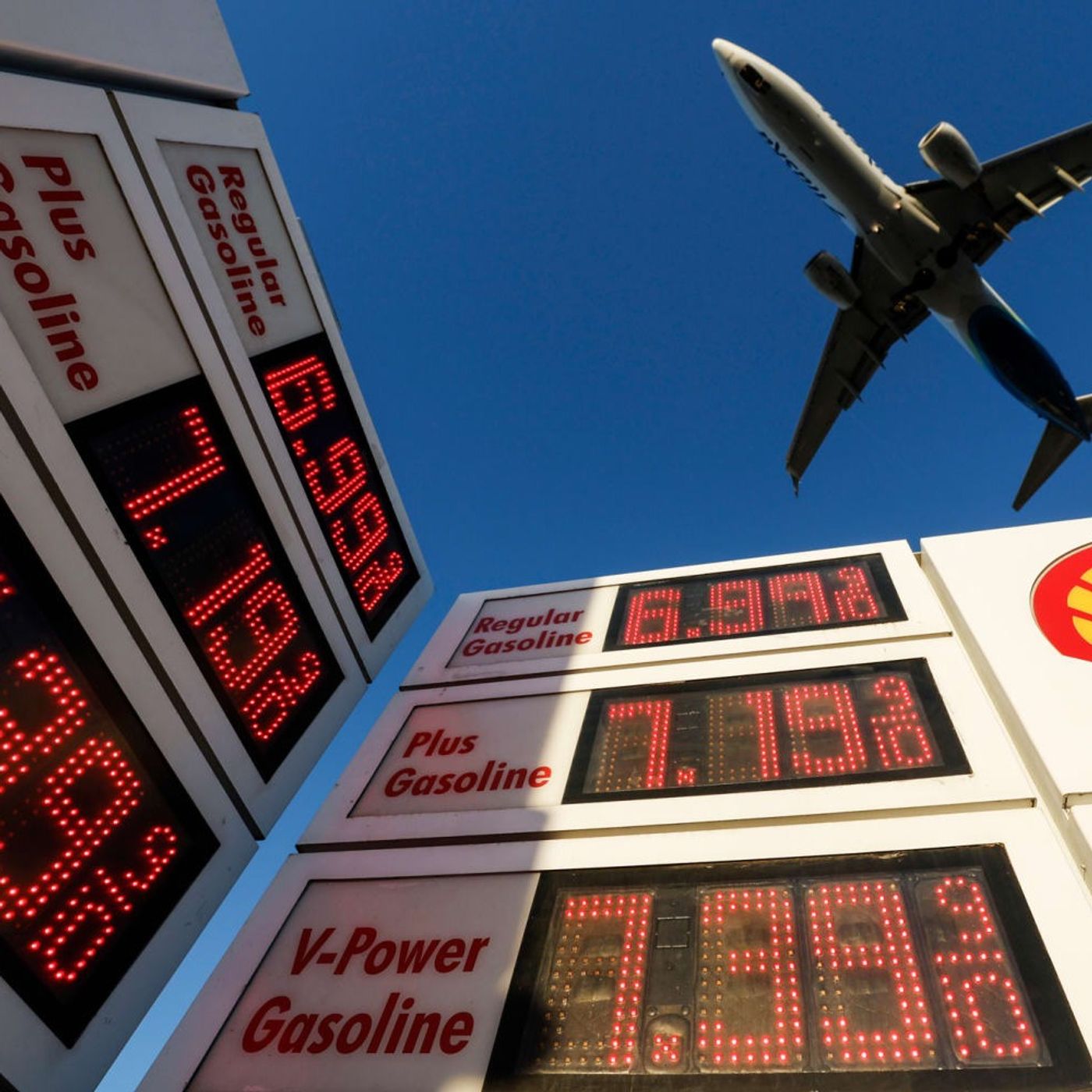
Prices rose 3.7% year over year, driven by gas up 9.1% in September, while wages rose only 3%. Nobles argues voters feel inflation “binary” at gas stations and that affordability is the dominant Democratic message; he cites John Ossoff in Georgia and notes Republicans may lose support or turnout even without switching parties. Topic 2: Ukraine and allies.
Dan DeLuce, NBC News national security/global affairs reporter.
Ukraine says SpaceX’s Starshield limits since Saturday disrupted drone targeting and missile defense; Ukraine fears reduced U.S. intelligence after past Trump suspension.
alleged Starlink ground-station sabotage in Poland (September) and Bulgaria (earlier this month). Topic 3: Pope Leo health.
Debra Lubov, NBC Vatican analyst.
Vatican says Pope Leo has a common lung cancer type; he’s recovering well after surgery, walking, and resuming normal eating; audiences canceled until Oct. 20; pilgrims show prayerful, hopeful reaction.
Written by AI. May contain mistakes.
Discussion on how inflation is affecting voters and the upcoming midterms.
“which climbed 9.1 % in September, all according to the U.S.”
Exploration of Ukraine's reliance on Starlink and its implications.
“So Ukraine is dealing with a lot more than just new attacks from Russia.”
Learn about the shifting dynamics between the U.S. and Ukraine amidst recent political developments.
“So last week, President Trump said he'd struck a deal with Russia to release diesel to the global supply.”
Get the latest on Pope Leo's lung cancer diagnosis and recovery.
“You're cruising along not a care in the world when out of the blue, life hits pause.”

Get the gist, explore an idea or ask about something said.
 Claude
On Here's the Scoop, what are the key points of this episode?
Searching your listeningAutomatic transcript. May contain errors.
0:00Everyone is praying for Pope Leo, even people who may be here as tourists but not necessarily Catholic. Everyone loves him. Hey everybody and welcome to Here's the Scoop from NBC News. I'm Brian Chung, filling in for Yasmin Vesugian. Today on the show we've got a dispatch from Vatican City on how Pope Leo is doing after his cancer diagnosis and what it means for the Catholic Church. Plus, Ukraine is accusing Starlink of limiting their access all while the country's alliance with the U.S. is in question. So who are Ukraine's allies now?
0:35Up first, though, inflation numbers are out today, the final read before the midterms, and they show just how big of a toll the Iran war is taking on the economy. Overall prices are up 3.7 % from a year ago, largely driven by gas prices, which climbed 9.1 % in September, all according to the U.S. Bureau of Labor Statistics. Meanwhile, early voting is kicking off today in more states, including Iowa, Kansas, and Tennessee. So how much could rising costs factor into this year's key midterm races? For more on this, I want to bring in NBC News Chief Capitol Hill Correspondent Ryan Nobles. Hey, Ryan.
1:09Hey, Brian. So I mentioned overall prices up 3.7 % from a year ago. The issue here is that wages have only risen by 3 % over that period of time. So people are having to tap into their savings just to make ends meet. And we know affordability, that is very much an issue that's hitting the kitchen table for families that are going to head to the polls. You talk to voters. You've been out there in the field. How much is inflation and higher costs going to weigh on these voters' decisions when they go into the box? Brian, it's the whole ballgame. This is the reason that Republicans find themselves in the position that they're in right now.
1:46And I think this latest inflation indicator is almost a lagging indicator based on the conversations I've had with just everyday Americans across the country. They've been feeling this pinch for quite a long time. It doesn't matter what some data analyst tells them about the cost of things. They know that every time they go to fill up their gas tank, every time they go to the grocery store, they're paying more now than they were before President Trump took office. And when you compare that to the promises he made when he came into office, especially given the fact that inflation and the cost of living was such an issue in the 2024 election, many of them feel let down.
2:21They're asking questions as to why. And many feel the only option that they have is to make that frustration known at the ballot box. And that is the biggest reason that Republicans are having a hard time in this upcoming midterm. Well, you know, and the thing about the economy is that there are so many factors that go into the prices that we pay into overall inflation. But when it comes to prices at the pump, it is pretty binary. There's not a single oilist that I've talked to since this war with Iran began that said prices would be where they are if not for the war in Iran. And so if we talk about the prices at the pump, which people see because it's a scoreboard that they pass on their way to work on their way home from the grocery store.
2:59This is something that is kind of a clearer through line for voters. The war with Iran is a reason for why these prices are high. This is a war that the president waged. Is that something that you're seeing among specifically Republican voters? And diesel is a big part of this, too. It's diesel that hit an all-time high during this conflict, not even necessarily the type of gas that you put into your car. You know what? There's better than anybody, Brian. There's so many different complexities involved in the economy that you can try and explain away for why things are happening one way or another.
3:29This is not one of them. There is not an American in this country who doesn't pull up to a gas station once a week and see the difference in price from now to what it was like even right before President Trump took office. And so it's a very binary reality as to what things were like before and what they are now. And there's a very specific policy choice that was made that led to that. Most Americans were not interested in going to war with Iran. They did have a general concern about Iran developing a nuclear weapon, but Americans have had a concern about Iran developing a nuclear weapon for 50 years.
4:04This wasn't something new. So you start with the premise that you didn't have a huge ton of support to begin this intervention to start with, and now you're seeing the outcome of this intervention, and it just adds to the pile of reasons why there are more and more voters that seem to be looking for a different option at the ballot box in November. And Nebraska, for instance, is a good example of a state where there's a Republican incumbent on the ballot in Senator Pete Ricketts. And he has a very fierce challenge from actually an independent candidate by the name of Dan Osborne, who ran two years ago, came close to upsetting the Republican there, and now feels as though he's in the margin of error to win that race as well.
4:45Now, do we have Nebraska on our target list of potential flips? No. So, and likely the Republicans hold on there, but the fact that we're even talking about that is an indication of how the economy is really making many of these Republican voters who had put their faith in Donald Trump in part because of his promises related to the economy are now taking a second look and asking questions about whether or not these Donald Trump policies, which we're now going through, you know, he's been president for six years over the course of of a 10-year span, they're asking whether or not this is actually best for their family.
5:23In some cases, Brian, it won't mean that they actually vote for a Democrat or even vote for an independent. But what it could mean is that they're just so frustrated with the entire situation that they're just going to stay home. And that also is bad news for Republicans. Yeah. And, you know, when you talk about the Democratic strategy on this, you know, these winds of, you know, concerns about affordability might favor them. Do you think that there are particular races where you're seeing the Democrats particularly really drill down on the affordability messaging in lieu of maybe the other types of messaging on other social issues or political issues that you said maybe just aren't top of mind for voters in those states.
5:58Yeah, I mean, the best example would be John Ossoff in Georgia. He is in a state that Republicans, that was probably their number one pickup opportunity. Georgia, I think we think of as being a red state, even though I would argue that it is maybe the biggest swing state on the map right now. It's gone back and forth in presidential elections. It has a Republican governor, but two Democratic senators. Republicans really thought that Georgia was an opening for them. But John Ossoff has been hammering an affordability message since basically the day he took office back in 2020. And he has not got himself caught up in cultural wars.
6:32His opponent, Mike Collins, who is a sitting member of Congress, so that puts him in a difficult position because that means he's had to cast votes has not been able to come up with a counterpoint to areas where he's been able to distance himself from the president in a lot of these respects because he has not taken any votes that would be in any way in opposition to the president or his policies. So that's just one microcosm. But I do have to say, you know, you asked for a specific race, but this is the overwhelming dominating message of Democrats in almost every race. They want this election to be about affordability.
7:07It was not as an easy playing ground for them, for Democrats in 2024, because they controlled the White House. It is a much easier playing ground for them this time around because they can point to the White House, they can point to the war, they can point to the trade war and say all of these things have failed and that's the reason you're paying so much for everything. A lot to keep tabs on. Ryan Nobles, thank you. Thanks, Brian. Okay, we're going to take a very quick break. Ukraine is accusing SpaceX of disrupting their Starlink connectivity. Is that connected to a stop in intelligence sharing?
7:40And while you're listening to the ads, do us a favor, share this episode with a friend and tell them why you like listening to Here's the Scoop. It's a great way for us to find some new listeners. More after the break.
8:03Right. Okay, we can afford that. You know what? Forget the music budget. We're going to stick with whatever's in the public domain. Give it a try at mintmobile.com slash switch. Upfront payment of$45 for three months,$90 for six months, or$180 for a 12-month plan required. $15 per month equivalent. Taxes and fees extra. New customer offer for initial plan term only. Greater than 50 gigabytes may slow when network is busy. See terms. At Jared Jewelers, we know it's about more than fine jewelry. It's the moment they open the box. That smile they can't hide. Knowing you chose exactly right. Because the right gift can bring a lifetime of meaning.
8:38A promise. A milestone. A memory in the making. Make every moment unforgettable. Find great gifts starting at$250. Jared, make the holiday last forever. Shop Jared Jewelers.
8:56And we're back with Here's the Scoop from NBC News. So Ukraine is dealing with a lot more than just new attacks from Russia. They're seriously questioning some of their most key allies. Today, Ukraine accused Elon Musk's SpaceX of limiting Starlink internet services to the country, which they say, in turn, disrupted Ukrainian military operations. These disruptions come as Russia continues their attacks on Ukrainian cities, killing civilians and knocking out power for hundreds of thousands. And Ukrainian officials have said that some of these Russian attacks are coming without the usual advance warning from key allies.
9:29So what is happening with these Starlink outages? And where does Ukraine stand with its U.S. and European partners? Joining me now is Dan DeLuce. He is a national security and global affairs reporter for us at NBC News. Hey, Dan. Hey, how are you? I'm good. So let's chat a little bit more about this. And first, we should note that the White House and SpaceX did not immediately respond to requests for comment on this from NBC News. But what is Ukraine saying about their access to Starlink? Right. So Ukraine really relies on this kind of military version of Starlink. And these are these, you know, low orbiting satellites that are available to the commercial version is available all over the world.
10:09Right. And for Ukraine, it's a huge, important way of seeing what's coming at them and also how to target Russian forces and Russian missiles and drones inside Ukraine. And they are saying that since about Saturday, certain aspects of that Starlink system were turned off. It's called Starshield. And so it wasn't working, especially for sort of higher speed flying drones and so on. And they're saying, you know, this is basically crippling their ability to defend themselves and to fight back against the Russians. And they seem to imply that maybe this was a political decision somehow, given, as we all know, that Starlink is owned by SpaceX, which is, of course, run by Elon Musk.
10:56And we all know his political inclinations. What is it about Starlink that makes this such a big deal for Zelensky and the government's response here? This is a new type of war now. It's so much about drones and what's in the air. And Ukraine is vastly outnumbered, of course, by Russia, right? But they have held their own mainly because of their innovative use of drones. And Starlink, this service, Starshield, is just this crucial lifeline for them, right? It's almost like losing radio communications or something or losing your GPS if you're driving somewhere out in the desert. And what's interesting is that this is separate from the U.S.
11:38intelligence that has been shared with Ukraine that is also incredibly vital. This is this kind of commercial service that Ukraine pays for, and it's just an incredibly crucial tool. And they're saying it's restricted, there's something wrong. And the question is why? Was this an intentional decision? Was there some technical bureaucratic mistake? Was there sabotage? You know, one thing to point out, recently in September in Poland, Starlink's commercial ground stations were attacked. There was some kind of sabotage in Poland. And the Polish government believes that Russia was behind that. And then also in Bulgaria, something similar happened earlier this month.
12:20So it also shows you the vulnerability of these systems that you lose this satellite link, your whole military is sort of crippled. And so you outlined why the infrastructure is so important, especially as Russia continues to pummel Ukraine with missiles. But you just touched on the information aspect of this, too. The communication that they have with the U.S., with European allies. Is there also an information vacuum? Ukraine is saying that they haven't been getting the early intelligence that they've usually been getting from the partners that I just mentioned. Do we know why that is? I think the explanation is the Starlink.
12:55That's as far as we can tell. What we've been told from Ukrainian officials and European officials is that the lack of advance warning was not the U.S. cutting off intelligence, but it was this disruption in this satellite link that allows them to, you know, navigate their drones and also see what's coming at them. However, looming over all of this, of course, is that they are incredibly dependent on U.S. intelligence. And that is coming from satellites. That's coming from eavesdropping that the U.S. might have classified information about Russian positions inside Ukraine. And, you know, President Trump last year for one week suspended that intelligence assistance.
13:39And that was a fairly traumatic event for Ukraine. And ever since then, they worry that could happen again. You know, more important even than weapons that they might get from the Europeans and that they used to get from the U.S. is this intelligence. That's kind of the ultimate lifeline for them, even beyond these satellite links. Let's zoom out here and talk about the broad U.S. relationship with Ukraine. So last week, President Trump said he'd struck a deal with Russia to release diesel to the global supply. And then he demanded that Ukraine stop attacking Russian oil refineries, bringing up this question of whether or not an energy ceasefire is going to happen.
14:16Give us a temperature check on where the U.S. stands with Ukraine as the president also says it's time for President Zelensky to step down. Yeah, I think you just listed a whole series of shocks, really, to the relationship between the U.S. and Ukraine. That announcement that the U.S. would ease sanctions on Russia and allow Russia to export diesel fuel, this was just a shock. They felt blindsided in Ukraine and also all of America's allies in Europe equally shocked and blindsided and dismayed because obviously it goes against the whole strategy that the U.S. and Europe had in this war, which was, you know, try to impose economic pressure on Russia to bring them to the negotiating table and grasp that a military solution was not possible.
15:10And of course, Trump publicly is always reluctant to criticize Russia. But this went a step further where he concretely, you know, is allowing Russia to export diesel. And this is after months of criticism of Europe. You had the Trump administration saying, you know, you European governments, you've got to make sure you're not buying one drop of Russian fuel. Right. And so now it was a complete 180. And I think it was a very discouraging signal to Kiev. And Ukraine's main point of leverage has been the attacks they launch deep inside Russian territory with their drones, very innovative operations, and very damaging, both psychologically and otherwise, to Russia.
15:53They have really hit their energy infrastructure trying to get at Russia's ability to make money, right? Their main source of revenue, of course, is oil and natural gas. It undermines Ukraine's strategy because, of course, again, they're outnumbered. And one of the ways they can kind of hit back and put pressure on Russia are those long-range strikes on their energy infrastructure. And the Europeans are always trying to impose more sanctions on Russia to try to put that pressure on. So again, it's a complete kind of 180 in terms of the whole strategy designed to put pressure on Russia. Dan DeLuce, thanks so much.
16:32Thank you. Shortly after our conversation with Dan, Elon Musk posted a statement to X writing, quote, Starshield systems are owned and controlled by the U.S. government. Any limits on speed or usage are decided by the U.S. military and ultimately POTUS. Starlink is a commercial service owned and controlled by SpaceX. Usage of Starlink is limited to civilian or defensive activities and cannot be used for offensive military action, as doing so would be inappropriate for a commercial company, end quote. All right, we're going to take a very quick break. And when We're back. A report from Rome on the latest on Popplio's lung cancer diagnosis.
17:08We'll be right back.
17:14Get The Daily Show's ongoing coverage in Decision 2026. Daily. This ain't your grandma's coverage. This coverage has full hip mobility. It's the most trusted fake news in America. Comedy Central's The Daily Show. New weeknights at 11. Life is full of surprises. You're cruising along not a care in the world when out of the blue, life hits pause. Maybe it's a lost job or lapse in health care coverage. Well, UnitedHealthcare is here with a variety of plans to keep things moving. Everything from health care plans that fit where you are in life to supplemental coverage like dental and vision. UnitedHealthcare, your plan for taking the surprise out of life's surprises.
18:00At Jared Jewelers, we know it's about more than fine jewelry. It's the moment they open the box. That smile they can't hide. Knowing you chose exactly right. Because the right gift can bring a lifetime of meaning. A promise. A milestone. A memory in the making. Make every moment unforgettable. Find great gifts starting at$250. Jared, make the holiday last forever. Shop Jared Jewelers.
18:33And we're back with Here's the Scoop from NBC News. The Vatican says Pope Leo has a very common type of lung cancer and that he's recovering well after a surgery to remove part of his lung earlier this week. For more on what's next and how Catholics around the world are responding, I'm going to bring in NBC News Vatican analyst Debra Lubov. Hey, Debra. Thank you for having me. So, Debra, tell us more about what we're learning about Pope Leo's surgery. It sounds like the recovery is going well. Yes, that's exactly what we heard today from the Holy See press office, because the doctors, the surgeon and the personal physician had issued an update saying that Pope Leo, despite the fact that there was this unsettling news, that it was a cancerous growth that the doctors removed yesterday during the surgery, that the pope is doing well.
19:21Pope Leo was even able to walk around his room already. That doesn't seem like much for a pope who enjoys swimming and playing tennis, but he's already up and walking around the room. He's resumed eating normally. He had breakfast and lunch. They had conducted a chest X-ray and blood tests during the course of this morning. And the results were always within the ranges, as you would hope for following a surgery of this nature. So Pope Leo is recovering well, according to the medical bulletin. And so with that recovery going well, is there optimism that he might be able to make that travel to South America as he's scheduled to do next month, going to Peru, among other places?
20:05Have we heard anything from the Vatican over when we might see him out and about again? We have not heard anything from the Vatican with specific details. We do know that the Pope's audiences have been canceled until Tuesday, October 20th. In terms of the South America trip, which would be the most intense, physically intense travel of his papacy thus far, all we have is not from the Vatican, but from the Pope himself, who at the same Sunday Angelus, speaking to the thousands of faithful in St. Peter's Square behind me, he himself had not only announced that he would be undergoing this serious operation, but he did say when greeting pilgrims from Peru that he will be making a pastoral visit to Peru.
20:56So we've heard it from the Pope himself that that is his intention until we would hear otherwise, but that's what he said. I was interested to see the level of detail from the Vatican over this particular health issue. We were getting almost, it seemed like minute-by-minute breakdowns of the surgery yesterday, He even detailed the floor of the hospital that he was on. Is it common to see this level of detail from the Vatican over potential health issues? Well, I think it's been refreshing to many to see how transparent the Vatican has been, but that the Pope himself sort of set that precedent by being so direct and explicit, telling the faithful on Sunday during the Angelus Address to the thousands in the square and to all those following around the world.
21:37So it's kind of trickling down. The Pope's direct and the Vatican's been direct. And of course, the leader of the Holy See, the leader of the Vatican is the Pope and each Pope has their own approach and other Popes were more private. Pope Francis was more of a private individual when it came to his health matters. So there's that was taken into consideration. He was just more of a private person. Pope Leo is the first American Pope. He probably realizes that it's important to be direct and he's not worrying about what people think about the fact that he's taken this step to undergo surgery. He's just focusing on doing what's necessary to be able to lead the church for the future.
22:16Deborah, we should point out that you are in Vatican City. You can see, you can hear the commotion behind you. As you talk to pilgrims there, you talk to the broader Catholic community. What is their reaction to the news over the past few days? everyone is praying for pope leo even people who may be here as tourists but not necessarily catholic everyone loves him there's been different events organized um the vicar general the uh individual who oversees the diocese of rome uh not not the pope but the person who on a practical level more overseas i had led a rosary so there are a lot of rosaries a lot of lighting candles a lot of praying for the Pope, but there's not a sense of gloom or doom.
23:00Yesterday, there was a little bit of people feeling unsettled because I think people weren't expecting it to be cancerous, but there's also a sense of hope and faith and that serenity that the Pope himself is showing through his own humility, and the people appreciate that. Well, positive signs is he's already walking around shortly after that procedure, but Deborah Lubov in the Vatican, thank you. Thank you. Well, that's going to do it for us at Here's the Scoop from NBC News. I'm Brian Chung, filling in for Yasmin Vasugian. We'll be back tomorrow with whatever the day may bring. And if you like what you heard, subscribe wherever you get your podcasts.
23:36And you can also subscribe to our daily newsletter. That's The Inside Scoop. It's a deeper dive on the main stories of the day that comes out every weeknight straight to your inbox. You can sign up for The Inside Scoop as part of our paid subscription at NBCNews.com.
24:21We'll see you next time. starting at$250. Jared, make the holiday last forever. Shop Jared Jewelers.
Consumer prices are up 3.7% from a year ago, according to the latest inflation numbers from the Bureau of Labor Statistics. That’s largely driven by gas prices, which rose 9.1% in September. NBC News chief Capitol Hill correspondent Ryan Nobles breaks down how the GOP is dealing with rising inflation as early voters head to the polls. Plus, Ukraine says that Elon Musk’s SpaceX limited critical Starlink internet access and that some allies didn’t share key intel ahead of attacks, making the country more vulnerable to Russian assaults. NBC News national security and global affairs reporter Dan De Luce discusses whether Ukraine is being cut off from key allies as President Donald Trump’s attitude toward Russia softens. Finally, the Vatican said that Pope Leo XIV has lung cancer and that he is recovering after surgery Tuesday. NBC News Vatican analyst Deborah Lubov joins us from Rome to discuss Leo’s transparency about his condition and how Catholics are responding.
Hosted by Simplecast, an AdsWizz company. See pcm.adswizz.com for information about our collection and use of personal data for advertising.