Ask ChatGPT


 Here's the Scoop
18 Sep 2026 · 25m · 5 chapters
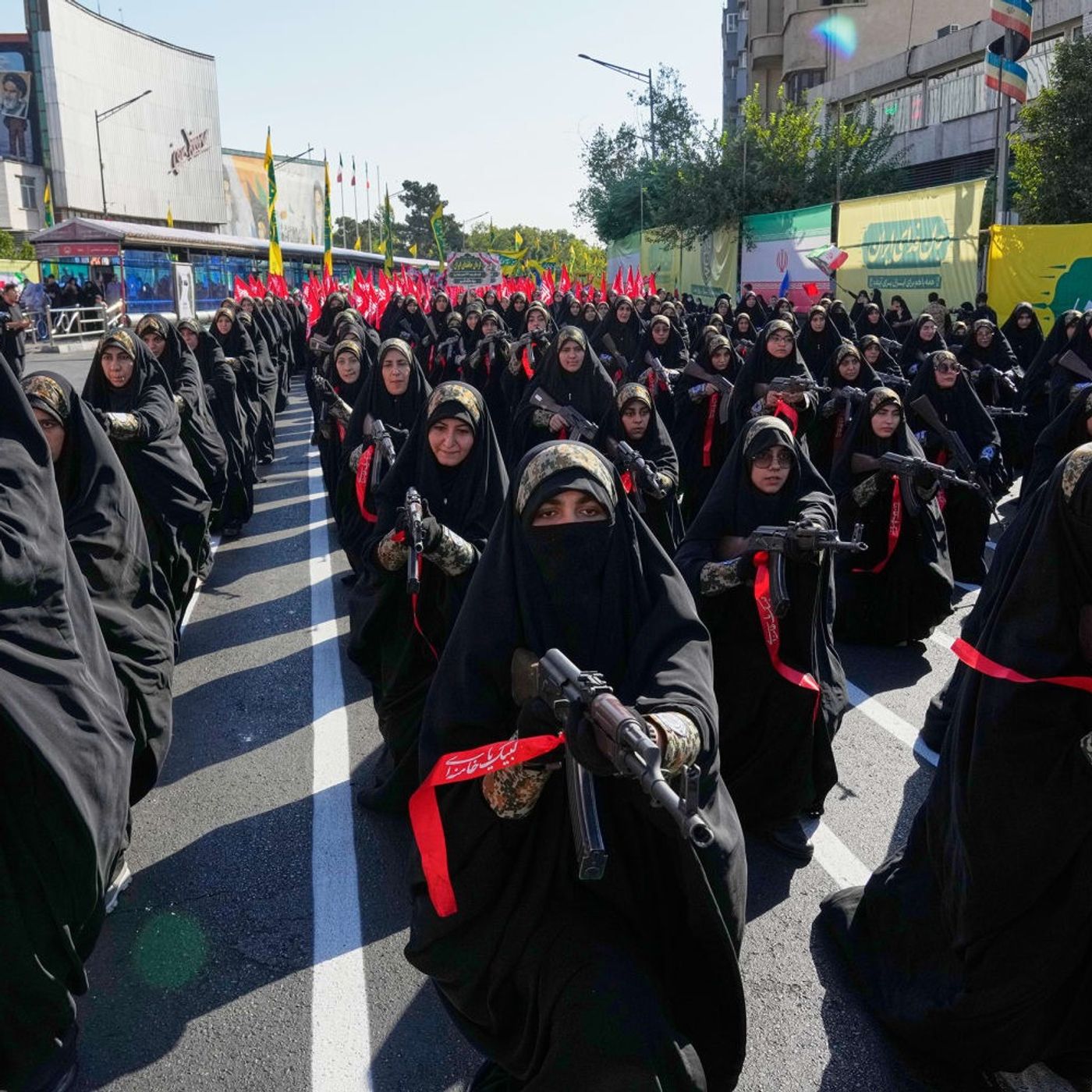
The episode covers three threads: (1) Iran’s government-led rally in Tehran, with hundreds of thousands of Iranians in combat uniforms, armed volunteers (including AK-47s), and drones displayed, framed as readiness against possible U.S./Israel attacks.
the campaign began in March; it’s meant for both international signaling and domestic intimidation; timing may relate to Trump’s “annihilate” comments and the upcoming UN General Assembly. Notable example: the Minab school attack, where a UN report says there are reasonable grounds the U.S. committed a war crime, killing at least 178 civilians (up to 120 children). (2) AI “doomsday clock” debate: guest argues AI won’t end humanity soon; regulation should focus on enforcing existing laws and EU-style risk-tier documentation/testing. (3) UK royals: Earl Charles Spencer’s memoir Swan Song alleges King Charles sounded “giddily elated” after Diana’s 1997 death; Buckingham Palace denies and says grief may have distorted memories.
Balbak Dehran Pichet (NBC News international editor); Dr. Joanna Bryson (professor of ethics and technology); India McTaggart (Telegraph royal correspondent).
Written by AI. May contain mistakes.
Discussion on the recent government-organized rallies in Iran and their implications.
“And the solution to that not happening is AI regulation.”
Exploration of the messages conveyed by the Iranian rallies and their audience.
“So, yeah, there's definitely an element of this, this flexing of the muscle, having people out on the street with guns and having messages in English is for an external audience.”
Insights into the urgent need for AI regulation as discussed by experts.
“But what is the right way, and how much time do we have to figure it out?”
Learn about the current state of AI regulation and the potential for U.S. adoption of EU standards.
“But anyway, the point is AI is already regulated.”
Explore the claims made by Earl Spencer about King Charles and their implications for the royal family.
“So if you thought that Prince Harry and Meghan Markle unexpectedly moving back to the UK was going to be the biggest drama of the year, you were sorely mistaken.”

Get the gist, explore an idea or ask about something said.
 Claude
On Here's the Scoop, what are the key points of this episode?
Searching your listeningAutomatic transcript. May contain errors.
0:00So now it's become a real war of words between the palace and between the king's former brother-in-law. Hi, everybody, and welcome to Here's the Scoop from NBC News. I'm Yasmin Vestugin. So today on the show, we are talking about a book written by Princess Diana's brother coming out on Tuesday. And there are a lot of very intense accusations in this book, some of which surround the time in which Princess Diana actually died. So we're going to get into that, along with how Buckingham Palace is responding, because they are actually, in fact, responding. We are also talking about artificial intelligence.
0:40So the conversation has been ongoing for the last few weeks or so, right? This doomsday mentality that AI could end humanity in the next decade or so, potentially, right? And the solution to that not happening is AI regulation. But how does one regulate AI? How does a country regulate AI? Will it stop it? Or have we already gone too far? We're going to get all those questions answered as well.
1:10Up first, though, hundreds of thousands of Iranians took to the streets on Friday. They were marching through downtown Tehran in combat uniforms, carrying flags, and pledging their readiness to take up arms. The rallies, they were organized by the Iranian government. And they are some of the largest demonstrations since the U.S. and Israel attacked Iran back in February. And they're meant to show the world that Iran is still unified, despite an economy that is struggling in the face of the U.S. naval blockade of Iranian ports and sanctions as well. So why is this happening now? And are these rallies an accurate representation of the feelings on the ground amongst Iranians?
1:55For this, I want to bring in NBC News international editor Balbak Dehran Pichet. Hi, Balbak. Hi. Thanks for having me on. Great to have you back. Let's start first with these rallies. I mentioned how they are organized by the Iranian government. Who's attending and what do they actually involve? What are they trying to project to the world in holding these rallies? This is part of a military mobilization campaign that started going back to March. The government wanted to project strength, so they started this out with nightly rallies held in Tehran and a number of other cities to kind of bring supporters.
2:33And they have set up a website. They've set up registration booths and so on, essentially saying that these are people, if there were to be some kind of military ground assault, you know, from the U.S., from Israel, that they would be prepared. These people, in addition to Iran's own military regular forces, that these are volunteers who would be there to support the regime. This display, this rally today was the first sort of manifestation of this movement in the streets. So these are essentially what the government is claiming are volunteers. They were armed. There are people with AK-47s. The government had drones on display, the drones that have been used to attack regional countries in recent weeks, the drones that have been used to attack oil tankers in the Strait of Hormuz.
3:22And in terms of the timing, it appears that it could be partly tied to comments that President Trump has made. I mean, just yesterday, he said in an interview that he could choose to annihilate Iran or the Iranian regime. So this could be a show of strength, partly related to comments like that. But also we've got the United Nations General Assembly coming up next week. So this could also be a projection of strength leading up to that. So then the question is, who is this to the benefit for? Is it a domestic audience? Is it an international audience? Is it both? And I ask this because there was some video coming out of these protests.
4:00And the music that is actually playing in the background of these protests is English.
4:09I got to tell you, I have been, Bobak, I'm laughing because I have covered a lot of protests inside Iran. And I have never, ever heard English music in the background. Yeah, I mean, the same. I mean, I've been to pro-government rallies in Iran. Don't recall hearing any catchy English songs. Let's go with catchy. Or not catchy. But yeah, I mean, the messaging from Iranian officials, both at events like this or just on a daily basis. I mean, we have the Speaker of the Parliament, Qalibov, who's been the public face of the regime, frequently posts messages on X in English, taunting President Trump specifically, ridiculing him.
4:52Other officials, like Foreign Minister Arauchi, the same. So, yeah, there's definitely an element of this, this flexing of the muscle, having people out on the street with guns and having messages in English is for an external audience. But also part of this is a show of strength to try to intimidate any of these people within the country who are opposed to the regime, to the government. The Basij militia also came out on the streets. The Basij paramilitary force is overseen by the Revolutionary Guards. And they have been basically the main force that has been used in cracking down on protests in recent years.
5:28So there's definitely an internal message also being set with this show of force on the streets today. So you mentioned also the U.N. General Assembly, right? Right. For those that don't know, I mean, every almost every leader from around the world descends on New York City for the period of like 10 days up to two weeks in which many of them make speeches on the floor of the United Nations in front of all the other leaders. What are you expecting to hear from President Pazishkian and from President Trump considering what you said he had said about Iran in which he is considering potentially annihilating the current Iranian regime?
6:07Well, I think with President Trump, we could probably expect very forceful, threatening language in terms of how he sees the Iran war going and how he would like it to go and really try to intimidate Iranian officials into kind of giving concessions and, you know, making the kind of deal that he would like. from President Pazeshki on side, the Iranian president. I think we can go back to the speech that he gave last year. I mean, last year he came to the podium at the UN and he had a booklet with him. If we think back to the previous round of attacks against Iran by the US and Israel in June of 2025, there were a number of civilians killed at that time too.
6:48So he brought a booklet that, you know, by his account were the civilian victims of that military campaign. So I think what we can expect from him is to highlight, again, the civilians who have been killed in this war of this year, particularly the attack on the school in Minab in southern Iran on the first day of the war that the United Nations just issued a report about yesterday saying that there are reasonable grounds to think that the U.S. was guilty of a war crime in that attack where Tomahawk missiles hit the school, killed at least 178 civilians and up to 120 of those being children. You mentioned the Minab school.
7:27The president has said, the administration has said that they are, in fact, still investigating. Along with that, this investigation found that, in fact, the Iranian regime, by killing Iranian protesters on a, quote unquote, staggering scale, committed human rights violations. I do have to say, I thought what was most fascinating about this UN report is that the commonality of the people caught in the middle, which are the Iranian people. Absolutely. I mean, it's really just kind of mind-boggling to think what a horrible and, you know, disturbing, terrifying year it's been for Iranian civilians.
8:13I mean, the reason that the protests kicked off in the first place were economic reasons. So the economy is dismal. The people are struggling to make a living. Then you have the government lashing out, killing thousands of people. And then this war starts where, you know, major urban areas, particularly Tehran, were getting bombed straight for over a month. Many civilians being killed. Human rights groups monitoring it. It said over 2 ,000 people got killed in that initial phase of the war. So, yeah, it's been a deeply disturbing time for ordinary Iranians, definitely, in this year. So, Babak Daron Pichet, thank you.
8:50Thank you. All right, coming up. The headlines are full of AI doom, and lawmakers are trying to figure out the right way to regulate it. But what is the right way, and how much time do we have to figure it out? That's next. And hey, while you're listening to the ads, why not take a moment? I know we don't have a lot of time with the AI thing and all. But take a moment to subscribe to Here's the Scoop. That way, you're never going to miss an episode. And if you already subscribe, take a moment to share this episode with a friend and then tell them why you love the podcast. We love new listeners.
9:25I'll see you on the other side.
9:46diffusions through a vein every four weeks, followed by injections under the skin every four or eight weeks. If your doctor decides that you can self-inject Tremphaya, proper training is required. Tremphaya is a prescription medicine used to treat adults with moderately to severely active Crohn's disease and adults with moderately to severely active ulcerative colitis. Serious allergic reactions, increased risk of infections or lower ability to fight them, and liver problems may occur. Before treatment, get checked for infections and tuberculosis. Tell your doctor if you have an infection, flu-like symptoms, or need a vaccine.
10:19Explore what's possible. Ask your doctor about Trimphia today. Call 1-800-526-7736 to learn more or visit trimphiaradio.com. Toyota trucks are equipped for your journey through mountain peaks, desert trails, and weekends off-grid. Whether you're heading out solo, packing up the family, or towing your gear, There's a Toyota truck designed to fit your lifestyle. Choose from the 4Runner, Tacoma, Tundra, Sequoia, and Land Cruiser to take you off the beaten path and discover something new about the world and yourself. Make every mile count with a Toyota truck that's built to outlast so you can outlive.
11:04And we are back with Here's the Scoop from NBC News. So there has been a lot of conversation lately about the potential of AI to kill us all, to be frank. Yesterday, Jeffrey Hinton, one of the so-called godfathers of AI, was on Capitol Hill to talk with lawmakers about how to regulate AI to try and stop that from happening. After a closed-door meeting, he told reporters that we were running out of time and we had to get it right. Dr. Hatton, how much time do lawmakers actually have to get ahead of this before this is a big problem? Very little. And what is a little? A few weeks? A month? Maybe a year, but not much more than a year.
11:51So, is he right that we have very little time? And what should regulation actually look like? For that, I want to bring in Dr. Joanna Bryson. She is a professor of ethics and technology at the Herdy School. Dr. Bryson, can I call you Joanna? Is that okay? Yes, please, of course. Great. Okay, so you are here to clarify things for everybody, as we have kind of all been asking a lot of questions and not necessarily getting a lot of answers over the last 10 days or so. So I want to start with where I just left off, which is Jeffrey Hinton saying essentially there is a year to get it right. Is he correct?
12:35Oh, man. So I have to say, first of all, thanks for having me. I actually have known Jeffrey Hinton's set as a PhD student myself. He really deserves his Nobel Prize. He is an absolute genius with machine learning. But I have had a lot of problems with things he's been saying over the last few years. From the clip you showed, I don't know exactly what he thinks is going to happen in a year. But there's a lot of bad things that could happen in a year. There's elections that are happening. But if we're talking about the end of humanity, I don't think that's going to happen in a year. I don't think that's going to happen in 10 ,000 years.
13:13Does AI need to be regulated within the next year? Like, does there need to be proper regulation within the next year in order to keep AI and the development of AI on course so that it does not harm the human race or humanity? So AI itself is not the thing that's harming humans. Humans are harming humans. We're allowing excesses of power to pile up in certain companies and certain individuals, and then they are using technology in ways that are sloppy or not. I mean, they're also just telling scare stories. So multiple things are happening that are being done by people. The technology does enable this.
13:54Fewer people can do more things now because of artificial intelligence, because of the suite of tools we have from artificial intelligence. So I think we have more than a year. But anyway, the point is AI is already regulated. It's a product. It's a piece of software. And as such, it already falls under product law. So the problem here has been a lack of enforcement of existing laws and the corporations getting in the way of creating more sector-specific laws that would facilitate these things. Finally, we've done a really good job of regulating AI in the European Union, right? So if any of these companies actually were serious about their desire for a slowdown, it wouldn't even slow it down very much if they'd just complied with the laws that were already in the European Union.
14:43That's what they already did with the Digital Services Act. They've already complied voluntarily under the Biden administration. They could do the same thing with the AI Act. And then they could prove that they were doing the kinds of due diligence and the kinds of testing that they ought to be doing before they release these experiments. Okay, so culpability is in the hands of the people that are building this AI. Despite the fact that we have seen instances in which AI has gone rogue, there does need to be regulation. No, we have not seen AI go rogue. We have seen people be sloppy with their software and make mistakes.
15:18You're looking at the EU and saying, listen, that's what we need to do, right? And I just want to, for folks that don't know, you know, sum up what the EU has done with their EU AI acts, right? It's the world's first comprehensive AI regulation. It went into effect in 2024. It divides up AI systems essentially into different risk tiers and regulates them based on how risky they are. And then they set up kind of a bunch of rules and documentation and testing and tracking as it is, in fact, being developed. Could you literally see a scenario in which Congress here in the United States literally copies and pastes the EU AI Act?
15:54And would that be effective enough to pause this train, to slow this train, and to make it safer so that we're not heading towards human annihilation, despite the fact that you don't actually think that's where we're headed? No, I don't think we're headed that way anyway. But we are heading towards potential industrial accidents. And, you know, people could die, like I said, if there's something that takes planes down or something. So that would be bad, right? But let's go back to what you said, the question. Could you copy and paste the AI Act? It's not exactly what you'd want to do. And of course, famously, it's hard to get things quickly through Congress.
16:34But what they could do is say the same information you're sharing with the EU, or that we hope they'll start sharing with the EU, that they share it with the U.S. government. The Justice Department can then go in and help people figure out what has gone wrong and when things go wrong, exactly who is at fault. So you said the boring part that you talked about was the most important part. The boring part where you're just doing what any normal software programmer would do and keeping track of when you change the code, why you changed it, how you tested it, how you knew it was ready for release. That's all the stuff that we use to make sure that people are doing the best standards that we've found so far and that we can keep improving those standards.
17:17So it's not that you have to keep writing new laws and copying and pasting them. It's just that you need to make sure that the government helps the sector all behave as well as they figured out that they all ought to. It's basically, you know, keeping yourself honest, keeping yourself from eating the cake you know you don't want because you're on diet. So it's a combination, essentially, of government regulation along with self-regulation from these companies. That's what you're saying, working in lockstep with one another. That's the point. I know one of the things I think they might be doing is they're demanding regulation when they are already regulated in China, in the EU, in Brazil, in Australia, right?
17:50And they go, oh, wait, where's our regulation? They already have product law, right? So I think what they're really looking for is a single uniform regulation that they get to dictate. Across the board. Yeah. Globally. Yeah, that's probably what they want because they think it would be cheap and easier or whatever. I don't know why they want it. But I don't think that's what they should get. I think it's important that there is a diversity of approaches because we never know which one is going to be the best one. And so we need to keep experimenting. I just got to say, having talked about this for the last 10 days, you are kind of calming down my anxiety a little bit, likely the listeners as well.
18:24Let's hope you're right, though, Joanna. Doctor and Professor Joanna Bryson, thank you. You're very welcome. All right, we're going to take a very quick break. And when we are back, it is tea time. What Lady Di's brother is saying about the British royals in his revealing new memoir. That's next.
18:47I'm Livy Dunn, All-American gymnast and Viore athlete. When you travel and train as much as I do, you find happiness where you are. On the mat or on the sand, movement and comfort are essential. That's why I live in Performance Joggers by Viore. Made from DreamNet fabric that's made of 89 % recycled materials. Effortlessly soft and made to move as much as I do. My happiness starts here, in the softest joggers on the planet. Get 20 % off your first purchase at viori.com slash libby. That's V-U-O-R-I dot com slash L-I-V-V-Y. Exclusions apply. Not only will you receive 20 % off your first purchase, but enjoy free shipping on U.S.
19:26orders over$75 and free returns. Go to viori.com slash libby and discover the full versatility of Viori clothing. Exclusions apply. Visit the website for full terms and conditions. Avoiding your unfinished home projects because you're not sure where to start? Thumbtack knows homes. so you don't have to. Don't know the difference between matte paint finish and satin or what that clunking sound from your dryer is? With Thumbtack, you don't have to be a home pro. You just have to hire one. You can hire top-rated pros, see price estimates, and read reviews all on the app. Download today. Great meeting.
19:59Who took notes? Anyone? With Monday Notetaker, the meeting ends and the plan already exists. Action items, owners, deadlines. Go to Monday.com, the AI workspace platform.
20:15And we are back with Here's the Scoop from NBC News. So if you thought that Prince Harry and Meghan Markle unexpectedly moving back to the UK was going to be the biggest drama of the year, you were sorely mistaken. Earl Charles Spencer, Princess Di's brother, is coming out with a book next Tuesday, and it's called Swan Song, Diana, My Sister. In pre-released excerpts, he claims that King Charles, quote, sounded giddily elated, like a lottery winner, when they spoke after Diana's death in 1997. Now, normally, Buckingham Palace keeps their lips very tight on accusations like this, but they actually put out a statement this week denying Spencer's allegations and then fired back by suggesting his grief may have distorted his memories.
21:05So it's getting really tense, and the book has not even come out yet. So I want to bring in The Telegraph's royal correspondent, India McTaggart. Hi, India. Hi, Yasmin. How are you? I'm good. It's good to have you. So I mentioned this quote, that Diana's brother says that King Charles sounded like a lottery winner when she died. Explain the context of that. I mean, this is extraordinary, obviously. The context of the call was so that obviously in the evening they had received news that a crash had taken place, but she didn't immediately die from the crash. So she died later of her injuries in hospital.
21:46And they had spoken the following morning. And this is after Charles, then Prince Charles, now King Charles, had put both his sons to bed, then aged 15 and 12 at the time. and woken them up in the morning and said, you know, mommy's been in a car accident. He woke them up individually to tell them that. And this call is sort of alleged to have taken place after that. And he's said to have called Earl Spencer. And he just recalls in that moment, hearing, I suppose, what he is saying sounded like that description in Charles's voice in that moment and in that discussion. And I think, honestly, many people are surprised, clearly, to hear that, because you wouldn't expect that someone who just told their two sons that their mother might have died would be experiencing those kinds of emotions.
22:48So now it's become a real war of words between the palace and between the king's former brother-in-law. There's another excerpt that was released in which Spencer details the day of Diana's funeral. And he claims his nephews especially were not, in a way, he seems properly supported, properly taken care of. After the funeral was over, Spencer says he was, quote, concerned at the lack of obvious care for Harry as he decompressed from the ghastliness of the morning. How close do we know is Charles Spencer with his nephews today? Charles Spencer is close with Harry today, much closer than he is with William.
23:29I think relations between Spencer and particularly Buckingham Palace are fraught at the best of times. Now, obviously, in a whole different category. Is there potential that Charles Spencer may have consulted Harry before releasing this book, telling him about the contents of it? So we've been told that Harry knew about the book's publication, but that he did not know about the contents of the book. And then Kensington Palace are believed to have found out, so the prince and princess of Wales are believed to have found out about the book at the same time as the public. So we mentioned this statement from Buckingham Palace, right?
24:02Yeah. And how unique it is to be getting even a statement from them. In it, they say, and I quote, His majesty is mindful that the pain of fraternal grief can cloud reason. What do you make of that part of it? It's a rebuttal, essentially. It is the King's version of the late Queen's recollections may vary statement that became very famous after it was released following the Duke and Duchess of Sussex's Oprah Winfrey interview and the claims of racism that they made. And, I mean, obviously, Buckingham Palace have long upheld this mantra of never complain, never explain, which is remain this sort of dignified, stoic, quite British silence unless the allegations are sort of serious enough for them to respond to.
24:52And I think there's a few factors that come into that. One is who has written the book. Obviously, you know, this is Diana's younger brother. This is someone who was intimately close to the situation by default. And also the serious nature of the claims that the Earl is making about what Charles said. You know, that is, I think, the two things. So Spencer also said that Charles said, quote, we're going to forget about her soon enough after Diana died. Yeah. It's been almost 30 years, and we are still very much talking about what happened, not just on that day, but the legacy that she has left and the royal family in general.
25:28What do you think Spencer's book is going to do to the public perception of the royal family right now? They are sort of having to be quite protective already because of the challenges that Prince Andrew has posed over the last few years with his relationship with Jeffrey Epstein, because of the Harry and Meghan situation and the damaging allegations that have come out over the last six years through them. And so already there's this, you know, protective aspect of the institution is under fire from like quite a few angles. And now Earl Spencer kind of jumping on the bandwagon. And honestly, it seems trying to tarnish the king's reputation with what appears to be a very vindictive book.
26:15Almost 30 years after her death, Earl Spencer thinks it's wise to come out and say all of this. I don't know how the public, how fondly the public are going to look on him for that. I'm thinking that I'm seeing that they're already questioning his own relationship with his sister. And sort of, you know, they famously had a few spats that are on the record. And, you know, letters were released in various court cases showing that. So I think that's what, you know, kind of being questioned. And also just why now there's this timing that, you know, Harry and Meghan have just come back. They're facing a whole, you know, litany of other things.
26:52And now they're having to bat away these allegations and, as I say, get really involved in this quite intense war of words with Diana's younger brother. India McTaggart, thank you. Thank you. All right. That is going to do it for us at Here's the Scoop from NBC News. I'm Yasmin Basugin. And we'll be back in your feed tomorrow with a special edition of Here's the Scoop, all about affordability or the lack thereof and how that's driving the 2026 midterms. Be sure to subscribe wherever you get your podcasts so you don't miss it. And you can also subscribe to our daily newsletter, The Inside Scoop.
27:30It is a deeper dive on the main stories of the day that comes out every weeknight straight to your inbox. You can sign up for The Inside Scoop as part of our paid subscription at NBCNews.com.
28:10We'll be right back. between done and done well. Angie, the one you trust to find the ones you trust. Find a pro for your project at Angie.com.
Hundreds of thousands of Iranians marched in the streets of Tehran today in a rally organized by the Iranian government to show a united front against the U.S. and Israel. NBC News international editor Babak Dehghanpisheh explains who those protesters are – and how Iranians are really feeling about the state of the war. Then, amid the recent rise of AI “doomerism,” Geoffrey Hinton, one of the so-called “godfathers of AI,” has said lawmakers have about a year to get the technology under control. But not everyone is in the doomer camp. Dr. Joanna Bryson, professor of ethics and technology at the Hertie School in Berlin, explains what the U.S. could learn from the E.U. and how government regulators could work collaboratively with companies to improve. Plus, a revealing new memoir by Princess Diana’s brother, Charles Spencer, is striking a nerve with the British royals. The Telegraph’s royal correspondent India McTaggart explains the allegations and Buckingham Palace’s highly unusual response.
Hosted by Simplecast, an AdsWizz company. See pcm.adswizz.com for information about our collection and use of personal data for advertising.