Ask ChatGPT

 Here's the Scoop
3 Nov 2026 · 26m · 7 chapters
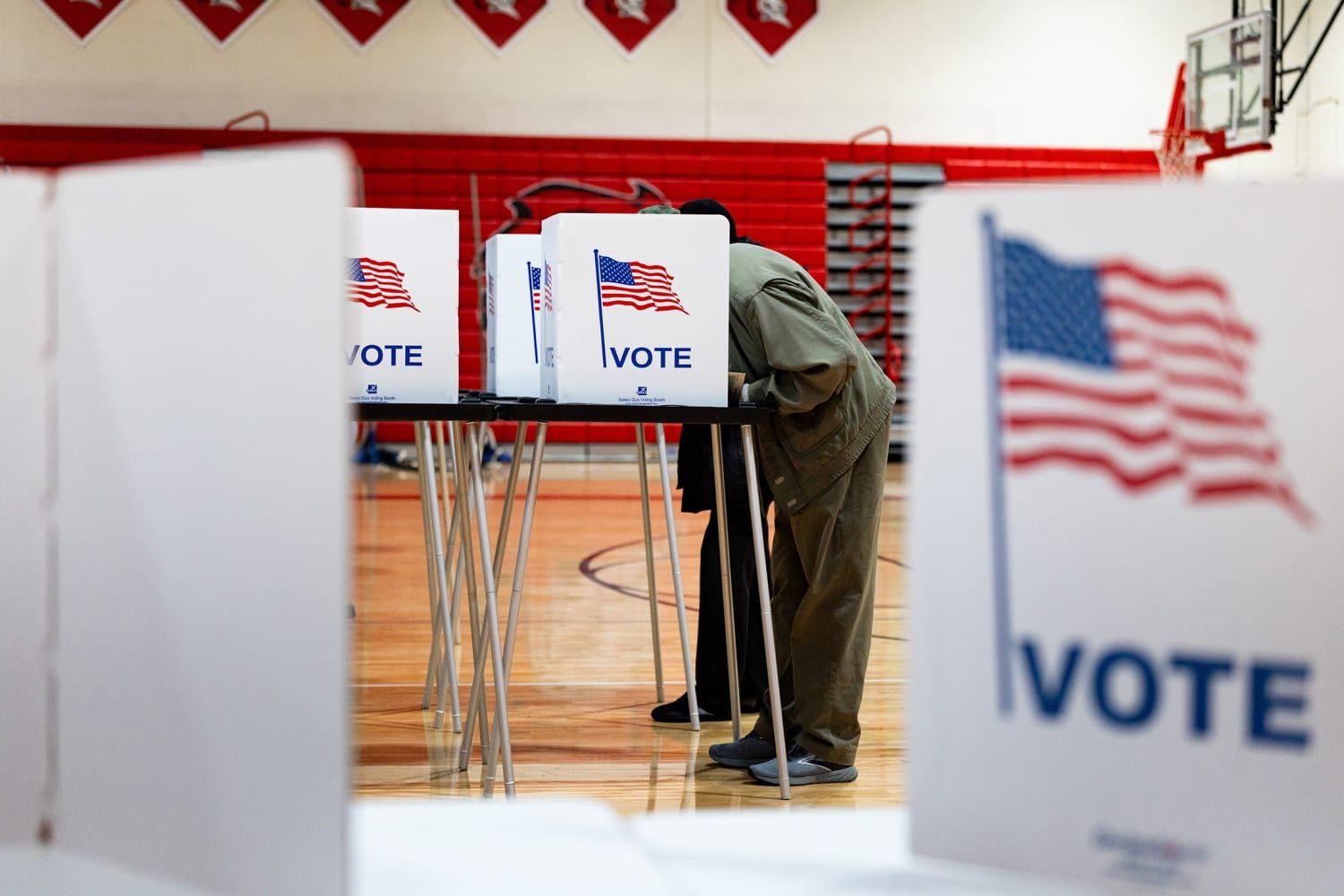
Election Day 2026 coverage—how NBC News uses polling/data to forecast outcomes (Kornacki-style), what early indicators to watch in key House and Senate races, and how the NBC News decision desk makes and times race calls. It also reviews viral/bizarre campaign moments from the cycle.
Steve Kornacki (NBC News chief data analyst) and John Lipinski (NBC News director of elections). Additional guest: John Allen (NBC News senior national political reporter).
Kornacki is NBC’s chief data analyst; Lipinski leads election-call operations for NBC; Allen is a long-time national political reporter.
Polls may be right but could miss demographically (rural/older blue-collar white voters); early Florida county results are crucial for Latino turnout signals; Senate calls may lag due to close races and slow states (Maine, Alaska ranked-choice).
2020 polling misses (e.g., Wisconsin); Florida’s Miami-Dade and Osceola/Osceola County for Darren Soto; South Carolina early test (Darlene Graham vs Lindsey Graham’s seat); Texas county benchmarks for statewide races; viral quotes including Obama’s “cheesecake factory” line and Trump-style “low-T” masculinity attacks.
Written by AI. May contain mistakes.
Discussion on key moments and themes leading to Election Day.
“So there has been so much talk about what could happen in these midterm elections.”
Exploring the accuracy of polls and their implications for Democrats.
“Like, what are the major themes in understanding what is happening tonight?”
Analyzing the demographic factors affecting voters in key states.
“And I think it'd be a huge, that'd be a huge topic if that's what happens again.”
Details on critical Senate races and their potential outcomes.
“first readouts, the polls close in South Carolina at seven o 'clock, right?”
Discussing the timing of election calls and the decision desk's accuracy.
“Alaska has this system where, you know, they have the ranked choice tabulation.”
Learn about the independence and data-centric focus of the decision desk during elections.
“In terms of the ropes, we don't have them now, but we did actually take the SNL red velvet ropes.”
Explore the bizarre and standout moments from the 2026 election cycle.
“And we're back with Here's the Scoop from NBC News.”

Get the gist, explore an idea or ask about something said.
 Claude
On Here's the Scoop, what are the key points of this episode?
Searching your listeningAutomatic transcript. May contain errors.
0:00John Lapinski: And I asked her if she would, you know, what is it that she would say to the president if she had something, if she could say to someone directly? She looked right in the camera and it was a doozy.
0:12Jon Allen: Hi, everybody, and welcome to Here's the Scoop from NBC News. I'm Yasmin Vestugin. Happy Election Day, everybody. If you're listening to this right when the feed is dropping, make sure to get out there and vote if you haven't already, because there's still a couple of hours before polls close where you are. This is literally the Super Bowl for news junkies. We have got an Election Day special for you. So we're going to talk to NBC News political reporter John Allen about some of the more noteworthy moments of this election cycle from both Republicans and Democrats. And by the way, this has been a very long election cycle in the lead up to today.
0:47Jon Allen: Plus, we're going to go deep inside the NBC News decision desk to find out how our director of elections is basically kept sequestered, how they make calls when they know for sure someone has actually won in a certain race, and also how they make sure there is no outside influence coming into the NBC News decision desk.
1:15Jon Allen: Up for soap. So there has been so much talk about what could happen in these midterm elections. Will there be a blue wave? Will Republicans be able to hold on to control in the House and or the Senate? Will any of those October surprises totally change the course of these races? But it may take some time before we actually learn who has won the battle for control of Congress. So as we all watch these results roll in, what are the key indicators, the important data points that could give us some early clues as to where this could be headed? Basically, we want to be our own versions of Steve Kornacki.
1:50Jon Allen: And who better to make us our own versions of Steve Kornacki than the man, the myth, the legend, Steve Kornacki himself, NBC News chief data analyst. Hi.
2:00Steve Kornacki: You don't want to be a Steve Kornacki. I do.
2:03Jon Allen: Of course, just for one night at least. It's here.
2:06Steve Kornacki: I know. Can you believe it?
2:08Jon Allen: Big picture here. Like, what are the major themes in understanding what is happening tonight?
2:15Steve Kornacki: I think the way things have kind of come around with the polling and the run up to this, the polls, at least, have converged on a pretty dramatic reading of what's going on. And what the polls are saying is this will be a very big night for Democrats. Yeah. But I think that's becoming the question. Are the polls actually correct? Are the polls accurate? Have they really been picking up on this? Because we know that one of the major stories for the last 10 years, especially in our politics, has been the polls have not always been correctly picking up on what's going on out there.
2:44Jon Allen: A lot of Democrats, I should say, have PTSD from 2024 because they felt as if the polls were not picking up on a large swath of voters that actually showed up on election day and cast their ballot for Donald Trump.
2:54Steve Kornacki: And I think it was even more dramatic in 2020. Right. You know, Trump didn't win in 20, but he came a lot closer. I mean, a lot closer than polls were showing. And, you know, I mean, there were states that had Trump down 17 points in the polls. I remember Wisconsin in 2020, there was a poll, him down 17. He lost by seven tenths of a point.
3:11John Lapinski: Wow.
3:11Steve Kornacki: That kind of a miss. So now extraordinary circumstances in 2020. COVID was going on. Trump was on the ballot that year, obviously. But it just it's in my head that, you know, something like we saw in 2020. Could we end up seeing that in 2026, too? That's that's one of the questions.
3:28Jon Allen: So could we like has polling has the way in which people are polling or like the polls that we're looking at, has it changed? Has the reach out changed when it comes to kind of these quiet voters that pollsters weren't necessarily able to reach? That kind of thing. That could feasibly change things.
3:42Steve Kornacki: We're about to find out, is kind of what I would say. But where the miss was in 2020 and where it's been a number of times in the last 10 years is pretty demographic specific. You know, talking about rural voters, older blue collar, generally white voters who, you know, states like Wisconsin, I mentioned, You know, a state like Ohio, Iowa, Ohio and Iowa are definitely in the Senate battleground this year. Michigan, Senate battleground. Kansas has not typically been a battleground, but has a lot of voters like that. So there's the possibility, you know, of some kind of a polling miss, a polling error here.
4:14Steve Kornacki: And I think it'd be a huge, that'd be a huge topic if that's what happens again. But you have to balance that with, you know, there are some pretty clear differences now between the past for like Trump. Trump in his first midterm in 2018 had a higher approval rating than he does right now, especially on the economy, especially on inflation. And there's a war going on now that wasn't going on back then. So you could also see a world where these polls are right.
4:35Jon Allen: Can we talk about the Latino vote as well? I know we're going to be talking about this in Texas, for instance, with the Senate race there, right? Because in October, we were talking about the NBC News Telemundo poll that showed President Trump's approval rating with Latino voters at 27 percent, which was lower than his overall approval rating. They have helped carry the president back to the White House in 2024. At the time, you wanted us to keep our eyes on Miami-Dade County, right, for turnout when it comes to Latino votes and where they're voting. Orlando as well. How are we seeing this potentially play out?
5:08Steve Kornacki: Well, that's going to be, yeah, I think that's going to be one of the first things we get tonight results-wise. Florida reports its vote very quickly. Polls close at 7 o 'clock Eastern in just about all the state. and every county has to report out all of the early voting results in the first half hour. And the early voting is like three quarters of the vote. So it's most of the vote comes out in the first 30 minutes in Florida. And so Miami-Dade, you know, a county with three million people, we're going to get like two thirds, three quarters of their vote by 730. You know, up by Orlando, you know, Orange County is where Orlando is.
5:41Steve Kornacki: Just south of Orange is Osceola County, which is the core of a congressional district that Trump won big in 2024, right? But it's a large Hispanic population, Puerto Rican in particular there, Democratic incumbent who's trying to survive. That's going to be a really interesting test early. If that race is close, this is the ninth congressional district of Florida. Darren Soto is the Democratic incumbent. If he gets real close, he's a, you know, this is a big uphill fight for him given the political terrain there. If he gets close, if he ever won it, that would be a sign of a very significant snapback of the Hispanic vote.
6:15Jon Allen: You also, when we spoke last, you said we needed to watch the Senate races in Alaska and Texas and Minnesota as well. I mean, nothing has changed. Like, the momentum is still going. What else are you watching when it comes to Senate races?
6:26Steve Kornacki: South Carolina. Again, just kind of thinking in terms of early in the night when we're, you know, going to get our first readouts, the polls close in South Carolina at seven o 'clock, right? Darlene Graham, the Republican running to replace her brother. Polls have been very close there. This is a state that Trump carried by 18 points, right? This was on nobody's radar as a potentially competitive race. But again, there's a question of, are we sure here? Because in 2020, that year I was talking about before, Lindsey Graham ran for reelection in 2020. Democrats poured tens of millions of dollars into trying to beat him.
6:59Steve Kornacki: The polls showed a very close race right there. We were talking about Jamie Harrison versus Lindsey Graham. And we were talking about it as a dead heat race. And Graham won it by double digits. It is a rare thing for a Democrat. I mean, in recent times, unheard of for a Democrat to win a statewide federal election in South Carolina. I think 1998 is the last time, you know, Fritz Hollings got reelected down there. So, you know, not this century. If the Democrats are taking South Carolina or right there, again, I think Like, that's a test early in the night about, like, okay, this might have broader implications here about what's happening nationally.
7:35Jon Allen: What counties are you going to be looking at? What districts? Like, what are you going to be looking at in the early hours of the night to indicate to you the direction this thing is going?
7:47Steve Kornacki: Yeah, I mentioned Osceola County in Florida with that House race, the Hispanic vote. You know, Miami-Dade, you mentioned there's a Republican there, Maria Elvira Salazar, who, again, And if there's a huge shift in the Hispanic vote there, she could potentially be in trouble. Now, the Hispanic vote in Miami-Dade is different than the Hispanic vote in Osceola, more Cuban-American in Miami-Dade.
8:06Jon Allen: Well, I was going to say, isn't the Cuban-American vote, like, oftentimes more Republican?
8:10Steve Kornacki: Yes. And there's some sense that maybe the Republican, that her support at least might be a little more stable than the new Trump support in a place like, you know, Orange or Osceola. But again, we'll get readouts on that, you know, early. Look, Texas closes in all but El Paso at 8 Eastern. And Texas is a bit like Florida in that there's a ton of early voting, not quite as much, but there's a ton of early voting. And they also reported out in one big batch pretty quickly. And so there are some counties right in that like Dallas Metroplex area there, maybe around Houston too, Collin County, Denton County, Fort Bend County, where I think there's some pretty clear benchmarks, you know, for the candidate like Tallarico would have to meet if he actually is going to have a chance.
8:52Steve Kornacki: of winning statewide. We may have a good sense of that pretty early if he's even in the ballgame.
8:57Jon Allen: I want to talk about timing because you think back to the 2020 election and, you know, it was Saturday morning in which that election, I believe, was called, right? It was a Saturday morning. And, you know, that was, what, four days, obviously, after the actual election. Is tonight going to be that type of election or do you think this thing is going to be called on all these races fairly early? Like, will we know who has control of both the House and the Senate in the first 24 hours? Or are we going to have to wait this thing out?
9:25Steve Kornacki: We certainly could. I mean, again, like just on the House side, if the Democrats are just having a good night nationally, all they have to do is pick up three seats. And if they're having a good night, that's not a huge bar for them to clear. And I think you'd probably have a sense of that. I don't think there'd be much delay in getting a sense of that. If it's very close on the Senate side, though, you know, and again, that Democratic path to a majority has to go through several double-digit Trump states. They'd have to win several of them to get the Senate. And if it's tight, if they swing and miss in some of these, you know, on Tuesday night, you might be waiting on Maine.
9:59Steve Kornacki: Maine is a super slow vote counting state. That could take you into Wednesday. That could take you beyond. You might be waiting on Alaska. Alaska has this system where, you know, they have the ranked choice tabulation. That won't happen for another two weeks. So if it's, you know, if everything else gets settled, right, and let's say the Democrats have 50 and the Republicans have 49, there's a world where we're waiting on Alaska. You know, Republicans trying to hold on in the ranked choice tabulation that won't be run until Thanksgiving week.
10:26Jon Allen: Steve Kornacki, best of luck, my friend. Thank you.
10:28Steve Kornacki: Thank you, guys.
10:31Jon Allen: All right, coming up. We're going to go behind the scenes of the NBC News decision desk as we gear up for election night, how we make the calls, and which we wait to make. And also, while you're waiting, do you and your friends want to sound like the smartest people at your election night party? I have an idea. Share this episode with them. I'll see you on the other side.
10:59Steve Kornacki: This message comes from Wise Business, the only account your business needs to scale globally. You're building a business with global ambitions, but hidden fees are eating into your margins. With Wise Business, you can pay overseas suppliers without exchange rate markups. Have customers worldwide get payment details in 22 currencies, so you get more of each hard-earned payment without hidden conversion fees. Be smart. Get Wise Business. Download the app. T's and C's apply.
11:29John Lapinski: Ever notice how every new AI tool asks you to explain your business to it all over again? Google Workspace with Gemini skips that. You get Google's AI built right into the premium versions of Gmail, Docs, Sheets, and more. No new tools. No extra logins. Just one subscription that gives you personalized AI right inside your actual workflow. Make work less work. Try Google Workspace with Gemini at goo.gle slash workspace with Gemini.
12:01Jon Allen: And we're back with Here's the Scoop from NBC News. So when Steve Kornacki works his magic on the big poor tonight, that's going to be driven by the data put together by the NBC News decision desk. They're the ones who help us make the calls who we think is projected to win. So how do they do it? And what kind of information are they using to make absolutely sure we get it right? For this, I want to bring in our Director of Elections, John Lipinski. Hey, John.
12:28Steve Kornacki: Thanks for having me.
12:29Jon Allen: It's great to have you. Okay, so you've said that you're willing to bet your life on the call from the decision desk. What makes you so confident?
12:39Steve Kornacki: Well, I tried to bet my team's life, but they made me bet my own. And so, like, it didn't work. They were all like, no, no, no, you bet your own. So, we have to have absolute accuracy. So, we sometimes say that we have to be at least 99.5 % confident, but the reality is we have to be 99. nine point, put however many nines after that decimal as you'd like. And so this combination of collecting all of this data, assembling a really talented team, and just having done this for a while, it sort of just removes the uncertainty.
13:13Jon Allen: Okay, I want to go behind the scenes a little bit before you actually take me inside of what it takes to call the race. So the decision desk is literally sequestered, right? It's away from producers, it's away from anchors, away from anybody that is actually making the calls publicly to viewers, to listeners, to readers. I guess there is a rumor, a legend that at one point the SNL rope was used to block off the entrance to separate the decision desk from the newsroom. Is that true? Why is it that you guys want to make sure that you're sequestered?
13:48Steve Kornacki: Well, I mean, it was really a management decision. They didn't want any sort of management asking us if we're ready for a call or putting any kind of situation of where they could create any kind of incentives that would potentially influence our calls. So they wanted us to be sort of completely independent. In terms of the ropes, we don't have them now, but we did actually take the SNL red velvet ropes. And there was one time— Yeah. And people—I remember one election, the president kind of came by and brought Steven Spielberg to the decision to ask—
14:21Jon Allen: The president of the network, by the way, not the president of the United States.
14:24Steve Kornacki: Yeah, president of NBC News with Steven Spielberg. They peeked in and they were shooed away. And so like the— Oh, wow. And so it really is—I mean, we take it very seriously because like, you know, like we have to—it really is just us and the data and like, you know, in our process and standards that we put in place. And so we really want that, you know, to be sort of completely—just completely kind of independent of everything else.
14:47Jon Allen: So can you take me—like, take me inside. Like, do you have TVs going? Are you guys listening to anything? Or are you purely looking at the data that is coming in on your computer?
14:58Steve Kornacki: We're purely looking at the data. We do have TVs on. But, like, you know, we're just so honed in and focused. And we have so many. Like, we're calling 611 races. And we're calling them in kind of a short period of time. And we have to give every single one individual attention. So you can kind of probably just do the individual math to realize we don't have a lot of time for doing anything but what we're supposed to be doing, which is evaluating every race systematically and deciding when we can put in a check mark.
15:24Jon Allen: So I want to talk about the system, right? So you guys use like a multitude of things, a combination of things, raw vote counts, exit poll data, other metrics as well. Like talk me through this mix and how you get from polls are closing to we have a call.
15:41Steve Kornacki: Yeah, so it starts early in the day. And so almost all of our calls, pretty much any call that's even remotely competitive, we only use vote data. So exit poll data can be used to make projections, but to be honest, it's only used in blowout races. We use the Associated Press to provide our vote count, but we collect a lot of our own vote. And so we collect a lot of the vote that's not available via the Associated Press. And that's precinct-level data, which is really sort of the gold standard in call-on elections because it gives you this really granular data that you can get very precise models with.
16:13Steve Kornacki: So it's a long process of step-by-step what's available to help us inform, you know, sort of making that rock, you know, putting in that checkmark, which, you know, basically means it's done. The race is over. We know who has won.
16:27Jon Allen: Do you expect this to be long and drawn out, or is this going to be an early night?
16:33Steve Kornacki: I think that we'll know that quickly, like, right? Like, for example, if the polling data is correct, the House of Representatives would probably, you know, like if the Democrats have the kind of lead, even if it's off, like, right, even if the polls are off, I mean, you know, it's most likely that we'd get an election night call possibly before midnight on the House. The Senate's harder because there's most certainly there's going to be at least a handful of very close races. And so it's possible that we could get an election night call in the Senate. But if we do, like, remember for me, election night is not over until the Today Show starts.
17:09Steve Kornacki: And so could we get a call in the Senate in that one to four in the morning range? It's definitely possible.
17:16Jon Allen: Wow. Okay, quick lightning round. Ready? Yep. Election night caffeine vehicle of choice.
17:23Steve Kornacki: Well, I drank a lot of espresso. I had to get my Mealy espresso machine fixed. We have a different one here in the decision desk, but I've had on that machine, I've had over 26 ,000 espressos. People said that can't be true.
17:36Jon Allen: Over how long?
17:38Steve Kornacki: Well, that's the thing. Everybody said, no, you're not telling the truth. I was telling the truth. I bought that thing in 2009. I drink five espressos a day. And if you multiply that out by 300 days, let's say I'm gone 60 days a year, that's 25 ,500 espressos. So it's like when the math works out.
17:54Jon Allen: John, five espressos a day? I'm getting you an appointment with a doctor after the election. Yeah, I do.
18:01Steve Kornacki: I do drink five espressos a day. I drink a lot of espresso.
18:04Jon Allen: I'm sending you my cardiologist stat.
18:06Steve Kornacki: You know, I actually see a cardiologist every year, and he says that I've got a very good heart.
18:12Jon Allen: Okay, good. Election night rituals?
18:15Steve Kornacki: Decompression, relaxation time early in the morning before the day starts. And I go off into what's called a quarantine room at noon. And so I'm unavailable to anybody because I'm looking at that early exit poll data. So I'm kind of sequestered away.
18:30Jon Allen: With your espresso machine, it seems.
18:33Steve Kornacki: Well, yeah. So like, you know, like it's the little things, right? It's the little things that you have to have to keep you going.
18:40Jon Allen: Best hour to tune in. Like when is like going to be prime time? Like things are going to start popping. Checks are going to start going up.
18:47Steve Kornacki: I think, so polls, first polls close at six. So we have like, you know, a couple, like, you know, a couple races in Indiana and Kentucky that are kind of early bellwethers to see how the house is going. But I think things will really heat up in terms of calls in the latter half of that, you know, sort of eight o 'clock hour. I mean, we've got some really, I mean, but even like, but like even a place like Florida, you know, by eight o 'clock, we'll have 75 % of the vote in in Florida. So, you know, we could have a lot of those competitive house races, potentially called by 8 o 'clock. And if not by 8 o 'clock, you know, certainly by 8.30.
19:21Steve Kornacki: So like in that 8 to 9 hour, you know, the places like, you know, Georgia will start picking up. North Carolina will pick up. You know, Florida will already be well underway. So you'll start seeing a lot. And when you're looking at our graphics, you'll start seeing a lot more action. John Lipinski, wish you the best of luck, my friend.
19:40Jon Allen: Thank you.
19:41Steve Kornacki: Thank you.
19:44Jon Allen: All right. We're going to take one more quick break. And when we are back, the biggest goofs and gaffes of this election cycle. That's next.
19:57Steve Kornacki: This message comes from Wise Business, the only account your business needs to scale globally. You're building a business with global ambitions, but hidden fees are eating into your margins. With Wise Business, you can pay overseas suppliers without exchange rate markups. Have customers worldwide get payment details in 22 currencies so you get more of each hard-earned payment without hidden conversion fees. Be smart. Get wise business. Download the app. T's and C's apply.
20:27John Lapinski: Ever notice how every new AI tool asks you to explain your business to it all over again? Google Workspace with Gemini skips that. You get Google's AI built right into the premium versions of Gmail, Docs, Sheets, and more. No new tools, no extra logins, just one subscription that gives you personalized AI right inside your actual workflow. Make work less work. Try Google Workspace with Gemini at goo.gle slash workspace with Gemini.
20:56Steve Kornacki: If you like YouTube, you'll love YouTube Premium. Hi, I'm Sean Evans from Hot Ones, and I want to tell you about YouTube Premium. It has offline downloads, so you can watch without Wi-Fi. Background play, so you can lock your phone, and it still plays, baby. Oh, and it is completely ad-free. Yes, I said it, ad-free. Try YouTube Premium for two months free at youtube.com slash premium. Trial eligibility varies. Terms apply. Cancel any time.
21:29Jon Allen: And we're back with Here's the Scoop from NBC News. So we have talked about Kornacki's predictions and how NBC News is kind of reading this data, the tea leaves, right, to make sure that we're completely accurate in all the results that are coming through tonight. But before we kind of wrap up our special 2026 election edition, we wanted to look back at some of the most memorable and in some cases, honestly, very bizarre moments of this midterm cycle. There have been some sunners from unexpected trends to truly jaw-dropping soundbites. And for that, I mean, there's really no better person to bring in than NBC News senior national political reporter John Allen.
22:12John Lapinski: Hi, Yas.
22:13Jon Allen: Hey. So we've both been kind of covering elections for a long time. What stood out to you, like, from some of your most favorite moments in this 2026 election run-up?
22:26John Lapinski: So the biggest moment to me was kind of a personal one. Right after the president launched the war in Iran, I was like, Let's find out what Trump voters think about the war in Iran, and let's find out what they think about gas prices. So I went to Pennsylvania's 10th district, a little bit north of Harrisburg, to a swing district represented by Congressman Scott Perry, who is very Trumpy.
22:49Jon Allen: Okay.
22:49John Lapinski: And I went to a very Trumpy part of his district, and I was like, how is this going to affect the congressman? How is it going to affect the president? And I talked to people at a gas station, and I got a range of answers. But this one woman just really stood out. you know, she was upset about the Iran war. She was upset about gas prices. And I asked her if she would, you know, what is it that she would say to the president if she had something, if she could say something directly. And she looked right in the camera and it was a doozy. You're a worthless pile of s**t. And you voted for him how many times?
23:21John Lapinski: Three times. That was my bad. Apparently, I'm an idiot. So this was like a break. And then, you know, I went on this road trip, we talked about it at the time, across I-80 through swing districts and asked a lot of the same questions to get a sense of whether this was isolated or that this was more of a trend of, and so when you talk about Republicans being disillusioned, being disappointed, and we've seen that in polling, but you hear the voices and what it is they're upset about, whether it's tariffs that farmers are upset about or other things. I think that's a huge, maybe the story of the 2020 midterms is the disillusionment of the Trump voter.
24:03Jon Allen: Okay, I want to talk about some of these standout moments. This first one has stood out to me, obviously, because it involved the Cheesecake Factory, a place I loved to frequent when I was in college. So President Obama was talking about the ballroom that is being built in the East Wing of the White House. and he kind of commented on President Trump's decorating prowess when he was at this rally.
24:27John Lapinski: He's got the White House looking like Saddam Hussein opened a cheesecake factory. Just gold everywhere.
24:35Jon Allen: This kind of blew up. Like, Republicans got on board because they were like, oh, wait a minute. Is he disparaging the Cheesecake Factory? A restaurant for all Americans? This isn't inclusivity.
24:46John Lapinski: Yeah, I mean, aren't you exhausted by the outrage? I remember a time when Barack Obama had the audacity to wear taupe, you know?
24:55Steve Kornacki: Yeah, yeah.
24:55John Lapinski: Right? And he wears, like, a tan suit, and everyone's like, the Republic's gone. I have trouble, like, believing that anybody who was, like, upset at—anybody who wasn't upset at Barack Obama before was suddenly like, oh, my God, I can't believe you had solved in my favorite place, the Cheesecake Factory.
25:14Jon Allen: Okay, so that was a moment. The president also traveled a lot over the last few months, stump in for Republican candidates. And that has created some fodder. There was a moment where the president talked about Senator John Husted's rear side, back side.
25:34John Lapinski: You can say but. Let's roll the tape.
25:38Jon Allen: But I looked at his ass.
25:42Steve Kornacki: And then I looked at his legs. And I said, his ass is like a pile of muscle.
25:51Jon Allen: Honestly, hearing it again makes— You're blushing. You're blushing. It's just so shocking.
25:58John Lapinski: I mean, the president says ridiculous things all the time. He's become very focused on male physique. And then he tried to make up for it, and he was like, oh, Nicki Minaj. People keep giving me a hard time about talking about men, so why don't I talk about her?
26:10Jon Allen: And then also make her my press secretary. Okay. So masculinity has come up kind of a bunch, right? In Texas, you had a Republican Senate candidate, Ken Paxson, who called his opponent, James Tallarico, low-T Tallarico, I guess for testosterone. Tofu Tallarico as well. Even though, by the way, Tallarico is not a vegan. And then on the other hand, you had Michigan Senate candidate, Abdul El-Sayed, calling his opponent, Mike Rogers, beta on Fox News. He also called Vice President J.D. Vance, low-T J.D. What do you think they're trying to achieve here? Why the race to masculinity?
26:45John Lapinski: I think they're copying Trump. It was Trump in 2016 that called Jeb low energy, right? It was the same thing. Yeah. It was basically a low T-J. I mean, I don't know. They're trying to make themselves seem more manly by themselves.
27:00Jon Allen: The bros that helped elect Trump in 2024? Yeah.
27:04John Lapinski: I just think it's copycat. Like, at the end of the day, I mean, you listen to all these Democrats using profanity for, like, years now because they're like, well, Trump uses this. then we should do that. Or they're going to grow their beards to show that they're more manly.
27:16Jon Allen: What's your election day ritual? What are you doing today? Anything special?
27:19John Lapinski: I'm going to stay up all night. That's my election day ritual.
27:22Jon Allen: Yeah, but that's like because you're going to like write and you're working.
27:25John Lapinski: Well, no, it's just, I mean, you know, 36 hour date. I was on TV at seven o 'clock this morning and I will be, you know, probably up until at least seven o 'clock Wednesday night. So, you know, that's...
27:36Jon Allen: It's not healthy. I mean, you know, I'll sleep when I'm dead. Great. John Allen, thank you.
27:46John Lapinski: Thank you.
28:12Jon Allen: We'll see you tomorrow.
28:42John Lapinski: a podcast that does just that. Serialistly with Annie Elise is topping the charts with over 6 million weekly downloads. I do the deep dives in these cases, so you don't have to. Diving into all the raw details, saying what we all are thinking, and doing it in a conversational way, just like you're talking with your best friend. So join me and let's talk all things true crime. Serialistly with Annie Elise. New episodes every single week. Listen wherever you get your podcasts or watch on YouTube.
After months of campaigns, it’s Decision Day for the 2026 midterm elections. In a special election edition, NBC News chief data analyst Steve Kornacki explains what he’s going to be watching and which states, districts and counties are giving us key clues of where the battle for control of Congress stands. Then, NBC News director of elections John Lapinski takes us behind the scenes of the NBC News Decision Desk to explain how the results are called and why the team is sequestered until it’s all over. Finally, NBC News senior national political reporter Jon Allen reviews the viral moments that will be remembered from the 2026 elections.
Hosted by Simplecast, an AdsWizz company. See pcm.adswizz.com for information about our collection and use of personal data for advertising.