Ask ChatGPT

 Here's the Scoop
12 Oct 2026 · 26m · 6 chapters
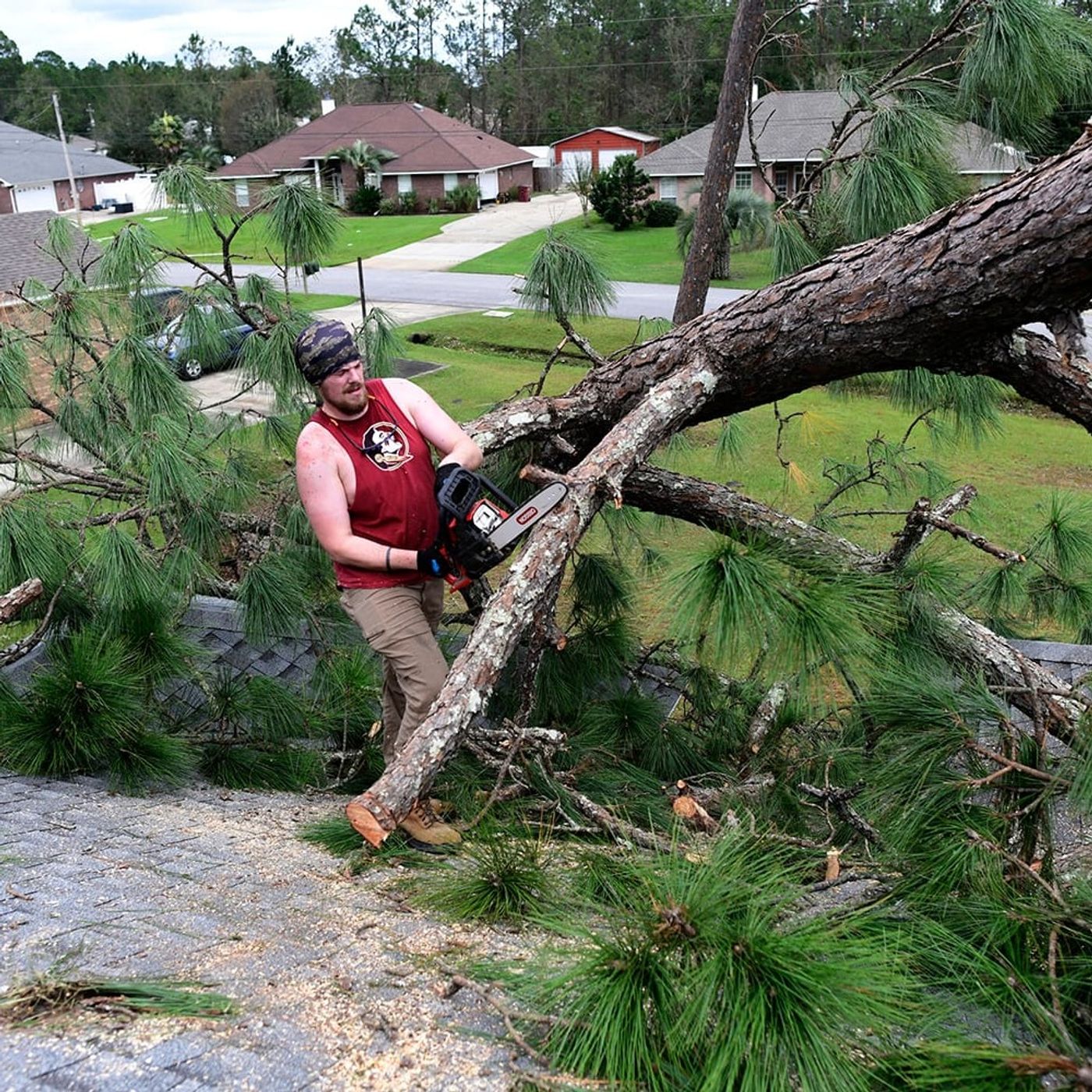
The episode of NBC News’ “Here’s the Scoop” covers two main stories: (1) Houthi attacks on Saudi Arabia and what it signals for the Iran-linked conflict, and (2) Hurricane ECES aftermath in Florida amid FEMA staffing cuts. Guests and backgrounds: Keir Simmons, NBC News Chief International Correspondent in Saudi Arabia; Jesse Kirsch, NBC News correspondent reporting from Florida; Chloe Malas, NBC News Entertainment correspondent.
Houthis launched two strikes on Riyadh airport, killing 13 (including one American) and injuring hundreds; the airport closure forced Keir to drive from Dubai. Simmons argues the Houthis aim at Saudi Arabia’s “economic jugular” and that U.S. response is limited, with focus on the Strait of Hormuz and possible air-defense gaps. Kirsch reports four deaths, widespread debris/logistics issues, boil-water advisory, and power restoration; she says she hasn’t heard residents blaming FEMA cuts. Malas discusses Hollywood tech-founder documentaries (e.g., “The Social Reckoning,” Elon Musk, Elizabeth Holmes, “Artificial”) and notes “The Social Reckoning” bombed (~$5M on a $30M budget).
Jeremy Strong as Zuckerberg; Alex Gibney’s Musk film; Theranos founder Elizabeth Holmes; and Amazon/Universal release controversies.
Written by AI. May contain mistakes.
Discussion on the Houthi strikes on Riyadh and their implications.
“Also, we are checking in with Jesse Kirsch, an NBC News correspondent who's been down in Florida throughout the weekend covering Hurricane ECES.”
Exploration of the damage and recovery efforts following Hurricane ECES.
“The best thing ever keeps getting better.”
Learn about the challenges faced in the aftermath of the hurricane and the response efforts.
“Finding clean water to drink while you're figuring all that out.”
Explore the impact of FEMA's workforce cuts on hurricane response in Florida.
“since President Trump took office again.”
Discover how Hollywood is depicting real-life tech stories and their societal implications.
“And while you're listening to the ads, everybody, do us a favor.”
Understand audience reactions to films about tech founders and their implications.
“But they haven't come without some controversy.”

Get the gist, explore an idea or ask about something said.
 Claude
On Here's the Scoop, what are the key points of this episode?
Searching your listeningAutomatic transcript. May contain errors.
0:00Jesse Kirsch: These tech founders and CEOs are really being taken to task. This is putting them under the microscope in a very severe light. I would say that no one's walking away from any of these movies, you know, without a lot of questions. Hi, everybody, and welcome to Here's the Scoop from NBC News. I'm Yasmin Basugin. So today on the show, Hollywood is putting out these big films, these documentaries on some major tech giants. We got a film on Musk, on Elizabeth Holmes, on Mark Zuckerberg, on Sam Altman. But the question is, do people actually want to see it? The Social Reckoning, for instance, came out over the weekend and it was a total bomb.
0:41Jesse Kirsch: So we're digging into that with NBC News entertainment correspondent Chloe Malas. Also, we are checking in with Jesse Kirsch, an NBC News correspondent who's been down in Florida throughout the weekend covering Hurricane ECES. We want to know about the aftermath and also how the cuts to FEMA, for instance, are reflecting on the ground there when it comes to cleanup efforts on this Monday.
1:05Jesse Kirsch: Up first, though, so the Iran-backed Houthis launched two strikes on Saudi Arabia's Riyadh airport over the weekend, killing 13 people, including one American, and injuring hundreds. These were the deadliest attacks on Saudi Arabia and on any Arab-U.S. ally in the region since the start of the war with Iran. And it's raising some serious concerns about the war spreading further. So for this, I'm joined by NBC News Chief International Correspondent Keir Simmons, who's on the ground for us in Saudi Arabia. Hi, Keir.
1:38Kier Simmons: Hey there.
1:38Jesse Kirsch: So these strikes shut down the airport. You are one of the few international journalists who have made it to Saudi. Talk to us about the experience of even getting there after these strikes happened.
1:51Kier Simmons: Yeah. And I think it's a reflection of how the world is changing, that we would have this conversation because I'm in Riyadh, you know, the capital of Saudi Arabia, it is a international city, more so more recently, you know, like last 10 or 20 years. And it's somewhere that I come a lot. So it's somewhere that you don't think of as difficult to get to. But closing down the airport, which is what the Houthis have managed to do, at least temporarily, and they have extended the closure, that is having that impact where instead of being able to fly in, I had to drive in. I drove from Dubai. It was a 10-hour drive.
2:38Kier Simmons: I was driven, I should say. I actually had three drivers, Yasmin. So the first driver got me to the border. And then there's a driver who takes you across the border, just that little piece, who's accredited to do that. And then there's another driver in Saudi who brings you here. And so it's a process. It's a fairly laborious process, really. And that's something, oh, I should just tell you that while I'm talking to you, we've got an alert on the phone saying that there's a hostile aerial threat. So an air raid alert on the phone. No need to worry. It's fairly standard here. But I will say that it is strange to kind of say I'm one of the few who's managed to get here after the attacks this last weekend.
3:34Jesse Kirsch: So these strikes were launched, as you mentioned, by the Iranian proxy group in Yemen, the Houthis, right, on one of the busiest airports in the region, the airport in Riyadh. What do we know about why they went for this target and also about any accountability from Iran or involvement from Iran?
3:53Kier Simmons: The Houthis are an independent group. They're not just Iranian, but they do support Iran. And they have supported Iran right from their inception. I mean, they're named after the man who founded them. And he was very pro the then Ayatollah of Iran. and they remain that way. And there's a deep connection, but they do have a different agenda, their own local agenda. They have a longstanding grievance with Saudi Arabia specifically that really goes beyond the rivalry between Iran and Saudi Arabia. So there's that connection, but equally you have to view them as separate.
4:37Jesse Kirsch: But to be clear, the Iranians haven't taken responsibility. They haven't said that they were in lockstep with the Houthis on this attack.
4:43Kier Simmons: That's right. I mean, effectively, what the Houthis are trying to do is go for the economic jugular, if you like, of Saudi Arabia. And anyone who knows about anything about Saudi Arabia, you don't really need to know very much to know that this country has been involved in a quite stunning attempt to transform itself economically and culturally. the one something that people will very likely be aware of is the decision for example to allow women to drive but the decision for example to allow people here to go to music concerts I mean there's been a transformation in Saudi Arabia and that and that has been part of that transformation has been about the crown prince Mohammed bin Salman trying to completely modernize the Saudi economy.
5:38Kier Simmons: And so the Houthis are very aware of that. They see the rulers of Saudi Arabia as the enemy, and they are attempting to do what they think is likely to punish them the most and potentially get them to capitulate to the demands the Houthis have.
5:58Jesse Kirsch: So Saudi Arabia, Mohammed bin Salman, the crown prince, are arguably the strongest ally to the United States, second to Israel in the region?
6:07Kier Simmons: You know, the UAE might say that they are. So let's say that, you know, they're up there, top three.
6:13Jesse Kirsch: Okay. Okay. So the U.S. hasn't responded though, right? The U.S. has not responded to this attack on the Riyadh airport with the loss of life there, including an American. So what does that say about what this means for the war with Iran, if anything, or for the kind of larger strategy that the U.S. is trying to instill right now with this ongoing conflict?
6:40Kier Simmons: I think it says a number of things. I think that one aspect of this is the purely practical reality that President Trump has launched major airstrikes against the Houthis in the past, and clearly the Houthis are still here. So you could argue those didn't work, at least not long term. There's another piece which is a little bit unclear, which is how come these missiles and drones appear to be getting through? What's happening with the air defences? Now I'm really speculating, but does that tell us anything about the weakness potentially of air defences in this region around Iran and why the Trump administration now might be reluctant to take action right now.
7:31Kier Simmons: Then the other part of that is I think the Trump administration are laser focused on the Strait of Hormuz and trying to get that figured out. And there are more ships passing through the strait, which we should add wasn't a problem until the Iran war began. Okay.
7:47Jesse Kirsch: But then there's the okay and, which is again, back to the allies. the United States did not seek the guidance of these key allies in the Middle East ahead of launching the attack on Iran.
8:02Kier Simmons: Or maybe did, but then didn't listen. And then they have had to ask them for help at times
8:09Jesse Kirsch: because there are U.S. bases around the region. And now they are not coming, it seems, at this moment to the aid of Saudi and MBS. So what does this mean for the potential relationship between the United States and these key allies that have all been attacked throughout this war with Iran? And not just Saudi Arabia. We're looking at Kuwait, Bahrain, amongst others.
8:34Kier Simmons: Yes, yes. And you would understand it if in some Arab capitals there was, let's put it sort of delicately, some frustration at the situation that these countries now find themselves in after the Iran war. One little kind of caveat we should include is that the US is helping Saudi Arabia. It's very likely helping with targeting. There are going to be multiple ways in which the US is going to be helping Saudi right now. But what it isn't doing is bringing its air force into the fight to help the Yemeni government, Saudi-backed Yemeni government, which is at the forefront of this battle with the Houthis and, frankly, has lost some battles with the Houthis in recent weeks.
9:22Kier Simmons: But to sort of dig into your question a little bit more, and it's an interesting question, really, is this even from President Trump, who, as we know, has lent into this region, came to Saudi first at the beginning of his second term, has all these connections. He's a personal ally of the crown prince here in Saudi Arabia, for example. Is even his administration part of a long-term, slowly iterating decline in the reliability of America here. There's an argument to be made that America withdrawing from the world will ultimately be detrimental to the living standards and the lives of Americans because of the impact it may have on the American economy, the potential inability of America to have quite so much say over the world economy, all those things.
10:14In the long run, this may backfire,
10:17Kier Simmons: this withdrawal, this international withdrawal, this sort of political direction that we've been seeing.
10:25Jesse Kirsch: Keir Simmons, thank you.
10:28Kier Simmons: Thank you.
10:30Jesse Kirsch: All right, we're going to take a very quick break. And when we are back, cleanup has begun after Hurricane ECS left a trail of destruction. But with federal resources stretched thin, what does that recovery actually look like? An On the Ground report coming up next.
10:51Jesse Kirsch: 3 o 'clock. Kids are home. Your to-do list isn't done. New Kraft Mac & Cheese Power Mac was made for days like this. Kraft Mac & Cheese Power Mac packs the same irresistible creamy, cheesy flavor you love, now with 17 grams of protein and 6 grams of fiber. Fuels you up, keeps you going. Because your day doesn't stop. Kraft Mac & Cheese Power Mac. Find it at your favorite retailer. The best thing ever keeps getting better.
11:46Jesse Kirsch: Initial plan term only. Greater than 50 gigabytes may slow when network is busy. See terms.
11:53Jesse Kirsch: And we're back with Here's the Scoop from NBC News. So the worst of Hurricane ECES has passed, leaving four dead and others injured in its wake. The damage from winds, from rain and from tornadoes stretched from Florida all the way to North Carolina. And there was even flooding in New Jersey. ECES is the first Atlantic hurricane since the Trump administration made sweeping cuts to the Federal Emergency Management Agency, or FEMA. Over 4 ,000 employees left the agency in 2025 alone. Officials have suggested that ECES could be the test of whether FEMA is spread too thin. So how are states dealing with the aftermath of the hurricane?
12:29Jesse Kirsch: And could cuts to FEMA derail the response? For this, I want to bring in NBC News correspondent, Jesse Kerr. She has been reporting live from Florida the whole weekend. Hey, Jesse. Hey, Yasmin. Good to be with you. Great to have you. So you're coming to us from Florida, as I mentioned. Hurricane ACS came ashore at a Cat 2 storm. How are things looking today? Today, things are pretty good, but I do want to back up and just underscore this was a deadly hurricane. You have at least four people who were killed. So, of course, those families are in mourning. There are people who narrowly escaped with their lives.
13:05Jesse Kirsch: We talked to this couple that had a tree snap, crash into their bedroom, and they say they were in the area. Yeah. So imagine narrowly escaping death. And they live just minutes away from where a woman's family says a tree crashed into her home and killed her. So just right. I mean, some of this unexplainable, right, when you're trying to find sense in a senseless loss. There are also people whose homes have been truly gutted. We see multiple homes with roofs ripped open. There's a school that showed photos of extensive damage, a convenience store that we walked in. And when you look up, all you see is the sky.
13:44Jesse Kirsch: So there are scenes like that. But as far as the recovery efforts, I'd say pretty good progress is being made. We've been able to find restaurants that are open so people can get a hot meal. This county, Pensacola's county, is still under a boil water advisory. So that's a challenge for people, right? Finding clean water to drink while you're figuring all that out. There are still plenty of people without power. But at one point, it was hundreds of thousands. And that number has kept going down. And I can tell you, even in the hours right after landfall, we started seeing pretty quickly the power trucks on the move.
14:17Jesse Kirsch: But I can tell you, one of the challenges we're running into, and literally if I look off camera at my feet, about five feet away, there's a pile of debris that I think would be someone's good haul when they're raking in the fall. But that's just one pile right in one parking lot. And you can imagine how much there is around. And I've seen a wall of debris in someone's front yard. that towers way over my head and it starts creeping in the street. So that turns a two-lane road into effectively a one-lane road. You got dangling cables there, too. That makes it harder for crews to get around. So I think there are going to continue to be logistical challenges getting all of this, you know, all of the utilities, all of the power, all of the water back online just because it's not so easy to move around certain areas.
15:00Jesse Kirsch: There was flooding and landslides all the way into North Carolina. And were people that far north prepared for what was to come? Was there ample warning given that literally this thing could travel and be as powerful as it was? Well, I can tell you this. I know that before the storm hit, our team was talking about that this was not just a landfall threat. This was not just a storm surge threat. There was real fear about tornadoes. And, you know, our climate unit is always keeping an eye on these things. and we're still waiting for the final word in the National Weather Service reporting on all this.
15:35Jesse Kirsch: But there are upwards of 20 different incidents that are being looked at as potential tornadoes connected with Isaias' aftermath. So this was something that, you know, ahead of time we were keeping an eye out. The thing that caught our attention, made our eyebrows go up the day of landfall, is this thing actually strengthened to a major Category 3. And what that meant was the storm surge threat went up that much more. There was that much more concern about devastation. I can tell you, we walked along Pensacola Beach. It's actually right out there behind me. That's one of the bridges, takes you out toward the Barrier Islands here in the Pensacola area.
16:10Jesse Kirsch: And we went out there to take a look yesterday. And there's definitely some damage. But from what I could see, most of the damage we were seeing was wind damage, not storm surge damage. So all things considered, right, as far as what a major hurricane, and it did downgrade before it actually made landfall. But all things considered, some of the typical impacts like boats being lifted up onto land didn't see any, you know, any consistent scenes like that with this storm. But definitely it's something that's been creating headaches well up the East Coast. I want to talk about, Jesse, some of the cuts made by Doge and how that may or may not be affecting the response, because this is the first Atlantic hurricane to hit the U.S.
16:52Jesse Kirsch: since President Trump took office again. And back in 2025, Doge actually made major cutbacks to FEMA. FEMA lost about 17 percent or so of its workforce. That's according to a government accountability office report. And they lost a lot of top level administrators. Are you seeing that have any sort of impact on the disaster response on the ground or hearing that, for instance, from folks that have been affected in the last couple of days by ECES? No. And I can tell you, Yasmin, no one has come up to us and said, where is the government? where's the help. I have not had that interaction with people.
17:25Jesse Kirsch: Best I can tell, no one on our team has had that kind of interaction. I would also say if you're trying to compare, you know, if you're trying to compare today versus a few years ago in terms of government response, you got to remember, Florida is used to these things, right? Florida gets hit with hurricanes a lot. Last year was very quiet in the Atlantic, but in 2024, right after I moved to Miami, I was constantly traveling to hurricanes that season. This is a state that pre-positions resources. You see the linemen, the power truck crews coming in ahead of the storm, getting ready. So they are basically ready to pounce as quickly as possible once the storm passes.
18:05Jesse Kirsch: So from what I've seen here, you know, again, I think there are challenges every time we're trying to clear debris. But the fact that we've got power at hotels and restaurants and yesterday in Pensacola, And again, this is one of those cities where we've seen some of the worst damage. But yesterday, people were at brunch getting breakfast. Wow. Jesse Kirsch, thanks for being there. You bet. Thank you. All right, coming up, Hollywood has taken all the tech world doom and gloom and putting it on the big screen how the entertainment industry is telling the stories of everyone from Elon Musk to Sam Altman to Elizabeth Holmes.
18:45Jesse Kirsch: That's next. And while you're listening to the ads, everybody, do us a favor. Share your favorite episode of Here's the Scoop with a Friend. We had some really interesting conversations last week with comedians Dale Hughley and Michelle Buteau. Those are both great places for new listeners to start. I'll see you on the other side.
19:07Jesse Kirsch: Three o 'clock. Kids are home. Your to-do list isn't done. New Kraft Mac and Cheese Power Mac was made for days like this. Kraft Mac and Cheese Power Mac packs the same irresistible, creamy, cheesy flavor you love, now with 17 grams of protein and 6 grams of fiber. Fuels you up, keeps you going, because your day doesn't stop. Kraft Mac and Cheese Power Mac. Find it at your favorite retailer. The best thing ever keeps getting better. This holiday, all plans, even unlimited, are just$15 a month. A holiday deal this good obviously deserves an enormously expensive holiday song, Like, all I want is ****.
19:46Jesse Kirsch: Right. Okay, we can afford that. You know what? Forget the music budget. We're going to stick with whatever's in the public domain. Give it a try at mintmobile.com slash switch. Upfront payment of$45 for three months,$90 for six months, or$180 for a 12-month plan required. $15 per month equivalent. Taxes and fees extra. New customer offer for initial plan term only. Greater than 50 gigabytes may slow when network is busy. See terms. If your workday happens in two languages, this one's for you. Whisperflow is a voice-to-text app. You talk, it types in any app in more than 100 languages. The email in English, the text to your mom in Spanish, the client note in Portuguese, and it switches languages as you do with the ums and typos gone four times faster than typing.
20:30Jesse Kirsch: Whisperflow is free. Get it at whisperflow.ai. That's W-I-S-P-R flow dot A-I.
20:40Jesse Kirsch: And we're back with Here's the Scoop from NBC News. So with all the recent headlines about AI, rogue agents and warnings that the technology could end humanity, it feels a little like we are living inside of a dystopian sci-fi movie. Well, clearly, Hollywood has noticed that as well. Studios have turned a bunch of real-life tech stories into a slate of new movies this fall. We've got documentaries about Elon Musk and Elizabeth Holmes and fictionalized looks at meta and open AI. But they haven't come without some controversy. So why are all these stories ripped from Silicon Valley coming to theaters now?
21:19Jesse Kirsch: And do audiences actually want to spend money to see them? So for this, I want to bring in NBC News Entertainment correspondent, Chloe Malas. Hi, Chloe. Hey, Yaz. Thanks for having me. It's great to have you. All right, so a quick run through of some of these movies. We got The Social Reckoning with Jeremy Strong as Mark Zuckerberg. It's about the Facebook files. It's a follow-up to The Social Network, both written by Aaron Sorkin. We're not the ref. We're the public square. I'm a free speech absolutist. There is a four-hour-long Elon Musk doc as well by Alex Gibney. Those are both in theaters now.
21:55Jesse Kirsch: I actually saw that film because we're going to be doing an interview on that coming up. On Friday, Nathan Fielder's Elizabeth Holmes doc, you can see everything is going to be released. Holmes was the founder of Theranos, as we well know. I don't have anything to deceive you on. Of course, I'm not deceiving you. I'm engaging with you as a human being. And then in December, there's Artificial, which is about Sam Altman and OpenAI. Other than focusing on tech founders, are there other ideas or themes that connect these movies? Well, I think that we're in a much different place than we were about 15 years ago, where it was more about, wow, there are these entrepreneurs who maybe took a different path and really tried to perhaps create community, do something daring.
22:50Jesse Kirsch: like looking at Mark Zuckerberg, you know, leaving college to start Facebook. When you look now at something like the social reckoning, Yaz, I think that what you're seeing is how did our world get created by these few very powerful individuals? And what happens to human beings when they have that much power? But I think the big question for me is do audiences, though, really care? Hollywood and studios seem to. They're spending a ton of money making these movies and documentaries. But the social reckoning bombed at the box office, grossing just a little over$5 million domestically. And that's on a$30 million budget.
23:33Jesse Kirsch: And this is coming from Aaron Sorkin. So it really has you wondering if audiences are ready for the reckoning. Well, I wonder if that's literally a sign that we need, which is like we are inundated with this is what AI is going to do to our world, right? Like this is what social media is already doing. What's going to happen to all of us? Is there going to be massive job loss because of tech? and because of all the negative news surrounding it, audiences, viewers are like, listen, we don't need more of this. We're not going to go to the box office to see this kind of film, right? And that's being reflected in the opening weekend, for instance, as you mentioned, of The Social Reckoning.
24:13Jesse Kirsch: Sure, and I mean, if you look at something like the Elon Musk documentary about him that I believe is a little over four hours. Yeah, it is. I saw it. Yep, I saw it. I mean, are audiences really going to sit through that, right? And obviously, Elon Musk did not want this movie to come out. And he essentially tried to block it and had no participation in it. But the movie is here anyway. I mean, there's so much buzz around the Elizabeth Holmes documentary. So many questions as to why she and her husband, Billy Evans, allowed that type of access. I've yet to see it. So many of my colleagues have.
24:49Jesse Kirsch: They say that their jaws are just on the floor. You know, I think it's going to be interesting to see how perhaps the altruists do. It's a Netflix limited series about FTX and Sam Bankman-Fried that comes out, obviously, this fall. And then I think you mentioned there's also Artificial about OpenAI and Sam Altman. And I think that it's just an unbelievable lineup when you're looking at the fact that these tech founders and CEOs are really being taken to task. This is putting them under the microscope in a very severe light. I would say that no one's walking away from any of these movies, you know, without a lot of questions.
25:31Jesse Kirsch: You know, there's some controversy surrounding some of the studios that are releasing some of these films, especially because a lot of these studios in Hollywood have ties to the tech world, right? You got Amazon owned by Jeff Bezos producing artificial and then selling it to a smaller studio because Amazon said in a statement that the film would, quote, be better served if it were released by a different studio. You have Alex Gibney, the director of Musk, telling the New York Times in a recent interview that Universal Studios wavered in its international release plans for the film. Universal says they've always been committed to releasing Musk, Universal, by the way, and NBC share Comcast as a parent company.
26:09Jesse Kirsch: What do you make of how the studios have handled these releases? Like, why spend money on them in the first place if they have to deal with these conflicts later on? Well, I mean, I think that when it comes to the Elon Musk documentary, that film has come out anyway, right? And so I think that there were some questions as to whether or not that was going to be held. I think that this is an interesting time where studios are willing to take a chance and see if audiences are interested. I think that, unfortunately, with the social reckoning really bombing at the box office, it doesn't bode well for other films.
26:45Jesse Kirsch: And certainly if you're not going to go out and see The Social Reckoning, you're not going to probably sit the average American four hours for an Elon Musk documentary. Maybe you'll wait till it hits streaming. But I'm sure that there are going to be a lot of people out there that love these movies, right? Like I love a good documentary, you know, at night after I put my kids to bed. But it is a big departure from the way we all felt, you know, in the mid-2000s when it was more like awe and excitement and a lot of positivity around these individuals. Chloe Malas, thank you. Thank you. By the way, later on this week, I mentioned earlier, I already watched the Musk documentary.
27:22Jesse Kirsch: We're going to be interviewing former conservative influencer Ashley St. Clair. She is an ex of Elon Musk and one of the subjects of the new Musk documentary. So be sure to keep an eye out for that. All right. That is going to do it for us. Here's the scoop from NBC News. I'm Yasmin Vasugan. We'll be back tomorrow with whatever the day may bring. And if you like what you heard, subscribe wherever you get your podcasts. And you can also subscribe to our daily newsletter, The Inside Scoop. It is a deeper dive on the main stories of the day that comes out every weeknight straight to your inbox. You can sign up for The Inside Scoop as part of our paid subscription at NBCNews.com.
28:00Jesse Kirsch: We'll see you tomorrow.
28:13Jesse Kirsch: If your workday happens in two languages, this one's for you. Whisperflow is a voice-to-text app. You talk, it types in any app in more than 100 languages. The email in English, the text to your mom in Spanish, the client note in Portuguese, and it switches languages as you do with the ums and typos gone four times faster than typing. Whisperflow is free. Get it at whisperflow.ai. That's W-I-S-P-R-flow.ai. Thank you.
The Iran-backed Houthi militia launched two hits on a Riyadh airport in Saudi Arabia over the weekend, killing 13 people. NBC News chief international correspondent Kier Simmons looks into whether the deadliest attacks on a regional U.S. ally since the war with Iran began could open up another front. Plus, states are cleaning up from Hurricane Isaias, which hit Florida and Alabama over the past weekend and killed four people. NBC News correspondent Jesse Kirsch breaks down how prepared states are to deal with the aftermath of these disasters in the wake of FEMA cuts. Finally, a slew of films focusing on Silicon Valley giants like Elon Musk and Mark Zuckerberg are coming to the big screen once again. NBC News entertainment correspondent Chloe Melas discusses why Hollywood is spotlighting these stories and why they might not be resonating with audiences.
Hosted by Simplecast, an AdsWizz company. See pcm.adswizz.com for information about our collection and use of personal data for advertising.