Ask ChatGPT

 Here's the Scoop
15 Sep 2026 · 24m · 11 chapters
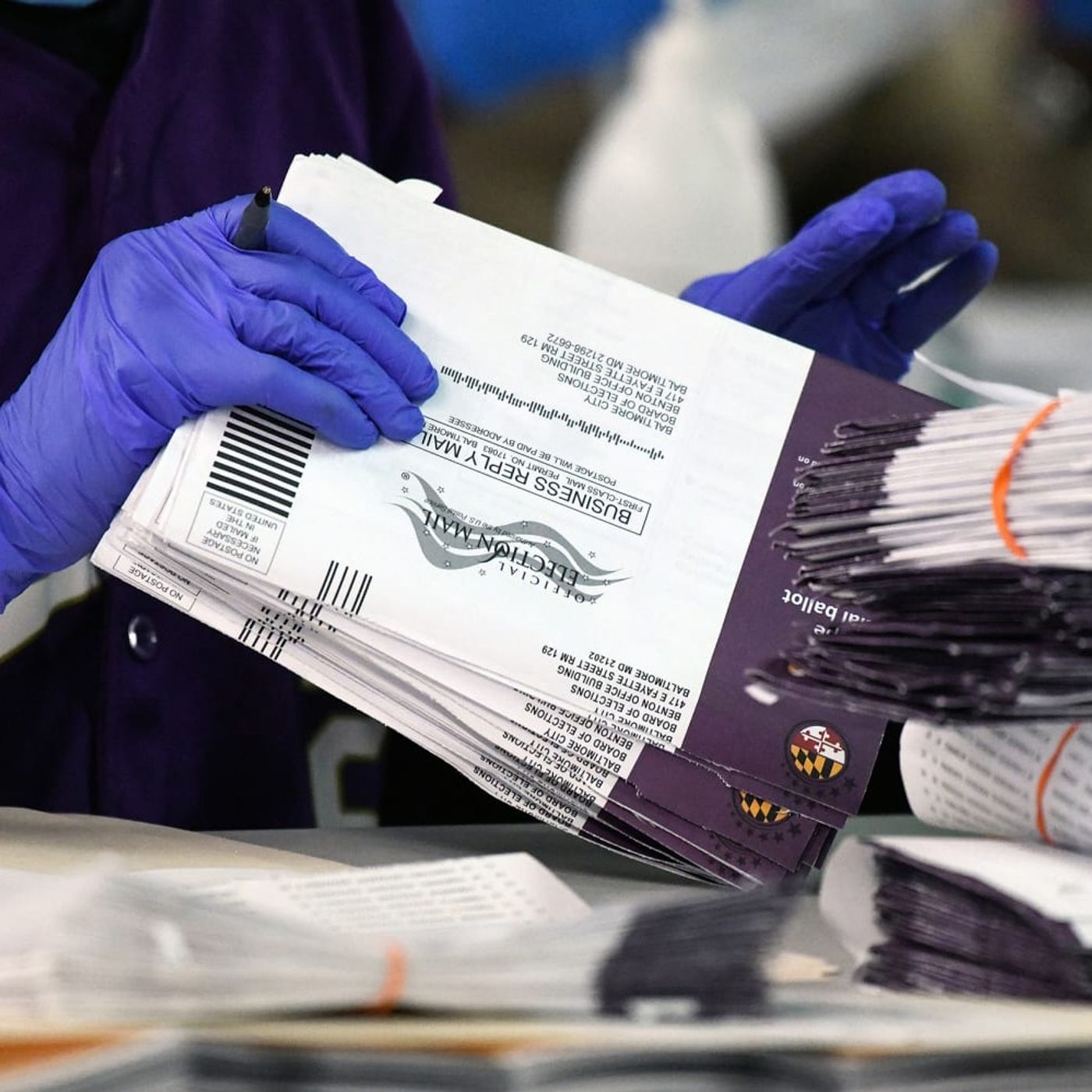
The episode covers three linked stories: (1) the Supreme Court blocking President Trump’s March executive order that would have limited mail-in ballots to pre-approved voter lists; the court said it was too close to the election to implement. Key claim: mail voting rules are unchanged for this election—if your state allowed it in 2024, you can vote by mail now.
USPS portal errors cited by a whistleblower; special barcode envelopes not feasible on this timeline. (2) EPA rollbacks of Biden-era power-plant emissions rules: repealed mandates requiring emissions controls like carbon capture starting in the 2030s; Zahra Hirji warns of major climate and health risks and notes broader climate deregulation. (3) “Pro Human Assembly” AI-risk conference: AI reporter Jared Perlow describes an anti-oligarchy, pro-human coalition after Jacob Cox’s viral “AI could kill us” tweet.
Jane C. (Carrie) Tim (NBC elections reporter); Zahra Hirji (Bloomberg climate reporter); Jared Perlow (NBC AI reporter). Mentioned speakers: Bernie Sanders, Steve Bannon, Joseph Gordon-Levitt, Ashley Judd, plus parents and faith leaders discussing AI harms.
Written by AI. May contain mistakes.
The discussion opens with an analogy about AI's prominence in political issues, leading into the podcast's main topics.
“One political activist here who works on AI policy put it to me this way.”
Discussion of a pro-human assembly in D.C. and the EPA's rollback of power plant emissions limits.
“Well, we're not quite sure, except we are talking now to Jared Perlow, our NBC AI reporter who's on the ground for us there.”
Analysis of the Supreme Court's decision to count mail-in votes and the implications for future elections.
“Up first, though, so there's been a lot of back and forth about mail-in voting ahead of them in terms.”
Jane Tim explains the Supreme Court's ruling and the reactions from election officials across the country.
“Remind us of this order, what it said, and why the Supreme Court blocked it.”
Clarification on the status of mail voting for the upcoming elections remains unchanged despite the ruling.
“For one, the USPS did not appear to be ready to implement this.”
Discussion about the potential for future legal challenges and the implications for mail voting after the midterms.
“If you requested it, if you did all the things your state requires, every state has different policies.”
Analysis of the EPA's rollback of power plant emissions regulations and potential health impacts.
“And we are back with Here's the Scoop from NBC News.”
Discussion on the broader implications of the rollback on emissions and public health.
“Why did the Biden administration initially put these regulations there?”
Discussion on the implications of rolling back emission regulations and climate policies.
“And based on what scientists are saying, we need to radically cut what we're producing or else we're going to get more and more warming and more and more impact.”
Exploring the unexpected convergence of diverse political figures at an AI conference.
“So what issue could bring actor Joseph Gordon-Levitt, Vermont Senator Bernie Sanders, MAGA enforcer Steve Bannon, all into a room together?”
Analysis of the contrasting perspectives on AI's impact from different political figures and attendees.
“So we have been talking a lot about the threat of AI over the past few weeks.”

Get the gist, explore an idea or ask about something said.
 Claude
On Here's the Scoop, what are the key points of this episode?
Searching your listeningAutomatic transcript. May contain errors.
0:00Jane C. Timm: One political activist here who works on AI policy put it to me this way. He said, you know, before everybody had their range of pet issues, but now AI is clearly the alligator that's closest to the boat. And so everybody wants to be part of the same team and grow away from the alligator together.
0:17Zahra Hirji: Hi, everybody, and welcome to Here's the Scoop from NBC News. I'm Yasmin Vestugia. So over the last few weeks, we have been talking a lot about AI. Well, today, there is a pro-human assembly happening in Washington, D.C. What is that, you ask? Well, we're not quite sure, except we are talking now to Jared Perlow, our NBC AI reporter who's on the ground for us there. And we understand that Senator Bernie Sanders, along with Steve Bannon, are there and then some other folks, some from Hollywood as well, that are there. So we're going to talk about that. And then there is the EPA, who is rolling back restrictions on emissions from power plants.
0:54Zahra Hirji: The announcement was made down in Texas. And there could be consequences to both our environment and our health. Up first, though, so there's been a lot of back and forth about mail-in voting ahead of them in terms. But this week, the Supreme Court made it official that your postal vote is going to, in fact, count. In a 72 vote, the justices blocked President Trump's executive order to restrict the practice, rejecting the administration's emergency application. And President Trump clearly was not happy about it. He slammed the justices on True Social, including the ones that he nominated, saying that they lacked courage and were shells of their former selves.
1:33Zahra Hirji: So is this finally over? Are mail-in ballots back for good? Or can we expect more litigation before or after the midterms? For this, I want to bring in Jane C. Tim. She's a senior political reporter for us covering all things elections. What does the C stand for? Carrie. Jane Carrie Tim. JCT. That's me. All right. Remind us of this order, what it said, and why the Supreme Court blocked it. So back in March, President Trump ordered the federal government to create lists of citizens and give them to the Postal Service and said, only deliver ballots to those people. Once the rules were finally made through the USPS, it turned into election officials giving the post office lists of citizens that were on their voter rolls and saying, only deliver ballots to the people we've told you to deliver ballots to, inserting them into the process in this incredibly complex way.
2:26Zahra Hirji: The order from the Supreme Court says it's too close to the election. We can't enforce this. And it's not going to happen this year. Why was the president so set on doing this? You know, the president has been saying for years that there's rampant non-citizen voting, that mail ballots are rife with fraud. There's no evidence for these things. A handful of non-citizens cast a ballot every year. Usually by accident, voter fraud is incredibly rare, but particularly non-citizen voter fraud is even rarer. I know that you've been in touch with folks that administer elections all over the country. How are they reacting to SCOTUS's decision?
3:07Zahra Hirji: I mean, they are breathing the biggest sigh of relief they're going to have this election because they know they couldn't have implemented this by the midterms. For one, the USPS did not appear to be ready to implement this. Their portal wasn't ready. It had errors, according to a whistleblower who came forward. States themselves across the country said, we simply can't do this. I mean, you have to remember that election officials plan their elections months, years in advance. The ballot envelopes have been printed and purchased, and this order required people to have special ballot envelopes with barcodes on them so that the USPS could scan them and they could be tracked in these certain ways.
3:46Zahra Hirji: This simply was not possible to do this year. This was ordered in March for a November election, inconceivable for most election officials. So there has been so much back and forth with this executive order, right, blocked, unblocked, over and over again. And I'm wondering if the damage has already been done. And what I mean by that is, is there already enough confusion out there and that people don't necessarily know if they're still going to be able to vote by mail come the midterm elections? So to clear things up, where does everything stand? Where does this leave voters going into November when it comes to vote by mail?
4:24Zahra Hirji: Big picture, mail voting is unchanged by all of this. Exactly as it was in 2024. Just as it was. If your state allows you to vote by mail last time, you can vote by mail this time. End of story. End of story. Period. So, i.e., you're going to be getting that ballot in your mailbox to vote, and you can send it back. If you requested it, if you did all the things your state requires, every state has different policies. But if you could vote by mail previously, you can do so now. Even if you haven't, you can look up your state rules and figure out if you can vote. But I think it's really important to say nothing has been changed by all of this.
5:00Zahra Hirji: Okay. So that's for now, but what about after the midterm elections, right? Because you had two justices break from the majority, conservatives Samuel Alito and Clarence Thomas. But I want to ask you about Justice Brett Kavanaugh, who in fact was appointed by President Trump, because in his concurring opinion, i.e. he voted in favor of the majority, he said that there was, quote, a fair prospect that the Postal Service does have the authority to issue the rule, but said that he'd agreed it had to be blocked because it was issued so close to the midterms. So to me, when I read that, I was kind of shocked by it.
5:38Zahra Hirji: I said, okay, wait a minute. So Justice Kavanaugh actually said there is kind of an opening here for this executive order to actually go into place, but it's all about the timing. So does this then leave the door open for after the midterms, potentially, in which this issue could be raised yet again and the Supreme Court could potentially decide differently, considering the conservative majority? You know, there's clearly three votes for people who are open to putting this in place. It would take a lot longer, but you could very well see the president trying to implement this again. I will say there's definitely concerns within his own party that making it harder to vote by mail could deeply hit his own voters.
6:21Zahra Hirji: You know, that making it harder to vote by mail often hits rural voters the most who rely on mail voting because of their location in states where it's possible for them to cast ballots that way. So, you know, he may not be worth the fight to him, but we'll see. The president has made it clear that going after how America runs his elections is a real top priority for him. So to remind folks who normally votes by mail and vote. Some one in three Americans vote by mail. It depends on the states, western states. There's a lot more mail voting. California, Washington, Colorado, Utah, almost entirely by mail.
6:56Zahra Hirji: In recent years, Democrats have embraced the process. But you're starting to see Democrats embrace early in-person voting because there are also delays with the mail service because of budget cuts have made it harder. But you also know that older voters, infirm voters, voters who live away from the state that they are registered to vote in, those people embrace mail voting and have long voted by mail. So, yet again, if one is confused, status quo. Status quo. You signed up for mail and vote. Your state allows it. You can do vote by mail. Yep. Jane Tim, thank you. Thank you. Jane C. Tim, thank you.
7:33Zahra Hirji: Thank you. All right. We're going to take a very quick break, but when we are back, why the Environmental Protection Agency decided to end key pollution regulations on power plants and what that could mean for our future. And also, while you're listening to the ads, why not take a moment to make sure you're subscribed to Here's a Scoop wherever you listen to your podcasts. And if you're already subscribed, rate and review us. It helps us find new fans. All right. We'll see the other side.
8:05Zahra Hirji: This holiday, all plans, even unlimited, are just$15 a month. A holiday deal this good obviously deserves an enormously expensive holiday song, like All I Want. Right. Okay, we can afford that. You know what? Forget the music budget. We're going to stick with whatever's in the public domain. Give it a try at mintmobile.com slash switch. Upfront payment of$45 for three months,$90 for six months, or$180 for a 12-month plan required,$15 per month equivalent, taxes and fees extra. New customer offer for initial plan term only. Greater than 50 gigabytes may slow when network is busy. See terms. If your workday happens in two languages, this one's for you.
8:40Zahra Hirji: Whisperflow is a voice-to-text app. You talk, it types in any app in more than 100 languages. The email in English, the text to your mom in Spanish, the client note in Portuguese, and it switches languages as you do with the ums and typos gone four times faster than typing. Whisperflow is free. Get it at Whisperflow.ai. That's W-I-S-P-R-flow.ai.
9:09Zahra Hirji: And we are back with Here's the Scoop from NBC News. So power plants are the single biggest industrial source of greenhouse gas emissions in the United States. And under the Biden administration, the Environmental Protection Agency put a rule in place to limit those emissions. But this week, the Trump administration rolled that regulation back. The administration says it's going to save the energy industry hundreds of billions of dollars. But what are the potential environmental and health risks from this repeal? And how does it fit into the Trump administration's larger strategy of ending climate regulations?
9:45Zahra Hirji: For this, I want to bring in Bloomberg News climate reporter Zahra Hirji. Hi, Zahra. Hi, thanks for having me. Great to have you. Okay, so the EPA, right, announced a couple of changes on Monday. I want to start, though, with the biggest one, which is the repeal of this Biden era rule on power plants. What did that rule actually do? Yeah. So it repealed these mandates that went into place or were finalized in 2024, requiring existing and future fossil fuel power plants, So think coal power plants, natural gas power plants, that they have to install and deploy emissions controls technologies, which they define or list as carbon capture sequestration as the main one, or there are some other controls.
10:35Zahra Hirji: They're saying starting in the 2030s, you have to use this to dramatically reduce their emissions. And so what happened yesterday is they have repealed those mandates. No longer have to install, use these emission controls, which means that there are no emission controls on these power plants for the foreseeable future. Why did the Biden administration initially put these regulations there? So there's two reasons why. One is because they felt like their reading of the Clean Air Act requires the EPA to, if they determine that the emissions, specifically here, the greenhouse gas emissions from power plants represent a significant threat, air pollution source, then they feel compelled to have to put in these new regulations to try and reduce them.
11:32Zahra Hirji: And that's also because this was an administration that prioritized kind of responding to trying to reduce the impact of climate change and all the major sources of climate change within the U.S. And that's a bit philosophically different from the Trump administration, which does not view climate change as a major problem, and then specifically is interpreting the Clean Air Act differently. And so this is tied to the second rollout that came yesterday. They made a proposal for a new rule, which will have to go through public comment period before its final slides, to undercut this kind of requirement that's baked into the Clean Air Act that they have to have any kind of standards.
12:16Their interpretation is they're not required to do that.
12:19Zahra Hirji: They don't think the Clean Air Act requires them to do that. So they're not just trying to get rid of the controls that are in place. They're trying to prevent any future administration, any requirement at all in the future that there will need to be limits. So what are the potential environmental impacts of this decision? So the main impacts are on climate change and climate impacts. This was a key way that would have reduced the U.S. emissions. The U.S. is the second largest greenhouse gas emitter in the world. And we are seeing that through the slow rise of, or through the rise of global warming, through increased heat waves, through stronger, more intense wildfires or hurricanes or floods or other types of storms.
13:07Zahra Hirji: But it's a little bit different than, say, the direct impacts of other types of air pollutants. And I think it's really important, and the administration really stressed this. Last year, when they made this announcement that they were planning to repeal these rules, they made another announcement that they were planning to repeal other rules, mercury and air toxic rules, which are sort of some of the classic pollutants that we associate with asthma and other types of respiratory diseases. And they did not finalize that rulemaking yesterday. So that's still sort of up in the air. Okay. So are there, though, health risks to the repeal of these regulations that they have put into place as well?
13:48Zahra Hirji: I mean, in so much as they are the health impact that we have from climate change. And then it's really hard to quantify, say, how much is a heat wave going to be worsened by this one rule? You know, that's not really the way to think about it. It's that this is one rule that has the potential or the rules that they're replacing or rolling back had the potential to capture a lot of future emissions at a point in which we're hoping to be reducing our emissions because we're already seeing the rise of local warming. And based on what scientists are saying, we need to radically cut what we're producing or else we're going to get more and more warming and more and more impact.
14:25Zahra Hirji: And it's happening at the same time that we're rolling back the climate rules on cars and all these other sources. So you bring up, for instance, the rollback of emission standards for cars, also the rolling back of an Obama-era climate finding that was used to support a lot of the Obama and Biden climate policy. How does this latest repeal kind of fit into the larger strategy in which the Trump administration is going after environmental policies? This repeal fits squarely within this administration's strategy on both aggressively rolling back climate policy, They do not see this as a priority, while also pushing all the levers to expand fossil fuel energy.
15:08Zahra Hirji: So this, for example, is just one other way, one other rule change that could benefit the coal industry. And I think the other thing they're thinking about is this context of where we are with electricity demand. So we have data centers going on line all around us. We are seeing the demand for electricity going up. We need more energy to kind of help power that. And if they are also kind of rolling back support for renewables, such as wind and solar, which is what the past administration has been trying to ramp on to help meet the future and anticipated energy demand, that really leaves having to kind of keep our existing fleet of plants or other types of power online and potentially even increased.
15:55Zahra Hirji: There are expected to be challenges to this repeal. How long could it take for these lawsuits to actually play out? Could they be successful? They could be successful, but it will take time. Just like that rule that was finalized in February, having to roll back the climate rules for cars has been challenged and is now making its way through the court. That case hasn't even been brief. We are not through the initial court making a decision, let alone any appeals that could come with that. And I think in that case and in this case, there's a sense that no matter what any initial ruling comes, they're going to challenge this to the Supreme Court.
16:37Zahra Hirji: Zahra Hirji, thank you. Thank you. Okay, here's a question for you. So what issue could bring actor Joseph Gordon-Levitt, Vermont Senator Bernie Sanders, MAGA enforcer Steve Bannon, all into a room together? If you guessed AI risk, you are right. And maybe, in fact, you're a chatbot. We have got our AI reporter, Jared Perlow on the ground at the Pro Human Assembly in Washington, D.C. to explain how recent AI doomerism is shifting the vibes in the room.
17:41Zahra Hirji: If your workday happens in two languages, this one's for you. Whisperflow is a voice-to-text app. You talk, it types, and any app in more than 100 languages. The email in English, the text to your mom in Spanish, the client note in Portuguese, and it switches languages as you do with the ums and typos gone four times faster than typing. Whisperflow is free. Get it at whisperflow.ai. That's W-I-S-P-R flow.ai. You've never been one to settle, stand down or stand still. You're a lifelong learner, energized by excellence. There's a fire inside you, you can't ignore. You've got competition to outrun, momentum to build on and your own high standards to meet.
18:27Zahra Hirji: Stop now? Not a chance. At Capella University, we help you catch what you're chasing because you've always had the drive. Now, go earn the degree. Capella University, what can't you do? Visit capella.edu to learn more.
18:46Zahra Hirji: And we're back with Here's the Scoop from NBC News. So we have been talking a lot about the threat of AI over the past few weeks. And you got some top tech leaders that have said the threat is real, while others have rejected the recent AI alarms, President Trump even calling it a hoax, although he now says he's going to meet with AI CEOs. but concerns about how AI could impact all of us in the political and ideological spectrum. And we saw this on display today when Vermont Senator Bernie Sanders shared a stage with President Trump's former chief strategist and MAGA megaphone, Steve Bannon, at an AI risk conference in Washington called, get this, the pro-human assembly.
19:25Zahra Hirji: The people of this country must make the decisions about AI and not just a handful of oligarchs.
19:38Zahra Hirji: This is a hinge in history. We have to handle this right, correctly. To handle it correctly, number one, we can never trust what an oligarch says because all they do, they're disingenuous and they lie. This has to be the American people. Our AI reporter Jared Perlow was in the room and he's got a lot more to say about it. Hi, Jared.
20:01Jane C. Timm: Great to see you, yes. Thanks for having me.
20:03Zahra Hirji: Good to see you. Okay. Steve Bannon and Bernie Sanders. Did you predict that one?
20:10Jane C. Timm: You know, oddly, I think I could have. So we know that Bernie has been interested in AI since last year, around October, September of last year. I actually conducted one of the first interviews with Bernie, and he said he was worried about where artificial intelligence was going. Steve Bannon, on the other side of things, is, you know, very anti-oligarchy. He's very anti-concentration of power. So we actually saw the first inklings of this sort of bizarre relationship, you know, odd bedfellows, last year. However, I think it was surprising for me to see both of them in the same room. They took the stage right after each other, so Bannon followed Bernie, and it was about 45 minutes of the same exact sort of rhetoric.
20:52Jane C. Timm: You know, you honestly, for most of their speeches, you could have played Bernie Bannon bingo. Wow. And it would have been indistinguishable from each other.
20:59Zahra Hirji: Hold up. Did Bannon at all reference the president in calling it a hoax?
21:04Jane C. Timm: He didn't reference the president in calling it a hoax, but he did say that it was interesting that Bernie and himself, he said, I probably have very different views of the current president than my friend Bernie Sanders, but we're here to unite on this critical issue to make sure that AI doesn't spiral out of control. And that's the most important thing here. So I thought that was really interesting, that sort of humanitarian, you know, kumbaya, everybody can align with each other, get on the same page.
21:28Zahra Hirji: Amazing. AI is actually bringing Washington together in some respects. I do have to say, though, it's like a random mix of people, right? Because I mentioned, obviously, we talked about this Bernie Sanders, Steve Bannon. You also have Ashley Judd. You have Joseph Gordon-Levitt. Like, what is, in fact, the unifying factor at this pro-human assembly?
21:48Jane C. Timm: That's where it gets a little bit more confusing. I think it's a lot easier to be anti-something than it is to be pro-something. So I don't think it's too much of a stretch to call this like an anti-AI assembly. I think a lot of people are just really scared about where AI is headed. The fact that there's a huge concentration of power in terms of charting out AI's development with the tech oligarchs, essentially, you know, the next Gilded Age with the Musks and the Bezoses and the Altmans and the Amides. So there are people who are coming together and saying, we don't like where this future is going.
22:16Jane C. Timm: We want to have a say in this. But again, I think my personal opinion is that statement's a little bit wishy-washy. It's, again, a lot easier to come out against something than get all of these disparate voices to agree on exactly what we should do. I think if you ask Bernie and Bannon to sit down at the table and hammer out a 10-point agreement of what we should actually do, that would be a lot harder than getting them to take the stage to get them to say what we shouldn't do.
22:39Zahra Hirji: Well, and also the way in which they approach what we should do, I imagine, would probably be quite different considering where they stand on the political spectrum. Yeah.
22:46Jane C. Timm: I mean, even in his speech today, Steve Bannon came out railing against China and teaching Chinese students. He said implicitly that we shouldn't teach Chinese students in the U.S. because they're just going to go back to China and help the enemy in this AI race. I would be shocked if Bernie would agree with some sort of statement like that. Yeah, me too, Jared. Me too. Yes, exactly. I think that's the free space on the bingo board.
23:08Zahra Hirji: You know, as we were talking about this in our editorial meeting this morning, we kind of laughed about the timing of this whole thing because it was obvious that this was planned well before kind of the controversy over AI in the last few days related to this former anthropic researcher, Jacob Cox, who came out and said, essentially, AI could kill us all. There's a 10 percent chance that AI could, like, kill humanity. Right. But how has that kind of shifted the vibe in the room at this conference?
23:35Jane C. Timm: Yeah, so I think it's important to say, like, there are 1 ,500 people here. It's not just the speakers. It's not just the headliners. When I'm mulling around the lobby talking with everyday attendees, they range from nonprofit organizers, activists, politicians, political aides here on Capitol Hill. Everybody kind of, they've looked at each other and said, what a coincidence. You know, what a moment. I mean, the timing of Cox's tweet going viral now has over 170 million views. Crazy. I mean, it's really reshaped the discourse here in D.C. So everybody, I mean, in kind of hushed tones, they're like, what prescient timing.
24:07Jane C. Timm: You know, it's like whatever crystal ball that the organizers were looking into, they want access to that. One political activist here who works on AI policy put it to me this way. He said, you know, before everybody had their range of pet issues, but now AI is clearly the alligator that's closest to the boat. And so everybody wants to be part of the same team and grow away from the alligator together.
24:25Zahra Hirji: Tell me one thing, one thing that you heard today that is on board with this idea of being pro-human versus pro-AI. If we can even understand what pro-human really means. I mean, aren't we all pro-human because we're all humans at the end of the day?
24:45Jane C. Timm: Well, I think that's debatable. Honestly, some of the people that I talked to out in San Francisco, out in the Bay, they're maybe more in favor of something like transhumanism, which is this idea that the progress of technology is inevitable. We might one day become cyborgs. And so let's prepare for our future robotic human transition. So I think in that sense, the people here at the Pro Human Assembly are staking out a concrete position. To answer your question, what's one thing that really stuck with me about what it means to be pro-human? I think it came from some of the parents. There was a panel of parents whose children had been injured or committed suicide, the parents say, because of their children's involvement with AI systems.
25:27Jane C. Timm: And they say, that's not the way that we want to progress as a society, obviously. And I think even aside from bodily harm, people here at the conference are discussing a range of different harms. There's also a panel by faith leaders, several different denominations of the church were represented, where they say, we can't just become these soulless beings, you know, that delegate all of our thinking and all of our spirituality to our interactions with chatbots. Instead, there's something deeply human about being human and interacting with each other and discussing our problems and trying to work together towards communal solutions together.
26:03Jane C. Timm: We shouldn't lose sight of that as AI progresses. Again, I think that's a very abstract sort of statement, but I think it is notable to show that at least some people aren't just going into the era of AI without some sort of a fight.
26:18Zahra Hirji: Jared Perlow, thank you. Thanks. All right. That is going to do it for us at Here's the Scoop from NBC News. I'm Yasmin Basugian. We'll be back tomorrow with whatever the day may bring. And if you like what you heard, subscribe wherever you get your podcasts. And you can also subscribe to our daily newsletter, The Inside Scoop. It is a deeper dive on the main stories of the day that comes out every weeknight straight to your inbox. You can sign up for The Inside Scoop as part of our paid subscription at NBCNews.com. We'll see you tomorrow.
27:05Zahra Hirji: to text app. You talk, it types in any app in more than 100 languages. The email in English, the text to your mom in Spanish, the client note in Portuguese, and it switches languages as you do with the ums and typos gone four times faster than typing. Whisperflow is free. Get it at whisperflow.ai. That's W-I-S-P-R flow dot A-I.
After months of legal back-and-forth about mail-in voting, the Supreme Court has blocked President Trump’s executive order restricting the practice. NBC News senior political reporter Jane C. Timm shares how states are responding – and why this may not be the end of the story on mail-in ballots.
Then, the Environmental Protection Agency is rolling back a Biden-era rule placing limits on greenhouse gas emissions from power plants, saying it will save the energy industry hundreds of billions of dollars. Bloomberg News Climate Reporter Zahra Hirji explains how this fits into the administration’s broader strategy of deprioritizing the fight against climate change – and what else could be coming down the pipeline.
And finally, the AI safety issue is making some strange bedfellows. NBC News AI reporter Jared Perlo joins us from the Pro-Human Assembly, an AI risk conference in Washington, D.C., to explain why Vermont Sen. Bernie Sanders and Trump ally Steve Bannon were back-to-back headlines.
Hosted by Simplecast, an AdsWizz company. See pcm.adswizz.com for information about our collection and use of personal data for advertising.